
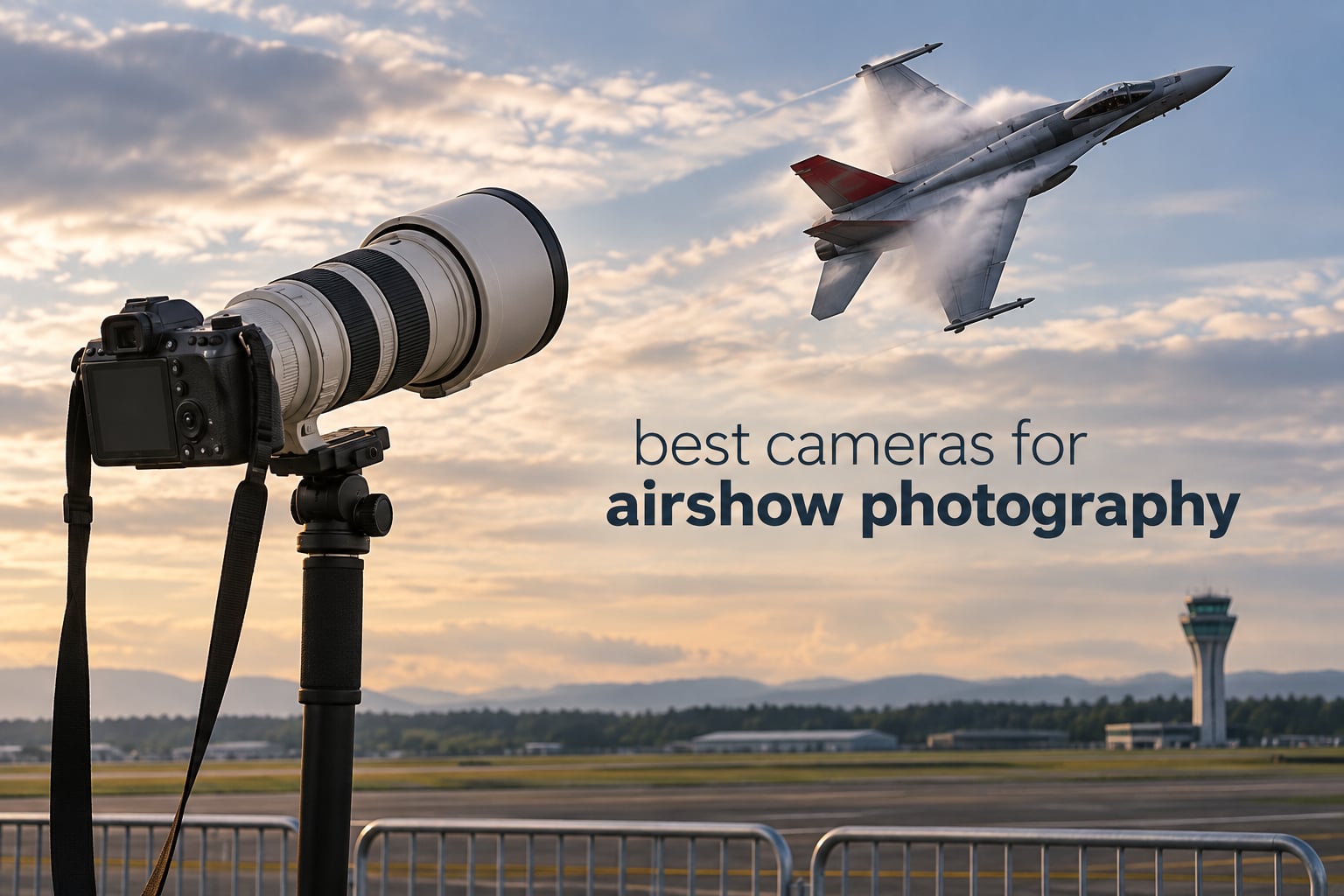
The best cameras for airshow photography are the ones that can hold a telephoto lens on a jet for the three seconds it takes to cross your frame and keep firing while they do. That means three things: a continuous burst rate of 10 fps or more, autofocus with real subject recognition that treats an aircraft as an aircraft, and a lens of 300mm or longer. Everything else on the spec sheet is secondary at a flying display.
I have shot airshows for years, mostly from the grass with a long zoom and a lot of sunscreen, and the failures are always the same three: the autofocus gave up halfway through the pass, the buffer ran dry after two seconds, or the lens was too short so the aircraft was eight pixels tall. None of those are megapixel problems. They are tracking, frame rate and reach problems, and that is how the list below is built.
What follows is a roundup of ten bodies, from an APS-C DSLR that has been at more airshows than most full-frame flagships to a 61-megapixel monster built for cropping distant flybys. Each entry covers who it suits, what it does well against an aircraft that is moving at several hundred miles an hour, and where it falls short. I also want to flag the one lens decision that matters more than the body you pair it with, so I have linked my telephoto lens guide for airshow photography alongside the recommendations.
Two more notes before we start. First, this list is written around current-generation bodies, so if you are cross-shopping an older release, check the frame rate and AF system rather than the megapixel number. Second, every recommendation here assumes you are shooting handheld with a super telephoto, which is how almost everyone shoots a display line. If you want the broad view of the field first, my general still camera roundup covers the entry-level side of photography.
Top 3 Picks for Best Cameras for Airshow Photography in 2026
If you want the short version, these are the three bodies I would put in front of a beginner, an enthusiast and a working event photographer in that order.
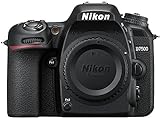
Nikon D7500
- 20.9MP APS-C with 1.5x crop
- 8 fps burst with a deep buffer
- 51-point AF with 15 cross-type sensors and 3D tracking

Canon EOS R6 Mark II
- Aircraft subject-detection mode
- Up to 40 fps electronic shutter
- 8 stops of in-body stabilisation

Sony Alpha a7 III
- 24.2MP full-frame sensor
- 10 fps with 693 phase-detect points
- Class-leading battery life
The Canon R6 Mark II is the one I trust most with a fast jet because it is the only body here with a dedicated aircraft detection mode, and it can fire a 40 fps electronic burst while you pan. The Sony a7 III is the safest general-purpose buy of the three. The Nikon D7500 wins on reach per unit of cost and on the deepest proven track record of any body in this list.
Best Cameras for Airshow Photography at a Glance in October
Here is every camera in the roundup with the specs that decide an airshow verdict. The one-line version: crop sensors give you reach, full-frame gives you light and latitude, and the frame rate is what decides whether you get a usable sequence or one lucky frame.
| Product | Specifications | Action |
|---|---|---|
| Nikon D7500 DX-Format Digital SLR Body |
|
Check Latest Price |
| Sony Alpha a7 III Mirrorless Camera with 28-70mm Lens Black |
|
Check Latest Price |
| Canon EOS R6 Mark II Mirrorless Camera (Body Only) |
|
Check Latest Price |
 Canon EOS R10 Mirrorless Camera Lens Kit Canon EOS R10 Mirrorless Camera Lens Kit |
|
Check Latest Price |
 Sony Alpha a6700 APS-C Mirrorless Camera Body 26MP 4K Black Sony Alpha a6700 APS-C Mirrorless Camera Body 26MP 4K Black |
|
Check Latest Price |
 Sony Alpha a7S III Full-Frame Mirrorless Camera Body Black Sony Alpha a7S III Full-Frame Mirrorless Camera Body Black |
|
Check Latest Price |
 Sony Alpha 7R V Full-Frame Mirrorless Interchangeable Lens Camera Body Sony Alpha 7R V Full-Frame Mirrorless Interchangeable Lens Camera Body |
|
Check Latest Price |
 Nikon Z6 III Full-Frame Mirrorless Camera with 6K/60p Internal RAW Nikon Z6 III Full-Frame Mirrorless Camera with 6K/60p Internal RAW |
|
Check Latest Price |
 Nikon Z 8 Professional Full-Frame Mirrorless Stills/Video Camera Nikon Z 8 Professional Full-Frame Mirrorless Stills/Video Camera |
|
Check Latest Price |
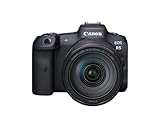 Canon EOS R5 Mirrorless Camera with RF 24-105mm F4 L IS USM Lens Kit Canon EOS R5 Mirrorless Camera with RF 24-105mm F4 L IS USM Lens Kit |
|
Check Latest Price |
Frame rates here are manufacturer maximums in the shooting mode that produces them, so an electronic-shutter figure and a mechanical-shutter figure are not directly comparable. That matters at an airshow more than it does anywhere else, because rolling shutter distorts a spinning propeller. We come back to that below.
1. Nikon D7500: The Best All-Rounder for Airshows
Pros
- 3D tracking and group-area AF that holds moving subjects
- Buffer that holds roughly 50 RAW frames
- Usable ISO range well past 6400
- Weather-resistant build
- Light at 1.7 pounds
Cons
- Single SD card slot with no backup
- Optical viewfinder only
- No battery grip and average battery life
I keep coming back to this body because of the crop factor. A 300mm lens on the D7500 gives the framing of a 450mm, so a Sigma 100-400mm behaves like a 150-600mm in terms of how tightly you can fill the frame with a distant aircraft.
The 51-point AF module is old by modern standards, with 15 cross-type sensors, but the 3D tracking and group-area modes are genuinely good with something crossing the frame fast. Owners repeatedly describe it as a large step up from entry-level Nikon DSLRs for birds in flight and action, and that is the same problem set as an aircraft pass.

Eight frames per second is below what the newest mirrorless bodies manage, and I will not pretend otherwise. In practice a good 8 fps burst on a prop plane in a slow turn is plenty, and on a fast jet it gives you a usable sequence if your technique is right. The buffer is the more important number, and roughly 50 RAW frames at 8 fps buys you about six seconds of shooting before it stutters.
The image quality is the quiet strength. Reviewers single out the ISO range for a DX body, with files still usable past ISO 6400, which matters when an evening display starts in bright sun and ends after sunset and you only brought one set of batteries.

Is 8 fps enough for a fast jet pass?
For most passes, yes, provided the AF locks before the aircraft is on the trigger line. A jet display is a sequence of predictable turns, so a six-second burst at 8 fps usually contains one frame with the aircraft square in the frame. It is below flagship speed, but the depth of the buffer matters more than the headline rate for most people.
Where it will cost you frames is a high-speed pass on a low straight, where the aircraft crosses the whole view in under two seconds. Nothing fixes that except a longer lens or a wider aperture to let you raise the shutter speed.
What do you give up by staying in the DX system?
You give up low-light latitude and a second card slot. The single SD slot is the one I would think hardest about, because a burst-heavy day writes a lot of data and there is no second copy. Reviewers treat the single slot and the lack of a battery grip as acceptable trade-offs, and I mostly agree, provided you carry several cards rather than one large one.
Pair it with a Sigma 100-400mm or a Tamron 50-400mm and you have a complete airshow kit that is light enough to carry all day. If your budget stretches, a used 150-600mm is the natural upgrade.
2. Sony Alpha a7 III: A Full-Frame Body That Easily Lasts a Show Day
Pros
- 693-point phase-detect AF covering 93% of the frame
- Battery life often beyond 700 shots per charge
- Excellent high-ISO files
- 5-axis stabilisation
- 28-70mm kit lens in the box
Cons
- Kit lens is slow and short for aviation
- Battery is a single pack type
- Dense menu system
This is the body I recommend to someone who wants full-frame without flagship complexity. The 24.2MP back-illuminated sensor, 15 stops of dynamic range and 693 phase-detection points covering 93% of the frame are a proven combination for panning a moving subject.
Ten frames per second with AE/AF tracking sits right at the level I would call sufficient for aviation work. The bigger practical story is battery life: reviewers regularly report 700 or more shots per charge, which means one battery can realistically cover a long flying display, and a spare covers the rest of the day.

The bundled 28-70mm is the problem in this package for our purposes. It is a fine walkaround lens, but at the long end it gives you a distant speck where a jet should be. Treat this body as the platform and budget separately for a 100-400mm or better.
Low light is where the full-frame sensor earns its keep. Evening displays that are shot at ISO 6400 and beyond still produce files you can work with, where an APS-C body of the same generation starts to lose colour and detail.

Does the older AF system track an aircraft well enough?
Yes, with the right settings. The 693-point system predates dedicated aircraft detection, so you are relying on general subject tracking rather than an aircraft profile. It holds a panning subject well when the aircraft is large in the frame, and struggles when the subject is small and distant, which is exactly the situation a longer lens creates.
If you can set a zone or spot area over the flight path and start the AF there, the weakness mostly disappears. That habit matters more on this body than on the newer AI-driven models.
Is the kit lens enough for a first airshow?
For the static displays, the crowd shots and the walk-around, yes. For the flying programme, no. The kit reaches 70mm, and 70mm will not hold a fighter jet at a display line. The package is a good reason to buy the body, not a reason to skip the telephoto purchase.
A Sigma 100-400mm is the natural partner, and the 1.8-pound body plus a mid-weight zoom is a combination you can pan for a whole afternoon without wrist problems.
3. Canon EOS R6 Mark II: The Best Body for Tracking Jets
Canon EOS R6 Mark II Mirrorless Camera (Body Only), Full-Frame Camera, 24.2 Megapixel CMOS Sensor, Photo and Video Capabilities, Black
Pros
- Explicit aircraft subject-detection mode
- 40 fps electronic shutter
- 5-axis stabilisation rated to 8 stops
- Reliable Dual Pixel CMOS AF II tracking
- Light at 1.3 pounds
Cons
- Body only
- so a lens is a separate purchase
- High-resolution electronic shooting drops to 20MP
- Single battery pack type
This is the body I would hand to someone whose main goal is a fast jet on a low pass. It is the only camera in this list whose subject acquisition menu names aircraft explicitly, alongside horses, trains, cars, motorcycles and people, which means the tracking algorithm is tuned for a subject of that shape and size rather than general human shapes.
That single menu entry removes most of the guesswork. You select aircraft detection, the camera finds the plane in the frame, and the AF point stays with it as the distance changes by metres per second during the pass.

The frame rate is the headline: up to 40 fps electronically at 20MP, on top of a mechanical mode. A 40 fps burst of a three-second pass is around 120 frames, which means you are not relying on a single lucky moment, and reviewers treat the combination of aircraft detection and burst rate as the reason this body suits event and action work.
Weight matters at an airshow. At 1.3 pounds it is the lightest full-frame body here, and combined with 8 stops of in-body stabilisation it is comfortable on a monopod or on a long lens held at the end of the day.

Does the 40 fps electronic mode distort propellers?
It can, and that is the real trade-off. A fast electronic readout bends rotating propellers into odd shapes, which is the single most common complaint from warbird photographers. If you are shooting piston aircraft, switch to the mechanical shutter and work at a lower frame rate; if you are shooting jets with no visible propellers, the electronic mode is the better choice.
Check the shot review before you commit to a setting, because the distortion is obvious at full size and invisible in a small image.
Is the 24MP sensor a problem for a fast pass?
Not for a pass you framed properly, because reach comes from the lens rather than the sensor. It only bites when a distant aircraft is small in the frame and you plan to crop hard in post, where a 45MP or 61MP sensor gives you noticeably more usable pixels.
Because this is a body-only listing, budget for a lens separately. A Canon RF 200-800mm is the enthusiast favourite for this body, and a 100-400mm covers most display lines.
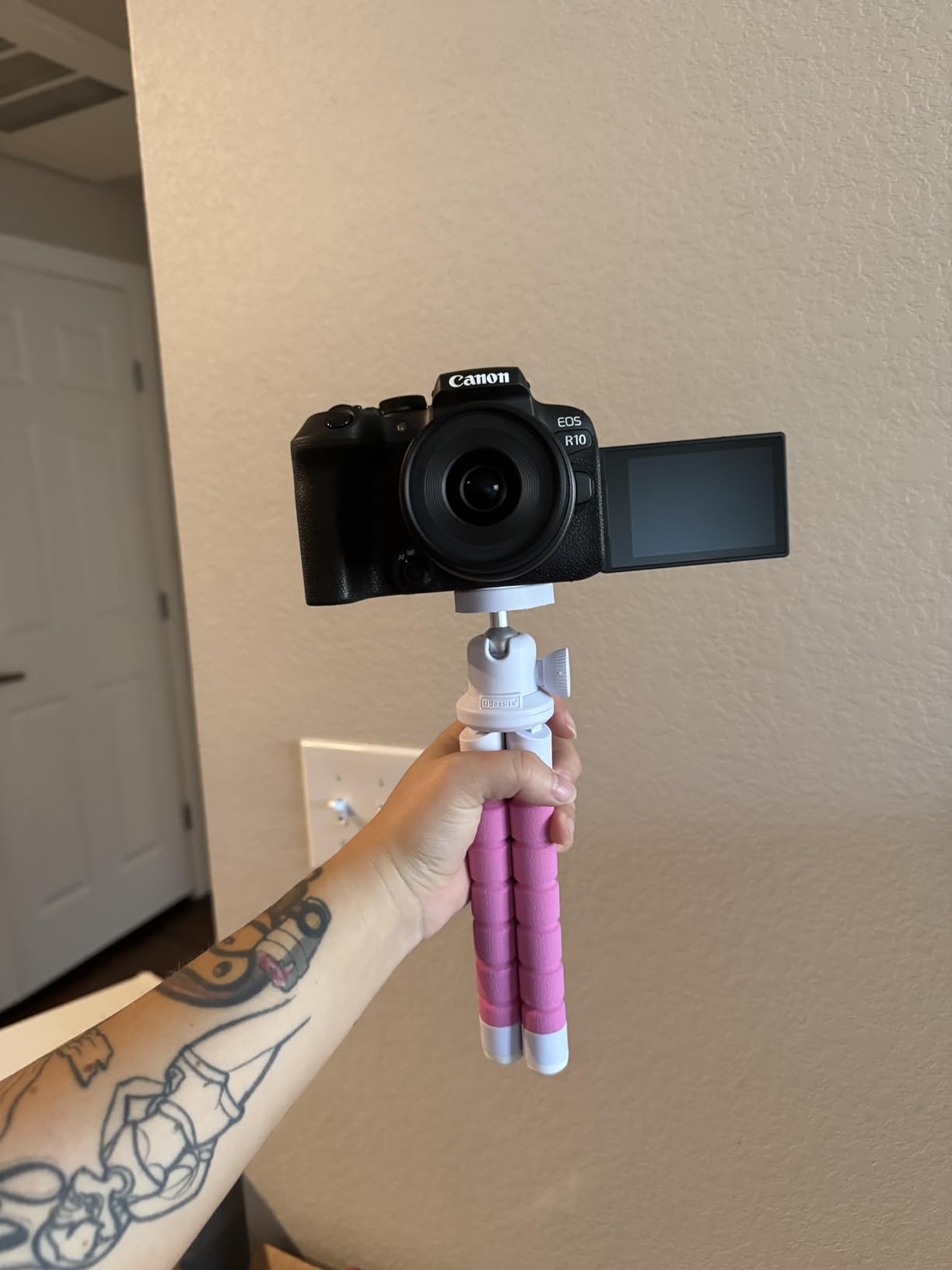
4. Canon EOS R10: The Best Value Route to Airshow Reach
Pros
- 651 AF zones covering the frame with subject detection
- RAW burst with half-second pre-shooting
- 1.5x crop for extra reach
- Compact body with a fully articulating screen
- 10-bit 4K at this price level
Cons
- Bundled 18-45mm kit lens is weak past about 10 feet
- Single memory card slot
- LP-E17 battery not shared with higher-tier bodies
The R10 sits at the point where a lot of first-time airshow photographers should start. You get 15 fps mechanical, 23 fps electronic, and a Dual Pixel CMOS AF II system with up to 651 zones covering the frame down to -4 EV.
The feature I would not expect to care about and now recommend is RAW burst with half-second pre-shooting. The camera records the moment before you fully press the shutter, which for a display line means the pass starts in the buffer before you commit to it.
The 1.5x crop is the quiet advantage. A 200mm lens fills the frame like a 300mm, so a mid-weight RF-S telephoto gets you closer to the aircraft than the same lens on full frame, and reviewers consistently single out the crop factor as the reason the body feels capable for distant subjects.
The fully articulating touchscreen also earns its keep, because the display line is often shot from the grass, and a screen that swings out is the difference between a usable low shot and a missed one.
Is the frame rate realistic for a fast pass?
More than the number suggests. The mechanical 15 fps is the honest figure for a panning shot, and that gives you roughly 45 frames across a three-second pass. The 23 fps electronic mode is available but, as with any fast-readout sensor, rotating propellers are the risk.
Pre-shooting does more for your hit rate than raw frame rate does, because it removes the reaction time between seeing the aircraft and starting the burst.
Should you keep the bundled 18-45mm lens?
No. The most repeated owner complaint is that the bundled RF-S 18-45mm is weak beyond about 10 feet, and most buyers replace it quickly. Keep it for the static displays and the walk-around, and plan a proper telephoto as the second purchase.
A 100-400mm-class lens on this body gives you the framing of a 150-600mm on full frame, which is the cheapest way to get a large aircraft in the frame.
5. Sony Alpha a6700: The Best Lightweight Body for a Full Day on Your Feet
Pros
- 759-point AI-driven subject recognition that sticks to moving subjects
- 26MP APS-C files with 1.5x reach
- Very light body for a full day of walking
- 1.07x viewfinder magnification
- Excellent eye detection
Cons
- No dual card slots
- High-ISO files trail full-frame rivals
- Modest in-body stabilisation for video
The a6700 is the body I put in the bag when the day is a walking day rather than a seated one. At 14.5 ounces it is the lightest camera in this roundup by a wide margin, and paired with a mid-weight telephoto it is a kit you can carry for a full display without thinking about it.
The 26-megapixel Exmor R APS-C sensor gives you 1.5x crop, so 400mm of glass frames like 600mm. Owners praise the combination of sharp files and reach, and the AI processor with Real-time Recognition is consistently reported to lock onto a moving subject and stay locked.
Eleven frames per second is a solid rate for aviation, and the 1.07x viewfinder magnification gives a genuinely large eyepiece image, which reduces eye strain over a long afternoon more than most spec sheets suggest.
Where the APS-C compromise shows is at high ISO. Files are noticeably noisier than the full-frame bodies here, and evening displays that run into dusk are where you will feel it first.
Is a 26MP crop body good enough for distant aircraft?
Yes, when the lens is doing its job. The 26MP sensor is larger than most of its APS-C competition, and combined with the 1.5x crop it gives you pixels to spare when a distant fast mover fills only part of the frame. It is only when you are already maxed out on a 600mm and the aircraft is still tiny that you feel the pixel deficit.
For a first or second body, this is the most balanced sensor and crop pairing in the roundup.
What about the missing second card slot?
It is a single slot, so plan your cards around it rather than around the body. On a burst-heavy day I would carry four or five smaller cards and rotate them rather than relying on one large card, because a single slot with no backup is where a lost afternoon comes from.
Pair it with a Sigma 100-400mm for the display line, and keep a wider lens in the bag for the static aircraft, because that is where the 26MP files really shine.
6. Sony Alpha a7S III: The Best Body for Evening Displays
Pros
- Subject lock-on that reviewers say does not jump between subjects
- Clean usable files at very high ISO
- Dual CFexpress Type A and SD card slots
- Bright high-resolution viewfinder for sunlight
Cons
- 12.1MP limits heavy cropping
- Body only with no lens included
- Battery life is unremarkable for the class
Read the rating on this one and then read the caveat. The 4.8 average across hundreds of reviews reflects autofocus reliability and low-light files that reviewers describe as class-leading, and that is precisely what an evening airshow needs.
ISO up to 409,600 with 15 or more stops of dynamic range means you can shoot a night display at shutter speeds that a lower-resolution body would not dare, which is how you get a sharp aircraft and a dark sky in the same frame.
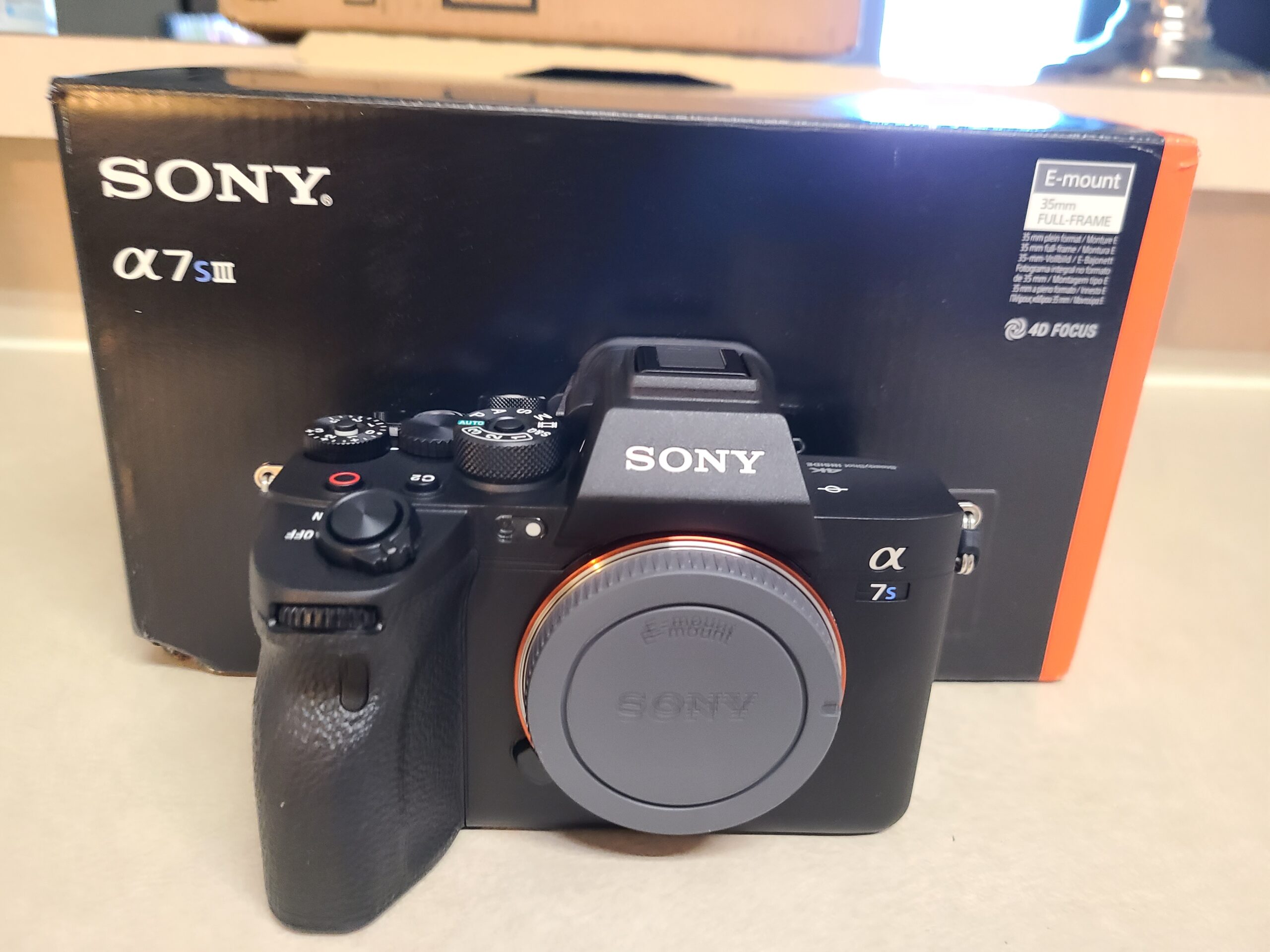
The 759-point AF system with a subject lock-on that reviewers specifically say does not jump between subjects is the part that matters most here. In a crowd scene with several aircraft in the sky, a camera that refuses to switch targets is worth more than extra megapixels.
Dual card slots, one CFexpress Type A and one SD, are unusual at this level and useful for a long day: you can split stills to the SD slot and video to the fast one, or use them as a backup pair.
Is 12.1MP too low for an airshow?
For a subject that fills the frame, absolutely not. The files are clean and detailed at the ISO levels an airshow actually uses. The limit appears when a distant aircraft is small in the frame and you need to crop hard, because 12MP simply runs out of pixels before the light does.
If your plan is to shoot the far end of the airfield with a 600mm and crop, choose a higher-resolution body. If your plan is to be close to the display line and shoot into the evening, this is the strongest choice in the roundup.
Is it worth the CFexpress card cost?
Only if you use the top video settings. For stills photography the SD slot alone is fine, and the second slot simply gives you a backup path on a long day.
Because this is a body-only listing, add a 100-400mm or a 150-600mm to complete the kit, and read my telephoto lens roundup before you choose.
7. Sony Alpha 7R V: The Best Body for Heavy Cropping of Distant Flybys
Pros
- 61MP sensor with large cropping latitude
- AI tracking that includes airplane subjects
- Buffer holding 583 RAW or 1000 JPEG frames
- Over 9.4 million dot viewfinder at 100% coverage
Cons
- Only 10 fps
- dropping to 7 fps electronic at full resolution
- Higher battery consumption than earlier R-series bodies
- Body only with no lens
The 61-megapixel full-frame sensor is the reason to buy this body for aviation. When a fighter jet is 300 frames away and small in the picture, resolution is the only thing that saves the shot, and 61MP gives you the pixels to crop it back into a usable aircraft.
The AI processing unit here explicitly recognises airplane subjects alongside people, animals, birds, insects, cars and trains, so the same tracking logic that follows a bird follows a jet. Owners who shoot aviation and sports call out the AI recognition and the buffer as the standouts.

The buffer deserves a second mention because it is unusual: 583 RAW frames or 1000 JPEGs at 10 fps. That is long enough to cover a full aerobatic sequence without the camera stalling, which removes one of the most common reasons a good pass produces nothing usable.
The 9.4-million-dot viewfinder with 100% coverage is bright and sharp enough that you can judge focus on a distant aircraft without struggling against midday sun.

Is 10 fps too slow for a fast pass?
It is the body’s main limitation and reviewers say so directly. At full resolution the electronic rate drops to 7 fps, which is thin for a low fast pass, though the enormous buffer means you can simply keep the shutter going through the whole run and pick the frames afterwards.
If your photography is mostly distant, static-ish subjects at the far end of the field, the trade is worth it. If it is close, fast jet passes all afternoon, choose a body built around frame rate instead.
How much does the higher resolution cost in the field?
Notably more battery consumption than earlier R-series bodies, and larger files that eat through a show day of card space faster than a 24MP body would. Bring more cards than you think you need.
Pair it with a 150-600mm or a 200-800mm so the lens, not the crop, is doing most of the work, and use the resolution for the moments when both are insufficient.
8. Nikon Z6 III: The Best Viewfinder for Harsh Sunlight
Nikon Z6 III, Black | Full-Frame Mirrorless Stills/Video Camera with 6K/60p Internal RAW Recording | USA Model
Pros
- Dedicated bird and jet aircraft AF detection modes
- 4000-nit viewfinder with 120 fps refresh
- Fast low-light AF down to -10 EV
- Effectively no rolling shutter for a full-frame body
Cons
- Deep menu system with many AF combinations
- Battery drains quickly
- No charger included in the box
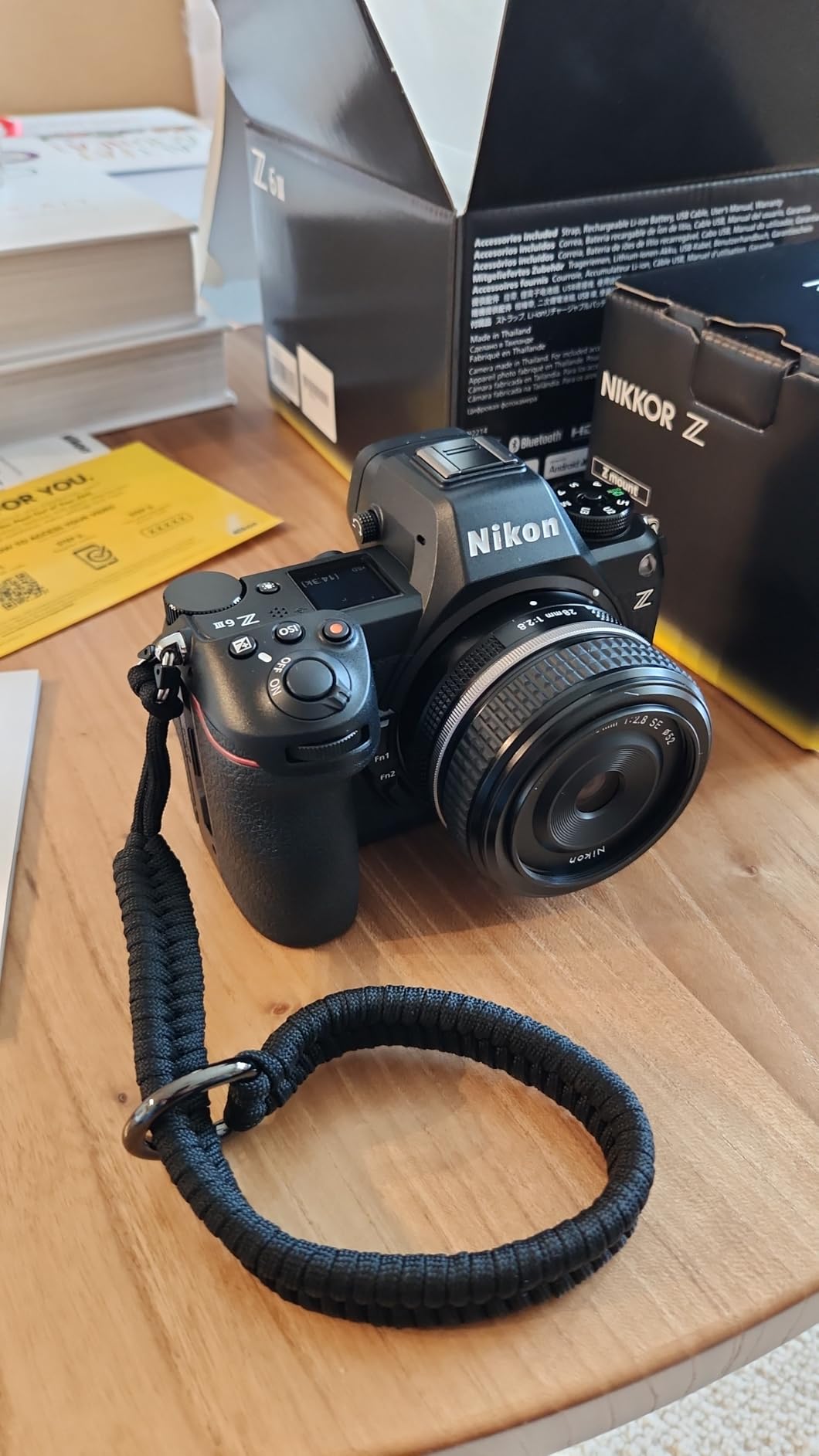
There is a dedicated jet detection mode on this camera, alongside bird detection, and that is a rare thing to find. It means the AF system is being fed a profile of a fast, distant, small subject rather than guessing from generic shapes.
The viewfinder is the reason I would pick this body for a midday show. At 4000 nits maximum brightness with 5760k dots and a 120 fps refresh, it stays clear in the hardest light you will find on a tarmac, and the refresh rate keeps a panning subject from smearing.

Detection down to -10 EV with multi-subject recognition means the camera can find and hold a dark aircraft silhouette against a bright sky, which is exactly the situation when a jet is backlit at a display. Owners report the autofocus is around 20% faster than the previous generation, and face detection works on subjects as small as 3% of the frame.
ISO 100-64000 native, expandable to a 204800 equivalent, and strong low-light results in both stills and video make this a good evening body as well.
Is the video-first design a problem for stills shooters?
Not for a photographer, but the menus assume you care about video. The 6K/60p internal RAW, oversampled 4K and 4K/120p modes are excellent, and they push the AF and buffer systems toward video priorities, so photographers should expect to spend time simplifying the configuration menus.
The dial placement and small grip are the other recurring complaints, and both matter when you are panning a 600mm for three hours.
Will one battery cover a show day?
Probably not. Owners report a couple of hours per charge, and with the viewfinder running at 120 fps that is understandable. Budget for three or four batteries and a charger, since none is included in the box.
For a lens, a 100-400mm covers a normal display line, and the body suits anyone who shoots long, backlit or distant aircraft where the viewfinder and low-light AF matter more than frame rate.
9. Nikon Z 8: The Best Body for Long Burst Runs
Pros
- Deep-learning detection that includes aircraft and trains
- 45.7MP stacked sensor with a shutterless design
- 20 fps RAW burst with pre-release capture
- Internal 8K/60p and 4K/120p recording
Cons
- High power draw needs multiple batteries
- Second card slot is UHS-II only
- Smaller body runs hotter than the Z9
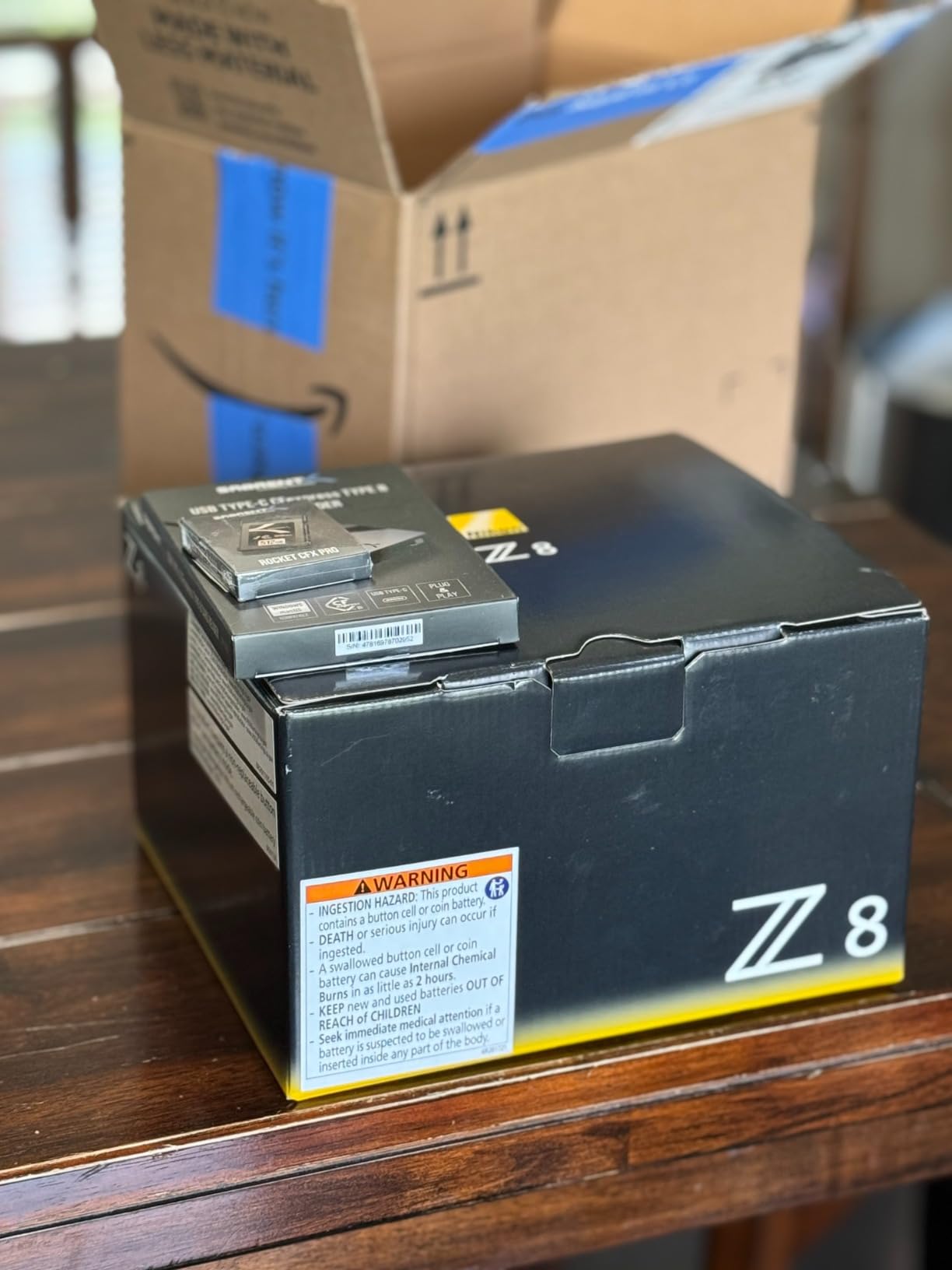
The Z 8 gives you four shooting rates, at 20, 30, 60 and 120 fps, from a 45.7-megapixel stacked sensor. For aviation, the practical setting is 20 fps, which turns a three-second pass into around sixty frames.
The deep-learning autofocus explicitly detects and tracks aircraft, as well as people, animals, vehicles, trains and motorcycles, and the detection threshold goes down to -9 EV. Owners consistently describe the subject recognition covering planes as one of the standouts of the body.
Pre-release capture means frames are recorded before the shutter is fully pressed, so a display line that starts faster than your reaction time still lands in the buffer. Combined with fast readout and a buffer that rarely stalls, it is the most forgiving camera here when a pass goes faster than expected.
The shutterless design removes vibration entirely, and the sensor shield closes when the camera powers off, which matters when you are changing lenses on a dusty display line all day.
How many frames per second do you really need?
Forum consensus is that anything above about 10 fps stops improving your results and starts filling your card, and 20 fps on this body is comfortably past that point. The exception is a very fast low pass, where the higher rates give you more usable frames of a subject that crosses the view in under two seconds.
What matters more is the pre-capture behaviour, which means a technically fast body with good pre-capture can beat a faster one without it.
What is the catch with this body?
Power. The high draw means multiple batteries for a full day, and the smaller body handles heat less well than a larger flagship, limiting long record times. The second card slot is UHS-II SD rather than a second fast card, so video and stills cannot both run at maximum speed.
It also has a demanding setup process, with configuration options that take time to learn. Spend an hour with it before a show rather than during one.
10. Canon EOS R5: The Best Body for Static Displays and Large Prints
Canon EOS R5 Mirrorless Camera RF24-105mm F4 L is USM Lens Kit, Full-Frame Hybrid Camera, 8K Video, 45 Megapixel CMOS Sensor, DIGIC X Image Processor, Up to 12 FPS, RF Mount, Black
Pros
- 45MP sensor with in-camera 400MP high resolution shift mode
- 1053 AF areas covering roughly 100% of the frame
- Dual CFexpress Type B and UHS-II card slots
- 24-105mm f4 L lens included
Cons
- Heavy at 3.2 pounds with the bundled lens
- Battery drains quickly in continuous shooting
- Dynamic range at 45MP is not class-leading
Half an airshow is not flying, it is walking around a hangar line looking at liveries, engines and cockpits. That is the part of the day this body is best at, because a 45-megapixel sensor plus the in-camera high resolution shift mode can render an approximately 400-megapixel file from a static subject on a tripod.
That mode is useless for anything in motion, so treat it as a static-display tool rather than an aviation one. For the flying programme, 12 fps mechanical and up to 20 fps electronic is a solid pairing, and the 1053 AF areas covering roughly 100% of the frame give you fine control over where focus lands.

The bundled RF 24-105mm f4 L IS USM is genuinely useful around a display field, covering a static aircraft from nose to tail and wide enough for the crowd shots. It is a heavy kit, and r/aviation users have reported shooting airshows with an R5 and a 75-300mm, which is the more typical flying setup.
Dual card slots, one CFexpress Type B and one UHS-II SD, are the right specification for a full day, and the deep-learning subject tracking for people and animals holds focus on fast-moving subjects well enough for a low pass.
Is 3.2 pounds too heavy for a long day?
It is the heaviest kit in this roundup, and weight accumulates over a full walking day with a telephoto on the front. For a seated grandstand position it is fine, and for static display work at close range it is not a problem at all.
If you will be walking the line for six hours, a lighter body and the same lens would serve you better.
How does the 45MP sensor handle high ISO and late displays?
Reably but not brilliantly. Reviewers note that dynamic range and low-light performance are not class-leading at 45 megapixels, because the pixels are small for the sensor size. At the golden-hour end of a show day that is fine; if you are shooting a night display, a lower-resolution large-pixel body handles it better.
Use the high resolution where it works, which is daylight, static aircraft and heavily cropped distant flybys, and accept that evening frames will need more noise reduction.
What Actually Makes a Camera Good at Airshows
Aircraft spend most of their display time in the air, so a camera is judged on what happens between the button press and the buffer. Here are the factors that decide that, in the order they matter.
Burst rate and buffer depth are two different numbers
Frames per second tells you how many frames you get while the action lasts. Buffer depth tells you how many you get before the camera stops. A 10 fps body with a 50-frame buffer gives you five seconds of continuous shooting, which is most of a jet pass. A 20 fps body with a 10-frame buffer gives you half a second, which is not.
Pre-capture, where the camera records frames before the shutter is pressed, is the newest and most useful of these three ideas, because it removes your reaction time from the equation entirely.
Subject-recognition autofocus matters more than AF point counts
A 1053-point system is not automatically better than a 299-point one. What matters is whether the camera knows what an aircraft is, and whether the focus point stays with it as distance changes during the pass.
Three bodies in this roundup name aircraft or airplane detection explicitly: the Canon R6 Mark II, the Sony a7R V and the Nikon Z 8. The Nikon Z6 III has a dedicated jet mode, and the Canon R5’s deep-learning tracking is built around people and animals. If you shoot a lot of fast passes, an aircraft-specific menu entry is worth more than a raw point count.
Crop factor is a reach multiplier, not a compromise
A 1.5x crop sensor frames a 400mm lens like a 600mm on full frame, and a 2x sensor doubles it again. That is why a crop body plus a mid-weight zoom regularly beats a full-frame body with a flagship lens on framing alone, and it is the single biggest reason budget airshow kits work.
The cost is light. A crop sensor gathers less light, so evening displays are noisier, and a heavily cropped distant aircraft runs out of pixels sooner than a 45 or 61-megapixel full-frame sensor.
Heat haze is the real enemy of long lenses
On a summer show, the air above hot tarmac bends light badly enough to make a 600mm shot look like it was taken through a bathroom window. Users on the saairforce.co.za forum described a show where the heat haze was so severe that people put their long lenses away, and that is a genuine outcome rather than an excuse.
You cannot buy your way out of it. Shorter focal lengths suffer less, early morning and late afternoon are dramatically better than midday, and shooting from the shaded side of the flight line puts less hot air between you and the aircraft. If your only lens is a 600mm and the show runs at midday, you will lose those frames.
Rolling shutter is why propellers look broken
Fast electronic readouts capture the top of a spinning propeller before the bottom, so blades render as bent, twisted or missing. It is the reason a perfectly capable mirrorless camera produces a black smear where a warbird’s propellers should be, and it is discussed repeatedly in aviation forums as a camera-selection issue rather than a settings one.
The fix is mechanical shutter or electronic front-curtain mode, plus a slower shutter speed so the propeller is not frozen anyway. Shoot jets with the fast electronic modes if you like, and pistons with the mechanical shutter.
Stabilisation, cards and batteries are day-length issues
In-body stabilisation rated to 8 stops, as on the Canon R6 Mark II, helps enormously when a 600mm is heavier than your arms at the end of a display. It also lets you work a stop or two slower, which is one stop of ISO you do not have to pay in noise.
For endurance, prioritise bodies with good battery life, such as the Sony a7 III, and bodies with dual card slots, such as the Sony a7S III and Canon R5. A burst-heavy day writes enormous amounts of data, so card capacity is a real constraint rather than a footnote.
The used market is where value hides
Forums and the wider photography community repeatedly treat buying used as a legitimate strategy for this hobby, and bodies like the Canon 7D II, the Canon 90D and the Nikon D7500 are the usual suggestions. The Nikon D7500 on this list is itself a mature design with a large review base, which tells you something about how well it ages.
On any used body, check the shutter count, the autofocus accuracy in continuous mode, the battery health, the sensor for dust, and the dials and buttons for wear. A mechanical wear item is fixable, a damaged sensor is not.
Airshow Camera Settings Cheat Sheet
Forum consensus is remarkably consistent about settings, and it differs by subject. Use this as a starting point and adjust for light.
Fast jets on a display pass: shutter priority at 1/1000s or faster, aperture around f/5.6 to f/8, Auto ISO with a sensible ceiling, continuous high-speed drive, continuous AF with aircraft or general subject detection. Shoot the whole pass and pick afterwards.
Propeller aircraft and warbirds: slow down to 1/125s to 1/500s to get propeller blur, keep the mechanical shutter or electronic front curtain on to avoid rolling-shutter distortion, and open up to f/4 or wider if the light needs it. A frozen propeller at 1/2000s looks like a car wheel, not an aircraft.
Static displays and museum hangar aircraft: aperture priority around f/8, ISO 100, a self-timer or two-second timer, focus peaking or manual focus, and a tripod if you have one. This is where the 400-megapixel shift modes and 61-megapixel sensors pay off.
Panning with an aircraft: 1/125s to 1/250s is the range most people find usable, shoot at the widest aperture your zoom allows, and stabilise the lens. If the stabiliser has a panning mode, use it, because it disables the correction that fights your movement.
Golden hour and evening displays: the argument for a large-pixel full-frame body. Open up, accept higher ISO, and keep shutter speeds high enough that you do not need to crop heavily afterwards.
Frequently Asked Questions
What is the best camera for taking pictures at airshows?
Look for three things: a continuous burst rate of 10 fps or more, autofocus with real subject recognition that treats an aircraft as an aircraft, and the ability to carry a 300mm or longer lens. On this list the Nikon D7500 is the best all-rounder, the Canon EOS R6 Mark II is the strongest jet tracker with aircraft detection and 40 fps electronic shooting, and the Sony Alpha a7 III is the safest full-frame buy with long battery life.
What is the best camera lens for taking pictures of airshows?
A super telephoto zoom is the standard answer, and the choice depends on where you stand. From the grass, a 100-400mm is the practical starting point. For display lines and distant passes, a 150-600mm or a 200-800mm gives you the reach to fill the frame. All three are more important than the camera body, and any body on this list pairs well with them.
Is 400mm enough for airshows?
It depends on your position, not the airshow. Seated on the grass near a display line, 400mm is comfortable. In a grandstand further back, or photographing across the airfield, you will want 600mm or more. A 400mm on a 1.5x crop sensor frames like 600mm on full frame, which is why crop bodies are such good value here.
How to take good photos at an airshow?
Arrive early and pick a vantage point before the programme starts. Set continuous autofocus with aircraft or general subject detection on a zone over the flight path. Work in shutter priority: 1/1000s or faster for jets, 1/125s to 1/500s for propeller blur. Pan smoothly, keep firing through the whole pass, and review your frames afterwards rather than during.
What are the best camera settings for airshow photography?
For jets, use shutter priority at 1/1000s or faster, f/5.6 to f/8, Auto ISO, high-speed continuous drive and continuous AF with subject detection. For propeller aircraft, slow to 1/125s to 1/500s for blur and switch to the mechanical shutter so the blades do not distort. For static aircraft, use f/8, ISO 100 and a timer on a tripod.
Is f/2.8 or f/4 better for aviation photography?
Neither, for most airshow work. You are usually far enough away that depth of field is not your constraint, so f/5.6 to f/8 gives you a faster shutter speed and a cleaner file. A constant f/2.8 lens is worth it for evening displays, where the extra light lets you keep shutter speeds high, and for propeller aircraft if you want a softer background at close range.
Why do my propeller photos look like a bent black shape?
That is rolling shutter distortion. A fast electronic readout captures the top of a spinning propeller before the bottom, so the blades render twisted or merged. Switch to the mechanical shutter or electronic front-curtain mode and use a slower shutter speed, around 1/125s to 1/500s, so the propeller blurs naturally instead of distorting.
How long should my lens be and do I need image stabilisation?
Treat 300mm as the minimum and 400mm as a comfortable working length, going longer if you shoot from the grass or photograph across the field. Image stabilisation matters when a long lens is heavier than your arms at the end of a display, and a body rated to 8 stops lets you work a shutter speed or two slower without shooting at a higher ISO.
Final Verdict
There is no single best camera for airshow photography, but the decision is really about two variables. If your passes are close and fast, buy tracking: the Canon EOS R6 Mark II with its aircraft detection and 40 fps electronic burst, or the Nikon Z 8 with its 20 fps and pre-capture. If your subjects are distant and the light is going, buy reach and resolution: the Sony a7R V at 61 megapixels, or the Nikon D7500 for crop factor and a fraction of the cost.
For most people, the Nikon D7500 with a 100-400mm or 150-600mm lens is the kit I would recommend first, and it is the reason it is the Editor’s Choice here. Buy the body, buy the lens, and practice the pan before the show starts, because the gear is only half of the frame you come home with.
If you are still working out which lens to fit to which body, my compact camera roundup covers the lighter end of the range, and every pick in this guide is worth revisiting as the 2026 season approaches.