
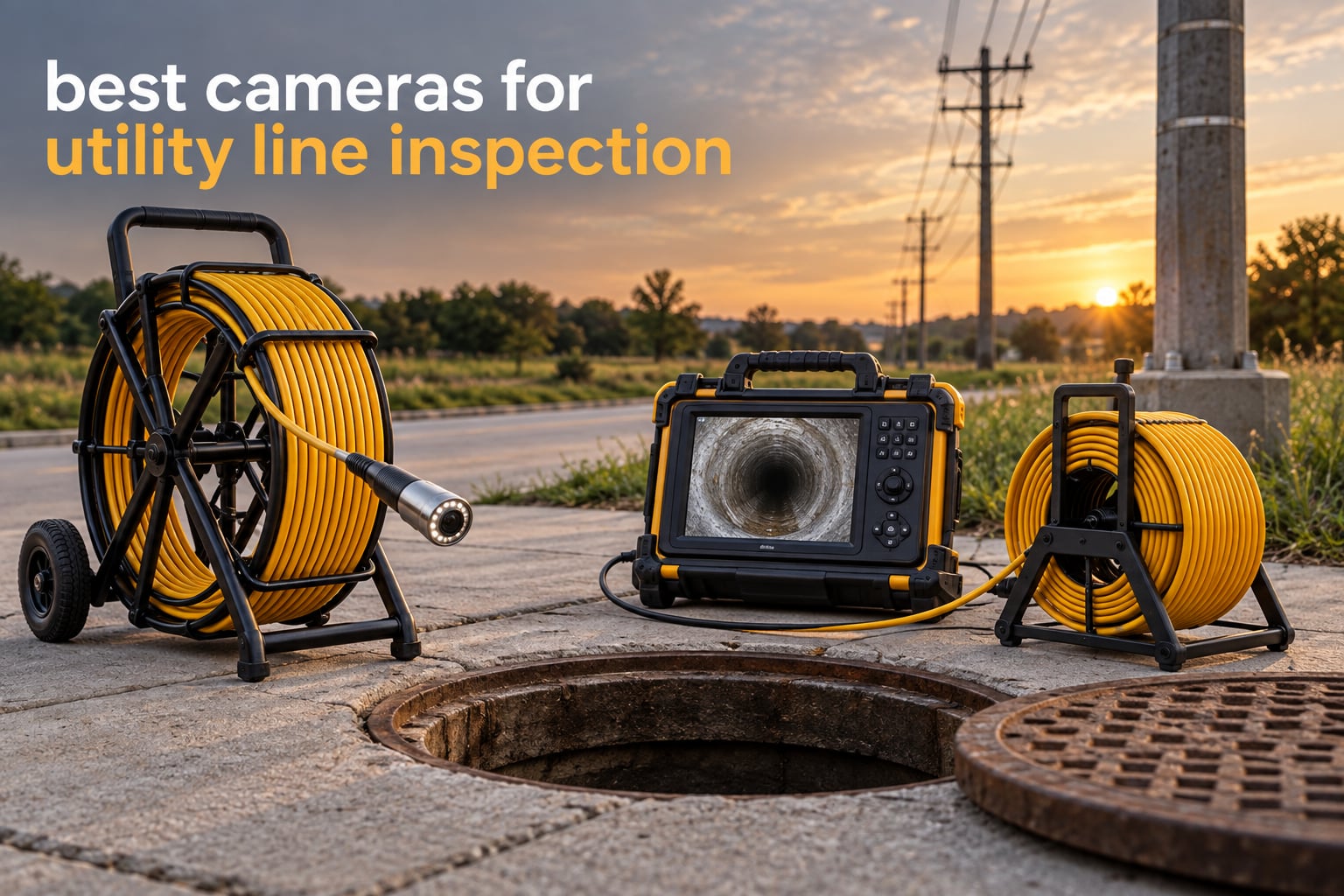
The best cameras for utility line inspection depend on which layer of the system you are working on. Overhead conductors and substations are inspected with thermal imagers, drone payloads and telescopic pole cameras. Buried service lines, duct banks, drainage runs and conduit are inspected with pushrod borescopes, and that is the class we review in depth below, camera by camera, with the numbers that decide whether a tool survives real work.
That split matters more than any brand. A thermal imager cannot tell you what is crushing a fiber duct three feet underground, and a pushrod camera will not find a failing connector on a crossarm. Mixing the two categories is the most common mistake on shopping pages, so we kept them apart here.
We spent weeks reading the review data and owner reports across all eight of these systems, then sorted them against the questions a line crew actually asks: how far does the cable push, does the head self-level, can I light a dark pipe, and will the head still be alive after two seasons in the wet. The short version is that cable rigidity and lighting beat resolution on almost every job we looked at.
If you are starting from scratch, the inspection cameras we tested and compared cover the general-purpose cases, while our thermal imaging camera guide handles the hot-spot work that shows up on the overhead side of the system.
Top 3 Picks for Best Cameras for Utility Line Inspection in October

ChoosePRO 100-Foot Sewer Camera
- 1080P head on a 7 inch IPS screen
- 100 ft marked cable
- IP68 head with 6 LED lights

VEVOR 131-Foot Camera with Locator
- 131 ft semi-rigid cable
- 512Hz locator receiver included
- IP68 stainless head with 12 LED lights
VISIOPROBE 100-Foot 1080P Camera
- AHD 1080P with a 145 degree lens
- 8500mAh battery rated up to 10 hours
- Two wheeled protective heads
Best Cameras for Utility Line Inspection in 2026 at a Glance
Every camera below is a pushrod inspection camera for buried conduit, duct and drainage work. Reach, lighting and screen size are the three specs that decide whether it fits the job.
| Product | Specifications | Action |
|---|---|---|
| ChoosePRO 100-Foot Sewer Camera |
|
Check Latest Price |
| VEVOR 131-Foot Camera with 512Hz Locator |
|
Check Latest Price |
 VEVOR 98-Foot 4.3-Inch Drain Camera VEVOR 98-Foot 4.3-Inch Drain Camera |
|
Check Latest Price |
| VISIOPROBE 100-Foot 1080P Sewer Camera |
|
Check Latest Price |
 KCapyn 100-Foot 17mm Borescope KCapyn 100-Foot 17mm Borescope |
|
Check Latest Price |
 SYOWNFS 100-Foot Sewer Camera SYOWNFS 100-Foot Sewer Camera |
|
Check Latest Price |
 VEVOR 230-Foot Self-Leveling Camera VEVOR 230-Foot Self-Leveling Camera |
|
Check Latest Price |
 Sanyipace 165-Foot Self-Leveling Camera Sanyipace 165-Foot Self-Leveling Camera |
|
Check Latest Price |
The Four Camera Classes Utility Inspectors Actually Use
Utility corridor work splits into four classes, and each one answers a different question about the asset.
Aerial thermal payloads
Thermal payloads flown on enterprise drones read radiometric temperature across overhead transmission, distribution and substation assets. They are the right tool for a hot connector on a crossarm or a failing bushing inside a substation fence, because the crew stays on the ground and the heat signature does the finding. The limitation is equally clear: they cannot see inside a duct, and a thermal camera will not resolve cracked insulation under a jacket.
Handheld thermal imagers
Handheld imagers are what a line crew carries into a vault, a manhole or a switchgear room. They cover the same fault physics as the aerial payload at close range, with emissivity correction and report software that most utility groups already run. Like the drone payload, they stop at the surface: a camera that reads infrared energy has no view of a crushed duct or a blocked pull box.
Telescopic pole cameras
A telescopic pole camera extends a small camera on a non-conductive fiberglass or carbon pole so a technician can look at pole-top hardware, insulator strings and connectors without climbing. Reach varies widely by model and crew. What every pole camera shares is a line of sight requirement, which means they only work where you can legally stand and see, and they carry the same standoff and non-conductive rules crews complain about most in the field.
Underground and pushrod cameras
Pushrod borescopes answer the buried question. A semi-rigid fiberglass cable pushes through a conduit, duct or service line, and an IP68 head with LED lighting sends back a live picture to a screen and a DVR card. Every product in this roundup belongs to this class, because it is the class where cable rigidity, head diameter and lighting decide success or failure more than image resolution does.
If you are comparing across classes rather than within one, our videoscope camera comparison covers rigid and articulating borescopes in detail, and the roofing inspection camera guide covers another high-altitude documentation workflow.
1. ChoosePRO 100-Foot Sewer Camera – Best Overall for Buried Utility Runs
Pros
- Sharp 1080P image on a large 7 inch IPS display
- Thick stiff 100 ft cable that feeds long runs and tight turns
- Twist-to-unlock cable reel
- 8+ hour battery through a full day of inspections
- Distance markings in feet plus 32GB DVR
Cons
- One camera received would not power on
- About 17 percent of ratings sit at 3 stars or below
- Manual exposure control needs adjusting in very dark pipe
Our pick for the general buried-utility job. We came back to this one the most because it is the rare budget-class camera where the cable feels like a real tool rather than a consumable.
The combination that matters here is a 1080P head, a 7-inch IPS screen and 16x zoom, which is more screen and more magnification than most of the class. On a service-line survey you can read a misaligned coupler or a crushed duct face without stopping the push, and the DVR with the included 32GB card turns the run into a documented report you can hand to a client the same day.
![[ChoosePRO®] HD1080P 18mm Sewer Camera 7'' w/1s Twist-Unlock System, DVR-32GB, 0.64'' Thicker Reel, 5000mAh 100FT Marked Cable, Plumbing Pipe Inspection Camera for Drain & Sewer Inspection customer photo 1](https://markus-hagner-photography.com/wp-content/uploads/2026/08/B0FFGFV5J8_customer_1.jpg)
The 5000mAh battery is rated past 8 hours, and owners consistently report finishing a working day on one charge. The IP68 camera head with 6 adjustable LEDs across 3 levels handles the flooded-manhole conditions that end a survey early, and the two included sleeves (25mm and 84mm) center the head in the pipe sizes crews actually meet.
The current-generation twist-unlock reel design is a small thing that matters across a long shift, because a reel you can release in one second beats one you fight with wet hands. The 100 ft cable is marked in feet, and 360-degree camera head rotation gives a full view of pipe walls rather than a slice of them.
![[ChoosePRO®] HD1080P 18mm Sewer Camera 7'' w/1s Twist-Unlock System, DVR-32GB, 0.64'' Thicker Reel, 5000mAh 100FT Marked Cable, Plumbing Pipe Inspection Camera for Drain & Sewer Inspection customer photo 2](https://markus-hagner-photography.com/wp-content/uploads/2026/08/B0FFGFV5J8_customer_2.jpg)
Where it holds up best on a real job
Reviewers describe it as strong value for plumbers, drain cleaners and DIY homeowners, which maps cleanly onto small line crews doing service-line and laterals. The clear 7-inch full HD screen makes roots, breaks, offsets and bellies easy to identify, and the sturdy cable navigates the tight quarter-bends found in building laterals.
Distance markings on the cable help you pinpoint the exact location of a defect, which is the difference between a useful report and a vague one. Owners also point to the simple setup and the DVR documentation workflow as reasons they came back to buy a second one.
Where it will let you down
Quality control is the weak spot. One reviewer received a camera that would not power on out of the box, and roughly 17 percent of ratings are 3 stars or below, which points to occasional hardware misses rather than a design flaw. Budget for the possibility of a return.
Exposure is manual, so in a pitch-black stretch of pipe you will need to set it yourself rather than trusting auto. And the 100 ft length is a genuine limit on a long main run, which is where the longer systems below earn their place.
2. VEVOR 131-Foot Sewer Camera with 512Hz Locator – Best Value for Locating Buried Runs
Pros
- 512Hz locator tracks the probe through concrete
- rebar and soil
- 131 ft reach with length markings
- Stainless steel housing with a sapphire lens
- Steel bearing inside the reel for one-hand release
- Case included and well packaged
Cons
- Thin cable kinks easily and resists tight bends
- Camera is not self-leveling and needs manual menu rotation
- Bundled SD card may need replacing before it will format
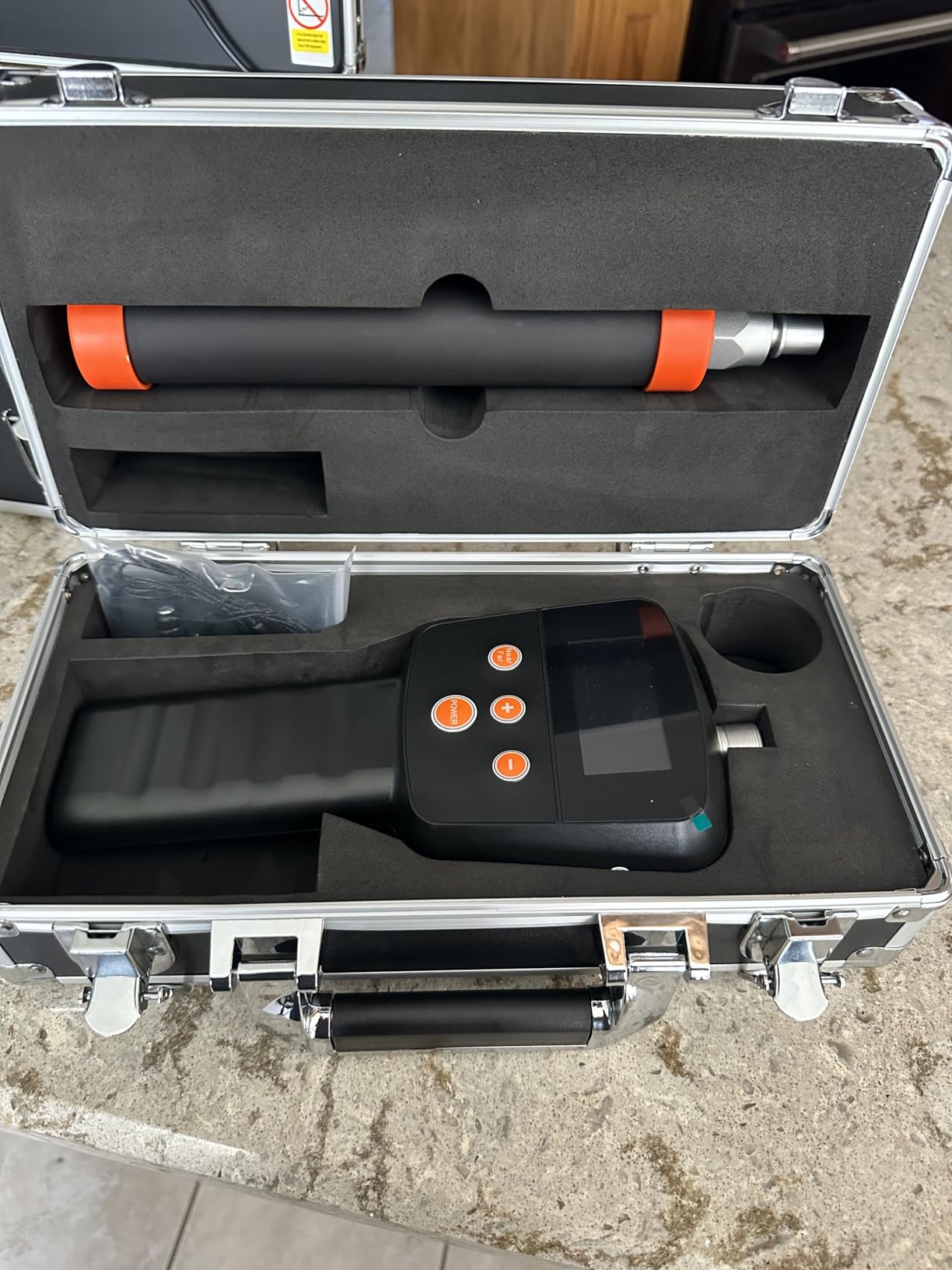
This is the pick when the question is not just what is in the pipe but where it is in the ground. The 512Hz locator is the headline feature, and it is the one that changes the workflow on a buried utility job.
Buyers report the locator is accurate through concrete, rebar and soil, which is exactly the condition set of a duct bank crossing under a slab or a parking lot. A transmitter in the probe plus a receiver in hand turns a camera run into a mapped run, so you can point at the ground and say where the defect sits.

The cable is 131 ft / 40 m of semi-rigid line with length markings, fed one-handed off a steel bearing inside the reel. Picture quality is 1000TVL across a 130 degree inspection angle, and 12 adjustable LED lights cover the dark sections. The stainless steel housing is IP68 rated with a sapphire lens, which is what you want in a wet conduit.
It fits straight pipe from 1.18 to 7.87 inches and right-angle pipe from 1.97 to 7.87 inches, and a 16 GB SD card is included for transfer to a computer. The case included for storage is a small professional touch that reviewers mention more than you would expect.
Why the locator matters more than resolution
On a buried run, a picture without a position is an anecdote. The locator turns the survey into evidence a crew can act on, and this is the only mid-priced camera here that includes the receiver rather than selling it as an add-on. That alone changes the economics of the job.
Reviewers also call out excellent battery life, easy setup and good picture quality for the price. One buyer put it plainly: the locator is what makes it good value, not the screen.
What gives crews trouble
The cable is the recurring complaint. It is thin enough to kink, and owners report it resisting the push through 3-4 inch pipe over a significant distance, which is a real limit on tight commercial runs.
The image does not self-level, so you set rotation from the menu and lose that setting between lines. The included SD card may need replacing before it will format, and one reviewer reported internal solder defects alongside an unhelpful warranty-repair process, so check the return terms before a long season.
3. VISIOPROBE 100-Foot 1080P Sewer Camera – Top Rated for All-Day Battery Life
Pros
- Clear 1080P image with 12-LED lighting in dark pipe
- 8500mAh battery comfortably covers a full workday
- 32GB card records photo
- video and audio
- Two wheeled heads adapt to different pipe diameters
- Rigid enough to take substantial pushing force
Cons
- Manipulation gets harder after several tight bends
- The 23mm wheeled head can struggle to round a 90 degree bend
- Build quality feels slightly below commercial grade
If your day is long and your charging opportunities are few, this is the camera to look at. The 8500mAh battery is rated at up to 10 hours of continuous work, and that single spec eliminates a category of field problems that no other unit in this list solves.
Image quality is AHD 1080P through a 145 degree wide-angle lens with 12 adjustable LED lights, which is a wider view than most rivals and means you see more of the pipe wall per push. Audio recording on the included 32GB TF card matters for documentation: you can narrate the defect and tie it to a claim, and repeat purchase is common among the owners who report using it.
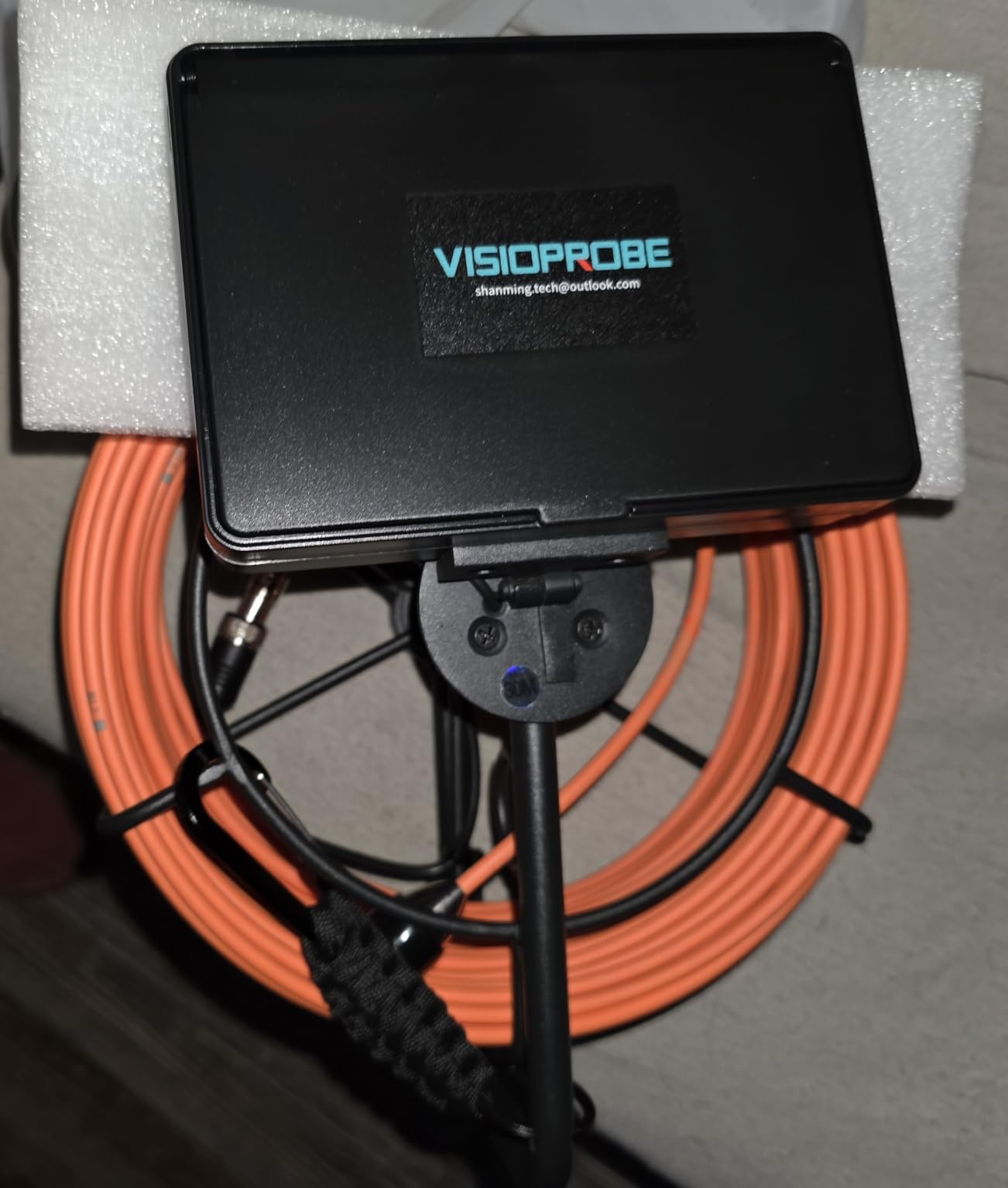
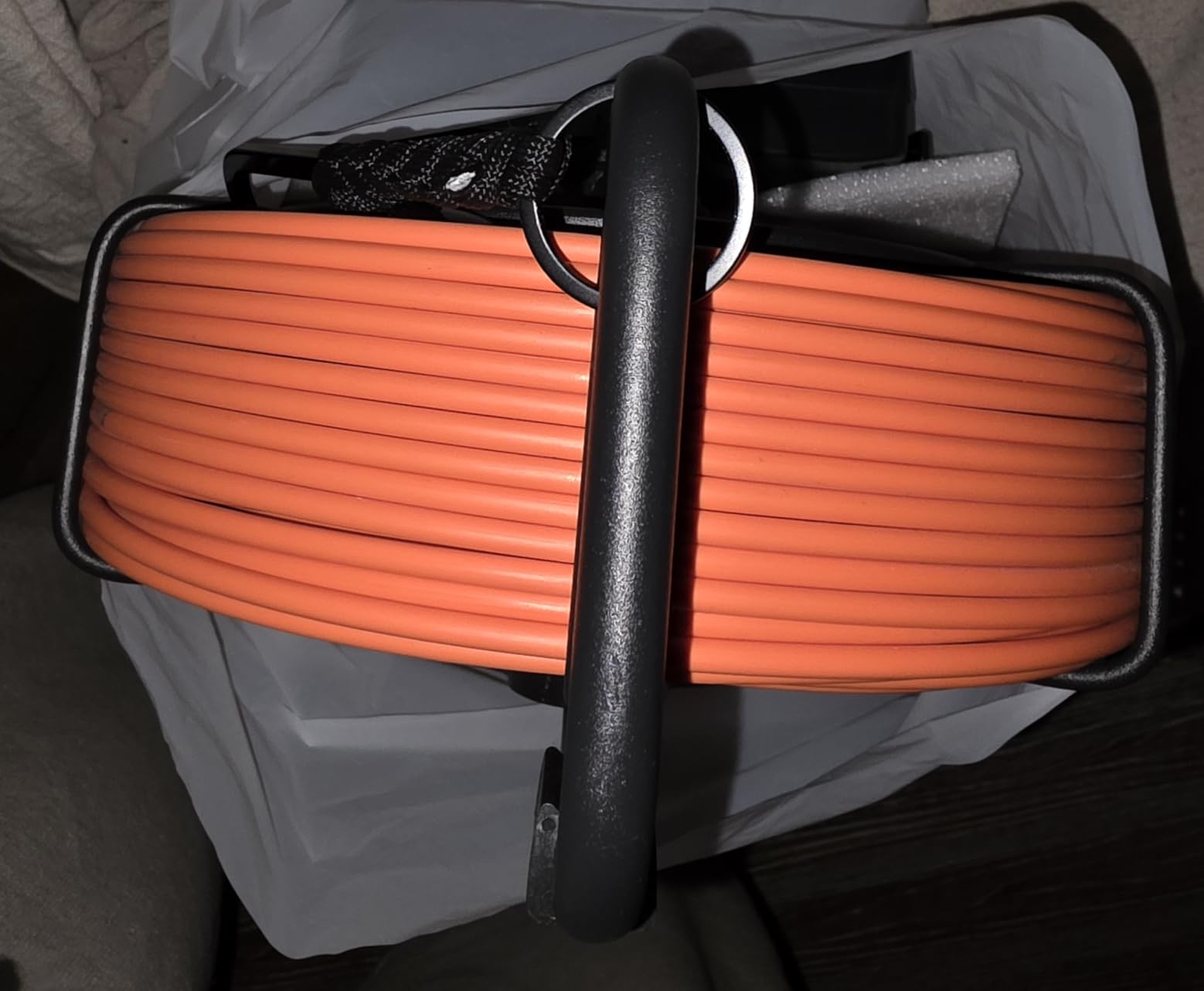
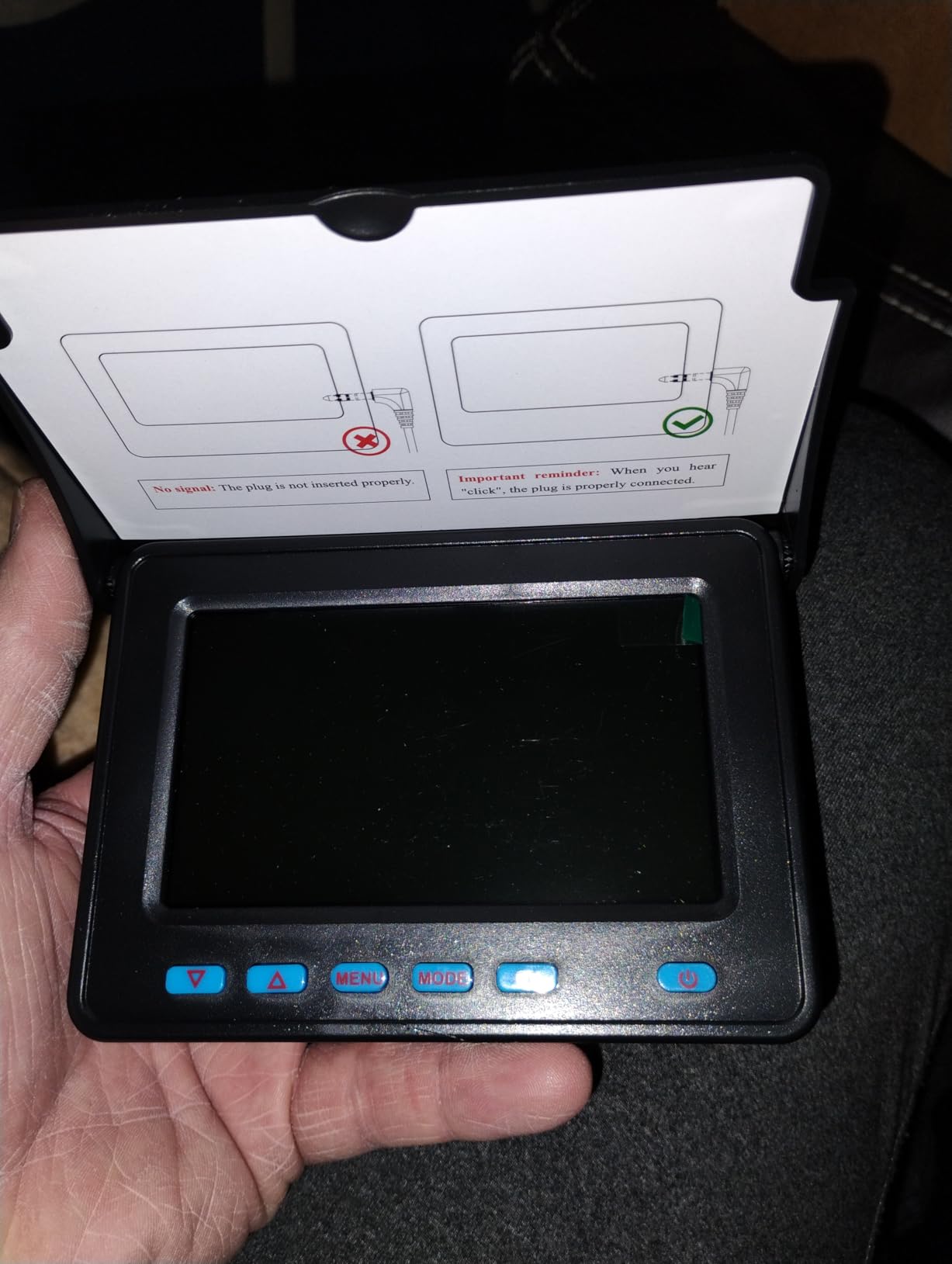
The 100 ft / 30 m fiberglass cable is described as anti-corrosion, cold-resistant and high tensile, with Arabic numeral depth markers that are easier to read in a wet glove than silver-ink markings. The 4.3-inch IPS monitor has a built-in sun visor, which is a real advantage on an open trench in daylight.
Two protective camera heads with wheels are included, so the same head handles a narrow lateral and a larger main. The package also carries a 1-year warranty plus lifetime technical support, which is stronger coverage than most of the class.
Built for crews that work outside
Reviewers highlight the compact, non-bulky body as easy to handle during inspections, plus the 100 ft reach handling most residential jobs. The wheeled protective heads are the detail that gets mentioned by plumbers specifically, because a head that stays centered gives you a usable image in a larger line.
It is also stiff enough to take substantial pushing force, which is what separates a camera that reaches the second elbow from one that stops at the first.
Where the steering lets you down
Manipulation gets harder after several tight bends in a line, and the 23mm wheeled head can struggle to round a 90 degree bend. If your runs are full of sharp elbows, factor that in before you commit.
A few users feel the build is slightly below commercial-grade units, which is a fair description of where this sits in the market. It is a very capable tool, but it is not a municipal fleet camera.
4. VEVOR 98-Foot 4.3-Inch Drain Camera – Budget Pick for Light Crew Bags
Pros
- Compact and light at 7.5 pounds for small jobs
- Clear picture and effective lighting in dark pipes
- Owners report the cost is recouped after a single job
- Open reel design washes off after outdoor work
- Metal reel keeps it portable
Cons
- Monitor mounting bracket is cheap and breaks
- Recording stops at random
- Struggles with tight bends and will not pass every location
This is the one to buy when the camera is a secondary tool in the truck rather than the reason the crew rolls. At 7.5 pounds with a 4.3-inch screen, it is the most portable unit we reviewed and the least disruptive to carry around a site.
Picture quality is 720P with a 120 degree viewing angle and 6 adjustable LED lights across 3 brightness levels, which owners say is better than expected for the money. The 4500mAh battery gives up to 5 hours of continuous inspection, enough for a half-day of short lateral checks, and a 16 GB SD card is included.
The 98 ft / 30 m fiberglass cable carries distance markings, and the open-design metal reel is deliberately easy to wash off after outdoor work, which matters more than it sounds when the reel has been in a wet trench. The camera suits straight pipe from 1.18 to 3.93 inches and right-angle pipe from 1.97 to 3.93 inches.
Owners consistently say the cost is recouped after a single job, which is the honest way to think about a tool at this level. Treat it as business equipment that pays for itself, not as a long-term investment.
Where the budget pick earns its slot
It works well for mains and larger pipe sizes within its range, and several owners describe it as flexible, easy to use and simple to set up with no manual required. For a crew doing pre-job checks, laterals or small-diameter service lines, that simplicity is the selling point.
The open reel design is worth a second look, because the number one complaint about cheaper inspection cameras is a reel that traps mud and grout after every job.
What you give up for the lower cost
The monitor mounting bracket is cheap and prone to breaking, and reviewers flag it as the part most likely to fail first. Recording also stops at random, so do not rely on it for a record you may need later.
The cable is very stiff for the first 12 inches at the probe joint and it struggles with tight bends, so owners report it will not pass every location. One reviewer also reported a camera whose LED light did not turn on, which is a reminder to test the whole system before leaving the shop.
5. KCapyn 100-Foot 17mm Borescope – Best for Narrow Conduit
Kcapyn Sewer Camera 100FT/30M Pipe Inspection Borescope Endoscope Camera with Light 6 LEDs 5″ IPS Screen 17MM Plumbing Snake 5000 Mah Battery,1080P High-Definition Industrial Sewer Camera
Pros
- 17mm head reaches narrow pipe and conduit sizes
- Clear image with one-click photo and video capture
- Sturdy cable that moves smoothly and pushes well
- Integrated tool box keeps accessories organized
- Simple setup
- ready within minutes
Cons
- Camera head does not self-level
- 5 inch screen does not tilt
- Struggles with 90 degree or tighter bends
The smallest head in this roundup at 17mm, and that single number is why it earns a place. Telecom duct and small conduit runs are where larger heads simply do not enter, and this is the camera to reach for when head diameter is the binding constraint.
Everything else is competent: real 1080P high-definition lens, 6 high-brightness LED lights, a 5-inch DVR HD display with real-time view and synchronous recording, and a 32GB card included. The 30 m / 100 ft high-toughness semi-rigid cable has a distance scale printed along it, and the camera is rated IP68 waterproof and dustproof.
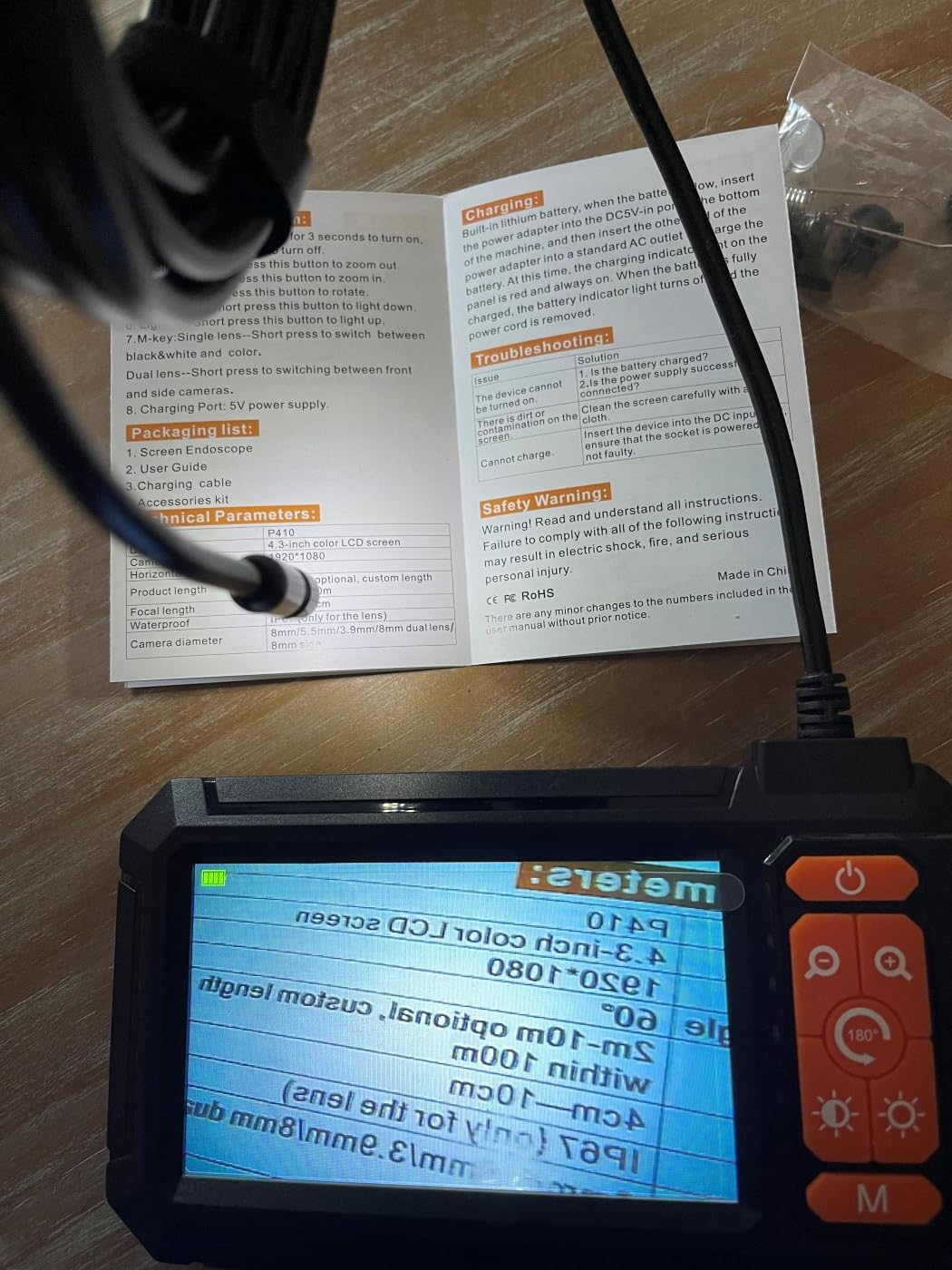
The integrated orange tool box with organized accessory storage is genuinely useful in the field, where loose heads and adapters are the first thing to go missing. Camera protectors and a wheel adapter are included, and the wheel adapter helps center the head for inspecting larger pipes when you need the extra reach.
Plumbers in particular like the small camera head and the centering adapter combination. The stated uses cover pipeline dredging, house inspection and vehicle maintenance, so it doubles as a general inspection tool rather than a single-purpose sewer head.
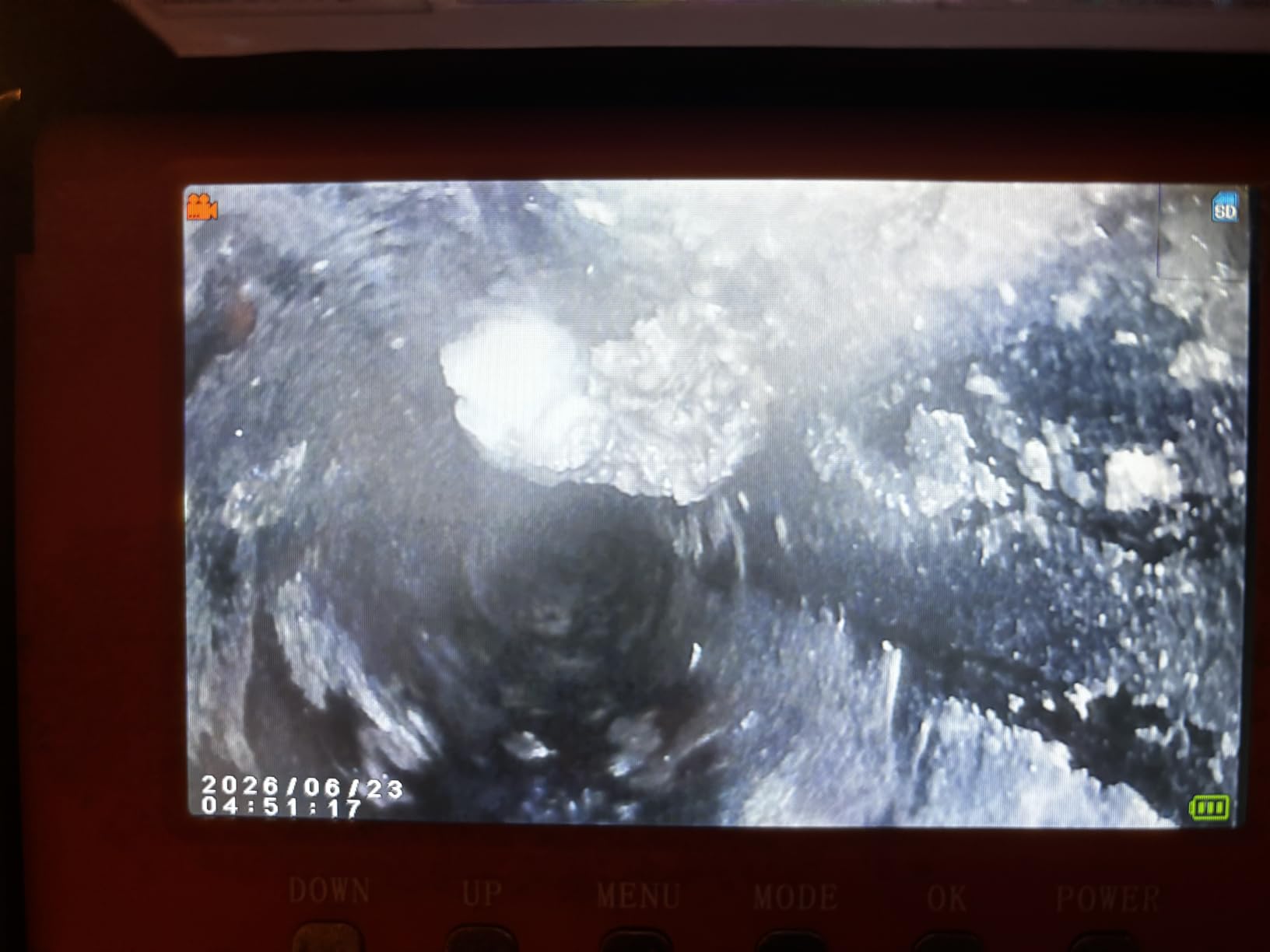
What the small head buys you
A 17mm head fits conduit and pipe sizes that stop a 23mm probe, and on a telecom or building-services job that difference is the difference between a report and no report. Reviewers also call the cable sturdy and good at moving smoothly and pushing well through lines.
Setup is quick, with owners reporting the system was usable within minutes of opening the box. ISO range of 100 to 3200 and autofocus both help in a dim, changing environment.
Where the ergonomics bite
The camera head does not rotate to self-level, so the image can appear sideways and you correct it in the menu. The 5-inch screen does not tilt either, which limits viewing angles when the probe is working against a steep offset.
It struggles to get through 90-degree or tighter bends, and the cable depth markings are small and printed in silver ink, hard to read when your headlamp is the only light source. A few owners also received displays that would not hold a charge or showed vertical lines, so test on day one. The warranty is 6 months, shorter than the coverage on several rivals here.
6. SYOWNFS 100-Foot Sewer Camera – Best for Dark Pipe Work
Sewer Camera 100ft/30m,Drain Camera with 12pcs Light, 4.3″ Screen,DVR 32GB,IP68 Waterproof Endoscope,5600mAh,Plumbing Pipe Inspection Camera for Drain & Sewer Inspection
Pros
- 12 LED lights with 5 brightness levels light dark pipe effectively
- 145 degree viewing angle with 1000TVL sensor
- Reviewers say the picture beats what paid plumbers produce
- 4.3 inch IPS monitor with a sun visor
- Responsive customer service when a cable broke
Cons
- Cable is thinner than the 100 ft label implies
- Plastic retention screws on the wheeled attachment are weak
- 4 inch wheeled attachment will not fit a toilet floor opening
Lighting is the headline on this one, and it is not a minor spec. Twelve LEDs across 5 brightness levels with a 145 degree viewing angle is the most aggressive lighting package here, and it is why several owners report footage that looks better than what they get from paid plumbers using commercial gear.
The camera itself is 1000TVL with a 1000TVL-class 1 mp sensor, recording to MP4 with a 22mm focal length. The #304 stainless steel waterproof housing is rated IP68, and the probe carries a flexible stainless steel spring tip, which is what lets it get around a bend rather than simply pushing into it.
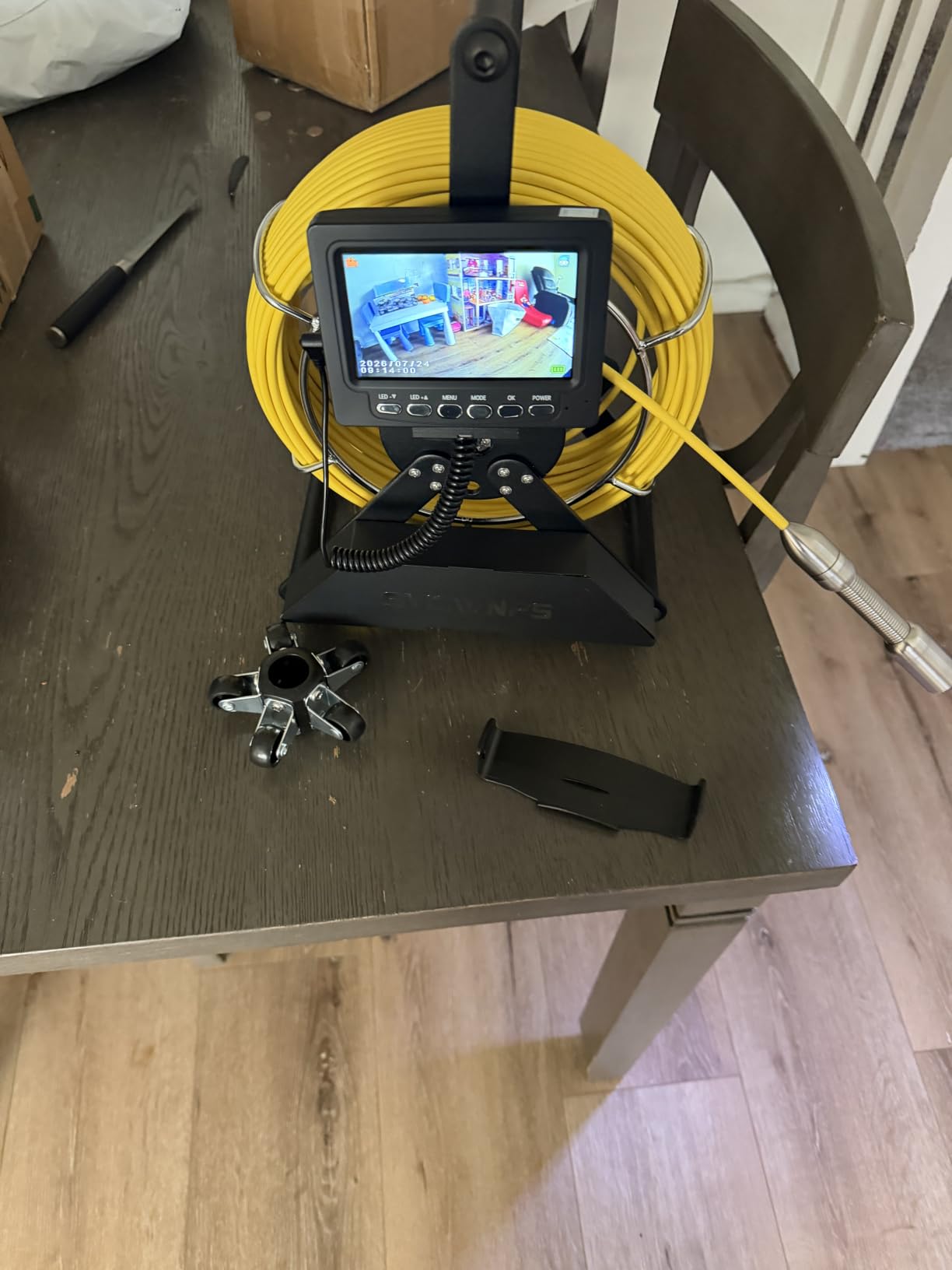
The 4.3-inch color IPS LCD monitor includes a sun visor, and the 5600mAh lithium battery is rated 4 to 6 hours of continuous use with a remaining-capacity display on screen, so you can plan the day’s runs around the charge. Transfer works by SD card or USB-C, and 32GB of memory is included.
Two camera protectors ship in the box at 38mm and 99mm, which covers a small lateral and a larger main from one kit. Suitable work includes wastewater, storm water, pipelines, drains and ducts.
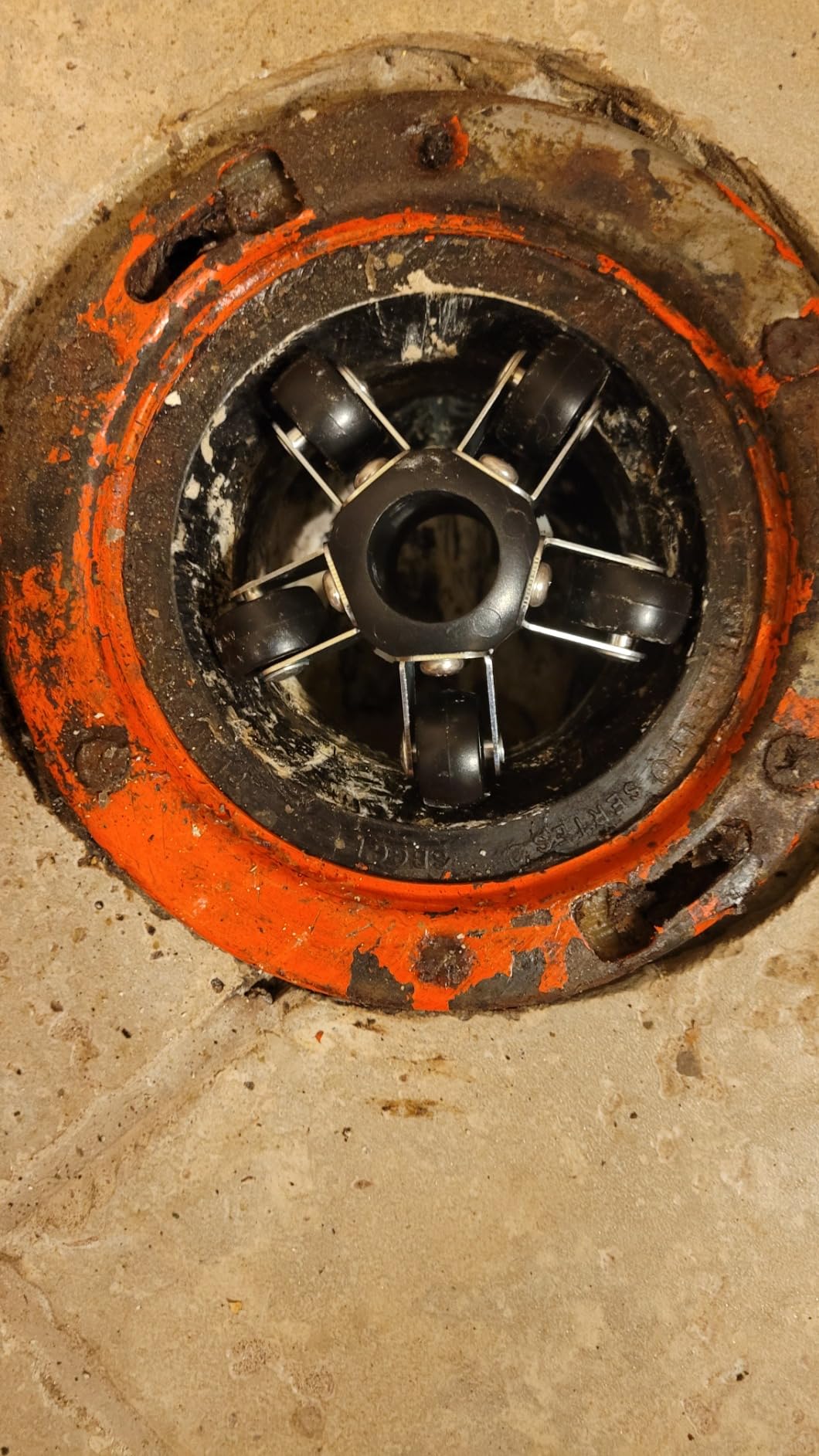
Best suited to dark, wet, deep runs
When the work is a dark main with no ambient light at all, LED count is worth more than resolution, and this camera wins that comparison. The 145 degree view also helps in larger pipe, where a narrow lens wastes pipe wall you could be looking at.
Owners like the simple setup and the fact that the camera can pass through a toilet to reach the main sewer, which is a common residential service-line entry point. Customer service gets credit too, with several owners reporting a responsive response when a cable broke.
Watch the cable diameter, not the label
The 4.9mm (5mm) fiberglass rod is thinner than buyers expect from a 100 ft system, and one owner reports reaching only about 60 ft in 4-inch lines. Judge this cable by pushing force, not by the number printed on the box.
The plastic retention screws on the camera attachment are too weak and can come off inside the pipe, with some users replacing them. The 4-inch wheeled attachment also will not pass a toilet floor opening, so plan your entry point. One reviewer reported a light failure on first use, so test before you leave.
7. VEVOR 230-Foot Self-Leveling Sewer Camera – Best for Longest Runs
Pros
- Self-leveling head keeps the image upright
- 230 ft reach with an on-screen distance counter
- 9 inch 1080P display readable in sunlight
- Large screen is excellent for documenting and sharing findings
- Input keyboard for logging inspection notes
Cons
- Locator receiver is not included
- 5mm cable at 230 ft is prone to over-bending and wear
- Several cameras failed after only a few uses
- 27.6 pound weight is heavy for one-person carry
This is the reach pick. At 230 ft / 70 m it more than doubles what the other cameras here can push, and the self-leveling 0.9-inch head with an IP68 sapphire lens is the feature owners single out as the biggest real-world improvement.
A self-leveling head matters because pipe runs are rarely straight. Reviewers say the upright image makes a real difference in practice, and it removes the constant menu-based rotation that the non-self-leveling models require.
The 9-inch 1080P HD non-touch screen is large enough to read in bright sunlight thanks to the included sunshade, and it takes an input keyboard so you can log inspection data on the device rather than on paper later. The camera records MOV to a 32GB SD card, and the on-screen distance counter tracks cable payout as you push.
A 512Hz sonde transmitter is built into the head, plus 12 adjustable LED lights at 3 brightness levels, 3x digital zoom and a 145 degree wide angle. The 4500mAh battery is rated 6 to 8 hours, and the head fits straight pipe from 0.99 to 5.9 inches and right-angle pipe from 1.97 to 5.9 inches.
Where the extra reach pays off
Long mains, culverts, and multi-segment duct runs are exactly where a 100 ft cable stops working. Owners report the long reach combined with the distance counter makes locating a defect accurate, and the 9-inch display means you can show a client the condition of a line without squinting.
Reviewers frequently note the image is comparable to far costlier units, and the sunshade is called out for daylight work. Setup is described as simple: charge, feed, record.
What the weight and the missing receiver cost you
At 27.6 pounds this is a two-person or vehicle-mounted system, not a hand-carry tool. Plan the reel transport into your workflow rather than discovering it at the trench.
The locator receiver is not included with this package even though the sonde is built in, which is an easy and expensive surprise to avoid. The 5mm cable at 230 ft is also more prone to over-bending and wear, some owners reported corrosion on the stainless steel body, and a few cameras failed after only a few uses. Cable length markings are small and hard to read, and some shipments arrived without a manual.
8. Sanyipace 165-Foot Self-Leveling Camera with Locator – Best for Precise Buried Locating
Sanyipace Sewer Camera with Pipe Locator, 7mm/0.28inch Cable, 512Hz, 10.1″ IPS Screen, 32GB Card, 165FT/50M Borescope Inspection Camera, DVR with Speaker, for Drain Pipe Plumbing Inspection
Pros
- 7mm cable pushes well over long distances and through bends
- Self-leveling image is described as a must-have
- 10.1 inch IPS screen makes pipe condition easy to read
- 32GB card with date and time stamps for documentation
- Responsive service that sends replacement heads and transmitters
Cons
- Locator wand gives a wide unfocused reading
- On one unit neither locator could find the camera head
- Menus are unintuitive with non-obvious labels
- Some users feel the unit is overpriced
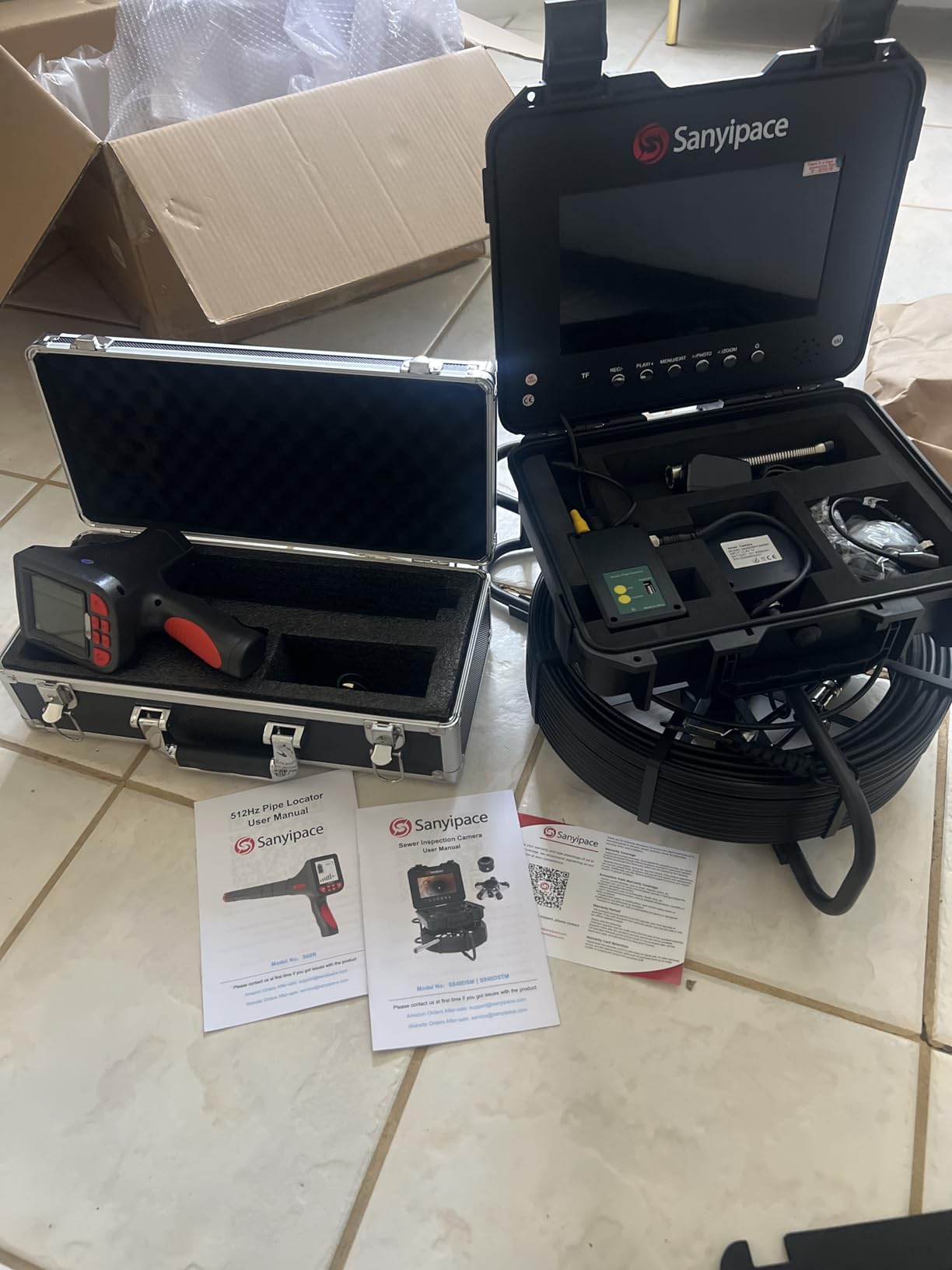
The thickest cable in this roundup at 7mm, and that is the number to notice. Cable rigidity is what determines whether a pushrod camera reaches the far end of a run or stops at the second elbow, and the 7mm semi-rigid fiberglass push rod here has the strongest pushing and pulling force of the group.
It runs 165 ft / 50 m, carries a cone-shaped camera probe end designed to reduce the chance of snagging, and includes a built-in distance counter for real-time cable length monitoring. Image stabilization is self-leveling, which reviewers describe as a must-have feature once you have worked without one.
The 512Hz transmitter is paired with a 3.5-inch screen locator offering Far Mode at 16.5 ft and Near Mode at 3.3 ft, so you can switch between a coarse search and a precise one. The display is a 10.1-inch IPS panel, the largest here, with 12 high-intensity LEDs, a 145 degree wide-angle lens and 5x digital zoom.
Recording goes to a 32GB card with on-device playback, computer transfer and date and time stamping, plus a speaker for audio output. The warranty is 1-year.
Best built for long, tight buried runs
Owners highlight the picture quality as very clear and better than expected, the 7mm cable pushing well over long distances and handling pipe bends, and the large 10.1-inch IPS screen making pipe condition easy to read at a glance. The 32GB card with date and time stamps is useful for job documentation, which is where utility reporting usually lives.
Support is also worth noting, with owners reporting that customer service sent replacement heads and transponders when parts failed.
Where the locator falls short
The locator wand gives a wide, unfocused reading, which makes pinpointing the head difficult in practice. On at least one unit neither the supplied locator nor a second one could find the camera head, so if accurate positioning is the deciding factor for your job, test this before you commit to it.
The menus are also described as unintuitive, with functions labeled in non-obvious ways such as record acting as play, and the instructions are poorly written. A few users feel the unit is overpriced for what it delivers once the locator is factored in.
How to Choose an Inspection Camera for Utility Work
Five questions decide which camera you should buy. Work through them in order and the specification noise falls away.
How far do you actually have to push?
Measure your longest run, then add margin. Residential laterals and building services usually sit under 100 ft, mains and culverts regularly exceed 150 ft, and anything crossing a site may need the full 230 ft. Buy the reach you need and resist going further, because cable length and cable rigidity trade off against each other in this class.
Does the head self-level, and does the screen tilt?
Self-leveling keeps the image upright as the probe works around a bend. A tilting screen lets you keep your head still while the pipe changes angle underneath. Both are cheap to specify and both remove a steady source of frustration on a long run.
How much light do you need?
Every camera here is IP68 at the head, which covers wet and submerged conditions. The difference is LED count and brightness levels. Six lights cover a lit lateral; twelve across five brightness levels is the difference between a usable image and a guess in a fully dark main.
Do you need to locate the camera in the ground?
If the answer is yes, you need a 512Hz transmitter and a working receiver in the box. The VEVOR 131-foot system includes the receiver. The 230-foot system has the sonde built in but not the receiver. The 165-foot system includes both, though reviewers report its wand reading is unfocused. Confirm the receiver is included before you order anything.
What runs in the day and how is the report filed?
Batteries here run from about 5 hours to 10 hours, which is the difference between charging at lunch and finishing the run list. On the documentation side, look for a DVR with an included card, date and time stamping, USB-C transfer, and a keyboard for logging inspection notes on the device. Field crews report the same thing repeatedly: the camera that files its own report saves the most time at the desk.
How to Run a Buried Utility Camera Survey
A camera is only as good as the method behind it. This is the sequence we would use on a duct or service-line survey.
Step one is to establish the route and access before the camera comes out. Know the pipe diameter at each point, the entry, the expected bends, and where you are allowed to dig if the survey turns into a repair. Confirm the head diameter clears the smallest restriction on the run, because a 23mm head in a 1.5-inch line wastes a whole shift.
Step two is to calibrate. Write down the cable length at the point the head enters the line, and check the depth counter or markings before you push. Frame the first clean length of pipe before entering a defect area so you have a known-good reference shot for the report.
Step three is to push slowly and keep the head centered. The spring tip and the centering wheels exist for a reason, and owners across this roundup report that steering problems begin when a crew pushes hard into a bend instead of working around it. Record continuously so the distance counter and the recording stay in sync.
Step four is to light the dark sections properly rather than cranking brightness. Most failures on utility lines are crushed, offset, or blocked conduit, and those read on the image, not on a thermal reading. Note the cable depth at each defect, because that number is what turns a survey into an excavation ticket.
Step five is to pin the position before you back the head out. With a 512Hz system, walk the locator over the surface and mark where the receiver peaks, then take a reference photo of the ground marker. If the camera is lost in a flooded run, that position is the only way back to it.
Finally, de-energize nothing, but do confirm what you are looking at before recommending a repair. A hot spot on a line crew report can be a loose connector, a failing splice, or simply a bolted connection with no torque applied. The camera finds the anomaly; the engineer decides what it means.
Frequently Asked Questions
What is the best camera for utility line inspection?
It depends on the asset. Overhead lines and substations need a radiometric thermal imager, either handheld or on an enterprise drone payload. Buried service lines, duct banks, drainage runs and conduit need a pushrod borescope with an IP68 head, a semi-rigid fiberglass cable and a DVR. For buried work, cable rigidity and LED lighting matter more than headline resolution.
Can drones inspect power lines?
Yes, and for overhead transmission and distribution work they are now the default approach. A thermal payload reads radiometric temperature across conductors, connectors, insulators and substation equipment while the crew stays on the ground. What they cannot do is see inside a buried duct or conduit, which is why ground-based pushrod cameras remain a necessary complement rather than a replacement.
What is the best drone for powerline inspection?
For utility corridor work the deciding factor is payload endurance and zoom, not the airframe alone. A thermal plus visible-light zoom payload that holds position in wind over long line segments will cover more span per battery than a lighter setup with a wide-angle camera only. Cold-weather battery derating is real, so plan flight time conservatively in winter.
Can you put a camera on a utility pole?
Yes, on a non-conductive telescopic pole, and it is the standard way to inspect pole-top hardware without a climb. Use fiberglass or carbon poles, keep a safe standoff from energized conductors, and follow your utility’s own rules for qualified electrical workers. It only works where you can legally stand and see the hardware, so it complements aerial work rather than replacing it.
What is the best inspection camera for electricians?
For buried service work, a pushrod camera with an IP68 head, a 5mm or thicker semi-rigid cable and at least 8 adjustable LEDs is the most useful tool an electrician can carry. Add a 512Hz locator if you need to know where the head is in the ground, and a self-leveling head if the run has bends.
What is the difference between a borescope and an inspection camera?
The terms are used loosely. A borescope is strictly an optical instrument for looking into a confined space, and a borescope camera is that instrument with a light source and display. An inspection camera is the broader category, and it often includes video recording, a locator, and a cable long enough for pipe or conduit runs. Most of the products in this roundup are inspection cameras with borescope camera heads.
Can a thermal imager see through concrete?
No. A thermal imager reads infrared energy that reaches the sensor, so it cannot see through concrete, soil or duct walls the way a 512Hz locator can. Its value underground is limited to open manholes, vaults and exposed conduit where the surface is in view. Locating a buried run takes a locator receiver paired with a transmitter in the camera head.
How much does a thermal camera inspection typically cost?
Cost varies with asset type, survey area, data volume and how much post-processing the report needs. A handheld thermal survey on a substation is a short job, while a multi-span transmission inspection with radiometric reporting and mapping takes far longer. Rather than quoting a figure, compare the total job cost: thermal catches energised faults, pushrod cameras cover buried duct, and crews often need both on the same asset.
Final Verdict: Where to Start
For the best cameras for utility line inspection, start with the ChoosePRO 100-foot system if you want one camera that handles most buried service work, and pair it with a handheld radiometric thermal imager for the overhead and substation side. That combination covers the majority of utility corridor inspection tasks.
If your work is locating buried duct rather than simply viewing it, choose the VEVOR 131-foot system because the 512Hz receiver comes with it. If you are covering long mains, the VEVOR 230-foot self-leveling model reaches further than anything else here, and you should budget for the locator receiver separately. For crews working in complete darkness, the SYOWNFS 12-LED model lights pipe better than the rest of the field.
Whichever you pick, test the full system on a known line before the first paying survey, and confirm the head diameter, cable rigidity and locator function suit your routes. The purchase is the easy part; the routing discipline is what makes the footage worth keeping.