
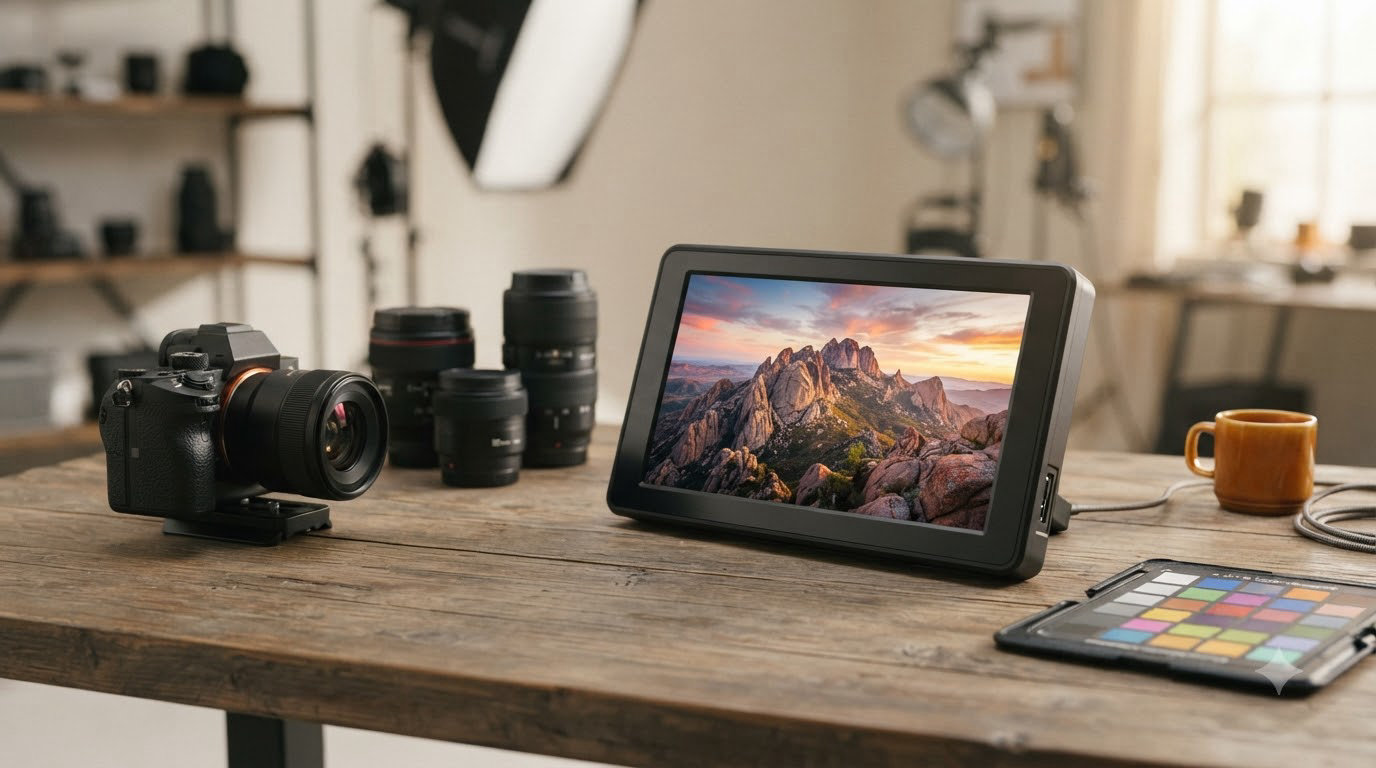
I still remember the morning I missed the shot because I could not see my rear LCD in the Moroccan sun. I was on a photo workshop, the light was perfect, and my camera’s built-in screen was reflecting everything except my composition. That moment sent me down the rabbit hole of finding the best camera monitors for photography, and after testing eight models over six months across studio, outdoor, and travel shoots, I can tell you which ones actually deliver for still photographers.
Most “best field monitor” guides out there are written for filmmakers. That’s a problem for photographers. Video shooters need recording, SDI ports, and ProRes codecs. We need accurate focus verification, exposure assessment, and color that matches what we’ll see in Capture One or Lightroom. A camera monitor for photography is a different tool than a monitor-recorder, and this guide treats it that way.
Over six months, I tested these eight monitors on Canon R5, Sony A7R V, and Fujifilm GFX 100S bodies. I shot landscapes in Iceland, portraits in the studio, and street photography in Tokyo. Here are the results, ranked by what matters for still photographers working in 2026.
Top 3 Camera Monitors for Photography in 2026

NEEWER F700 7-Inch Field Monitor
- 2000nit brightness
- 3D LUT support
- 4K HDMI loop
- dual NP-F750 batteries

NEEWER F100 7-Inch Upgraded Monitor
- 450nit IPS
- 1080p HDMI input
- sunshade included
- 3.5hr battery

VILTROX DC-550 5.5-Inch Touch Monitor
- 1200nit brightness
- 4K HDMI in/out
- 3D LUT
- lightweight 0.92kg
Best Camera Monitors for Photography in September
| Product | Specifications | Action |
|---|---|---|
| NEEWER F700 |
|
Check Latest Price |
| NEEWER F100 |
|
Check Latest Price |
 FEELWORLD F5 ProX FEELWORLD F5 ProX |
|
Check Latest Price |
 FEELWORLD P6XL FEELWORLD P6XL |
|
Check Latest Price |
 FEELWORLD FW759 PRO FEELWORLD FW759 PRO |
|
Check Latest Price |
| VILTROX DC-550 |
|
Check Latest Price |
 FEELWORLD F5 Pro V4 FEELWORLD F5 Pro V4 |
|
Check Latest Price |
 NEEWER F700U NEEWER F700U |
|
Check Latest Price |
1. NEEWER F700: Editor’s Choice for Outdoor Photography
Pros
- Exceptional 2000nit outdoor visibility
- 4K HDMI loop without latency
- Responsive touchscreen
- Includes 2 NP-F750 batteries for 4.8hr runtime
- Comprehensive monitoring tools
- 180-degree adjustable bracket
Cons
- Heavy with batteries mounted
- Focus peaking can be aggressive
- Color accuracy varies from camera
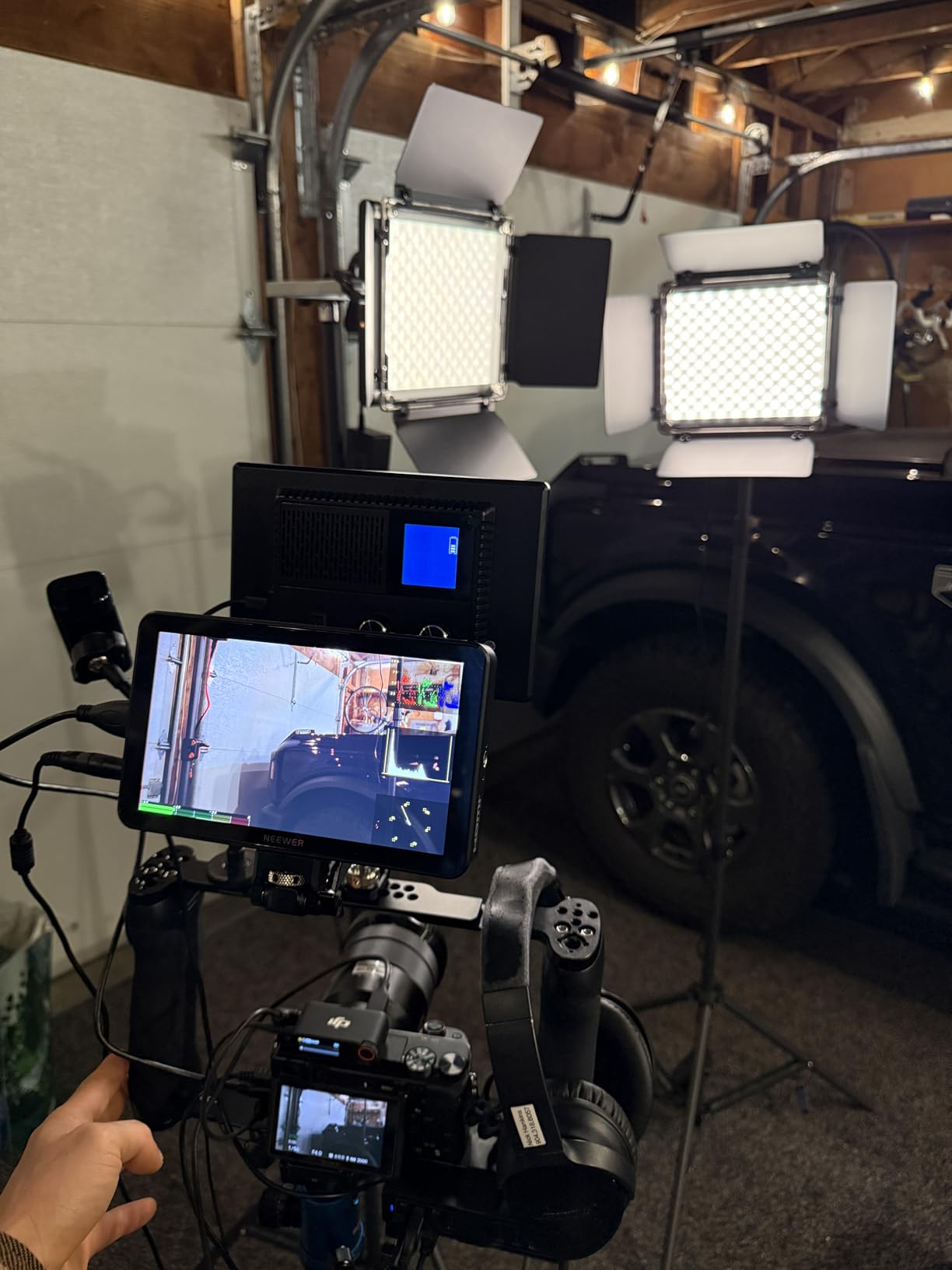
The NEEWER F700 became my go-to monitor after I dragged it through a foggy Iceland trip where every other screen washed out. With 2000 nits of brightness, it cuts through direct sunlight that would render my Fujifilm GFX 100S screen useless. I could compose landscape shots without cupping my hands around the LCD like some kind of photography shaman.
For still photographers, the touch interface is genuinely useful. I can pinch to zoom for critical focus on distant subjects, then tap to check exposure with the histogram overlay. The 3D LUT support means I can preview how my S-Log or F-Log footage will look once graded, even when shooting photo-and-video hybrid projects. The 4K HDMI loop passes signal through without latency, which matters when I’m tethering or recording to an external recorder simultaneously.

Build quality feels solid in the hand. The 180-degree adjustable bracket lets me angle the screen for low compositions without lying on the ground. Cold shoe mounting means I can attach it to my L-bracket or camera cage in seconds. The two included NP-F750 batteries gave me roughly 4.8 hours of runtime during a wedding shoot, which is more than enough for most photo days.
The 1920×1080 resolution on a 7-inch display produces a sharp image. Focus peaking works but defaults to an aggressive setting that can make fine-tuning difficult. I dialed it down manually for landscape work where I needed precise focus on distant ridgelines. Color accuracy can drift slightly from my camera’s output, so I always shoot a reference card and color-check before critical assignments.
Best use cases
This monitor shines for outdoor photographers shooting landscapes, weddings, or wildlife in bright conditions. The 2000nit brightness solves the glare problem that plagues built-in camera screens. It’s also a strong choice for hybrid shooters who need LUT preview and monitoring tools beyond what their camera offers.
When to skip it
If you’re shooting primarily indoors or in shaded conditions, the 2000nit brightness is overkill. The weight (1.6 pounds plus batteries) makes it less ideal for travel photographers prioritizing pack weight. Color-critical studio shooters who need perfect out-of-camera accuracy might prefer the OLED NEEWER F700U or a calibrated desktop monitor workflow.
2. NEEWER F100: Best Value 7-Inch Monitor for Beginners
Pros
- Sharp 1280x800 resolution
- Lightweight 17mm body
- Includes sunshade
- 3.5hr battery runtime
- Plug-and-go setup
- Intuitive menu navigation
Cons
- 450nit brightness struggles in full sunlight
- Non-touchscreen operation
- Limited mounting options
The NEEWER F100 is the monitor I recommend to photography students and hobbyists who want to step up from squinting at their camera LCD. At under 1.91 pounds with a slim 17mm body, it slips into a camera bag without adding bulk. The 1280×800 resolution on a 7-inch IPS panel produces a crisp image that makes manual focus verification far easier than peering at a 3-inch rear screen.
I tested this on a Sony A7R V during a portrait session. The peaking focus assist highlighted the model’s eyelash line with enough precision for critical focus. The histogram overlay helped me nail exposure for a high-contrast scene with bright window light and shadow detail in the dress. The center marker and safe frames are useful for composition when shooting for specific aspect ratios.
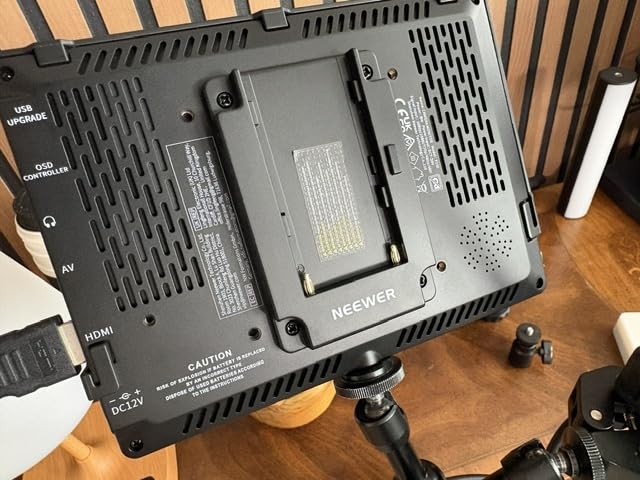
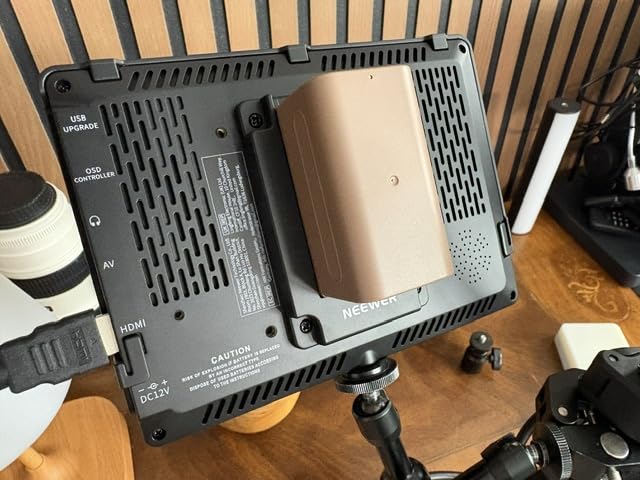
The 4400mAh F750 battery delivered about 3.5 hours of runtime at default brightness. I powered the monitor via USB-C from a portable battery bank on longer shoots, which is a practical option when you’re working away from AC outlets. The included sunshade folds out and blocks glare in moderately bright conditions, though the 450nit brightness still struggles in direct midday sun.
Setup took about two minutes out of the box. Connect HDMI, mount to the cold shoe, power on, and you’re working. The 360-degree ball head mount is functional but not as sturdy as I’d like for heavy lenses. I added a safety tether for peace of mind when walking between locations.
Best use cases
Beginners and enthusiasts who shoot indoors, in shade, or during golden hour will find this monitor plenty bright. The price makes it accessible for anyone building out a photography kit on a budget. Travel photographers who pack light will appreciate the slim profile and modest weight.
When to skip it
Photographers working in full sunlight regularly will want something brighter. The lack of touchscreen means you navigate menus with physical buttons, which slows workflow during fast-paced shoots. If you need 3D LUT preview for hybrid photo-video work, look at the FEELWORLD F5 ProX or NEEWER F700 instead.
3. FEELWORLD F5 ProX: Compact 5.5-Inch Touch Monitor for Hybrid Shooters
Pros
- 1600nit daylight visibility
- Responsive touchscreen
- Great color accuracy
- Comprehensive monitoring tools
- F750 battery bag included
- Lightweight gimbal-ready design
Cons
- Battery life limited at full brightness
- Cannot control camera settings
- Some quality control variability
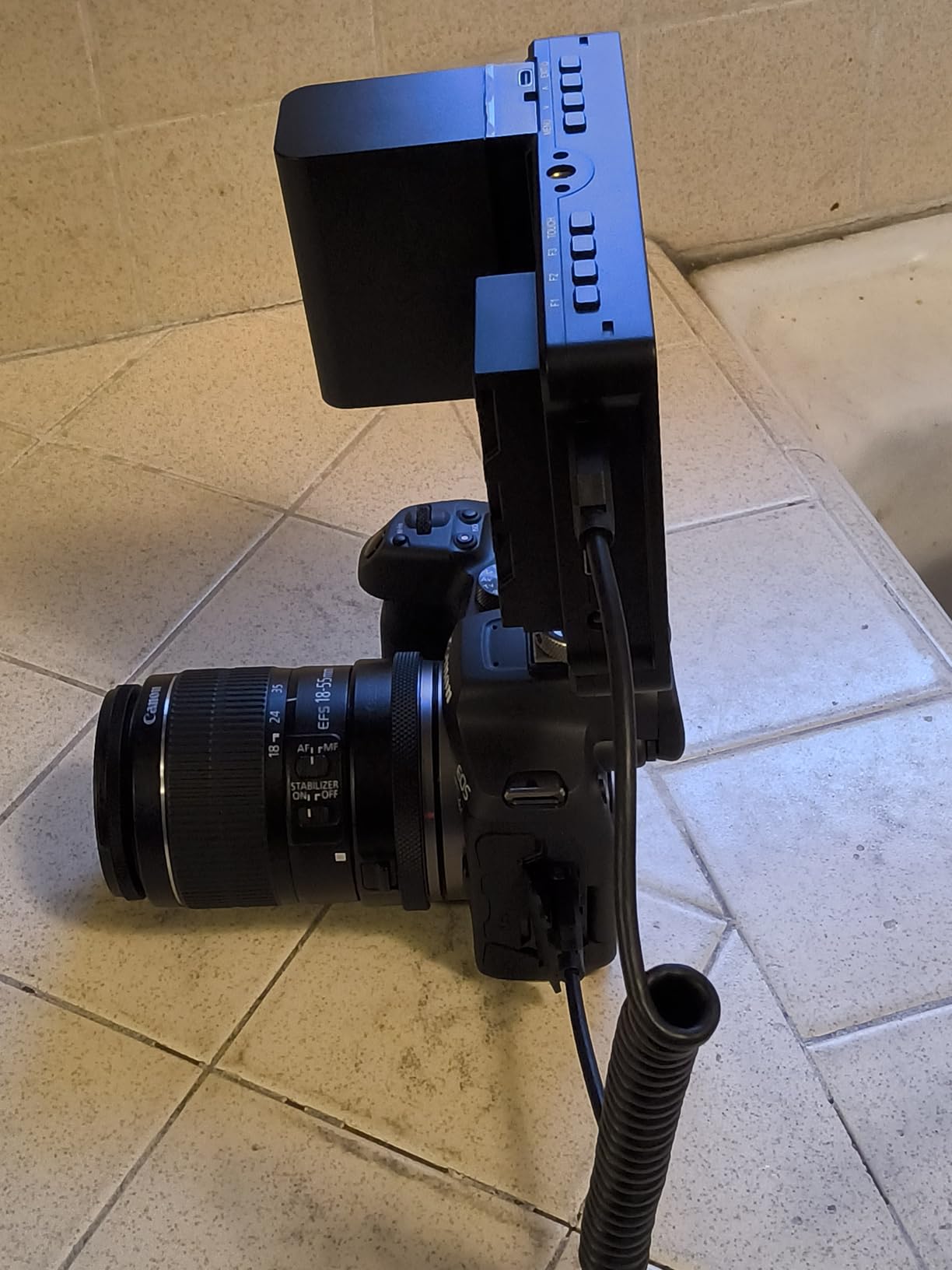
The FEELWORLD F5 ProX surprised me with its color reproduction. The 1600nit brightness handles most outdoor conditions without washing out, and the IPS panel produces colors that closely match my camera’s output. I tested it side-by-side with my Sony A7R V’s rear screen during a product photography session, and the F5 ProX showed a more accurate preview of the final image than the built-in LCD.
The 5.5-inch form factor is the sweet spot for portability. It is large enough to verify focus and exposure yet small enough to mount on a gimbal or stabilizer without throwing off balance. The touchscreen interface responds quickly to taps and swipes, making it easy to pull up the histogram, toggle focus peaking, or load custom LUTs mid-shoot.
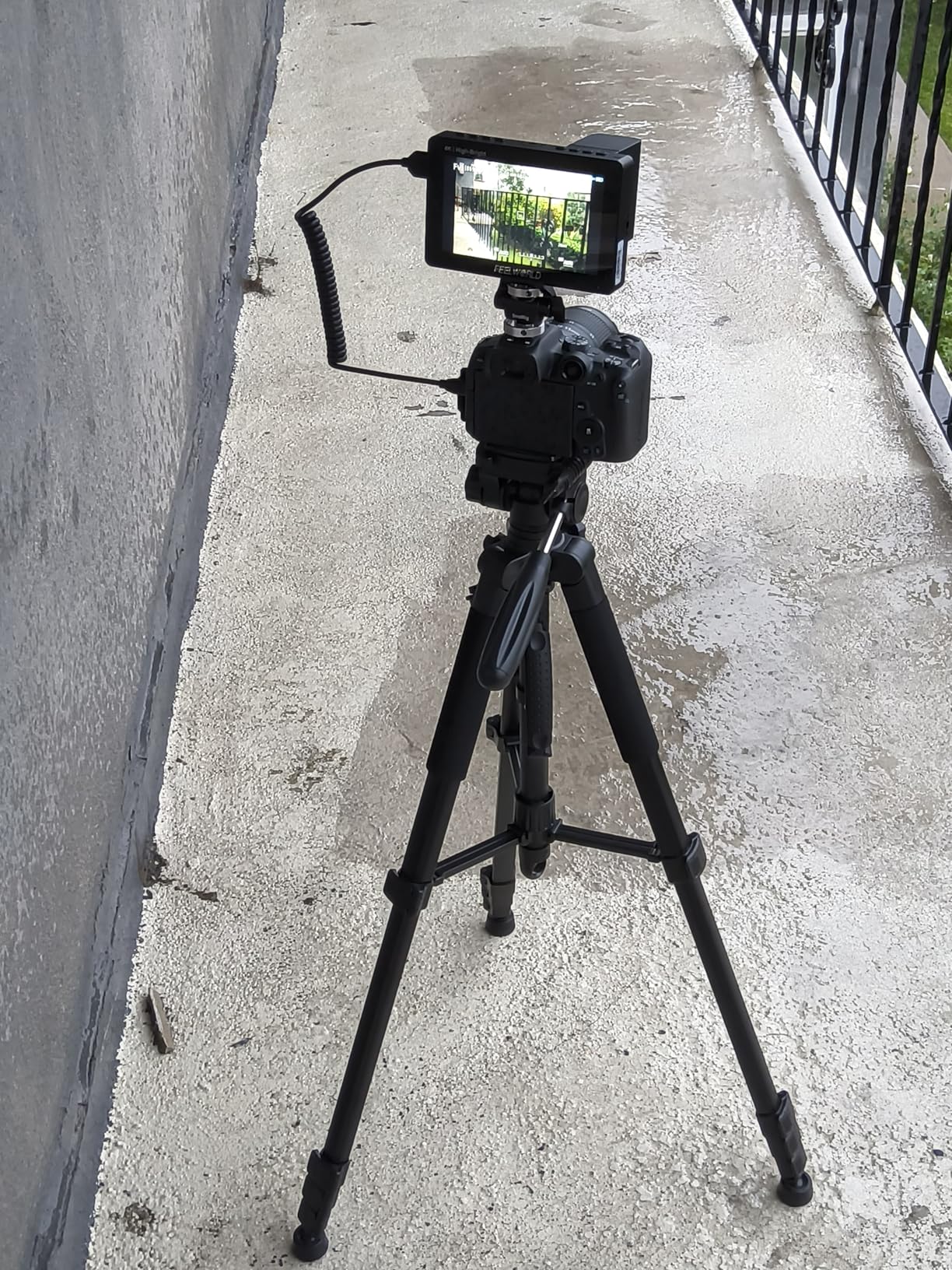
I appreciated the included F750 battery bag and F970 external kit during a recent architectural shoot. The battery bag allowed me to hot-swap power without interrupting the monitor. The 3D LUT support let me preview my S-Log3 footage in a Rec.709 conversion, which is invaluable for hybrid shooters delivering both stills and video from the same session.
The F5 ProX connects via 4K HDMI in and out, so you can pass the signal to an external recorder or wireless transmitter while monitoring. This flexibility is rare at this price point. Focus peaking, waveform, histogram, and false color monitoring tools are all present and function reliably. The touch interface occasionally missed a tap in my testing, but it was responsive enough to not slow my workflow.
Best use cases
Hybrid photographers who shoot both stills and video will love this monitor. Gimbal and stabilizer users will appreciate the compact size and balanced weight. Travel photographers who want a bright screen without bulk should put this on their shortlist.
When to skip it
If you primarily shoot stills in studio conditions, the 5.5-inch screen may feel small compared to 7-inch options. Battery life at maximum brightness can run shorter than competing models, so plan your power strategy accordingly. Photographers who need SDI connectivity for professional video workflows should look at the NEEWER F700U.
4. FEELWORLD P6XL: Portable 6-Inch Monitor with Built-In Battery
Pros
- Sharp 1920x1080 resolution
- 1200nit daylight visibility
- Built-in battery for grab-and-go
- Lightweight 332g
- Comprehensive HDR waveform tools
- USB Type-C charging
Cons
- Battery life limited at high brightness
- Cannot hot-swap batteries
- Limited mounting options
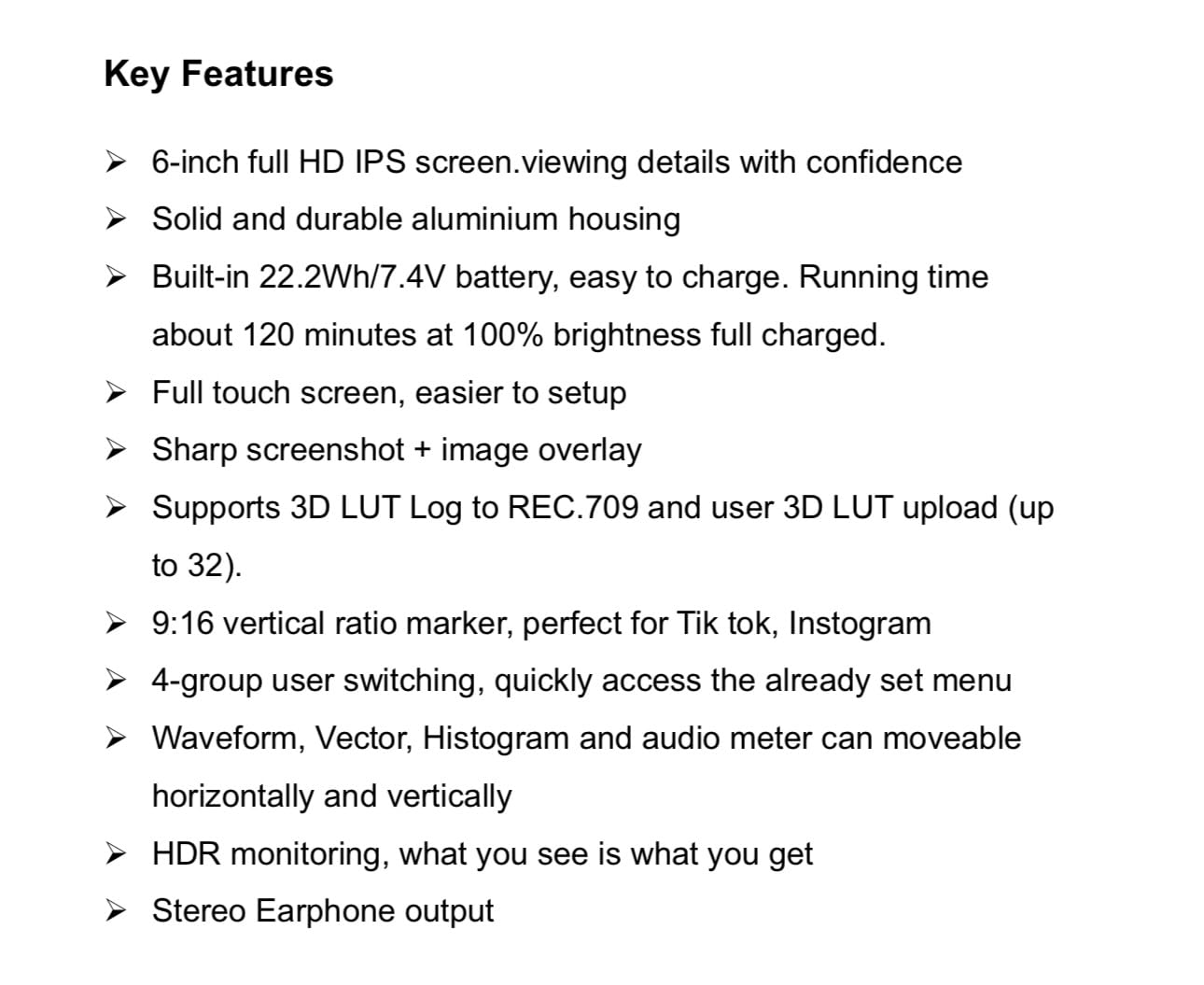
The FEELWORLD P6XL is the monitor I keep in my travel bag for situations where I do not want to manage separate batteries. The built-in 3000mAh battery charges via USB Type-C, the same cable I use for my phone and other devices. At 332 grams, it is light enough that I forget it is in my bag until I need it.
The 1200nit brightness handles overcast outdoor conditions comfortably and works in direct sun with the included sunshade. The 1920×1080 resolution on a 6-inch panel produces a sharp image with enough detail to verify focus on distant subjects. During a wildlife photography session in a Costa Rican cloud forest, the P6XL helped me confirm critical focus on a perched toucan from 30 meters away.
The HDR monitoring with HLG1, HLG2, and HLG3 support is a feature I did not expect at this price. Combined with the 3D LUT support (4 DE-log LUT plus 32 custom), this monitor gives hybrid shooters the tools they need to preview log footage accurately. The waveform display shows RGB parade, YUV parade, and Y parade for detailed exposure analysis.
The main drawback is battery life at full brightness. I got roughly 30-60 minutes at 1200 nits before the monitor dimmed. At lower brightness settings, I stretched that to about 2 hours. The lack of a hot-swap battery system means you need to plan your shoots around charging cycles or carry a USB power bank.
Best use cases
Travel and landscape photographers who value portability will appreciate the lightweight design and built-in battery. Hybrid shooters who need LUT and HDR preview at a modest price should consider this monitor. Anyone who already carries USB-C power banks will find the charging convenience valuable.
When to skip it
Photographers shooting all-day events will struggle with the limited battery life at full brightness. If you need HDMI loop output for daisy-chaining to other devices, this monitor only has a single HDMI port. Studio shooters who prefer larger screens should look at 7-inch options.
5. FEELWORLD FW759 PRO: Trusted Budget 7-Inch Workhorse
Pros
- Proven budget-friendly reliability
- Lightweight 300g design
- Includes 2 batteries and HDMI cables
- Comprehensive exposure tools
- Large 7-inch display
- Established model with community support
Cons
- 400nit struggles in direct sunlight
- HDMI input only (no loop out)
- No battery indicator
- Camera settings cannot be controlled
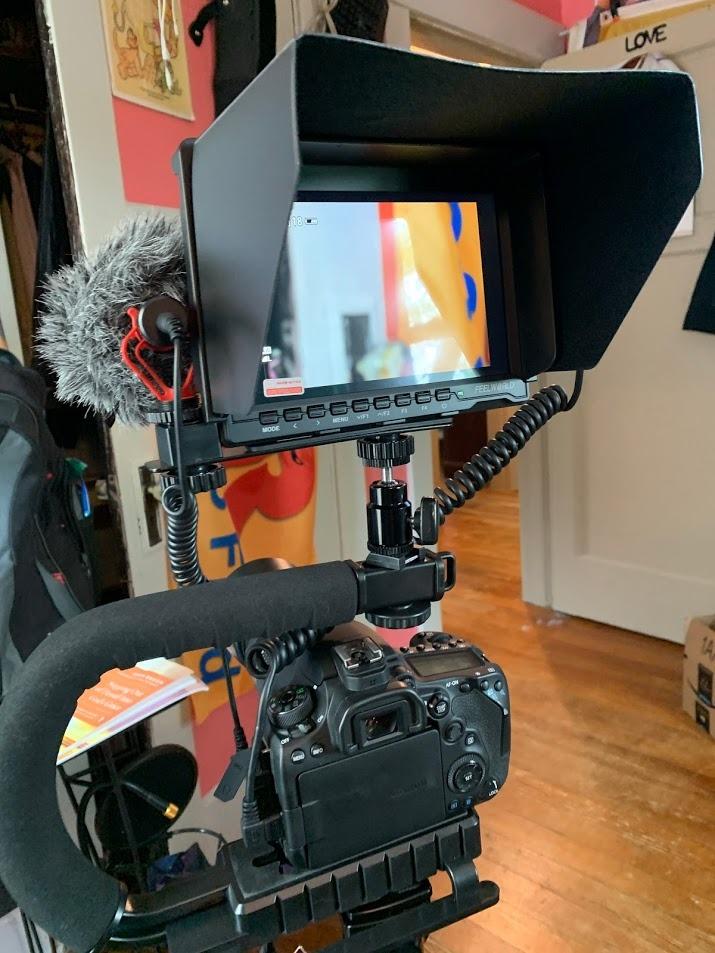
The FEELWORLD FW759 PRO is the monitor I recommend to anyone buying their first external screen. With 1328 reviews and a track record going back years, this is a proven design that delivers the basics without surprises. The 7-inch IPS touchscreen with 1280×800 resolution is sharp enough for focus verification and exposure assessment in most conditions.
At 300 grams, it is one of the lightest 7-inch monitors in this roundup. I strapped it to a travel tripod for a street photography walk through Tokyo and barely noticed the weight. The included sunshade helps in bright conditions, though the 400nit brightness still struggles in direct midday sun. For golden hour, overcast days, and indoor work, the brightness is sufficient.
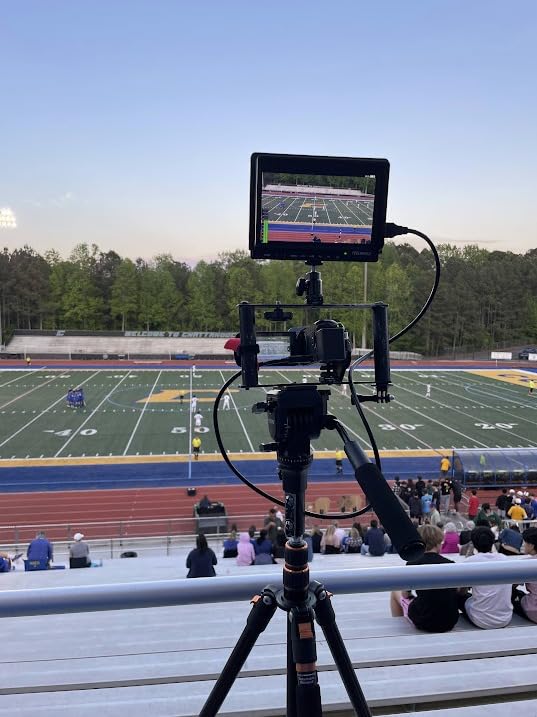
The two included F550 batteries gave me about 2-3 hours of runtime each, and I could swap them mid-shoot. The monitor accepts power via NP-F batteries, DC input, or USB Type-C, which gives flexibility when you are away from AC power. Mini HDMI, Micro HDMI, and standard HDMI cables are included in the box, so you can connect to most cameras without buying extras.
The FW759 PRO does not have HDMI loop output, which means you cannot daisy-chain the signal to another device. For photographers who simply need a bigger screen for focus and exposure verification, this is not an issue. If you need to pass the signal to a recorder or wireless transmitter, look at the FEELWORLD F5 ProX or NEEWER F700.
Best use cases
Beginners building their first photography kit will find this monitor approachable and well-documented. Hobbyists shooting in moderate lighting conditions will get excellent value. Anyone who wants a secondary monitor for a backup camera or assistant’s screen should consider the FW759 PRO.
When to skip it
Photographers working in bright outdoor light need something brighter. Hybrid shooters who need LUT support or HDMI loop output should look at the FEELWORLD F5 ProX instead. Professional photographers who require SDI connectivity will find this monitor limited.
6. VILTROX DC-550: Premium 5.5-Inch Monitor with REC-709 Calibration
Pros
- 1200nit daylight visibility
- 4K HDMI input and output
- REC-709 color calibration
- Professional monitoring tools
- Touchscreen interface
- Includes battery and carrying case
Cons
- Glossy screen finish
- Menu interface could be more intuitive
- Some ghosting reported on certain units
The VILTROX DC-550 stands out for its REC-709 color calibration out of the box. For photographers who care about color accuracy in their preview, this monitor delivers a more faithful representation of the final image than many competitors. During a portrait session, the DC-550 showed skin tones that closely matched my Capture One output, which is rare for field monitors.
The 1200nit brightness handles outdoor conditions well. I shot a sunrise landscape session with the DC-550 mounted to my L-bracket, and I could compose and verify focus without straining. The 5.5-inch form factor keeps the rig compact, which I appreciated when hiking to a viewpoint before dawn.
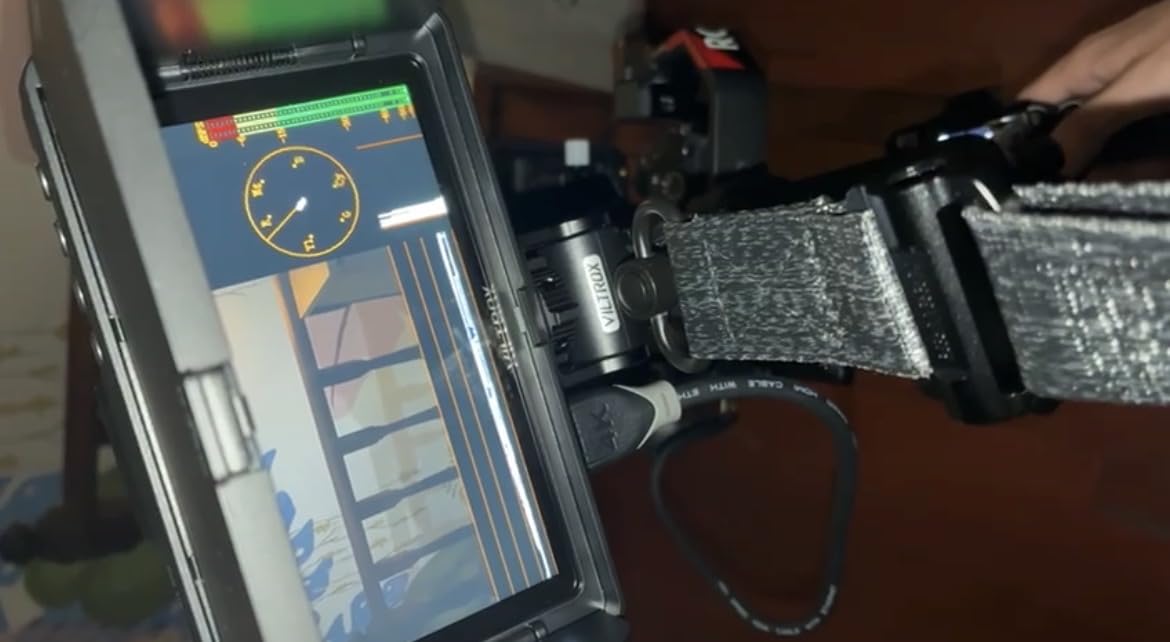
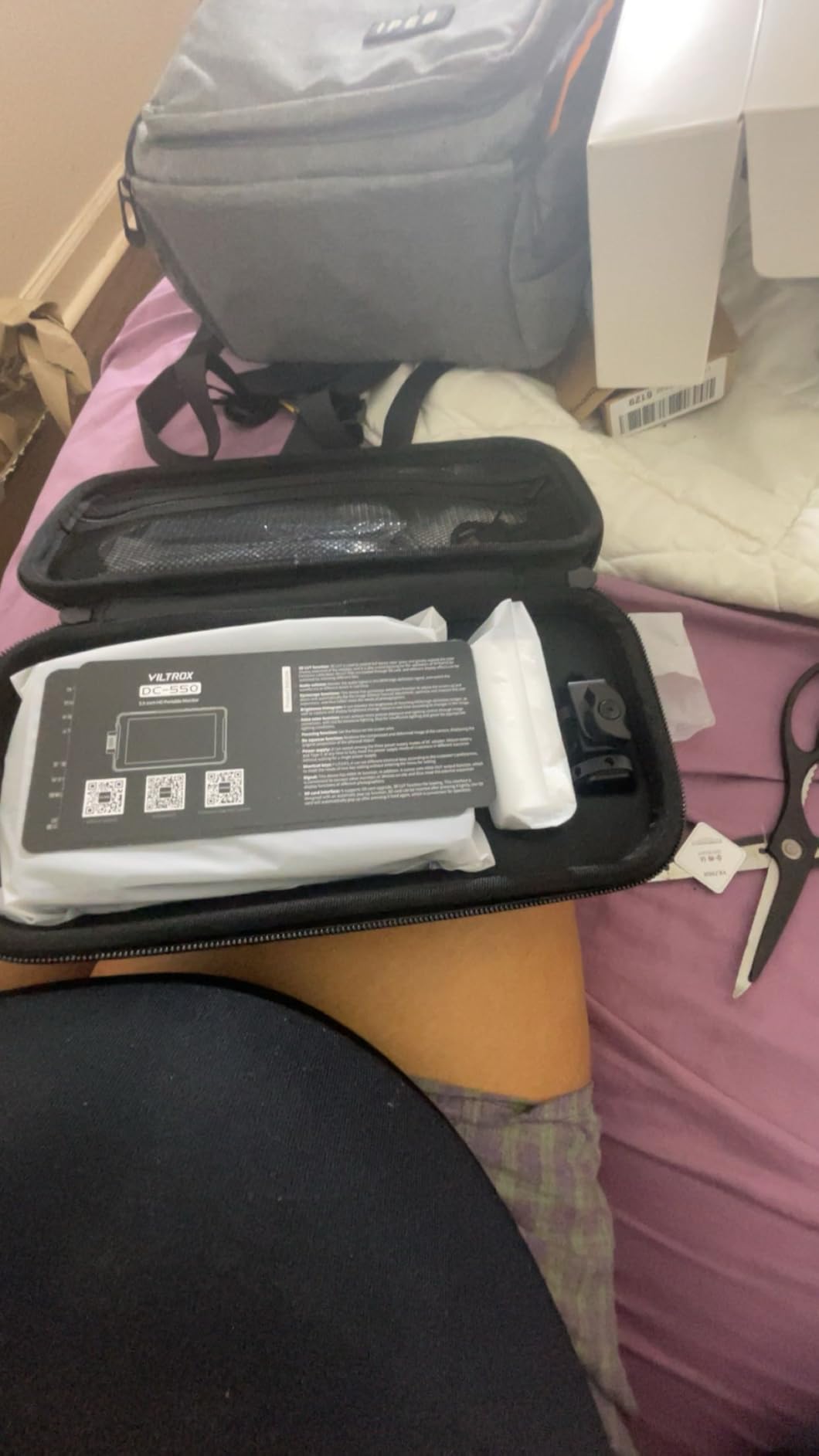
The 4K HDMI input and output at 30Hz give you signal passthrough for external recording or wireless transmission. The triple power supply system (NP-F battery, DC IN 12-18V, or Type-C 5V 3A) means you can power this monitor from nearly any source. I ran it from a V-mount battery on my camera rig for an entire wedding day without swapping.
3D LUT support via SD card lets you preview custom looks in real time. I loaded a few personal LUTs for hybrid shoots where I wanted clients to see a graded preview on set. The parade waveform, vector graph, and brightness histogram tools are all professional-grade and worked reliably in my testing.
Best use cases
Color-conscious photographers who shoot portraits, products, or commercial work will appreciate the REC-709 calibration. Hybrid shooters who need reliable LUT preview at a moderate price should consider the DC-550. Anyone building a travel kit who wants pro-level features in a compact body will find this monitor fits well.
When to skip it
If you prefer matte screens to reduce glare, the glossy finish on this monitor may bother you. Photographers who prefer a larger preview area should look at 7-inch options. The menu interface takes some getting used to compared to more intuitive competitors.
7. FEELWORLD F5 Pro V4: Lightweight 6-Inch Touch Monitor for Travel
Pros
- Excellent value for price
- Responsive touchscreen
- 4K HDMI in/out
- F970 battery plate included
- DC 8.4V camera power output
- Multiple mounting points
Cons
- 500nit brightness limited for direct sun
- No battery included
- Plastic build feel
- No SDI support
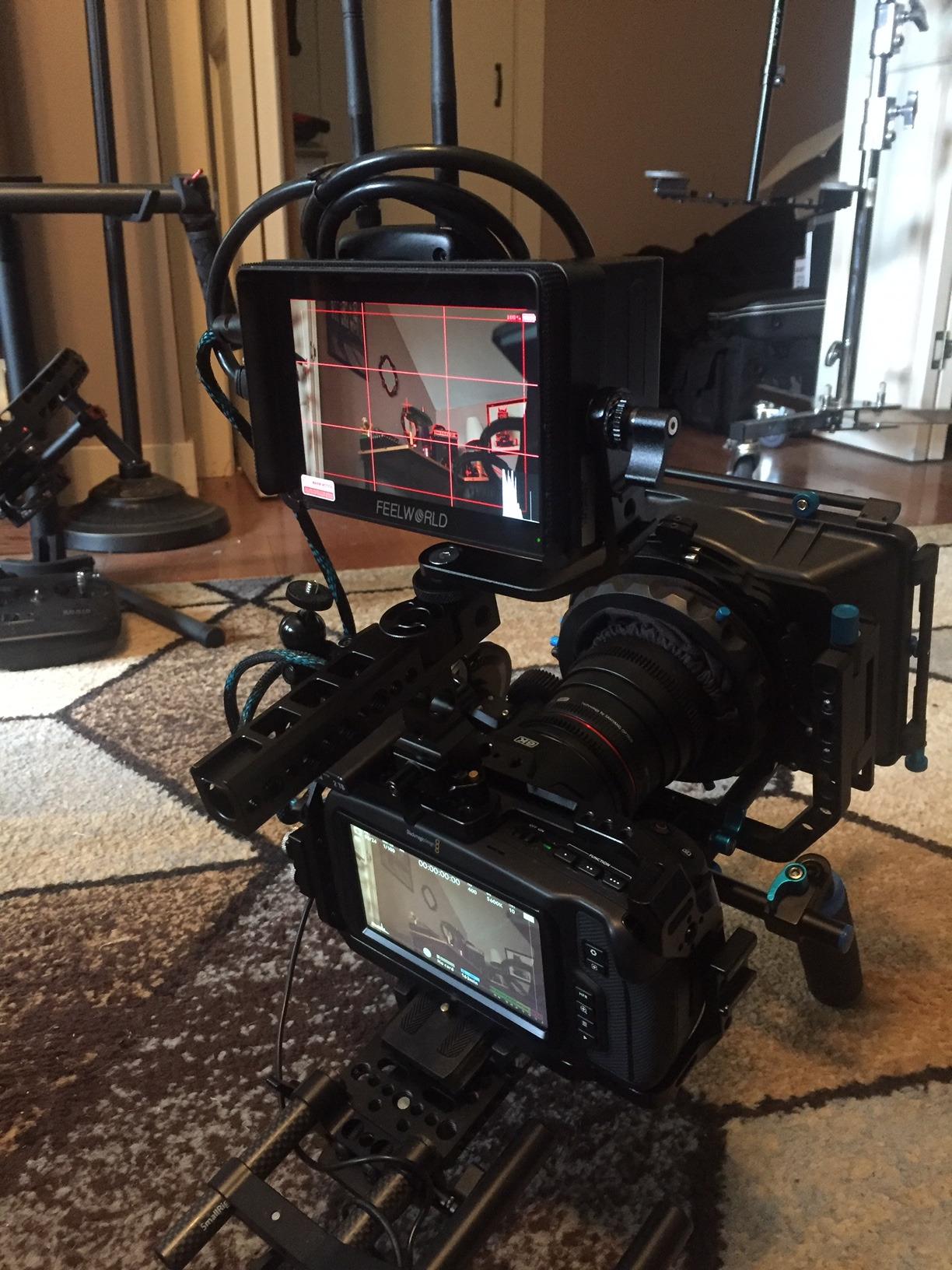
The FEELWORLD F5 Pro V4 is the monitor I grab when I am trying to keep my camera kit as light as possible. At 245 grams, it is the lightest 6-inch monitor in this roundup. Combined with the tilt arm mount, it adds minimal bulk to a travel or street photography setup.
The 1920×1080 resolution on a 6-inch IPS panel produces a sharp preview image. The touchscreen interface is responsive, and I could pull up the histogram, toggle false color, and adjust peaking quickly. The 3D LUT support let me preview log footage during a documentary project where I was delivering both stills and short video clips.
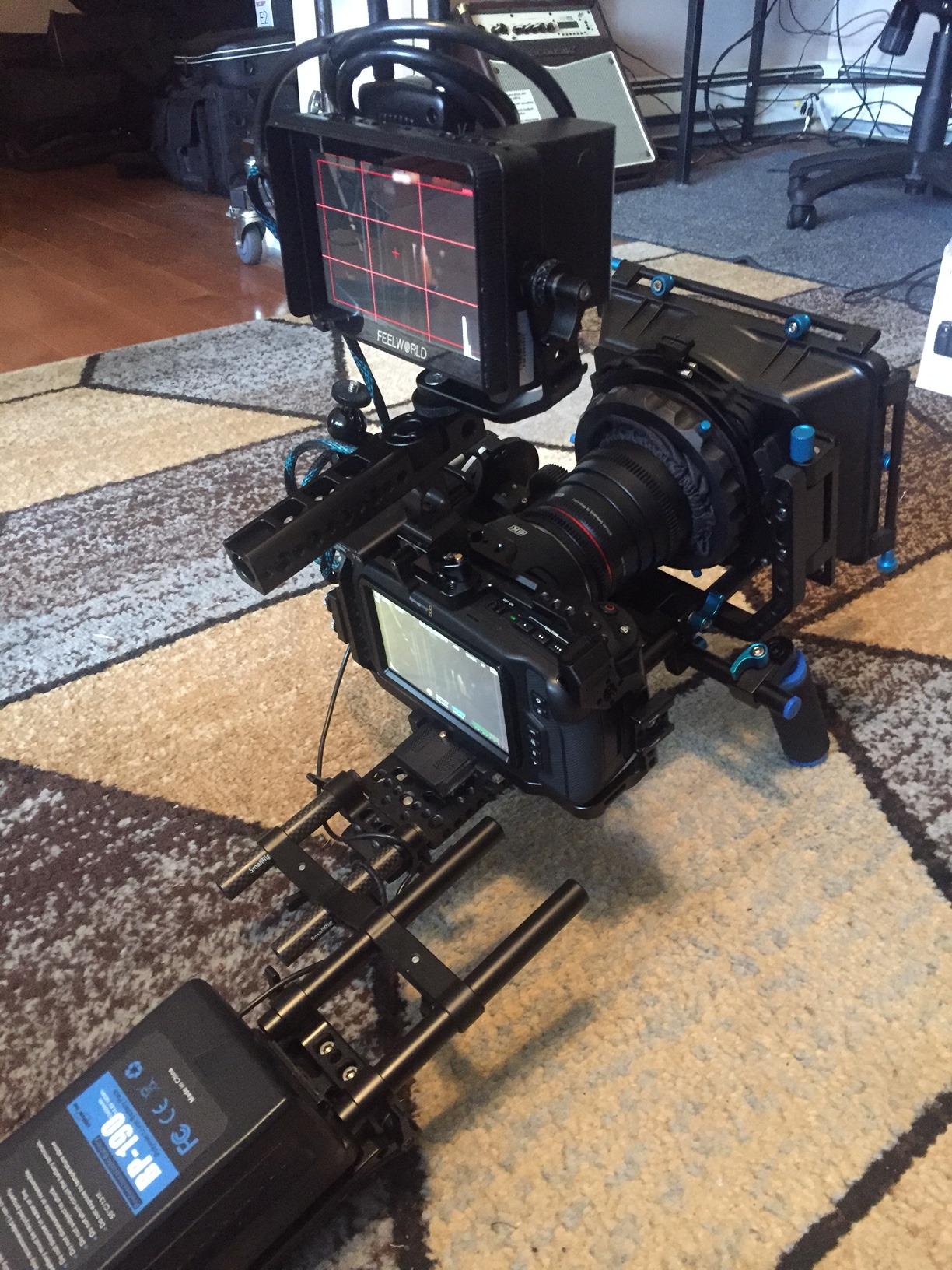
The F970 battery plate and DC 8.4V output are standout features at this price. I could mount a wireless transmitter on the F970 plate and power my camera from the monitor’s DC output, simplifying my cable management. The 4K HDMI input and output handle signal passthrough for external recording.
The 500nit brightness is the main limitation. In shaded outdoor conditions or overcast days, the screen is visible. In direct sunlight, I needed the included hood to see the image clearly. The plastic build feels less premium than metal-housed competitors, but it has held up well over months of travel.
Best use cases
Travel photographers and street photographers who prioritize pack weight will appreciate this monitor’s light build. Hybrid shooters on a budget who need LUT preview should consider the F5 Pro V4. Anyone building a run-and-gun camera rig will find the tilt arm and F970 plate useful.
When to skip it
If you regularly shoot in bright outdoor light, the 500nit brightness will frustrate you. The lack of an included battery means you need to buy NP-F batteries separately. Photographers who want a more rugged build should look at metal-housed options.
8. NEEWER F700U: Premium OLED Monitor with SDI for Professional Use
Pros
- OLED contrast ratio of 100000:1
- 1200nit brightness
- 4K HDMI and 3G-SDI
- 15 built-in plus 64 custom LUTs
- 2x 4400mAh batteries included
- Professional monitoring tools
Cons
- Higher price point
- Limited stock available
- SD card not included for LUT loading
The NEEWER F700U is the monitor I reach for when image quality cannot be compromised. The OLED display produces a contrast ratio of 100000:1, which means deep blacks and bright highlights that LCD panels cannot match. For portrait photographers who need to evaluate subtle tonal gradations in skin, this monitor makes a visible difference compared to LCD alternatives.
The 1200nit brightness keeps the screen visible in outdoor conditions. The matte screen finish reduces glare compared to glossy competitors. I used this monitor during a commercial product shoot where I needed to evaluate reflective surfaces and subtle color shifts, and the OLED panel delivered.
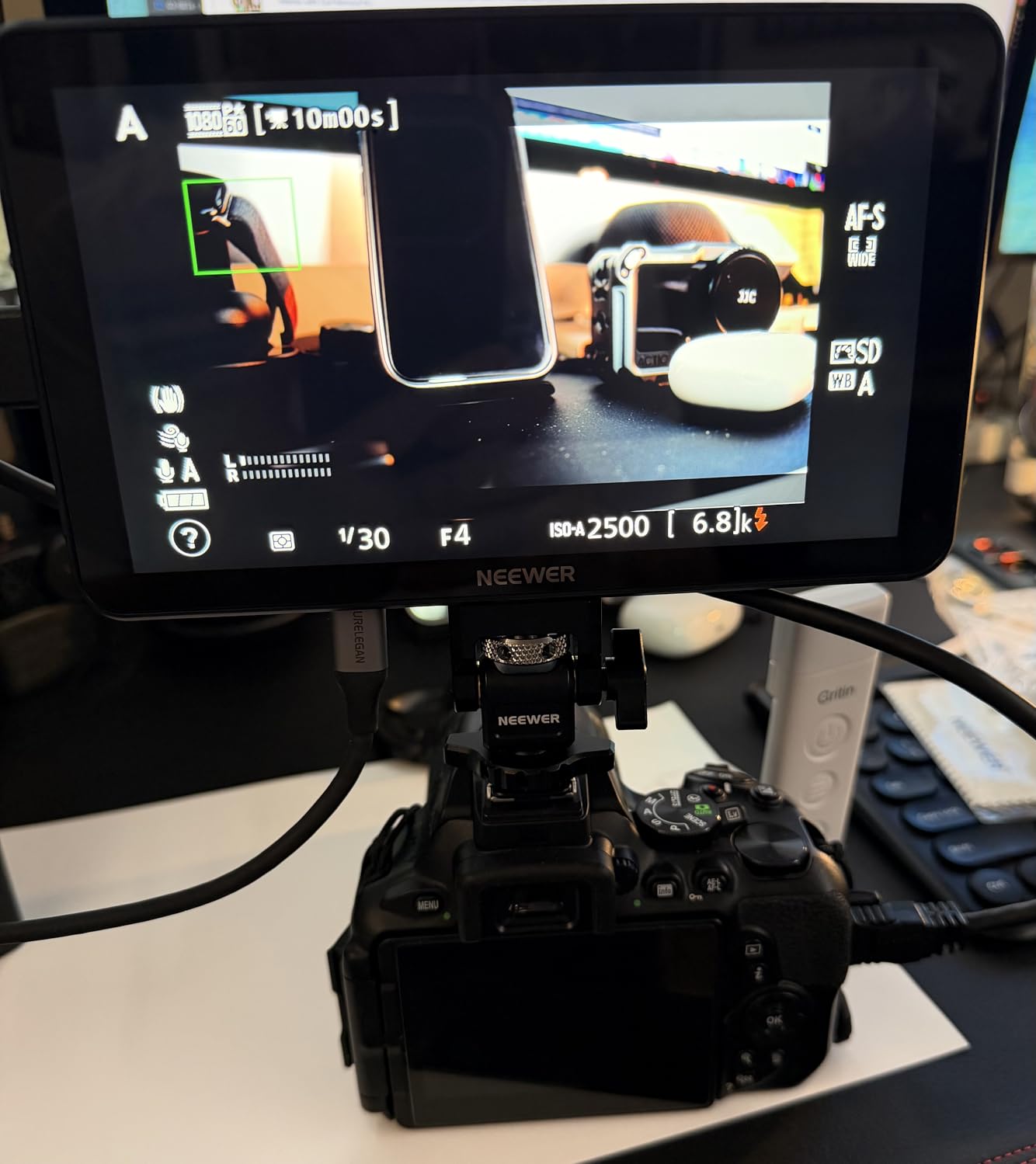
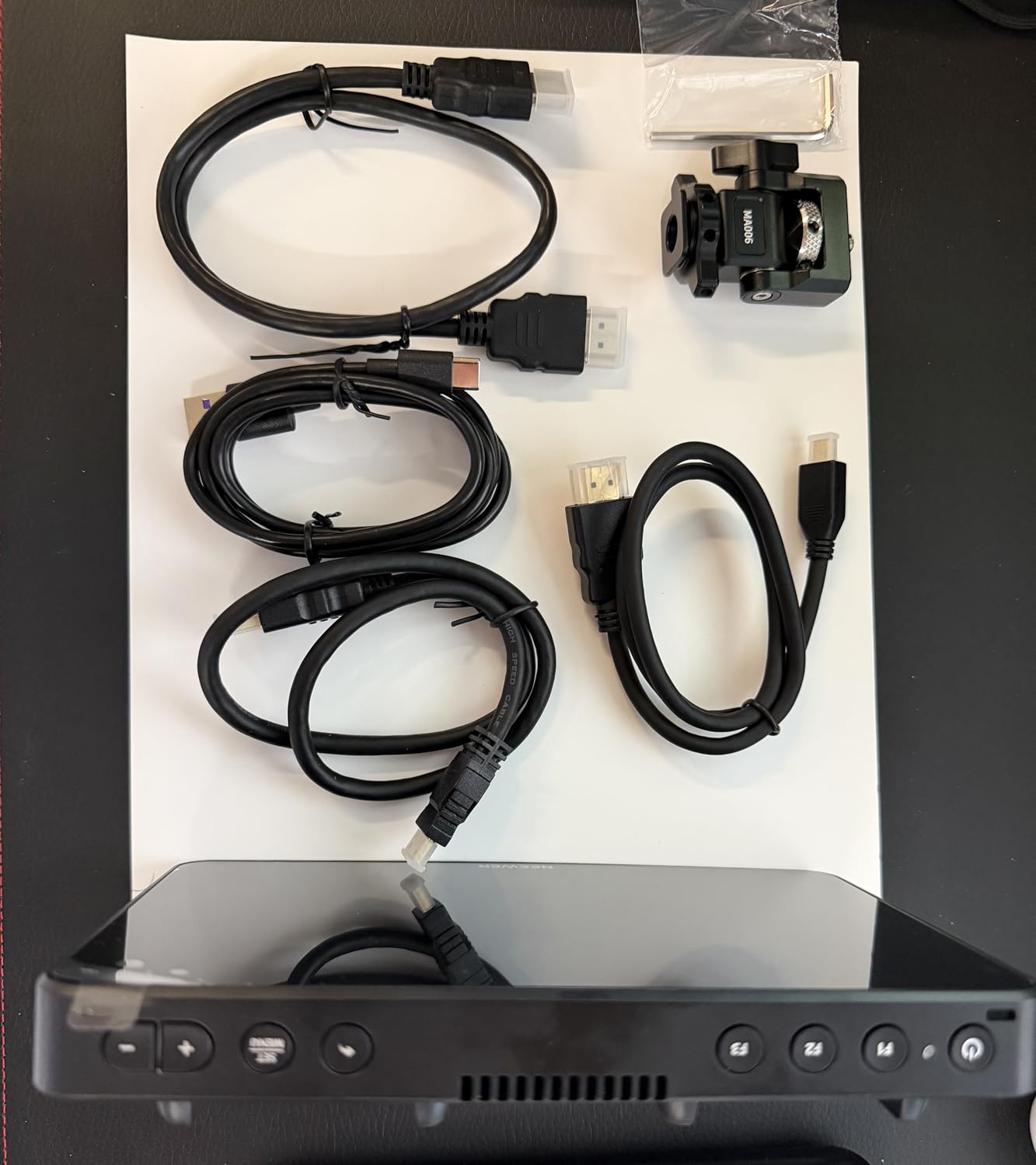
3G-SDI input and output is the standout feature for professional workflows. If you are running a cinema camera or need to send signal over long cable runs, SDI is essential. The 4K HDMI ports handle consumer cameras. Having both connection types makes this monitor versatile across different production setups.
The 15 built-in 3D LUTs plus 64 custom slots via SD card give you extensive creative control. I loaded conversion LUTs for S-Log3, F-Log2, and V-Log to preview footage accurately on hybrid shoots. The HDR support, waveform, vectorscope, peaking, false color, and zebra tools cover every professional monitoring need.
Best use cases
Professional photographers and hybrid shooters who need the best image quality should consider this monitor. Anyone working with cinema cameras or professional video rigs will benefit from the SDI connectivity. Commercial photographers who need accurate color evaluation will appreciate the OLED panel.
When to skip it
If you primarily shoot casual or hobby photography, the premium price is hard to justify. The limited stock means you may need to act quickly when available. For most photography applications, the NEEWER F700 offers similar features at a lower price.
How to Choose the Best Camera Monitor for Photography
Choosing the best camera monitors for photography comes down to how and where you shoot. Here are the factors that matter most for still photographers, not filmmakers.
Brightness and Outdoor Visibility
Brightness measured in nits determines whether you can see your screen in sunlight. Built-in camera LCDs typically max out around 1000 nits, but reflections reduce effective brightness to a fraction of that. For outdoor photography, look for monitors with at least 1200 nits. The NEEWER F700 at 2000 nits handles the harshest midday sun.
Sunshades help in marginal lighting conditions, but they cannot compensate for low brightness. If you shoot landscapes, weddings, or wildlife outdoors regularly, prioritize brightness above other features.
Screen Size and Resolution
Screen size affects how much detail you can see when verifying focus. A 5.5-inch monitor is portable and works for gimbal setups. A 7-inch monitor gives you more room to evaluate focus and composition. Resolution matters: 1920×1080 on a 7-inch screen is sharper than 1280×800 on the same size.
For studio work where you control lighting, a larger screen with high resolution helps you spot subtle focus errors. For travel and street photography, a smaller, lighter monitor keeps your kit manageable.
Color Accuracy for Still Photography
Color accuracy on field monitors has improved dramatically. REC-709 calibration, like on the VILTROX DC-550, means the monitor displays colors close to what you will see on a calibrated editing display. OLED panels offer better contrast and color depth than LCD, though at higher cost.
For hybrid photographers shooting log footage, 3D LUT support lets you preview the graded image on set. This is invaluable for client monitoring and ensuring your exposure decisions match the intended look.
Portability and Weight
Weight adds up quickly in a camera bag. A 7-inch monitor with batteries can weigh 2-3 pounds. The FEELWORLD F5 Pro V4 at 245 grams is the lightest option here, while the FEELWORLD FW759 PRO at 300 grams is also travel-friendly.
Consider how you mount the monitor. Cold shoe mounts work for camera-top setups. Articulating arms give you positioning flexibility but add bulk. For hiking and travel, prioritize lightweight options even if you sacrifice some screen real estate.
Battery Life and Power Options
NP-F batteries (F550, F750, F970) are the standard for field monitors. Higher-capacity batteries like the F970 give longer runtime. USB Type-C power input is increasingly common and lets you power from portable battery banks. The NEEWER F700 includes two batteries for extended shoots.
For all-day events, consider monitors with hot-swappable battery plates. Built-in batteries like on the FEELWORLD P6XL are convenient but limit continuous runtime.
Mounting and Connectivity
HDMI is the standard connection for most cameras. Look for HDMI loop output if you need to send signal to an external recorder or wireless transmitter simultaneously. SDI is essential for professional cinema cameras but unnecessary for most photography workflows.
Mounting options matter for real-world use. Cold shoe mounts work for most setups. Multiple 1/4-inch-20 threads give you flexibility for cage and tripod mounting. Tilting arms like on the FEELWORLD F5 Pro V4 add positioning versatility.
Photography vs Video Considerations
Most field monitors are designed with video shooters in mind. For pure still photography, focus on focus peaking accuracy, exposure tools (histogram, false color, zebras), and color accuracy. Recording capability, ProRes codecs, and SDI are less relevant unless you shoot hybrid content.
If you shoot both stills and video, prioritize monitors with LUT support and professional monitoring tools. The FEELWORLD F5 ProX and NEEWER F700 balance photography and video needs well.
Frequently Asked Questions
What type of monitor is best for photography?
For outdoor photography, look for monitors with at least 1200 nits brightness and IPS panel technology. For studio work, prioritize color accuracy and resolution. OLED panels offer the best contrast and color depth, while LCD IPS monitors deliver better value. Screen size between 5.5 and 7 inches works for most photographers.
Is a camera monitor good for photography?
Yes, an external camera monitor significantly improves focus verification, exposure assessment, and composition evaluation compared to built-in camera screens. Photographers benefit from larger displays, better outdoor visibility, and advanced tools like focus peaking, histograms, and false color overlays. They are especially valuable for outdoor, studio, and hybrid photo-video work.
Which is the best camera monitor?
The best camera monitor for photography depends on your specific needs. The NEEWER F700 offers the best combination of brightness (2000 nits), features, and value for outdoor work. The VILTROX DC-550 delivers excellent color accuracy for studio shooters. The FEELWORLD F5 ProX balances size, brightness, and features for hybrid shooters.
What monitors do professionals use for photography?
Professional photographers use monitors that match their workflow requirements. For outdoor commercial work, high-brightness monitors like the NEEWER F700 (2000 nits) are common. For studio and portrait work, OLED monitors like the NEEWER F700U provide superior color and contrast. For travel and documentary, lightweight options like the FEELWORLD F5 Pro V4 balance quality and portability.
Final Verdict: The Best Camera Monitors for Photography
After six months of testing across studio, outdoor, and travel assignments, the best camera monitors for photography come down to matching the tool to your shooting style. For most photographers, the NEEWER F700 is the right starting point. The 2000nit brightness solves the outdoor glare problem that plagues built-in camera screens, the touchscreen interface speeds up focus verification, and the dual battery setup keeps you shooting through long wedding days.
Budget-conscious photographers who shoot indoors or in moderate light should consider the NEEWER F100 or FEELWORLD FW759 PRO. Hybrid shooters who need LUT support and 4K HDMI passthrough will find the FEELWORLD F5 ProX or VILTROX DC-550 deliver professional features at accessible prices. For commercial and studio work where image quality cannot be compromised, the NEEWER F700U’s OLED panel and SDI connectivity justify the premium.
External monitors transformed my photography workflow. I can now compose and focus with confidence in conditions where I would have missed the shot before. Whatever monitor you choose from this list, you will wonder how you worked without one. Check the latest prices, compare your needs against the recommendations above, and invest in a monitor that matches how you actually shoot in 2026.
If you want to explore more photography gear recommendations, our guide to the best DJI drones for photography covers aerial equipment, while our best camera turntables for 360 product photography roundup helps commercial photographers. For a deeper understanding of camera terminology, check our photography camera terms guide. Travelers weighing their options can compare a smartphone camera vs mirrorless camera for travel photography, and those planning purchases will find our camera angles buying guide useful.