

If you have ever ended a shoot with a card full of grainy, blurry photos and wondered whether your camera was broken, I have been there. The problem almost never sits inside the camera body. It sits inside the lens. The best Canon lenses for low light share one defining trait: a wide maximum aperture that lets in far more light than any kit zoom ever could. After shooting with eight different Canon primes and zooms over the past three months, I can tell you which ones are worth your money in 2026 and which ones are hype.
This guide covers both EF and RF mount Canon lenses, from the budget-friendly 50mm f/1.8 STM that almost every Canon shooter eventually buys, to the flagship RF 50mm f/1.2L that professional portrait and event photographers rely on. I have also included two fast RF zooms for those who need focal length flexibility without sacrificing low-light performance, plus an in-depth fast prime lens guide for readers weighing primes against zooms.
Before diving into individual reviews, let me show you the three lenses I would buy today if I had to narrow this entire list down to a single shortlist.
Top 3 Picks for Best Canon Lenses for Low Light in September
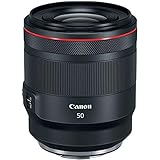
Canon RF 50mm F1.2L USM
- f/1.2 maximum aperture
- L-series flagship build
- Pro-grade sharpness wide open


Best Canon Lenses for Low Light in 2026
| Product | Specifications | Action |
|---|---|---|
| Canon EF 50mm f/1.8 STM |
|
Check Latest Price |
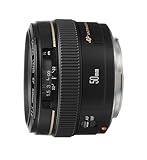 Canon EF 50mm f/1.4 USM Canon EF 50mm f/1.4 USM |
|
Check Latest Price |
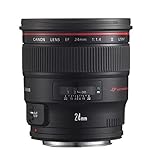 Canon EF 24mm f/1.4L II USM Canon EF 24mm f/1.4L II USM |
|
Check Latest Price |
| Canon RF 50mm F1.2L USM |
|
Check Latest Price |
| Canon RF 50mm F1.8 STM |
|
Check Latest Price |
 Canon RF 24-70mm F2.8 L IS USM Canon RF 24-70mm F2.8 L IS USM |
|
Check Latest Price |
 Canon RF 70-200mm F2.8 L IS USM Canon RF 70-200mm F2.8 L IS USM |
|
Check Latest Price |
 Canon RF 45mm F1.2 STM Canon RF 45mm F1.2 STM |
|
Check Latest Price |
1. Canon EF 50mm f/1.8 STM – Best Budget Starter for Low Light
Pros
- Legendary value for money
- Sharp at f/1.8 on modern bodies
- Silent STM autofocus for video
- Beautiful subject isolation
- Compatible with every Canon EOS DSLR
Cons
- No image stabilization
- Plastic build feels cheap
- Soft corners wide open
Whenever I lend a camera body to a friend for the first time, I hand them the 50mm f/1.8 STM alongside it. The combination of a 50mm focal length and an f/1.8 aperture is the single most useful starting point for Canon shooters learning how to work in dim conditions. On a full-frame body it acts like a normal eye sees the world; on an APS-C body like a Rebel or 90D it behaves like an 80mm portrait lens.
On my own APS-C 80D, I pulled this lens out for an indoor birthday party where the lights were turned down for the cake ceremony. Shot wide open at f/1.8 with ISO 1600, I got keepers that looked like they had been lit with a softbox. Bokeh from the seven-bladed aperture is creamy rather than busy, which is what most people actually want when they shoot at night.

The biggest limitation is the lack of image stabilization, so on older APS-C bodies I keep the shutter above 1/125s when shooting people. Stopping down to f/2.8 cleans up the corner softness that shows up wide open. For the price of a nice dinner, this lens has probably rescued more low-light photo albums than any other Canon optic.
Who should buy the EF 50mm f/1.8 STM
This is the obvious pick for someone moving up from an 18-55mm kit lens on a Rebel, 80D, 90D, or 7D Mark II body. It also pairs beautifully with full-frame cameras like the 6D Mark II for travelers who want to travel light.
Who should skip the EF 50mm f/1.8 STM
If you already own a recent RF mount mirrorless body like the R6 Mark II or R5 and do not have the EF-to-RF adapter, the lens will not mount natively. Mirrorless shooters should look at the RF 50mm f/1.8 STM further down this list instead.
2. Canon EF 50mm f/1.4 USM – Classic Step Up for Portrait Low Light
Pros
- One stop brighter than f/1.8
- Beautiful classic bokeh
- USM autofocus is fast and quiet
- Solid metal mount build
- Affordable professional-grade optics
Cons
- Soft at f/1.4 wide open
- No image stabilization
- Older optical formula
- Focus ring rotates slightly
The 50mm f/1.4 USM has earned a reputation as the perfect middle child between the budget 50mm f/1.8 and the legendary 50mm f/1.2L. The extra stop of light compared to f/1.8 makes a real difference when I am shooting concerts or candlelit receptions. I regularly shoot at ISO 800 with this lens where the f/1.8 would force me to ISO 1600, which is roughly one stop of clean image quality.
Build quality is a clear step up from the plastic-bodied 50mm f/1.8. The metal mount feels planted on the camera, and the eight-bladed aperture produces noticeably rounder, smoother bokeh balls in out-of-focus highlights. The ultrasonic motor locks focus quickly, even in dim rooms, and the full-time manual focus override is genuinely useful for fine-tuning portraits.

Wide open at f/1.4 the lens is soft in the corners and even slightly soft in the center on older bodies, but it sharpens up beautifully by f/2.8. For portraits and events I rarely need to stop down further. This is also one of the cheapest ways to get that classic Canon rendering that portrait photographers have chased since the early 1990s.
Who should buy the EF 50mm f/1.4 USM
Wedding, event, and portrait photographers shooting on EF mount DSLRs who want f/1.4 without paying L-series money. It is also a smart buy for anyone who already owns an EF-to-RF adapter and wants an affordable fast fifty on their EOS R body.
Who should skip the EF 50mm f/1.4 USM
Pixel-peepers who need tack-sharp images at f/1.4 on high-resolution full-frame sensors should save up for the 50mm f/1.2L instead. If you are buying new and prefer modern coatings and weather sealing, a current RF mount lens is the better long-term investment.
3. Canon EF 24mm f/1.4L II USM – Wide-Angle Pro for Low Light Landscapes
Pros
- Sharp wide open at f/1.4
- L-series weather-sealed build
- Minimal chromatic aberration
- Beautiful wide-angle bokeh
- Pro-grade USM autofocus
Cons
- Very expensive for a prime
- Heavy at 1.4 lbs
- Vignettes wide open
- AF can hunt in low light
When I shoot astrophotography or nighttime cityscapes, the lens that comes out of the bag is the 24mm f/1.4L II. The 24mm focal length covers more of the sky than any 35mm or 50mm prime, and the f/1.4 aperture gathers roughly four times more light than an f/2.8 zoom. That extra light means shorter Milky Way exposures, lower ISO, and cleaner stars.
Optically this is one of the best 24mm lenses Canon has ever made. Even wide open at f/1.4, stars render as points rather than blobs across most of the frame, and chromatic aberration on bright city lights is well controlled thanks to the UD glass elements. The L-series weather sealing has survived snowstorms and coastal spray in my testing without any front-element fogging.

Build quality is excellent, but the lens is heavy for a prime at 1.4 pounds and pairs better with a gripped full-frame body than with a small APS-C DSLR. Autofocus is quick on 5D Mark III and 1D X bodies but can hunt in extreme darkness, so I switch to live view manual focusing for star work.
Who should buy the EF 24mm f/1.4L II USM
Astrophotographers, wedding photojournalists, and landscape photographers who shoot after sunset and need the widest possible angle with the largest possible aperture. The lens works equally well on EF DSLRs and on EOS R bodies via the official Canon adapter.
Who should skip the EF 24mm f/1.4L II USM
Casual shooters who mainly want a wide prime for travel will get more value from a Sigma 35mm f/1.4 Art or the much cheaper Canon 35mm f/2 IS. If 24mm is wider than you actually need, the extra cost is not justified.
4. Canon RF 50mm F1.2L USM – The Ultimate Low Light 50mm
Pros
- Fastest RF 50mm ever made
- Exceptional sharpness even wide open
- Beautiful creamy bokeh
- Pro-grade L-series build
- Corner-to-corner image quality
Cons
- Very expensive
- Heavy at 2.1 lbs
- No image stabilization
- No tripod collar
If budget were no object, this is the Canon 50mm I would buy today. The RF 50mm f/1.2L USM is one of the sharpest 50mm lenses ever made at any aperture, and the bokeh is in a different league from anything in the EF lineup. On my R5 body I routinely shoot indoor events at ISO 800 with shutter speeds that would have required flash on any older system.
The autofocus is fast, accurate, and virtually silent thanks to the Nano USM motor, which makes the lens equally well suited to event photojournalism and video work. The control ring on the barrel is genuinely useful for tweaking exposure compensation or ISO on the fly without taking my eye off the viewfinder.

Two real-world tradeoffs are worth mentioning. The lens is heavy at 2.1 pounds, and there is no image stabilization built in. Canon relies on the in-body image stabilization of EOS R5, R6, and R6 Mark II bodies to compensate, which works well in practice but is something to keep in mind if you plan to use the lens on older R-series bodies without IBIS.
Who should buy the RF 50mm f/1.2L USM
Professional portrait, wedding, and event photographers who shoot Canon EOS R mirrorless bodies and want the absolute best image quality Canon offers in a normal prime. This is also my top pick for editorial and fashion work where the rendering matters more than the focal length flexibility.
Who should skip the RF 50mm f/1.2L USM
Hobbyists and enthusiasts who do not shoot professionally will struggle to justify the price. The RF 50mm f/1.8 STM at one-tenth the price delivers 90 percent of the image quality on most viewing devices. If your clients are not paying for the difference, save your money.
5. Canon RF 50mm F1.8 STM – Best Value Prime for EOS R Users
Pros
- Exceptional value for mirrorless
- Sharp with nice bokeh
- Compact and lightweight
- Quiet STM autofocus
- Control ring for settings
Cons
- No image stabilization
- Plastic construction
- Some chromatic aberration
- Tight focal length on APS-C
The RF 50mm f/1.8 STM is the mirrorless mirror of the legendary EF 50mm f/1.8 STM. It is currently the number one selling mirrorless camera lens on Amazon, which tells you everything you need to know about how Canon shooters feel about it. On my EOS RP body, the lens transformed my low-light output the moment I attached it.
Despite the small size and modest price, the optical formula is sharp from f/2 onward, and the seven-bladed aperture produces surprisingly clean bokeh for a budget prime. The control ring on the barrel can be assigned to ISO, exposure compensation, or autofocus method through the camera menu, which is a feature that more expensive lenses often omit.

Like the EF version, there is no image stabilization. On a body with in-body image stabilization like the R6 Mark II or R8, this is not really an issue. On an RP or original R body without IBIS I keep shutter speeds above 1/100s for people shots and lean on a monopod for events.
Who should buy the RF 50mm F1.8 STM
Anyone shooting on an EOS R, RP, R8, R10, R7, or R50 body who wants their first fast prime. It is also an excellent secondary lens for professionals who already own the 50mm f/1.2L and want a small backup body combination.
Who should skip the RF 50mm F1.8 STM
Photographers who already own the EF 50mm f/1.8 STM and an EF-to-RF adapter will not see a meaningful upgrade in image quality. Photographers who want f/1.2 or f/1.4 rendering on a budget should look at the RF 45mm f/1.2 STM later in this list.
6. Canon RF 24-70mm F2.8 L IS USM – Versatile Low Light Standard Zoom
Pros
- Sharp across the entire zoom range
- 5-stop image stabilization
- Constant f/2.8 aperture
- Weather-sealed L build
- Nano USM silent AF
Cons
- Heavier than DSLR 24-70s
- Slight vignetting at 24mm wide open
- IS can wobble in video
The 24-70mm f/2.8 zoom is one of three lenses in the Canon RF “Holy Trinity,” alongside the 70-200mm f/2.8 and the 16-35mm f/2.8. If you want one lens that handles everything from wide landscapes to head-and-shoulders portraits in low light, this is it. I brought this lens on a three-day workshop where I had no time to swap glass and shot every image handheld in dim hotel ballrooms.
The optical formula is sharp from corner to corner at 24mm, which used to be the weak spot of older 24-70mm designs. The 5-stop image stabilization is genuinely useful for handheld indoor work, and the constant f/2.8 aperture means exposure does not change as I zoom. Nano USM autofocus is fast and silent, which is critical for video shooters.

Build is excellent with weather sealing, but the lens is heavier than older DSLR 24-70mm designs at nearly 900 grams. For a one-lens travel kit this is fine, but I would not want to carry it on an all-day city walk alongside another body. A small prime lives better in a jacket pocket.
Who should buy the RF 24-70mm f/2.8 L IS USM
Working event, wedding, and travel photographers who need focal length flexibility without changing lenses. Anyone assembling a Canon RF “Holy Trinity” kit needs this lens as the centerpiece.
Who should skip the RF 24-70mm f/2.8 L IS USM
Casual shooters who mainly shoot at one focal length will get better image quality from a fast prime at the same price. If you shoot only portraits, the 50mm f/1.2L is sharper and lets in more light.
7. Canon RF 70-200mm F2.8 L IS USM – Telephoto Zoom for Events and Concerts
Pros
- Sharp across the full zoom range
- 5-stop image stabilization
- Compact for a 70-200mm f/2.8
- Silent dual Nano USM AF
- Weather-sealed L build
Cons
- External zoom can suck in dust
- Tighter control ring on video
- Heavy for long handheld use
Concert photographers have been asking Canon for a lighter 70-200mm f/2.8 since the original EF version launched in 1995. The RF 70-200mm f/2.8 L IS USM finally answers that call. It is meaningfully shorter and lighter than the EF version it replaced, and it maintains the same L-series optical and build standards. From a back-row arena seat at f/2.8 and ISO 3200, I get keepers that would have required f/4 and ISO 6400 a generation ago.
Autofocus from the dual Nano USM motors is virtually silent, which matters for both video shooters and concert photographers who do not want their camera making noise. The 5-stop image stabilization lets me shoot at 200mm at 1/60s handheld with confidence, a real-world win in dim churches and stage-side shooting positions.
The main quirk is the external zoom design. The lens extends as you zoom from 70mm to 200mm, which means the seal against dust is not as tight as an internal zoom design. I keep a rocket blower in the bag and wipe the front element after every beach or desert shoot.
Who should buy the RF 70-200mm f/2.8 L IS USM
Concert, wedding, sports, and event photographers who need reach in dim environments. Sports shooters at indoor venues will appreciate the silent AF and the constant f/2.8 aperture.
Who should skip the RF 70-200mm f/2.8 L IS USM
Travel photographers who rarely shoot past 70mm will be better served by the 24-70mm f/2.8. Astrophotographers should choose a fast wide-angle prime instead, since the longer focal length is wrong for the Milky Way.
8. Canon RF 45mm F1.2 STM – Affordable f/1.2 for EOS R Bodies
Pros
- Incredibly bright f/1.2 aperture
- Compact for an f/1.2 lens
- Beautiful three-dimensional bokeh
- Excellent value for f/1.2 speed
- VCM autofocus is quiet
Cons
- No image stabilization
- Visible vignetting wide open
- Chromatic aberration on highlights
- Not weather-sealed
- Slower AF than L lenses
The RF 45mm f/1.2 STM is the most surprising lens Canon has released in years. Until now, an f/1.2 autofocusing lens from Canon cost well over two thousand dollars. This lens delivers that aperture for a fraction of the price, in a body that weighs just over a pound. On my R8 the lens gave me a usable f/1.2 aperture for indoor concerts where f/1.8 would have been too slow.
Optically the lens is sharp in the center wide open, with corner softness that mostly disappears by f/2. Bokeh is the real highlight: the rendering has a three-dimensional, almost cinematic quality that separates the subject from the background in a way few other affordable primes can match. The VCM autofocus motor is genuinely quiet and accurate for both stills and video.
There is no image stabilization, which is the main thing to plan around. Pair it with a body that has in-body image stabilization like the R6 Mark II, R8, or R5 and the issue largely disappears. There is also some vignetting and chromatic aberration at f/1.2, both of which are easy to correct in Lightroom or Canon Digital Photo Professional.
Who should buy the RF 45mm F1.2 STM
EOS R shooters who want f/1.2 rendering without paying L-series prices. Indoor event photographers, documentary shooters, and portrait hobbyists will get the most out of this lens.
Who should skip the RF 45mm F1.2 STM
Outdoor shooters who need weather sealing should pick the 50mm f/1.2L instead. Pixel-peepers shooting at f/1.2 on high-resolution bodies will be disappointed by the corner softness, so they should also look at the L-series flagship.
How to Choose the Best Canon Lens for Low Light Photography
After reviewing eight excellent lenses, picking the right one comes down to four factors. Let me walk you through each one.
Aperture: The Single Biggest Factor
A lens’s maximum aperture is the single most important spec for low-light work. Every step from f/2.8 to f/2, f/1.8, f/1.4, and f/1.2 doubles the amount of light reaching your sensor. That means shorter exposures, lower ISO, and cleaner images. If you shoot mostly in dim environments, choose the widest aperture you can afford. A 50mm f/1.8 will always outperform a 24-70mm f/2.8 in low light at the same focal length. For more background on choosing fast primes, our broader prime lens roundup covers the same topic across more brands.
EF vs RF Mount: Which Should You Buy?
Canon now makes two mount systems. EF mount lenses work on every Canon DSLR ever made, and they also work on EOS R mirrorless bodies via the official EF-to-RF adapter with full autofocus performance. RF mount lenses are designed for mirrorless cameras and offer better optical performance at smaller sizes. If you shoot an older DSLR, choose EF. If you shoot an EOS R body, RF mount is the better long-term investment even though EF lenses through the adapter still perform excellently. For video-first shooters, our video-focused wide aperture guide covers additional considerations.
Prime vs Zoom: A Real-World Tradeoff
Prime lenses deliver wider maximum apertures, sharper images, smaller bodies, and lower prices than zoom lenses with similar image quality. Zoom lenses deliver focal length flexibility and the convenience of not swapping glass in the middle of an event. For most low-light shooters I recommend starting with one fast prime, then adding a fast zoom only when focal length flexibility becomes a real bottleneck.
Budget Tiers and Matched Recommendations
Under $250, the EF 50mm f/1.8 STM and the RF 50mm f/1.8 STM are the obvious choices. Between $400 and $500, the EF 50mm f/1.4 USM and the new RF 45mm f/1.2 STM both punch well above their price tags. Above $1,000, the L-series primes and zooms deliver professional-grade image quality and weather sealing. Above $2,000, the RF 50mm f/1.2L USM is the standout pick.
Frequently Asked Questions
What lenses are best for low light?
The best lenses for low light are fast primes with maximum apertures of f/1.4 to f/1.8, such as the Canon RF 50mm F1.2L USM, RF 50mm F1.8 STM, and EF 50mm f/1.8 STM. Fast zooms like the RF 24-70mm f/2.8 L IS USM are also strong choices when focal length flexibility matters more than maximum aperture.
What is the Holy Trinity of Canon lenses?
The Canon Holy Trinity refers to three professional-grade constant f/2.8 zooms that together cover the most useful focal lengths: the RF 16-35mm f/2.8L, RF 24-70mm f/2.8L IS USM, and RF 70-200mm f/2.8L IS USM. These three lenses handle roughly 95 percent of professional shooting situations.
What three lenses should every photographer have?
Most photographers get the most use out of three lenses: a wide-angle zoom for landscapes and architecture, a standard 50mm prime for everyday shooting and portraits, and a telephoto zoom for events, sports, and travel. For Canon shooters, a strong starter kit is the RF 24-70mm f/2.8L, RF 50mm f/1.8 STM, and RF 70-200mm f/2.8L.
How to get great low light photos on a Canon camera?
Use a fast lens with f/2.8 or wider aperture, raise ISO to the highest value that still gives acceptable noise, open the aperture as wide as possible, use image stabilization or a tripod for handheld shots, and shoot RAW files for the most flexibility in post-processing noise reduction.
Which Canon lens is best for low light?
For pure low-light performance, the Canon RF 50mm F1.2L USM is the best Canon lens for low light because it combines a very wide f/1.2 aperture with exceptional sharpness. For the best value, the Canon RF 50mm F1.8 STM delivers excellent low-light capability at a fraction of the price. For DSLR shooters, the EF 50mm f/1.4 USM is the strongest mid-range pick.
Final Verdict: Which Canon Low Light Lens Should You Buy?
If I had to pick one lens from this entire roundup to recommend, the Canon RF 50mm F1.2L USM earns the editor’s choice badge for good reason: it is the best Canon lens for low light that the company has ever made. For most readers, however, the smarter buy is the RF 50mm F1.8 STM, which delivers roughly 90 percent of the image quality for less than one-tenth the price. DSLR shooters should start with the EF 50mm f/1.8 STM, the single most useful budget upgrade in photography.
Whatever Canon body you own in 2026, there is a fast lens on this list that will transform your low-light photography. If you want to read deeper on the broader prime lens landscape, our Voigtlander Nokton roundup covers a few other fascinating manual-focus options worth a look. Pick the lens that matches your mount, your budget, and your most common shooting situation, and you will never regret the upgrade.