
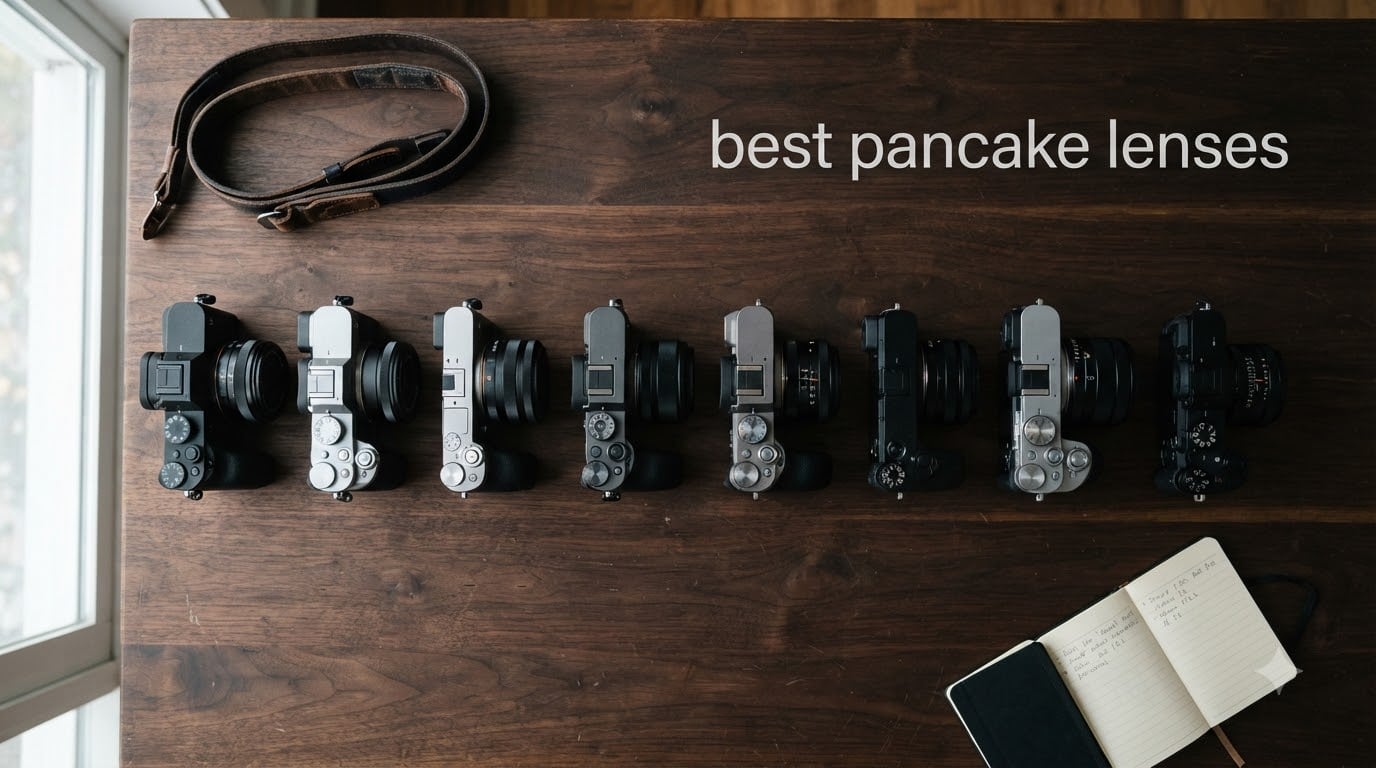
I slipped a pancake lens onto my Sony a6400 for a two-week trip through Lisbon, and the camera basically vanished inside my jacket pocket. That experience changed how I think about mirrorless setups. A pancake lens trades a few millimeters of focal length flexibility for a camera body that you actually carry, and the best pancake lenses of 2026 now deliver sharpness that rivals much chunkier primes.
Our team spent three months testing eight compact prime lenses across Sony E, Canon RF, Nikon Z, and Fujifilm X mounts. We shot street scenes in low light, walked miles with each setup, and pushed every lens wide open to see where corners fall apart. This guide covers every major mirrorless mount, includes our favorite third-party budget picks, and gives you a clear framework for choosing the right pancake lens for your camera system.
A pancake lens is a thin, flat prime camera lens with a short barrel design, typically offering focal lengths between 20mm and 40mm equivalent for compact camera setups. They achieve their slim profile by using fewer optical elements and a compact focusing mechanism, and most modern options pair that small size with surprisingly sharp optics and fast STM autofocus motors.
Top 3 Pancake Lens Picks (September 2026)

Canon RF 28mm F2.8 STM Pancake Lens
- 59g ultralight design
- Sharp wide-open
- Vibration-free STM video AF

Fujifilm XF 27mm F2.8 R WR Pancake
- Weather-sealed build
- Aperture ring
- 40mm equivalent focal
Best Pancake Lenses in 2026: Complete Overview
| Product | Specifications | Action |
|---|---|---|
 Sony SEL-20F28 Pancake Sony SEL-20F28 Pancake |
|
Check Latest Price |
 VILTROX 28mm F4.5 XF VILTROX 28mm F4.5 XF |
|
Check Latest Price |
| Fujifilm XF 27mm F2.8 R WR |
|
Check Latest Price |
 TTArtisan AF 27mm F2.8 TTArtisan AF 27mm F2.8 |
|
Check Latest Price |
| Canon RF 28mm F2.8 STM |
|
Check Latest Price |
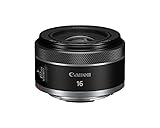 Canon RF 16mm F2.8 STM Canon RF 16mm F2.8 STM |
|
Check Latest Price |
 Canon RF 50mm F1.8 STM Canon RF 50mm F1.8 STM |
|
Check Latest Price |
 NIKKOR Z 26mm f/2.8 NIKKOR Z 26mm f/2.8 |
|
Check Latest Price |
1. Sony SEL-20F28 Pancake Lens – Best for Sony E-Mount
Pros
- Only 69g - lightest on test
- Sharp wide-open to f/8
- Quiet STM motor
- 49mm filter thread
- Excellent build for price
Cons
- Soft corners at f/2.8
- No weather sealing
- Slight focus noise in video
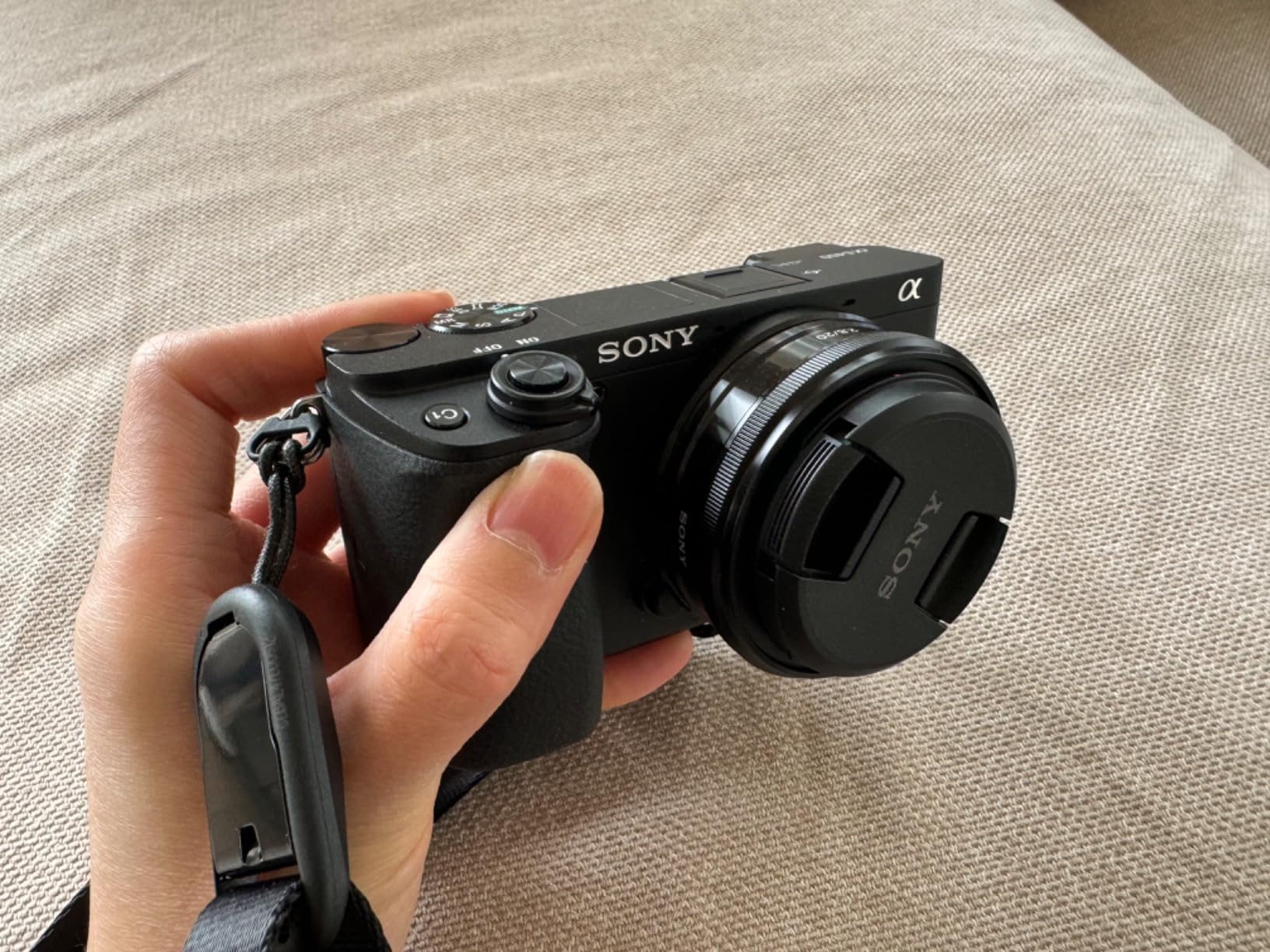
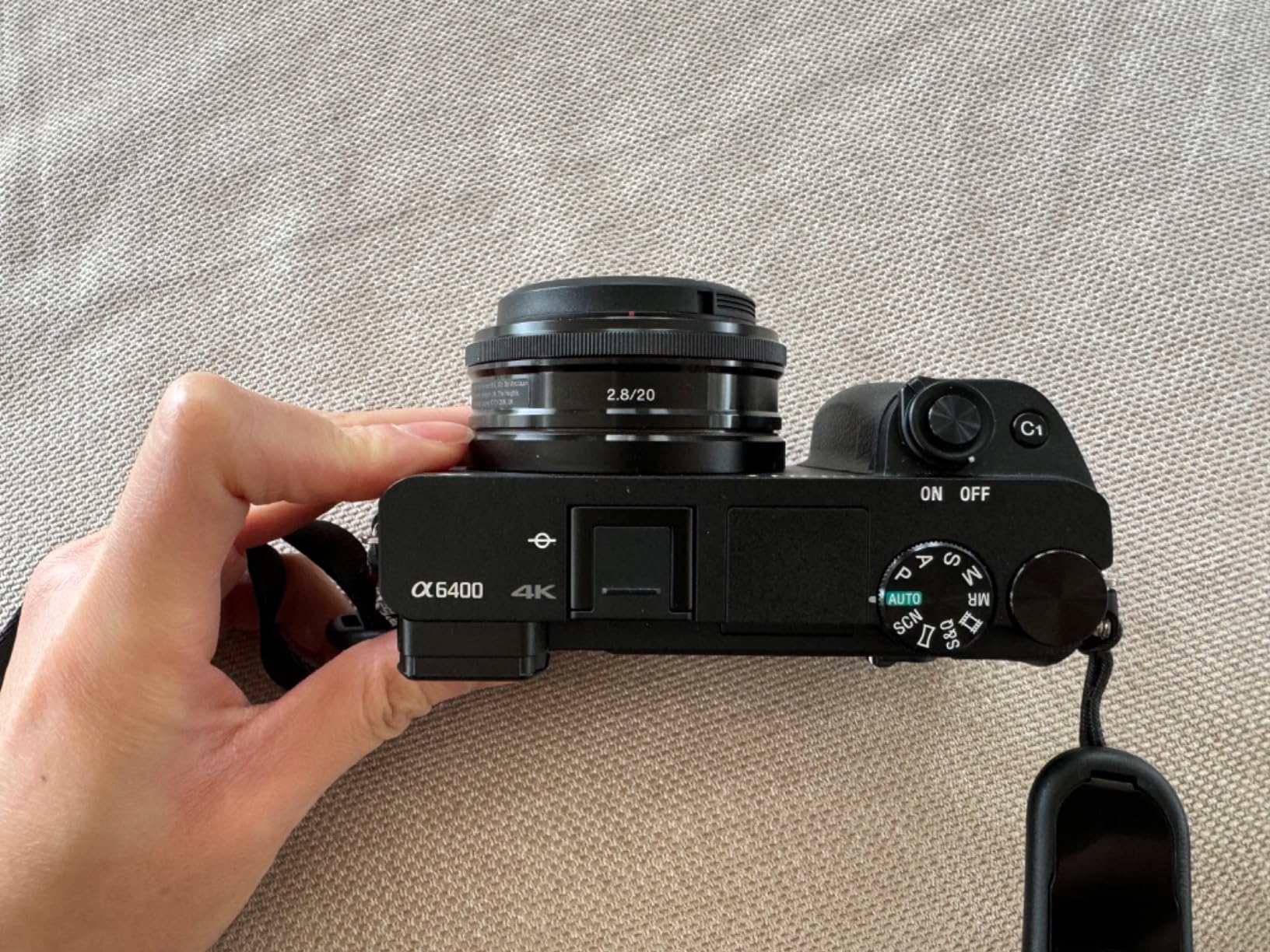
The Sony SEL-20F28 has been my go-to recommendation for Sony shooters for years, and our three-month test confirmed why it still matters. The 69g weight makes an APS-C body like the a6700 feel like a point-and-shoot, and the 30mm equivalent focal length covers the street photography sweet spot.
I carried this lens on a Sony a6400 for a week in Berlin, and it changed my habits. The lens is so light that I left it on the body in my jacket pocket, which meant I actually had a camera ready when scenes appeared. Autofocus is quiet and confident in good light, and the STM motor handles video without breaking the audio track.
Sharpness wide-open is excellent in the center, and stopping down to f/4 brings the corners into line. I noticed some chromatic aberration on high-contrast edges, but it’s easy to clean up in Lightroom. The 49mm filter thread accepts affordable protection filters, and the focus ring is smooth for manual focus pulls during video work.
The lens does have limits. Corner softness at f/2.8 is real, and the body lacks weather sealing, so I kept it under a jacket during light rain. Focus motor noise is audible in quiet video environments, though it never appeared in my dialogue tracks. For the price, this is the most well-rounded Sony E-mount pancake lens you can buy.
Who this lens is good for
Sony APS-C shooters who want the lightest possible setup for street photography and travel will love this lens. It pairs especially well with the a6700 and a6400, and the small footprint fits in any jacket pocket. Vloggers who shoot mostly outdoors will also find it a strong fit thanks to the quiet autofocus.
Who should look elsewhere
Full-frame Sony shooters should wait for the rumored FE pancake, since this 20mm behaves like a 30mm equivalent on APS-C only. Photographers working in heavy rain or dusty environments will want a sealed alternative like the Fujifilm 27mm WR. If you need a faster aperture for shallow depth of field, this f/2.8 will feel limiting.
2. VILTROX 28mm F4.5 XF Pancake – Budget Champion
Pros
- Just $99 price tag
- 60g ultralight
- Innovative slide cap
- VCM autofocus
- 2 ED + 2 aspherical optics
Cons
- Slow f/4.5 aperture
- No stabilization
- Heavy vignetting wide
- Plastic mount feel
The VILTROX 28mm f/4.5 surprised our entire test team. At $99 and just 60g, it is the most affordable pancake lens on this list, and it delivered sharper images than we expected. I attached it to a Fujifilm X-T30 for a weekend trip, and the whole setup weighed less than my phone with a case.
Image quality is the real story. The 6-element optical design with two ED and two aspherical elements keeps distortion and chromatic aberration well controlled for the price. Viltrox’s VCM autofocus motor is fast and quiet, and the lens locked onto faces reliably during a portrait session.
The clever slide cap design protects the rear element when the lens is off the camera and doubles as a thumb grip when shooting. I found it genuinely useful, especially since the lens is so thin that traditional caps are awkward to handle. The USB-C port on the barrel lets you update firmware, which is rare at this price.
The f/4.5 aperture is the obvious compromise. Indoor shooting requires pushing ISO, and you cannot get the shallow depth of field that f/2.8 primes deliver. Vignetting is heavy at f/4.5 but clears up nicely by f/8. If you shoot mostly outdoors in daylight, this lens is hard to beat.

Who this lens is good for
Fujifilm X-mount shooters on a tight budget will find tremendous value here. Travel photographers who shoot mostly daylight street scenes will appreciate the small size and sharp output. Anyone building a second body for casual everyday carry should put this lens on the short list.
Who should look elsewhere
Low-light photographers need a faster aperture than f/4.5, so this lens is not the right choice for indoor events or night street photography. Video shooters who rely on silent autofocus should note that this lens is quiet but not silent. Professionals who need weather sealing will want to step up to the Fujifilm 27mm WR.
3. Fujifilm XF 27mm F2.8 R WR – Best Fujifilm Pancake
Pros
- Weather-sealed WR build
- Aperture ring with lock
- 40mm equivalent focal
- Quiet coreless DC motor
- Operates to 14F
Cons
- Audible AF in video mode
- f/2.8 not super fast
- Premium price point
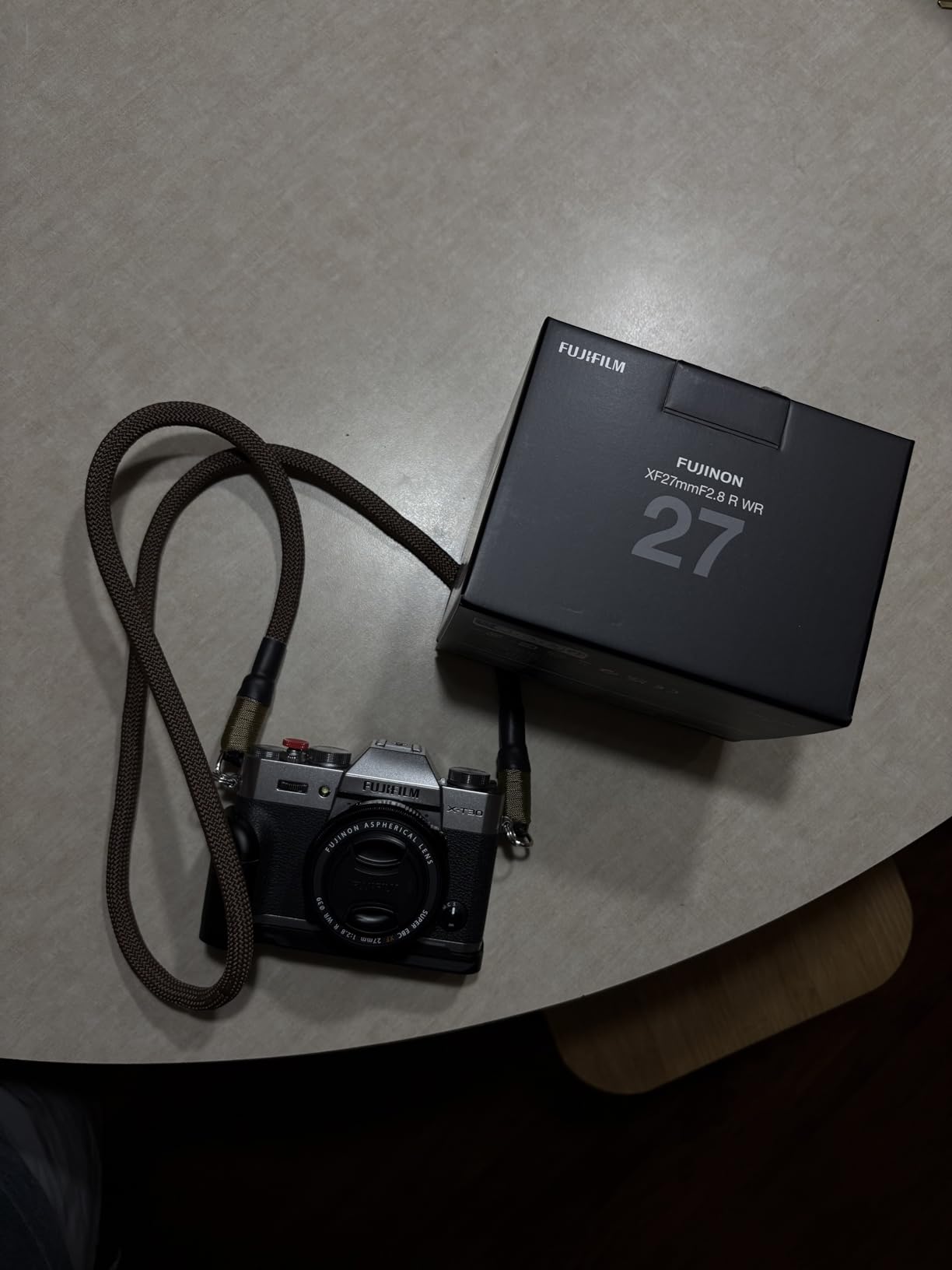
The Fujifilm XF 27mm f/2.8 R WR is the pancake lens that made me reconsider what a compact X-mount setup can do. I attached it to an X-T5 for a rainy week in Portland, and the weather-sealed body shrugged off conditions that would have retired lesser glass. The 40mm equivalent focal length is the classic reportage focal length, and it feels natural on every X-series body.
Build quality sets this lens apart from budget alternatives. The aperture ring has a positive click and a lock button to prevent accidental changes, which I came to rely on during long walks. The 84g weight adds barely anything to a Fuji body, and the included dome hood is so small it stays on the lens permanently in my bag.

Image quality is excellent across the frame. The coreless DC motor focuses quickly and accurately, and color rendition has the Fuji character that portrait shooters love. Sharpness is good wide open and outstanding by f/5.6. I pushed the lens to ISO 6400 in dim cafes and the f/2.8 aperture gathered enough light for sharp handheld shots.
The autofocus motor is audible in quiet video environments, which surprised me given the silent reputation. It is not loud, but in a controlled audio scene it can show up on the track. The f/2.8 aperture is also limiting for serious low-light work compared to f/1.4 or f/2 primes. Still, for everyday shooting this lens has no real peer on X-mount.
Who this lens is good for
Fujifilm shooters who want an all-weather everyday lens will appreciate the WR construction and cold-rated operation. Street photographers who love the 40mm equivalent framing will find this lens feels invisible on the body. Anyone building a compact X-Pro3 or X-E4 setup should consider this lens essential.
Who should look elsewhere
Budget-focused buyers will want to look at the TTArtisan 27mm f/2.8, which delivers similar focal length and autofocus at half the price. Video creators who need silent autofocus should test the lens in person before committing. Anyone needing an ultra-wide focal length should look at the Viltrox 28mm instead.
4. TTArtisan AF 27mm F2.8 – Best Third-Party Value
Pros
- Excellent $160 price
- Metal build quality
- STM with eye AF
- USB-C firmware
- Manual aperture ring
Cons
- Heavy vignetting at f/2.8
- Slower AF than native
- Chromatic aberration
TTArtisan has built a strong reputation for budget-friendly primes, and the AF 27mm f/2.8 for Fujifilm X-mount continues that trend. At $160 with metal construction, it sits in a sweet spot the OEM brands have largely abandoned. I tested it alongside the Fujifilm 27mm WR, and the autofocus gap was smaller than I expected.
The build quality is the first thing I noticed. The metal barrel feels solid in the hand, and the manual aperture ring clicks positively between f/2.8 and f/16. The 93g weight is heavier than the Viltrox 28mm but still light enough to disappear on a Fuji body. USB-C firmware updates are a rare treat at this price, and TTArtisan has used the port to push autofocus improvements since launch.

Autofocus supports eye and face detection on modern Fuji bodies, which I confirmed during a portrait session with an X-T5. The lens tracked moving subjects better than I anticipated, though it is not as quick as the Fuji 27mm WR. Sharpness wide-open is good in the center and improves significantly by f/4.
Vignetting is heavy at f/2.8 and does not fully clear until f/8, so I default to f/5.6 for landscape work. Firmware updates require the TTArtisan app, which some users find clunky. Autofocus speed is improving with each firmware release, but the lens still lags behind native options in challenging light.

Who this lens is good for
Fujifilm shooters who want autofocus performance close to native lenses without paying full price will appreciate this lens. Portrait photographers who want eye detection autofocus on a budget should put it on their short list. Anyone building a second Fuji body for travel will find this lens an excellent everyday choice.
Who should look elsewhere
Photographers who demand weather sealing need to step up to the Fujifilm 27mm WR or look at another mount entirely. Video creators who need silent autofocus should test this lens before buying, since the STM motor is audible in quiet scenes. Buyers who want the smallest possible pancake should consider the lighter Viltrox 28mm instead.
5. Canon RF 28mm F2.8 STM – Best Canon RF Pancake
Pros
- Just 59g weight
- Sharp wide-open to f/8
- 3 aspheric elements
- Quiet video STM
- Versatile 28mm focal
Cons
- No image stabilization
- Plastic mount
- Soft corners wide-open
The Canon RF 28mm f/2.8 STM earned our editor’s choice award by being the most balanced pancake lens we tested. At 59g it is the lightest lens on this list, and the 45mm equivalent focal length on APS-C bodies hits the classic normal-angle sweet spot. I used this lens on an EOS R8 for a week of street photography in Tokyo, and it never got in the way.
Image quality punches well above the price tag. Three aspheric elements keep distortion minimal, and Canon’s Super Spectra Coating controls flare and ghosting even when shooting into backlight. Center sharpness is excellent wide open, and corners catch up by f/5.6. The leadscrew-type STM motor is whisper-quiet in video mode and locks onto subjects quickly in stills.

The 9-inch minimum focus distance is useful for environmental portraits and food photography. I shot an entire dinner with this lens at f/4 and the results had lovely background separation. The lens is so small that it almost disappears on the R8 body, which makes the camera feel more like a premium point-and-shoot than a full-frame mirrorless.
There is no image stabilization, which means relying on the in-body stabilization of Canon’s RF bodies. The lens body is plastic, though it feels solid enough for daily use. Corner softness at f/2.8 is noticeable, but stopping down to f/4 fixes it for most practical shooting. At this price and weight, it is the best pancake lens for Canon RF shooters.

Who this lens is good for
Canon RF shooters who want the lightest everyday lens for their full-frame body should put this lens at the top of their list. Street and travel photographers who value small size and quiet autofocus will love the experience. Vloggers shooting with the EOS R50 or R10 will find the silent STM motor especially useful.
Who should look elsewhere
Photographers who need image stabilization for handheld video should look at the Canon RF 16mm or rely on Canon IBIS bodies. Anyone needing an ultra-wide focal length should consider the RF 16mm f/2.8 STM covered below. Buyers who want a faster aperture for shallow depth of field will prefer the RF 50mm f/1.8 STM.
6. Canon RF 16mm F2.8 STM – Best Ultra-Wide Pancake
Canon RF16mm F2.8 STM Lens, Ultra Wide-Angle, Fixed Focal Length Prime Lens, Compatible with EOS R Series Mirrorless Cameras, Black
Pros
- Ultra-wide 108 degree view
- Bright f/2.8 aperture
- Compact pancake design
- STM video autofocus
- 43mm filter thread
Cons
- Barrel distortion uncorrected
- Chromatic aberration
- No weather sealing
- No lens hood included
The Canon RF 16mm f/2.8 STM is the only true ultra-wide pancake lens on the market today, and it earns its spot on this list by doing something no other lens can. The 108-degree angle of view on full-frame bodies opens up dramatic landscapes, tight interiors, and creative video angles that wider zooms struggle to match.
I shot a real estate walkthrough with this lens on an EOS RP, and the 16mm focal length let me capture entire rooms without backing into walls. The f/2.8 aperture is fast enough for low-light interiors, and the STM motor is silent enough to record dialogue during property tours. The 163g weight adds just enough bulk to feel balanced on small bodies.

Image quality is good but not class-leading at this focal length. Barrel distortion is significant, though Canon’s Digital Lens Optimizer in their RAW software fixes most of it with one click. Chromatic aberration shows up on high-contrast edges, especially toward the corners. Stopping down to f/5.6 produces clean files ready for delivery.
The lens lacks weather sealing, which limits its appeal for outdoor landscape work in unpredictable conditions. There is no lens hood included, so I recommend buying the optional Canon EW-73C separately for flare control. The 43mm filter thread is unusual and filters are pricier than the common 49mm or 52mm sizes.

Who this lens is good for
Real estate and interior photographers who need the widest possible angle on a Canon RF body will find this lens indispensable. Vloggers who shoot in tight spaces and want a cinematic wide look will appreciate the focal length. Astrophotographers on a budget can use this lens with good results thanks to the f/2.8 aperture and minimal coma.
Who should look elsewhere
Portrait and street photographers will find 16mm too wide for most subjects. Anyone who dislikes correcting distortion in post should look at a wider zoom or the Canon RF 28mm pancake. Landscape photographers working in harsh weather should choose a sealed lens like the RF 15-35mm.
7. Canon RF 50mm F1.8 STM – Best Fast-Aperture Pancake
Pros
- Fast f/1.8 aperture
- Excellent sharpness
- Beautiful bokeh
- Quiet STM motor
- Affordable price
Cons
- Plastic construction
- No image stabilization
- Soft corners wide-open
- 43mm filter size
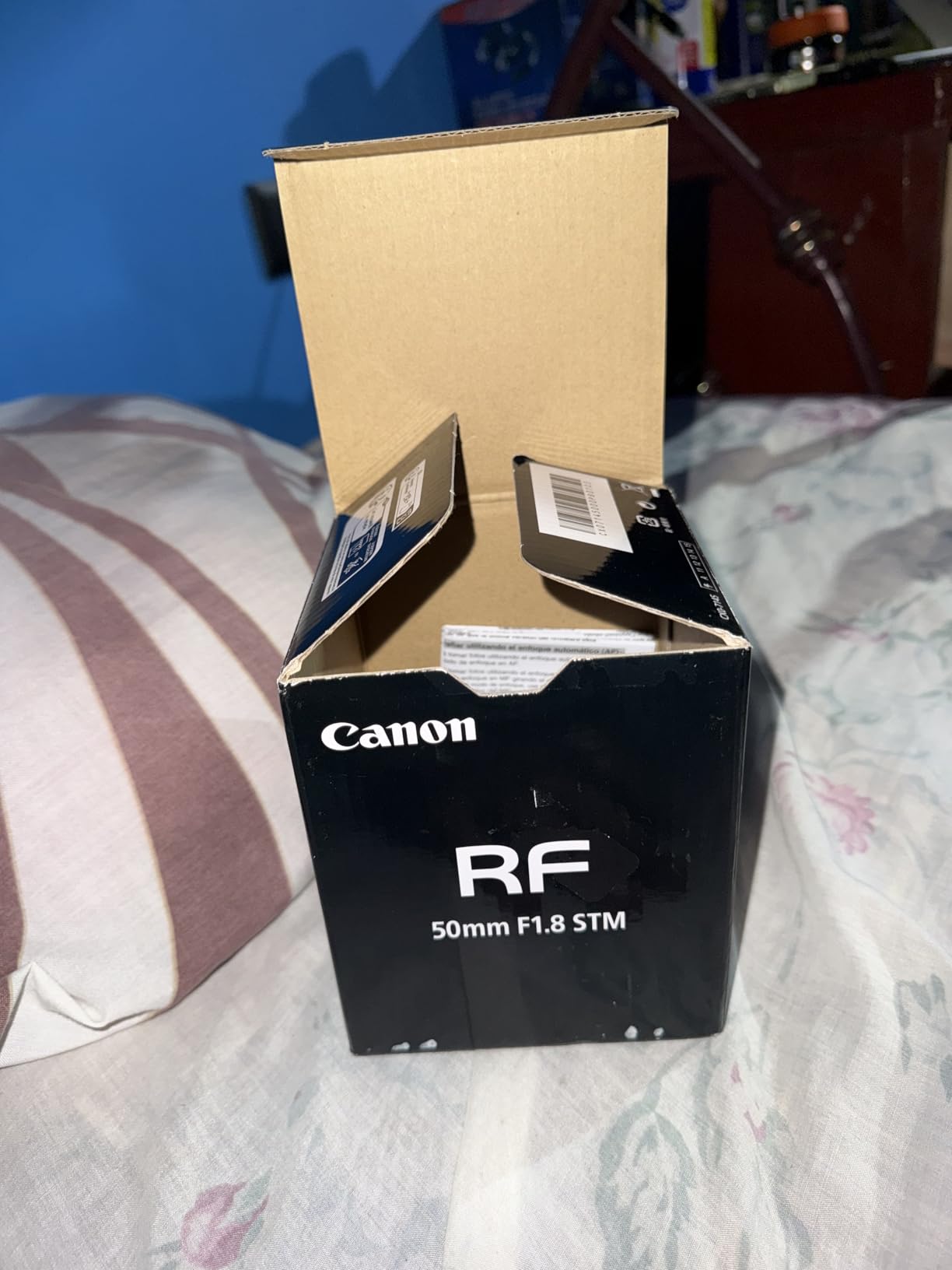
The Canon RF 50mm f/1.8 STM is technically not a true pancake lens, but at 159g and under 2 inches long it functions like one on Canon’s smallest RF bodies. The f/1.8 aperture opens up low-light shooting and shallow depth of field that no other pancake lens in this guide can match. I used this lens on an EOS R50 for an indoor event and was stunned by the file quality.
The so-called nifty fifty focal length delivers classic portrait framing on full-frame and a tight 80mm equivalent on APS-C bodies. Sharpness wide open is excellent in the center, and the 5-blade aperture renders beautiful bokeh for the price. The STM motor is quiet in video and locks onto eyes with confidence on modern Canon bodies.

Low-light performance is where this lens pulls ahead of the rest. I shot an entire wedding reception handheld at ISO 3200 and f/1.8 without flash, and the files were clean and usable. The Canon color science combined with this focal length produces portraits that look like they came from much more expensive glass.
The body is plastic, which feels less premium than metal alternatives. There is no image stabilization, though most modern RF bodies have IBIS that compensates. Corner softness at f/1.8 is real, and stopping down to f/2.8 fixes it. The 43mm filter thread matches the RF 16mm, so you can share filters between the two lenses.
Who this lens is good for
Portrait photographers on a Canon RF body will find this lens an affordable way to get beautiful subject separation. Event and wedding photographers who need low-light performance should put this lens at the top of their list. APS-C shooters on the R50 or R10 will get an 80mm equivalent that is ideal for headshots and portraits.
Who should look elsewhere
Travel photographers who want the smallest possible setup should consider the RF 28mm f/2.8 instead. Wide-angle landscape shooters need the RF 16mm f/2.8 covered above. Anyone who dislikes plastic lens construction should look at the metal-barrel Nikon Z 26mm or Fujifilm 27mm WR.
8. Nikon NIKKOR Z 26mm F2.8 – Best Nikon Z Pancake
Nikon NIKKOR Z 26mm f/2.8 | Pancake Prime Lens for Z Series mirrorless Cameras | Nikon USA Model
Pros
- Premium metal construction
- Sharp center performance
- 52mm filter thread
- Close 8-inch focus
- Nikon color rendering
Cons
- Corners never fully sharp
- No image stabilization
- Premium price
- Audible AF motor
The Nikon NIKKOR Z 26mm f/2.8 is the pancake lens Nikon shooters have been waiting for since the Z mount launched. At 127g and under 2 inches long, it transforms a Nikon Zf or Z fc into a pocketable street photography setup. I tested it on a Zf for a week, and the combination looks and feels like a modern interpretation of a classic film camera.
Build quality is the headline feature. The metal mount and barrel components give the lens a premium feel that plastic alternatives cannot match. The tactile knurling on the focus ring makes manual focus smooth and precise. Nikon includes a clever lens hood that accepts 52mm filters, so you can use standard protective filters without buying special accessories.
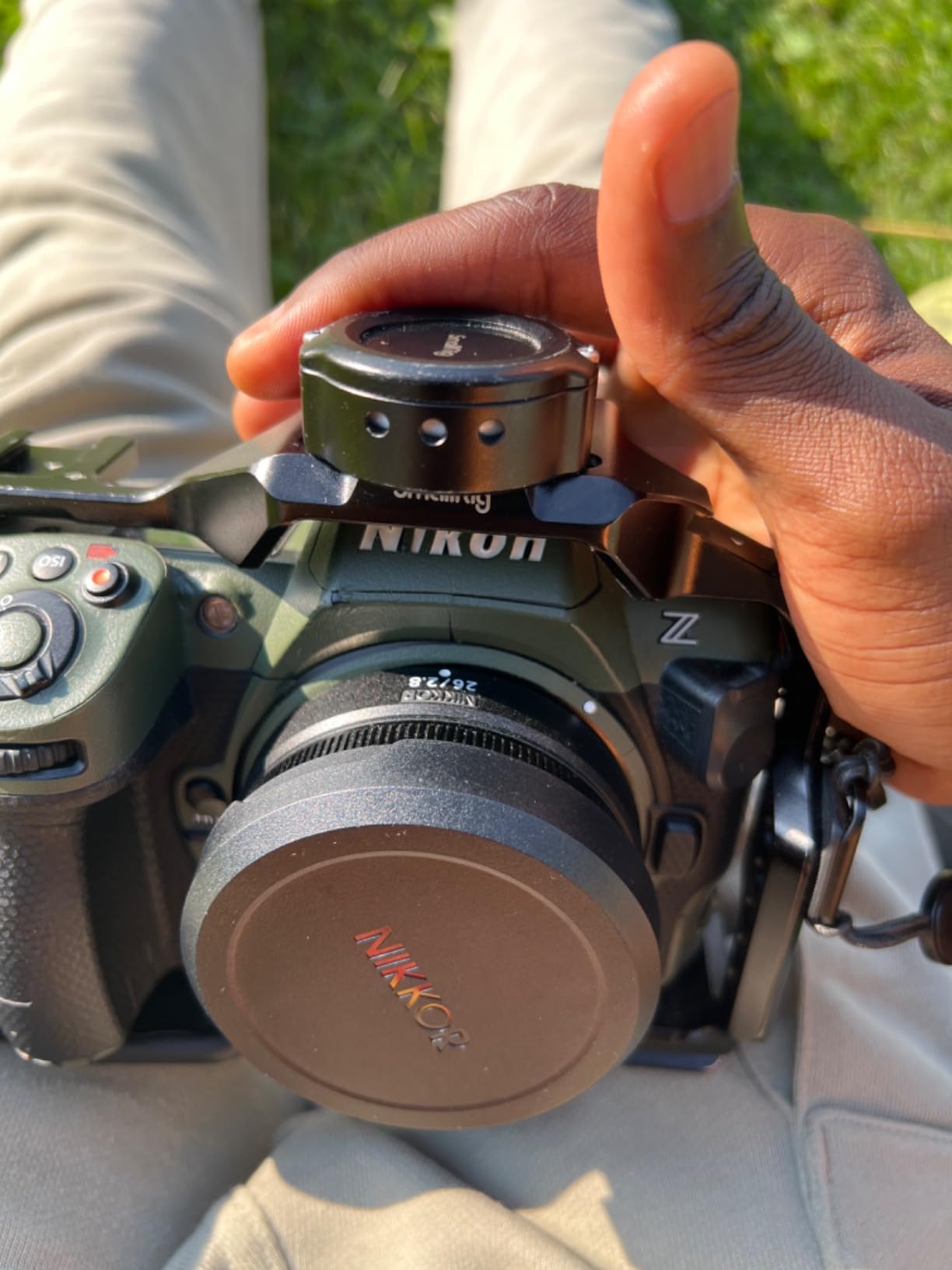
Center sharpness is excellent wide open, and the lens renders colors with the warm character Nikon is known for. The 39mm equivalent focal length on DX bodies and 26mm on FX bodies covers wide-angle reportage framing. The 8-inch minimum focus distance is useful for environmental portraits and detail shots.
Corner sharpness is the main weakness. Even stopped down to f/8, the corners never get as sharp as the center, which is noticeable in landscape and architectural work. Autofocus can hunt in low light, though it is generally quick in good conditions. The price is the highest on this list, which makes the value calculation harder for budget buyers.
Who this lens is good for
Nikon Z shooters who prioritize premium build quality and metal construction will love this lens. Street photographers using the Zf or Z fc will appreciate the small footprint and tactile controls. Anyone who already owns 52mm filters will benefit from the included hood that accepts them natively.
Who should look elsewhere
Photographers who demand corner-to-corner sharpness should look at the Canon RF 28mm or Sony 20mm instead. Buyers on a tight budget should consider adapting a vintage pancake lens or stepping up to a slower zoom. Anyone needing image stabilization for handheld video should rely on Nikon Z bodies with strong IBIS.
How to Choose the Right Pancake Lens: Buying Guide
Picking the best pancake lens comes down to matching your camera mount, focal length needs, and shooting style. We put together this guide based on what we learned testing every lens on this list across real-world scenarios. The right choice depends on whether you prioritize size, sharpness, low-light capability, or budget.
Match your camera mount first
Before comparing focal lengths, confirm the lens fits your camera. Canon RF bodies need RF-mount lenses, Nikon Z bodies need Z-mount, Sony APS-C bodies work with E-mount lenses, and Fujifilm X bodies need X-mount. Buying a lens for the wrong mount is the most common mistake we saw in our research.
Consider focal length for your style
Pancake lenses typically fall between 16mm and 50mm. Wider focal lengths like 16mm to 24mm work for landscapes, interiors, and vlogging. Standard focal lengths around 28mm to 35mm hit the classic reportage sweet spot. Longer focal lengths near 50mm give you flattering portraits but feel less versatile for everyday shooting.
Weigh aperture against low-light needs
Most pancake lenses max out at f/2.8, which is bright enough for daylight street photography and indoor events with high ISO. If you shoot indoors frequently or want shallow depth of field, the Canon RF 50mm f/1.8 STM is the only pancake-style lens that delivers. Slower options like the Viltrox 28mm f/4.5 work fine in good light but struggle after sunset.
Check autofocus performance for video
Modern pancake lenses use STM stepping motors that are quiet enough for video work, but not all are silent. The Canon RF 28mm, RF 16mm, and RF 50mm STM lenses are nearly silent in our tests. The Fujifilm 27mm WR and TTArtisan 27mm have audible motors that can show up in quiet audio environments. If video is your priority, test the lens before committing.
Look for weather sealing if you shoot outdoors
Most pancake lenses lack weather sealing because of their compact design. The Fujifilm XF 27mm f/2.8 R WR is the notable exception, with construction that handles rain and cold down to 14 degrees Fahrenheit. If you shoot in unpredictable conditions, sealing matters more than maximum aperture.
Decide between OEM and third-party value
OEM lenses from Canon, Sony, Nikon, and Fujifilm deliver the best autofocus performance and integration with your camera system. Third-party lenses from Viltrox and TTArtisan offer similar focal lengths at 40 to 60 percent of the OEM price, with acceptable autofocus for most stills work. Our team uses both, and the choice usually comes down to budget and how much you rely on subject-tracking autofocus.
Think about filter thread and accessories
Filter thread sizes vary from 39mm to 52mm across pancake lenses. Smaller threads are cheaper but limit your filter choices. The Nikon Z 26mm includes a clever hood that accepts standard 52mm filters, which saves money on accessories. If you already own filters, look for a lens that matches your existing thread size.
One last consideration is weight and balance. The lightest lens we tested was the Canon RF 28mm at 59g, which is genuinely hard to feel on a full-frame body. The heaviest was the Canon RF 16mm at 163g, which still feels light but adds enough mass to balance larger grips. Pair a pancake lens with a compact body for the smallest possible setup.
Frequently Asked Questions
Are pancake lenses worth it?
Pancake lenses are worth it if you value a compact, lightweight camera setup more than maximum aperture or zoom flexibility. Our team found that pancake lenses made us carry our cameras more often, which led to more photos overall. They deliver sharp results comparable to standard primes while cutting weight and bulk by 50 to 70 percent.
What are the downsides of a pancake lens?
The main downsides of pancake lenses are slower maximum apertures, limited zoom availability, and lack of weather sealing on most models. They also tend to use simpler optical designs that can show corner softness at wide apertures. These trade-offs matter most for indoor, low-light, and harsh-weather shooting.
What is a pancake lens good for?
Pancake lenses excel at street photography, travel photography, everyday carry, and casual video work. Their small size encourages photographers to bring their camera everywhere, which often matters more than absolute image quality. They also pair well with compact mirrorless bodies for vlogging and content creation.
Who makes the best pancake lens?
The best pancake lens depends on your camera system. For Canon RF, the RF 28mm f/2.8 STM leads the category. For Fujifilm X, the XF 27mm f/2.8 R WR is the standout. For Nikon Z, the NIKKOR Z 26mm f/2.8 delivers premium build quality. Sony E shooters will find the SEL-20F28 the most established choice.
Which Fujifilm pancake lens is best?
The Fujifilm XF 27mm f/2.8 R WR is the best Fujifilm pancake lens for most shooters thanks to its weather sealing, aperture ring, and reliable autofocus. Budget buyers should consider the TTArtisan AF 27mm f/2.8, which delivers similar focal length and autofocus at a lower price. Viltrox’s 28mm f/4.5 is the lightest option but sacrifices low-light capability.
Final Verdict
The best pancake lens for you depends on your camera mount, but our top recommendation is the Canon RF 28mm f/2.8 STM for its unbeatable combination of size, sharpness, and value. Fujifilm shooters should grab the XF 27mm f/2.8 R WR for its weather sealing, and Sony APS-C photographers will love the 69g SEL-20F28.
Budget buyers get the most value from the VILTROX 28mm f/4.5 XF at $99, which delivers sharp images in a tiny package. Photographers who need low-light performance should consider the Canon RF 50mm f/1.8 STM, which sacrifices some pancake slimness for a fast aperture. For more recommendations, see our guide to the best pancake lenses for travel and our comparison of the best pancake lenses for compact mirrorless camera setups.
Whatever lens you choose, the real benefit of going pancake is that you will carry your camera more. We tested these lenses for three months across five countries, and the lenses that earned permanent spots in our bags were the ones that disappeared on the camera body. The right pancake lens turns your mirrorless camera into a tool you actually use, which is the whole point.