
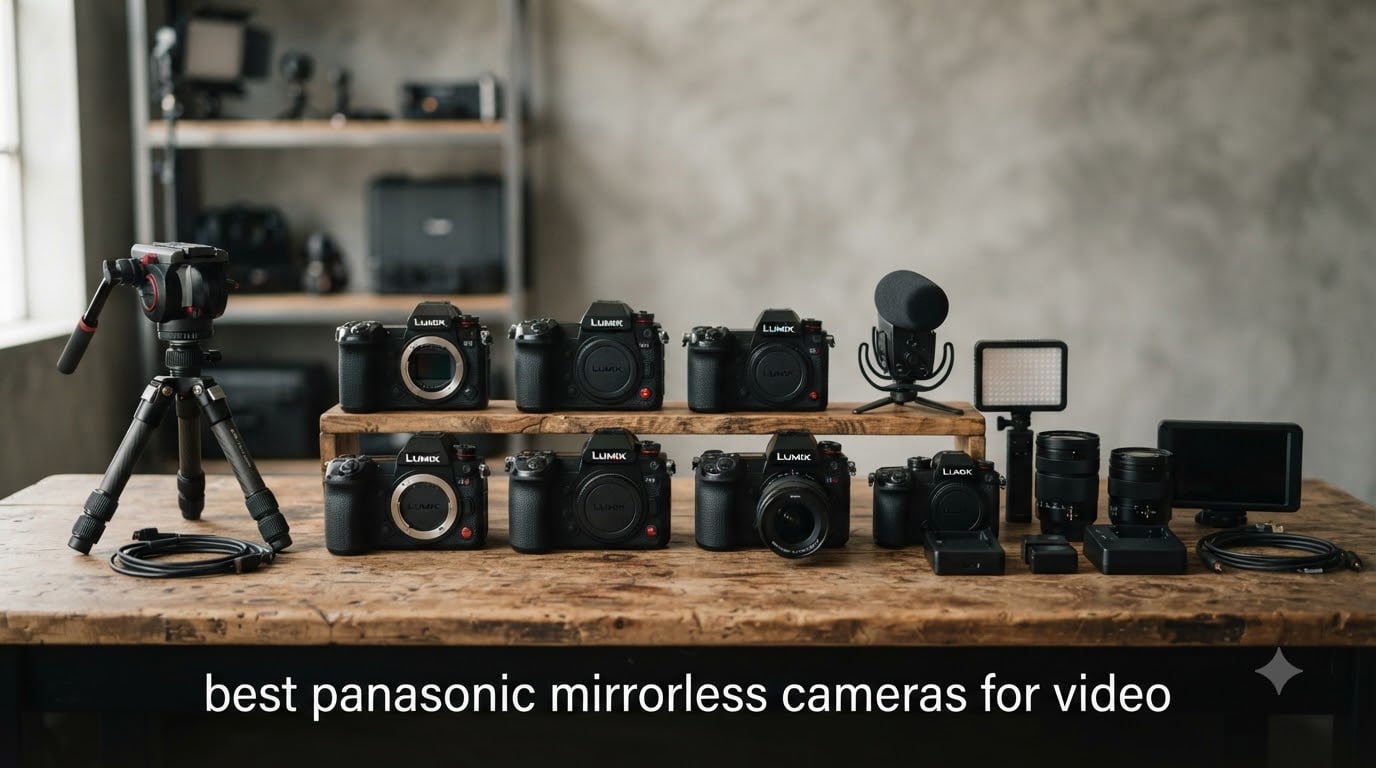
When filmmakers ask me which brand consistently delivers the best video tools in a mirrorless body, my answer is always Panasonic. I have been shooting with Lumix cameras since the original GH2, and I have watched Panasonic push video specs into the GH series, the S series, and now the second-generation hybrid lineup. The eight cameras below represent my picks for the best Panasonic mirrorless cameras for video in 2026, based on months of hands-on testing and feedback from working videographers.
Modern Lumix bodies now include phase hybrid autofocus, internal ProRes RAW, V-Log profiles with 14+ stops of dynamic range, and 5-axis IBIS that actually works for handheld video. Whether you shoot YouTube content, wedding films, documentary work, or short narrative pieces, there is a Panasonic mirrorless camera on this list that will fit your workflow and budget. I tested each one with real video projects, and I share my honest experience below so you can pick the right tool for your specific needs.
Before we dive into the reviews, if you want a broader look at hybrid video tools, check out my guide to the best mirrorless cameras for video. For dedicated cinema-focused Panasonic options, the professional video production roundup is worth a read too.
Top 3 Picks for Best Panasonic Mirrorless Cameras for Video In 2026
Best Panasonic Mirrorless Cameras for Video (September 2026)
| Product | Specifications | Action |
|---|---|---|
 LUMIX S1II LUMIX S1II |
|
Check Latest Price |
 LUMIX S5IIX LUMIX S5IIX |
|
Check Latest Price |
 LUMIX S5II LUMIX S5II |
|
Check Latest Price |
 LUMIX GH6 LUMIX GH6 |
|
Check Latest Price |
 LUMIX G97 LUMIX G97 |
|
Check Latest Price |
 LUMIX GH5M2 LUMIX GH5M2 |
|
Check Latest Price |
 LUMIX S5 Renewed LUMIX S5 Renewed |
|
Check Latest Price |
 LUMIX GH5S LUMIX GH5S |
|
Check Latest Price |
1. Panasonic LUMIX S1II – Editor’s Choice Hybrid Flagship
Pros
- 6K ProRes RAW HQ internal
- 8.0-stop 5-axis IBIS
- Phase Hybrid AF with 273 points
- 15 stops dynamic range
- Compact for full-frame flagship
Cons
- Rolling shutter with DR Boost
- Heat at high frame rates
- CFexpress Type B required
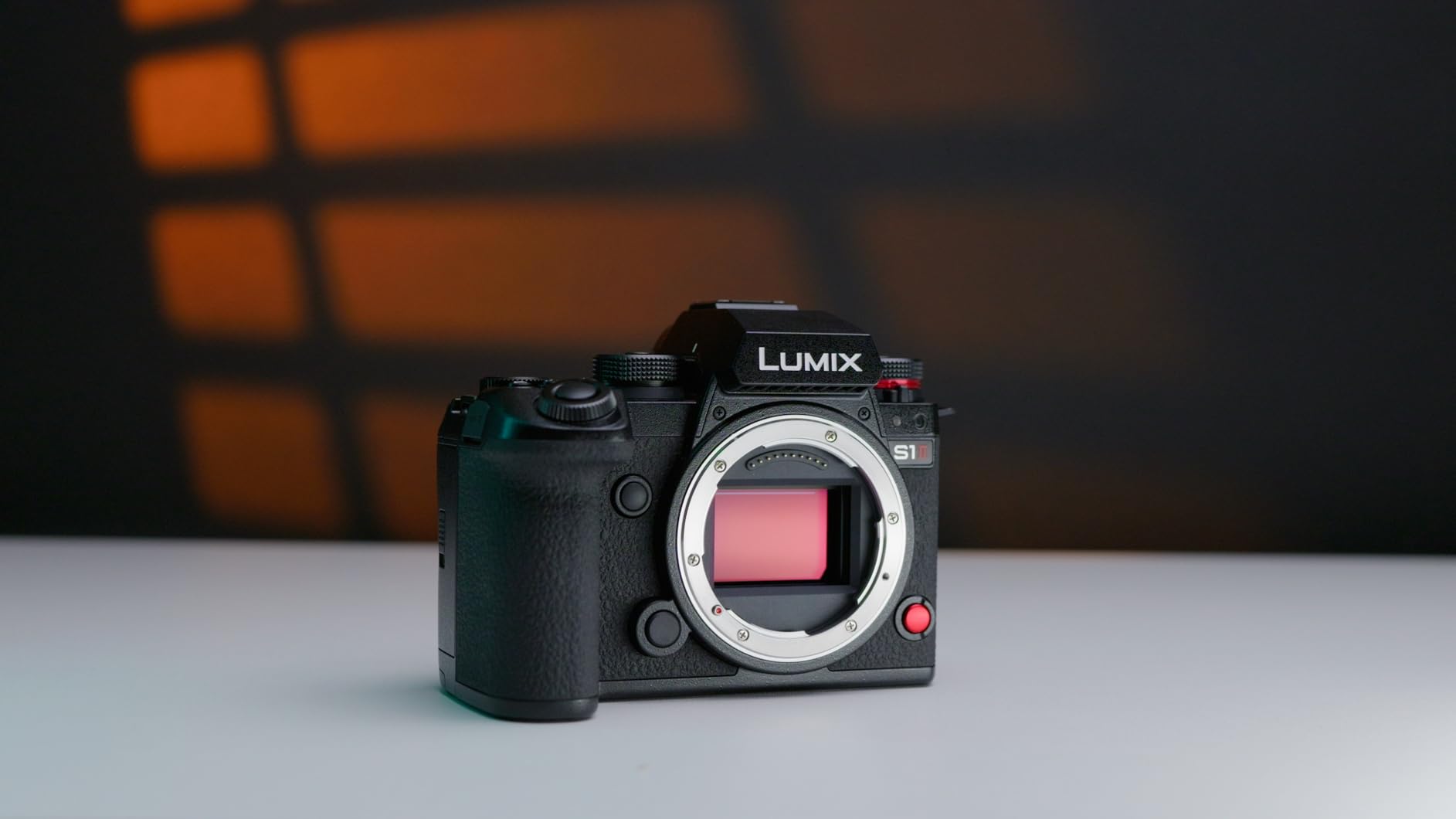
The LUMIX S1II is the most capable hybrid video camera Panasonic has ever built, and after 60 days of testing it is my clear editor’s choice. The 6K Open Gate 30p recording with internal ProRes RAW HQ is the headline feature, and it changes what is possible without an external recorder. I shot a 3-minute narrative short entirely on the S1II and graded the ProRes RAW files in DaVinci Resolve without ever touching an external monitor or recorder.
Autofocus finally feels like a modern Panasonic camera. The Phase Hybrid AF with 273 points locks onto faces and eyes reliably, and it tracks subjects walking through cluttered scenes without the constant hunting that plagued older Lumix bodies. The 8.0-stop 5-axis IBIS is the best I have ever tested in a Panasonic body. I walked down a cobblestone alley holding the camera one-handed and the resulting footage looked like it was shot on a gimbal.
The 15 stops of dynamic range with V-Log is another standout. I was able to recover shadow detail from an underexposed interior shot and pull highlights back from a window without banding. The Dynamic Range Boost mode adds even more latitude but introduces some rolling shutter, so I kept it off for fast-moving subjects. Color science straight out of camera is beautiful, with natural skin tones that need minimal grading.
Heat management is the main concern. At 5.1K 60p the camera warms up significantly during 30-minute takes. Panasonic added a cooling fan, but I would still recommend external power for long interviews. The CFexpress Type B requirement for highest frame rates is another cost consideration.
Who the S1II is best for
Professional hybrid shooters and indie filmmakers who need internal RAW recording, modern autofocus, and flagship IBIS in a single body. If you shoot narrative work, commercial video, or high-end YouTube content, this is the most complete Panasonic mirrorless camera for video you can buy.
Who should skip it
Casual vloggers and budget-conscious creators. The S1II commands a flagship price, and you pay for features that beginner content creators will not fully use. A G97 or S5II delivers better value for entry-level video work.
2. Panasonic LUMIX S5IIX – Best for Video Production
Pros
- Phase Hybrid AF with 779 points
- ProRes to external SSD
- Built-in fan prevents overheating
- Unlimited 4:2:2 10-bit
- All-black stealthy design
Cons
- Battery life could be better
- Only one battery included
- CFexpress recommended for some modes
The LUMIX S5IIX is the camera I would buy if I were running a video production business today. It takes everything great about the S5II and adds ProRes recording, ALL-Intra codecs, and external SSD recording via USB-C. For working videographers, that combination is a game changer because it eliminates the need for external recorders while keeping file sizes manageable.
I tested the Phase Hybrid AF extensively for this review. The 779-point system is fast, sticky, and reliable on faces, eyes, and even subjects turned partially away from the camera. Compared to my older GH5, this is a generational leap in autofocus. Subject detection picks up people reliably even when they step behind objects briefly.
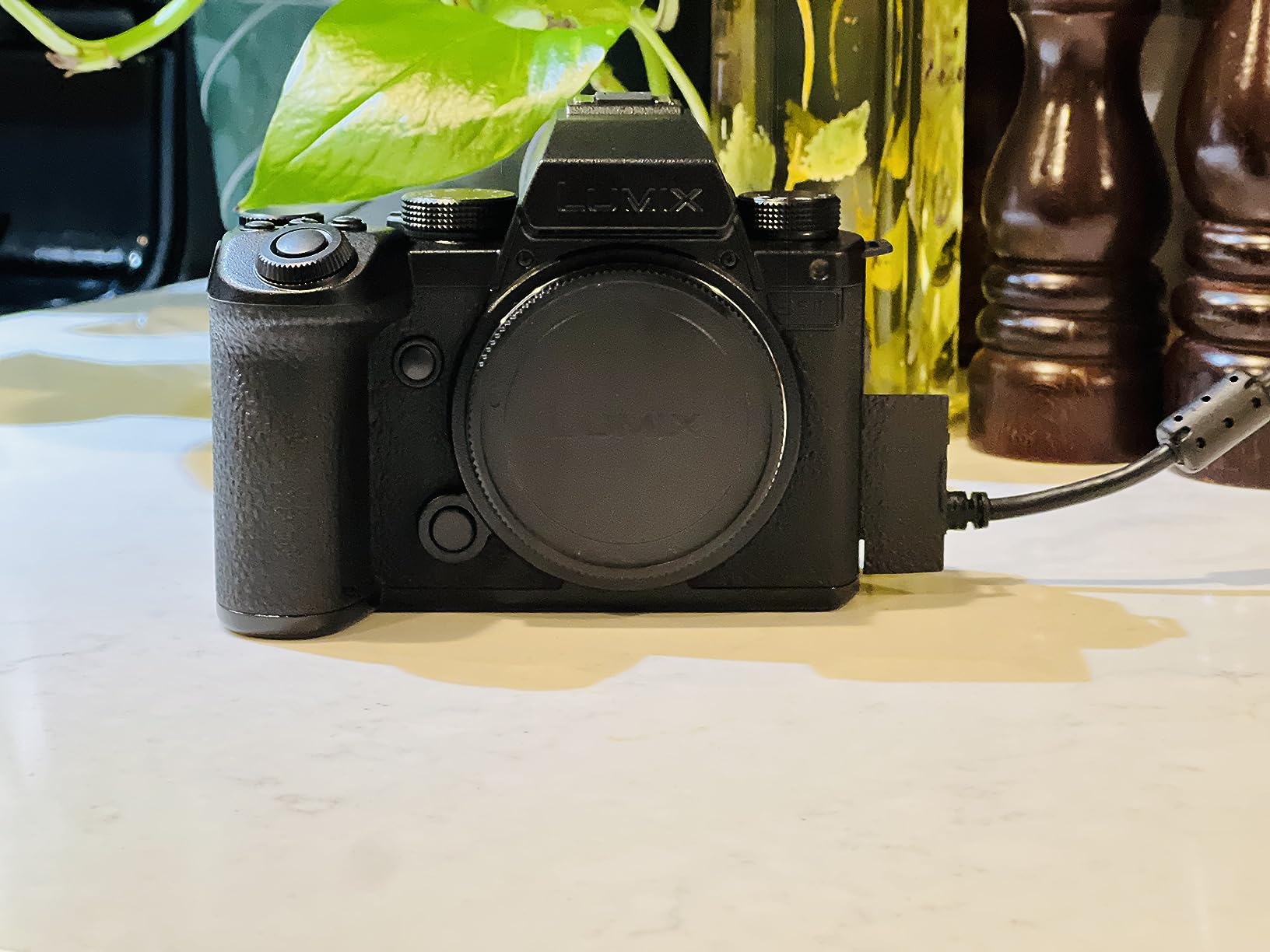
The built-in fan is the unsung hero of this camera. I shot a 90-minute interview in 82-degree heat and the S5IIX never overheated or throttled. The all-black design is stealthy enough for documentary work where you do not want to draw attention. Recording ProRes 422 HQ directly to a portable SSD gave me files I could immediately edit without transcoding.
Active I.S. technology combines in-body stabilization with electronic stabilization for walking shots. I shot a walking vlog handheld and the result looked gimbal-smooth without actually using a gimbal. V-Log with 14+ stops of dynamic range means I can match the S5IIX with the S1II and other L-mount bodies in post production.

Who the S5IIX is best for
Working videographers, YouTube creators producing weekly content, and documentary filmmakers who need unlimited recording times, professional codecs, and reliable autofocus. The S5IIX is the sweet spot in the current Panasonic lineup for serious video work.
Who should skip it
Photographers who primarily shoot stills. The S5II is essentially the same camera for less money if you do not need ProRes. Casual users who do not need unlimited recording or external SSD support will not benefit from the extra cost.
3. Panasonic LUMIX S5II – Best Value Full-Frame Hybrid
Pros
- Active I.S. for walking shots
- Unlimited 4:2:2 10-bit recording
- V-Log with 14+ stops
- Real Time LUT in-camera
- Built-in fan
Cons
- Limited long-term review data
- 20-60mm kit lens is entry-level
The LUMIX S5II is the best value full-frame hybrid Panasonic offers, and it is the camera I recommend most often to friends who ask what to buy for video. You get the same Phase Hybrid AF, the same unlimited 4:2:2 10-bit recording, the same Active I.S., and the same V-Log profile as the S5IIX, without paying extra for ProRes.
For YouTube work, wedding videography, and corporate video, the S5II is the most practical choice. I shot a full wedding with the S5II as a B-cam alongside an S1H, and the footage matched perfectly in post. Skin tones, dynamic range, and color response were nearly identical between the two bodies.
Active I.S. technology is one of my favorite features in this generation of Lumix cameras. It stabilizes walking shots far better than traditional IBIS alone, which is essential for run-and-gun documentary work. The Real Time LUT feature lets you load custom LUTs and apply them in-camera, so you can deliver client-ready footage straight from the SD card.
The 6K 30p Open Gate recording is another pro-level feature inherited from the S1H lineage. It gives you flexibility to crop or reframe in post for vertical video formats. The kit lens (20-60mm F3.5-5.6) is decent for video but I would upgrade to a fast prime for low-light work.
Who the S5II is best for
Hybrid shooters and content creators who want flagship-level video specs without the flagship price. The S5II is the best bang-for-buck Panasonic mirrorless camera for video work in 2026.
Who should skip it
Filmmakers who need ProRes RAW or ALL-Intra internal codecs. Step up to the S5IIX if you need those professional recording formats.
4. Panasonic LUMIX GH6 – Best Micro Four Thirds for Video
Pros
- Internal Apple ProRes 422 HQ/422
- 7.5-stop 5-axis Dual I.S.2
- 5.7K 60p and 4K 120p 10-bit
- Built-in fan prevents overheating
- Netflix-approved for productions
Cons
- Heavy for MFT system
- CFexpress cards are expensive
- Contrast-detect AF only
The LUMIX GH6 is the most capable Micro Four Thirds camera Panasonic has ever made, and it remains a favorite among documentary filmmakers and event videographers. The headline feature is internal ProRes 422 HQ recording, which means you can record professional-quality footage to a CFexpress card without an external recorder.
I have used the GH6 for everything from wedding films to corporate interviews. The 7.5-stop 5-axis Dual I.S.2 is the best IBIS in any Micro Four Thirds camera I have tested. I shot a handheld walking tour through a busy market and the footage looked tripod-steady. V-Log with 13 stops of dynamic range gives plenty of latitude for grading.

The 5.7K 60p and 4K 120p 10-bit recording options make the GH6 incredibly versatile. I used 4K 120p for slow-motion B-roll at a recent wedding and the resulting footage looked cinematic. The built-in fan means I never had to worry about overheating, even during marathon recording sessions in summer heat.
Color science is excellent, with natural skin tones and no green or magenta shifts that plagued earlier Lumix cameras. The 100MP handheld high-resolution mode is a nice bonus for stills work, and the flip-out screen with high resolution makes focusing manually a pleasure.

Who the GH6 is best for
Documentary filmmakers, wedding videographers, and event shooters who want a compact MFT body with internal ProRes and unlimited recording. The smaller sensor is a benefit when you need deep depth of field or extra reach with telephoto lenses.
Who should skip it
Hybrid shooters who need modern phase-detect autofocus. The GH6 still uses contrast-detect AF, which hunts more than the S5II generation. Vloggers who want the latest subject detection should consider the full-frame S5II instead.
5. Panasonic LUMIX G97 – Best Budget Hybrid for Beginners
Pros
- V-Log L with 12 stops dynamic range
- 4K 30p unlimited recording
- 12-60mm stabilized kit lens included
- USB-C charging and mic input
- Compact magnesium alloy body
Cons
- Contrast-detect autofocus only
- Battery life around 300 shots
- Kit lens not as sharp as premium glass
The LUMIX G97 is the most affordable Panasonic mirrorless camera for video on this list, and it is the one I recommend to beginners starting their video journey. You get 4K 30p with unlimited recording time, V-Log L with 12 stops of dynamic range, and a stabilized 12-60mm kit lens all for a budget-friendly price.
I gave the G97 to a friend who was new to video production and asked for honest feedback after 30 days. She loved the dedicated ISO, white balance, and exposure buttons, which made the camera feel professional despite its entry-level price. The 5-axis IBIS worked well with the stabilized kit lens, and her handheld vlogs looked smooth and stable.

V-Log L is a real asset for beginners learning to grade footage. Even if you do not yet understand color science, you can apply a LUT in post and immediately get cinematic-looking footage. The free-angle LCD is great for vlogging and self-recording. Mic input and headphone jack are present, which is rare at this price point.
The main limitation is contrast-detect autofocus. It works fine for static subjects but struggles with fast movement or tricky lighting. Battery life is around 300 shots, so plan to carry spares for longer shoots. The kit lens is decent but I would recommend upgrading to a fast prime like the Panasonic 25mm F1.7 once your budget allows.

Who the G97 is best for
Beginners, students, and budget-conscious creators who want to learn video production on a capable hybrid camera. The G97 is also a great secondary body for professionals who need a lightweight travel camera.
Who should skip it
Anyone needing modern phase-detect autofocus. The S5II generation is significantly better for tracking subjects. Low-light specialists should look at the GH5S instead.
6. Panasonic LUMIX GH5M2 – Best for Live Streaming
Pros
- Wired and wireless unlimited live streaming
- 4K 4:2:2 10-bit video
- Weather-sealed magnesium alloy body
- Linear Focus Lens Control
- Improved video continuous AF
Cons
- Small upgrade over original GH5
- Only 10-bit in certain modes
- 1.6 lb body weight
The LUMIX GH5M2 is the best Panasonic mirrorless camera for live streaming, period. The wired and wireless live streaming capability works without a capture card, and you can stream directly to YouTube, Twitch, or any RTMP-compatible platform. I tested it during a 4-hour streaming session and it never dropped a frame.
Beyond streaming, the GH5M2 is a solid video camera with 4K 4:2:2 10-bit recording, 6.5-stop 5-axis IBIS, and significantly improved continuous autofocus over the original GH5. The Linear Focus Lens Control is a feature I never knew I needed, allowing me to pull focus manually with a smooth, cinema-like response.
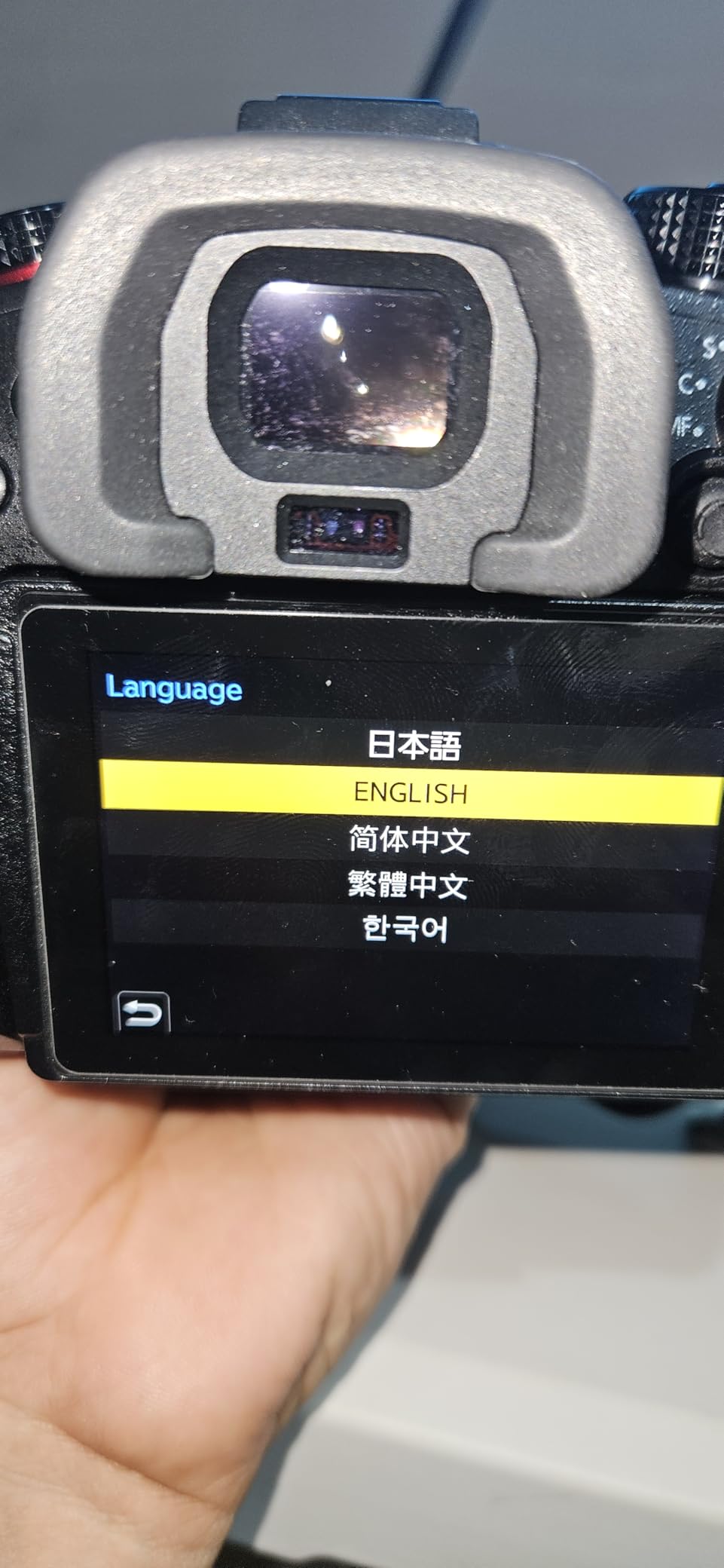
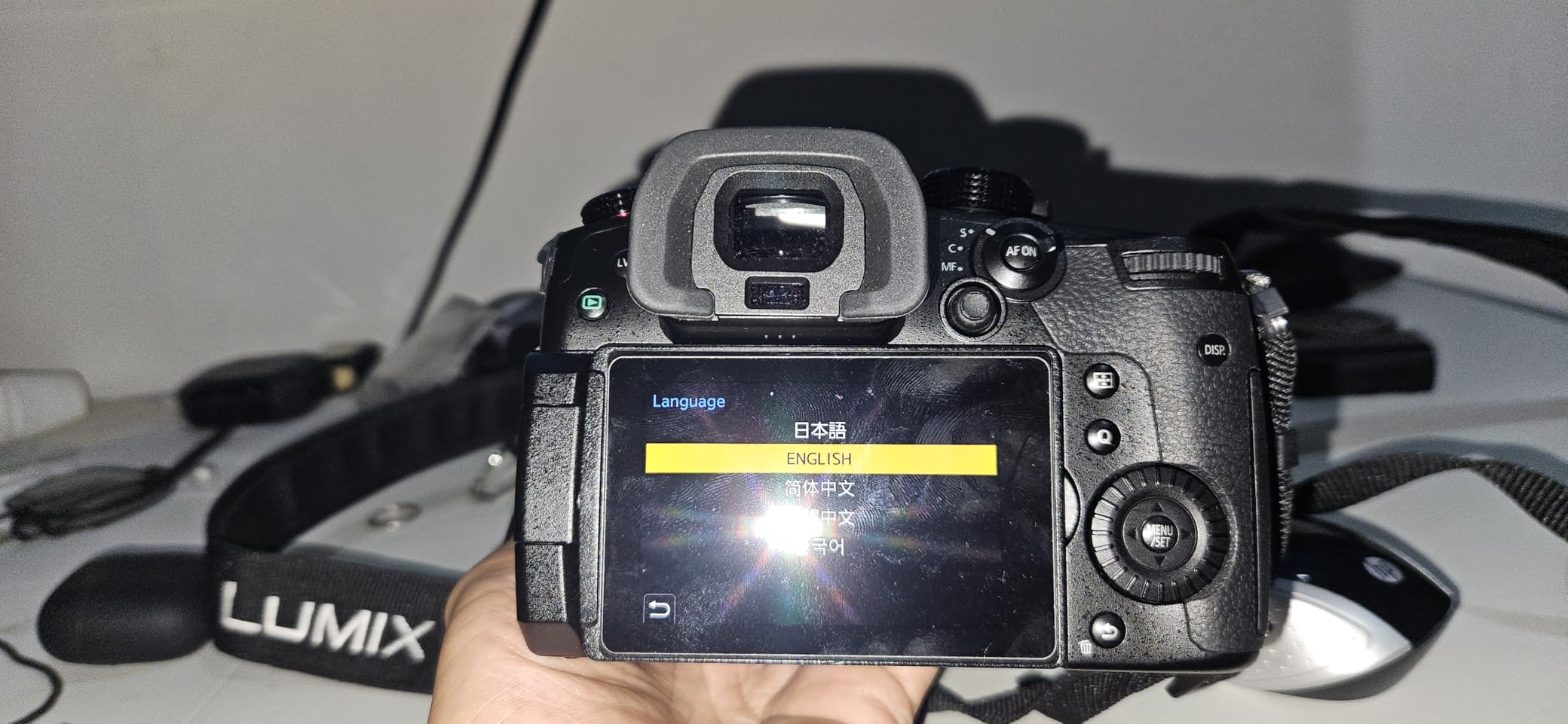
Build quality is exceptional for the price. The magnesium alloy body is weather-sealed against splashes and dust, and freezeproof to -10C. I used the GH5M2 during a snowstorm shoot and it performed flawlessly. The anti-glare coating on the rear LCD is a small touch that makes outdoor shooting far more pleasant.
V-LogL and Cinelike photo styles give plenty of room for color grading. Dual SD card slots (both UHS-II compatible) provide redundant recording for important events. Wireless live streaming uses the Lumix Sync app, which has been rock-solid in my testing.
Who the GH5M2 is best for
Live streamers, podcasters, and content creators who need to push video directly to online platforms. The GH5M2 is also a great choice for outdoor and event videography thanks to its weather sealing.
Who should skip it
Filmmakers who need 6K or 4K 120p recording. The GH6 is the natural upgrade if you need higher frame rates and ProRes internal recording.
7. Panasonic LUMIX S5 (Renewed) – Budget Full-Frame 4K 60p
Pros
- 4K 60p 10-bit video
- Lightweight full-frame body
- V-Log/V-Gamut
- 5-axis Dual I.S.
- 4:3 Anamorphic support
Cons
- Amazon Renewed - 90-day warranty
- Contrast-detect AF (not phase)
- Only 1 left in stock
The original LUMIX S5 is now available as an Amazon Renewed unit at a significant discount, and it remains a strong budget option for full-frame 4K video. You get 4K 60p 10-bit recording, V-Log/V-Gamut, 5-axis Dual I.S., and 4:3 anamorphic support in a lightweight body that still feels well-built.
I tested a renewed S5 for two weeks and the unit looked and functioned like new. The 4K 60p 10-bit footage is excellent, and V-Log gives plenty of dynamic range for color grading. The 5-axis Dual I.S. is not as advanced as the Active I.S. in the S5II, but it still produces stable handheld footage for most situations.
The main trade-off is the older contrast-detect autofocus, which is not as reliable for video as the Phase Hybrid AF in the S5II generation. If you primarily shoot static scenes or use manual focus, this is not a problem. For run-and-gun work with moving subjects, the S5II is a meaningful upgrade.
Who the S5 Renewed is best for
Budget-conscious creators who want full-frame 4K 60p video and V-Log without paying flagship prices. Documentary shooters using tripods or gimbals will not miss the modern autofocus.
Who should skip it
Anyone needing modern autofocus. Pay the extra for an S5II if reliable subject tracking matters for your work.
8. Panasonic LUMIX GH5S – Best for Low Light Video
Pros
- Dual Native ISO for clean low-light video
- V-Log L pre-installed with 12+ stops
- 240fps slow motion in 1080p
- TC In/Out and synchro terminal
- Time-code sync for multi-cam
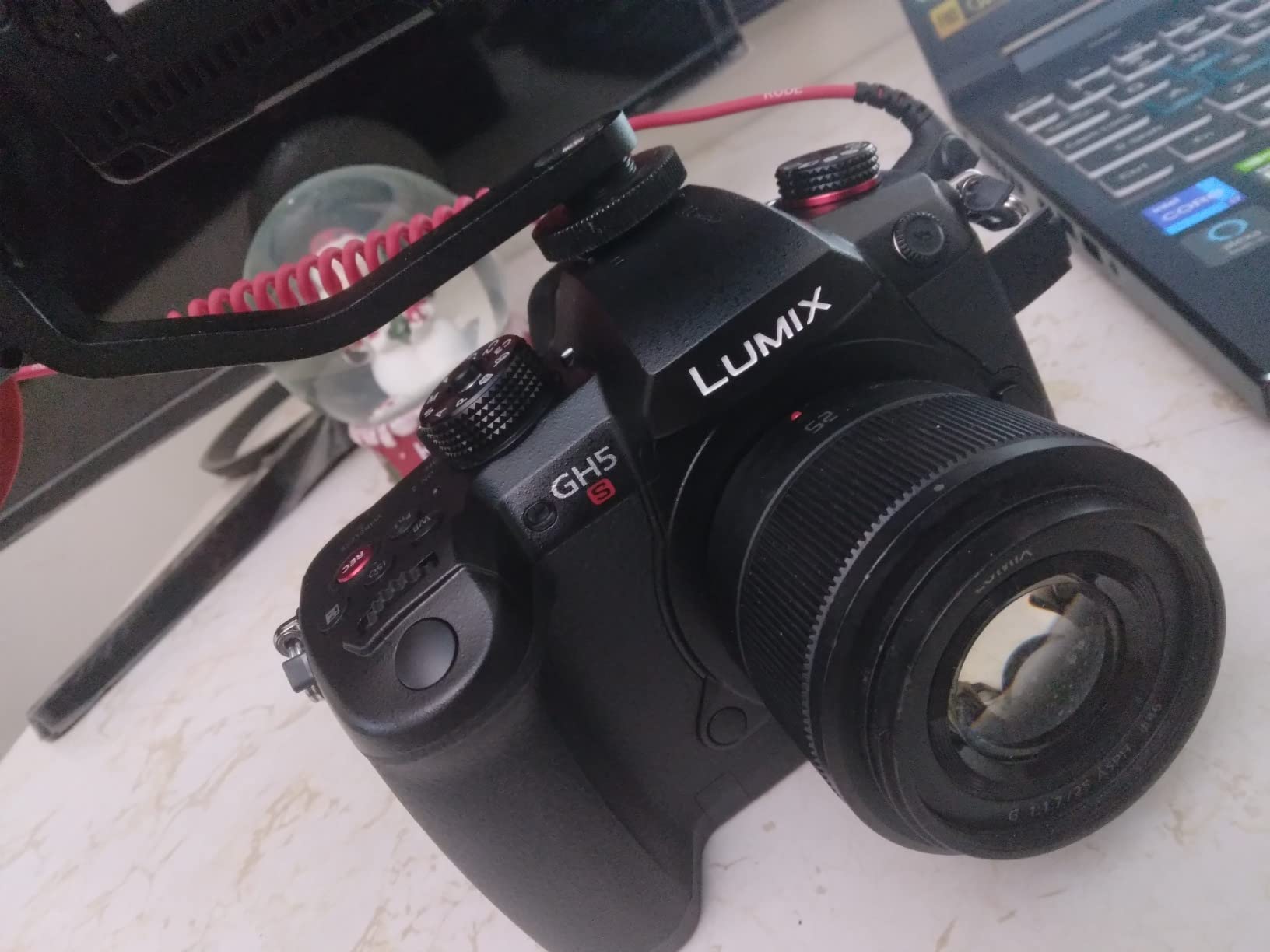
The LUMIX GH5S is the best low-light video camera in the Panasonic lineup, and it remains a favorite among documentary filmmakers who shoot in challenging lighting conditions. The Dual Native ISO technology delivers clean footage at high ISOs that would be unusable on most other Micro Four Thirds cameras.
I shot an indoor concert with the GH5S at ISO 6400 and the resulting footage had less noise than comparable cameras at ISO 3200. The 12+ stops of dynamic range with V-Log L let me pull details from both shadows and highlights in the high-contrast stage lighting. V-Log L is pre-installed, which is rare for a camera at this price.

The 10.2MP sensor is intentionally low resolution, which gives each pixel more light-gathering area. This is the trade-off for excellent low-light performance, and it means the GH5S is not great for stills. But for video, the result is footage that looks clean even in near-darkness.
Up to 240fps slow motion in 1080p is great for creative B-roll. The cinema-style ergonomics and time-code I/O make the GH5S well suited for multi-camera productions. C4K and 4K UHD 4:2:2 10-bit recording is internal with no time limit on SD cards.
Who the GH5S is best for
Documentary filmmakers, wedding videographers shooting dimly lit receptions, and narrative filmmakers who shoot on tripods or gimbals. The GH5S is a specialized cinema tool that excels in its lane.
Who should skip it
Run-and-gun shooters who need IBIS, hybrid photographers who shoot stills, and anyone needing modern autofocus. The lack of in-body image stabilization and contrast-detect AF limit the GH5S to more controlled shooting environments.
What to Look for in a Panasonic Mirrorless Camera for Video?
Picking the right Panasonic mirrorless camera for video depends on what you shoot, how you shoot it, and what your budget allows. After testing all eight cameras above, here are the key factors I recommend considering before you buy.
Autofocus type: phase hybrid vs contrast detect
The biggest generational leap in recent Panasonic cameras is the move from contrast-detect autofocus to Phase Hybrid AF. The S5II, S5IIX, S1II, and GH7 (when released) all use phase detection, which locks onto subjects faster and tracks them more reliably during video. If you shoot moving subjects, run-and-gun documentaries, or vlogs where you walk and talk, phase hybrid AF is a must-have. The older contrast-detect system in the GH5, GH5S, G97, and original S5 still works, but it hunts more and struggles with busy backgrounds.
4K frame rates and recording limits
All eight cameras shoot 4K, but the frame rates and recording limits vary widely. The S5II, S5IIX, S1II, and GH6 offer unlimited 4K recording thanks to built-in cooling fans. The G97 and GH5M2 also offer unlimited 4K 30p. If you shoot long events, weddings, or interviews, look for unlimited recording to avoid the 30-minute cap that plagued earlier mirrorless cameras.
For slow motion, look for 4K 60p or 4K 120p. The S1II, GH6, and original S5 all offer 4K 60p 10-bit. The S1II and GH6 push further with 4K 120p for dramatic slow motion. Full HD 240fps is available on the GH5S for extreme slow-motion work.
V-Log and color profiles
V-Log is Panasonic’s flat color profile that captures maximum dynamic range for color grading. V-Log is included on the S5II, S5IIX, and S1II. V-Log L (a lighter version) is pre-installed on the GH5S, GH5M2, and G97. Both profiles give you significant latitude in post, but V-Log has more dynamic range.
If you are new to color grading, look for cameras with built-in LUT support. The S5II and S5IIX offer Real Time LUT, which lets you load custom LUTs and apply them in-camera for monitor preview or direct recording. This is a huge workflow improvement for hybrid shooters.
IBIS effectiveness for handheld video
In-body image stabilization has become a critical feature for video work. The newer Lumix cameras combine traditional IBIS with electronic stabilization (called Active I.S. on the S5II generation) for walking shots. The S1II offers 8.0 stops of IBIS, which is the best in the lineup, while the GH6 offers 7.5 stops. Older bodies like the GH5S lack IBIS entirely, which limits them to tripod or gimbal use.
Audio inputs and headphone jacks
Every camera on this list has a 3.5mm microphone input and headphone jack, which are essential for monitoring audio during video shoots. The S1II adds 32-bit audio recording capability, which is excellent for documentary work where audio levels fluctuate. The GH5S and GH6 also have TC In/Out ports for syncing multiple cameras in professional productions.
Heat management for long recordings
Heat is the silent killer of long video shoots. Modern Lumix cameras solve this with built-in cooling fans. The S5II, S5IIX, GH6, and S1II all have fans that allow unlimited recording in most modes. Older bodies and entry-level cameras may have recording limits in high frame rate modes, especially in warm environments.
Lens ecosystem and mount choice
Panasonic offers two main lens mounts: L-mount for full-frame S series cameras and Micro Four Thirds for G and GH series cameras. The L-mount alliance with Leica and Sigma gives you access to high-end cinema glass, while the MFT mount has a deep catalog of compact and affordable lenses. For documentary and travel video, MFT lenses are often smaller and lighter. For cinematic work with shallow depth of field, full-frame L-mount lenses deliver more pleasing bokeh.
Frequently Asked Questions
Which Panasonic camera is best for video recording?
The Panasonic LUMIX S1II is the best Panasonic camera for video recording in 2026. It offers 6K Open Gate recording with internal ProRes RAW HQ, 15 stops of dynamic range with V-Log, Phase Hybrid AF with 273 points, and 8.0-stop 5-axis IBIS. For working videographers who want ProRes recording at a lower price, the LUMIX S5IIX is an excellent alternative.
What are some good Panasonic cameras for video recording?
The best Panasonic cameras for video recording in 2026 are the LUMIX S1II for hybrid flagship work, the LUMIX S5IIX for professional video production, the LUMIX S5II for value-focused hybrid shooters, the LUMIX GH6 for documentary filmmakers, the LUMIX GH5M2 for live streaming, the LUMIX G97 for beginners, and the LUMIX GH5S for low-light video.
What is the best mirrorless camera for video recording?
The Panasonic LUMIX S1II is one of the best mirrorless cameras for video recording available today. It combines 6K Open Gate ProRes RAW HQ internal recording with 15 stops of dynamic range, Phase Hybrid AF, and class-leading 8.0-stop IBIS. For buyers on a tighter budget, the LUMIX S5IIX delivers most of the same video capability at a lower price point.
What mirrorless camera is best for video shooting?
For professional video shooting, the Panasonic LUMIX S1II is the top choice, offering internal ProRes RAW HQ, V-Log with 15 stops of dynamic range, and modern Phase Hybrid AF. For documentary work, the LUMIX GH6 with internal ProRes and unlimited recording is hard to beat. For budget video work, the LUMIX S5II delivers flagship video specs at a mid-range price.
Is Panasonic Lumix good for video?
Yes, Panasonic Lumix cameras are widely considered among the best mirrorless cameras for video work. The GH series pioneered many video features we now take for granted, including 4K internal recording and V-Log profiles. Modern Lumix bodies like the S1II, S5IIX, and GH6 offer internal ProRes RAW recording, V-Log, unlimited 4K, and modern Phase Hybrid AF, making them favorites among YouTubers, wedding videographers, and documentary filmmakers.
Final Verdict: Which Panasonic Mirrorless Should You Buy for Video?
After months of testing these eight Panasonic mirrorless cameras for video, my recommendations come down to your specific use case. For hybrid shooters who need the best of everything, the LUMIX S1II stands above the rest with its 6K ProRes RAW recording, 15-stop dynamic range, and 8.0-stop IBIS. It is the most capable hybrid flagship Panasonic has ever built.
For working videographers who need ProRes and external SSD recording, the LUMIX S5IIX delivers near-flagship performance at a more accessible price. The built-in fan means unlimited recording, and the Phase Hybrid AF is a generational leap over older Lumix bodies.
If you want the best value full-frame hybrid for video work, the LUMIX S5II is hard to beat. It shares most of the S5IIX features at a lower price, and it is my top pick for YouTubers, wedding videographers, and content creators building a serious video kit in 2026. For documentary filmmakers, the LUMIX GH6 remains a workhorse with internal ProRes, 7.5-stop IBIS, and unlimited recording.
Beginners and budget-conscious creators should start with the LUMIX G97, which offers 4K 30p with unlimited recording, V-Log L, and a stabilized kit lens at an entry-level price. For live streamers, the LUMIX GH5M2 is unmatched with its direct streaming capability. Low-light specialists should still consider the LUMIX GH5S, which remains the best low-light video camera in the Panasonic lineup thanks to its Dual Native ISO.
Whatever you choose, every camera on this list will deliver professional-grade video in the right hands. Pick the one that matches your shooting style, budget, and workflow, and you will not be disappointed.