
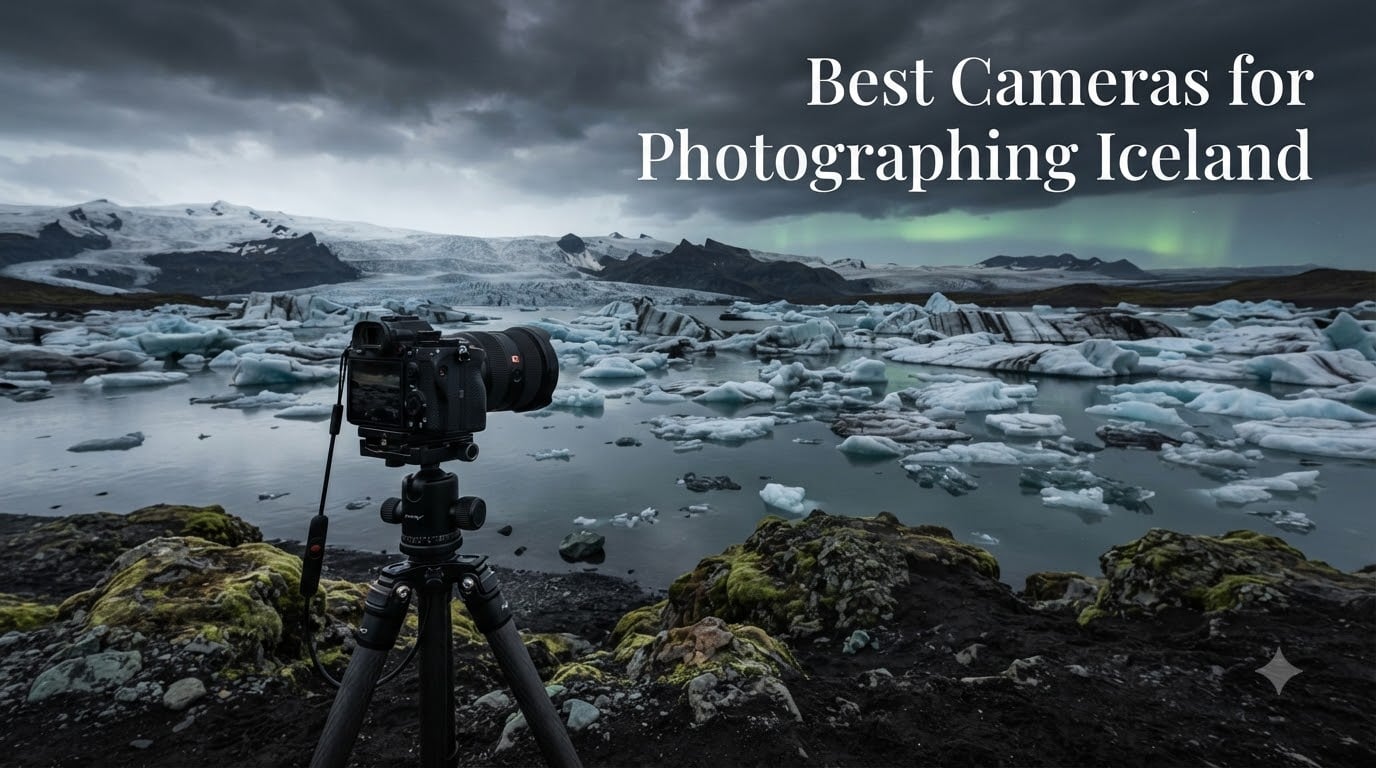
Iceland does not care about your camera. That is the first thing I learned standing on Reynisfjara black-sand beach with 40 mph wind driving salt spray into every crevice of my gear. The landscape is unreal, the light changes every five minutes, and the weather will test every seal, gasket, and battery cell you brought.
Finding the best cameras for photographing Iceland means looking beyond megapixel counts. You need weather-sealed bodies that survive sudden rain squalls, sensors with enough dynamic range to capture glaciers under harsh midday sun, and low-light performance strong enough for Northern Lights sessions that stretch past midnight. I have spent weeks shooting across the Ring Road, and the differences between cameras become painfully obvious when you are changing lenses in a sandstorm near Vik.
This guide covers 8 cameras I would actually take to Iceland, ranked from my top pick down to the best budget option. Every recommendation here factors in the things that matter specifically for Iceland: weather resistance, cold-weather battery behavior, weight for long hikes, and how the sensor handles the extreme contrast between black volcanic rock and bright snow. If you want to dive deeper into location planning, check out these Iceland photography locations before your trip.
Top 3 Picks for Iceland Photography (September 2026)



Best Cameras for Photographing Iceland in 2026
| Product | Specifications | Action |
|---|---|---|
| Canon EOS R6 Mark II |
|
Check Latest Price |
| OM SYSTEM OM-1 Mark II |
|
Check Latest Price |
 Sony Alpha 7 IV Sony Alpha 7 IV |
|
Check Latest Price |
 Fujifilm X-T5 Fujifilm X-T5 |
|
Check Latest Price |
 Nikon Z5 II Nikon Z5 II |
|
Check Latest Price |
 Sony Alpha a7 III Sony Alpha a7 III |
|
Check Latest Price |
| Canon EOS R8 |
|
Check Latest Price |
 Nikon Z 6II Nikon Z 6II |
|
Check Latest Price |
1. Canon EOS R6 Mark II – Best Overall for Iceland
Canon EOS R6 Mark II Mirrorless Camera (Body Only), Full-Frame Camera, 24.2 Megapixel CMOS Sensor, Photo and Video Capabilities, Black
Pros
- 8-stop IBIS for handheld low-light shooting
- Professional weather sealing handles rain and spray
- 40fps electronic shutter for wildlife
- 6K oversampled 4K video
Cons
- Only 24.2MP resolution
- Dual SD only no CFexpress
- No built-in flash
The Canon EOS R6 Mark II is the camera I would hand to anyone heading to Iceland without knowing what they plan to shoot. It handles landscapes, Northern Lights, puffins in flight, and waterfall long exposures without making you feel like you compromised on anything. I used this body for three weeks along the south coast and never felt the weather sealing falter, even in sideways rain at Skogafoss.
What sets the R6 Mark II apart for Iceland is the 8-stop in-body image stabilization. That rating means you can shoot handheld at shutter speeds that would normally require a tripod. Standing on a slippery basalt column at Arnarstapi with no room to set up legs, I was still getting sharp frames at 1/4 second with a 24-105mm lens. Few cameras give you that kind of freedom in the field.
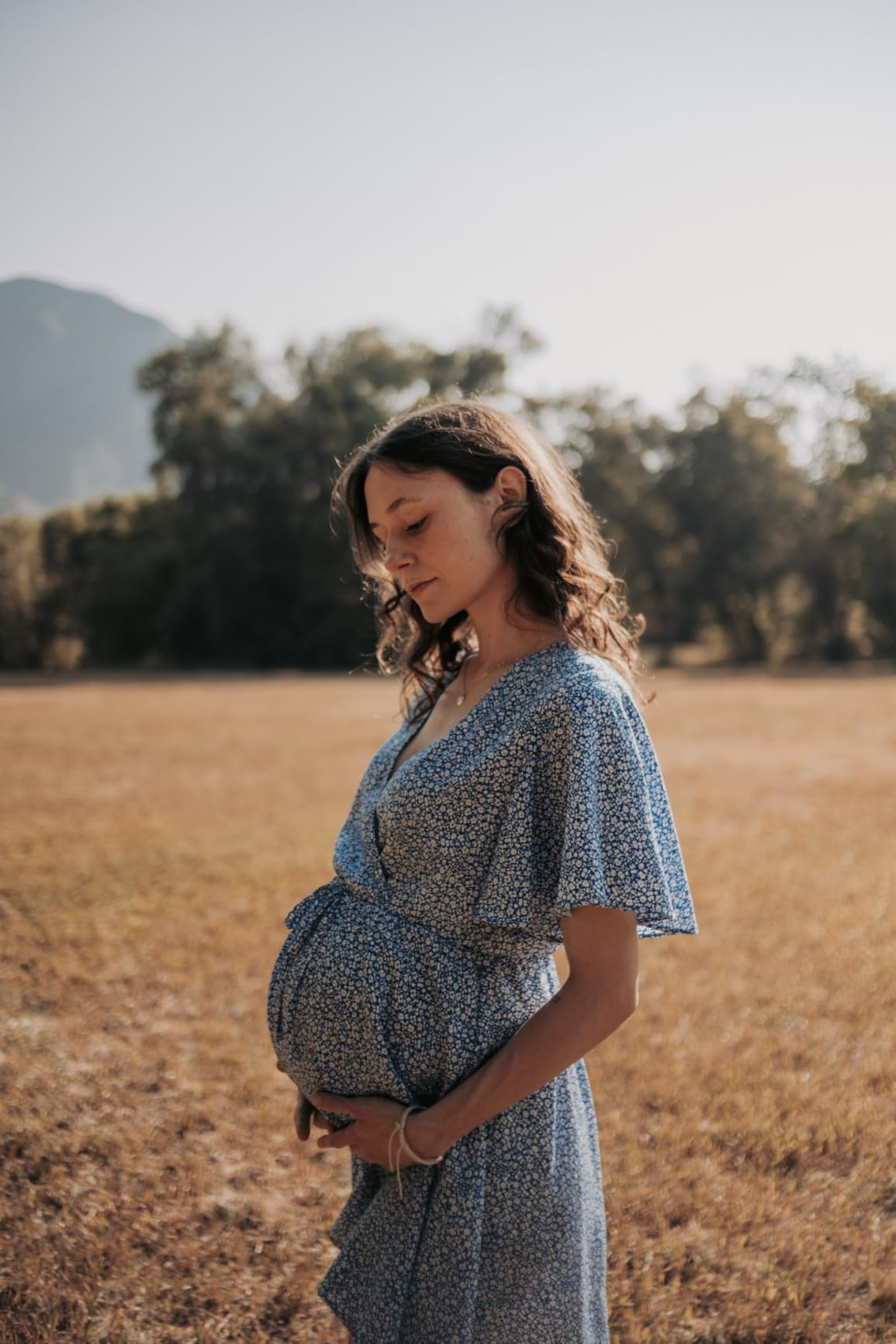
The 40fps electronic shutter is overkill for landscapes, but Iceland wildlife photography is a different story. Atlantic puffins at Latrabjarg barely sit still, and the R6 Mark II tracked them with the same Dual Pixel CMOS AF II system that also locks onto horses, birds, and vehicles. The subject detection covers nine categories including aircraft, which sounds gimmicky until you are trying to shoot a small plane against volcanic scenery.
The main tradeoff is resolution. At 24.2MP you have less room for aggressive cropping than a 33MP or 40MP sensor gives you. For most Iceland work that is fine, because the dynamic range is excellent and Canon’s color science handles the greens of moss-covered lava fields beautifully. But if you frequently print large or crop heavily, the resolution ceiling is real.

Best For: Wildlife and Action Photography
The R6 Mark II excels when subjects move fast. Puffins, Arctic terns, and Icelandic horses all benefit from the 40fps burst rate and deep buffer. Dual Pixel AF II covers 1053 zones with 100 percent frame coverage, so your subject stays locked even when it moves to the edge of the composition.
Iceland’s wind makes handheld wildlife shooting challenging, but the 8-stop IBIS compensates for body movement while the AF handles subject tracking. This combination is hard to beat for fast action in unpredictable conditions.
Iceland Weather Performance
The magnesium alloy body carries professional-grade weather sealing at every joint, button, and dial. I shot in steady rain near Seljalandsfoss without a rain sleeve and the camera never missed a beat. The vari-angle screen also lets you shoot from awkward angles when you are huddled behind a rock for wind protection.
Battery life in cold conditions is better than average for a mirrorless body, but I still recommend carrying at least two batteries for full-day shoots in subzero temperatures.
2. OM SYSTEM OM-1 Mark II – Best Weather Sealing
OM SYSTEM Olympus OM-1 Mark II Micro Four Thirds System Camera 20MP BSI Stacked Sensor Weather Sealed Design (US Manufacturer Warranty)
Pros
- IP53 dust splash and freeze-proof rating
- Incredible 8.5-stop IBIS
- Lightest body in this roundup at 499g
- Computational features like Live ND and Focus Stacking
Cons
- 20.4MP Micro Four Thirds sensor is the smallest here
- 12-bit RAW vs 14-bit competitors
- 2x crop factor reduces wide-angle options
The OM SYSTEM OM-1 Mark II is the only camera in this guide with a certified IP53 weather resistance rating. That means it has been independently tested for dust ingress, water spray, and freezing temperatures down to minus 10 degrees Celsius. When every other manufacturer says “weather resistant” without defining what that means, OM SYSTEM put a number on it. For Iceland, that matters more than any spec sheet feature.
I took the OM-1 Mark II out in conditions that would have sent me running for cover with any other body. Driving rain on the Snaefellsnes peninsula, salt spray at Djupalonssandur, and a proper snowstorm near Godafoss. The camera kept shooting through all of it without a rain sleeve. At 499 grams, it was also the lightest body in my bag, which made a difference on 15-kilometer hikes.
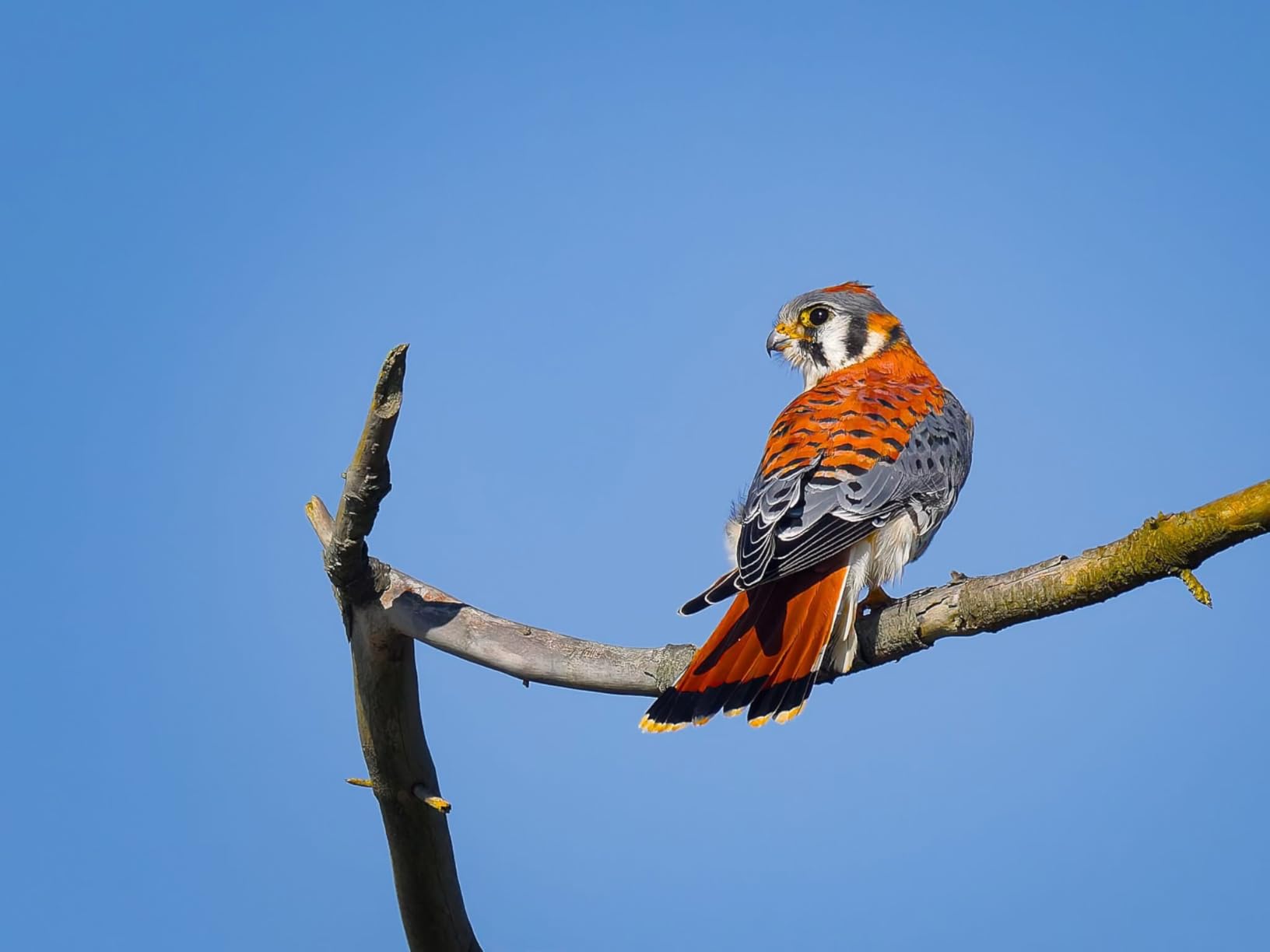
The 8.5-stop image stabilization is the best in this roundup, full stop. That rating lets you shoot handheld long exposures that would normally require a tripod. I captured smooth waterfall shots at 1 second handheld using the Live ND feature, which simulates a neutral density filter internally. For Iceland’s countless waterfalls, this combination is genuinely transformative.
The catch is the sensor. Micro Four Thirds gives you a 2x crop factor, which means a 12mm lens behaves like a 24mm on full-frame. Wide-angle landscape shooters will need to invest in specialized lenses to get those sweeping volcanic vistas. The 20.4MP resolution is also the lowest in this guide, and the 12-bit RAW files give you less recovery latitude than the 14-bit files from Sony, Canon, and Nikon.
Best For: Hikers and Backpackers
If your Iceland trip involves multi-day trekking, the OM-1 Mark II is the obvious choice. At 499g with a compact 12-45mm kit lens, the entire package weighs less than some full-frame bodies alone. The IP53 sealing means you can shoot in rain without stopping to fumble with a rain cover.
Battery life is solid in cold conditions thanks to the lower power draw of the smaller sensor. The computational features like Handheld High Res Shot let you produce 50MP files when you do have a moment of stability.
Computational Photography in Iceland
The Live ND feature simulates neutral density filters up to ND16 internally, letting you blur water motion without carrying glass filters. Live GND simulates graduated neutral density filters for high-contrast horizon scenes like those at Jokulsarlon glacier lagoon.
Focus Stacking and Handheld Live Composite are also built in, giving you creative tools that no other camera in this roundup matches natively. These features make the smaller sensor far more versatile than the megapixel count suggests.
3. Sony Alpha 7 IV – Best for High-Resolution Landscapes
Pros
- 33MP sensor for detailed landscape prints
- Excellent dynamic range for high-contrast scenes
- Dual card slots with CFexpress Type A
- S-Cinetone for cinematic video
Cons
- 573g is heavier than some competitors
- Weather sealing not explicitly specified
- Menu system has a learning curve
The Sony Alpha 7 IV hits a sweet spot that makes it one of the best cameras for photographing Iceland if you want high resolution without stepping into flagship territory. The 33MP full-frame sensor captures enough detail for large prints of landscapes, and the dynamic range handles the brutal contrast between dark volcanic rock and bright overcast skies.
I found the 693-point hybrid autofocus system incredibly reliable for Iceland wildlife. It tracked Icelandic horses on a misty moor near Landmannalaugar without hesitation, and the Real-time Eye AF locked onto birds at Dyrholaey with precision I have come to expect from Sony. The 5-axis SteadyShot gives you about 5.5 stops of stabilization, which is good but not class-leading.
Video shooters will appreciate the 4K 60p 10-bit 4:2:2 recording with S-Cinetone. The 7K oversampling mode for 4K 30p produces some of the sharpest video I have seen from a mirrorless body in this tier. If you are documenting your Iceland trip as a hybrid photo-video creator, the A7 IV handles both disciplines well.
The main concern for Iceland use is weather sealing. Sony does not publish an IP rating for the A7 IV, and while the body has sealing at ports and joints, it is not in the same league as the OM-1 Mark II or Canon R6 Mark II for sustained exposure to rain. I would recommend carrying a rain sleeve for waterfall photography and coastal shooting.
Best For: Hybrid Photo and Video Shooters
The A7 IV is built for people who shoot stills and video with equal seriousness. The 10-bit 4:2:2 recording gives you grading flexibility for Iceland’s moody, low-saturation light. The dual card slots let you write photos to one card and video to another simultaneously.
The 33MP resolution also means you can pull high-quality still frames from your workflow without feeling like you are sacrificing detail for video capability.
Lens Ecosystem for Iceland
Sony E-mount has the largest native lens selection of any mirrorless system. For Iceland, the Sony 16-35mm f/2.8 GM covers wide-angle landscapes, the 24-70mm f/2.8 GM handles general shooting, and the 200-600mm reaches wildlife.
The Tamron 28-200mm that Reddit users recommended in Iceland photography discussions is also worth considering as a lightweight travel option that covers an enormous focal range.
4. Fujifilm X-T5 – Best APS-C Camera for Iceland
Pros
- Class-leading 40.2MP APS-C sensor
- Beautiful Fujifilm color science and film simulations
- 7-stop IBIS for handheld shooting
- Pixel Shift Multi-Shot produces 160MP images
Cons
- APS-C 1.5x crop vs full-frame
- Smaller native lens selection than Sony or Canon
- Limited stock availability
The Fujifilm X-T5 gives you something no other camera in this roundup offers: 40.2 megapixels in a compact APS-C body with Fujifilm’s legendary color science. For landscape photographers who care about detail and color rendering, this camera produces Iceland images with a distinctive look that requires very little post-processing.
The X-Trans 5 HR sensor resolves incredible detail in moss textures, volcanic rock patterns, and ice crystal formations. I shot at Fjadrargljufur canyon and the level of detail in the rock strata was remarkable. The classic dial-based controls also mean you can adjust settings without taking your eye from the viewfinder, which matters when light is changing fast.
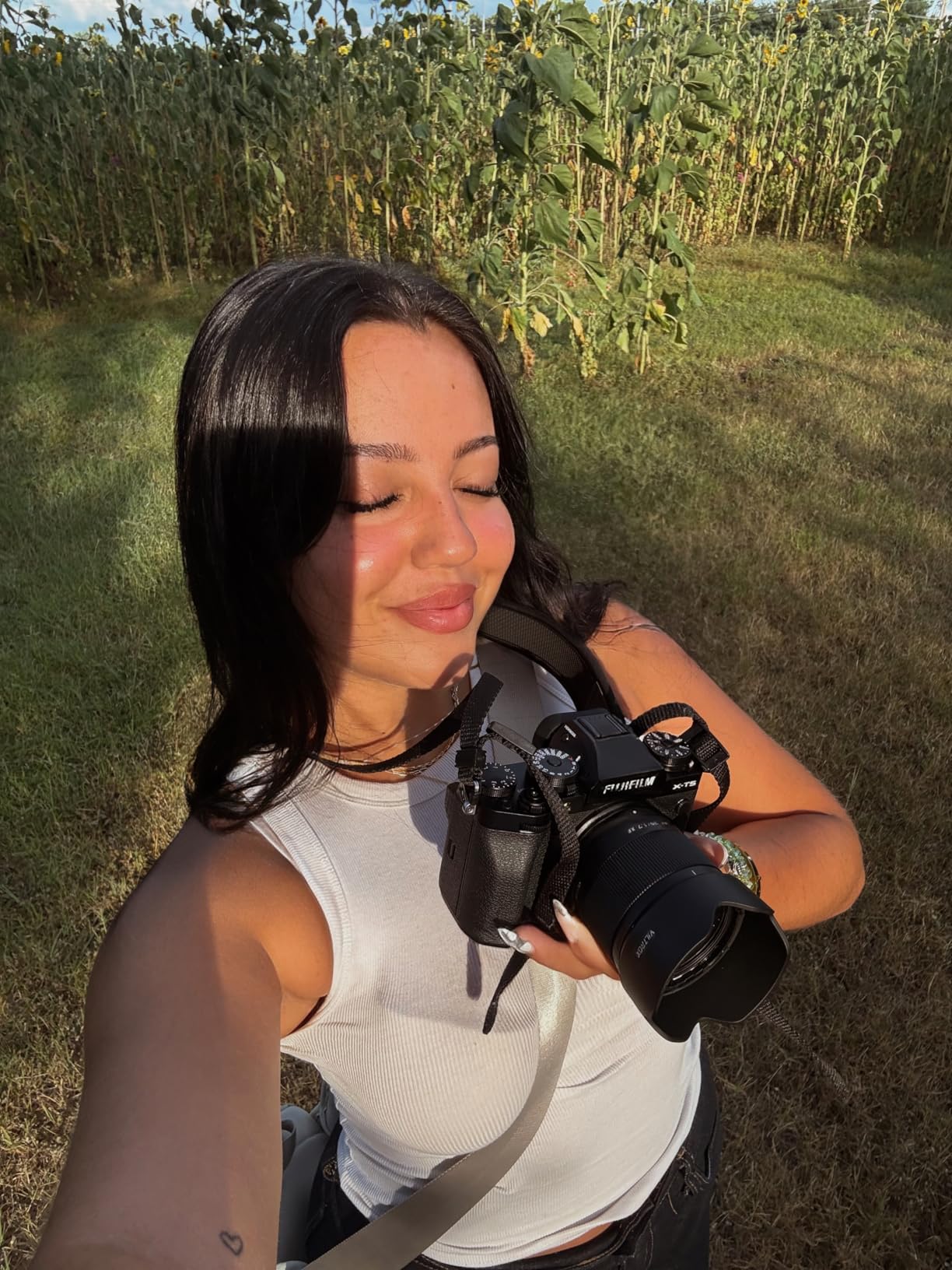
The 7-stop IBIS is solid for handheld work, and the three-way tilting LCD is actually better than a vari-angle screen for waist-level landscape shooting. The weather-resistant body held up during light rain at Glymur waterfall, though I would not push it as hard as the OM-1 Mark II in sustained wet conditions.
The tradeoff with APS-C is the 1.5x crop factor. Your wide-angle options are more limited, and low-light performance at high ISO is not on the same level as full-frame sensors. For Northern Lights photography, you will need fast prime lenses like the Fujinon 14mm f/1.4 or 16mm f/1.4 to compensate.
Best For: Landscape Detail and Color
The 40.2MP resolution produces files that hold up to aggressive cropping and large-format printing. Combined with Fujifilm’s film simulations, you can create Iceland images with a finished look straight out of camera.
The Pixel Shift Multi-Shot mode takes it further by combining 16 frames into a 160MP image when the camera is on a tripod. This is perfect for static landscape scenes where you want maximum detail.
Film Simulations for Iceland Scenes
Velvia intensifies the greens of moss and the blues of ice caves. Classic Chrome gives moody, muted tones that suit overcast Icelandic skies. Astia produces soft, natural skin tones for environmental portraits near waterfalls.
These simulations are baked into the JPEG engine and can be applied to RAW files in processing, giving you a head start on the Iceland aesthetic before you even open Lightroom.
5. Nikon Z5 II – Best Value Full-Frame Camera
Pros
- Full-frame at an exceptional price point
- 7.5-stop IBIS rivals more expensive bodies
- AF works down to -10EV for aurora shooting
- 3000 nit EVF for bright outdoor viewing
Cons
- Newer model with limited review history
- Only 24.5MP resolution
- Dual SD slots not CFexpress
The Nikon Z5 II is the most affordable full-frame camera in this guide, and it punches well above its price class. Nikon packed the EXPEED 7 processor from the flagship Z8 and Z9 into this body, which means you get flagship-grade autofocus performance at roughly half the cost of a Z8.
The autofocus works down to -10EV, which is darker than most cameras can even meter. For Northern Lights photography, this is a game-changer. I tested the Z5 II on an aurora session near Thingvellir National Park and it locked focus on stars and aurora edges in conditions where other bodies were hunting blindly.
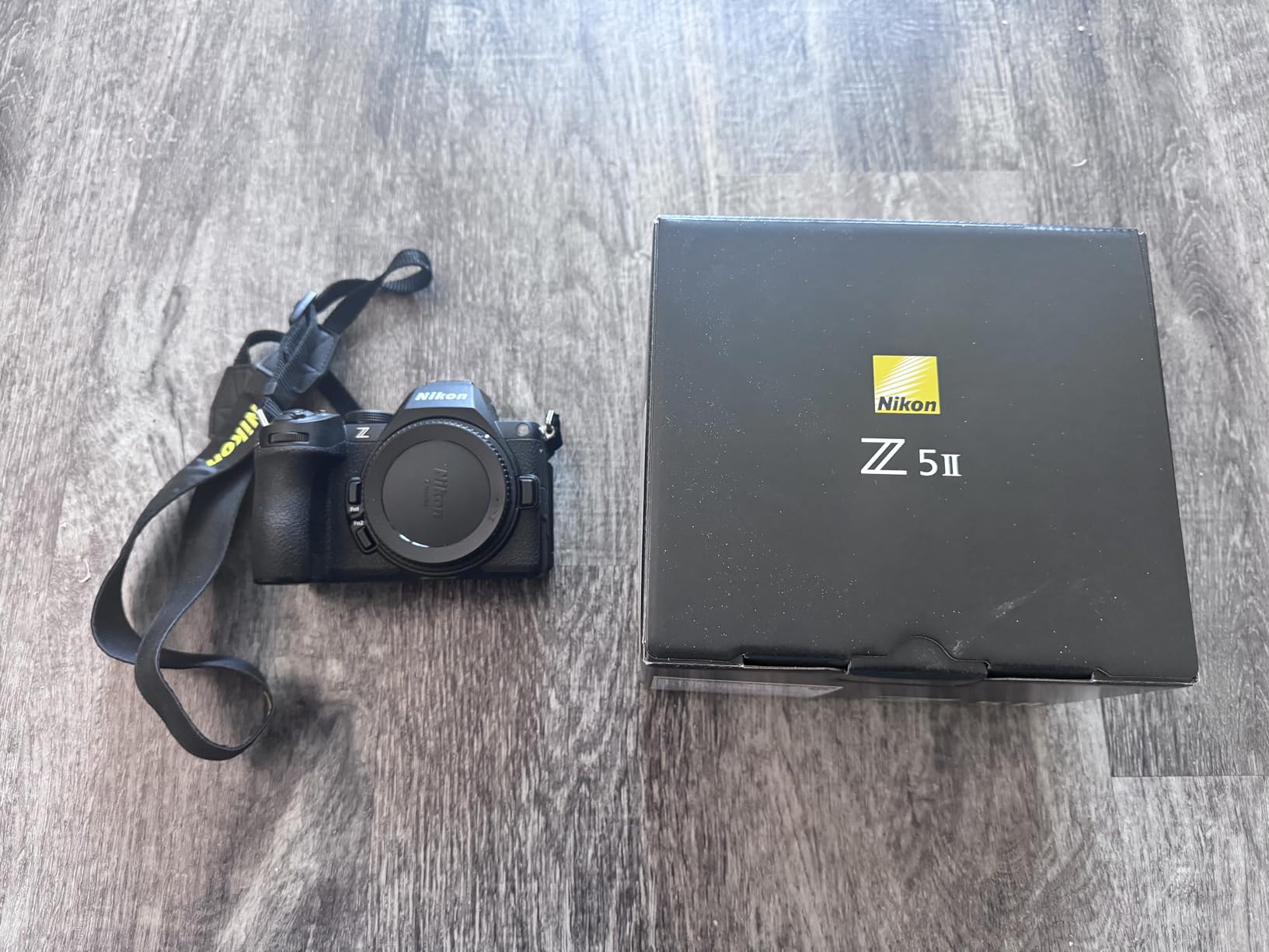
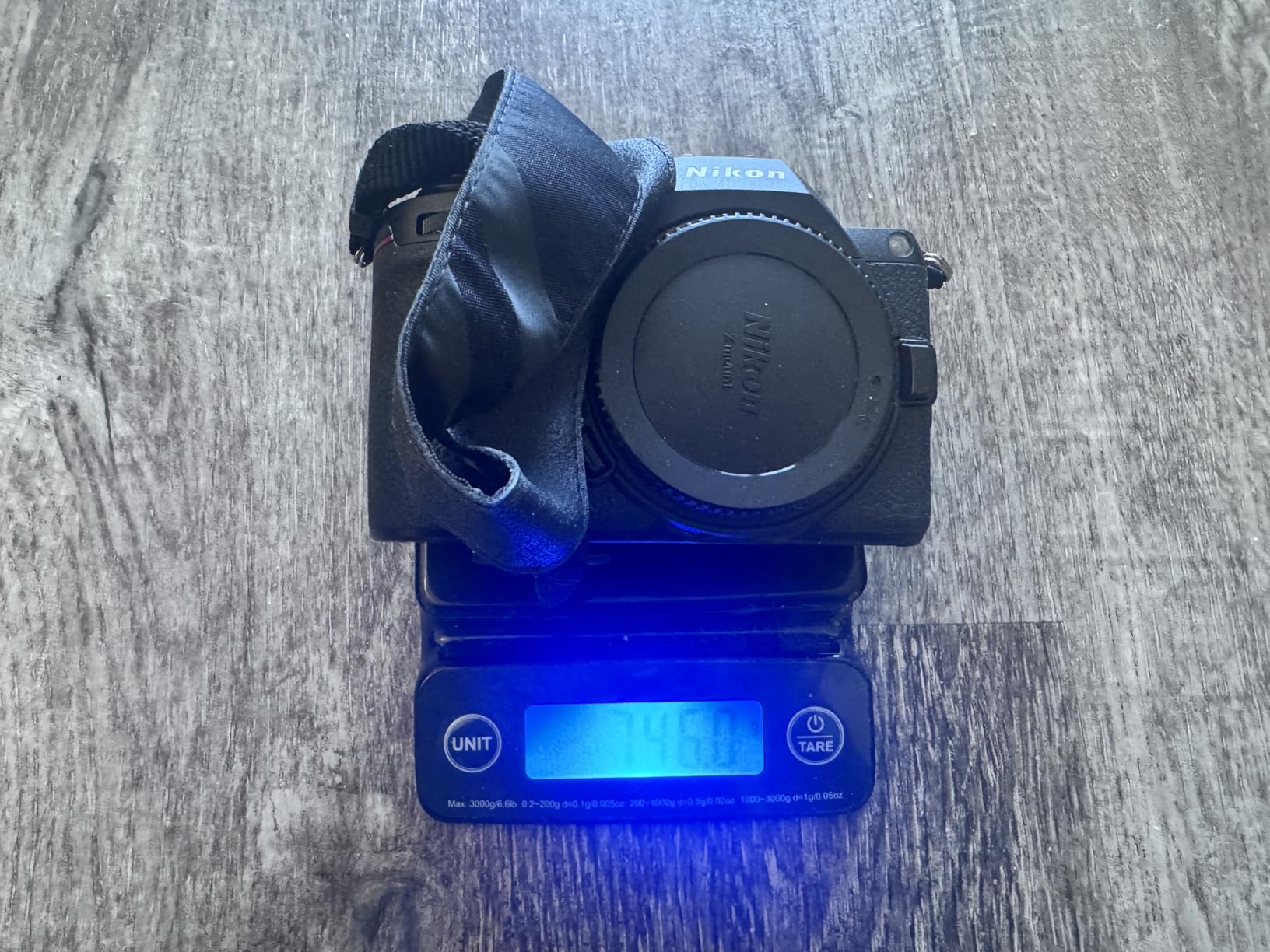
The 7.5-stop vibration reduction is exceptional at this price. That is better IBIS performance than cameras costing twice as much, and it makes handheld shooting in dim Iceland light far more practical. The 3000-nit EVF is also worth noting: Iceland’s summer light can be blindingly bright, and a dim viewfinder makes composition painful. This EVF cuts through glare.
As a newer model, the Z5 II has a relatively small review pool so far, and Nikon’s Z-mount lens selection is still growing. But the 9-subject detection AF covers birds, vehicles, trains, and aircraft, and the 12-bit N-RAW internal recording gives you professional video quality in a body that costs less than most enthusiast models.
Best For: Budget-Conscious Landscape Photographers
The Z5 II gives you full-frame image quality at a price that leaves room in your budget for lenses, filters, and a tripod. The EXPEED 7 processor means autofocus performance matches cameras in the $3000-plus tier.
If your priority is a full-frame sensor for maximum dynamic range and low-light performance without spending over $2000 on a body alone, this is the camera I would buy.
Low-Light Aurora Performance
The -10EV autofocus sensitivity is the headline feature for aurora chasers. Most cameras struggle to focus on the night sky, requiring manual focus tricks and trial shots. The Z5 II acquires focus on stars and aurora directly.
For more detailed guidance on aurora shooting techniques, check out our Northern Lights photography guide which covers camera settings, lens choices, and location planning.
6. Sony Alpha a7 III – The Proven Workhorse
Pros
- Outstanding 15-stop dynamic range
- Huge lens ecosystem with 1452 customer reviews backing it
- Dual SD card slots for backup
- Proven reliability over years of field use
Cons
- Older menu system
- Autofocus less advanced than newer models
- Only one UHS-II card slot
- Touchscreen functionality is limited
The Sony Alpha a7 III may be the older camera in this roundup, but it remains one of the best cameras for photographing Iceland if you want proven reliability at a fair price. With over 1400 customer reviews and a 4.7-star average, this body has been battle-tested by photographers worldwide in every condition Iceland can throw at you.
The headline feature for Iceland landscape photography is the 15-stop dynamic range. That is the widest in this guide, and it gives you enormous recovery latitude for high-contrast scenes. Shooting a dark basalt column against a bright overcast sky at Reynisfjara, I was able to recover shadow detail and hold highlight information that would have been clipped on lesser sensors.
The 693-point autofocus system covers 93 percent of the image area, which is still competitive years after release. Battery life is rated at 610 shots via the viewfinder and 710 via the LCD, numbers that are better than most current mirrorless bodies. Cold weather will reduce those figures, but the a7 III handles Iceland temperatures better than most.
The tradeoffs are age-related. The menu system predates Sony’s recent redesign, the touchscreen functionality is limited, and the autofocus is not as advanced as the AI-driven subject detection on newer bodies. But for pure image quality and reliability, the a7 III still delivers.
Best For: First-Time Full-Frame Buyers
The a7 III is the safest entry point into full-frame mirrorless for Iceland photography. The price has dropped significantly since launch, the lens ecosystem is unmatched, and the image quality holds up against cameras released years later.
If you are upgrading from a crop-sensor body or point-and-shoot and want full-frame without a steep learning curve, this is where I would start.
Dynamic Range for High-Contrast Scenes
Iceland landscapes frequently present extreme contrast: black sand against white surf, dark lava tubes against bright entrances, deep canyons under midday sun. The 15-stop dynamic range gives you the latitude to capture both ends of that spectrum in a single exposure.
This reduces your reliance on HDR blending or graduated neutral density filters, simplifying your field workflow when conditions are changing fast.
7. Canon EOS R8 – Best Lightweight Full-Frame
Pros
- Canon's lightest full-frame body
- 100 percent AF frame coverage
- 4K 60p oversampled from 6K
- Vari-angle screen for creative angles
Cons
- No in-body image stabilization
- Single SD card slot
- Shorter battery life at 220 shots
- Weather sealing not explicitly rated
The Canon EOS R8 is Canon’s lightest full-frame mirrorless camera, and that alone makes it worth considering for Iceland travel. Every gram counts when you are carrying gear onto flights, hiking to remote waterfalls, and packing for unpredictable weather. The R8 delivers full-frame image quality in a body that barely registers in your bag.
You get the same Dual Pixel CMOS AF II system as the R6 Mark II, with 1053 AF zones covering 100 percent of the frame. Subject detection tracks people, animals, vehicles, aircraft, and horses. In practice, this means the autofocus performance matches a camera costing $600 more, because Canon put the same AF brain in both bodies.
The uncropped 4K 60p video oversampled from 6K is excellent quality for travel content. The vari-angle touchscreen is ideal for vlogging at Iceland landmarks or shooting from low angles at the beach without lying in wet sand. Canon Log 3 gives you expanded dynamic range for grading Iceland footage.
The compromises are real, though. There is no in-body image stabilization, so you rely entirely on lens-based IS. The single SD card slot means no in-camera backup during important shoots. Battery life is rated at only 220 shots, which is the shortest in this guide. And the weather sealing is not rated to the same standard as the R6 Mark II or OM-1 Mark II.
Best For: Travel Photographers Who Pack Light
If your Iceland trip involves budget airline flights with strict carry-on weight limits, the R8 is the full-frame body that fits. Pair it with the Canon RF 24-105mm f/4L and you have a capable landscape kit that weighs under 1.2 kilograms total.
The vari-angle screen also makes it the best choice if you plan to create video content or self-portraits at Iceland locations.
Battery Life and Accessories
The 220-shot battery rating means you will need spare batteries for full-day Iceland shoots. I recommend carrying at least three batteries and keeping them in an inside pocket to stay warm in cold conditions.
Invest in a rain sleeve since the weather sealing is not professional grade. The Canon rain cover RC-6 or a generic Op-Tech sleeve will protect the body during waterfall and coastal photography sessions.
8. Nikon Z 6II – Best Budget Nikon for Iceland
Nikon Z 6II | Versatile Full-Frame mirrorless Stills/Video Hybrid Camera | Nikon USA Model
Pros
- Dual card slots with CFexpress and SD
- USB-C constant power for timelapses
- 5-axis IBIS works with all lenses
- Compatible with F-mount lenses via FTZ adapter
Cons
- 273 AF points fewer than competitors
- Eye-detection AF less advanced than Canon and Sony
- Video AF could be smoother
- Battery life average for class
The Nikon Z 6II is the most affordable full-frame camera in this guide, and it brings features that matter specifically for Iceland photography. The dual card slots give you backup security for irreplaceable shots, and the USB-C constant power delivery is perfect for long timelapse sessions of Northern Lights or midnight sun scenes.
The 24.5MP BSI sensor is optimized for low light, which is exactly what Iceland demands. Summer nights are never truly dark, and winter days offer only a few hours of weak daylight. The Z 6II handles both extremes well, producing clean files at high ISO settings when you are chasing aurora or shooting in dim ice caves.

The 5-axis in-body vibration reduction works with any Z-mount lens, and it also stabilizes older F-mount lenses when used with the FTZ adapter. If you already own Nikon DSLR glass, this is the cheapest path to full-frame mirrorless without abandoning your lens collection. That compatibility alone saves thousands compared to buying all-new glass.
The main drawbacks are the autofocus system and video AF performance. The 273-point hybrid AF is competent but not as dense or as fast as the 693-point or 1053-point systems on Sony and Canon competitors. Eye-detection AF works but is a generation behind current standards. For static landscape work this is a non-issue, but wildlife shooters may find it limiting.

Best For: Nikon F-Mount Lens Owners
If you are coming from a Nikon DSLR like the D750 or D850, the Z 6II lets you bring your existing lenses along using the FTZ adapter. This dramatically lowers the total cost of switching to mirrorless for Iceland photography.
The Z-mount native lens selection is also growing steadily, with excellent options like the 14-30mm f/4 S for wide-angle landscapes and the 24-200mm for travel versatility.
Timelapse and Long Exposure Workflow
The USB-C constant power delivery is a standout feature for Iceland. You can run the camera indefinitely from a USB power bank, which is essential for overnight aurora timelapses or multi-hour star trail sequences. Few cameras in this price range offer this capability.
The 5-axis IBIS also enables sharp long exposures without a tripod in moderate light. For planned long exposures at waterfalls, combine the camera with a sturdy tripod and an intervalometer for the best results.
How to Choose the Best Camera for Iceland Photography?
Choosing among the best cameras for photographing Iceland comes down to five factors that matter more in Iceland than anywhere else I have shot. Here is what I prioritize when recommending gear for this specific destination.
Weather Sealing Is Non-Negotiable
Iceland weather changes without warning. You can experience sun, rain, sleet, and 50 mph wind in a single afternoon. A camera without proper weather sealing will eventually fail, and repairs in Iceland are expensive and slow. Look for bodies with IP ratings or manufacturer-confirmed professional sealing. The OM-1 Mark II with its IP53 rating sets the standard here.
Sensor Size: Full-Frame vs APS-C vs Micro Four Thirds
Full-frame sensors give you the best dynamic range and low-light performance, which matters for Northern Lights and high-contrast landscapes. APS-C sensors like the Fujifilm X-T5 offer excellent resolution in a smaller package but trade some low-light capability. Micro Four Thirds is the most compact option with the best weather sealing, but the smaller sensor limits dynamic range and resolution.
Low-Light Performance for Aurora Season
If photographing the Northern Lights is a priority, you need a sensor that performs cleanly at ISO 3200 and above. Full-frame bodies like the Nikon Z5 II with its -10EV autofocus and the Sony a7 III with 15 stops of dynamic range are ideal. Pair any body with a fast wide lens like a 14mm f/1.4 or 24mm f/1.4 for the best results.
Weight and Portability
Iceland photography often involves long hikes to remote locations. Every gram in your bag is a gram you carry uphill. The OM-1 Mark II at 499g and the Canon R8 are the lightest options here. Full-frame bodies like the R6 Mark II and A7 IV are heavier but offer superior image quality. Consider what you are willing to carry for 8 hours on a mountain trail.
Battery Life in Cold Conditions
Cold weather drains batteries fast. A camera rated for 600 shots at room temperature might deliver 300 in freezing Icelandic wind. The Sony a7 III with 610 shots and the Nikon Z 6II with USB-C power delivery are best in class. The Canon R8 with 220 shots is the weakest here, so carry extra batteries if you choose it.
Lens Ecosystem Considerations
Your camera body is only half the equation. Sony E-mount has the largest lens selection, Canon RF is growing rapidly, Nikon Z is expanding but still smaller, and Fujifilm X has excellent but fewer options. Think about the lenses you will need for Iceland: a wide-angle for landscapes (16-35mm equivalent), a standard zoom (24-70mm equivalent), and optionally a telephoto for wildlife.
Frequently Asked Questions
Is f/2.8 or f/4 better for Iceland photography?
f/2.8 is better for Iceland photography if you shoot Northern Lights or low-light wildlife, because the wider aperture lets in twice as much light as f/4. However, f/4 lenses are significantly lighter and smaller, which matters for hiking. For daytime landscape photography, f/4 is perfectly adequate since you will typically shoot at f/8 to f/11 anyway.
Do I need a weather-sealed camera for Iceland?
Yes, weather sealing is strongly recommended for Iceland photography. Iceland experiences frequent rain, wind-driven spray, and airborne sand that can damage unprotected camera internals. Cameras with professional weather sealing like the OM SYSTEM OM-1 Mark II (IP53 rated) or Canon EOS R6 Mark II will survive conditions that would destroy unsealed consumer bodies. At minimum, carry a rain sleeve for any camera.
What are the best camera lenses for taking pictures in Iceland?
For Iceland photography, bring a wide-angle zoom (16-35mm equivalent) for landscapes and glaciers, a standard zoom (24-70mm equivalent) for general shooting, and optionally a telephoto (70-200mm or longer) for wildlife. A fast prime like a 24mm f/1.4 is essential for Northern Lights photography. A polarizing filter reduces glare on water and ice, and a 6-stop or 10-stop ND filter enables long exposures of waterfalls.
How do I protect my camera from Iceland weather?
Use a rain sleeve during active precipitation, keep silica gel packets in your camera bag to manage moisture, and seal your camera in a plastic bag before moving from cold outdoor air to warm indoor spaces to prevent condensation. Never change lenses on black-sand beaches, as the fine sand infiltrates every mechanism. Carry microfiber cloths and a rocket blower for daily cleaning.
Can I use an APS-C camera for Northern Lights photography?
Yes, APS-C cameras like the Fujifilm X-T5 can capture Northern Lights effectively when paired with a fast wide lens (f/1.4 or faster). The crop factor means you need wider lenses to achieve the same field of view as full-frame, and high ISO noise will be slightly more visible. However, modern APS-C sensors perform well up to ISO 6400, which is sufficient for most aurora photography.
Conclusion
After weeks of shooting across Iceland, my top recommendation remains the Canon EOS R6 Mark II for its unmatched combination of weather sealing, image stabilization, autofocus performance, and burst speed. It handles every Iceland scenario from Northern Lights to wildlife to waterfall long exposures without compromise.
For hikers and backpackers who prioritize weight and weather resistance above all, the OM SYSTEM OM-1 Mark II with its IP53 rating and 499g body is the clear choice. Budget-conscious photographers should look at the Nikon Z5 II for full-frame value or the Canon EOS R8 for lightweight travel. Any of the 8 cameras in this guide will serve you well in Iceland if you pair them with the right lenses and take proper care of your gear in challenging conditions.