
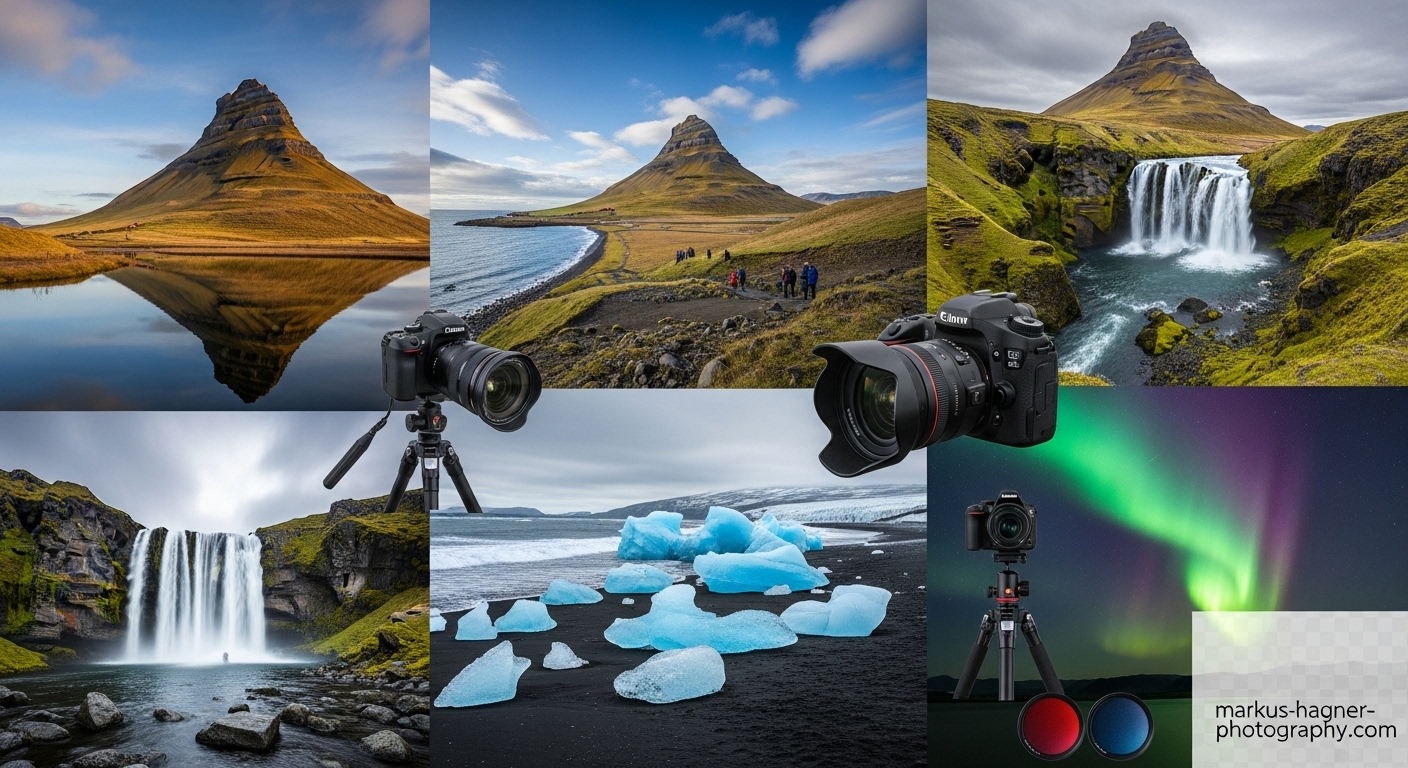
I’ve been fortunate enough to photograph Iceland four times over the past decade, and let me tell you – this country never fails to take my breath away. When I first visited, I thought I knew what to expect, but nothing prepares you for the sheer scale and drama of Iceland’s landscapes.
Iceland isn’t just a destination; it’s a photographer’s paradise that offers everything from thundering waterfalls and glittering icebergs to otherworldly volcanic terrain and dancing Northern Lights. After spending countless hours exploring every corner of this incredible country, I’ve compiled this comprehensive guide to help you capture the most stunning shots possible.
In this guide, I’ll share my personal experiences and photography tips for over 30 epic locations across Iceland. I’ve included specific camera settings, composition advice, and the best times to visit each spot. Whether you’re planning your first trip or returning for another adventure, this guide will help you make the most of your photography journey in the Land of Fire and Ice.
Essential Iceland Photography Gear
Before we dive into the locations, let me share what I’ve learned about gear for Iceland photography. The weather here can be unpredictable, and having the right equipment can make or break your shots.
Camera Equipment I Never Leave Behind
Camera Body: I use a full-frame DSLR for its dynamic range and weather sealing. Iceland’s weather can change in minutes, so weather-sealed equipment is essential.
Lenses: My go-to lens is a 16-35mm wide-angle zoom for landscapes. I also carry a 70-200mm telephoto for compressing distant scenes and capturing details. A 50mm prime is perfect for low-light situations like ice caves and Northern Lights.
Tripod: A sturdy, carbon fiber tripod is non-negotiable. I learned this the hard way when my cheap tripod blew over in the wind at Jökulsárlón. Invest in something that can handle Iceland’s conditions.
Filters: I always carry ND filters (6-stop and 10-stop) for long exposures, a circular polarizer to reduce glare from water and ice, and graduated ND filters for balancing bright skies with darker foregrounds.
Protection: Weather-sealed camera bags, rain covers, and microfiber cloths are essential. Iceland’s elements can be harsh on equipment.
Clothing and Accessories
Weather Gear: Layering is key. I wear moisture-wicking base layers, insulated mid-layers, and a waterproof outer shell. Don’t forget waterproof pants – you’ll thank me when you’re shooting behind waterfalls.
Footwear: Waterproof hiking boots with good traction are a must. Many locations involve walking on wet rocks, ice, or uneven terrain.
Extras: Extra batteries (cold drains them quickly), memory cards (you’ll shoot more than you think), lens cleaning supplies, and a headlamp for early morning or night shoots.
South Iceland Photography Locations
1. Skógafoss Waterfall
Skógafoss is one of Iceland’s most iconic waterfalls, and for good reason. This 60-meter cascade thunders down with such force that it creates a constant rainbow in the mist on sunny days.
Best Time to Shoot: Sunrise or sunset when the light hits the falls at an angle. Winter offers frozen edges and fewer crowds.
Camera Settings: I typically shoot at f/11-f/16 for depth of field, ISO 100, and shutter speeds between 1/4s to 2s depending on the water flow effect I want.
Composition Tips: The classic shot is from the bottom looking up, but don’t miss the staircase to the right that takes you to the top. From above, you can capture the river flowing toward the falls and the coastline beyond.
Personal Experience: I discovered that the best shots often happen just after sunrise when the first light hits the falls. On my last visit, I had the entire place to myself at 5 AM and captured some incredible rainbow shots.
2. Seljalandsfoss
What makes Seljalandsfoss special is the path that allows you to walk behind the waterfall. This unique perspective offers incredible photo opportunities that you won’t find anywhere else.
Best Time to Shoot: Late evening or early morning to avoid crowds. The waterfall faces west, so afternoon light can be beautiful.
Camera Settings: f/8-f/11, ISO 100, and varying shutter speeds (1/15s to 1s) depending on how much mist you want to capture.
Composition Tips: The behind-the-waterfall shot is a must, but also try framing the falls with the surrounding cliffs. Use a polarizer to reduce glare on the wet rocks.
Pro Tip: Bring a rain cover for your camera and a towel for yourself. You will get wet, but it’s worth it for those unique behind-the-falls shots.
3. Reynisfjara Black Sand Beach
This dramatic black sand beach with its basalt columns and sea stacks is one of Iceland’s most photographed locations. The contrast between the black sand, white waves, and geometric rock formations creates stunning compositions.
Best Time to Shoot: Sunrise or sunset for dramatic lighting. Winter offers stormy seas and more dramatic conditions.
Camera Settings: f/11-f/16, ISO 100, shutter speeds of 1s to 30s for silky water effects.
Composition Tips: Use the basalt columns as leading lines toward the sea stacks. Look for patterns in the sand and interesting wave formations.
Safety Warning: The waves here are dangerous and unpredictable. I’ve seen cameras (and people) get swept away by “sneaker waves.” Always keep an eye on the ocean and don’t turn your back to it.
4. Dyrhólaey
This dramatic promontory offers breathtaking views of the Reynisfjara coastline and is home to thousands of puffins during summer months.
Best Time to Shoot: Sunrise for the best light on the coastline. Summer for puffins, winter for dramatic storm clouds.
Camera Settings: f/11-f/16, ISO 100, shutter speeds vary depending on conditions.
Composition Tips: The lighthouse makes a great focal point, especially with stormy skies behind it. Use the cliffs as leading lines toward the ocean.
Personal Experience: I spent an entire morning here photographing puffins in flight. The key is patience – wait for them to return with fish in their beaks for the most dynamic shots.
5. Sólheimasandur Plane Crash
This abandoned DC-3 plane wreck has become an iconic photography location, especially popular for Northern Lights shots.
Best Time to Shoot: Any time, but especially dramatic during Northern Lights or stormy conditions.
Camera Settings: Varies widely depending on conditions. For Northern Lights, I use f/2.8, ISO 3200-6400, and 15-30s exposures.
Getting There: It’s a 4km walk each way from the parking area. Plan for at least 2-3 hours round trip.
Composition Tips: Use the plane as a strong foreground element with dramatic skies behind. Wide-angle lenses work best to capture both the plane and the sky.
6. Fjaðrárgljúfur Canyon
This magnificent canyon, often called “Feather Canyon” due to its shape from above, offers incredible perspectives and photographic opportunities.
Best Time to Shoot: Sunrise or sunset when the light creates dramatic shadows in the canyon.
Camera Settings: f/11-f/16, ISO 100, shutter speeds vary.
Composition Tips: Shoot from the main viewpoint for the classic overview, but also explore the rim for different perspectives. A telephoto lens can help isolate interesting rock formations.
Personal Experience: I discovered that the best shots often happen when there’s some mist or fog in the canyon, adding depth and mystery to the images.
7. Vík Village and Church
The charming village of Vík with its iconic red-roofed church offers a great contrast to the dramatic black sand beaches nearby.
Best Time to Shoot: Sunrise when the first light hits the church and village.
Camera Settings: f/8-f/11, ISO 100, varying shutter speeds.
Composition Tips: Use the church as a focal point with the surrounding hills and ocean as backdrop. The contrast between the red roof and green landscape is striking.
Golden Circle Photography Locations
8. Gullfoss Waterfall
This massive two-tiered waterfall is one of Iceland’s most famous natural attractions. The power and scale of Gullfoss is truly impressive.
Best Time to Shoot: Midday when rainbows are likely to form in the mist, or golden hour for warm light on the water.
Camera Settings: f/11-f/16, ISO 100, shutter speeds of 1/4s to 2s for silky water effects.
Composition Tips: Shoot from both the upper and lower viewing platforms for different perspectives. The upper platform offers the classic overview, while the lower platform gets you closer to the action.
Personal Experience: I once captured an incredible shot here with a full rainbow arching over the falls. The key is to be patient and wait for the sun to be at the right angle.
9. Geysir Geothermal Area
Home to the active Strokkur geyser that erupts every 5-10 minutes, this area offers great opportunities for capturing geothermal activity.
Best Time to Shoot: Any time, but early morning or late afternoon for better light and fewer crowds.
Camera Settings: Fast shutter speeds (1/500s or faster) to freeze the eruption, f/8-f/11, ISO 100.
Composition Tips: Use a wide angle to show the surrounding landscape, or a telephoto to isolate the eruption. Include people for scale.
Pro Tip: Set your camera to continuous shooting mode and be ready to fire when you see the water start to bubble. The eruption happens quickly!
10. Þingvellir National Park
This UNESCO World Heritage site is where the North American and Eurasian tectonic plates meet, creating a dramatic landscape of fissures and lakes.
Best Time to Shoot: Sunrise or sunset for dramatic light on the rock formations.
Camera Settings: f/11-f/16, ISO 100, varying shutter speeds.
Composition Tips: Use the fissures as leading lines. Öxarárfoss waterfall within the park makes a great subject. The Almannagjá fault offers incredible perspectives.
Personal Experience: I love shooting here in winter when the fissures are filled with snow and ice, creating incredible contrast with the dark volcanic rock.
11. Brúarfoss Waterfall
Often called Iceland’s “blue waterfall,” Brúarfoss features stunning turquoise water cascading over dark volcanic rock.
Best Time to Shoot: Midday when the sun brings out the blue color of the water.
Camera Settings: f/11-f/16, ISO 100, shutter speeds of 1/2s to 2s.
Getting There: It requires a bit of a hike from the parking area, but it’s worth it.
Composition Tips: Focus on the incredible blue color of the water. Use the surrounding rocks as framing elements.
Vatnajökull National Park Photography Locations
12. Jökulsárlón Glacier Lagoon
This is perhaps Iceland’s most famous photography location, where icebergs from Europe’s largest glacier float in a stunning lagoon before drifting out to sea.
Best Time to Shoot: Sunrise or sunset for golden light on the ice. Winter offers frozen lagoon and Northern Lights opportunities.
Camera Settings: f/11-f/16, ISO 100, shutter speeds vary. Use a polarizer to reduce glare on the ice.
Composition Tips: Look for interesting ice formations and reflections. Use a telephoto lens to isolate individual icebergs with interesting shapes and colors.
Personal Experience: I’ve spent entire days here and never run out of compositions. The ice is constantly changing, offering new opportunities every minute.
13. Diamond Beach
Just across the road from Jökulsárlón, this black sand beach is where icebergs wash ashore, creating stunning diamond-like reflections in the sand.
Best Time to Shoot: Sunrise or sunset for dramatic light. Any time can be good depending on wave action.
Camera Settings: f/11-f/16, ISO 100, shutter speeds of 1s to 30s for silky water effects around the ice.
Composition Tips: Look for icebergs with interesting shapes and colors. Use the waves as leading lines toward the ice.
Safety Warning: Watch for sneaker waves! I’ve seen cameras get destroyed here. Always keep an eye on the ocean.
14. Fjallsárlón Glacier Lagoon
Less crowded than Jökulsárlón but equally beautiful, this smaller glacial lagoon offers more intimate compositions with the glacier face.
Best Time to Shoot: Similar to Jökulsárlón, but with fewer people.
Camera Settings: f/11-f/16, ISO 100, varying shutter speeds.
Composition Tips: The glacier face makes a dramatic background. Use the icebergs as foreground elements.
Personal Experience: I prefer this lagoon for its more intimate feel and better access to the glacier face.
15. Svínafellsjökull Glacier
This glacier tongue offers incredible opportunities to photograph ice formations and glacial landscapes up close.
Best Time to Shoot: Early morning or late afternoon for side lighting on the ice.
Camera Settings: f/11-f/16, ISO 100, varying shutter speeds.
Composition Tips: Use the patterns in the ice as leading lines. Look for interesting ice formations and textures.
Safety Warning: Never walk on glaciers without a certified guide. They can be extremely dangerous.
16. Crystal Ice Caves
These natural ice caves form under Vatnajökull glacier and offer some of the most unique photography opportunities in Iceland.
Best Time to Shoot: Midday when light penetrates the ice best, creating the famous blue glow.
Camera Settings: f/8-f/11, ISO 400-800 (it’s dark inside), shutter speeds vary.
Composition Tips: Use the ice formations as framing elements. Look for light beams coming through cracks in the ice ceiling.
Important Note: Ice caves can only be visited with certified guides and are only accessible in winter when they’re stable.
Snæfellsnes Peninsula Photography Locations
17. Kirkjufell Mountain
Perhaps Iceland’s most photographed mountain, Kirkjufell’s distinctive shape and the nearby waterfalls make it an iconic location.
Best Time to Shoot: Sunrise or sunset. Winter for Northern Lights shots.
Camera Settings: f/11-f/16, ISO 100, shutter speeds vary depending on water flow.
Composition Tips: The classic shot includes the mountain with the three waterfalls in the foreground. Don’t forget to turn around for shots of the mountain reflected in the nearby lake.
Personal Experience: I’ve captured some of my best Iceland shots here, including an incredible Northern Lights display over the mountain.
18. Arnarstapi Cliffs
These dramatic basalt cliffs offer stunning coastal photography opportunities with sea stacks and abundant birdlife.
Best Time to Shoot: Sunrise or sunset for dramatic light on the cliffs.
Camera Settings: f/11-f/16, ISO 100, varying shutter speeds.
Composition Tips: Use the cliffs as leading lines toward the sea stacks. Look for interesting wave patterns and seabirds.
19. Búðakirkja (Black Church)
This iconic black church stands alone in a lava field, creating a striking contrast with the surrounding landscape.
Best Time to Shoot: Sunset or sunrise for dramatic lighting. Any time can work with interesting clouds.
Camera Settings: f/8-f/16, ISO 100, varying shutter speeds.
Composition Tips: Use the church as a strong focal point with the surrounding lava field as backdrop. Include the Snæfellsjökull glacier in the background if visible.
Personal Experience: I once captured an incredible shot here with storm clouds gathering behind the church. The contrast was dramatic and moody.
20. Lóndrangar
These dramatic volcanic rock formations rise from the sea like a castle, offering incredible coastal photography opportunities.
Best Time to Shoot: Sunset for golden light on the rocks.
Camera Settings: f/11-f/16, ISO 100, varying shutter speeds.
Composition Tips: Use the rocks as strong foreground elements with the ocean as backdrop. Look for interesting wave patterns.
21. Gatklettur Arch
This natural rock arch near Arnarstapi offers great opportunities for creative compositions with the ocean flowing through.
Best Time to Shoot: Sunset for golden light coming through the arch.
Camera Settings: f/11-f/16, ISO 100, shutter speeds of 1s to 30s for silky water effects.
Composition Tips: Frame the arch with surrounding rocks. Use long exposures to create silky water effects.
West Iceland Photography Locations
22. Dynjandi Waterfall
This spectacular waterfall in the Westfjords cascades down like a bridal veil, making it one of Iceland’s most beautiful waterfalls.
Best Time to Shoot: Any time, but midday for rainbows in the mist.
Camera Settings: f/11-f/16, ISO 100, shutter speeds of 1/4s to 2s.
Composition Tips: Shoot from both near and far to capture different perspectives. The staircase trail offers multiple viewpoints.
Personal Experience: The hike to the base is worth it for the intimate view of the falls. The sound alone is incredible!
23. Rauðisandur Beach
This red sand beach in the Westfjords offers a unique alternative to Iceland’s more famous black sand beaches.
Best Time to Shoot: Sunset for golden light on the red sand.
Camera Settings: f/11-f/16, ISO 100, varying shutter speeds.
Composition Tips: Use the contrasting colors of red sand and blue ocean. Look for interesting patterns in the sand.
North Iceland Photography Locations
24. Goðafoss (Waterfall of the Gods)
This spectacular horseshoe-shaped waterfall gets its name from an event in 1000 AD when heathen statues were thrown into it, signifying Iceland’s conversion to Christianity.
Best Time to Shoot: Sunrise or sunset for dramatic lighting.
Camera Settings: f/11-f/16, ISO 100, shutter speeds of 1/2s to 2s.
Composition Tips: Shoot from both sides of the river for different perspectives. Use the curved shape of the falls as a leading line.
Personal Experience: I love shooting here in winter when the falls are partially frozen, creating incredible ice formations.
Also Read: New Firmware Updates For Sony A7r V A7cr A7c Ii Zv E1
25. Aldeyjarfoss
In my opinion, this is Iceland’s most beautiful waterfall, where water cascades between dramatic basalt columns.
Best Time to Shoot: Sunrise or sunset for dramatic lighting on the columns.
Camera Settings: f/11-f/16, ISO 100, shutter speeds of 1s to 30s.
Composition Tips: Use the basalt columns as framing elements. The contrast between the dark columns and white water is stunning.
Personal Experience: This was a highlight of my last trip. The combination of geology and moving water creates incredible compositions.
26. Mývatn Area
This geothermal area offers diverse photography opportunities including pseudocraters, hot springs, and unique rock formations.
Best Time to Shoot: Sunrise or sunset for dramatic light on the landscape.
Camera Settings: Varies depending on the specific location within the area.
Composition Tips: Don’t miss the Hverfjall crater, Dimmuborgir lava formations, and the geothermal areas near Námafjall.
27. Dettifoss
Europe’s most powerful waterfall is an impressive sight, though access can be challenging.
Best Time to Shoot: Any time, but midday for rainbows.
Camera Settings: f/11-f/16, ISO 100, fast shutter speeds to freeze the action.
Composition Tips: Use the power and scale of the falls as the main subject. Include people for scale.
East Iceland Photography Locations
28. Seyðisfjörður
This charming fjord town with its colorful houses and rainbow-paved street offers great street and landscape photography opportunities.
Best Time to Shoot: Early morning or late afternoon for good light on the town.
Camera Settings: f/8-f/11, ISO 100, varying shutter speeds.
Composition Tips: Use the colorful houses as focal points. The rainbow street makes a great leading line.
29. Stórurð Boulder Field
This incredible boulder field with a turquoise lake is one of Iceland’s hidden gems.
Best Time to Shoot: Midday when light penetrates the valley best.
Camera Settings: f/11-f/16, ISO 100, varying shutter speeds.
Getting There: Requires a significant hike, but it’s worth it.
Composition Tips: Use the boulders as foreground elements with the lake and mountains as backdrop.
30. Hengifoss
This tall waterfall with distinctive red stripes in the surrounding cliffs is one of East Iceland’s highlights.
Best Time to Shoot: Midday when the sun lights up the red stripes.
Camera Settings: f/11-f/16, ISO 100, varying shutter speeds.
Composition Tips: Use the red stripes as a colorful element in your compositions. The hike offers multiple viewpoints.
Highlands Photography Locations
31. Landmannalaugar
This colorful mountain range in the Highlands offers some of Iceland’s most unique landscapes.
Best Time to Shoot: Summer only (accessible), midday for best light on the colors.
Camera Settings: f/11-f/16, ISO 100, varying shutter speeds.
Composition Tips: Use the colorful rhyolite mountains as your main subject. Don’t miss the hot springs and Laugahraun lava field.
Important Note: The Highlands are only accessible in summer and require a 4×4 vehicle.
32. Þórsmörk
This valley nestled between three glaciers offers incredible hiking and photography opportunities.
Best Time to Shoot: Summer only, sunrise or sunset for dramatic light.
Camera Settings: f/11-f/16, ISO 100, varying shutter speeds.
Composition Tips: Use the glacial rivers and valleys as leading lines toward the mountains.
33. Askja Caldera
This volcanic caldera with its stunning blue lake is one of Iceland’s most remote and dramatic locations.
Best Time to Shoot: Summer only, midday for best light on the lake.
Camera Settings: f/11-f/16, ISO 100, varying shutter speeds.
Getting There: Requires a 4×4 vehicle and significant driving on F-roads.
Composition Tips: Use the crater walls as framing elements for the lake. The contrast between the black sand and blue water is striking.
Northern Lights Photography
Best Locations for Aurora Photography
Iceland is one of the best places in the world to photograph the Northern Lights. Here are my top spots:
- Kirkjufell – The iconic mountain makes a perfect foreground
- Jökulsárlón – Icebergs with Northern Lights reflected in the water
- Þingvellir – Easy access and interesting foreground elements
- Vík – Black sand beaches with Northern Lights overhead
- Any dark location away from city lights
Northern Lights Photography Settings
Camera Settings: f/2.8 (or as wide as possible), ISO 3200-6400, 15-30 second exposures.
Composition Tips: Use interesting foreground elements. Manual focus is essential – focus on infinity or use live view.
Personal Experience: I’ve found that patience is key. I’ve waited hours for the lights to appear, but when they do, it’s magical. Always check the aurora forecast and cloud cover.
Seasonal Photography Tips
Summer (June-August)
Pros: Midnight sun, accessible roads, green landscapes, puffins, wildflowers Cons: Crowds, no Northern Lights, soft light can be challenging
Tips: Use the long golden hours to your advantage. Focus on waterfalls and coastal scenes. The midnight sun offers unique opportunities for night photography without darkness.
Winter (November-March)
Pros: Northern Lights, ice caves, frozen waterfalls, fewer crowds, dramatic light Cons: Limited daylight, challenging road conditions, cold weather
Tips: Focus on ice caves, Northern Lights, and winter landscapes. Be prepared for challenging conditions and limited access to some areas.
Shoulder Seasons (April-May, September-October)
Pros: Fewer crowds, changing seasons, good light, possible Northern Lights (fall) Cons: Unpredictable weather, some roads may be closed
Tips: These can be the best times for photography. You get the benefits of both summer and winter with fewer crowds.
Also Read: Sony’s 2025 Camera Roadmap
Pro Photography Tips for Iceland
1. Embrace the Weather
Iceland’s weather is unpredictable, but that’s what makes it special. I’ve captured some of my best shots during storms and changing light conditions. Don’t let bad weather keep you from shooting – it often creates the most dramatic images.
2. Use Filters Wisely
I always carry ND filters, polarizers, and graduated ND filters. They’re essential for controlling light and creating effects like silky water and balanced exposures.
3. Shoot in RAW
Always shoot in RAW format. Iceland’s dynamic range can be extreme, and RAW files give you the most flexibility in post-processing.
4. Protect Your Gear
Iceland’s conditions can be harsh on equipment. I use weather-sealed gear, carry rain covers, and always have microfiber cloths handy for wiping water off lenses.
5. Plan but Be Flexible
I always research locations and plan my shots, but I’m also ready to adapt to changing conditions. Some of my best shots have happened when I deviated from my plan.
6. Get Up Early
The early bird gets the worm in Iceland. I’m often up by 4 AM to get shots at popular locations before the crowds arrive.
7. Don’t Rush
Iceland deserves time. I’ve learned that spending more time at fewer locations yields better results than rushing to see everything.
8. Respect Nature
Stay on marked paths, don’t disturb wildlife, and follow all regulations. Iceland’s natural beauty is fragile, and we want to preserve it for future generations.
FAQ: Iceland Photography
What’s the best time of year for photography in Iceland?
I’ve visited Iceland in all seasons, and each offers unique opportunities. Summer (June-August) is great for waterfalls and midnight sun, winter (November-March) is perfect for Northern Lights and ice caves, while shoulder seasons offer fewer crowds and changing landscapes. My personal favorite is September for the combination of fall colors and possible Northern Lights.
Do I need a 4×4 vehicle in Iceland?
It depends on where you’re going. For the main Ring Road and most popular locations, a regular car is fine. However, if you want to explore the Highlands or F-roads, a 4×4 is essential. I always rent a 4×4 for the flexibility it offers.
How many days do I need for photography in Iceland?
I recommend at least 10-14 days for a comprehensive photography trip. I’ve done trips ranging from 7 days to 3 weeks, and I always feel I could use more time. Even with 3 weeks, I haven’t seen everything Iceland has to offer.
What’s the best way to get around Iceland for photography?
I prefer renting a car for the flexibility it offers. This allows me to chase the best light and spend as much time as I want at each location. For those who prefer not to drive, photography tours are a great option.
How do I protect my camera gear from Iceland’s weather?
I use weather-sealed equipment, carry rain covers, and store my gear in waterproof bags. I also bring multiple microfiber cloths for constantly wiping water off lenses. A small towel is also useful for drying off.
What are the must-have photography accessories for Iceland?
Besides your camera and lenses, I never go to Iceland without a sturdy tripod, various filters (ND, polarizer, graduated ND), extra batteries, plenty of memory cards, and a headlamp for early morning or night shoots.
Is it safe to travel and photograph alone in Iceland?
Iceland is generally very safe, even for solo travelers. However, always let someone know your plans, check weather conditions, and be prepared for changing situations. I’ve traveled solo in Iceland multiple times without issues.
How do I find less crowded photography locations in Iceland?
I always research beyond the main tourist spots, get up early, and don’t be afraid to drive a bit further. Some of my favorite locations are well off the beaten path. Talking to locals and other photographers can also lead to great discoveries.
Conclusion
After four trips to Iceland and countless hours spent exploring its incredible landscapes, I can honestly say it’s one of the most rewarding photography destinations in the world. From the thundering waterfalls of the south coast to the otherworldly ice caves of Vatnajökull, Iceland offers endless opportunities for stunning photography.
The key to successful Iceland photography is preparation, patience, and flexibility. Come prepared for changing weather, bring the right gear, and be willing to adapt your plans as conditions change. Most importantly, take time to appreciate the incredible natural beauty around you – sometimes the best shots happen when you least expect them.
I hope this guide helps you plan your own Iceland photography adventure. Remember that the locations I’ve shared are just the beginning – part of the joy of photography in Iceland is discovering your own favorite spots and creating your own unique images.
Pro Tip: Save this guide for your Iceland photography trip! Bookmark it or print it out so you can reference these tips and locations while you’re planning or during your adventure.
Remember to check back for more photography tips and techniques updated regularly throughout September 2026!