
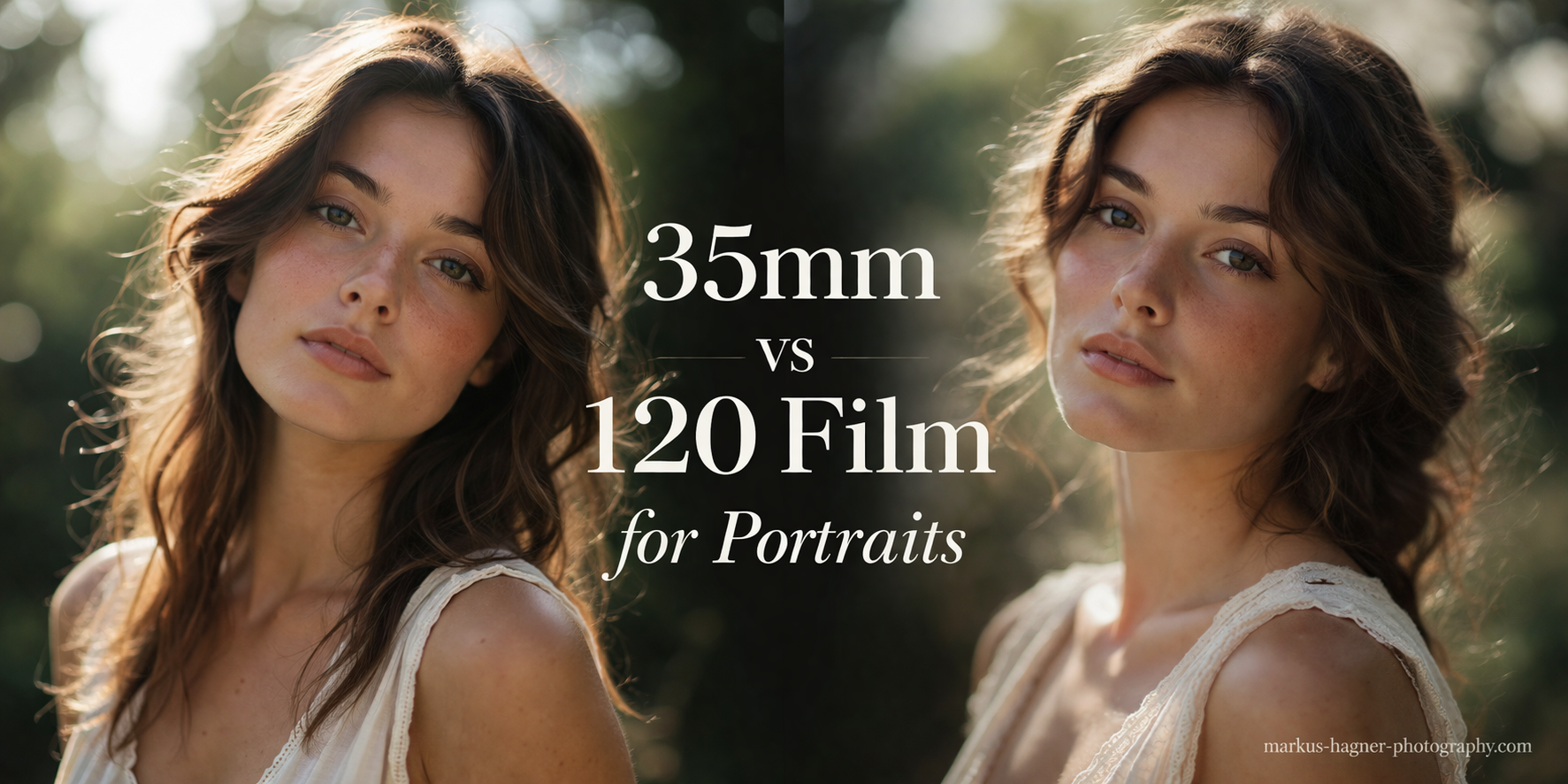
When I first started shooting portraits on film, I spent months debating between 35mm and 120 formats. After shooting hundreds of rolls in both formats over the past few years, I’ve developed strong opinions about when each shines. The 35mm vs 120 film for portraits debate isn’t about which is objectively better—it’s about matching the right tool to your vision, budget, and shooting style.
35mm film offers portability, affordability, and 36 exposures per roll, making it perfect for candid environmental portraits and fast-paced sessions. 120 medium format delivers superior resolution, dreamier bokeh, and that unmistakable fine-art aesthetic, but with fewer shots and higher costs. Both have their place in portrait photography, and many photographers (myself included) use both depending on the situation.
In this comprehensive guide, I’ll break down the real differences between these formats based on my hands-on experience. By the end, you’ll know exactly which format fits your portrait work—and whether a hybrid approach might be your best bet.
Quick Comparison: 35mm vs 120 Film
Here’s a side-by-side look at both formats using the same legendary film stock—Kodak Portra 400—so you can see the key differences at a glance.
| Product | Specifications | Action |
|---|---|---|
 Kodak Portra 400 35mm (36 exposures) Kodak Portra 400 35mm (36 exposures) |
|
Check Latest Price |
 Kodak Portra 400 120 Medium Format Kodak Portra 400 120 Medium Format |
|
Check Latest Price |
The core difference comes down to negative size. 35mm negatives measure 24x36mm, while 120 medium format produces negatives that are roughly 4.5 times larger (depending on the camera format—6×4.5, 6×6, 6×7, or 6×9). This larger negative captures significantly more detail, tonal range, and resolution.
35mm Film for Portraits
Pros
- 36 exposures per roll
- Exceptionally smooth grain
- Outstanding skin tones
- More affordable per shot
- Portable and convenient
Cons
- Smaller negative size
- Less resolution than 120
- More visible grain at large prints
I’ve shot more portraits on 35mm than any other format, and for good reason. The convenience is unmatched. With 36 exposures per roll, I can work through a portrait session without constantly stopping to reload. This keeps the momentum going and helps subjects stay relaxed and natural.
What surprises most people is how good 35mm can look. Kodak Portra 400 in 35mm delivers exceptionally smooth grain for a 400-speed film. The skin tones are outstanding—warm, natural, and flattering without looking artificial. I’ve used it for everything from outdoor engagement sessions to indoor studio portraits, and it handles mixed lighting beautifully.
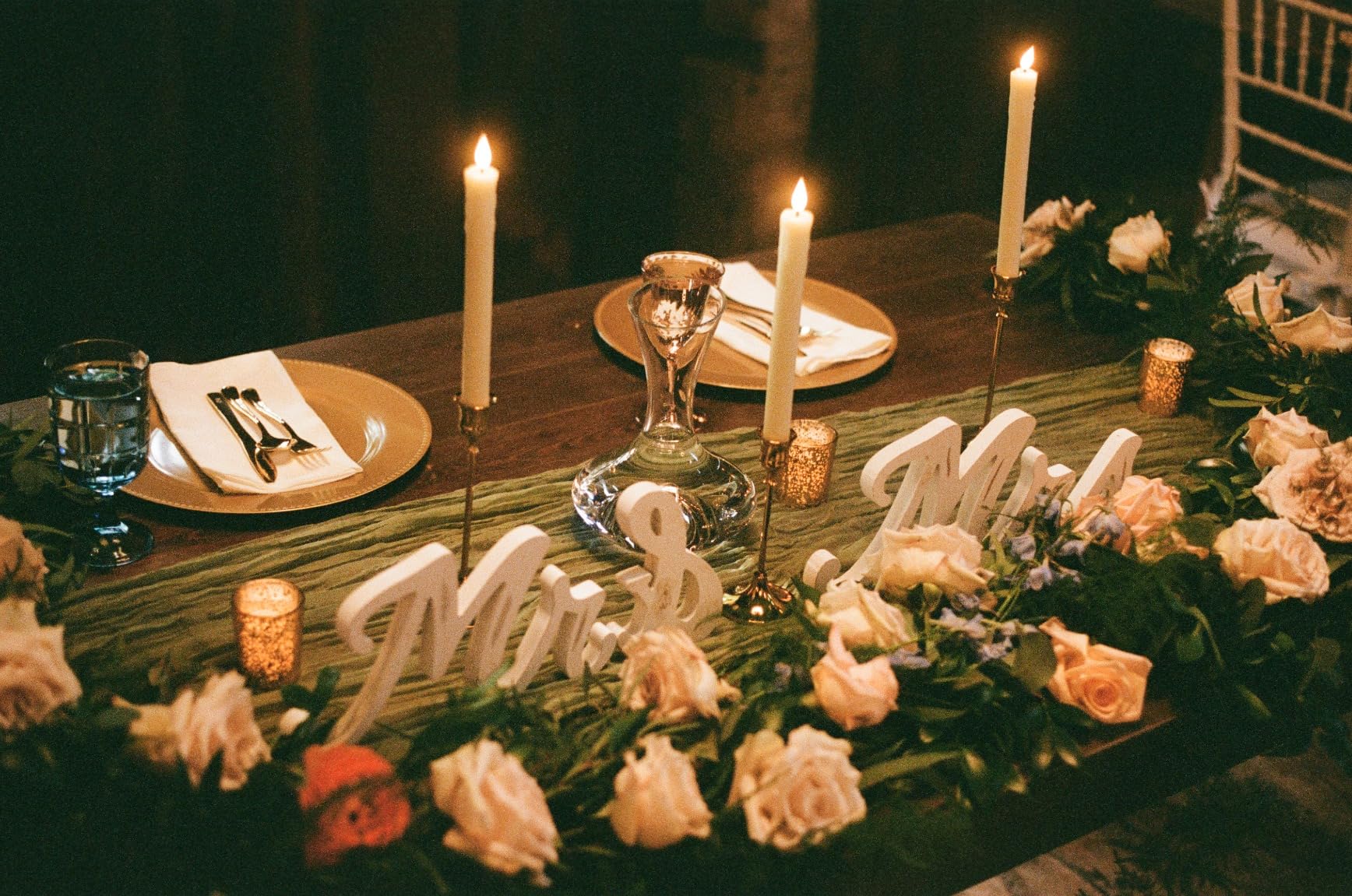
The depth of field on 35mm is broader than 120, which can actually be an advantage for environmental portraits. When I want to show context—the location, the background, the story—I can stop down slightly and keep more of the scene in focus while still separating my subject. For candid, documentary-style portraits, this extra depth of field gives me more flexibility.
Cost is where 35mm really shines. At roughly half the cost per shot compared to 120 (when you factor in film and developing), 35mm lets me experiment more freely. I can bracket exposures, try different poses, and take risks without watching my budget evaporate. For photographers still learning or building their portfolio, this affordability matters.
The grain structure of 35mm Portra 400 is characteristically fine and clean. Yes, it’s more visible than 120 when you zoom in or print large, but I find it adds character rather than detracting from the image. For web use and prints up to 11×14 inches, 35mm holds up beautifully.
120 Film for Portraits
Pros
- Superior resolution and detail
- Finest grain of any color film
- Incredible skin tones
- Shallower depth of field
- More forgiving for scanning
Cons
- Fewer exposures per roll
- Higher cost per shot
- Requires medium format camera
When I want portraits that stop people in their tracks, I reach for 120 film. There’s something about medium format that just looks different—the tonality, the shallow depth of field, the way light wraps around the subject. Kodak Portra 400 in 120 format is genuinely the world’s finest grain high-speed color negative film, and you can see the difference.
The larger negative captures so much more information. Skin tones are rendered with incredible subtlety—you see every gradation, every nuance of color. For close-up portraits, this detail is stunning. I’ve made 20×30 inch prints from 120 negatives that look tack-sharp, whereas 35mm starts showing its limitations at that size.

Depth of field is where 120 really transforms portrait work. The larger negative requires longer focal lengths for equivalent framing, which means shallower depth of field at the same aperture. That dreamy, melted-background look that people associate with professional portraits? It comes naturally to medium format.
What I appreciate most about 120 is how forgiving it is for scanning. Small scratches and dust that would ruin a 35mm scan are barely noticeable on a 120 negative because they represent a tiny fraction of the image area. This makes the scanning workflow less stressful and the results more consistent.
The trade-off is real, though. With only 12 to 16 exposures per roll (depending on your camera format), every shot counts. I find myself slowing down, composing more carefully, and being more intentional. This can be good for creating deliberate, thoughtful portraits, but it’s not ideal for fast-paced sessions where you need to capture spontaneous moments.
35mm vs 120 Film for Portraits: Head-to-Head Comparison
Negative Size and Resolution
This is the fundamental difference between the formats. A 35mm negative measures 24x36mm, while 120 film produces negatives ranging from approximately 56x42mm (6×4.5 format) to 56x84mm (6×9 format). That’s roughly 4 to 6 times more surface area capturing light and detail.
In practical terms, 120 film records more data than 35mm because the negative is larger. This translates to sharper prints, smoother tonal transitions, and the ability to print much larger before quality degrades. For portrait photographers who want to offer large wall prints to clients, 120 has a clear advantage.
Depth of Field Differences
Depth of field is one of the most noticeable differences for portrait work. Due to the larger negative size, 120 medium format produces a shallower depth of field at equivalent fields of view. A 150mm lens on a 6×7 camera at f/2.8 will give you much less depth of field than a 75mm lens on 35mm at the same aperture, even though they frame similarly.
For portraits where you want that buttery-smooth background separation, 120 makes it easier to achieve. With 35mm, you’ll need wider apertures or longer lenses to get the same effect. That said, 35mm’s broader depth of field can be advantageous for environmental portraits where you want context visible.
Grain and Image Quality
Both formats shot with Portra 400 deliver beautiful results, but the grain structure differs noticeably. The same 400-speed film will appear grainier on 35mm simply because the image is being enlarged more to reach the same print size. On 120, that same grain is finer relative to the final image.
As one photographer on Reddit noted, “The grainier 35mm film options will look a lot less grainy on 120.” This means if you love the Portra 400 aesthetic but want smoother results, moving to 120 format with the same film stock gives you that upgrade without changing your film choice.
Exposures Per Roll and Shooting Style
35mm typically gives you 36 exposures per roll, while 120 gives you anywhere from 8 to 16 exposures depending on your camera’s format (6×4.5, 6×6, 6×7, etc.). This fundamentally changes how you shoot.
With 35mm, I shoot more freely. I can bracket exposures, try different poses, capture candid moments without counting frames. With 120, every shot has higher stakes. I slow down, communicate more with my subject, and take more time with each frame. Both approaches produce great portraits—they’re just different workflows.
Cost Considerations
Cost is where many photographers make their final decision. While the film itself costs roughly the same per roll, 120 gives you far fewer exposures. When you add in developing costs (typically higher for medium format), the cost per shot for 120 is roughly 2-3 times higher than 35mm.
For a portrait session where I might shoot 4-6 rolls of 35mm (144-216 exposures), I’d need to be much more selective with 120, perhaps shooting only 3-4 rolls (36-64 exposures). The total cost difference can be substantial, especially for photographers shooting regularly.
Portability and Convenience
35mm cameras are generally smaller, lighter, and more portable. I can carry a 35mm SLR all day without fatigue, and I can fit multiple bodies and lenses in a modest camera bag. Medium format cameras are typically bulkier and heavier—some are genuinely large and require dedicated camera bags.
For location portraits where I’m moving around, hiking to a spot, or traveling to clients, 35mm is simply more practical. For studio work or planned sessions where I’m setting up in one location, the bulk of medium format matters less.
Best Use Cases for Each Format
Choose 35mm for: environmental portraits, candid sessions, wedding and event work, travel portraits, street portraits, portfolio building, learning and experimentation, and situations where you need to shoot quickly and move light.
Choose 120 for: studio portraits, fine art portraits, headshots where maximum quality matters, large print orders, client work with premium expectations, deliberate and intentional sessions, and when you want that unmistakable medium format aesthetic.
Which Format Should You Choose for Portraits?
Who Should Choose 35mm
35mm is ideal if you’re building your portfolio, working with a tighter budget, shooting environmental or documentary-style portraits, or need the flexibility to shoot quickly and candidly. It’s also the better choice if you’re new to film and want to learn without the pressure of expensive mistakes.
If you primarily share images online or make smaller prints (up to 11×14 inches), you won’t see a dramatic quality difference between 35mm and 120. The affordability and convenience of 35mm make it a practical choice for most portrait work.
Who Should Choose 120
120 medium format is worth the investment if you’re a professional portrait photographer offering premium prints, shooting for clients who expect the highest quality, or creating fine art work. The superior resolution and shallow depth of field give your images a distinctive look that clients notice.
If you enjoy a slower, more deliberate shooting process and don’t mind the higher cost per shot, 120 can elevate your portrait work to another level. The aesthetic difference is real, and for certain work, it’s worth every penny.
Frequently Asked Questions
Is 35mm good for portraits?
Yes, 35mm is excellent for portraits. It offers 36 exposures per roll, making it ideal for candid and environmental portraits where you want to capture multiple poses and expressions. The grain adds character, and modern films like Portra 400 deliver outstanding skin tones. For web use and prints up to 11×14 inches, 35mm produces beautiful portrait results at a fraction of the cost of medium format.
Is 120mm better than 35mm for portraits?
120 medium format offers superior resolution, finer grain, and shallower depth of field compared to 35mm, which many portrait photographers prefer. However, it’s more expensive per shot and gives you fewer exposures. Whether it’s ‘better’ depends on your needs—120 excels for large prints, studio work, and fine art portraits, while 35mm is more practical for candid sessions and budget-conscious photographers.
What are 120 negatives?
120 negatives are medium format film negatives that measure approximately 61mm wide with varying lengths depending on the camera format (6×4.5, 6×6, 6×7, etc.). The larger negative size captures significantly more detail and tonal information than 35mm, making 120 ideal for high-quality prints and professional portrait work. Each roll of 120 film typically produces 8 to 16 exposures.
Which film format is best for portraits?
The best film format depends on your shooting style and goals: Choose 120 medium format for studio portraits, large prints, and fine art work where maximum image quality matters. Choose 35mm for environmental portraits, candid sessions, weddings, and situations requiring flexibility and affordability. Many professional portrait photographers use both formats for different situations, taking a hybrid approach that maximizes the strengths of each.
My Recommendation: Consider a Hybrid Approach
After years of shooting both formats, I’ve settled on a hybrid approach. I use 35mm for location sessions, environmental portraits, and situations where I need to move quickly. I break out the medium format for studio work, special client sessions, and portraits destined for large prints.
Many photographers I know do the same—carrying both formats to a session and choosing based on the specific shots they’re after. This gives you the best of both worlds: the convenience of 35mm when you need it, and the quality of 120 when the moment calls for it.
Ultimately, both 35mm and 120 film for portraits. The “right” choice depends on your budget, your shooting style, and your creative goals. Start with what feels sustainable—there’s no wrong answer here, just different tools for different visions.