
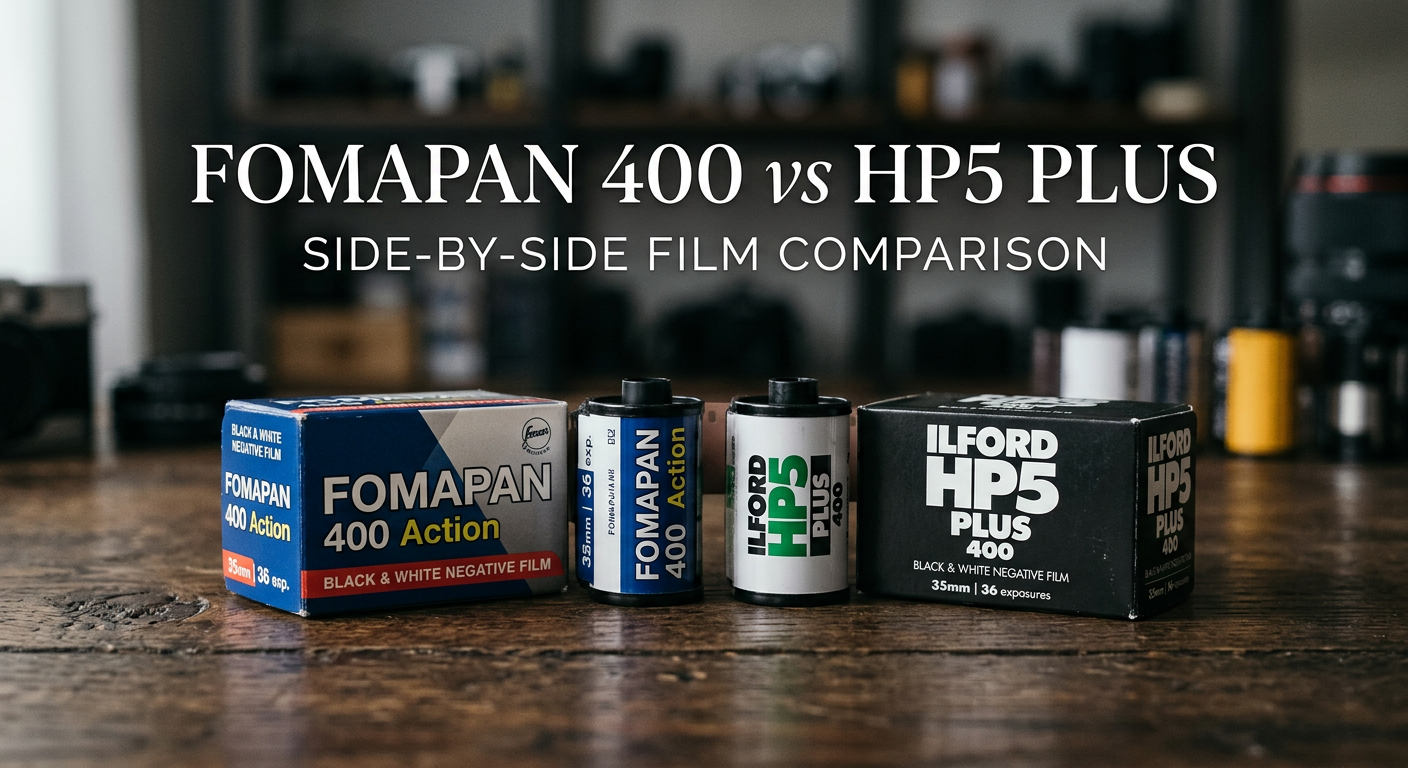
Choosing between Fomapan 400 and Ilford HP5 Plus comes down to one fundamental question: are you prioritizing budget or consistency? Both films sit at ISO 400, but they deliver radically different experiences.
I have shot hundreds of rolls of both films over the years. Fomapan 400 costs significantly less per roll, making it attractive for high-volume shooters and students. Ilford HP5 Plus costs more but rewards you with predictable results, better shadow detail, and forgiving exposure latitude.
In this Fomapan 400 vs Ilford HP5 Plus comparison, I will break down grain structure, tonal range, exposure latitude, development behavior, and real-world shooting experience. By the end, you will know exactly which film fits your photography style and budget.
Fomapan 400 vs Ilford HP5 Plus: Quick Comparison
| Product | Specifications | Action |
|---|---|---|
 Fomapan 400 Action Fomapan 400 Action |
|
Check Latest Price |
 Ilford HP5 Plus 400 Ilford HP5 Plus 400 |
|
Check Latest Price |
Fomapan 400 Action: The Budget Contender
Pros
- Significantly lower cost per roll
- Classic grain structure with character
- Works well with stand development
- Available in multiple formats (35mm
- 120
- sheet)
Cons
- Grainier than premium alternatives
- May need exposure at EI 200-250 for best results
- Prone to scratching during handling
- Less shadow detail than HP5 Plus
Fomapan 400 Action, made by Foma Bohemia in the Czech Republic, occupies a unique space in the film market. It costs substantially less than Ilford or Kodak alternatives, which explains its popularity among photography students and anyone shooting large volumes.
After shooting dozens of rolls, I learned that Fomapan 400 is not a true ISO 400 film in practical terms. Most experienced shooters rate it between EI 200 and 250 for optimal results. When I exposed it at box speed, shadows tended to block up and midtones looked thin. Overexposing by one to two stops fixed this and improved shadow detail considerably.
Grain Structure and Visual Character
Fomapan 400 has a pronounced grain structure that gives images a gritty, vintage feel. The RMS granularity measures around 17.5, noticeably higher than HP5 Plus. In 35mm format, this grain becomes visible even in 8×10 prints, especially in flat areas like sky or smooth backgrounds.
Some photographers specifically seek this look. The grain adds texture and mood that works well for street photography, documentary work, and artistic projects. If you want clinical sharpness and invisible grain, Fomapan 400 will disappoint you.
Spectral Sensitivity and Infrared Capability
One fascinating characteristic of Fomapan 400 is its unusual spectral sensitivity. It has lower blue sensitivity and higher red sensitivity compared to standard panchromatic films. This creates an effect similar to using a built-in red filter. Skies render darker, and skin tones can take on an ethereal, glowing quality.
Several photographers have discovered that Fomapan 400 can capture near-infrared images when used with an R72 filter. This is not true infrared film, but the extended red sensitivity produces interesting results for experimental work.
Halation and Handling Issues
Fomapan uses a triacetate base with a less effective anti-halation layer compared to premium films. This causes halation, a glowing effect around bright highlights, especially noticeable in 120 format. Some photographers embrace this as part of the film character, while others find it distracting.
The emulsion scratches more easily than Ilford films. I learned to handle Fomapan with extra care during loading, developing, and scanning. Using plastic reels instead of metal helps reduce scratches, and gentle agitation during development minimizes damage.
Best Use Cases for Fomapan 400
Fomapan 400 excels when you want a distinctive, characterful look without spending premium prices. Street photography, moody portraits, documentary projects, and experimental work all benefit from its grainy, contrasty rendering.
For critical work like weddings, once-in-a-lifetime travel, or client assignments, I reach for something more reliable. Fomapan rewards experimentation but punishes carelessness with scratched negatives and inconsistent results.
Development works well in semi-stand processes like Rodinal 1:100 or HC-110 dilution H. These methods tame contrast and produce pleasing tonality while minimizing grain clumping.
Ilford HP5 Plus: The Professional Standard
Ilford 1574577 HP5 Plus, Black and White Print Film, 35 mm, ISO 400, 36 Exposures (Pack of 3)
Pros
- Exceptional consistency batch to batch
- Wide exposure latitude (EI 200-3200)
- Excellent shadow detail and tonal range
- Forgiving for exposure errors
- Responds beautifully to push processing
Cons
- Higher cost than budget alternatives
- Grain visible at higher magnifications
- Price increases over time
Ilford HP5 Plus has earned its reputation as the standard for black and white film photography. With nearly a century of heritage behind it, this film delivers consistent, predictable results that professionals and beginners alike can rely on.
I have shot HP5 Plus in everything from harsh midday sun to dimly lit interiors, and it never fails to deliver usable negatives. The exposure latitude stretches from EI 200 on the conservative side to EI 3200 when pushed three stops. This flexibility makes it ideal for situations where lighting changes rapidly or metering proves difficult.

Grain and Tonal Quality
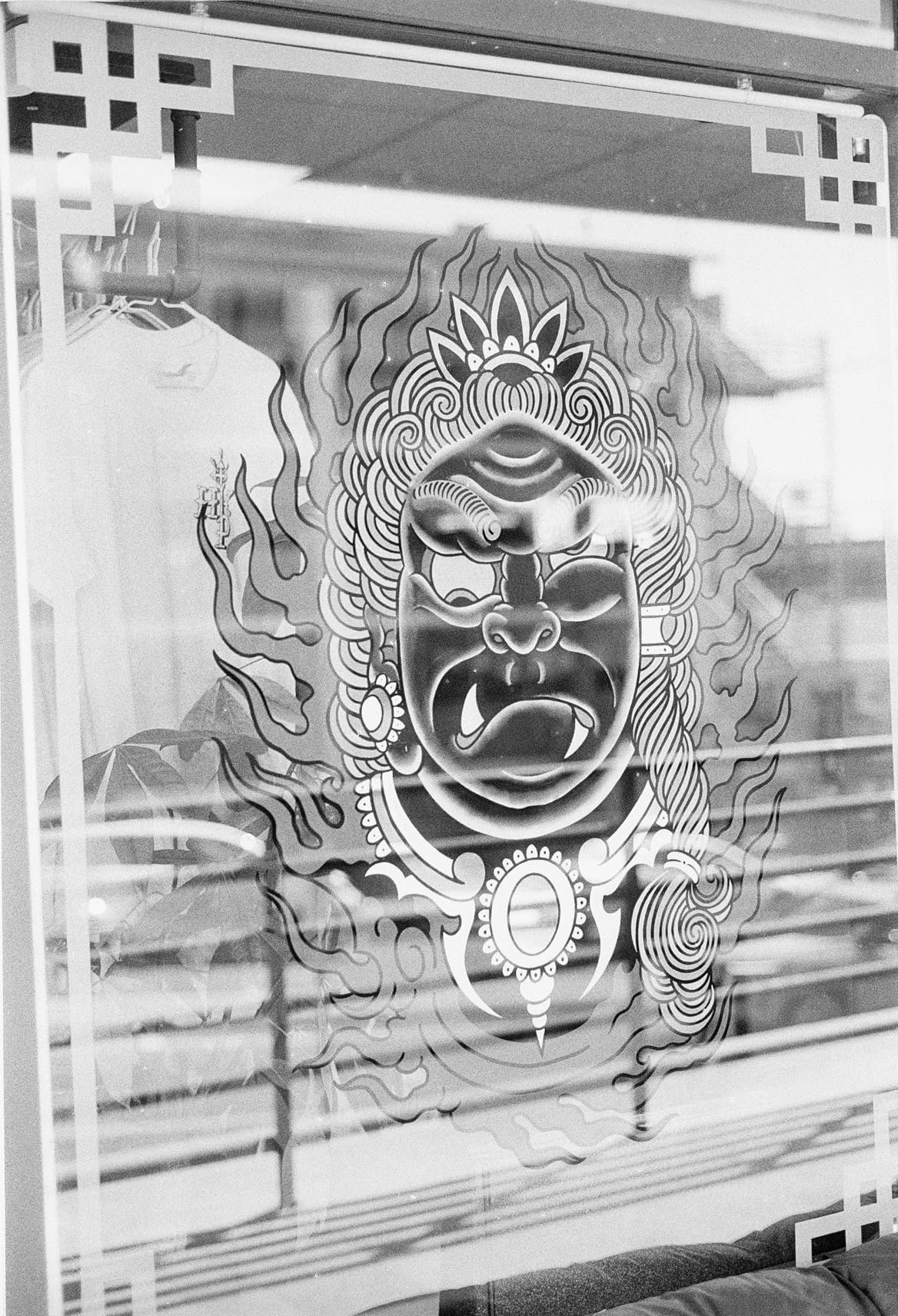
HP5 Plus exhibits a tight, well-structured grain pattern that integrates smoothly into the image rather than dominating it. While grain is visible, especially in 35mm format, it has a pleasing texture that enhances rather than detracts from the photograph.
The tonal range impresses me most. HP5 Plus renders smooth gradations from deep shadows to bright highlights, with no abrupt transitions or blocked areas. Shadow detail remains recoverable even in slightly underexposed frames. This characteristic alone makes it worth the premium price for critical work.
Push Processing Capabilities
One area where HP5 Plus truly shines is push processing. I regularly shoot it at EI 800 for indoor available light work, and the results remain excellent with only a slight increase in grain. Pushing to EI 1600 or even 3200 produces dramatic, contrasty images that still maintain usable shadow detail.

For developers, HP5 Plus works beautifully in HC-110, D-76, Xtol, and Pyrocat-HD. Ilford provides comprehensive development time charts, and the film responds predictably to different agitation schemes. This consistency makes it easy to plan development for specific shooting conditions.
Why HP5 Plus Remains Popular
Several factors explain the enduring popularity of Ilford HP5 Plus. First, quality control ensures every batch performs identically. Second, the forgiving nature accommodates exposure errors that would ruin lesser films. Third, virtually every darkroom and lab knows how to process it.
For beginners, this forgiveness accelerates learning. You can make exposure mistakes and still get printable negatives. For professionals, consistency eliminates variables and lets you focus on composition and timing rather than technical concerns.
Best Use Cases for HP5 Plus
HP5 Plus handles virtually any situation competently. Street photography benefits from its speed and latitude. Portraits gain depth from its tonal richness. Landscapes render with smooth gradations. Documentary work proceeds confidently knowing results will be consistent.
I particularly recommend HP5 Plus for travel photography, where lighting conditions change constantly and you cannot reshoot missed moments. The exposure latitude handles mixed lighting gracefully, and push processing capability means you can keep shooting when light fades.
Fomapan 400 vs Ilford HP5 Plus: Head-to-Head Comparison
Grain Structure Comparison
Fomapan 400 shows noticeably more grain than HP5 Plus, with a gritty texture that becomes prominent in large prints or flat image areas. HP5 Plus grain integrates more smoothly, appearing as fine texture rather than obvious clumping.
For small prints or web display, the difference matters less. But if you print 11×14 or larger from 35mm negatives, HP5 Plus maintains detail and smoothness that Fomapan 400 loses to grain.
Exposure Latitude Analysis
HP5 Plus wins handily in exposure latitude. You can underexpose by two stops and still recover usable shadow detail. Overexposure up to three stops still produces excellent results. This forgiveness makes HP5 ideal for beginners and challenging lighting situations.
Fomapan 400 tolerates overexposure reasonably well but punishes underexposure severely. Shadows block up quickly, and once lost, detail cannot be recovered. Most shooters rate it at EI 200-250 to build in a safety margin.
Tonal Range and Contrast
HP5 Plus delivers a long, smooth tonal scale with gentle contrast. Transitions from shadows to midtones to highlights flow naturally. This characteristic makes it versatile for diverse subjects.
Fomapan 400 tends toward higher contrast with a shorter tonal range. Shadows drop off quickly, and highlights can bloom. This creates a dramatic look that suits some subjects but limits flexibility in post-processing.
Price and Value Considerations
Fomapan 400 costs roughly half to two-thirds as much as HP5 Plus per roll. For students, hobbyists on tight budgets, or anyone shooting high volumes, this difference adds up significantly over time.
However, factor in the cost of failed shots, scratched negatives, and inconsistent results. HP5 Plus may cost more upfront but delivers more keepers per roll. For critical work, the premium pays for itself in reduced waste.
Development and Processing
Both films process in standard black and white chemistry. HP5 Plus works predictably across all common developers, with published times that prove accurate in practice.
Fomapan 400 benefits from experimentation. Semi-stand development in highly diluted Rodinal or HC-110 often produces better results than standard development times. Some shooters report success with Fomadon LQN, the developer Foma produces specifically for their films.
Push Processing Comparison
HP5 Plus pushes cleanly to EI 1600 and acceptably to EI 3200. Contrast increases but shadow detail remains usable. This makes it versatile for low-light work.
Fomapan 400 pushes surprisingly well to EI 800 and even EI 1600 according to some users, but results vary more widely and require careful development tuning. It lacks the consistent push performance of HP5 Plus.
Fomapan 400 vs Ilford HP5 Plus: Final Verdict
After extensive shooting with both films, my recommendation depends entirely on your priorities and shooting style.
Choose Fomapan 400 If:
You shoot high volumes and need to minimize per-roll costs. You enjoy experimenting and do not mind a learning curve. You want a distinctive, grainy, vintage aesthetic. You shoot primarily for personal projects where occasional failures do not matter. You work in stand development or alternative processes.
Choose Ilford HP5 Plus If:
You need consistent, predictable results batch after batch. You shoot critical work like weddings, portraits, or once-in-a-lifetime travel. You want maximum exposure latitude and forgiveness for metering errors. You push film regularly for low-light situations. You value smooth tonality and fine grain over character and grit.
Frequently Asked Questions
What makes the Ilford HP5 Plus 400 popular?
Ilford HP5 Plus remains popular because of its exceptional consistency, wide exposure latitude, and forgiving nature. It delivers predictable results batch after batch, handles exposure errors gracefully, and responds well to push processing. Beginners appreciate its forgiveness while professionals value its reliability for critical work.
Is Fomapan film any good?
Fomapan film offers excellent value for budget-conscious photographers. Fomapan 400 produces distinctive, grainy images with character that some photographers specifically seek. However, it requires more experimentation, handles less consistently than premium films, and scratches more easily. It works well for learning, experimentation, and artistic projects where imperfections add to the aesthetic.
Is the Ilford HP5 a forgiving film?
Yes, Ilford HP5 Plus is extremely forgiving. Its wide exposure latitude spans from EI 200 to EI 3200, meaning you can make significant exposure errors and still recover usable negatives. Shadow detail remains accessible even with underexposure, and highlights resist blowing out. This forgiveness makes it ideal for beginners and challenging lighting situations.
Is Fomapan 400 a true 400 speed film?
Most experienced photographers rate Fomapan 400 between EI 200 and 250 for optimal results rather than at its nominal ISO 400 speed. When exposed at box speed, shadows tend to block up and midtones render thin. Overexposing by one to two stops typically produces better tonality and shadow detail. This characteristic varies somewhat between batches.
My Recommendation
For most photographers, Ilford HP5 Plus represents the better value despite the higher price. The consistency, latitude, and reliability translate to more keepers and less frustration. Beginners especially benefit from its forgiving nature while learning exposure fundamentals.
Fomapan 400 earns a place in your bag for experimental work, bulk shooting sessions, or times when budget constraints demand creative compromises. Just approach it knowing that results vary more widely and handling requires extra care.