
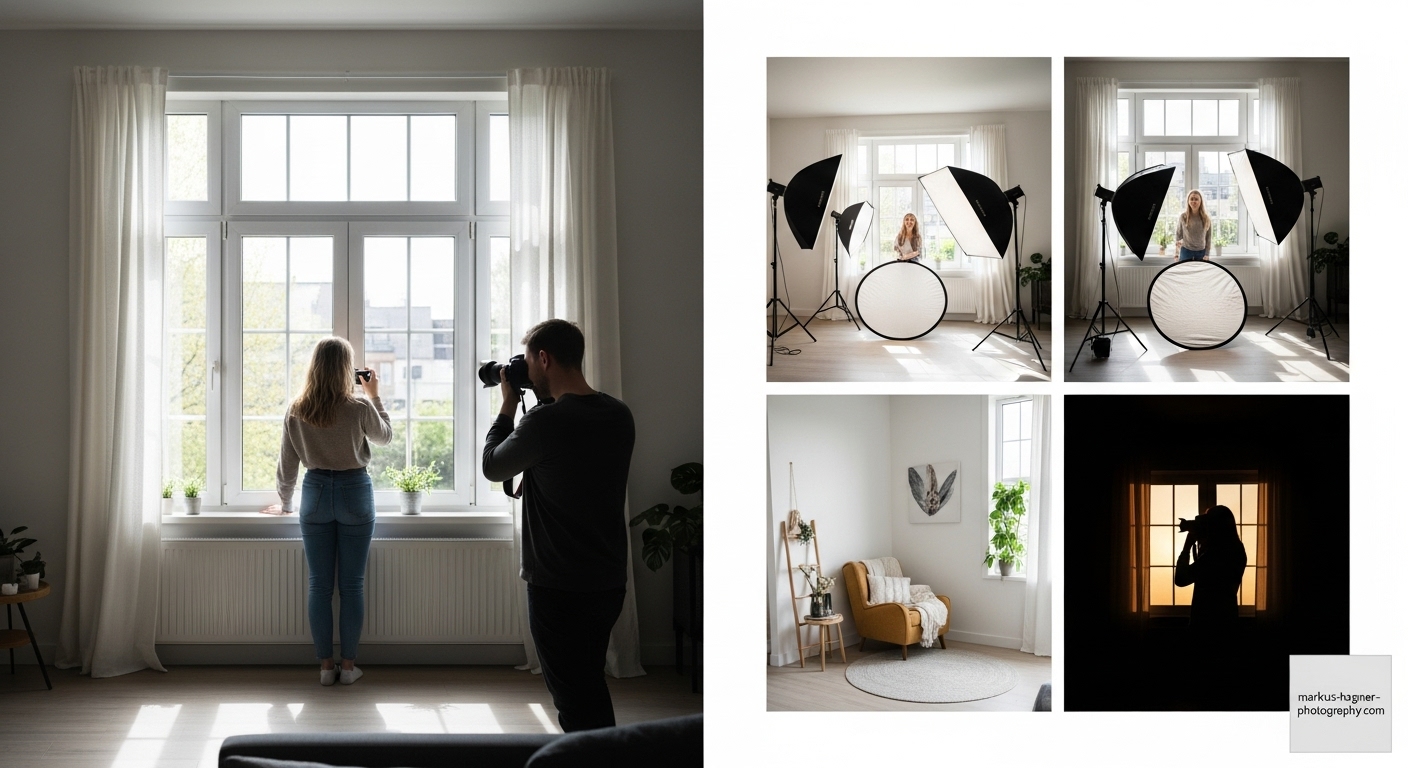
I’ll never forget the day I discovered the magic of natural light photography in my own home. It was a gloomy Tuesday afternoon, and I was feeling frustrated with my photography. I didn’t have expensive studio equipment, and I thought I was stuck with mediocre photos forever. Then, I moved a plant near my window and watched how the light transformed everything. That moment changed my entire approach to photography.
Natural light is the great equalizer in photography. It doesn’t matter if you have a professional DSLR or just a smartphone – when you understand how to work with natural light, you can create stunning images right in your own home. I’ve spent countless hours experimenting with different techniques, setups, and creative ideas, and I’m excited to share everything I’ve learned with you.
In this comprehensive guide, I’ll walk you through 10 creative DIY home photoshoot ideas that leverage natural light to create professional-looking images. These aren’t just theoretical concepts – they’re techniques I’ve tested and perfected in my own home, using basic equipment that you probably already own. Whether you’re photographing portraits, products, or just want to capture beautiful moments with your family, these ideas will transform how you see and use light in your home.
Table of Contents
- Understanding Natural Light in Your Home
- 1. Window-Lit Portraits: The Classic Setup
- 2. Backlit Silhouettes: Dramatic and Artistic
- 3. Product Photography with Natural Light
- 4. Lifestyle Photography in Cozy Corners
- 5. Outdoor-Indoor Hybrid Photography
- 6. Flat Lay Photography with Natural Light
- 7. Shadow Play Photography
- 8. Reflection Photography Using Household Items
- 9. Food Photography with Natural Light
- 10. Self-Portrait Photography with Natural Light
- Advanced Natural Light Techniques
- FAQ: DIY Home Photoshoot with Natural Light
- What’s the best time of day for natural light photography at home?
- Do I need expensive equipment for natural light photography?
- How do I deal with harsh sunlight coming through my windows?
- What’s the best way to create a professional-looking backdrop at home?
- How can I take good self-portraits without help?
- What’s the biggest mistake beginners make with natural light photography?
- How do I make small spaces look bigger in photos?
- Can I create professional-looking product photos at home?
- Conclusion
Understanding Natural Light in Your Home
Before we dive into the specific photoshoot ideas, I want to share what I’ve learned about natural light and how it behaves in different home environments. Understanding these fundamentals will help you make the most of every photoshoot idea I’m about to share.
Types of Natural Light
Direct Sunlight: This is the bright, intense light that streams directly through your windows. I’ve found that direct sunlight can be challenging to work with because it creates harsh shadows and can cause overexposure. However, when used intentionally, it can create dramatic, high-contrast images that are incredibly striking.
Diffused Light: This is my favorite type of natural light for home photography. It occurs when sunlight is scattered by clouds, curtains, or other obstacles before entering your home. Diffused light is soft, even, and flattering – perfect for portraits and product photography.
Reflected Light: This is light that bounces off surfaces in your home before reaching your subject. I’ve discovered that walls, ceilings, and even floors can act as natural reflectors, creating beautiful, soft illumination that can enhance your photos in unexpected ways.
Backlight: This occurs when your main light source is behind your subject. While it might seem counterintuitive, backlighting can create stunning silhouettes, beautiful rim lighting, and ethereal glow effects that add depth and drama to your images.
Finding the Best Light in Your Home
I’ve learned that every home has its own unique light patterns. Here’s how I find the best photography spots in any home:
- The Window Tour: I walk through my home at different times of day, noting how light enters each room. I pay special attention to south-facing windows (which get consistent light throughout the day) and east/west-facing windows (which get beautiful morning or evening light).
- The Time Test: Natural light changes dramatically throughout the day. I’ve found that early morning and late afternoon (golden hour) provide the most flattering light for most types of photography. Midday light can be harsh, but it’s perfect for creating dramatic shadows and silhouettes.
- The Shadow Test: I hold my hand up in different areas of my home to see how shadows fall. Soft, gradual shadows indicate good diffused light, while harsh, defined shadows suggest direct sunlight that might need to be diffused.
Essential Equipment for Natural Light Photography
One of the things I love most about natural light photography is that you don’t need expensive equipment. Here’s what I use for my home photoshoots:
Camera: While I primarily use a DSLR, I’ve created stunning images with smartphones, mirrorless cameras, and even point-and-shoot cameras. The key is understanding how to use whatever camera you have.
Tripod: This is non-negotiable for me. A sturdy tripod ensures sharp images and allows you to experiment with longer exposures when needed. I have both a full-size tripod and a small tabletop tripod for different situations.
Reflectors: I’ve made DIY reflectors from white foam board, aluminum foil, and even white bedsheets. These are essential for bouncing light back onto your subject and filling in harsh shadows.
Diffusers: Sheer curtains, white bedsheets, or even tracing paper can work as diffusers to soften harsh sunlight. I keep a collection of different materials handy for various lighting situations.
Props: Household items like plants, books, fabrics, and glass objects can add interest and context to your photos. I’ll share specific prop ideas for each photoshoot concept.
Now that we’ve covered the fundamentals, let’s dive into the 10 creative DIY home photoshoot ideas that will transform your natural light photography!
1. Window-Lit Portraits: The Classic Setup
Windows are nature’s softboxes, and I’ve found that window-lit portraits are some of the most flattering and professional-looking images you can create at home. This was actually the first technique I mastered, and it’s still one of my go-to setups.
Setup and Positioning
I’ve discovered that the key to great window portraits is understanding how to position your subject relative to the light source. Here’s what works best:
Side Lighting: Position your subject at a 45-degree angle to the window. This creates beautiful dimension with soft shadows that define facial features without being harsh. I’ve found this angle works well for most portraits, from headshots to full-body shots.
Front Lighting: Have your subject face the window directly. This creates even, flat lighting that’s perfect for beauty shots and when you want to minimize facial features. I use this setup when photographing clients who are self-conscious about certain features.
Back Lighting: Position your subject with their back to the window. This creates a beautiful rim light around their silhouette and can result in stunning, ethereal images. I’ll share more about backlighting techniques in idea #4.
Camera Settings I Use
For window-lit portraits, I typically use these settings as my starting point:
- Aperture: f/2.8-f/4 for a beautiful background blur (bokeh)
- Shutter Speed: 1/125s or faster to avoid camera shake
- ISO: As low as possible (usually 100-400) to maintain image quality
- White Balance: I usually start with “Daylight” and adjust from there
Pro Tips I’ve Discovered
Use the Right Window: Not all windows are created equal. I’ve found that north-facing windows provide the most consistent, diffused light throughout the day. South-facing windows can be great, but you might need to diffuse the light during midday.
Create a Simple Background: I always make sure the area behind my subject is clean and uncluttered. A plain wall, a bookshelf, or even a neatly made bed can work well. I’ve even used a simple bedsheet as a backdrop when needed.
Add a Reflector: This is a game-changer! I position a white foam board or even a white piece of cardboard on the opposite side of the window to bounce light back onto my subject’s face. This fills in shadows and creates a more balanced, professional look.
Experiment with Distance: I’ve found that moving your subject closer to or farther from the window dramatically changes the quality of light. Closer to the window means brighter, more dramatic light; farther away means softer, more subtle lighting.
Creative Variations
Multiple Windows: If you have a room with multiple windows, I love positioning my subject where light from two windows meets. This creates beautiful cross-lighting that’s incredibly flattering.
Window Frames as Natural Framing: I often use the window frame itself as a compositional element. Positioning your subject so they’re framed by the window can add depth and interest to your portraits.
Curtains as Diffusers: I love using sheer curtains to soften harsh sunlight. Even on bright, sunny days, I can create beautiful, soft light by closing sheer curtains and positioning my subject nearby.
2. Backlit Silhouettes: Dramatic and Artistic
Silhouette photography is one of my favorite techniques because it creates such striking, emotional images. When I first started experimenting with backlit silhouettes, I was amazed at how such a simple technique could produce such powerful results.
Understanding the Technique
The concept is simple: you position your subject between your camera and a bright light source (usually a window), then expose for the background rather than your subject. This causes your subject to appear as a dark shape against the brighter background.
Setup Instructions
Here’s exactly how I set up silhouette shots in my home:
- Choose Your Window: I look for windows with bright, even light. Morning or evening light works beautifully, but I’ve also created great silhouettes on overcast days when the sky is bright.
- Position Your Subject: I have my subject stand directly in front of the window, about 3-6 feet away from it. The distance affects how sharp the silhouette appears – closer to the window creates a sharper, more defined silhouette.
- Camera Settings: This is crucial. I set my camera to manual mode and expose for the bright background, not my subject. Here are my typical settings:
- Aperture: f/8-f/11 for sharpness throughout
- Shutter Speed: I adjust this until the background is properly exposed (usually around 1/125s)
- ISO: 100-200 for clean images
- Exposure Compensation: I often underexpose by -1 to -2 stops to ensure the silhouette is completely dark
Pro Tips for Perfect Silhouettes
Create Clear Shapes: The key to a great silhouette is having a clear, recognizable shape. I always make sure my subject’s pose creates interesting outlines. Arms away from the body, turned profiles, and interesting hand positions all work well.
Mind Your Background: I’ve learned that a clean, uncluttered background is essential for silhouette photography. I look for simple backgrounds that won’t distract from the silhouette shape.
Use Manual Focus: Autofocus can struggle with silhouettes because there’s little contrast on your subject. I switch to manual focus and focus on the edge where my subject meets the bright background.
Experiment with Poses: I encourage my subjects to try different poses – some will work better than others for silhouettes. Profile shots often work particularly well because facial features are more recognizable in silhouette form.
Creative Variations I Love
Multiple Subject Silhouettes: I’ve created beautiful images with multiple people in silhouette. The key is arranging them so their shapes don’t overlap too much and each person is recognizable.
Silhouettes with Props: Adding props can make silhouettes more interesting and tell a story. I’ve used hats, musical instruments, flowers, and even household objects to add interest to silhouette shots.
Partial Silhouettes: Sometimes I create images where only part of my subject is in silhouette. This can create beautiful rim lighting effects while still showing some detail in the face.
Window Frame Silhouettes: I love positioning my subject so they’re framed by a window or doorway. This adds another layer of framing and can create incredibly compelling compositions.
3. Product Photography with Natural Light
Whether you’re selling items online, showcasing your creative work, or just want to document your belongings, product photography with natural light can give you professional results without expensive studio equipment. I’ve photographed everything from handmade jewelry to furniture using just natural light and simple DIY setups.
Creating Your Mini Studio
I’ve discovered that you don’t need much space to create a professional-looking product photography setup. Here’s what I use:
The Table Setup: I use a sturdy table positioned near a window. This is my main workspace for product photography. I cover it with different materials depending on the look I want – white poster board for a clean look, wood boards for a rustic feel, or fabric for texture.
Background Options: I keep a collection of background materials handy:
- White foam boards for clean, bright backgrounds
- Black foam boards for dramatic, moody shots
- Wood boards and planks for rustic, natural looks
- Fabric pieces in various colors and textures
- Marble contact paper for a luxury look
Light Control Tools: I use the same reflectors and diffusers I mentioned earlier, but I also keep some specific tools for product photography:
- Small mirrors for bouncing light into specific areas
- White cards for fill light
- Black cards for absorbing light and creating drama
Step-by-Step Product Photography Process
Here’s the exact process I follow for product photography:
- Scout the Light: I find the best window light for the product I’m photographing. For small products, any window with good light works. For larger items, I need larger windows or even open doors.
- Set Up Your Background: I position my background material and make sure it’s clean and smooth. For seamless backgrounds, I curve the paper or fabric from the table surface up the wall behind it.
- Position Your Product: I place my product on the background and arrange it exactly how I want it to appear in the final image. I pay attention to angles, orientation, and any specific features I want to highlight.
- Set Up Reflectors: I position white cards or reflectors to bounce light back onto the product and fill in shadows. For most products, I use at least one reflector on the opposite side of the window.
- Camera Settings: Here are my go-to settings for product photography:
- Aperture: f/8-f/11 for sharpness throughout (or f/2.8-f/4 for selective focus)
- Shutter Speed: 1/125s or faster
- ISO: 100-200 for maximum quality
- White Balance: I customize this based on the light temperature
Advanced Techniques I’ve Mastered
Focus Stacking: For products where I need everything in sharp focus, I use focus stacking. I take multiple images at different focus points and combine them in post-processing. This is especially useful for jewelry and small detailed items.
Reflection Photography: I’ve discovered that using reflective surfaces can add a professional touch to product photos. I use mirrors, glass, or even water to create beautiful reflections that make products look more luxurious.
Overhead Shots: For flat lay compositions and products like food or textiles, I shoot from directly overhead. I often use a ladder or stand on a chair to get the perfect angle.
Detail Shots: I always take close-up detail shots that show the texture, craftsmanship, or special features of the product. These are often the images that sell the product best.
Creative Product Photography Ideas
Lifestyle Shots: I create scenes that show the product in use. For example, if I’m photographing a mug, I’ll create a cozy coffee scene with steam, cookies, and a book.
Scale Shots: I include objects that show the scale of the product. This is especially important for online shopping where customers can’t see the product in person.
Seasonal Themes: I incorporate seasonal elements into my product photography. Flowers in spring, leaves in fall, and holiday decorations in winter can make products feel current and timely.
Also Read: 12 Best Sony 4K Cameras
4. Lifestyle Photography in Cozy Corners
Lifestyle photography captures authentic, everyday moments in a beautiful, artistic way. I love creating lifestyle shots in my home because they tell stories and evoke emotions. Natural light is perfect for lifestyle photography because it creates the warm, authentic feel that makes these images so compelling.
Finding Your Cozy Corners
Every home has those special nooks and crannies that just feel comfortable and inviting. I’ve learned to identify and utilize these spaces for lifestyle photography:
Reading Nooks: If you have a comfortable chair near a window, you have the perfect setup for cozy reading shots. I love arranging books, blankets, and warm drinks to create inviting scenes.
Kitchen Corners: Breakfast bars, window seats, or even just a favorite coffee mug spot can make great lifestyle photography locations. The key is finding areas with good natural light and authentic daily life elements.
Bedside Scenes: The area around your bed, especially if it’s near a window, can create beautiful morning or evening lifestyle shots. Rumpled sheets, books, and personal items add authenticity.
Workspace Areas: If you have a desk or creative space with good light, it can be perfect for showing your work or hobbies in a lifestyle context.
Setting Up Lifestyle Scenes
Here’s how I approach setting up lifestyle photography scenes:
- Start with Real Life: I begin by observing how I actually use the space. What activities naturally happen here? What objects are typically present? Authenticity is key in lifestyle photography.
- Enhance, Don’t Fake: I might straighten things up, add a few props, or adjust lighting, but I never completely fake a scene. The best lifestyle photography feels real and lived-in.
- Consider the Story: Every lifestyle shot should tell a story. Is it a quiet morning moment? A creative work session? A relaxing evening? I think about the story I want to tell and arrange elements accordingly.
- Layer Your Elements: I create depth by layering foreground, middle ground, and background elements. This makes the image feel more three-dimensional and engaging.
Working with Natural Light for Lifestyle Shots
Natural light is essential for the lifestyle aesthetic. Here’s how I make the most of it:
Golden Hour Magic: I schedule lifestyle shoots during the golden hour (first hour after sunrise, last hour before sunset) whenever possible. The warm, soft light creates the perfect cozy atmosphere.
Window Direction Matters: I pay attention to which direction my windows face and plan shoots accordingly. East-facing windows are best for morning scenes, west-facing for evening scenes.
Diffuse Harsh Light: If I’m shooting during midday when light can be harsh, I use sheer curtains or other diffusers to soften it. This maintains the natural light feel while avoiding unflattering shadows.
Use Reflectors: I always have reflectors handy for lifestyle shoots. They help fill in shadows and create the soft, even lighting that’s characteristic of lifestyle photography.
Camera Settings for Lifestyle Photography
I use different settings depending on the mood I want to create:
For Soft, Dreamy Looks:
- Aperture: f/1.8-f/2.8 for shallow depth of field
- Shutter Speed: 1/125s or faster
- ISO: As low as possible
- White Balance: Slightly warm for cozy feel
For Crisp, Detailed Shots:
- Aperture: f/8-f/11 for sharpness throughout
- Shutter Speed: 1/125s or faster
- ISO: 100-200
- White Balance: Matched to light source
Creative Lifestyle Photography Ideas
Morning Routine Shots: I love capturing the quiet moments of morning routines – coffee, reading, journaling, or just waking up. These intimate moments resonate with viewers.
Work and Creativity: Whether it’s writing, crafting, cooking, or any other creative pursuit, showing the process of creation makes compelling lifestyle photography.
Relaxation and Self-Care: Bath time, skincare routines, meditation, or just relaxing with a book all make beautiful lifestyle scenes that promote wellness and self-care.
Seasonal Activities: I incorporate seasonal elements into my lifestyle photography – holiday decorating, gardening, seasonal cooking, or weather-appropriate activities.
5. Outdoor-Indoor Hybrid Photography
One of my favorite discoveries in home photography is the magic that happens at the threshold between indoors and outdoors. These hybrid shots combine the best of both worlds – the comfort and intimacy of indoor spaces with the freshness and expansiveness of outdoor environments.
Understanding the Hybrid Concept
Outdoor-indoor hybrid photography involves positioning your subject at the boundary between inside and outside spaces. This could be in a doorway, a large open window, a balcony, or any transition area between your home’s interior and the exterior world.
What I love about this approach is how it creates visual interest through contrast. You get the juxtaposition of interior and exterior elements, the play of light and shadow, and the sense of connection between private and public spaces.
Perfect Locations for Hybrid Shots
Here are the spots in my home that work best for this type of photography:
Doorways: Front doors, back doors, and even interior doors that open to outdoor spaces all work beautifully. I love how door frames create natural framing for my subjects.
Large Windows and Patio Doors: Floor-to-ceiling windows or sliding glass doors are perfect for hybrid shots. They provide a large opening between inside and outside spaces.
Balconies and Porches: These transitional spaces are ideal for hybrid photography. You can position your subject so they’re partially inside and partially outside.
Garage Doors: Even garage doors can work well, especially when left partially open. The industrial look can create interesting contrasts with softer interior elements.
Technical Considerations
Hybrid photography comes with some unique technical challenges that I’ve learned to overcome:
Exposure Balance: The biggest challenge is the difference in brightness between indoor and outdoor spaces. I’ve found several solutions:
- Use exposure compensation to balance the light
- Shoot during golden hour when the light difference is less extreme
- Use a reflector to bounce outdoor light back onto your subject
- Embrace the contrast and use it creatively
Focus Issues: Autofocus can struggle with the varying light levels. I often switch to manual focus and carefully focus on my subject’s eyes or the most important element in the scene.
Wind and Movement: When you’re working with open doors or windows, wind can be a factor. I secure loose items and choose calm days for hybrid shoots when possible.
Step-by-Step Hybrid Setup
Here’s my exact process for setting up outdoor-indoor hybrid shots:
- Choose Your Location: I select a doorway or large window that provides a good view and interesting outdoor elements.
- Time Your Shoot: I schedule shoots during golden hour when the light is most beautiful and the contrast between indoor and outdoor spaces is less extreme.
- Position Your Subject: I place my subject in the threshold area, experimenting with how much of them appears inside versus outside.
- Set Up Reflectors: I position reflectors to bounce light back onto my subject and balance the exposure between indoor and outdoor areas.
- Camera Settings: Here are my typical settings:
- Aperture: f/4-f/8 for good depth of field
- Shutter Speed: 1/125s or faster
- ISO: 100-400 depending on light levels
- White Balance: I often use auto and adjust in post-processing
Creative Hybrid Photography Ideas
Framing with Architecture: I love using door frames, window frames, and other architectural elements to frame my subjects. This adds depth and visual interest to the images.
Seasonal Transitions: Hybrid shots are perfect for showing seasonal changes. I love capturing subjects positioned between cozy indoor spaces and seasonal outdoor scenes.
Movement and Flow: I incorporate movement into hybrid shots – someone stepping inside or outside, curtains blowing in the breeze, or even just the suggestion of movement through positioning.
Storytelling Elements: I use hybrid photography to tell stories about transitions, journeys, and the connection between our private lives and the outside world.
6. Flat Lay Photography with Natural Light
Flat lay photography has become incredibly popular, and for good reason – it’s a versatile, creative way to showcase everything from products to personal items. I’ve spent countless hours perfecting my flat lay technique, and natural light is absolutely essential for creating those beautiful, professional-looking flat lay images.
Understanding Flat Lay Photography
Flat lay photography involves arranging objects on a flat surface and photographing them from directly above. This creates a bird’s-eye view that’s perfect for showcasing collections, telling stories, or creating artistic compositions.
What I love most about flat lay photography is how it allows me to be both organized and creative. There’s something satisfying about arranging objects just so, and the overhead perspective creates a unique way of seeing everyday items.
Also Read: Sony 70-200 F2.8 vs Sigma 70-200 F2.8
Setting Up Your Flat Lay Space
Creating a good flat lay setup is all about preparation. Here’s what I do:
Choose Your Surface: I use various surfaces depending on the mood I want to create:
- White poster board for clean, bright looks
- Wood tables or boards for rustic, natural feels
- Fabric pieces for texture and color
- Marble or stone surfaces for luxury looks
- Even floors or carpets can work for certain styles
Lighting is Everything: I always position my flat lay setup near a window. The direction and quality of light make a huge difference in the final image:
- Side lighting creates dimension and shadow
- Front lighting creates flat, even illumination
- Backlighting can create beautiful rim light on objects
Elevation Matters: I need to shoot from directly above my flat lay. I use various methods to achieve this:
- Standing on a ladder or chair
- Using a tripod with an extending center column
- Even mounting my camera to the ceiling for consistent overhead shots
Creating Compelling Compositions
The art of flat lay photography is all about composition. Here are the principles I follow:
Start with a Focal Point: Every good flat lay needs a main subject or focal point. I arrange everything else around this central element.
Create Visual Flow: I arrange objects so they lead the eye through the image. This can be through color progression, size variation, or strategic positioning.
Layer for Depth: Even though flat lays are 2D, I create depth by layering objects. Overlapping items, varying heights, and using shadows all contribute to a sense of dimension.
Consider Negative Space: I’ve learned that empty space is just as important as the objects themselves. Negative space gives the eye room to rest and can create a more sophisticated, professional look.
Step-by-Step Flat Lay Process
Here’s exactly how I create my flat lay images:
- Plan Your Concept: I decide on the story or theme I want to convey. Is it a collection of favorite items? A seasonal arrangement? A product showcase?
- Gather Your Items: I collect all the objects I want to include, plus some extras. Having options allows me to experiment and find the perfect combination.
- Set Up Your Surface: I position my chosen surface near a window with good light. I make sure it’s clean and free of dust or debris.
- Arrange Your Items: This is where the magic happens. I start with my focal point and build around it, constantly stepping back (or climbing my ladder) to check the composition from above.
- Fine-Tune the Lighting: I adjust curtains, add reflectors, or move the setup slightly to optimize the natural light. I’m looking for even illumination without harsh shadows.
- Camera Settings: Here are my go-to settings for flat lay photography:
- Aperture: f/8-f/11 for sharpness throughout
- Shutter Speed: 1/125s or faster
- ISO: 100-200 for maximum quality
- White Balance: Matched to the light source
Creative Flat Lay Ideas
Seasonal Arrangements: I love creating flat lays that celebrate seasons – fall leaves and pumpkins, spring flowers, summer beach items, or winter holiday decorations.
Collections and Hobbies: Flat lays are perfect for showcasing collections – books, vinyl records, art supplies, cooking utensils, or any other hobby-related items.
Flat Lay Portraits: I create personal flat lays that tell stories about people – their favorite things, daily essentials, or items that represent their personality.
Product Styling: For product photography, flat lays allow me to show multiple items together or create lifestyle scenes around a main product.
7. Shadow Play Photography
One of the most creative and artistic techniques I’ve discovered for home photography is playing with shadows. Shadows can add drama, mystery, and visual interest to your images, and when used intentionally, they become a powerful compositional element rather than just a byproduct of light.
The Art of Shadow Photography
Shadow photography is all about understanding how light and shadow interact to create compelling images. I’ve learned that shadows aren’t just the absence of light – they’re design elements that can shape, define, and transform your photographs.
What fascinates me most about shadow play is how it allows me to create images that go beyond simple documentation. With shadows, I can suggest, imply, and evoke emotions in ways that straightforward photography can’t always achieve.
Types of Shadows and Their Effects
Through experimentation, I’ve identified several types of shadows that work well in home photography:
Hard Shadows: Created by direct, undiffused light, hard shadows have sharp, defined edges. I use them for dramatic, high-contrast images that make bold statements.
Soft Shadows: These are created by diffused light and have gradual, soft edges. Soft shadows are perfect for creating mood and atmosphere without being overwhelming.
Cast Shadows: These are shadows thrown by objects onto other surfaces. I love using cast shadows to create interesting patterns and shapes in my images.
Self-Shadowing: This occurs when parts of an object shadow other parts of the same object. It’s essential for creating dimension and form in photography.
Creating Shadow Effects at Home
Here’s how I create different shadow effects using natural light in my home:
Window Shadow Patterns: I’ve discovered that windows themselves can create beautiful shadow patterns. The mullions and frames cast interesting geometric shapes that can add visual interest to my images.
Object Shadow Play: I position objects between my light source and my subject to create shadow patterns. Lace curtains, plants, kitchen utensils, and even my hands can create fascinating shadow effects.
Multiple Light Sources: When I have multiple windows, I can create complex shadow patterns by using light from different directions. This creates depth and visual complexity in my images.
Moving Shadows: I sometimes incorporate moving shadows into my photography. This can be as simple as curtains blowing in the breeze or as complex as people moving through the frame.
Step-by-Step Shadow Photography Setup
Here’s my process for creating shadow photography at home:
- Choose Your Light Source: I select a window with the right type of light for the effect I want. Direct sunlight creates hard shadows, while diffused light creates softer shadows.
- Position Your Subject: I place my subject where the shadows will fall most effectively. This might involve moving them closer to or farther from the light source.
- Add Shadow-Creating Elements: I position objects that will create interesting shadows. This could be anything from plants to kitchen utensils to handmade cutouts.
- Experiment with Distance: I’ve found that the distance between the light source, the shadow-creating object, and my subject dramatically affects the shadow quality. I experiment with different distances to get the effect I want.
- Camera Settings: Here are my typical settings for shadow photography:
- Aperture: f/8-f/11 for sharpness
- Shutter Speed: Varies depending on light levels
- ISO: 100-400
- White Balance: Matched to the light source
Creative Shadow Photography Ideas
Silhouette with Shadow Details: I create images where my subject is in silhouette, but shadow details on the ground or walls add context and interest.
Shadow Portraits: I position people so their shadows become the main subject of the photograph. This creates mysterious, artistic images that focus on form rather than detail.
Pattern Play: I use objects with interesting patterns – lace, graters, colanders, or even leaves – to create intricate shadow patterns that become the main focus of the image.
Abstract Shadow Art: Sometimes I let the shadows themselves become the subject, creating abstract compositions that play with light, form, and negative space.
8. Reflection Photography Using Household Items
Reflection photography opens up a whole new world of creative possibilities, and the best part is that you can create stunning reflection images using items you already have in your home. I’ve spent countless hours experimenting with different reflective surfaces, and I’m excited to share my favorite techniques with you.
The Magic of Reflections
There’s something inherently fascinating about reflections. They create symmetry, add depth, and often reveal details that we might otherwise miss. I’ve found that reflection photography allows me to see ordinary scenes in extraordinary ways.
What I love most about working with reflections is how they transform familiar environments. A simple room can become a complex, layered composition when viewed through a reflection. Mirrors, glass, water, and even shiny household objects become portals to new photographic perspectives.
Household Items That Make Great Reflectors
You don’t need expensive equipment to create beautiful reflection photography. Here are my favorite household items to use:
Mirrors: The obvious choice, but I use mirrors in creative ways:
- Bathroom mirrors for self-portraits
- Handheld mirrors for portable reflections
- Compact mirrors for detailed close-ups
- Even broken mirror pieces for abstract effects
Glass Surfaces: Glass offers subtle, beautiful reflections:
- Windows and glass doors
- Glass tabletops
- Glassware and bottles
- Picture frame glass
Metal Objects: Polished metal creates interesting reflections:
- Stainless steel appliances
- Metal bowls and utensils
- Jewelry and accessories
- Faucets and fixtures
Water: Water creates dynamic, ever-changing reflections:
- Glasses of water
- Bowls or basins
- Even puddles after rain
Electronics: Screens can create unexpected reflections:
- TV screens
- Computer monitors
- Smartphone screens
- Tablet surfaces
Techniques for Different Reflective Surfaces
Each type of reflective surface requires a slightly different approach. Here’s what I’ve learned:
Mirror Photography: Mirrors create the clearest, most defined reflections. I use them for:
- Symmetrical compositions
- Self-portraits with interesting angles
- Creating the illusion of extended space
- Abstract geometric compositions
Glass Reflections: Glass creates softer, more subtle reflections. I love using glass for:
- Layered compositions with both reflection and transmitted light
- Distorted, dreamy effects
- Double exposure-like images
- Subtle framing effects
Metal Reflections: Metal creates interesting, often distorted reflections. I use metal objects for:
- Abstract, artistic compositions
- Funhouse mirror-like effects
- Industrial-styled images
- Close-up detail shots
Water Reflections: Water creates dynamic, moving reflections. I use water for:
- Impressionistic, painterly effects
- Ripple patterns and abstract designs
- Movement and flow in still images
- Ethereal, dreamlike compositions
Step-by-Step Reflection Photography Process
Here’s exactly how I set up reflection photography at home:
- Choose Your Reflective Surface: I select a household item that will create the type of reflection I want. Consider the size, shape, and reflective quality of the object.
- Position Your Light Source: Natural light is essential for good reflection photography. I position my setup near a window and experiment with different angles to see how the light affects the reflection.
- Arrange Your Subject: I place my subject so it creates an interesting reflection. This might involve positioning objects in front of the reflective surface or even incorporating the reflection itself as the main subject.
- Experiment with Angles: The angle at which you view and photograph reflections dramatically affects the final image. I move around my setup, shooting from different heights and distances to find the most compelling composition.
- Camera Settings: Here are my typical settings for reflection photography:
- Aperture: f/8-f/11 for sharpness throughout
- Shutter Speed: 1/125s or faster
- ISO: 100-400
- White Balance: Matched to the light source
Creative Reflection Photography Ideas
Multiple Reflections: I create images with multiple reflections by positioning mirrors to reflect each other. This creates infinite reflections that can be mesmerizing.
Distorted Reality: I use curved or irregular reflective surfaces to create distorted, surreal images. Metal bowls, spoons, and even water droplets can create fascinating distortions.
Reflection Portraits: I create self-portraits and portraits of others using reflections. This allows for creative compositions and interesting perspectives.
Abstract Reflections: Sometimes I let the reflection itself become the subject, creating abstract compositions that play with color, shape, and form.
9. Food Photography with Natural Light
Food photography is one of my favorite types of home photography because it combines creativity with something we all interact with daily. Natural light is absolutely essential for creating appetizing, beautiful food images, and I’ve learned how to transform ordinary meals and ingredients into stunning photographic subjects.
Why Natural Light Works Best for Food
I’ve experimented with all types of lighting for food photography, and natural light consistently produces the best results. Here’s why:
Authenticity: Natural light shows food in its true colors and textures. Artificial lighting can create unnatural color casts and harsh shadows that make food look unappetizing.
Appetizing Qualities: Natural light, especially soft, diffused light, enhances the natural textures and details of food. It makes food look fresh, delicious, and inviting.
Versatility: Natural light can be easily modified and controlled. I can soften it with curtains, bounce it with reflectors, or use it to create dramatic shadows – all with simple household items.
Mood Creation: Different types of natural light create different moods. Bright, direct light creates energetic, vibrant images, while soft, diffused light creates intimate, cozy feelings.
Setting Up Your Food Photography Space
Creating a dedicated food photography space doesn’t require much. Here’s what I use:
The Main Surface: I have a small table that I use specifically for food photography. It’s positioned near a large window with consistent, diffused light. I cover it with different surfaces depending on the mood I want:
- Wood boards for rustic, natural looks
- Marble contact paper for elegant, modern feels
- Fabric pieces for soft, textured backgrounds
- Simple white plates for clean, minimalist shots
Light Control Tools: I keep a collection of items for controlling natural light:
- Sheer curtains for diffusing harsh sunlight
- White foam boards for bouncing light
- Black foam boards for absorbing light and creating drama
- Aluminum foil for creating strong fill light
Props and Styling Tools: The right props can elevate your food photography:
- Plates, bowls, and serving dishes in various styles
- Utensils, napkins, and linens
- Ingredients and garnishes
- Textiles and background elements
Food Styling Techniques
Good food photography is as much about styling as it is about lighting. Here are the styling techniques I use:
The Hero Approach: Every food photo should have a hero – the main dish or ingredient that’s the star of the show. I arrange everything else to support and enhance this hero element.
Layering and Depth: I create depth by layering elements at different heights. This might involve stacking plates, using stands, or simply arranging ingredients at varying levels.
Texture Contrast: I combine different textures to create visual interest. Crunchy elements against smooth ones, rough textures against silky ones – these contrasts make food more appealing.
Color Harmony: I consider color theory when arranging food elements. Complementary colors create vibrancy, while analogous colors create harmony.
Action and Movement: I often incorporate elements that suggest action – steam rising, ingredients being poured, or utensils in mid-use. This creates dynamic, engaging images.
Step-by-Step Food Photography Process
Here’s exactly how I approach food photography with natural light:
- Prepare Your Food: I make sure the food looks its best. This might involve careful plating, garnishing, or even applying a little oil or water to create fresh, appetizing surfaces.
- Set Up Your Surface: I position my chosen surface near the window and arrange my background elements. I make sure everything is clean and ready.
- Style Your Food: I arrange the food on the surface, paying attention to composition, color, and texture. I often take test shots and adjust as I go.
- Control Your Light: I position reflectors, diffusers, or other light control tools to create the exact lighting effect I want. I might soften harsh light, fill in shadows, or create dramatic lighting as needed.
- Camera Settings: Here are my go-to settings for food photography:
- Aperture: f/4-f/8 for selective focus or overall sharpness
- Shutter Speed: 1/125s or faster
- ISO: 100-400
- White Balance: I customize this for accurate food colors
Creative Food Photography Ideas
Ingredient Studies: I create beautiful images of individual ingredients before they’re combined into dishes. These can be incredibly artistic and showcase the beauty of simple foods.
Process Shots: I photograph the cooking process itself – chopping, mixing, pouring, or other preparation steps. These tell a story and add interest to food photography.
Seasonal Themes: I incorporate seasonal elements into my food photography. Spring ingredients, summer fruits, fall harvests, and winter comfort foods all create timely, relevant images.
Flat Lay Food Compositions: I arrange food and related items in flat lay compositions. This is perfect for recipes, ingredient collections, or themed food arrangements.
10. Self-Portrait Photography with Natural Light
Self-portrait photography is one of the most rewarding and challenging types of home photography. I’ve spent years perfecting my self-portrait techniques, and natural light has been my constant companion throughout this journey. Self-portraits allow you to express yourself, document your personal journey, and develop your photography skills all at once.
Why Self-Portraits Matter
Self-portrait photography is more than just taking pictures of yourself. I’ve discovered that it’s a powerful form of self-expression and personal growth. Here’s why I believe everyone should try self-portrait photography:
Self-Discovery: Through self-portraits, I’ve learned things about myself that I might never have discovered otherwise. The process of creating images of yourself forces you to confront how you see yourself and how you want to be seen.
Technical Skill Development: Self-portraits require you to understand every aspect of photography – lighting, composition, camera settings, and posing. I’ve become a better photographer overall because of the skills I’ve developed through self-portraiture.
Creative Expression: Self-portraits allow you to express emotions, tell stories, and explore concepts that might be difficult to convey through other types of photography.
Convenience and Accessibility: You don’t need anyone else to create self-portraits. You can practice anytime, anywhere, which makes them perfect for home photography.
Essential Equipment for Self-Portraits
While you can create self-portraits with minimal equipment, I’ve found that certain tools make the process much easier:
Tripod: This is absolutely essential. I use a sturdy tripod that allows me to position my camera at exactly the right height and angle. I also have a smaller tabletop tripod for close-up shots.
Remote Shutter Release: I use both a wireless remote and my camera’s timer function. The remote gives me more control, while the timer is great for when I want to be hands-free.
Reflector: A simple reflector helps me control light and fill in shadows. I often use a white foam board or even a white wall as a reflector.
Full-Length Mirror: While not essential, a mirror helps me check my posing and composition before taking shots.
Setting Up Your Self-Portrait Space
Creating a good self-portrait setup is all about preparation. Here’s what I do:
Choose Your Location: I select a spot in my home with good natural light and an interesting background. This might be near a window, in a doorway, or even outside on a balcony or patio.
Set Up Your Camera: I position my tripod and camera at the right height and angle for the type of shot I want. For headshots, I position the camera at eye level. For full-body shots, I position it lower.
Test Your Focus: Getting focus right is crucial for self-portraits. I use several methods:
- Place an object where I’ll be standing and focus on that
- Use autofocus with face detection if my camera has it
- Mark the spot on the floor and use manual focus
Position Your Reflector: I set up my reflector to bounce light back onto my face and fill in shadows. The exact position depends on where my light source is and the effect I want to create.
Posing and Expression Techniques
The challenge of self-portraits is that you can’t see yourself while you’re being photographed. Here’s how I approach posing:
Practice Without the Camera: I spend time practicing poses and expressions in front of a mirror. This helps me understand what looks good and feels natural.
Use Your Timer Effectively: I set my camera’s timer to give me enough time to get into position. A 10-second timer usually works well for simple poses, while I might need longer for more complex setups.
Create a Shot List: I plan out the poses and expressions I want to capture before I start shooting. This helps me stay organized and ensures I get the variety I want.
Experiment and Play: Some of my best self-portraits have come from experimentation. I don’t be afraid to try unusual poses, expressions, or angles.
Step-by-Step Self-Portrait Process
Here’s exactly how I create my self-portraits:
- Set Up Your Space: I position my camera, tripod, and any reflectors or diffusers I’ll need. I make sure everything is secure and won’t move during the shoot.
- Test Your Settings: I take test shots to check exposure, focus, and composition. I might use a stand-in object or even take quick selfies to check everything.
- Plan Your Shots: I decide on the poses, expressions, and overall mood I want to capture. I might even sketch out ideas or create a mood board.
- Start Shooting: I set my timer or remote, get into position, and begin taking shots. I take multiple images with slight variations in pose and expression.
- Review and Adjust: I review my shots periodically and make adjustments to lighting, posing, or camera settings as needed.
Camera Settings for Self-Portraits
Here are my typical settings for self-portrait photography:
For Classic Portraits:
- Aperture: f/2.8-f/4 for beautiful background blur
- Shutter Speed: 1/125s or faster
- ISO: 100-400
- White Balance: Matched to light source
For Environmental Self-Portraits:
- Aperture: f/8-f/11 for sharpness throughout
- Shutter Speed: 1/125s or faster
- ISO: 100-400
- White Balance: Matched to light source
Creative Self-Portrait Ideas
Emotional Self-Portraits: I create self-portraits that express specific emotions – joy, sadness, contemplation, excitement. These are powerful for personal expression and storytelling.
Conceptual Self-Portraits: I use self-portraits to explore concepts and ideas – identity, transformation, connection, or personal experiences.
Themed Self-Portraits: I create self-portraits around specific themes – seasons, holidays, personal interests, or current events.
Progressive Self-Portraits: I create series of self-portraits that show change over time – daily, weekly, or yearly progressions that document personal growth and transformation.
Advanced Natural Light Techniques
Now that I’ve shared the 10 main DIY home photoshoot ideas, I want to cover some advanced techniques that will take your natural light photography to the next level. These are the techniques I’ve developed over years of experimentation and practice.
Mastering Light Quality
Understanding and controlling light quality is essential for advanced natural light photography. Here’s what I’ve learned:
Hard Light Techniques: While soft light is often preferred, I’ve learned to use hard light creatively:
- Position subjects to use shadows as compositional elements
- Create dramatic, high-contrast portraits
- Use hard light for architectural and abstract photography
Soft Light Mastery: Soft, diffused light is my go-to for most situations:
- Use sheer curtains, bedsheets, or specialty diffusers
- Create soft light even on bright, sunny days
- Position subjects to take full advantage of soft light qualities
Mixed Lighting: Sometimes I work with mixed light sources:
- Combine natural light with practical lights (lamps, etc.)
- Balance different color temperatures for creative effects
- Use gels to modify light color and mood
Color Temperature and White Balance
Understanding color temperature has transformed my photography:
Golden Hour Magic: I’ve learned to make the most of golden hour light:
- Schedule shoots during the first and last hours of daylight
- Use the warm, directional light for portraits and landscapes
- Experiment with backlighting and rim lighting effects
Blue Hour Opportunities: The blue hour offers unique possibilities:
- Capture the transition from day to night
- Use the cool, blue light for moody, atmospheric images
- Combine with warm interior lights for contrast
Custom White Balance: I’ve stopped relying on auto white balance:
- Learn to set custom white balance for accurate colors
- Use white balance creatively for mood and effect
- Shoot in RAW for maximum post-processing flexibility
Post-Processing Natural Light Images
The work doesn’t end when you press the shutter. Here’s how I enhance my natural light images in post-processing:
Exposure Adjustments: I fine-tune exposure to bring out the best in my images:
- Recover highlights and lift shadows
- Use adjustment brushes for selective edits
- Maintain natural-looking results
Color Enhancement: I enhance colors while keeping them realistic:
- Adjust white balance for accurate color temperature
- Enhance vibrance and saturation subtly
- Use color grading for mood and consistency
Sharpening and Detail: I bring out the best details in my images:
- Apply sharpening selectively
- Use noise reduction for clean images
- Maintain natural texture and detail
FAQ: DIY Home Photoshoot with Natural Light
What’s the best time of day for natural light photography at home?
I’ve found that the best times are during the golden hours – the first hour after sunrise and the last hour before sunset. The light is soft, warm, and directional during these times, which creates beautiful, flattering illumination. However, I also love shooting on overcast days when the light is naturally diffused and even throughout the day.
Do I need expensive equipment for natural light photography?
Absolutely not! I started with just my smartphone and a window, and I still create beautiful images with minimal equipment. The essentials are a camera (any camera will do), a tripod or stable surface, and some basic reflectors (which can be as simple as white foam board or even a white wall). Natural light is free and available to everyone!
How do I deal with harsh sunlight coming through my windows?
Harsh sunlight can be challenging, but I’ve learned several ways to work with it:
- Use sheer curtains or blinds to diffuse the light
- Position your subject so the sunlight isn’t directly on them
- Use reflectors to fill in harsh shadows
- Embrace the contrast and use it creatively for dramatic effects
What’s the best way to create a professional-looking backdrop at home?
I’ve created professional backdrops using simple household items:
- White bedsheets or poster board for clean, bright backgrounds
- Fabric pieces in various colors and textures
- Wood boards or even contact paper that looks like wood or marble
- Blank walls or doors painted in neutral colors
The key is keeping the background clean and uncluttered so it doesn’t distract from your subject.
How can I take good self-portraits without help?
Self-portraits are challenging but very rewarding! Here’s what works for me:
- Use a tripod and remote shutter release or camera timer
- Set up your shot using a stand-in object to check focus and composition
- Practice poses in front of a mirror before shooting
- Take multiple shots with slight variations
- Use continuous shooting mode if your camera has it
What’s the biggest mistake beginners make with natural light photography?
Based on my experience, the biggest mistake is not paying attention to light quality and direction. Many beginners just position their subject anywhere and start shooting without considering how the light is affecting the image. I always take time to observe the light first – where it’s coming from, how harsh or soft it is, and how it’s falling on my subject.
How do I make small spaces look bigger in photos?
Making small spaces appear larger is all about technique:
- Use wide-angle lenses or the wide setting on your camera
- Shoot from corners to maximize the sense of space
- Keep the composition clean and uncluttered
- Use leading lines to draw the eye through the space
- Position furniture and objects to create depth
Can I create professional-looking product photos at home?
Absolutely! I’ve created product photos that look like they were shot in a professional studio using just natural light and simple setups. The keys are:
- Use a clean, uncluttered background
- Position your product near a window with good light
- Use reflectors to fill in shadows
- Pay attention to composition and styling
- Edit your images to enhance the professional look
Conclusion
Natural light photography at home has transformed not just my images, but how I see the world around me. I’ve discovered that you don’t need expensive equipment, professional studios, or exotic locations to create beautiful, compelling photographs. Everything you need is right there in your home, waiting to be discovered.
The 10 DIY home photoshoot ideas I’ve shared are just the beginning. Once you start understanding and working with natural light, you’ll begin to see photographic opportunities everywhere – in the way light falls across your kitchen table, the patterns it creates through your windows, and the way it transforms ordinary objects into extraordinary subjects.
What I love most about natural light photography is its accessibility. It doesn’t matter if you’re using a professional DSLR or just your smartphone – when you understand how to work with light, you can create stunning images. The techniques I’ve shared work with any camera, in any home, for any type of photography.
I encourage you to experiment, play, and discover your own unique approach to natural light photography. Don’t be afraid to make mistakes – some of my best techniques came from happy accidents and failed experiments. The most important thing is to keep shooting, keep learning, and keep developing your unique vision.
Remember that photography is a journey, not a destination. Every shoot is an opportunity to learn and grow. Whether you’re photographing portraits, products, food, or just exploring creative techniques, natural light will be your most powerful tool and your most reliable friend.
Pro Tip: Save this guide for your next home photoshoot! Bookmark it or print it out so you can reference these ideas and techniques while you’re creating your own stunning natural light images.