
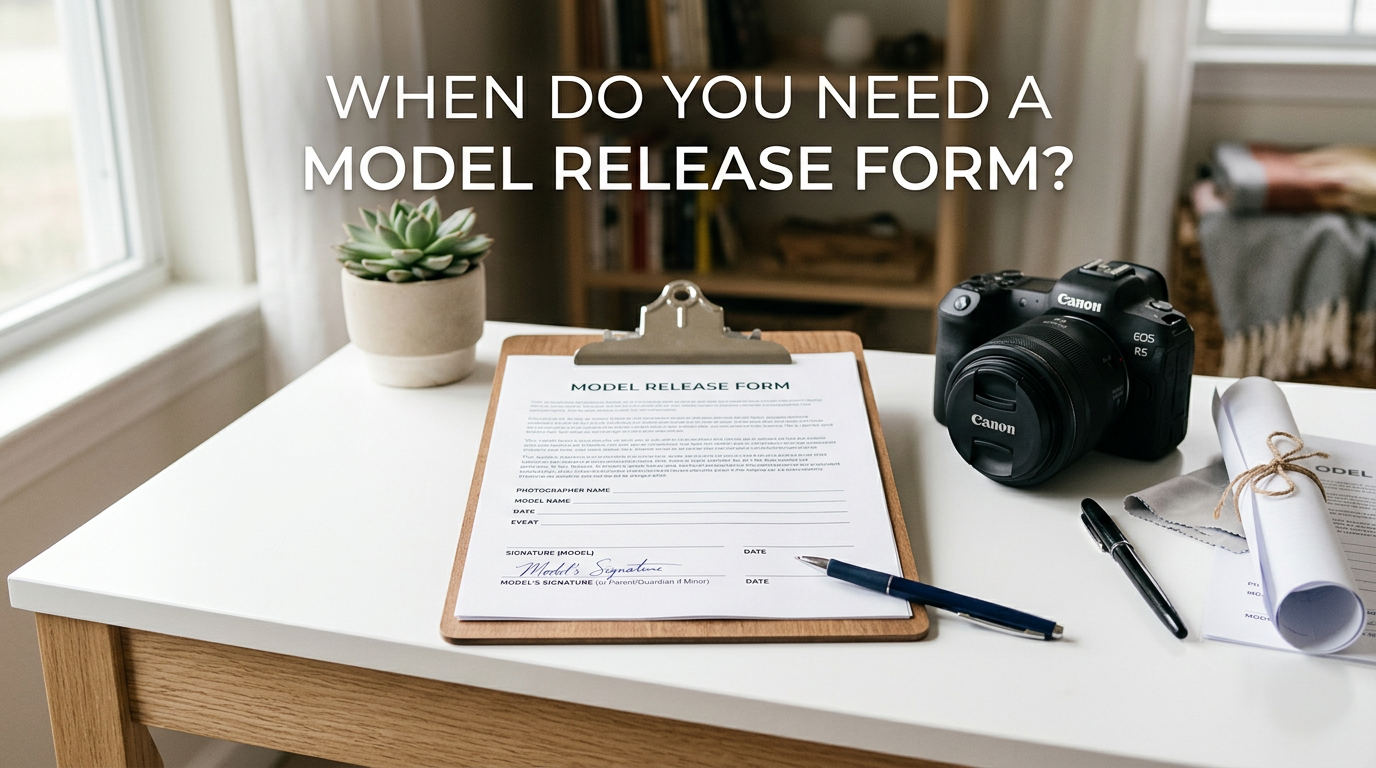
If you have ever stood in front of someone with your camera and wondered whether you need them to sign something before pressing the shutter, you are not alone. This question crosses every photographer’s mind at some point, and getting it wrong can lead to serious legal headaches down the road.
A model release form in photography is a legal document that grants you written permission to use photographs of recognizable people for commercial purposes. This simple piece of paper protects both you and your subjects by establishing clear expectations about how images will be used, where they will appear, and for how long.
In this guide, we will cover exactly when you need a model release form and what it should include. You will learn the difference between commercial and editorial use, what to do when clients refuse to sign, and special considerations for photographing minors. By the end, you will have the knowledge to protect yourself and your photography business legally.
Table of Contents
- What Is a Model Release Form in Photography
- When You Need a Model Release Form
- Commercial vs Editorial Use Explained
- When You Don’t Need a Model Release Form
- What Should a Model Release Form Include
- Special Considerations: Minors, Public Places, and Client Refusals
- Frequently Asked Questions About Model Release Forms
- Conclusion
What Is a Model Release Form in Photography
A model release form is a binding legal agreement between a photographer and the person appearing in their photographs. It documents that the subject has given informed consent for their likeness to be used in specific ways. Without this document, you risk lawsuits claiming invasion of privacy, misappropriation of likeness, or unauthorized use of image.
The form serves two critical purposes. First, it protects photographers from legal action by establishing that consent was obtained. Second, it protects subjects by clearly defining exactly how their image will be used. A well-drafted release creates transparency and prevents misunderstandings that could damage professional relationships.
Yes, model release forms are legally binding when properly executed. For a release to hold up in court, it must be signed voluntarily by someone who understands what they are agreeing to. The language should be clear and not misleading. Both parties should receive a copy of the signed agreement.
Who needs model release forms? Professional photographers who plan to use images for commercial purposes including advertising, marketing materials, stock photography, portfolio display, or social media promotion all need releases. Hobbyists sharing photos only with friends and family typically do not need them. Commercial photographers working with brands, agencies, or stock libraries absolutely require releases for any recognizable subjects.
When You Need a Model Release Form
The general rule is straightforward: you need a model release whenever you plan to use photographs of recognizable people for commercial purposes. But what exactly counts as commercial use? Let me break this down into specific scenarios.
Advertising and Marketing Materials: Any image used to promote a product, service, or brand requires a release. This includes print advertisements, online ads, brochures, flyers, and promotional videos. If the image is being used to sell something, you need permission from everyone identifiable in the shot.
Stock Photography: All major stock agencies require model releases for images featuring recognizable people. Adobe Stock, Shutterstock, Getty Images, and iStock will reject submissions without proper releases. These agencies have specific requirements for release format and content, so check their guidelines carefully.
Social Media Promotion: Using photos on your business Instagram, Facebook page, or LinkedIn profile to promote your photography services counts as commercial use. Even if you are not directly selling a product, using someone’s image to build your brand or attract clients requires their consent.
Portfolio and Website Display: This is where many photographers get confused. Using client photos on your professional website to showcase your work and attract new business is generally considered commercial use. You need a release unless you have explicitly agreed otherwise with your client.
Competitions and Exhibitions: Photography competitions often require model releases for submissions featuring recognizable people. Public exhibitions that charge admission or promote the photographer’s work also typically require releases. Always check competition rules and exhibition terms carefully.
Product Endorsements: Any image that suggests a person endorses, uses, or recommends a product absolutely requires a release. This applies even if the endorsement is implied rather than explicit. The risk of confusion is enough to create legal liability.
Corporate and Commercial Assignments: When photographing for businesses, whether headshots, event coverage, or workplace imagery, get releases signed. Corporate clients often require proof of releases before using images in their own marketing.
Commercial vs Editorial Use Explained
Understanding the difference between commercial and editorial use is essential for knowing when releases are required. This distinction trips up many photographers, so let me make it crystal clear.
Commercial use means using an image to sell, promote, or advertise something. The image has monetary value because it helps generate revenue or build brand recognition. Advertising, marketing materials, product packaging, and promotional social media posts all fall under commercial use.
Editorial use means using an image to inform, educate, or tell a news story. The image serves a journalistic purpose rather than a promotional one. Newspaper articles, magazine features, blog posts about current events, and documentary projects typically qualify as editorial use.
Here is a practical comparison to help you remember:
- Commercial: An ad campaign for a fitness brand featuring a model exercising
- Editorial: A news article about gym culture with photos of people working out
- Commercial: A restaurant website using customer photos to promote the business
- Editorial: A food blog reviewing restaurants with photos of the dining experience
- Commercial: A stock photo site selling images for advertisers to use
- Editorial: A magazine article about photography trends featuring example images
The line can blur, especially with social media. When in doubt, get a release. The protection is worth the small effort of having someone sign a form.
When You Don’t Need a Model Release Form
Not every photograph requires a release. Understanding when you can skip this step saves time and avoids unnecessary paperwork. However, these exceptions come with caveats you should understand.
Editorial and News Photography: Journalistic uses generally do not require releases. If you are documenting newsworthy events, public figures in public spaces, or creating educational content, releases are typically not needed. This protection supports freedom of the press and public interest reporting.
Public Place Photography: In most jurisdictions, you can photograph people in public spaces without their permission. Streets, parks, beaches, and other publicly accessible areas are generally fair game. However, this does not automatically grant you the right to use those images commercially.
Here is the critical distinction: taking the photo and using the photo are different things legally. You can photograph someone walking down a public street. But if you want to use that image in an advertisement or on your business website, you still need a release.
Personal Use: Photos shared only with friends and family, kept in personal albums, or used purely for non-commercial purposes typically do not require releases. The key is that you are not using the images to generate income or promote a business.
Artistic Expression: Fine art photography displayed in galleries as artistic works often enjoys more flexibility. However, this is a gray area that varies by jurisdiction. Some courts have ruled that even fine art use requires consent when the subject is clearly identifiable.
Caution: These exceptions have limits. A person photographed in public may still have claims if the image is used in a misleading way, suggests endorsement, or causes reputational harm. When in doubt, err on the side of getting permission.
What Should a Model Release Form Include
A properly drafted model release form protects everyone involved. While you can find templates online, understanding what each element does helps you choose or create the right document for your needs. Here are the essential components every release should contain.
Names and Contact Information: Include full legal names of both the photographer and the model. Add addresses, phone numbers, and email addresses for both parties. This information establishes who agreed to what and provides contact details if questions arise later.
Description of the Photo Shoot: Specify the date, location, and general nature of the photography session. A brief description like “portrait session at Central Park on March 15, 2026” helps identify which images the release covers. Some photographers attach thumbnail images or reference file numbers.
Usage Rights Granted: Clearly state what the model is allowing. This includes where images may appear (websites, print, social media, advertising), in what context (commercial, editorial, portfolio), and whether rights are exclusive or non-exclusive. Vague language here causes problems later.
Duration and Geographic Scope: Specify how long the release lasts. Most releases are perpetual, meaning they never expire, but you can limit this if needed. Also state whether permission is worldwide or limited to specific regions or countries.
Compensation Details: Document what the model receives in exchange for signing. This might be payment, prints, digital files, or simply the photography services themselves. Even if no money changes hands, stating that consideration was provided strengthens the agreement.
Signature and Date: Both parties must sign and date the document. For minors, a parent or legal guardian must sign. Signatures should be witnessed or notarized for additional legal protection, especially for high-value commercial work.
Withdrawal or Revocation Clause: Some releases include language about whether and how consent can be withdrawn. While perpetual releases generally cannot be revoked, addressing this upfront builds trust with subjects and prevents misunderstandings.
Additional Clauses to Consider: Many photographers include indemnification language protecting them from claims arising from how third parties use images. Others add clauses about digital manipulation, retouching limits, or approval rights for specific uses.
Keep your release form to one page if possible. Photographers in forums consistently report that shorter, simpler forms are more likely to be signed without pushback. Clear language beats legal jargon every time.
Special Considerations: Minors, Public Places, and Client Refusals
Some situations require extra attention when it comes to model releases. Here is how to handle the most common special cases.
Photographing Minors: You absolutely need parental consent for photographs of children under 18. A minor cannot legally sign a binding contract, so their signature alone is worthless. The release must be signed by a parent or legal guardian. Include the child’s name and age on the form alongside the parent’s information.
Many photographers use separate minor model release forms that clearly identify the parent-child relationship. Some include space for both parents to sign, which provides additional protection in custody situations.
Public Place Photography: Photographing in public creates unique challenges. You may capture dozens of recognizable people in a busy street scene. Getting releases from everyone is impractical. The solution depends on your intended use.
For editorial use, releases are typically not needed for people captured incidentally in public spaces. For commercial use, consider whether subjects are truly identifiable. A crowd shot where no individual is clearly featured poses less risk than a close-up portrait. Some photographers blur faces or crop images to reduce identifiability when releases are not available.
When Clients Refuse to Sign: This happens more often than you might expect. Some clients are private people who do not want their images shared. Others have professional or personal reasons for avoiding publicity.
Experienced photographers handle refusals in several ways. First, explain why you need the release and how images will be used. Often, clients imagine worst-case scenarios that are not part of your plans. Second, offer a modified release that limits usage to specific purposes they are comfortable with. Third, consider charging a privacy fee for clients who want images kept private. Many photographers charge 10-25% of the package price for this service. Fourth, include a privacy clause in your standard contract that gives you limited usage rights without a separate release.
International Considerations: Model release laws vary by country. What works in the United States may not protect you in European countries with stricter privacy laws. If you work internationally or license images globally, research the specific requirements for each jurisdiction or consult with a local attorney.
Frequently Asked Questions About Model Release Forms
When to use a model release form?
Use a model release form whenever you photograph a recognizable person for commercial purposes including advertising, marketing materials, stock photography, social media promotion, portfolio display, or product endorsements. If the image will be used to generate income or promote a business, you need a release.
What should be included in a model release?
A model release should include names and contact information of both parties, description of the photo shoot, specific usage rights granted, duration and geographic scope, compensation details, signatures and dates from all parties, and optionally witness signatures. For minors, parental consent is required.
Are model release forms legally binding?
Yes, model release forms are legally binding when properly executed. The release must be signed voluntarily by someone who understands what they are agreeing to, with clear language that is not misleading. Both parties should receive copies of the signed agreement.
Do you need a model release for street photography?
For editorial street photography used in news or documentary contexts, releases are typically not required. However, if you plan to use street photographs for commercial purposes like advertising, stock photography, or business promotion, you should obtain releases from recognizable subjects.
Do you need a model release for minors?
Yes, photographing minors absolutely requires parental consent. A minor cannot legally sign a binding contract, so a parent or legal guardian must sign the release on their behalf. Include the child’s name and age on the form along with the parent’s information.
Conclusion
Understanding when you need a model release form and what it should include is essential knowledge for any photographer working with people. The basic principle is simple: get written permission before using recognizable images of people for commercial purposes. This protects you from legal liability and builds trust with your subjects.
Remember the key distinctions we covered. Commercial use requires releases while editorial use typically does not. Minors always require parental consent. Public photography is allowed, but commercial use of those images still needs permission. Keep your release forms clear, concise, and comprehensive.
Make model releases part of your standard workflow. Include release clauses in your contracts, bring forms to every shoot, and address the topic early in client conversations. The photographers who never have release problems are the ones who make permissions a routine part of their process.
When you know when you need a model release form and what it should include, you can focus on creating great images instead of worrying about legal issues. Your future self will thank you for the protection these simple documents provide.