
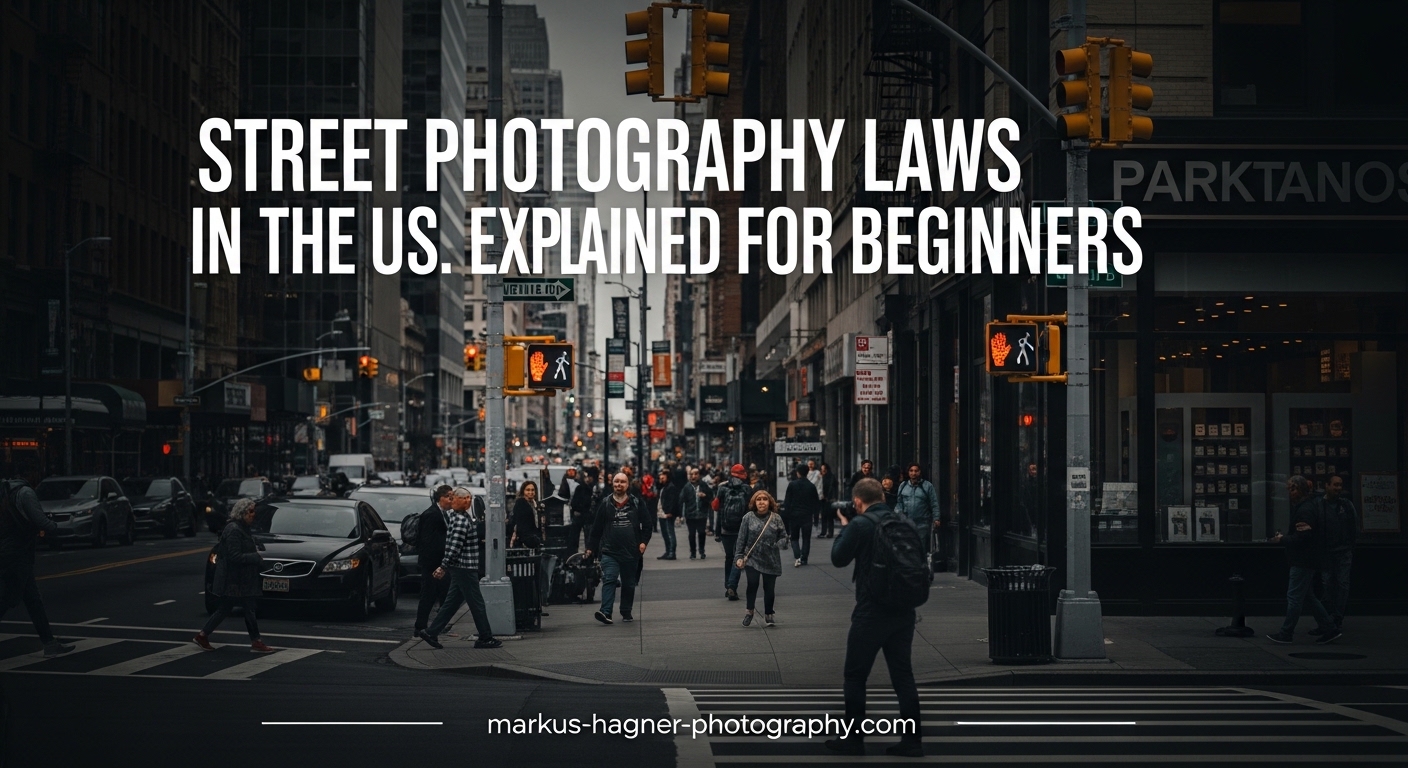
Taking photos of people in public places might feel uncomfortable at first, but here is the good news: street photography is completely legal in the United States. The First Amendment protects your right to photograph anything visible from a public space, including people going about their daily lives. This guide will walk you through everything you need to know about street photography laws in the US so you can shoot with confidence.
I have spent years photographing on streets across America, and I have had my share of awkward moments and confrontations. What I learned is that knowing your legal rights gives you confidence, but understanding the ethical boundaries makes you a better photographer. This article covers both.
Street photography laws in the US are actually quite photographer-friendly compared to many other countries. You have broad rights to capture images in public spaces. However, there are important distinctions between what is legal, what is ethical, and what might get you into an uncomfortable situation even when you are technically in the right.
In this guide, I will explain the legal framework that protects street photographers, break down where you can and cannot photograph, clarify when model releases are needed, and share practical advice for handling confrontations. By the end, you will have a complete understanding of your rights and responsibilities as a street photographer.
Is Street Photography Legal in the US? The Basic Legal Framework
Yes, street photography is legal throughout the United States. The First Amendment protects photography as a form of free speech and free press, giving you the right to capture images in public spaces. This fundamental protection applies whether you are in New York City, Los Angeles, Chicago, or a small town in between.
Street photography involves capturing candid images of people, places, and moments in public spaces. The key legal principle is simple: if you can see it from a place where you have a right to be, you can generally photograph it. This includes people walking down the street, buildings, street scenes, and public events.
The Supreme Court has repeatedly affirmed that photography receives First Amendment protection. While there is no single Supreme Court case specifically about street photography, multiple rulings have established that visual expression deserves the same constitutional protection as written or spoken expression.
Most photography laws are federal, which means they apply consistently across all 50 states. However, some states have additional laws regarding voyeurism, harassment, or commercial use that can affect photographers. The good news is that these state laws typically align with the federal framework.
One important distinction: this article focuses on US law. If you travel internationally with your camera, the rules change dramatically. Countries like France, Germany, and Japan have much stricter privacy laws that limit street photography significantly.
Understanding Reasonable Expectation of Privacy
The concept of “reasonable expectation of privacy” is the foundation of photography law in the US. It determines when someone has a legal right to not be photographed. Understanding this concept will answer most questions about what you can and cannot shoot.
A reasonable expectation of privacy exists in places where a person would reasonably believe they are private and not being observed. This includes bathrooms, locker rooms, bedrooms, hotel rooms, and inside private homes. Photographing people in these spaces without their consent is illegal and can result in serious criminal charges.
Public spaces are the opposite. When people step onto a public street, enter a park, or walk through a public plaza, they have no reasonable expectation of privacy. Anyone could see them, so anyone can photograph them. This applies even if the person would prefer not to be photographed.
The distinction often comes down to whether the location is generally accessible to the public. A person sitting in their living room has privacy, but that same person visible through a large window from the public sidewalk can technically be photographed because they are visible from a public space.
Here is where ethics come into play. Just because you can legally photograph someone through their window does not mean you should. Most experienced street photographers avoid situations that feel invasive, even when technically legal. I personally steer clear of photographing people in situations where they might feel vulnerable or exposed.
The reasonable expectation of privacy also applies to situations, not just locations. Even in public, certain activities might create privacy expectations. For example, a couple having a private conversation on a park bench might feel violated if photographed, even though it is legal. Again, legal does not always mean ethical.
Public Spaces: What You Can Photograph
Public spaces offer photographers the most freedom. Streets, sidewalks, public parks, plazas, and beaches are all fair game for photography. You can photograph people, buildings, monuments, and anything else visible from these areas without needing permission.
Public streets and sidewalks are your playground as a street photographer. You can photograph pedestrians, street performers, vendors, traffic, and storefronts. You can capture people eating at outdoor cafes, waiting for buses, or simply walking to work. All of this is protected by your First Amendment rights.
Public parks work the same way. Whether it is a small neighborhood green space or a massive national park, you can photograph freely. The same goes for public beaches, public squares, and government-owned land that is open to the public.
Public buildings and monuments can be photographed from public property. You can capture images of city halls, courthouses, libraries, and government office buildings. However, actually entering these buildings may involve security screening and different rules about photography inside.
Some restrictions can apply even in public spaces. You cannot block traffic, interfere with emergency responders, or create a safety hazard while photographing. Setting up a tripod in the middle of a busy sidewalk is problematic not because of photography restrictions but because you are obstructing pedestrian flow.
Transit systems like subways and buses occupy a gray area. They are publicly owned but have specific rules about photography. Most transit authorities allow casual photography, but commercial shoots or extensive setups may require permits. Check the specific rules for your local transit system.
Private Property: Where Rules Change
Private property changes everything. Property owners have the right to control what happens on their land, including whether photography is allowed. This is true even for private property that is open to the public, like shopping malls, stores, and restaurants.
Shopping malls are the most common source of confusion. A mall feels public because anyone can walk in, but it is privately owned. Mall security can ask you to stop photographing and can legally ask you to leave if you refuse. If you refuse to leave when asked, you could be charged with trespassing.
Stores, restaurants, coffee shops, and bars operate the same way. The owner or manager sets the photography policy. Many businesses allow casual photography, but some prohibit it. Always respect requests to stop photographing on private property.
Museums and galleries are also private property (or privately operated) and often have strict no-photography policies. Some allow photography without flash, others prohibit it entirely. Check posted rules or ask staff before photographing.
Private events on public property add another layer of complexity. A street fair or festival might be held on public streets but organized by a private entity. The organizers may have obtained permits that give them some control over commercial photography, though casual photography is usually still permitted.
The key takeaway: on private property, the property owner makes the rules. You have no First Amendment right to photograph on private property because the First Amendment restricts government action, not private property owners. When in doubt, ask permission or stick to public spaces.
If a property owner or security guard asks you to stop photographing on private property, comply politely. You can always step onto the public sidewalk and photograph from there. Anything visible from public space is fair game, even if it is on private property.
Model Releases: When You Need Them and When You Don’t
One of the most common questions about street photography laws in the US involves model releases. The general rule is simple: you do not need a model release for street photography taken in public places. However, how you use the photograph matters enormously.
A model release is a signed document giving you permission to use someone’s likeness for specific purposes, usually commercial. For editorial and artistic uses, model releases are generally not required for photos taken in public spaces.
Editorial use includes news reporting, journalism, documentaries, and educational content. If you photograph a street scene and it gets published in a newspaper, magazine article, or blog post, no model release is needed. The people in your photo have no legal claim against you.
Fine art photography also typically does not require model releases. If you sell prints of your street photography in a gallery or online as art, you are generally protected. Courts have consistently held that artistic expression does not require subject permission.
Commercial use is where model releases become essential. Commercial use means using someone’s image to sell a product or service, or to imply endorsement. If a company wants to use your street photo in an advertisement, on product packaging, or in promotional materials, they need releases from recognizable people.
Social media creates a gray area. Posting street photography on your personal Instagram or photography portfolio is generally considered editorial or artistic use. But if you are being paid to promote products in your posts, that becomes commercial use requiring releases.
Stock photography platforms have their own rules. Most stock agencies require model releases for any recognizable faces, regardless of the legal requirement. This is their policy, not law, but it affects what you can submit to them.
Commercial vs Editorial vs Artistic Use Explained
Understanding the difference between commercial, editorial, and artistic use will answer most questions about when you need permission. Let me break down each category with clear examples.
Commercial use involves using an image to sell something or imply endorsement. Examples include advertisements, product packaging, marketing materials, and sponsored social media posts. If a brand pays to use your street photo in their ad campaign, that is clearly commercial use requiring a model release.
Editorial use covers journalism, news, education, and commentary. Newspaper articles, magazine stories, blog posts about current events, and documentary films all fall under editorial use. No model release is required for editorial use of images taken in public spaces.
Artistic use includes fine art prints, gallery exhibitions, photography books, and portfolios. Selling your street photography as art is protected expression. The people in your photos cannot sue you for selling prints of images taken in public places.
Here is where it gets tricky: the line between commercial and editorial can blur. A photo used in a corporate annual report might look editorial but could be considered commercial if it promotes the company. When in doubt, consult a media lawyer.
Social media complicates things further. If you post street photos on your personal account, that is usually editorial or artistic. But influencers promoting products need to treat their content as commercial and obtain appropriate releases.
Photographing Children: Special Considerations
Photographing children in public spaces is legal under the same framework as photographing adults. There is no special law prohibiting photography of children in public places. However, this area requires extra sensitivity and ethical consideration.
Legally, children in public spaces have no greater expectation of privacy than adults. You can photograph kids playing in parks, walking with parents, or participating in public events. The First Amendment does not distinguish between adult and child subjects.
Ethically, many photographers choose to be more cautious with images of children. Parents are naturally protective, and photographing strangers’ children can provoke strong reactions. Some photographers avoid including recognizable children in their work entirely.
If a parent asks you to delete a photo of their child, you are not legally required to comply. However, most experienced photographers recommend respecting such requests as a matter of ethics and avoiding conflict. Is keeping the photo worth the confrontation?
Some situations involving children should be avoided entirely. Never photograph children in ways that could be construed as sexual or inappropriate. Even if technically legal, such images cross ethical boundaries and could attract law enforcement attention.
Schools, playgrounds, and day care centers present additional considerations. While public playgrounds are fair game, photographing extensively at these locations may raise suspicions. Exercise extra caution and consider whether the photograph is truly necessary.
Photographing Law Enforcement and Government Buildings
You have the right to photograph police officers and other law enforcement in public spaces. Multiple court decisions have affirmed that recording police activity is protected by the First Amendment, as long as you do not interfere with their work.
However, police sometimes are not aware of or do not respect these rights. You might be told to stop recording or asked for identification. Stay calm, be polite, and know that you are within your rights. Do not physically resist if an officer tries to take your camera, but clearly state that you do not consent.
Photographing certain federal buildings from the outside is generally legal. However, some facilities have specific restrictions. Military bases, nuclear facilities, and certain sensitive government installations may have security restrictions on photography.
If you are stopped by law enforcement while photographing, remain calm and cooperative while asserting your rights. You can politely explain that you are exercising your First Amendment rights and ask if you are free to go. If you are not being detained, you can leave.
Never physically resist law enforcement, even if they are wrong. You can challenge illegal actions later through proper channels. Your safety is more important than winning an argument on the street.
Dealing with Confrontations: A Step-by-Step Guide
Even when you know your rights, confrontations happen. Someone might object to being photographed, a security guard might overstep their authority, or a bystander might challenge you. Here is how to handle these situations.
First, stay calm. Getting defensive or angry escalates the situation. Take a breath and remember that you are legally in the right. Your calm demeanor can defuse tension.
Listen to what the person is saying. Often, people just want to be heard. Acknowledge their concerns without admitting wrongdoing. You might say, “I understand you are uncomfortable, and I appreciate you telling me.”
Explain what you are doing in simple terms. “I am a street photographer documenting public life. Street photography is legal in public spaces, and I am not doing anything wrong.” You do not need to justify your art, but a brief explanation can help.
Know when to stand your ground and when to walk away. If you are on public property and acting within your rights, you can choose to continue photographing. But sometimes walking away is the better choice, even when you are right.
If someone demands you delete a photo, know your options. You are not legally required to delete images taken legally in public spaces. However, if the confrontation is escalating, consider whether the photo is worth the conflict. Many experienced photographers carry “photographer’s rights” cards that summarize the relevant laws.
Document confrontations if they escalate. If you feel threatened, you can use your phone to record audio or video. This provides evidence if the situation turns legal. However, do not use recording as a weapon to escalate the confrontation.
If security guards or police illegally detain you or confiscate equipment, do not resist physically. Get names and badge numbers, document everything you can, and contact a lawyer afterward. Your rights can be enforced through legal channels after the fact.
Ethics vs Legality: The Unwritten Rules
Street photography laws in the US give you broad rights, but legality is only part of the picture. Ethics matter too, and the best street photographers understand the difference between what they can do and what they should do.
Just because you can photograph someone does not always mean you should. Consider how you would feel if a stranger photographed you in an unflattering moment. Empathy for your subjects makes you a better photographer and a better person.
Some street photographers follow a personal code that goes beyond legal requirements. They might avoid photographing people who appear distressed, avoid homeless individuals in dehumanizing ways, or skip shots that could embarrass their subjects.
The question of whether to ask permission divides the street photography community. Asking can create more positive interactions and might get you better photos. But it also destroys the candid nature that defines the genre. There is no right answer, and many photographers do both depending on the situation.
Respect goes a long way. If someone asks you not to photograph them, consider honoring that request even if you are not legally required to. Building goodwill benefits all street photographers.
Social media has added a new ethical dimension. Before posting, consider how the people in your images might feel about appearing online. Would you want a stranger to post an unflattering photo of you for the world to see?
The best street photographers balance their legal rights with human decency. They create meaningful work that respects both the law and the people they photograph. That balance is what separates great street photography from mere surveillance.
Frequently Asked Questions
Is street photography legal in the US?
Yes, street photography is completely legal in the United States. The First Amendment protects photography as a form of free expression, allowing you to photograph anything visible from public spaces where people have no reasonable expectation of privacy.
What are the rules of street photography?
The main rules are: photograph only from public spaces, respect private property restrictions, understand the difference between editorial and commercial use, and obtain model releases only for commercial applications. Ethics matter too: treat subjects with respect and consider whether a photo is worth taking even when legal.
Is it illegal to take photos of people on the street?
No, it is not illegal to photograph people in public spaces like streets, parks, and sidewalks. People in these locations have no reasonable expectation of privacy, so you can photograph them without permission. However, you cannot photograph people in places where they expect privacy, such as bathrooms or inside their homes.
Do I need a model release for street photography?
Generally, no. Model releases are not required for street photography used editorially (news, journalism, blogs) or artistically (fine art prints, gallery shows). You only need model releases when images are used commercially, such as in advertisements or product endorsements.
Can I sell street photography without permission?
Yes, you can sell street photography as fine art prints or for editorial use without model releases. However, if you want to license images for commercial advertising or product endorsement, you need permission from recognizable subjects. Stock photography platforms often require releases as their own policy.
Can security guards make me delete my photos?
No, security guards cannot legally force you to delete photos taken from public property. On private property, they can ask you to stop photographing and leave, but they still cannot force you to delete images. Only law enforcement with a warrant can legally require deletion of photographs.
Conclusion: Know Your Rights, Shoot with Confidence
Street photography laws in the US give you remarkable freedom to document public life. You can photograph people in streets, parks, and public spaces without permission. You can sell your work as art, publish it editorially, and share it online. These rights are protected by the First Amendment.
Understanding these laws eliminates anxiety and lets you focus on your craft. When you know what is legal, you can shoot with confidence instead of fear. You will also be better prepared to handle confrontations calmly and assertively.
Remember that your legal rights come with ethical responsibilities. The best street photographers balance their freedom with respect for their subjects. They capture authentic moments while treating people with dignity.
Now grab your camera and hit the streets. The public world is yours to document, legally and creatively. Street photography is not just legal in the US; it is a protected form of expression that captures the human experience in all its complexity.