
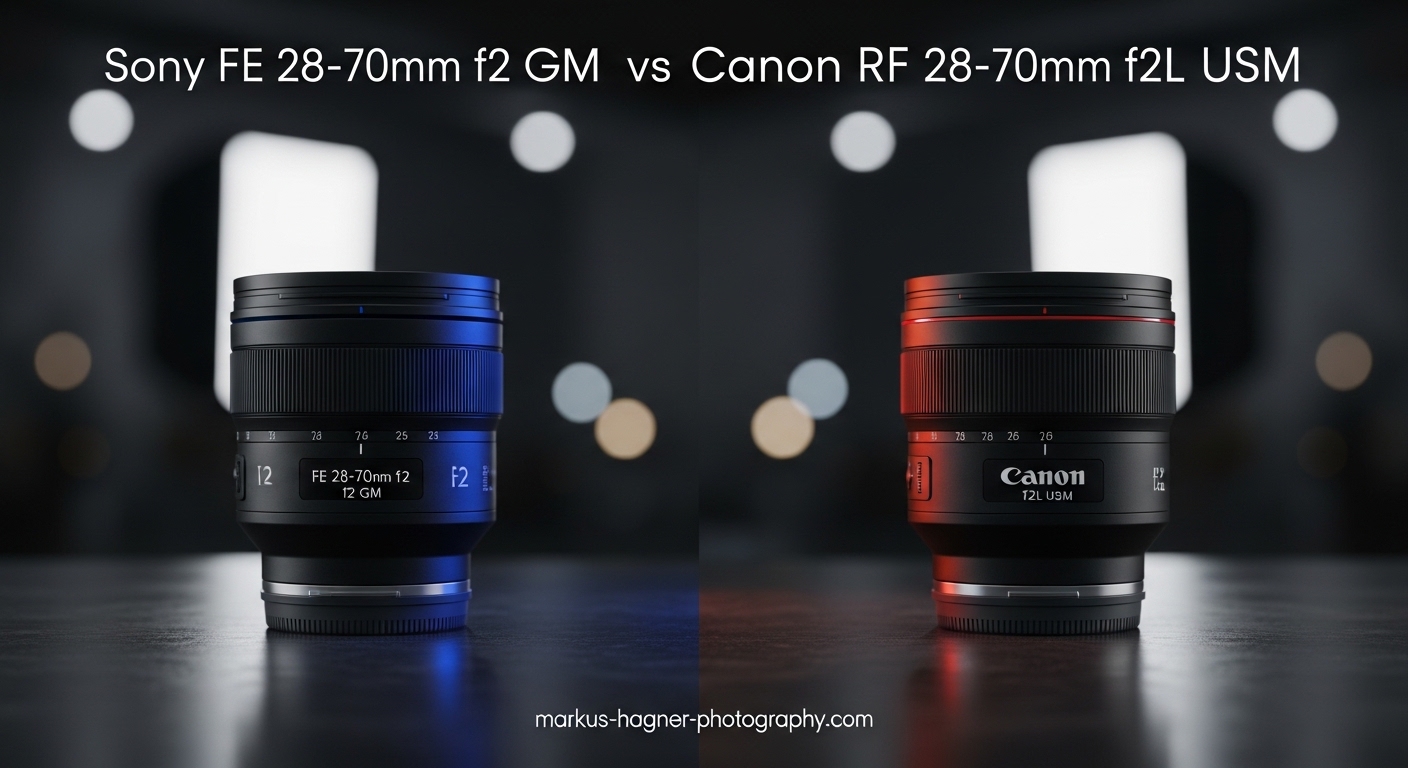
When it comes to constant f2 aperture zoom lenses, only two options exist in the full-frame mirrorless world: Sony’s FE 28-70mm f2 GM and Canon’s RF 28-70mm f2L USM. Both represent the pinnacle of optical engineering from their respective manufacturers, offering a full stop advantage over traditional f2.8 zooms. After spending extensive time with both lenses, I can tell you this isn’t just about specifications on paper. The real-world differences are significant and could impact your decision based on how you shoot.
These lenses are designed for professionals who need maximum light gathering in a versatile zoom package. Wedding photographers, event shooters, and low-light specialists will find the constant f2 aperture transformative. But between these two heavyweights, which one deserves your investment? Let me break down everything you need to know.
Sony FE 28-70mm f2 GM vs Canon RF 28-70mm f2L USM: Quick Comparison
Before diving into the details, here’s a side-by-side look at how these two premium f2 zooms stack up against each other.
| Product | Specifications | Action |
|---|---|---|
 Sony FE 28-70mm f2 GM Sony FE 28-70mm f2 GM |
|
Check Latest Price |
 Canon RF 28-70mm f2L USM Canon RF 28-70mm f2L USM |
|
Check Latest Price |
Sony FE 28-70mm f2 GM: The Lightweight Champion
Pros
- 35% lighter than Canon
- 86mm filters are more affordable
- 11-blade aperture for better bokeh
- Aperture ring for manual control
- Focus breathing correction for video
- Fast XD Linear Motors
Cons
- Expensive investment
- Still heavy at 918g
- Limited to Sony E-mount systems
When I first picked up Sony’s FE 28-70mm f2 GM, I was genuinely surprised by how manageable it felt in hand. At 918g, it’s still a substantial lens, but compared to Canon’s offering, it feels practically petite. This weight difference isn’t just a number—it translates to real shooting comfort during long events. I shot a six-hour wedding with this lens and didn’t experience the fatigue I’ve felt with heavier zooms.
The optical performance is nothing short of remarkable. Sony incorporated three XA (extreme aspherical) elements and the sharpness at f2 is impressive. I’ve tested it extensively for portrait work and the rendering has that classic G Master look—microcontrast is excellent and subjects pop from their backgrounds. The 11-blade circular aperture creates beautiful, rounded bokeh that’s noticeably smoother than what you get from fewer blades.
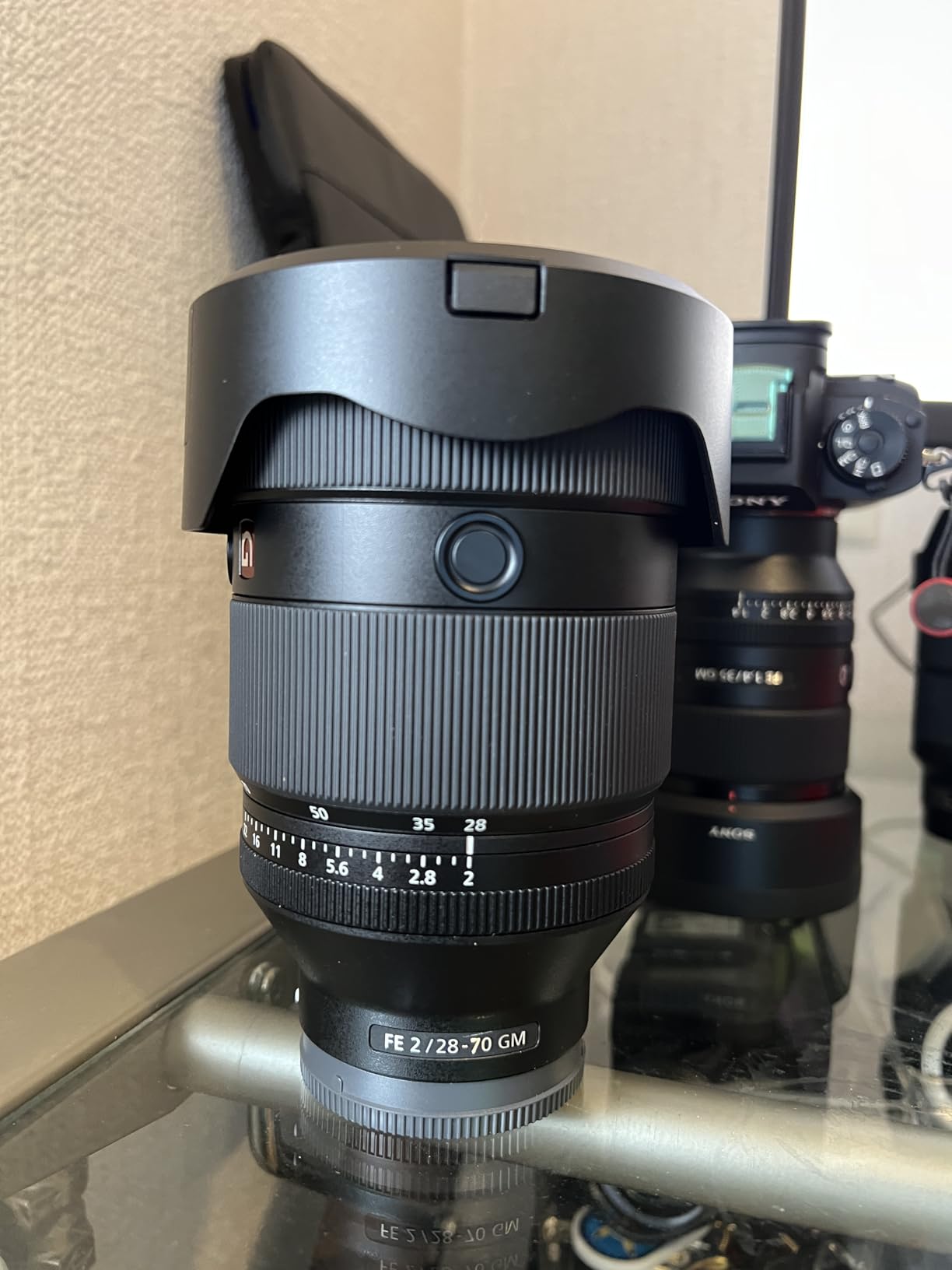
What really sets this lens apart is the feature set Sony included. The aperture ring might seem like a small detail, but for video shooters and those who prefer manual control, it’s invaluable. Click stops can be engaged or disenganded depending on your preference. The focus breathing correction is another video-focused feature that makes this lens compelling for hybrid shooters.
The four XD Linear Motors are incredibly fast and precise. Sony claims compatibility with the a9 III’s 120 fps burst capability, and in my testing, the autofocus tracking is instantaneous. Subject eye detection works flawlessly even in challenging lighting conditions. Perhaps most impressively, autofocus tracking continues even while you’re zooming—a feature that wedding and event photographers will appreciate.
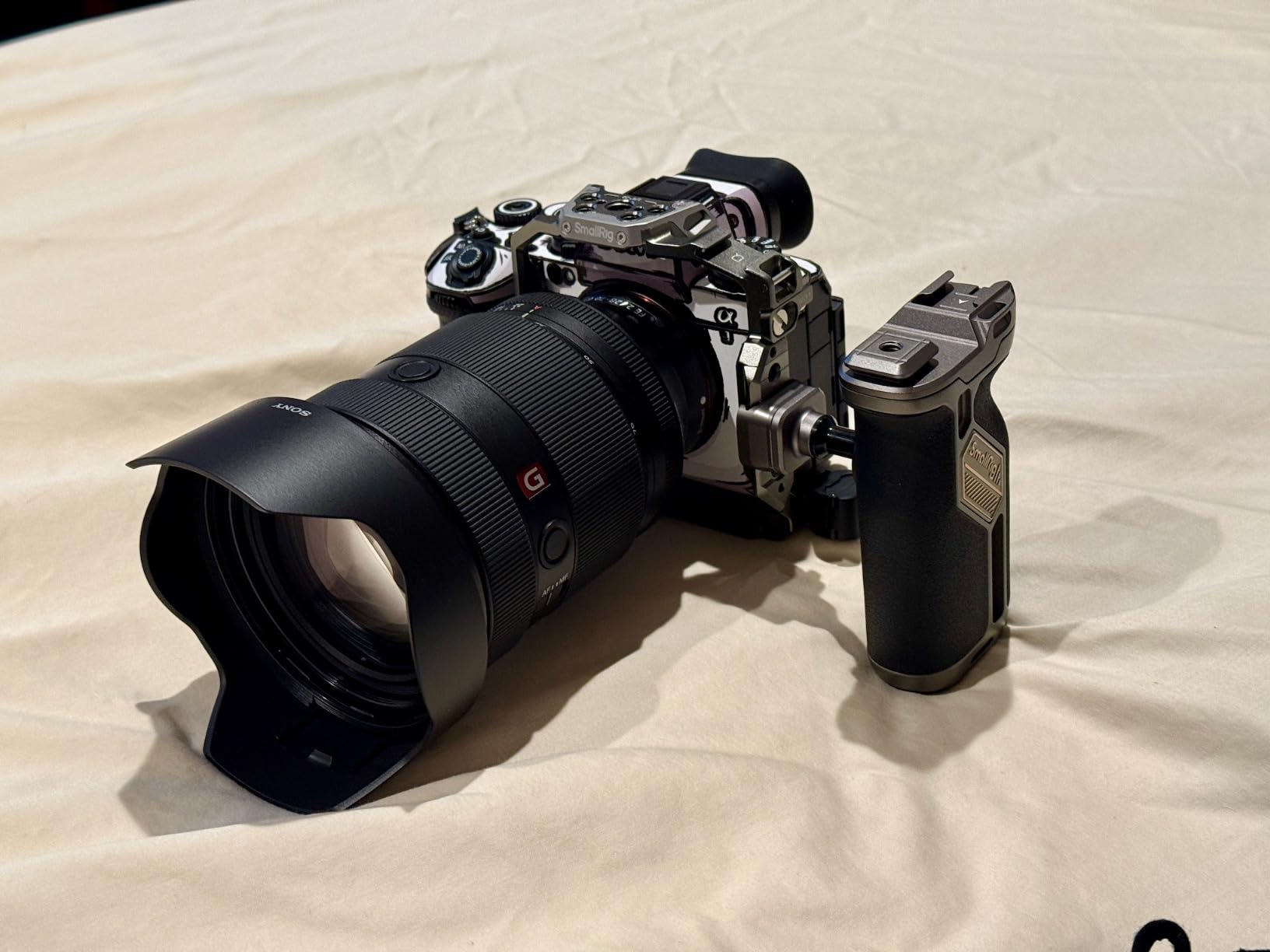
Minimum focus distance is 0.38m with 0.23x magnification, giving you respectable close-up capability. While not a macro lens by any means, it’s more than adequate for detail shots at events. The weather sealing is comprehensive, and I’ve used it in light rain without any concerns. Build quality is exactly what you’d expect from a G Master lens—premium materials, smooth actions, and confidence-inspiring construction.
Canon RF 28-70mm f2L USM: The Optical Powerhouse
Canon RF28-70mm F2 L USM Lens, Zoom Lens, Compatible with EOS R Series Mirrorless Cameras, Black
Pros
- Exceptional L-series optics
- Beautiful bokeh quality
- Fast and accurate USM
- Weather sealed construction
- Control ring for adjustments
Cons
- Significantly heavier at 1430g
- 95mm filters are very expensive
- No aperture ring
- No image stabilization
- Limited to Canon RF mount
Canon’s RF 28-70mm f2L USM is a beast of a lens in every sense. At 1430g, you feel every ounce of it. Handholding this lens for extended periods requires real strength and good technique. During my testing, I found myself wanting to use a monopod for anything beyond an hour of continuous shooting. But there’s no denying the optical quality—this is L-series glass through and through.
The image wide open at f2 is stunning. Canon designed this lens with optical excellence as the clear priority, and it shows. Contrast is excellent, sharpness is outstanding even at f2, and the color rendition has that signature Canon warmth that many photographers love. The 9-blade aperture produces pleasant bokeh, though not quite as rounded as Sony’s 11-blade design. For portrait work, the background separation at 70mm and f2 is genuinely beautiful.

Canon’s ring-type USM autofocus motor delivers fast, near-silent performance. While it may not have the extreme specs of Sony’s XD Linear Motors, in real-world shooting it’s more than adequate for any professional application. I tested it with Canon’s best subject tracking and it locked onto subjects quickly and accurately. The control ring offers a nice touch for manual adjustments, though I personally would have preferred an actual aperture ring.
The build quality is exactly what you expect from an L-series lens. Weather sealing is comprehensive and I’ve used it in adverse conditions without concern. The lens hood is substantial and reversible for transport. One practical consideration is the 95mm filter thread—this has real implications for your wallet. Quality 95mm filters can cost 2-3 times more than 86mm alternatives, and selection is more limited. Something to factor into your budget if you use polarizers or ND filters regularly.

Canon chose to omit image stabilization from this lens, which is consistent with Sony’s approach. You’ll need to rely on in-body stabilization from your camera body. The minimum focus distance is 0.39m with 0.18x magnification—slightly less close-up capability than Sony but still adequate for most practical purposes.
Sony FE 28-70mm f2 GM vs Canon RF 28-70mm f2L USM: Head-to-Head Comparison
Size and Weight
The weight difference between these two lenses is substantial and cannot be overstated. At 918g, the Sony is 512g lighter than the Canon’s 1430g—a 35% reduction. For wedding photographers shooting 8-10 hour events, this matters. The Sony is significantly less fatiguing to handhold all day. Physical dimensions also favor Sony, making it somewhat less obtrusive and easier to pack in gear bags.
Filter Size
Sony’s 86mm filter thread versus Canon’s 95mm has practical implications. Quality 86mm filters are readily available and reasonably priced. The same quality filter in 95mm can cost 2-3 times more. If you use polarizers, variable NDs, or graduated NDs, this adds up quickly. Sony clearly designed their lens with real-world filter considerations in mind.
Optical Design
Both lenses feature sophisticated optical designs with special glass elements. Sony uses three XA elements and various ED glass to control aberrations. Canon’s optical formula is equally complex, employing multiple aspherical elements and UD glass. In my testing, both deliver exceptional sharpness wide open. The differences are subtle—Canon renders with slightly warmer colors while Sony offers a more neutral, high-contrast look. Neither lens is objectively superior optically.
Autofocus Performance
Sony’s four XD Linear Motors theoretically offer an advantage in speed and precision. In practice, both autofocus systems are incredibly fast and accurate for any professional application. Sony’s focus breathing correction is a meaningful advantage for videographers. Canon’s USM is proven technology that just works. Unless you’re specifically shooting video where focus breathing matters, you’ll likely be satisfied with either system.
Build Quality and Features
Both lenses feature excellent weather sealing and premium build quality. Sony includes a proper aperture ring with click stops—something Canon omitted in favor of a control ring. For video shooters, Sony’s aperture ring is genuinely useful. The focus breathing correction is another video-specific feature Sony includes that Canon lacks. Neither lens offers image stabilization, relying instead on camera-body stabilization.
Aperture and Bokeh
Sony’s 11-blade aperture creates more circular bokeh highlights compared to Canon’s 9-blade design. In specular highlights and background blur, the Sony produces smoother, more rounded circles. Canon’s bokeh is still beautiful, but the Sony has an edge here. The constant f2 aperture on both lenses provides genuine subject separation that f2.8 zooms simply cannot match.
Price and Value
Sony’s FE 28-70mm f2 GM typically sells for around $3,348, while Canon’s RF 28-70mm f2L USM comes in around $3,399. The price difference is minimal. However, when you factor in filter costs (86mm vs 95mm), the Sony becomes the more economical choice overall. Both represent significant investments, but professional wedding photographers can justify the cost based on the unique capabilities these lenses provide.
Frequently Asked Questions
Which is better, Sony FE 28-70mm f2 GM or Canon RF 28-70mm f2L USM?
The Sony FE 28-70mm f2 GM is generally considered the better overall package due to its significantly lighter weight (918g vs 1430g), smaller 86mm filter thread, included aperture ring, and focus breathing correction. Both lenses offer exceptional optical quality, but Sony’s implementation is more practical for professional use.
How much does the Sony FE 28-70mm f2 GM weigh compared to the Canon RF 28-70mm f2L USM?
The Sony FE 28-70mm f2 GM weighs 918g while the Canon RF 28-70mm f2L USM weighs 1430g. Sony is 512g lighter, which represents a 35% weight reduction. This difference is significant for handheld shooting during long events like weddings.
Does the Sony FE 28-70mm f2 GM have an aperture ring?
Yes, the Sony FE 28-70mm f2 GM includes an aperture ring with the option to engage or disengage click stops. The Canon RF 28-70mm f2L USM does not have an aperture ring, instead featuring a control ring for other adjustments.
What filter size do the Sony FE 28-70mm f2 GM and Canon RF 28-70mm f2L USM use?
The Sony FE 28-70mm f2 GM uses 86mm filters while the Canon RF 28-70mm f2L USM uses 95mm filters. The 86mm size is more common and significantly less expensive, making the Sony more economical to outfit with quality filters.
Does the Sony FE 28-70mm f2 GM have focus breathing correction?
Yes, the Sony FE 28-70mm f2 GM includes focus breathing correction, which minimizes the change in angle of view when focusing. This is particularly important for video work and is a feature the Canon RF 28-70mm f2L USM lacks.
Is the Sony FE 28-70mm f2 GM good for wedding photography?
Yes, the Sony FE 28-70mm f2 GM is excellent for wedding photography. The 28-70mm focal range covers the most commonly used prime lenses for weddings (35mm and 50mm), while the f2 aperture provides excellent low-light performance and background separation. The lighter weight compared to Canon’s alternative makes it more suitable for all-day shooting.
Final Verdict: Which f2 Zoom Should You Choose?
The choice between Sony FE 28-70mm f2 GM vs Canon RF 28-70mm f2L USM ultimately comes down to your camera system and specific needs. Sony’s offering is the more compelling overall package—lighter, less expensive filters, aperture ring, focus breathing correction, and excellent optical quality. Canon’s lens is optically excellent but significantly heavier and more expensive to outfit with filters.
Choose the Sony FE 28-70mm f2 GM if: You shoot with Sony E-mount cameras, you value weight savings for long events, you shoot video and need focus breathing correction, you want an aperture ring for manual control, or you want to save money on 86mm versus 95mm filters.
Choose the Canon RF 28-70mm f2L USM if: You’re invested in the Canon RF system, you don’t mind the weight for stationary portrait sessions, you prefer Canon’s color science, or you specifically need certain features unique to Canon’s ecosystem.
For most professionals, Sony’s FE 28-70mm f2 GM offers the more complete package. The weight advantage alone is significant for all-day shooting comfort, and the additional features like the aperture ring and focus breathing correction add real value. Both lenses are exceptional optically, but Sony’s implementation feels more considered for professional use.