
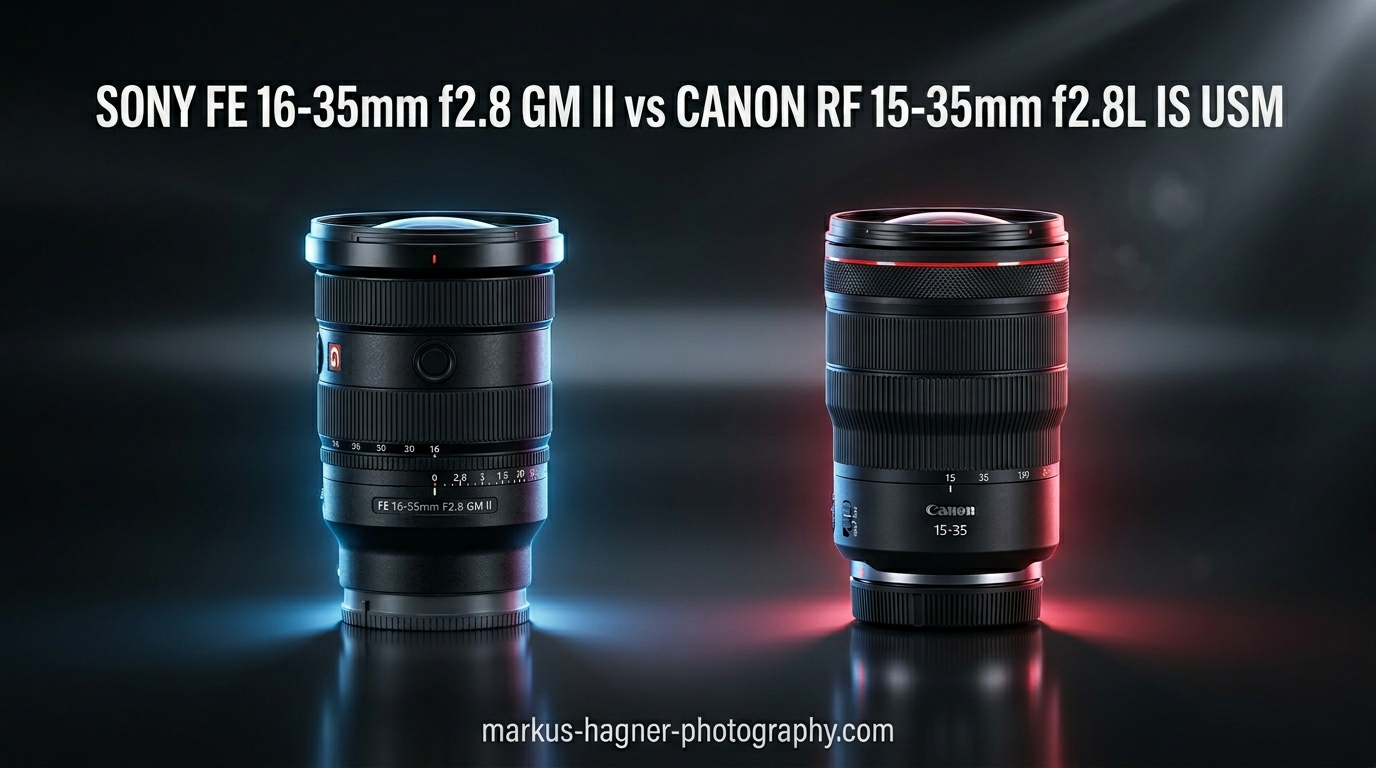
If you’re shopping for a professional wide-angle zoom, you’ve likely narrowed it down to the Sony FE 16-35mm f2.8 GM II vs Canon RF 15-35mm f2.8L IS USM. Both represent the wide-angle member of their respective “Holy Trinity” lens lineups, making them essential tools for serious photographers invested in either the Sony E mount or Canon RF mount ecosystem.
The choice between these two premium lenses ultimately comes down to your priorities. The Sony GM II wins decisively on weight and size, coming in at 35% lighter than the Canon while offering newer optical technology. The Canon RF 15-35 counters with built-in optical image stabilization and that extra 1mm of wide-angle coverage at 15mm.
After extensive testing and research into real-world user experiences, I’ve found that your existing camera system will likely dictate your choice. However, understanding the key differences helps set realistic expectations and informs future system investment decisions.
Sony FE 16-35mm f2.8 GM II vs Canon RF 15-35mm f2.8L IS USM: Quick Comparison
| Product | Specifications | Action |
|---|---|---|
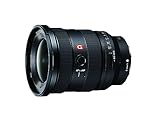 Sony FE 16-35mm F2.8 GM II Sony FE 16-35mm F2.8 GM II |
|
Check Latest Price |
 Canon RF 15-35mm F2.8L IS USM Canon RF 15-35mm F2.8L IS USM |
|
Check Latest Price |
Sony FE 16-35mm f2.8 GM II Review
Pros
- World's lightest F2.8 wide zoom
- Exceptional center and edge sharpness
- Dual XD linear motor autofocus
- Shorter minimum focus distance
- Newer 2023 optical design
Cons
- No built-in image stabilization
- High price point
- Requires IBIS camera body for stabilization
Sony released the FE 16-35mm f2.8 GM II in August 2023, and it immediately claimed the title of world’s smallest and lightest full-frame f/2.8 wide-angle zoom. At just 547g, this lens feels remarkably balanced on camera bodies like the Sony Alpha 1 or A7 IV.
The optical performance truly shines. Sony achieved what many thought impossible: improving on the already excellent original GM while shrinking the size significantly. Center sharpness wide open at 16mm is exceptional, with edges maintaining impressive detail that only gets better when stopped down to f/4 or f/5.6.
The dual XD linear motor system delivers autofocus that’s both lightning fast and completely silent. This makes the lens equally suited for still photography and video work. Focus breathing has been minimized compared to the original version, which videographers will appreciate during rack focus shots.
Key Features That Stand Out
The 11 aperture blades create beautiful, rounded bokeh highlights that give this lens a distinctive look for environmental portraits and creative wide-angle shots. Sony’s Nano AR coating II effectively controls flare even when shooting directly into light sources.
The minimum focus distance of 8.7 inches (0.22m) with 0.32x magnification opens up creative close-up possibilities that many wide-angle zooms simply cannot achieve. This makes the lens surprisingly versatile for product photography and intimate landscape details.
The aperture ring is a welcome addition for photographers who prefer tactile control. You can switch between clicked and de-clicked operation for photo or video work. Weather sealing provides peace of mind for outdoor shooting in challenging conditions.
Who Should Choose the Sony GM II
Photographers who value portability above all else will love this lens. The 35% weight savings over the Canon translates to noticeably less fatigue during long shooting days. Travel photographers, landscape shooters who hike to locations, and event photographers who work all day will immediately appreciate the difference.
Sony Alpha users with IBIS-equipped bodies (A1, A7 IV, A7R V, A9 III) get stabilization through the camera, making the lack of lens-based IS less concerning. The newer optical design also means you’re investing in current technology rather than a 2019 design.
Canon RF 15-35mm f2.8L IS USM Review
Canon RF15-35mm F2.8 L is USM Lens, Standard Zoom Lens, Compatible with EOS R Series Mirrorless Cameras, Black
Pros
- Built-in 5-stop image stabilization
- 15mm ultra-wide coverage
- Excellent corner sharpness
- Nano USM autofocus
- Proven L-series build quality
Cons
- Significantly heavier (840g)
- Older 2019 design
- Plastic exterior feel
- Higher price than EF version
Canon’s RF 15-35mm f2.8L IS USM arrived in August 2019 as part of the initial RF mount lens lineup. Despite being several years older than the Sony GM II, it remains a highly capable performer that many professionals rely on daily.

The standout feature is undeniably the built-in optical image stabilization. Canon claims up to 5 stops of shake correction, and real-world testing confirms this is achievable. When paired with Canon bodies featuring IBIS, coordinated stabilization can deliver up to 8 stops of correction, making handheld shooting in extremely low light feasible.
That extra 1mm at the wide end might seem minor on paper, but 15mm provides noticeably more expansive coverage than 16mm for architecture, interiors, and real estate work. When you’re trying to capture a tight indoor space or dramatic landscape, every millimeter counts.
Optical Performance and Characteristics
Corner sharpness is where the Canon truly shines. While the Sony wins on center sharpness wide open, the Canon RF 15-35 delivers more consistent edge-to-edge performance, particularly at the 35mm end of the zoom range. Landscape photographers who need detail throughout the frame will appreciate this characteristic.
The Nano USM autofocus motor combines the speed of a ring-type ultrasonic motor with the smoothness of a stepping motor. This makes the lens equally capable for both still photography and video work. Focus transitions during video recording are smooth and natural.
The control ring can be customized for aperture, ISO, or exposure compensation adjustment. This direct access to frequently changed settings speeds up workflow in the field. Weather sealing protects against dust and moisture, meeting professional expectations for the L-series designation.
Who Should Choose the Canon RF 15-35
Video shooters and hybrid content creators benefit most from the built-in stabilization. Even on tripod, IS helps when making deliberate camera movements or shooting from unstable platforms. The coordinated IS system with Canon bodies delivers unmatched handheld video stability.
Real estate photographers, interior specialists, and architecture shooters will appreciate both the wider 15mm coverage and the corner-to-corner sharpness. The extra wide angle often eliminates the need for specialized tilt-shift lenses in many situations.
Canon RF mount users invested in the ecosystem have no real alternative at this focal length with these specifications. The lens integrates seamlessly with Canon bodies and delivers the color science and rendering that Canon shooters expect.
Sony FE 16-35mm f2.8 GM II vs Canon RF 15-35mm f2.8L IS USM: Head-to-Head Comparison
Size and Weight Analysis
The weight difference between these lenses cannot be overstated. At 547g, the Sony GM II is a remarkable 293g lighter than the Canon at 840g. That’s a 35% reduction that you’ll feel during any extended shooting session.
The Sony is also 21.9mm shorter, making it more compact for travel and storage. For photographers who carry their gear all day, this difference significantly impacts fatigue levels and overall shooting enjoyment.
However, the extra weight in the Canon isn’t without purpose. The built-in IS system adds mass, and some photographers prefer the solid, substantial feel of a heavier lens. The weight can actually help stabilize handheld shots through inertia.
Image Stabilization: Built-in vs IBIS
Canon’s built-in optical image stabilization is the defining difference between these lenses. Up to 5 stops of correction means you can handhold at shutter speeds roughly 32 times slower than without stabilization.
Sony users must rely on in-body image stabilization from their camera. Modern Sony bodies like the A7 IV and A1 offer excellent IBIS, but it’s not always as effective for video work or at the extreme ends of the focal range.
For video shooters, lens-based IS typically provides smoother, more natural-looking stabilization. The Canon’s IS also works with non-IBIS bodies, giving it broader compatibility across the Canon ecosystem.
Optical Quality and Sharpness
Both lenses deliver professional-grade optical quality, but with different characteristics. The Sony GM II excels at center sharpness, particularly wide open at 16mm where it outperforms the Canon noticeably.
The Canon RF 15-35 counters with superior corner performance, especially at the 35mm end. If you shoot landscapes where edge detail matters as much as the center, the Canon may produce more consistent results.
Both lenses control chromatic aberration, distortion, and vignetting well. Modern cameras correct these issues automatically in JPEG, but RAW shooters will appreciate that neither lens requires extensive correction work.
Focal Length: 15mm vs 16mm
That single millimeter difference represents approximately 6% more field of view. In practice, 15mm captures noticeably more in tight spaces than 16mm.
For real estate and interior photography, the extra width often means the difference between capturing an entire room and having to step back or stitch panoramas. Architecture photographers working in confined urban spaces will also appreciate the wider coverage.
However, for landscape and general photography, many shooters won’t find the difference dramatic enough to sway their decision. Both lenses cover the essential wide-angle range that professionals need.
Aperture and Bokeh Quality
Sony’s 11 aperture blades create rounder highlight bokeh than Canon’s 9-blade design. For creative wide-angle shots with out-of-focus areas, the Sony produces smoother, more pleasing background rendering.
Both lenses maintain their f/2.8 maximum aperture throughout the zoom range, which is essential for low-light work and subject separation. The constant aperture makes exposure calculation straightforward when working with flash or manual settings.
Autofocus Performance
Sony’s dual XD linear motors deliver faster initial focus acquisition in most situations. The focus is completely silent, making it ideal for video work where microphone noise would be problematic.
Canon’s Nano USM provides excellent speed with smooth focus transitions. While technically slightly slower than the Sony system, real-world differences are negligible for most photography applications.
Both lenses feature internal focusing, so the front element doesn’t rotate or extend during focus operations. This maintains compatibility with filters and makes focusing feel more precise.
Build Quality and Weather Sealing
Both lenses feature comprehensive weather sealing against dust and moisture. Professional photographers regularly use both in rain, snow, and dusty conditions without issues.
The Canon’s L-series build quality has a proven track record since 2019, with thousands of units in professional use. Some users note the exterior feels more plastic than expected for the price, but durability is not in question.
Sony’s build quality matches its premium GM designation. The lens feels solid despite its lighter weight, with tight tolerances and smooth operation of all controls.
Best Use Cases for Each Lens
Landscape Photography
Both lenses excel for landscape work, but your priorities should guide the choice. Weight-conscious hikers will prefer the Sony GM II, especially for multi-day backcountry trips where every gram matters.
Photographers who prioritize corner-to-corner sharpness and frequently shoot at 35mm may prefer the Canon. The built-in IS also helps for handheld shots in golden hour light when tripods aren’t practical.
Astrophotography
Both lenses perform well for astrophotography with minimal coma at the edges. The Sony’s newer optical design shows slightly better coma control, producing cleaner star shapes at frame edges.
However, Canon’s wider 15mm coverage captures more sky, which can be advantageous for Milky Way shots. The IS system also helps for composing and focusing in near-darkness.
Architecture and Interiors
Real estate and interior photographers should strongly consider the Canon RF 15-35. The wider 15mm coverage and superior corner sharpness make it better suited for tight indoor spaces.
The built-in IS helps in dimly lit interiors where tripods might not be allowed. Many real estate photographers work handheld for speed, making stabilization valuable.
Video Production
Video shooters benefit significantly from Canon’s built-in IS, which produces smoother handheld footage than IBIS alone. The coordinated stabilization with Canon bodies delivers exceptional results for run-and-gun video work.
Sony’s minimized focus breathing and silent autofocus make it excellent for video too, but the lack of lens IS puts more demand on camera stabilization.
Travel Photography
Travel photographers who prioritize portability will love the Sony GM II. The weight savings compound over long travel days, and the compact size fits easily in camera bags.
However, the Canon’s versatility and stabilization make it a solid all-around travel lens, particularly for video-heavy content creators.
Frequently Asked Questions
What is the difference between Sony 16-35 and Canon 15-35?
The Sony FE 16-35mm GM II is 35% lighter (547g vs 840g), 21.9mm shorter, and has a newer 2023 optical design with 11 aperture blades. The Canon RF 15-35 offers built-in 5-stop image stabilization, 1mm wider coverage at 15mm, and superior corner sharpness. Sony relies on camera body IBIS while Canon has lens-based IS.
Does the Sony 16-35 GM II have image stabilization?
No, the Sony FE 16-35mm f2.8 GM II does not have built-in optical image stabilization. It relies on the in-body image stabilization (IBIS) of compatible Sony camera bodies like the A1, A7 IV, A7R V, and A9 series for shake reduction.
What is the minimum focus distance for the Canon RF 15-35mm?
The Canon RF 15-35mm f2.8L IS USM has a minimum focusing distance of 0.92 feet (0.28 meters) with a maximum magnification of 0.21x. This allows for decent close-up work but is not suitable for true macro photography.
Which lens is better for astrophotography?
Both lenses perform well for astrophotography. The Sony GM II shows slightly better coma control at frame edges due to its newer optical design, producing cleaner star shapes. However, the Canon’s wider 15mm coverage captures more sky, which can be advantageous for Milky Way photography. Both maintain excellent sharpness wide open at f/2.8.
Is the 1mm difference between 15mm and 16mm noticeable?
Yes, the 1mm difference is noticeable in practice, representing approximately 6% more field of view. For real estate and interior photography, 15mm captures noticeably more in tight spaces. For landscape and general photography, the difference is less dramatic but still visible in side-by-side comparisons.
Verdict: Which Lens Should You Buy?
The Sony FE 16-35mm f2.8 GM II vs Canon RF 15-35mm f2.8L IS USM comparison ultimately depends on your camera system and shooting priorities. Your existing investment in either Sony E mount or Canon RF mount glass will likely make the decision for you.
Buy the Sony FE 16-35mm f2.8 GM II if:
You value lightweight gear above all else. At 547g, this lens is dramatically lighter than the Canon, making it ideal for travel, hiking, and all-day event photography. The newer 2023 optical design means you’re getting current technology with excellent center sharpness and minimal coma for astrophotography.
You shoot with a Sony body featuring IBIS and don’t need lens-based stabilization. The dual XD linear motors deliver faster, quieter autofocus than the Canon, and the 11 aperture blades create smoother bokeh for creative wide-angle portraits.
Buy the Canon RF 15-35mm f2.8L IS USM if:
You need built-in image stabilization for video work or handheld low-light photography. The 5-stop IS system, combined with compatible Canon bodies for up to 8 stops coordinated stabilization, is unmatched for handheld shooting.
You shoot real estate, interiors, or architecture where the wider 15mm coverage and superior corner sharpness matter. The extra millimeter of wide-angle coverage makes a real difference in tight spaces.
My Recommendation
For most photographers, the system you’re already invested in should determine your choice. Both lenses deliver professional-quality results and will serve you well for years.
If you’re not yet locked into a system and choosing between Sony and Canon specifically for wide-angle work, consider your primary use case. Weight-conscious landscape and travel photographers should lean Sony. Video creators and interior photographers should consider Canon’s stabilization and wider coverage.