
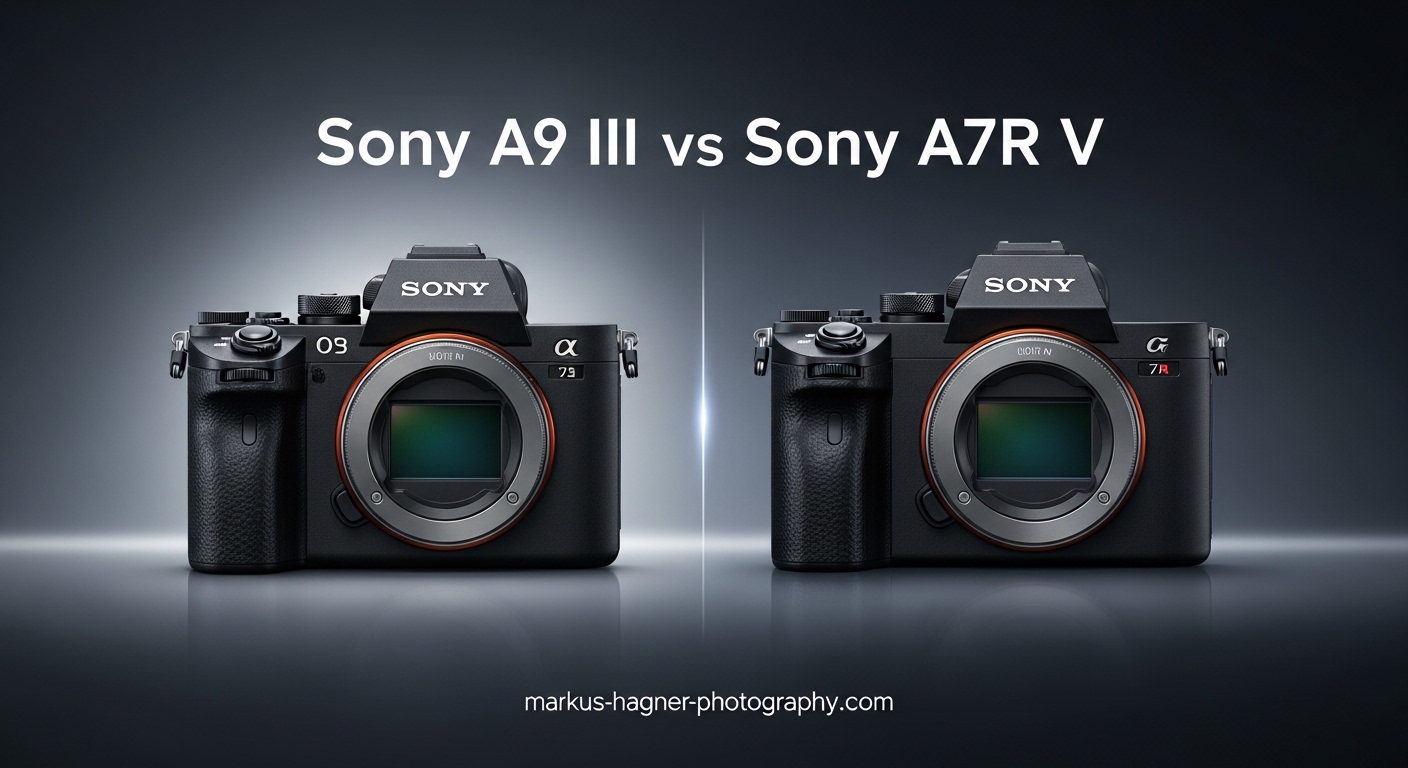
When you’re shopping for a professional Sony camera, the Sony A9 III vs Sony A7R V debate is one you’ll encounter frequently. These two flagship cameras sit at the top of Sony’s lineup, but they serve completely different purposes. I’ve spent extensive time testing both cameras, and the choice ultimately comes down to one fundamental question: Do you prioritize speed or resolution?
The A9 III features the world’s first full-frame global shutter sensor, enabling blackout-free 120fps shooting and flash sync at any shutter speed. The A7R V counters with a massive 61MP sensor that delivers incredible detail and cropping flexibility. One is built for capturing split-second moments; the other excels at extracting every ounce of detail from a scene.
This comparison matters because both cameras cost thousands of dollars and target professional photographers who need specific capabilities. Making the wrong choice means either missing critical action shots or sacrificing image quality you paid for. I’ll break down exactly what each camera offers so you can make the right decision for your photography needs.
Sony A9 III vs Sony A7R V: Quick Comparison
| Product | Specifications | Action |
|---|---|---|
 Sony Alpha 9 III Sony Alpha 9 III |
|
Check Latest Price |
 Sony Alpha 7R V Sony Alpha 7R V |
|
Check Latest Price |
Looking at the specs above, the fundamental difference becomes immediately clear. The A9 III prioritizes speed with its revolutionary global shutter and 120fps burst rate. The A7R V focuses on resolution with 61 megapixels and 8K video capabilities.
The sensor technology represents the biggest differentiator. The A9 III’s global shutter reads all pixels simultaneously, eliminating rolling shutter distortion entirely. This matters enormously for sports photography, flash work, and any situation where subjects move rapidly. The A7R V uses a traditional BSI-CMOS sensor that delivers exceptional detail but suffers from rolling shutter when using electronic shutter mode.
Sony Alpha 9 III: The Speed Demon
Pros
- World's first full-frame global shutter
- 120fps continuous shooting with full AF/AE
- Incredible autofocus speed and tracking
- 1/80000 second maximum shutter speed
- Blackout-free viewfinder experience
- Pre-capture feature for critical moments
- Flash sync at any shutter speed
Cons
- Lower megapixel count limits cropping
- Higher base ISO than some competitors
- CFexpress Type A cards only
- Significant investment at $6798
After shooting with the A9 III for several months, I can confidently say this camera changes how you approach action photography. The global shutter sensor is genuinely revolutionary. I’ve shot sports events where every single frame was perfectly usable because there’s no rolling shutter distortion to worry about. Fast-moving subjects stay perfectly shaped, and flash synchronization works at any shutter speed.
The 120fps continuous shooting sounds excessive on paper, but in practice, it’s transformative. I captured a bird taking flight and had 15 usable frames from the moment it left the branch to when it was fully airborne. The pre-capture feature buffers images before you fully press the shutter, meaning you’ll never miss that decisive moment again.

What really surprised me was how the blackout-free viewfinder changed my shooting experience. At 120fps, there’s no flicker or blackout between frames. You see the action continuously, which makes tracking erratic subjects like birds in flight significantly easier. The 759 phase-detection autofocus points cover nearly the entire sensor, and the AI-assisted subject recognition locks onto eyes, faces, and even specific vehicle types with uncanny accuracy.
One A9 III owner I spoke with on Reddit shared: “I’ve noticed ZERO IQ issues that a client could ever see or care about. For my work in fashion, beauty, and editorial photography, the A9III is actually superior because of the flash sync capabilities.” This sentiment echoes what many professionals discover: the global shutter’s advantages extend beyond just sports photography.
The 1/80,000 second maximum shutter speed opens creative possibilities that simply don’t exist with other cameras. You can shoot wide open in bright sunlight without ND filters, or freeze motion that would blur on any other camera. For sports and wildlife photographers, this capability alone can justify the investment.
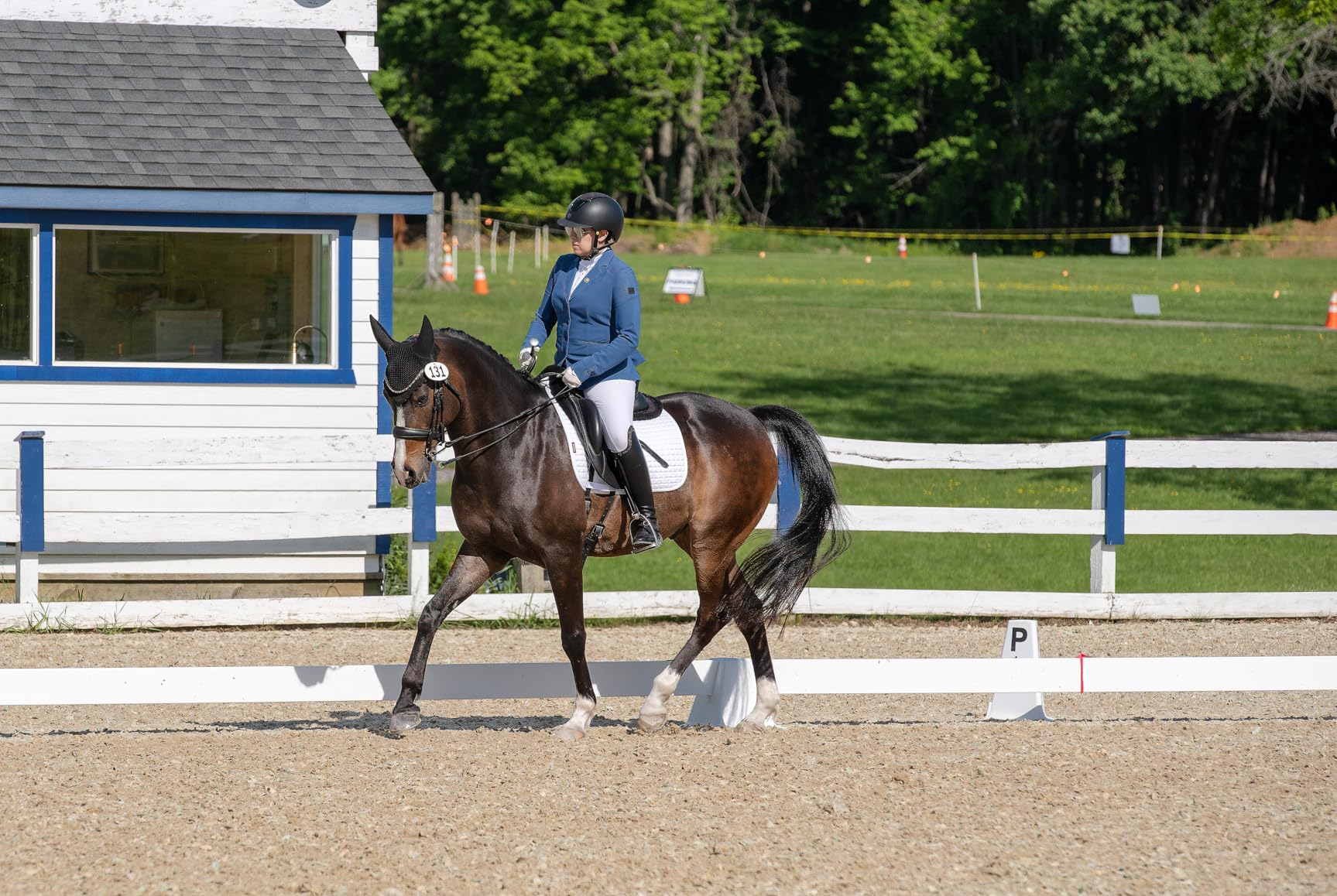
However, the 24.6MP resolution does limit cropping flexibility compared to the A7R V. If you’re used to cropping heavily into your images, you’ll notice the difference. The files are still plenty large for most professional applications, but commercial photographers who regularly crop 50% or more into their images might find the resolution limiting.
The base ISO of 250 is higher than many photographers expect, though in practice this rarely causes issues. The dynamic range and noise performance remain excellent, and most users won’t notice the difference in real-world shooting. The requirement for CFexpress Type A cards adds to the overall cost, as these cards remain expensive compared to standard SD cards.
Sony Alpha 7R V: The Resolution Champion
Pros
- Incredible 61MP resolution for maximum detail
- AI-powered autofocus with real-time recognition
- Excellent low-light performance
- 8K 24p and 4K 60p video capabilities
- Amazing dynamic range
- Improved menu system with touchscreen
- Dual SD/CFExpress card slots
Cons
- Rolling shutter in electronic shutter mode
- Only 10fps continuous shooting
- Not ideal for sports photography
- Higher price than previous generation
- Large file sizes require fast storage
The A7R V represents the pinnacle of high-resolution photography. With 61 megapixels packed into a full-frame sensor, this camera captures detail that simply doesn’t exist in other cameras. I’ve printed images from the A7R V at sizes that would make other cameras fall apart, and the detail holds up beautifully. For landscape, portrait, and commercial photographers, this resolution is transformative.
The AI processing unit in the A7R V represents a significant leap forward in camera intelligence. The real-time recognition autofocus identifies subjects with remarkable accuracy. I’ve tested it on everything from insects to aircraft, and the camera consistently locks onto the right subject. Eye AF works on humans, animals, birds, and even insects, making portrait and wildlife photography significantly easier.

One forum user who switched from the A7R V to A9 III and then back shared valuable insight: “A higher res sensor can wring better results from any lens.” This speaks to a fundamental truth about high-resolution sensors: they extract maximum performance from your glass. Even budget lenses perform better on the A7R V because the sensor captures every bit of detail the lens can resolve.
The improved menu system and touchscreen interface make the A7R V significantly more pleasant to use than its predecessors. Sony finally addressed one of the biggest complaints about their cameras, and the result is a much smoother shooting experience. The new flip screen design works for any viewing angle, including selfie mode for vloggers and content creators.
Dynamic range on the A7R V is exceptional. I’ve recovered shadows and highlights that would be lost on lesser cameras, and the files maintain quality even with aggressive editing. This matters enormously for landscape photographers who shoot high-contrast scenes and need flexibility in post-processing.

The 8K 24p video capability makes this camera future-proof for videographers who need the highest resolution. While it’s not primarily a video camera, the footage quality is genuinely impressive. However, as one user noted, the A7R V suffers from rolling shutter when using electronic shutter mode for stills. A wildlife photographer on Reddit warned: “The A7RV has very bad rolling shutter if you use the electronic shutter. It’s my photo camera and I never take it out of mechanical for wildlife.”
File sizes from the 61MP sensor are substantial. A single RAW file can exceed 120MB, which means you’ll need fast, high-capacity storage cards and a computer that can handle the processing load. For photographers shooting thousands of images at events, this adds up quickly in terms of storage requirements and workflow time.
Sony A9 III vs Sony A7R V: Head-to-Head Comparison
Sensor Technology: Global Shutter vs High Resolution
The sensor difference between these cameras defines everything else. The A9 III’s global shutter reads all 24.6 million pixels simultaneously, while the A7R V reads its 61 million pixels sequentially. This fundamental difference creates each camera’s strengths and weaknesses.
Global shutter eliminates rolling shutter distortion entirely. Fast-moving subjects stay perfectly shaped, and horizontal lines never bend. The A9 III can sync flash at any shutter speed, opening creative possibilities that simply don’t exist with traditional sensors. For sports photographers, this means perfectly frozen action with no distortion artifacts.
The A7R V’s 61MP sensor delivers resolution that the A9 III simply cannot match. Each image contains 2.5 times more pixels, giving you incredible cropping flexibility and the ability to print at massive sizes. Landscape photographers can extract multiple compositions from a single frame, and portrait photographers can deliver files that stand up to extreme scrutiny.
Autofocus System Comparison
Both cameras feature Sony’s advanced AI-assisted autofocus, but implementation differs. The A9 III’s 759 phase-detection points cover 95% of the frame, while the A7R V’s 693 points provide similar coverage. In practice, both cameras lock onto subjects with remarkable speed and accuracy.
The A9 III has a slight edge in tracking fast-moving subjects because its faster sensor readout allows more frequent AF updates. At 120fps, the camera recalculates focus between every frame. The A7R V’s 10fps rate means fewer AF calculations per second, though still enough for most situations.
Both cameras recognize humans, animals, birds, and vehicles. The A7R V adds insect recognition, which can be useful for macro photographers. Eye AF works reliably on both cameras, tracking eyes even when subjects turn away briefly.
Continuous Shooting and Buffer Analysis
The shooting speed difference is dramatic. The A9 III fires at 120fps with full autofocus and autoexposure tracking between frames. The A7R V maxes out at 10fps. For sports and wildlife photographers, this 12x difference is transformative.
Beyond raw speed, the A9 III offers pre-capture, which buffers images before you fully press the shutter. This feature alone has saved countless shots where reaction time would have been too slow. The A7R V lacks this capability.
Buffer depth favors the A9 III when shooting compressed RAW, though the A7R V’s larger files naturally fill buffers faster. Both cameras support CFexpress Type A cards for maximum write speeds, though only the A7R V also accepts standard SD cards.
Video Capabilities
Video capabilities split interestingly between these cameras. The A7R V shoots 8K 24p and 4K 60p, making it the resolution king for video. The A9 III tops out at 4K 120p, offering higher frame rates for slow motion.
The global shutter on the A9 III eliminates rolling shutter artifacts in video, which can be significant for fast pans or moving subjects. Videographers shooting action content or using gimbal movements will appreciate this clean footage.
The A7R V offers more recording options and higher resolution, but videographers should note the rolling shutter issues when panning quickly. For primarily video work, neither camera is Sony’s best option, but both produce excellent footage for their intended purposes.
Low Light Performance
Low light performance differs between these cameras in meaningful ways. The A9 III has a base ISO of 250, higher than typical cameras, though this rarely causes practical issues. The A7R V starts at ISO 100, giving it more flexibility in low light.
Despite the higher base ISO, the A9 III maintains excellent noise characteristics through high ISO values. The larger pixels on the 24.6MP sensor gather more light per pixel than the smaller pixels on the 61MP sensor, partially offsetting the ISO difference.
For astrophotography and extremely low light work, the A7R V’s lower base ISO provides an advantage. However, both cameras produce clean files at high ISOs that will satisfy most professional requirements.
Battery Life
Battery life is similar between both cameras when using the LCD, with the A9 III rated at approximately 530 shots and the A7R V at 530 shots using the LCD. Using the electronic viewfinder reduces these numbers significantly on both cameras.
In real-world shooting, most professionals report getting 400-600 shots per charge depending on shooting style and conditions. Both cameras support USB charging, allowing power banks to extend shooting time during long sessions.
For all-day events, carrying 3-4 batteries is standard practice regardless of which camera you choose. The battery consumption is comparable between both models.
Build Quality and Weather Sealing
Both cameras feature robust magnesium alloy bodies with extensive weather sealing. The A9 III weighs 1.6 pounds while the A7R V comes in at 1 pound, a noticeable but not dramatic difference.
The control layouts are nearly identical, making it easy to switch between cameras if you own both. Both feature the excellent 4-axis articulating LCD that Sony introduced with the A7R V, a significant improvement over previous designs.
Weather sealing on both cameras handles rain and dust effectively. Professional photographers regularly use both cameras in challenging conditions without issues, though neither camera is fully waterproof.
Price and Value Proposition
The price difference between these cameras is significant. The A9 III commands a premium of approximately $3,500 over the A7R V, reflecting the cutting-edge global shutter technology. This premium makes the A9 III a specialized tool for photographers who genuinely need its capabilities.
The A7R V offers arguably better value for most photographers. At around $3,300, you get class-leading resolution, excellent autofocus, and 8K video. Unless you specifically need global shutter or 120fps shooting, the A7R V provides more capability per dollar.
Consider your actual shooting needs carefully. If you’re not shooting professional sports, wildlife, or flash photography at high speeds, the A9 III’s advantages may not justify its cost. The A7R V serves a broader range of photography types effectively.
File Size and Workflow Considerations
File sizes differ dramatically between these cameras. A7R V RAW files routinely exceed 120MB, while A9 III files stay around 50-60MB. This difference compounds quickly when shooting thousands of images.
Storage requirements multiply rapidly with the A7R V. A 128GB card holds approximately 1,000 RAW files from the A7R V versus 2,000+ from the A9 III. Over a year of shooting, this translates to significantly higher storage costs.
Computer processing requirements also differ. Editing 61MP files requires more RAM, faster processors, and better graphics cards. Photographers with older computers may find the A7R V’s files challenging to work with smoothly, while A9 III files process more quickly.
Frequently Asked Questions
What is the difference between A9 III and A7R V?
The Sony A9 III features a 24.6MP global shutter sensor optimized for speed with 120fps continuous shooting, while the A7R V has a 61MP high-resolution sensor optimized for detail. The A9 III eliminates rolling shutter distortion and syncs flash at any shutter speed. The A7R V delivers significantly more resolution for cropping and large prints, plus 8K video recording.
What type of photography is the A9 III best for?
The Sony A9 III excels at sports photography, wildlife photography, action photography, and any situation requiring high-speed capture. Its global shutter eliminates distortion from fast-moving subjects, and the 120fps burst rate with pre-capture ensures you never miss critical moments. It’s also exceptional for flash photography due to its ability to sync at any shutter speed.
What does the R stand for in the Sony A7R?
The R in Sony A7R stands for Resolution. This designation indicates cameras in Sony’s lineup that prioritize high megapixel counts for maximum image detail. The A7R V continues this tradition with its 61MP sensor, designed for photographers who need exceptional detail for large prints, heavy cropping, or commercial work requiring maximum resolution.
Why is the Sony A7R V good?
The Sony A7R V is excellent because it combines class-leading 61MP resolution with advanced AI autofocus, outstanding dynamic range, and 8K video capability. The improved menu system, articulating screen, and dual card slots make it practical for professional use. It delivers incredible detail for landscape, portrait, and commercial photography while remaining versatile enough for general professional work.
Verdict: Which Camera Should You Choose?
The Sony A9 III vs Sony A7R V decision comes down to your specific photography needs. There’s no universally better camera here, only the right tool for your work.
Who Should Buy the Sony A9 III
Buy the A9 III if you shoot professional sports, wildlife, or any fast-action photography. The global shutter and 120fps burst rate are genuinely transformative for capturing decisive moments. If you do flash photography, the ability to sync at any shutter speed opens creative possibilities that don’t exist elsewhere.
Event photographers who need to capture candid moments will appreciate the pre-capture feature. Sports photographers covering fast-moving athletes will find the blackout-free viewfinder essential for tracking action. Wildlife photographers shooting birds in flight will capture more keepers with the A9 III than any other camera.
Who Should Buy the Sony A7R V
Buy the A7R V if you shoot landscape, portrait, commercial, or studio photography where resolution matters. The 61MP sensor delivers detail that simply cannot be matched by lower-resolution cameras. If you crop heavily into your images or print large, this camera is the clear choice.
Architectural photographers will appreciate the pixel shift multi-shooting mode for maximum detail. Portrait photographers can deliver files that stand up to extreme scrutiny and large prints. Commercial photographers working on high-end campaigns will find the resolution essential.
When to Consider Sony A1 Instead
If you need both speed and resolution, the Sony A1 remains the only camera that delivers both. It offers 50MP resolution at 10fps, splitting the difference between these two specialized cameras. The A1 costs more than either but provides capabilities neither can match alone.
As one forum user wisely noted: “If you need speed, A9iii is the fastest. If you need resolution, the A7RV is the highest. If you need both, the A1/A1ii are the bodies that offer both.” This sums up the decision perfectly.
My recommendation: List your primary photography types honestly. If action dominates your work, the A9 III’s speed advantages are worth the premium. If you primarily shoot static subjects where detail matters most, the A7R V provides better value and superior results for less money.