
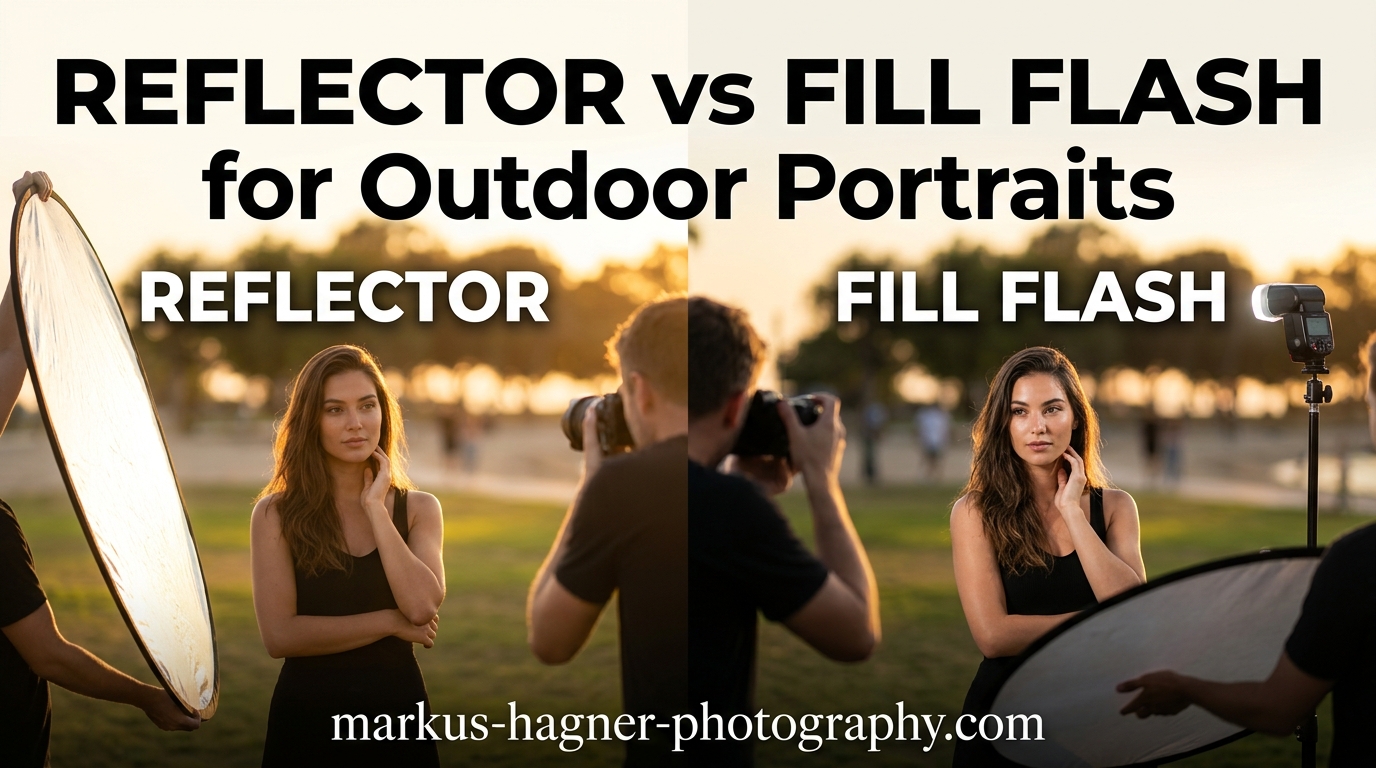
Outdoor portrait lighting is one of the biggest challenges photographers face. Harsh sunlight creates unflattering shadows under eyes, while backlit subjects often turn into silhouettes. The reflector vs fill flash for outdoor portraits debate has been ongoing for years, and the answer depends heavily on your shooting style, budget, and whether you work alone or with an assistant.
I have spent years testing both approaches in real-world conditions, from golden hour engagement sessions to midday corporate headshots. Both techniques work, but each shines in different scenarios. This guide breaks down exactly when to reach for a reflector and when to fire up your flash.
The short verdict? Reflectors maintain that coveted natural light aesthetic and cost a fraction of flash equipment. Fill flash offers more control, works in any lighting condition, and is far more practical for solo photographers. Most professionals eventually end up owning both.
Quick Comparison: Reflector vs Fill Flash
Here is how the top options in each category stack up against each other. The comparison below shows reflectors and flashes side by side so you can quickly see which approach fits your needs.
| Product | Specifications | Action |
|---|---|---|
 NEEWER 43 inch 5-in-1 Reflector NEEWER 43 inch 5-in-1 Reflector |
|
Check Latest Price |
 K&F CONCEPT Curved Reflector K&F CONCEPT Curved Reflector |
|
Check Latest Price |
 Godox V860III-C Flash Godox V860III-C Flash |
|
Check Latest Price |
 NEEWER TT560 Speedlite NEEWER TT560 Speedlite |
|
Check Latest Price |
Reflectors for Outdoor Portraits
Pros
- Excellent value with 5 different surfaces
- Large 43 inch size for professional work
- Compact and portable when collapsed
- Softens harsh sunlight effectively
- Works with natural light and flash
Cons
- Zipper quality can be inconsistent
- Tricky to fold without practice
- Requires stand or holder not included
A reflector is simply a surface that bounces existing light onto your subject. In outdoor portraits, you are redirecting sunlight that would otherwise be lost. The technique is elegantly simple: position the reflector to catch ambient light and redirect it into shadow areas on your subject’s face.
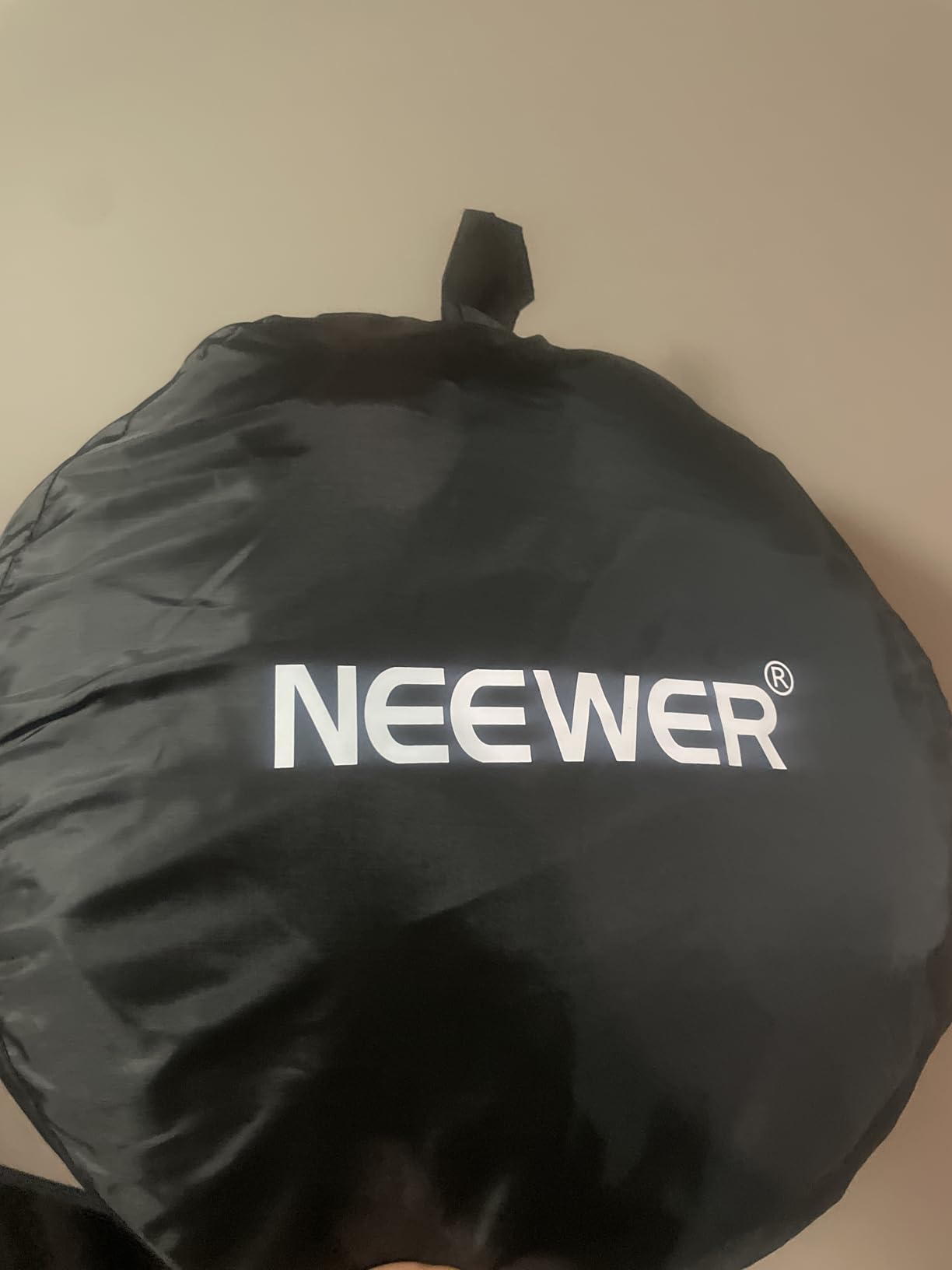
The 5-in-1 reflector design has become the industry standard for good reason. You get five different surfaces in one collapsible disc. Silver gives you bright, punchy fill with a cooler tone. Gold adds warmth, which looks stunning for golden hour portraits. White provides soft, neutral fill without changing the color temperature. Black acts as a flag to block unwanted light. The translucent center works as a diffuser to soften harsh overhead sun.
During a recent engagement session, I relied entirely on a silver reflector to fill shadows on a bright afternoon. The reflected sunlight felt soft and warm on the couple’s faces, and the resulting images had that natural look clients love. I positioned the reflector at a 45-degree angle below the subjects, bouncing light up into the eye sockets and under the chin.
The main limitation of reflectors becomes obvious when you shoot alone. Someone has to hold and position that reflector while you frame the shot. You can mount it on a stand, but wind becomes your enemy. Even a light breeze turns a 43-inch reflector into a sail. I have watched stands tip over mid-session more times than I can count.
Another consideration is light intensity. In harsh midday sun, the reflected light can be almost as bright as direct sunlight. Your subjects may squint or feel uncomfortable. This is where the translucent diffuser becomes invaluable. Hold it between the sun and your subject to soften the main light before reflecting fill into the shadows.
K&F CONCEPT Curved Reflector: Premium Option
Pros
- Quick-open design sets up in seconds
- U-shape creates beautiful catchlights
- Includes heavy-duty light stand
- Easy to change reversible covers
- Compact and space-saving
Cons
- Lighter stand needs sandbags in wind
- Newer product with fewer reviews
The K&F CONCEPT curved reflector solves several problems that traditional round reflectors create. The U-shape design wraps around your subject’s face, producing a distinctive catchlight pattern that looks more natural than a single round reflection in the eyes. Wedding and portrait photographers particularly love this effect.
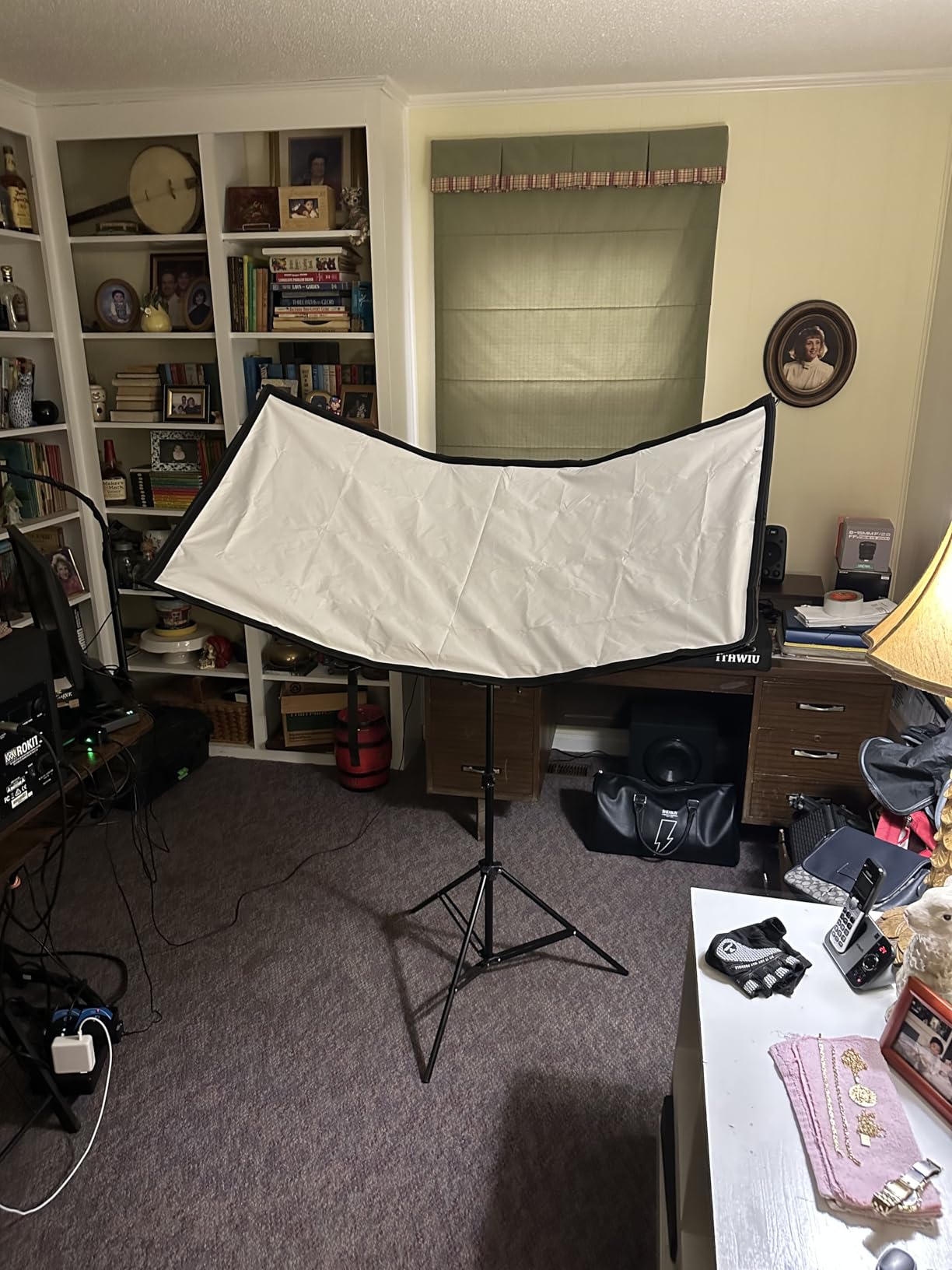
What sets this apart from standard reflectors is the quick-open clamshell design. Traditional collapsible reflectors require that awkward twisting motion to fold them down. This one sets up in two simple steps without any wrestling. The included 1.5-meter light stand means you can position it hands-free, which is essential for solo photographers.
The four interchangeable covers give you white, silver, gold, and black options. I found the silver-gold combination particularly effective for outdoor portraits on overcast days when you need to add some punch and warmth back into flat lighting.
Fill Flash for Outdoor Portraits
Pros
- Excellent 480 full-power flashes per charge
- Fast 1.5s recycle time
- HSS support up to 1/8000s
- Built-in LED modeling lamp
- Part of Godox wireless ecosystem
- Can work as transmitter or receiver
Cons
- Proprietary battery requires spares
- Slight learning curve for new users
- TTL may slightly underexpose
Fill flash works by firing your flash at reduced power to supplement ambient light. Instead of overpowering the sun, you add just enough light to open up shadows while maintaining the natural look of the scene. The key is subtlety. Done correctly, viewers should not even realize flash was used.
The Godox V860III-C represents the sweet spot between professional features and reasonable cost. The built-in 2.4G wireless system means you can take it off-camera and trigger it remotely, which opens up creative possibilities that on-camera flash cannot match. Position the flash at an angle to your subject, and you create directional light with depth and dimension.
High-speed sync (HSS) is essential for outdoor fill flash. Without it, your shutter speed tops out at your camera’s sync speed, typically 1/200 or 1/250 second. In bright conditions, that forces you to stop down your aperture or use ND filters. HSS lets you shoot at 1/8000 second while using flash, which means you can keep your aperture wide open for that shallow depth of field look.
I tested this flash during a corporate headshot session at noon. Harsh sun, no shade available, and 15 executives waiting their turn. The flash handled everything effortlessly. The Li-ion battery delivered consistent output through all 15 subjects without needing a battery swap. The LED modeling lamp helped me preview the lighting direction before each shot.
The biggest advantage of fill flash over reflectors is consistency. A reflector’s output changes constantly as clouds pass, as the sun moves, and as your assistant’s arm gets tired. Flash delivers the same amount of light every time. Your exposure settings stay locked in, and your post-processing workflow becomes much faster.
NEEWER TT560: Budget Flash Option
Pros
- Excellent value for beginners
- 8 manual power levels for control
- Reliable optical slave modes
- Good light output for portraits
- Wide camera brand compatibility
- Rotating head for bounce lighting
Cons
- No TTL support fully manual only
- No HSS high speed sync
- Uses 4 AA batteries not included
- Batteries can get hot with rapid shooting
The NEEWER TT560 is the flash I recommend to photographers just starting with fill flash techniques. At under $65, it teaches you the fundamentals without a big investment. You will not get TTL or HSS, but you will learn manual flash control, which is a valuable skill regardless of what equipment you eventually upgrade to.
The optical slave modes (S1 and S2) deserve special mention. In S1 mode, the flash fires when it detects another flash. In S2 mode, it ignores the pre-flash from TTL systems and fires on the main flash. This means you can use the TT560 as an off-camera slave triggered by your camera’s built-in flash or another speedlite. For outdoor portraits, position this on a light stand at 45 degrees to your subject and trigger it with your on-camera flash set to minimum power.
The guide number of 38 (ISO 100, meters) provides enough power for most outdoor fill situations. You will not be overpowering the sun at high noon, but for typical portrait distances of 6 to 10 feet, the output is sufficient. The eight manual power levels give you precise control from 1/128 to full power.
Reflector vs Fill Flash: Head-to-Head Comparison
Now that we have explored both options in depth, let me break down how they compare across the factors that matter most for outdoor portrait photography.
Control and Consistency
Fill flash wins on consistency hands down. Once you dial in your settings, every shot looks the same. Reflectors depend entirely on ambient light conditions. A passing cloud can change your exposure by two stops. For paid client work where consistency matters, flash has a clear advantage.
However, reflectors offer a different kind of control. You see exactly what you are getting in real time. Move the reflector closer and watch the fill increase. Angle it differently and see the shadow direction change. This visual feedback loop makes learning lighting incredibly intuitive.
Portability and Setup
A 5-in-1 reflector weighs about 1.5 pounds and collapses to roughly 16 inches. It fits in any camera bag and requires no batteries. A speedlite adds roughly a pound to your camera, plus spare batteries in your bag. The flash setup is more self-contained, while reflectors often need stands or assistants.
For hiking photography or travel, reflectors have the edge. No batteries to charge, no electronics to fail, and virtually indestructible. I have taken reflectors through rain, dust, and baggage handlers without any issues.
Working Solo vs With an Assistant
This is often the deciding factor. If you work alone, flash is dramatically more practical. Mount a speedlite on your camera and you have instant fill light with both hands free. To use a reflector solo, you need a stand, and you need calm conditions.
With an assistant, reflectors become much more viable. A good assistant can adjust the reflector position between shots, compensate for wind, and react to changing conditions faster than any stand system.
Weather Conditions
Wind is the enemy of reflectors. I have had portrait sessions where 15 mph gusts made large reflectors completely unusable. Smaller reflectors help, but they provide less coverage. Flash works in any weather, though you will want weather-sealed gear for rain.
Temperature matters too. In extreme heat, flash batteries drain faster and recycle times slow down. Reflectors have no such limitations.
Cost Comparison
The budget reflector option costs around $30. A premium curved reflector with stand runs about $76. The budget flash costs $63, while the professional Godox option is $199. For photographers on a tight budget, reflectors deliver excellent results at a fraction of the cost.
However, factor in the cost of stands and accessories. A reflector stand runs $30 to $50. Sandbags for stability add more. Flash needs light stands if you go off-camera, plus triggers. The total investment often ends up similar for complete setups.
Equipment Recommendations: Who Should Choose What
Choose a Reflector If:
You prioritize the natural light aesthetic above all else. Reflected sunlight simply looks different than flash, and many clients specifically want that look. Wedding photographers who specialize in natural light often prefer reflectors to maintain their signature style.
You work with an assistant regularly. With someone to hold and position the reflector, you gain incredible control over your lighting without the learning curve of flash photography.
You are on a tight budget. A $30 reflector produces professional-quality results in the right conditions. No other lighting tool delivers this much value.
Choose Fill Flash If:
You work alone most of the time. On-camera flash gives you fill light with zero setup time and no assistance required. Off-camera flash on a light stand works too, though wind becomes a consideration.
You shoot in variable lighting conditions. Flash works at high noon, in open shade, at golden hour, and even after sunset. Reflectors need ambient light to function.
You need consistent results across many shots. Events, corporate headshots, and any situation where you deliver dozens of images benefit from the consistency flash provides.
Combining Both Techniques
Here is what most professionals eventually discover: reflectors and fill flash work beautifully together. Use a reflector as your main fill source and add a touch of flash for catchlights in the eyes. Or use flash as your key light and a reflector to fill shadows from below.
I used this combination for a recent outdoor portrait session. The subject stood in open shade with bright background behind her. A silver reflector filled the shadows from camera left. A speedlite on-camera at minimum power added a subtle catchlight. The result looked completely natural while giving me control over every aspect of the lighting.
Frequently Asked Questions
What is the best lighting for outdoor portraits?
Soft, warm directional light creates the most flattering outdoor portraits. Golden hour provides naturally beautiful light, but harsh midday sun creates unflattering shadows. Use fill flash or reflectors to soften shadows and add catchlights to eyes in challenging conditions.
Is a reflector better than a flash?
Neither is universally better. Reflectors maintain natural light aesthetics, cost less, and require no batteries. Flash provides more control, works in any light condition, and offers consistent output. Choose reflectors for natural light work with assistants, flash for solo work and variable conditions.
Do I need a reflector for outdoor photography?
While not essential, reflectors are highly valuable for outdoor portraits. They let you reflect, block, and soften available light. They help eliminate unflattering shadows under eyes and add dimension to faces. For photographers on a budget, a reflector is one of the best investments you can make.
When should I use fill flash outdoors?
Use fill flash outdoors on bright sunny days with harsh shadows, with backlit subjects where the background is brighter, when working alone without an assistant, in overcast conditions to add spark to eyes, when you need consistent output across many shots, and in low light where reflectors will not work.
Final Verdict
The reflector vs fill flash for outdoor portraits question has no single right answer. Your choice depends on your shooting style, typical conditions, and whether you work alone. For most photographers starting out, I recommend beginning with a quality 5-in-1 reflector. Learn to read light and modify it. Then add a flash when you hit the limitations of reflected light.
If you must choose just one, here is the framework: Choose reflectors for natural light work with assistants in good conditions. Choose fill flash for solo work, variable lighting, and professional consistency requirements.