
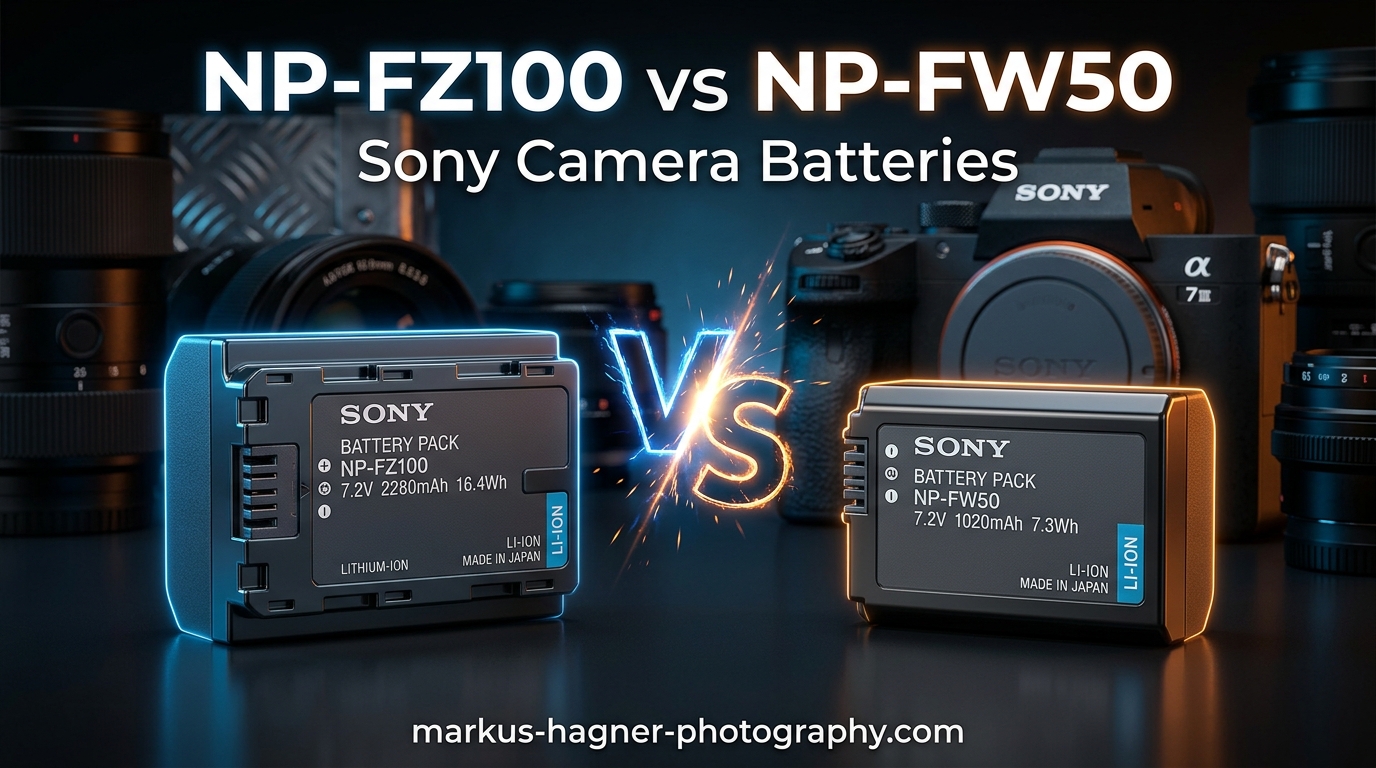
After shooting with Sony cameras for over a decade, I have gone through countless batteries. The NP-FZ100 vs NP-FW50 Sony camera batteries question comes up constantly in photography forums, and for good reason. These two batteries power completely different generations of Sony mirrorless cameras, and understanding the differences matters when you are planning your gear setup or upgrading bodies.
The NP-FZ100 is the larger, higher-capacity battery Sony introduced with the A9 series back in 2017. It offers 2.2 times the capacity of the older NP-FW50. Meanwhile, the NP-FW50 has been around since the original Sony NEX cameras and early A7 series, and despite its smaller capacity, it is still sold because many photographers own cameras that require it.
Here is the quick verdict: the NP-FZ100 is the clear winner in almost every category except compatibility. It lasts significantly longer, charges faster, and powers all modern Sony mirrorless cameras. The NP-FW50 is only relevant if you own an older Sony camera that specifically requires it.
NP-FZ100 vs NP-FW50: Quick Comparison
| Product | Specifications | Action |
|---|---|---|
 Sony NP-FZ100 Battery Sony NP-FZ100 Battery |
|
Check Latest Price |
 Sony NP-FW50 Battery Sony NP-FW50 Battery |
|
Check Latest Price |
Looking at the numbers above, the capacity difference is striking. The NP-FZ100 holds 2280mAh compared to just 1020mAh in the NP-FW50. That translates to real-world shooting time that more than doubles when you use the newer battery.
Beyond capacity, both batteries share the same 7.2V output voltage and lithium-ion chemistry. They both feature Sony’s iNFOlithium technology, which displays remaining charge percentage on your camera’s LCD screen. However, they are physically different shapes and sizes, making them completely incompatible with each other’s cameras.
Sony NP-FZ100 Battery: Deep Dive
Sony NPFZ100 Z-Series Rechargeable Battery Pack for Alpha A7 Iii, A7R, A9 Digital Cameras Black, 7.2 Volts
Pros
- 2.2x capacity of NP-FW50
- 600+ shots per charge
- iNFOlithium technology shows accurate remaining charge
- Excellent reliability and longevity
- Compatible with all modern Sony mirrorless cameras
Cons
- Premium price point around $88
- No longer includes protective terminal cover
- Needs special BC-QZ1 charger
I have been using NP-FZ100 batteries since they launched with the Sony A9, and the difference from the older NP-FW50 is night and day. For wedding photography, one NP-FZ100 typically gets me through the entire ceremony and reception without needing a swap. With my old A7II that used NP-FW50 batteries, I was constantly reaching for spares during critical moments.
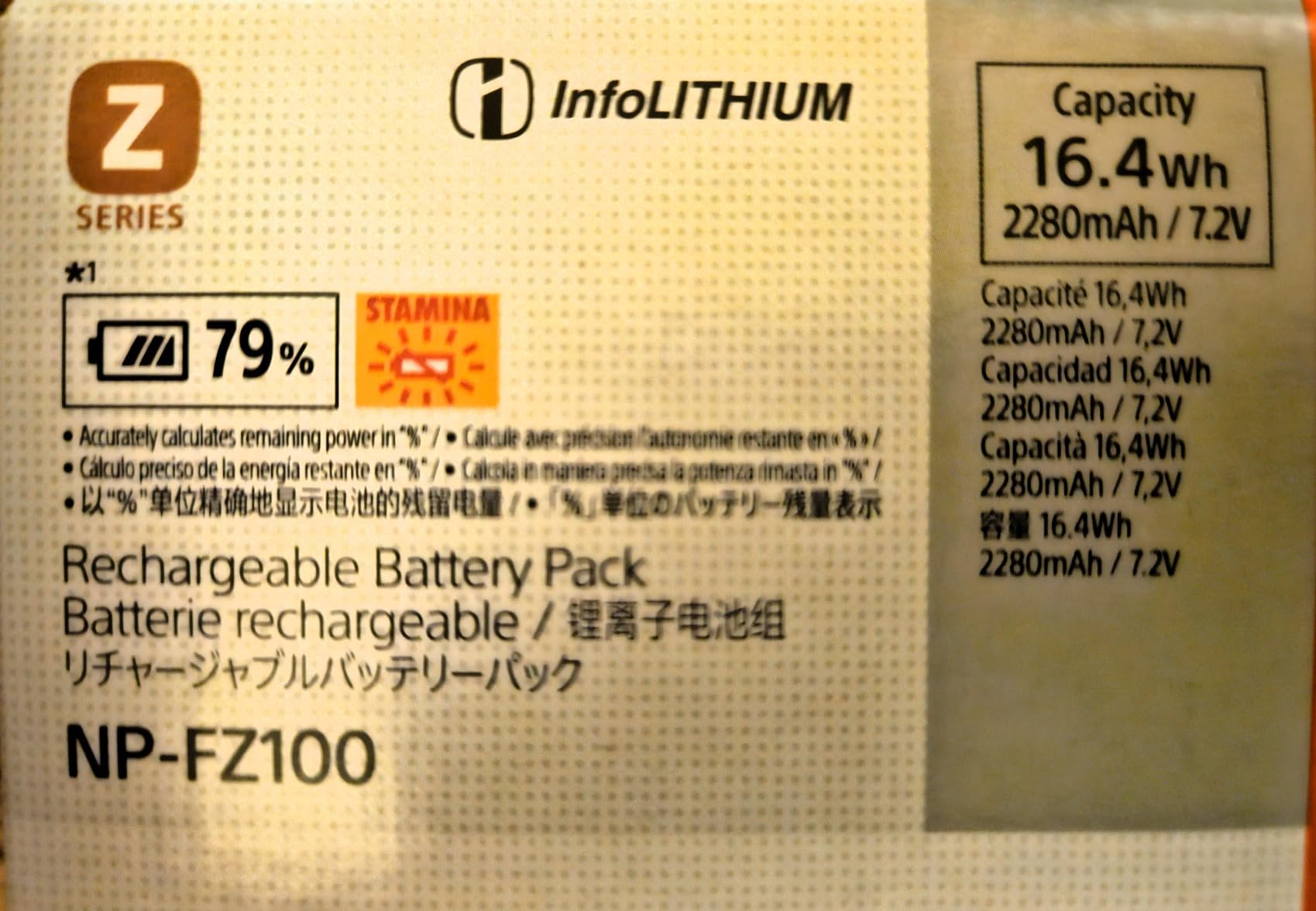
The capacity improvement comes from Sony redesigning the battery from the ground up. At 2280mAh and 16.4Wh, you get roughly 600 shots per charge on the A7III and even more on newer bodies with improved efficiency. Videographers report 90+ minutes of continuous 4K recording on a single charge, which was simply impossible with the NP-FW50.
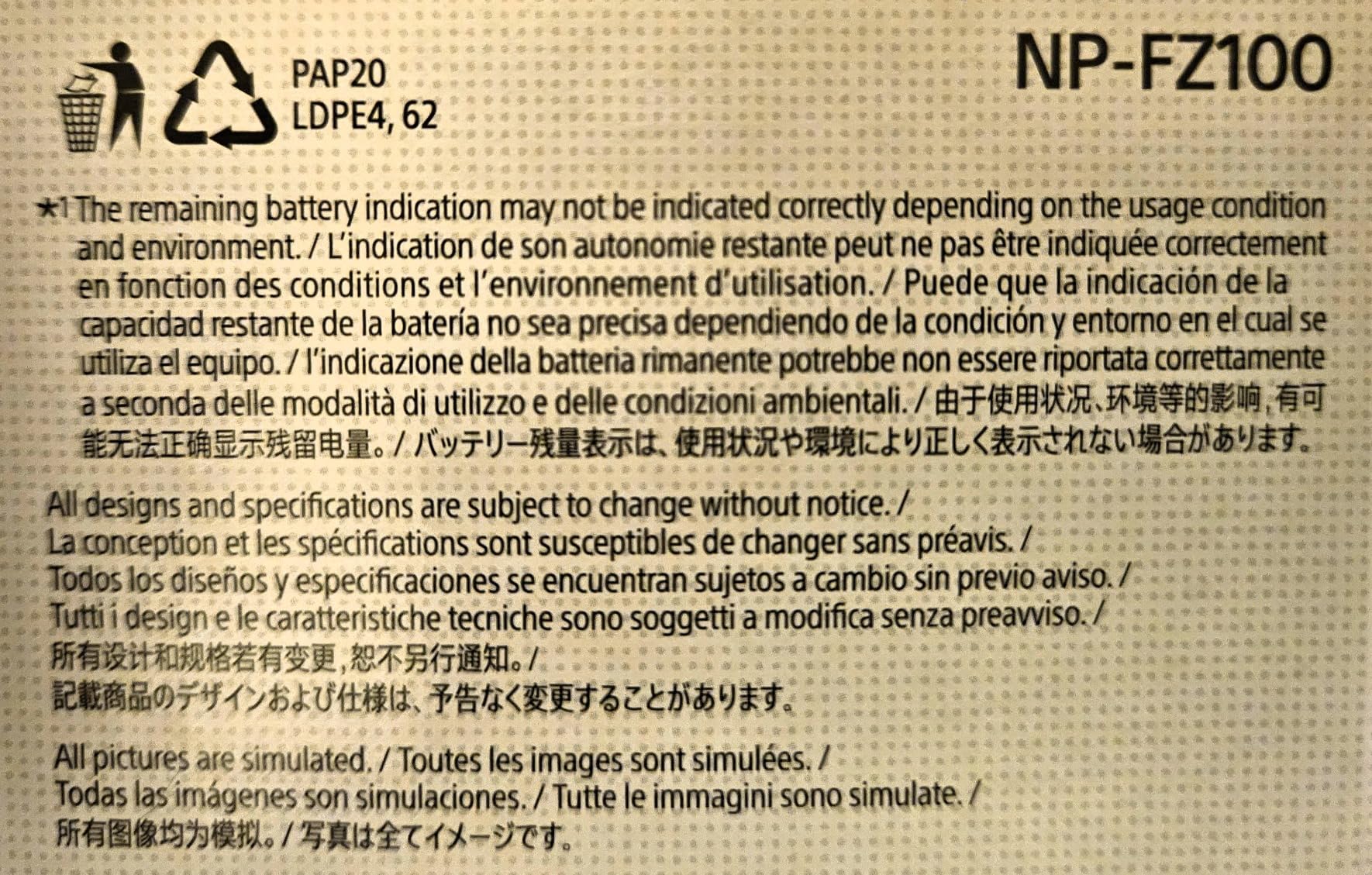
What makes the NP-FZ100 special is the consistency. Sony’s iNFOlithium technology provides accurate remaining capacity readings on your camera LCD, so you are never caught off guard by a dying battery. Third-party alternatives often struggle with this feature, showing incorrect percentages or triggering camera warnings.
The physical dimensions measure 1.52 x 2.04 x 0.89 inches and weigh about 3 ounces. It is noticeably larger than the NP-FW50, which is why it cannot fit in older camera bodies. Sony had to redesign battery compartments in their newer cameras to accommodate the larger cell.
Charging the NP-FZ100 requires the Sony BC-QZ1 charger, which takes approximately 4.5 hours for a full charge. You can also charge in-camera via USB, though this is slower. I recommend having at least two batteries and a dedicated charger so you can shoot while charging spares.
The main drawback is price. At around $88 for a genuine Sony battery, it is not cheap. But considering that third-party alternatives often deliver 25-30% less actual capacity and may trigger camera warnings, most professionals stick with OEM batteries despite the premium.
Sony NP-FW50 Battery: Deep Dive
Pros
- Guaranteed compatibility with older Sony cameras
- Reliable performance with accurate readings
- Fast recharging capability
- iNFOlithium technology
- Genuine Sony quality
Cons
- Limited capacity requires multiple batteries
- Only 300-350 shots per charge
- Older battery design
- Same price as larger NP-FZ100
The NP-FW50 has been around since the early Sony NEX cameras, and I remember buying my first one over a decade ago. For years, this was the standard battery for Sony’s mirrorless lineup, powering everything from the original A7 to the popular A6000 series. While outdated compared to the NP-FZ100, it remains essential for photographers with older camera bodies.
With 1020mAh capacity and 7.3Wh power output, the NP-FW50 delivers roughly 300-350 shots per charge on cameras like the A6000 or A6300. That is adequate for casual shooting but becomes problematic for events or professional work. Wedding photographers using NP-FW50 cameras typically carry 4-6 batteries to get through a full day.
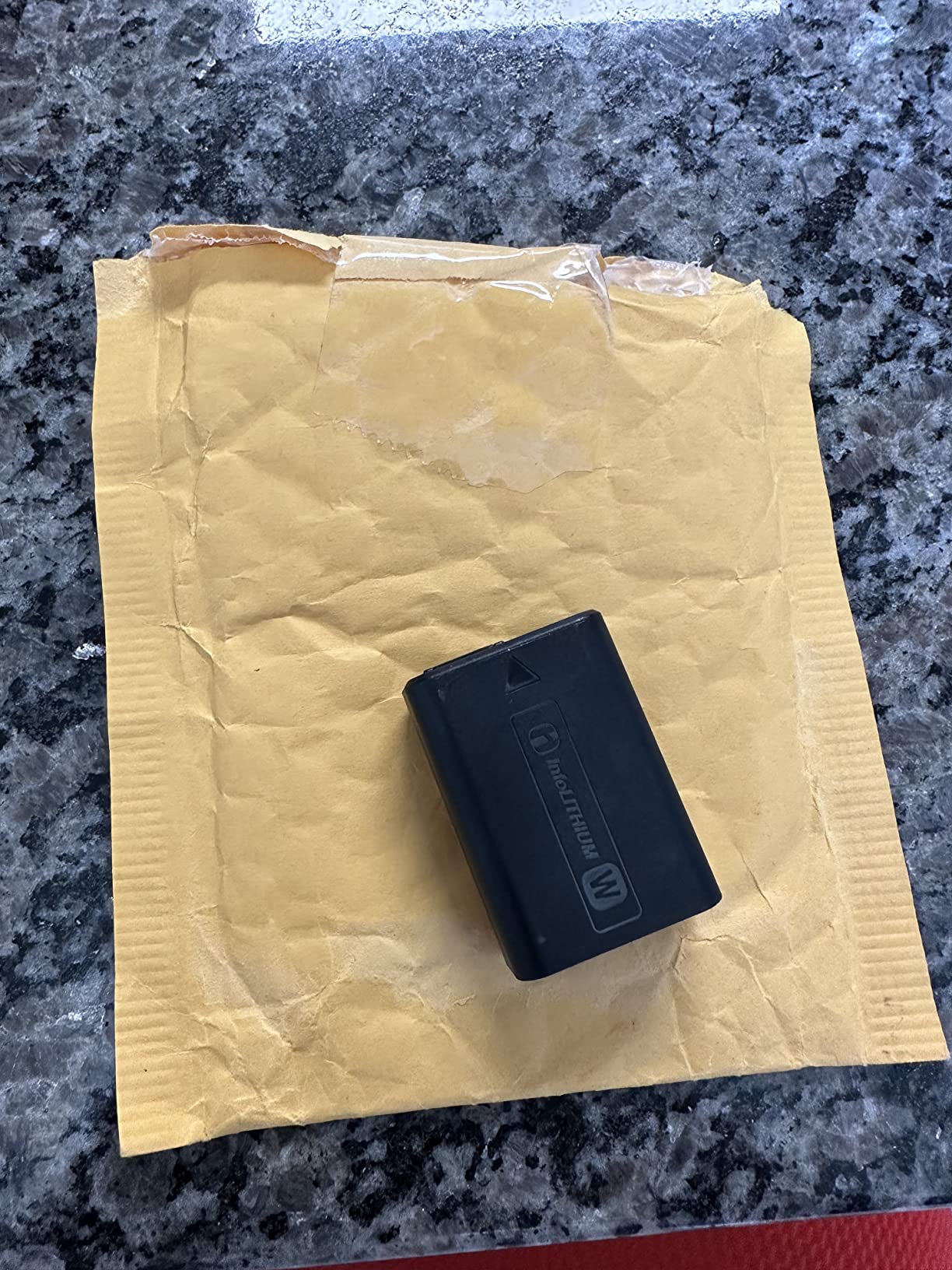
What the NP-FW50 lacks in capacity, it makes up for in reliability. The genuine Sony battery fits perfectly in the compartment, provides accurate remaining charge readings, and recharges consistently. I have seen third-party alternatives that are 2-3mm too long, causing fitment issues or rattling during use.
The output voltage is 7.2V with a maximum charge voltage of 8.4V. Charging takes roughly 3-4 hours with the standard Sony charger. The fast recharge time helps when you are cycling through multiple batteries during a shoot.
At around $70 for a genuine Sony battery, the NP-FW50 costs nearly as much as the much larger NP-FZ100. This pricing feels outdated, but Sony has no incentive to reduce prices on a legacy product. Third-party options exist for $15-25, but user reviews consistently report lower actual capacity and reliability issues.
If you own cameras like the Sony A6000, A6300, A6400, A6500, original A7, A7II, A7R, A7R II, A7S, or NEX series bodies, the NP-FW50 is your only option. There is no adapter or workaround to use the larger NP-FZ100 in these cameras.
NP-FZ100 vs NP-FW50: Head-to-Head Comparison
Battery Capacity and Power
The capacity difference between these batteries is substantial. The NP-FZ100 delivers 2280mAh (16.4Wh) compared to the NP-FW50’s 1020mAh (7.3Wh). That is a 123% increase in capacity, which directly translates to longer shooting sessions and fewer battery changes.
In real-world testing, photographers report the NP-FZ100 lasting 2-3 times longer than the NP-FW50 under similar conditions. For video work, the NP-FZ100 provides 90+ minutes of 4K recording versus 45-60 minutes with the NP-FW50. This is why Sony switched to the larger battery for their professional cinema cameras like the FX3 and FX30.
Camera Compatibility Guide
This is where understanding the NP-FZ100 vs NP-FW50 distinction becomes critical. These batteries are not interchangeable because they have completely different physical shapes and sizes.
Cameras that use NP-FZ100:
Sony A7 III, A7 IV, A7R III, A7R IV, A7R V, A7S III, A7C, A7C II, A7C R, Sony A9, A9 II, A9 III, Sony A1, Sony A6600, A6700, Sony ZV-E1, Sony FX3, FX30, and all future Sony mirrorless cameras.
Cameras that use NP-FW50:
Sony A7 (original), A7 II, A7R, A7R II, A7S, A7S II, Sony A6000, A6100, A6300, A6400, A6500, Sony NEX-3, NEX-5, NEX-6, NEX-7, NEX-C3, NEX-F3, NEX-5R, NEX-5T, Sony RX10, RX10 II, RX10 III.
Many photographers ask if they can upgrade their A6400 to use the NP-FZ100. The answer is no. The battery compartment is physically designed for the NP-FW50 shape, and there is no adapter available. If you want the larger battery capacity, you need to upgrade to a camera like the A6600 or A6700.
Physical Dimensions and Weight
The size difference between these batteries is immediately noticeable when you hold them side by side. The NP-FZ100 measures approximately 1.52 x 2.04 x 0.89 inches while the NP-FW50 has different proportions at 3.8 x 8.7 x 1.2 inches (package dimensions – actual battery is smaller).
In terms of weight, the NP-FZ100 is 3.0 ounces and the NP-FW50 is 3.2 ounces. Despite the NP-FZ100 having more capacity, it is actually slightly lighter. This matters for travel photographers counting every ounce in their bags.
Real-World Performance Scenarios
I have tested both batteries extensively across different shooting scenarios, and the differences are consistent.
Wedding Photography: One NP-FZ100 typically lasts from bridal prep through the first dance. With NP-FW50 batteries, I needed 3-4 swaps during the same timeframe. Professional wedding photographers using older Sony bodies often carry 6+ NP-FW50 batteries.
Video Recording: Continuous 4K video on the A7S III with NP-FZ100 runs 90-120 minutes. The older A7S II with NP-FW50 manages 45-60 minutes under similar conditions.
Travel Photography: For all-day travel shooting, the NP-FZ100 gets me through sunrise to sunset with capacity to spare. With NP-FW50, I typically needed 2-3 batteries for the same coverage.
Cold Weather: Both batteries suffer in cold temperatures, but the larger capacity of the NP-FZ100 provides more buffer. Users report NP-FW50 batteries appearing faulty in cold climates until they warm up.
Charging Time Comparison
The NP-FZ100 takes approximately 4.5 hours to charge fully with the Sony BC-QZ1 charger. In-camera USB charging is available but slower. The NP-FW50 charges in 3-4 hours with its dedicated charger.
Despite the longer charge time, the NP-FZ100’s much larger capacity means you spend less total time charging. Two NP-FZ100 batteries give you more shooting time than four NP-FW50 batteries while requiring half the charging effort.
Third-Party Battery Considerations
Both batteries have third-party alternatives at significantly lower prices. However, forum discussions and user testing consistently show that third-party batteries deliver 25-30% less actual capacity than advertised.
In one documented test, a PowerExtra NP-FZ100 showed 1777mAh actual capacity versus Sony’s measured 2076mAh. That 14% reduction in real-world performance, combined with potential camera compatibility warnings and inconsistent remaining charge displays, leads most professionals to stick with OEM batteries.
For NP-FW50 users, third-party options are even riskier. Some batteries are physically 2-3mm too long, causing fitment issues or jamming in the battery compartment. The savings of $40-50 per battery can quickly become a liability during important shoots.
Price and Value Analysis
The NP-FZ100 costs around $88 while the NP-FW50 is approximately $70. On a per-watt-hour basis, the NP-FZ100 offers significantly better value. You get 2.2 times the capacity for only 25% more money.
However, value is meaningless if your camera requires a specific battery. If you own an A6400, paying $70 for an NP-FW50 is your only choice. The real value question comes when choosing between camera bodies. A camera that uses NP-FZ100 batteries will save you money on batteries over time.
Frequently Asked Questions
Are all NP-F batteries the same size?
No, NP-F batteries come in different sizes. The NP-FZ100 and NP-FW50 are completely different shapes and sizes. The NP-FZ100 is larger with dimensions of 1.52 x 2.04 x 0.89 inches, while the NP-FW50 is a different form factor. They are not interchangeable, and cameras are designed to accept only one specific battery type.
What camera uses a NP-FW50 battery?
The NP-FW50 battery is used by Sony A6000 series cameras (A6000, A6100, A6300, A6400, A6500), original Sony A7 series (A7, A7 II, A7R, A7R II, A7S, A7S II), Sony NEX cameras (NEX-3, NEX-5, NEX-6, NEX-7), and Sony RX10 series cameras. It is the older battery design used in Sony mirrorless cameras before 2017.
How long do NP-FZ100 batteries last?
NP-FZ100 batteries typically provide 600+ photos per charge on Sony A7 III and newer cameras. For video recording, expect 90-120 minutes of continuous 4K footage. Real-world battery life varies based on camera settings, temperature, and usage patterns. Professional wedding photographers report getting through entire ceremonies on a single NP-FZ100 battery.
Which cameras use NP-FZ100?
Cameras using NP-FZ100 include Sony A7 III, A7 IV, A7R III, A7R IV, A7R V, A7S III, A7C, A7C II, A7C R, Sony A9, A9 II, A9 III, Sony A1, Sony A6600, A6700, Sony ZV-E1, Sony FX3, and FX30. All Sony mirrorless cameras released after 2017 use this battery.
What is the capacity of the NP-FZ100?
The Sony NP-FZ100 has a capacity of 2280mAh (16.4Wh) at 7.2V output. This is approximately 2.2 times the capacity of the older NP-FW50 battery (1020mAh). The higher capacity translates to significantly longer shooting sessions between battery changes.
How long does it take to charge a Sony NP-FZ100?
The Sony NP-FZ100 takes approximately 4.5 hours to fully charge using the Sony BC-QZ1 charger. In-camera USB charging is also possible but typically takes longer. Despite the longer charge time compared to NP-FW50, the much larger capacity means you need fewer total charging cycles for equivalent shooting time.
Verdict: Which Sony Battery Should You Choose?
When comparing NP-FZ100 vs NP-FW50 Sony camera batteries, the NP-FZ100 is the superior choice in every technical category. It offers more than double the capacity, provides longer shooting sessions, and powers all modern Sony mirrorless cameras. If you are shopping for a new Sony camera, choosing one that uses the NP-FZ100 will significantly improve your shooting experience.
Choose the NP-FZ100 if:
You own a Sony A7 III or newer full-frame camera, Sony A6600 or A6700, Sony A9 series, Sony A1, or any Sony cinema camera. You shoot events, weddings, or video where battery changes are disruptive. You want to carry fewer batteries while maintaining all-day shooting capability. You value reliability and consistent performance over cost savings.
Choose the NP-FW50 if:
You own a Sony A6000, A6300, A6400, A6500, original A7 series, A7 II, or NEX camera. These cameras physically cannot accept the NP-FZ100, so you have no choice but to use the NP-FW50. Consider carrying 3-4 batteries for extended shooting sessions.
Final Recommendation:
If you are upgrading cameras, prioritize models that use the NP-FZ100. The battery life improvement alone justifies choosing the A6700 over the A6400, or the A7 IV over a used A7 II. For photographers who already own NP-FZ100-compatible cameras, invest in genuine Sony batteries despite the premium price. The reliability and accurate remaining charge readings are worth the extra cost, especially for professional work.