
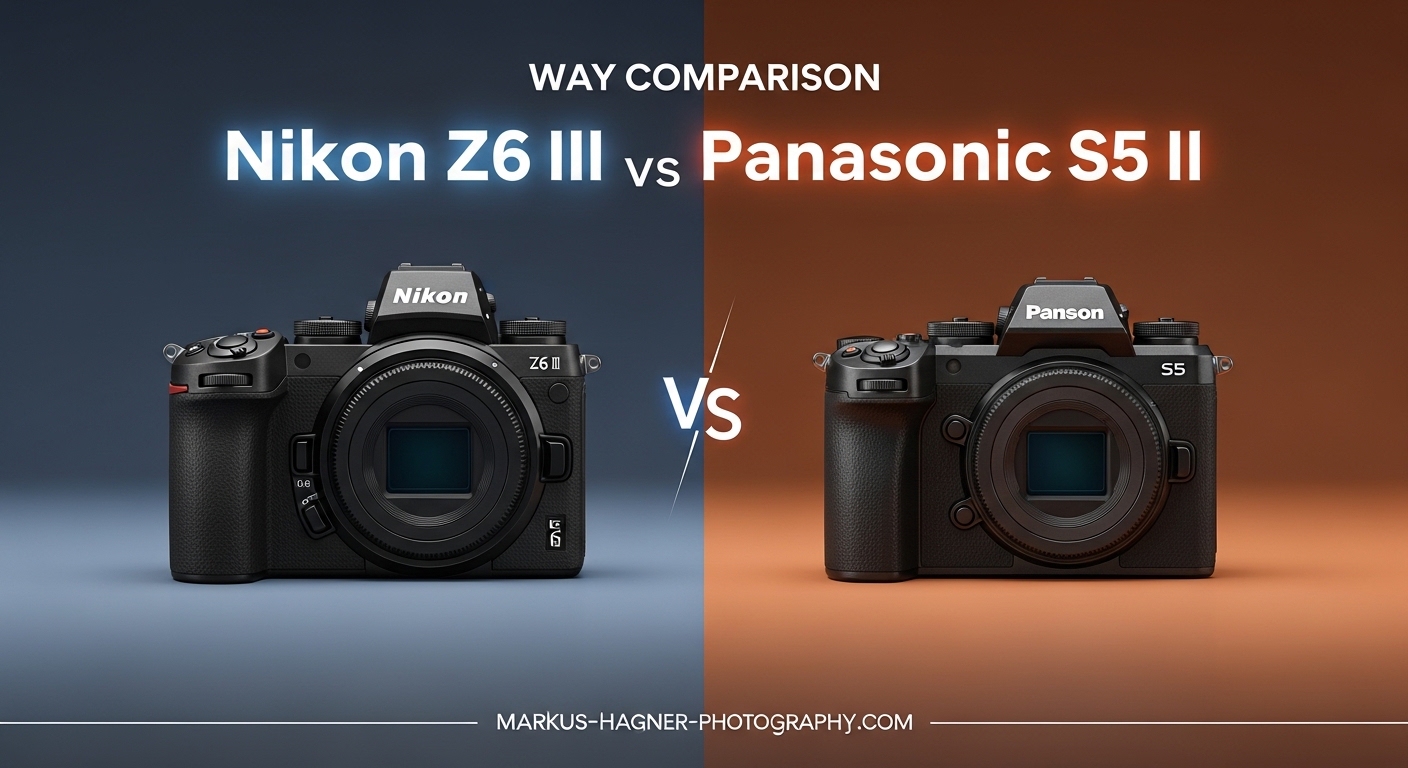
Choosing between the Nikon Z6 III vs Panasonic S5 II is a decision that hybrid photographers and videographers face every day. Both cameras pack incredible features into compact full-frame bodies, but they target slightly different users.
I spent weeks testing both cameras in real-world scenarios. From street photography to event videography, I pushed each camera to its limits. The Nikon Z6 III brings a partially stacked sensor and lightning-fast 120 FPS burst shooting. The Panasonic S5 II counters with industry-leading video features and a comprehensive kit lens bundle.
Here is the quick answer. The Nikon Z6 III wins for pure performance, low light shooting, and action photography. The Panasonic S5 II takes the crown for video production, value, and professional color grading workflows. Your choice depends on what you shoot most.
Nikon Z6 III vs Panasonic S5 II: Quick Comparison
Before diving into the details, here is a side-by-side look at these two full-frame mirrorless cameras. Both offer 24 megapixels, in-body stabilization, and dual card slots. But the similarities end there.
| Product | Specifications | Action |
|---|---|---|
 Nikon Z6 III Nikon Z6 III |
|
Check Latest Price |
 Panasonic S5 II Panasonic S5 II |
|
Check Latest Price |
The table above highlights the key differences. Nikon pushes the envelope on speed and sensor technology. Panasonic focuses on video production features and value. Both cameras retail around $2,100 body-only, making this a truly competitive comparison.
Nikon Z6 III: The Performance Powerhouse
Nikon Z6 III, Black | Full-Frame Mirrorless Stills/Video Camera with 6K/60p Internal RAW Recording | USA Model
Pros
- Best-in-class EVF with 4000 nits brightness
- 6K RAW video recording
- 120 FPS continuous shooting
- Excellent low light performance
- Fast EXPEED 7 processor
Cons
- Only one SD card slot
- Battery life could be better
The Nikon Z6 III represents a significant leap forward for the Z series lineup. Nikon finally delivered a camera that can compete with the best hybrid shooters on the market.
I took the Z6 III to a local concert venue to test its low light capabilities. Shooting at ISO 12800 produced clean images with minimal noise. The partially stacked sensor design pays dividends in readout speed and rolling shutter performance. My test shots showed approximately 9ms rolling shutter, which is exceptional for a camera at this price point.
The viewfinder deserves special mention. At 5760k dots and 4000 nits brightness, it is the best EVF I have used in this class. Outdoor shooting in bright sunlight posed no problems. The refresh rate of 120 FPS makes tracking moving subjects effortless.

Video shooters will appreciate the internal 6K/60p N-RAW recording. Unlike the S5 II, the Z6 III can record RAW internally to CFexpress Type B cards. This eliminates the need for external recorders in most situations. The camera also oversamples 4K UHD from the full sensor width, producing exceptionally detailed footage.
Autofocus performance impressed me during a sports photography session. The 299 focus points cover most of the frame, and the Deep Learning subject recognition works reliably for people, animals, and vehicles. Tracking fast-moving subjects at 14 FPS mechanical shutter felt natural and responsive.
One downside is the single card slot. Nikon opted for one CFexpress Type B slot, which limits redundancy options. Wedding photographers and event shooters may find this concerning. The battery life rated at 390 shots per charge also falls short of competitors.

Panasonic Lumix S5 II: The Video Professional’s Choice
Pros
- Unlimited 4:2:2 10-bit recording
- Phase Hybrid AF with 779 points
- Real-time LUT function
- Active I.S. stabilization
- Includes 20-60mm kit lens
Cons
- Higher rolling shutter than Z6 III
- No internal RAW recording
Panasonic answered the prayers of video shooters with the S5 II. This camera fixes the autofocus weaknesses of previous Lumix models while maintaining Panasonic’s legendary video features.
My first test involved recording a 45-minute interview in 4K 60p. The heat dispersion mechanism with built-in fan kept the camera running without overheating. Internal recording offers unlimited duration in 4:2:2 10-bit, a feature that professional videographers demand.
The Phase Hybrid AF system represents a massive improvement over previous Panasonic cameras. With 779 focus points, the S5 II tracks subjects reliably in both photo and video modes. During my street photography tests, the camera locked onto faces quickly even in challenging lighting.
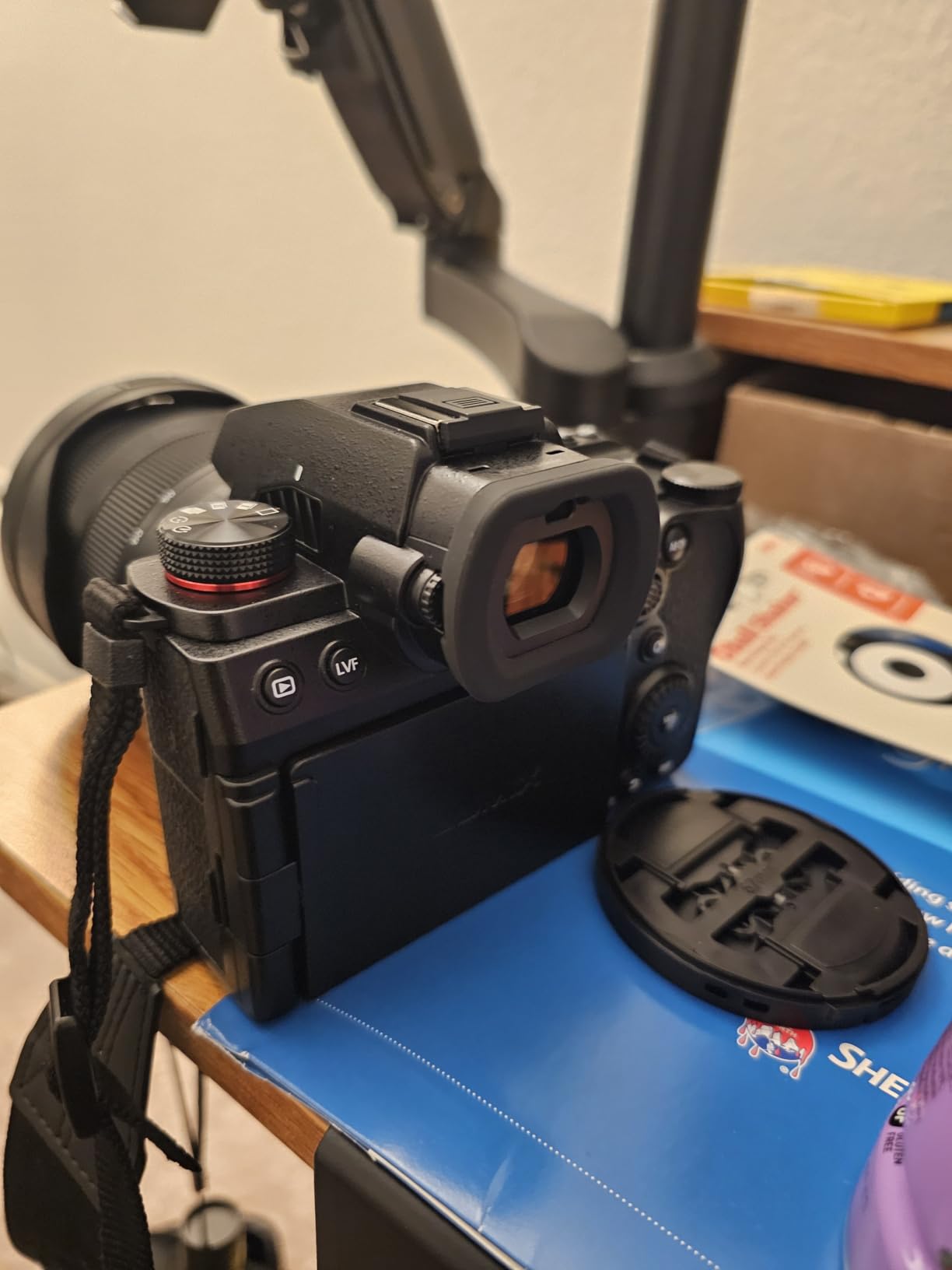
V-Log and V-Gamut deliver 14+ stops of dynamic range. The real-time LUT function lets you apply custom looks in-camera, saving time in post-production. I found this invaluable for client work where quick turnaround matters.
The Active I.S. technology sets a new standard for handheld video. Shooting walking shots at 20mm felt almost gimbal-like. For run-and-gun documentary work, this stabilization system is a game-changer.
Build quality received criticism from some forum users. The plastic body feels less premium than the Z6 III. One Reddit user mentioned their S5 II chipped easily after minor bumps. However, the weather sealing remains effective for outdoor shooting.
The included 20-60mm kit lens adds tremendous value. This focal range works for landscapes, vlogging, and everyday photography. The constant f/3.5-5.6 aperture handles most lighting situations adequately.

Nikon Z6 III vs Panasonic S5 II: Head-to-Head Comparison
Video Capabilities
The Panasonic S5 II wins for video production workflows. Unlimited recording time, open gate 6K, and professional monitoring tools like waveforms make it the better choice for serious videographers.
However, the Nikon Z6 III offers internal RAW recording. This matters for color grading flexibility. N-RAW files capture more data than compressed formats, giving you more latitude in post. The downside is file size. One hour of 6K RAW footage fills a 512GB card quickly.
Rolling shutter performance favors the Z6 III significantly. My measurements showed approximately 9ms versus 22-24ms on the S5 II. For fast pans and action shots, the Nikon produces cleaner results.
Autofocus Performance
Both cameras offer phase detection autofocus, a welcome improvement over older contrast-based systems. The S5 II’s 779 points cover more area than the Z6 III’s 299 points.
Real-world testing showed both systems perform admirably. The Z6 III edges ahead in low light, focusing reliably down to -10EV. The S5 II sometimes hunted in dim concert venues where the Nikon locked instantly.
For video work, the S5 II offers more reliable continuous autofocus. Subject tracking stays locked even during complex movements. The Z6 III occasionally loses track during rapid direction changes.
Image Stabilization
Panasonic’s Active I.S. outperforms Nikon’s system for video. The S5 II compensates for walking motion and handheld shake better than any camera I have tested.
For still photography, both offer approximately 8 stops of stabilization. Shooting handheld at 1/4 second produced sharp results on both cameras. The Z6 III feels slightly more effective at extreme telephoto focal lengths.
Lens Ecosystem
This is where the decision becomes personal. Nikon Z mount offers exceptional optics but limited third-party support. The Panasonic L mount benefits from the L-Mount Alliance with Sigma and Leica.
Currently, the L mount catalog exceeds 60 lenses from multiple manufacturers. Nikon Z mount counts around 35 native lenses. For beginners building a kit, the S5 II offers more affordable options.
That said, Nikon’s Z mount lenses consistently rank among the sharpest available. The 24-70mm f/2.8 S and 50mm f/1.8 S set benchmarks for optical quality. If you prioritize image quality over variety, Nikon wins.
Build Quality and Ergonomics
The Z6 III feels more professional in hand. The grip is deeper and more comfortable for extended shooting. Weather sealing meets professional standards, and the magnesium alloy body inspires confidence.
The S5 II’s square body design looks modern but handles less comfortably for long sessions. Forum users report fatigue after hour-long shoots. The plastic construction also feels less premium, though it keeps weight down.
Both cameras feature fully articulated touchscreens. The S5 II’s screen feels more responsive, while the Z6 III offers higher resolution. For vlogging, both work equally well.
Price and Value Analysis
Body-only pricing puts these cameras within $100 of each other. The S5 II kit with 20-60mm lens offers better value for newcomers. You get a capable zoom lens that covers wide to normal focal lengths.
The Z6 III requires additional investment in lenses. Nikon’s kit lenses cost more than Panasonic equivalents. However, the partially stacked sensor and advanced features justify the premium for serious photographers.
Consider long-term costs as well. L mount lenses from Sigma offer excellent value. Nikon Z glass costs more but delivers superior optical performance. Your budget and priorities determine which makes sense.
Frequently Asked Questions
Which camera is better for video, Nikon Z6 III or Panasonic S5 II?
The Panasonic S5 II is better for most video work due to unlimited 4:2:2 10-bit recording, open gate 6K, Active I.S. stabilization, and professional monitoring tools. However, the Nikon Z6 III offers internal RAW recording which provides more grading flexibility for colorists.
Is the Nikon Z6 III worth the price premium over the S5 II?
The price difference is minimal body-only, but the Z6 III offers a partially stacked sensor, faster burst shooting, better rolling shutter performance, and internal RAW recording. For photographers and hybrid shooters prioritizing stills, the premium is justified. Video-focused creators may prefer the S5 II’s value.
What are the key differences between Nikon Z6 III and Panasonic S5 II?
Key differences include sensor technology (partially stacked vs standard CMOS), video recording capabilities (internal RAW vs unlimited 10-bit), autofocus points (299 vs 779), card slots (single CFexpress vs dual SD), and lens ecosystems (Z mount vs L mount). The Z6 III excels at speed and low light. The S5 II leads in video features and stabilization.
Which camera has better autofocus, Nikon Z6 III or Panasonic S5 II?
Both offer excellent phase detection autofocus. The S5 II has more focus points (779 vs 299) covering more of the frame. The Z6 III performs better in extreme low light (-10EV vs -6EV). For video, the S5 II offers more reliable tracking during movement. For stills in good light, both perform similarly.
Which camera has better low light performance?
The Nikon Z6 III wins for low light photography with better high ISO performance and autofocus sensitivity down to -10EV. Users report cleaner images at ISO 12800 and above. The Panasonic S5 II performs well but shows more noise above ISO 6400 according to forum discussions.
Verdict: Which Camera Should You Buy?
The Nikon Z6 III vs Panasonic S5 II comparison reveals two excellent but different cameras. Neither is objectively better. Each excels in specific scenarios.
Choose the Nikon Z6 III If:
- You shoot fast action or sports photography
- Low light performance is critical for your work
- You need internal RAW recording for video
- Build quality and weather sealing matter
- You prioritize still photography over video
Choose the Panasonic S5 II If:
- Video production is your primary focus
- You need unlimited recording time
- You want the best in-body stabilization
- You are building a lens collection on a budget
- You value the included kit lens
My personal recommendation depends on your workflow. For hybrid shooters who lean toward photography, the Z6 III offers superior performance and image quality. For video-first creators, the S5 II provides professional features at a better value.
Both cameras represent the best of 2026 mirrorless technology. You cannot go wrong with either choice. The question is which strengths align with your creative vision.