
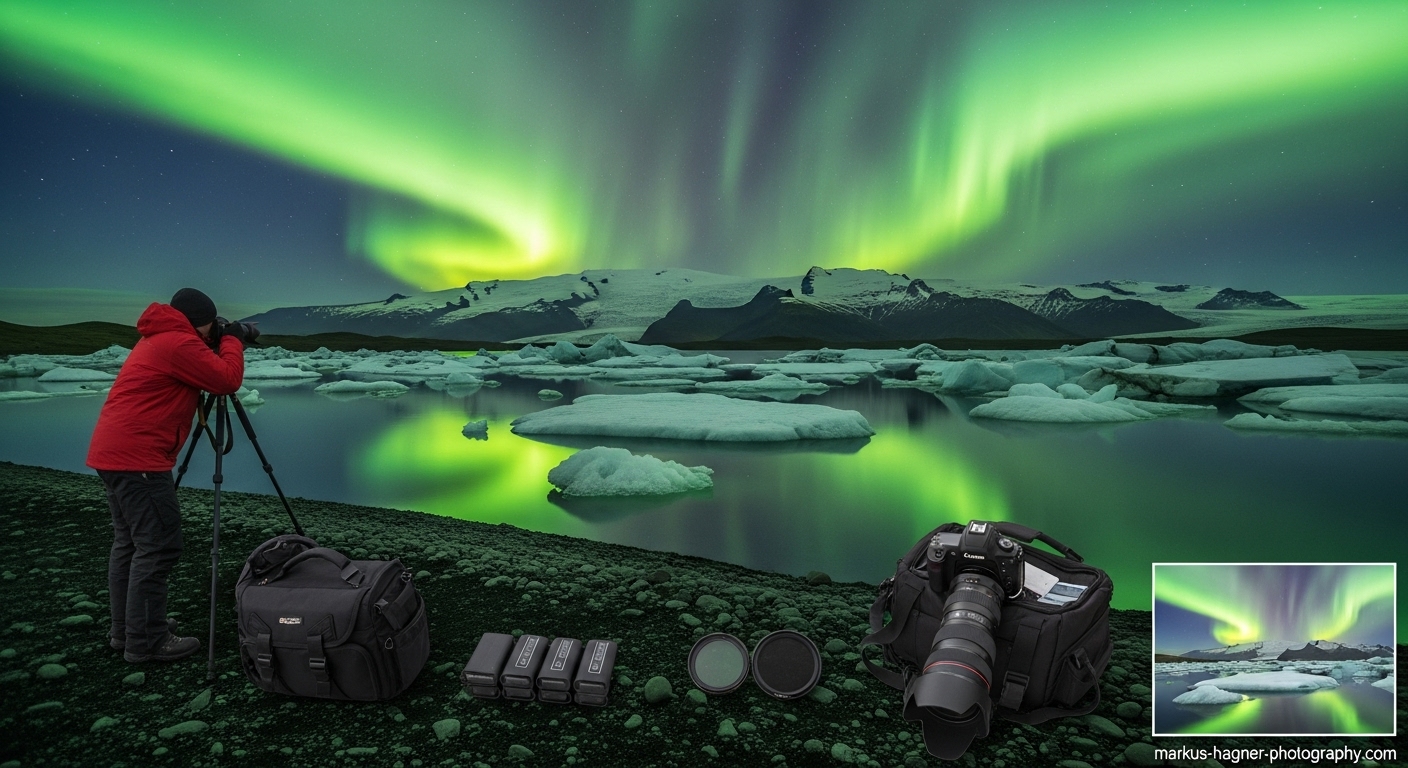
I’ve been fortunate enough to photograph Iceland in every season, and I can tell you this: no other place on Earth has quite literally taken my breath away like this island of fire and ice. From the moment I first witnessed the Northern Lights dancing over Jökulsárlón Glacier Lagoon to the countless times I’ve stood in awe at the base of Skógafoss waterfall, Iceland continues to surprise and inspire me.
After spending over 60 days total photographing across this incredible country, I’ve learned what works, what doesn’t, and how to come home with images that truly capture the magic of Iceland. In this comprehensive guide, I’m sharing everything I’ve discovered about photographing both epic landscapes and the elusive auroras.
Why Iceland is a Photographer’s Paradise
Iceland isn’t just another photography destination—it’s a place that fundamentally changes how you see the world. I remember my first trip there vividly. I’d seen the photos, watched the videos, read the guides, but nothing prepared me for the reality of standing on Reynisfjara Black Sand Beach at sunset, watching the waves crash against basalt columns while the sky turned every shade of orange and purple imaginable.
What makes Iceland so special for photographers? It’s the combination of accessibility and drama. You can literally pull off the Ring Road and be at a world-class photography location within minutes. The light quality is unlike anywhere else I’ve photographed—soft, directional, and constantly changing. And the sheer variety of landscapes within such a small area is mind-boggling.
I’ve shot everything from vast glaciers to intimate details of ice formations, from powerful waterfalls to delicate wildflowers, and from the midnight sun in summer to the aurora-filled skies of winter. Each season offers completely different photographic opportunities, and I’ll help you make the most of whatever time you visit.
Best Time to Visit Iceland for Photography
One of the most common questions I get is “When should I visit Iceland for the best photography?” The truth is, there’s no single “best” time—it all depends on what you want to photograph and what kind of experience you’re looking for.
Summer (June-August): The Midnight Sun
Summer in Iceland is unlike anywhere else. With nearly 24 hours of daylight, you have endless opportunities to shoot in beautiful light. I’ve taken some of my favorite landscape shots at 11 PM when the sun was just skimming the horizon, creating that magical golden hour light that lasts for hours.
What you’ll photograph:
- Puffins (June-August is puffin season!)
- Lush green landscapes
- Accessible highland roads
- Waterfalls at their most powerful
- Wildflowers and lupins
Photography challenges:
- Crowds at popular locations
- Harsh midday light
- No Northern Lights
- Higher prices
I’ll never forget shooting at Kirkjufell at 1 AM with the sun still providing beautiful light. The only downside was sharing the location with about 50 other photographers! If you visit in summer, I recommend shooting from 10 PM to 4 AM when most tourists are asleep.
Fall (September-October): The Sweet Spot
Fall might just be my favorite season for Iceland photography. The crowds have thinned, the light is beautiful, and you have a chance at seeing the Northern Lights. I photographed Vestrahorn in early October one year and had the entire beach to myself at sunrise.
What you’ll photograph:
- Northern Lights (starting in September)
- Fall colors in the landscape
- Fewer crowds
- Beautiful golden hour light
- First snow on mountains
Photography challenges:
- Unpredictable weather
- Shorter days
- Some highland roads close
Winter (November-March): Aurora Season
Winter is when Iceland truly transforms into a photographer’s wonderland. I’ve spent weeks driving around in winter, chasing Northern Lights and photographing ice caves. There’s something magical about standing in the middle of a frozen landscape at 2 AM, watching the aurora dance overhead.
What you’ll photograph:
- Northern Lights (peak season)
- Ice caves (accessible November-March)
- Frozen waterfalls
- Snow-covered landscapes
- Diamond Beach ice formations
Photography challenges:
- Very short days (4-6 hours of daylight)
- Extreme weather conditions
- Dangerous driving conditions
- Many roads closed
I once got caught in a blizzard while photographing Jökulsárlón in January. The visibility dropped to zero, and I had to wait 6 hours in my rental car before it was safe to drive. Winter photography in Iceland is not for the faint of heart, but the rewards are incredible.
Spring (April-May): The Awakening
Spring is when Iceland comes back to life. I’ve photographed some incredible scenes during this time, from newborn lambs in the countryside to waterfalls surrounded by fresh green grass. The light quality is exceptional, and the crowds haven’t arrived yet.
What you’ll photograph:
- Melting glaciers and ice formations
- Newborn lambs and wildlife
- Waterfalls at full flow
- Spring wildflowers
- Last chance for ice caves
Photography challenges:
- Muddy conditions
- Unpredictable weather
- Some highland roads still closed
Essential Gear for Iceland Photography
After multiple trips to Iceland and countless gear experiments, I’ve developed a pretty solid list of what you actually need versus what you can leave at home. Trust me, I’ve made plenty of mistakes in this department—like the time I brought only one camera body and it died in the middle of a Northern Lights shoot!
Camera Bodies
For Iceland photography, you need a camera that can handle challenging conditions. I’ve shot with everything from entry-level DSLRs to high-end mirrorless systems, and here’s what I recommend:
Primary Camera:
- Weather-sealed body (non-negotiable in Iceland)
- Good low-light performance (for auroras)
- At least 24MP for cropping flexibility
- Dual card slots (for backup)
I primarily use a Sony A7R IV for my Iceland work. The 61MP sensor gives me incredible flexibility for cropping, and the weather sealing has saved me multiple times when caught in sudden downpours.
Backup Camera:
- Don’t make my mistake—always bring a backup!
- Can be a smaller, lighter body
- Same lens mount as primary if possible
I bring a Sony A7 III as my backup. It’s lighter, has great battery life, and uses the same lenses as my main camera.
Lenses
Your lens selection will make or break your Iceland photography. After years of experimenting, I’ve narrowed it down to three essential lenses that cover 99% of what I want to shoot:
Ultra-Wide Angle (14-24mm or equivalent): This is your workhorse for Iceland photography. I use my Sony 16-35mm f/2.8 GM for about 70% of my shots. It’s perfect for:
- Vast landscapes
- Waterfalls (you can get close and still capture the whole scene)
- Northern Lights (wide enough to capture the aurora with foreground interest)
- Interior shots of ice caves
Standard Zoom (24-70mm or equivalent): My Sony 24-70mm f/2.8 GM is my go-to for more intimate landscapes and details. I use it for:
- Mid-range compositions
- Details in ice formations
- Icelandic horses
- Environmental portraits
Telephoto (70-200mm or longer): I bring my Sony 70-200mm f/2.8 GM for compression shots and wildlife. It’s essential for:
- Compressing mountain ranges
- Wildlife (puffins, seals, whales)
- Isolating details in the landscape
- Abstract ice formations
Specialty Lenses to Consider:
- Macro lens (90mm or 100mm) for ice details and wildflowers
- Super telephoto (100-400mm) if you’re serious about wildlife
- Fast prime (24mm f/1.4) for auroras and astrophotography
Tripod
A good tripod is non-negotiable in Iceland. I’ve gone through several tripods in my Iceland adventures, and here’s what I’ve learned:
Essential Features:
- Carbon fiber (lighter and doesn’t get as cold in winter)
- Can hold at least 2x your camera’s weight
- Goes low to the ground (for foreground interest)
- Spiked feet (for ice and uneven terrain)
I use a Gitzo Series 3 Systematic tripod with a Really Right Stuff BH-55 ball head. It’s heavy, but it’s never failed me even in 60 mph winds at Jökulsárlón.
Tripod Alternatives:
- Travel tripod (Peak Design Travel Tripod) if weight is a concern
- Gorillapod for low-angle shots
- Bean bag for shooting from car windows
Filters
Filters are essential for controlling light in Iceland’s challenging conditions. I never shoot landscapes without them:
Circular Polarizer (CPL): This is my most-used filter in Iceland. It’s essential for:
- Cutting glare from water and ice
- Enhancing colors in the sky
- Reducing reflections on wet rocks
- Making vegetation pop
I use a Breakthrough Photography X4 CPL and keep it on my lens 90% of the time.
Neutral Density (ND) Filters: ND filters are crucial for long exposures in bright conditions. I bring:
- 3-stop ND (0.9) for waterfalls in overcast conditions
- 6-stop ND (1.8) for silky water effects
- 10-stop ND (3.0) for extreme long exposures
Graduated ND Filters: While I use digital blending more often now, I still bring graduated ND filters for:
- Balancing bright skies with darker foregrounds
- Sunrises and sunsets
- Scenes with extreme dynamic range
Essential Accessories
These are the items I never leave home without when heading to Iceland:
Power Solutions:
- At least 4 fully charged camera batteries (cold drains them fast)
- Power bank for charging on the go
- Car charger for long drives
- Battery warmer hand warmers for winter shoots
Protection:
- Rain covers for camera and lenses
- Multiple microfiber towels (Iceland is wet!)
- Lens cleaning kit (air blower, brush, solution)
- Waterproof camera backpack
Cold Weather Gear (Winter):
- Touchscreen-compatible gloves
- Hand warmers
- Battery warmers
- Insulated drink container
Navigation:
- GPS device (Garmin inReach Mini)
- Offline maps (Maps.me)
- Compass
- Satellite communicator (for emergencies)
Camera Settings for Iceland Landscapes
Getting your camera settings right in Iceland can be challenging due to the constantly changing light and weather conditions. After thousands of shots in every conceivable condition, I’ve developed some reliable settings that work in most situations.
Basic Landscape Settings
For most daytime landscape photography in Iceland, I start with these base settings:
Aperture: f/8 to f/11 This gives you good depth of field while maintaining sharpness. I find that f/8 is often the sweet spot for most lenses, providing excellent sharpness across the frame.
ISO: 100 (base ISO) Always shoot at your camera’s base ISO for maximum image quality. Only increase ISO if you absolutely need to.
Shutter Speed: Variable This depends on the light and what you’re trying to achieve:
- For frozen water: 1/250s or faster
- For slightly silky water: 1/15s to 1/4s
- For very silky water: 1s to 30s
- For misty water: 30s to several minutes (with ND filter)
Focus: Manual I almost always focus manually for landscapes. I use:
- Live view zoomed in on a point 1/3 into the scene
- Back-button focus for consistency
- Focus peaking if available
White Balance: Auto or Daylight I generally shoot in Auto white balance and adjust in post, but for consistent results:
- Daylight: 5200K
- Overcast: 6000K
- Shade: 7000K
Waterfall Photography Settings
Iceland’s waterfalls deserve special attention. Here are my go-to settings:
For silky water effect:
- Aperture: f/11 to f/16
- ISO: 100
- Shutter Speed: 0.5s to 2s (may need ND filter in bright conditions)
- Use a tripod (non-negotiable!)
- Consider a polarizer to cut glare
For frozen water action:
- Aperture: f/5.6 to f/8
- ISO: 100-400 (depending on light)
- Shutter Speed: 1/500s or faster
- Use continuous shooting mode
- Focus on the most interesting water flow
Pro tip: I’ve found that the best waterfall shots often include a person for scale. At Skógafoss, I had my friend stand at the base of the falls wearing a red jacket—this created a stunning contrast with the white water and dark rocks.
Golden Hour/Blue Hour Settings
The magic hours in Iceland can be absolutely incredible. Here’s how I set up:
Golden Hour (sunrise/sunset):
- Aperture: f/8 to f/11
- ISO: 100
- Shutter Speed: Variable (use exposure compensation)
- Exposure Compensation: -0.7 to -1.3EV (to preserve highlights)
- Shoot in RAW for maximum flexibility
Blue Hour (after sunset/before sunrise):
- Aperture: f/8 to f/11
- ISO: 100-400 (as light fades)
- Shutter Speed: Longer exposures as it gets darker
- Consider bracketing for HDR scenes
I remember shooting at Vestrahorn during blue hour once. The light was so beautiful that I ended up shooting for nearly two hours as the colors changed from deep blue to purple to pink. Having my settings dialed in beforehand allowed me to focus on composition rather than fiddling with camera controls.
Challenging Light Conditions
Iceland is famous for its challenging light. Here’s how I handle different situations:
Bright Overcast Days:
- Aperture: f/8 to f/11
- ISO: 100
- Shutter Speed: Adjust for proper exposure
- Use a polarizer to enhance colors
- Look for intimate scenes rather than grand landscapes
Harsh Midday Sun:
- Aperture: f/11 to f/16
- ISO: 100
- Shutter Speed: Fast enough to avoid blown highlights
- Focus on details and abstract compositions
- Use a polarizer to manage reflections
Fog/Misty Conditions:
- Aperture: f/8 to f/11
- ISO: 100
- Shutter Speed: Adjust for mood
- Embrace the atmosphere—don’t try to fight it
- Look for layers and depth in the fog
Northern Lights Photography Settings
Photographing the Northern Lights in Iceland is a completely different ballgame from daytime landscape photography. I’ve spent countless freezing nights perfecting my technique, and I’m excited to share what I’ve learned.
Essential Aurora Settings
When the aurora appears, you need to work quickly. These are my go-to settings:
Aperture: Wide Open (f/2.8 or lower) The Northern Lights are faint, so you need to gather as much light as possible. I use my fastest lens (usually f/2.8) and shoot wide open.
ISO: 1600-3200 You need high ISO to capture the aurora, but don’t go too high or you’ll get too much noise. I start at 1600 and adjust based on aurora brightness.
Shutter Speed: 10-25 seconds This is the sweet spot for most aurora displays:
- Too short: You won’t capture enough light
- Too long: The aurora will be blurry and star trails will appear
Focus: Manual at Infinity This is critical and where most people struggle:
- Use live view and focus on a bright star
- Mark your infinity focus point with tape beforehand
- Double-check focus frequently (it can shift in cold)
White Balance: 3500-4000K Auroras are typically green, so a cooler white balance helps capture their natural color.
Advanced Aurora Techniques
Once you have the basics down, try these advanced techniques:
Foreground Illumination:
- Use a headlamp or flashlight to light paint foreground elements
- Keep light source moving to avoid hot spots
- Use lower power than you think you need
Aurora Panoramas:
- Shoot in vertical orientation
- Overlap each frame by 30-50%
- Use manual settings to maintain consistency
- Consider a specialized pano head for best results
Aurora Time-Lapses:
- Use intervalometer (built-in or external)
- Consistent settings throughout the sequence
- Consider shorter exposures (5-10s) for smoother motion
- Bring extra batteries (they drain fast in cold)
Aurora Portraits:
- Use a second light source for the person
- Have your subject stay very still
- Use wider apertures if possible
- Take multiple shots to ensure sharpness
Aurora Forecasting and Planning
Getting great aurora shots isn’t just about camera settings—it’s about being in the right place at the right time. Here’s my system:
Essential Apps and Websites:
- Icelandic Met Office Aurora Forecast
- SpaceWeatherLive.com
- My Aurora Forecast app
- Vedur.is (Icelandic weather service)
What to Look For:
- Kp index of 3 or higher (higher = better chance of seeing auroras)
- Clear skies (cloud cover is the biggest obstacle)
- Low moonlight (new moon is best)
- Solar wind activity (check the Bz component)
Best Locations in Iceland:
- Thingvellir National Park (easy access from Reykjavik)
- Jökulsárlón Glacier Lagoon (aurora over icebergs!)
- Kirkjufell (iconic mountain with aurora)
- Vik (black sand beaches with aurora)
- Anywhere away from light pollution
I once spent three nights waiting for clear skies at Jökulsárlón. On the third night, the clouds finally parted, and I witnessed the most incredible aurora display of my life—dancing green and purple lights reflecting in the ice-filled lagoon. It was worth every minute of waiting in the cold.
Top Iceland Photography Locations
I’ve photographed all over Iceland, from the well-known tourist spots to hidden gems that most visitors never see. Here are my absolute favorite locations, organized by region.
Southern Iceland (The Classic Route)
This is where most photographers spend most of their time, and for good reason—the southern coast is packed with incredible locations.
Seljalandsfoss
- Best time: Sunrise or sunset
- Why it’s special: You can walk behind the waterfall
- My tip: Bring rain gear—you will get wet!
- Settings: f/11, ISO 100, 0.5-2s exposure for silky water
I remember shooting here at sunrise one winter morning. The temperature was -10°C, and the waterfall had partially frozen, creating incredible ice formations. The challenge was keeping my lens from fogging up as I moved from the warm car to the cold air.
Skógafoss
- Best time: Early morning or late evening
- Why it’s special: Powerful waterfall with accessible viewing points
- My tip: Climb the stairs for unique perspectives from above
- Settings: f/11, ISO 100, variable shutter speed based on desired water effect
Skógafoss is where I learned that sometimes the most popular locations are popular for a reason. I’ve shot here in every season, and each time I discover something new. My favorite shot was taken from the top, looking down at the waterfall with a rainbow arching over it.
Reynisfjara Black Sand Beach
- Best time: Sunset
- Why it’s special: Basalt columns, sea stacks, and black sand
- My tip: Be extremely careful of the waves—they’re dangerous!
- Settings: f/11, ISO 100, use a polarizer to enhance the black sand
This beach has taught me more about respect for nature than any other location. I’ve seen waves come out of nowhere and pull people into the ocean. Always keep one eye on the water and one eye on your composition.
Jökulsárlón Glacier Lagoon and Diamond Beach
- Best time: Sunrise, sunset, or Northern Lights
- Why it’s special: Icebergs floating in a lagoon and washing up on black sand
- My tip: Stay until after dark for aurora opportunities
- Settings: Variable depending on light and desired effect
I could spend days at this location and never get bored. Each visit is different because the icebergs are constantly changing. My favorite shot was taken during a full moon when the ice was glowing blue in the darkness.
Snæfellsnes Peninsula (Iceland in Miniature)
The Snæfellsnes Peninsula offers a bit of everything Iceland has to offer, all within a relatively small area.
Kirkjufell and Kirkjufellsfoss
- Best time: Sunset or Northern Lights
- Why it’s special: Iconic mountain with waterfall in foreground
- My tip: Arrive early to claim your spot—this location gets crowded
- Settings: f/11, ISO 100, use ND filter for long exposures
This is probably Iceland’s most photographed location, and for good reason. I’ve shot here in every season, but my favorite time is winter when the mountain is covered in snow and the Northern Lights make an appearance.
Arnarstapi and Gatklettur
- Best time: Golden hour
- Why it’s special: Dramatic rock formations and sea arches
- My tip: Explore the coastline for different perspectives
- Settings: f/11, ISO 100, use a polarizer for the ocean
Búðir Black Church
- Best time: Sunrise or sunset
- Why it’s special: Contrast of black church against lava fields
- My tip: Include the yellow grass for color contrast
- Settings: f/8, ISO 100, bracket exposures for dynamic range
The Highlands (For the Adventurous)
The Icelandic Highlands are only accessible in summer, but they offer some of the most unique photography opportunities in the country.
Landmannalaugar
- Best time: Late summer (August-September)
- Why it’s special: Colorful rhyolite mountains and hot springs
- My tip: Hike up to the viewpoint for panoramic shots
- Settings: f/11, ISO 100, use a polarizer to enhance colors
Þórsmörk
- Best time: Summer months only
- Why it’s special: Valley surrounded by glaciers and mountains
- My tip: Bring a wide lens for the vast landscapes
- Settings: f/11, ISO 100, focus on foreground interest
East Iceland (The Hidden Gems)
Most photographers rush through East Iceland on their way to the north, but this region deserves more time.
Seyðisfjörður
- Best time: Early morning
- Why it’s special: Colorful houses in a fjord setting
- My tip: Shoot from the mountain road above town
- Settings: f/8, ISO 100, bracket for dynamic range
Stokksnes and Vestrahorn
- Best time: Sunrise
- Why it’s special: Dramatic mountain with black sand dunes
- My tip: Check the tide times—low tide reveals more sand patterns
- Settings: f/11, ISO 100, use ND grad filter for sky
Vestrahorn is my favorite location in all of Iceland. I’ve spent entire nights here, waiting for the perfect light. The combination of the mountain, black sand, and potential for Northern Lights makes this an unbeatable location.
Post-Processing Iceland Photos
Getting the shot is only half the battle—post-processing is where you bring your Iceland images to life. I’ve developed a workflow that works specifically for Iceland’s unique conditions.
Essential Software
Adobe Lightroom Classic: This is my primary tool for organizing and editing Iceland photos. I use it for:
- Basic adjustments (exposure, contrast, white balance)
- Lens corrections and profile adjustments
- Gradient and radial filters
- Batch processing similar shots
Adobe Photoshop: For more complex edits, I turn to Photoshop:
- Focus stacking for maximum depth of field
- Exposure blending for high dynamic range scenes
- Removing tourists from popular locations
- Complex retouching and compositing
Specialized Plugins:
- Topaz Labs DeNoise AI (for high ISO aurora shots)
- Luminar Neo (for sky replacement and enhancement)
- Aurora HDR (for challenging dynamic range scenes)
My Iceland Editing Workflow
Here’s my step-by-step process for editing Iceland landscape photos:
Step 1: Culling and Organization
- Rate images immediately after shooting
- Delete obvious failures (out of focus, bad exposure)
- Group similar compositions for comparison
- Create collections by location and type
Step 2: Basic Adjustments in Lightroom
- Apply lens profile corrections
- Adjust white balance (I often cool down Iceland scenes)
- Set black and white points
- Adjust exposure and contrast
- Fine-tune highlights and shadows
Step 3: Selective Adjustments
- Use gradient filters for skies
- Apply radial filters for subjects
- Use adjustment brushes for specific areas
- Dodge and burn to guide the eye
Step 4: Color Enhancement
- Enhance the blues in water and ice
- Boost greens in vegetation
- Fine-tune aurora colors (green, purple, red)
- Add subtle vignettes to focus attention
Step 5: Final Polish
- Sharpening and noise reduction
- Final crop and straightening
- Export for web or print
- Backup to multiple locations
Aurora-Specific Editing Tips
Editing Northern Lights photos requires a different approach:
Noise Reduction:
- Use selective noise reduction
- Preserve detail in the aurora
- Apply luminance noise reduction carefully
- Consider stacking multiple exposures for cleaner results
Color Enhancement:
- Enhance greens without making them look unnatural
- Bring out subtle purples and reds when present
- Balance aurora brightness with foreground
- Avoid oversaturation
Foreground Processing:
- Separate processing for foreground and sky
- Light painting effects if used
- Bring out details in ice and rocks
- Maintain natural look
Also Read: Fujifilm Gfx 100 Ii Firmware Update Version 2 10 Released
Safety and Practical Tips for Iceland Photography
Iceland’s beauty can be deceptive, and I’ve learned the hard way that safety should always come before getting the shot. Here are my hard-won lessons.
Weather Safety
Iceland’s weather changes faster than anywhere else I’ve photographed. Here’s how to stay safe:
Always Check the Forecast:
- Use vedur.is (Icelandic Met Office)
- Check road conditions on road.is
- Monitor aurora forecasts
- Have backup plans for weather changes
Dress Appropriately:
- Layer system is essential
- Waterproof outer layer (non-negotiable)
- Multiple pairs of warm socks
- Gloves that allow camera operation
- Warm hat that covers ears
Vehicle Safety:
- Rent a 4×4 if traveling in winter
- Keep gas tank full (stations can be far apart)
- Carry emergency supplies (food, water, blankets)
- Know how to handle skidding on ice
Location-Specific Safety
Beaches:
- Never turn your back to the ocean
- Sneaker waves can appear without warning
- Keep gear in waterproof bags
- Have an escape route planned
Waterfalls:
- Wet rocks are extremely slippery
- Don’t climb fences or ignore warning signs
- Keep gear secure from water spray
- Be aware of falling ice in winter
Glaciers and Ice Caves:
- Never go on a glacier without a guide
- Ice caves can collapse without warning
- Wear crampons for traction
- Carry ice axes and safety equipment
Photography-Specific Safety
Gear Protection:
- Use weather-sealed equipment
- Bring multiple microfiber towels
- Keep spare batteries warm (cold drains them)
- Use silica gel packs in camera bags
Personal Safety:
- Let someone know your plans
- Carry emergency communication device
- Don’t risk your life for a photo
- Know your limits and abilities
I once spent an unplanned night in my car near Kirkjufell when a sudden snowstorm made driving impossible. I was glad I had emergency supplies and had told someone where I was going. The photo wasn’t worth risking my life, and I learned to always err on the side of caution.
Sample Iceland Photography Itineraries
Based on my experience leading photography workshops in Iceland, here are some sample itineraries that maximize photographic opportunities.
7-Day South Coast Itinerary
This itinerary covers the classic south coast locations at a comfortable pace:
Day 1: Arrival and Blue Lagoon
- Arrive at Keflavik Airport
- Visit Blue Lagoon for relaxation and photos
- Drive to Reykjavik (45 minutes)
- Overnight in Reykjavik
Day 2: Reykjavik to Vík
- Early morning shoot in Reykjavik
- Drive to Seljalandsfoss (2 hours)
- Lunch and shoot at Skógafoss
- Continue to Reynisfjara Black Sand Beach
- Overnight in Vík
Day 3: Vík to Höfn
- Sunrise at Reynisfjara
- Drive to Fjaðrárgljúfur Canyon
- Continue to Svartifoss
- Arrive in Höfn in late afternoon
- Overnight in Höfn
Day 4: Höfn and East Iceland
- Sunrise at Stokksnes (Vestrahorn)
- Explore East fjords
- Overnight in Egilsstaðir
Day 5: Egilsstaðir to Lake Mývatn
- Drive to Dettifoss (Europe’s most powerful waterfall)
- Continue to Lake Mývatn area
- Overnight in Lake Mývatn
Day 6: Lake Mývatn to Akureyri
- Sunrise at Lake Mývatn
- Explore Goðafoss waterfall
- Drive to Akureyri
- Overnight in Akureyri
Day 7: Akureyri to Reykjavik
- Morning shoot in Akureyri
- Fly back to Reykjavik (or drive 5 hours)
- Departure from Keflavik
10-Day Ring Road Itinerary
This comprehensive itinerary covers the entire Ring Road:
Days 1-3: South Coast (Same as 7-day itinerary)
Day 4: East Iceland
- Explore Seyðisfjörður
- Drive to Egilsstaðir
- Overnight in Egilsstaðir
Day 5: Northeast Iceland
- Drive to Dettifoss
- Explore Lake Mývatn
- Overnight in Lake Mývatn
Day 6: Akureyri and Surroundings
- Morning in Akureyri
- Visit Goðafoss
- Drive to Blönduós
- Overnight in Blönduós
Day 7: Northwest Iceland
- Drive to Hvítserkur
- Continue to Stykkishólmur
- Overnight in Stykkishólmur
Day 8: Snæfellsnes Peninsula
- Explore Kirkjufell and surroundings
- Drive to Borgarnes
- Overnight in Borgarnes
Day 9: Borgarnes to Reykjavik
- Drive back to Reykjavik
- Explore Reykjanes Peninsula
- Overnight in Reykjavik
Day 10: Departure
- Morning shoot in Reykjavik
- Drive to Keflavik
- Departure
14-Day Ultimate Iceland Itinerary
This itinerary includes the Highlands and more time at each location:
Days 1-7: Ring Road (Same as 10-day itinerary)
Days 8-10: Highlands Adventure
- Drive to Landmannalaugar
- Explore colorful mountains
- Continue to Þórsmörk
- Overnight in Þórsmörk
Days 11-12: South Coast Deep Dive
- Return to favorite south coast locations
- Spend more time at Jökulsárlón
- Explore lesser-known waterfalls
- Overnight in Vík area
Days 13-14: Reykjanes Peninsula and Departure
- Explore Reykjanes Peninsula
- Relax at Blue Lagoon
- Final night in Reykjavik
- Departure
Also Read: Fujifilm X-T50 Rumors
Pro Tips That Will Transform Your Iceland Photography
After years of shooting in Iceland, I’ve discovered some techniques that consistently produce better results. Here are my top pro tips:
Composition Secrets
Use Foreground Interest: Iceland’s vast landscapes can feel empty without foreground elements. I always look for:
- Interesting ice formations
- Colorful rocks or vegetation
- Leading lines in the sand or snow
- Human elements for scale
Shoot Vertical: Most photographers shoot horizontally in Iceland, but vertical compositions often work better for:
- Waterfalls (capture their height)
- Aurora shots (include more foreground)
- Mountain reflections
- Intimate landscape details
Work the Scene: Don’t just take one shot and move on. I always:
- Shoot wide, medium, and tight compositions
- Try different angles (low to ground, eye level, elevated)
- Wait for changing light and weather
- Return to locations at different times
Technical Mastery
Exposure Bracketing: Iceland’s dynamic range can challenge any camera. I always bracket when:
- Shooting into the sun
- Photographing bright ice with dark rocks
- Capturing auroras with foreground
- Working with high contrast scenes
Focus Stacking: For maximum sharpness from foreground to background:
- Shoot multiple frames at different focus distances
- Use focus peaking to ensure coverage
- Overlap focus points slightly
- Combine in post-processing
Long Exposure Techniques: Mastering long exposures will transform your Iceland photography:
- Use a sturdy tripod (no compromise here)
- Consider a remote shutter release
- Experiment with different exposure times
- Use ND filters creatively in daylight
Creative Approaches
Embrace Bad Weather: Some of my best Iceland shots were taken in “bad” weather:
- Fog creates atmosphere and mystery
- Rain adds drama and reflections
- Snow simplifies compositions
- Storm clouds add mood
Look for Details: Don’t just focus on grand landscapes:
- Ice patterns and textures
- Intimate water scenes
- Vegetation and wildflowers
- Abstract compositions
Tell a Story: Great Iceland photos tell stories about:
- The power of nature
- The passage of time
- Human connection to the landscape
- Environmental changes
FAQ: Everything You Need to Know About Iceland Photography
What’s the best time of year to visit Iceland for photography?
The best time depends on what you want to photograph. Summer (June-August) offers endless daylight and accessible locations, while winter (November-March) is best for Northern Lights and ice caves. Fall (September-October) and spring (April-May) offer a nice balance with fewer crowds and good light.
Do I need a visa to visit Iceland?
Iceland is part of the Schengen Area. Citizens of many countries (including the US, Canada, UK, and EU) don’t need a visa for stays up to 90 days. Always check the latest requirements before traveling.
How much does an Iceland photography trip cost?
Iceland is expensive. Budget approximately $200-300 per day for a mid-range trip, including:
- Car rental: $70-150/day
- Gas: $8-10/gallon
- Accommodation: $100-200/night
- Food: $40-60/day
- Activities: $50-100/day
What kind of car should I rent in Iceland?
For summer: A regular 2WD car is fine for the Ring Road and main attractions. For winter: A 4×4 is essential for safety and access to some locations. For Highlands: A proper 4×4 with high clearance is required.
Is Iceland safe for solo photographers?
Yes, Iceland is one of the safest countries in the world. However, always:
- Let someone know your plans
- Check weather and road conditions
- Carry emergency supplies
- Don’t take unnecessary risks
How do I protect my camera gear in Iceland’s wet conditions?
Invest in weather-sealed equipment and:
- Use rain covers
- Bring multiple microfiber towels
- Keep silica gel packs in your camera bag
- Store gear in waterproof bags when not in use
Can I photograph the Northern Lights with a smartphone?
While possible, smartphone results are limited. For better Northern Lights photos:
- Use a DSLR or mirrorless camera
- Bring a sturdy tripod
- Use manual settings
- Shoot in RAW format
What should I wear for winter photography in Iceland?
Layer system is essential:
- Base layer: Thermal underwear
- Mid layer: Fleece or down jacket
- Outer layer: Waterproof/windproof jacket
- Accessories: Warm hat, gloves, scarf, warm socks
- Footwear: Waterproof insulated boots
How do I avoid crowds at popular Iceland photography locations?
- Shoot during blue hour or at night
- Visit in shoulder seasons (spring/fall)
- Explore lesser-known locations
- Be patient and wait for clear moments
What’s the best way to carry photography gear while hiking in Iceland?
- Use a comfortable, weather-resistant camera backpack
- Bring only essential gear
- Consider a waist pack for frequently used items
- Use a camera strap for quick access
Final Thoughts
Iceland has a way of getting under your skin. I’ve been photographing this incredible island for years, and I still discover something new on every visit. The combination of dramatic landscapes, ever-changing light, and photographic opportunities around every corner makes it a truly special place for photographers.
Remember that the best Iceland photos come from patience, preparation, and respect for nature. Don’t rush from location to location trying to check off a list. Instead, spend time at each place, wait for the right light, and really connect with the landscape.
I hope this guide helps you create incredible images and memories in Iceland. The island has given me so much over the years, and I’m excited to share what I’ve learned with you. Safe travels, and happy shooting!