
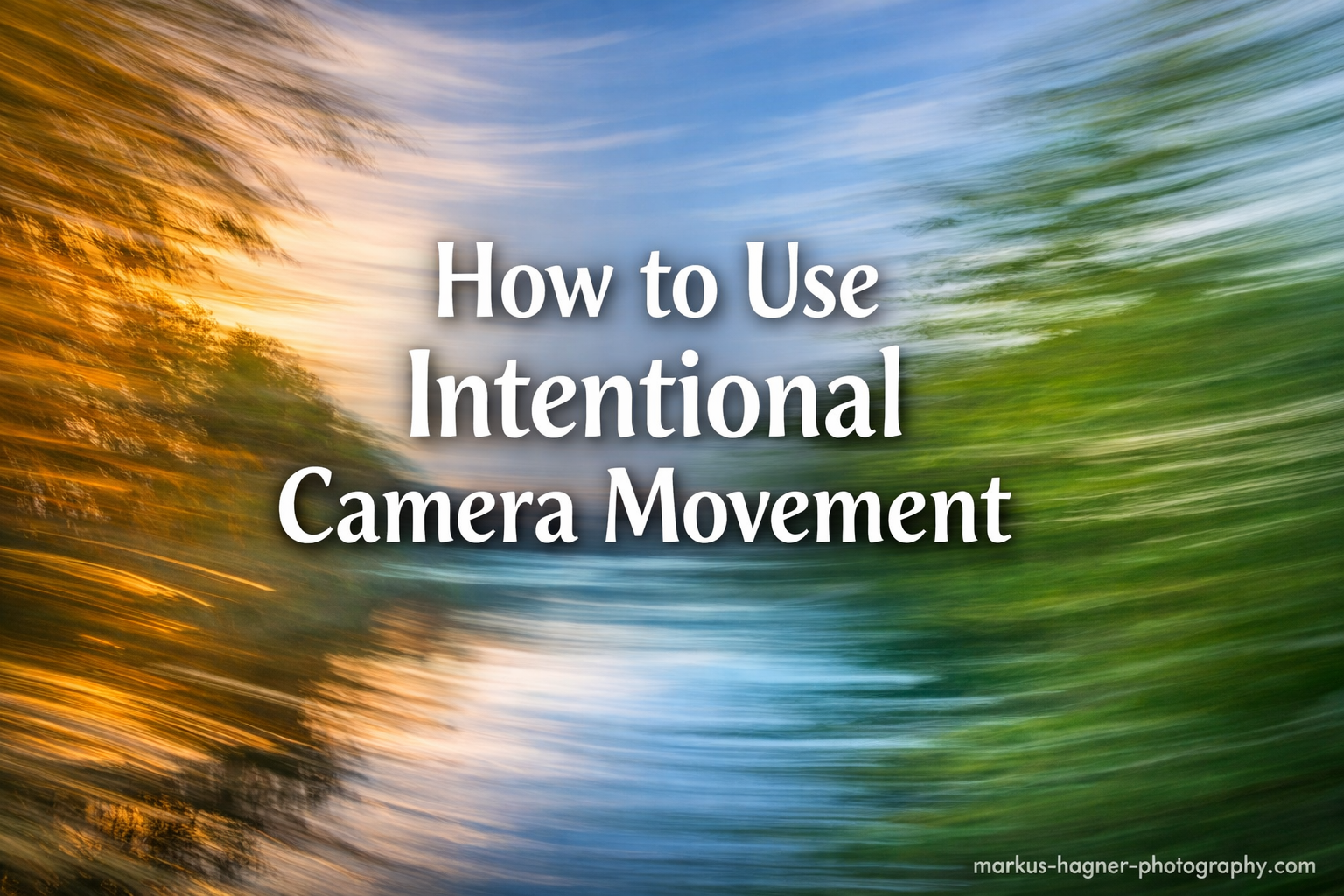
Have you ever looked at an abstract photograph and wondered how the photographer achieved that dreamy, impressionist quality? I spent years chasing sharpness in every shot until I discovered intentional camera movement (ICM). This technique transformed how I approach photography and opened up an entirely new creative outlet.
In this guide, you will learn exactly how to use intentional camera movement to create abstract photos that stand out. We will cover everything from camera settings to specific movement techniques, along with practical tips I have gathered from hundreds of hours experimenting in the field.
What Is Intentional Camera Movement (ICM)?
Intentional camera movement is a creative photography technique where you deliberately move the camera during a long exposure. Unlike camera shake, which ruins photos, ICM uses controlled motion to transform ordinary scenes into abstract, impressionist art.
The key difference lies in intention and control. Camera shake happens accidentally, usually from unsteady hands or slow shutter speeds. ICM requires purposeful movement, timing, and technique. You become the artist painting with light rather than simply recording it.
This technique draws inspiration from Impressionist painters like Monet who captured the feeling of a scene rather than precise details. ICM photographs often evoke emotion through color, texture, and form rather than recognizable subjects. The results can range from subtle motion blur to completely abstract compositions that barely hint at the original scene.
Essential Equipment for ICM Photography
The beauty of ICM is that you do not need specialized gear. Any camera with manual mode works, from entry-level DSLRs to professional mirrorless systems. I have even created compelling ICM shots with a basic point-and-shoot camera.
Wide-angle lenses excel for landscape ICM, while telephoto lenses can create interesting compression effects. Zoom lenses offer versatility since you can adjust focal length mid-exposure for unique results.
Tripods are optional. Some photographers prefer handholding for greater freedom of movement, while others use tripods for specific techniques like vertical panning. ND filters become essential in bright conditions, allowing you to use slower shutter speeds even during daytime. A 6-stop or 10-stop ND filter gives you the most flexibility.
Camera Settings for Intentional Camera Movement
Getting your settings right makes the difference between an artistic blur and a muddy mess. After extensive testing, I have found these settings produce the most consistent results.
Shutter Speed: The Most Critical Setting
Shutter speed determines how much blur you capture. For ICM photography, I recommend starting between 1/5 second and 2 seconds. This range gives you enough time to create intentional motion without losing all definition.
Shorter speeds around 1/5 to 1/2 second work well for subtle motion blur. Longer exposures of 1 to 2 seconds create more abstract, painterly effects. Experiment with different durations to see what matches your vision.
Aperture and ISO Considerations
Set your aperture between f/8 and f/16. Smaller apertures reduce the amount of light hitting the sensor, which helps you achieve slower shutter speeds without overexposing. They also provide enough depth of field to keep some elements recognizable.
Keep ISO as low as possible, ideally 100 or 200. Since you are intentionally using slow shutter speeds, you want to minimize noise and maintain the cleanest image quality possible.
Shooting Mode
Manual mode gives you complete control over all settings. Start with these baseline settings: ISO 100, f/11, and adjust shutter speed based on available light. Use your camera’s histogram to avoid clipping highlights or shadows.
How to Select Subjects for ICM Photography In 2026?
Not every scene works well with intentional camera movement. Learning what subjects translate into compelling abstract images will accelerate your learning curve significantly.
Landscapes with strong vertical elements like trees or architectural columns work beautifully with vertical panning. Seascapes provide smooth color gradients and horizontal lines perfect for horizontal movement. Forests with autumn colors create stunning ICM images as the camera blends warm tones together.
Look for scenes with distinct colors, textures, and contrast. Simple compositions with clear lines produce better results than cluttered scenes. The KISS principle (Keep It Simple, Stupid) applies perfectly here. A single tree against a colorful sunset will create a more striking ICM image than a busy forest scene.
Avoid scenes with strong horizontal and vertical elements competing for attention. The camera movement will clash with the subject’s natural lines, creating confusing results. Subjects with motion of their own, like people or cars, can work but require more precise timing.
Movement Techniques for Intentional Camera Movement (2026)
Mastering different movement patterns unlocks the full creative potential of ICM. Each technique produces distinct visual effects suited to different subjects and moods.
Horizontal Panning
Move your camera smoothly from side to side during the exposure. This technique works wonderfully for landscapes, seascapes, and forest scenes. Keep your movement parallel to the horizon for the cleanest results.
Start moving before pressing the shutter, continue through the exposure, and only stop after the shutter closes. This ensures smooth acceleration and deceleration rather than jerky starts and stops.
Vertical Movement
Move the camera up or down during exposure to emphasize vertical elements like trees, buildings, or waterfalls. This technique creates strong leading lines and can make subjects appear taller and more dramatic.
A tripod helps with vertical movements, allowing you to constrain motion to a single axis. Without a tripod, practice keeping your horizontal position steady while moving vertically.
Rotation and Twisting
Rotate the camera around its lens axis during exposure to create circular blur patterns. This technique transforms ordinary scenes into abstract swirls of color and can produce stunning results with the right subjects.
Twisting combines rotation with another movement direction. Experiment with rotating while panning horizontally or vertically for unique effects. These techniques work particularly well with subjects featuring circular elements.
Zoom Blur
Adjust your zoom ring during exposure to create radial blur emanating from the center of the frame. Start at your widest focal length and zoom in, or start tight and zoom out. Both directions produce different effects.
This technique requires practice to execute smoothly. The zoom movement must be consistent throughout the exposure. Stuttering zoom adjustments create uneven, distracting blur patterns.
Freestyle and Wiggle
Once you master controlled movements, try freestyle ICM. Move the camera in random patterns, figure eights, or combine multiple techniques. This approach embraces unpredictability and often yields the most unique results.
Wiggle techniques involve small, rapid movements that create textured blur rather than smooth streaks. These work well for creating impressionist effects reminiscent of pointillist paintings.
Creative Timing and Speed Variations
The timing of your movement matters as much as the direction. Starting your movement before pressing the shutter creates different effects than beginning movement after the exposure starts.
Experiment with varying speeds throughout the exposure. Start slow, accelerate, then slow down again. Or begin fast and gradually reduce speed. Each variation produces different blur characteristics.
The 20-60-20 rule suggests spending 20% of your time on setup, 60% on shooting variations, and 20% on review and adjustment. This keeps you moving and experimenting rather than overthinking each shot.
Practice Tips for Better ICM Results
ICM photography involves a high failure rate, and that is completely normal. Professional photographers shooting ICM often keep only 1 in 50 or even 1 in 100 shots. Embrace this aspect as part of the creative process.
Shoot in bursts when you find a promising scene. Try multiple variations of movement, speed, and timing. Review your results and adjust accordingly. This iterative approach leads to consistent improvement.
Use ICM as a backup technique when weather does not cooperate for traditional photography. Overcast days that seem disappointing for landscape work become perfect opportunities for abstract ICM images. The soft, diffused light reduces contrast and makes exposure easier.
Print your favorite ICM images. These abstract photographs often translate beautifully to fine art prints and make striking wall art. Seeing your work printed provides motivation and helps you evaluate what works.
Common Mistakes to Avoid
Beginners often move the camera too quickly, resulting in muddy brown or gray images without definition. Slow down your movements. Remember, you want to blend colors and shapes, not obliterate them completely.
Choosing the wrong subjects frustrates many new ICM photographers. Busy scenes with competing elements rarely translate well. Simplify your compositions and focus on color and texture over detail.
Overprocessing ICM images in post-production destroys their natural, organic quality. These images need minimal editing. A slight contrast boost or saturation adjustment usually suffices. Heavy processing makes ICM photos look artificial.
Giving up too early prevents many photographers from discovering this technique’s potential. Your first attempts will disappoint you. Keep practicing, study successful examples, and your skills will develop.
Frequently Asked Questions
What techniques can you use to create abstract photos?
Several techniques create abstract photos including intentional camera movement, long exposure with stationary subjects, multiple exposures, and extreme close-up photography. ICM specifically involves moving the camera during exposure to blur subjects into colors and shapes. Other methods include using reflections, shooting through textured glass, and intentional overexposure or underexposure.
What is the 20-60-20 rule in photography?
The 20-60-20 rule suggests dividing your photography time into three phases: 20% for setup and preparation, 60% for active shooting and experimentation, and 20% for review and adjustment. This ensures you spend most of your time creating rather than overthinking, while still leaving room for evaluation and refinement.
How do you do intentional camera movement?
To do intentional camera movement, first set your camera to manual mode with ISO 100, aperture between f/8 and f/16, and shutter speed between 1/5 and 2 seconds. Frame your shot, start moving the camera in your chosen direction, press the shutter while continuing the movement, and keep moving until the exposure ends. Common movements include horizontal panning, vertical movements, rotation, zoom blur, and freestyle patterns.
What is the 300 rule in photography?
The 300 rule is a guideline for astrophotography that helps prevent star trailing. It states you should divide 300 by your focal length to determine the maximum shutter speed in seconds before stars appear as trails rather than points. For example, with a 20mm lens, your maximum exposure would be 15 seconds (300 divided by 20). This differs from ICM where trailing and blur are intentional.
Conclusion
Learning how to use intentional camera movement to create abstract photos opens up endless creative possibilities. This technique transforms ordinary scenes into impressionist art and helps you see photography through a different lens.
Start with simple horizontal panning, master your camera settings, and gradually explore more complex movements. Remember that ICM embraces imperfection. Your failed shots teach you as much as your successes.
Grab your camera, head outside, and start experimenting with intentional camera movement today. The abstract images you create might become your favorite photographs yet.