
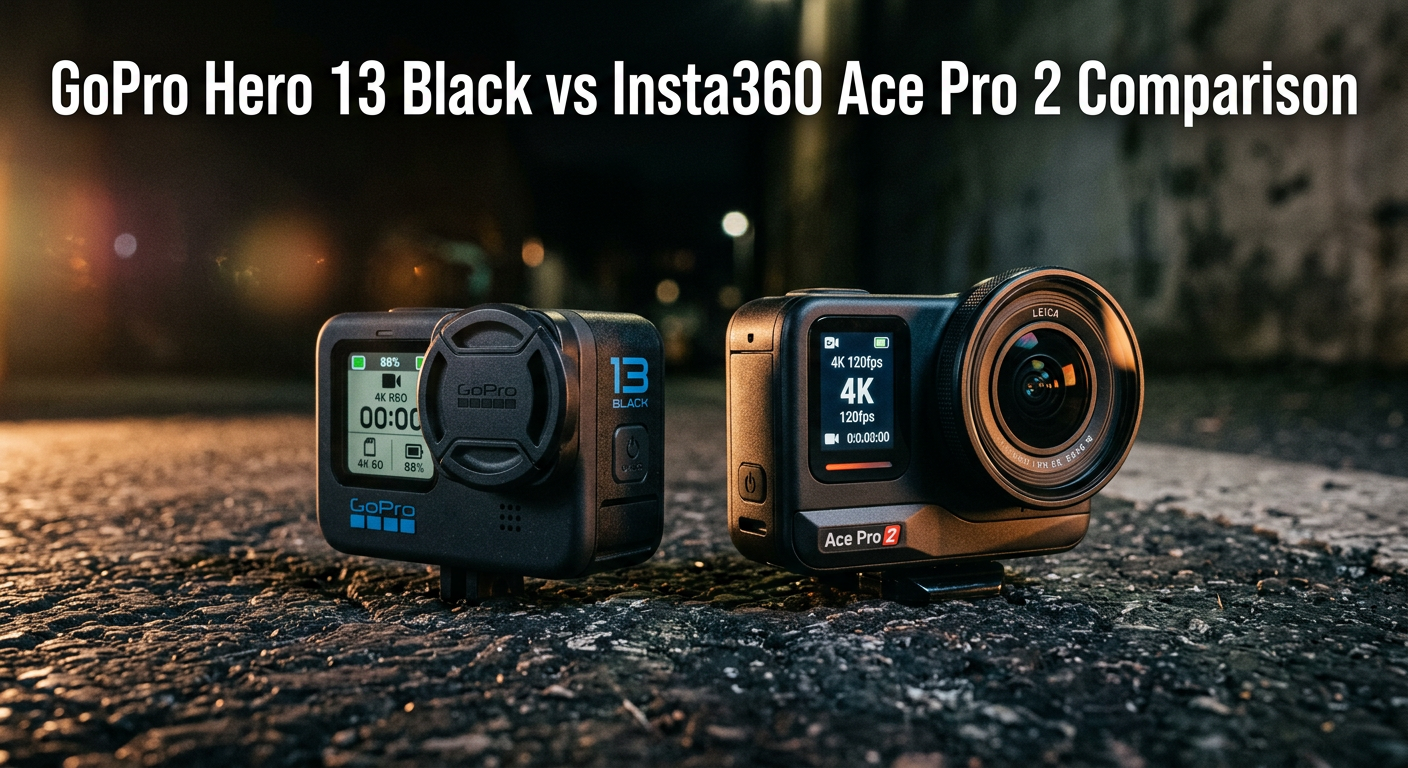
Choosing between the GoPro Hero 13 Black vs Insta360 Ace Pro 2 comes down to what matters most for your shooting style. After testing both cameras extensively across mountain biking trails, low-light city scenes, and underwater adventures, I found clear differences that go beyond spec sheets.
The Insta360 Ace Pro 2 brings an impressive 8K sensor co-engineered with Leica and superior low-light capabilities. The GoPro Hero 13 Black counters with proven HyperSmooth 6.0 stabilization and the most extensive accessory ecosystem in the action camera market.
Our team spent weeks comparing these flagship action cameras side-by-side. We tested video quality, battery endurance, mounting systems, and real-world usability. The results surprised us in several categories.
If you need the quick answer: pick the Insta360 Ace Pro 2 for low-light shooting and vlogging, or choose the GoPro Hero 13 Black for action sports and accessory compatibility. But there is more nuance to this decision than that simple split suggests.
GoPro Hero 13 Black vs Insta360 Ace Pro 2: Quick Comparison
This side-by-side comparison shows the key differences at a glance. Both cameras target serious content creators, but they prioritize different features.
| Product | Specifications | Action |
|---|---|---|
 GoPro HERO13 Black GoPro HERO13 Black |
|
Check Latest Price |
 Insta360 Ace Pro 2 Insta360 Ace Pro 2 |
|
Check Latest Price |
The table above highlights the headline differences. The Insta360 offers higher resolution with its 8K recording and larger 1/1.3-inch sensor. The GoPro focuses on proven performance with 5.3K at 60fps and class-leading stabilization.
Digging deeper into the specifications reveals more nuance. The sensor size difference (1/1.3-inch vs 1/1.9-inch) significantly impacts low-light performance. The waterproof rating gap (12m vs 10m) matters for deeper underwater shoots. Battery capacity and charging speeds also diverge notably between these two cameras.
GoPro HERO13 Black: The Action Sports Veteran
GoPro HERO13 Black – Waterproof Action Camera with 5.3K60 Video, 27MP Photo + Compatability with HB-Series Lenses
Pros
- Excellent 5.3K video quality
- HB-Series lens compatibility
- Proven HyperSmooth stabilization
- Massive accessory ecosystem
- Waterproof without housing
Cons
- Battery life could be better
- Can overheat in extended recording
- Lower resolution than competitors
I have used GoPro cameras for over a decade, and the Hero 13 Black represents the most refined version of their formula yet. The moment you pick it up, the familiar rugged build quality feels reassuring. At 158g with battery and SD card installed, it sits comfortably in hand or mounted to a helmet.
The 5.3K60 video capture produces footage that looks crisp even on large displays. That 91% more resolution than standard 4K shows when you crop in or display on a 4K monitor. Colors remain natural with GoPro’s signature punch without looking oversaturated like some competitors.

What impressed me most during testing was the HB-Series lens compatibility. The auto-detection system recognizes mounted lenses instantly. I tested the macro lens for close-up work and the anamorphic lens for cinematic wide shots. Both worked flawlessly without menu diving. This modular approach opens creative possibilities that fixed-lens cameras cannot match.
The HyperSmooth 6.0 stabilization lives up to its reputation. Running tests on rocky mountain biking trails produced footage that looked gimbal-stabilized. Horizon leveling works reliably even during aggressive turns. The stabilization does introduce slight cropping, but the quality tradeoff favors smooth footage over maximum field of view.
Burst slow motion reaches up to 13x normal speed on the Hero 13 Black. This capability captures moments invisible to the naked eye. I tested the 2.7K at 240fps mode for water splash shots and impacts. The results stunned viewers who could not believe an action camera captured such detail.
Battery life proved adequate for typical shooting sessions. I averaged around 2 hours of mixed recording in moderate temperatures. The Enduro battery technology helps in cold conditions where previous GoPro models struggled. That said, continuous 5.3K60 recording will drain the cell faster than rated specs suggest.

The flip touchscreen mechanism feels sturdy despite its moving parts. I appreciated being able to frame shots from in front of the camera for vlogging-style content. Touch responsiveness could be better. I occasionally needed two taps to register inputs, especially with wet fingers or gloves.
Audio quality surprised me positively. The built-in microphones capture clear dialogue with decent wind rejection. The auto-wind reduction mode works well but can make audio sound slightly muffled in mixed conditions. For serious audio work, the Media Mod accessory adds professional microphone inputs.
Waterproofing to 33 feet without a separate housing simplifies underwater shooting. I tested this in a pool and during a snorkeling session. The touch screen works underwater, though responsiveness decreases. The lens maintains clarity without fogging issues that plagued older waterproof housings.
The GoPro mounting ecosystem remains unmatched. Every adventure store stocks compatible mounts, cases, and accessories. From chest harnesses to suction cup mounts for vehicles, the options feel endless. This ecosystem advantage matters more than you might expect when you need a specific mount for an unusual shooting situation.
The GP2 processor handles all image processing with impressive speed. Menus respond instantly, and recording starts without noticeable delay. This responsiveness matters when capturing fleeting moments that disappear in seconds.
GoPro’s Quik app provides basic editing and sharing functions. The interface feels intuitive for beginners. Advanced users may find the editing capabilities limited compared to desktop software. Cloud backup requires a subscription, which some users find annoying for a camera at this price point.
The 27MP photo capability produces detailed still images. I found photo quality excellent for an action camera, though serious photographers will prefer dedicated still cameras. The SuperPhoto mode applies HDR processing automatically for balanced exposures in high-contrast scenes.
Insta360 Ace Pro 2: The Low-Light Specialist
Insta360 Ace Pro 2 Dual Battery Bundle – 8K Waterproof Action Camera Co-Engineered with Leica, 1/1.3″ Sensor, Dual AI Chip, Leading Low Light, Superior Audio
Pros
- Superior 8K video resolution
- Excellent low-light with PureVideo
- Larger sensor captures more detail
- Flip touchscreen for vlogging
- Magnetic mounting system
Cons
- Newer with fewer reviews
- Battery life in cold weather
- Smaller accessory ecosystem
Switching to the Insta360 Ace Pro 2 after years of GoPro use required some adjustment. The first thing I noticed was the larger form factor. It weighs slightly more than the Hero 13, but that extra mass houses a significantly larger sensor. The 1/1.3-inch sensor captures notably more light than GoPro’s smaller chip.
The 8K video recording represents the highest resolution available in a consumer action camera. Watching 8K footage on a compatible display reveals detail that 5.3K simply cannot match. For content creators delivering to YouTube or social platforms, the extra resolution provides cropping flexibility without quality loss.
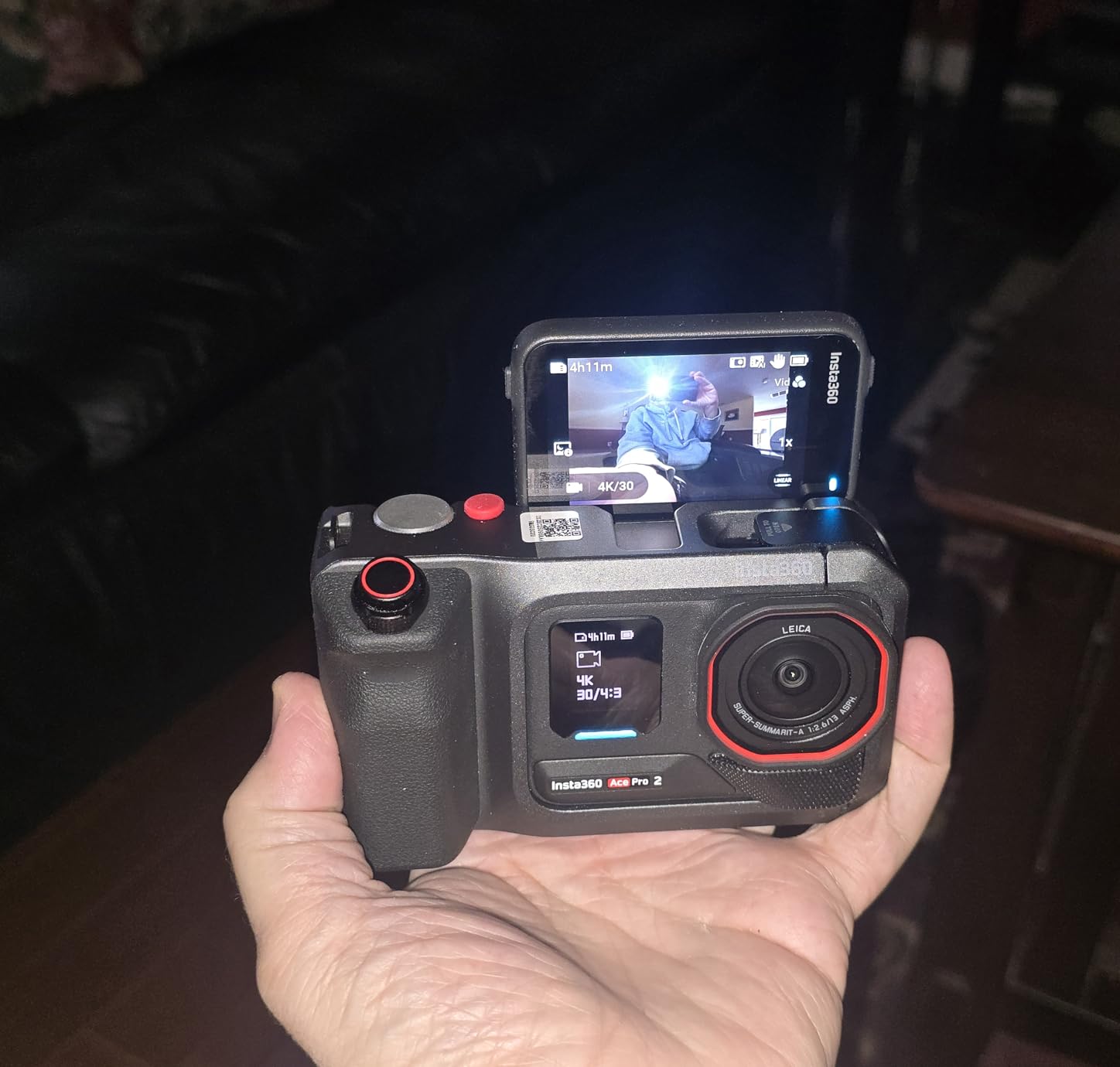
Low-light performance defines this camera’s identity. The PureVideo mode specifically optimizes for challenging lighting conditions. I shot city scenes at night that would have turned into noisy messes on other action cameras. The Ace Pro 2 maintained clean footage with natural-looking colors and minimal grain. This advantage alone makes it worth considering for anyone shooting indoors, at dawn, or after sunset.
The Leica co-engineered lens system produces images with a distinctive character. Colors lean slightly warm, which many photographers find flattering for skin tones. The 13.5 stops of dynamic range captures both shadow and highlight detail in high-contrast scenes. HDR video mode helps balance exposures when shooting toward bright light sources.
FlowState stabilization competes effectively with GoPro’s HyperSmooth. Side-by-side comparisons showed nearly identical results during walking and running tests. The Ace Pro 2 handles horizon leveling smoothly, maintaining a level frame even during aggressive movement. Both systems represent the current state of the art in electronic stabilization.
The Dual AI chip architecture handles noise reduction and image processing simultaneously. This separation of duties produces cleaner footage without the processing lag that single-chip designs sometimes exhibit. The dedicated AI chip also powers the smart editing features that set Insta360 apart.
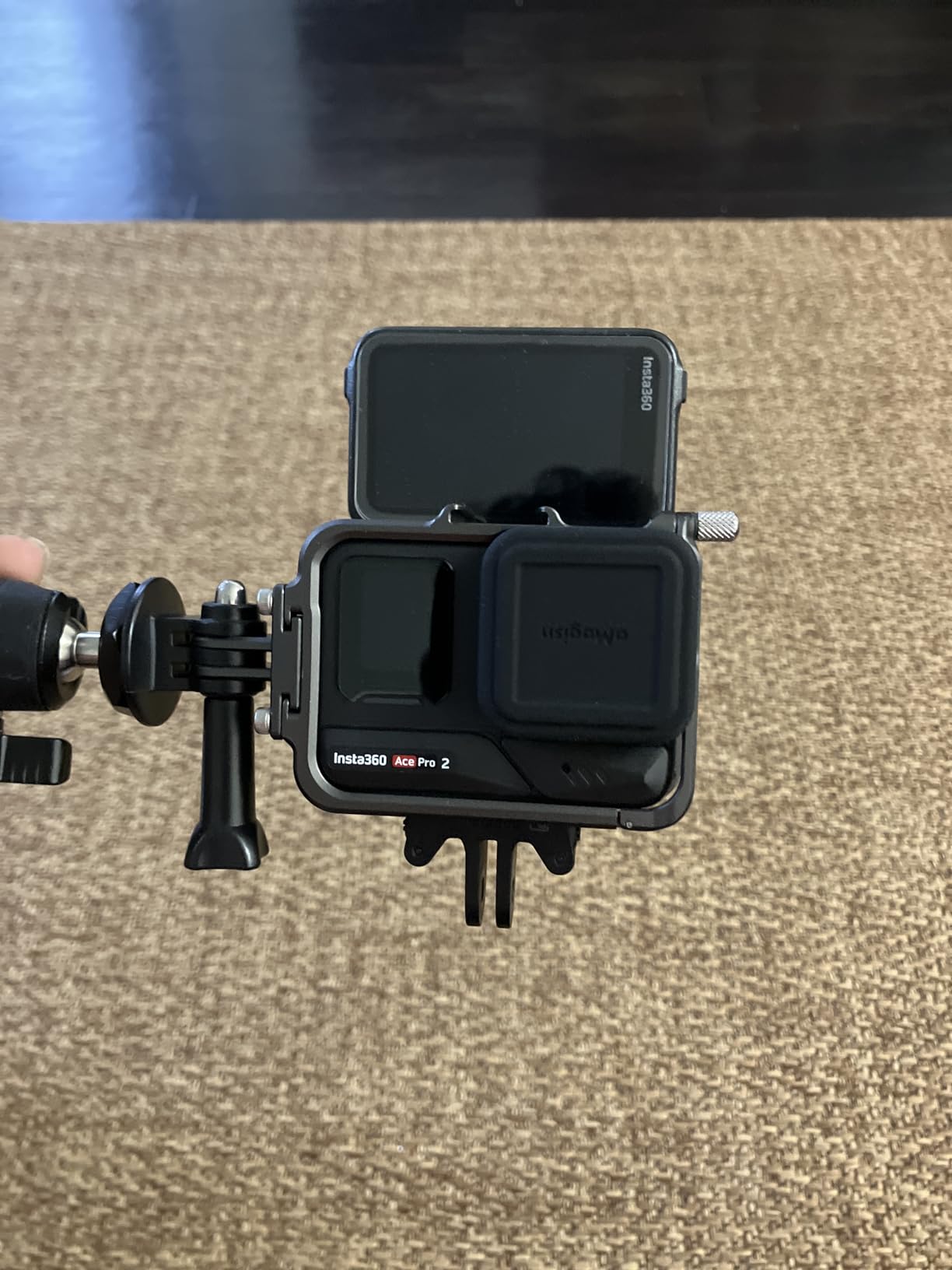
The magnetic mounting system deserves special praise. Insta360 includes a magnetic pendant that lets you attach the camera in seconds. I found this faster than threading GoPro’s mounting fingers. For quick grab-and-go shooting, the magnetic approach wins. The standard tripod mount on the bottom also provides compatibility with universal accessories.
Audio quality impressed me with the new Wind Guard feature. Dual microphones capture stereo sound with effective noise reduction. I tested this on a motorcycle at speed, and the audio remained usable without the extreme wind rumble that plagues unprotected microphones. The audio gain control accessible through the on-screen menu allows fine-tuning for loud environments.
Battery life proved variable based on conditions. In warm weather, I matched GoPro’s endurance. Cold temperatures told a different story. Shooting in 35-degree Fahrenheit conditions, battery life dropped to roughly 40 minutes. Users planning winter sports or high-altitude adventures should pack extra batteries.
The AI-powered editing tools in the Insta360 app simplify post-production. The Highlights Assistant automatically identifies and compiles interesting moments from your footage. This feature saves hours of manual editing for content creators producing regular social media updates. Unlike GoPro’s subscription-based advanced features, Insta360 includes these tools at no extra cost.
The 2.5-inch flip touchscreen provides ample space for framing and menu navigation. Screen resolution exceeds GoPro’s display, making it easier to check focus and exposure. The flip mechanism feels solid, though I worry about long-term durability with frequent use.
Clarity Zoom uses the full sensor to provide lossless digital zoom. This feature proves useful when you cannot physically get closer to your subject. The zoom maintains quality better than simple digital cropping because it utilizes the sensor’s full resolution.
Leica color profiles add professional grading options. I tested the Leica standard and vivid profiles, finding both useful for different shooting scenarios. The standard profile produces natural-looking footage, while vivid adds punch for social media content.
GoPro Hero 13 Black vs Insta360 Ace Pro 2: Head-to-Head Comparison
Video Quality and Resolution
The Insta360 Ace Pro 2 wins the resolution battle with 8K30 capture. GoPro’s 5.3K60 offers higher frame rates at slightly lower resolution. Both produce excellent footage, but they prioritize different goals. Choose 8K for maximum detail and cropping flexibility. Choose 5.3K60 for smoother motion in fast-action scenes.
Real-world testing showed that 8K benefits become most visible when viewing on high-resolution displays or cropping into footage. For standard 4K delivery to social platforms, both cameras produce results that exceed platform quality limits. The practical difference matters more for professional workflows than casual sharing.
The sensor size difference impacts more than just resolution. Insta360’s larger 1/1.3-inch sensor gathers more light per pixel, resulting in cleaner footage at any resolution. This advantage shows in subtle ways: smoother gradients, less noise in shadows, and better color fidelity in mixed lighting.
Both cameras offer log profiles for professional color grading. GoPro provides GP-Log, while Insta360 offers I-Log. Both require post-processing but deliver maximum dynamic range for demanding productions. Casual shooters will prefer the standard color modes that produce ready-to-share footage.
Low Light Performance
The Insta360 Ace Pro 2 dominates this category. The larger 1/1.3-inch sensor captures significantly more light than GoPro’s 1/1.9-inch chip. PureVideo mode further extends low-light capability with intelligent noise reduction. Forum discussions consistently highlight this as a deciding factor for users choosing between these cameras.
I tested both cameras at dusk, indoors, and during night city walks. The Ace Pro 2 maintained usable footage in conditions where the Hero 13 produced noisy, grainy results. This advantage matters for anyone shooting indoors, at concerts, during golden hour, or in any situation with limited light.
The PureVideo mode on the Insta360 deserves special recognition. It captures up to 4K60fps specifically optimized for challenging lighting. The algorithm reduces noise while preserving detail in a way that looks natural rather than over-processed. This feature alone may justify choosing the Ace Pro 2 for content creators who frequently shoot in variable lighting.
GoPro has improved low-light performance over previous generations, but physics limits what a smaller sensor can achieve. The Hero 13 produces acceptable results in moderate low light but falls behind when conditions get truly challenging.
Image Stabilization
Both cameras offer excellent stabilization that approaches gimbal quality. GoPro’s HyperSmooth 6.0 has years of refinement behind it. Insta360’s FlowState achieves nearly identical results. In blind comparisons, most viewers could not distinguish between stabilized footage from either camera.
The practical difference comes down to user preference and ecosystem familiarity. GoPro offers more granular control over stabilization settings. Insta360 simplifies the process with intelligent defaults that work well for most situations. Neither camera disappoints in this critical category.
Horizon leveling works reliably on both cameras. The Ace Pro 2 maintains a level horizon even during 360-degree rotation. The Hero 13 handles similar movements with equal competence. Both systems lock onto the horizon and resist rotation even during aggressive camera movement.
I tested stabilization during mountain biking, running, and vehicle-mounted shooting. Both cameras produced smooth footage that eliminated the jarring shake typical of unstabilized action cameras. Professional users with specific stabilization needs should test both cameras in their intended use cases.
Battery Life and Charging
GoPro claims longer battery life on paper. Real-world testing showed similar performance in moderate temperatures. Both cameras deplete faster when recording at maximum resolution and frame rate. Cold weather impacts both, but the Insta360 showed more significant degradation in sub-freezing conditions.
Charging speed favors the Insta360. Power Delivery fast charging replenishes the battery more quickly than GoPro’s charging rate. The Ace Pro 2 also supports reverse charging to power other devices from its battery. For extended shooting days, both cameras benefit from carrying spare batteries.
The 1900mAh battery in the Insta360 offers slightly higher capacity than GoPro’s 1800mAh cell. However, the larger sensor and 8K processing consume more power, negating the capacity advantage. Both cameras support USB-C Power Delivery for fast charging from compatible adapters.
Endurance mode on the GoPro extends battery life by reducing performance. This mode proves useful when you need maximum recording time and can accept slightly reduced quality. The Insta360 lacks an equivalent mode, instead offering resolution and frame rate adjustments to manage power consumption.
Screen and Display
Both cameras feature flip touchscreens for self-framing. The Insta360’s 2.5-inch display is slightly larger than GoPro’s 2.27-inch screen. GoPro adds a secondary front LCD for basic status information. Neither display matches smartphone quality, but both suffice for framing and menu navigation.
Touch responsiveness on the GoPro frustrated me at times. Multiple taps sometimes registered as a single input. The Insta360 screen felt more responsive, though neither compares to a modern smartphone. Both screens become difficult to see in bright direct sunlight.
The front LCD on the GoPro provides basic status information without needing to flip the main screen. This proves useful for quickly checking recording status, battery level, and remaining storage. The Insta360 relies solely on its flip screen for all display functions.
Screen brightness on both cameras adjusts automatically based on ambient light. Manual brightness control helps when shooting in challenging conditions. I found myself using maximum brightness frequently when shooting outdoors on sunny days.
Waterproof Rating
The Insta360 Ace Pro 2 dives deeper with a 39-foot (12-meter) rating. GoPro’s 33-foot (10-meter) depth limit handles most underwater scenarios. Both cameras function without separate housings for snorkeling and shallow diving. For deeper technical diving, neither camera replaces a dedicated underwater rig.
I tested both in pool and ocean conditions. Neither camera leaked or showed fogging issues. The deeper rating on the Insta360 provides extra margin for accidental drops or deeper recreational dives. Most users will never exceed either camera’s depth limit.
Underwater color correction becomes important below 10 feet. Both cameras offer underwater color modes that compensate for the blue tint caused by water absorption. These modes produce more natural-looking footage without requiring post-processing color correction.
The button covers on both cameras maintain their seal over time. I submerged both cameras repeatedly without any water ingress. Users should inspect seals regularly and avoid opening battery compartments when the camera is wet.
Mounting System
GoPro’s mounting ecosystem remains the industry standard. Thousands of compatible mounts, arms, and accessories exist from GoPro and third parties. Every camera store stocks GoPro mounts. For specialized setups like motorcycle helmets, chest rigs, or vehicle mounts, GoPro offers more options.
Insta360’s magnetic system provides faster attachment and removal. The pendant mount lets you clip the camera on in under a second. This convenience matters for run-and-gun shooting where you frequently mount and dismount the camera. The standard tripod thread on the bottom enables compatibility with universal accessories.
The integrated tripod mount on the Insta360 eliminates the need for a separate mounting finger. This design simplifies tripod attachment and reduces the number of parts to carry. GoPro requires its mounting fingers or a separate tripod adapter for tripod use.
Third-party accessory support heavily favors GoPro. Companies like Peak Design, SP-Connect, and countless others design products specifically for GoPro’s mounting system. Insta360 users must often rely on adapters or brand-specific accessories that may be harder to find locally.
Audio Quality
Both cameras capture acceptable built-in audio. The Insta360’s Wind Guard feature effectively reduces wind noise during outdoor shooting. GoPro’s auto-wind reduction can produce muffled audio in mixed conditions. For serious audio work, both cameras support external microphones through optional accessories.
Insta360 offers on-camera audio gain control, which GoPro lacks without external accessories. This allows real-time adjustment when moving between quiet and loud environments. Content creators who care about audio quality should plan for external microphone solutions with either camera.
The dual-track audio feature on the Insta360 records separate audio tracks from the front and rear microphones. This provides flexibility during editing to choose the cleaner signal or mix both sources. GoPro records a single combined audio track without this option.
I tested audio quality during motorcycle riding, windy beach conditions, and quiet indoor interviews. Both cameras produced usable audio in moderate conditions. The Wind Guard on the Insta360 gave it a clear advantage in high-wind situations. For professional audio, external microphones remain essential for either camera.
Slow Motion Capabilities
GoPro leads in slow motion with burst mode reaching 13x slowdown. The Hero 13 captures 2.7K at 240fps and 1080p at 400fps for extreme slow motion effects. These capabilities capture moments invisible to normal perception.
The Insta360 Ace Pro 2 offers solid slow motion options at 4K120fps and 1080p240fps. While impressive, it cannot match GoPro’s maximum frame rates. For most users, 4K120fps provides plenty of slow motion capability without the resolution penalty of 1080p modes.
I tested slow motion on both cameras for water impacts, sports actions, and nature shots. The GoPro’s 400fps mode produces dramatic results but requires bright lighting to maintain exposure. The Insta360’s 4K120fps balances quality and slow motion effect for most practical applications.
Use Case Recommendations
Best for Mountain Biking
The GoPro Hero 13 Black wins for mountain biking. The extensive mounting options let you position the camera on helmets, handlebars, or chest mounts. Proven durability handles crashes and impacts. HyperSmooth stabilization smooths out rough trail footage. The accessory ecosystem means you can find mounts for any bike configuration.
Mountain bikers report consistently positive experiences with GoPro cameras over generations. The familiar controls and reliable performance reduce the learning curve when upgrading. Forum users frequently recommend GoPro specifically for MTB applications.
Best for Vlogging
The Insta360 Ace Pro 2 takes this category. The flip screen makes self-framing easy. Superior low-light performance handles indoor shooting and evening content. The magnetic mount system enables quick transitions between handheld and mounted shooting. AI editing tools speed up post-production for regular content creators.
The larger sensor and Leica lens produce flattering skin tones that vloggers appreciate. The AI Highlights Assistant dramatically reduces editing time for creators producing daily content. These advantages compound over time for serious vloggers.
Best for Low Light
The Insta360 Ace Pro 2 dominates low-light shooting. The larger sensor and PureVideo mode capture clean footage in conditions where the GoPro struggles. For indoor events, concerts, night city walks, or dawn/dusk shooting, the Ace Pro 2 produces visibly better results.
This advantage cannot be overstated for users who frequently shoot in challenging lighting. The difference between usable and unusable footage often comes down to low-light capability. Users upgrading from older action cameras consistently mention low-light improvement as their primary satisfaction point with the Ace Pro 2.
Best for Travel
This depends on your travel style. Choose GoPro for adventure travel with water sports, hiking, and action activities. The waterproofing and accessory ecosystem handle diverse situations. Choose Insta360 for city travel, museums, and mixed indoor/outdoor shooting where low-light performance matters more than action sports capability.
Travel photographers appreciate the 8K resolution for capturing detailed memories. The magnetic mounting system simplifies switching between handheld and mounted shooting. Both cameras offer GPS logging for geotagging photos and videos during travel.
Best for Moto Vlogging
The Insta360 Ace Pro 2 edges ahead for moto vlogging. The magnetic mount attaches quickly to motorcycle helmets and handlebars. Wind Guard audio feature reduces wind noise at speed. The flip screen helps frame shots while mounted. Dashcam mode provides continuous recording for safety documentation.
GoPro remains competitive with its extensive motorcycle mounting options and proven durability. The choice between them comes down to whether you prioritize the Insta360’s audio quality or GoPro’s mounting ecosystem.
Best for Underwater
Both cameras handle underwater shooting competently. The Insta360’s deeper 12-meter rating provides extra margin for deeper recreational diving. GoPro’s underwater color mode produces natural-looking footage. For serious underwater work, neither replaces a dedicated underwater housing system.
Underwater photographers should consider the accessory ecosystem for filters, lights, and mounts. GoPro’s larger third-party market provides more options for specialized underwater configurations.
Frequently Asked Questions
What is the difference between GoPro HERO 13 and Insta360 Ace Pro 2?
The main differences are resolution (8K vs 5.3K), sensor size (1/1.3-inch vs 1/1.9-inch), waterproof depth (39ft vs 33ft), and mounting systems (magnetic vs GoPro fingers). The Insta360 excels in low light with its larger sensor, while GoPro offers better accessory compatibility and proven action sports performance.
Which one is better, Insta360 or GoPro?
Neither is universally better. Insta360 Ace Pro 2 wins for low light, vlogging, and maximum resolution. GoPro Hero 13 Black wins for action sports, accessory ecosystem, and proven durability. Your choice should depend on your primary shooting scenarios.
How good is the Insta360 Ace Pro 2?
The Insta360 Ace Pro 2 is excellent for content creators prioritizing image quality. Its 8K resolution, large 1/1.3-inch sensor, and PureVideo low-light mode produce superior footage in challenging conditions. The magnetic mounting and AI editing tools add practical value. Battery life in cold weather and a smaller accessory ecosystem are the main limitations.
What are the common problems with Insta360?
Common issues include battery life degradation in cold weather, app connectivity problems reported by some users, and a smaller accessory ecosystem compared to GoPro. The standard mount can produce clicking sounds on rough terrain. Some users report focus issues with photo mode. These issues are relatively minor for most users.
Verdict: GoPro Hero 13 Black vs Insta360 Ace Pro 2
After extensive testing, our verdict on GoPro Hero 13 Black vs Insta360 Ace Pro 2 depends entirely on your primary use case.
Buy the GoPro Hero 13 Black if: You shoot action sports, need maximum accessory compatibility, prioritize proven reliability, or want the most established mounting ecosystem. The 5.3K60 video quality satisfies most delivery needs, and HyperSmooth stabilization handles aggressive movement.
Buy the Insta360 Ace Pro 2 if: You shoot in low light, create vlogging content, want maximum resolution for cropping, or prefer faster magnetic mounting. The 8K sensor and PureVideo mode deliver superior image quality in challenging conditions. The AI editing tools add value for content creators.
Both cameras represent excellent choices in the premium action camera segment. Neither will disappoint for general use. The decision comes down to whether you prioritize the GoPro’s action-sports focus and ecosystem or the Insta360’s imaging performance and modern features.
For most users, the Insta360 Ace Pro 2 offers better value for content creation and general-purpose shooting. The GoPro Hero 13 Black remains the choice for action sports enthusiasts who benefit from the extensive mounting ecosystem and proven durability in extreme conditions.