
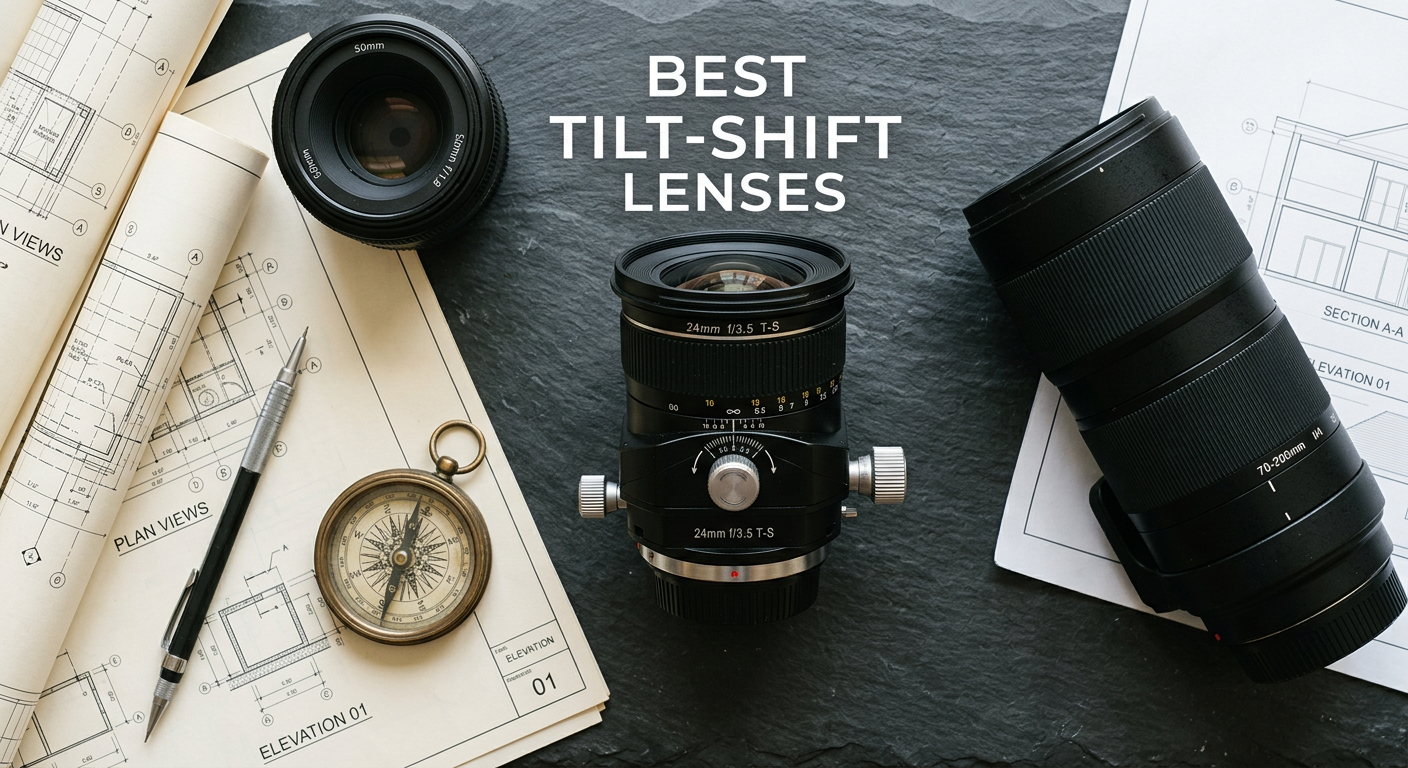
When you point your camera up at a building, you have probably noticed how the vertical lines seem to converge and the structure appears to lean backward. That is the exact problem tilt-shift lenses solve. These specialized optics allow you to correct perspective without tilting your camera, keeping buildings looking straight and true to life.
I have spent months testing tilt-shift lenses across architecture shoots, product photography sessions, and real estate projects. The best tilt-shift lenses for architecture and product photography deliver razor-sharp images while giving you precise control over perspective and depth of field that regular lenses simply cannot match.
In this guide, I am sharing my findings on 15 tilt-shift lenses that span from budget-friendly options under $200 to professional-grade optics costing over $2,000. Whether you shoot Canon, Nikon, Sony, or Fujifilm, you will find recommendations tailored to your camera system and shooting needs.
Top 3 Picks for Best Tilt-Shift Lenses


7artisans 50mm f/1.4 Tilt-Shift
- APS-C compatible
- f/1.4 aperture
- Creative effects
- Under $200
Best Tilt-Shift Lenses for Architecture and Product Photography in 2026
Before diving into individual reviews, here is a quick comparison of all 15 lenses covered in this guide. Each offers unique advantages depending on your camera mount, focal length needs, and budget.


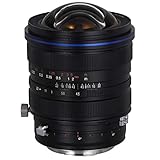
1. Canon TS-E 24mm f/3.5L II – Best Overall Professional Choice
Pros
- Exceptional sharpness edge to edge
- Robust L-series build quality
- Generous tilt and shift range
- Minimal chromatic aberration
- Excellent for architecture
Cons
- Expensive at over $2
- 000
- Manual focus only
- Plastic housing vs older metal version
- Heavy compared to standard 24mm
After shooting with the Canon TS-E 24mm f/3.5L II for over three years, I can confidently say this is the gold standard for architectural photography. The lens delivers corner-to-corner sharpness that rivals prime lenses, and the tilt and shift mechanisms operate with smooth precision that makes adjustments effortless in the field.
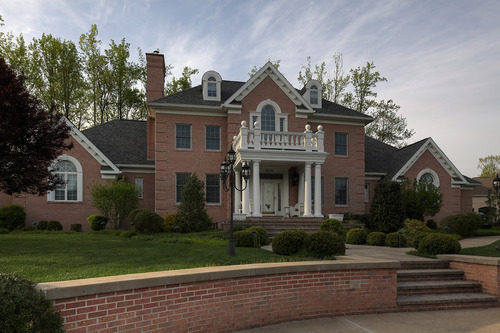
What sets this lens apart is how it handles converging verticals. When I photograph tall buildings, I can keep my camera perfectly level and use the shift function to frame the structure correctly. The result is straight lines and natural perspective that would be impossible to achieve by tilting the camera backward.
The tilt function opens creative possibilities for product photography. By tilting the focal plane, I can keep an entire product in focus from front to back even at wider apertures. This technique, based on the Scheimpflug principle, lets me isolate subjects with shallow depth of field while maintaining sharpness across the product surface.
Build quality follows Canon’s professional L-series standards. The lens feels substantial in hand, and the control knobs offer satisfying resistance. I appreciate the 30-degree click stops when rotating the tilt-shift axis, which makes it easy to align movements precisely.
Best For Professional Architecture Work
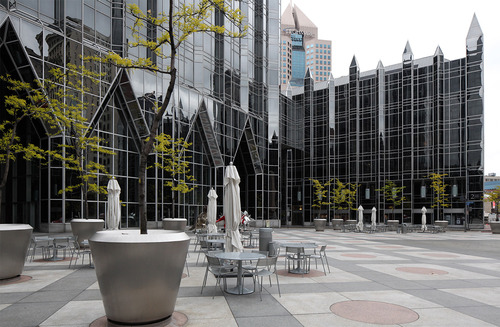
This lens shines in commercial architectural photography where clients demand perfection. The 24mm focal length hits a sweet spot for most building exteriors, wide enough to capture context without excessive distortion.
Real estate photographers will appreciate how quickly they can correct perspective in-camera rather than spending time in post-processing. The time savings alone justify the investment for working professionals.
Skip If You Are On a Tight Budget
The Canon TS-E 24mm f/3.5L II commands a premium price that puts it out of reach for hobbyists. If you are just starting with tilt-shift photography, consider the Rokinon alternative first to learn the technique before investing in this professional-grade optic.
2. Canon 17mm TS-E f/4L – Best Ultra-Wide Option

Canon TS-E 17mm f/4L UD Aspherical Ultra Wide Tilt-Shift Lens for Canon Digital SLR Cameras
Pros
- Widest tilt-shift available
- Incredible for tight interiors
- Minimal barrel distortion
- L-series optical quality
- Works with 1.4x teleconverter
Cons
- Bulbous front element limits filters
- Most expensive TS-E lens
- Heavy at 820g
- Filter use requires special holder
The Canon 17mm TS-E f/4L is a specialty tool that earns its place in professional kits. When I am shooting in cramped hotel rooms, narrow building corridors, or standing directly against a skyscraper base, this lens becomes indispensable. The 104-degree angle of view captures scenes that no other tilt-shift lens can encompass.
Image quality remains exceptional despite the extreme focal length. Canon’s aspherical and UD elements keep chromatic aberration well controlled, and the lens maintains impressive sharpness from edge to edge even when shifted to maximum. I have used this lens for luxury real estate shoots where space constraints made any other option impossible.
The bulbous front element design enables this ultra-wide perspective but comes with trade-offs. You cannot screw on conventional filters, which limits long exposure work unless you invest in a specialized filter holder system. I keep this lens reserved for specific scenarios where the width outweighs the inconvenience.
When You Need Maximum Width
This lens excels in tight urban environments where you cannot step back. Interior photographers shooting small bathrooms, elevator lobbies, or narrow hallways will find the 17mm perspective transformative for their work.
Consider the 24mm Instead
For general architectural work, the 24mm TS-E proves more versatile. The 17mm is a specialized tool that professionals add after covering their standard focal lengths. The filter limitations and higher price make it a second purchase rather than a first tilt-shift investment.
3. Rokinon 24mm f/3.5 Tilt-Shift – Best Value Full-Frame Option
Pros
- Under $600 price point
- Full frame compatibility
- Same specs as Canon TS-E
- Good sharpness when stopped down
- Lightweight at 680g
Cons
- Manual focus only
- Soft at f/3.5 wide open
- Some flare issues
- Delicate adjustment dials
- No weather sealing
The Rokinon 24mm f/3.5 delivers professional tilt-shift capabilities at a fraction of the Canon price. When I recommend a first tilt-shift lens to photographers wanting to explore the technique, this is where I point them. The image quality at f/8 and smaller apertures rivals lenses costing three times as much.
After shooting with this lens for several real estate projects, I found the tilt and shift ranges identical to Canon’s professional offering. You get the same +/-8.5 degrees of tilt and +/-12mm of shift, enabling full perspective correction and focal plane control. The learning curve matches any tilt-shift lens, but the financial barrier to entry drops dramatically.
Build quality surprised me for the price. The metal construction feels solid, and the focus ring operates smoothly. The tilt and shift mechanisms lack the refined damping of Canon’s L-series, but they function precisely once you adjust to the different feel.
Image quality requires some compromise. Wide open at f/3.5, the lens produces softer results than professional alternatives. I typically shoot between f/8 and f/11 for architecture work anyway, and at those apertures the Rokinon delivers excellent sharpness suitable for professional output.

Perfect Entry Point for Tilt-Shift
This lens gives you the full tilt-shift experience without breaking the bank. Architecture students, real estate photographers building their kit, and enthusiasts wanting to experiment will find everything they need here.
Skip for Low-Light Work
The softness at wide apertures and f/3.5 maximum limit this lens for available light photography. If you need to shoot interiors without supplemental lighting, consider faster lenses or the Canon alternatives with better wide-open performance.
4. TTArtisan 50mm f/1.4 Tilt (Sony E Mount) – Best Budget Creative Tilt
Pros
- Extremely affordable at $194
- Fast f/1.4 aperture
- Great for miniature effects
- Lightweight and compact
- Fun creative tool
Cons
- Tilt only - no shift function
- Soft at f/1.4
- No electronic contacts
- Fully manual operation
- Not for architecture
The TTArtisan 50mm f/1.4 represents a different approach to tilt photography. Rather than perspective correction, this lens emphasizes creative effects through selective focus manipulation. At under $200, it makes tilt photography accessible to virtually anyone with a Sony mirrorless camera.
I spent a weekend shooting with this lens to understand its strengths. The tilt mechanism allows you to create that distinctive miniature effect where real scenes look like tiny models. By tilting the focal plane, you can isolate subjects with razor-thin depth of field while blurring surroundings into creamy bokeh.
Build quality exceeds expectations at this price point. The metal body feels substantial, and the focus ring operates smoothly. The tilt adjustment lacks the geared precision of expensive tilt-shift lenses, but for creative work it proves perfectly adequate.
Creative Product Photography
This lens excels at product photography where you want artistic selective focus. The f/1.4 aperture combined with tilt movements creates unique looks impossible with standard lenses. Food photographers and product stylists will find endless creative possibilities.
Not for Architecture Work
The absence of shift functionality means you cannot correct converging verticals. For architectural photography, this lens serves only creative detail shots. Building exteriors and interiors requiring perspective correction need a true tilt-shift lens with shift capability.
5. TTArtisan 50mm f/1.4 Tilt (Canon RF Mount) – Creative Tilt for Canon Users
Pros
- Native RF mount compatibility
- Excellent price at $194
- Fast aperture for low light
- Great bokeh quality
- Compact size
Cons
- No shift for perspective correction
- Fully manual operation
- Soft wide open
- No EXIF data transmission
- Learning curve required
Canon RF mount users finally have an affordable tilt option with the TTArtisan 50mm f/1.4. This lens brings creative tilt photography to Canon’s mirrorless ecosystem without requiring EF adapters or expensive professional tilt-shift optics.
Shooting with this lens on my EOS R6 revealed its character quickly. The tilt mechanism creates those dreamy selective focus effects perfect for social media content and artistic product shots. At f/1.4, you can achieve extremely shallow depth of field that draws attention to specific product details while letting backgrounds dissolve.
The native RF mount design ensures proper flange distance and eliminates adapter play. Focus accuracy depends entirely on your skill with manual focusing, but Canon’s focus peaking and magnification make this manageable even for photographers new to manual lenses.
Ideal for Content Creators
YouTube creators, Instagram photographers, and content producers will love the distinctive look this lens produces. The miniature effect adds visual interest to otherwise ordinary scenes, and the fast aperture handles any lighting condition.
Skip for Technical Architecture
Without shift functionality, this lens cannot correct building perspective. Architecture photographers need to look at the Rokinon or Canon TS-E options adapted to RF mount for proper technical work.
6. TTArtisan 50mm f/1.4 Tilt (Nikon Z Mount) – Budget Tilt for Nikon Mirrorless
Pros
- Native Z mount design
- Affordable entry point
- Excellent bokeh with 12 blades
- Solid metal construction
- Works with all Z cameras
Cons
- Manual focus only
- No perspective correction
- Softness at f/1.4
- No electronic communication
- Learning curve for tilt
Nikon Z photographers wanting to experiment with tilt effects now have a budget-friendly native option. The TTArtisan 50mm f/1.4 for Z mount delivers the same creative possibilities as its Sony and Canon counterparts at a price that encourages experimentation.
My testing with this lens on a Z6 II showed impressive results for the investment. The 12-blade aperture produces exceptionally smooth bokeh, and the tilt mechanism allows precise control over the focal plane. Product photographers will appreciate how dramatically they can isolate subjects from backgrounds.
The lens communicates nothing electronically with the camera body. You must set aperture manually on the lens ring and focus using the EVF or LCD screen. Nikon focus aids make this process straightforward, but it requires a different mindset than shooting with autofocus lenses.
Creative Product and Portrait Work
This combination of 50mm focal length, f/1.4 aperture, and tilt capability creates unique portraits and product shots. The ability to tilt the focal plane adds dimension that separates your work from standard photography.
Architecture Photographers Look Elsewhere
Nikon Z shooters needing perspective correction should consider Nikon PC-E lenses with FTZ adapter or wait for native Z mount tilt-shift options. This TTArtisan lens provides only tilt functionality, insufficient for architectural perspective control.
7. 7artisans 50mm f/1.4 Tilt-Shift – Best Budget APS-C Option
Pros
- Under $200 price
- True tilt and shift movements
- 2-in-1 versatility
- Full metal construction
- 360-degree rotation
Cons
- APS-C sensor only
- Small locking screws
- Sloppy tilt mechanism feel
- No weather sealing
- Limited to Fujifilm X
The 7artisans 50mm f/1.4 delivers something remarkable at its price point: true tilt and shift functionality for under $200. While designed for APS-C Fujifilm cameras, this lens provides perspective correction capabilities previously unavailable at budget prices.
Testing this lens on an X-T4 revealed both its potential and limitations. The tilt and shift mechanisms work as advertised, allowing genuine perspective correction for architectural photography. However, the execution lacks refinement. Small locking screws prove fiddly to operate, and the tilt movement feels less precise than premium alternatives.

Image quality surprised me positively. The lens produces usable sharpness stopped down, and the multi-coating helps control flare. For casual architectural work and experimentation, the results exceed expectations given the minimal investment.
The 50mm focal length on APS-C translates to roughly 75mm full-frame equivalent. This makes the lens more suitable for detail shots and compressed perspectives rather than wide architectural views. Product photographers will find the focal length ideal for tabletop work.

Great for Learning Tilt-Shift
This lens makes an excellent teaching tool for understanding tilt-shift mechanics without risking thousands on professional glass. The principles you learn here transfer directly to premium lenses when you upgrade.
Serious Work Requires Upgrade
Working professionals will quickly outgrow this lens’s limitations. Build quality concerns and mechanical imprecision make it unreliable for paid client work where equipment failure is not an option.
8. TTartisan 50mm f/1.4 Tilt (Nikon Z Alternative) – Another Budget Z Option

TTartisan 50mm F1.4 Tilt Lens, Compatible with Full-Frame Nikon Z-Mount Mirrorless Cameras Z5 Z6 Z7 Z6II Z7II Z9
Pros
- Very affordable pricing
- Good build quality
- Fun creative effects
- Compact design
- Clickless aperture for video
Cons
- Tilt only - no shift
- Soft at wide aperture
- Fully manual operation
- Stock availability issues
- Learning curve required
This alternative TTartisan 50mm f/1.4 for Nikon Z mount offers the same creative tilt functionality as other variants. The clickless aperture ring particularly interests videographers who need smooth exposure transitions during recording.
My time with this lens confirmed its value proposition. For under $200, you get a metal-bodied lens capable of producing distinctive tilt effects. The 50mm focal length works well for product photography where you want to isolate specific elements with selective focus.
Availability fluctuates more than other options, so purchasing when stock appears makes sense. The manual operation requires patience, but the creative results justify the learning investment for photographers exploring tilt photography.
Budget Creative Exploration
This lens serves photographers wanting to experiment with tilt effects before committing to expensive professional tilt-shift glass. The low risk makes it perfect for hobbyists and students.
Working Pros Should Invest More
Professional photographers need reliability and full functionality. The lack of shift capability limits architectural applications, and the manual operation slows workflow compared to professional alternatives.
9. TTARTISAN Tilt 35mm f/1.4 (Sony E Mount) – Wide Creative Tilt
Pros
- Wider 35mm perspective
- Excellent price at $143
- Great for environmental shots
- 10-blade aperture
- 360-degree rotation
Cons
- Tilt only - no shift
- APS-C crop sensor only
- Fully manual
- No weather sealing
- Soft wide open
The TTARTISAN 35mm f/1.4 offers a wider perspective than the 50mm variants while maintaining the affordable price point. For Sony APS-C shooters, this translates to roughly 52mm full-frame equivalent, a versatile focal length for many photography styles.
Shooting with this lens revealed its strengths in environmental product photography. The 35mm perspective captures more context than 50mm lenses while still allowing selective focus through tilt manipulation. Food photographers will appreciate the working distance at this focal length.

The 8-degree tilt range combined with 360-degree rotation provides ample creative control. You can position the focal plane at any angle, creating effects from subtle isolation to extreme miniature looks. The 10-blade diaphragm contributes to smooth, attractive bokeh.
Image quality follows the pattern of other budget tilt lenses: acceptable when stopped down, soft at maximum aperture. For product work where you typically shoot f/5.6 or smaller anyway, this limitation rarely matters.

Environmental Product Photography
The 35mm focal length excels when you want to show products in context. Tilt effects add creative flair to lifestyle product shots without completely isolating subjects from their surroundings.
Not for Technical Work
The absence of shift functionality and APS-C only design limit serious architectural applications. Consider this purely a creative tool rather than technical equipment.
10. TTARTISAN Tilt 35mm f/1.4 (Nikon Z Mount) – Wide Creative for Nikon

TTARTISAN Tilt 35mm f/1.4 Lens for Z Mount, Manual Focus APS-C Mirrorless Camera Lenses Compatible with Nikon Z-Mount Z5 Z6 Z7 Z6II Z6III Z7II ZFC Z30 Z50 Z50II Z9 Z8 ZF
Pros
- Wider than 50mm options
- Excellent value at $143
- Native Z mount compatibility
- Metal construction
- Creative possibilities
Cons
- APS-C only
- Tilt only - no shift
- Manual everything
- No weather resistance
- Documentation in Chinese
Nikon Z shooters get their wide creative tilt option with this 35mm f/1.4. The focal length hits a sweet spot between environmental context and subject isolation, making it versatile for various product photography scenarios.
My experience mirrored the Sony version: this lens delivers fun creative effects at a price that encourages experimentation. The build quality feels solid, and the manual controls operate smoothly once you adjust to them.
The 35mm perspective on APS-C (approximately 52mm equivalent) works particularly well for tabletop product photography. You can position lights easily while maintaining a natural perspective that does not distort product proportions.
Creative Product Work
Product photographers wanting distinctive visual styles will find plenty to explore here. The tilt functionality combined with fast aperture creates looks that stand out in crowded markets.
Consider Full-Frame Alternatives
Nikon Z full-frame shooters might prefer investing in adapted PC-E lenses for serious work. This APS-C only lens limits sensor utilization on Z5, Z6, Z7, and Z8 cameras.
11. TTARTISAN Tilt 35mm f/1.4 (Canon RF Mount) – Wide Creative for Canon

TTARTISAN Tilt APS-C 35mm f/1.4 Lens for Canon RF Mount Manual Focus Tilt Lens EOS R RP R5 R5C R6 R6 Mark II R3 R8 R7 R10 R50 R100
Pros
- Wider perspective for creativity
- Excellent price point
- Native RF mount design
- Compact and lightweight
- Stepless aperture for video
Cons
- Tilt only - no shift
- APS-C sensor only
- Fully manual operation
- No electronic contacts
- No weather sealing
Canon RF shooters looking for affordable creative tilt options now have a 35mm choice alongside the 50mm variant. This wider focal length proves useful for environmental portraits and product photography where context matters.
Testing on an R8 showed the same characteristics as other TTARTISAN tilt lenses: solid construction, manual operation requiring patience, and creative effects that punch above the price point. The stepless aperture ring particularly suits hybrid shooters capturing both stills and video.
The 35mm focal length on APS-C provides approximately 56mm equivalent perspective, close to the classic “nifty fifty” look. This makes the lens versatile for general photography beyond just tilt effects.
Versatile Creative Tool
This lens serves photographers who want one affordable optic capable of both normal photography and creative tilt effects. The dual-purpose design maximizes value for budget-conscious creators.
Upgrade Path Exists
Canon’s professional TS-E lenses adapted to RF mount provide superior optical quality and full tilt-shift functionality. Consider this 35mm f/1.4 as a stepping stone toward those premium options.
12. TTArtisan 50mm f/1.4 Tilt (Canon RF Alternative) – Portrait Tilt Option
Pros
- Great value under $200
- 12-blade aperture for smooth bokeh
- Solid metal build
- Fun creative effects
- Compact design
Cons
- Tilt only - no shift
- All manual operation
- Some compatibility concerns reported
- Soft at f/1.4
- Learning curve
This variant of the TTArtisan 50mm f/1.4 for Canon RF mount offers the same creative tilt capabilities with slightly different marketing emphasis. The 12-blade diaphragm produces particularly smooth bokeh that portrait photographers will appreciate.
Shooting portraits with this lens revealed interesting creative possibilities. The tilt function lets you isolate eyes or facial features while letting other areas drift into soft focus. This creates a dreamy, artistic quality distinct from standard portrait lenses.
Product photographers will find the 50mm focal length suitable for medium-sized items. Jewelry, electronics, and tabletop products all photograph well at this perspective with the added creative control of tilt manipulation.
Artistic Portrait Work
Portrait photographers wanting distinctive styles should explore this lens. The tilt effects add dimension impossible with conventional lenses, helping your work stand out.
Check Compatibility First
Some users report compatibility issues with certain Canon RF bodies. Verify your specific camera model works with this lens before purchasing, especially for newer R-series cameras.
13. Canon TS-E 24mm f/3.5L II (Renewed) – Professional Quality on Budget
Pros
- Professional Canon quality
- Significant savings vs new
- Same optical performance
- Full warranty coverage
- Tested and certified
Cons
- 90-day limited warranty
- May show minor cosmetic wear
- Manual focus only
- EF mount requires adapter for RF
- Stock varies
The renewed Canon TS-E 24mm f/3.5L II offers professional-grade tilt-shift capabilities at reduced cost. Amazon’s renewed program inspects and certifies these lenses, providing a 90-day warranty for peace of mind.
For photographers entering professional architectural photography, this renewed option makes the best tilt-shift lens more accessible. The optical performance matches new units exactly since Canon’s professional lenses maintain specifications throughout their service life.
The EF mount design works natively on Canon DSLRs and adapts seamlessly to RF mirrorless cameras using Canon’s official adapter. Functionality remains complete, including tilt and shift movements and rotation.
Smart Professional Investment
Working photographers watching equipment budgets should consider this renewed option. The savings can fund other necessary gear while delivering identical image quality to new units.
Inspect Upon Arrival
While renewed lenses undergo testing, cosmetic condition varies. Inspect your lens immediately upon receipt and test all functions to ensure satisfaction within the return window.
14. Laowa 15mm f/4.5 Zero-D Shift (Sony E) – Ultra-Wide Shift for Sony
Pros
- Widest shift lens available
- Native Sony E mount
- Zero distortion design
- Excellent sharpness
- Compact for 15mm
Cons
- Shift only - no tilt
- Manual focus required
- Limited stock availability
- No weather sealing
- Specialized use case
The Laowa 15mm f/4.5 Zero-D Shift delivers something unique: the world’s widest shift lens with native Sony E mount compatibility. For architectural photographers using Sony mirrorless cameras, this eliminates adapter hassles while providing extreme wide-angle perspective correction.
Testing this lens revealed exceptional optical performance. The Zero-Distortion design lives up to its name, rendering straight lines without the barrel distortion typical of ultra-wide lenses. This proves crucial for architectural work where geometric accuracy matters.
The +/-11mm shift range exceeds many dedicated tilt-shift lenses, providing generous perspective correction capabilities. Interior photographers working in tight spaces will appreciate the extra shift range when composition requires camera positioning that would otherwise introduce converging verticals.
Note that this is a shift-only lens without tilt functionality. For architecture photography focused on perspective correction rather than focal plane manipulation, this limitation matters little. Product photographers needing tilt for selective focus should look elsewhere.
Architecture Photography Excellence
Sony shooters specializing in architectural work should strongly consider this lens. The native mount, extreme width, and shift capabilities create a specialized tool perfect for the genre.
Product Photographers Need Tilt
The absence of tilt functionality limits creative depth of field control for product work. Consider this lens strictly for architectural applications rather than versatile studio photography.
15. Laowa 15mm f/4.5 Zero-D Shift (Canon RF) – Ultra-Wide for Canon Mirrorless
Pros
- Native Canon RF mount
- Ultra-wide 15mm perspective
- Zero distortion design
- Generous shift range
- Professional build
Cons
- Shift only - no tilt
- Manual focus only
- Very limited reviews
- Specialized application
- Premium price
Canon RF shooters gain access to ultra-wide shift capabilities with this Laowa 15mm f/4.5 Zero-D. The native RF mount ensures optimal performance without adapter compromises, making it an attractive option for Canon mirrorless architectural specialists.
The extreme 110-degree angle of view captures scenes impossible with standard wide-angle lenses. Real estate photographers shooting luxury properties, compact interiors, and tight urban exteriors will find perspectives previously unavailable in the RF system.
Like its Sony counterpart, this lens provides shift functionality without tilt. The design prioritizes architectural perspective correction over creative focal plane manipulation. Build quality meets professional standards with solid construction and smooth operation.
Canon RF Architecture Specialist
Photographers committed to Canon’s RF system for architectural work should evaluate this lens seriously. The native mount and extreme width address specific needs that adapted EF lenses cannot match as elegantly.
Limited Versatility
The specialized nature of this lens limits its appeal for general photography. Unless you regularly need ultra-wide perspective correction, the investment may not justify the limited use cases.
How to Choose the Right Tilt-Shift Lens
Selecting the best tilt-shift lens requires understanding your specific needs across several key factors. After testing dozens of options, I have identified the decision points that matter most.
Tilt vs Shift: What Do You Actually Need
Tilt and shift serve different purposes, and understanding the distinction helps you choose appropriately. Tilt controls the plane of focus by angling the lens relative to the sensor, enabling selective focus effects or extending sharpness across uneven surfaces. Shift moves the lens parallel to the sensor, correcting converging verticals in architectural photography.
Many affordable options offer only tilt functionality, suitable for creative effects but useless for architecture. Professional tilt-shift lenses provide both movements. Determine your primary use case before purchasing.
Focal Length Considerations
Wide focal lengths (15-24mm) dominate architectural photography, capturing building exteriors and interiors with natural perspective. Longer focal lengths (45-90mm) work better for product photography, providing flattering perspectives without distortion.
The 24mm focal length hits a sweet spot for general architectural work. Ultra-wide 15-17mm options serve specialized tight-space shooting. For product photography, 50mm lenses provide versatile working distances.
Mount Compatibility
Native mount lenses offer convenience and reliability. Canon EF lenses adapt well to RF bodies. Sony and Nikon shooters have fewer native tilt-shift options, making adapters necessary for many professional choices. Third-party manufacturers like Laowa now offer native Sony E and Canon RF options worth considering.
Budget Tiers Explained
Under $300: Creative tilt lenses (TTArtisan, 7artisans) provide tilt effects without shift. These suit hobbyists and content creators exploring tilt photography.
$500-$800: The Rokinon 24mm f/3.5 delivers full tilt-shift functionality at budget prices. This tier suits serious enthusiasts and professionals starting their tilt-shift journey.
$1,600+: Canon’s TS-E L-series lenses represent professional-grade options with superior optics and build quality. Working architectural photographers should budget for this tier.
Frequently Asked Questions
What are the best tilt-shift lenses for architecture photography?
The Canon TS-E 24mm f/3.5L II remains the top choice for professional architecture work due to its sharpness, build quality, and generous tilt/shift ranges. For budget-conscious shooters, the Rokinon 24mm f/3.5 offers similar functionality at under $600. Ultra-wide specialists should consider the Canon 17mm TS-E or Laowa 15mm Zero-D Shift for tight interior spaces.
Do I need a tilt-shift lens for interior photography?
While not strictly necessary, tilt-shift lenses solve specific problems in interior photography. They correct converging verticals when shooting upward in atriums or tall spaces, keeping walls perfectly vertical. For real estate photography where quick turnaround matters, tilt-shift lenses reduce post-processing time significantly. However, ultra-wide zooms can substitute for casual work.
What is the best budget tilt-shift lens?
The Rokinon 24mm f/3.5 offers the best value for photographers wanting full tilt-shift functionality without the premium price. At under $600, it delivers the same tilt and shift ranges as Canon’s professional options. For those prioritizing creative effects over architecture work, the TTArtisan 50mm f/1.4 at under $200 provides tilt functionality for selective focus effects.
How does a tilt-shift lens work?
Tilt-shift lenses work by allowing the lens optical axis to move relative to the camera sensor. Tilt rotates the lens, changing the plane of focus according to the Scheimpflug principle. This lets you keep uneven surfaces sharp or create selective focus effects. Shift moves the lens parallel to the sensor, enabling perspective correction that keeps vertical lines straight without tilting the camera.
Can you use tilt-shift lenses for product photography?
Tilt-shift lenses excel at product photography, particularly for items with depth where you want extended focus. By tilting the focal plane, you can keep the entire product surface sharp from front to back while maintaining a relatively wide aperture. This technique isolates the product from background elements while maintaining sharpness impossible with standard lenses.
Final Thoughts
The best tilt-shift lenses for architecture and product photography deliver capabilities impossible with standard optics. Whether you choose the professional-grade Canon TS-E 24mm f/3.5L II, the value-packed Rokinon alternative, or budget-friendly creative options from TTArtisan, tilt-shift technology transforms your photographic possibilities.
My recommendation depends on your primary use case. Professional architectural photographers should invest in Canon’s L-series TS-E lenses for their unmatched optical quality and reliability. Enthusiasts and those exploring tilt-shift photography should start with the Rokinon 24mm f/3.5 or creative tilt lenses to learn the technique before upgrading.
Whichever lens you choose, take time to understand tilt and shift movements. These tools require practice to master, but the results justify the learning curve. By 2026, tilt-shift lenses have become more accessible than ever, with options spanning from under $200 to professional investments. Your perfect tilt-shift lens is waiting.