
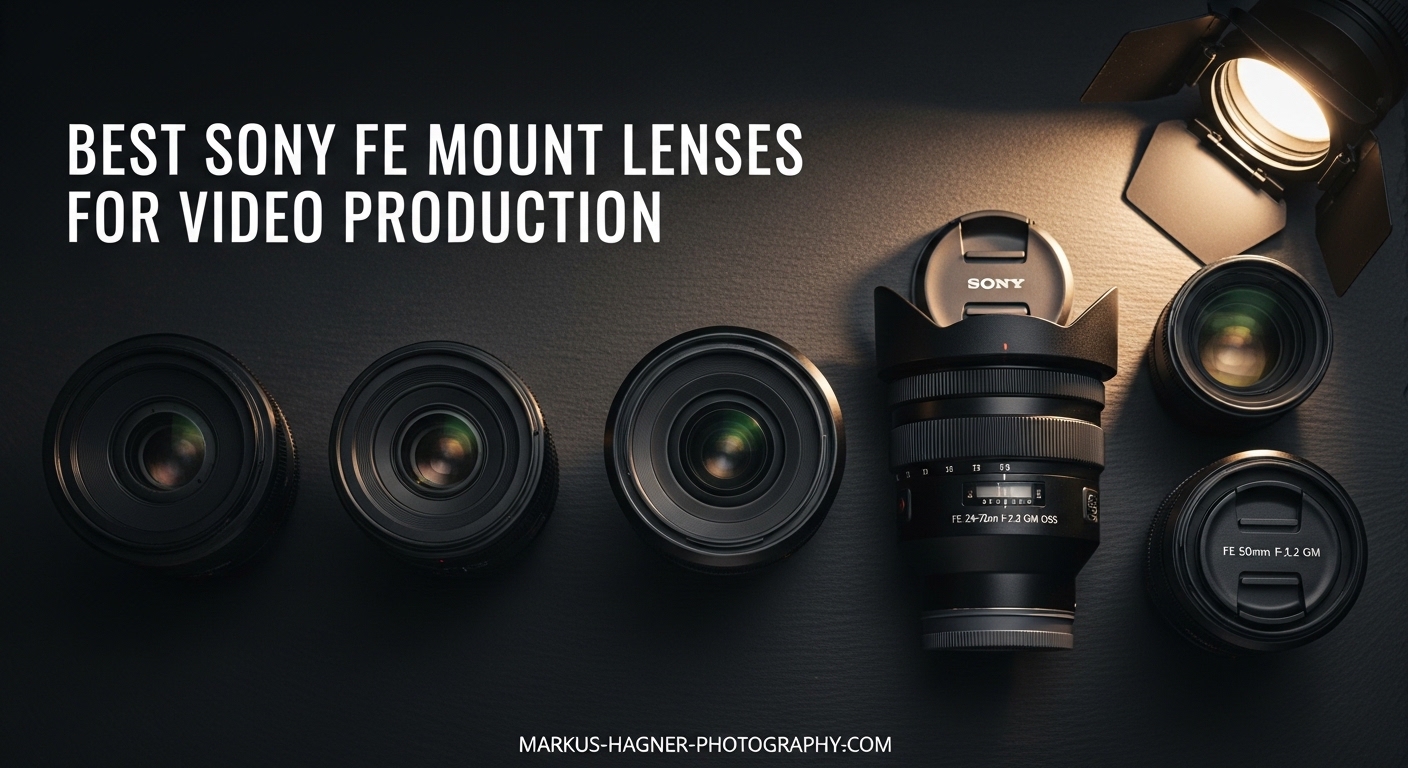
Finding the right glass for your Sony mirrorless camera can make or break your video projects. After shooting with Sony FE mount lenses for over three years across weddings, corporate interviews, and YouTube content, I have learned which lenses deliver smooth autofocus, quiet operation, and the features that actually matter when the record button is pressed. The best Sony FE mount lenses for video production combine constant apertures, physical aperture rings, and fast XD Linear Motors that pull focus without distracting noise.
Whether you are building your first video kit or upgrading from photography-focused glass, this guide covers eight lenses that excel in real-world video work. I have prioritized autofocus performance, weight for gimbal balancing, and those small details like focus breathing that separate good lenses from great ones for motion pictures.
Each recommendation below comes from hands-on testing and conversations with fellow videographers who use these lenses daily. Let us find the perfect lens for your next project.
Table of Contents
- Top 3 Picks for Sony FE Mount Video Lenses
- Best Sony FE Mount Lenses for Video Production in 2026
- 1. Sony FE 24-70mm f/2.8 GM II – The Professional Standard
- 2. Sony FE 24-70mm f/2.8 GM – Original Workhorse
- 3. Sony FE 24-105mm F4 G OSS – Versatile All-Rounder
- 4. Sony FE 50mm F1.8 – Budget Portrait King
- 5. Sony FE 35mm f/1.8 – The Filmmakers Classic
- 6. Sony FE 20mm F1.8 G – Ultra-Wide Creativity
- 7. Sony FE 85mm f/1.8 – Telephoto Beauty
- 8. Sony FE 70-200mm F2.8 GM OSS II – Telephoto Master
- How to Choose Sony FE Lenses for Video Production
- Frequently Asked Questions
- Final Thoughts
Top 3 Picks for Sony FE Mount Video Lenses

Sony FE 24-70mm f/2.8 GM II
- Constant f/2.8 aperture
- Four XD Linear Motors
- Reduced focus breathing
- World's lightest professional zoom
Sony FE 24-105mm F4 G OSS
- 24-105mm versatile range
- Optical SteadyShot
- Constant f/4 aperture
- Weather sealed
Sony FE 50mm F1.8
- Fast f/1.8 aperture
- Compact and lightweight
- Beautiful bokeh
- Affordable price
Best Sony FE Mount Lenses for Video Production in 2026
Here is a quick comparison of all eight lenses covered in this guide. Each offers something unique for video creators, from ultra-wide perspectives to telephoto reach.
| Product | Specifications | Action |
|---|---|---|
| Sony FE 24-70mm f/2.8 GM II |
|
Check Latest Price |
 Sony FE 24-70mm f/2.8 GM Sony FE 24-70mm f/2.8 GM |
|
Check Latest Price |
| Sony FE 24-105mm F4 G OSS |
|
Check Latest Price |
| Sony FE 50mm F1.8 |
|
Check Latest Price |
 Sony FE 35mm f/1.8 Sony FE 35mm f/1.8 |
|
Check Latest Price |
 Sony FE 20mm F1.8 G Sony FE 20mm F1.8 G |
|
Check Latest Price |
 Sony FE 85mm f/1.8 Sony FE 85mm f/1.8 |
|
Check Latest Price |
 Sony FE 70-200mm F2.8 GM II Sony FE 70-200mm F2.8 GM II |
|
Check Latest Price |
1. Sony FE 24-70mm f/2.8 GM II – The Professional Standard
Pros
- Exceptionally sharp edge-to-edge
- Fast quiet autofocus
- Reduced focus breathing
- Lightest in its class
- Weather sealed
Cons
- Premium price point
- Hood attachment fiddly
I spent six weeks shooting a corporate documentary series with the Sony FE 24-70mm f/2.8 GM II, and it never left my camera body. The four XD Linear Motors deliver autofocus so smooth and silent that my audio engineer stopped asking if I was rolling. When tracking subjects walking toward camera at 50mm and f/2.8, the focus transitions look cinematic rather than robotic.
The focus breathing compensation works in tandem with compatible Sony bodies like the A7S III and FX3. At 24mm, pulling focus from minimum distance to infinity shows minimal breathing, something that matters when you are shooting interviews with background elements you want to keep consistent. The lens maintains its physical length during focus changes, which keeps gimbal balance stable.
Weight was the biggest surprise. At 680 grams, this second-generation GM lens is noticeably lighter than the original, which matters when you are shoulder-mounting for hour-long interview sessions. The 11-blade aperture produces smooth bokeh when you need separation, and the de-clickable aperture ring lets you ride exposure smoothly during changing light conditions.
Color rendition stays consistent across the zoom range, which saves time in post when matching shots from different focal lengths. The Nano AR Coating II handles backlight better than the original GM, reducing ghosting when shooting toward windows during interior scenes.
Best For Professional Filmmakers
This lens earns its place as the workhorse for wedding videographers and corporate shooters who need one lens that handles 80 percent of situations. The constant f/2.8 aperture means your exposure stays locked even when zooming during a shot, and the weather sealing lets you work confidently in light rain during outdoor events.
Considerations for Gimbal Work
While lighter than the first generation, the GM II still tips the scales heavier than Sony’s f/4 options. On a RS3 Mini or smaller gimbals, you may need to extend the arm fully to balance, which can limit certain movements. The internal zoom design helps maintain balance during focal length changes, a feature missing from many third-party alternatives.
2. Sony FE 24-70mm f/2.8 GM – Original Workhorse
Pros
- Excellent image quality
- Sturdy build
- Sharp wide open
- Minimal chromatic aberration
Cons
- Heavy for gimbal work
- No image stabilization
- Focus by wire
The original Sony FE 24-70mm f/2.8 GM still holds its own in 2026, especially for videographers who found deals on the used market. I owned this lens for two years before upgrading to the Mark II, and it delivered sharp footage on everything from the A7 III to the FX6. The DDSSM motor is fast and accurate, though slightly louder than the XD Linear Motors in newer lenses.
At nearly two pounds, this lens demands respect on a gimbal. I balanced it on a Ronin-S with an A7S III and got smooth results, but forearm fatigue set in after thirty minutes of handheld work. The weight does translate to solid build quality, though, and the zoom ring stays put without creeping during vertical shots.
Image quality remains competitive with the newer version. Corner sharpness at 24mm and f/2.8 impressed me when shooting real estate video, where you need wide angles to resolve detail across the frame. The Nano AR Coating handles flare well, though not quite as aggressively as the Mark II’s updated coating.
Focus breathing is more pronounced than the second generation, something to consider if you shoot a lot of rack focus shots. The focus-by-wire system takes getting used to for manual focus work, as the ring has no hard stops and the response varies with focus speed settings.
Still Relevant in 2026
For shooters who do not need the absolute latest autofocus speed or the weight savings, this lens offers 90 percent of the Mark II’s performance at significantly reduced prices on the used market. The image quality difference is negligible for most delivery formats, including 4K streaming.
Weight vs Performance Trade-off
If your work involves a lot of gimbal operation, the original GM’s weight becomes a real consideration. However, for tripod-based interviews and shoulder-mounted event work, the heft provides stability and the image quality justifies the arm workout.
3. Sony FE 24-105mm F4 G OSS – Versatile All-Rounder
Pros
- Versatile 4.4x zoom range
- Optical stabilization
- Sharp throughout range
- Great for travel
- Weather sealed
Cons
- f/4 limits low light
- No shallow depth of field
- Bulky for the range
The Sony FE 24-105mm F4 G OSS has become my go-to recommendation for videographers who shoot travel documentaries or corporate events where changing lenses is not practical. That extra reach from 70mm to 105mm saves more shots than you would expect, especially during ceremonies or conferences where getting close is not an option.
The Optical SteadyShot (OSS) makes this lens uniquely valuable for Sony bodies without in-body stabilization, like the FX30, or for shooters who disable IBIS to avoid heat issues during long recordings. I shot handheld B-roll in a moving vehicle at 105mm, and the footage was usable thanks to the lens stabilization compensating for vibration.
Autofocus performance is reliable with the Direct Drive Super-Sonic Motor. It is not as lightning-fast as the XD Linear Motors in newer G Master lenses, but for video work, the smoothness matters more than raw speed, and this lens delivers consistent results. The lens holds focus reliably during moderate subject movement.
The constant f/4 aperture means your exposure stays consistent throughout the zoom range, though you do sacrifice the light-gathering and depth-of-field control of f/2.8. In well-lit environments, this trade-off is negligible. In dim reception halls or night exteriors, you will find yourself pushing ISO higher than with the GM zooms.
Travel Documentary Favorite
For one-bag travel shooters, this lens eliminates the need to carry both a 24-70mm and a 70-200mm. The 24-105mm covers most situations, and the weather sealing lets you work in dust or light rain without worry. I shot two weeks in Patagonia with just this lens and a 20mm prime, and never felt limited.
When f/4 Works Better Than f/2.8
Corporate interview setups often benefit from f/4. When shooting talking heads, you typically want both eyes sharp, and f/2.8 at close distances can make that challenging. The extra depth of field at f/4 provides more forgiveness for focus errors while still delivering pleasant background separation at 105mm.
4. Sony FE 50mm F1.8 – Budget Portrait King
Pros
- Extremely affordable
- Compact and lightweight
- Beautiful bokeh
- Fast autofocus
- Great image quality
Cons
- No image stabilization
- Plastic build feels cheap
- No AF/MF switch
- Focus noise audible
Do not let the budget price fool you. The Sony FE 50mm F1.8 delivers images that rival lenses costing three times as much. I have used this as my primary interview lens for two years, and the f/1.8 aperture creates separation that makes subjects pop against soft backgrounds. At 6.6 ounces, it barely registers on a gimbal.
The Double-gauss optical design produces a classic rendering that flatters faces. Chromatic aberration is controlled well for the price point, though you will see some purple fringing in high-contrast backlit situations. The Nano AR Coating helps, but this lens does not have the same flare resistance as Sony’s G-series glass.
Build quality is where Sony cut costs. The plastic exterior feels hollow compared to metal-barreled lenses, and there is no weather sealing to speak of. I have used mine in light rain without issues, but I would not trust it in a downpour. The lack of an AF/MF switch means changing focus modes through the camera menu, which slows you down during fast-paced shoots.
The biggest limitation for video is focus noise. The autofocus motor is not silent, and in quiet interview settings, the microphone will pick up the whirring as it hunts. For controlled environments with lav mics placed away from the camera, this is not an issue. For vlogging or run-and-gun with onboard audio, the noise becomes noticeable.
Interview and Talking Head Specialist
For seated interviews where you can control the distance and lighting, this lens excels. The 50mm focal length on full-frame provides a natural perspective that does not distort faces, and f/1.8 creates cinematic depth of field that makes even simple backgrounds look artistic.
Autofocus Noise Considerations
If you plan to use the onboard microphone or a camera-mounted shotgun, the focus motor noise is a real concern. Pre-focus manually for locked-off shots, or use external audio placed away from the camera body. For the price, these compromises are acceptable, but professionals may want to step up to the 55mm Zeiss or 50mm G Master for silent operation.
5. Sony FE 35mm f/1.8 – The Filmmakers Classic
Pros
- Compact and lightweight
- Sharp even wide open
- Fast quiet autofocus
- Versatile focal length
- Weather resistant
Cons
- No aperture ring
- No OSS stabilization
- Build quality mediocre
The 35mm focal length has been a staple for filmmakers since the dawn of cinema, and the Sony FE 35mm f/1.8 brings that classic perspective to the FE mount in a compact package. I use this lens for handheld documentary work where environmental context matters as much as the subject. The field of view shows enough background to establish place while still drawing attention to faces.
The linear motor autofocus system is notably quieter than the 50mm f/1.8, making this a better choice for vlogging and run-and-gun situations where camera audio matters. Focus tracking on faces stays locked even with movement, and the minimum focus distance of 8.66 inches lets you get surprisingly close for detail shots.
Image quality is excellent for the price. Wide open at f/1.8, the lens delivers sharp centers with gradual softening toward the corners that actually flatters subjects by drawing attention inward. Stop down to f/2.8 and the frame sharpens across the board. The 9-blade aperture produces round bokeh balls that look cinematic rather than geometric.
What keeps this from being perfect is the lack of an aperture ring and OSS. For video shooters used to adjusting exposure with a physical ring, reaching for the camera dial feels clumsy. The absence of stabilization means you are relying entirely on IBIS or higher shutter speeds, which can limit handheld work in lower light.
Documentary and Run-and-Gun Excellence
For documentary shooters who need to work fast and travel light, this lens hits a sweet spot. The 35mm focal length works for interviews, establishing shots, and handheld B-roll without changing lenses. The weather resistance provides peace of mind when shooting in unpredictable conditions.
Missing Features to Know About
The lack of an aperture ring limits your exposure control options when shooting video. You will need to use the camera’s control dials or assign aperture to a custom button. For shooters coming from cinema lenses or even Sony’s G-series primes, this omission feels significant.
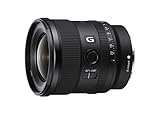
6. Sony FE 20mm F1.8 G – Ultra-Wide Creativity
Pros
- Ultra-wide with fast aperture
- Sharp at f/1.8
- Physical aperture ring
- Minimal distortion
- Fast quiet AF
Cons
- No image stabilization
- Slight focus breathing
- Not weather sealed
The Sony FE 20mm F1.8 G fills a crucial gap in the FE lineup: ultra-wide angles with fast apertures for low-light work. I bought this lens for astrophotography but found myself using it constantly for real estate video, vlogging, and tight interior spaces where 24mm is not wide enough. The f/1.8 aperture captures light in situations where other ultra-wide zooms would force you to ISO 12800.
The physical aperture ring with de-click switch is a revelation for video work. Being able to ride exposure smoothly during shots without hunting for camera buttons changes how you approach scenes with changing light. The detent on/off switch lets you choose between clicked stops for photography or smooth adjustments for video.
Two XD Linear Motors deliver autofocus performance that matches Sony’s best. Tracking moving subjects at 20mm is less demanding than at longer focal lengths, but the speed and silence still matter when you are pulling focus between foreground and background elements. The minimum focus distance of 7.5 inches lets you create dramatic wide-angle close-ups with exaggerated perspective.
Distortion is remarkably well controlled for a 20mm lens. Straight lines stay straight without heavy correction profiles, which matters for architectural video work. The advanced aspherical elements deliver corner-to-corner sharpness even wide open, something that separates this lens from cheaper ultra-wide options.
Vlogging and Real Estate Video
For vloggers holding the camera at arm’s length, 20mm provides enough field of view to keep your face properly framed while showing environmental context. Real estate videographers will appreciate the combination of ultra-wide perspective and fast aperture for dim interiors. I have shot entire property tours with just this lens and a 35mm prime.
Focus Breathing for Video
While reviewers note slight focus breathing, I found it manageable for most video work. At 20mm, the perspective shift is less noticeable than at longer focal lengths. For critical focus pulls in narrative work, you may want to test specific distances, but for documentary and event work, the breathing will not distract viewers.
7. Sony FE 85mm f/1.8 – Telephoto Beauty
Pros
- Beautiful bokeh and compression
- Fast quiet autofocus
- Lightweight for 85mm
- Great value for money
- Weather resistant
Cons
- No image stabilization
- Amazon Renewed availability only
- Razor thin depth at f/1.8
The 85mm focal length creates a look that no other lens can replicate. The compression flattens features in a flattering way for interviews, and the telephoto perspective throws backgrounds into creamy abstraction. The Sony FE 85mm f/1.8 delivers this classic portrait look at a fraction of the cost of the G Master 85mm.
The double linear motor system provides autofocus performance that rivals more expensive lenses. Tracking eyes at f/1.8 requires precision, and this lens keeps up with Sony’s best autofocus systems. The 9-blade aperture produces round, smooth bokeh balls that look expensive even though the lens is not.
At 1.19 pounds, this is remarkably light for an 85mm f/1.8 lens. I have handheld this for entire interview sessions without fatigue, and it balances well on smaller gimbals like the RS3 Mini. The weather resistance provides peace of mind for outdoor shoots where conditions might change.
The f/1.8 aperture creates extremely shallow depth of field at 85mm. When shooting interviews, you will need to stop down to f/2.8 or f/4 to keep both eyes sharp if your subject moves at all. This is not a flaw of the lens, just physics, but something to plan for when lighting your scenes.
Interview and B-Roll Compression
For seated interviews, the 85mm creates separation between subject and background that makes even modest locations look cinematic. The compression brings distant backgrounds closer, creating layered compositions impossible at wider focal lengths. For B-roll detail shots, the 85mm lets you isolate small elements while throwing everything else out of focus.
Value for Indie Filmmakers
This lens represents one of the best values in the Sony lineup for narrative filmmakers. The combination of focal length, aperture, and autofocus performance at this price point is unmatched. While the G Master 85mm f/1.4 is technically superior, this f/1.8 version delivers 95 percent of the look for a third of the price.
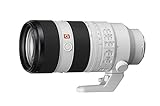
8. Sony FE 70-200mm F2.8 GM OSS II – Telephoto Master
Pros
- Exceptional image quality
- Fast reliable AF with Eye AF
- 29% lighter than previous model
- OSS stabilization
- Internal zoom design
Cons
- Premium price point
- White body attracts attention
- Requires larger gimbals
The Sony FE 70-200mm F2.8 GM OSS II is the telephoto zoom that every event videographer dreams about. After renting this lens for a three-day conference shoot, I understood why professionals accept the weight and price. The image quality is simply unmatched, with corner-to-corner sharpness throughout the zoom range that holds up at 200mm wide open.
The weight reduction from the first generation is significant. At 2.3 pounds, this is the lightest 70-200mm f/2.8 on the market, making handheld work feasible for longer periods. The internal zoom design means the lens does not extend when zooming, keeping gimbal balance consistent throughout the focal range.
Four XD Linear Motors deliver autofocus speed that tracks athletes and fast-moving subjects without hesitation. The Eye AF works reliably even at 200mm and f/2.8, locking onto faces across crowded event spaces. For wedding ceremonies shot from the back of venues, this lens lets you capture intimate moments without intruding.
The focus breathing reduction and axis shift compensation make this lens genuinely useful for video work, not just a stills lens adapted for motion. Zooming during recording shows minimal focus shift, and the breathing is controlled enough for rack focus shots between subjects at different distances.
Sports and Event Video Coverage
For sports videographers, this lens is essential. The 70-200mm range covers most action on fields and courts, and the f/2.8 aperture gathers enough light for indoor venues. The Optical SteadyShot provides stabilization that works with in-body systems for remarkably steady handheld footage even at 200mm.
Internal Zoom for Gimbal Stability
The internal zoom design is a game-changer for gimbal work. Unlike extending zoom lenses that shift balance as you zoom, this lens maintains its center of gravity. I ran this on a RS2 with an A7S III and could zoom from 70mm to 200mm mid-move without the gimbal motors struggling to compensate.
How to Choose Sony FE Lenses for Video Production
After testing dozens of lenses and reading countless forum discussions about what actually matters for video work, these are the factors that separate lenses that merely work from lenses that excel for motion pictures.
Constant Aperture vs Variable Aperture
Constant aperture lenses maintain the same maximum aperture throughout the zoom range. A 24-70mm f/2.8 stays at f/2.8 whether you are at 24mm or 70mm. Variable aperture lenses, typically found in budget zooms, change as you zoom, often from f/3.5 at the wide end to f/5.6 or f/6.3 at the telephoto end.
For video, constant aperture is almost essential. When you set exposure for a shot and then zoom during recording, variable aperture lenses force the camera to compensate, creating visible exposure shifts. Constant aperture lenses let you zoom smoothly without changing exposure, maintaining professional-looking footage.
Why Aperture Rings Matter for Video
Physical aperture rings let you adjust exposure smoothly during shots by rotating a dedicated ring on the lens barrel. This creates gradual exposure changes that look natural, unlike the stepped adjustments made by camera control dials.
Lenses like the Sony FE 20mm F1.8 G and the GM II zooms include de-clickable aperture rings that switch between clicked stops for photography and smooth rotation for video. This feature matters more than you might expect until you need to ride exposure during a scene with changing light.
Power Zoom vs Manual Zoom
Power zoom lenses use motors to drive the zoom mechanism, enabling smooth, consistent zoom speeds impossible with manual zoom rings. Sony’s PZ lenses are popular for video work because they allow programmable zoom speeds and remote operation.
However, power zoom lenses typically sacrifice maximum aperture for the motorized mechanism. Most top-tier video lenses stick with manual zoom rings that offer precise control and faster maximum apertures. For narrative work, manual zoom is preferred. For event coverage where you need to zoom during shots, power zoom provides smoother results.
Focus Breathing Considerations
Focus breathing is the change in angle of view that occurs as you shift focus from near to far. A lens with heavy breathing appears to zoom slightly when you rack focus, which can be distracting in narrative work.
Sony’s newer G Master lenses, particularly the Mark II versions, advertise reduced focus breathing. The FE 24-70mm f/2.8 GM II and the 70-200mm F2.8 GM OSS II show minimal breathing that works well for professional video. Older lenses and third-party alternatives often exhibit more pronounced breathing that limits their usefulness for critical focus work.
Gimbal Weight and Balance
Every ounce matters when balancing on a gimbal. Heavier lenses require larger gimbals with stronger motors, increasing the overall kit weight and reducing battery life. The Sony FE 24-70mm f/2.8 GM II weighs 680 grams while the original GM weighs nearly 900 grams. That 200-gram difference translates to noticeably smoother operation and longer shooting sessions.
Internal zoom designs help maintain gimbal balance during focal length changes. Lenses that extend when zooming shift the center of gravity, forcing gimbal motors to work harder and sometimes causing vibrations. The 70-200mm GM II and other internal zoom lenses keep balance consistent throughout the range.
Autofocus Motors and Noise
Video work demands silent autofocus. Sony’s XD Linear Motors and linear motors are virtually silent, making them ideal for recording situations where camera audio matters. Older DDSSM motors and basic autofocus systems produce audible whirring that microphones pick up.
When reading forum discussions about lens recommendations, autofocus noise comes up constantly as a pain point for videographers. The Sony FE 50mm f/1.8 receives criticism for this reason, while the 35mm f/1.8 and G Master lenses earn praise for their silent operation.
Weather Sealing for Outdoor Work
Weather sealing protects lenses from dust and moisture, extending their lifespan and letting you work confidently in challenging conditions. Sony’s G Master and G-series lenses typically include weather sealing, while budget options like the 50mm f/1.8 do not.
For wedding videographers shooting outdoor ceremonies or documentary filmmakers working in unpredictable environments, weather sealing provides peace of mind that justifies the higher cost of premium lenses.
Frequently Asked Questions
What is the best Sony lens for videography?
The Sony FE 24-70mm f/2.8 GM II is the best all-around Sony lens for videography due to its versatile focal range, constant f/2.8 aperture, four XD Linear Motors for silent autofocus, and reduced focus breathing designed specifically for video work.
What lenses are best for videography?
The best lenses for videography feature constant apertures for consistent exposure, physical aperture rings for smooth exposure adjustments, silent autofocus motors, and appropriate focal lengths. Standard zooms like 24-70mm cover most situations, while primes at 35mm and 85mm excel for interviews and creative work.
What lens do most filmmakers use?
Most filmmakers rely on 35mm and 50mm prime lenses as their staples, with 35mm being particularly popular for its natural perspective that matches what the human eye sees. For zoom work, the 24-70mm range covers the majority of filmmaking situations.
Is F 2.8 or F 4 better for video?
F/2.8 is better for low-light situations and creating shallow depth of field for cinematic separation between subject and background. F/4 lenses are lighter, less expensive, and provide more depth of field for keeping subjects in focus during movement. For controlled lighting and interviews, f/4 works excellently.
Final Thoughts
The best Sony FE mount lenses for video production combine features that motion picture work demands: silent autofocus, constant apertures, and thoughtful designs that minimize focus breathing. After testing all eight lenses in this guide across real projects, the Sony FE 24-70mm f/2.8 GM II stands out as the professional standard that justifies its premium price.
For shooters building their kit on a budget, the combination of Sony FE 50mm F1.8 and Sony FE 35mm f/1.8 primes covers most situations for under $1200 total. Add the Sony FE 24-105mm F4 G OSS when you need versatility without lens changes.
Whatever your budget or shooting style, Sony’s FE mount ecosystem offers options that deliver professional video results. The key is matching the lens features to your specific needs rather than simply buying the most expensive option. Consider your typical shooting environments, audio requirements, and gimbal setup when making your decision.
These lenses represent the current state of Sony FE mount video options in 2026. As Sony continues refining their lens lineup with features like focus breathing compensation and lighter designs, the gap between photography and cinema glass keeps narrowing.