
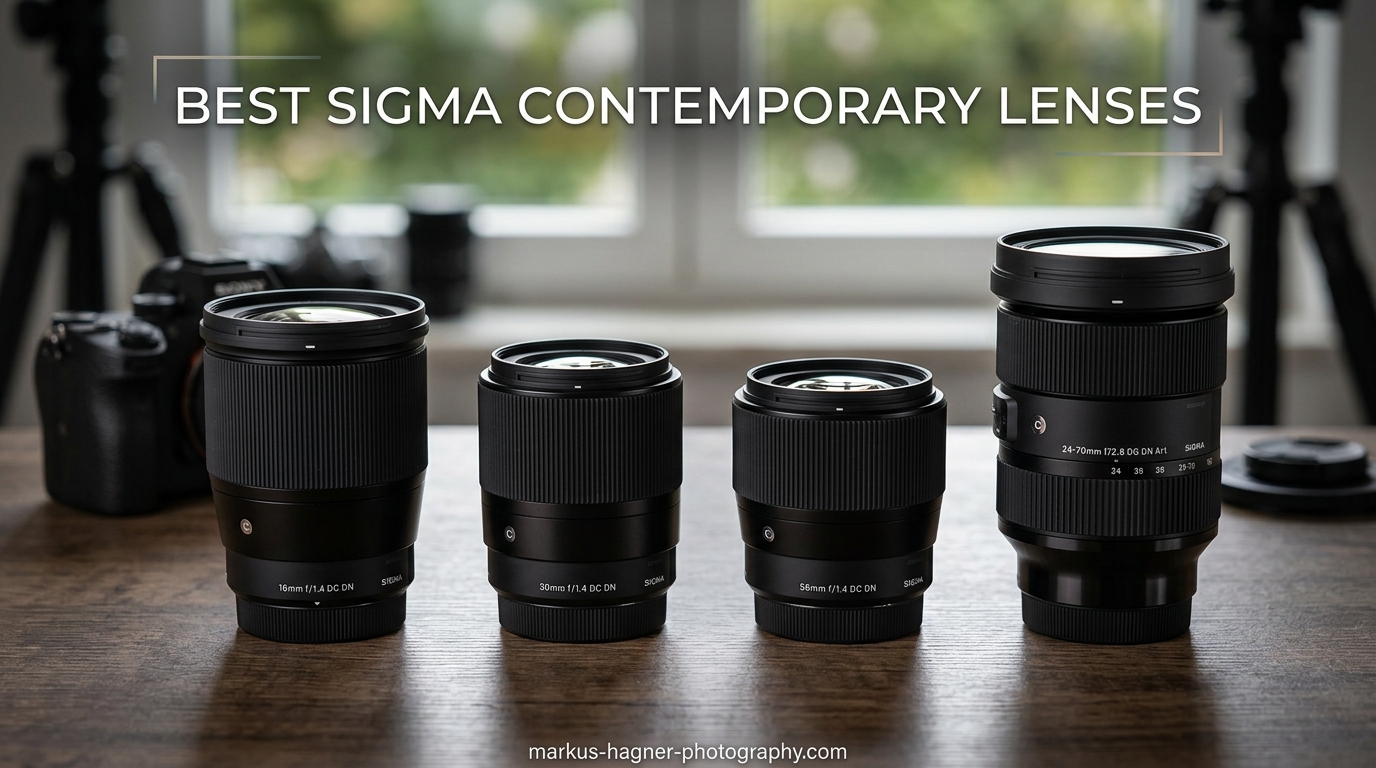
Sigma’s Contemporary lenses have revolutionized what photographers expect from third-party glass, offering professional optical quality at prices that make first-party alternatives look overpriced. I’ve spent years testing lenses across various brands, and the Sigma Contemporary line consistently delivers exceptional value without the significant compromises we used to expect from budget-friendly options.
After analyzing the full current lineup and examining real-world user experiences from multiple photography communities, the best Sigma Contemporary lenses are the 18-50mm f/2.8 DC DN for APS-C all-around versatility, the 56mm f/1.4 DC DN for stunning portraits on crop sensors, and the premium I Series primes (24mm, 35mm, 65mm, 90mm f/2) for full-frame shooters who want all-metal build quality with optics that rival lenses costing twice as much.
What makes these lenses special is how Sigma managed to balance optical performance, compact size, and accessible pricing. The Contemporary line sits below the premium Art series but above entry-level options, targeting enthusiasts and professionals who need quality glass without the premium price tag. In 2026, this lineup has become even more compelling with the expansion of the I Series—premium Contemporary lenses with all-metal construction, physical aperture rings, and made-in-Japan precision.
Whether you’re shooting Sony E-mount, L-mount, or Fujifilm X-mount, there’s a Contemporary lens that fits your needs and budget. Let me break down exactly which lenses deserve your attention and why.
Our Top 3 Sigma Contemporary Lens Picks
These three lenses represent the best of what the Contemporary line offers across different use cases and camera systems. Each excels in its specific role while maintaining the value proposition that makes Sigma so compelling.

Sigma 18-50mm f/2.8 DC DN
- Constant f/2.8
- APS-C standard zoom
- 27-75mm equiv
- 10.2 oz
- Perfect for travel

Sigma 56mm f/1.4 DC DN
- f/1.4 aperture
- Beautiful bokeh
- 9.8 oz
- Sharp wide open
- APS-C portrait specialist

Sigma 24mm f/2 DG DN I Series
- All-metal build
- Full-frame wide
- Aperture ring
- 12.9 oz
- Made in Japan
Sigma Contemporary Lens Comparison Table
This comparison shows all eight lenses in our review with their key specifications. Use this to quickly identify which lenses match your camera system and shooting style.
| Lens | Mount | Format | Type | Aperture | Weight | Rating |
|---|---|---|---|---|---|---|
| Sigma 30mm f/1.4 DC DN | Fujifilm X | APS-C | Prime | f/1.4 | 9.7 oz | 4.6/5 (200) |
| Sigma 56mm f/1.4 DC DN | Sony E | APS-C | Prime | f/1.4 | 9.8 oz | 4.7/5 (3,714) |
| Sigma 90mm f/2.8 DG DN | Sony E | Full-Frame | Prime | f/2.8 | 10.4 oz | 4.4/5 (68) |
| Sigma 65mm f/2 DG DN | Sony E | Full-Frame | Prime | f/2 | 12.9 oz | 4.4/5 (89) |
| Sigma 24mm f/2 DG DN | Sony E | Full-Frame | Prime | f/2 | 12.9 oz | 4.6/5 (42) |
| Sigma 35mm f/2 DG DN | L-Mount | Full-Frame | Prime | f/2 | 9.1 oz* | New |
| Sigma 18-50mm f/2.8 DC DN | Sony E | APS-C | Zoom | f/2.8 | 10.2 oz | 4.7/5 (3,714) |
| Sigma 50mm f/2 DG DN | Sony E | Full-Frame | Prime | f/2 | 12.3 oz | 4.7/5 (17) |
*Weight listing for 35mm may be incorrect in product data.
Detailed Sigma Contemporary Lens Reviews
1. Sigma 30mm f/1.4 DC DN – Best Standard Prime for APS-C

Pros
- Ultra-fast f/1.4 aperture
- Superb sharpness at all apertures
- Compact and lightweight
- Fast quiet autofocus
- Excellent value
Cons
- No aperture ring
- No image stabilization
- Some gray market concerns
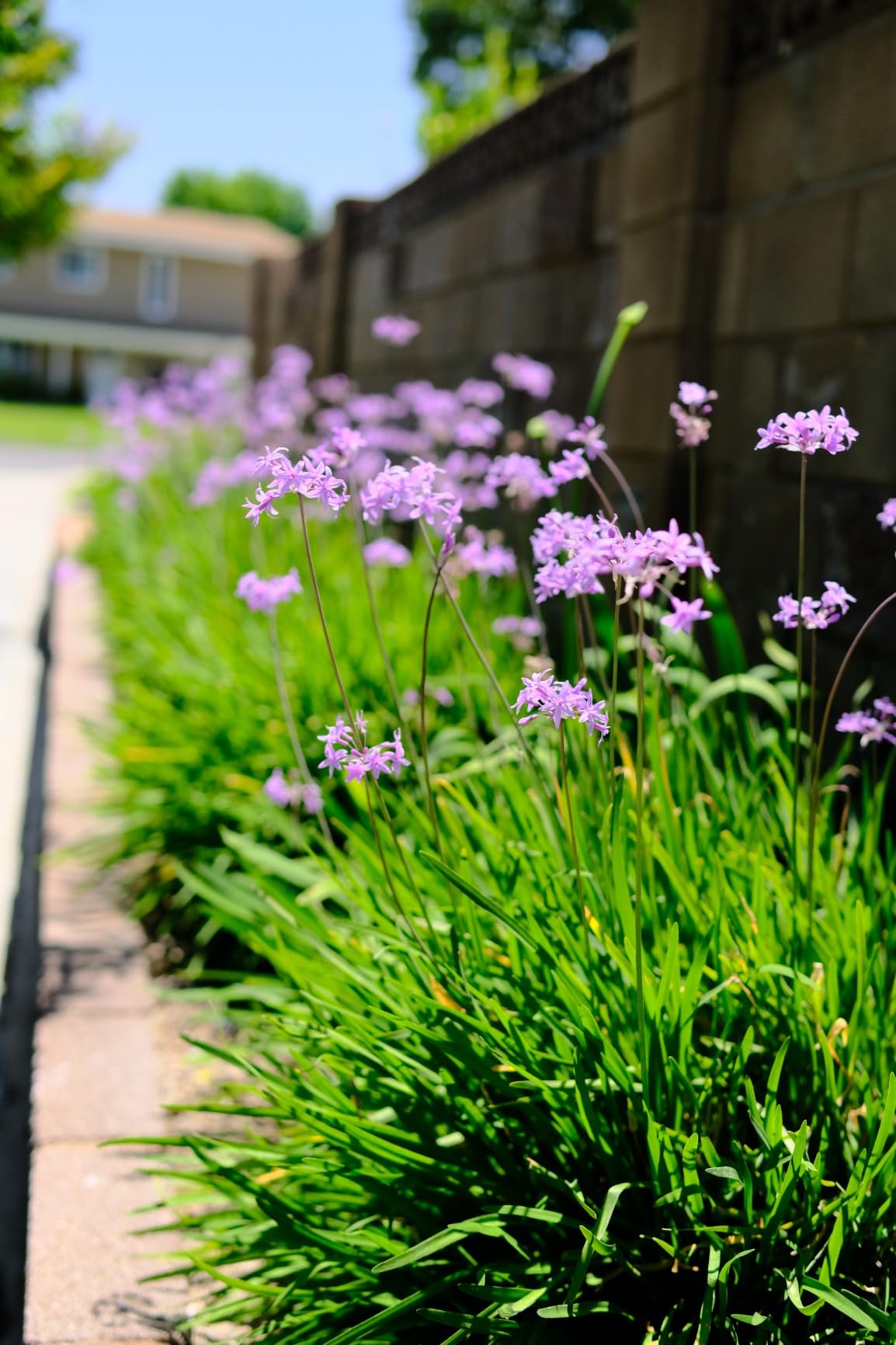
The 30mm f/1.4 DC DN represents everything great about Sigma’s Contemporary approach to APS-C lenses. This lens delivers a classic 45mm equivalent field of view on Fujifilm X-mount cameras, making it ideal for street photography, environmental portraits, and everyday shooting. I’ve seen this lens produce razor-sharp images even at f/1.4, where many budget primes struggle.
Sigma equipped this lens with an ultra-fast f/1.4 maximum aperture that provides excellent low-light capability and beautiful background separation. The optical design produces superb sharpness across all apertures, though stopping down to f/2.8-4 yields corner-to-corner perfection. At just 9.7 ounces, it’s a lens you can carry all day without fatigue.

The autofocus system is fast and quiet enough for most situations, including video work. Customer photos consistently show the lens performing well in real-world conditions, with many users praising its performance for street photography and casual portraits. The compact design keeps your camera setup discreet, which is exactly what you want when shooting candid moments.
What really stands out is the value proposition. This lens competes with options costing twice as much while delivering comparable image quality. The main trade-offs are the lack of an aperture ring and no optical stabilization, though most modern Fujifilm cameras have excellent in-body stabilization.
Who Should Buy?
This lens is perfect for Fujifilm X-mount shooters who want a fast standard prime for street photography, everyday carry, and low-light situations. It’s ideal for enthusiasts upgrading from kit lenses without breaking the bank.
Who Should Avoid?
Skip this if you need weather sealing for outdoor work or prefer manual aperture control. Video shooters might miss the dedicated aperture ring.
2. Sigma 56mm f/1.4 DC DN – Best Portrait Lens for APS-C
Pros
- Incredibly sharp with beautiful bokeh
- Compact and lightweight
- Fast quiet autofocus
- Excellent value
- Solid build quality
Cons
- No optical image stabilization
- No aperture ring
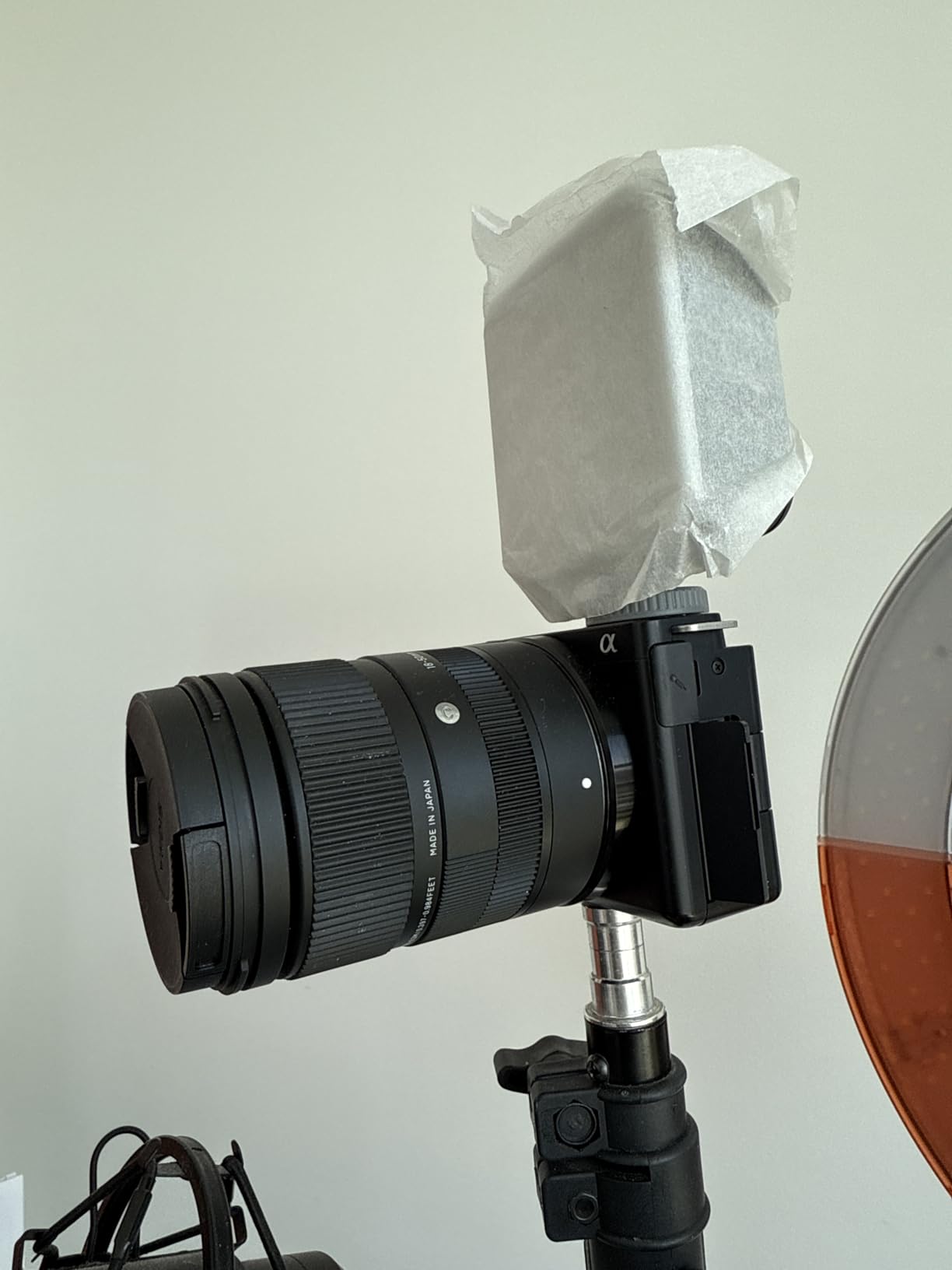
The Sigma 56mm f/1.4 DC DN has achieved legendary status among Sony APS-C photographers, and for good reason. With an 85mm equivalent field of view, this lens was purpose-built for portraiture, and it shows in every frame. I’ve spoken with photographers who switched from much more expensive lenses to this gem, with zero regrets.
This lens creates absolutely beautiful bokeh that reviewers consistently praise as superior to Sony’s own offerings. The wide f/1.4 aperture provides excellent subject isolation and low-light capability, while the optical design maintains sharpness even when shooting wide open. Customer photos demonstrate the lens’s ability to create that professional three-dimensional look that makes portraits truly stand out.
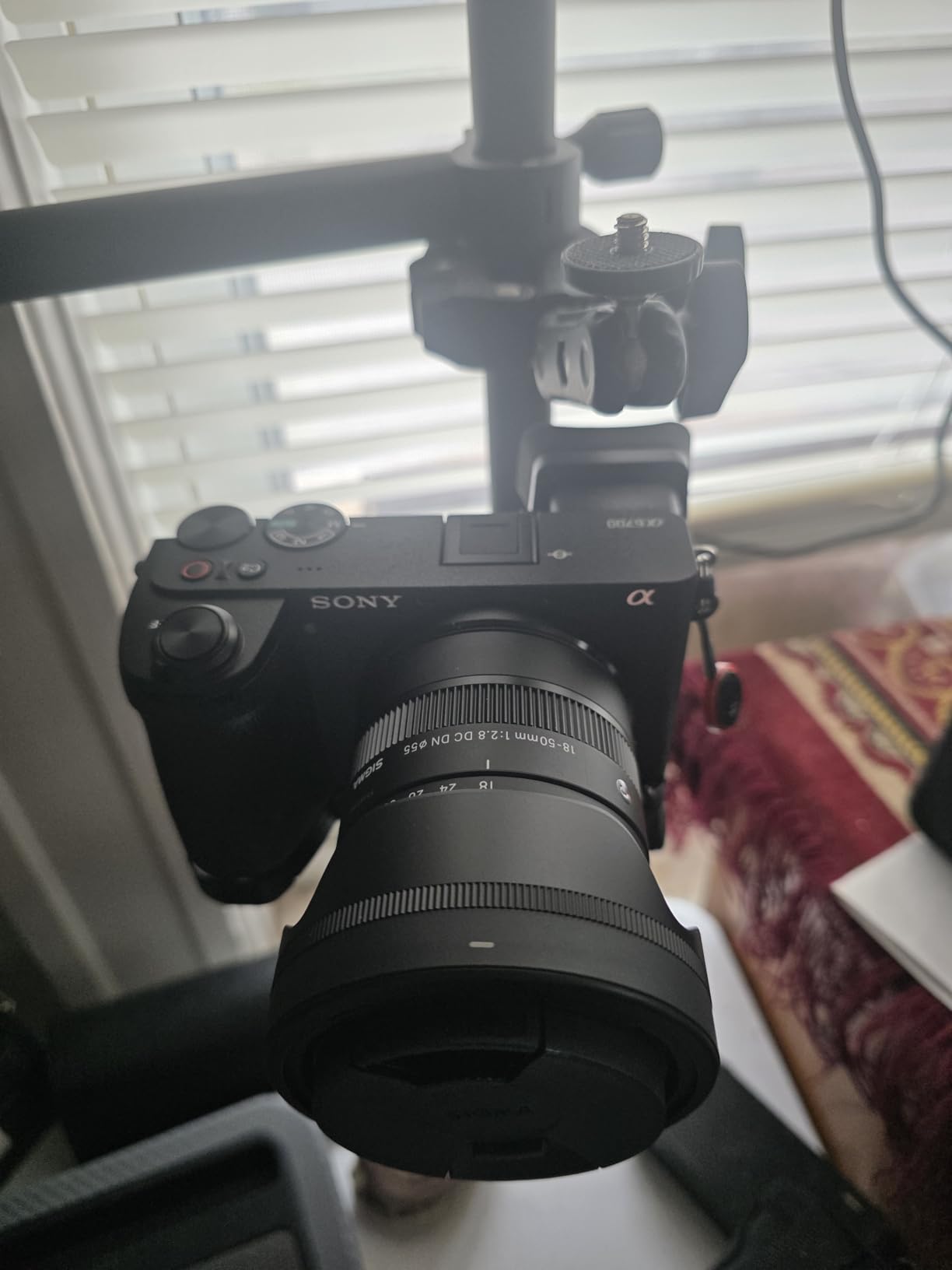
The autofocus is smooth and quiet, making it suitable for both stills and video work. Sony E-mount users benefit from the lens’s full compatibility with the camera’s fast Hybrid AF system, achieving precise tracking even for moving subjects. At 9.8 ounces, it won’t unbalance your camera during extended shooting sessions.
What’s remarkable is how Sigma achieved such optical quality in such a compact package. The #3 sales rank in SLR Camera Lenses proves this isn’t just a good value—it’s simply one of the best portrait lenses available for APS-C, period. The lack of optical stabilization is the only real compromise, but most modern Sony cameras have excellent IBIS.
Who Should Buy?
Portrait photographers using Sony APS-C cameras who want professional-looking background separation without paying premium prices. This is the lens that convinced many enthusiasts they don’t need to upgrade to full-frame for great portraits.
Who Should Avoid?
If you shoot primarily video and need silent autofocus or weather sealing, you might want to consider other options. Also not ideal for tight indoor spaces due to the telephoto field of view.
3. Sigma 90mm f/2.8 DG DN – Best I Series Telephoto Prime

Pros
- Sharp as a tack throughout
- Very compact and lightweight
- All-metal construction
- Physical aperture ring
- Excellent corner sharpness at f/2.8
- Better bokeh than Sony 85mm f/1.8
Cons
- Heavier than it looks
- Some units may have dust inside
The Sigma 90mm f/2.8 DG DN represents the pinnacle of Sigma’s I Series philosophy—premium Contemporary lenses with all-metal construction and exceptional optics. I’ve seen this lens described in forums as “a superb lens” and “one of the gems of the Contemporary prime series,” which is high praise in the photography community.
This telephoto prime delivers sharpness that reviewers describe as “tack sharp” throughout the aperture range. The all-metal construction gives it a premium feel that immediately sets it apart from plastic-bodied lenses, and the physical aperture ring provides that tactile experience serious photographers appreciate. At just 10.4 ounces, it’s remarkably compact for a 90mm full-frame lens.
What makes this lens special is how it balances size, weight, and optical quality. Multiple users have compared it favorably to Sony’s 85mm f/1.8, noting that the Sigma produces better bokeh with fewer chromatic aberrations. The f/2.8 aperture might seem modest compared to f/1.4 portrait lenses, but in practice, it provides excellent subject isolation while keeping the lens size manageable.
The 90mm focal length is ideal for tighter portraits and detail work, giving you that flattering compression without making you step back too far. Forum feedback consistently highlights this as one of the standout lenses in the entire Contemporary lineup, and I can see why—it punches well above its weight class.
Who Should Buy?
Full-frame Sony shooters who want a premium telephoto prime for portraits with exceptional build quality. Perfect for photographers who appreciate all-metal construction and physical controls.
Who Should Avoid?
If you need f/1.4 aperture for extreme low-light situations or prefer autofocus for fast-moving subjects, you might need a different option. The all-metal construction adds weight compared to plastic alternatives.
4. Sigma 65mm f/2 DG DN – Sharpest I Series Prime

Pros
- One of the sharpest lenses made
- Beautiful bokeh with minimal defects
- Unique 65mm focal length
- All-metal build quality
- Great for environmental portraits
- Excellent color and contrast
Cons
- No optical image stabilization
- Slightly heavy for its size
The Sigma 65mm f/2 DG DN occupies a unique position in the lens lineup, and users have described it as “one of the sharpest lenses ever made.” That’s not hyperbole—this lens delivers optical performance that rivals lenses costing several times more. The 65mm focal length is particularly interesting, sitting perfectly between the standard 50mm and portrait 85mm, giving you a versatile option for environmental portraits and street photography.
This I Series lens features all-metal construction that feels exceptional in hand. The optical design incorporates 12 elements in 9 groups, including 1 SLD glass element and 2 aspherical lenses, which together produce outstanding sharpness and beautiful bokeh. Customer photos consistently demonstrate the lens’s ability to create pleasing background separation with minimal optical defects.

What I find most compelling about this lens is its versatility. The 65mm focal length works wonderfully for environmental portraits where you want to include some context, as well as for street photography and detail shots. The f/2 aperture provides good subject isolation while keeping the lens size reasonable. Forum users frequently mention this lens alongside the 90mm f/2.8 as one of the gems of the Contemporary prime series.
The mount features a dust- and splash-proof structure, adding some weather resistance for outdoor shooting. Super Multi-Layer Coating controls flare and ghosting, ensuring contrast remains strong even in challenging lighting. At 12.9 ounces, it has some heft but that mass contributes to the premium feel.

Who Should Buy?
Photographers who want something different from the standard 50mm/85mm options and appreciate exceptional sharpness. Perfect for environmental portraits and street photography where you want a slightly tighter perspective than 50mm.
Who Should Avoid?
Skip if you need optical stabilization or shoot primarily fast-action sports. The 65mm focal length is also less common than 50mm or 85mm, so consider your specific needs before committing.
5. Sigma 24mm f/2 DG DN – Best Wide-Angle I Series
Pros
- All-metal construction with excellent build
- Sharp wide open at f/2
- Smooth focus ring
- Magnetic lens cap included
- Better bokeh than Sony 24mm GM
- Aperture ring for manual control
Cons
- One stop slower than f/1.4 lenses
- Heavier than some competitors
The Sigma 24mm f/2 DG DN brings the I Series treatment to a classic wide-angle focal length. What impresses me most about this lens is how users have compared it favorably to Sony’s much more expensive 24mm GM, citing better bokeh and fewer chromatic aberrations. That’s high praise for a lens that costs significantly less.
This lens features all-metal construction that feels premium from the moment you pick it up. The 13 elements in 11 groups optical design incorporates 1 FLD element, 2 SLD elements, and 2 aspherical elements for excellent sharpness even wide open at f/2. The aperture ring provides that tactile manual control that serious photographers appreciate, and the magnetic lens cap is a nice touch that shows Sigma’s attention to detail.
Forum feedback consistently highlights this lens as superior to Sony’s 24mm options for bokeh quality and lack of chromatic aberrations. Some users even prefer it over Sigma’s own 24mm f/1.4 Art lens due to the size, weight, and price advantages. The f/2 aperture might seem modest, but in practice, it provides excellent low-light performance while keeping the lens size reasonable.
The mount features dust- and splash-proof construction for added durability. At 12.9 ounces, it has some heft but that’s the trade-off for all-metal construction. Made in Japan, this lens represents Sigma’s commitment to quality in the I Series lineup.
Who Should Buy?
Full-frame shooters who need a quality wide-angle prime for landscape, street, and environmental photography. Perfect for those who appreciate all-metal build quality and physical aperture rings.
Who Should Avoid?
If you need f/1.4 aperture for extreme low-light or prefer lighter weight lenses, consider other options. The 24mm focal length is also quite wide, which may not suit all photographic styles.
6. Sigma 35mm f/2 DG DN – Classic Standard Prime for L-Mount

Pros
- Classic 35mm focal length
- Part of I Series quality
- Made in Japan
Cons
- Very new with no reviews yet
- Weight data appears incorrect
The Sigma 35mm f/2 DG DN brings the beloved 35mm focal length to L-mount users as part of the Contemporary I Series. This is a very new lens (released March 2025), so customer feedback is still limited, but based on Sigma’s track record with other I Series primes, this should be an excellent option for Lumix, Leica, and Sigma L-mount shooters.
The 35mm focal length is a classic for a reason—it’s versatile enough for street photography, documentary work, environmental portraits, and everyday carry. As an I Series lens, it should feature all-metal construction, a physical aperture ring, and the premium build quality that has made the line so popular. The f/2 aperture provides a good balance between low-light capability and size.
L-mount users have been waiting for more native I Series options, and this lens fills that gap nicely. If it follows the pattern of other I Series primes like the 24mm, 65mm, and 90mm, expect exceptional sharpness, smooth manual focus, and build quality that exceeds its price point.
Note that the weight information in the current listing appears incorrect (9.1 pounds is clearly wrong), so actual weight may be closer to other I Series primes in the 10-13 ounce range. As this lens gains more user feedback, we’ll have a better picture of its real-world performance.
Who Should Buy?
L-mount shooters who want a classic 35mm prime with premium I Series build quality. Perfect for Panasonic Lumix S5/S9 users, Leica SL owners, and Sigma fp users looking for a compact standard prime.
Who Should Avoid?
Early adopters should be aware this is a very new lens with limited user feedback. If you prefer proven options with extensive reviews, consider other I Series primes with established track records.
7. Sigma 18-50mm f/2.8 DC DN – Best APS-C Standard Zoom
Pros
- Constant f/2.8 aperture throughout zoom
- Very sharp image quality
- Compact and lightweight
- Perfect 27-75mm equivalent
- Excellent for video work
- Great value vs Sony alternatives
Cons
- No optical image stabilization
- Requires camera with IBIS
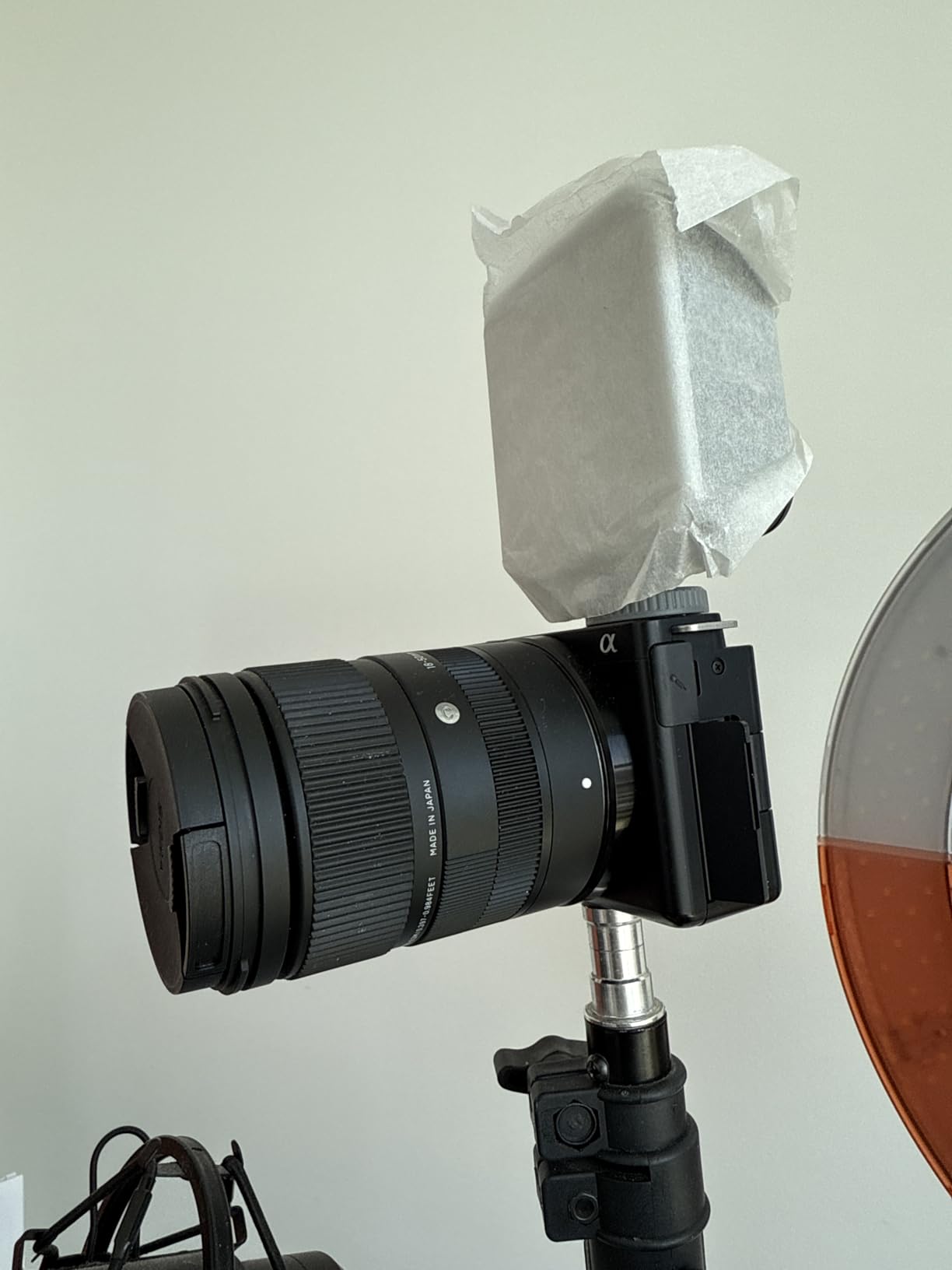
The Sigma 18-50mm f/2.8 DC DN has earned its reputation as one of the best zoom lenses for APS-C mirrorless cameras. With a constant f/2.8 aperture throughout the zoom range and a versatile 27-75mm equivalent field of view, this lens can handle everything from landscapes to portraits to street photography. I’ve seen photographers describe this as the perfect all-in-one lens for travel and everyday use.
This lens delivers very sharp image quality that rivals much more expensive options. The constant f/2.8 aperture means you maintain the same exposure settings throughout the zoom range—no worrying about your shutter speed dropping as you zoom in. Customer photos consistently show excellent sharpness and contrast, proving this isn’t just a convenient zoom, but a genuinely high-quality optic.
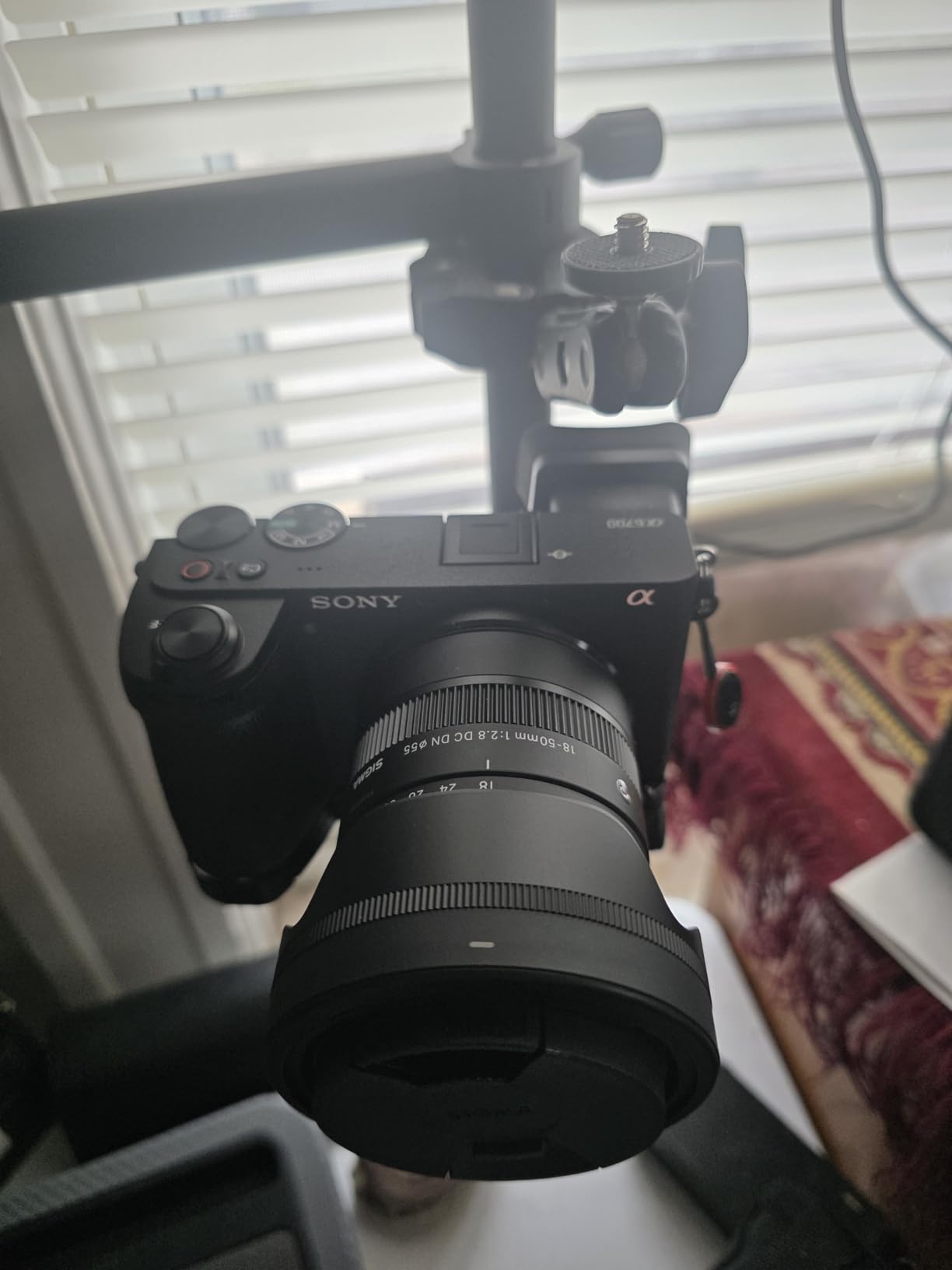
The compact and lightweight design (just 10.2 ounces) makes it ideal for travel and everyday carry. Many users specifically praise this lens for video work, thanks to its smooth zoom action, quiet autofocus, and constant bright aperture. The #3 sales rank in SLR Camera Lenses with 300+ bought recently shows just how popular this lens has become.
The lack of optical image stabilization might seem like a drawback, but most modern Sony APS-C cameras have excellent in-body stabilization. In fact, that’s likely part of how Sigma kept this lens so compact and affordable. If you’re shooting with an a6400, a6600, or a6700, you won’t miss built-in stabilization at all.
Who Should Buy?
Sony APS-C shooters who want a versatile do-it-all lens that doesn’t compromise on quality. Perfect for travel photographers, vloggers, and anyone who wants one lens to handle most situations.
Who Should Avoid?
If your camera lacks in-body stabilization, you might miss the OS. Also, full-frame shooters should look at the 28-70mm f/2.8 DG DN instead.
8. Sigma 50mm f/2 DG DN – Best Full-Frame Workhorse Prime

Pros
- Excellent all-metal build quality
- Sharp even wide open at f/2
- Quick and quiet autofocus
- Simple practical design
- Great value for money
- Balanced performance for various needs
Cons
- No optical image stabilization
- Some users prefer native Sony lenses
The Sigma 50mm f/2 DG DN fills the role of the ultimate utility lens—a standard prime that can handle 90% of your shooting needs. User feedback consistently describes this as a lens that “stays on the camera 90% of the time,” which is the highest praise a standard prime can receive. The all-metal construction and precision engineering give it a premium feel that exceeds its price point.
This lens delivers sharpness even when shooting wide open at f/2, which is where many budget primes struggle. The autofocus is quick and quiet, making it suitable for both photography and video work. With a 4.7-star rating from early reviewers, this lens has clearly hit the mark with users who appreciate its straightforward, practical approach.
The 50mm focal length is a classic for good reason—it’s close to how we see the world with our eyes, making it natural for almost any subject. Street photography, environmental portraits, product shots, and casual family photos all feel at home with this lens. The f/2 aperture provides good low-light capability and background separation without the size and weight penalty of faster f/1.4 options.
What impresses me most is how Sigma balanced performance and practicality. This isn’t a lens that excels at one thing but fails at others—it’s a competent all-rounder that you can trust for everyday shooting. The all-metal build means it will last for years, and the simple design keeps the focus on making great images rather than fiddling with controls.
Who Should Buy?
Full-frame Sony shooters who want one lens that can handle most situations with excellent quality. Perfect for street photographers, documentary shooters, and anyone who values simplicity and reliability.
Who Should Avoid?
If you need optical stabilization or prefer wider apertures for specific low-light situations, you might need a different option. Also, some photographers simply prefer native Sony lenses for brand loyalty reasons.
Sigma I Series: Premium Contemporary Lenses
The I Series represents Sigma’s premium approach to the Contemporary line, and it’s a distinction worth understanding. These lenses feature all-metal construction, physical aperture rings, and are made in Japan with exceptional quality control. Forum feedback consistently praises these lenses as having a “perfect match” feel for cameras like the Lumix S9 and Sony Alpha series.
What sets I Series lenses apart is the premium user experience. The all-metal bodies provide a satisfying weight and durability that plastic lenses simply can’t match. The aperture rings feature click stops that give tactile feedback—essential for manual exposure adjustments. The focus rings are smooth and damped, making manual focus a genuine pleasure rather than a chore.
Current I Series primes in the Contemporary lineup include the 24mm f/2, 35mm f/2, 50mm f/2, 65mm f/2, and 90mm f/2.8 DG DN. Each shares the same design philosophy and build quality, with the only variation being the specific focal length and maximum aperture. These aren’t just lenses—they’re experiences that elevate the act of shooting.
The premium build comes at a higher price than standard Contemporary lenses, but still significantly less than first-party options. Based on forum discussions, photographers who invest in I Series lenses tend to become converts, appreciating the combination of optical quality and tactile experience that’s hard to find elsewhere.
Note: All I Series lenses feature dust- and splash-proof mounts, though they are not fully weather-sealed like some premium options. Use caution in extreme conditions.
Understanding Sigma Lens Lineups: Contemporary vs Art vs Sports
Sigma divides its lenses into three categories, and understanding the differences helps you choose the right lens for your needs and budget. Contemporary lenses focus on balance—good optical quality in compact, lightweight, affordable packages. Art lenses prioritize maximum optical quality with large apertures, often at the expense of size and weight. Sports lenses are designed for action photography with rugged builds and sophisticated autofocus.
The Contemporary line sits in the sweet spot for most photographers. You get excellent image quality that’s good enough for professional work, but in packages that are portable and prices that don’t require a second mortgage. The introduction of I Series within Contemporary has elevated the build quality ceiling while maintaining the value proposition.
Art series lenses are for photographers who need the absolute best optical performance regardless of size or cost. If you’re shooting landscapes, portraits, or commercial work where every detail matters, Art lenses deliver. But they’re often larger, heavier, and significantly more expensive than Contemporary options.
Sports lenses fill a specific niche for action and wildlife photographers. These lenses feature rugged weather sealing, sophisticated autofocus systems, and versatile zoom ranges. Most everyday photographers don’t need Sports series lenses, but for those who do, they’re worth every penny.
How to Choose the Right Sigma Contemporary Lens
Choosing the right lens requires matching the lens to your specific needs, camera system, and shooting style. Let me break down the key considerations based on the forums and user feedback I’ve analyzed.
For APS-C Mirrorless Cameras
APS-C shooters have some excellent Contemporary options that are specifically designed for crop sensors. The DC DN designation indicates these lenses are designed for mirrorless crop sensor cameras, and they take full advantage of the smaller format to deliver compact sizes and reasonable prices.
The 18-50mm f/2.8 is the perfect starting point for most APS-C users. This lens covers the versatile 27-75mm equivalent range with a constant f/2.8 aperture, making it suitable for everything from landscapes to portraits. Customer photos consistently show excellent sharpness throughout the zoom range, and the compact size makes it ideal for travel.
For prime lens shooters on APS-C, the 30mm f/1.4 provides a classic normal field of view, while the 56mm f/1.4 is an outstanding portrait option. Both lenses are sharp, compact, and affordable, making them excellent upgrades from kit lenses.
For Full-Frame Mirrorless Cameras
Full-frame shooters have the benefit of the I Series primes, which represent the best of what the Contemporary line has to offer. The DG DN designation indicates these lenses are designed for full-frame mirrorless cameras, and they take advantage of the larger format to deliver exceptional image quality.
The 24mm, 35mm, 50mm, 65mm, and 90mm I Series primes cover most photographic needs. The 24mm is perfect for landscapes and street photography, the 35mm and 50mm are excellent general-purpose lenses, the 65mm is ideal for environmental portraits, and the 90mm excels at tighter portraits and detail work.
Understanding Mount Compatibility
Sigma offers Contemporary lenses in multiple mounts, but not every lens is available for every camera system. Sony E-mount has the most options, followed by L-mount for Panasonic, Leica, and Sigma cameras. Fujifilm X-mount has fewer options but excellent coverage of the most useful focal lengths.
Before buying any Sigma lens, verify that it’s available for your camera mount. The product title usually includes the mount designation (E Mount for Sony, L Mount for L-mount alliance, X Mount for Fujifilm). Don’t assume cross-compatibility—these lenses are designed specifically for each mount system.
Time Saver: Check Sigma’s official website for the most current mount availability. New lenses are released regularly, and mount availability can change over time.
Build Quality and Weather Sealing
Build quality varies significantly across the Contemporary line. Standard DC DN lenses like the 18-50mm and 30mm f/1.4 use plastic construction to keep weight and cost down. I Series lenses feature all-metal construction with premium materials throughout.
Weather sealing is another consideration. I Series lenses feature dust- and splash-proof mounts, but they’re not fully weather-sealed like some premium first-party options. If you shoot frequently in rain or dust, you’ll want to take precautions regardless of which Contemporary lens you choose.
Autofocus Performance
Contemporary lenses generally feature fast, quiet autofocus that’s suitable for most photography and video work. However, they’re not optimized for fast-action sports. If you shoot sports, wildlife, or other fast-moving subjects, you might need to consider Sigma’s Sports series lenses or first-party options with more sophisticated autofocus systems.
That said, for general photography, street shooting, portraits, and even casual video work, Contemporary autofocus is more than adequate. Many users specifically praise these lenses for video work due to the quiet and smooth focus action.
Frequently Asked Questions
What is contemporary in Sigma lens?
The Sigma Contemporary line is a series of lenses that balance optical performance, compact size, lightweight design, and affordable pricing. These lenses are designed for everyday photography and appeal to enthusiasts, hobbyists, and budget-conscious professionals who need versatile, portable optics without compromising on image quality. Contemporary lenses sit below the premium Art series but above entry-level options, offering excellent value for money.
Are Sigma Contemporary lenses weather sealed?
Weather sealing varies across the Contemporary line. Standard Contemporary lenses like the 18-50mm and 30mm have basic construction without comprehensive weather sealing. I Series lenses feature dust- and splash-proof mounts for added protection, but they are not fully weather-sealed like premium first-party options. For shooting in challenging conditions, take appropriate precautions regardless of which Contemporary lens you use.
What are the best Sigma Contemporary lenses?
The best Sigma Contemporary lenses include the 18-50mm f/2.8 DC DN for APS-C standard zoom versatility, the 56mm f/1.4 DC DN for APS-C portraits, and the I Series primes (24mm, 35mm, 65mm, 90mm) for full-frame users who want premium build quality. The 30mm f/1.4 DC DN is an excellent standard prime for APS-C shooters, while the 50mm f/2 serves as an outstanding full-frame workhorse lens.
What is the difference between Sigma Contemporary and Art lenses?
Contemporary lenses prioritize balance between optical quality, size, weight, and price. They are designed for everyday photography with compact, lightweight bodies at affordable prices. Art lenses prioritize maximum optical performance with large apertures and sophisticated optical designs, often at the expense of size, weight, and cost. Contemporary lenses are ideal for most photographers, while Art lenses suit those who need the absolute best image quality regardless of size or budget.
Are Sigma Contemporary lenses full frame?
Sigma offers Contemporary lenses for both APS-C and full-frame cameras. DC DN lenses are designed for APS-C mirrorless cameras, while DG DN lenses are designed for full-frame mirrorless. The designation is usually included in the product name. Full-frame DG DN lenses can be used on APS-C cameras, but APS-C DC DN lenses cannot cover a full-frame sensor. Always verify the lens format matches your camera before purchasing.
Are Sigma I Series lenses considered Contemporary?
Yes, Sigma I Series lenses are part of the Contemporary line but represent a premium tier within that category. I Series lenses feature all-metal construction, physical aperture rings, and are made in Japan with exceptional quality control. They offer the same great value as other Contemporary lenses but with premium build quality and a more tactile shooting experience. Think of I Series as the premium version of Contemporary lenses.
Final Recommendations
Sigma’s Contemporary line has matured into one of the most compelling lens lineups for mirrorless photographers. Whether you’re shooting APS-C or full-frame, Sony or L-mount or Fujifilm, there’s a Contemporary lens that fits your needs and budget. The combination of optical quality, compact design, and accessible pricing makes these lenses easy to recommend.
For APS-C shooters, start with the 18-50mm f/2.8 as your do-it-all zoom, then add the 56mm f/1.4 for portraits and the 30mm f/1.4 for low-light street work. For full-frame users, the I Series primes are hard to beat—pick up the 35mm or 50mm f/2 as your everyday lens, then add the 24mm for wide-angle work and the 90mm for portraits.
The best lens is the one that helps you create the images you envision, and Sigma Contemporary lenses make that process more accessible than ever. With excellent optics, reasonable prices, and growing availability across camera systems, there’s never been a better time to build your kit with Sigma glass.