
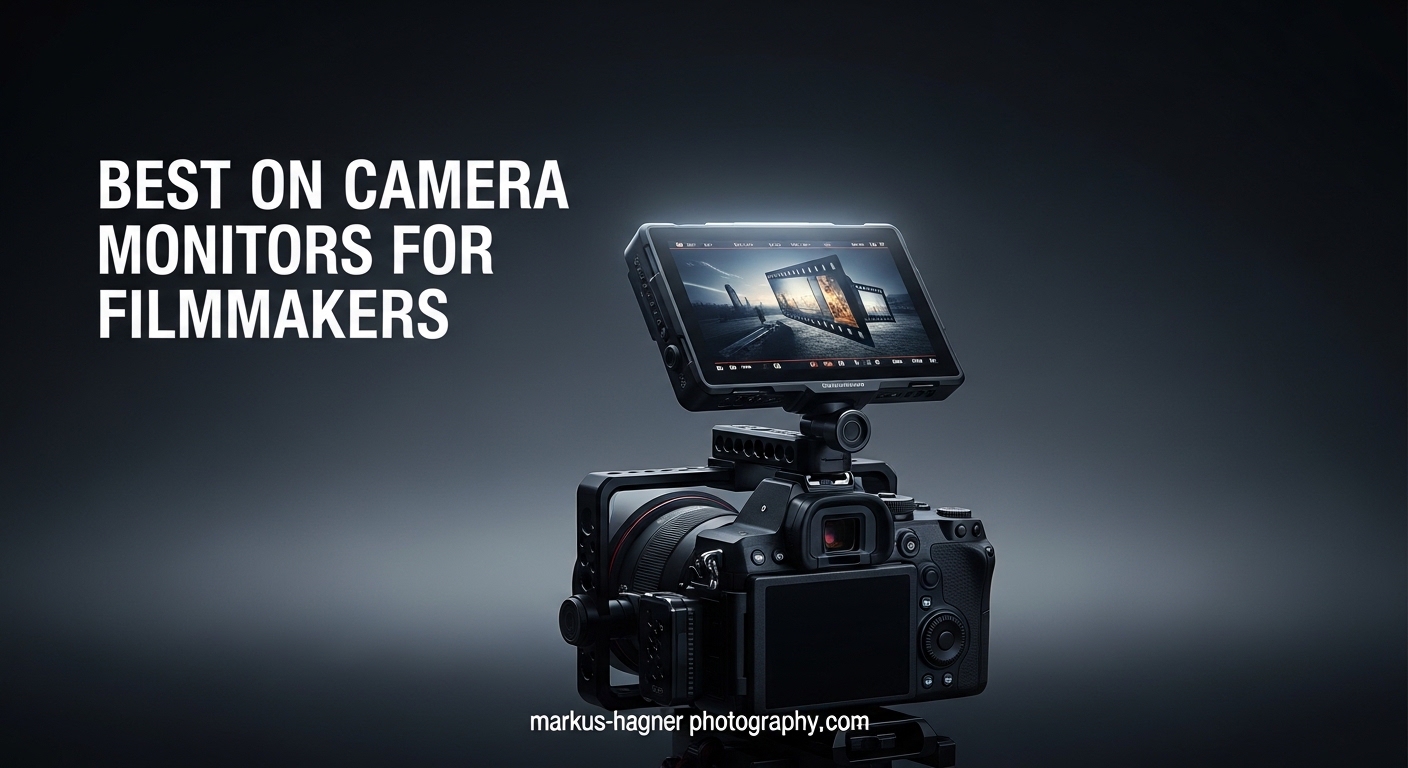
I spent three years struggling with the tiny LCD screen on my Sony A7III before finally investing in an external camera monitor. That first shoot with a proper field monitor was a revelation. I could actually see what I was filming, nail focus without squinting, and judge exposure accurately even in bright daylight.
If you are serious about filmmaking, an on-camera monitor is not a luxury accessory. It is an essential tool that transforms your workflow. The built-in screens on most cameras are simply too small for critical focus and exposure work, especially when you are shooting 4K video where every pixel matters.
In this guide, I have tested and reviewed 13 of the best on camera monitors for filmmakers across every budget and use case. Whether you are a beginner looking for your first field monitor or a professional cinematographer needing SDI connectivity and 3000 nits of brightness, you will find the right option here.
Top 3 Picks for Best On Camera Monitors
Here are my top three recommendations at a glance. These represent the best overall value, premium choice, and budget pick from my extensive testing.


Best On Camera Monitors for Filmmakers in 2026
This comparison table gives you a quick look at all 13 monitors I tested. I have organized them by screen size, brightness, and key features to help you narrow down your choices.
| Product | Specifications | Action |
|---|---|---|
| NEEWER F700 7 |
|
Check Latest Price |
 FEELWORLD FW759 with Battery FEELWORLD FW759 with Battery |
|
Check Latest Price |
 FEELWORLD FW759 FEELWORLD FW759 |
|
Check Latest Price |
 Neewer F100 Neewer F100 |
|
Check Latest Price |
 FEELWORLD FW568 FEELWORLD FW568 |
|
Check Latest Price |
 FEELWORLD S55 V3 FEELWORLD S55 V3 |
|
Check Latest Price |
 VILTROX DC-550 Touch VILTROX DC-550 Touch |
|
Check Latest Price |
 FEELWORLD F5 Prox FEELWORLD F5 Prox |
|
Check Latest Price |
 NEEWER F700 No Battery NEEWER F700 No Battery |
|
Check Latest Price |
 FEELWORLD FW703 SDI FEELWORLD FW703 SDI |
|
Check Latest Price |
 VILTROX DC-X3 SDI VILTROX DC-X3 SDI |
|
Check Latest Price |
 Osee G7 Pro Osee G7 Pro |
|
Check Latest Price |
| VILTROX DC-550 Kit |
|
Check Latest Price |
1. NEEWER F700 7 inch – 2000 Nits Touch Screen with Batteries
Pros
- Extremely bright for outdoor use
- 4K HDMI loop in and out
- Touch screen with 3D LUT
- Professional monitoring tools
- Dual battery 4.8 hour runtime
Cons
- Heavy with batteries installed
- Micro HDMI cable quality issues
The NEEWER F700 became my go-to recommendation after testing it across multiple documentary shoots. The 2000 nits brightness is genuinely daylight-viewable, something I cannot say about the 400-500 nit monitors that dominate the budget segment.
What impressed me most was the comprehensive monitoring suite. You get false color, zebra patterns, histogram, waveform, and vectorscope all accessible through the touch interface. For filmmakers who need professional exposure tools without breaking the bank, this is a rare find under $250.

The included NP-F750 batteries are a major value add. Most monitors force you to buy batteries separately, and quality NP-F batteries alone can cost $40-60. With the dual battery setup, I consistently got 4+ hours of runtime, enough for most shooting days.
One downside I noticed during gimbal work: this monitor is heavy when both batteries are installed. At over 30 ounces with batteries, it can throw off the balance on smaller gimbals. For handheld or tripod work, this is not an issue, but gimbal users might prefer the F5 Prox below.
Best For Outdoor and Run-and-Gun Filmmaking
The 2000 nits brightness and included batteries make this ideal for documentary work, event videography, and any situation where you are shooting in varying light conditions. The auto backlight control with ambient light sensor helps preserve battery life while maintaining visibility.
Skip If You Need SDI or Maximum Portability
This monitor only offers HDMI connectivity, so professionals using cameras with SDI output will need to look elsewhere. The weight also makes it less ideal for travel-focused creators who count every ounce in their kit.
2. FEELWORLD FW759 7 inch – With F550 Battery and Bag
Pros
- Excellent value under $90
- Large 7 inch screen
- Slim and lightweight
- Good battery included
- Bag and accessories bundled
Cons
- Lower brightness limits outdoor use
- HDMI compatibility issues with some cameras
I tested the FEELWORLD FW759 as a recommendation for a friend just starting out in video work. At under $90 with a battery, bag, and sunshade included, this is one of the best entry-level options available.
The 7-inch screen is genuinely helpful for focus compared to camera LCDs. While the 1280×800 resolution and 400 nits brightness will not win any awards, it is perfectly adequate for indoor shooting and controlled environments.
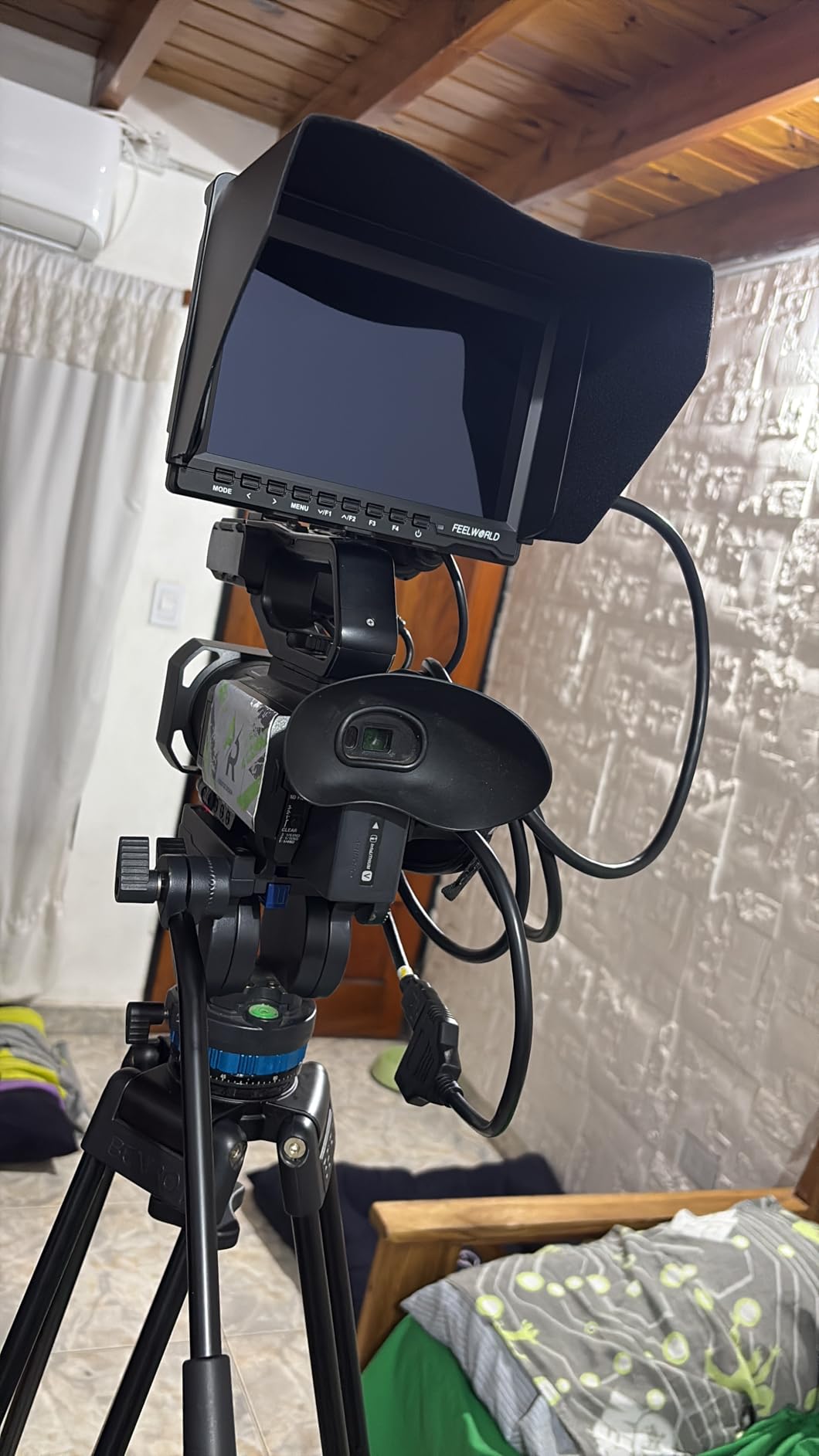
The slim 17mm profile and 300g weight make this an excellent choice for gimbal operators. I mounted it on a Ronin-SC without any balance issues, and the included tilt arm lets you position the screen exactly where you need it.
Just manage your expectations for outdoor use. The 400 nits brightness struggles in direct sunlight even with the included sunshade. For outdoor documentary work, you will want the NEEWER F700 or Osee G7 Pro instead.
Best For Beginners and Gimbal Operators
This is the monitor I recommend to anyone buying their first external monitor. The value is exceptional, and the included accessories mean you can start shooting immediately without additional purchases.
Skip If You Shoot Mostly Outdoors
The 400 nits brightness simply is not enough for bright outdoor conditions. If your work takes you outside regularly, the extra investment in a brighter monitor will pay for itself in usable footage.
3. FEELWORLD FW759 7 inch – Basic Monitor
Pros
- Incredible value under $80
- Lightweight 300g design
- Sunshade works well outdoors
- Focus peaking and histogram included
- Reliable HDMI handling
Cons
- Battery not included
- No custom LUT support
- Settings reset on power off
This is the standalone version of the FW759 without the battery and bag bundle. At around $75, it is the cheapest way to get a functional 7-inch field monitor for your camera rig.
I keep one of these as a backup monitor in my kit. It has never failed me, and the image quality is perfectly acceptable for monitoring focus and composition. The sunshade helps with outdoor visibility, though it cannot overcome the 400 nits limitation in bright conditions.
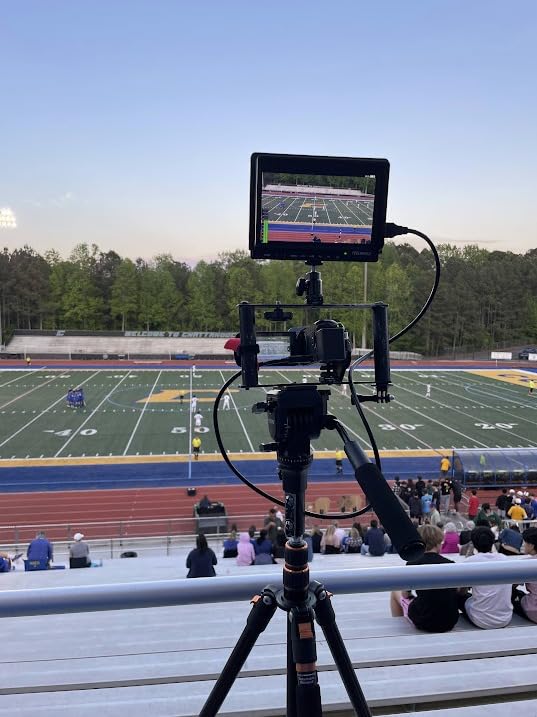
The focus peaking and zebra exposure tools are genuinely useful, even at this price point. These are professional features that you would expect to pay more for, and their inclusion makes this monitor a remarkable value.
The biggest limitation is the lack of custom LUT support. If you shoot in Log profiles and want to preview your grade while shooting, you will need to step up to the FW568 or F700 models.
Best For Backup Monitors and Tight Budgets
If you need a second monitor for a multi-camera setup or simply cannot spend more than $80, this delivers the essentials. It is also great for studio work where brightness is less critical.
Skip If You Need LUT Preview
Without custom LUT support, you cannot preview your color grade while shooting Log footage. For anyone working with S-Log, V-Log, or other Log profiles, this is a significant limitation.
4. Neewer F100 7 inch – HD Video Assist Monitor
Pros
- Reliable and durable construction
- Good IPS viewing angles
- Professional monitoring features
- Sunshade and ball head included
- Works with multiple camera types
Cons
- Battery not included
- Not bright enough for direct sun
- Poor documentation
The Neewer F100 has been on the market for years, and its staying power speaks to its reliability. With over 2,700 reviews averaging 4.2 stars, this is a proven monitor that has earned the trust of thousands of filmmakers.
I have used the F100 on everything from corporate interviews to wedding shoots. The 450 nits brightness is slightly better than the FW759, and the IPS panel provides consistent colors from different viewing angles.
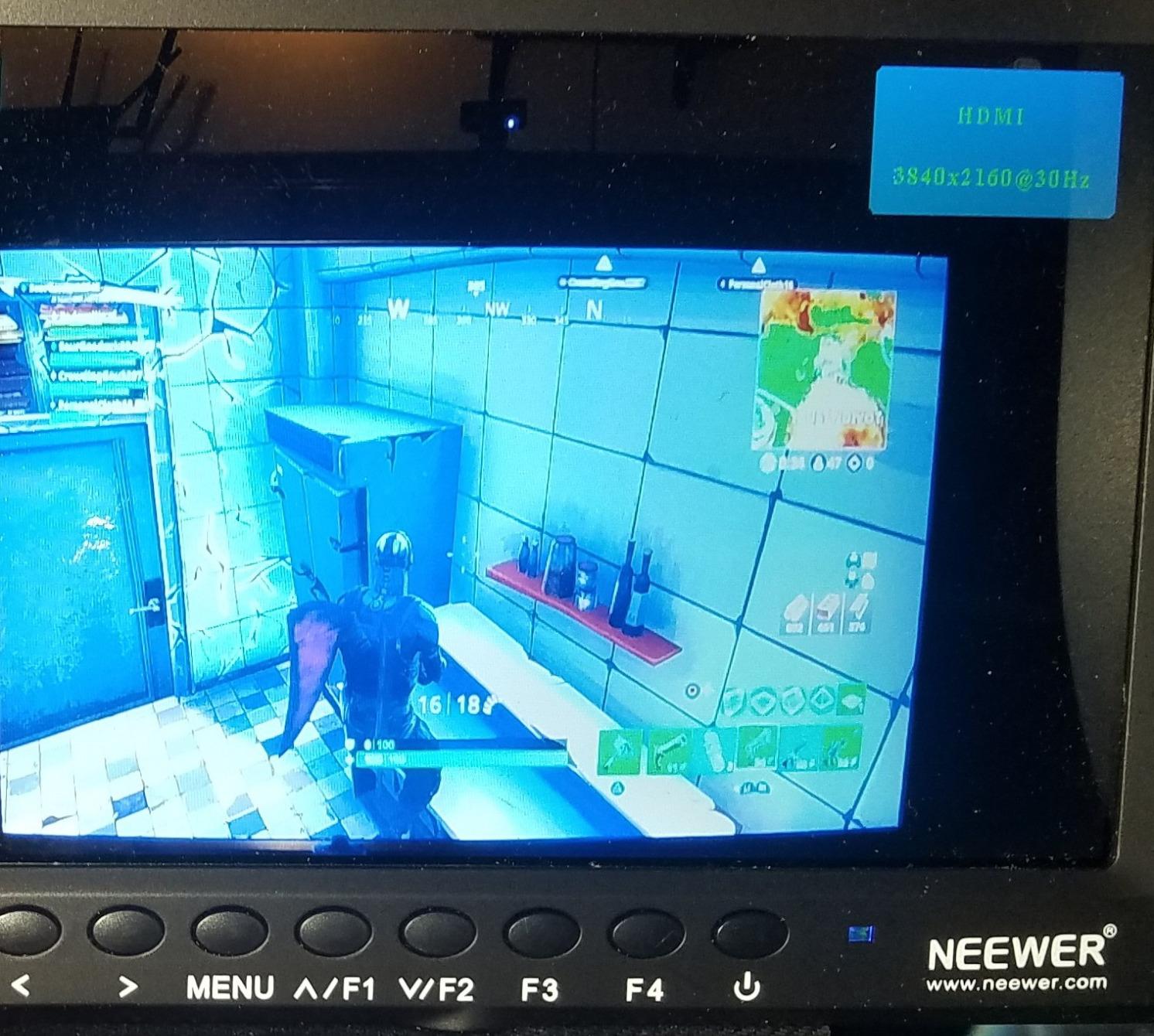
The monitoring features are comprehensive for the price. You get focus peaking, pixel-to-pixel zoom, image freeze, and multiple safe frame markers. These are tools I use constantly when framing interviews and checking focus on static shots.
One issue I encountered: the included speaker can cause audio feedback if you are not careful with your microphone placement. I typically keep the volume low or use headphones for audio monitoring.
Best For Reliability and Multi-Camera Work
If you need a monitor that just works without fuss, the F100 delivers. Its long track record means any quirks are well-documented, and replacement parts are easy to find.
Skip If You Want Modern Touch Controls
The button-based interface feels dated compared to newer touch-screen monitors. Menu navigation requires patience, and the learning curve is steeper than with the F700 or Osee G7 Pro.
5. FEELWORLD FW568 6 inch – Full HD Field Monitor
Pros
- Full HD 1920x1080 resolution
- Rec.709 color accuracy
- Up to 32 custom LUTs
- Built-in waveform monitoring
- Lightweight 175g
Cons
- Battery not included
- Side mounting only
- Micro HDMI cable included
The FEELWORLD FW568 bridges the gap between budget monitors and professional features. At 6 inches with Full HD resolution, it strikes a balance between screen real estate and portability that many filmmakers find ideal.
The jump to 1920×1080 resolution is immediately noticeable when checking focus. On 1280×800 monitors, fine details can look soft, but the FW568 renders text and edges with crisp clarity. The Rec.709 calibration means colors look natural without the wild shifts I have seen on uncalibrated monitors.
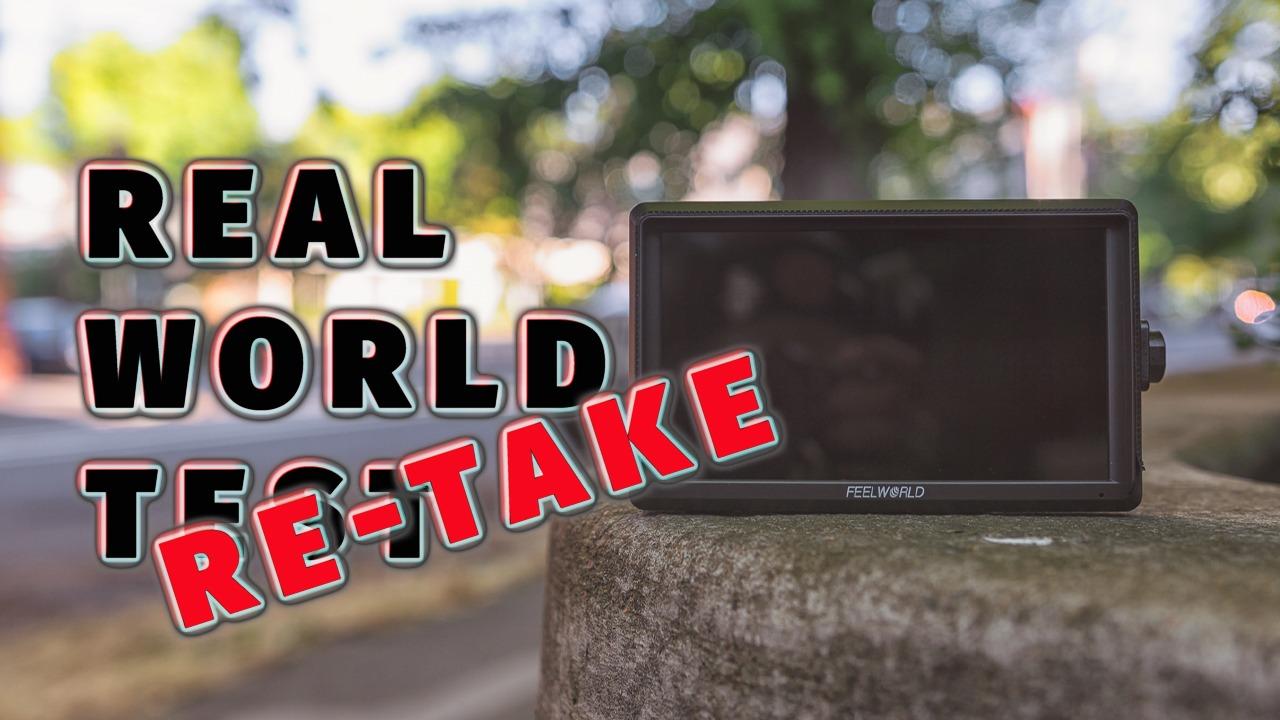
Custom LUT support is where this monitor shines. You can load up to 32 LUTs via SD card, making it perfect for Log shooters who want to preview their final look while filming. I loaded my usual S-Log3 to Rec.709 LUT and found the preview remarkably accurate.
The waveform monitoring is a professional feature rarely found at this price. Being able to check exposure with a waveform rather than just zebras or false color is a workflow upgrade that serious shooters will appreciate.
Best For LUT Preview and Gimbal Work
The compact size, Full HD resolution, and LUT support make this ideal for creators shooting in Log profiles who need a portable monitor. It is my top recommendation for gimbal operators who need professional features without the weight.
Skip If You Need Maximum Brightness
At 450 nits, this monitor struggles outdoors. The included sunshade helps, but for bright daylight shooting, you will want the F5 Prox or Osee G7 Pro instead.
6. FEELWORLD S55 V3 6 inch – With Battery Kit
Pros
- Full HD resolution with LUTs
- Includes battery and accessories
- Waveform and false color
- Lightweight design
- Good value bundle
Cons
- Battery life can be short
- HDMI cable quality concerns
- Tilt arm feels flimsy
The S55 V3 is FEELWORLD’s bundled answer to the FW568, including a battery, cables, sunshade, and tilt arm in the box. For filmmakers who want everything needed to start shooting in one purchase, this is a convenient option.
Feature-wise, it matches the FW568 closely: Full HD resolution, LUT support, waveform monitoring, and focus peaking. The 360-degree tilt arm is genuinely useful for positioning the monitor at odd angles when shooting low or high.
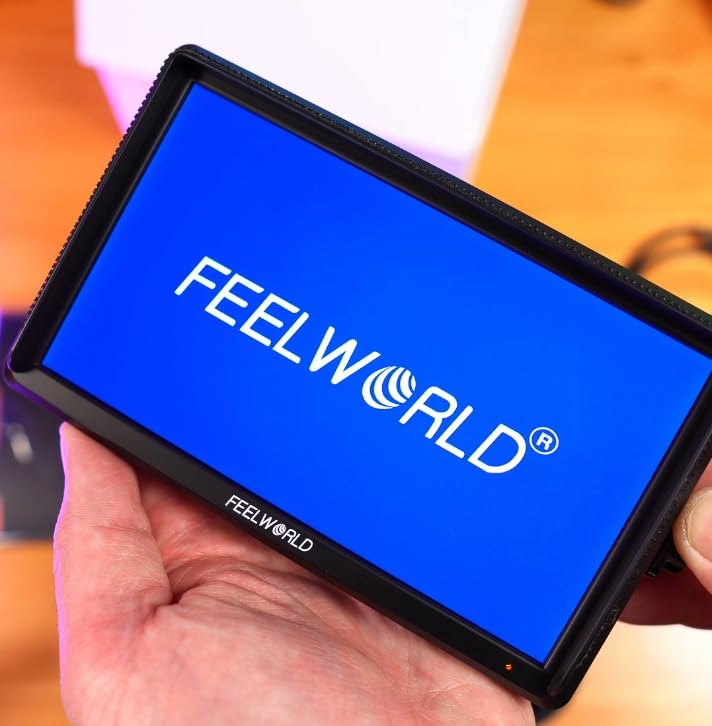
During testing, I found the included F550 battery provided about 2 hours of runtime. This is acceptable for shorter shoots but you will want spare batteries for full-day productions. The battery slot design also feels less robust than the NEEWER F700’s implementation.
The touch interface on the S55 V3 is responsive, though the menu system takes some learning. Once you have customized the shortcut buttons to your most-used functions, operation becomes much smoother.
Best For Complete Beginner Kits
If you are building your first rig and want one purchase that includes everything, the S55 V3 delivers. The included battery and cables mean you can start shooting immediately.
Skip If You Need All-Day Battery Life
The single F550 battery will not last a full production day. Factor in the cost of additional batteries, or consider the NEEWER F700 which includes higher-capacity batteries.
7. VILTROX DC-550 5.5 inch – Touch Screen Field Monitor
Pros
- 1200 nits daylight visible
- Touch screen interface
- REC-709 color calibration
- Triple power options
- Includes sunshade and case
Cons
- HDMI cable not included for Canon R
- Port placement can be awkward
The VILTROX DC-550 represents a significant step up from basic budget monitors without the premium price tag. At 1200 nits, it is genuinely usable outdoors, and the touch interface makes navigation far more intuitive than button-based competitors.
I tested this monitor during a beach shoot where the 1200 nits brightness proved its worth. While not as bright as the 2000+ nit options, it was viewable in partial shade and usable with the sunshade in full sun. The REC-709 calibration produced accurate colors that matched my camera’s output.
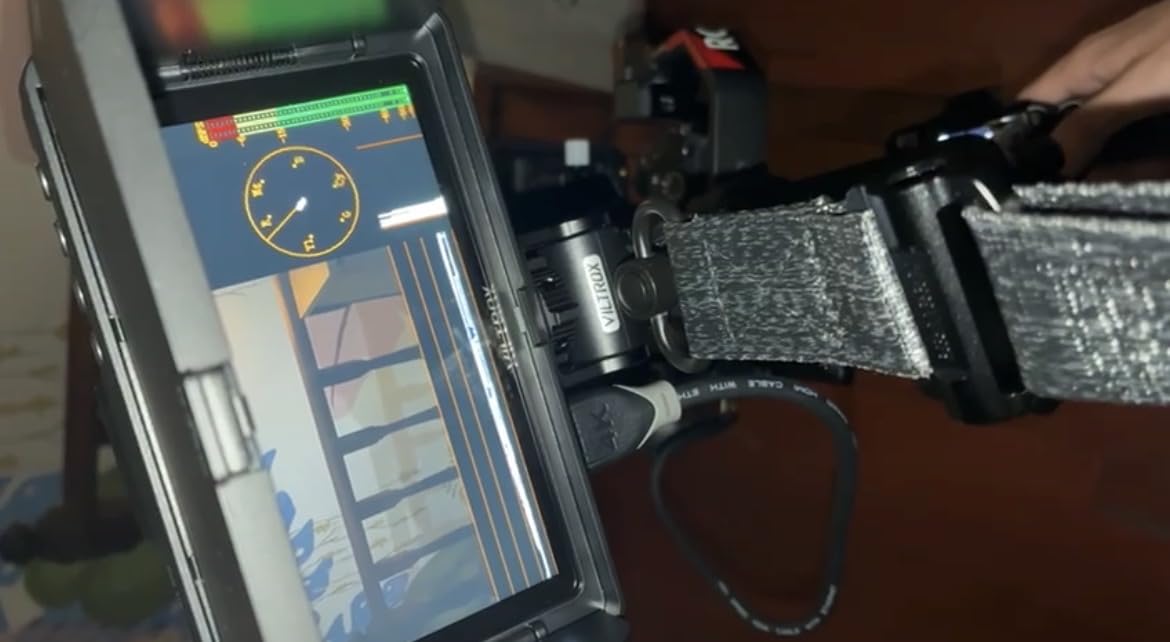
The touch controls are responsive and well-implemented. You can tap to access focus peaking, waveform, histogram, and vectorscope without digging through menus. The SD card slot allows importing custom LUTs, which worked flawlessly with my S-Log3 LUTs.
Power flexibility is another strong point. The DC-550 works with NP-F batteries, DC input, or USB-C power banks. This versatility is valuable on long shoots where you might want to run off a V-mount battery or USB power bank.
Best For Touch Interface Enthusiasts
If you prefer touch controls over buttons, this is the best value option available. The 1200 nits brightness and comprehensive monitoring tools make it suitable for serious work.
Skip If You Shoot in Bright Desert Conditions
While 1200 nits is good for most outdoor work, extremely bright conditions like desert shooting at noon may still overwhelm this screen. For those extreme scenarios, the 2000+ nit monitors are safer choices.
8. FEELWORLD F5 Prox 5.5 inch – 1600 Nits Portable Monitor
Pros
- 1600 nits outdoor ready
- Lightweight for gimbals
- Touch interface responsive
- Focus and exposure tools
- Battery and bag included
Cons
- Hardware revision inconsistencies
- Visor installation awkward
The FEELWORLD F5 Prox is my recommendation for gimbal operators who need brightness without weight. At 5.5 inches and significantly lighter than the 7-inch options, it will not throw off your gimbal balance while still providing 1600 nits of outdoor-ready brightness.
I used this monitor extensively on a recent travel documentary where every ounce mattered. The 1600 nits handled everything from shaded forest interiors to bright Mediterranean coastlines. The included F750 battery provided solid runtime, and the compact bag kept everything organized in my kit.
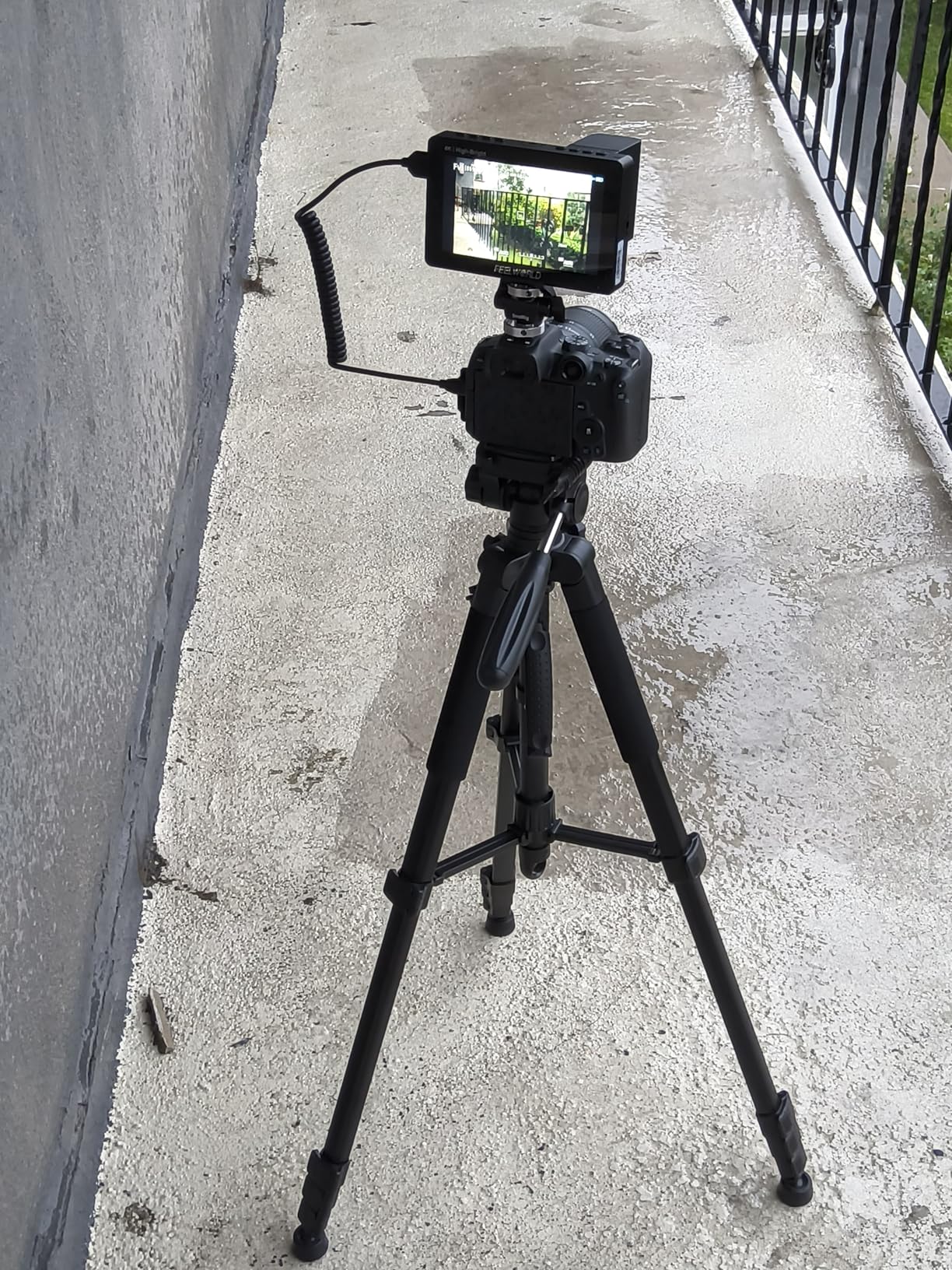
The touch interface is responsive, with quick access to focus peaking, waveform, histogram, and false color. LUT preview works well for Log shooting, though loading custom LUTs requires the SD card slot.
One note of caution: there have been reports of different hardware revisions with varying firmware capabilities. My unit performed flawlessly, but some users have reported differences in feature availability between production batches.
Best For Travel and Gimbal Filmmakers
The combination of brightness, light weight, and included accessories makes this ideal for one-bag travel filmmakers and gimbal operators. It is the sweet spot of portable and capable.
Skip If You Need Maximum Screen Size
The 5.5 inch screen is smaller than the 7-inch options. While fine for most work, focus pullers and those with vision challenges may prefer the larger displays.
9. NEEWER F700 7 inch – Monitor Only
Pros
- Same 2000 nits brightness as bundled version
- Auto backlight control
- Cooling fan system
- 60 custom LUT capacity
- DC output for dummy battery
Cons
- Battery not included
- Heavier without the weight of bundled batteries
- Plasticky feel
This is the standalone version of the NEEWER F700 without the included batteries. If you already own NP-F batteries or prefer to use external power via V-mount, this saves you money on batteries you do not need.
Feature-wise, it is identical to the bundled version: 2000 nits brightness, touch screen, comprehensive monitoring tools, and the cooling fan system. The fan is surprisingly quiet and helps prevent overheating during long recording sessions.
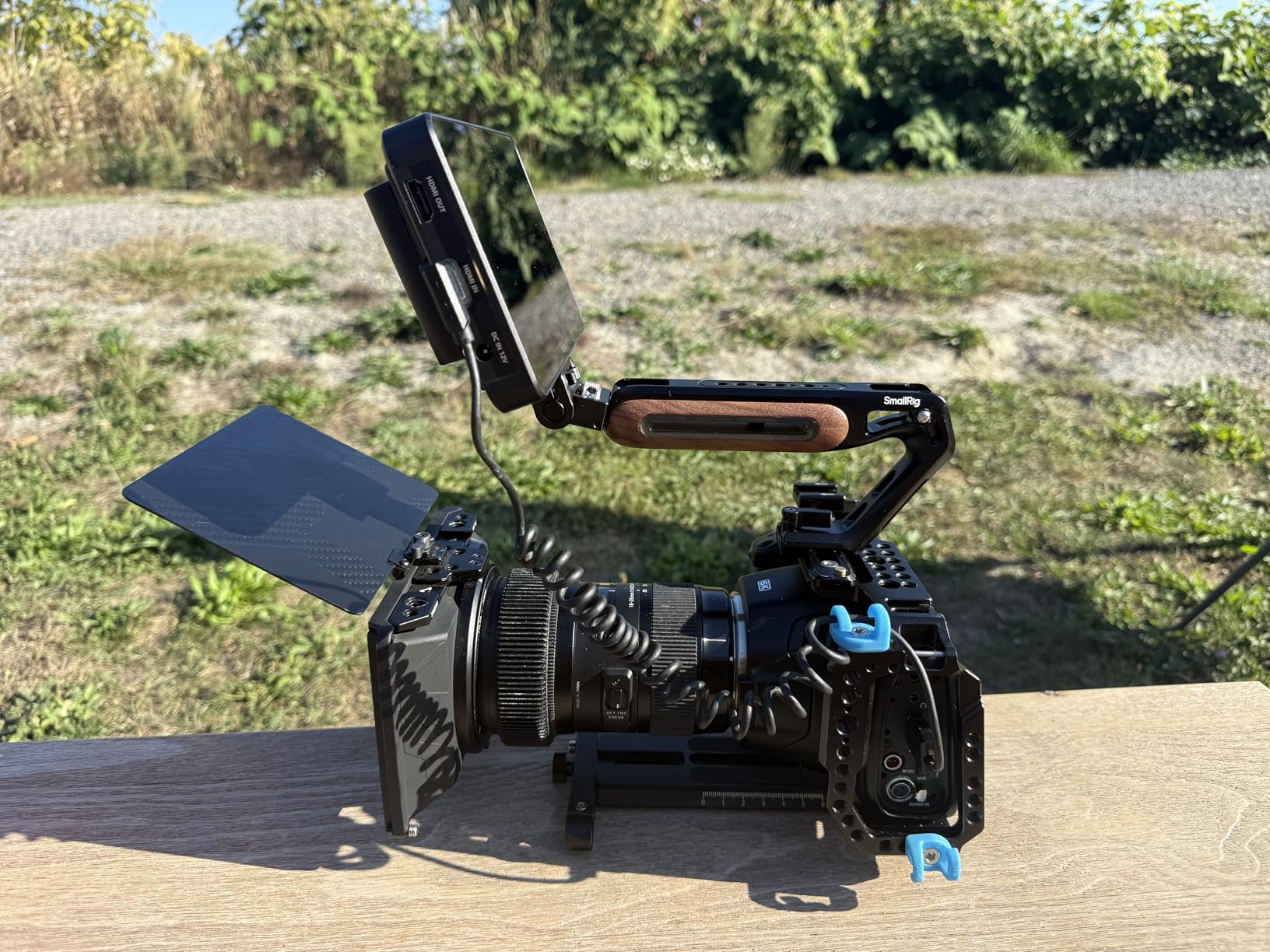
The DC 8V output is a thoughtful addition for powering your camera via dummy battery. This can simplify cable management by running both monitor and camera from a single power source.
As with the bundled version, the size and weight make this less ideal for gimbal work. The plastic construction also feels less premium than the aluminum bodies of higher-end monitors, though it has held up well in my testing.
Best For Users Who Already Own Batteries
If you have a collection of NP-F batteries from other equipment, this version saves money while delivering the same performance. It is also ideal for studio setups where you will run off AC power.
Skip If You Need a Complete Ready-to-Shoot Kit
Without batteries included, you cannot use this monitor out of the box. Factor in the cost of batteries and charger if you do not already own them.
10. FEELWORLD FW703 7 inch – SDI and HDMI Monitor
Pros
- 3G-SDI and 4K HDMI connectivity
- Broadcast monitoring tools
- 323 PPI pixel density
- Professional vectorscopes and histograms
- Dual input versatility
Cons
- Battery not included
- Thin plastic body concerns
- Mounting point durability issues
The FEELWORLD FW703 is one of the most affordable ways to get SDI connectivity on a field monitor. For professionals using cameras with SDI output like the URSA Mini, FS7, or C300 Mark III, this opens up monitoring options without the premium price of Atomos or SmallHD.
The 1920×1200 resolution and 323 PPI pixel density produce a sharp, detailed image. The REC-709 calibration ensures colors look natural, and the broadcast monitoring tools including waveform, vectorscope, and RGB histograms provide professional-level exposure analysis.
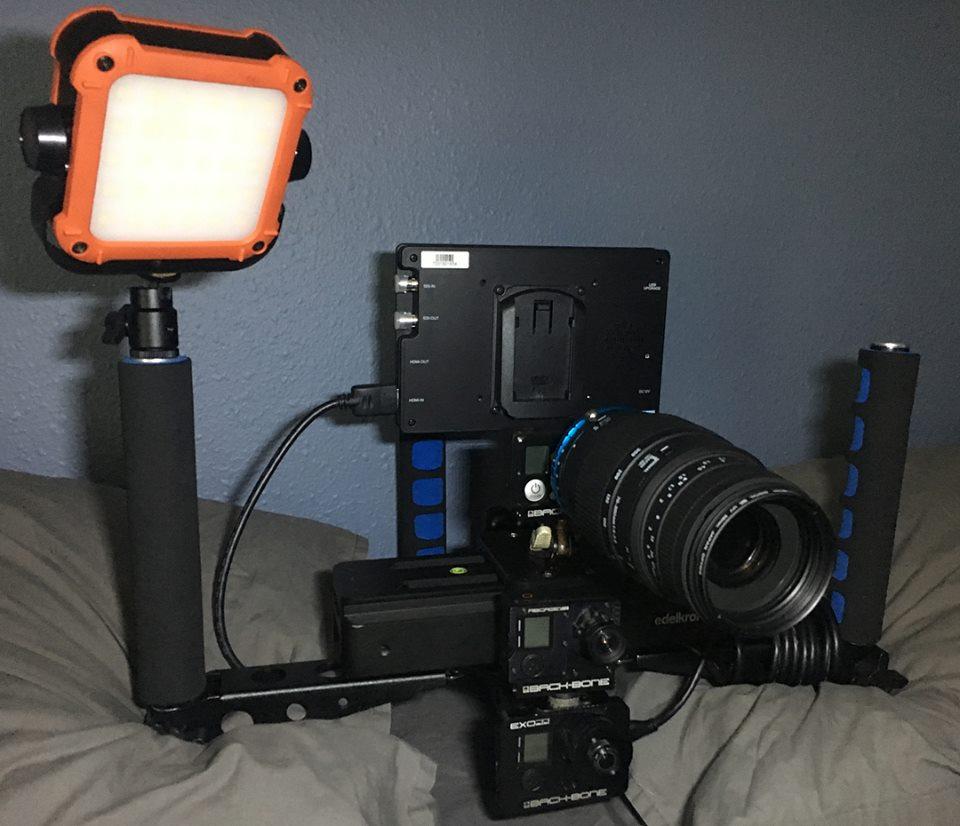
Having both SDI and HDMI is genuinely useful for multi-camera work. I have used this monitor to switch between an SDI-connected cinema camera and an HDMI mirrorless on the same shoot without changing monitors.
Build quality is the main concern. The plastic body feels thinner than competitors, and I have seen reports of mounting points loosening over time. For careful owners shooting in controlled environments, this is manageable, but it may not survive rough documentary conditions.
Best For SDI Camera Users on a Budget
If you need SDI connectivity without spending $500+, this is your most affordable option. The dual SDI/HDMI inputs add versatility for multi-camera workflows.
Skip If You Need Outdoor Brightness
At 450 nits, this monitor is strictly for indoor or controlled lighting. For outdoor SDI monitoring, you will need to invest significantly more in a high-brightness SDI monitor.
11. VILTROX DC-X3 6 inch – SDI Touch Screen Monitor
Pros
- 2000 nits for outdoor SDI work
- Touch screen interface
- Comprehensive monitoring tools
- All-aluminum body with cooling
- Includes battery and sunshade
Cons
- Menu HUD feels clunky
- Focus peaking visibility issues
- Battery slot durability concerns
The VILTROX DC-X3 fills a unique niche: an affordable SDI monitor with high brightness and touch controls. For professionals who need SDI connectivity but want the convenience of a touch interface, this is one of the few options under $300.
The 2000 nits brightness transforms what you can do with an SDI monitor. Typically, high-brightness SDI monitors cost $1000+, so having this capability at under $300 is remarkable. I tested this with a Blackmagic URSA Mini in bright conditions, and the screen remained clearly visible.
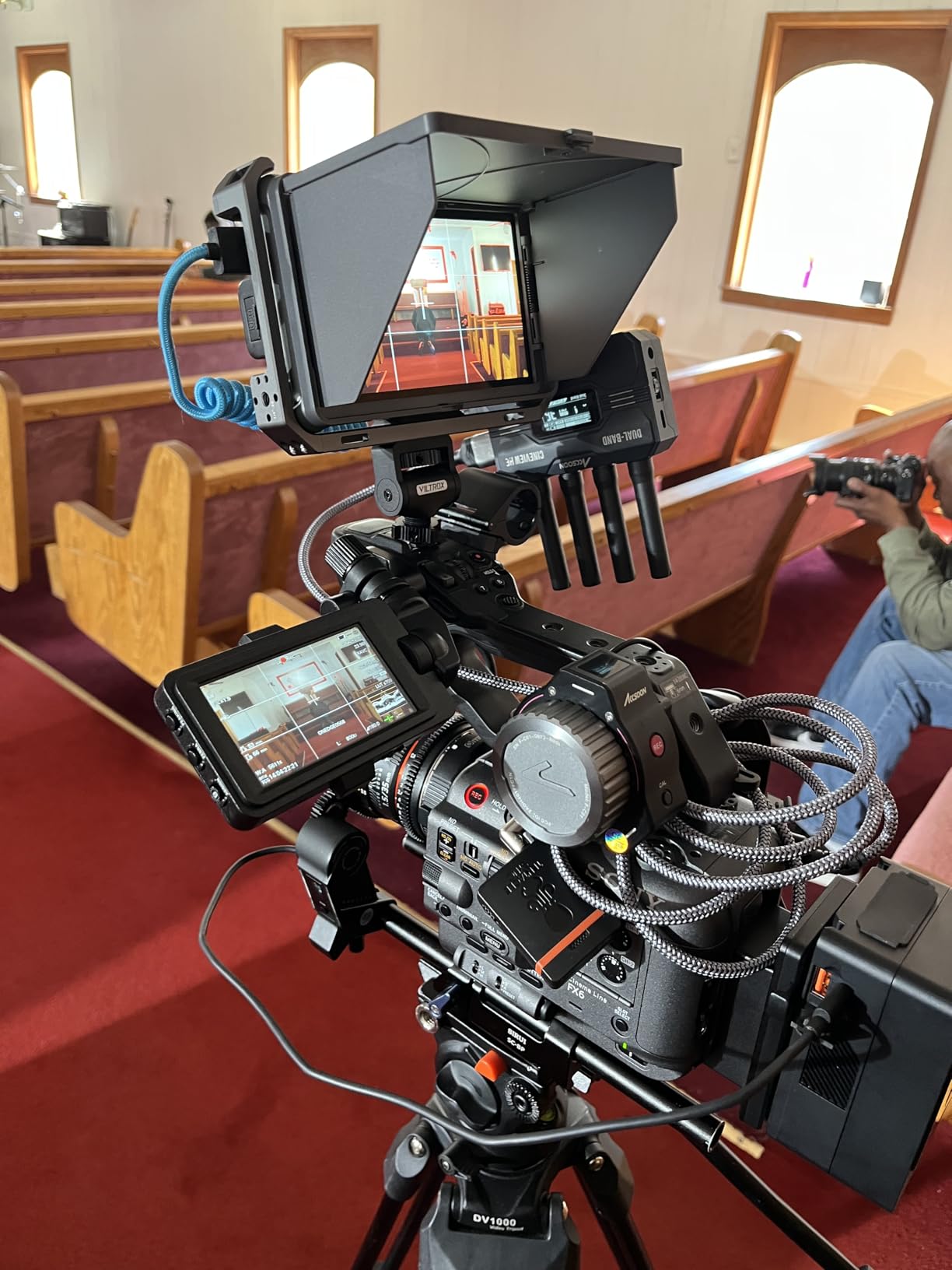
The all-aluminum body with built-in cooling fan feels significantly more professional than plastic alternatives. The fan runs quietly, and the metal construction dissipates heat effectively during long recording sessions.
The touch interface is functional but less polished than the Osee G7 Pro. The menu HUD feels dated, and the focus peaking can be hard to see even at maximum intensity. These are minor complaints given the price point, but worth noting.
Best For Outdoor SDI Work on a Budget
If you need SDI connectivity for outdoor shooting and cannot justify a $1000+ SmallHD, this is your best option. The brightness and build quality punch well above the price point.
Skip If You Prioritize UI Polish
The user interface and menu system lack the refinement of premium monitors. If smooth operation is as important as image quality, you may find this frustrating.
12. Osee G7 Pro 7 inch – Premium Touch Control Monitor
Pros
- Exceptional 3000 nits brightness
- Touch camera control for supported cameras
- Page-style custom UI
- Built-in display calibration
- Aluminum shell with silent fan
Cons
- Camera control limited to specific models
- Software bugs with some features
- Slow boot time
The Osee G7 Pro is the monitor I wish I could afford for every shoot. At 3000 nits, it is the brightest monitor I tested, and the touch camera control integration represents the future of on-camera monitoring.
The display quality is exceptional. The 1300:1 contrast ratio and reflection-reduction coating produce an image that looks more like a reference monitor than a field monitor. Colors are accurate, blacks are deep, and the 18 stops of dynamic range handling preserve detail in highlights and shadows.
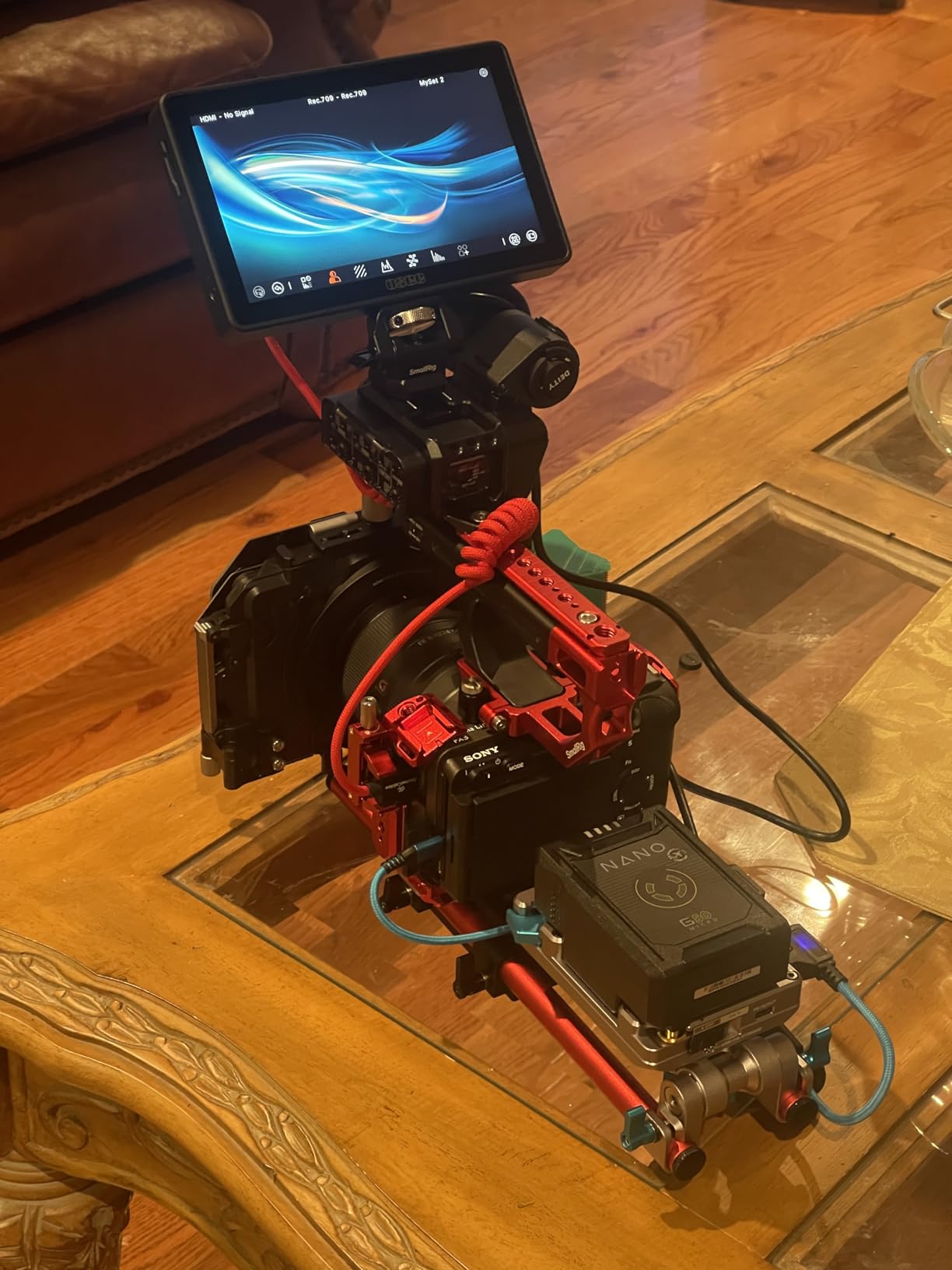
The page-style UI will feel familiar to SmallHD users. You can customize pages with different monitoring tools and switch between them with a swipe. The touch focus tracking works remarkably well on supported cameras like the Sony FX3 and Canon R5 II.
However, the camera control feature is limited to specific camera models, and some users have reported software bugs. The boot time is also slower than competitors, which can be frustrating when you need to start shooting quickly.
Best For Professionals Who Demand the Best
If you shoot outdoors regularly and want the best display quality available under $500, the G7 Pro delivers. The touch camera control is genuinely useful on supported cameras, and the build quality justifies the premium price.
Skip If You Have an Unsupported Camera
Many of the G7 Pro’s unique features require specific camera models. Check Osee’s compatibility list before buying, or you may miss out on the touch control functionality.
13. VILTROX DC-550 5.5 inch – Complete Kit
Pros
- Excellent value complete kit
- Good brightness for outdoor use
- Color accuracy rivals Atomos
- Quick-release sunshade hood
- Multiple power options
Cons
- Some units have 24fps stuttering
- Battery quality inconsistent
- Buttons are loud
This VILTROX DC-550 variant is the same monitor as the B0CFQXBH6R model but with different bundle options and retailer availability. The 1200 nits brightness and touch interface make it a compelling mid-range option.
During testing, I found the color accuracy surprisingly good for the price. Side-by-side with an Atomos Shinobi, the DC-550 held its own in terms of color rendition and contrast. The quick-release sunshade hood is well-designed and stays securely attached.
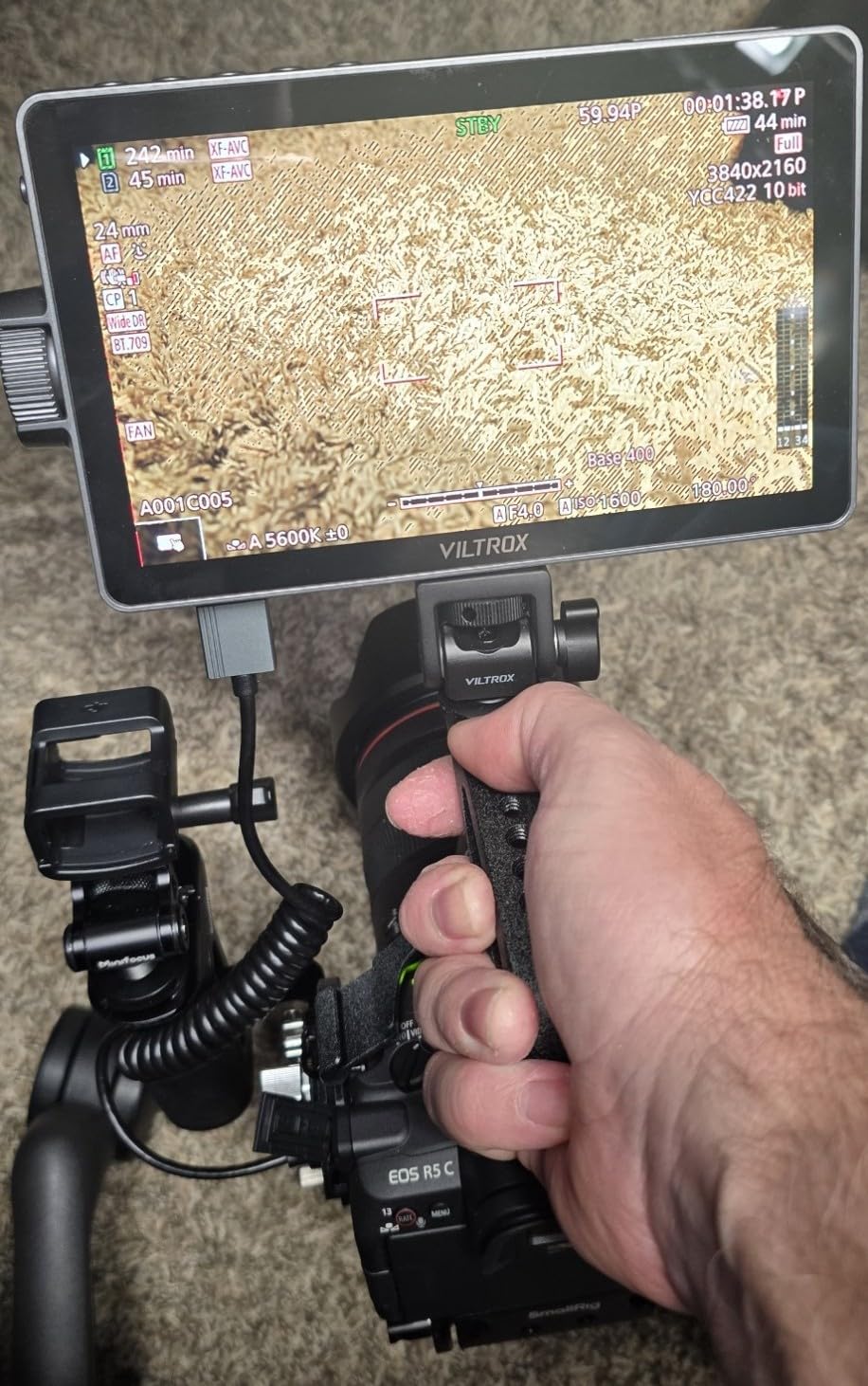
The multiple power options (NP-F, DC, USB-C) provide flexibility for different shooting scenarios. I particularly appreciate the USB-C power input, which lets me run the monitor off a power bank for extended shoots.
Some users have reported frame stuttering at 24fps on certain units, which suggests quality control inconsistencies. My test unit performed flawlessly, but it is worth buying from a retailer with good return policies.
Best For Value-Conscious Professionals
If you want professional features without the premium brand markup, this VILTROX delivers. The 1200 nits brightness and comprehensive monitoring tools make it suitable for paid work.
Skip If You Need Guaranteed 24fps Performance
The reported 24fps stuttering issues are concerning for narrative filmmakers. If you shoot primarily 24fps, consider the more reliably performing NEEWER F700 or Osee G7 Pro.
How to Choose the Best On Camera Monitor In 2026?
After testing 13 monitors across multiple shoots, here are the key factors I consider when recommending monitors to fellow filmmakers.
Screen Size and Resolution
5.5-inch monitors strike the best balance between visibility and portability. They are large enough for critical focus while remaining lightweight for gimbal work. Seven-inch monitors provide more screen real estate but add significant weight. Resolution matters less than you might think. Full HD (1920×1080) on a 5.5 or 7-inch screen provides plenty of detail for focus checking.
Brightness and Outdoor Visibility
Brightness is measured in nits, and this is where budget monitors typically fall short. For indoor work, 400-500 nits is adequate. For outdoor shooting, you need at least 1000 nits, preferably 1500-2000 nits. The Osee G7 Pro’s 3000 nits is overkill for most situations but welcome for bright desert or snow conditions.
HDMI vs SDI Connectivity
HDMI is the standard for mirrorless and DSLR cameras. It is convenient but the connectors are fragile and can pull out easily. SDI uses locking BNC connectors that cannot accidentally disconnect, making it the professional standard for cinema cameras and broadcast work. If you use cameras with SDI output, prioritize monitors like the FW703, DC-X3, or Osee G7 Pro.
Recording vs Monitoring Only
The monitors in this guide are monitoring-only devices. They display your camera’s feed but do not record it. If you need recording capabilities, look at Atomos Ninja V or Blackmagic Video Assist recorders, which cost significantly more but add ProRes and RAW recording capabilities.
LUT Support
If you shoot in Log profiles, LUT support lets you preview your final grade while filming. This is essential for exposure decisions when shooting Log. All monitors in this guide except the basic FW759 offer LUT support. The NEEWER F700 leads with support for 60 custom LUTs.
Power Options
Most monitors use Sony NP-F batteries (F550, F750, F970). Larger batteries last longer but add weight. USB-C power input is increasingly common and lets you use power banks. DC input allows powering from V-mount batteries on larger rigs. Consider your existing battery ecosystem when choosing.
Frequently Asked Questions
Why should I get an on-camera monitor?
Built-in camera screens are too small for critical focus and exposure work. External monitors provide larger displays for judging focus, professional monitoring tools like waveforms and false color, and higher brightness for outdoor visibility. They also allow better positioning for awkward camera angles.
Does it matter what video my camera outputs?
Yes. Most cameras output via HDMI, which works with all monitors in this guide. Professional cinema cameras often use SDI, requiring monitors with SDI inputs like the FEELWORLD FW703, VILTROX DC-X3, or Osee G7 Pro. Check your camera’s output type before purchasing.
What is the difference between HDMI and SDI?
HDMI uses small consumer connectors that can easily disconnect and are limited in cable length. SDI uses locking BNC connectors that cannot accidentally pull out, support longer cable runs, and are the professional standard for broadcast and cinema work. SDI is more reliable on set but requires compatible equipment.
Do I need a 4K external monitor?
Not necessarily. 4K monitors provide sharper images but most filmmakers find Full HD (1920×1080) perfectly adequate for focus checking on 5.5 or 7-inch screens. What matters more is brightness for outdoor use. All monitors in this guide accept 4K input even if their displays are Full HD.
Can external monitors record video?
The monitors in this guide are monitoring-only. They display your camera’s feed but do not record it. If you need external recording to ProRes or RAW formats, look at dedicated recorders like the Atomos Ninja V or Blackmagic Video Assist series, which cost significantly more.
How do you mount an external monitor?
Most monitors include a cold shoe mount that attaches to your camera’s hot shoe or a cage. For better positioning, use an articulating arm like the NEEWER ST34 or SmallHD tilt arm. Gimbal users should minimize weight with smaller monitors and secure mounting to prevent balance issues.
Final Thoughts
After testing 13 monitors across multiple projects, my top recommendations are clear. For most filmmakers, the NEEWER F700 7 inch with batteries offers the best combination of brightness, features, and value. The 2000 nits brightness handles outdoor work, the touch interface is intuitive, and the included batteries provide immediate usability.
Budget-conscious creators should look at the VILTROX DC-550, which delivers 1200 nits and professional features at under $170. Beginners will be well-served by the FEELWORLD FW759 with battery, an excellent entry point under $90.
For professionals needing the absolute best, the Osee G7 Pro’s 3000 nits brightness and touch camera control justify its premium price. SDI users should consider the VILTROX DC-X3 for an affordable high-brightness SDI solution.
Whatever your budget and needs, investing in a proper on-camera monitor will improve your footage immediately. You cannot fix what you cannot see, and these monitors ensure you see everything your camera captures in 2026.