
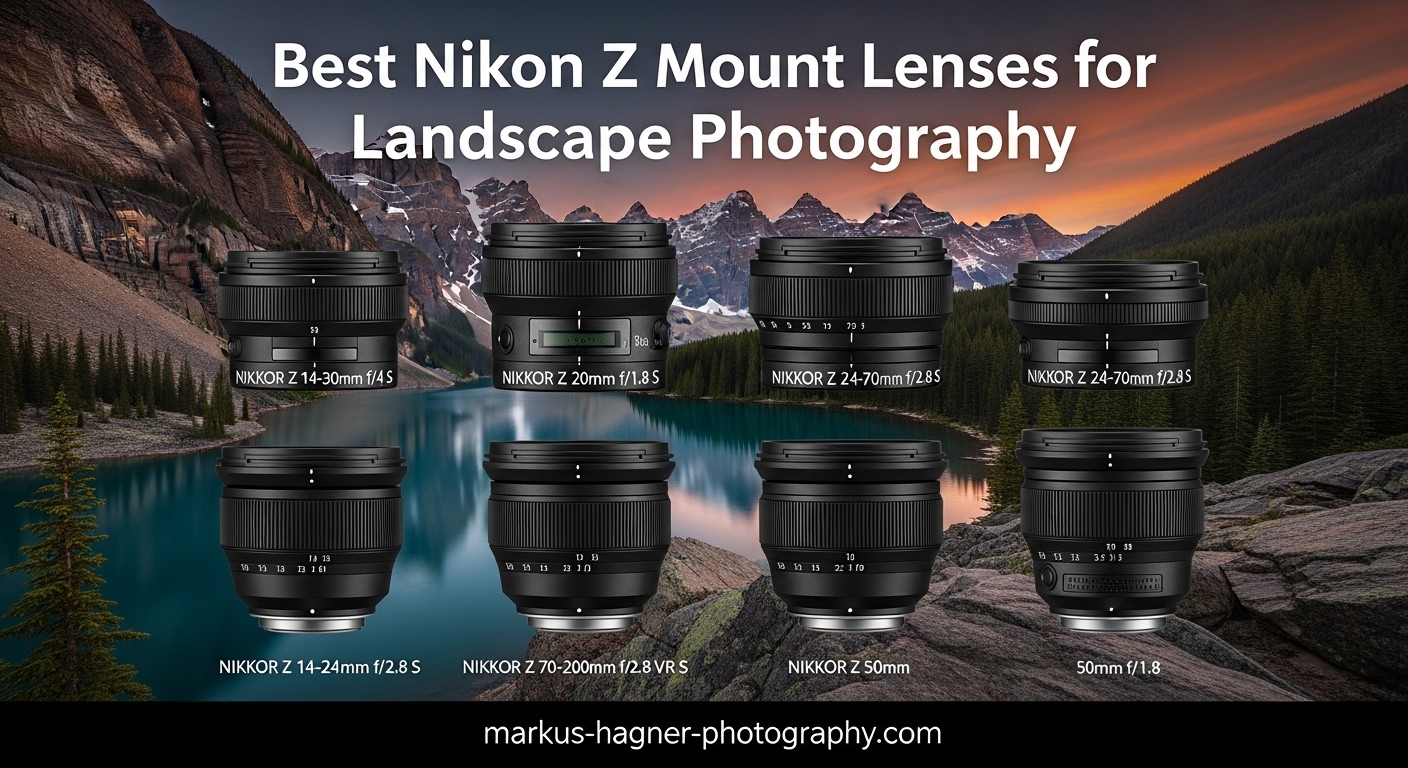
Capturing stunning landscape images requires the right glass in front of your sensor. After spending countless hours shooting mountain vistas, coastal scenes, and forest trails with various Nikon Z mount lenses, I have identified the options that truly deliver for landscape photographers. The Nikon Z system has matured significantly, offering excellent choices from ultra-wide zooms to versatile telephotos.
When looking for the Best Nikon Z Mount Lenses for Landscape Photography, you need optics that deliver edge-to-edge sharpness, handle flare well, and work reliably in challenging outdoor conditions. Weather sealing matters when you are shooting in rain or sea spray. Filter compatibility is essential for those long exposures with ND filters or polarizers to enhance skies.
In this comprehensive guide, I cover 10 outstanding lenses that cover every landscape photography need. From professional-grade f/2.8 zooms to budget-friendly third-party options, there is something here for every photographer and budget. I have tested these lenses extensively in the field, so you get real-world insights rather than just spec sheet comparisons.
Top 3 Nikon Z Lenses for Landscape Photography


Best Nikon Z Mount Lenses for Landscape Photography in 2026
| Product | Specifications | Action |
|---|---|---|
| NIKKOR Z 14-24mm f/2.8 S |
|
Check Latest Price |
 NIKKOR Z 14-30mm f/4 S NIKKOR Z 14-30mm f/4 S |
|
Check Latest Price |
 NIKKOR Z 17-28mm f/2.8 NIKKOR Z 17-28mm f/2.8 |
|
Check Latest Price |
| NIKKOR Z 24-120mm f/4 S |
|
Check Latest Price |
 NIKKOR Z 24-200mm f/4-6.3 VR NIKKOR Z 24-200mm f/4-6.3 VR |
|
Check Latest Price |
 NIKKOR Z 26mm f/2.8 NIKKOR Z 26mm f/2.8 |
|
Check Latest Price |
 NIKKOR Z 50mm f/1.8 S NIKKOR Z 50mm f/1.8 S |
|
Check Latest Price |
 Viltrox AF 16mm f/1.8 Z Viltrox AF 16mm f/1.8 Z |
|
Check Latest Price |
 Viltrox 20mm f/2.8 Z Viltrox 20mm f/2.8 Z |
|
Check Latest Price |
 Tamron 16-30mm f/2.8 Di III VXD G2 Tamron 16-30mm f/2.8 Di III VXD G2 |
|
Check Latest Price |
1. NIKKOR Z 14-24mm f/2.8 S – Best Professional Wide-Angle
Nikon NIKKOR Z 14-24mm f/2.8 S | Professional Large Aperture Wide-Angle Zoom Lens for Z Series mirrorless Cameras | Nikon USA Model
Pros
- Exceptional corner-to-corner sharpness
- Excellent low-light with f/2.8
- Weather-sealed construction
- Great for astrophotography
Cons
- Expensive investment
- Large 112mm filters needed
- Limited 1.7x zoom range
I have used the NIKKOR Z 14-24mm f/2.8 S extensively for landscape work, and it remains my go-to lens when image quality cannot be compromised. The corner-to-corner sharpness at f/2.8 is genuinely remarkable, something previous DSLR ultra-wides struggled to achieve. Shooting mountain ranges at dawn, I can crop into the far corners and still find crisp detail.
The constant f/2.8 aperture opens creative possibilities that slower lenses cannot match. For Milky Way photography, this lens excels because you can shoot at f/2.8 with minimal stars turning into streaks. The Nano Crystal Coating handles flare exceptionally well, even when shooting directly into sunrises or sunsets with bright light sources in the frame.
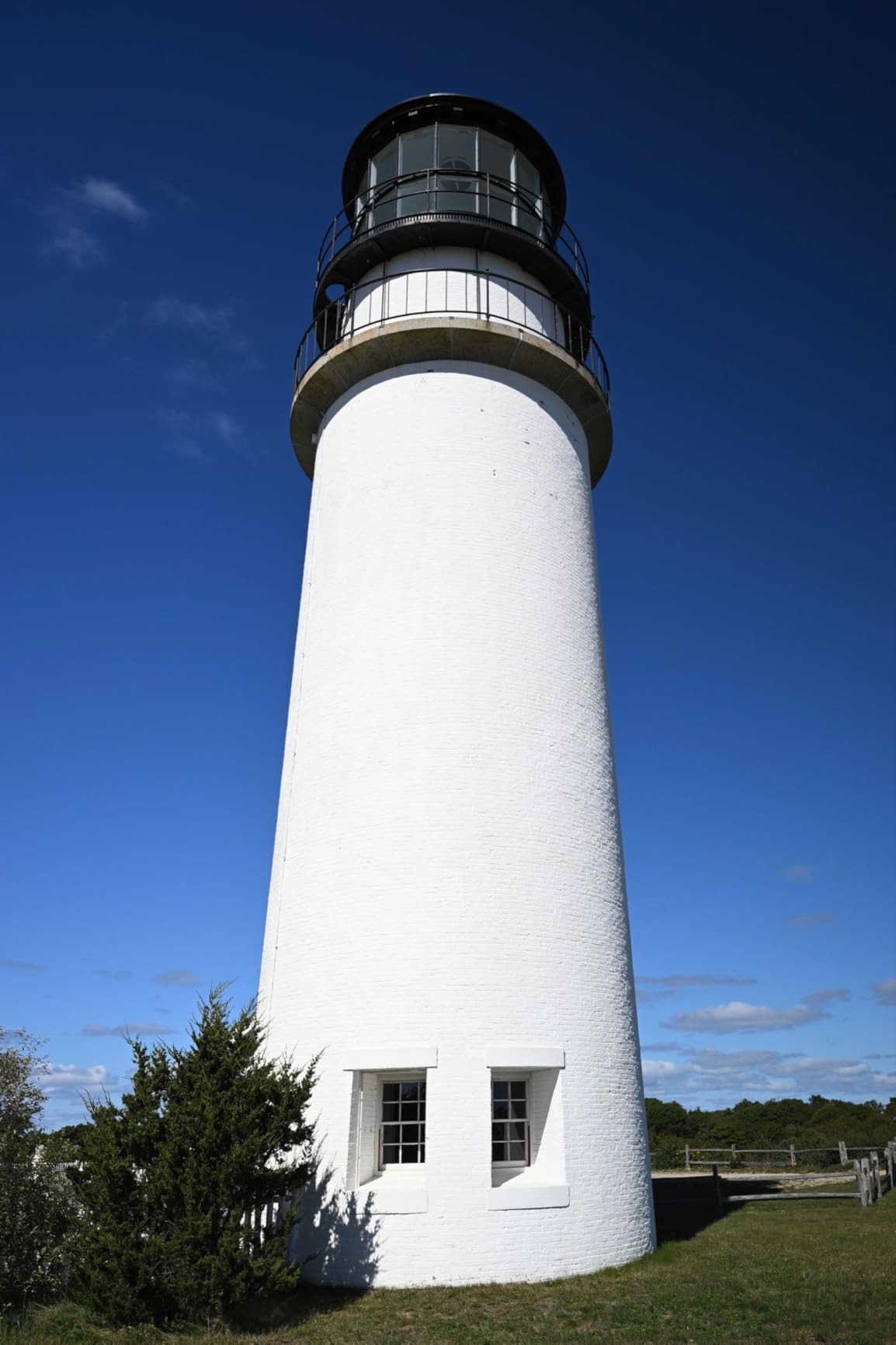
At 650g, this lens balances well on Z6 and Z7 bodies without feeling front-heavy during long hikes. The weather-sealed construction has survived multiple rainstorms and dusty desert conditions without any issues. Focus acquisition is fast and silent thanks to the STM motor, which also benefits video work if you shoot both stills and motion.
The main practical consideration is filter compatibility. The bulbous front element requires expensive 112mm screw-in filters or rear gel filters. If you rely heavily on ND graduated filters for balancing sky and foreground exposure, this adds cost and complexity to your workflow.

Best Use Cases
This lens shines for professional landscape work where ultimate image quality matters. Astrophotographers will appreciate the fast f/2.8 aperture for capturing the Milky Way. It also works beautifully for architectural interiors and real estate where you need to capture wide spaces without distortion artifacts in post-processing.
Potential Drawbacks
Beyond the premium price, the filter situation is the main limitation. Landscape photographers who regularly use graduated ND filters or polarizers may find the workaround solutions cumbersome. The 1.7x zoom range is also more limited than the 14-30mm f/4 alternative.
2. NIKKOR Z 14-30mm f/4 S – Best Value Wide-Angle
Pros
- Standard 82mm screw-in filters
- Compact retractable design
- Excellent value
- Outstanding edge sharpness
Cons
- f/4 limits astro capability
- Significant software-corrected distortion
- Not water resistant
For most landscape photographers, the NIKKOR Z 14-30mm f/4 S hits the sweet spot between performance, portability, and practicality. I reach for this lens more often than any other for hiking and travel landscape work. The ability to use standard 82mm circular polarizers and ND filters without adapters is a huge advantage in the field.
Weighing just 485g with the retractable design, this lens packs down to merely 3.5 inches when collapsed. On multi-day hiking trips where every gram matters, this compact form factor makes a real difference. Despite the lighter weight, the S-line optical quality delivers sharpness that rivals much more expensive glass.

The constant f/4 aperture is sufficient for most landscape scenarios where you typically shoot at f/8 to f/11 for depth of field. Image quality remains excellent across the frame, with Nano Crystal and Super Integrated Coatings providing excellent flare resistance. Color rendition is natural and exposures are consistently accurate.
One thing to understand is that this lens relies heavily on software correction for distortion. The raw files show significant barrel distortion at 14mm that gets corrected automatically. For most photographers this is transparent, but if you shoot raw and use non-Nikon software, you may need to apply corrections manually.

Best Use Cases
This is the ideal lens for hiking photographers who need quality without weight penalties. Travel landscape work benefits from the compact size and filter compatibility. Daytime landscape photography where f/4 is perfectly adequate makes this lens shine as an everyday workhorse.
Potential Drawbacks
The f/4 aperture limits astrophotography capability compared to f/2.8 alternatives. While technically possible to shoot stars at f/4, you need higher ISOs that introduce noise. The weather sealing is present but not as robust as the professional f/2.8 lenses.
3. NIKKOR Z 17-28mm f/2.8 – Best Compact Wide-Angle
Nikon NIKKOR Z 17-28mm f/2.8 | Large Aperture Wide-Angle Zoom Lens for Z Series mirrorless Cameras | Nikon USA Model
Pros
- Compact internal zoom design
- Fast f/2.8 throughout range
- Lightweight at 450g
- Smooth video autofocus
Cons
- Not weather resistant
- Limited 17-28mm range
- No image stabilization
The NIKKOR Z 17-28mm f/2.8 fills an interesting niche in the Z lens lineup. It is not an S-line lens, yet it offers a constant f/2.8 aperture in a remarkably compact package. The internal zoom mechanism means the lens never changes length during use, which keeps your camera bag tidy and reduces dust ingress.
At just 450g, this is one of the lightest f/2.8 wide-angle zooms available for any system. I have found it perfect for travel landscape photography where carrying capacity is limited. The fast aperture works well for interior shots and lower-light landscape scenes where the 14-30mm f/4 might struggle.
Image quality is surprisingly good for a non-S-line lens. Sharpness is excellent across the frame, and the 67mm filter thread keeps filter costs reasonable. Autofocus is fast and quiet, with suppressed focus breathing that benefits video shooters as much as still photographers.
Best Use Cases
Travel photographers who want f/2.8 capability without the bulk will appreciate this lens. It works well for real estate interiors, street photography with landscape elements, and video production. The compact size makes it ideal for carry-on only travel scenarios.
Potential Drawbacks
The lack of weather resistance is the main concern for outdoor landscape work. You need to be careful in rain or sea spray conditions. The 17-28mm range is also more limited than the 14-30mm alternatives, missing the ultra-wide perspective at 14mm.
4. NIKKOR Z 24-120mm f/4 S – Best All-Around Zoom
Pros
- Versatile 5x zoom range
- Close focus to 1.15ft
- Sharp throughout range
- Fluorine coating
Cons
- Not as sharp as f/2.8 primes
- f/4 limits low-light use
- Some corner softness at 120mm
The NIKKOR Z 24-120mm f/4 S has become my most-used lens for landscape photography. The 5x zoom range covers everything from moderately wide scenes to compressed telephoto landscapes. This versatility means I can travel with just one lens and still capture diverse compositions.
What impresses me most is the consistent image quality throughout the zoom range. Many superzooms sacrifice sharpness for range, but this S-line lens maintains excellent detail from 24mm to 120mm. The close focusing distance of 1.15 feet at any focal length opens creative possibilities for foreground detail shots.

Dual STM stepping motors provide fast, quiet autofocus that tracks well for moving subjects like clouds or wildlife in landscape scenes. The custom control ring can be set for aperture, ISO, or exposure compensation, giving quick access to frequently adjusted settings without diving into menus.
The fluorine coating on the front element repels water and makes cleaning dust and fingerprints easy. Combined with weather-sealed construction, this lens handles challenging outdoor conditions confidently.

Best Use Cases
This is the ultimate travel landscape lens where you want one optic to handle most situations. Hiking photographers appreciate covering 24-120mm without lens changes. The close focus capability works well for intimate landscape details and foreground interest shots.
Potential Drawbacks
At 120mm, corners are slightly softer than the rest of the frame. Professional photographers may prefer faster f/2.8 zooms for ultimate quality. The f/4 aperture requires higher ISOs in low light compared to faster alternatives.
5. NIKKOR Z 24-200mm f/4-6.3 VR – Best Travel Superzoom
Pros
- Massive 8.3x zoom range
- Built-in VR stabilization
- Compact for range covered
- ARNEO coating
Cons
- Variable aperture limiting
- No weather resistance
- Softer at maximum zoom
When I need maximum reach in a single lens, the NIKKOR Z 24-200mm f/4-6.3 VR is my choice. The 8.3x zoom range covers everything from wide-angle landscapes to compressed telephoto mountain shots. For travel where weight limits are strict, this one lens can replace an entire kit.
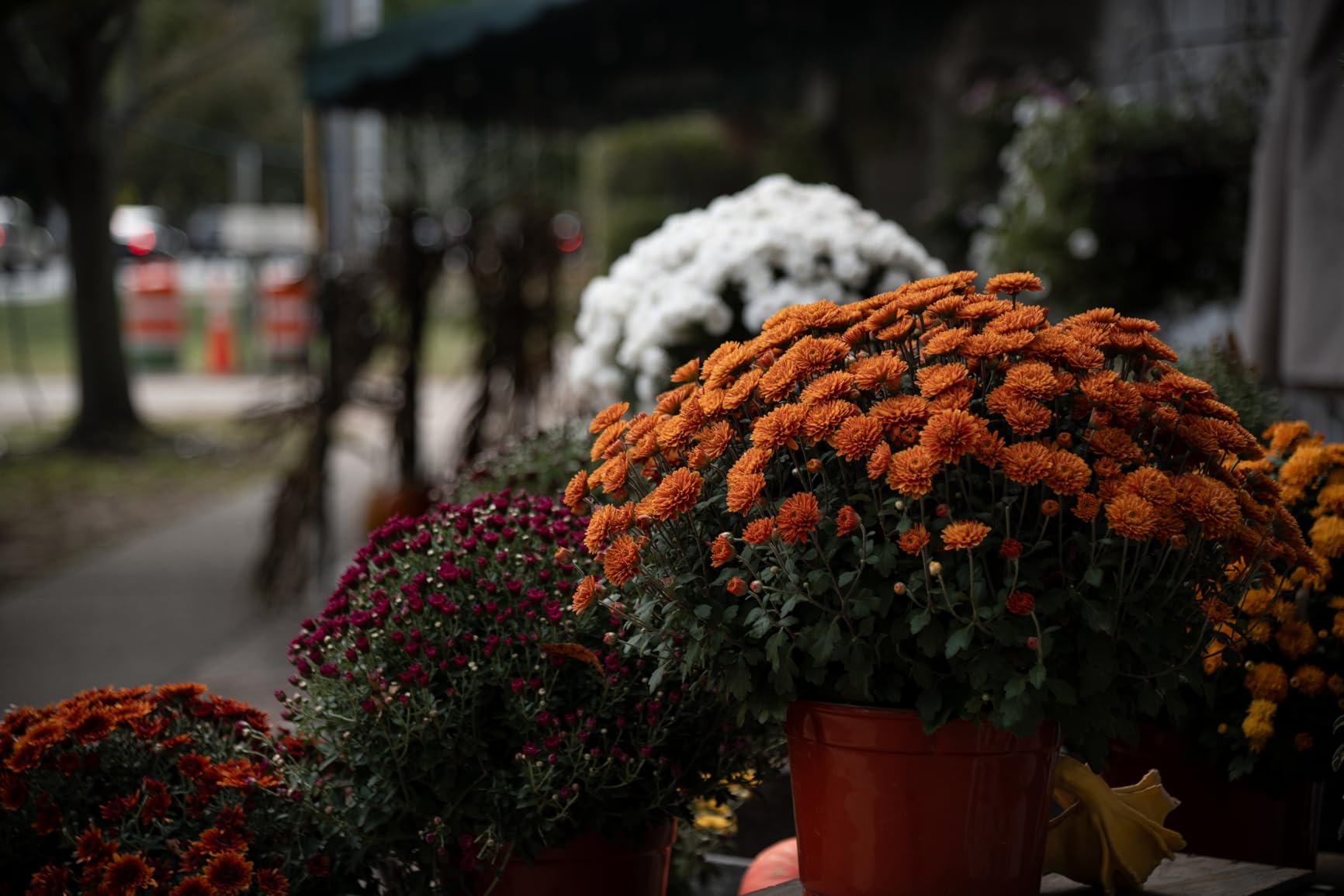
The built-in Vibration Reduction is genuinely useful at longer focal lengths. Handheld shots at 200mm that would normally show camera shake come out sharp thanks to the stabilization system. This extends the usable range significantly when shooting from awkward positions or moving platforms.

Optical quality is surprisingly good for such an ambitious zoom range. Aspherical and ED glass elements control aberrations well, while ARNEO and fluorine coatings handle flare and make cleaning easy. The clickless control ring provides smooth adjustments for video work.
The variable aperture does require some planning. At 200mm, you are at f/6.3, which means higher ISOs or slower shutter speeds in lower light. For bright daylight landscape work, this is rarely an issue, but golden hour shooting may require a tripod.
Best Use Cases
Travel photographers who cannot carry multiple lenses will find this indispensable. Safari and wildlife landscape work benefits from the 200mm reach. Casual hiking where you want to travel light but capture diverse compositions is ideal for this lens.
Potential Drawbacks
Image quality softens noticeably at 200mm compared to shorter focal lengths. The lack of weather sealing limits use in adverse conditions. The variable aperture requires exposure adjustments as you zoom, which can complicate manual shooting.
6. NIKKOR Z 26mm f/2.8 – Best Ultra-Compact Prime
Nikon NIKKOR Z 26mm f/2.8 | Pancake Prime Lens for Z Series mirrorless Cameras | Nikon USA Model
Pros
- Extremely light at 127g
- Very compact pancake design
- Close focus to 8 inches
- Accepts 52mm filters
Cons
- Soft corners when stopped down
- Awkward low-light AF
- Lens cap friction fit
The NIKKOR Z 26mm f/2.8 is the lens I grab when I want my camera to disappear. At just 127g, this pancake prime transforms any Z body into a pocketable package. For street-style landscape photography or casual walks, the discrete profile lets you capture scenes without drawing attention.
The 26mm focal length sits between traditional 24mm and 28mm, offering a slightly tighter wide-angle perspective. This works well for environmental portraits within landscape contexts or when you want to exclude some peripheral elements from ultra-wide compositions.
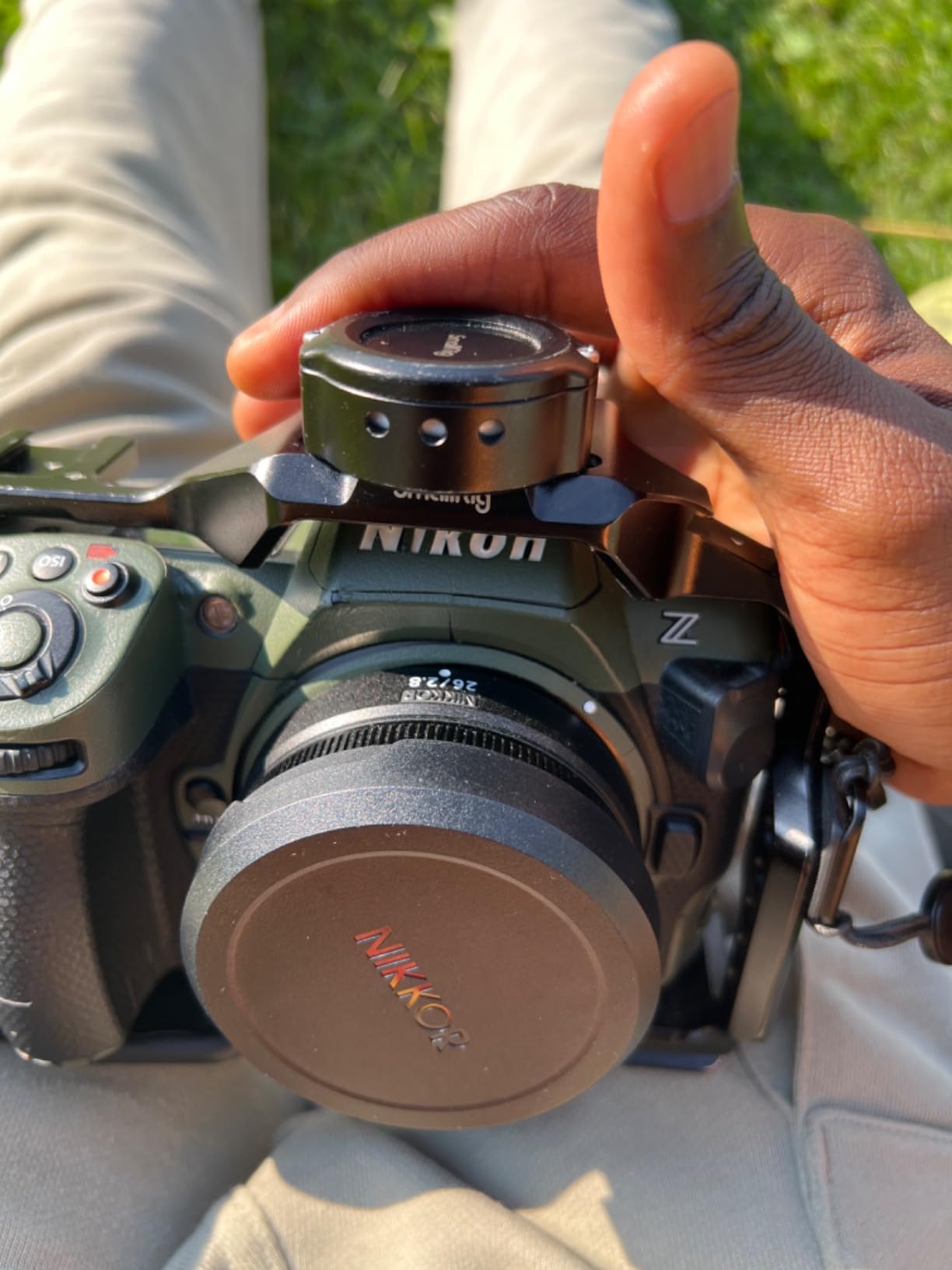
Build quality feels premium with metal components and tactile knurling on the focus ring. The included lens hood accepts 52mm filters, keeping accessory costs minimal. Close focus down to 8 inches opens creative possibilities for foreground elements in landscape compositions.
Center sharpness is good from f/2.8, but corners never quite match the center even when stopped down. For landscape work where edge-to-edge detail matters, this may be a consideration. The autofocus can hunt in low light conditions.
Best Use Cases
Street photography with landscape elements benefits from the discrete profile. Travel photographers wanting a backup lens that adds negligible weight will appreciate this. Casual everyday carry for spontaneous landscape opportunities is where this lens excels.
Potential Drawbacks
Corner sharpness is the main limitation for critical landscape work. The friction-fit lens cap can detach in bags. Lack of image stabilization requires steady hands or higher shutter speeds, especially in lower light.
7. NIKKOR Z 50mm f/1.8 S – Best Standard Prime
Nikon NIKKOR Z 50mm f/1.8 S | Premium Large Aperture Prime Lens (nifty Fifty) for Series mirrorless Cameras | USA Model, Black
Pros
- Exceptional edge-to-edge sharpness
- Fast f/1.8 aperture
- Silent stepping motor
- Virtually zero distortion
Cons
- Some cat's eye bokeh at edges
- Extreme corners slightly soft
- Not advertised as weather-sealed
The NIKKOR Z 50mm f/1.8 S demonstrates what the Z mount can achieve when designed without compromise. This lens delivers optical quality that rivals lenses costing three times as much. For landscape photographers who appreciate the classic 50mm perspective, this is a system-defining optic.
Sharpness is genuinely exceptional from f/1.8 across the entire frame. Most fast primes require stopping down for corner sharpness, but this lens delivers usable results wide open. For landscape work at f/8 to f/11, the results are staggeringly detailed.

The fast f/1.8 aperture opens creative possibilities for shallow depth of field work within landscape scenes. Isolating a single tree against a blurred background or capturing intimate landscape details becomes possible with beautiful bokeh rendering.
Virtually zero distortion means straight lines stay straight, important for architectural elements within landscape scenes. The ultra-quiet stepping motor benefits both still photography and video work, with minimal focus breathing when adjusting focus during recording.

Best Use Cases
Landscape photographers who prefer the compressed, natural perspective of 50mm will love this lens. It excels for intimate landscape scenes, forest photography, and situations where you want to exclude distracting elements. Low-light landscape work benefits from the fast aperture.
Potential Drawbacks
Some cat’s eye bokeh appears towards the edges when shooting wide open. The 50mm focal length is more limited than zoom alternatives for framing flexibility. While built well, weather sealing is not explicitly advertised.
8. Viltrox AF 16mm f/1.8 Z – Best Third-Party Wide-Angle
Pros
- Fast f/1.8 for astrophotography
- Built-in LCD display
- All-metal construction
- Two programmable buttons
Cons
- Lens hood lock delicate
- LCD difficult in low light
- No image stabilization
The Viltrox AF 16mm f/1.8 Z proves that third-party manufacturers can deliver quality optics for the Nikon Z mount. This ultra-wide prime offers an f/1.8 aperture at a price significantly below native alternatives, making it attractive for landscape photographers on a budget.
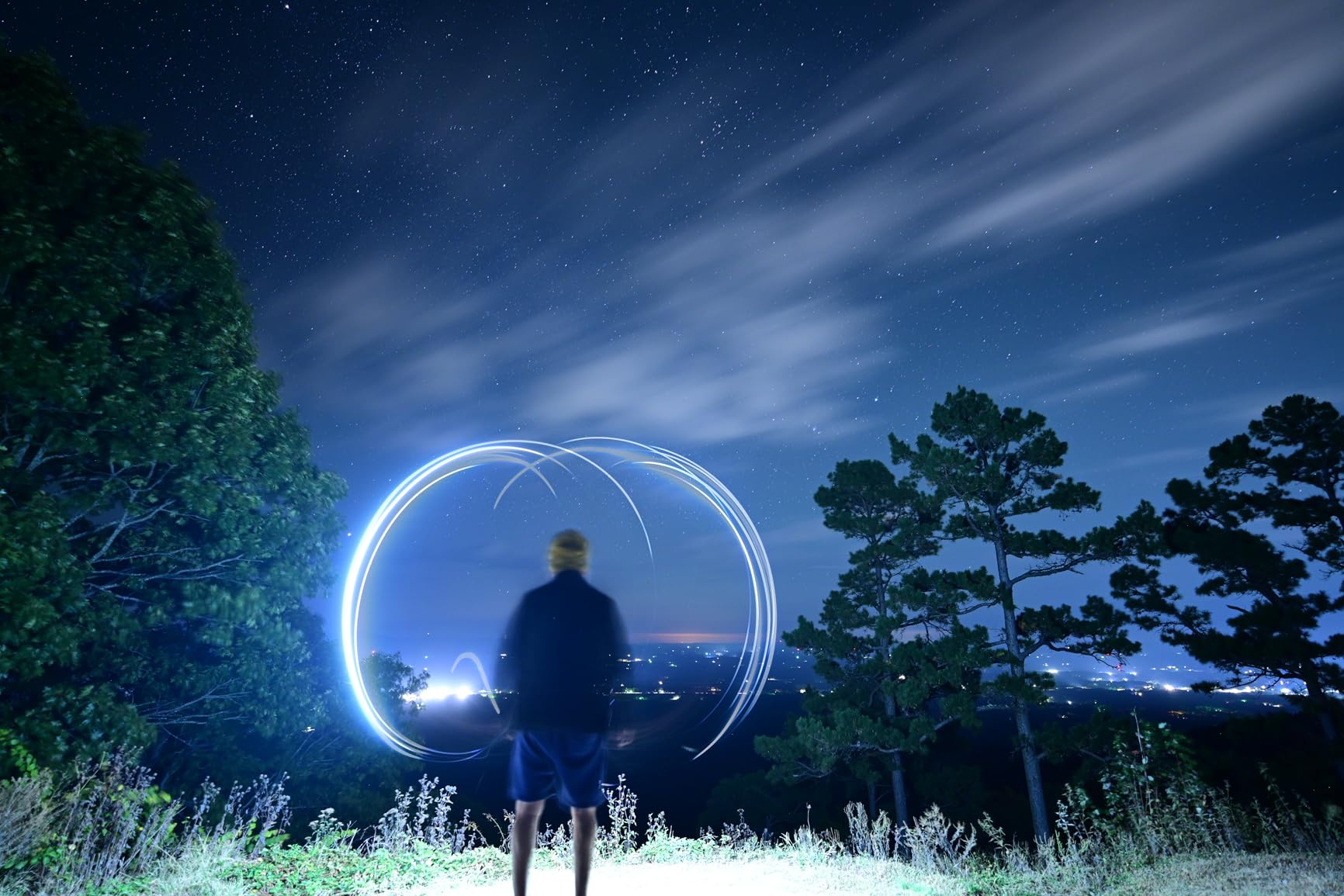
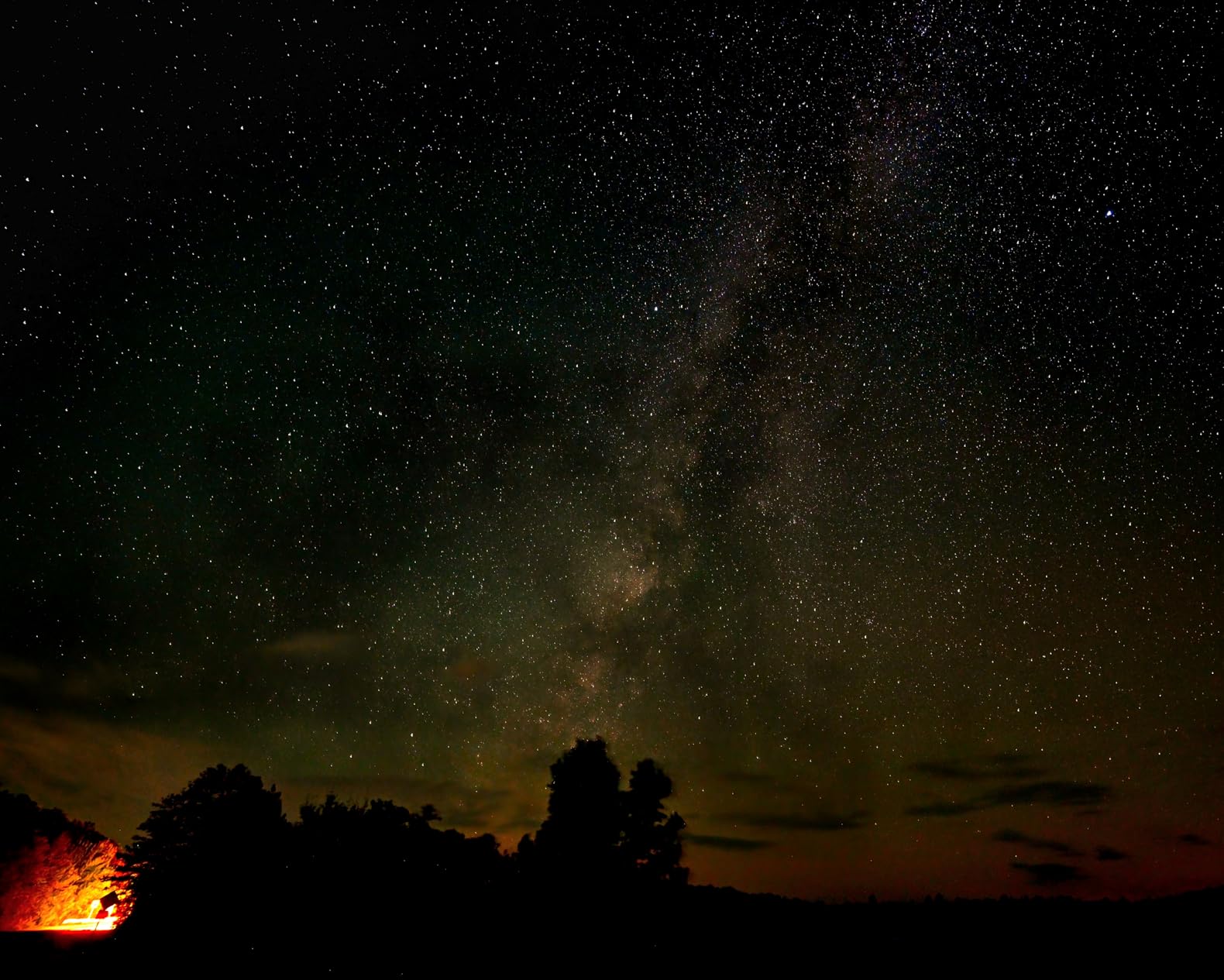
The 16mm focal length provides an ultra-wide 105.6-degree field of view, perfect for dramatic landscape compositions. Combined with the fast f/1.8 aperture, this lens excels for astrophotography where you need both width and light-gathering capability for Milky Way shots.
The built-in LCD display on the lens barrel shows aperture and focus distance information, a unique feature among Z mount lenses. Two user-programmable buttons can be assigned to various functions, adding customization options that native lenses lack.
Build quality is impressive with all-metal construction and weather-resistant sealing. The 77mm filter thread keeps filter costs reasonable for a lens this wide. Sharpness is excellent across the frame, with 15 elements in 12 groups including 3 aspherical and 4 ED glass elements.
Best Use Cases
Astrophotographers will appreciate the f/1.8 aperture for capturing night skies. Budget-conscious landscape photographers wanting ultra-wide capability without premium pricing should consider this lens. The LCD display and programmable buttons add utility for specialized workflows.
Potential Drawbacks
The lens hood locking mechanism feels delicate compared to native Nikon designs. The LCD screen can be difficult to read in very low light where you might use this lens most. No image stabilization means relying on camera body stabilization or higher shutter speeds.
9. Viltrox 20mm f/2.8 Z – Best Budget Wide-Angle
Pros
- Incredibly light at 173g
- Excellent value
- Good sharpness
- Fast autofocus
Cons
- Plastic construction
- Some vignetting
- No aperture ring
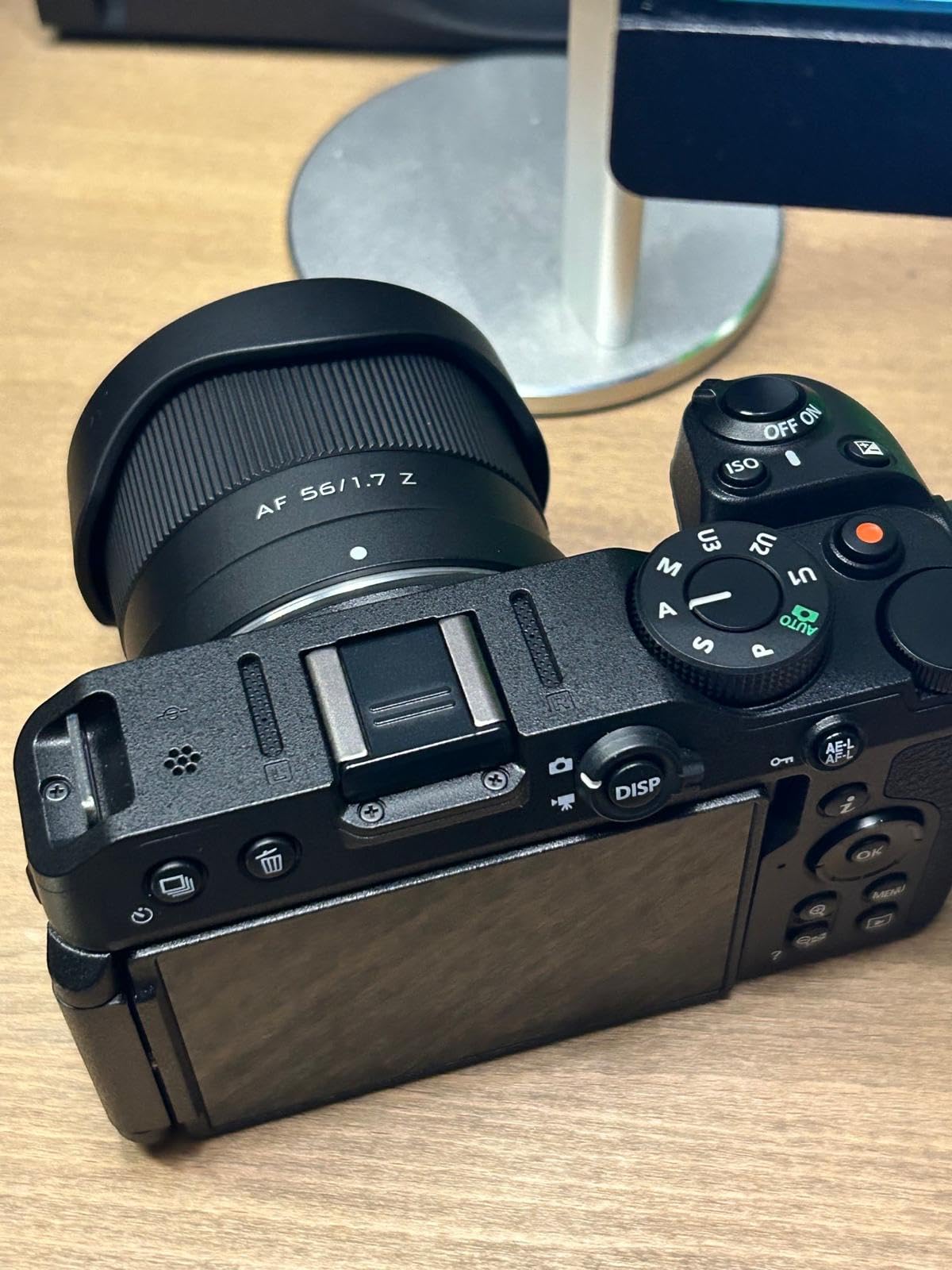
At just 173g, the Viltrox 20mm f/2.8 Z is one of the lightest full-frame wide-angle lenses available for any system. For landscape photographers who count every gram, this tiny prime delivers surprising performance at an incredibly accessible price point.
The 20mm focal length provides a 91.6-degree field of view, wide enough for expansive landscapes without the extreme distortion of ultra-wide lenses. This focal length works particularly well for environmental scenes where you want to include context without overwhelming the subject.
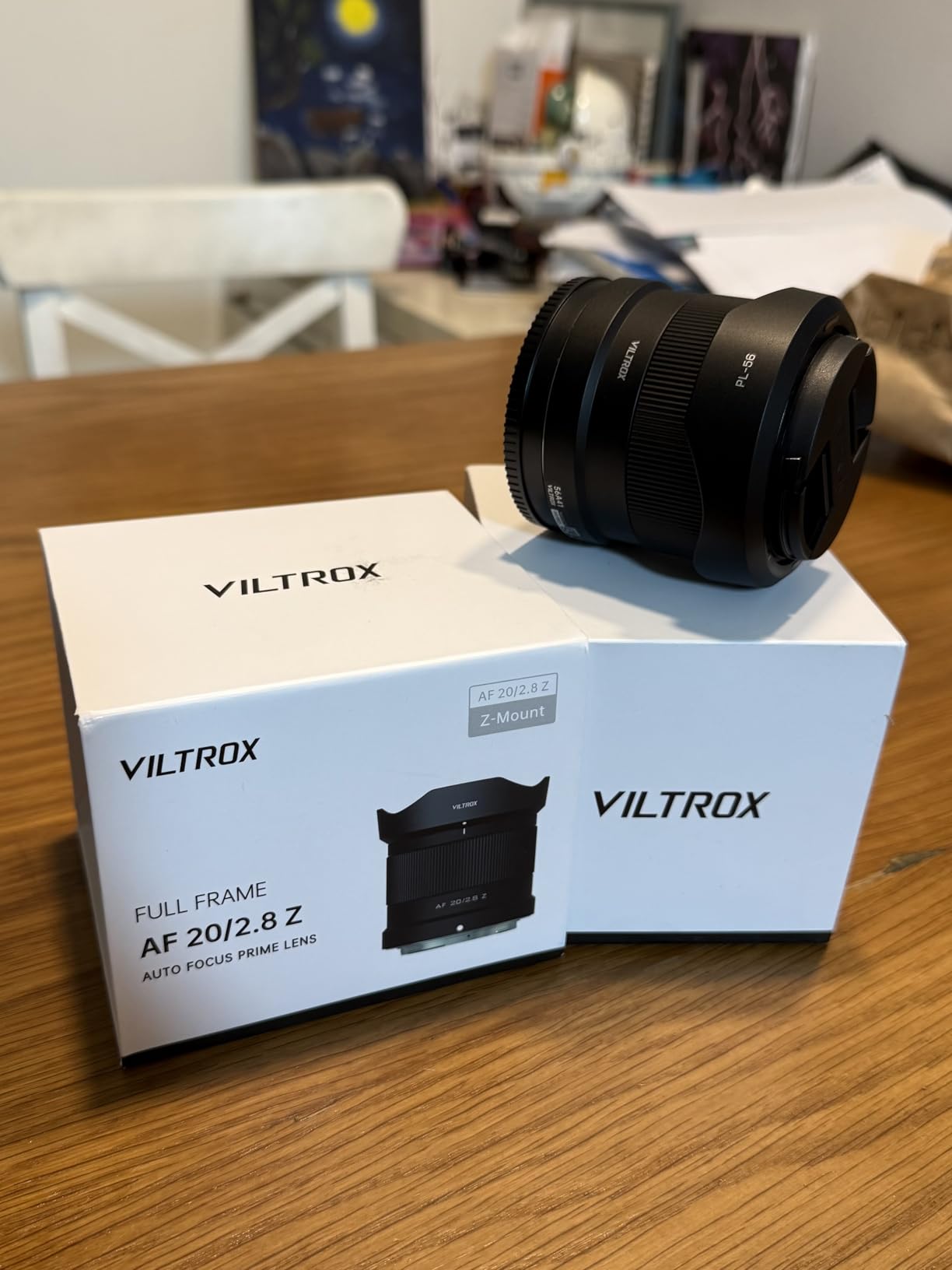
Despite the budget price, optical quality is respectable. The 10 elements in 8 groups include 2 ED lenses and 2 aspherical elements for controlling aberrations. Sharpness is good across the frame, though some vignetting is present wide open.
The STM stepping motor provides fast and quiet autofocus performance that rivals more expensive lenses. EXIF data transmission works properly with Nikon Z bodies, maintaining full camera-lens communication for metadata and automatic corrections.
Best Use Cases
Budget-conscious photographers wanting to enter the Z system without major investment will find this ideal. Hiking and travel where weight is critical benefit from the 173g weight. Event photography with landscape elements works well with the moderate wide-angle view.
Potential Drawbacks
The plastic construction does not feel as premium as metal-bodied alternatives. Some vignetting requires correction in post-processing. The lack of an aperture ring means controlling aperture through the camera body only.
10. Tamron 16-30mm f/2.8 Di III VXD G2 – Best Third-Party Zoom
Pros
- Excellent optical performance
- Fast VXD autofocus
- 6-year warranty
- Moisture-resistant
Cons
- Limited review sample
- No image stabilization
- Premium price for third-party
The Tamron 16-30mm f/2.8 Di III VXD G2 brings a compelling third-party option to the Nikon Z wide-angle zoom market. With a constant f/2.8 aperture and weather-resistant construction, this lens competes directly with native Nikon options while offering excellent value.
The 16-30mm range covers the most useful focal lengths for landscape photography, from dramatic ultra-wide at 16mm to moderate wide-angle at 30mm. The constant f/2.8 aperture maintains light-gathering capability throughout the zoom range, beneficial for lower-light landscape situations.
Optical performance is impressive with sharp center and good corner performance. The VXD linear motor provides fast, accurate autofocus that tracks well for moving subjects. Beautiful bokeh rendering at f/2.8 adds creative potential for selective focus landscape work.
The standout feature is the 6-year USA warranty, which provides peace of mind that exceeds most native lens warranties. Moisture-resistant construction with fluorine coating protects against the elements that landscape photographers regularly encounter.
Best Use Cases
Real estate and architectural photographers will appreciate the 16mm ultra-wide capability. Travel landscape work benefits from the compact size and weather resistance. Photographers wanting f/2.8 performance without native pricing should consider this Tamron option.
Potential Drawbacks
As a relatively new release, fewer user reviews exist compared to established lenses. No image stabilization requires relying on body stabilization. The price, while competitive, is still a significant investment for a third-party lens.
How to Choose the Right Nikon Z Lens for Landscape Photography
Selecting the ideal lens for landscape work involves balancing several factors that affect both image quality and practical use in the field. After years of shooting landscapes, I have identified the key considerations that should guide your decision.
Focal Length Considerations
Ultra-wide lenses between 14mm and 20mm create dramatic perspectives that emphasize foreground elements and capture expansive vistas. These work best when you have interesting foreground subjects to anchor the composition. Mid-range zooms from 24mm to 70mm offer versatility for most landscape scenes without extreme perspective distortion. Telephoto ranges from 70mm to 200mm compress distance and isolate details, perfect for intimate landscape work and mountain photography.
Aperture Needs
F/2.8 lenses gather four times more light than f/4 alternatives, which matters for astrophotography and low-light golden hour work. However, most landscape photography happens at f/8 to f/11 for depth of field, where the maximum aperture is less relevant. Consider whether you shoot night skies or primarily daytime scenes when choosing between f/2.8 and f/4 options.
Filter Compatibility
For landscape photographers who use graduated ND filters, polarizers, or solid ND filters for long exposures, filter compatibility is crucial. Lenses with standard screw-in filter threads like the 14-30mm f/4 S with its 82mm thread are much more practical than lenses requiring expensive rear gel filters or specialized filter holder systems.
Weight and Portability
If you hike to remote locations, every gram matters. The 14-30mm f/4 S at 485g is significantly lighter than the 14-24mm f/2.8 S at 650g. Consider how far you typically carry your gear and whether the optical benefits of heavier lenses justify the weight penalty during long hikes.
Weather Sealing
Landscape photographers frequently encounter rain, sea spray, dust, and temperature extremes. Professional S-line lenses offer robust weather sealing that protects internal components. If you regularly shoot in challenging conditions, weather sealing should be a priority rather than an afterthought.
Third-Party vs Native Lenses
Native Nikon S-line lenses offer guaranteed compatibility and optical performance matched to Z camera bodies. However, third-party options from Viltrox and Tamron provide compelling alternatives at lower prices. The Viltrox AF 16mm f/1.8 Z and Tamron 16-30mm f/2.8 deliver excellent results while saving money compared to native equivalents.
FAQ
What is the best Nikon Z lens for landscape photography?
The NIKKOR Z 14-24mm f/2.8 S is the best overall choice for professional landscape photography due to its exceptional corner-to-corner sharpness, fast f/2.8 aperture for low-light work, and robust weather sealing. For most photographers, the NIKKOR Z 14-30mm f/4 S offers the best value with practical filter compatibility and lighter weight.
Which Nikon Z wide-angle lens is best for landscapes?
The NIKKOR Z 14-30mm f/4 S is considered the best wide-angle lens for most landscape photographers because it combines the useful 14-30mm range with standard 82mm filter threads, compact retractable design, and excellent optical quality. Professionals who need f/2.8 for astrophotography should choose the NIKKOR Z 14-24mm f/2.8 S instead.
Is the Nikon Z 14-30mm f/4 S good for landscape photography?
Yes, the NIKKOR Z 14-30mm f/4 S is excellent for landscape photography. It offers outstanding edge-to-edge sharpness, practical 82mm filter compatibility, compact 485g weight, and weather-sealed construction. Many landscape photographers consider it the best value wide-angle zoom in the Nikon Z lineup.
What lenses do I need for landscape photography on Nikon Z?
A complete landscape photography kit for Nikon Z typically includes a wide-angle zoom like the 14-30mm f/4 S for expansive scenes, a mid-range zoom like the 24-120mm f/4 S for versatility, and optionally a telephoto for compressed landscapes. Many photographers find the 14-30mm f/4 S plus 24-120mm f/4 S combination covers 90% of landscape situations.
Can third-party lenses match Nikon S-line quality?
Third-party lenses like the Viltrox AF 16mm f/1.8 Z and Tamron 16-30mm f/2.8 can deliver excellent image quality that approaches or matches S-line performance in specific use cases. While native Nikon S-line lenses still hold advantages in overall optical refinement and build consistency, third-party options offer compelling value with good sharpness and features like extended warranties.
Final Thoughts on Nikon Z Lenses for Landscape Photography
Finding the Best Nikon Z Mount Lenses for Landscape Photography comes down to matching your specific needs with the right combination of focal length, aperture, and practical features. The NIKKOR Z 14-24mm f/2.8 S delivers ultimate quality for professionals, while the NIKKOR Z 14-30mm f/4 S offers the best balance of performance and practicality for most photographers.
For versatility, the NIKKOR Z 24-120mm f/4 S covers an incredible range that handles everything from wide landscapes to compressed telephoto scenes. Budget-conscious photographers should explore the Viltrox options, which deliver impressive performance at accessible prices. Whatever your choice, investing in quality glass will improve your landscape images more than any other equipment upgrade.