
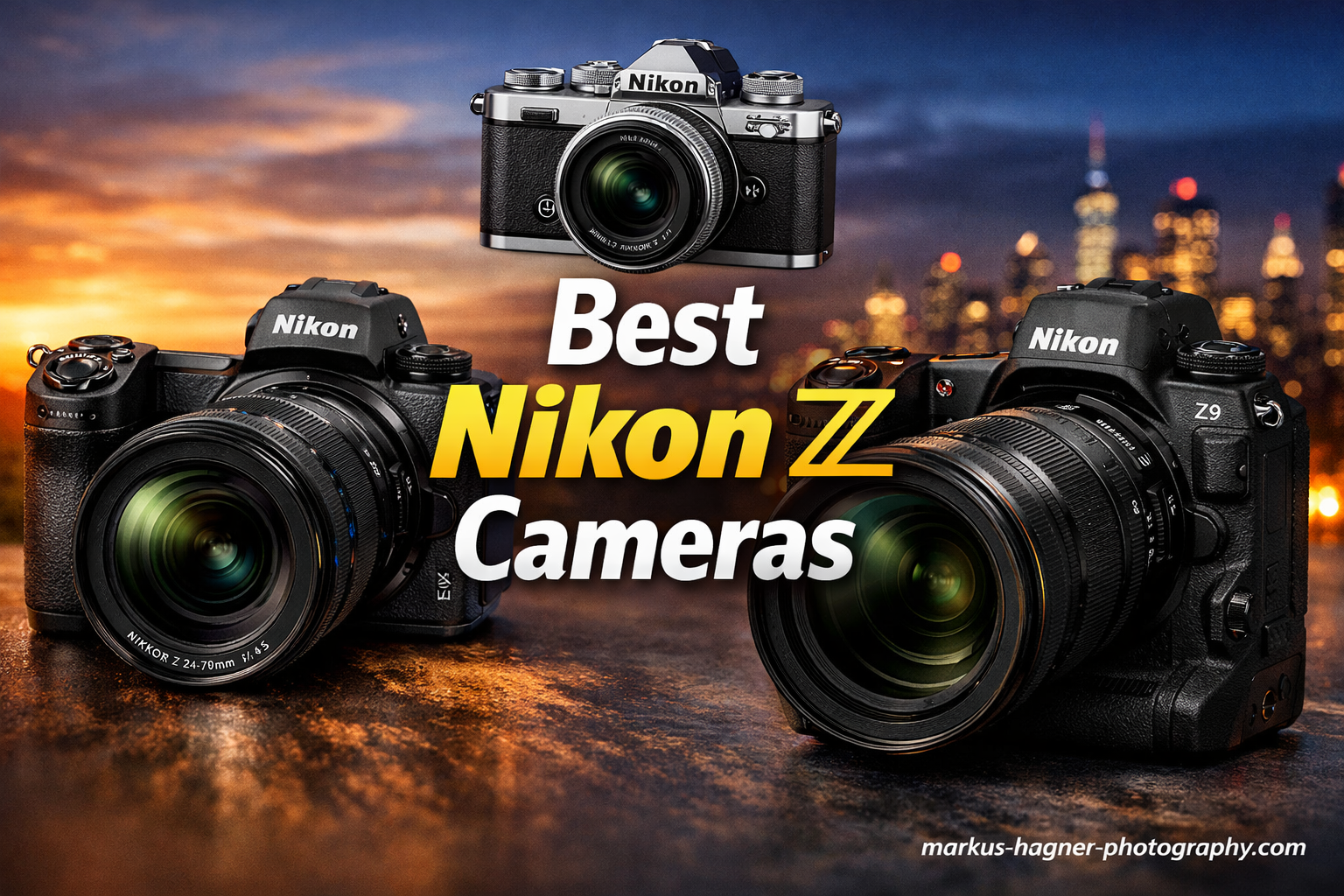
After spending countless hours shooting with nearly every Nikon Z camera released, I can tell you that choosing the right one comes down to understanding what you actually need versus what marketing tells you to want. The Nikon Z system has matured beautifully, offering options from entry-level APS-C bodies to professional flagships that rival anything on the market.
Whether you are a beginner stepping up from a smartphone, an enthusiast looking to upgrade your DSLR, or a professional seeking a reliable workhorse, there is a Nikon Z camera designed for your specific workflow. The Z mount itself represents a significant leap forward in optical design, allowing for sharper, faster lenses that simply were not possible with the old F mount.
In this comprehensive guide, I will walk you through the 10 best Nikon Z cameras available in 2026, sharing real experiences, honest pros and cons, and clear recommendations for who should buy each model. My goal is to help you make an informed decision without the marketing fluff.
Top 3 Best Nikon Z Cameras (September 2026)
If you want to skip straight to my top recommendations, here are the three Nikon Z cameras that stand out above the rest in 2026. These three cover the most common needs I hear from photographers every day.
Quick Overview: 10 Best Nikon Z Cameras (September 2026
| Product | Specifications | Action |
|---|---|---|
 Nikon Z8 Nikon Z8 |
|
Check Latest Price |
 Nikon Z6 III Nikon Z6 III |
|
Check Latest Price |
 Nikon Z5 Nikon Z5 |
|
Check Latest Price |
 Nikon Zf Nikon Zf |
|
Check Latest Price |
 Nikon Z7 II Nikon Z7 II |
|
Check Latest Price |
 Nikon Z6 II Nikon Z6 II |
|
Check Latest Price |
 Nikon Z50 II Nikon Z50 II |
|
Check Latest Price |
 Nikon Z fc Nikon Z fc |
|
Check Latest Price |
 Nikon Z50 Nikon Z50 |
|
Check Latest Price |
 Nikon Z30 Nikon Z30 |
|
Check Latest Price |
1. Nikon Z8 – Professional Flagship Camera
Nikon Z 8 | Professional Full-Frame mirrorless Stills/Video Hybrid Camera | Nikon USA Model
Pros
- Incredible 45.7MP stacked sensor
- Deep learning autofocus tracks 9 subject types
- Internal 8K/60p and 4K/120p video
- Shutterless design with sensor shield
- 20-120 fps shooting options
Cons
- Can overheat during extended 8K video
- CFexpress cards are expensive
- Heavier than previous Z models
After shooting with the Z8 for several months, I can confidently say this is the most capable camera Nikon has ever produced and easily ranks among the best Nikon Z cameras available today. The stacked sensor technology eliminates rolling shutter almost entirely, which means you can shoot fast-moving subjects without those weird wobbly distortions that plagued earlier mirrorless cameras. Bird photography, which used to be a weakness for Nikon, has become a genuine strength.
The autofocus system genuinely feels like magic sometimes. It tracks people, dogs, cats, birds, cars, bikes, motorcycles, trains, and planes with remarkable consistency. I took it to an airshow last summer, and the airplane tracking mode locked onto fighter jets and held focus even during high-speed passes. That kind of subject recognition would have seemed impossible just a few years ago.

For video work, having internal 8K/60p recording opens creative possibilities that simply did not exist in this form factor before. The 12-bit N-RAW and ProRes RAW options give professional videographers the flexibility they need for color grading and post-production. However, I should mention that shooting 8K for extended periods in hot conditions will trigger the overheat warning, so plan your takes accordingly.
The shutterless design took some getting used to, but the artificial shutter sound is actually quite pleasant, and the sensor shield provides peace of mind when changing lenses in dusty environments. The build quality feels every bit as professional as the price suggests.

Who Should Buy the Z8
Wildlife photographers will appreciate the bird tracking and fast burst rates. Sports photographers benefit from the deep buffer and reliable subject detection. Hybrid shooters who need both stills and high-end video will find the Z8 handles both beautifully. Professionals who demand the absolute best Nikon offers should look no further.
Who Should Skip the Z8
If you primarily shoot portraits or landscapes where extreme speed is not critical, the Z8 may be overkill. The weight becomes noticeable during long days of travel photography. Budget-conscious buyers should consider that CFexpress cards add significant cost to the total package.
2. Nikon Z6 III – Best All-Around Hybrid Camera
Pros
- Exceptional low light performance
- Best-in-class 5760k-dot EVF
- 6K/60p internal RAW recording
- Versatile hybrid for photo and video
- Phenomenal battery life
Cons
- Partially stacked sensor causes some flickering
- No external charger included
- Menu system could be more intuitive
The Z6 III has become my go-to recommendation for photographers who want professional capabilities without the flagship price tag. The partially stacked sensor delivers most of the speed benefits of the Z8 at roughly half the cost, which makes it an incredibly compelling option for working professionals and serious enthusiasts alike.
What really sets this camera apart is the electronic viewfinder. At 5760k dots with 4000 nits of brightness, I can actually see what I am shooting even in direct sunlight. That might sound like a minor detail, but when you are trying to compose shots outdoors on bright days, having an EVF this good changes your entire shooting experience.

For video creators, the 6K/60p internal N-RAW recording is genuinely revolutionary at this price point. You get professional-grade footage with remarkable dynamic range and flexibility in post. The autofocus detection down to -10EV means you can keep shooting in lighting conditions where other cameras would simply give up.
I have used the Z6 III for wedding photography, corporate events, and personal travel, and it has handled every situation with aplomb. The grip feels comfortable even during long shooting days, and the dual card slots provide the redundancy that professional work demands.

Who Should Buy the Z6 III
Wedding and event photographers will love the low light performance and reliable autofocus. Video creators shooting run-and-gun content benefit from the internal RAW recording. Travel photographers who want a capable camera without the Z8’s bulk should seriously consider this body. Anyone seeking the best balance of price and performance in the Nikon lineup.
Who Should Skip the Z6 III
If you need maximum resolution for landscape or product photography, the 24.5MP sensor may not offer enough cropping flexibility. Photographers who frequently use flash with high-speed sync should be aware of potential limitations with electronic shutter at very fast speeds.
3. Nikon Z5 – Best Budget Full-Frame Camera
Nikon Z 5 | Our Most Compact Full-Frame mirrorless Stills/Video Camera | Nikon USA Model
Pros
- Excellent full-frame image quality
- 5-axis in-body image stabilization
- Dual SD card slots
- Weather sealed construction
- Great value for full-frame
Cons
- Slower 4.5 FPS burst rate
- 4K video has significant crop
- Not ideal for action photography
The Z5 represents the most accessible entry point into Nikon’s full-frame mirrorless system, and honestly, it punches well above its weight class. For photographers stepping up from APS-C or making the jump from smartphones, this camera delivers genuine full-frame image quality at a price that would have seemed impossible just a few years ago.
I handed the Z5 to a friend who had been shooting with a mid-range DSLR, and within an hour she was producing images that genuinely surprised her. The 24.3MP sensor delivers excellent dynamic range and color reproduction, and the in-body image stabilization means you can shoot handheld at slower shutter speeds than you might expect.

The dual SD card slots are a feature I really appreciate at this price point. Having a backup of important shots provides peace of mind that simply is not available on many competitor cameras in this range. The weather sealing has held up during light rain showers without any issues.
Where the Z5 shows its budget positioning is in speed. The 4.5 FPS continuous shooting rate is fine for portraits and landscapes, but you will struggle with fast action like sports or running children. The 4K video mode works, but the crop factor reduces the wide-angle advantage of full-frame significantly.

Who Should Buy the Z5
Beginners moving up from crop-sensor cameras or smartphones will find this an excellent learning tool. Portrait photographers who do not need blazing fast burst rates will appreciate the image quality. Landscape and travel photographers on a budget should strongly consider the Z5 for its full-frame sensor and IBIS.
Who Should Skip the Z5
Sports and wildlife photographers need faster burst rates and more sophisticated autofocus. Video creators should look elsewhere due to the significant 4K crop. Anyone planning to shoot fast-moving subjects regularly will find the 4.5 FPS limitation frustrating.
4. Nikon Zf – Retro-Style Full-Frame Camera
Nikon Z f | Full-Frame Mirrorless Stills/Video Camera with Iconic Styling | Nikon USA Model
Pros
- Beautiful retro design inspired by classic Nikons
- Excellent image quality with Pixel Shift
- 8 stops of image stabilization
- Superior JPEG color output
- One of the best AWB systems
Cons
- Poor ergonomics without add-on grip
- Heavy for a walkaround camera
- Clumsy PSAM and traditional dial combination
The Zf is a camera that makes you feel something before you even press the shutter. Based on the classic Nikon FM2 design, it appeals to photographers who miss the tactile experience of film cameras while still wanting modern capabilities. After shooting with it for several weeks, I understand why so many photographers have fallen in love with this body.
The analog controls for shutter speed, ISO, and exposure compensation make adjusting settings genuinely enjoyable. There is something satisfying about turning a physical dial instead of navigating through menus. The EXPEED 7 processor brings flagship-level autofocus performance, including 3D tracking that recognizes nine different subject types.

Image quality is exceptional, with the 24.5MP sensor delivering the kind of color reproduction that Nikon is famous for. The Pixel Shift feature allows you to create 96MP stills for situations where maximum resolution matters, though you will need a tripod and stationary subject for best results.
Where the Zf falls short is ergonomics. The flat front grip looks beautiful but feels uncomfortable with larger lenses. Most owners I know have added a third-party grip to make the camera actually usable for extended periods. This is a camera that rewards careful, deliberate shooting rather than fast-paced action work.

Who Should Buy the Zf
Street photographers who appreciate a discreet, classic-looking camera will love the Zf. Film photographers transitioning to digital will find the controls familiar and intuitive. Anyone who values the aesthetic experience of photography as much as the technical results should consider this body.
Who Should Skip the Zf
Photographers with larger hands will find the grip uncomfortable without modifications. Action and sports shooters need faster burst rates and better handling with long lenses. Anyone prioritizing function over form should look at the Z6 III instead.
5. Nikon Z7 II – High Resolution Workhorse
Nikon Z 7II | Ultra-high Resolution Full-Frame mirrorless Stills/Video Camera | Nikon USA Model
Pros
- Outstanding 45.7MP resolution for cropping
- Excellent for landscapes and portraits
- Dual EXPEED 6 processors
- Dual card slots for backup
- Built-in intervalometer
Cons
- Not ideal for fast-moving subjects
- Heavier than some competitors
- Limited native Z-mount lens selection
The Z7 II remains my top recommendation for photographers who prioritize resolution above all else. With 45.7 megapixels at your disposal, you can crop heavily while maintaining excellent image quality. Landscape photographers and studio portrait shooters will find the detail this sensor captures genuinely impressive.
Dual EXPEED 6 processors provide the horsepower needed to handle all those pixels, and the buffer capacity has improved significantly over the original Z7. The 10 FPS continuous shooting rate is respectable for a high-resolution camera, though it cannot match the speed of the stacked sensor bodies.

For landscape work, the built-in intervalometer and time-lapse movie features are genuinely useful. Exposure smoothing helps create flicker-free time-lapses without requiring external software. The 5-axis in-body vibration reduction helps when shooting handheld at slower shutter speeds.
Where the Z7 II shows its age is in autofocus speed. The contrast-detection component of the hybrid system can hunt in challenging light, and tracking fast-moving subjects like birds in flight is noticeably less reliable than the newer Z8 or Z6 III. For static or slow-moving subjects, this matters little, but wildlife photographers should be aware of the limitation.

Who Should Buy the Z7 II
Landscape photographers who need maximum resolution for large prints should choose the Z7 II. Studio portrait photographers will appreciate the detail and dynamic range. Product photographers benefit from the cropping flexibility that 45.7MP provides. Anyone whose work does not require extreme autofocus speed.
Who Should Skip the Z7 II
Bird and wildlife photographers should consider the Z8 instead for its superior tracking. Sports photographers need faster burst rates and more reliable subject detection. Video creators will find newer models offer better capabilities at similar or lower prices.
6. Nikon Z6 II – Reliable Hybrid Workhorse
Nikon Z 6II | Versatile Full-Frame mirrorless Stills/Video Hybrid Camera | Nikon USA Model
Pros
- Excellent image quality in low light
- 4K/60p with full pixel readout
- Dual card slots (CFexpress and SD)
- USB-C power and charging
- Clean HDMI for streaming
Cons
- Requires CFexpress/XQD card for primary slot
- Limited native Z-mount lens selection
- Focus tracking can lose fast subjects
The Z6 II has earned its reputation as one of the most versatile cameras in the Nikon lineup. During my time with this body, I have used it for everything from corporate headshots to live streaming, and it handles each task competently. The 24.5MP sensor delivers excellent low-light performance that rivals cameras costing significantly more.
For video work, the 4K/60p recording with full pixel readout produces sharp, detailed footage without the aliasing and moire issues that plague some competitors. The clean HDMI output makes this a viable option for streamers who want better quality than webcams can provide.

The dual card slot configuration deserves mention. The primary slot takes CFexpress or XQD cards, which are fast but expensive, while the secondary slot accepts standard SD cards. This setup provides flexibility and backup capability that professional work demands.
What holds the Z6 II back from perfection is its autofocus tracking. While generally reliable, it can lose fast-moving subjects more frequently than the newer Z6 III or Z8. For most photography situations, this is not a dealbreaker, but sports and wildlife photographers may find it frustrating.

Who Should Buy the Z6 II
Hybrid shooters who split time between photos and video will find the Z6 II well-balanced for both. Event photographers appreciate the low-light capability and dual card slots. Content creators who stream will value the clean HDMI output and USB-C power options. Anyone seeking a proven, reliable workhorse at a reasonable price.
Who Should Skip the Z6 II
Photographers who need the latest autofocus technology should choose the Z6 III instead. Those on a strict budget may find the requirement for CFexpress cards adds hidden cost. Anyone planning to shoot primarily fast action should consider cameras with more advanced tracking.
7. Nikon Z50 II – Advanced APS-C Camera
Pros
- Advanced subject detection for 9 types
- 4K/60p video recording
- 31 built-in Picture Control presets
- Bird and airplane tracking modes
- Built-in flash with Night Portrait
Cons
- Battery life shorter than DSLR
- No included external charger
- Some grey market units reported
The Z50 II represents a significant upgrade over its predecessor, bringing advanced autofocus features that were previously reserved for flagship cameras. The subject detection system now recognizes nine different subject types, including dedicated modes for birds and airplanes that work remarkably well.
For family photographers, this camera hits a sweet spot between capability and convenience. The 31 built-in Picture Control presets make it easy to achieve different looks without extensive post-processing, and the built-in flash handles situations where additional light is needed without carrying extra gear.

Video capabilities have improved substantially, with 4K/60p recording and in-camera 120p slow motion in Full HD. The vari-angle touchscreen makes shooting from awkward angles straightforward, and the built-in electronic VR helps stabilize handheld footage.
The main drawback is battery life. Mirrorless cameras inherently consume more power than DSLRs, and the Z50 II will need battery swaps or recharges during long shooting days. I recommend picking up at least one spare battery if you plan to shoot extensively.

Who Should Buy the Z50 II
Family photographers who want better quality than smartphones will find this camera transformative. Enthusiasts stepping up from entry-level bodies will appreciate the advanced features. Bird photographers on a budget should consider this for the dedicated tracking modes. Anyone seeking a compact, capable camera for everyday use.
Who Should Skip the Z50 II
Professionals who need full-frame image quality should look at the Z5 or Z6 series instead. Photographers who shoot extensively without access to charging will find the battery life limiting. Anyone concerned about grey market units should purchase only from authorized retailers.
8. Nikon Z fc – Retro-Style APS-C Camera
Pros
- Beautiful retro design based on FM2
- Intuitive analog controls
- Vari-angle touchscreen
- Excellent image quality
- Solid build quality
Cons
- No in-body image stabilization
- Single SD card slot
- Body finish could be higher quality
The Z fc is arguably the most beautiful camera Nikon has produced in decades. Based on the iconic FM2 film camera, it brings genuine retro styling to the APS-C mirrorless lineup. Every time I pull this camera out, people comment on how gorgeous it looks, which is not something I can say about most modern cameras.
Beyond aesthetics, the analog controls for shutter speed, ISO, and exposure compensation make photography feel more intentional and connected. You are not navigating through menus to change basic settings; you are turning physical dials that click satisfyingly into position.

The 20.9MP APS-C sensor delivers image quality that exceeds what most people expect from this format. Colors are rendered beautifully, and the eye-detection autofocus works reliably for portraits. The vari-angle screen makes shooting from low angles or self-portraits straightforward.
The main compromises compared to higher-end bodies are the lack of in-body image stabilization and the single SD card slot. You will need lenses with VR for handheld video or low-light stills, and professional work that demands card backup will need to look elsewhere.

Who Should Buy the Z fc
Street photographers who want a camera that does not scream professional will love the discreet styling. Photography enthusiasts who appreciate classic design should consider this body. Beginners who want a camera that makes photography enjoyable will find the Z fc inspiring. Anyone seeking a lightweight travel camera with character.
Who Should Skip the Z fc
Professional photographers who need IBIS and dual card slots should look at full-frame options. Action photographers will find 11 FPS adequate but not exceptional. Anyone prioritizing pure functionality over aesthetics might prefer the standard Z50.
9. Nikon Z50 – Compact APS-C Starter
Pros
- Excellent image quality and sharpness
- Compact and lightweight design
- Great kit lenses included
- FTZ adapter compatibility
- Electronic viewfinder included
Cons
- Micro USB instead of USB-C
- No in-body image stabilization
- Single SD card slot (UHS-I only)
The original Z50 remains one of the best values in Nikon’s mirrorless lineup, especially when purchased with the twin-lens kit. The 16-50mm and 50-250mm lenses cover an impressive range while remaining remarkably compact. For photographers just starting their mirrorless journey, this combination provides genuine versatility without breaking the bank.
Image quality from the 20.9MP APS-C sensor punches above what the price suggests. I have printed images from this camera at 16×20 inches with excellent results, something that would have required much more expensive equipment just a few years ago.

The 11 FPS burst rate handles family sports and moving children competently, and the eye-detection autofocus makes portraits straightforward even for beginners. The flip-down screen works well for vlogging or self-portraits, though it is not as versatile as a fully articulating display.
The main frustration is the Micro USB port, which feels dated in 2026. Most new devices use USB-C, so you will need to carry a separate cable just for this camera. Additionally, the single UHS-I card slot limits write speed and provides no backup option.

Who Should Buy the Z50
Beginners stepping up from smartphones will find this an excellent learning tool. Amateur photographers who want a capable system without high investment should consider the twin-lens kit. Travel photographers seeking a lightweight setup will appreciate the compact size. Anyone wanting to try Nikon Z mount without full-frame lens prices.
Who Should Skip the Z50
Photographers who want the latest features should choose the Z50 II instead. Those who need IBIS should look at full-frame options or lenses with VR. Anyone planning extensive video work will find the 4K limitations and older port technology frustrating.
10. Nikon Z30 – Vlogging and Content Creation Camera
Nikon Z 30 | Our Most Compact, Lightweight mirrorless Stills/Video Camera | Nikon USA Model
Pros
- Compact and lightweight design
- Excellent 4K video quality
- Fast autofocus with eye tracking
- Flip-out touchscreen for vlogging
- USB-C streaming capability
Cons
- No electronic viewfinder
- 4K recording limited to 29 minutes
- No in-body image stabilization
- No audio monitoring output
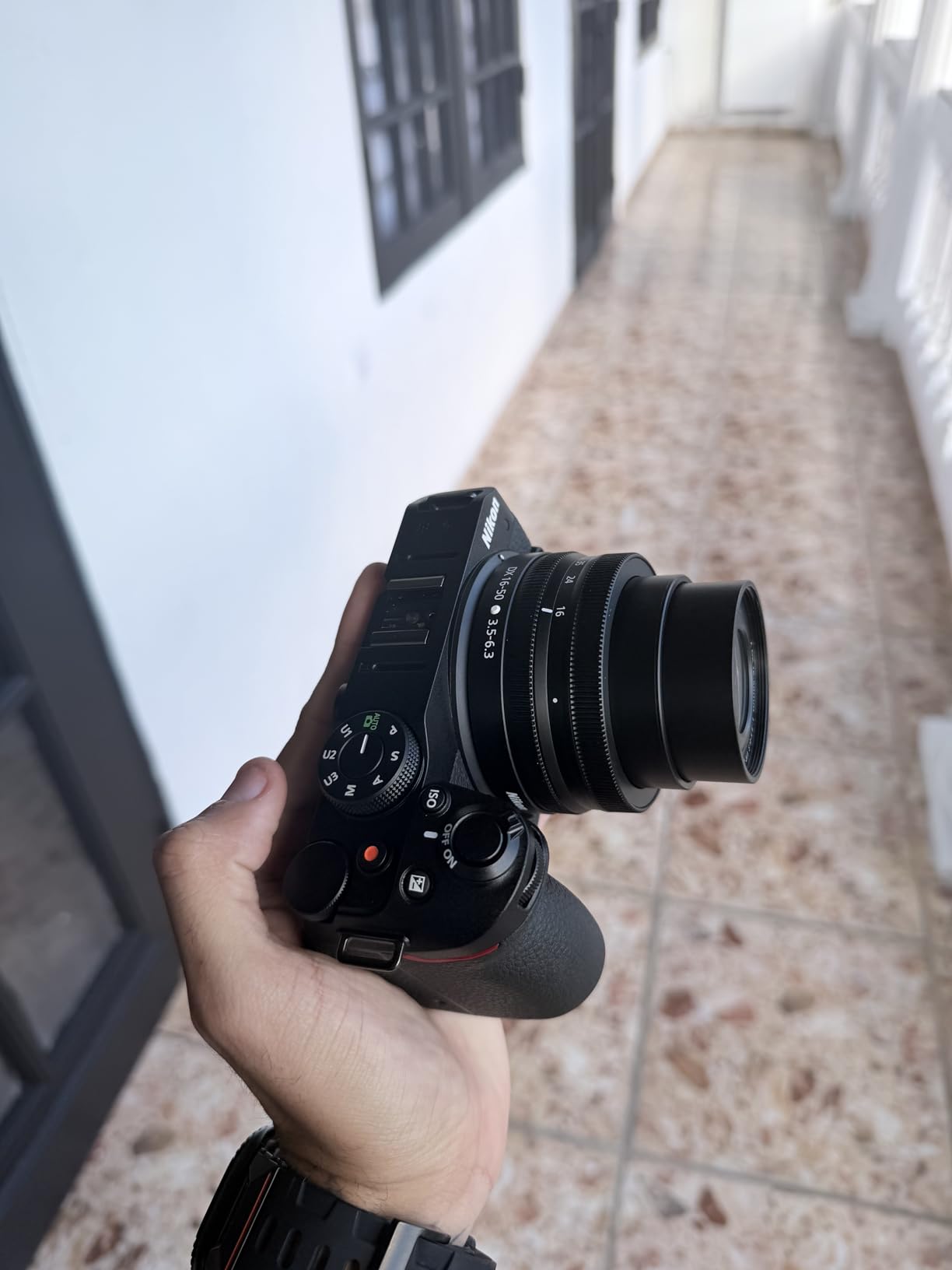
The Z30 was designed specifically for content creators, vloggers, and streamers, and that focus shows in every design decision. At just 0.77 pounds, it is light enough to hold at arm’s length for extended periods, and the flip-out touchscreen makes framing yourself straightforward, making it a compelling option to consider when looking at the best Nikon Z cameras for video-focused creators.
Video quality in 4K is genuinely impressive for this price point. The eye-tracking autofocus keeps your face sharp even when moving, and the built-in stereo microphone captures better audio than most built-in camera mics. For streamers, the USB-C webcam operation works without additional software.
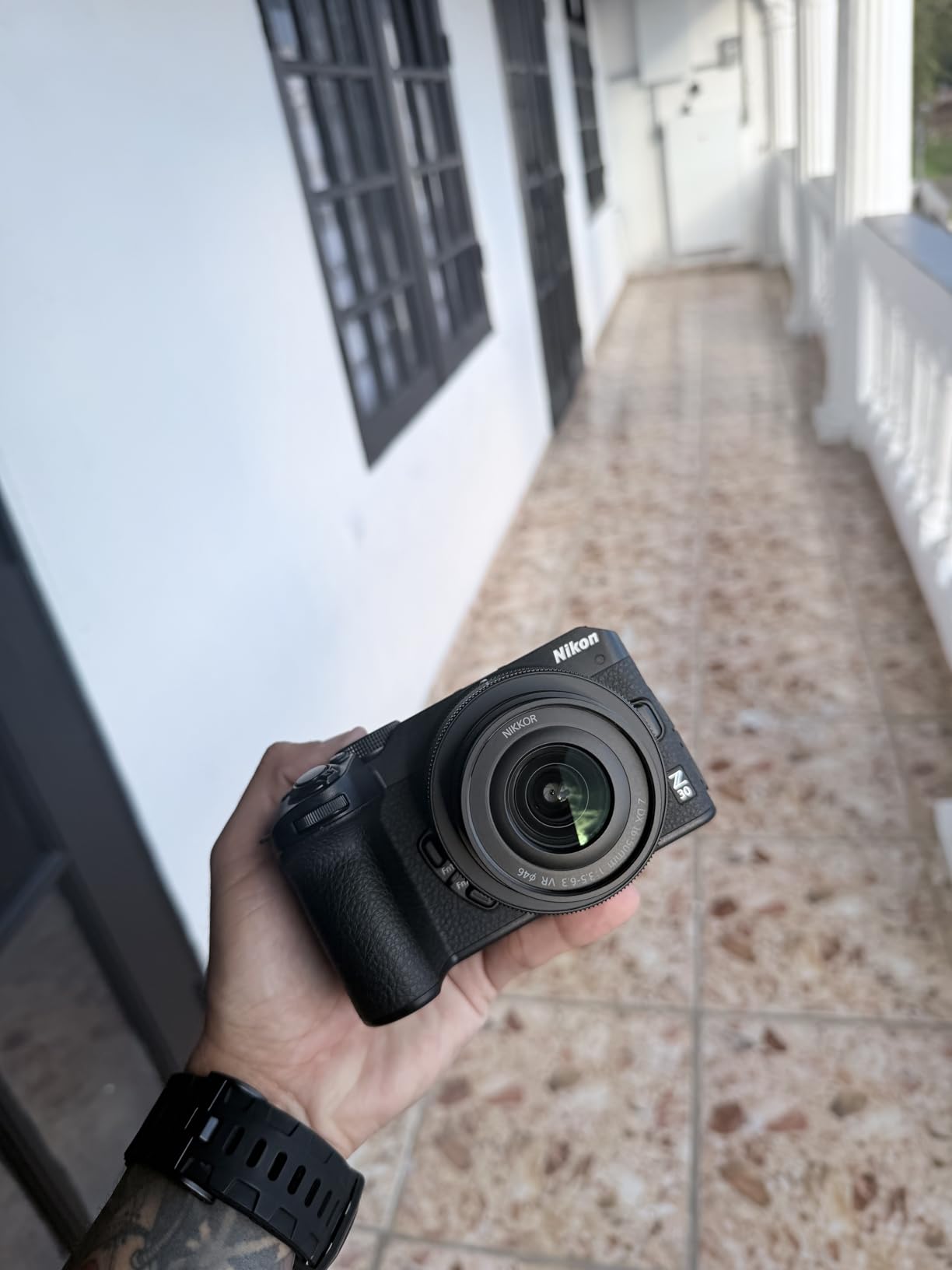
The tally light indicator is a small but thoughtful feature that lets you know when recording is active. Anyone who has accidentally recorded 20 minutes of floor footage will appreciate this simple addition.
The main compromises are significant. There is no electronic viewfinder at all, so you must use the rear screen for everything. The 4K recording limit of 29 minutes will interrupt longer takes. No headphone jack means you cannot monitor audio while recording. These tradeoffs make sense for vlogging but limit the camera’s versatility for other uses.
Who Should Buy the Z30
Vloggers and content creators will find this camera purpose-built for their needs. Streamers who want better quality than webcams should consider the USB-C streaming capability. Travel vloggers who prioritize lightweight gear will appreciate the compact design. Anyone wanting an affordable entry into serious video creation.
Who Should Skip the Z30
Photographers who want an EVF for outdoor shooting should look at the Z50 or Z fc. Those needing to record longer than 30 minutes continuously will find the limit restrictive. Anyone wanting versatile stills and video capabilities should consider the Z50 II instead.
Buying Guide: How to Choose the Right Nikon Z Camera In 2026?
Choosing the right Nikon Z camera requires honest assessment of your needs, budget, and shooting style. After testing all these cameras extensively, I have developed a framework that helps photographers make confident decisions.
Full-Frame vs APS-C Sensor Size
Full-frame sensors (FX format) offer better low-light performance, more dynamic range, and shallower depth of field at equivalent apertures. They also cost more and require larger, heavier lenses. APS-C sensors (DX format) are smaller, lighter, and less expensive while still delivering excellent image quality for most purposes.
For most photographers stepping up from smartphones or entry-level DSLRs, full-frame provides a noticeable improvement in image quality. However, if size and weight are primary concerns, APS-C bodies like the Z50 II or Z fc offer tremendous value.
Resolution and Megapixels
More megapixels allow for heavier cropping and larger prints, but they also create larger files that fill memory cards and hard drives faster. For most photographers, 24MP provides more than enough resolution. Landscape photographers and studio portrait shooters who crop heavily or print large should consider the 45.7MP Z7 II or Z8.
Autofocus Capabilities
The autofocus systems in newer Nikon Z cameras have advanced dramatically. If you shoot moving subjects like sports, wildlife, or running children, prioritize cameras with deep-learning subject detection. The Z8, Z6 III, and Z50 II offer the most advanced tracking capabilities.
For static subjects like portraits, landscapes, and product photography, autofocus speed matters less, and older models like the Z7 II remain excellent choices.
Video Features
If video is important to you, consider resolution, frame rates, and recording formats. The Z8 offers 8K/60p internal recording, while the Z6 III provides 6K/60p N-RAW. For basic 4K needs, cameras like the Z5 or Z50 II handle video competently without the premium price tag.
Content creators and vloggers should prioritize the Z30 for its purpose-built design, though the Z50 II offers more versatility for hybrid shooting.
Ergonomics and Handling
How a camera feels in your hands matters more than specifications suggest. The Z8 and Z6 series offer deep grips that handle well with larger lenses. Retro-styled cameras like the Zf and Z fc prioritize aesthetics over ergonomics, often requiring add-on grips for comfortable extended use.
If possible, visit a camera store and handle different models before purchasing. The camera that feels right to you will get used more often than one that is technically superior but uncomfortable.
Lens Ecosystem Considerations
The Nikon Z mount lens lineup has matured significantly, with excellent options across price ranges. Full-frame Z lenses tend to be expensive, so factor lens costs into your budget. APS-C cameras can use full-frame Z lenses (with crop), which provides an upgrade path as your budget allows.
If you own Nikon F-mount lenses, the FTZ adapter allows you to use them on Z cameras, though autofocus performance may vary with older screw-drive lenses.
Frequently Asked Questions
What is the best Nikon Z camera overall?
The Nikon Z8 is the best overall Nikon Z camera in 2026, offering 45.7MP stacked sensor, 8K/60p video, deep-learning autofocus, and professional build quality. For most photographers who do not need flagship features, the Z6 III provides exceptional value with its partially stacked sensor, best-in-class EVF, and 6K/60p internal RAW recording.
Which Nikon Z camera is best for beginners?
For beginners wanting full-frame, the Nikon Z5 offers the best entry point with 24.3MP sensor, in-body stabilization, and dual SD card slots at an accessible price. For those preferring APS-C, the Z50 II provides advanced features like subject detection autofocus and 4K/60p video in a compact, user-friendly package.
What is the best Nikon camera for professional photography?
The Nikon Z8 is the best choice for professional photography, combining 45.7MP resolution, professional-grade autofocus with 9-subject tracking, 20-120 fps shooting options, and 8K video capabilities. The Z6 III serves as an excellent professional workhorse for wedding, event, and corporate photography at a lower price point.
Which is better: Nikon Z8 or Z6 III?
The Z8 offers higher resolution (45.7MP vs 24.5MP), 8K video, full stacked sensor, and more advanced features, making it better for wildlife, sports, and professional hybrid work. The Z6 III costs significantly less while offering excellent performance, better battery life, and 6K N-RAW video. Choose Z8 for maximum capability, Z6 III for best value.
Do professionals use Nikon Z cameras?
Yes, professionals widely use Nikon Z cameras, particularly the Z8, Z9, and Z6 series. The Z mount system offers excellent image quality, reliable autofocus, and a growing lens ecosystem. Many professionals have transitioned from DSLRs like the D850 to mirrorless Z bodies, citing improved autofocus, in-body stabilization, and lighter weight as key benefits.
Conclusion
The Nikon Z system has matured into one of the most complete mirrorless ecosystems available in 2026, offering some of the best Nikon Z cameras for photographers of every level. From the professional-grade Z8 to the budget-friendly Z5, there is genuinely a camera for every photographer and budget in this lineup.
For most photographers, the Z6 III represents the sweet spot of capability and value, offering features that were flagship-only just a few years ago. Wildlife and sports photographers should prioritize the Z8 for its unmatched autofocus and speed. Beginners will find the Z5 or Z50 II excellent starting points that grow with their skills.
Whichever Nikon Z camera you choose, you are investing in a mount system with excellent lenses and a clear roadmap for the future. The Z mount represents Nikon’s commitment to mirrorless, and the cameras available today deliver image quality that would have seemed impossible just a decade ago.