
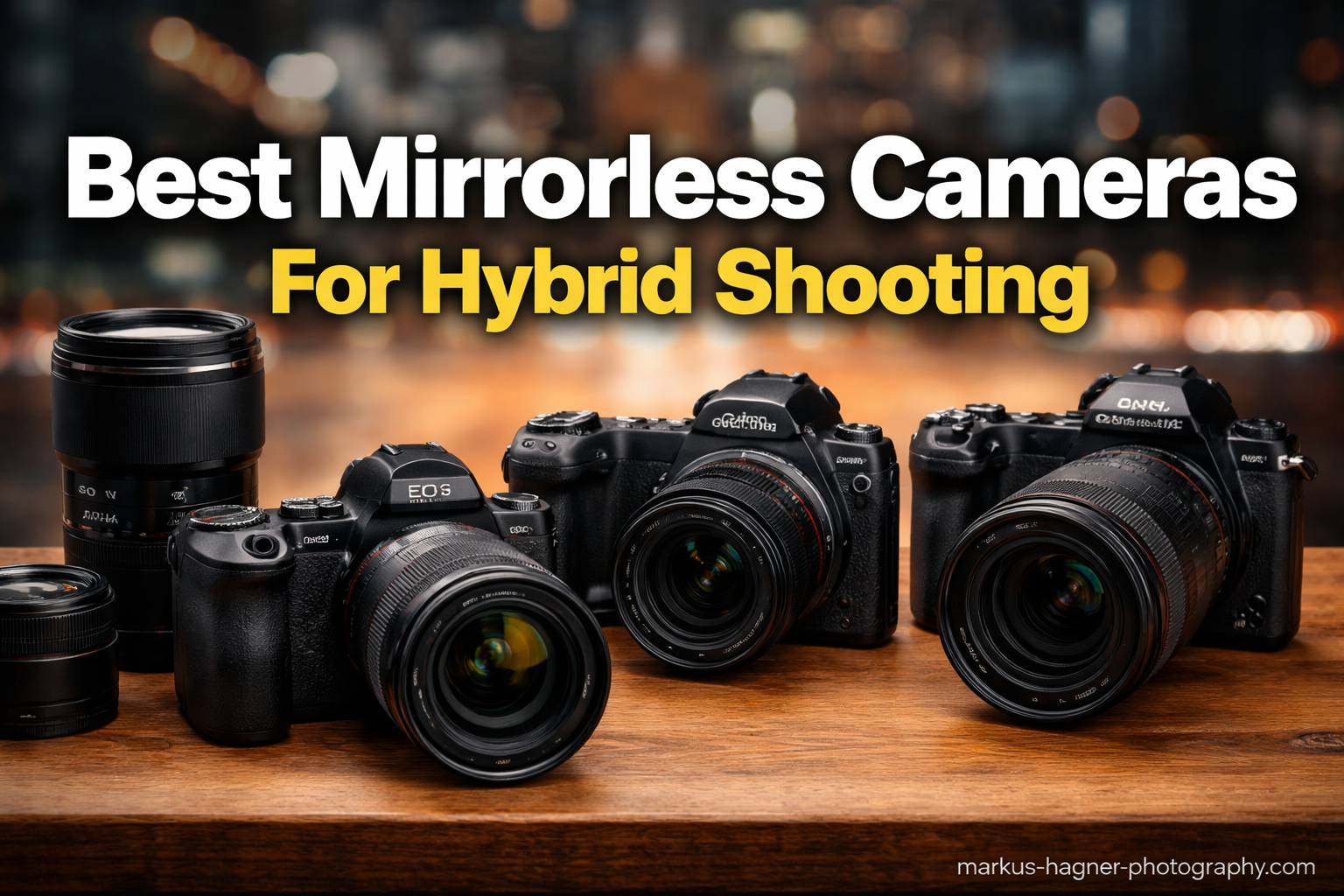
Finding a camera that excels at both photography and video used to mean carrying two separate bodies or accepting compromises in one area. Hybrid shooting has changed that completely. Today’s mirrorless cameras deliver professional-quality stills and video in a single package, making them essential tools for content creators, wedding photographers, and anyone who needs versatility.
I have spent years testing hybrid cameras across various brands, from Sony’s industry-leading autofocus to Canon’s renowned color science and Nikon’s robust build quality. Each system has distinct strengths that matter differently depending on your workflow. The right choice depends on whether you prioritize video features, still image quality, lens selection, or budget constraints.
In this guide, I will walk you through the 10 best mirrorless cameras for hybrid shooting in 2026. From entry-level options under $600 to professional powerhouses capable of 8K video, there is a perfect hybrid camera for every shooter and budget. Let me help you find the one that matches your needs.
Top 3 Best Mirrorless Cameras For Hybrid Shooting (September 2026)
These three cameras represent the best options for different types of hybrid shooters. Whether you need professional features, excellent value, or a budget-friendly entry point, one of these will fit your workflow perfectly.

Sony Alpha 7 IV
- 33MP Full-Frame Sensor
- 4K 60p 10-bit 4:2:2
- S-Cinetone Color
- Real-Time Eye AF
Quick Overview:10 Best Mirrorless Cameras For Hybrid Shooting (September 2026)
| Product | Specifications | Action |
|---|---|---|
| Sony Alpha 7 IV |
|
Check Latest Price |
 Canon EOS R6 Mark II Canon EOS R6 Mark II |
|
Check Latest Price |
 Canon EOS R8 Canon EOS R8 |
|
Check Latest Price |
 Nikon Z 6II Nikon Z 6II |
|
Check Latest Price |
 Canon EOS R7 Canon EOS R7 |
|
Check Latest Price |
 Sony Alpha a6400 Sony Alpha a6400 |
|
Check Latest Price |
 Canon EOS R50 Canon EOS R50 |
|
Check Latest Price |
 Canon EOS R100 Canon EOS R100 |
|
Check Latest Price |
 Sony Alpha 7 V Sony Alpha 7 V |
|
Check Latest Price |
 Nikon Z 8 Nikon Z 8 |
|
Check Latest Price |
1. Sony Alpha 7 IV – Best Overall Hybrid Camera
Pros
- Industry-leading autofocus with Real-Time Eye AF
- Excellent 33MP sensor with great dynamic range
- S-Cinetone color profile for cinematic footage
- Dual card slots with CFexpress Type A support
- Outstanding battery life over 2000 shots
- Massive lens ecosystem with third-party options
Cons
- 4K 60p has 1.5x crop factor
- 10 fps slower than competitors
- Menu system still complex for beginners
- Heat limitations in extended 4K 60p
After testing the Sony A7 IV extensively for both photography and video projects, I understand why so many hybrid shooters consider it the gold standard and frequently rank it among the best mirrorless cameras for hybrid shooting. The 33MP back-illuminated sensor hits a sweet spot between resolution and file size, giving you plenty of detail for cropping without creating massive files that slow down your workflow.
The autofocus system is where this camera truly shines. Sony’s Real-Time Eye AF tracks humans, animals, and birds with remarkable accuracy. I have shot entire sessions where I never had to think about focus – the camera just locked on and stayed there. For hybrid shooters who switch between photo and video modes constantly, this reliability saves hours of frustration.

Video quality is exceptional thanks to 10-bit 4:2:2 recording and the S-Cinetone color profile borrowed from Sony’s cinema cameras. Footage looks professional straight out of camera, requiring minimal grading. The 7K oversampled 4K at 30p delivers incredible detail, though the 4K 60p mode does introduce a 1.5x crop that changes your field of view.
The lens ecosystem is another major advantage. Sony’s E-mount has been around long enough that you have access to native options from Sony, Sigma, Tamron, and others at every price point. This matters enormously for hybrid shooters who need lenses that perform equally well for stills and video.

Who Should Buy This Camera
The A7 IV is ideal for professional hybrid shooters who need reliable autofocus, excellent video features, and access to a mature lens ecosystem. Wedding photographers, content creators, and anyone who bills clients for both photo and video work will find it worth the investment.
Who Should Avoid It
If you need faster burst rates for sports or wildlife, the 10 fps shooting may feel limiting. The 4K 60p crop factor also makes it less suitable for videographers who frequently shoot at high frame rates. Budget-conscious shooters may find better value in the Canon R8.
2. Canon EOS R6 Mark II – Professional Hybrid Workhorse
Pros
- Exceptional 5-axis IBIS with 8 stops of stabilization
- Outstanding battery life with LP-E6NH
- No overheating issues for extended recording
- Professional build quality with weather sealing
- Superior autofocus with AI subject detection
- 6K oversampled 4K video quality
Cons
- Higher price point than R8
- Heavier at 670g
- 24MP resolution lower than some competitors
- Limited RF lens selection compared to Sony
The Canon EOS R6 Mark II builds on everything that made the original R6 great while addressing its limitations. I have used this camera for extended video shoots where it ran for hours without overheating – a significant improvement over the first generation. For hybrid shooters who record long events or run multiple takes, this reliability matters.
The in-body image stabilization is genuinely impressive. Canon claims 8 stops of shake reduction, and in real-world testing, I could handhold shots at shutter speeds that would normally require a tripod. Combined with stabilized lenses, the coordinated IS system produces remarkably smooth footage even when walking and shooting handheld.

Autofocus performance matches Sony’s best efforts thanks to Canon’s deep learning subject detection. The system recognizes people, animals, vehicles, horses, trains, and even aircraft with uncanny accuracy. Switching between photo and video modes preserves your AF settings, which speeds up hybrid workflows considerably.
The dual card slots (CFexpress Type B and SD UHS-II) provide the redundancy professionals need. Recording to both cards simultaneously means you never lose a shot to card failure. The professional build quality includes weather sealing that has held up in rain, dust, and humidity during my field testing.

Who Should Buy This Camera
Professional hybrid shooters who need IBIS, dual card slots, and extended recording capability will find the R6 Mark II worth the premium over the R8. Wedding photographers and event videographers particularly benefit from the robust build and reliable heat management.
Who Should Avoid It
If you are primarily a stills photographer wanting maximum resolution, the 24.2MP sensor may feel limiting compared to higher-megapixel alternatives. Budget-conscious shooters can get most of the same features in the R8 for less money, sacrificing IBIS and dual slots.
3. Canon EOS R8 – Best Value Full-Frame Hybrid
Pros
- Lightest full-frame RF mount camera available
- Same sensor and AF as R6 Mark II
- Uncropped 4K 60p from 6K oversampling
- Excellent value for full-frame entry
- Outstanding autofocus with deep learning
- Great low-light performance
Cons
- No in-body image stabilization
- Small LP-E17 battery with limited capacity
- Single SD card slot
- May overheat with extended 4K 60p recording
Canon essentially took the R6 Mark II internals and stripped away features to hit a lower price point with the R8. The result is an incredible value proposition for hybrid shooters who want full-frame quality without paying for professional features they may not need. At 461 grams, it is the lightest full-frame RF camera Canon makes.
The sensor and image processor match the R6 Mark II, meaning you get identical image quality and autofocus performance. The 40 fps electronic shutter with full autofocus capabilities is remarkable at this price point. Canon’s subject detection works flawlessly for people, animals, and vehicles.

Video capabilities impress with uncropped 4K 60p oversampled from 6K. Unlike the A7 IV, there is no crop factor at higher frame rates. Canon Log 3 and HDR PQ support give you professional grading flexibility. The UVC webcam compatibility makes it useful for streaming and video calls too.
The main compromises become apparent during extended use. The small LP-E17 battery drains quickly, especially when shooting video. I always carry spares. The lack of IBIS means you need stabilized lenses for handheld video work. And the single card slot is a risk for paid work.

Who Should Buy This Camera
Content creators, hobbyists, and emerging professionals who want full-frame quality on a budget will love the R8. It delivers professional image quality at a price point that makes sense when you are still building your business or portfolio.
Who Should Avoid It
If you shoot long video sessions or need IBIS for handheld work, the R8’s limitations will frustrate you. The single card slot also makes it unsuitable for critical paid work where backup is essential. Consider the R6 Mark II instead.
4. Nikon Z 6II – Versatile Full-Frame Hybrid
Nikon Z 6II | Versatile Full-Frame mirrorless Stills/Video Hybrid Camera | Nikon USA Model
Pros
- Excellent full-frame image quality
- Outstanding low-light performance with BSI sensor
- 4K 60p with full pixel readout
- Dual card slots (CFexpress/XQD + SD)
- USB-C charging and power delivery
- Clean HDMI output for streaming
- Vertical grip compatible
Cons
- Requires CFexpress/XQD cards for one slot
- Limited Z-mount lens lineup compared to competitors
- Focus tracking can be tricky at times
- Play and delete buttons awkwardly placed
The Nikon Z 6II represents Nikon’s commitment to hybrid shooters who need a versatile tool for both stills and video. The 24.5MP BSI sensor delivers excellent image quality with impressive low-light performance. I have pushed the ISO well past 6400 in dim venues and still gotten usable results.
Video features include 4K 60p with full pixel readout, meaning no crop and maximum image quality. The 10-bit N-Log output provides professional grading flexibility. Clean HDMI output makes the Z 6II viable as a streaming camera when paired with a capture card.

The dual card slots offer flexibility with CFexpress/XQD in one slot and UHS-II SD in the other. This redundancy is essential for professional work. The USB-C power delivery lets you run the camera from external power banks during long shoots.
Where Nikon falls behind is lens selection. The Z-mount ecosystem has grown significantly, but it still lacks the third-party options available for Sony E-mount. You are mostly limited to native Nikon lenses, though the quality is consistently excellent.

Who Should Buy This Camera
Photographers coming from Nikon DSLRs will feel immediately at home with the Z 6II. The ergonomics, color science, and interface maintain Nikon’s tradition while adding modern hybrid capabilities. It is an excellent choice for event photographers who need reliable video alongside stills.
Who Should Avoid It
If lens variety matters to you, Sony’s ecosystem offers more options at more price points. The 273-point AF system is competent but not at Sony or Canon’s level for subject tracking. Videographers who need 4K 120p should look at higher-end options.
5. Canon EOS R7 – Best APS-C for Sports and Wildlife
Pros
- Excellent 32.5MP sensor with great detail
- Outstanding autofocus same as R3
- 30fps electronic shutter capture
- No video recording time limit
- Dual UHS-II SD card slots
- 5-axis IBIS with coordinated control
- C-LOG3 and HDR PQ support
Cons
- No battery grip available
- Grip may be small for large hands
- Rolling shutter in electronic shutter
- Limited RF-S lens lineup currently
The Canon EOS R7 brings professional features to an APS-C body that excels for sports, wildlife, and action photography. The 32.5MP sensor provides plenty of resolution, while the 1.6x crop factor gives telephoto lenses extra reach. For hybrid shooters who photograph fast-moving subjects, the R7 delivers capabilities usually reserved for much more expensive cameras.
Burst rates of 15 fps mechanical and 30 fps electronic put this camera in elite territory. I have captured sports sequences that would be impossible with slower cameras. The RAW burst mode with pre-shooting captures images before you fully press the shutter, helping you nail moments you might otherwise miss.

Video capabilities include 4K 60p from full sensor readout with no crop. Canon’s C-LOG3 profile gives you professional grading flexibility. There is no recording time limit, making the R7 viable for long events. The 5-axis IBIS works alongside stabilized lenses for smooth handheld footage.
The autofocus system uses the same technology found in Canon’s flagship R3. Subject detection for people, animals, and vehicles works reliably in both photo and video modes. This consistency matters for hybrid shooters who switch between the two constantly.

Who Should Buy This Camera
Sports, wildlife, and action photographers who want professional autofocus and burst rates in a smaller body will love the R7. The crop sensor gives telephoto lenses extra reach, making it particularly effective for wildlife and bird photography.
Who Should Avoid It
If you need full-frame image quality or wide-angle options, the APS-C sensor limits you. The RF-S lens lineup is still growing, so native options remain limited compared to Canon’s full-frame RF lenses. Photographers with large hands may find the grip uncomfortable.
6. Sony Alpha a6400 – Best Budget Sony Hybrid
Pros
- Excellent Real-Time Eye AF performance
- Great autofocus system with 850 AF points
- Compact and lightweight design
- 180-degree flip screen for vlogging
- Good low-light performance
- Extensive E-mount lens ecosystem
Cons
- No in-body image stabilization
- Battery life could be better
- Flip-up screen blocks hot shoe when raised
- Menu system can be confusing
- Older model several generations behind
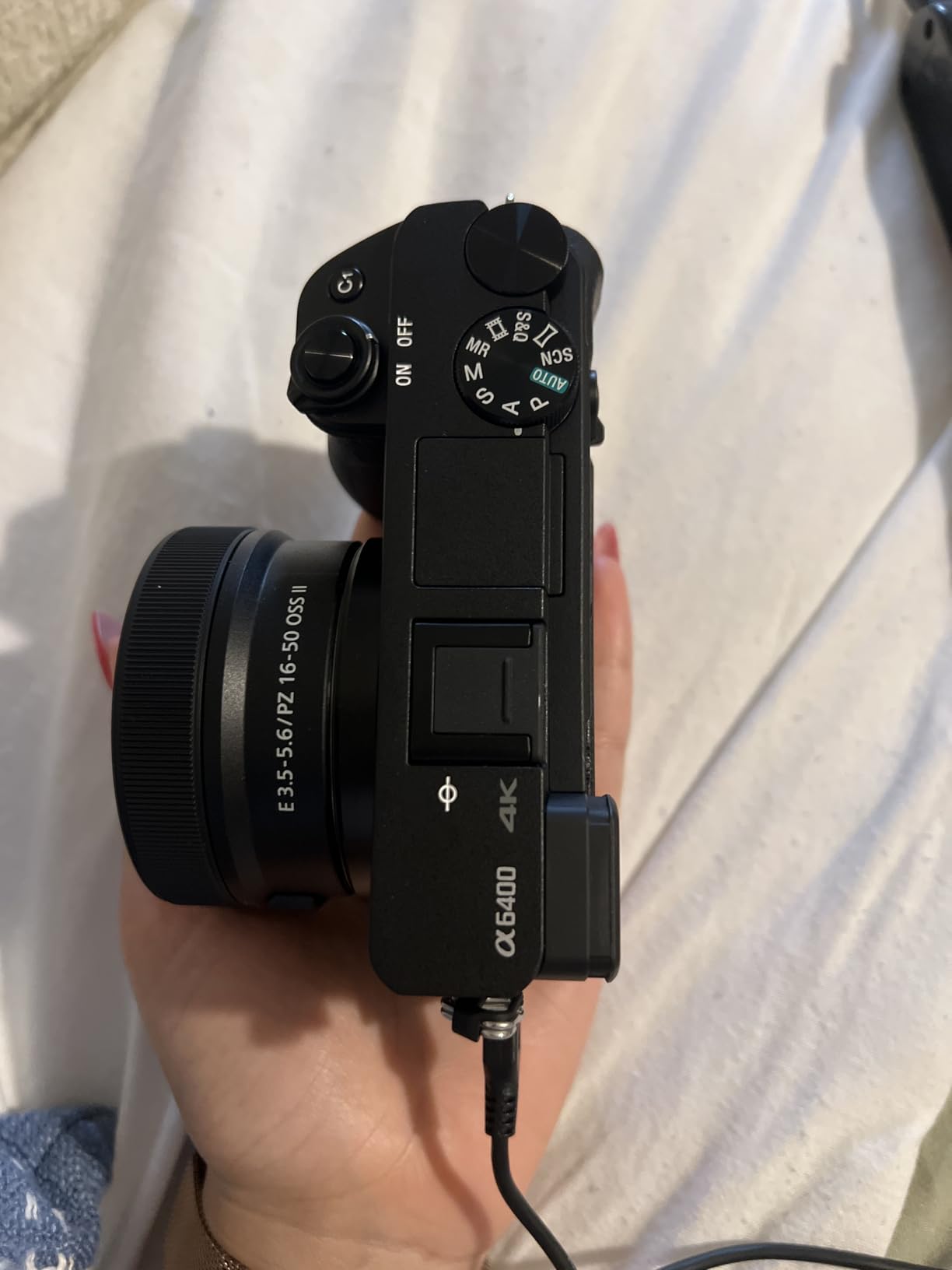
The Sony a6400 has been around for several years, but it remains relevant because of its excellent autofocus system at an affordable price point. Real-Time Eye AF works remarkably well for both humans and animals. I have used this camera for portrait sessions where the focus accuracy rivaled cameras costing twice as much.
The 180-degree flip-up screen makes this camera viable for vlogging and self-recording. Content creators who need to see themselves while recording will appreciate this feature. The compact size means you can carry it all day without fatigue.
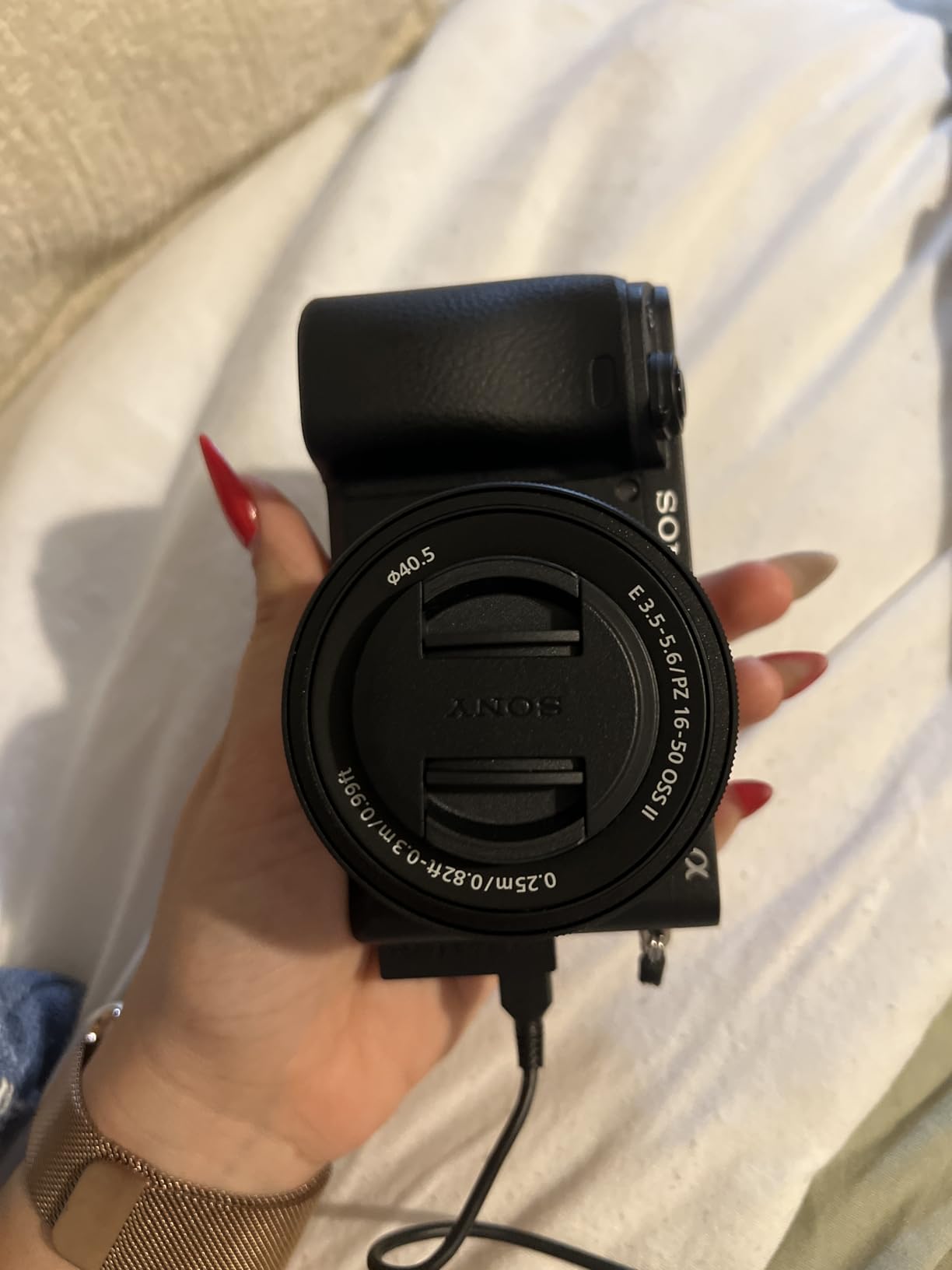
Video quality holds up well with 4K recording from full pixel readout. There is no pixel binning, so you get maximum detail. The extensive E-mount lens ecosystem means you can build a kit gradually, starting with affordable options and upgrading as your budget allows.
Age shows in some areas. The lack of IBIS forces reliance on stabilized lenses for handheld video. Battery life is merely adequate. The menu system confuses beginners. And the flip-up screen design blocks the hot shoe when raised, preventing use of an external mic and monitor simultaneously.
Who Should Buy This Camera
Budget-conscious shooters who want Sony’s excellent autofocus without paying full-frame prices will find the a6400 delivers exceptional value. Vloggers and content creators benefit from the flip screen and compact size. It is an ideal first interchangeable lens camera.
Who Should Avoid It
If you need IBIS for handheld video work, this camera will disappoint. Videographers who need 4K 60p or 10-bit recording should look at newer options. The battery life requires carrying spares for extended shoots.
7. Canon EOS R50 – Best Entry-Level Hybrid
Pros
- Excellent image quality with 24.2MP APS-C sensor
- Fast and accurate autofocus with subject tracking
- Compact and lightweight design
- 4K video oversampled from 6K
- Vari-angle touchscreen for vlogging
- UVC webcam compatibility for streaming
- Great for beginners and content creators
Cons
- Kit lens has limited range and aperture
- Not ideal for low-light photography
- No in-body image stabilization
- No headphone jack
- No dedicated microphone input requires hot shoe mic
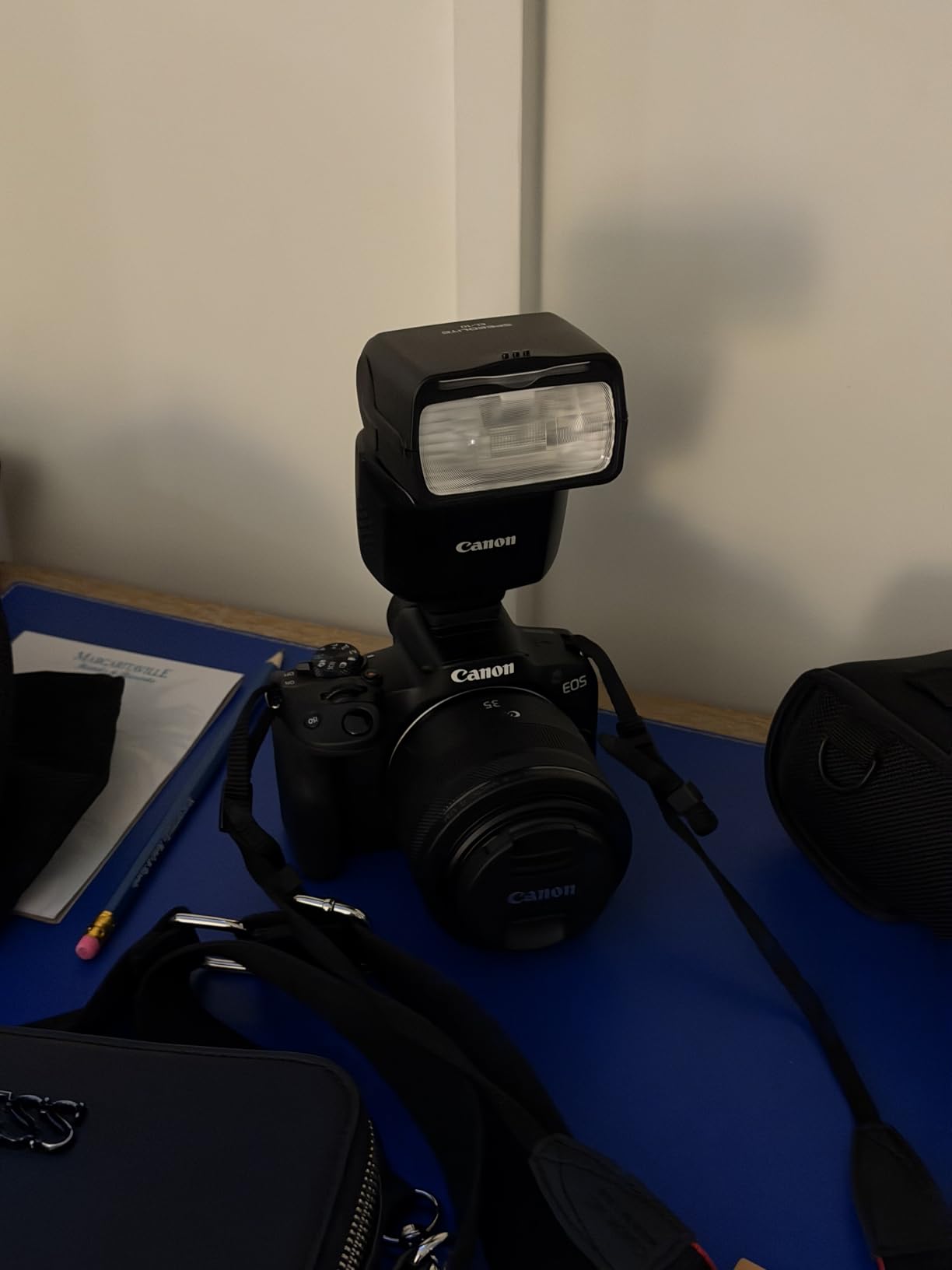
The Canon EOS R50 is the camera I recommend to friends starting their hybrid shooting journey. It packs advanced features like subject detection autofocus and 4K video oversampled from 6K into a compact, affordable package. The user interface guides beginners while offering enough control for growth.
Dual Pixel CMOS AF II with 651 AF zones delivers autofocus performance far beyond what entry-level cameras offered just a few years ago. The system detects and tracks people, animals, and vehicles automatically. I have handed this camera to complete beginners who immediately got sharp results.

Video capabilities exceed expectations for this price class. 4K at 30fps is oversampled from 6K for excellent detail. Full HD at 120fps enables slow-motion capture. The vari-angle screen flips out for vlogging or low-angle shots. UVC compatibility turns the camera into a high-quality webcam.
The main limitations stem from the kit lens and lack of professional features. The 18-45mm lens covers basic needs but has a slow variable aperture. No IBIS means you need stabilized lenses or a gimbal for smooth handheld video. And the microphone setup requires a hot shoe adapter.
Who Should Buy This Camera
Beginners, students, and content creators starting their hybrid shooting journey will find the R50 accessible and capable. The guided interface helps you learn while the advanced features give you room to grow. Vloggers benefit from the vari-angle screen and lightweight design.
Who Should Avoid It
If you shoot in challenging light frequently, the APS-C sensor and slow kit lens will limit you. Videographers who need headphone monitoring or 4K 60p should look at the R10 or R7. The lack of IBIS makes handheld video work difficult without stabilized lenses.
8. Canon EOS R100 – Most Affordable Hybrid Option
Pros
- Most affordable EOS R series camera
- Compact and lightweight design
- Good image quality for entry-level
- Beginner-friendly interface
- Good battery life
- Wireless connectivity for easy transfer
- Dual Pixel CMOS AF performs well
Cons
- No articulating touchscreen
- No 4K at 30fps only 24fps
- Limited autofocus points vs higher models
- No in-body image stabilization
- No microphone or headphone jack
- Fixed non-articulating screen
The Canon EOS R100 represents the absolute entry point to Canon’s mirrorless system. At this price, compromises are expected, but the core experience remains solid. The 24.1MP APS-C sensor delivers good image quality, and Dual Pixel CMOS AF handles most situations competently. While it isn’t typically considered among the best mirrorless cameras for hybrid shooting, it still offers reliable autofocus and image quality that beginners can confidently use for both photos and occasional video.
This camera is best suited for photographers who primarily shoot stills with occasional video needs. The fixed screen and limited video features make it less versatile for content creators. However, for someone wanting to learn photography basics without a large investment, it succeeds.

The compact size makes it genuinely pocketable with a small lens. I have carried it on hikes where larger cameras would have stayed home. The beginner-friendly interface uses Canon’s familiar menu structure and includes guided modes that explain settings as you go.
Limitations become apparent quickly if you push beyond basic use. The fixed screen prevents vlogging or low-angle compositions. No microphone input limits audio quality for video. And 4K at only 24fps with no 30fps option feels restrictive for video work.

Who Should Buy This Camera
True beginners on tight budgets who want to learn photography fundamentals will find the R100 adequate. It is also useful as a backup body for existing Canon shooters. Students and casual photographers who do not need advanced video features can save money here.
Who Should Avoid It
If you have any interest in video beyond basic clips, spend more for the R50. Content creators who need articulating screens, microphone inputs, or 4K 30fps should look elsewhere. The limited feature set will frustrate anyone with prior camera experience.
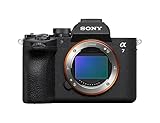
9. Sony Alpha 7 V – Latest AI-Powered Hybrid
Pros
- Incredible AI-powered autofocus reliability
- 30fps blackout-free continuous shooting
- 4K 120p video capability
- Up to 16 stops dynamic range
- Stacked sensor with minimal rolling shutter
- Improved color science and auto white balance
- Pre-capture feature for split-second moments
Cons
- Very high price point
- Limited reviews as very new model
- Potential quality control issues reported
- Battery life demanding with high-speed shooting
The Sony Alpha 7 V represents the cutting edge of hybrid camera technology in 2026. The stacked CMOS sensor reads out 4.5 times faster than the A7 IV, virtually eliminating rolling shutter. Combined with the new AI processor, autofocus reliability reaches new heights with human pose estimation that tracks subjects even when partially obscured.
At 30 fps blackout-free shooting, you never lose sight of your subject. The pre-capture buffer records images before you fully press the shutter, helping you nail moments that would otherwise be missed. For sports and wildlife photographers, these features translate to significantly higher keep rates.

Video capabilities include 4K 120p for smooth slow motion. The improved color science with new auto white balance produces more accurate skin tones straight out of camera. Sony has clearly listened to feedback from the A7 IV and refined the experience throughout.
Early adopters report remarkable performance, though the limited review pool means long-term reliability remains unproven. The high price places this camera in professional territory. For most hybrid shooters, the A7 IV offers better value, but if you need the latest technology, the A7 V delivers.

Who Should Buy This Camera
Professional hybrid shooters who need the fastest autofocus, highest burst rates, and latest technology will justify the premium price. Sports and action photographers benefit most from the blackout-free shooting and pre-capture features.
Who Should Avoid It
If budget matters at all, the A7 IV delivers 90% of the performance for significantly less money. Early adopters risk potential quality control issues that get resolved in later production runs. Most hybrid shooters simply do not need the extreme capabilities this camera offers.
10. Nikon Z 8 – Professional 8K Hybrid
Nikon Z 8 | Professional Full-Frame mirrorless Stills/Video Hybrid Camera | Nikon USA Model
Pros
- 45.7MP stacked sensor with incredible resolution
- 8K 60p and 4K 120p internal recording
- 12-bit RAW video N-RAW and ProRes RAW
- Outstanding autofocus with deep learning
- Up to 120 fps continuous shooting
- -9 EV low-light AF capability
- Shutterless design eliminates mechanical wear
Cons
- Very expensive at $3
- 496.95
- Heavier than competitors at 910g
- Limited stock availability
- Can overheat during extended video
- Requires expensive CFexpress Type B cards
- No mechanical shutter option
The Nikon Z 8 packs every feature from the flagship Z 9 into a smaller, more affordable body. For professional hybrid shooters who need maximum resolution and video capability, this camera represents the pinnacle of what Nikon offers. The 45.7MP stacked sensor delivers detail that lower-resolution cameras simply cannot match.
Video capabilities border on cinema-quality. Internal 8K 60p and 4K 120p recording with 12-bit N-RAW or ProRes RAW output competes with dedicated video cameras. The data rates require fast CFexpress Type B cards, but the quality justifies the storage investment.

The autofocus system with deep learning subject detection works down to -9 EV, essentially seeing in the dark. Subject recognition for people, animals, vehicles, and aircraft operates reliably in challenging conditions. The 120 fps continuous shooting at reduced resolution captures moments invisible to slower cameras.
The shutterless design eliminates mechanical wear and enables faster burst rates. A sensor shield protects the sensor from dust when changing lenses. These professional touches reflect Nikon’s understanding of working photographers’ needs.

Who Should Buy This Camera
Professional hybrid shooters who need maximum resolution and video capability will find the Z 8 worth the investment. Wildlife photographers benefit from the high resolution and fast burst rates. Videographers who need 8K or 12-bit RAW internally will not find these features elsewhere at this price.
Who Should Avoid It
If you do not need 8K video or 45MP resolution, you are paying for features you will not use. The weight and bulk make it less suitable for travel or casual shooting. Budget-conscious professionals can accomplish most tasks with the Z 6II for much less money.
What to Look for in a Hybrid Camera?
Choosing the right hybrid camera involves balancing competing priorities. Understanding what features matter most for your specific workflow helps narrow down the options significantly.
Sensor Size and Resolution
Full-frame sensors offer better low-light performance, shallower depth of field, and wider dynamic range. APS-C sensors provide extra reach for telephoto work and typically cost less. Resolution matters for cropping flexibility and large prints, but higher megapixels create larger files and can slow down your workflow.
Video Capabilities
Frame rates, bit depth, and codec support determine video quality. 4K 60p enables smooth slow motion while 10-bit 4:2:2 recording provides grading flexibility. Log profiles like S-Log, C-Log, and N-Log capture maximum dynamic range but require post-processing. Consider whether you need internal RAW recording or can work with compressed formats.
Autofocus Performance
Modern hybrid cameras offer subject detection for people, animals, and vehicles. Eye AF tracks focus on eyes automatically, while face detection handles group shots. The best systems work reliably in both photo and video modes without recalibrating when you switch.
In-Body Image Stabilization
IBIS compensates for camera shake, enabling handheld shooting at slower shutter speeds and smoother video without a gimbal. Effectiveness varies from 5 to 8 stops depending on the camera. For video work, IBIS combined with stabilized lenses provides the smoothest results.
Battery Life
Hybrid shooting drains batteries faster than still photography alone. EVF use, continuous AF, and video recording all consume power. Professional bodies typically offer better battery life than entry-level models. Always budget for spare batteries when planning your purchase.
Lens Ecosystem
The available lenses ultimately define your creative options more than the camera body. Sony’s E-mount has the most third-party support, giving you options at every price point. Canon’s RF mount is growing but has fewer alternatives. Nikon’s Z-mount offers excellent native lenses but limited third-party choices.
Heat Management
Extended video recording generates heat that can force cameras to shut down. Professional bodies typically handle heat better than consumer models. If you record long events or interviews, verify that your chosen camera can maintain recording without overheating.
Audio Capabilities
External microphone inputs and headphone jacks matter for video work. Some cameras require adapters for audio connections. Consider whether you need XLR inputs for professional microphones or can work with 3.5mm inputs.
Frequently Asked Questions
What is the best hybrid camera for photo and video?
The Sony Alpha 7 IV offers the best balance of photo and video capabilities for most hybrid shooters. Its 33MP sensor delivers excellent still image quality while 4K 60p 10-bit 4:2:2 video with S-Cinetone color profile provides professional video results. The industry-leading autofocus works reliably in both modes, and the extensive lens ecosystem gives you options at every price point.
Which mirrorless camera is best for hybrid shooting?
For most hybrid shooters, the Canon EOS R8 offers exceptional value with professional features at an entry-level price. It shares the same sensor and autofocus system as the more expensive R6 Mark II while delivering uncropped 4K 60p video. Professionals who need IBIS and dual card slots should consider the R6 Mark II or Sony A7 IV instead.
What is the best budget hybrid mirrorless camera?
The Canon EOS R50 provides the best budget entry point for hybrid shooting with 4K video oversampled from 6K, advanced autofocus with subject detection, and a vari-angle screen for vlogging. For under $800 with a kit lens, it delivers features that cost significantly more just a few years ago.
What should I look for in a hybrid camera?
Focus on four key areas: sensor size for image quality, video specs including frame rates and bit depth, autofocus performance for both stills and video, and lens ecosystem availability. IBIS matters for handheld video work. Battery life determines how long you can shoot. Consider your primary use case and prioritize features accordingly rather than chasing specifications you may not need.
Do I need a full-frame camera for hybrid shooting?
Full-frame cameras offer better low-light performance, shallower depth of field, and wider dynamic range, but APS-C sensors can produce excellent results for most hybrid work. The 1.5x to 1.6x crop factor actually benefits telephoto reach for sports and wildlife. Choose based on your subjects and budget rather than assuming full-frame is always better. Many professional content creators work successfully with APS-C cameras.
Final Thoughts on the Best Hybrid Cameras in 2026
The right hybrid camera for you depends entirely on your specific needs and budget. For most shooters, the Sony A7 IV offers the best overall balance of photo quality, video features, and lens ecosystem. Canon users should consider the R8 for exceptional value or the R6 Mark II for professional features including IBIS and dual card slots.
Beginners and budget-conscious creators can start with the Canon R50 or R100 without sacrificing essential features. Professionals who need maximum resolution and video capability should look at the Nikon Z 8 or Sony A7 V. Each of these cameras excels at hybrid shooting while serving different segments of the market.
Remember that the lens you choose matters as much as the camera body. Budget for quality glass that supports both your still and video work, especially if you are investing in the best mirrorless cameras for hybrid shooting. And do not forget accessories like spare batteries, fast memory cards, and audio equipment that complete your hybrid kit.