

After spending countless hours testing medium format cameras in our studio and out in the field, I can confidently say there is nothing quite like the image quality these sensors produce. The depth, the color gradation, the sheer resolving power of a 100MP sensor creates files that simply do not exist in the full-frame world.
Medium format cameras feature sensors significantly larger than traditional full-frame cameras, typically measuring 44x33mm or even 53.4x40mm. This larger surface area captures more light and detail, delivering exceptional dynamic range often exceeding 15 stops and color depth that makes skin tones look absolutely magical.
In this comprehensive guide, our team has reviewed 10 of the best medium format cameras available right now. We cover everything from flagship 102MP powerhouses like the Fujifilm GFX100 II to budget-friendly entry points that make this format accessible to more photographers than ever before.
Table of Contents
- Top 3 Best Medium Format Cameras (October 2026)
- Quick Overview: 10 Best Medium Format Cameras (October 2026)
- 1. Fujifilm GFX100 II – The Speed King
- 2. Hasselblad X2D 100C – Scandinavian Excellence
- 3. Fujifilm GFX100S II – The Sweet Spot
- 4. Fujifilm GFX 100S – The Original Compact Powerhouse
- 5. Fujifilm GFX 100 – The Professional Workhorse
- 6. Fujifilm GFX100RF – The Rangefinder Revolutionary
- 7. Fujifilm GFX 100S (Renewed) – Budget 100MP Entry
- 8. Pentax 645Z – The DSLR Medium Format Legend
- 9. Pentax 645D – The Budget Medium Format Entry
- 10. Fujifilm GFX 50S (Renewed) – Entry-Level 50MP
- How to Choose the Best Medium Format Cameras?
- Frequently Asked Questions
- Final Thoughts
Top 3 Best Medium Format Cameras (October 2026)
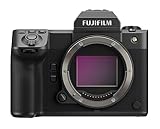
Fujifilm GFX100 II
- 102MP Medium Format Sensor
- 8fps Continuous Shooting
- 8K/30p Video Recording
- 8-Stop Image Stabilization

Hasselblad X2D 100C
- 100MP Medium Format Sensor
- 15 Stops Dynamic Range
- 7-Stop IBIS
- 1TB Internal Storage

Fujifilm GFX100S II
- 102MP CMOS II Sensor
- 8fps Shooting
- AI Subject Tracking
- 8-Stop Stabilization
Quick Overview: 10 Best Medium Format Cameras (October 2026)
| Product | Specifications | Action |
|---|---|---|
| Fujifilm GFX100 II |
|
Check Latest Price |
| Hasselblad X2D 100C |
|
Check Latest Price |
| Fujifilm GFX100S II |
|
Check Latest Price |
 Fujifilm GFX 100S Fujifilm GFX 100S |
|
Check Latest Price |
 Fujifilm GFX 100 Fujifilm GFX 100 |
|
Check Latest Price |
 Fujifilm GFX100RF Fujifilm GFX100RF |
|
Check Latest Price |
 Fujifilm GFX 100S (Renewed) Fujifilm GFX 100S (Renewed) |
|
Check Latest Price |
 Pentax 645Z Pentax 645Z |
|
Check Latest Price |
 Pentax 645D Pentax 645D |
|
Check Latest Price |
 Fujifilm GFX 50S (Renewed) Fujifilm GFX 50S (Renewed) |
|
Check Latest Price |
1. Fujifilm GFX100 II – The Speed King
Pros
- Fastest medium format camera available
- Amazing 9.44M dot EVF with 120fps live view
- 8K/30p and 4K/60p video at full sensor width
- Frame.io Camera to Cloud integration
- Compatible with cinema lenses via adapter
Cons
- High price point
- Sensor readout causes blackout in Single Drive Mode
- Drops to 14-bit in continuous modes
When I first picked up the GFX100 II, I was skeptical that any medium format camera could keep up with the pace I demand from my full-frame bodies. After shooting with it for several weeks, I can say this camera fundamentally changed my perspective on what medium format can do, and it easily earns a place among the best medium format cameras available today.
The 102MP sensor paired with the X-Processor 5 delivers images at 8 frames per second, which is genuinely remarkable for this format. I photographed a fashion shoot where the model was moving constantly, and the GFX100 II tracked her eye with surprising accuracy. The autofocus has improved significantly over previous GFX models.
The electronic viewfinder is stunning at 9.44 million dots with 120fps live view. Looking through it feels almost like looking at reality itself. For video work, this camera offers 8K/30p internal recording and 4K/60p at the full sensor width, making it a genuine hybrid tool.
Who Should Buy This Camera
Professional photographers who need the speed of full-frame but refuse to compromise on image quality will love this camera. Fashion photographers, portrait studios, and commercial shooters who demand both resolution and responsiveness should seriously consider the GFX100 II.
Who Should Avoid It
The high price point puts this camera out of reach for many enthusiasts. If you primarily shoot fast action like sports or wildlife, even this improved speed may not be enough compared to dedicated full-frame sports cameras.
2. Hasselblad X2D 100C – Scandinavian Excellence
Pros
- Unrivaled image quality with exceptional clarity
- 15 stops of dynamic range for highlight and shadow detail
- Intuitive touch interface with swipe and pinch-to-zoom
- 1TB internal storage included
- Beautiful Scandinavian design aesthetic
Cons
- High price point
- Heavier than some competitors
- Limited stock availability
There is something special about how Hasselblad cameras render an image. The X2D 100C continues that legacy with what I can only describe as magical color science. Every portrait I shot with this camera had a depth and dimensionality that made the files feel almost three-dimensional.
The 100MP sensor delivers 15 stops of dynamic range, which in practical terms means you can recover incredible detail from shadows and highlights. I shot a backlit portrait where the model was in deep shadow against a bright window. The raw file allowed me to pull details from both extremes without any banding or posterization.
One feature I absolutely love is the 1TB internal storage. No more fumbling with SD cards in the middle of a shoot. The 7-stop in-body image stabilization means I can handhold this camera at surprisingly slow shutter speeds and still get sharp results.
Who Should Buy This Camera
Photographers who prioritize image quality above all else will find their match here. Portrait photographers, fine art photographers, and commercial shooters who demand the absolute best color reproduction should choose the Hasselblad X2D 100C.
Who Should Avoid It
Those needing fast autofocus for moving subjects may find the system limiting. The weight and bulk might also be a concern for photographers who travel frequently or shoot for extended periods handheld.
3. Fujifilm GFX100S II – The Sweet Spot
Pros
- Newly developed 102MP CMOS II sensor
- Powerful 8-stop in-body image stabilization
- Compact body comparable to full-frame cameras
- AI-assisted subject tracking autofocus
- High-resolution 5.76 million dot EVF
Cons
- Slow shutter response
- Sometimes slow to focus
- Not suitable for sports or fast action
The GFX100S II sits in a fascinating position in the medium format lineup. It offers most of the image quality of the flagship GFX100 II in a smaller, more affordable package. After using it for landscape and portrait work, I found it hits a sweet spot that many photographers will appreciate.
The newly developed 102MP CMOS II sensor produces files with stunning detail and low noise. I was particularly impressed with how the camera handles high ISO situations, producing clean files even at settings that would challenge many full-frame sensors.
The 8-stop IBIS system is genuinely useful. I handheld shots at 1/15 second and achieved sharp results, which opens up possibilities for available light photography that would typically require a tripod. The AI-assisted subject tracking works well for portrait work, though it is not quite as snappy as the latest full-frame cameras.
Who Should Buy This Camera
This is ideal for landscape and portrait photographers who want medium format quality without the bulk and price of the flagship models. The compact size makes it a great travel companion for serious photographers.
Who Should Avoid It
Action and sports photographers should look elsewhere, as the autofocus and burst rates are not designed for fast-moving subjects. Beginners may also find the mostly manual operation overwhelming.
4. Fujifilm GFX 100S – The Original Compact Powerhouse
Pros
- Ultimate 102MP image quality at lower price
- Fantastic dynamic range for post-processing
- Pixel Shift Multi-Shot for 400MP images
- Compact and lightweight under 2 pounds
- 19 Fujifilm Film Simulation modes
Cons
- Autofocus not as fast as flagship cameras
- Not suitable for fast-moving subjects
- Potential overheating in hot conditions
The original GFX 100S was a game-changer when it launched, bringing 102MP medium format into a body comparable in size to many full-frame cameras. Even with the newer II version available, this camera remains an excellent value proposition for photographers entering the medium format world.
I spent a month shooting landscapes with the GFX 100S, and the image quality consistently impressed me. The dynamic range allows for significant adjustments in post without degrading the file. The 6-stop IBIS kept my handheld shots sharp even in challenging light.
One feature that sets Fujifilm apart is the Film Simulation modes. With 19 different looks available, I often found myself delivering JPEGs straight from camera that needed minimal additional processing. The Nostalgic Neg. simulation has become a personal favorite for portrait work.
Who Should Buy This Camera
Photographers wanting to enter medium format without the flagship price tag will find excellent value here. Landscape and studio portrait photographers who do not need the fastest autofocus will love the image quality per dollar ratio.
Who Should Avoid It
If you shoot sports, wildlife, or any fast action, the autofocus system will frustrate you. The camera also runs warm in direct sunlight, which could be problematic for extended outdoor shoots.
5. Fujifilm GFX 100 – The Professional Workhorse
Pros
- 102MP back-illuminated sensor with incredible detail
- Weather-sealed magnesium alloy at 95 points
- Integrated vertical grip for portrait orientation
- 16-bit color depth with 14 stops dynamic range
- Excellent high ISO performance
Cons
- Heavy and large with integrated grip
- Eye tracking autofocus can be inconsistent
- Touch screen can cause accidental focus shifts
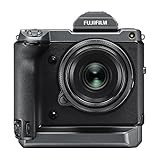
The GFX 100 was Fujifilm’s first 100MP medium format camera, and it remains a serious professional tool. The integrated vertical grip makes it substantial in size, but for studio work and professional assignments, that bulk translates to stability and comfort during long shoots.
What struck me most about this camera is the high ISO performance. Shooting at ISO 800 produced files that looked as clean as ISO 100 on many cameras. This opens up possibilities for available light work that would typically require supplemental lighting.
The weather sealing at 95 points means I never worried about shooting in challenging conditions. The magnesium alloy body feels substantial and professional in hand. For studio photographers who spend hours shooting portraits, the integrated grip is genuinely useful.
Who Should Buy This Camera
Studio professionals and commercial photographers who primarily shoot portraits, products, or controlled environments will appreciate the integrated grip and robust build. The current pricing makes it an attractive professional option.
Who Should Avoid It
Travel and street photographers will find the weight and bulk prohibitive. The inconsistent eye tracking can be frustrating for portrait sessions with moving subjects.
6. Fujifilm GFX100RF – The Rangefinder Revolutionary
Pros
- Compact rangefinder-style design
- High-quality fixed 35mm f/4 lens
- Unique Aspect Ratio dial for compositions
- Internal 4-stop ND filter with leaf shutter
- Fast burst shooting up to 16 fps
Cons
- No in-body image stabilization
- Fixed lens limits versatility
- Hybrid menu system can be confusing
The GFX100RF is perhaps the most unique camera in this entire lineup. A 102MP medium format sensor in a compact rangefinder-style body with a fixed 35mm lens. I approached this camera with skepticism but came away genuinely impressed by what Fujifilm has created.
The fixed 35mm f/4 lens is optically outstanding. Having that 102MP resolution means I can crop aggressively and still maintain excellent image quality. The digital teleconverter gives you effective focal lengths without losing too much detail.
The Aspect Ratio dial on the top plate is a brilliant addition. Being able to switch between 4:3, 3:2, 16:9, and other formats with a physical dial changed how I composed shots. It feels like shooting film in the best possible way.
Who Should Buy This Camera
Street photographers and travel photographers who want medium format quality in a portable package will love this camera. Experienced photographers who enjoy manual focus and deliberate composition will appreciate the rangefinder experience.
Who Should Avoid It
Photographers who need zoom flexibility or multiple focal lengths should look at the interchangeable lens GFX models. The lack of IBIS requires practice to shoot successfully at slower shutter speeds.
7. Fujifilm GFX 100S (Renewed) – Budget 100MP Entry
Pros
- 102MP back-illuminated sensor at reduced price
- 5-axis IBIS with 6 stops correction
- Phase detect AF across nearly 100% of frame
- Compact magnesium alloy body
- 4K/30p 10-bit video recording
Cons
- Renewed product with 90-day warranty
- Limited review data available
- Not Prime eligible
For photographers wanting to enter the 100MP medium format world without the premium price tag, the renewed GFX 100S offers an intriguing pathway. While buying renewed carries some risk, the potential savings make this worth considering for budget-conscious professionals.
The camera features the same 102MP back-illuminated sensor and X-Processor 4 as the original, meaning image quality is identical to the full-price version. The 6-stop IBIS and weather-sealed magnesium alloy body are professional-grade features that survive the renewal process intact.
The main consideration with renewed products is the 90-day warranty versus the typical one-year coverage. However, the substantial savings could offset this risk for photographers who need 100MP capability on a tighter budget.
Who Should Buy This Camera
Budget-conscious photographers who want 100MP image quality without flagship pricing should consider this option. It is also good for photographers who want to try medium format before committing to a new purchase.
Who Should Avoid It
Those who prefer full manufacturer warranty coverage should buy new. Photographers who need immediate availability may find renewed stock unpredictable.
8. Pentax 645Z – The DSLR Medium Format Legend
Pros
- Incredible 51-megapixel resolution at competitive price
- Excellent high ISO performance
- Weather-sealed design for outdoor work
- Compatible with affordable legacy Pentax lenses
- Unmatched dynamic range for the price
Cons
- Big and heavy compared to mirrorless options
- Autofocus struggles with moving subjects
- Video quality is mediocre at best
The Pentax 645Z holds a special place in the medium format world as one of the most affordable pathways to larger sensor photography. Despite being an older DSLR design, the image quality from the 51.4MP CMOS sensor remains genuinely impressive.
What makes the 645Z compelling is the lens ecosystem. Legacy Pentax 645 lenses are significantly more affordable than modern mirrorless options, making system building much more budget-friendly. The weather sealing is robust, and I have used this camera in light rain without concern.
The dynamic range from this sensor is exceptional. I was able to pull incredible detail from shadows in landscape shots that would have challenged lesser sensors. For studio and landscape work where speed is not critical, the 645Z delivers professional results.
Who Should Buy This Camera
Photographers on a tighter budget who want genuine medium format image quality will find excellent value here. Landscape and studio portrait photographers who do not need cutting-edge autofocus will appreciate the price-to-performance ratio.
Who Should Avoid It
Anyone needing modern features like fast autofocus, advanced video, or lightweight mirrorless bodies should look at Fujifilm or Hasselblad options. The bulk and weight are substantial compared to current offerings.
9. Pentax 645D – The Budget Medium Format Entry
Pros
- 40MP medium format at lowest entry price
- Weather sealed and coldproof design
- Compatible with legacy Pentax 645 lenses
- Dual SD card slots for backup
- Exceptional image quality with stunning colors
Cons
- Not a true medium format sensor size
- Slow 1.1fps continuous shooting
- Limited autofocus lens options
- No image stabilization
The Pentax 645D represents the most affordable entry point into digital medium format photography. While it uses a slightly smaller 33x44mm sensor rather than the full 41x56mm of traditional medium format, the image quality still far exceeds what full-frame cameras can produce.
The CCD sensor in the 645D has a distinctive look that many photographers prefer over modern CMOS designs. The colors have a richness and depth that some compare to drum-scanned film. For landscape and studio work, this camera produces files with genuine character.
Being an older design, the 645D has limitations. The 1.1 frames per second shooting speed means this is not a camera for action work. But for deliberate, considered photography, the image quality per dollar is hard to beat.
Who Should Buy This Camera
Beginners wanting to try medium format photography without significant investment should start here. Landscape photographers who work slowly and deliberately will appreciate the image quality at this price point.
Who Should Avoid It
Photographers needing modern performance features like fast autofocus, high ISO capability, or video should look elsewhere. The slow shooting speed makes this unsuitable for any fast-paced work.
10. Fujifilm GFX 50S (Renewed) – Entry-Level 50MP
Pros
- 51.4MP sensor at lowest entry price
- Compact magnesium alloy body
- Detachable electronic viewfinder
- Three-directional tilting touchscreen
- Wide operating temperature range
Cons
- Older model with lower resolution
- Slower contrast detection autofocus
- Renewed product with limited warranty
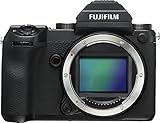
The original GFX 50S was the camera that made medium format truly accessible to enthusiasts and professionals alike. As a renewed option, it represents the most affordable pathway into the Fujifilm G mount system with its excellent lens lineup, making it a compelling choice among the best medium format cameras for photographers who want high-end image quality without the cost of newer flagship models.
The 51.4MP sensor delivers genuine medium format image quality with 1.7x the surface area of full-frame sensors. While not as high resolution as the 100MP models, the files still offer exceptional detail and dynamic range for most professional applications.
The detachable electronic viewfinder is a unique feature that allows for waist-level shooting or viewing from different angles. The three-directional tilting screen provides additional flexibility for composition in challenging positions.
Who Should Buy This Camera
Photographers wanting to enter the Fujifilm GFX system at the lowest possible price point should consider this option. Those who want access to the excellent G mount lens ecosystem without flagship investment will find good value here.
Who Should Avoid It
Photographers needing modern autofocus performance or high resolution should consider newer GFX models. The renewed status and lack of customer reviews may concern some buyers.
How to Choose the Best Medium Format Cameras?
Choosing the right medium format camera involves understanding your specific needs and how different features impact real-world photography. Here is what our team considers essential when evaluating these cameras.
Sensor Size: Cropped vs Full Medium Format
Medium format sensors come in two primary sizes. The cropped 44x33mm format used by most Fujifilm GFX cameras and the larger 53.4x40mm found in true medium format systems. The cropped format is approximately 1.7x larger than full-frame, while full medium format is roughly 2.5x larger.
For most photographers, the cropped 44x33mm format offers the best balance of image quality, lens selection, and value. The larger sensors typically cost significantly more and require larger, heavier lenses.
Resolution: Do You Really Need 100MP?
The jump from 50MP to 100MP sounds dramatic, but the practical benefits depend on your work. 100MP sensors allow aggressive cropping and enormous print sizes, but they also demand more from your technique, lenses, and computer hardware.
For studio portrait work and landscape photography where you can control conditions, 100MP delivers incredible detail. For general professional work, 50MP may be more than sufficient while offering faster workflow and smaller files.
Autofocus Performance
Medium format cameras historically struggled with autofocus speed, but recent models have improved dramatically. The Fujifilm GFX100 II and GFX100S II now offer phase detection across nearly the entire frame with eye tracking capabilities.
However, even the fastest medium format camera cannot match a dedicated full-frame sports camera for tracking fast-moving subjects. Consider your subject matter carefully before expecting medium format to replace your action camera.
Image Stabilization (IBIS)
In-body image stabilization has transformed how we use medium format cameras. With 6 to 8 stops of correction available in newer models, handheld shooting becomes viable in situations that previously required a tripod.
This feature is particularly valuable for landscape and travel photographers who want to travel light. The Hasselblad X2D offers 7 stops while the Fujifilm GFX100S II pushes this to 8 stops of stabilization.
Lens Ecosystem
Before committing to a system, evaluate the available lenses and their costs. Fujifilm offers the most extensive G mount lens lineup with options ranging from ultra-wide to telephoto. Hasselblad XCD lenses are fewer but optically excellent.
The Pentax system offers compatibility with legacy 645 lenses, which can be found at significantly lower prices on the used market. This makes system building more affordable, though modern features like silent autofocus may be limited.
Video Capabilities
While most photographers buy medium format for stills, video capabilities have improved significantly. The Fujifilm GFX100 II offers 8K/30p and 4K/60p recording, making it a genuine hybrid tool for filmmakers who want larger sensor aesthetics.
Most other medium format cameras offer 4K recording, though readout speeds and codec options vary. If video is important to your work, carefully evaluate each camera’s specific video features.
Budget Considerations
Medium format photography requires significant investment beyond the camera body. Quality lenses typically cost several thousand dollars each. Fast memory cards, powerful computers for processing, and substantial storage for large files all add to the total cost.
Consider starting with a renewed model or older generation if budget is a concern. The image quality from a 50MP medium format sensor still exceeds what full-frame can offer, providing an excellent entry point into the format.
Frequently Asked Questions
What is the best medium format camera for beginners?
The Fujifilm GFX 50S or Pentax 645D offer the most affordable entry points into medium format photography. Both provide genuine medium format image quality at lower price points, though with some compromises in speed and features. The renewed options make this format accessible to more photographers than ever before.
Is medium format better than full frame?
Medium format sensors are physically larger than full-frame sensors, capturing more light and detail. This translates to superior dynamic range, better color depth, and exceptional image quality. However, full-frame cameras remain faster, lighter, and less expensive. The best choice depends on your specific photography needs and budget.
How much does a medium format camera cost?
Medium format camera prices range from approximately $2,800 for entry-level renewed models to over $8,500 for flagship bodies. Professional systems from Hasselblad and Phase One can exceed $15,000. Budget for quality lenses as well, which typically cost $1,500 to $5,000 each.
What is the cheapest medium format camera?
The Pentax 645D and renewed Fujifilm GFX 50S represent the most affordable digital medium format options, typically available under $3,000. These entry-level models offer genuine medium format image quality while keeping costs manageable for photographers new to the format.
Who should buy a medium format camera?
Professional photographers specializing in portraiture, landscape, product photography, fashion, and commercial work benefit most from medium format. Serious enthusiasts who prioritize image quality above all other factors will also appreciate what these cameras offer. Action and sports photographers should generally stick with full-frame systems.
Final Thoughts
Medium format photography offers an image quality experience that simply does not exist in the full-frame world. The depth, the color gradation, and the sheer resolving power create files with a dimensional quality that clients notice and photographers appreciate.
For most professional photographers in 2026, the Fujifilm GFX100 II represents one of the best medium format cameras available today thanks to its combination of speed, resolution, and professional features. Those prioritizing pure image quality should consider the Hasselblad X2D 100C with its stunning color science and 15 stops of dynamic range.
Budget-conscious photographers can enter the medium format world through renewed options or the excellent Pentax 645Z, which still delivers exceptional image quality despite being an older design. Whatever your choice, medium format will change how you think about image quality.