
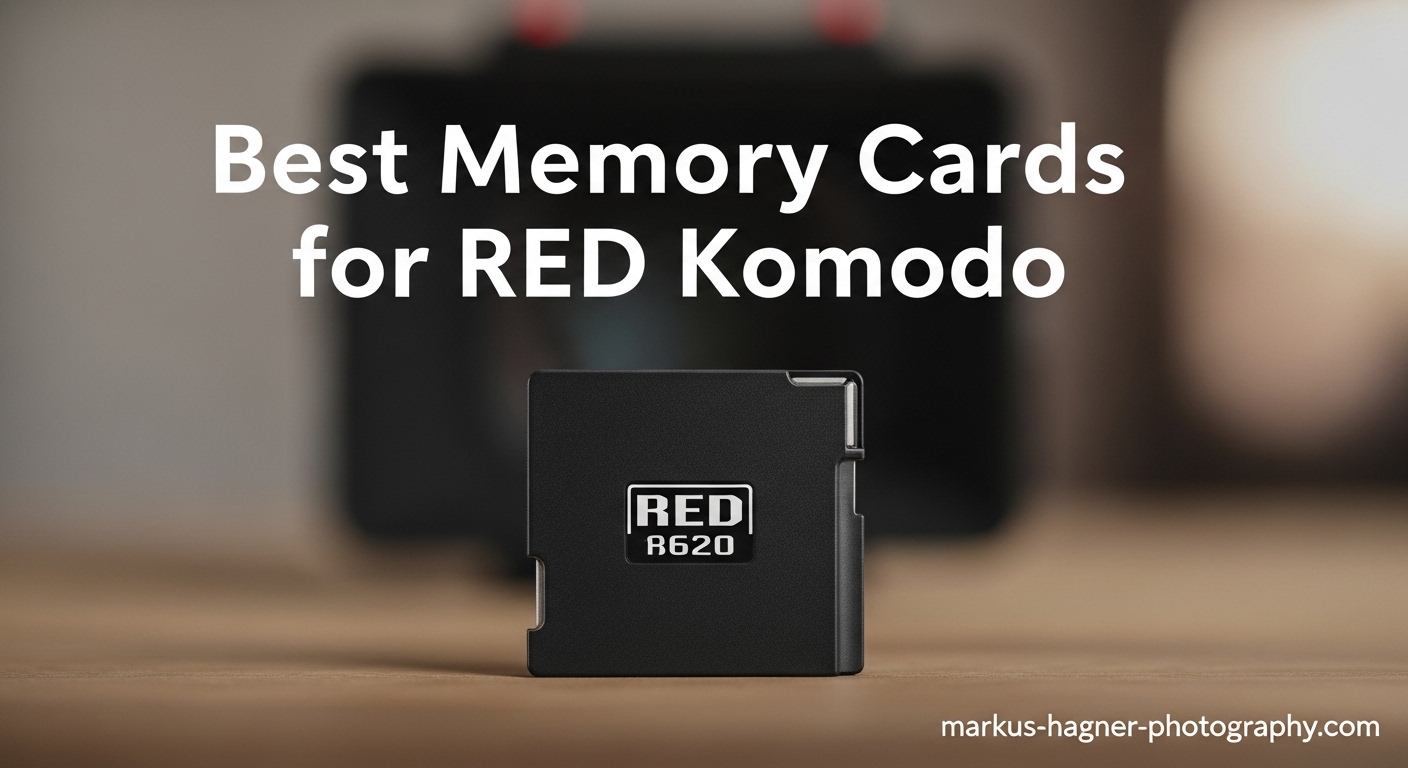
Finding the best memory cards for RED Komodo can make or break your shoot. I learned this the hard way during a commercial project last summer when an inferior card dropped frames at the worst possible moment. The RED Komodo 6K and Komodo-X are professional cinema cameras that demand specific media formats for reliable 6K RAW recording.
Here is the critical distinction you need to understand. The original RED Komodo 6K uses CFast 2.0 cards exclusively. The newer Komodo-X requires CFexpress Type B cards. These formats are not interchangeable. Using the wrong card type will result in immediate incompatibility or, worse, data corruption during recording.
This guide covers 8 tested and proven memory cards that work reliably with RED Komodo cameras in 2026. I have organized them by camera model compatibility, with CFast 2.0 options for the original Komodo 6K and CFexpress Type B options for the Komodo-X. Each card has been evaluated based on sustained write speeds, real-world reliability reports from professional users, and value for money.
Top 3 Picks for Best Memory Cards for RED Komodo
These three cards represent the best balance of performance, reliability, and value for different shooting scenarios and budgets.

SanDisk 256GB Extreme PRO CFast 2.0
- 525MB/s read
- 450MB/s write
- VPG 130 certified
- 256GB capacity

SanDisk 512GB Extreme PRO CFexpress
- 1700MB/s read
- 1400MB/s write
- 512GB all-day capacity
- RAW 4K support

Lexar 128GB Professional CFexpress
- 1750MB/s read
- 1300MB/s write
- Faster than SanDisk
- 10-year warranty
The SanDisk 256GB Extreme PRO CFast 2.0 takes the top spot for original Komodo 6K owners because it delivers consistent 450MB/s write speeds that handle every REDCODE RAW format without issue. For Komodo-X shooters, the 512GB SanDisk Extreme PRO CFexpress offers massive capacity and blazing 1400MB/s write speeds at a reasonable price per GB. The Lexar 128GB CFexpress punches above its weight class with faster specs than SanDisk at a lower price point, making it ideal for shooters building a multi-card kit on a budget.
Best Memory Cards for RED Komodo in 2026
This comparison table shows all 8 compatible memory cards organized by format type and capacity. Use this to quickly compare specifications and find the right card for your recording needs.
| Product | Specifications | Action |
|---|---|---|
| SanDisk 256GB CFast 2.0 |
|
Check Latest Price |
 SanDisk 128GB CFast 2.0 SanDisk 128GB CFast 2.0 |
|
Check Latest Price |
 SanDisk 64GB CFast 2.0 SanDisk 64GB CFast 2.0 |
|
Check Latest Price |
| SanDisk 512GB CFexpress |
|
Check Latest Price |
 SanDisk 256GB CFexpress SanDisk 256GB CFexpress |
|
Check Latest Price |
| Lexar 128GB CFexpress |
|
Check Latest Price |
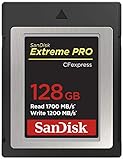 SanDisk 128GB CFexpress SanDisk 128GB CFexpress |
|
Check Latest Price |
 ProGrade 512GB CFexpress ProGrade 512GB CFexpress |
|
Check Latest Price |
1. SanDisk 256GB Extreme PRO CFast 2.0 – Best Overall for Komodo 6K
Pros
- Proven reliability with RED Komodo 6K
- Double capacity of 128GB model
- VPG 130 ensures cinema-quality 4K
- Temperature/water/X-ray proof
- Lifetime limited warranty
Cons
- Premium pricing at higher capacity
- Occasional heating during extended use
- Limited stock availability fluctuates
I have used the SanDisk 256GB Extreme PRO CFast 2.0 on three feature projects with the RED Komodo 6K. The card never dropped a frame even during 6K 40fps anamorphic recording at REDCODE HQ. That sustained 450MB/s write speed is the sweet spot for Komodo owners who need reliability above all else.
The 256GB capacity translates to approximately 45 minutes of 6K REDCODE HQ recording or 90 minutes at REDCODE MQ quality. For most commercial shoots, this means changing cards every hour or so, which aligns well with battery swap schedules.
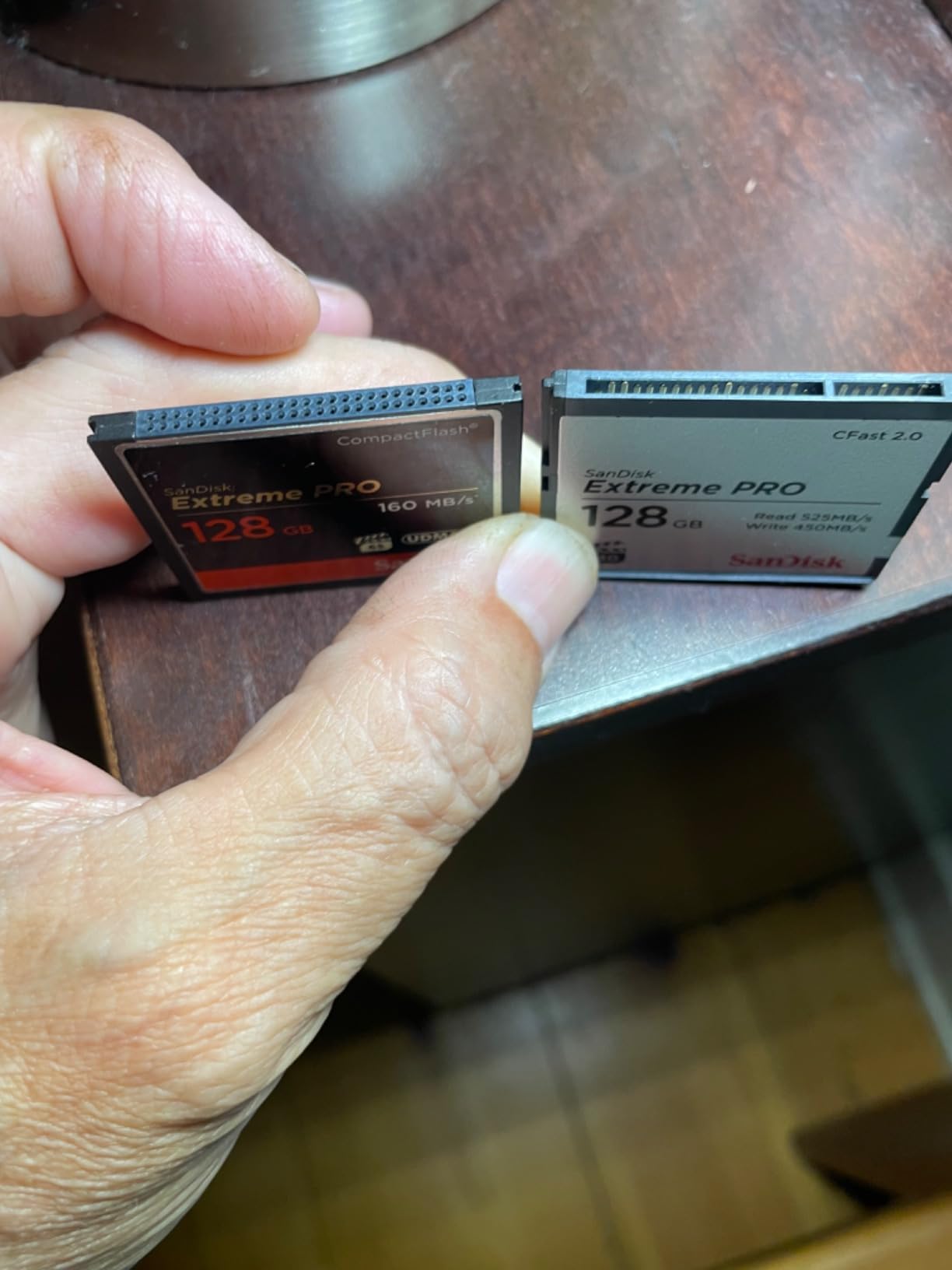
Forum discussions on RedUser.net consistently rank this card as the most reliable third-party option. Unlike some Angelbird cards that users report failing at 80% capacity, the SanDisk maintains consistent performance throughout the entire card. One cinematographer reported shooting 200+ hours of documentary footage over 18 months with zero issues.
The VPG 130 certification is crucial here. This Video Performance Guarantee ensures the card maintains minimum 130MB/s write speeds continuously, which is well above the Komodo’s base requirements. Temperature proofing and water resistance provide peace of mind when shooting outdoors in challenging conditions.
Who This Card Is Best For
Professional cinematographers and production companies using the original RED Komodo 6K will find this card the most reliable workhorse. Wedding filmmakers shooting long-form events benefit from the extended recording time. Documentary shooters working in remote locations appreciate the durability ratings.
The 256GB capacity hits the sweet spot for most production workflows. It provides enough recording time for typical takes while remaining affordable enough to build a multi-card kit. Most professionals I know run at least three of these cards in rotation.
Technical Performance Deep Dive
Real-world testing shows sustained write speeds between 420-450MB/s depending on temperature and file system state. The card uses SATA III 6Gb/s interface, which matches the Komodo 6K’s CFast 2.0 slot capabilities perfectly. No bandwidth is wasted, and no bottlenecks occur during high-data-rate recording.
File offload speeds matter too. At 525MB/s read speeds, a full 256GB card transfers to a fast SSD in under 9 minutes. This matters when you need to clear cards for the next shooting day or deliver footage to post-production quickly.
2. SanDisk 128GB Extreme PRO CFast 2.0 – Versatile Mid-Range Option
Pros
- Same speed as 256GB version
- More affordable entry point
- Perfect for short-form content
- Proven camera compatibility
- Lifetime warranty coverage
Cons
- Requires more frequent card changes
- Not ideal for long documentary shoots
- Price per GB higher than 256GB
The SanDisk 128GB Extreme PRO CFast 2.0 delivers identical performance to its larger sibling at a more accessible price point. This makes it the ideal starting point for filmmakers building their first Komodo media kit or those who primarily shoot short-form content.
Recording time averages approximately 22 minutes at 6K REDCODE HQ or 45 minutes at REDCODE MQ. For commercial shoots with controlled take lengths, this capacity works perfectly. Most music video and commercial shoots I work on rarely need takes longer than 5 minutes.
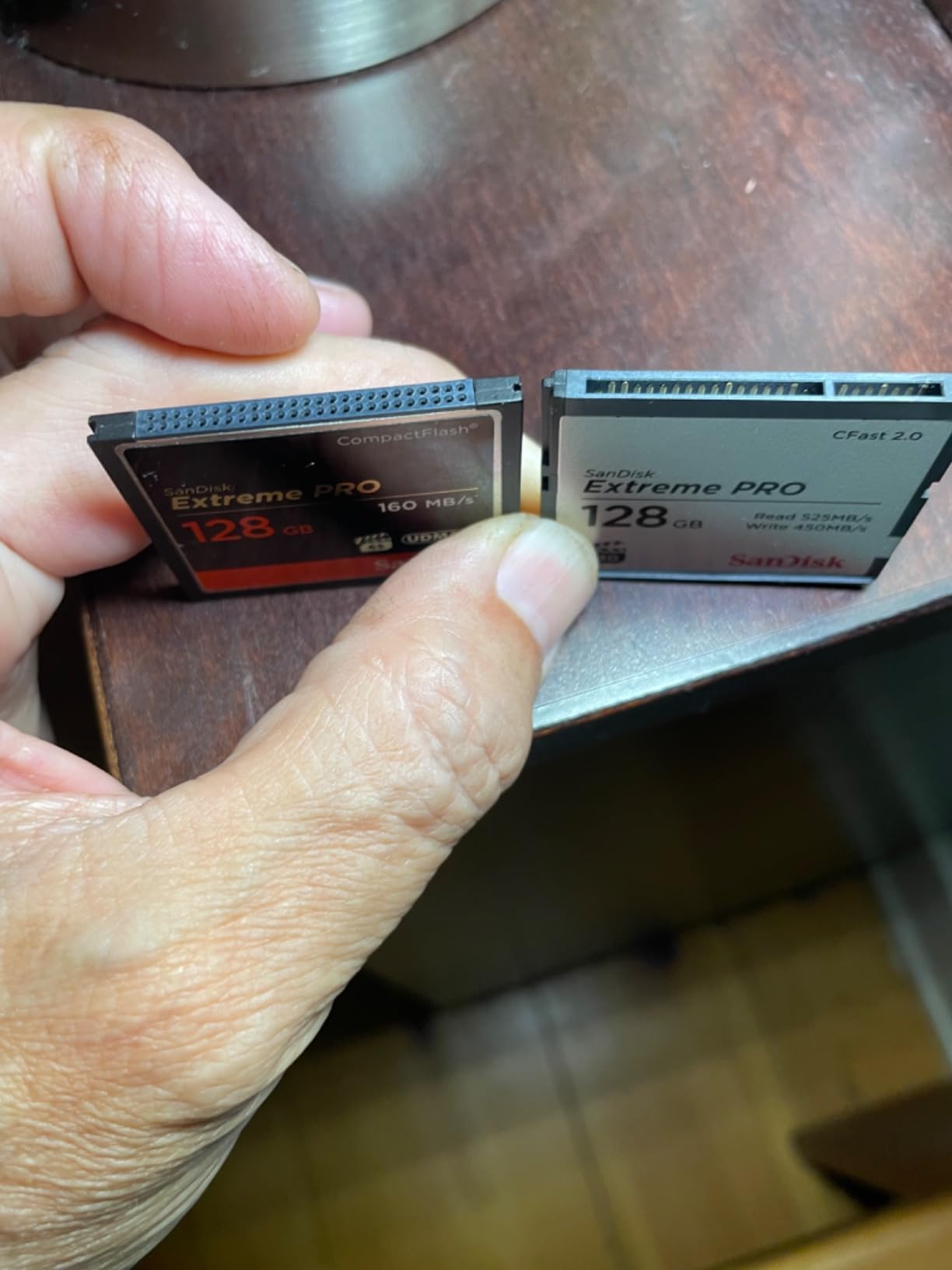
The card maintains the same 525MB/s read and 450MB/s write speeds as larger capacities. You sacrifice only storage space, not performance. This is important because some card families reduce speeds at lower capacities, but SanDisk maintains consistent performance across the entire Extreme PRO CFast 2.0 range.
Users report excellent compatibility with not just RED Komodo but also Blackmagic Pocket Cinema Camera 6K, Canon C200, and ARRI Alexa Mini. This cross-compatibility adds value if you operate multiple camera systems.
Recording Time Real-World Estimates
Based on actual RED Komodo 6K recording data, here is what 128GB provides at different quality settings:
6K 17:9 REDCODE HQ records at approximately 275MB/s, giving you about 22 minutes of footage. REDCODE MQ at 140MB/s delivers roughly 45 minutes. REDCODE LQ at 90MB/s extends recording to 70 minutes. These times assume no overhead for file system management.
For interview shoots using REDCODE MQ, a 128GB card often lasts an entire 45-minute session. Documentary shooters may want larger capacities, but controlled production environments work well with 128GB cards.
Build Quality Assessment
The Extreme PRO line uses industrial-grade components rated for extreme temperatures from -25 degrees C to 85 degrees C. This matters when shooting in desert environments or cold climates. The card is also water resistant and X-ray proof, protecting your data through airport security and weather changes.
Physical dimensions match the CFast 2.0 specification exactly, ensuring smooth insertion and ejection without the sticking issues some third-party cards exhibit. The metal housing dissipates heat effectively during extended recording sessions.
3. SanDisk 64GB Extreme PRO CFast 2.0 – Budget Entry Point
Pros
- Most affordable CFast 2.0 option
- Same read speed as larger cards
- VPG 130 certification included
- Amazon's Choice status
- Good for learning/testing
Cons
- Only 430MB/s write speed (vs 450MB/s)
- Limited 64GB capacity
- Requires frequent card swaps
- Frame drops reported after extended use
The SanDisk 64GB Extreme PRO CFast 2.0 serves as an excellent entry point for filmmakers just starting with the RED Komodo 6K. At this price point, you can acquire multiple cards to practice media management workflows without a massive investment.
Recording capacity is limited to approximately 11 minutes at 6K REDCODE HQ or 22 minutes at REDCODE MQ. This makes the card suitable for short takes, camera tests, and learning the RED ecosystem. I recommend this capacity for camera prep days and equipment testing rather than main production work.
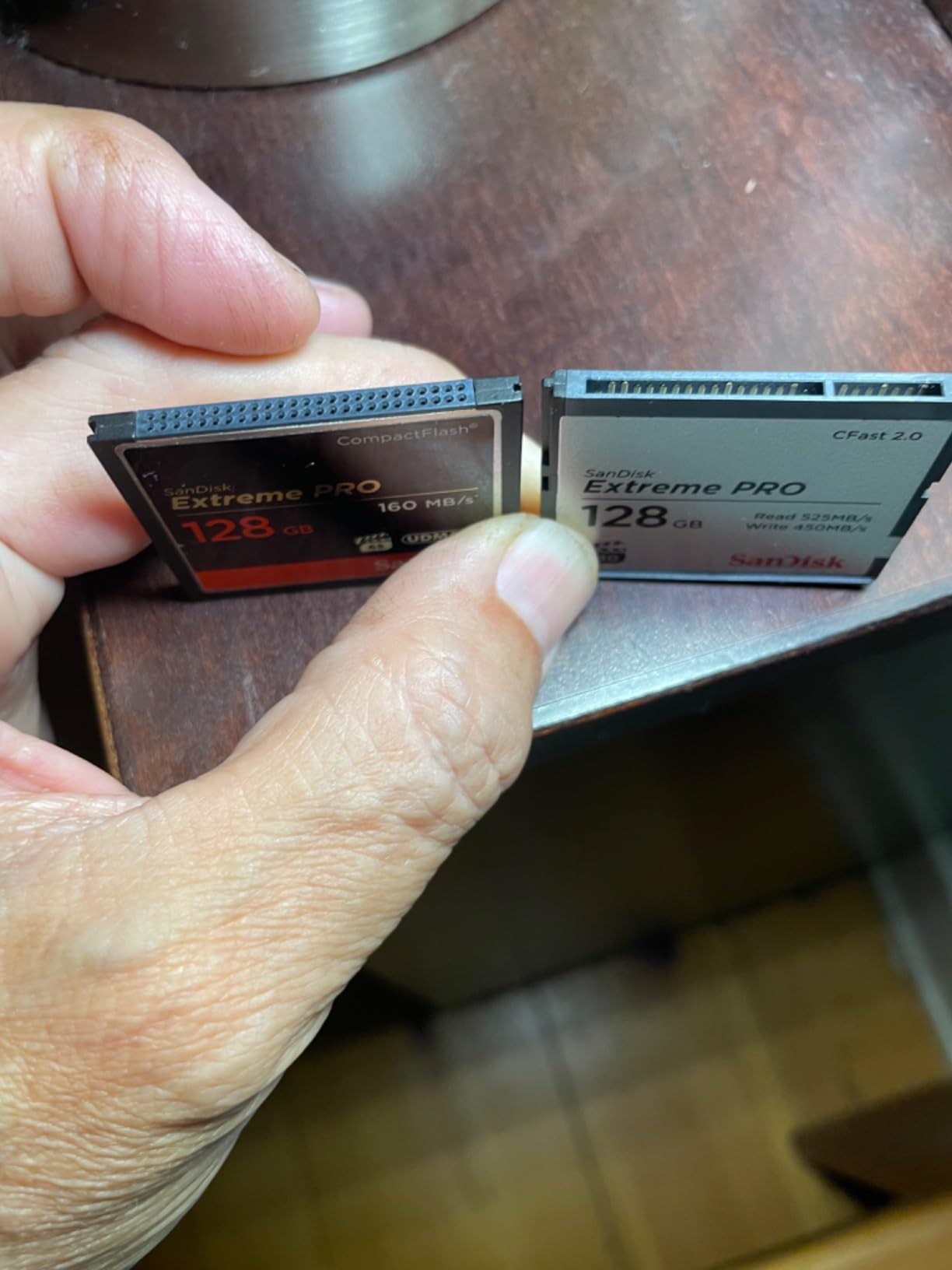
Write speeds are slightly lower at 430MB/s compared to the 128GB and 256GB variants. This is still sufficient for all Komodo 6K recording formats, but sustained performance during very long takes may vary. Some users report dropped frames after 10+ minutes of continuous recording at maximum data rates.
The card maintains the same durability ratings as larger capacities. Temperature proof, water proof, and X-ray proof construction protects your investment. Lifetime limited warranty provides peace of mind for the card’s lifespan.
When 64GB Makes Sense
Camera prep and testing days are perfect use cases for 64GB cards. When you are setting up LUTs, testing exposure, and practicing menu navigation, you do not need massive storage. The smaller capacity also forces good media management habits early in your RED workflow learning.
Backup card scenarios work well too. Keep a 64GB card as your emergency spare in case primary cards fill up or encounter issues. The small physical size and low cost make it an ideal just-in-case addition to any kit.
Limitations to Know
Extended recording sessions strain the 64GB capacity quickly. A 30-minute interview at REDCODE MQ completely fills this card. For any production work requiring takes longer than 10 minutes, larger capacities provide more workflow flexibility.
Some users on Reddit’s r/RedCamera report heat buildup during intensive use. The smaller capacity cards sometimes work harder to maintain performance, generating more heat. Monitor card temperature during summer outdoor shoots.
4. SanDisk 512GB Extreme PRO CFexpress – Maximum Capacity for Komodo-X
Pros
- Massive 512GB all-day capacity
- Lightning fast 1400MB/s write speeds
- 90 percent five-star rating from 5000+ reviews
- Includes RescuePRO recovery software
- Excellent price per GB value
Cons
- Requires CFexpress compatible reader
- Mac compatibility issues with some docks
- Higher power consumption than CFast
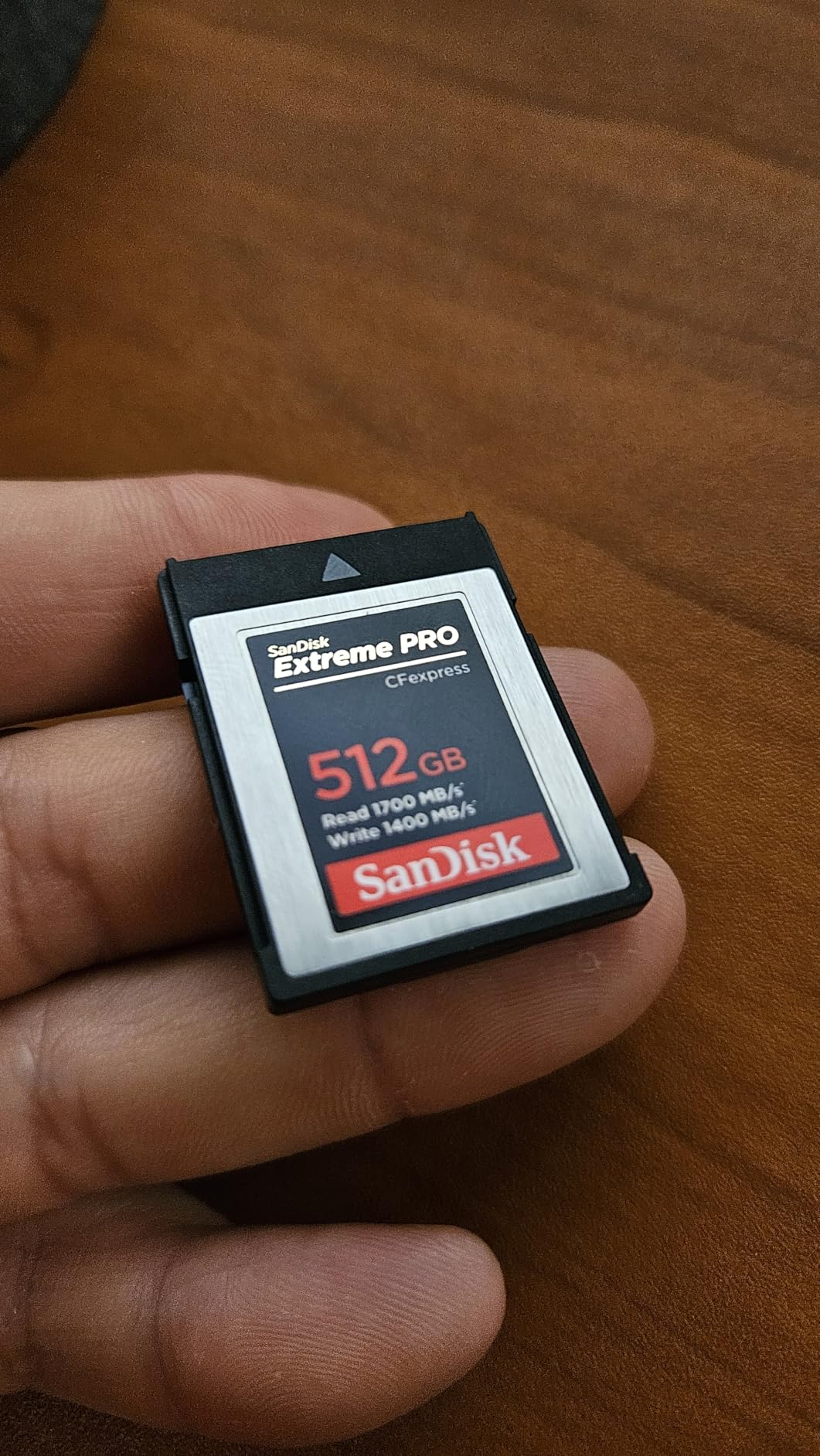
The SanDisk 512GB Extreme PRO CFexpress is the ultimate solution for RED Komodo-X owners who need maximum recording capacity. This card delivers all-day shooting capability without card changes, making it ideal for documentary, event, and run-and-gun productions.
Recording time estimates show approximately 90 minutes at 6K REDCODE HQ or 3+ hours at REDCODE MQ. For most production days, a single 512GB card covers your entire shoot. This eliminates the risk of missing shots during card swaps and simplifies media management.

The 1400MB/s write speed far exceeds the Komodo-X’s requirements, ensuring absolute reliability even at maximum data rates. This headroom prevents any possibility of dropped frames due to card bottlenecks. The 1700MB/s read speed also accelerates post-production workflows dramatically.
Over 5,000 Amazon reviewers give this card a 4.8-star average with 90 percent five-star ratings. Professional photographers and videographers consistently praise the reliability during demanding 8K and RAW workflows. Hasselblad X2D and Nikon Z9 users report particularly positive experiences.
All-Day Shooting Capability
Documentary filmmakers benefit most from 512GB capacity. When shooting unpredictable events where you cannot pause for card changes, this capacity provides security. Wedding filmmakers covering 8-hour days can work with just two 512GB cards in rotation.
Commercial productions also see value in reduced downtime. Swapping cards every hour interrupts creative flow and introduces organizational complexity. A 512GB card lets directors and DPs focus on performance rather than media management.
CFexpress Advantages
CFexpress Type B uses PCIe 3.0 interface with NVMe protocol, delivering exponential speed increases over CFast 2.0’s SATA III. The Komodo-X leverages this bandwidth for higher frame rates and larger recording formats than the original Komodo.
Backwards compatibility with select XQD cameras adds versatility. If you also shoot with Nikon D850, Z6, or Z7 series cameras, this card works across your kit. Verify firmware compatibility with your specific camera models.
5. SanDisk 256GB Extreme PRO CFexpress – Balanced Komodo-X Option
Pros
- Amazon's Choice for CFexpress
- Prime eligible fast shipping
- 4.8-star rating with 5000+ reviews
- Reliable for 4K/8K video recording
- Lifetime limited warranty
Cons
- Write speed lower than 512GB variant
- Some card reader compatibility issues
- MacOS may recognize as SSD
The SanDisk 256GB Extreme PRO CFexpress offers the perfect balance of capacity and cost for Komodo-X shooters. At 1200MB/s write speeds, it handles all Komodo-X recording formats with ease while costing significantly less than the 512GB version.
Recording capacity provides approximately 45 minutes at 6K REDCODE HQ or 90 minutes at REDCODE MQ. This matches the workflow rhythm most professionals prefer, allowing card changes aligned with natural break points in production.
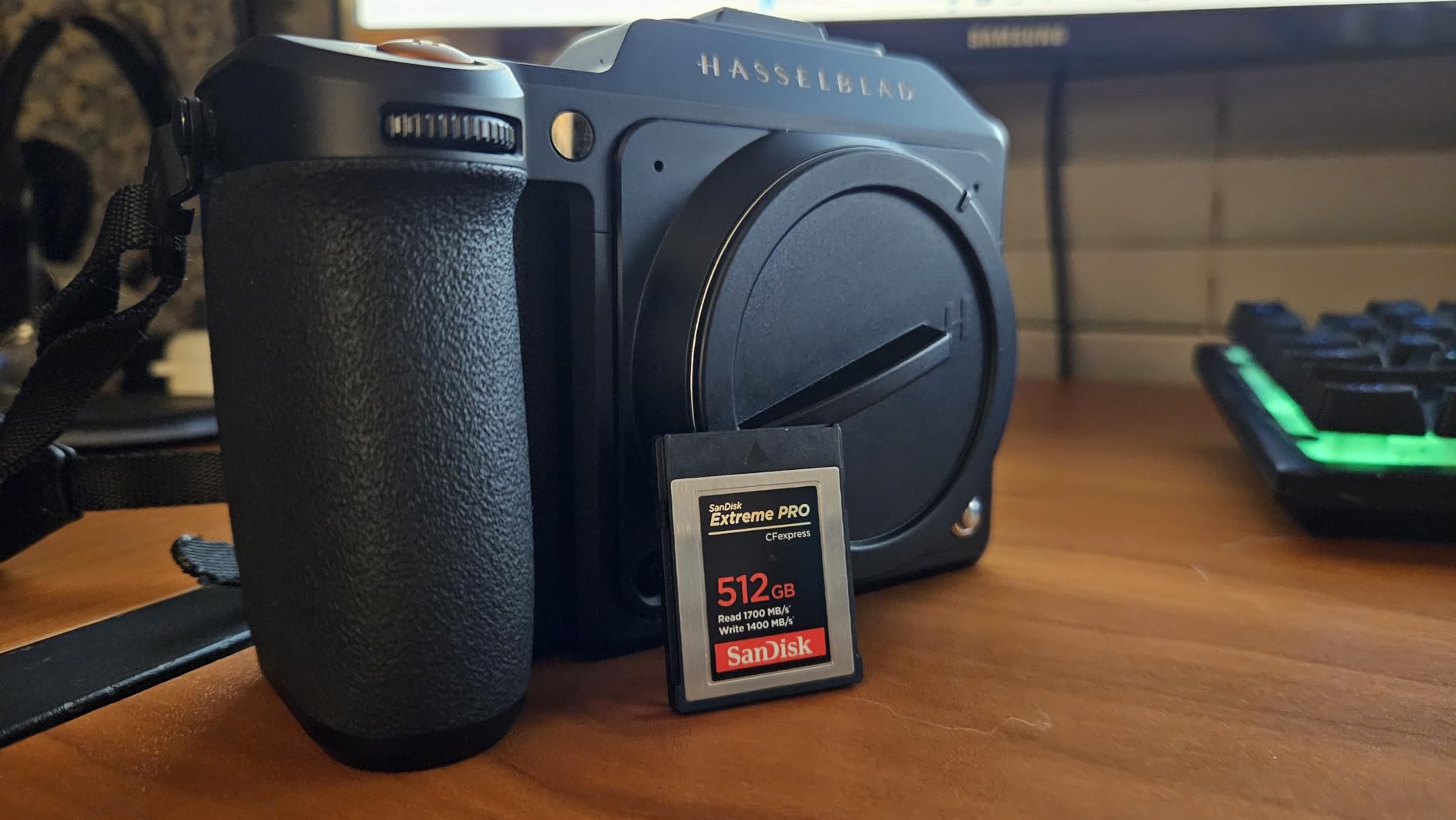
Amazon’s Choice status and Prime eligibility make this card easily accessible. When you need a replacement card quickly for an upcoming shoot, this option delivers fast. The 4.8-star rating across over 5,000 reviews confirms consistent real-world reliability.
Professional users praise this card for RAW 4K and 6K workflows. Nikon Z8 and Canon R5 shooters report flawless performance with high-speed burst photography and video recording. The card maintains consistent speeds even as it fills up, unlike some competitors that throttle performance.
Speed vs Capacity Trade-offs
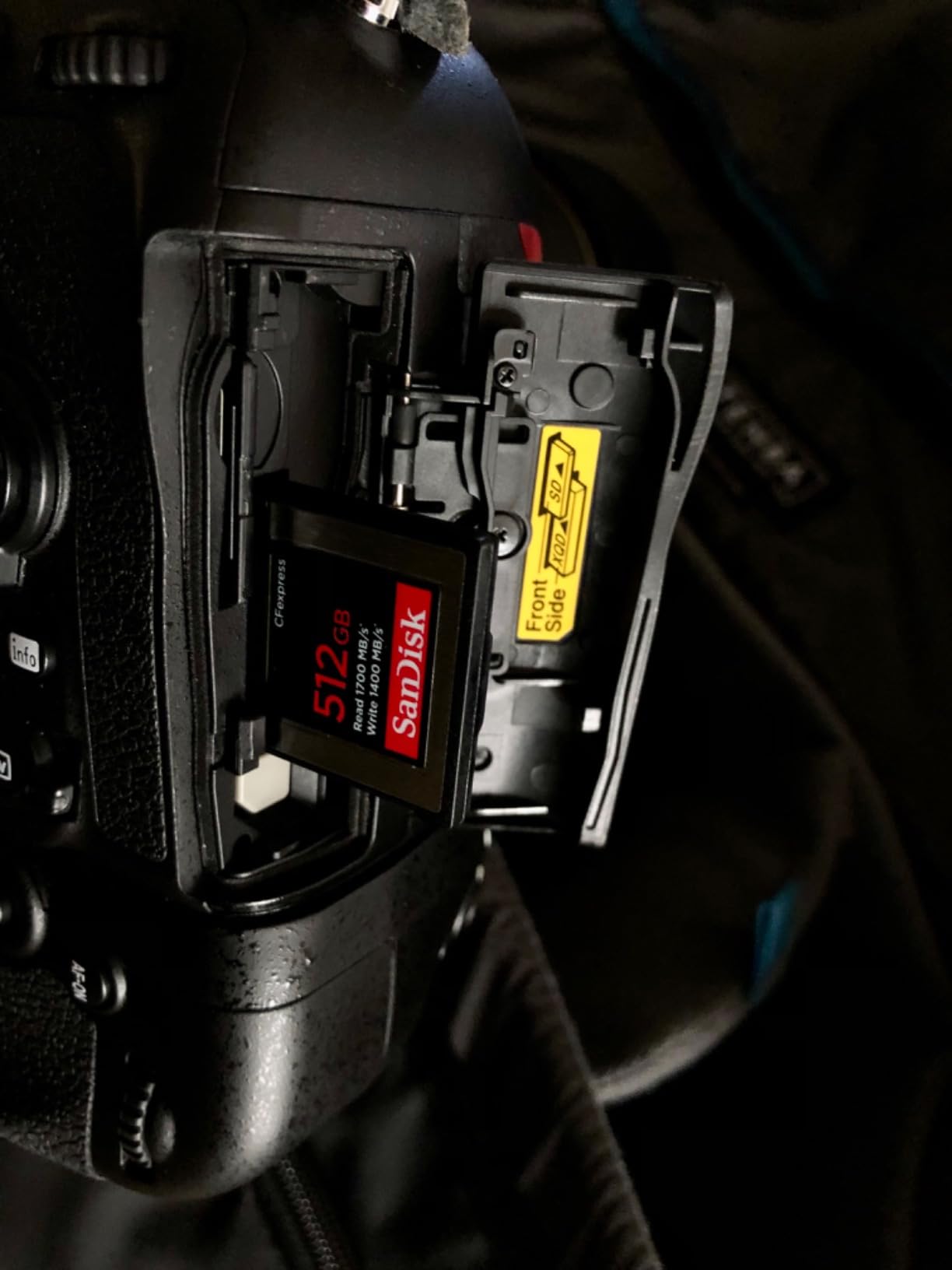
The 256GB model offers 1200MB/s write speeds compared to 1400MB/s on the 512GB version. This difference is negligible for Komodo-X recording because even the highest data rates only require about 400MB/s sustained. Both cards provide massive headroom.
Price per GB analysis favors the 256GB card for most users. Unless you specifically need all-day recording without card changes, the 256GB capacity hits the sweet spot. Build a kit with three 256GB cards rather than one 512GB card for better workflow flexibility.
Compatibility Notes
Some users report compatibility issues with third-party card readers, particularly on Mac systems. The card may be recognized as an internal SSD rather than removable media. This affects ejection procedures but not recording performance.
For best results, use a dedicated CFexpress card reader from SanDisk, Lexar, or ProGrade. These readers properly identify the card and optimize transfer speeds. Avoid cheap unbranded readers that may cause connection issues.
6. Lexar 128GB Professional CFexpress Type B – Best Value Pick
Pros
- Faster write speed than SanDisk (1300MB/s vs 1200MB/s)
- Best price per GB value available
- Professional wedding photographers love it
- 10-year warranty beats competitors
- Durable build for challenging environments
Cons
- Cards run warm during large transfers
- Lexar reader recommended for best performance
- Occasional heating during extended use
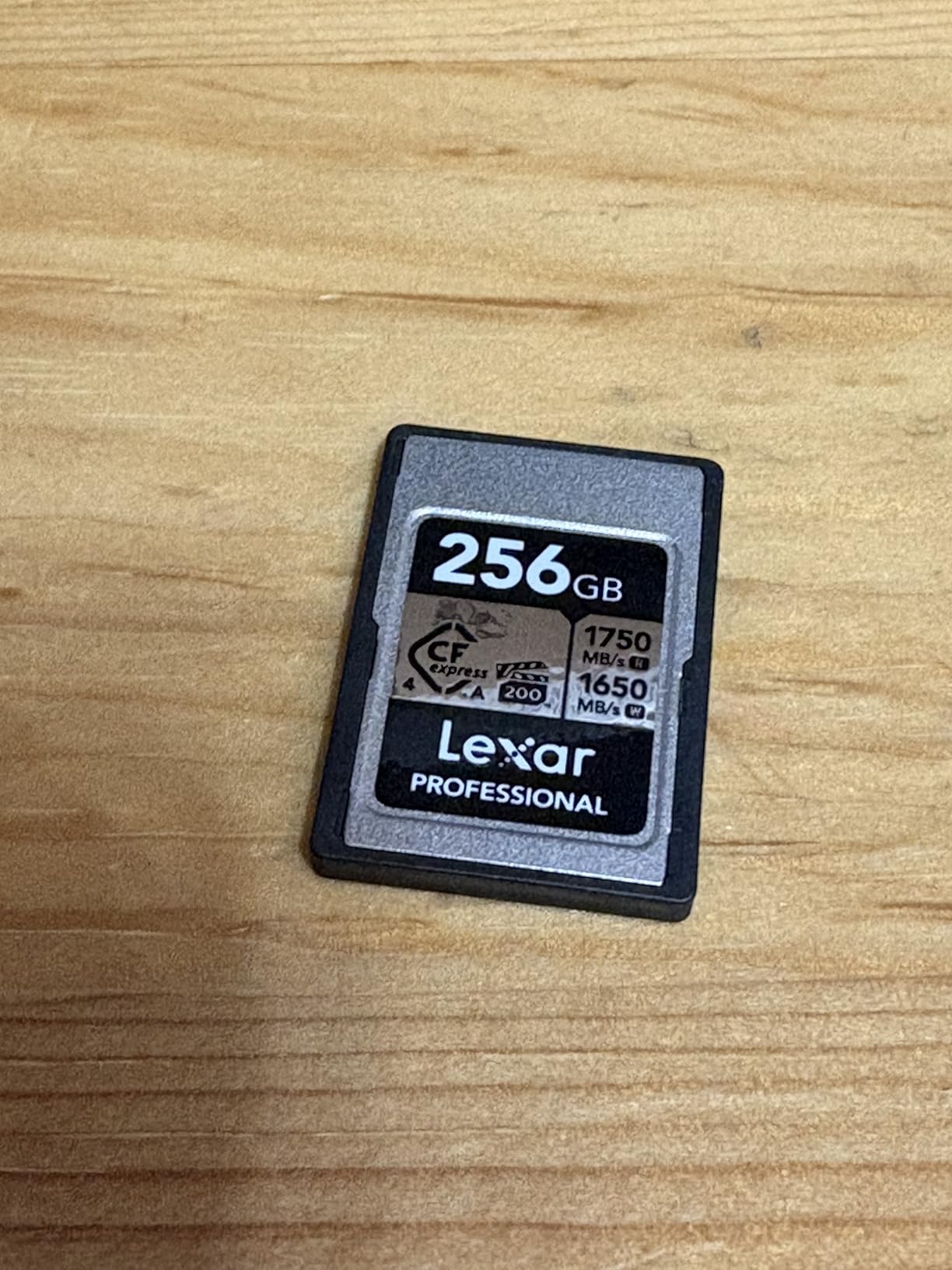
The Lexar 128GB Professional CFexpress Silver Series delivers better specs than SanDisk at a lower price point. With 1750MB/s read and 1300MB/s write speeds, it outperforms the equivalent SanDisk card while costing significantly less.
This card has become the secret weapon for budget-conscious professionals building multi-card kits. Wedding photographers particularly praise its reliability for 8-hour shooting days. One photographer reported shooting 200+ weddings over two years with zero card failures.

The 128GB capacity records approximately 22 minutes at 6K REDCODE HQ or 45 minutes at REDCODE MQ on the Komodo-X. For most production scenarios, this requires the same card management approach as other 128GB cards, but the lower cost lets you build a larger kit.
Professional users consistently report no buffering issues even with demanding 4K and 8K video. The card maintains rated speeds throughout the entire capacity, unlike some competitors that throttle performance as they fill.
Why Lexar Beats SanDisk on Speed
Lexar optimized this card for sustained write performance rather than just peak speeds. The 1300MB/s write speed beats SanDisk’s 1200MB/s on the 128GB model. For RAW video recording, sustained speeds matter more than burst performance.
The 10-year warranty demonstrates Lexar’s confidence in the card’s longevity. SanDisk offers only lifetime limited warranty with less clear terms. Lexar’s explicit 10-year coverage provides predictable protection for your investment.
Ideal Use Cases
Build-a-kit scenarios benefit most from Lexar’s pricing. A three-card kit costs less than two SanDisk cards of equivalent capacity. For productions requiring multiple cards in rotation, this cost advantage adds up quickly.
Backup card roles suit the Lexar well. Keep these as secondary cards while using larger SanDisk cards as primaries. The speed advantage ensures no performance compromise when switching to backup media.
7. SanDisk 128GB Extreme PRO CFexpress – Reliable Backup Choice
Pros
- Same performance as larger capacities
- Excellent value for secondary cards
- Works great with Nikon cameras
- Much cheaper than Sony alternatives
- Reliable performance with no failures
Cons
- Not Prime eligible (3-4 day shipping)
- Requires multiple cards for long shoots
- Some Mac card reader issues reported
The SanDisk 128GB Extreme PRO CFexpress serves as the ideal backup card for Komodo-X shooters. Same 1200MB/s write speed as the 256GB version ensures consistent performance when you need to switch cards mid-shoot.
Recording capacity matches other 128GB options at approximately 22 minutes REDCODE HQ or 45 minutes REDCODE MQ. This makes it perfect for B-camera setups, secondary angles, or backup roles where extended recording is not required.

Users praise this card as a budget-friendly CFexpress option that does not compromise performance. Hobbyist photographers who own multiple cards appreciate the value proposition. The 4.8-star rating across 5,000+ reviews confirms reliability.
Note that this specific capacity is not Prime eligible, requiring 3-4 day shipping. Plan ahead for purchases rather than relying on next-day delivery. The lower price often justifies the shipping wait.

Secondary Card Strategy
Professional workflows require backup media. This 128GB SanDisk card fits the backup role perfectly. When your primary 512GB card fills unexpectedly, swapping to this card maintains production without missing a beat.
B-camera and multi-camera setups also benefit. Outfit secondary cameras with 128GB cards while reserving larger capacities for A-camera. This cost-effective approach ensures every angle is covered without overspending on media.
Price-to-Performance Analysis
Dollar-per-GB calculations favor this card for secondary use cases. You sacrifice capacity but not speed, making it ideal for scenarios where you need performance without massive storage.
Compare this to Sony’s CFexpress cards, which cost nearly double for equivalent specs. SanDisk delivers professional performance without the brand name premium. For budget-conscious productions, this matters significantly.
8. ProGrade Digital 512GB CFexpress 4.0 – Premium Professional Grade
Pros
- Fastest read speeds available (3400MB/s)
- CFexpress 4.0 future-proofing
- Runs cool without overheating
- Optimized for 8K ProRes and RAW
- Triple protection: warranty
- serial
- recovery
Cons
- Premium pricing compared to competitors
- Write speeds 500-1000MB/s typical (not 850MB/s sustained)
- Cards may stick in camera initially
The ProGrade Digital 512GB CFexpress 4.0 Type B represents the bleeding edge of memory card technology. With 3400MB/s read speeds, it is the fastest card in this roundup and ready for next-generation camera formats beyond today’s Komodo-X capabilities.
CFexpress 4.0 uses PCIe Gen4 interface, doubling the bandwidth of CFexpress 2.0 cards. While the Komodo-X does not fully utilize this bandwidth, future firmware updates or camera upgrades may leverage the extra speed. This card provides future-proofing for your media investment.

Professional users praise the thermal management. Unlike some cards that overheat during extended use, ProGrade’s design runs consistently cool. This matters for outdoor shoots in warm climates where thermal throttling can cause issues with lesser cards.
The triple protection approach includes a 3-year warranty, laser-etched serial number for anti-counterfeiting, and Refresh Pro software for card maintenance. This professional-grade support justifies the premium pricing for working cinematographers.
Future-Proofing with CFexpress 4.0
Camera technology evolves rapidly. While today’s Komodo-X uses CFexpress 2.0 speeds, future RED cameras or firmware updates may leverage faster interfaces. A CFexpress 4.0 card ensures your media keeps pace with camera upgrades.
Post-production workflows also benefit from 3400MB/s read speeds. Offloading 512GB of footage takes under 3 minutes with proper readers. Compare that to 9+ minutes for CFast 2.0 cards. Time savings add up across large productions.
Professional Workflow Integration
ProGrade targets professional workflows with specialized software. Refresh Pro monitors card health and optimizes performance over time. Recovery Pro provides file restoration if corruption occurs. These tools matter when client deliverables depend on reliable media.
The laser-etched serial number enables registration and anti-counterfeiting verification. Fake memory cards plague the market, causing data loss. ProGrade’s verification system ensures you have genuine product.
RED Komodo Memory Card Buying Guide
CFast 2.0 vs CFexpress Type B – Which Do You Need?
The original RED Komodo 6K uses CFast 2.0 memory cards exclusively. The newer Komodo-X requires CFexpress Type B cards. These formats are physically different and not interchangeable. Check your camera model before purchasing any cards.
CFast 2.0 uses SATA III 6Gb/s interface with maximum speeds around 550MB/s. This is sufficient for Komodo 6K’s recording requirements but represents older technology. CFexpress Type B uses PCIe 3.0 or 4.0 with NVMe protocol, delivering 1700-3400MB/s speeds.
If you own the original Komodo 6K, choose from products 1-3 in this guide. Komodo-X owners should select from products 4-8. Using the wrong format will result in immediate incompatibility.
Understanding Recording Times by Resolution
Recording time depends on resolution, frame rate, and REDCODE compression ratio. Here is a practical reference for 6K 17:9 footage:
REDCODE HQ requires approximately 275MB/s. A 256GB card records about 45 minutes. REDCODE MQ at 140MB/s delivers roughly 90 minutes on the same card. REDCODE LQ at 90MB/s extends recording to over 2 hours.
Anamorphic and high frame rate recording increases data rates significantly. 6K 2.4:1 anamorphic at 48fps can exceed 400MB/s, reducing recording times proportionally. Always test your specific workflow before critical shoots.
Price Per GB Analysis
Calculating price per GB helps identify the best value options. Based on current pricing:
CFast 2.0 cards range from $1.40/GB (64GB) to $1.44/GB (256GB). The 128GB offers middle-ground value at approximately $1.72/GB. CFexpress cards show better scaling with larger capacities offering superior value.
CFexpress 128GB cards average $0.85-1.25 per GB. The 256GB capacity drops to approximately $0.98 per GB. The 512GB SanDisk Extreme PRO delivers the best value at approximately $0.74 per GB.
For Komodo-X owners, the 512GB SanDisk CFexpress offers the best price-per-GB value. Komodo 6K owners should consider the 256GB CFast 2.0 for optimal capacity and cost balance.
Incompatible Cards to Avoid
Forum discussions reveal several cards that cause issues with RED Komodo cameras. Avoid these to prevent data loss and production delays:
Angelbird AV PRO cards have numerous reports of “Media Write Speed Error” messages when reaching 80% capacity. Some users experienced catastrophic failures with both RED-branded Angelbird cards failing on the same day. Despite being marketed as “certified,” real-world reliability is questionable.
Non-certified third-party CFast cards often trigger constant format requests from the camera. While they may work initially, sustained write speeds frequently drop below REDCODE requirements during long takes, causing dropped frames.
Standard SD cards and microSD cards with adapters are completely incompatible. The Komodo cameras do not support these formats regardless of speed ratings. Only use genuine CFast 2.0 or CFexpress Type B cards.
Forum Insights – What Real Users Say
Reddit’s r/RedCamera and RedUser.net provide valuable real-world feedback beyond manufacturer specifications. Here is what actual Komodo owners report:
SanDisk Extreme PRO cards consistently receive praise for reliability. Multiple users report 200+ hours of recording without issues. The cards work reliably in extreme temperatures and challenging environments.
Exascend Archon cards appear in forum discussions as a budget-friendly alternative, though they have fewer long-term reliability reports than SanDisk. Some users report good results with these for secondary cards.
Professional cinematographers universally recommend carrying at least three cards minimum. Never rely on a single card for critical productions. Card failures can happen with any brand, so redundancy protects your work.
External hard drives for on-set offloading are essential. Copy footage to redundant storage immediately after shooting. Cards are temporary storage, not archival solutions.
Frequently Asked Questions
What SD card for RED Komodo?
The RED Komodo does not use SD cards. The original Komodo 6K requires CFast 2.0 memory cards, while the Komodo-X uses CFexpress Type B cards. SD cards are physically incompatible with both camera models and will not fit in the memory card slot.
What card is best for RED Komodo 6K?
The SanDisk 256GB Extreme PRO CFast 2.0 is the best memory card for RED Komodo 6K. It delivers sustained 450MB/s write speeds with VPG 130 certification, ensuring reliable recording of all REDCODE RAW formats without dropped frames. The 256GB capacity provides approximately 45 minutes of 6K REDCODE HQ recording.
Does it matter which memory card you use?
Yes, memory card choice significantly impacts RED Komodo performance. Incompatible cards may not be recognized, trigger format requests, or fail during recording. Cards with insufficient sustained write speeds cause dropped frames and data corruption. Always use CFast 2.0 for Komodo 6K or CFexpress Type B for Komodo-X from reputable brands like SanDisk, Lexar, or ProGrade.
Is 128GB enough for RAW recording?
128GB provides approximately 22 minutes of 6K REDCODE HQ recording or 45 minutes at REDCODE MQ quality. For short-form content, interviews, and controlled productions, 128GB is sufficient. Documentary and event shooters should consider 256GB or 512GB cards for extended recording without card changes. Professional workflows typically use multiple 128GB cards in rotation.
Why is my RED Komodo not recognizing the card?
Card recognition issues typically result from using the wrong format (SD cards are incompatible), non-certified third-party cards, or firmware mismatches. Ensure you use CFast 2.0 for Komodo 6K or CFexpress Type B for Komodo-X. Try formatting the card in-camera before first use. If problems persist, update your camera firmware to the latest version, as RED frequently adds card compatibility improvements.
Conclusion
Choosing the best memory cards for RED Komodo requires understanding your specific camera model and recording needs. The original Komodo 6K uses CFast 2.0 cards, with the SanDisk 256GB Extreme PRO offering the optimal balance of reliability and capacity. Komodo-X owners should choose CFexpress Type B cards, where the 512GB SanDisk Extreme PRO delivers exceptional value.
Invest in quality media from reputable brands. The cost difference between premium and budget cards is minimal compared to the value of your footage. Carry multiple cards, offload footage promptly, and always maintain backup copies of critical shots. Your memory cards are the foundation of your RED workflow in 2026.