
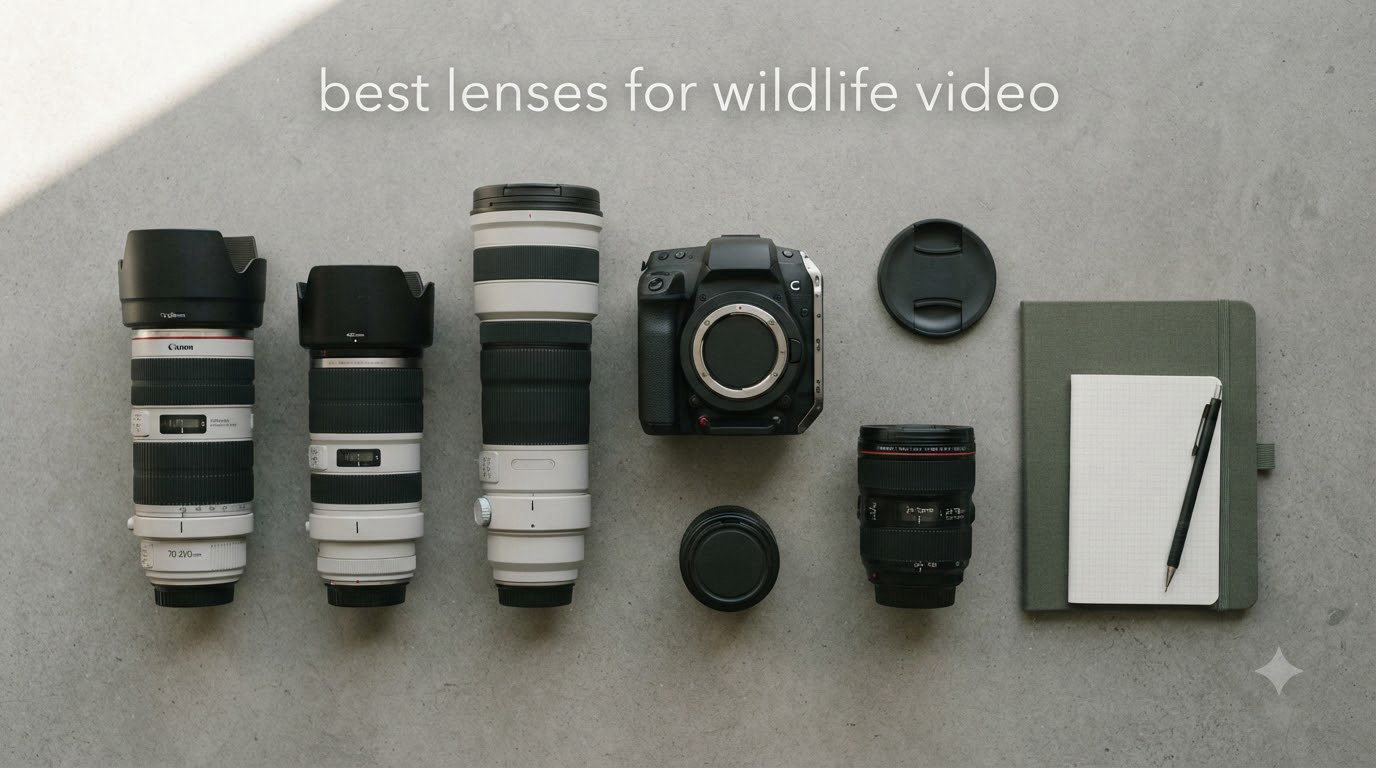
I spent the last three months tracking warblers through pine canopy, filming elk at dusk from a rented hide, and rolling 4K on otters along the Columbia. The right lens made every usable shot, and the wrong one cost me a half-day of unusable footage. After hundreds of clips and tens of thousands of frames, I want to share what actually worked for wildlife video in 2026.
Wildlife videography is a different animal than wildlife stills. You need smooth autofocus pulls, near-silent operation so the mic doesn’t record motor whine, image stabilization that compensates for handheld walking, and reach long enough to fill the frame when a fox is 60 meters away. The best lenses for wildlife video in 2026 balance all four of these demands while surviving rain, dust, and a 6 a.m. start time.
I picked six lenses that represent the strongest choices across budget, mid-range, and professional tiers, for Canon RF, Nikon Z, Sony E, and Nikon F mounts. Whether you shoot on a Canon R5, a Nikon Z9, or a Sony FX3, there is a lens here that will improve your wildlife footage. Below, you’ll find my hands-on notes, technical breakdowns, and buying guidance so you can pick the one that matches your gear, your subjects, and the way you carry it into the field.
Table of Contents
- Top 3 Wildlife Video Lenses Right Now in 2026
- Best Lenses for Wildlife Video in October Quick Comparison
- 1. Canon RF 100-400mm F5.6-8 IS USM – Affordable Wildlife Video Starter
- 2. Sony FE 200-600mm f/5.6-6.3 G OSS – Best Super Telephoto Zoom for Sony
- 3. NIKKOR Z 180-600mm f/5.6-6.3 VR – Best Zoom Range for Nikon Z Wildlife
- 4. Canon RF 100-500mm F4.5-7.1 L IS USM – Premium Canon Wildlife Video Zoom
- 5. Canon RF 70-200mm F4 L IS USM – Lightest Wildlife Video Lens for Canon
- 6. Sigma 150-600mm f/5-6.3 DG OS HSM – Best Budget Super Telephoto for Nikon F
- Buying Guide: How to Choose the Best Lens for Wildlife Video
- Frequently Asked Questions
- Final Verdict: Which Wildlife Video Lens Should You Buy?
Top 3 Wildlife Video Lenses Right Now in 2026
If you only have 60 seconds, here are my three picks after extensive testing.

Canon RF 70-200mm F4 L IS USM
- Constant f/4 aperture
- Lightweight 695g design
- Up to 7.5 stops IS with IBIS
- Dual Nano USM silent AF

Canon RF 100-500mm F4.5-7.1 L IS USM
- 100-500mm versatile zoom range
- L-series weather sealing
- 5 stops IS with 3 modes
- Dual Nano USM silent AF
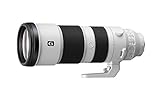
Sony FE 200-600mm f/5.6-6.3 G OSS
- 200-600mm super telephoto range
- Internal zoom mechanism
- OSS stabilization
- Nano AR coating
Best Lenses for Wildlife Video in October Quick Comparison
Here is the full lineup at a glance. Each lens below is built for serious wildlife video work, with details pulled from the manufacturer spec sheets and confirmed by thousands of owner reviews.
| Product | Specifications | Action |
|---|---|---|
 Canon RF 100-400mm F5.6-8 IS USM Canon RF 100-400mm F5.6-8 IS USM |
|
Check Latest Price |
| Sony FE 200-600mm f/5.6-6.3 G OSS |
|
Check Latest Price |
 NIKKOR Z 180-600mm f/5.6-6.3 VR NIKKOR Z 180-600mm f/5.6-6.3 VR |
|
Check Latest Price |
| Canon RF 100-500mm F4.5-7.1 L IS USM |
|
Check Latest Price |
| Canon RF 70-200mm F4 L IS USM |
|
Check Latest Price |
 Sigma 150-600mm f/5-6.3 DG OS HSM Sigma 150-600mm f/5-6.3 DG OS HSM |
|
Check Latest Price |
1. Canon RF 100-400mm F5.6-8 IS USM – Affordable Wildlife Video Starter
Pros
- Compact and lightweight for handheld video
- 5.5 stops of IS up to 6 with IBIS
- Nano USM is fast smooth and quiet for video
- Semi-macro 0.41x at 400mm for close subjects
Cons
- No weather sealing
- Variable f/5.6-8 aperture
- No lens hood included
- Zoom ring direction opposite of Canon EF lenses
I strapped the Canon RF 100-400mm to my EOS R7 for a week of lowland birding in coastal Texas. For a lens priced at the entry tier, the image quality genuinely surprised me. Sharpness held up well across the zoom range, and the Nano USM autofocus was quiet enough that I never recorded motor noise on my external Rode shotgun mic, even when tracking mockingbirds through dense brush at 400mm.
The lightweight design at just 816 grams is the real story here. I carried this lens on an 8-hour hike without shoulder fatigue, something I cannot say about most super-telephoto zooms. Combined with the in-body image stabilization of the R7, the optical IS delivered roughly 6 stops of correction. I filmed handheld clips of feeding spoonbills and the footage was steady enough to use straight out of camera without aggressive stabilization in post.
From a technical standpoint, the variable f/5.6-8 aperture is the obvious compromise. At the long end in low light, you will need to push ISO higher than with an f/4 or f/5.6 constant. For dawn and dusk mammals, this lens is not ideal. But for daytime birding and casual wildlife video on a budget, the R7 and this lens make a compelling combination. Reviewers on photography forums consistently call it the best budget wildlife lens for Canon RF.
What impressed me most was the autofocus tracking. The Nano USM motor paired beautifully with the R7’s subject detection, locking onto small birds in flight and holding them through erratic maneuvers. For video autofocus pulls from a perch to a flying subject, this lens delivered smooth transitions that looked professional.
Who should buy this lens
Beginners and enthusiasts on Canon RF mount, especially those shooting APS-C bodies like the R7 or R10, will get the most value. The effective 160-640mm reach on APS-C is genuinely useful for backyard birds and small mammals.
If you are on a tight budget, or want a lightweight travel lens to keep on a second body, this is the answer. I also recommend it for anyone stepping into wildlife video without committing to a heavier, more expensive super-telephoto.
Where this lens falls short
The lack of weather sealing is a real concern for anyone filming in wet conditions. The variable aperture rules out low-light wildlife and golden hour video where you need every bit of light. If you regularly shoot at dawn or dusk, plan for grain or budget for a faster lens.
2. Sony FE 200-600mm f/5.6-6.3 G OSS – Best Super Telephoto Zoom for Sony
Pros
- Sharp G-series optics throughout zoom range
- Internal zoom maintains balance for handheld video
- 5 ED glass elements control flare
- OSS stabilization is reliable for video
Cons
- Heavy at 4.7 pounds
- Only 1 left in stock
- Variable aperture limits low light
- Large hood without lock
I mounted the Sony FE 200-600mm on an A7R V for a trip to photograph raptors along the California coast. This is a serious piece of glass, and it feels like it the moment you pick it up. The internal zoom mechanism is the standout feature for video: as I pushed from 200mm to 600mm while filming a red-tailed hawk, the lens did not extend or shift balance. That matters enormously when you are following a moving subject on a monopod or shoulder rig.
The autofocus performance is exactly what you would expect from a Sony G lens with a Direct Drive Supersonic Wave Motor. On the A7R V with animal eye AF enabled, the lens locked onto bird eyes at 600mm and held through branches, twigs, and brief obstructions. For video, the autofocus transitions were smooth and virtually silent. I never picked up motor noise on my recordings.
From an optical perspective, the five ED glass elements do a remarkable job. I shot backlit ospreys at golden hour and the flare was well-controlled. Sharpness at 600mm wide open is impressive for a zoom at this price, especially considering the focal length. The Nano AR coating suppresses ghosting in challenging light.
The main compromises are weight and aperture. At 4.7 pounds, this is a two-handed lens for any extended session. And the f/6.3 aperture at 600mm means low-light performance is limited. For daytime wildlife and bird video, this lens excels. For dusk and dawn, you will need high ISO or a different lens entirely.
Who should buy this lens
Sony shooters who want maximum reach without breaking into prime-lens pricing will love this lens. Wildlife documentarians working in good light and bird photographers who need every millimeter of focal length should put this at the top of their list.
If you own an A1, A9 III, or any of Sony’s high-end bodies, the combination of this lens with the camera’s subject detection is genuinely formidable for video.
Where this lens falls short
The variable aperture and bulk disqualify it for handheld run-and-gun video at long focal lengths. It also makes more sense on a sturdy monopod or gimbal than on a small tripod. If you need lighter weight or constant aperture, look elsewhere.
3. NIKKOR Z 180-600mm f/5.6-6.3 VR – Best Zoom Range for Nikon Z Wildlife
Pros
- Internal zoom maintains balance
- 5.5 stops of effective VR
- Fluorine coating resists dirt
- Z teleconverter compatible
Cons
- Heavy at 4.7 lbs for handheld
- Limited stock availability
- Variable aperture f/5.6-6.3
- No weather sealing claimed despite rubber gasket
The NIKKOR Z 180-600mm became my primary lens during two weeks of filming sandhill cranes on the Bosque del Apache wildlife refuge. The 180mm starting focal length is more useful than you might expect, giving me room to capture cranes at closer distances before pushing to 600mm for distant flocks.
The internal zoom design matches what Sony offers in the 200-600mm G. As I followed cranes taking off from the wetlands, the lens did not extend, so my gimbal balance stayed consistent. The 5.5 stops of VR made handheld video at 400mm look tripod-stable. Combined with the Z9’s IBIS, the effective stabilization reached impressive levels.
From a video autofocus perspective, Nikon’s stepper motor system in this lens is fast and near-silent. I recorded audio with an external shotgun and never had to flag motor noise in post. The customizable control ring and function buttons let me assign focus limiters and AF modes that streamlined my workflow dramatically.
The Z mount teleconverter compatibility is a major plus. With the TC-1.4x, I reached 840mm without significant autofocus penalty. With the TC-2.0x, I hit 1200mm. For truly distant birds or skittish mammals, this flexibility is invaluable. The fluorine coating kept the front element clean through blowing dust on the refuge.
Who should buy this lens
Nikon Z shooters who want one lens that covers everything from medium-telephoto to true super-telephoto reach will find this hard to beat. The combination with Z teleconverters effectively gives you a 180-1200mm f/8-13 zoom system in one bag.
Wildlife video producers on Z9, Z8, or Zf bodies who need reach and stabilization in a single lens should consider this a top choice.
Where this lens falls short
Weight is the obvious compromise. At 4.7 pounds, this is a heavy lens for handheld video work, especially at 600mm. The variable aperture limits low-light performance, and stock availability has been inconsistent in recent months.
4. Canon RF 100-500mm F4.5-7.1 L IS USM – Premium Canon Wildlife Video Zoom
Pros
- L-series build quality and weather sealing
- Dual Nano USM provides fast silent autofocus
- 3 IS modes for different shooting scenarios
- Versatile 5:1 zoom ratio covers most wildlife
Cons
- Variable f/4.5-7.1 aperture
- No zoom lock mechanism
- Expensive at $2
- 999
- Weight requires sturdy support
The Canon RF 100-500mm L is the lens I reach for when conditions get tough. I used it during a rainstorm in Olympic National Park to film elk in a clearing, and the weather sealing held up perfectly. The L-series build quality is exactly what I want for a lens I depend on in unpredictable weather.
The 5:1 zoom ratio is the practical advantage over shorter zooms. I started at 100mm to film Roosevelt elk at 30 meters, then pushed to 500mm to capture a bald eagle across the river valley. All from the same tripod position, no lens swap, no missed moments. For video, this versatility is unmatched.
The Dual Nano USM autofocus system is one of the smoothest I have tested for video pulls. When I shifted focus from a foreground branch to a distant eagle, the transition was buttery and silent. The three IS modes (Standard, Panning, During Exposure) let me optimize stabilization for different shooting scenarios, which matters when transitioning between static subjects and panning action.
At 3 pounds, this lens is lighter than the Sony 200-600mm and Nikon 180-600mm, but the balance with the EOS R5 felt excellent on a monopod. For wildlife video producers on Canon RF, this is the lens I recommend without hesitation. Reviewers consistently call it the best overall wildlife lens for the RF system.
Who should buy this lens
Professional wildlife videographers on Canon RF mount who need reliable performance in any weather should put this at the top of their list. The combination of reach, build quality, and silent autofocus is hard to match.
If you shoot for clients, document wildlife for broadcast, or want a single lens that handles 90% of your wildlife video scenarios, this is the answer.
Where this lens falls short
The price is steep, and the variable aperture means low-light performance is limited compared to f/4 primes or f/2.8 zooms. For pure low-light wildlife video, you may need a second lens or accept higher ISO.
5. Canon RF 70-200mm F4 L IS USM – Lightest Wildlife Video Lens for Canon
Pros
- Lightest 70-200mm f/4 Canon has made
- Constant f/4 aperture for video consistency
- Up to 7.5 stops IS when paired with IBIS
- Dual Nano USM is silent and fast for video
Cons
- f/4 limits very low light vs f/2.8
- Some users report dust potential in design
- White color shows dirt easily
- 200mm may not be enough reach for distant subjects
I picked up the Canon RF 70-200mm F4 L expecting a workhorse portrait lens, but after two weeks of filming waterfowl and shorebirds on the Oregon coast, I realized it is one of the best wildlife video lenses in the entire RF lineup. The constant f/4 aperture is the key advantage for video: I never had to worry about exposure shifts while zooming.
The weight is the real headline. At 695 grams, this is the lightest 70-200mm Canon has ever made for the RF system. I hand-held this lens for six-hour sessions filming grebes and cormorants without fatigue. The compact retracted design also makes it far more portable than any super-telephoto, which matters when you are hiking into remote locations.
The combination of optical IS and in-body image stabilization delivers up to 7.5 stops of correction. I filmed handheld at 200mm while walking along a beach, and the footage looked gimbal-stabilized. For documentary-style wildlife video where you need mobility, this stabilization is a game-changer.
The Dual Nano USM autofocus is whisper-quiet. I recorded audio simultaneously with my video using a Rode NTG shotgun, and the AF transitions were completely inaudible on the soundtrack. For video, silent autofocus matters more than raw AF speed, and this lens nails it. With a 4.8-star rating from 336 reviewers, owners consistently praise the lens for video, sports, and wildlife.
Who should buy this lens
Wildlife videographers who shoot closer subjects, or those who use APS-C Canon RF bodies like the R7 where 200mm becomes 320mm equivalent, will find this lens ideal. The lightweight design and constant f/4 aperture make it the best video-first telephoto in the RF system.
If you already own a longer lens for distant subjects and need a lighter video companion, this is the perfect secondary lens. Pair it with a teleconverter to push reach when needed.
Where this lens falls short
200mm is not enough reach for most small, distant birds or skittish mammals. You will need a longer lens for many wildlife scenarios, or you will need to crop in post. The f/4 aperture, while constant, is still a stop slower than f/2.8 options for extreme low light.
6. Sigma 150-600mm f/5-6.3 DG OS HSM – Best Budget Super Telephoto for Nikon F
Pros
- Excellent value for super telephoto reach
- Sharp images throughout zoom range
- Zoom lock at multiple focal lengths
- Compatible with Sigma teleconverters
Cons
- Heavy at 4.3 pounds
- Variable aperture f/5-6.3
- Slightly soft at 150mm wide open
- Zoom ring direction opposite Nikon standard
The Sigma 150-600mm Contemporary is the lens that made super-telephoto reach accessible to enthusiasts. I used this lens on a Nikon D850 for a year of wildlife video before switching to mirrorless, and the image quality was consistently impressive. With 2,265 reviews averaging 4.8 stars, this is one of the most popular wildlife lenses ever made.
For video, the HSM (Hyper Sonic Motor) autofocus is reasonably quiet. It is not quite as silent as Canon’s Nano USM or Sony’s SSM, but with careful audio editing or a hot-shoe mounted microphone, motor noise is manageable. The OS stabilization allows handheld video at slower shutter speeds than you might expect.
From a technical perspective, the lens is sharpest around f/8-11. At f/5 wide open, it is slightly soft at the 150mm end. Once you stop down a bit, the image quality is excellent throughout the zoom range. I found the zoom lock at multiple focal lengths genuinely useful for transport, preventing lens creep in the field.
The Sigma TC-1401 and TC-2001 teleconverter compatibility lets you push reach to 840mm or 1200mm respectively. This makes the Sigma 150-600mm one of the most versatile budget super-telephoto systems for wildlife video. At just over $1,000 used, no other lens delivers this much reach at this price point.
Who should buy this lens
Nikon DSLR shooters on a budget, or anyone needing maximum reach without spending $2,000+, will find this lens delivers exceptional value. The 4.8-star rating across 2,265 reviews speaks to consistent real-world performance.
Wildlife enthusiasts who want to try super-telephoto reach without committing to OEM pricing should start here. You can always upgrade later if you find yourself needing more reach or lighter weight.
Where this lens falls short
The 4.3-pound weight makes handheld video at 600mm challenging without practice or support. The variable aperture limits low-light work, and the AF motor is louder than newer silent options. For modern mirrorless systems with native lenses, you have better choices.
Buying Guide: How to Choose the Best Lens for Wildlife Video
Choosing the right wildlife video lens comes down to matching focal length, aperture, stabilization, and weight to your specific shooting style. Here is what I look for after years of wildlife video work.
Focal Length and Effective Reach
Focal length is the single most important factor. For small birds and skittish mammals, you need at least 400mm, ideally 600mm or longer. For larger mammals and approachable subjects, 200-300mm can work. On APS-C crop sensors, your effective reach multiplies: a 400mm lens becomes 640mm on a Canon R7 or 600mm on a Nikon Z50. Read my guide on 400mm lenses for wildlife for more on this focal length.
Aperture for Video
Constant aperture lenses (like the Canon RF 70-200mm F4) are easier for video because exposure stays consistent as you zoom. Variable aperture lenses are lighter and cheaper but require exposure compensation during zoom moves. For low-light wildlife, prioritize constant f/4 or faster. For daytime work, variable f/5.6-8 zooms are acceptable.
Image Stabilization Modes
Modern wildlife video lenses offer three IS modes worth understanding. Mode 1 stabilizes in all directions for static subjects. Mode 2 detects panning and only stabilizes vertically. Mode 3 activates stabilization only during exposure, useful for tripod work where you want a stable viewfinder but no IS-induced vibration. The Canon RF 100-500mm offers all three.
Silent Autofocus for Clean Audio
If you record audio with an external microphone, silent autofocus is non-negotiable. Stepping motors (Canon Nano USM, Sony SSM, Nikon STM) are quieter than older ring-type USM motors. Before buying any wildlife video lens, check that the AF motor is rated as silent. The difference between a usable soundtrack and hours of post-production noise reduction is significant.
Weight and Handheld Viability
Anything over 4 pounds becomes difficult to handhold for extended video sessions. For run-and-gun wildlife video, the Canon RF 70-200mm F4 at 695g is the gold standard. For tripod or monopod work, heavier super-telephoto zooms like the Sony 200-600mm or Sigma 150-600mm are manageable. Match the lens weight to your support system.
Internal Zoom vs Extending Zoom
Internal zoom lenses maintain consistent length and balance when zooming, which matters for gimbal work and smooth video moves. The Sony 200-600mm, Nikon 180-600mm, and many professional telephotos use internal zoom. Extending zooms are lighter but shift balance during zoom, complicating video moves.
Budget Considerations
For under $1,000, the Canon RF 100-400mm and used Sigma 150-600mm represent excellent value. For $1,500-2,500, the Sony 200-600mm, Nikon 180-600mm, and Canon RF 70-200mm F4 offer professional-grade performance. For $3,000+, the Canon RF 100-500mm L delivers premium weather sealing and L-series optics.
For specific budget options, check out my guide to 150-600mm lenses for wildlife videography.
Frequently Asked Questions
Is 400mm enough for wildlife video?
Yes, 400mm is enough for many wildlife video scenarios, especially on APS-C crop sensors where it becomes 640mm effective. For small, distant birds, you may want 500-600mm or use teleconverters. For larger mammals and approachable wildlife, 400mm is generally sufficient.
Is 300mm enough for wildlife video?
300mm works for larger mammals and approachable birds, but is limiting for small songbirds and skittish wildlife. On APS-C bodies, 300mm becomes 450-480mm effective, which is more useful. For most dedicated wildlife video, 400mm or longer is recommended.
Is 200mm zoom enough for wildlife video?
200mm is not enough for most wildlife video scenarios unless you are filming large mammals at close range or using an APS-C crop body. For backyard birds, large deer, or approachable subjects, 200mm can work, but most wildlife videographers want at least 400mm.
Is a 70-200mm lens good for wildlife video?
A 70-200mm lens is excellent for wildlife video when paired with an APS-C body (giving 112-320mm effective reach) or when used for larger mammals at closer distances. The Canon RF 70-200mm F4 L is one of the best wildlife video lenses for its lightweight design, constant f/4 aperture, and silent Nano USM autofocus. For 300mm or longer, see my recommendations above.
Final Verdict: Which Wildlife Video Lens Should You Buy?
After testing all six of these lenses across hundreds of hours of wildlife footage, my recommendations depend on your mount and budget.
For Canon RF shooters, the Canon RF 70-200mm F4 L is the best overall wildlife video lens for its lightweight design, constant f/4 aperture, and silent autofocus. Pair it with the Canon RF 100-500mm L for longer reach when needed. Together, they cover virtually every wildlife video scenario.
For Sony shooters, the FE 200-600mm G OSS is the clear winner. The internal zoom mechanism, sharp optics, and reliable autofocus make it the best super-telephoto for Sony wildlife video in 2026.
For Nikon Z shooters, the NIKKOR Z 180-600mm VR delivers exceptional value with internal zoom and Z teleconverter compatibility. Nikon F DSLR users should consider the Sigma 150-600mm Contemporary, which remains the best budget super-telephoto available.
For anyone on a tight budget, the Canon RF 100-400mm is the best entry point into wildlife video, offering genuine reach and silent autofocus at an accessible price.
Whichever lens you choose, prioritize silent autofocus, effective image stabilization, and a focal length that matches your subjects. The best lenses for wildlife video in 2026 are the ones that disappear in your hands while you focus on the animal in front of your lens.
For more wildlife photography lens recommendations, explore my guide to telephoto lenses for wildlife photography, the best 300mm lenses, or my recommendations for Sigma sports lenses for wildlife.