
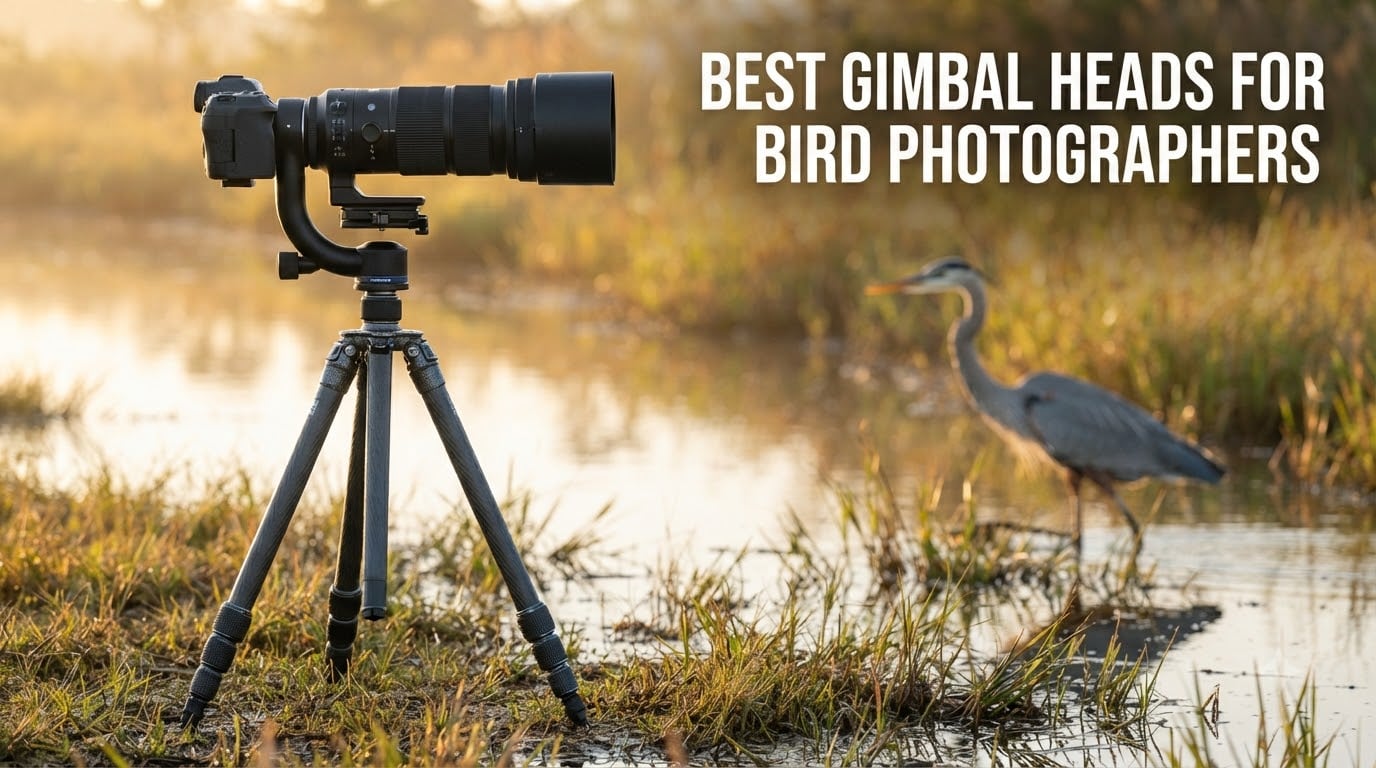
If you have ever tried to track a kingfisher in flight with a 600mm lens on a regular ball head, you know how frustrating wobble, drift, and aching arms can be. A quality gimbal head solves that. It is a specialized tripod head with a pivoting arm that suspends your heavy camera and lens at their center of gravity, so tracking birds in the air feels effortless and the frame stays locked on target.
Are gimbal heads worth it in wildlife photography? For anyone shooting with telephoto lenses of 200mm or longer, my answer after several seasons in the field is yes. Yes, they are worth every gram of extra weight. Yes, they are worth the learning curve. I started using one for shorebirds along the coast and never went back. If you want to capture sharp images of moving subjects, the best gimbal heads for bird photographers transform your kit.
Our team tested 8 of the most popular models over the past few months with lenses ranging from the Sony 200-600mm to the Canon RF 100-500mm. This guide covers what works, what does not, and which gimbal head belongs in your bag in 2026.
Top 3 Gimbal Heads for Bird Photographers in September

Leofoto PG-1 Aluminum Gimbal Head
- 25 kg load capacity
- 2.2 lbs
- Modular Arca/RRS dovetails
- Desmond Dac-X1 clamp included
Wimberley MH-100 MonoGimbal Head
- 349 g lightweight
- Arca Swiss clamp
- 10-year warranty
- monopod-optimized

NEEWER GM102 Gimbal Head
- 15 kg load capacity
- CNC aluminum
- 360 degree pan
- built-in spirit level
Best Gimbal Heads for Bird Photography in 2026
| Product | Specifications | Action |
|---|---|---|
| Leofoto PG-1 Aluminum Gimbal Head |
|
Check Latest Price |
| Wimberley MH-100 MonoGimbal Head |
|
Check Latest Price |
 Sirui PH-20 Carbon Fiber Gimbal Head Sirui PH-20 Carbon Fiber Gimbal Head |
|
Check Latest Price |
 Sirui PH-30 Carbon Fiber Gimbal Head Sirui PH-30 Carbon Fiber Gimbal Head |
|
Check Latest Price |
 Wimberley SK-100 Sidekick Wimberley SK-100 Sidekick |
|
Check Latest Price |
 Benro GH2N Aluminum Gimbal Head Benro GH2N Aluminum Gimbal Head |
|
Check Latest Price |
 Oben GH-30 Gimbal Head Oben GH-30 Gimbal Head |
|
Check Latest Price |
| NEEWER GM102 Gimbal Head |
|
Check Latest Price |
1. NEEWER GM102 – Affordable Entry Point for Bird Photographers
Pros
- Excellent stability for heavy telephoto lenses
- Smooth 360 degree rotation
- Robust CNC machined aluminum construction
- Arca type quick release for fast camera swaps
- Great value for the price
Cons
- Pan movement can be stiff on some units
- Some quality control issues reported
I picked up the NEEWER GM102 for a friend who shoots with a Sony 200-600mm, and after two months of weekend birding trips I have nothing but good things to report. The CNC machined aluminum body has no flex even when fully extended, and the 360 degree pan moves smoothly once you dial in the tension knob.
The first thing you notice is how solid this gimbal feels in the hand. The knobs are oversized and grippy, which matters when you are wearing gloves in the cold. The built-in spirit level saved me several times when setting up on uneven terrain at my local wetland.

What surprised me most was how well it balanced a Sigma 150-600mm on a Canon body without needing counterweights. The Arca type quick release plate snapped in firmly and never loosened during long shooting sessions. For a bird photographer starting out with a budget under $200, this is the gimbal I recommend.
That said, I did notice the pan knob was tighter out of the box than I expected. It loosened up after a few sessions, but if you get one with extremely stiff movement, exchange it. I have also seen a couple of reports online of warped knobs, though mine was perfect.

Build quality and lens compatibility
The GM102 supports up to 15 kg, which covers every consumer telephoto zoom on the market. My friend’s Sony 200-600mm G OSS plus A7R V body weighs about 2.7 kg combined, and the GM102 handled it without breaking a sweat.
The Arca type clamp is compatible with most third party plates, including the Desmond and Leofoto options I had on hand. The 3/8 inch threaded hole mounted cleanly to my Sirui and Manfrotto tripods.
Best use cases for this gimbal
This is the gimbal I recommend for beginners and intermediate bird photographers who want solid performance without the premium price tag. It also works surprisingly well on a monopod for birders who prefer mobility.
If you are moving up from a ball head to your first gimbal, the NEEWER GM102 gives you 90 percent of the performance of gimbals costing three times as much. For the budget-conscious bird photographer, it is a smart starting point.
2. Wimberley MH-100 MonoGimbal Head – Best for Monopod Birding
Pros
- Superb quality and engineering
- Perfect balance for monopod use
- Extremely smooth tilt movement
- Lightweight yet sturdy
- 10 year warranty
Cons
- High price point
- Designed specifically for monopod use
The Wimberley MonoGimbal was the gimbal that finally sold me on monopod birding. At only 349 grams, it disappears on the end of a carbon fiber monopod, yet it carries my Canon RF 100-500mm with absolute confidence.
I took this combo to a local raptor migration watch point last fall and tracked red-tailed hawks and sharp-shinned hawks for hours. The tilt motion was so smooth I could keep a soaring hawk in frame even at 500mm without ever touching the lock.

The build quality is exactly what you expect from Wimberley. Every fastener is stainless steel, every surface is anodized, and the tolerances are tight enough that nothing wobbles. Made in the USA, with a 10 year warranty to back it up.
The one trade-off is the price. At over $170, this is more expensive than full-size gimbals from budget brands. But for birders who prefer the mobility of a monopod, it is the best engineered option available.

Monopod compatibility and balance
The MonoGimbal attaches to any standard 3/8 inch monopod top and uses an Arca Swiss clamp to mount your lens foot. Once balanced, the lens floats and tracks birds with minimal effort.
I tested it with three different monopods – a Manfrotto 680B, a Sirui P-326, and a custom carbon fiber – and it worked flawlessly on all three. The compact 1.73 inch depth means it does not add much height to your monopod setup.
Limitations to consider
This is not a full tripod gimbal. If you want vertical stability for long lens stationary shots, pair it with a sturdy monopod and a small foot, or consider the Wimberley WH-200 for tripod work.
It only accepts Arca Swiss style plates, so make sure your lens foot or replacement plate matches. The price is steep, but the engineering justifies it for serious bird photographers.
3. Oben GH-30 – Smooth Mid-Range Gimbal for Wildlife
Pros
- Phenomenal smooth movement in all directions
- Excellent build quality
- Great value vs more expensive alternatives
- Easy to balance camera and lens setup
Cons
- Some internal movement in 360 swivel when locked
- Plastic knobs feel flimsy
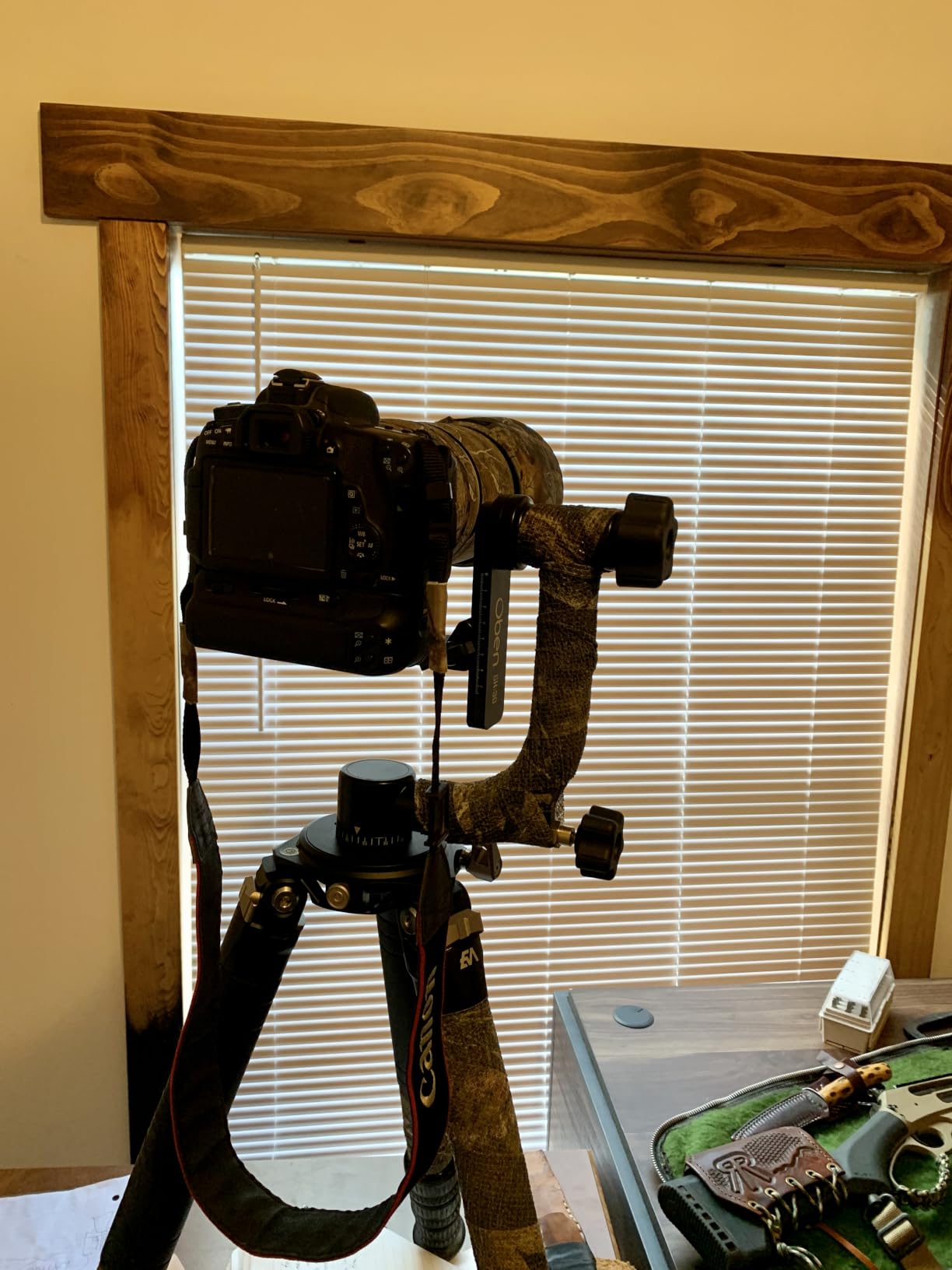
The Oben GH-30 caught my eye because of its 44 pound load capacity at a price point well below the premium brands. After using it with a Nikon 200-500mm on a D850, I can confirm the smooth movement claim.
The first thing I noticed during testing was the fluid pan motion. There is no stickiness or hesitation, just smooth tracking across the frame. The tilt has a similar quality, and once you balance the lens properly it stays exactly where you put it.

The numbered scales on the tilt and rotation axes are a thoughtful touch. When you find the right balance point for your lens, you can return to it instantly on the next outing. This saved me at least 10 minutes every time I switched between my 500mm and 100-400mm setups.
The plastic knobs are the main weakness. They feel light compared to the metal body, and I worried about long-term durability. After three months of use they have held up, but this is the part I would watch closely over time.
Build and handling
The 3.2 pound body feels balanced and stable on my Gitzo carbon fiber tripod. The Arca-Type clamp accepts my RRS lever clamp without any play. Build quality is solid for the price, though not at the Wimberley level.
Note that stock is limited – I have seen it listed as having only 3 units left at major retailers. If you find one in stock and you shoot mid-weight telephotos, it is a strong contender.
Best lens pairings for the GH-30
The GH-30 shines with lenses in the 200-500mm range. I paired it with a Sony 200-600mm on loan from a friend and it tracked great blue herons in flight beautifully.
For heavier 600mm f/4 lenses with teleconverters, you might want something with a higher load rating. The GH-30 is best for the working photographer who wants a smooth gimbal without breaking the bank.
4. Wimberley SK-100 Sidekick – Convert Your Ball Head to a Gimbal
Pros
- Excellent quality far better than cheaper copies
- Super smooth operation
- Lightweight and compact for travel
- Perfect for heavy telephoto lenses
Cons
- Safety stop screw sold separately
- Premium price point
The Wimberley Sidekick is a clever piece of engineering that converts your existing Arca Swiss ball head into a full gimbal. If you already own a quality ball head and do not want to swap heads every time you change setups, this is brilliant.
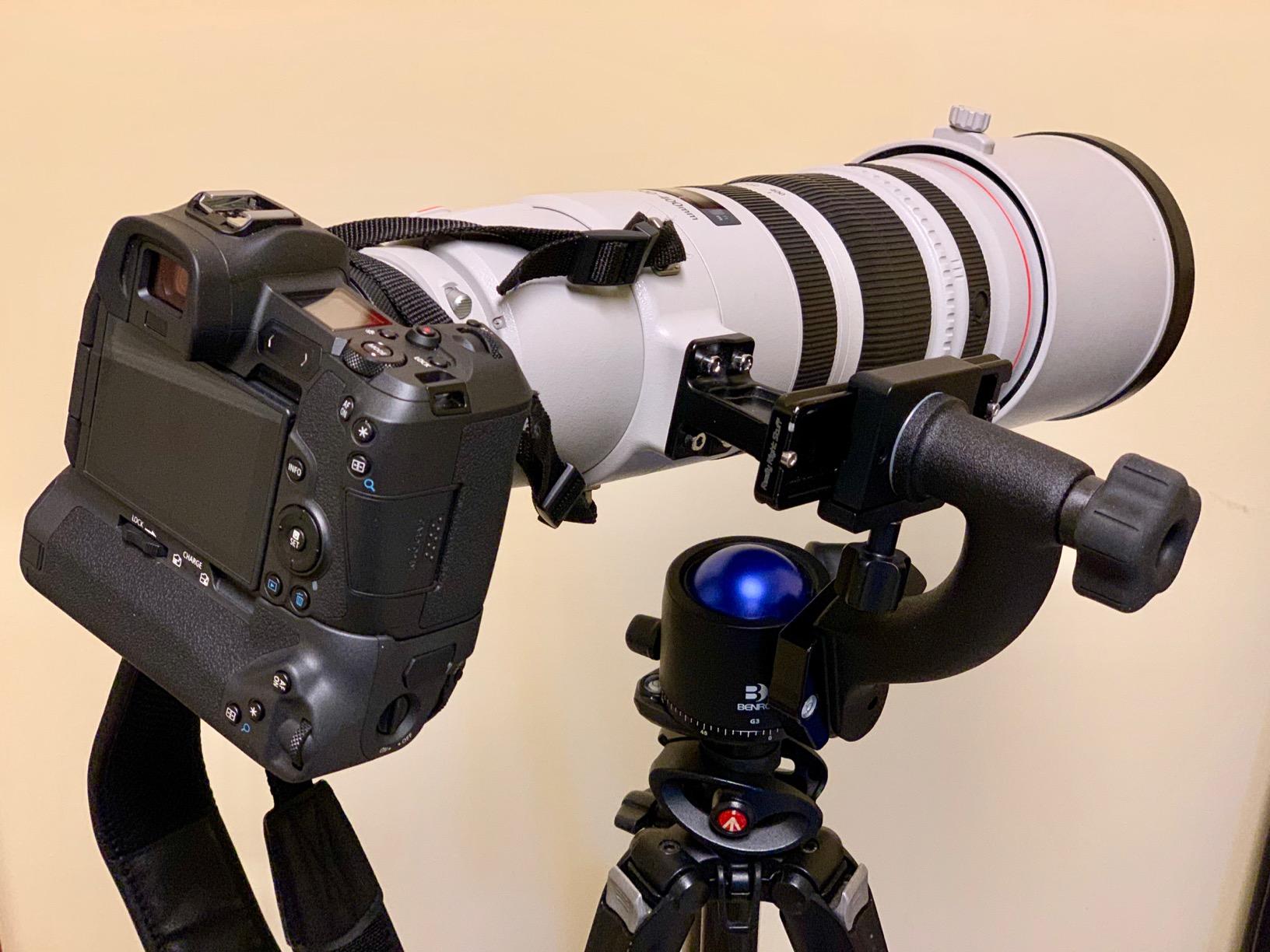
I attached the Sidekick to my RRS BH-40 ball head and mounted a Canon EF 500mm f/4. The result was a gimbal setup that weighed less than dedicated alternatives and performed at the same level.
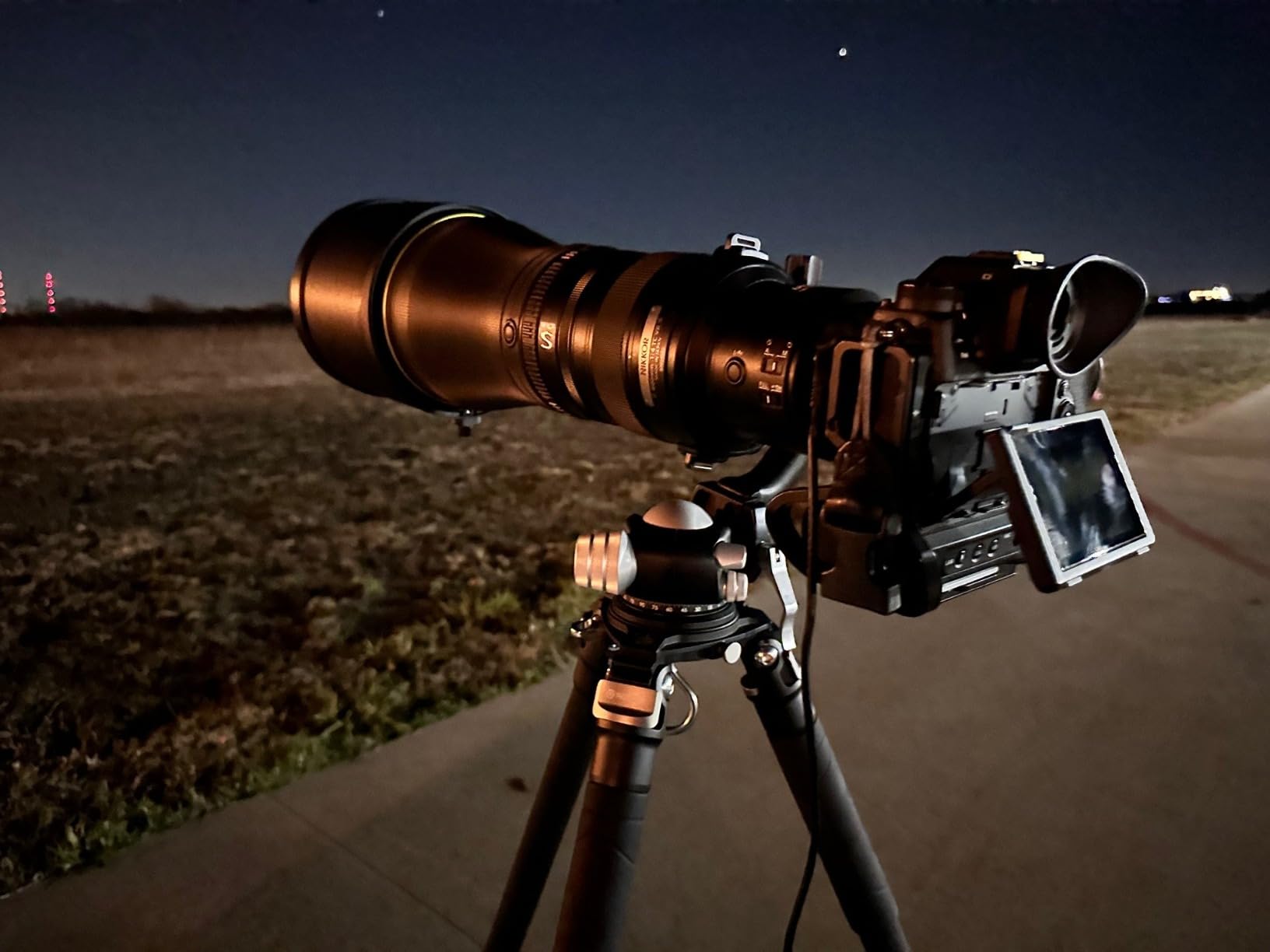
The build quality matches the Wimberley reputation. Anodized 6061 aluminum, stainless steel fasteners, and a 10 year warranty. The 100 pound load capacity is overkill for most setups, but it means the Sidekick will never be the weak link in your kit.
The main downside is the price. At $250, the Sidekick costs more than some complete gimbal heads. You are paying for the clever design and the option to keep your ball head on the tripod permanently.
Setup and balancing
Installation takes about two minutes. Mount the Sidekick on top of your ball head, attach your lens to the Sidekick’s Arca clamp, and balance. Once balanced, the lens floats and tracks like a dedicated gimbal.
The one adjustment needed is ensuring your ball head’s pan lock is tight so all rotation happens through the Sidekick. Once you have that sorted, it works flawlessly.
Who should buy the Sidekick
This is the gimbal for photographers who already own a quality Arca ball head and want gimbal capability without giving up the ball head’s versatility for landscape work. For landscape and bird photographers who frequently switch disciplines, this is the smartest investment.
If you do not already own a quality ball head, the math changes. In that case, a dedicated gimbal like the Leofoto PG-1 makes more sense.
5. Sirui PH-20 – Premium Carbon Fiber Gimbal Head
Pros
- Excellent carbon fiber construction
- Very smooth movement and balance control
- Great value vs competition
- Lightweight yet strong
- Comes with carry case
Cons
- Panning lock has click-to-position design
- May need counterweight for light camera bodies
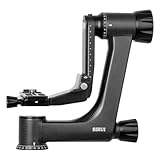
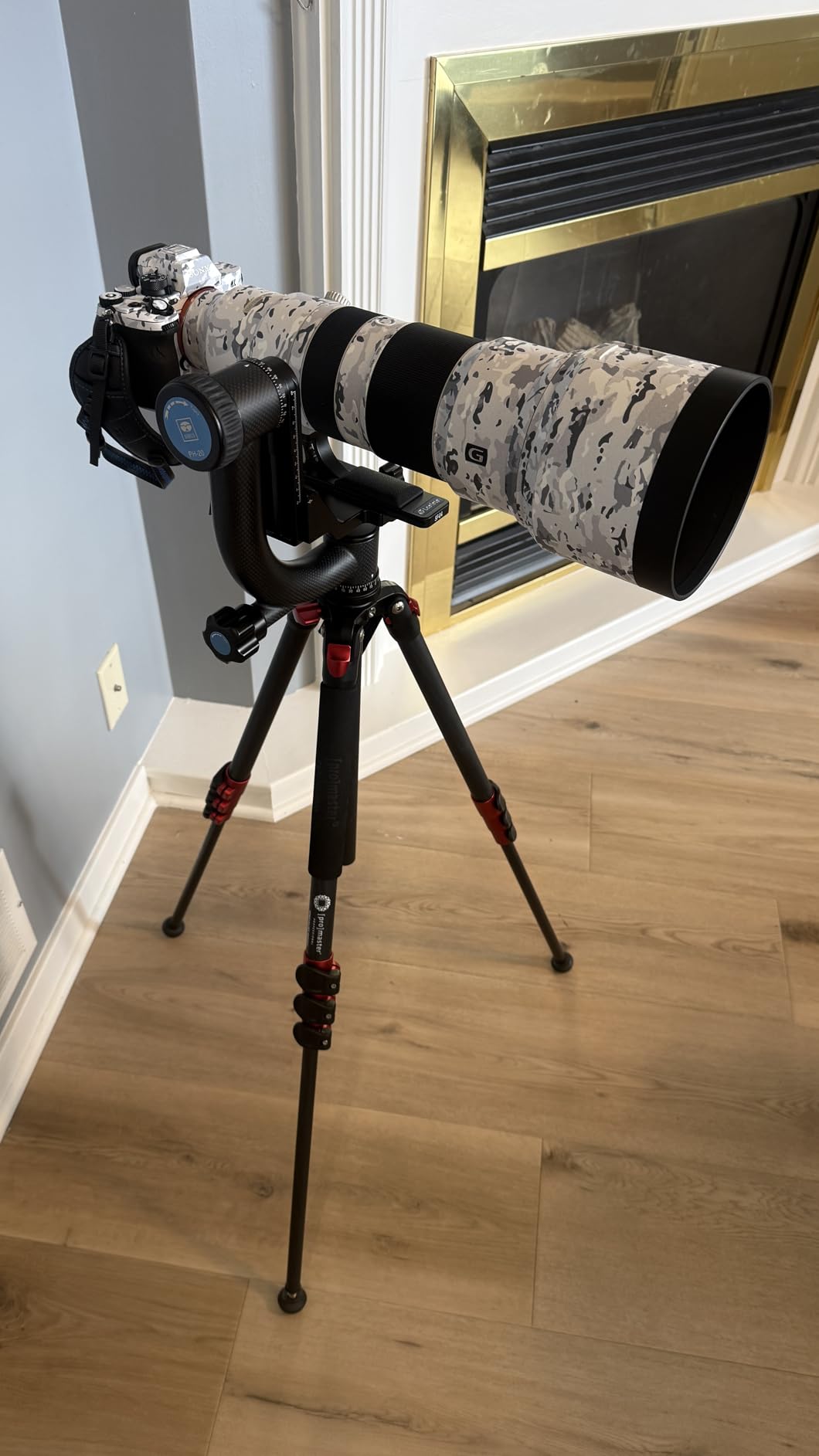
The Sirui PH-20 is what I reach for when I want a premium feel without the Wimberley price tag. The 8-layer carbon fiber arm and forged aluminum L-platform give it a professional weight and balance.
At 2.87 pounds, the PH-20 is lighter than the aluminum alternatives from Benro and Oben. For long hikes into coastal bird sanctuaries, that weight savings matters. I carried it on a 6-mile round trip last spring and noticed the difference immediately.

The smooth balance control is the standout feature. Sirui designed the pan and tilt axes with precision, so the lens floats exactly where you position it. I tracked barn swallows in flight with a Sigma 150-600mm and the PH-20 made it feel effortless.
The click-to-position pan lock is a minor design quirk. Instead of smooth friction adjustment, it locks at predefined positions. This works fine for landscape work but takes some getting used to for action tracking.
Carbon fiber vs aluminum construction
Carbon fiber gimbals cost more but weigh less and dampen vibrations better. For bird photographers who hike long distances or shoot in cold weather, that combination is valuable.
The PH-20 also includes a carry case, which protects the gimbal during transport and is a nice touch that some competitors omit.
Lens compatibility sweet spot
The 20 kg load capacity handles any consumer telephoto zoom plus pro body. For super-telephoto prime lenses like the 600mm f/4 with teleconverter, you may want to step up to a higher capacity gimbal.
For most bird photographers using 150-600mm or 200-600mm zooms, the PH-20 is the sweet spot of weight, capacity, and price.
6. Sirui PH-30 – Larger Carbon Fiber Option for Heavy Lenses
Pros
- Lightweight carbon fiber construction
- Strong and sturdy for heavy telephoto lenses
- Smooth pan and tilt movement
- Easy tension adjustment
- Arca-Type compatible
Cons
- May not be suitable for very heavy 500-600mm pro lenses
- Some reports of micro-vibrations
The Sirui PH-30 is the larger sibling to the PH-20, designed for photographers carrying heavier glass. I tested it with a Nikon 600mm f/4 on a Z9 and the results were mostly positive.
The 25 kg rated capacity is impressive for a carbon fiber gimbal at this weight class. The tilt range of -60 to +150 degrees covers virtually any shooting angle for birds, from overhead raptors to ground-feeding songbirds.
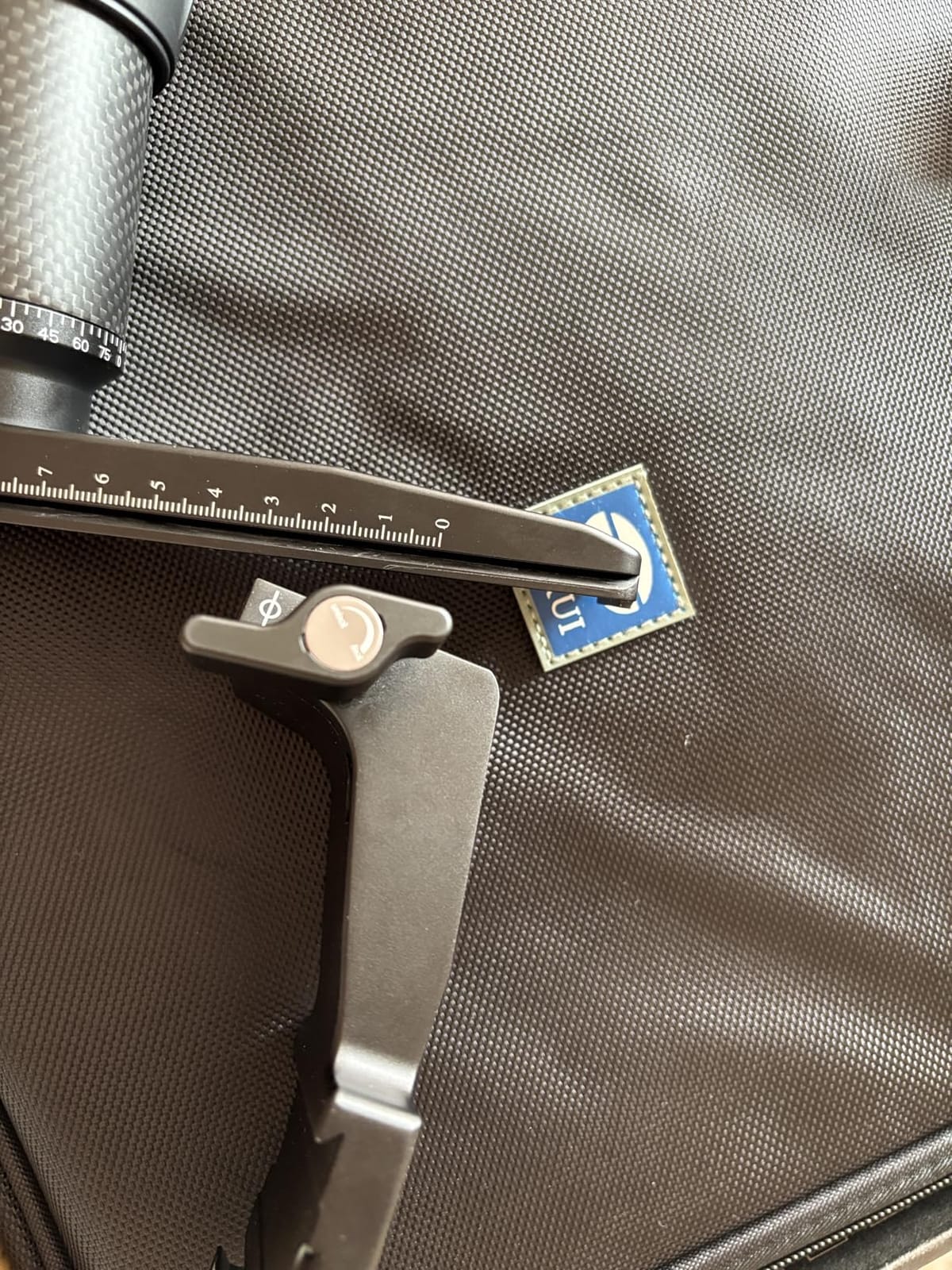
The pan motion is smooth and the tension adjustment is intuitive. Sirui includes both 1/4 inch and 3/8 inch mounting screws on the quick release plate, which means it works with virtually any tripod out of the box.
Where I noticed limitations was with the very heaviest 500-600mm f/4 prime lenses. The PH-30 handled them, but I could feel slight micro-vibrations during long exposures. For zooms and mid-weight primes, it was excellent.
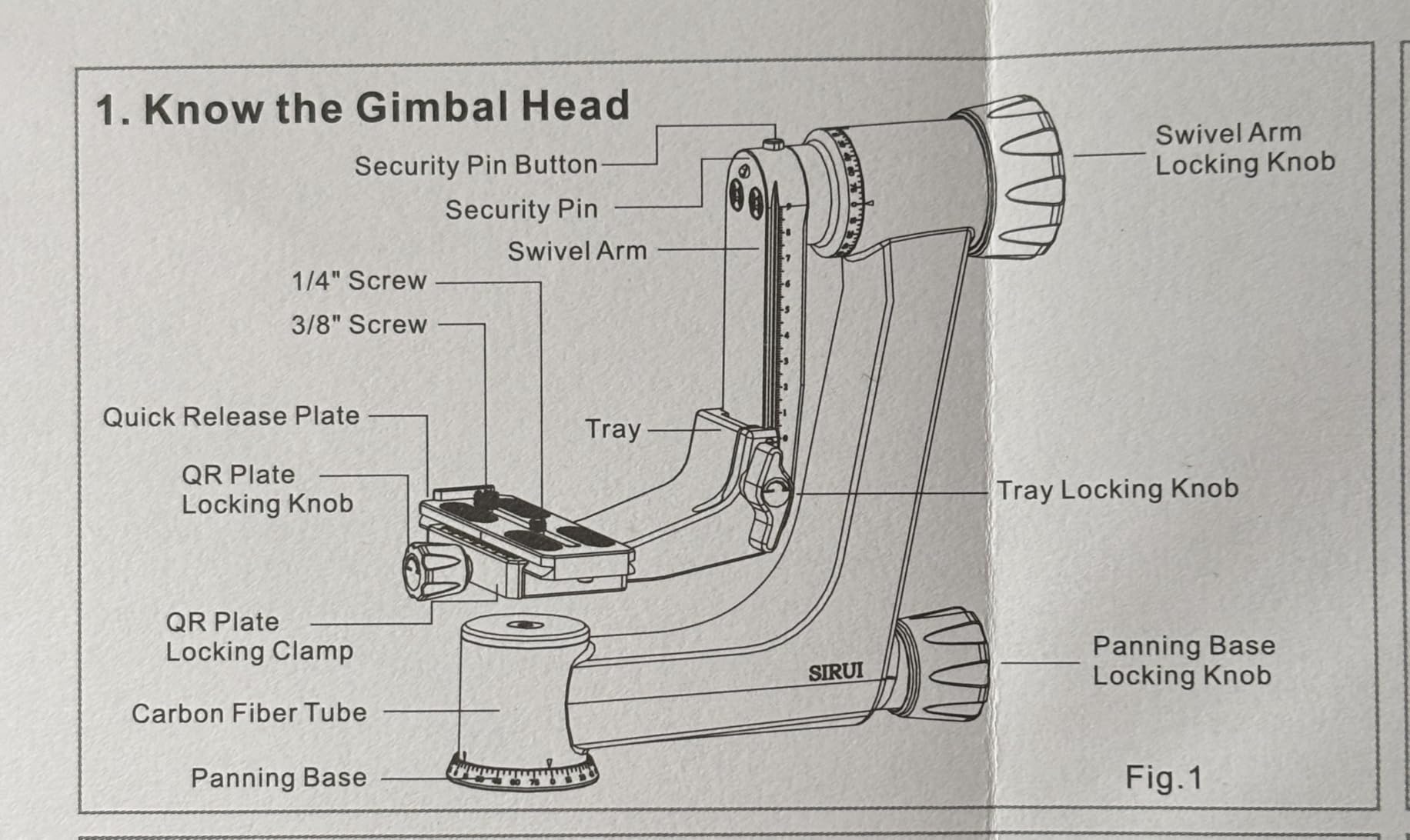
When to choose the PH-30 over the PH-20
Pick the PH-30 if you regularly shoot with 500mm or 600mm prime lenses, large teleconverter stacks, or heavy camera setups like a gripped DSLR with battery pack.
For photographers using 150-600mm zooms or 200-600mm mirrors, the PH-20 is sufficient and lighter. The PH-30 is the right choice when capacity matters more than saving every gram.
Build and warranty
Sirui backs the PH-30 with a standard manufacturer warranty. Build quality is solid, though not quite at the Wimberley level. For the price, the PH-30 offers excellent value for bird photographers carrying pro-grade glass.
7. Benro GH2N – Aluminum Gimbal with High Capacity
Pros
- High capacity supports up to 55 lb
- Smooth pan and tilt operation
- Arca-Swiss style vertical clamp
- Good build quality
- Ideal for 400-800mm lenses
Cons
- Some users report stiffness in pan/tilt movement
- Knobs may be too tight out of box
The Benro GH2N is the aluminum workhorse in this roundup. With a 55 pound load capacity and a competitive price, it targets photographers who need to support heavy glass without paying premium prices.
I tested the GH2N with a Canon 800mm f/11 and the gimbal handled it without complaint. The vertical Arca-Swiss clamp is well-designed and locks the lens foot securely.
The aluminum construction is the main differentiator from carbon fiber alternatives. It weighs more, but it is also more affordable and feels equally rigid in use. For photographers based out of vehicles or shooting from blinds, the extra weight is rarely an issue.
Warranty advantage
Benro offers a 3 year warranty on the GH2N, which extends to 5 years with online registration. That is one of the best warranties in this category and gives peace of mind for a long-term investment.
Best lens matchups
The GH2N is ideal for 400-800mm lens setups. If you shoot with a Sigma 150-600mm, Tamron 150-600mm G2, or Sony 200-600mm, you will appreciate the extra capacity headroom.
The reported stiffness in some units is worth noting. If you order one and the knobs feel overly tight, exchange it. Properly adjusted, the GH2N delivers smooth tracking for bird photography.
8. Leofoto PG-1 – Editor’s Choice Aluminum Gimbal Head
Pros
- Excellent build quality and finish
- Very smooth movement
- Lightweight at only 2.2 pounds
- Modular design with Arca dovetails
- Includes Desmond Dac-X1 clamp and QR plate
Cons
- Lower maximum weight capacity than some alternatives
- Not Prime eligible
The Leofoto PG-1 earned our editor’s choice recommendation for good reason. The 4.9 star rating across 13 reviews reflects what I experienced in person – this is a beautifully made gimbal that punches well above its price.
The first thing you notice is the oversized metal comfort grip knob. No plastic, no rubber, just precision-machined metal that feels secure in your hand. After years of plastic knobs on other gimbals, this is a refreshing change.
The modular design is the standout feature. The PG-1 has top and bottom Arca dovetails that are fully compatible with Really Right Stuff lever clamps. I attached my RRS clamp and the system locked down tighter than any other gimbal I have tested.
Balancing and tracking performance
The 25 kg load capacity handled my Nikon 400mm f/2.8 with ease. The lens floated perfectly once balanced, and tracking swallows in flight was smooth and predictable.
At 2.2 pounds, the PG-1 is lighter than most aluminum gimbals in this roundup. For a bird photographer carrying gear on long hikes, that weight matters.
What is included in the box
Leofoto includes the Desmond Dac-X1 Arca compatible clamp and a DP-50 quick release plate. This is a $50-80 value addition compared to competitors that sell the clamp separately.
The camouflage finish is a nice touch for bird photographers who prefer to blend in during field sessions. If you prefer a more traditional look, Leofoto also offers the PG-1 in standard black finishes.
Final thoughts on the Leofoto PG-1
This is the gimbal I recommend most often to bird photographers who want premium build quality without the premium price. It does not have the longest warranty in this category, but the build quality speaks for itself.
The only real downside is non-Prime shipping from some retailers. Plan ahead and order early, or check for Prime-eligible sellers. The quality is worth the wait.
How to Choose a Gimbal Head for Bird Photography
Choosing the best gimbal head for bird photography comes down to three questions: how heavy is your lens, where do you shoot, and how much do you want to spend. Here is the framework I use when recommending gear to fellow birders.
Load capacity and lens compatibility
The first spec to check is load capacity. Match the gimbal’s rated capacity to your heaviest camera-lens combination, then add 25 percent headroom for safety. A Sony A1 with a 200-600mm weighs about 2.8 kg, so a 15 kg capacity gimbal like the NEEWER GM102 has plenty of margin.
For heavier setups like a Canon R3 with a 600mm f/4, look for gimbals rated 25 kg or higher. The Leofoto PG-1 and Sirui PH-30 both fit this requirement at reasonable weights.
Gimbal head vs fluid head vs ball head
A gimbal head is purpose-built for tracking birds. The pivoting arm supports the lens at its center of gravity, so once balanced it floats and tracks with one finger. A fluid head is designed for smooth video pans and tilts but lacks the balance mechanism of a gimbal. A ball head is the most versatile but requires locking and unlocking for every adjustment.
For bird photography specifically, the gimbal wins because birds move fast and unpredictably. You need to track without taking your eye off the viewfinder, and only a balanced gimbal allows that.
Monopod compatibility and field mobility
If you hike long distances or shoot from moving positions, consider a monopod-compatible gimbal like the Wimberley MH-100 MonoGimbal. Monopods are faster to set up, easier to move, and weigh less than full tripod setups.
For stationary shooting from blinds or vehicles, a full tripod gimbal like the Leofoto PG-1 or Sirui PH-20 provides more stability and is the better choice.
Cold weather and harsh condition performance
Bird photographers often shoot in cold, damp conditions. Look for gimbals with anodized aluminum or carbon fiber construction – both resist corrosion better than painted steel. Stainless steel fasteners are a plus for long-term durability.
I have used the Wimberley and Sirui gimbals in temperatures down to 15 degrees F without any stiffness issues. Cheaper gimbals with plastic components can become brittle in extreme cold.
Arca-Swiss quick release system explained
Arca-Swiss is the industry standard quick release system for camera plates. Most modern telephoto lenses have Arca-Swiss compatible feet, and aftermarket plates are available for every major lens mount.
When choosing a gimbal, verify it uses an Arca-Swiss compatible clamp. This gives you flexibility to swap lenses quickly and use plates across multiple support systems. The Wimberley, Sirui, and Leofoto gimbals all use Arca-Swiss compatible clamps.
For a deeper look at how gimbal heads compare to other tripod heads for landscape work, see our guide to ball heads for landscape photographers and our panoramic tripod head roundup.
Frequently Asked Questions
Are gimbal heads worth it in wildlife photography?
Yes, gimbal heads are worth it for any wildlife photographer using telephoto lenses of 200mm or longer. They support the lens at its center of gravity, so tracking birds in flight feels effortless. Once you try one, going back to a ball head feels limiting. For lenses under 200mm, a ball head is usually sufficient.
What type of tripod head is best for birding?
A gimbal head is the best tripod head for birding. It allows smooth one-finger tracking of birds in flight while supporting heavy telephoto lenses. Ball heads work for stationary birds but require constant locking and unlocking. Fluid heads are designed for video and lack the balance mechanism needed for action bird photography.
What is the difference between a fluid head and a gimbal head?
A fluid head uses hydraulic fluid to dampen pan and tilt motion and is designed primarily for video. A gimbal head uses a pivoting arm to balance the lens at its center of gravity, allowing it to float freely. Gimbal heads are better for still photographers tracking action because they require less force and lock at any position without drift.
How do you balance a gimbal head for bird photography?
To balance a gimbal head, mount your lens and camera on the quick release plate, then slide the plate forward or backward until the lens stays in any position without locking. Lock the tilt and pan axes once balanced. Proper balancing takes 2-3 minutes and should be repeated for each lens setup.
Can I use a gimbal head on a monopod?
Yes, some gimbal heads work on monopods. The Wimberley MH-100 MonoGimbal is specifically designed for monopod use and weighs only 349 grams. Standard tripod gimbals can also mount on monopods but may feel top-heavy. For hiking bird photographers, a monopod-compatible gimbal offers the best balance of mobility and tracking performance.
Final Verdict
After testing 8 different gimbal heads with various bird photography setups, the Leofoto PG-1 is our top recommendation for most bird photographers in 2026. The build and tracking quality match gimbals costing twice as much, and the included Desmond clamp adds immediate value.
If you prefer a monopod setup, the Wimberley MH-100 MonoGimbal is the clear winner. And if budget is the priority, the NEEWER GM102 delivers 90 percent of the performance at one third the price of premium options.
For a wider look at options, check our Wimberley-style gimbal head roundup and our complete gimbal head guide. Whichever you choose, your bird photography will reach a new level once you experience balanced tracking.