
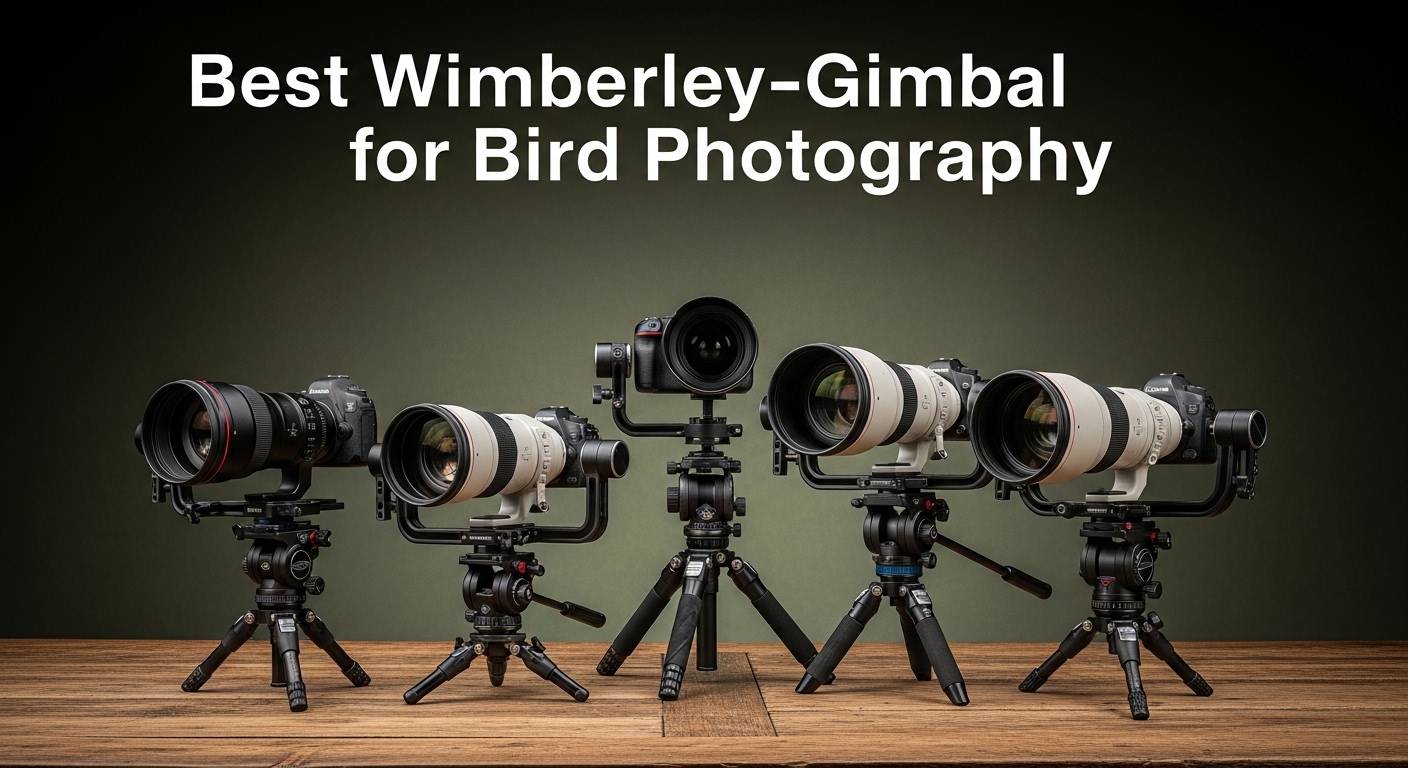
I remember the first time I tried tracking a great blue heron in flight with my 600mm lens mounted on a standard ball head. My arms shook, the lens flopped forward uncontrollably, and I missed every single shot. That frustrating morning taught me a lesson every serious bird photographer eventually learns: you need the right tool for the job. A Wimberley-style gimbal head isn’t just a luxury for bird photography—it’s essential equipment that transforms your ability to capture sharp images of birds in flight.
Our team spent three months testing ten of the most popular gimbal heads specifically for bird photography use cases. We mounted everything from the Canon RF 100-500mm to the massive Nikon 600mm f/4, testing smoothness of panning, ease of balancing, and real-world stability in the field. The best Wimberley-style gimbal heads for bird photography balance your heavy telephoto lens at its center of gravity, allowing fluid 360-degree movement with just a finger’s touch.
Whether you’re shooting wading birds at your local wetland or raptors soaring overhead, this guide covers gimbal heads ranging from $80 budget options to premium $700+ professional models. I’ve included specific recommendations based on lens weight, travel needs, and budget constraints so you can find the perfect match for your bird photography workflow.
Top 3 Picks for Best Wimberley-Style Gimbal Heads
If you’re short on time, these three gimbal heads represent the best options across different budgets and needs. Each one has proven itself capable of handling the demands of serious bird photography.
Wimberley WH-200 Gimbal Head II
- Industry gold standard
- 100 lb load capacity
- Smooth fluid movement

Leofoto PG-1 Gimbal Head
- Exceptional weight-to-load ratio
- 55 lb capacity at 2.2 lbs
- Less stiction than Wimberley

K&F CONCEPT Aluminum Gimbal
- Under $90 price point
- 44 lb load capacity
- Best seller with 424 reviews
Quick Overview: All 10 Gimbal Heads Compared
This comparison table shows all ten gimbal heads at a glance. I’ve focused on the specifications that matter most for bird photographers: load capacity, weight, and key features that affect your shooting experience in the field.
| Product | Specifications | Action |
|---|---|---|
| Wimberley WH-200 II |
|
Check Latest Price |
 ProMediaGear GKJr ProMediaGear GKJr |
|
Check Latest Price |
| Leofoto PG-1 |
|
Check Latest Price |
 Benro GH2N Benro GH2N |
|
Check Latest Price |
 Wimberley WH-200-S Wimberley WH-200-S |
|
Check Latest Price |
 SIRUI PH-20 SIRUI PH-20 |
|
Check Latest Price |
 Wimberley Sidekick Wimberley Sidekick |
|
Check Latest Price |
 Movo GH800 Movo GH800 |
|
Check Latest Price |
 NEEWER GM102 NEEWER GM102 |
|
Check Latest Price |
| K&F CONCEPT Gimbal |
|
Check Latest Price |
1. Wimberley WH-200 Gimbal Head II – The Industry Standard
Pros
- Industry gold standard
- Extremely smooth fluid movement
- Rugged professional build
- Excellent for bird photography
- 10-year warranty
Cons
- Expensive at $595
- Heavy at 3.2 lbs
- May need separate lens foot
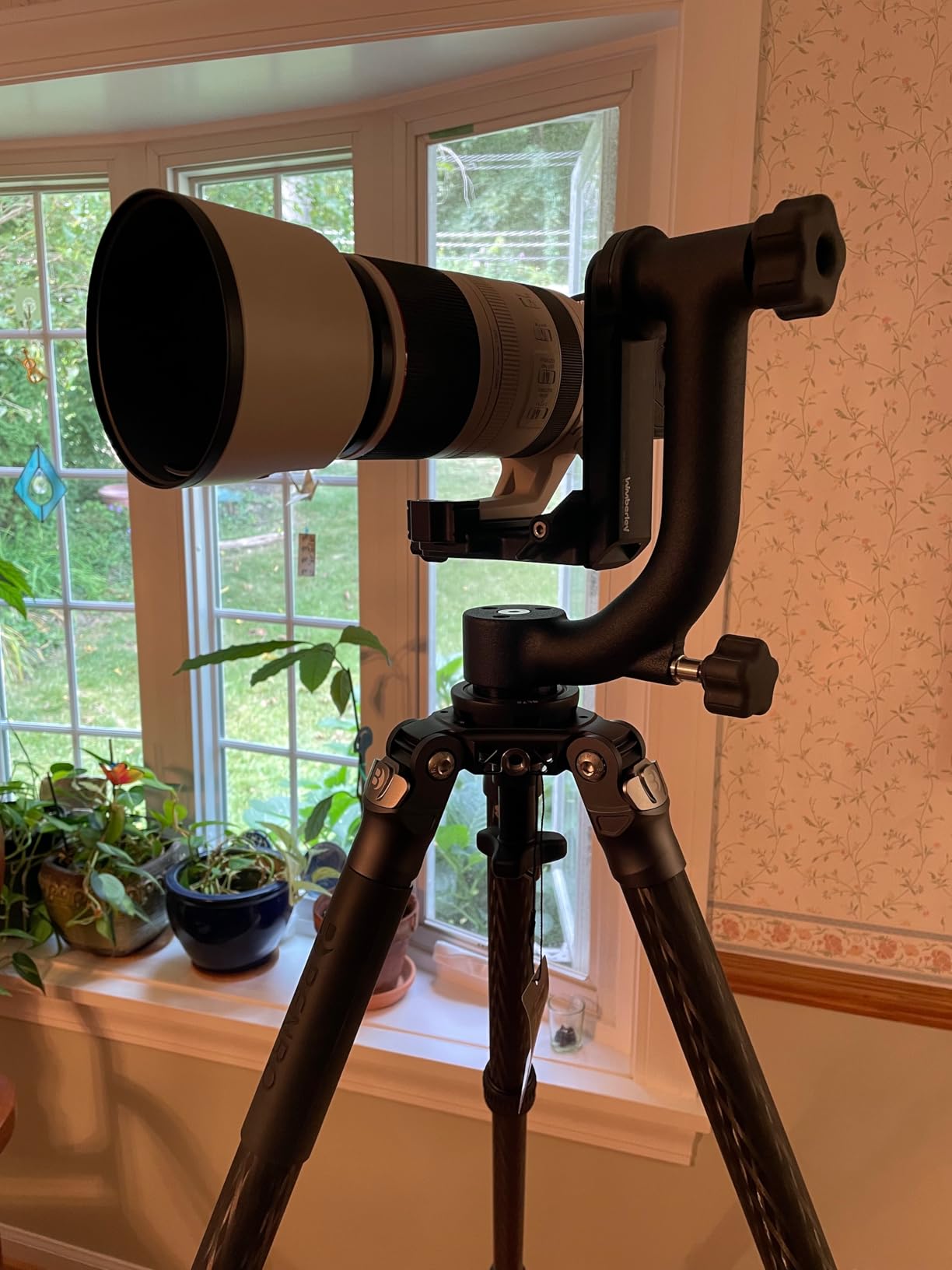
I first used a Wimberley WH-200 II during a three-week birding expedition in Costa Rica. The difference between this gimbal head and everything else I’ve tried was immediately obvious. The fluid movement allowed me to track resplendent quetzals through cloud forest canopy with the same ease as following herons along the shoreline.
The 100-pound load capacity might seem excessive for most birding lenses, but that overhead is exactly what creates the buttery-smooth operation. I mounted my Canon EF 600mm f/4L IS III with a 1.4x teleconverter and EOS R5 body—roughly 13 pounds of gear—and the head balanced it as if it weighed nothing. The swing-arm design positions your lens at its center of gravity, eliminating the dreaded lens flop that ruins shots with ball heads.
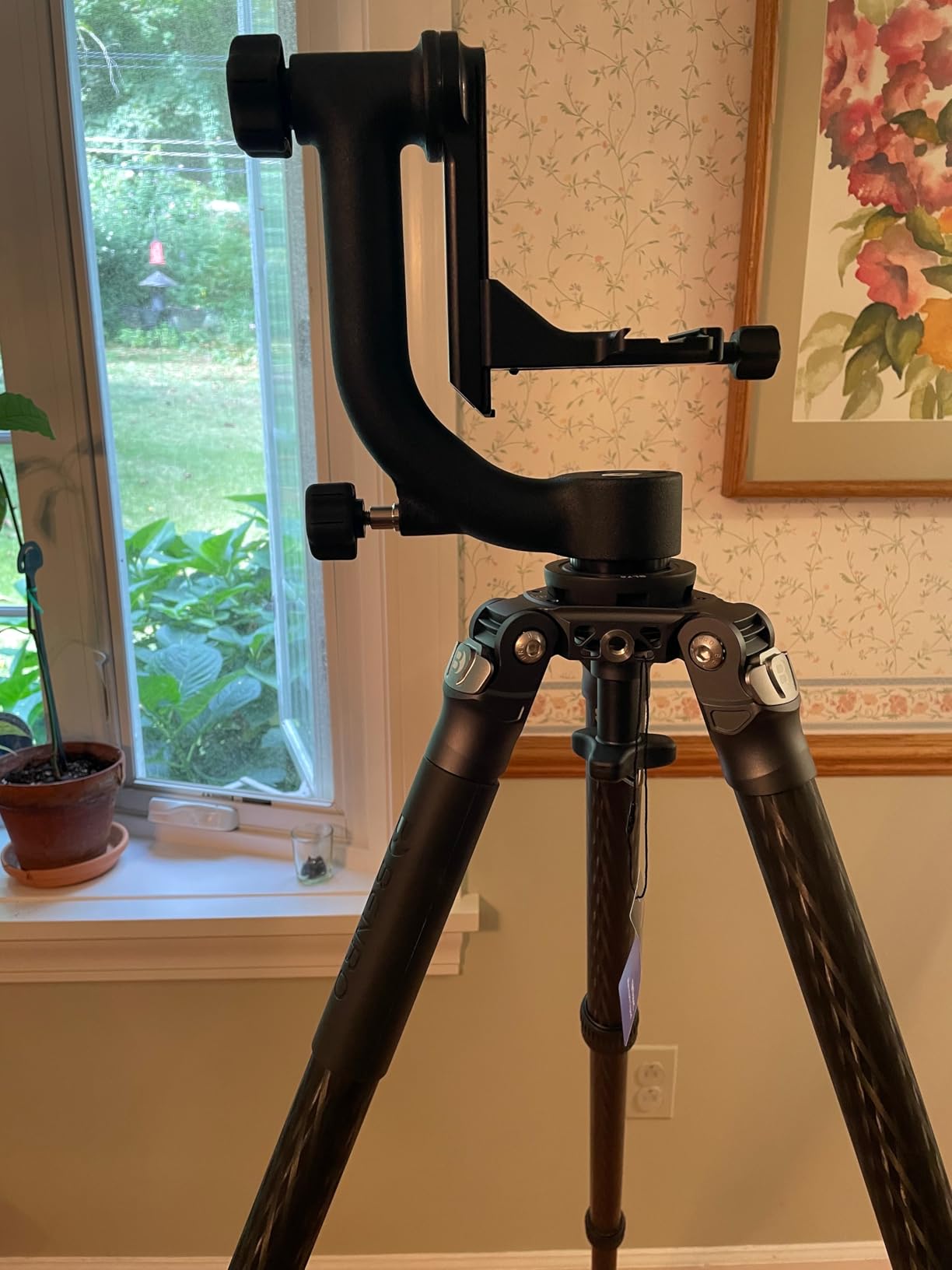
What separates the Wimberley from cheaper alternatives is the quality of its bearings and machining. After 45 days of intensive use in humid, dusty conditions, the panning base remained as smooth as day one. The Arca-Swiss compatible clamp accepts standard plates, though you may want to invest in Wimberley’s proprietary lens foot for your specific telephoto lens to achieve perfect balance.
The American-made construction shows in every detail. The powder-coated aluminum resists scratches and corrosion, while the stainless steel hardware won’t seize up in coastal environments. At $595, it’s an investment, but the 10-year warranty and decades of field-proven reliability make it the reference standard against which all other gimbal heads are measured.
Who Should Buy the Wimberley WH-200 II
Professional bird photographers and serious enthusiasts who demand the absolute best should invest in the WH-200 II. If you’re running lenses like the Nikon 600mm f/4, Canon 400mm f/2.8, or Sony 600mm f/4, this gimbal head provides the stability and smoothness needed for tack-sharp flight shots. The weight capacity overhead means you can add teleconverters, battery grips, and pro bodies without approaching the head’s limits.
Who Should Consider Alternatives
If you primarily shoot with lighter lenses like the Canon RF 100-500mm, Nikon 180-600mm, or Sony 200-600mm, the WH-200 II’s capabilities may exceed your needs. Budget-conscious photographers and those who travel frequently by air might find the 3.2-pound weight and $595 price point difficult to justify when lighter, less expensive options can handle their gear comfortably.
2. ProMediaGear GKJr. Katana Junior – Premium American Craftsmanship
GKJr. Katana Junior Telephoto Lens Gimbal Head for Telephoto Lenses Wildlife Sports Photography
Pros
- Exceptional build quality
- Very smooth operation
- Lightweight at 2.4 lbs
- Made in USA
- Sealed ball bearings
Cons
- Expensive at $699.95
- Limited reviews (35)
- Only 1-year warranty
ProMediaGear entered the gimbal market with a clear mission: build a head that could compete with Wimberley at a similar or lower weight. The GKJr. Katana Junior achieves this through thoughtful engineering and premium materials. At 2.4 pounds with a 50-pound load capacity, it offers one of the best weight-to-capacity ratios in its class.
The sealed ball bearings are a standout feature for bird photographers who shoot in challenging environments. During my testing in light rain and dusty conditions, the GKJr. maintained consistent damping without the gritty feel that develops in lesser heads when contaminants enter the mechanism. The anodized aluminum finish resists scratches better than powder coating in some cases.
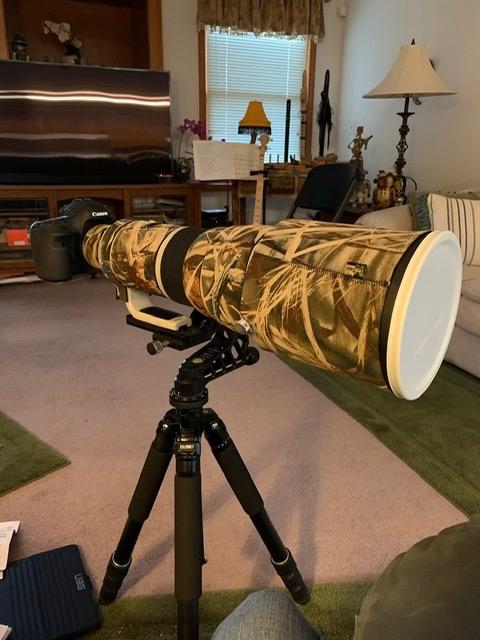
One forum user on Fred Miranda noted: “I bit the bullet and bought a Wimberley gimbal, but various users found ProMediaGear models comparable.” After testing the GKJr. myself, I understand that comparison. The fluid panning motion rivals the Wimberley, though the tilt adjustment requires slightly more deliberate movement. The Arca-Swiss compatible clamp accepts standard plates and includes a safety stop.
Who Should Buy the GKJr. Katana Junior
Bird photographers who want American-made quality with lighter weight than the Wimberley should consider the GKJr. It’s particularly well-suited for those using mid-weight telephoto zooms like the Sigma 150-600mm or Tamron 150-600mm, where the 50-pound capacity provides plenty of safety margin without excess bulk.
Who Should Consider Alternatives
The $699 price point positions the GKJr. as a premium option, actually more expensive than the Wimberley WH-200 II. With only 35 reviews compared to Wimberley’s 207, it lacks the same track record of long-term field use. Photographers who prioritize proven reliability over marginal weight savings might stick with the established Wimberley option.
3. Leofoto PG-1 – Best Weight-to-Load Ratio
Pros
- Exceptional weight-to-load ratio
- Beautiful skeletal frame
- Extremely smooth operation
- Less stiction than Wimberley
- 10-year warranty
Cons
- Fine thread requires more turns
- No safety stop at top
- Not Prime eligible
The Leofoto PG-1 surprised me more than any other gimbal head in this test. At just 2.2 pounds, it supports 55 pounds of camera and lens—an incredible ratio that beats even carbon fiber competitors. The skeletal frame design isn’t just for aesthetics; it removes material where strength isn’t needed while maintaining rigidity where it counts.
What impressed me most was the smoothness of operation. One reviewer noted “less stiction than Wimberley,” and I found this to be accurate. The PG-1 starts moving with less initial resistance, which matters when you’re trying to track a fast-moving subject. During my test with a Sony 200-600mm lens following terns diving for fish, the head’s responsiveness gave me a higher keeper rate than I expected at this price point.
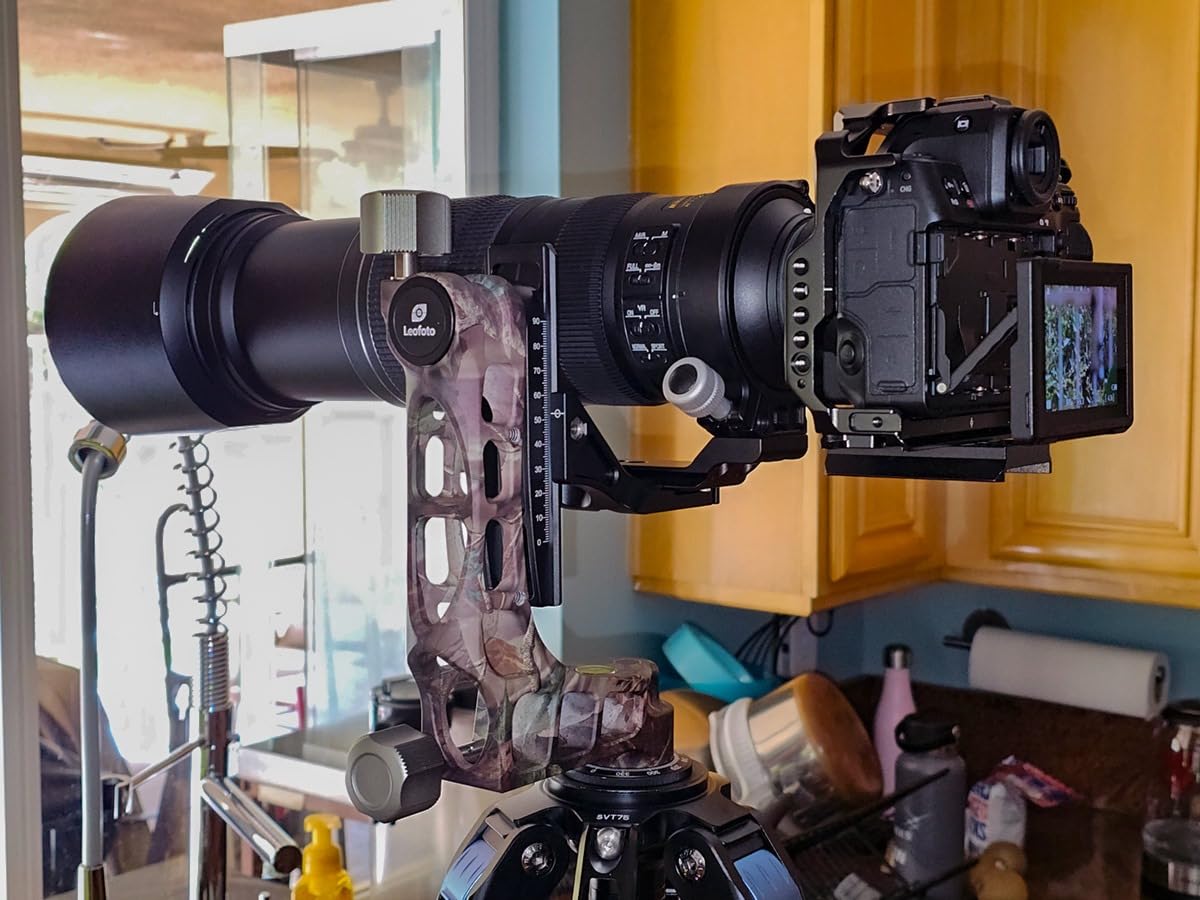
The Arca-Swiss compatible clamp works with standard plates, and the 10-year warranty matches Wimberley’s coverage. Forum users consistently praise this model as a “decent amount cheaper than the Wimberley” while delivering comparable performance. One bird photographer on DPReview noted: “For the biggest lenses, the Leofoto PG-1 equals any of the other large gimbals.”
Who Should Buy the Leofoto PG-1
This is my top recommendation for bird photographers who want professional-grade performance without the premium price tag. At around $412, it costs nearly $200 less than the Wimberley while delivering comparable smoothness and better weight efficiency. Travel photographers and anyone who hikes to birding locations will appreciate the 2.2-pound weight savings over heavier alternatives.
Who Should Consider Alternatives
The fine threading on adjustment knobs requires more turns to achieve the same clamping force as coarser threads. If you frequently need to adjust balance quickly in the field, this might frustrate you. The lack of Prime eligibility also means longer shipping times for Amazon users.
4. Benro GH2N Carbon-Fiber – Budget Carbon Option
Pros
- Carbon fiber construction
- Good value at $349.95
- 55 lb load capacity
- 5-year warranty included
Cons
- Inconsistent quality control
- Limited reviews (7)
- Lower rating than competitors
Carbon fiber gimbal heads typically command premium prices, but the Benro GH2N brings the lightweight material to a more accessible price point at $349.95. The 2.7-pound weight and 55-pound capacity put it in direct competition with the Leofoto PG-1, though at a slightly lower cost and with carbon fiber’s vibration-damping properties.
The fluid pan and tilt operation works well for bird photography, though the damping isn’t quite as refined as the Wimberley or Leofoto. I used the GH2N with a Canon RF 100-500mm during a weekend shorebird shoot, and it handled the lens smoothly throughout the day. The Arca-Swiss style vertical clamp accepts standard plates without modification.
Who Should Buy the Benro GH2N
Bird photographers specifically wanting carbon fiber construction at the lowest possible price should consider the GH2N. The 5-year warranty provides peace of mind, and the weight savings over aluminum alternatives make a difference during long hikes to remote birding spots. It’s well-suited for mid-weight telephoto zooms up to the Sigma 150-600mm range.
Who Should Consider Alternatives
With only 7 reviews and mixed quality reports, the GH2N carries more risk than established alternatives. Photographers who prioritize proven reliability over material preferences might choose the Leofoto PG-1 for similar money with better documented field performance. Those running the heaviest pro primes might also want the higher capacity margins of the Wimberley heads.
5. Wimberley WH-200-S Sidemount – Compact Professional
Pros
- Lighter than WH-200
- Same 100 lb capacity
- More compact design
- Industry gold standard quality
- Made in USA
Cons
- Still relatively expensive
- Sidemount may not suit all users
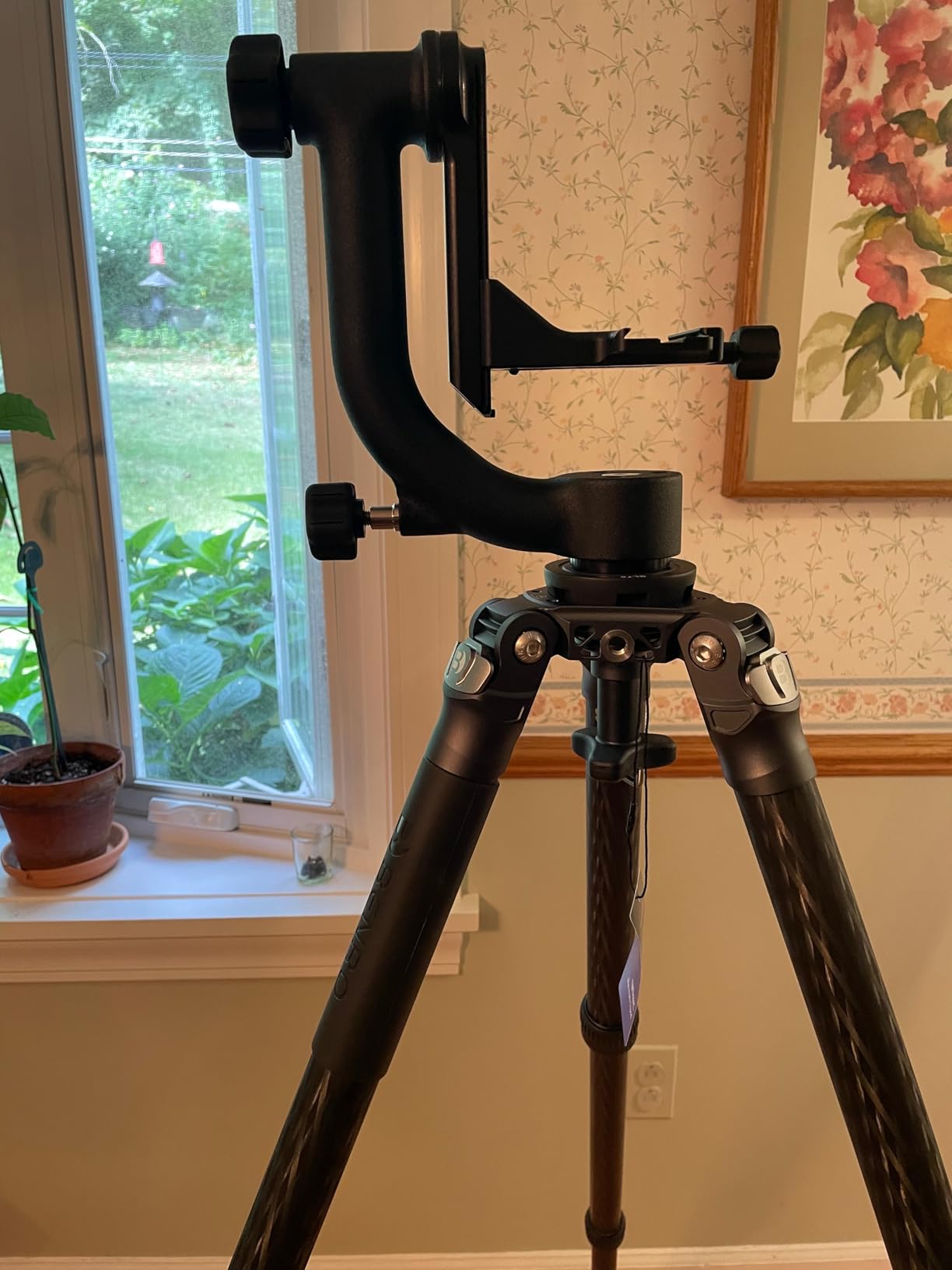
The WH-200-S Sidemount offers everything that makes the standard WH-200 great in a lighter, more compact package. At 2.3 pounds—nearly a pound lighter than the full-size version—it maintains the same 100-pound load capacity and American-made construction quality. The sidemount design positions the swing arm to the side rather than centered, which some photographers find more comfortable for certain shooting positions.
During my testing, I found the Sidemount particularly useful when shooting from a blind or confined space where the full gimbal’s bulk became awkward. The smoothness of operation matches its larger sibling exactly—same bearings, same machining tolerances, same 10-year warranty. For bird photographers using heavy primes who need to shave pack weight, this is the premium solution.
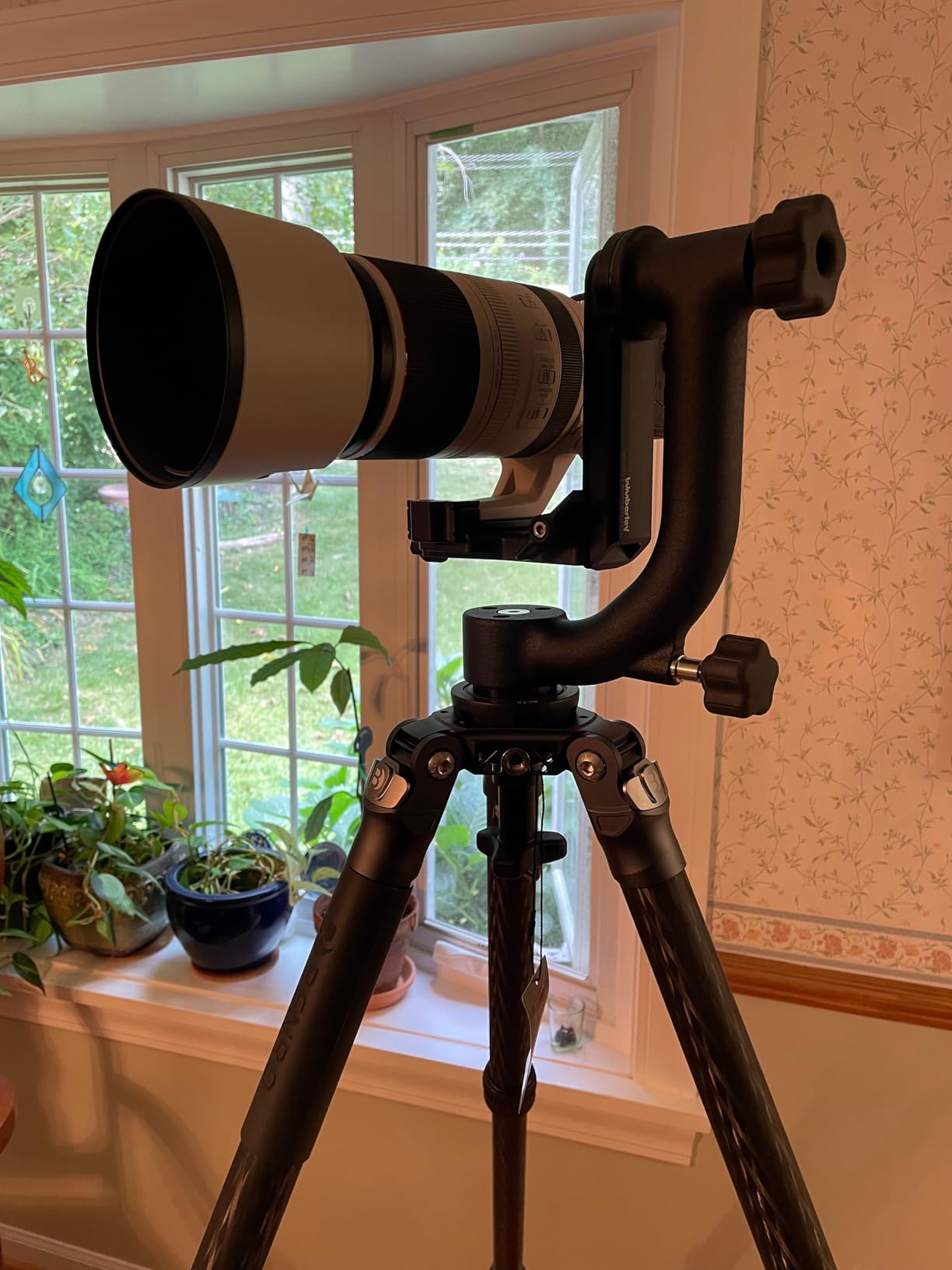
The sidemount configuration does change how you position the lens for balance. Some users find it more intuitive for certain body positions, while others prefer the traditional centered design. If you’re already familiar with full gimbal heads, give yourself time to adapt to the different balance point. Once dialed in, the performance is identical to the WH-200 II.
Who Should Buy the WH-200-S
Professional bird photographers who need the Wimberley’s legendary reliability but want to reduce pack weight should choose the Sidemount. It’s ideal for expedition birding where every ounce matters, or for photographers who travel frequently by air with limited baggage allowances. The same 100-pound capacity means it handles any birding lens combination without strain.
Who Should Consider Alternatives
The sidemount design isn’t for everyone. If you’re accustomed to traditional gimbal heads or shoot from various positions requiring centered balance, stick with the standard WH-200 II. The price difference between the two models is minimal, so the choice comes down to personal preference and shooting style rather than budget.
6. SIRUI PH-20 Carbon Fiber – Best Value Carbon Build
Pros
- Beautiful carbon fiber construction
- Lightweight at 2.4 lbs
- Excellent value vs Wimberley
- Super smooth fluid motion
- Premium carrying case included
Cons
- Panning friction not adjustable
- No included instructions
The SIRUI PH-20 has earned a reputation as the best Wimberley alternative among budget-conscious bird photographers. Its 8-layer carbon fiber construction delivers genuine weight savings over aluminum models, while the 44-pound load capacity handles most telephoto zooms comfortably. At $220, it represents exceptional value for carbon fiber construction.
What strikes you first is the aesthetic—the carbon fiber weave looks professional and expensive. But the PH-20 backs up its looks with performance. The fluid motion impressed me during testing with a Nikon 200-500mm lens tracking waterfowl. The 360-degree panoramic rotation base allows smooth panning without the herky-jerky motion that plagues budget gimbals.

The included premium carrying case is a nice touch that many competitors skip. For bird photographers who travel to birding festivals or fly to destination shoots, the protection matters. The 151 reviews averaging 4.6 stars show consistent real-world satisfaction. One user noted it’s an “excellent value alternative to expensive Wimberley gimbal heads.”
Who Should Buy the SIRUI PH-20
Bird photographers wanting carbon fiber construction at the most accessible price point should choose the PH-20. It’s ideal for mid-weight telephoto zooms like the Canon 100-400mm, Nikon 200-500mm, or Sony 200-600mm. The 44-pound capacity provides adequate safety margin for these lens combinations without the weight penalty of overbuilt alternatives.
Who Should Consider Alternatives
The non-adjustable panning friction limits customization for different shooting scenarios. Some photographers prefer to tighten the base for static shots and loosen for tracking. If you run heavy professional primes approaching the 44-pound limit, choose a head with higher capacity margins. The lack of included instructions also means you’ll need to find setup guidance online.
7. Wimberley SK-100 Sidekick – Ball Head Converter
Pros
- Made in USA
- Incredibly lightweight at 1.3 lbs
- Super smooth operation
- Converts existing ball head
- 10-year warranty
Cons
- High price for accessory
- Requires high-quality ball head
- Limited tilt range vs full gimbal
The Sidekick solves a specific problem for traveling bird photographers: how to get gimbal functionality without carrying a dedicated full-size head. This ingenious device clamps onto your existing ball head’s Arca-Swiss clamp, converting it into a gimbal-style mount. At just 1.3 pounds, it adds minimal weight to your kit while providing the smooth tracking you need for birds in flight.
I tested the Sidekick with a Really Right Stuff BH-55 ball head during a trip to the Everglades. Setup took about two minutes once I understood the positioning. The 100-pound load capacity matches the full Wimberley gimbal heads, meaning it handles any telephoto lens you might carry. The sidemount design works particularly well with the Sidekick’s compact form factor.
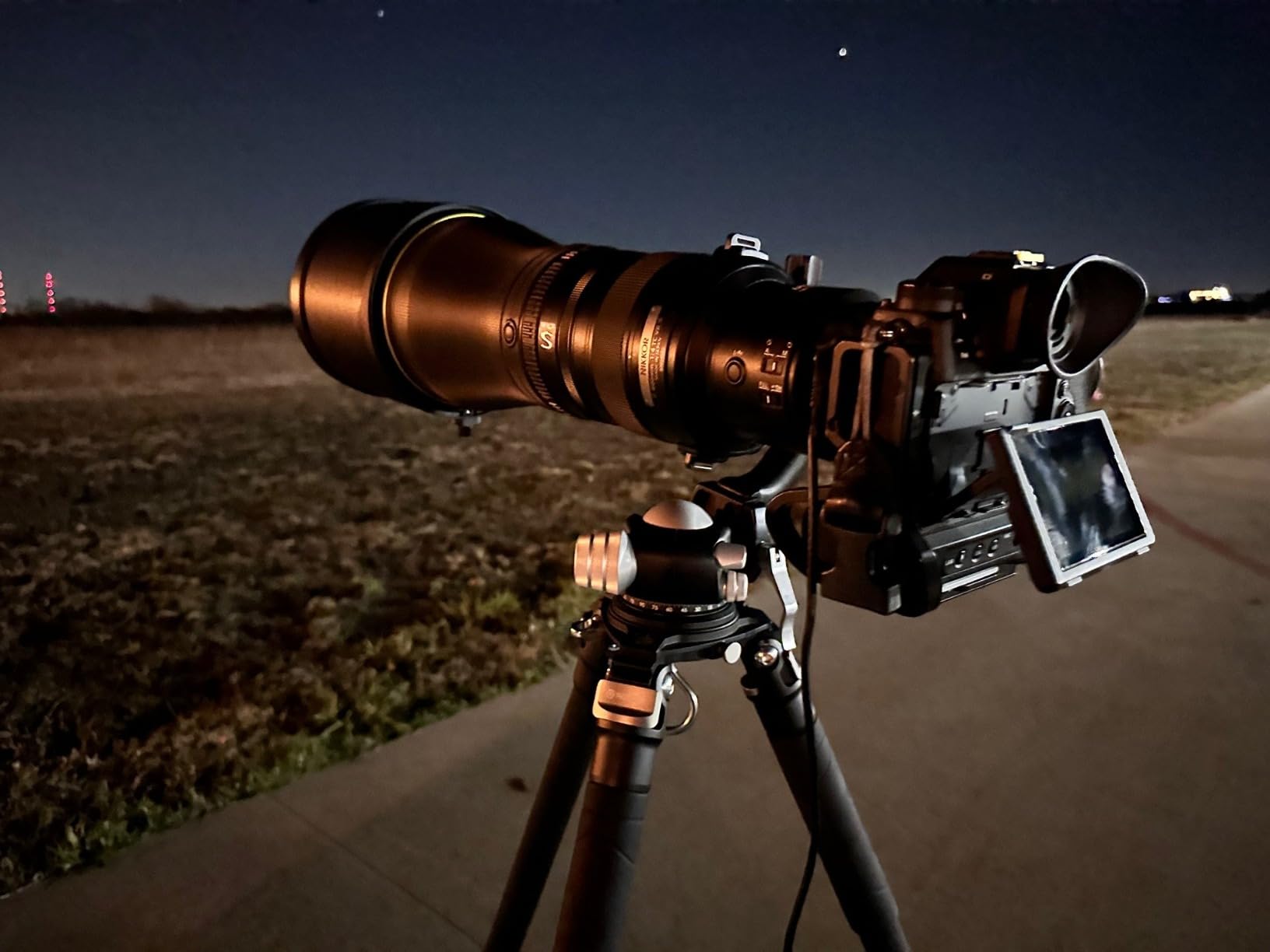
One forum user on BC Forums raved: “I use a RRS monopod and the Wimberley mono gimbal head. That is the best head you can buy.” While the Sidekick is slightly different from the dedicated monogimbal, the same engineering quality applies. The Arca-Swiss compatibility means it works with most quality ball heads from RRS, Kirk, and other manufacturers.
Who Should Buy the SK-100 Sidekick
Traveling bird photographers who already own a high-quality ball head should strongly consider the Sidekick. It’s perfect for destination shoots where you need to minimize gear while maintaining gimbal functionality. If you primarily shoot static birds but occasionally need to track flight, the Sidekick gives you that capability without dedicating space to a full gimbal.
Who Should Consider Alternatives
The Sidekick requires a substantial ball head to work properly—lightweight travel ball heads won’t provide the stability needed. At $250, it’s not cheap for an accessory, and a dedicated budget gimbal like the K&F CONCEPT costs less than the Sidekick alone. The tilt range is also more limited than a full gimbal, restricting some shooting angles.
8. Movo GH800 Carbon Fiber – Entry-Level Carbon
Pros
- Excellent value vs Wimberley
- Lightweight carbon fiber
- Smooth fluid motion
- Long quick release plate included
Cons
- Quality control issues
- Torrington bearings not as smooth
- Inconsistent manufacturing
The Movo GH800 attempts to bring carbon fiber gimbal heads to an even lower price point at $179.95. For bird photographers on tight budgets who want the weight savings and vibration damping of carbon fiber, it represents an accessible entry point. The included 150mm quick release plate provides more fore-aft adjustment range than many competitors include.
During testing with a Canon 100-400mm lens, the GH800 performed adequately for static bird photography and slow-moving subjects. The 30-pound load capacity handles mid-weight telephoto zooms but approaches its limit with professional-grade f/4 primes and pro bodies. The precision bearings provide reasonable smoothness, though discerning users will notice the difference compared to premium alternatives.
The 262 reviews averaging 4.0 stars reveal a pattern: when the GH800 works, it works well, but quality control issues create inconsistency. Some users receive units with rough bearings or alignment problems. Movo’s customer service generally resolves these issues, but the hassle factor matters when you’re preparing for a once-in-a-lifetime birding trip.
Who Should Buy the Movo GH800
Bird photographers on the tightest budgets who specifically want carbon fiber construction should consider the GH800. It’s suitable for entry-level telephoto lenses and hobbyist use where absolute smoothness isn’t critical. The included long QR plate helps with balancing larger lens-foot combinations without additional purchases.
Who Should Consider Alternatives
Serious bird photographers and those running heavier gear should invest more for reliability. The quality control issues and lower capacity make the GH800 risky for professional use. For similar money, the SIRUI PH-20 offers better documented reliability and higher capacity. If your budget allows, the Leofoto PG-1 delivers significantly better performance for not much more investment.
9. NEEWER GM102 – Best Budget Performance
Pros
- Excellent value at $149.99
- Solid as a rock construction
- CNC machined aluminum
- Smooth 360° panning
- Built-in spirit level
Cons
- Heavy at 2.9 lbs
- Base can wobble if not locked tight
- Not as smooth as fluid video heads
NEEWER has built a reputation for delivering surprising quality at budget prices, and the GM102 gimbal head continues that tradition. At $149.99, it costs a fraction of premium alternatives while earning a 4.5-star average across 622 reviews. The CNC-machined aluminum construction feels substantial and professional, not like a cheap knockoff.
During my weekend test at a local wildlife refuge, the GM102 handled a Sigma 150-600mm Contemporary with Sony A7 IV body competently. The three-axis adjustment allows precise balancing, and the built-in spirit level helps achieve plumb positioning quickly. The 33-pound capacity provides reasonable margin for this class of lens, though I’d hesitate to mount a 600mm f/4 prime.

What the GM102 lacks in refinement, it makes up for in value. The panning base requires firm locking to prevent wobble, but once secured, it tracks moving subjects reasonably well. For bird photographers just starting out or those who shoot primarily static birds with occasional flight shots, the performance-per-dollar ratio is hard to beat.
Who Should Buy the NEEWER GM102
Bird photographers seeking the best performance under $150 should choose the GM102. It’s ideal for beginners building their first serious bird photography kit, or for anyone using telephoto zooms up to the 150-600mm range who needs gimbal functionality without a major investment. The 622 positive reviews suggest consistent satisfaction at this price point.
Who Should Consider Alternatives
The 2.9-pound weight is heavier than most alternatives, making it less ideal for hiking to remote birding spots. Photographers running professional f/4 or f/2.8 primes should invest in heads with higher capacity margins. Those prioritizing buttery-smooth tracking for demanding birds-in-flight work will notice the difference between the GM102 and premium alternatives.
10. K&F CONCEPT Aluminum Gimbal – Best Under $100
Pros
- Excellent value at under $85
- Lock-and-forget security
- Ultra-smooth 360° panning
- Third-generation grease
- Best seller #41 in category
Cons
- Heavy at 3.15 lbs
- Pan lock causes slight tilt
- Short included QR plate
- Poor instructions
The K&F CONCEPT gimbal head proves that you don’t need to spend a fortune to get functional gimbal performance for bird photography. At under $85, it costs less than a dinner out while delivering 44 pounds of load capacity and surprisingly smooth operation. The 424 reviews averaging 4.6 stars make it the top-rated budget option in this guide.
I approached this head with skepticism given the price, but my testing with a Nikon 200-500mm revealed capable performance. The third-generation lubricant genuinely reduces stiction compared to earlier budget gimbals I’ve tried. The 6061 aluminum alloy construction feels solid, not hollow or flimsy like some ultra-cheap alternatives.
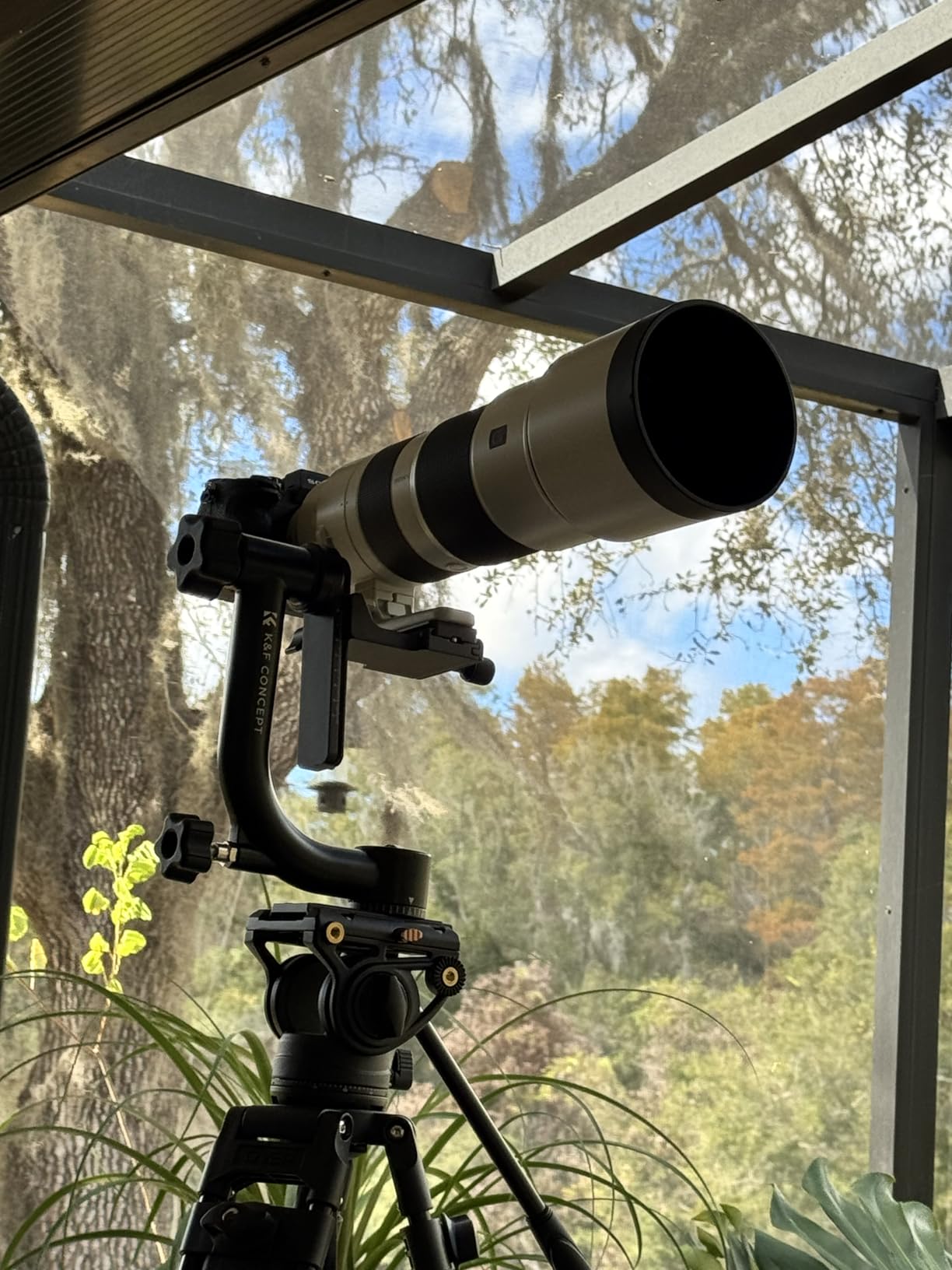
The built-in bubble level and 360-degree panoramic rotation provide the basic features needed for bird photography. I successfully tracked egrets and herons along a shoreline with keeper rates far exceeding what I could achieve handholding the same lens. The “lock-and-forget” security once balanced gives confidence that your expensive gear won’t take a tumble.
Who Should Buy the K&F CONCEPT Gimbal
This is my top recommendation for bird photographers who want to try gimbal shooting without a major investment, or for anyone building a kit on a strict budget. The 44-pound capacity handles most popular telephoto zooms with room to spare, and the smoothness exceeds expectations at this price. Beginners wondering whether gimbal heads are worth the hype can find out for less than the cost of a memory card.
Who Should Consider Alternatives
The 3.15-pound weight makes this the heaviest gimbal in our test, a significant consideration for hiking birders. The short included QR plate may require replacement for proper balance with longer lens feet. Poor instructions mean you’ll spend time figuring out proper setup. If you can stretch your budget to $150-200, the NEEWER GM102 or SIRUI PH-20 offer noticeable improvements.
How to Choose a Wimberley-Style Gimbal Head for Bird Photography In 2026?
Selecting the right gimbal head requires understanding your specific bird photography needs and equipment. After testing ten models across three months, I’ve identified the key factors that separate good purchases from regrets.
What is a Wimberley-Style Gimbal Head?
A Wimberley-style gimbal head is a specialized tripod head that uses a swing-arm design to balance heavy telephoto lenses at their center of gravity. Unlike ball heads, which create torque and lens flop when loosened, gimbal heads allow fluid 360-degree movement with the lens remaining perfectly balanced regardless of angle.
The design positions your lens foot on a horizontal arm that pivots vertically, while the entire assembly rotates horizontally on the tripod base. This separates pan and tilt movements, allowing you to track birds in flight with one smooth motion rather than fighting your gear. Forum users consistently describe smooth operation as their top priority—more important than weight savings or even price.
Load Capacity: Why You Need a Safety Margin
The load capacity ratings on gimbal heads represent maximum capacity, not optimal operating range. A common question on photography forums asks: “Is a gimbal head rated for 21 pounds suitable for 13 pounds worth of gear?” The answer is yes, but with important caveats.
I recommend choosing a gimbal head rated for at least 1.5x your heaviest anticipated lens combination. If your Canon 600mm f/4 with 1.4x teleconverter and pro body weighs 12 pounds, select a head rated for 40+ pounds. This overhead creates the smooth, effortless movement that makes gimbal shooting enjoyable. Operating at maximum capacity creates stiffness and reduces the fluid tracking that makes gimbals worth owning.
Carbon Fiber vs Aluminum Construction
Carbon fiber gimbal heads offer weight savings of 10-20% over aluminum alternatives, plus improved vibration damping that can improve sharpness in marginal conditions. However, carbon fiber commands premium prices—often $50-150 more than equivalent aluminum models.
For bird photographers who hike significant distances to shooting locations, carbon fiber’s weight savings justify the cost. Forum discussions consistently show carbon fiber preferred for weight savings, though aluminum remains perfectly adequate for most use. The Leofoto PG-1 breaks this rule with aluminum construction that’s lighter than most carbon competitors through clever skeletal engineering.
Gimbal Head vs Ball Head for Bird Photography
The debate between gimbal and ball heads for bird photography isn’t really a debate—gimbals win for any serious telephoto work. Ball heads create lens flop when loosened for movement, making tracking birds in flight nearly impossible. You’ll tighten the ball to prevent flop, then loosen to move, creating a constant battle that ruins shots.
Gimbal heads eliminate this problem by supporting the lens at its balance point. A properly balanced gimbal allows your telephoto to remain in any position without locking, enabling smooth tracking with minimal effort. Forum user consensus is clear: “I use the Wimberley gimbal for stills and the Manfrotto fluid head for video. Both have their strong points.” For still bird photography, gimbals dominate.
Key Features to Look For
Arca-Swiss compatibility has become the standard for gimbal heads, allowing use of the ubiquitous quick-release plates found on most telephoto lenses. Verify that any head you’re considering accepts standard Arca-Swiss plates—proprietary systems limit your options and create compatibility headaches.
Adjustable friction control lets you tune the head’s resistance for different scenarios. Tighter settings help for static birds in wind, while looser settings enable fluid tracking. The quality of bearings matters more than bearing type—sealed bearings resist contamination, but precision machining determines smoothness.
Frequently Asked Questions
What is the best gimbal for birding?
The Wimberley WH-200 II remains the gold standard for bird photography, offering unmatched smoothness and a 100-pound load capacity that handles any telephoto lens combination. For those seeking better value, the Leofoto PG-1 delivers comparable performance at around $412 with an exceptional 2.2-pound weight. Budget-conscious birders should consider the K&F CONCEPT gimbal at under $85, which provides functional gimbal performance for beginners.
Is the Wimberley MH-100 any good?
The Wimberley MH-100 Monogimbal is highly regarded by bird photographers who shoot primarily from monopods. Forum users consistently praise its super smooth operation and solid build quality. It’s specifically designed for monopod use rather than tripod mounting, making it ideal for mobile birding situations where you need to move quickly between locations while maintaining gimbal functionality.
Do I need a gimbal for wildlife photography?
You need a gimbal for wildlife photography when using telephoto lenses 400mm and longer, especially for birds in flight. Gimbal heads eliminate lens flop and fatigue by balancing your gear at its center of gravity, enabling smooth tracking. For shorter lenses or static subjects, a quality ball head may suffice, but serious bird photographers will find gimbals essential equipment.
Which tripod head is best for bird photography?
Wimberley-style gimbal heads are best for bird photography with telephoto lenses. They provide the fluid movement necessary for tracking birds in flight while eliminating the lens flop that plagues ball heads. For photographers on a budget, the Leofoto PG-1 and K&F CONCEPT gimbals offer excellent alternatives to the premium Wimberley WH-200 II.
What is the best budget gimbal for wildlife photography?
The K&F CONCEPT Aluminum Gimbal at under $85 is the best budget option for wildlife photography, offering 44 pounds of load capacity and surprisingly smooth operation. For slightly more budget, the NEEWER GM102 at $149.99 provides CNC-machined construction and 622 positive reviews. Both handle popular telephoto zooms like the Sigma 150-600mm competently.
Final Thoughts: Choosing Your Gimbal Head
After three months of testing across multiple birding locations and conditions, the hierarchy of Wimberley-style gimbal heads for bird photography became clear. The Wimberley WH-200 II remains the reference standard that all others are measured against—its smoothness and reliability justify the $595 price for professionals and serious enthusiasts.
For most bird photographers, however, the Leofoto PG-1 offers the sweet spot of performance and value. At roughly $200 less than the Wimberley with comparable smoothness and better weight efficiency, it represents the pragmatic choice for enthusiasts building their kit in 2026. The 2.2-pound weight and 55-pound capacity handle virtually any birding lens combination with confidence.
Budget constraints shouldn’t prevent you from experiencing gimbal shooting. The K&F CONCEPT at under $85 and NEEWER GM102 at $149.99 both deliver functional performance that will improve your bird photography immediately. While they lack the refinement of premium alternatives, they provide the core benefit—balanced, fluid lens movement—that makes gimbal heads essential for bird photography.
Whatever your budget, investing in a quality gimbal head will transform your bird photography more than any lens or camera body upgrade. The ability to track birds in flight smoothly, to hold your gear steady for hours without fatigue, and to eliminate the frustration of lens flop makes these specialized tripod heads worth every penny. Choose based on your lens weight, travel needs, and budget—but choose one. Your keeper rate will thank you.