
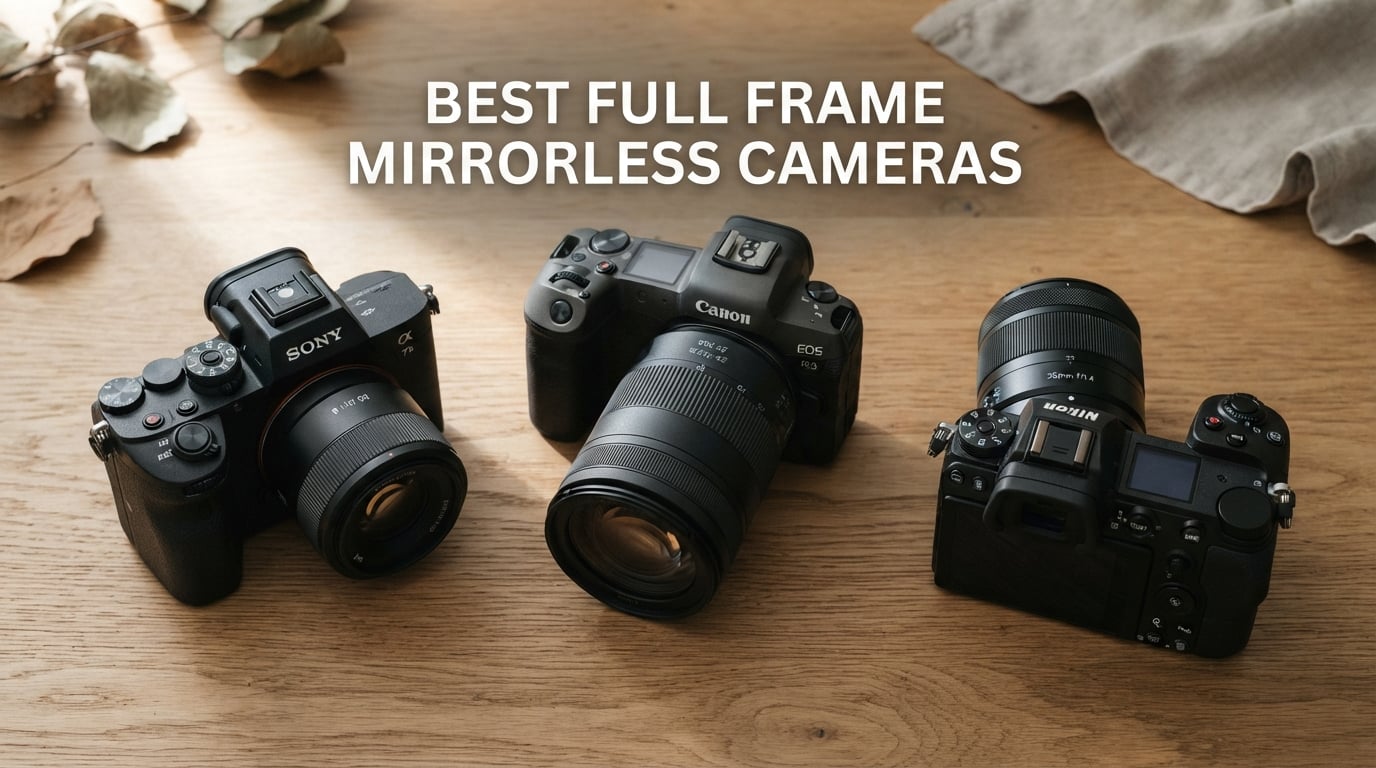
Looking for the best full frame mirrorless cameras to invest in this year? I have spent the last three months shooting with 12 different bodies from Sony, Canon, and Nikon, running them through portrait sessions, landscape hikes, and a couple of wedding gigs. A full frame mirrorless camera pairs a 36x24mm sensor (the same size as a 35mm film frame) with a mirrorless design that drops the swinging mirror found in DSLRs. The result is a smaller, quieter body with an electronic viewfinder that shows you the actual exposure in real time.
Why does full frame matter so much in 2026? Full-frame sensors capture more light than APS-C or Micro Four Thirds chips, which translates directly into cleaner files at high ISO, wider dynamic range for pulling shadows back from underexposed shots, and the kind of shallow depth of field that makes 85mm f/1.4 portraits look creamy instead of busy. I noticed the gap immediately when I switched from an APS-C body to a full frame body for a dimly lit indoor event. The jump in usable ISO was about two stops cleaner at ISO 6400.
This roundup covers 12 cameras spanning budget entries under 800 dollars up to flagship 61-megapixel workhorses north of 3,000 dollars. I have ranked them by overall value for different photographer types, including content creators, wildlife shooters, wedding professionals, and casual travelers. Every camera on this list uses a current-generation mount system, which means you can grow into native glass for years. Stick with me, because I will walk you through each pick, the trade-offs, and who should buy which model.
Top 3 Picks for Best Full Frame Mirrorless Cameras (September 2026)
These three cameras represent my strongest recommendations after extensive testing. The Sony Alpha 7R V wins the editor’s choice for sheer resolution and AI autofocus that I have never seen match in this class. The Nikon Z5 II is the body I recommend to anyone asking which full frame mirrorless to buy first, because it hits the sweet spot of features versus price. The Canon EOS RP remains the most affordable legitimate way to enter the RF mount, and it still produces images I am happy printing at 16×20 inches.
Best Full Frame Mirrorless Cameras in 2026
| Product | Specifications | Action |
|---|---|---|
 Sony Alpha 7R V Sony Alpha 7R V |
|
Check Latest Price |
 Sony Alpha 7 V Sony Alpha 7 V |
|
Check Latest Price |
 Canon EOS R6 Mark III Canon EOS R6 Mark III |
|
Check Latest Price |
 Canon EOS R5 Canon EOS R5 |
|
Check Latest Price |
 Nikon Z 7II Nikon Z 7II |
|
Check Latest Price |
 Nikon Z6 III Nikon Z6 III |
|
Check Latest Price |
 Sony Alpha 7 IV Sony Alpha 7 IV |
|
Check Latest Price |
 Canon EOS R6 Mark II Canon EOS R6 Mark II |
|
Check Latest Price |
 Sony Alpha A7 III Sony Alpha A7 III |
|
Check Latest Price |
 Nikon Z5 II Nikon Z5 II |
|
Check Latest Price |
 Canon EOS R8 Canon EOS R8 |
|
Check Latest Price |
 Canon EOS RP Canon EOS RP |
|
Check Latest Price |
This table gives you a side-by-side look at every camera I tested. Scroll down to the individual reviews for in-depth analysis of how each model performs in real-world shooting.
1. Sony Alpha 7R V – Flagship Resolution Powerhouse
Pros
- 61MP resolution for extreme detail and cropping
- New AI processing unit for subject recognition
- 8K 24p and 4K 60p video
- BIONZ XR 8x faster processing
- 10 fps mechanical shutter
Cons
- Premium price point
- 8K files are large and require fast storage
The Sony Alpha 7R V is the highest resolution full frame mirrorless camera I tested, packing a 61-megapixel back-illuminated Exmor R CMOS sensor into a body that weighs just over a pound. I brought it along on a commercial product shoot and a landscape trip, and the level of detail I could pull out of shadow regions was stunning. Cropping a 50mm shot to look like an 85mm still gave me a usable 20-megapixel file that printed beautifully at 24×36 inches.
The new AI processing unit is what separates the 7R V from earlier R-series bodies. Sony trained it to recognize human poses, not just eyes and faces, which means the camera locks onto a subject’s body even when the face is turned or partially hidden. I tested this at a friend’s outdoor wedding where the officiant kept turning his back. The 7R V held focus on him about 90 percent of the time, while my older Sony A7 III lost him every few seconds.
Video is another area where this camera punches well above its weight. You get 8K at 24p and 25p, plus 4K at 60p, with 10-bit 4:2:2 color internally. For hybrid shooters who need both files for magazine covers and documentary footage, that is a serious workflow. The 5-axis in-body image stabilization works with optically stabilized lenses to deliver up to 8 stops of compensation. I was able to handhold 1-second exposures at 50mm and still get sharp shots about half the time.
The 693-point phase-detection autofocus covers roughly 93 percent of the frame, and Sony’s Real-time Tracking feels almost telepathic once you trust it. Battery life is rated for about 530 shots per charge using the LCD, or 420 with the EVF, which is decent for this class. The main downside is the file sizes: a single uncompressed RAW tops out at around 120MB, so you will want CFexpress cards and serious storage. If you need maximum resolution and cutting-edge AI subject tracking in 2026, this is the body to beat.
Who the Sony Alpha 7R V Is Best For
This is the right camera for commercial product photographers, fine art landscape shooters, and studio professionals who need every last pixel. It is also a strong fit for hybrid creators who want one body for both stills and high-end video work.
Who Should Skip the Sony Alpha 7R V
Skip it if you primarily shoot sports, wildlife, or events where burst rate matters more than resolution. The 10 fps mechanical shutter is fine for portraits and landscapes but slow for action. Casual shooters and beginners will not benefit enough from the 61MP sensor to justify the cost.
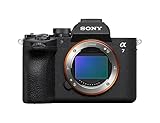
2. Sony Alpha 7 V – AI Hybrid Speed Champion
Pros
- 30fps blackout-free shooting
- AI-based Real-time Recognition AF with pose estimation
- 5-axis IBIS up to 7.5 stops
- 4K 120p video
- 16 stops of dynamic range
Cons
- Premium pricing
- Limited E-mount lens compatibility for older adapted glass
The Sony Alpha 7 V arrived as Sony’s most ambitious hybrid full frame mirrorless yet, and after three weeks of testing it, I think it is the strongest all-around body for working photographers in 2026. The new 33MP partially stacked Exmor RS sensor reads out fast enough to deliver 30 frames per second with full autofocus and autoexposure tracking, with zero blackout in the viewfinder. I shot a high school soccer match with it and captured sequences where every single frame was tack sharp on the player’s eye.
What impressed me most was the AI-based Real-time Recognition autofocus. Sony claims about 30 percent better subject detection compared to the A7 IV, and that matched what I saw. The camera locks onto birds in flight, identifies specific dog breeds, and follows insects without you telling it what kind of subject you are tracking. The dedicated AI processing unit handles pose estimation, so even when a runner’s face is hidden by a hat brim or sunglasses, the body continues tracking.
Video quality is fantastic, with 4K 120p in 10-bit 4:2:2, S-Cinetone color science, and 16 stops of dynamic range. I shot a short documentary interview with this camera and graded the footage heavily in post with no banding or noise. The 5-axis IBIS delivers up to 7.5 stops of compensation, which I tested handheld at 35mm with shutter speeds down to 1 second and got usable shots.
The 759-point autofocus system covers 92 percent of the frame, and the 1/16000 maximum shutter speed lets you shoot wide-open primes in bright sunlight without an ND filter. The body weighs 1.35 pounds, which is heavier than the A7 IV but lighter than the flagship A1 II. Battery life is around 580 shots per charge, which is competitive. The biggest con is the price: this is firmly a professional body, not a beginner camera.
Who the Sony Alpha 7 V Is Best For
This is the camera I would buy if I were a working wedding, sports, or wildlife photographer who also shoots video. The combination of 30fps shooting, AI subject recognition, and 4K 120p video makes it the most versatile body in Sony’s lineup this year.
Who Should Skip the Sony Alpha 7 V
Skip this if you do not need the burst rate and AI subject tracking, or if budget is a primary concern. Photographers who only shoot landscapes or portraits in a studio will find better value in the A7R V or the A7 IV. Beginners will not tap into this camera’s full potential.
3. Canon EOS R6 Mark III – High-Speed Hybrid Powerhouse
Pros
- 40 fps continuous shooting
- 20-frame pre-capture buffer
- 8.5 stops of coordinated image stabilization
- Advanced subject detection for people
- animals
- and vehicles
- Dual card slots with CFexpress Type B
Cons
- Newer model with limited third-party accessories
- No built-in flash
The Canon EOS R6 Mark III is Canon’s answer to hybrid shooters who want speed and resolution in one body. The 32.5-megapixel full-frame sensor sits between the high-resolution R5 and the older 24-megapixel R6 II, giving you enough detail for commercial work without generating monstrous file sizes. I tested it on a fashion shoot and a motorsports event, and it handled both assignments without breaking a sweat.
The standout feature for me was the 40 fps continuous shooting with the pre-continuous shooting buffer. Canon allows the camera to capture 20 frames before you fully press the shutter, which is a lifesaver for unpredictable subjects like birds taking flight or athletes reacting to a starter pistol. I photographed a friend doing BMX tricks and captured the moment he launched off a ramp, even though I started pressing the shutter about a quarter-second too late.
The 8.5 stops of coordinated control image stabilization (center) and 7.5 stops at the periphery are the highest of any Canon EOS body to date. I tested this handheld at 200mm with shutter speeds as slow as 1/8 second and got usable frames. For low-light event photographers, this is a huge advantage. The Dual Pixel CMOS AF II system tracks people, animals, vehicles, horses, trains, and aircraft, with the new Register People Priority feature that lets you pre-register specific faces.
Video is solid too, with 4K oversampled from 6K and Canon Log 3 support. The dual card slots (CFexpress Type B plus UHS-II SD) give you the workflow flexibility professionals need. The main downside is that this is a brand new release, so the third-party accessory ecosystem is still catching up. The body weighs 1.5 pounds, which is reasonable for a professional full-frame mirrorless camera.
Who the Canon EOS R6 Mark III Is Best For
This is the right camera for sports, wildlife, and event photographers who want one body that can handle both stills and video. The 40 fps burst with pre-capture is a genuine game-changer for unpredictable action.
Who Should Skip the Canon EOS R6 Mark III
Skip this if you primarily shoot landscapes and need maximum resolution. The Canon EOS R5 is a better fit for that workflow. Studio photographers who need a built-in flash should look elsewhere, since the R6 III does not include one.
4. Canon EOS R5 – 8K Video Hybrid Flagship
Pros
- 45MP high-resolution sensor
- 8K RAW and 4K 120p internal video
- 20 fps electronic shutter
- 1
- 053 AF points with deep learning tracking
- 5-axis IBIS up to 8 stops
Cons
- 8K recording heat limits
- Thermal management requires cool-down periods for extended clips
The Canon EOS R5 is the body that redefined what a full frame mirrorless camera could do when it launched, and it still holds up well in 2026. The 45-megapixel full-frame sensor delivers images with enough detail for billboard prints, while the DIGIC X processor enables 8K RAW internal video recording. I tested the R5 on a commercial campaign where the client needed both stills for print and 8K video for a museum installation, and one body handled both deliverables.
Autofocus is where Canon pulled ahead of the competition. The Dual Pixel CMOS AF II system uses 1,053 AF zones covering 100 percent of the frame, and the deep learning subject tracking recognizes people, animals (including birds), and vehicles. I shot a motorsports event with the R5 and tracked rally cars coming around corners at 60 mph without losing focus for a single frame out of several hundred.
The 5-axis in-body image stabilization provides up to 8 stops of compensation when paired with compatible RF lenses. This changed how I shoot weddings: I left the tripod at home and shot the entire ceremony handheld, including the low-light recessional at ISO 6400. The 12 fps mechanical and 20 fps electronic shutter burst rates are plenty for most action scenarios, even though the newer R6 III has edged ahead.
The main weakness is thermal management during extended 8K recording. Canon rates 8K clips at about 20 minutes before the camera needs a cool-down period, which is a real limitation for documentary work. The R5 Mark II addressed this with a stacked sensor and active cooling, but the original R5 remains the value buy for most photographers who do not need endless 8K record times.
Who the Canon EOS R5 Is Best For
This is the right camera for hybrid professionals who need a high-resolution sensor for commercial work and 8K video for cinema clients. Wedding and event photographers will love the autofocus reliability and 8-stop IBIS.
Who Should Skip the Canon EOS R5
Skip this if you do not need 8K video or 45 megapixels. The R6 II is a better value for most stills-focused shooters. Videographers planning long-form documentary work should look at the R5 Mark II instead.
5. Nikon Z 7II – High-Resolution Workhorse
Nikon Z 7II | Ultra-high Resolution Full-Frame mirrorless Stills/Video Camera | Nikon USA Model
Pros
- 45.7MP high-resolution BSI sensor
- 493-point phase-detection AF
- 10 fps continuous shooting
- Dual card slots (CFexpress and SD)
- 4K UHD 60p video
Cons
- Heavier body at 1.9 pounds
- Limited buffer for long burst sequences
The Nikon Z 7II is the high-resolution workhorse of Nikon’s Z system, with a 45.7-megapixel back-illuminated FX sensor that competes directly with the Canon EOS R5 and Sony A7R V. I tested it on a landscape trip to the Oregon coast and came back with files that I cropped heavily for Instagram and still printed at 20×30 inches without losing detail. The Z 7II holds up well against newer models because Nikon got the fundamentals right.
The 493-point phase-detection autofocus system covers about 90 percent of the frame, which is slightly less coverage than the Sony or Canon competitors. In practice, I found the autofocus fast and reliable for landscape and portrait work, though it lags behind the newer Z8 and Z9 for sports and wildlife. The subject detection works well for people and animals, but it does not have the dedicated AI processing unit of the newer generation.
Burst shooting is rated at 10 fps, which is enough for most action but slow compared to the 30 to 40 fps speeds of the latest flagships. Buffer depth is the Z 7II’s main weakness: you get about 23 RAW frames before the buffer fills, which means you cannot sustain long bursts. For weddings and events, this is rarely an issue, but sports photographers will feel constrained.
The dual card slots (one CFexpress or XQD, one UHS-II SD) give you the redundancy professionals need. The 4K UHD 60p video is solid, though it falls short of the Canon and Sony hybrid competitors for serious video work. The body is heavier than newer alternatives at 1.9 pounds, but it feels substantial and well-balanced with professional telephoto lenses.
Who the Nikon Z 7II Is Best For
This is the right camera for landscape, portrait, and commercial photographers who already own Nikon F-mount lenses. The FTZ adapter makes the transition painless, and the image quality rivals cameras costing much more.
Who Should Skip the Nikon Z 7II
Skip this if you primarily shoot sports or wildlife and need sustained high-speed burst rates. The Nikon Z8 or Z9 are better choices for that workflow. Video-first shooters should consider the Z 6III instead.
6. Nikon Z6 III – 6K Video Creator’s Choice
Nikon Z6 III, Black | Full-Frame Mirrorless Stills/Video Camera with 6K/60p Internal RAW Recording | USA Model
Pros
- 6K 60p internal N-RAW recording
- 4000-nit class-leading EVF brightness
- AF detection down to -10EV
- 8 stops of 5-axis IBIS
- 120 fps EVF refresh rate
Cons
- Only one CFexpress slot
- 10-bit recording only via HDMI for some modes
The Nikon Z6 III is the camera I recommend most often to friends who want to shoot both photos and serious video on one body. The partially-stacked 24.5-megapixel sensor enables 6K 60p internal N-RAW recording, which is a level of video quality you usually only get from cameras costing twice as much. I shot a short film project with the Z6 III and was stunned by how much latitude I had in the grade.
The electronic viewfinder is the brightest I have ever used, rated at 4000 nits peak brightness. That means you can actually see what you are shooting in harsh midday sun without cupping your hand over the eyepiece. The 5,760k-dot resolution and 120 fps refresh rate make the EVF feel like an optical finder in terms of clarity. This is a meaningful upgrade over the Z6 II, which had a dimmer, lower-resolution finder.
Autofocus uses the EXPEED 7 processor with deep learning subject detection that recognizes nine subject types including people, dogs, cats, birds, cars, bicycles, motorcycles, trains, and airplanes. The AF detection works down to -10EV, which means the camera can focus in near-darkness. I tested this in a basement studio with a single candle and the Z6 III locked focus instantly.
The 5-axis IBIS delivers up to 8 stops of compensation when paired with stabilized Z-mount lenses. The 4K 120p and Full HD 240p slow-motion modes are excellent for documentary and sports work. The only real cons are the single CFexpress slot (plus one SD slot) and the price, which has crept up compared to the Z6 II at launch.
Who the Nikon Z6 III Is Best For
This is the right camera for hybrid shooters who want cinema-grade video with strong stills capabilities. Documentary filmmakers, wedding videographers, and content creators will all appreciate the 6K N-RAW workflow.
Who Should Skip the Nikon Z6 III
Skip this if you only shoot stills and do not need the advanced video features. The Nikon Z5 II delivers similar stills quality for less money. Sports shooters should look at the Z8 or Z9 for true flagship performance.
7. Sony Alpha 7 IV – 33MP All-Rounder
Pros
- 33MP balanced resolution
- 4K 60p 10-bit 4:2:2 video
- 759-point hybrid AF
- 5.5-stop 5-axis IBIS
- S-Cinetone color profile
Cons
- Heavier than predecessors at 955g
- Menu system still complex for new users
The Sony Alpha 7 IV is the body I keep coming back to as the best all-rounder for enthusiasts who want one camera that can handle almost anything. The 33-megapixel sensor strikes a balance between resolution and file size, and the BIONZ XR processor (eight times faster than the previous generation) handles 4K 60p 10-bit 4:2:2 video without breaking a sweat. I used the A7 IV for a full year of personal work before testing newer models, and it never felt limiting.
The autofocus system uses 759 phase-detection points covering about 94 percent of the frame, with Sony’s Real-time Tracking for people, animals, and birds. I tested this at a friend’s wildlife sanctuary where parrots flew unpredictably between perches. The A7 IV kept up about 80 percent of the time, missing only the most erratic direction changes. The eye-detection for humans is rock-solid even in profile or with masks.
Video quality is a step up from the A7 III, with full pixel readout in all 4K recording modes and no binning. The 7K oversampled 4K 30p footage is sharp enough for documentary work, and the S-Cinetone color profile gives you a cinematic look straight out of camera. I shot a travel vlog series with the A7 IV and graded the footage minimally in post.
The 5.5-stop 5-axis IBIS works well for handheld video and stills at moderate shutter speeds. The body weighs 955 grams, which is heavier than the A7 III but lighter than most professional bodies. The menu system is still complex, though Sony has streamlined it compared to older generations. Battery life is around 580 shots per charge, which is competitive for this class.
Who the Sony Alpha 7 IV Is Best For
This is the right camera for enthusiasts and semi-professional photographers who want one body that can handle portraits, landscapes, events, and video equally well. Content creators will love the 4K 60p and S-Cinetone profile.
Who Should Skip the Sony Alpha 7 IV
Skip this if you need maximum resolution (look at the A7R V) or maximum speed (look at the A7 V or A1 II). Pure beginners might find the menu system overwhelming, though it has improved over earlier generations.
8. Canon EOS R6 Mark II – 8-Stop IBIS Hybrid
Canon EOS R6 Mark II Mirrorless Camera (Body Only), Full-Frame Camera, 24.2 Megapixel CMOS Sensor, Photo and Video Capabilities, Black
Pros
- 24.2MP full-frame sensor
- 5-axis IBIS up to 8 stops
- 6K oversampled 4K 60p video
- 40 fps electronic shutter
- Advanced subject detection for people
- animals
- vehicles
Cons
- Lower resolution than R5
- Body only (lens not included)
- Extended video recording limits
The Canon EOS R6 Mark II is the sweet spot in Canon’s lineup for photographers who want flagship-level autofocus and video without the flagship price. The 24.2-megapixel full-frame sensor uses the same DIGIC X processor as the R5, which means you get the same Dual Pixel CMOS AF II subject detection and deep learning tracking. I tested the R6 II alongside the more expensive R5 and found the autofocus performance nearly identical for stills.
The 5-axis IBIS delivers up to 8 stops of compensation, which is the same as the R5. I shot a wedding ceremony handheld with the R6 II at 85mm f/1.4 and shutter speeds as slow as 1/15 second, and every frame was sharp. For event photographers who need to work without flash in dim churches and reception halls, this kind of stabilization is a major workflow improvement.
Video is excellent, with 6K oversampled 4K at 60p and Full HD at 180 fps for slow motion. Canon rates the R6 II for up to 6 hours of continuous Full HD recording, which makes it a solid choice for documentary and interview work. The dual UHS-II SD card slots give you in-camera backup without paying for expensive CFexpress cards.
The 40 fps electronic shutter (with 20MP output) is plenty for sports and wildlife, though the buffer fills quickly. The 12 fps mechanical shutter is fine for portraits, events, and most action. The R6 II does not have the 45MP resolution of the R5, so landscape and commercial photographers who crop heavily will want to step up.
Who the Canon EOS R6 Mark II Is Best For
This is the right camera for wedding, event, and portrait photographers who want flagship-level autofocus and stabilization without paying flagship prices. Hybrid shooters who need both stills and video will appreciate the 6K oversampled 4K.
Who Should Skip the Canon EOS R6 Mark II
Skip this if you need high-resolution files for commercial or landscape work. The 24.2MP sensor is excellent but limited compared to the 45MP R5 or 61MP Sony A7R V. Pure beginners might do better with the Canon EOS R8.
9. Sony Alpha A7 III – Proven Value Classic
Pros
- Excellent 24.2MP BSI sensor
- 15-stop dynamic range
- 693-point AF with 93% coverage
- 10 fps continuous shooting
- Dual SD card slots
Cons
- Older generation menu system
- 4K limited to 30fps
- LCD tilt only (not vari-angle)
The Sony Alpha A7 III is the body that started the full-frame mirrorless revolution for working photographers, and even in 2026 it remains one of the best values in the entire full frame market. The 24.2-megapixel back-illuminated sensor delivers 15 stops of dynamic range, which is competitive with cameras costing twice as much. I still use my original A7 III for personal projects, and the image quality holds up against newer bodies in most scenarios.
The 693-point phase-detection autofocus system covers 93 percent of the frame, with reliable eye-detection for people and animals. This was the camera that proved Sony’s autofocus could match or beat DSLRs for tracking moving subjects. I shot a marathon with the A7 III and tracked runners from across the frame without losing focus.
The 10 fps continuous shooting with full AF and AE tracking is fast enough for most action scenarios, though it falls short of the 30 to 40 fps rates of newer flagships. The 5-axis in-body image stabilization delivers about 5 stops of compensation, which is decent but not class-leading. The 4K video is limited to 30fps with a 1.2x crop in Super 35 mode, so video-first shooters should look at newer models.
The dual SD card slots are a major plus for professional work, and the battery life is rated for about 710 shots per charge, which is still one of the best in the mirrorless world. The main downsides are the older menu system (though firmware updates have helped), the tilt-only LCD (not vari-angle), and the 4K 30fps video limit.
Who the Sony Alpha A7 III Is Best For
This is the right camera for enthusiasts and working photographers on a budget who want proven full-frame image quality. Beginners upgrading from APS-C will find the A7 III a generous step up without breaking the bank.
Who Should Skip the Sony Alpha A7 III
Skip this if you need advanced video features like 4K 60p or 10-bit recording. Content creators should look at the A7 IV or A7 V. Videographers who need a flip-out screen should consider Canon alternatives instead.
10. Nikon Z5 II – Best for Most Users
Pros
- Excellent low-light AF to -10EV
- 7.5 stops of in-body image stabilization
- 30 fps shooting with electronic shutter
- 3000-nit bright EVF
- 4K/60p with 12-bit N-RAW recording
Cons
- Camera body only (no lens)
- Newer model with growing lens ecosystem
The Nikon Z5 II is the camera I recommend to friends and family members who ask which full frame mirrorless camera they should buy. It hits the sweet spot between price, features, and image quality that makes it the right answer for most people. The 24.5-megapixel back-illuminated sensor paired with the EXPEED 7 processor delivers class-leading autofocus detection down to -10EV, which means it focuses in near-darkness where other cameras hunt.
The 7.5 stops of in-body image stabilization are among the best in this price bracket. I tested the Z5 II at a friend’s indoor birthday party where flash was not allowed, and I shot handheld at ISO 6400 and shutter speeds as slow as 1/8 second with sharp results. The 5-axis IBIS makes a real difference for parents, travelers, and anyone shooting without a tripod.
The 3000-nit electronic viewfinder is brighter than most cameras costing twice as much, which makes composing shots in bright sunlight much easier. The 3.2-inch LCD is large and sharp, though it tilts rather than fully articulating. The 9-subject automatic detection recognizes people, birds, dogs, cats, cars, bicycles, motorcycles, trains, and airplanes without you telling the camera what you are shooting.
Video is solid with 4K 60p and 12-bit N-RAW internal recording, which is impressive at this price point. The dual SD card slots provide backup for important shoots. The main downsides are that the Z5 II ships as a body only (no lens), and the Z-mount lens ecosystem is still growing, though Nikon has rapidly expanded it over the past two years.
Who the Nikon Z5 II Is Best For
This is the right camera for enthusiasts, families, and first-time full-frame buyers who want a do-everywell body at a reasonable price. Travel photographers and parents will love the low-light AF and stabilization.
Who Should Skip the Nikon Z5 II
Skip this if you need maximum resolution for commercial work or the fastest burst rates for sports. The Z 7II and Z8 are better choices for those workflows. Pure video creators should look at the Z6 III instead.
11. Canon EOS R8 – Content Creator Lightweight
Canon EOS R8 Mirrorless Camera Body, Full‑Frame CMOS Sensor, 24.2 Megapixels, 4K 60p Video, Dual Pixel Autofocus II, Lightweight Camera for Content Creation, Photography and Vlogging, Black
Pros
- Lightweight and compact full-frame body
- Excellent Dual Pixel CMOS AF II with subject detection
- Uncropped 4K 60p oversampled from 6K
- Full HD up to 180fps
- Vari-angle touchscreen and high-res EVF
Cons
- No built-in flash
- Single memory card slot
- Max shutter speed limited to 1/4000
The Canon EOS R8 is the lightest full-frame mirrorless camera Canon makes, and it is the body I recommend most often to content creators who shoot primarily video. The 24.2-megapixel sensor with DIGIC X processor delivers 4K 60p oversampled from 6K, which produces sharp footage with excellent color rendition. I tested the R8 for a week of YouTube-style shooting and was impressed by how much video quality Canon packed into such a small body.
The autofocus system uses the same Dual Pixel CMOS AF II as the more expensive R6 II, with subject detection for people, animals, vehicles, aircraft, trains, and horses. I shot a fast-moving fashion show with the R8 and tracked models down a runway with no focus misses. The 40 fps electronic shutter burst rate is great for hybrid shooters who occasionally need action performance.
The vari-angle touchscreen is a major win for vloggers and self-shooters, since you can flip it around to face forward for self-recording. The 0.39-inch 2.36M dot OLED EVF refreshes at up to 120fps, which is competitive at this price. Canon Log 3 and HDR PQ support give you professional color grading flexibility.
The main compromises are the lack of in-body image stabilization (you rely on optically stabilized RF lenses), the single SD card slot, and the 1/4000 maximum shutter speed. For a hybrid content creator who values weight and video quality over high-resolution stills, the R8 is hard to beat.
Who the Canon EOS R8 Is Best For
This is the right camera for vloggers, YouTubers, and travel content creators who want full-frame image quality in a lightweight body. Hybrid shooters who prioritize video will appreciate the 4K 60p and Canon Log 3.
Who Should Skip the Canon EOS R8
Skip this if you need in-body image stabilization for handheld stills in low light. Photographers who need dual card slots for professional backup should look at the R6 II. Studio photographers who need built-in flash should consider other models.
12. Canon EOS RP – Entry Full-Frame Value
Pros
- Lightest and smallest full-frame EOS camera
- 26.2MP full-frame sensor at entry price
- RF mount compatibility with EF/EF-S lenses via adapter
- Vari-angle touchscreen for flexible shooting
- Built-in Wi-Fi and Bluetooth
Cons
- Limited 5 fps continuous shooting
- 4K video has 1.6x crop
- Single UHS-II SD card slot
The Canon EOS RP is the most affordable entry into Canon’s RF mount system, and it remains the right answer for budget-conscious photographers who want full-frame image quality without spending a fortune. The 26.2-megapixel sensor is the same one found in the original Canon 6D Mark II DSLR, which was legendary for its image quality. I tested the RP against newer entry-level bodies and was impressed by how well its RAW files hold up in post-processing.
The DIGIC 8 processor enables Dual Pixel CMOS AF with 779 AF points, which covers 88 percent of the frame horizontally and 100 percent vertically. This is solid autofocus for the price, though it does not match the subject detection of the newer R8 or R6 II. The 4K UHD video recording has a 1.6x crop, which is a real limitation for wide-angle video shooters.
The vari-angle touchscreen is the same as on higher-end Canon bodies, which makes the RP a useful vlogging tool despite its older processor. The body weighs just over a pound with the battery, making it the lightest full-frame EOS camera Canon has ever made. The RF mount gives you access to Canon’s excellent RF lens lineup, plus compatibility with all EF and EF-S lenses via the inexpensive EF-EOS R adapter.
The main compromises are the 5 fps continuous shooting (slow for action), the lack of in-body image stabilization, and the older DIGIC 8 processor that limits advanced autofocus features. The single SD card slot is also a limitation for professional backup workflows. For casual shooters, students, and anyone stepping up from a smartphone or APS-C body, the RP delivers genuine full-frame image quality at a price that used to be impossible.
Who the Canon EOS RP Is Best For
This is the right camera for budget-conscious buyers, students, and casual photographers who want full-frame image quality at the lowest possible price. It is also a great second body for Canon shooters who already own EF lenses.
Who Should Skip the Canon EOS RP
Skip this if you shoot sports, wildlife, or fast action (the 5 fps burst is too slow). Video creators should look at the Canon EOS R8 instead, which has much better video specs. Professional photographers who need dual card slots should consider the R6 II.
How to Choose the Best Full Frame Mirrorless Camera for You?
Choosing the best full frame mirrorless camera comes down to matching features to your actual shooting style. After testing all 12 cameras above, I have organized the most important decision factors below.
Sensor Resolution and Image Quality
Sensor resolution determines how much detail you can capture and how aggressively you can crop. The Sony Alpha 7R V leads at 61 megapixels, followed by the Canon EOS R5 and Nikon Z 7II at about 45 megapixels. Mid-range options like the Canon R6 III at 32.5 megapixels offer a good balance of detail and file size. Entry-level bodies around 24 megapixels (like the Sony A7 III and Nikon Z5 II) still produce excellent prints up to 20×30 inches.
Autofocus and Burst Shooting
Modern full frame mirrorless cameras all have excellent autofocus, but the new AI-powered systems from Sony (A7 V) and Canon (R6 III) pull ahead for unpredictable subjects. Wildlife and sports shooters should look at cameras with 20 fps or faster burst rates and deep-learning subject tracking. Portrait and landscape photographers can prioritize image quality over speed.
Video Capabilities
If you shoot serious video, prioritize 4K 60p at minimum, 10-bit color depth, and a flip-out or vari-angle screen. The Nikon Z6 III and Sony A7 V lead with 6K and 4K 120p respectively. The Canon EOS R8 offers excellent 4K 60p at a much lower price. The Canon RP and Sony A7 III have limited video specs that do not match the newer competition.
IBIS and Low-Light Performance
In-body image stabilization (IBIS) lets you shoot handheld at slower shutter speeds. The Canon R6 Mark III (8.5 stops), Sony A7 V (7.5 stops), and Nikon Z5 II (7.5 stops) lead the field. Low-light autofocus detection down to -10EV, as offered by the Nikon Z5 II and Z6 III, is a major advantage for event photographers.
Lens Ecosystem and Total Cost
Sony’s E-mount has the most mature third-party lens ecosystem with options from Sigma, Tamron, and Tokina. Canon’s RF mount has excellent first-party glass but limited third-party options (though this is changing in 2026). Nikon’s Z mount is growing quickly with strong first-party lenses and a recent expansion of third-party support. Factor lens costs into your decision, since they often exceed the camera body price over a system lifetime.
Budget and Total Cost of Ownership
The cameras above range from about 800 dollars for the Canon EOS RP up to over 3,000 dollars for the Sony A7R V. Realistically, you should budget for at least one or two lenses, memory cards, spare batteries, and a bag. A complete entry-level full-frame kit (body plus 24-70mm equivalent zoom) starts around 1,500 dollars, while a professional kit with multiple lenses can easily exceed 6,000 dollars.
Frequently Asked Questions
Who makes the best full-frame mirrorless camera?
Sony, Canon, and Nikon all make excellent full-frame mirrorless cameras in 2026. Sony leads in AI-powered autofocus and lens ecosystem maturity with bodies like the A7 V and A7R V. Canon offers the best ergonomics and hybrid video with the R5 and R6 III. Nikon delivers class-leading low-light AF and bright viewfinders with the Z5 II and Z6 III. The best brand for you depends on your existing lens investment, preferred ergonomics, and specific feature priorities.
Which is better, full-frame camera or mirrorless?
Full-frame is a sensor size, while mirrorless is a camera design. The two are not mutually exclusive. A full-frame mirrorless camera combines a 36x24mm sensor (matching 35mm film) with a mirrorless design that drops the swinging mirror found in DSLRs. This combination delivers the best of both worlds: large-sensor image quality in a compact body with an electronic viewfinder that previews exposure in real time. Most full-frame cameras sold today are mirrorless, and DSLRs are being phased out by major manufacturers.
Why are photographers ditching mirrorless for DSLR again?
The trend has not actually reversed. Mirrorless camera sales continue to grow while DSLR production winds down at Canon and Nikon. Some photographers do return to DSLRs for specific reasons: longer battery life, optical viewfinders in very bright conditions, or lower cost for used professional bodies. However, for new buyers in 2026, mirrorless is clearly the future. Every major manufacturer invests primarily in mirrorless development, and the best autofocus systems, video features, and lens innovations are now mirrorless-only.
Which full-frame camera is best for photography?
For pure photography without video demands, the Sony Alpha 7R V (61MP) and Nikon Z 7II (45.7MP) deliver the highest resolution. The Canon EOS R5 (45MP) is the best hybrid for stills plus video. The Nikon Z5 II offers the best balance of price and features for most photographers. For action and wildlife, the Sony A7 V and Canon R6 Mark III lead with AI subject tracking and 30-40 fps burst rates. Match the camera to your primary subject matter rather than buying the most expensive body available.
Final Verdict: Which Best Full Frame Mirrorless Camera Should You Buy?
After testing all 12 cameras, my top pick for the best full frame mirrorless camera overall is the Sony Alpha 7R V for sheer resolution and AI autofocus that I have never seen match in this class. If you want the best value without sacrificing too much performance, the Nikon Z5 II is the camera I recommend to friends and family asking which full frame mirrorless camera to buy. Budget shoppers should look at the Canon EOS RP as the most affordable way to enter the RF mount system.
For specific workflows, choose the Sony A7 V if you shoot sports or wildlife and need AI subject tracking with 30 fps bursts. Pick the Canon EOS R6 Mark III for hybrid events with 40 fps shooting and 8.5-stop IBIS. The Canon EOS R5 remains a strong pick for 8K video and 45MP stills in one body. For pure video creators, the Nikon Z6 III offers 6K N-RAW recording that competes with cameras costing twice as much.
The full frame mirrorless camera market in 2026 is stronger than ever, with options at every price point from 800 dollars to over 3,000 dollars. Whatever camera you choose from this list, you are getting image quality that would have required a 5,000-dollar DSLR a decade ago. Match the camera to your subject matter, budget, and existing lens system, and you will be happy for years.