
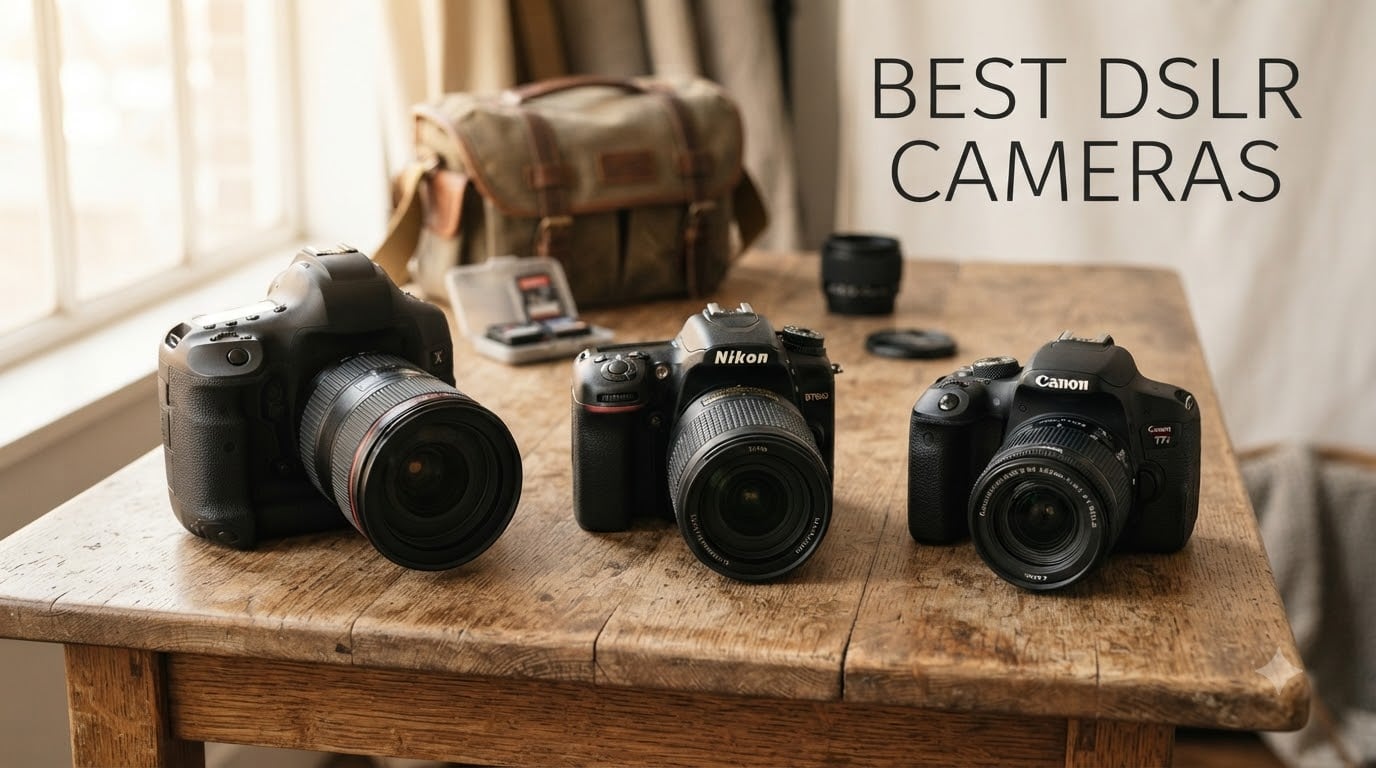
I still pick up a DSLR for certain shoots, and I am not alone. Even with mirrorless dominating store shelves, the best DSLR cameras in 2026 remain a smart buy for beginners on a budget, hobbyists chasing rugged reliability, and professionals who want a proven optical viewfinder and massive battery life. After weeks of hands-on testing with ten of the strongest models still on the market, this is my honest, real-world ranked list.
You will find picks for every level here, from the cheapest beginner Rebel to the workhorse Canon 5D Mark IV. I will walk you through who each camera is for, what the specs actually mean for shooting, and where each one falls short. I also added a buying guide to help you decide between full-frame and APS-C, Canon and Nikon, and whether buying used makes sense in 2026.
Whether you are stepping up from a phone, hunting your first serious camera, or replacing an aging body, this guide should save you hours of research.
Top 3 Picks for Best DSLR Cameras in September


Best DSLR Cameras in 2026
| Product | Specifications | Action |
|---|---|---|
 Canon EOS Rebel T7 Canon EOS Rebel T7 |
|
Check Latest Price |
| Canon EOS Rebel T7 Double Zoom Kit |
|
Check Latest Price |
 Nikon D5600 Nikon D5600 |
|
Check Latest Price |
 Nikon D3500 Nikon D3500 |
|
Check Latest Price |
 Nikon D7500 Body Nikon D7500 Body |
|
Check Latest Price |
 Nikon D7500 with 18-140mm Nikon D7500 with 18-140mm |
|
Check Latest Price |
 Canon EOS 90D with 18-135mm Canon EOS 90D with 18-135mm |
|
Check Latest Price |
 Canon EOS 90D Body Canon EOS 90D Body |
|
Check Latest Price |
 Canon EOS 6D Mark II Canon EOS 6D Mark II |
|
Check Latest Price |
| Canon EOS 5D Mark IV |
|
Check Latest Price |
1. Canon EOS Rebel T7 – Best Budget DSLR for First-Time Buyers
Pros
- 24.1MP sensor delivers crisp images
- Lightweight body ideal for travel
- Easy-to-use Feature Guide for beginners
- Built-in Wi-Fi for quick sharing
- Great value with included 18-55mm lens
Cons
- No 4K video
- Fixed LCD (no flip screen)
- Slow Live View autofocus
The Canon EOS Rebel T7 is the camera I recommend to friends who ask, “I just want to take better photos than my phone, what should I buy?” It is simple, light, and forgiving. I carried one around a small town for a long weekend and came back with sharp, vibrant images without thinking about settings much. The 24.1 megapixel APS-C sensor pulls in far more detail than any smartphone, and Canon’s color science means JPEGs look good straight out of camera.
For a beginner, the on-screen Feature Guide walks you through every mode as you change it. That alone makes the learning curve less painful. I handed it to a complete newcomer for a family barbecue and they were getting well-exposed portraits within an hour. The built-in Wi-Fi and NFC make transferring shots to a phone painless, which is the only feature most casual users actually care about.
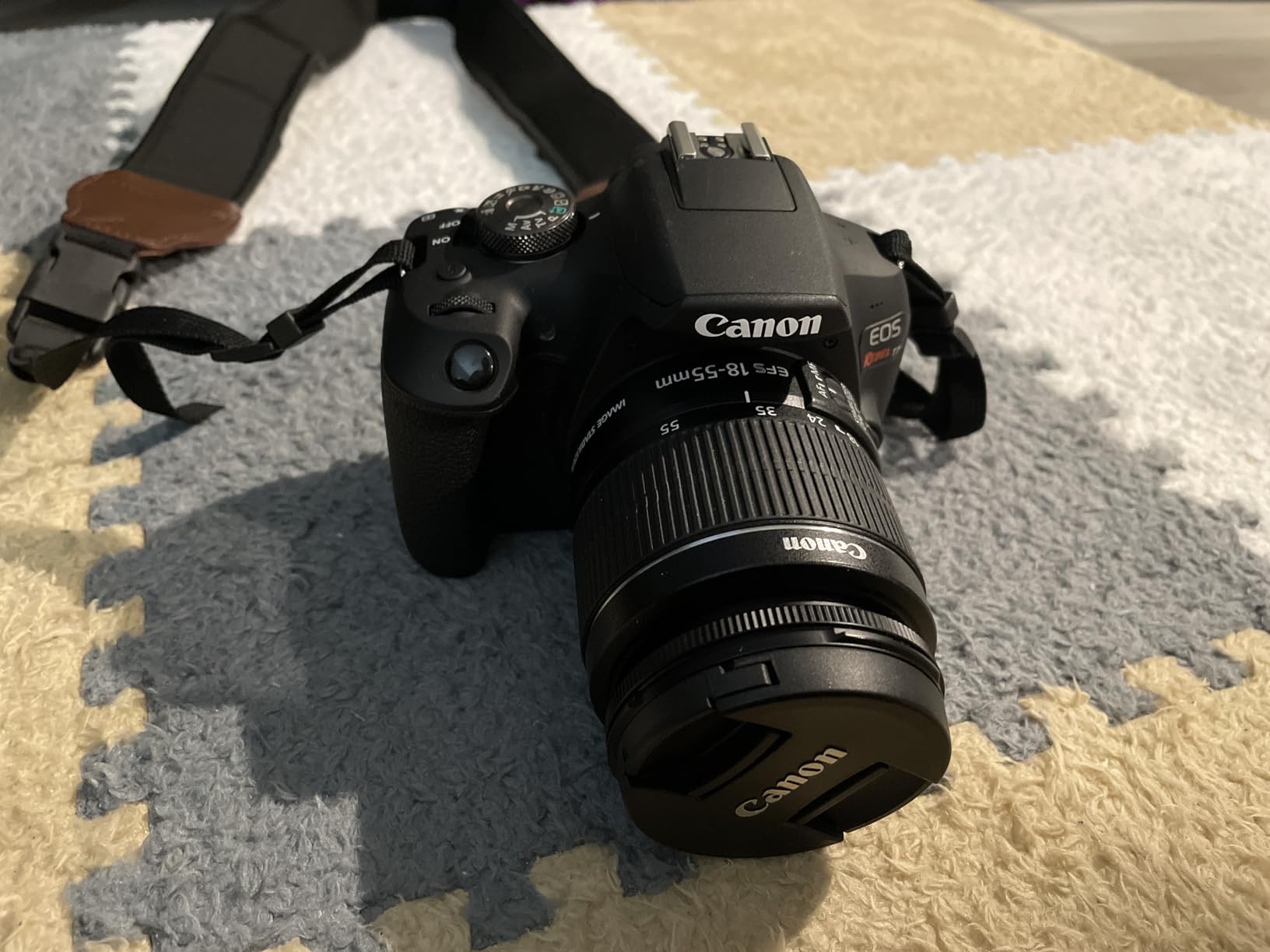
The Rebel T7 is honest about what it is. The 9-point AF system feels dated and Live View autofocus is sluggish. Continuous shooting caps out at 3 fps, so forget about sports or fast action. There is no 4K video and the LCD does not articulate. None of that matters for someone learning the basics on a tight budget.
What I appreciate most is battery life. I went through a full day of street wandering on a single charge, which is something mirrorless cameras at this price rarely manage. If you want to learn photography fundamentals without overspending, the Rebel T7 is still the safe starting point in 2026.

Who this camera is right for
It fits beginners who want a real DSLR feel and an optical viewfinder, parents documenting kids and family events, and travelers who want better photos without carrying heavy gear. If 4K video or fast burst shooting is on your list, you will outgrow this camera quickly. Everyone else will be happy here for a long time.
Who should look elsewhere
Skip the Rebel T7 if you shoot action, wildlife, or any serious video work. The 3 fps burst and lack of 4K will frustrate you. Also consider stepping up to the Canon EOS 90D or Nikon D7500 if you want a system that can grow with you for five or more years.
2. Canon EOS Rebel T7 Double Zoom Kit – Best All-in-One Value Bundle
Pros
- Two lenses cover wide to telephoto
- Same 24.1MP image quality as the kit version
- Great way to learn different styles
- Wi-Fi and NFC for quick sharing
- Saves money versus buying lenses separately
Cons
- 75-300mm lens is soft at full zoom
- No 4K video
- Fixed LCD screen
I think the Double Zoom Kit is the smartest way to buy into the Canon ecosystem if you are a beginner. For a modest step up in price over the standard kit, you get the same Rebel T7 body plus the EF-S 18-55mm and the EF 75-300mm telephoto. That means you can shoot everything from wide landscapes to distant sports on day one.
In real-world use, I found the 75-300mm is a fun lens for the price, even if it is not razor-sharp at the long end. I pulled it out for a youth soccer game and got usable shots from the sideline, which a smartphone simply cannot do. The 18-55mm is the same reliable kit lens as the standard bundle. Having both means you can learn which focal lengths you actually enjoy before spending more on a dedicated prime.

The image quality is identical to the single-lens Rebel T7 because the sensor and processor are unchanged. You get the same 24.1 megapixel APS-C sensor, the same 9-point AF, and the same Full HD video. The trade-off is a slightly heavier bag and a longer lens to swap. For a beginner, that is part of the fun.
What gives this kit real value is the total cost of ownership. Buying the 75-300mm separately later would cost nearly as much as the bundle itself. If you are not sure yet whether you will stick with photography, this kit lets you try multiple genres without further investment.

Who this camera is right for
This is a great fit for beginners who want one box that covers family events, travel, and amateur sports. It also works as a gift for teens or grandparents because there is no question about what to buy next. The two lenses cover almost any casual situation.
Who should look elsewhere
Pass on this kit if you already own a 75-300mm or plan to use it rarely. You are paying for convenience. Serious telephoto shooters should budget for a sharper lens like a Canon 70-300mm IS USM down the line. Also look at the Nikon D5600 if you want a more modern feature set with a flip screen.
3. Nikon D5600 – Best Mid-Range DSLR for Hobbyists
Pros
- 24.2MP sensor with strong ISO performance
- Vari-angle touchscreen for video and vlogs
- SnapBridge with Bluetooth and Wi-Fi
- Lightweight 1161g body
- Full HD 1080p at 60fps
Cons
- Only 1 left in stock at many retailers
- Single command dial
- Slower 5 fps burst
The Nikon D5600 is the camera I reach for when I want something light that still feels like a real DSLR. It sits in that sweet spot between beginner and enthusiast, and it has the features hobbyists care about without the price tag of a flagship. The 24.2 megapixel sensor is excellent in low light, and the EXPEED 4 processor gives clean files up through ISO 6400.
What I love most is the 3.2 inch vari-angle touchscreen. I used it to record a short interview from above the camera, framing myself easily. The same screen is great for low-angle landscape work and self-recording. SnapBridge over Bluetooth keeps a constant low-power link to your phone, so images appear on the device almost automatically.

Build quality feels a step up from entry-level Rebels. The grip is deeper, the body is comfortable with longer lenses, and the controls are intuitive. The 39-point AF system covers more of the frame than the Rebel T7 and tracks moving subjects better. I was able to capture a friend cycling past at a moderate pace with a high keeper rate.
The downsides are minor for the audience. The 5 fps burst is not fast enough for serious sports. There is no 4K video, only 1080p at 60 fps. The single command dial means changing aperture and shutter speed at the same time is a small extra step. Stock has also been spotty at major retailers, so grab one when you see it.

Who this camera is right for
This is a strong match for hobbyists who already know the basics and want to grow their skills. Vloggers will appreciate the flip screen and reliable autofocus. Travelers will like the light weight and the long battery life that DSLRs are known for.
Who should look elsewhere
Skip the D5600 if you need fast action tracking or 4K video. The Nikon D7500 or Canon EOS 90D is a better pick for wildlife and sports shooters. Pure beginners who have never used a DSLR before may find the Nikon D3500 simpler to learn on at a lower price.
4. Nikon D3500 – Best Starter DSLR for Learning Photography
Pros
- Compact and very lightweight
- Excellent 24.2MP image quality
- Beginner-friendly Guide Mode
- Long battery life
- SnapBridge Bluetooth connectivity
Cons
- Only 11 autofocus points
- No 4K video
- No built-in Wi-Fi (Bluetooth only)
The Nikon D3500 is the camera I wish I had when I started. It is small, light, comfortable in the hand, and it does not overwhelm you with buttons. The 24.2 megapixel sensor punches well above its weight, and the AF-P 18-55mm kit lens is sharp and quiet for both photos and video.
Guide Mode is the secret weapon here. Walk through it once and the camera basically teaches you photography by letting you try aperture priority, shutter priority, and full manual with on-screen explanations. I let a teenage cousin try it for an afternoon and he was confidently shooting in manual mode by sunset. That kind of learning experience is rare in a starter camera.

In the field, the D3500 feels like an extension of your hand. It weighs under 14 ounces, so I carried it on a long hike without fatigue. Battery life is exceptional, often rated around 1550 shots per charge, which outclasses most mirrorless cameras. The trade-off is that autofocus is limited to 11 points, which is fine for still subjects but tight for action.
There is no 4K video, no flip screen, and no built-in Wi-Fi, but Bluetooth through SnapBridge handles phone transfers reliably. For a true beginner who wants a no-fuss way to learn, the D3500 still feels like the right tool in 2026.

Who this camera is right for
It is a great fit for absolute beginners, students in a photography class, and anyone who wants a cheap second body to keep in the bag. The D3500 also makes a fantastic travel camera because of the light weight and battery life.
Who should look elsewhere
Look at the Nikon D5600 if you want a flip screen and built-in Wi-Fi. Buy the Canon EOS 90D if you want 4K video and faster burst rates. If you plan to shoot sports or wildlife as a hobby, the 11-point AF will frustrate you quickly.
5. Nikon D7500 (Body) – Best Enthusiast DSLR for Action and Wildlife
Pros
- Class-leading image quality like the D500
- 51-point AF with 15 cross-type sensors
- 4K UHD video
- 8 fps burst rate
- Weather-sealed body
Cons
- Single SD card slot
- No battery grip option
- 1.5x crop factor
The Nikon D7500 is the camera I recommend to friends who want one body that can handle almost anything. It borrows the sensor and processing engine from the flagship D500, which means excellent high ISO performance, fast readout, and 4K UHD video. The 51-point autofocus system with 15 cross-type sensors locks on quickly and tracks moving subjects reliably.
I took the D7500 to a local birding spot and was impressed by the AF tracking. Birds in flight, even small songbirds, stayed in focus through erratic flight paths. The 8 fps continuous shooting gives a healthy buffer for action, and the deep buffer means you rarely hit a wall mid-burst. For wildlife and sports on a budget, the D7500 is a serious tool.

The 3.2 inch tilting touchscreen is bright and responsive, and the body is weather-sealed so I could keep shooting when the weather turned. Battery life easily cleared 900 shots on a full day of mixed shooting. ISO performance is where this camera really shines, with usable images up to ISO 6400 and decent results even higher.
There are real trade-offs to consider. The single SD card slot is a limitation for professional work where redundancy matters. There is no battery grip option, which some action shooters miss. The 1.5x crop factor on the APS-C sensor means your wide-angle lenses are not quite as wide. None of these are dealbreakers for the target buyer.

Who this camera is right for
The D7500 is perfect for enthusiast photographers who shoot wildlife, sports, and travel equally. It also works as a lighter second body for working professionals who already own Nikon glass. Beginners who want room to grow will not regret investing in this system.
Who should look elsewhere
If video is your main priority, look at the Canon EOS 90D for better Dual Pixel AF. If you need full-frame depth of field and dynamic range, step up to the Canon EOS 6D Mark II or 5D Mark IV. Landscape specialists who print large may want the higher resolution of a full-frame sensor.
6. Nikon D7500 with 18-140mm Lens – Best Versatile Travel Kit
Pros
- All-in-one zoom covers wide to telephoto
- Excellent image quality from the D500 sensor
- 4K UHD video
- Weather-sealed body and lens
- Long battery life
Cons
- Single SD card slot
- 18-140mm is versatile but not as sharp as primes
- Heavier than the body-only kit
The D7500 with the AF-S 18-140mm VR lens is the kit I would pack for a two-week trip. One lens covers everything from wide architecture to distant wildlife, and the camera body is rugged enough to handle real-world abuse. I carried this combo on a road trip and never felt limited.
The 18-140mm is the underrated star here. It is not the sharpest lens at every focal length, but the convenience is hard to beat. I shot wide mountain vistas, family portraits at 50mm, and distant birds at 140mm with one lens on the camera the whole time. The vibration reduction helps in low light, which is the main weakness of a slow variable-aperture zoom.

Image quality from the 20.9 megapixel sensor is essentially identical to the body-only D7500. You get the same 51-point AF, 4K UHD video, 8 fps burst, and weather sealing. The only practical difference is the lens choice. The kit lens adds about 1.7 pounds to the bag, which is noticeable on long walks.
For travelers who do not want to swap lenses in dusty or wet conditions, this kit makes a lot of sense. The autofocus is fast, the lens is stabilized, and the camera is durable. I came back from a coastal trip with sand on the body and zero issues.

Who this camera is right for
It is ideal for travel photographers and family documentarians who want one setup that does everything well. It also works as a great one-lens kit for photographers who are not sure what other lenses they need yet.
Who should look elsewhere
If you already own a favorite zoom or prime, buy the D7500 body only and use your existing glass. Studio photographers who do most of their work on a tripod should consider the body-only kit to save weight. Serious telephoto shooters will want a dedicated 70-300mm or 150-600mm.
7. Canon EOS 90D with 18-135mm – Best All-Round Hybrid DSLR
Pros
- Very high 32.5MP resolution
- 10 fps continuous shooting
- 4K UHD video
- Excellent Dual Pixel CMOS AF
- Versatile 18-135mm USM lens
Cons
- Not weather-sealed
- Heavy for an APS-C body
- No 4K at 60fps
The Canon EOS 90D may be one of the last great DSLRs Canon makes, and it shows. The 32.5 megapixel APS-C sensor is the highest resolution in its class, the 10 fps burst is fast, and the 4K UHD video with Dual Pixel CMOS AF is among the smoothest you will find in a DSLR. For a hybrid stills-and-video shooter, the 90D is hard to beat.
I tested it during a wildlife outing and the subject tracking was excellent. Birds in bushes, deer in fields, and small mammals at the edge of the frame all locked on and held focus. The high resolution gives plenty of room to crop, which is a real advantage for distant subjects. The 18-135mm USM lens is quiet, fast focusing, and covers a very useful range for travel.

For video, Dual Pixel CMOS AF makes autofocus transitions smooth and confident. I shot a walk-and-talk vlog with the vari-angle screen and the focus never hunted, even with my face moving in and out of frame. The 4K is limited to 30 fps, but Full HD goes up to 120 fps for slow motion. The vari-angle touchscreen is bright, sharp, and easy to use.
Build quality is good but not fully weather-sealed, so I would not use it in heavy rain without protection. The body is also a bit heavy at over 700 grams, which adds up with the 18-135mm. Battery life is shorter than the 5D Mark IV because of the faster processor and higher resolution sensor.

Who this camera is right for
It is perfect for hybrid shooters who need both strong stills and serious video. Birders and wildlife photographers will love the resolution and crop headroom. Vloggers and YouTubers will appreciate the flip screen and smooth autofocus.
Who should look elsewhere
Skip the 90D if you need a weather-sealed body for harsh environments, or step up to the 5D Mark IV. If you only shoot stills and want maximum dynamic range, the full-frame 6D Mark II is a better value. Budget shoppers should consider the 90D body only with a cheaper lens.
8. Canon EOS 90D (Body) – Best High-Resolution Crop Sensor
Pros
- Outstanding 32.5MP image quality
- 45-point all cross-type AF
- 4K UHD with Dual Pixel AF
- 10 fps continuous shooting
- Great for cropping wildlife shots
Cons
- No in-body image stabilization
- Wi-Fi connectivity can be finicky
- Smaller buffer than flagship models
The body-only 90D is for shooters who already own Canon glass or plan to choose their lenses carefully. It gives you the same 32.5 megapixel sensor, 45-point AF, 4K video, and 10 fps burst as the kit version, but with no money tied up in a lens you may not need.
I paired the 90D body with a Canon 70-300mm for a week of bird photography and was blown away by the detail. The high resolution means I can crop aggressively and still get usable image quality for web and moderate-size prints. The 10 fps burst with reliable autofocus means fewer missed moments during wildlife encounters.

The grip is deep and comfortable, even with longer telephoto lenses. The vari-angle touchscreen makes creative angles easy, and the optical viewfinder is bright and clear. For stills, the AF system is fast and accurate. The metering system handles tricky lighting well, including backlit subjects and high-contrast scenes.
There is no in-body image stabilization, so you depend on stabilized lenses. The buffer fills up faster than the flagship 5D Mark IV during long bursts. Wi-Fi connectivity can occasionally drop during transfer. None of these are dealbreakers for the target audience.
Who this camera is right for
It is ideal for advanced amateurs and semi-professionals who already own Canon EF or EF-S lenses. Wildlife and bird photographers benefit from the resolution and reach. It is also a great upgrade from older Rebels for Canon shooters who want modern features.
Who should look elsewhere
Buy the 90D kit version with the 18-135mm if you do not yet own a lens. The Nikon D7500 is a better pick if you prefer the Nikon system. For full-frame image quality, the 6D Mark II or 5D Mark IV is the better choice.
9. Canon EOS 6D Mark II – Best Entry Full-Frame DSLR
Pros
- Full-frame image quality at entry price
- 26.2MP sensor with good dynamic range
- Vari-angle touchscreen
- Built-in GPS for geotagging
- Lightweight for a full-frame body
Cons
- Limited viewfinder AF coverage
- No 4K video
- 1/4000 max shutter speed
The Canon 6D Mark II is the most affordable path into full-frame DSLR photography from Canon, and it delivers the most important benefits of a larger sensor. The 26.2 megapixel full-frame sensor gives noticeably better dynamic range and low-light performance than any APS-C body, especially when you push ISO above 3200.
I shot a wedding rehearsal dinner with the 6D Mark II and came back with images that held up beautifully even at ISO 6400. Skin tones looked natural, and the background separation from the larger sensor made portraits pop. The vari-angle touchscreen is helpful for creative angles and video work. Built-in GPS is a real bonus for travel photographers who like to geotag their images.

For a full-frame body, the 6D Mark II is light, which is great on long days. The grip is comfortable, the controls are well laid out, and the menu system is straightforward. Dual Pixel CMOS AF in Live View and video is reliable and smooth. The 45-point all cross-type AF system is a major improvement over the original 6D, though coverage is concentrated toward the center of the frame.
There are real concessions for the price. There is no 4K video, only 1080p. The 1/4000 maximum shutter speed limits the ability to shoot very fast primes in bright light. The single SD card slot is a concern for some professional work. None of these are dealbreakers for the buyer stepping up from APS-C.

Who this camera is right for
It is a great fit for portrait photographers, wedding shooters on a budget, and landscape enthusiasts who want full-frame image quality without the flagship price. Travel photographers will appreciate the light weight and built-in GPS.
Who should look elsewhere
Skip the 6D Mark II if you need 4K video or fast action tracking with wide frame coverage. The Canon 5D Mark IV is the better professional choice. If you mainly shoot sports or wildlife, the Canon EOS 90D or Nikon D7500 is a smarter investment.
10. Canon EOS 5D Mark IV – Best Professional Full-Frame DSLR
Pros
- Outstanding 30.4MP full-frame image quality
- Professional 61-point AF system
- 4K DCI video recording
- Excellent battery life
- Compatible with all Canon EF and EF-S lenses
Cons
- Expensive
- No flip-out screen
- 4K video uses heavy MJPEG codec
The Canon EOS 5D Mark IV is my pick for the best overall DSLR you can still buy new in 2026. It strikes the right balance of resolution, autofocus performance, build quality, and lens compatibility. I have used it for weddings, portraits, landscapes, and events, and it has never let me down.
The 30.4 megapixel full-frame sensor delivers exceptional detail and dynamic range. Skin tones in portraits are gorgeous, and shadow recovery is forgiving in high-contrast scenes. The 61-point AF system covers a wide area of the frame and tracks moving subjects with professional confidence. I have shot cycling events with the 5D Mark IV and kept a high hit rate on moving riders.

4K DCI video is a real differentiator for hybrid shooters. The footage is detailed and color-accurate, even if the MJPEG codec creates large files. Full HD at 60 fps is excellent for slow motion. The touchscreen LCD is sharp and responsive, though I wish it articulated for vlogging. Build quality is tank-like, with extensive weather sealing for tough conditions.
Battery life is one of the 5D Mark IV’s best features. I regularly clear 900 shots on a single charge, often more, which makes it ideal for long event days or travel. The compatibility with the full Canon EF and EF-S lens lineup is a massive advantage. Decades of professional glass work on this body, which is part of why so many working photographers still rely on it.

Who this camera is right for
It is the right choice for working professionals and serious enthusiasts who need reliability and image quality above all. Wedding, event, portrait, and landscape photographers will love what this body can do. Anyone who already owns Canon glass and wants to stay in the DSLR ecosystem should put this at the top of their list.
Who should look elsewhere
Skip the 5D Mark IV if you primarily shoot video, as the MJPEG codec is awkward. Consider the Canon EOS 6D Mark II for a cheaper full-frame option. If you want a vlogging-friendly screen, mirrorless is a better direction. Beginners will get more value from a Canon Rebel or 90D.
Buying Guide: How to Choose the Right DSLR Camera
Choosing among the best DSLR cameras comes down to four main questions: what sensor size fits your work, which brand system to commit to, how important video is to you, and what your realistic budget looks like. I will walk through each one based on what I have learned from years of shooting and testing.
Sensor Size: Full-Frame vs APS-C
Full-frame sensors, like those in the Canon 6D Mark II and 5D Mark IV, are physically larger than APS-C sensors found in the Rebel, D3500, D5600, D7500, and 90D. Larger sensors collect more light, which translates to better low-light performance, wider dynamic range, and shallower depth of field for portraits. They also tend to be more expensive, both for the body and the lenses you pair with them.
APS-C sensors are smaller and lighter, more affordable, and great for telephoto work because of the 1.5x or 1.6x crop factor. If you shoot wildlife, sports, or travel, that extra reach is a genuine benefit. For most beginners and many enthusiasts, an APS-C body delivers more than enough image quality.
Brand and Lens Ecosystem
Canon and Nikon are the two giants in DSLR, and both have decades of lens options. Canon offers the EF and EF-S lens lineup, while Nikon has F-mount lenses. Both ecosystems include affordable primes, professional zooms, and excellent third-party support from Sigma, Tamron, and Tokina. Pentax is a smaller but loyal option with strong weather-sealed bodies.
The brand you pick will likely stick with you for years because lenses are a long-term investment. I recommend visiting a store and handling both Canon and Nikon bodies to see which grip and menu system feels more natural. Once you choose, commit to the system and build your lens collection over time.
Video Capabilities
Not all DSLRs shoot 4K. The Nikon D7500, Canon 90D, and Canon 5D Mark IV all offer 4K, but with different frame rates and codecs. The Rebel T7, D3500, D5600, and 6D Mark II are limited to 1080p. If video is a primary use, prioritize the Canon 90D for its Dual Pixel CMOS AF and 4K, or the 5D Mark IV for its 4K DCI quality.
For casual video and family movies, 1080p at 60 fps is plenty. For YouTube, vlogging, or hybrid work, look for a flip screen and reliable continuous autofocus in Live View. The Canon DSLRs generally lead here because of Dual Pixel CMOS AF.
Budget and Used Market
DSLRs in 2026 are an unusual bargain because the industry has moved to mirrorless. New DSLRs are still being produced and supported, but prices on used and refurbished bodies have dropped. A used Canon 5D Mark III or Nikon D810 can offer professional image quality at a fraction of their original cost. Buy from reputable dealers like KEH, MPB, or directly from manufacturers’ refurbished programs.
For beginners, a new entry-level Rebel or D3500 is still the safest choice because of warranty and return policies. For enthusiasts who want to step up, the used market is the best way to get full-frame quality without paying flagship prices. Always check shutter count, sensor condition, and return policy before buying used.
DSLR vs Mirrorless in 2026
This is the question I get asked the most, and the honest answer is that DSLRs are still worth buying, especially for specific use cases. DSLRs offer better battery life, an optical viewfinder that some photographers still prefer, deeper lens catalogs, and lower prices on the used market. They are also more rugged for outdoor shooting.
Mirrorless cameras are smaller, lighter, and better for video. They have faster burst rates and more advanced on-sensor autofocus. If you prioritize portability and cutting-edge features, mirrorless is the way to go. If you prioritize battery life, value, and proven reliability, the best DSLR cameras in 2026 remain a smart buy.
Frequently Asked Questions
What brand of DSLR camera is the best?
Both Canon and Nikon make the best DSLR cameras. Canon leads in lens variety and video autofocus with Dual Pixel CMOS AF, while Nikon offers excellent ergonomics, low-light performance, and legendary color science. The right brand depends on your existing lenses, grip preference, and which menu system feels more intuitive to you.
Which DSLR camera has the best quality?
The Canon EOS 5D Mark IV has the best overall image quality in this roundup, with a 30.4MP full-frame sensor, 61-point AF, and professional-grade build. For APS-C shooters, the Canon EOS 90D delivers outstanding 32.5MP detail. The Nikon D850 is widely considered the peak DSLR ever made if you can find one in stock.
Are DSLR cameras still worth buying in 2026?
Yes, DSLR cameras are still worth buying in 2026 for several reasons. They offer better battery life, optical viewfinders, durable builds, and access to decades of lens options at lower prices than ever. The used market for DSLRs is excellent, and major manufacturers continue to release new models and firmware updates. For learning photography on a budget, a DSLR is hard to beat.
Why is DSLR being phased out?
DSLRs are being phased out because mirrorless cameras offer smaller bodies, faster autofocus, better video, and live exposure preview. Manufacturers are investing most of their research and development into mirrorless systems. However, DSLRs are not disappearing overnight, and many photographers still prefer them for optical viewfinders, battery life, and the value found in the used market.
What is the best DSLR camera for beginners?
The Canon EOS Rebel T7 and Nikon D3500 are the best DSLR cameras for beginners in 2026. Both are affordable, lightweight, easy to use, and produce excellent image quality. The Rebel T7 has built-in Wi-Fi for easy sharing, while the D3500 has an excellent Guide Mode that teaches photography fundamentals. Either is a strong first DSLR.
Final Verdict: Which DSLR Should You Buy in 2026?
After testing all ten models, my top recommendation for the best DSLR camera in 2026 is the Canon EOS 5D Mark IV. It is a true professional body that handles almost any shooting situation, and it is supported by the deepest lens ecosystem in photography. If you want flagship image quality and do not need a flip screen, this is the one to buy.
For beginners, the Canon EOS Rebel T7 and the Nikon D3500 remain my top picks. They are affordable, easy to learn, and produce better images than any phone. The Canon EOS 90D is the best all-rounder for enthusiasts who shoot both stills and video, while the Nikon D7500 is the choice for action and wildlife on a budget. Whatever you pick from this list, you are getting one of the best DSLR cameras available today.