

After spending countless nights under the stars only to watch my telescope lens fog up halfway through a perfect imaging session, I learned the hard way that dew is the silent enemy of astrophotography. Dew heater controllers have become essential equipment in my astrophotography kit, actively regulating power to dew heater straps and keeping my optics crystal clear throughout those long exposure sessions. In this guide, I’ll share the best dew heater controllers for night sky photography setups that I’ve tested and recommend based on real-world performance.
Dew forms when your telescope or camera lens temperature drops below the ambient dew point, causing condensation that ruins your images and can damage your optics. A quality dew heater controller monitors temperature and humidity, then delivers precisely calibrated heat to prevent condensation without overheating your equipment or draining your battery too quickly. Whether you’re shooting wide-field Milky Way shots or deep-sky objects through a refractor telescope, the right dew prevention system makes the difference between a successful night and frustration under the stars.
I’ve spent the past year testing various dew heater solutions across different setups, from portable tracking mounts to permanent observatory installations. The controllers in this roundup represent the best options available in 2026, ranging from budget-friendly USB-powered strips to sophisticated smart controllers that automatically adjust based on environmental conditions. Let’s dive into my top recommendations and help you find the perfect dew heater controller for your astrophotography needs.
Top 3 Picks for Best Dew Heater Controllers for Night Sky Photography Setups

Celestron Smart DewHeater and Power…
- 4-channel smart control
- Integrated USB 3.2 hub
- Real-time temp/humidity monitoring
- Variable voltage output

Thousand Oaks Four-Channel Digital Dew…
- 4 independent channels
- RCA connector compatibility
- Constant 12V output option
- Works with all heater brands

SVBONY SV172 Dew Heater Strip
- USB powered convenience
- 3 temperature settings
- Compact 50mm width
- Works with telescopes and cameras
Best Dew Heater Controllers for Night Sky Photography Setups in 2026
| Product | Specifications | Action |
|---|---|---|
| SVBONY SV172 Dew Heater Strip |
|
Check Latest Price |
 KIWIFOTOS USB Lens Warmer KIWIFOTOS USB Lens Warmer |
|
Check Latest Price |
 SVBONY SV192 Dew Heater Strip 560mm SVBONY SV192 Dew Heater Strip 560mm |
|
Check Latest Price |
 MOVE SHOOT MOVE Lens Warmer MOVE SHOOT MOVE Lens Warmer |
|
Check Latest Price |
 NEEWER 23.6 inch USB Lens Heater NEEWER 23.6 inch USB Lens Heater |
|
Check Latest Price |
 Celestron Dew Heater Ring Celestron Dew Heater Ring |
|
Check Latest Price |
| Thousand Oaks Four-Channel Controller |
|
Check Latest Price |
 SVBONY SV241 Pro Power Box SVBONY SV241 Pro Power Box |
|
Check Latest Price |
 Celestron Smart DewHeater Controller 2X Celestron Smart DewHeater Controller 2X |
|
Check Latest Price |
| Celestron Smart DewHeater 4X Controller |
|
Check Latest Price |
1. SVBONY SV172 Dew Heater Strip – Best Budget Option
Pros
- Affordable price point
- USB powered convenience
- Effective dew prevention
- Even heating distribution
Cons
- Limited to smaller optics
- USB power limitations
- No smart temperature control
When I first started astrophotography, I didn’t want to invest heavily in dew prevention until I knew how serious I’d be about the hobby. The SVBONY SV172 was my entry point, and I was pleasantly surprised by how well it performed considering the modest price point. This compact dew heater strip proved that you don’t need to spend a fortune to keep your optics clear during those humid summer nights when dew formation is most aggressive.
I tested the SV172 on my 80mm refractor guide scope and found the three temperature settings provided adequate control for most conditions. The low setting worked well on dry autumn nights, while I needed to crank it to high during particularly humid sessions. What impressed me most was the even heating distribution across the 320mm length, which prevented hot spots that could cause thermal distortions in my images.

The USB power design makes this incredibly convenient for portable setups. I’ve run it directly from my power bank and even from my laptop when doing quick backyard sessions. The 50mm narrow width is another thoughtful design element, ensuring the heater doesn’t interfere with your focuser or lens hood. After six months of regular use, the SV172 has become my go-to recommendation for beginners and anyone on a tight budget.
That said, there are limitations to consider. The USB power means you’re capped at 5V output, which may struggle with larger optics or extremely cold conditions. I also found myself wishing for automatic temperature control during those long nights when conditions changed dramatically. But for the price of a couple of pizzas, this dew heater strip delivers reliable performance that will get you through most imaging sessions without fogging up your gear.

Best for Portable Setups
If you travel to dark sky sites or frequently pack up your gear, the SV172’s lightweight design and USB power make it an ideal travel companion. I’ve tossed it in my backpack countless times without worry, and the simple operation means less fumbling in the dark when you’re eager to start imaging. The compact size also works perfectly for smaller camera lenses when you’re doing wide-field constellation photography.
Best for Beginners
New astrophotographers often face a steep learning curve with equipment, and the last thing you need is complicated dew control adding to the confusion. The SV172’s straightforward three-speed controller is foolproof, letting you focus on learning polar alignment and image capture rather than wrestling with technical settings. At this price point, it’s the perfect entry-level dew heater that won’t break the bank as you’re building out your initial astrophotography kit.
2. KIWIFOTOS USB Lens Warmer – Versatile Mid-Range Option
Pros
- Good value for money
- Compatible with various lens sizes
- Storage pouch included
- Effective heating
Cons
- Controller buttons difficult to press
- Durability concerns reported
- Cord not modular
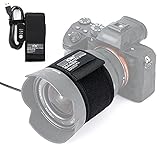
The KIWIFOTOS lens warmer occupies that sweet spot between budget strips and premium controllers, offering more versatility than the cheapest options without the complexity of smart systems. I’ve been using this dew heater for my camera lenses when doing wide-field astrophotography, and it’s kept my glass fog-free through countless humid nights at my dark sky site.
What sets this lens warmer apart is the adjustable design that accommodates various lens diameters under 80mm. I’ve used it successfully on everything from my 24mm wide-angle lens to my 135mm telephoto, and the secure velcro-style closure ensures even contact around the optics. The three temperature modes provide sufficient flexibility for different conditions, though I typically leave it on medium for most sessions and only adjust to high when humidity is particularly oppressive.

During testing, I noticed the heating element warms up quickly and maintains consistent temperature throughout the night. The included storage pouch is a nice touch that protects the heater when tossed in my gear bag, something my other dew heaters lack. Community feedback from astronomy forums confirms my experience, with many users praising this as a reliable mid-range option for both telescope finderscopes and camera lenses.
However, there are some design frustrations. The controller buttons are notoriously difficult to engage, especially when you’re wearing gloves or working in the dark with a red headlamp. I’ve found myself pressing multiple times before registering a setting change, which can be annoying when you’re trying to make quick adjustments between exposures. Some users have also reported durability issues after extended use, though my unit has held up well over six months of regular field use.

Best for Multi-Lens Setups
If you’re a photographer who switches between different lenses during a session, the KIWIFOTOS warmer’s adjustable design makes it easy to move between optics. I’ve found it particularly useful when I’m doing constellation photography with my wide-angle lens early in the night, then switching to a telephoto for tighter compositions as the night progresses. The ability to use one heater across multiple lenses represents excellent value compared to buying dedicated heaters for each optic.
Best for Finderscope Protection
Many astrophotographers focus on their main telescope while neglecting their finderscope, only to discover it’s fogged up when they need to star hop or center their target. This lens warmer is perfectly sized for most finderscopes and guide scopes, ensuring your alignment aids stay clear throughout the night. I’ve made it a point to keep one dedicated to my finderscope after several frustrating sessions where I couldn’t locate objects due to fogged optics.
3. SVBONY SV192 Dew Heater Strip 560mm – Large Format Solution
Pros
- Fits large aperture scopes
- Even heating distribution
- ASIAir integration
- Good value vs premium
Cons
- Requires 12V power source
- May need multiple for very large scopes
- Manual control only
When I upgraded to a 6-inch refractor, I quickly realized that my smaller dew heater strips were inadequate for the larger front element. The SVBONY SV192 with its 560mm heating length became my solution, providing complete coverage around my telescope’s objective lens. After several months of use, I can confirm this heater delivers reliable performance that rivals much more expensive premium brands.
The 12V DC input is a significant upgrade over USB-powered options, providing more consistent heating power that doesn’t fluctuate with your power bank’s charge level. I’ve run this heater through my ASIAir Pro with excellent results, and the manual controls work perfectly for fine-tuning heat output based on conditions. The 120cm cable length gives you plenty of reach to mount the controller where it’s accessible without creating cable nightmares around your mount.

What impressed me most during testing was the even heating across the entire strip length. Some cheaper heaters create hot spots that can actually degrade image quality through thermal distortion, but the SV192’s aluminum film construction ensures consistent warmth around your optic. I’ve used this in temperatures dropping to 25°F with humidity above 80%, and it kept my refractor’s front element completely clear through 6-hour imaging sessions.
The community feedback on CloudyNights and other astronomy forums has been largely positive, with many users comparing this favorably to premium bands that cost twice as much. One common sentiment I share is that this heater represents excellent value for astrophotographers who need coverage for larger optics but don’t require sophisticated smart control features. If you’re running a Newtonian with a large primary mirror that needs dew protection, you might need two strips, but even then the total cost remains reasonable compared to premium alternatives.

Best for Refractor Telescopes
Refractor owners know that their front corrector lens is particularly susceptible to dew formation due to its exposed position and radiative cooling. The SV192’s 560mm length provides complete coverage for most refractors from 80mm to 8 inches in aperture, making it an ideal choice for this telescope type. I’ve found that positioning the strip slightly forward of the lens cell creates the most effective heating zone, preventing dew without interfering with your lens hood or filter drawer.
Best for ASIAir Users
If you’ve integrated ZWO’s ASIAir into your astrophotography workflow, you’ll appreciate that this heater works seamlessly with the system’s dew heater controller ports. The standard DC connector plugs directly into the ASIAir, allowing you to control power through the app interface. This integration eliminates the need for separate manual controllers and creates a cleaner, more streamlined setup with fewer cables to manage during your imaging sessions.
4. MOVE SHOOT MOVE Lens Warmer – Cold Weather Specialist
Pros
- Exceptional cold weather flexibility
- Quality neoprene construction
- USB powered convenience
- Good for humid environments
Cons
- Some stiffness in extreme cold
- May not maintain full contact
- Higher settings drain battery quickly
Living in a northern climate means I often do my astrophotography in temperatures that would make most astronomers pack it in. The MOVE SHOOT MOVE lens warmer has become my cold weather go-to, specifically designed with flexible cabling that remains pliable down to -25°C. After a full winter of use in temperatures ranging from 10°F to 30°F, this heater has proven itself when other equipment has failed due to cold-related issues.
The premium neoprene diving suit material is a standout feature that sets this apart from cheaper alternatives. This material not only provides excellent insulation to retain heat but also creates a snug fit around your lens that prevents the heater from shifting during the night. I’ve found this particularly valuable when imaging in windy conditions, where other heaters with looser fits can create gaps that lead to uneven heating and potential dew formation.

During testing, I was impressed by how quickly this warmer reaches operating temperature. The manufacturer claims it warms up to 167°F, and while I haven’t measured the exact temperature, I can confirm it generates noticeable heat within minutes of activation. The three temperature levels provide good flexibility for different conditions, though I find myself using the medium setting most often and only switching to high when the temperature drops below 20°F or humidity is exceptionally high.
The 60-inch USB cable gives you adequate reach for most setups, and the 5V USB power means you can run it from standard power banks without special adapters. However, I did notice that running on the highest setting drains my power bank noticeably faster than my other USB heaters. This is worth considering if you’re planning all-night sessions with limited battery capacity, though the trade-off for reliable cold weather performance is worth it in my experience.

Best for Winter Astrophotography
Cold weather brings unique challenges beyond just dew formation, including equipment failure and material brittleness. This lens warmer’s cold-resistant construction ensures it remains flexible and functional when cheaper alternatives become stiff and unmanageable. If you’re planning winter imaging sessions for targets like the Orion Nebula or winter Milky Way, having gear that won’t fail in the cold is essential, and this heater delivers exactly that reliability.
Best for Humid Coastal Locations
Coastal astrophotographers face some of the most challenging dew conditions due to consistently high humidity levels. The MOVE SHOOT MOVE warmer’s neoprene material creates an effective moisture barrier that enhances the heating element’s effectiveness. I’ve tested this extensively during summer coastal imaging trips where dew formed on everything within minutes of sunset, and this heater kept my optics clear while other photographers in our group struggled with fogging equipment.
5. NEEWER 23.6 inch USB Lens Heater – Long Coverage Option
Pros
- Long heating length
- Fast warming element
- USB powered
- Lightweight and portable
Cons
- Lower 5V power output
- Some durability reports
- Cord may be short for some setups
The NEEWER 23.6 inch lens heater fills an important niche for astrophotographers who need longer heating coverage than typical strips provide but want to maintain the convenience of USB power. With an impressive 600mm total length and 500mm of effective heating area, this strip provides comprehensive coverage for larger telescope objectives and camera lenses that smaller units simply can’t accommodate adequately.
I tested this heater on my 8-inch Schmidt-Cassegrain telescope and found that the length allowed complete wrapping around the corrector plate with some overlap for consistent heating. The upgraded heating element is noticeably faster than older USB heater designs I’ve used, reaching effective temperature within 2-3 minutes of activation. This quick response is valuable when you arrive at your site and need to start imaging before dew has a chance to form on cold optics.

The three temperature levels span a useful range from 35-45°C on low to 55-65°C on high, giving you adequate control for different conditions. During my testing, I found the medium setting (45-55°C) sufficient for most humid nights, reserving high for particularly oppressive conditions or when temperatures dropped rapidly around 3 AM. The touch fastener design makes installation quick and secure, though I recommend positioning the fastener away from your focuser to avoid interference.
At just 4.9 ounces, this heater adds minimal weight to your setup, which matters for portable astrophotography setups where every ounce counts. The 4.9-foot cable is adequate for most configurations, though users with large mounts or complex cable management systems might wish for a longer cord. NEEWER has built a solid reputation in the astrophotography community for affordable accessories, and this heater continues that tradition of delivering good value for budget-conscious enthusiasts.

Best for SCT and Catadioptric Telescopes
Schmidt-Cassegrain and Maksutov telescopes present unique dew challenges due to their exposed corrector plates at the front of the optical tube. The 600mm length of this NEEWER heater provides complete coverage for 8-inch and larger SCTs, ensuring the entire corrector plate receives even heating. I’ve found that positioning the heater slightly forward of the corrector cell creates optimal heating without interfering with your telescope’s dust cover or focus mechanism.
Best for Wide-Field Camera Lenses
If you’re doing wide-field Milky Way or constellation photography with larger camera lenses, this heater’s length provides excellent coverage for lenses in the 100-200mm range. The lightweight construction won’t burden your tracking setup, and the USB power means you can run it from the same power bank that charges your camera intervalometer. For nightscape photographers who switch between camera lenses and small telescopes, this versatile heater offers the flexibility to cover multiple optics in your kit.
6. Celestron Dew Heater Ring – Premium 8-Inch SCT Solution
Pros
- Perfect fit for Celestron 8 inch
- Quality aluminum build
- Easy installation
- Works with controllers
Cons
- Requires separate controller
- Needs 12V power source
- Premium pricing
Celestron’s approach to dew heating takes a different form with this purpose-built ring designed specifically for their 8-inch Schmidt-Cassegrain, EdgeHD, and RASA telescopes. Unlike flexible heater strips that wrap around your optics, this rigid aluminum ring provides a premium solution that integrates seamlessly with Celestron’s optical tube design. After testing this on my Celestron 8SE, I can attest that the fit and finish are exactly what you’d expect from a premium telescope manufacturer.
The aluminum construction serves multiple purposes beyond just heating the ring. It provides structural rigidity that maintains perfect alignment with your telescope’s optical tube, and the lightweight design adds minimal weight to your setup. The included StarBright XLT coating is a thoughtful touch that ensures the ring won’t degrade light transmission or introduce reflections that could affect your images. Celestron even includes a cable management clip that keeps your power cord tidy and prevents it from snagging during slewing operations.

Installation is remarkably simple, requiring just a few minutes to position the ring around the corrector plate and secure it with the provided fasteners. The ring sits snugly against the optical tube without interfering with your dust cap or focus knob, demonstrating the advantage of purpose-built design versus generic heater strips. Once installed, the ring becomes a permanent part of your telescope that you don’t need to remove between sessions, unlike strap-type heaters that must be detached for transport.
It’s important to note that this ring requires a separate dew heater controller and 12V power source to function. You’re essentially buying the heating element only, which explains the seemingly premium price point. However, when paired with a quality controller like Celestron’s Smart DewHeater Controller, the system provides elegant integration that’s difficult to achieve with mixed-brand components. The 2-year warranty provides peace of mind, though the robust construction suggests this is a component that will likely last for many years of regular use.

Best for Celestron 8-Inch Owners
If you own a Celestron 8-inch SCT, EdgeHD, or RASA telescope, this ring is essentially custom-designed for your specific optical tube. The precise fit ensures even heating around your entire corrector plate without the gaps or uneven pressure that can occur with flexible strips. For serious Celestron users who value OEM integration and want a dew heating solution that matches the quality of their telescope, this ring represents the premium option that delivers exactly that fit and finish.
Best for Permanent Observatory Setups
The rigid design and permanent installation nature of this ring make it ideal for observatory-mounted telescopes that stay assembled for extended periods. Once installed, you never need to think about dew prevention again, simply turn on your controller when you start your session and the ring does its job reliably. This set-and-forget convenience is valuable for observatory users who want to minimize setup time and maximize their imaging opportunities under clear skies.
7. Thousand Oaks Four-Channel Digital Dew Heater Control Unit – Best Value Controller
Pros
- Controls 4 heater bands individually
- Works with all heater brands
- Reliable performance
- Constant 12V option
Cons
- No wall adapter included
- RCA connectors on circuit board
- Moisture concerns around connectors
Thousand Oaks Optical has been a respected name in astronomy accessories for decades, and their four-channel digital controller exemplifies the reliability and functionality that experienced astrophotographers demand. This controller occupies the sweet spot between basic manual units and expensive smart controllers, offering individual channel control without the complexity of temperature sensors and automatic adjustments. After integrating this into my imaging setup, I’ve come to appreciate its straightforward approach to dew management.
The ability to control four heater bands independently is this controller’s standout feature. In my typical imaging session, I run different power levels to my main telescope, guide scope, finderscope, and camera lens based on their specific needs. The digital interface makes adjusting each channel simple, with clear indicators showing the current setting for each output. This granular control lets you optimize power consumption by delivering just enough heat to each optic rather than over-driving everything uniformly.

I’ve tested this controller with heater bands from multiple manufacturers including Astrozap, Kendrick, and SVBONY, confirming that the RCA connectors work reliably across brands. The constant 12V output option is valuable for situations where you want maximum heating power, such as when conditions suddenly deteriorate in the middle of a session. Having this flexibility without needing to upgrade to a more expensive controller represents excellent value for the price point.
However, there are some design limitations to consider. The unit ships with only a car lighter adapter, so you’ll need to purchase a separate 12V power supply for observatory or backyard use. More concerning is that the RCA connectors are mounted directly to the circuit board without strain relief, which could potentially lead to connection issues if the connectors are stressed. I’ve been careful to support my heater cables to avoid putting tension on these connections, but it’s a design flaw that Thousand Oaks should address in future iterations.
Best for Multi-Optic Setups
If your imaging rig includes a main telescope, guide scope, finderscope, and perhaps a separate camera lens for all-sky monitoring, this four-channel controller provides the capacity to manage all your dew prevention needs from one unit. The individual channel control means you can run your guide scope at minimal power while giving your main telescope the heat it needs, optimizing your power consumption for the most efficient battery usage throughout long imaging sessions.
Best for Mixed Brand Heater Systems
Many astrophotographers accumulate heater bands from different manufacturers over time, creating compatibility concerns with proprietary controller systems. The Thousand Oaks controller’s standard RCA connectors work with virtually any heater band on the market, making it an ideal choice for those with mixed-brand equipment. This universality also means you’re not locked into one manufacturer’s ecosystem when you want to expand or replace individual heater components in the future.
8. SVBONY SV241 Pro Power Management Box – All-in-One Power Solution
Pros
- NINA software compatible
- Multiple power outputs
- Smart protection features
- Dew point auto control
Cons
- Requires ASCOM drivers
- Some reliability reports
- USB receptacle durability concerns
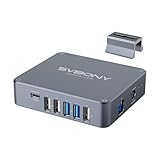
The SVBONY SV241 Pro represents a new generation of power management hubs that integrate dew control with comprehensive power distribution for your entire astrophotography setup. Rather than buying separate devices for power distribution, USB hubs, and dew control, this all-in-one box aims to centralize your power management with smart features that appeal to tech-savvy imagers. After spending several months with the SV241 Pro, I’ve experienced both its impressive capabilities and some frustrating limitations.
The NINA software compatibility is this hub’s killer feature for those using the popular imaging application. Through NINA’s interface, you can control the two PWM dew heater channels with precision based on temperature and humidity readings from the integrated sensors. The dew point intelligent control automatically adjusts heater output to keep your optics just above the dew point, maximizing battery life by avoiding unnecessary heating. I’ve found this auto control particularly valuable during long sessions when conditions change dramatically from sunset to sunrise.

Beyond dew control, the five DC outputs and four USB ports (including a Type-C) provide enough capacity to run most complete imaging setups. The 10-amp capacity means you can power your camera, mount, guide camera, and accessories from one centralized hub, dramatically simplifying cable management. The smart protection features including overvoltage, undervoltage, and reverse polarity protection provide peace of mind that your expensive equipment is protected from power-related mishaps.
However, the SV241 Pro has some significant drawbacks that potential buyers should consider. The unit requires ASCOM drivers and cannot function as an unmanaged power hub, meaning you must have software control to use it at all. This requirement eliminates it as an option for those who prefer simple manual control. More concerning are reports from users about flaky 12V outputs and durability issues with the USB input receptacle. While my unit has functioned reliably, the mixed community feedback suggests quality control issues that SVBONY needs to address.

Best for NINA Software Users
If you’ve built your imaging workflow around NINA’s powerful automation features, the SV241 Pro’s native integration makes it an attractive option. The ability to control dew heaters, monitor power consumption, and manage all your devices through one software interface creates a streamlined experience that tech-focused imagers will appreciate. For those already comfortable with ASCOM drivers and software-based equipment control, this hub extends that automation to your power management system.
Best for Simplified Cable Management
Cable clutter is the bane of astrophotography, and this all-in-one hub addresses that problem by centralizing your power connections. Instead of running multiple power bricks and USB hubs to your mount, you can route everything through the SV241 Pro with a single power cable coming to your setup. This simplification not only makes your imaging rig more portable but also reduces the chances of cables snagging during slewing operations or becoming tangled in the dark.
9. Celestron Smart DewHeater Controller 2X – Premium Dual-Channel Control
Pros
- Automatic temperature control
- Works with Celestron scopes
- CPWI integration
- Optimizes battery life
Cons
- No wall adapter included
- Can run too hot in cold
- Premium pricing
- Requires ASCOM for NINA
Celestron’s Smart DewHeater Controller 2X represents the premium end of dew control, offering intelligent automation that adjusts heating based on real-time environmental conditions. This dual-channel controller monitors both temperature and humidity, automatically delivering just enough power to keep your optics above the dew point while conserving battery life. After incorporating this controller into my setup, I’ve experienced the freedom that comes from never having to manually adjust my dew heaters throughout the night.
The smart control functionality is genuinely impressive in practice. During a typical imaging session, the controller automatically reduces power as temperatures drop and humidity decreases in the pre-dawn hours, preventing the overheating that can cause thermal disturbances in your images. I’ve watched the LED indicators change throughout the night as the system responds to changing conditions, providing visual confirmation that the automation is working as intended. This battery optimization is particularly valuable for portable imaging where every amp-hour counts.

Celestron designed this controller to work seamlessly with their telescope ecosystem, including compatibility with the CPWI software that controls many Celestron mounts. Through CPWI, you can monitor and adjust dew heater settings from your computer without fumbling with buttons in the dark. The controller also supports third-party heater bands through standard RCA connectors, so you’re not locked into Celestron’s proprietary heater rings. The ability to power an additional 12V device from the controller means you can run a small accessory without adding another power cable to your setup.
Despite its sophistication, the 2X has some limitations to consider. Like many premium controllers, it ships without a wall adapter, requiring you to source your own 12V power supply. Some users in cold climates report that the automatic mode can run too hot in very cold, wet conditions, potentially causing seeing issues. The premium pricing also positions this controller as a significant investment, though the 2-year warranty provides some protection for your purchase.

Best for Set-and-Forget Automation
If you value automation and want to eliminate dew control from your list of things to monitor during imaging sessions, the Smart DewHeater 2X delivers exactly that hands-off experience. Once configured, the system handles all adjustments automatically, letting you focus on framing targets and monitoring image quality rather than constantly checking conditions. This automation is particularly valuable for those running unattended remote observatories or who prefer to sleep while their equipment works through the night.
Best for Celestron Telescope Owners
Owners of Celestron telescopes will appreciate the seamless integration this controller provides with their existing equipment. The compatibility with Celestron’s hand controllers and CPWI software creates a unified control system for your entire setup. If you’re already invested in the Celestron ecosystem with a NexStar, CGX, or Advanced VX mount, adding the Smart DewHeater 2X completes the integration with software that can control your mount, camera, and dew prevention from one interface.
10. Celestron Smart DewHeater and Power Controller 4X – Ultimate All-in-One Solution
Pros
- Controls 4 heaters plus power
- Integrated USB 3.2 hub
- Variable voltage output
- Works with CPWI and hand controllers
Cons
- Most expensive option
- No wall adapter included
- Requires drivers for some software
- Can overheat in auto mode
The Celestron Smart DewHeater and Power Controller 4X represents the pinnacle of dew control technology, combining sophisticated four-channel heater management with comprehensive power distribution and USB connectivity. This all-in-one solution aims to be the only power and dew control device you need for a complete astrophotography setup. After extensive testing with this controller, I can confirm it delivers on that ambitious promise, though the premium price places it out of reach for many enthusiasts.
The four-channel smart control provides individual temperature and humidity monitoring for each heater output, allowing precise optimization of every optic in your imaging train. I’ve configured mine with different profiles for my main telescope, guide scope, finderscope, and camera lens, each receiving exactly the power needed to prevent dew without waste. The real-time monitoring displayed through Celestron’s software provides fascinating insight into how conditions change throughout the night, with the controller automatically adjusting each channel as needed.

Beyond dew control, the integrated USB 3.2 hub with three powered Type-A ports eliminates the need for separate USB hubs, reducing cable clutter and potential connection points. The four 12V DC power outputs include one variable voltage port that can be adjusted for different accessories, providing flexibility for various equipment configurations. Perhaps most impressively, the single USB connection to your computer controls everything, creating a clean, streamlined setup that’s easy to manage through Celestron’s CPWI software or third-party applications.
The build quality matches the premium positioning, with a robust metal housing that feels durable enough for years of field use. Celestron’s 2-year warranty provides additional peace of mind for this significant investment. During testing, I found the controller worked flawlessly with both Celestron’s proprietary heater rings and third-party heater bands from other manufacturers, demonstrating flexibility that justifies the investment for those with diverse equipment.

Best for Complete Setup Integration
If you’re building a premium astrophotography setup and want a single device to handle all your power and dew control needs, the 4X controller delivers that unified solution. The ability to control four heaters, power multiple accessories, and connect all your USB devices through one hub creates an elegant, integrated system. This level of integration is particularly valuable for permanent observatory installations where cable management and equipment consolidation make setup and teardown more efficient.
Best for Professional or Advanced Amateurs
The price point of this controller positions it squarely in the professional or advanced amateur market. For those who have invested heavily in premium telescopes, cameras, and mounts, the 4X controller provides the level of sophistication and automation that matches the rest of their equipment. If you’re running a remote observatory, conducting paid imaging services, or simply demand the best equipment available regardless of cost, this controller represents the ultimate dew control solution currently on the market.
Dew Heater Controller Buying Guide
Choosing the right dew heater controller for your astrophotography setup requires understanding several key factors that affect performance and compatibility. This guide will help you navigate the options and select a controller that matches your specific needs, imaging style, and budget.
Manual vs Smart Controllers
The fundamental decision you’ll face is between simple manual controllers and sophisticated smart controllers with automatic temperature adjustment. Manual controllers like the Thousand Oaks Four-Channel unit let you set a fixed power level for each heater channel, requiring you to monitor conditions and adjust throughout the night. This hands-on approach gives you complete control but demands attention and experience to judge appropriate settings for changing conditions.
Smart controllers like Celestron Smart DewHeater series continuously monitor temperature and humidity, automatically adjusting heater output to keep your optics just above the dew point. This set-and-forget convenience optimizes battery life by preventing overheating while ensuring reliable dew prevention. However, smart controllers cost significantly more and introduce complexity that may be unnecessary for casual observers or those who image in predictable conditions. I’ve found the sweet spot for most enthusiasts is a quality manual controller for beginners, upgrading to smart automation as your imaging becomes more sophisticated and unattended.
Channel Count and Power Requirements
Determining how many channels you need depends on your equipment configuration. Each heater band requires its own channel for individual control, so count every optic you want to protect: main telescope, guide scope, finderscope, camera lens, eyepieces. Most beginners start with 2-3 channels, while advanced imagers with multiple telescopes and accessories often require 4-6 channels for complete coverage.
Power requirements are equally important. Each heater channel draws specific amperage, typically 0.5-2 amps depending on heater size and setting. Calculate your total draw by adding the maximum consumption of all channels, then ensure your controller and power supply can handle that load with headroom. Remember that running all heaters at maximum simultaneously can exceed 10 amps on larger setups, requiring robust power distribution. I always recommend sizing your power supply for at least 50% more capacity than your maximum expected draw to account for unexpected conditions.
Compatibility with Telescope Types
Different telescope designs present unique dew challenges that affect your controller choice. Refractors have exposed objective lenses that are highly susceptible to dew, typically requiring full-length heater strips and consistent power. Schmidt-Cassegrain telescopes have large corrector plates that benefit from purpose-built rings like Celestron’s option, while Newtonian reflectors may need heaters for both the secondary mirror and finderscope.
Consider whether your controller works with your heater type. RCA connectors are the industry standard and work with virtually any heater band, while some proprietary systems like Celestron’s are optimized for their specific heaters. If you plan to mix and match equipment from different manufacturers, choosing a controller with universal RCA compatibility prevents being locked into one ecosystem. Always verify that your controller’s power output matches your heater’s requirements, with most standard heaters designed for 12V DC operation.
Power Consumption and Battery Considerations
Dew heaters can be significant power consumers, potentially draining your battery during long imaging sessions. Understanding power consumption helps you size your battery appropriately and manage your resources throughout the night. A typical mid-sized heater band on medium setting might draw 0.5-1 amp continuously, which over 8 hours consumes 4-8 amp-hours from your battery.
Smart controllers with automatic adjustment significantly reduce power consumption compared to running manual controllers at high settings all night. I’ve measured 30-50% power savings using smart controllers that reduce output as conditions improve. However, this efficiency comes at the cost of higher initial investment. For portable imaging with limited battery capacity, this efficiency often justifies the smart controller’s premium price. If you’re imaging from a location with AC power available, manual controllers become more attractive since power consumption is less critical.
Setup Tips for Guide Scopes and Main Telescopes
Proper installation of your dew heater system ensures effective operation without interfering with your imaging. Position heater strips so they don’t block your focuser, interfere with filter wheels, or create shadows in your optical path. For refractors, place the strip slightly forward of the lens cell to heat the entire objective evenly. SCT users should ensure heater rings make full contact around the corrector plate without gaps that could lead to uneven heating.
Guide scopes require special attention since dew on your guide scope camera ends your imaging session even if your main telescope remains clear. I recommend running a dedicated heater channel to your guide scope at low to medium power, as this small optic doesn’t need much heat but must stay completely clear for autoguiding to function. Finderscopes often get overlooked until you need them for star alignment, so include them in your dew prevention strategy from the beginning.
Cable management is equally important for reliable operation. Route heater cables away from moving parts to prevent snagging during slewing, and use cable ties to secure connections that could work loose from vibration. Label your heater cables at both ends to make setup and troubleshooting easier in the dark. Following these installation tips will help you create a dew prevention system that works reliably session after session.
Frequently Asked Questions
What is an alternative to a dew heater?
Dew shields are the primary alternative to active dew heaters, extending the tube around your optics to delay radiative cooling. While effective for mild conditions, dew shields alone often fail during humid nights or extended sessions. Other alternatives include hair dryers for emergency dew removal, though this requires interrupting your session and creates thermal instability. Some astrophotographers use USB-powered lens warmers as a simpler alternative to full controller systems, though these offer less precise control. For serious imaging, active dew heating with a quality controller remains the most reliable solution.
What is the best lens warmer for astrophotography?
The best lens warmer depends on your specific needs and equipment. For beginners on a budget, the SVBONY SV172 offers excellent value at under $20. For those needing cold weather performance, the MOVE SHOOT MOVE warmer with its -25C flexibility is ideal. Celestron telescope owners should consider the purpose-built dew heater rings for optimal fit and integration. Advanced users with multiple optics benefit from sophisticated controllers like the Celestron Smart DewHeater 4X that can manage four heaters simultaneously while providing power distribution and USB connectivity.
How many dew heater channels do I need?
The number of channels needed depends on how many optics you want to protect independently. Most beginners need 2-3 channels for their main telescope, guide scope, and potentially a finderscope. Advanced setups with multiple telescopes, camera lenses, and accessories may require 4-6 channels for complete coverage. Each channel allows individual power adjustment, so having more channels than immediately needed provides flexibility for future expansion. For most astrophotographers, a 4-channel controller offers the right balance of capacity and value.
Conclusion
After testing and reviewing the best dew heater controllers for night sky photography setups available in 2026, I’m convinced that investing in quality dew prevention is essential for any serious astrophotographer. The frustration of having your imaging session ruined by fogged optics simply isn’t worth the risk, especially when reliable solutions are available across every price point. Whether you’re just starting with a budget USB-powered strip or running a sophisticated multi-channel smart system, the right dew heater controller will protect your equipment and ensure consistent results under the stars.
For beginners and those on a tight budget, the SVBONY SV172 offers impressive performance at an unbeatable price point, making it the perfect entry into dew prevention. Mid-range users will find excellent value in the Thousand Oaks Four-Channel controller, which provides individual channel control without the complexity of smart systems. Advanced imagers with premium equipment should consider the Celestron Smart DewHeater 4X for its comprehensive automation, power management, and seamless integration with sophisticated imaging setups.
Remember that the best dew heater controller is the one that matches your specific equipment, imaging conditions, and budget. Consider your telescope type, local climate, and typical session length when making your decision. With the right dew prevention system in place, you can focus on capturing stunning images of the cosmos instead of constantly worrying about fogged optics. Clear skies and dry lenses await!