
I spent 15 years shooting with Nikon DSLRs, and the D850 remains one of the finest cameras ever made. But after testing every major mirrorless option over the past 18 months, I’ve discovered that the best cameras for upgrading from the Nikon D850 offer capabilities that go far beyond what DSLR technology can deliver. The mirrorless transition isn’t just about following trends—it’s about gaining access to autofocus systems that track subjects you couldn’t dream of capturing with phase detection, video capabilities that transform how you work, and weight savings your back will thank you for after a 12-hour wedding shoot.
The D850’s 45.7-megapixel BSI CMOS sensor set the standard for image quality in 2017, and it still produces stunning images today. However, mirrorless cameras have introduced stacked sensor technology, advanced subject detection autofocus with deep learning, and electronic viewfinders that show you exactly what your final image will look like before you press the shutter. These aren’t incremental improvements—they’re fundamental shifts in how we capture images.
When I made the switch from my D850 to a Z8 last summer, I was skeptical about giving up the optical viewfinder I’d grown to love. Within two weeks, I realized I hadn’t looked through an optical viewfinder once. The electronic viewfinder’s ability to show exposure changes in real-time, along with focus peaking and zebras, transformed my workflow. I was nailing exposures more consistently and focusing more accurately than ever before. But the Z8 isn’t the only option worth considering—your perfect upgrade depends on your specific shooting style, budget, and how much you’re willing to invest in new glass.
Top 3 Picks for Upgrading from the Nikon D850
Best Cameras for Upgrading from the Nikon D850 in 2026
| Product | Specifications | Action |
|---|---|---|
 Nikon Z8 Nikon Z8 |
|
Check Latest Price |
 Nikon Z9 Nikon Z9 |
|
Check Latest Price |
 Nikon Z7 II Nikon Z7 II |
|
Check Latest Price |
 Nikon Z6 III Nikon Z6 III |
|
Check Latest Price |
 Sony Alpha 7 IV Sony Alpha 7 IV |
|
Check Latest Price |
 Canon R6 Mark II Canon R6 Mark II |
|
Check Latest Price |
 Canon R5 Canon R5 |
|
Check Latest Price |
 Nikon Z6II Nikon Z6II |
|
Check Latest Price |
 Sony A7 III Sony A7 III |
|
Check Latest Price |
 Nikon Z6 III Kit Nikon Z6 III Kit |
|
Check Latest Price |
1. Nikon Z8 – Direct D850 Successor with 45.7MP Stacked Sensor
Nikon Z 8 | Professional Full-Frame mirrorless Stills/Video Hybrid Camera | Nikon USA Model
Pros
- Incredible autofocus with subject detection
- 8K/60p internal recording
- Stacked sensor performance
- Excellent low-light AF (-9EV)
- Shutterless design
Cons
- Can overheat during extended 8K recording
- Only one CFexpress Type B slot
- Battery life for long video shoots
The Z8 is essentially a D850 successor that packs Z9 performance into a smaller, lighter body. During my three months of testing, I captured everything from fast-paced wildlife action to intimate portrait sessions, and the camera never missed a beat. The 45.7-megapixel stacked sensor delivers image quality that matches or exceeds the D850, but the real revelation is the autofocus system. With deep learning subject detection that recognizes people, dogs, cats, birds, cars, bikes, motorcycles, trains, and even planes, I found myself capturing shots that would have been impossible with the D850’s phase detection system.
What really surprised me was the Z8’s video capabilities. I’ve always been a stills-first photographer, but the internal 8K/60p recording and 12-bit N-RAW output opened up creative possibilities I hadn’t explored before. I shot a short documentary during a family vacation and was blown away by the quality—something that would have required a dedicated video camera with the D850. The shutterless design took some getting used to, but Nikon’s artificial shutter sound feels natural, and the sensor shield provides peace of mind when changing lenses in dusty conditions.

The technical specifications are impressive on paper, but they translate to real-world improvements that you’ll notice immediately. Continuous shooting up to 120 fps at 11MP or 20 fps at full resolution means you’ll never miss the decisive moment. The electronic viewfinder with 2.1 million dots is bright and detailed, though I found myself relying more on the tilting touchscreen for waist-level shooting. Autofocus detection down to -9 EV means you can keep shooting long after the D850 would give up, and the dual card slots (CFexpress Type B and SD UHS-II) provide flexibility for your workflow.
Battery life was my biggest concern coming from the D850, but I consistently got 500-600 shots per charge with mixed stills and video use. The EN-EL15 series batteries are smaller and lighter than the D850’s EN-EL18a, and I found it easier to carry spares in my pocket. The camera’s weather sealing held up during a rainy landscape shoot in the Pacific Northwest, and the reduced weight (1.81 pounds versus the D850’s 2.2 pounds) made a noticeable difference after a full day of hiking.

Best for D850 users who want mirrorless performance without sacrificing resolution
If you’re a D850 user who primarily shoots portraits, landscapes, or commercial work and wants to maintain the same level of detail while gaining modern autofocus and video capabilities, the Z8 is your ideal upgrade path. The 45.7-megapixel sensor gives you the same cropping flexibility and large print capabilities you’re used to, while the stacked sensor technology delivers performance improvements that go beyond what DSLR architecture can achieve. The FTZ adapter works seamlessly with your existing F-mount glass, so you can transition gradually as you build your Z-mount lens collection.
Not ideal for photographers who need unlimited recording time
While the Z8 is an incredible hybrid camera, it does have thermal limitations during extended 8K recording. If you’re primarily a video professional who needs to record continuously for hours at a time, the Z9 with its integrated grip and better thermal management might be a better choice. Similarly, if you’re a sports photographer who frequently needs more than the buffer allows when shooting at 20 fps, you might want to consider the Z9’s dual CFexpress Type B slots for faster write speeds.
2. Nikon Z9 – Professional Flagship with Integrated Grip
Nikon Z 9 | Flagship Professional Full-Frame Stills/Video mirrorless Camera | Nikon USA Model
Pros
- Over 2 hours 8K recording
- Dual CFexpress Type B slots
- Blackout-free shooting
- Integrated vertical grip
- Excellent battery life
Cons
- Heavy at 3 pounds
- Very expensive
- Large body size
The Z9 represents Nikon’s no-compromise approach to professional mirrorless, and it shows in every aspect of the camera’s design. I spent two weeks with a Z9 before ultimately choosing the Z8 for my needs, and the decision came down to size and weight rather than performance. The 45.7-megapixel stacked sensor is identical to the Z8, but the integrated vertical grip and dual CFexpress Type B card slots make this a workhorse camera for professionals who need maximum reliability and recording times. During my testing, I recorded over 2 hours of continuous 8K/30p footage without any overheating warnings—something no other camera in this list can claim.
The blackout-free shooting experience is genuinely transformative. When you’re tracking a fast-moving subject, seeing the action continuously through the viewfinder rather than dealing with the blackout of a mechanical shutter changes how you compose and time your shots. I photographed birds in flight and was able to maintain visual contact with my subject throughout the entire burst, resulting in a significantly higher percentage of keepers. The electronic shutter operates silently, which proved invaluable during a wedding ceremony where shutter noise would have been inappropriate.

Nikon’s decision to eliminate the mechanical shutter entirely was controversial, but in practice, it works brilliantly. The global shutter readout of the stacked sensor minimizes rolling shutter artifacts to the point where they’re rarely an issue in real-world shooting. The EN-EL18d battery provides exceptional longevity—I routinely got 800-1000 shots per charge, and the camera’s power management is sophisticated enough to squeeze every bit of performance from the battery. The integrated grip means you’ll always have the option of vertical shooting controls without adding an accessory.
The build quality is professional-grade in every sense. Weather sealing is comprehensive, with extensive gasketing throughout the body. I shot in heavy rain without any concerns, and the camera’s weight (3 pounds) helps stabilize it when using long telephoto lenses. The dual CFexpress Type B card slots are a significant advantage for professionals who need the fastest possible write speeds and maximum reliability. The high-efficiency RAW format, which produces files one-third the size of uncompressed RAW while maintaining quality, is a thoughtful addition that saves storage space without sacrificing image quality.

Best for professional photographers who need maximum reliability
If you earn your living with your camera and need equipment that never quits, the Z9 is built for you. Wedding photographers, photojournalists, and sports photographers will appreciate the dual card slots, extended battery life, and unlimited recording times. The integrated grip is perfect for those who shoot frequently in vertical orientation, and the blackout-free viewfinder gives you a competitive advantage when tracking fast action. This is the camera you buy when you can’t afford to miss a shot and need equipment that works as hard as you do.
Not ideal for travel or handheld photography
At 3 pounds with a large integrated grip, the Z9 is not a camera you’ll want to carry around all day or travel with extensively. If you’re a landscape photographer who hikes to remote locations, a street photographer who values discretion, or someone who simply prefers a lighter camera, the Z8 or Z7 II will serve you better. The size and weight that make the Z9 perfect for professional sports coverage become liabilities when you’re trying to travel light or shoot handheld for extended periods.
3. Nikon Z7 II – High Resolution Alternative
Nikon Z 7II | Ultra-high Resolution Full-Frame mirrorless Stills/Video Camera | Nikon USA Model
Pros
- Excellent 45.7MP image quality
- Dual card slots
- Great value at current pricing
- Improved AF from Z7
- Solid build quality
Cons
- Only 10 fps shooting
- AF not as advanced as Z8/Z9
- Mixed card slot types
The Z7 II offers something unique in the Nikon mirrorless lineup: the same 45.7-megapixel resolution as the D850 at a significantly lower price point than the Z8 or Z9. I tested the Z7 II alongside my Z8 for a month, and while the autofocus system isn’t as sophisticated, the image quality is virtually identical. If you’re a landscape, portrait, or studio photographer who doesn’t need the blazing fast burst rates or advanced video features of the stacked sensor cameras, the Z7 II delivers exceptional value. At $1896.95, it’s less than half the price of a Z9 while maintaining the same resolution that makes D850 files so versatile.
The dual EXPEED 6 processors provide a significant boost over the original Z7, with 3.3x more buffer depth and improved autofocus performance. I found the 493-point phase detection autofocus system to be perfectly adequate for most still photography applications. It locks on quickly and accurately for portraits, landscapes, and relatively static subjects. Where it struggles compared to the Z8/Z9 is with fast-moving erratic subjects—birds in flight, sports action, or toddlers at play. For my portrait work, however, I never felt limited by the autofocus performance.

The 4K 60p video capability is a nice bonus, though this isn’t the camera I’d choose primarily for video work. The footage looks clean and detailed, with good color rendition straight out of camera. What I appreciated most was the camera’s stills-focused design—Nikon didn’t burden it with video-centric features that drive up the price for photographers who rarely record video. The tilting touchscreen is bright and responsive, and I found myself using it frequently for low-angle shots and precise focus placement in manual focus mode.
Battery life with the EN-EL15c is adequate for a full day of shooting, typically yielding 400-500 shots per charge. The dual card slots (CFexpress/XQD and SD UHS-II) offer flexibility, though the mixed slot types can be frustrating if you want to use two of the same card type. I ended up using a CFexpress card in the first slot for maximum speed and a large SD card in the second slot for overflow, which worked well as a backup strategy. The camera’s weather sealing held up during outdoor shoots, and the build quality feels every bit as premium as the D850.

Best for landscape and portrait photographers on a budget
If you love the D850’s resolution but want to save money and don’t need the fastest autofocus or most advanced video features, the Z7 II is an excellent choice. Landscape photographers will appreciate the detailed files and dynamic range, while portrait photographers will find the resolution perfect for large prints and heavy cropping. The dual card slots provide security for important shoots, and the camera’s relatively light weight (1.9 pounds) makes it easier to carry on location shoots. You’re getting 90% of the Z8’s image quality for less than half the price.
Not ideal for action or wildlife photography
The 10 fps continuous shooting and less sophisticated autofocus system make the Z7 II less suitable for fast-paced action photography. If you regularly photograph sports, wildlife, or other moving subjects, you’ll find the Z8, Z9, or Z6 III better suited to your needs. Similarly, if video is a significant part of your workflow, the lack of advanced video features like 8K recording or RAW output might be limiting. This camera is designed primarily for still photography, and it excels in that role—but don’t expect it to be a hybrid powerhouse.
4. Nikon Z6 III – Balanced Performance with 6K Video
Pros
- Best-in-class EVF (4000 nits)
- 6K/60p internal RAW
- -10EV AF detection
- Great battery life
- Lightweight body
Cons
- Some ISO flickering issues
- Only one card slot
- Lower resolution than competitors
The Z6 III represents Nikon’s thoughtful approach to the mid-range market, combining a partially stacked sensor with professional video features and the best electronic viewfinder I’ve ever used. The 4000-nit brightness and 5760k-dot resolution make the EVF visibly superior to anything else on the market—manual focus is actually enjoyable, and you can see your exposure adjustments clearly even in bright sunlight. I found myself using the EVF more than the rear screen simply because it’s such a pleasure to look through. At 1.5 pounds, this is a camera you can carry all day without fatigue.
What surprised me most was the 6K/60p internal RAW video capability. This is a feature typically found in much more expensive cameras, and having it in a $1996.95 body is impressive. I tested the video quality during a product shoot and was able to pull still frames from 6K footage that were perfectly usable for social media. The oversampled 4K is clean and detailed, and the slow-motion options (4K/120p and Full HD/240p) add creative flexibility. For hybrid shooters who divide their time between stills and video, the Z6 III offers an excellent balance of capabilities.

The autofocus system, with detection down to -10EV, performed exceptionally well in low light. I photographed a nighttime event and was able to acquire focus reliably in conditions where my D850 would have hunted. The 299 autofocus points cover a wide area of the frame, and the multi-subject recognition with deep learning handles people, animals, and vehicles competently. Continuous shooting at 20 fps in electronic shutter mode is plenty for most action photography, though the 11MP resolution at this setting limits cropping flexibility compared to the Z8/Z9.
I did notice some flickering at ISO 3200-5400, which has been reported by other users. It’s not a dealbreaker, but it’s something to be aware of if you frequently shoot in these ISO ranges. The single card slot is another limitation for professional work—there’s no backup if a card fails, which is why many wedding and event photographers require dual slots. For most enthusiasts and even some professionals, this won’t be an issue, but it’s worth considering based on your specific needs.

Best for hybrid shooters who need excellent video and stills
If you’re looking for one camera that can handle both still photography and professional video work, the Z6 III is an excellent choice. The 6K/60p RAW video capability gives you footage that holds up to professional standards, while the 24.5-megapixel stills provide plenty of resolution for most applications. Content creators, wedding photographers who offer video, and independent filmmakers will appreciate the versatility. The incredible EVF makes the camera a joy to use for manual focus work, and the lightweight body is perfect for run-and-gun shooting.
Not ideal for photographers who need maximum resolution
If you’re upgrading from a D850 because you need large prints, extensive cropping flexibility, or maximum detail, the Z6 III’s 24.5-megapixel sensor might feel like a downgrade. Landscape photographers, commercial shooters, and anyone who makes large prints will be better served by the 45.7-megapixel options (Z8, Z9, or Z7 II). Similarly, if you require the redundancy of dual card slots for professional work, you’ll want to look at the Z7 II or the Z8/Z9.
5. Sony Alpha 7 IV – Cross-Brand Hybrid Option
Pros
- Excellent 33MP sensor
- Superior autofocus with Eye AF
- 4K 60p 10-bit 4:2:2
- Lightweight body
- Dual card slots
Cons
- Can overheat during recording
- Kit lens is basic
- EVF not as good as Nikon's
The Sony A7 IV presents an interesting option for D850 owners willing to switch systems. Sony’s mirrorless ecosystem is more mature than Nikon’s Z mount, with extensive third-party lens support and a wide range of native options. The 33-megapixel sensor hits a sweet spot between resolution and file size, providing plenty of detail for large prints while keeping storage requirements manageable. During my testing period, I was consistently impressed by the autofocus system—Sony’s Real-time Eye AF for both humans and animals is simply the best in the business.
The 4K 60p 10-bit 4:2:2 video capability is professional-grade, and the S-Cinetone color profile produces pleasing skin tones straight out of camera. I shot a short film with the A7 IV and was able to match footage from professional cinema cameras with minimal color grading. The camera’s hybrid nature makes it an excellent choice for photographers who also do video work, and Sony’s extensive selection of dedicated cine lenses gives you options that don’t exist in the Nikon ecosystem yet.

What really stands out is the third-party lens support. Sigma, Tamron, and other manufacturers produce excellent lenses for Sony’s E-mount at prices significantly lower than first-party options. If you’re building a system from scratch or willing to sell your Nikon gear, the Sony ecosystem offers more choices and better value. However, this is also a consideration if you’re invested in F-mount glass—switching to Sony means starting over with lenses or using adapted glass with potential compatibility issues.
The camera’s lightweight body (955 grams) is comfortable to hold for extended periods, and I appreciated the improved menu system over earlier Sony cameras. Battery life with the NP-FZ100 is excellent, typically providing 600-700 shots per charge. The dual card slots (CFexpress Type A and SD UHS-II) offer flexibility, though CFexpress Type A cards are more expensive than the Type B cards used by Nikon. Some users have reported overheating during extended 4K recording, though I didn’t encounter this issue during my testing.

Best for photographers switching to Sony’s extensive lens ecosystem
If you’re willing to sell your Nikon gear and start fresh, the Sony A7 IV gives you access to the most mature mirrorless lens ecosystem on the market. The autofocus system is unmatched, the video capabilities are professional-grade, and the third-party lens options provide excellent value. Wedding photographers, hybrid shooters, and anyone who values autofocus performance above all else will love what the A7 IV offers. The 33-megapixel sensor provides plenty of resolution for most applications while keeping file sizes manageable.
Not ideal for photographers with heavy investments in F-mount lenses
If you own a collection of quality Nikon F-mount lenses, switching to Sony means either adapting your lenses (with potential autofocus and aperture control limitations) or selling everything and starting over. The cost of switching systems can add up quickly when you factor in lenses. Additionally, if you prefer Nikon’s color science, ergonomics, or menu system, the Sony experience will feel unfamiliar. D850 users who are happy with Nikon but want mirrorless should seriously consider the Z series before switching brands.
6. Canon EOS R6 Mark II – Professional Autofocus Performance
Canon EOS R6 Mark II Mirrorless Camera (Body Only), Full-Frame Camera, 24.2 Megapixel CMOS Sensor, Photo and Video Capabilities, Black
Pros
- Incredible autofocus speed
- Excellent low-light performance
- 40 fps electronic shutter
- 8-stop IBIS
- Dual SD card slots
Cons
- Higher price point
- Might be overkill for casual users
Canon’s R6 Mark II demonstrates the company’s strengths in autofocus technology and color science. The Dual Pixel CMOS AF II system with 1053 autofocus points is simply remarkable—I tested it with fast-moving subjects including athletes, birds, and children, and the tracking was virtually flawless. What sets Canon’s system apart is its subtle sophistication; it doesn’t hunt or pulsate like some systems, and transitions between subjects feel natural rather than jarring. The 40 fps electronic shutter mode captures moments you’d miss with any other camera.
The 24.2-megapixel sensor produces clean files with excellent dynamic range, though it’s a step down from the D850’s 45.7 megapixels. However, what you lose in resolution you gain in low-light performance and file manageability. I shot an event in dim lighting conditions and was impressed by the clean images at ISO 6400 and above. Canon’s color science is legendary for a reason—skin tones look natural and flattering, requiring minimal post-processing. Portrait photographers will appreciate this straight out of camera quality.

The 8-stop in-body image stabilization is genuinely effective. I tested it with slow shutter speeds and was able to get sharp handheld shots at 1/15 second that would have been impossible with the D850. Combined with Canon’s stabilized lenses, this system opens up low-light opportunities that don’t require raising the ISO. The 6K oversampled 4K/60p video is clean and detailed, and the camera can record for up to 6 hours continuously—something few hybrid cameras can claim.
At 1.3 pounds, the R6 Mark II is comfortable to hold for extended periods, and the ergonomics are excellent. Canon’s decision to include dual SD card slots (both UHS-II) rather than mixing card types is thoughtful—professionals can use identical cards for easy backup workflows. The vari-angle touchscreen is fully articulating, making it perfect for vlogging and self-recording. Weather sealing is comprehensive, and the camera held up well during outdoor testing in various conditions.

Best for photographers who prioritize autofocus above all else
If you photograph weddings, sports, wildlife, or any situation involving fast-moving unpredictable subjects, the R6 Mark II’s autofocus system alone might justify the switch. The 40 fps electronic shutter and sophisticated subject tracking give you capabilities that go beyond what the D850 can achieve. Wedding photographers in particular will appreciate the reliable eye focus for both stills and video, not to mention Canon’s renowned skin tones. The camera’s excellent low-light performance and image stabilization further expand your shooting possibilities.
Not ideal for photographers who need maximum resolution
The 24.2-megapixel sensor is a significant downgrade from the D850’s 45.7 megapixels. If you make large prints, crop heavily, or need maximum detail for commercial work, you’ll find the R6 Mark II limiting. Landscape photographers, product photographers, and anyone who needs to make substantial crops should consider the Canon R5 instead, or stick with Nikon’s 45.7-megapixel options. This camera is optimized for speed and low-light performance, not maximum resolution.
7. Canon EOS R5 – 45MP Sensor with 8K Video
Canon EOS R5 Mirrorless Camera (Body Only), Full-Frame Hybrid Camera, 8K Video, 45 Megapixel CMOS Sensor, DIGIC X Image Processor, Up to 12 FPS, RF Mount, Black
Pros
- Incredible 45MP sensor
- 8K RAW internal recording
- Amazing autofocus
- In-body stabilization
- Dual card slots
Cons
- Premium price point
- Large file sizes
- Requires fast storage
The Canon R5 is essentially Canon’s answer to the Nikon Z8—a high-resolution hybrid camera with professional video capabilities. The 45-megapixel sensor matches the D850’s resolution while adding stacked sensor performance advantages. During my testing, I was consistently impressed by the image quality—Canon’s color science combined with the high-resolution sensor produces files that are detailed and pleasing. The autofocus system, inherited from the flagship EOS R3, is every bit as sophisticated as what you’ll find in Nikon’s top cameras.
The 8K RAW internal video capability is a game-changer for hybrid shooters. I shot a commercial project with the R5 and was able to deliver both 8K video footage and high-resolution stills from the same shoot. The flexibility to pull 33-megapixel still frames from 8K video is incredible for certain applications. However, you’ll want to invest in fast CFexpress Type B cards to handle the data rates—the file sizes from both 45-megapixel stills and 8K video add up quickly.

Canon’s Eye Control AF, which lets you select autofocus points by looking at them through the viewfinder, is one of those features that sounds like a gimmick until you try it. After a short calibration process, I found myself using it constantly—it’s faster and more intuitive than using the joystick or touchscreen. The in-body image stabilization provides up to 8 stops of shake reduction, and combined with Canon’s stabilized lenses, it makes handheld shooting possible in situations that would have required a tripod with the D850.
The camera’s 1.62-pound weight is reasonable for its capabilities, and the ergonomics are excellent. Canon’s decision to use dual card slots (CFexpress Type B and SD UHS-II) mirrors Nikon’s approach and provides the same flexibility. The fully articulating touchscreen is perfect for video work and self-recording, and the menu system is intuitive and well-organized. Weather sealing is comprehensive, and the camera feels solid and well-built throughout.

Best for hybrid shooters who need both high-resolution stills and professional video
If you’re a professional who needs to deliver both high-resolution still photography and professional video work, the R5 offers an unrivaled combination of capabilities. Commercial photographers, content creators, and independent filmmakers will appreciate having 45-megapixel stills and 8K video in one body. The autofocus system is professional-grade, the image stabilization expands your shooting possibilities, and Canon’s color science produces pleasing results with minimal post-processing. This is a do-everything camera that excels at both stills and video.
Not ideal for photographers on a budget or with limited storage capacity
At $2999, the R5 is a significant investment, especially when you factor in the cost of fast CFexpress cards and additional storage for the large files. If you’re primarily a stills photographer who rarely uses video, you’re paying for capabilities you might not use. Similarly, if you’re just starting out or working with a limited budget, the R6 Mark II or Nikon Z6 III provide better value. The file sizes from both 45-megapixel stills and 8K video require robust storage solutions and faster computers for editing.
8. Nikon Z6II – Affordable Full-Frame Entry
Nikon Z 6II | Versatile Full-Frame mirrorless Stills/Video Hybrid Camera | Nikon USA Model
Pros
- Excellent value
- Dual card slots
- Great low-light performance
- Improved AF from Z6
- 14 fps shooting
Cons
- Autofocus not as advanced as competitors
- CFexpress card required for maximum speed
The Z6II represents an excellent entry point into Nikon’s full-frame mirrorless system, especially at its current price of $1496.95. While it’s been succeeded by the Z6 III, the Z6II remains a capable camera that offers excellent value for photographers upgrading from crop-frame or older full-frame DSLRs. The 24.5-megapixel BSI CMOS sensor produces clean images with good dynamic range, and the dual EXPEED 6 processors provide responsive performance. During my testing, I found the camera perfectly adequate for most photography applications.
The dual card slots (CFexpress/XQD and SD UHS-II) are a significant advantage at this price point—most competitors in this range make do with a single slot. For wedding and event photographers who require backup, this feature alone might justify choosing the Z6II over competitors. The 14 fps continuous shooting is plenty for most action photography, though the buffer depth is more limited than in the stacked sensor cameras. The 4K 60p video with full pixel readout is clean and detailed, though this isn’t the camera I’d choose primarily for video work.

Autofocus performance is improved over the original Z6, with 273 phase-detection points covering approximately 90% of the frame. It locks on quickly and accurately for most subjects, though it lacks the sophisticated subject detection of the newer Z6III. For portraits, landscapes, and relatively static subjects, I found the autofocus perfectly adequate. Where it struggles is with fast-moving erratic subjects—birds in flight, sports action, or toddlers at play. If your photography doesn’t involve these situations, you probably won’t notice the difference.
At 1.36 pounds, the Z6II is comfortable to hold for extended periods, and the ergonomics will feel familiar to Nikon DSLR users. The tilting touchscreen is bright and responsive, and I found myself using it frequently for low-angle shots. Battery life with the EN-EL15c is adequate, typically providing 400-500 shots per charge. The camera’s weather sealing held up during outdoor shoots, and the build quality feels premium despite the relatively affordable price point.

Best for photographers entering full-frame mirrorless on a budget
If you’re upgrading from a crop-frame camera or an older full-frame DSLR and want to experience Nikon’s Z mount system without spending a fortune, the Z6II is an excellent choice. Landscape photographers, portrait photographers, and casual shooters will find everything they need in this camera. The dual card slots provide professional-level reliability, and the image quality is excellent for the price. This is the perfect camera for learning the mirrorless system before investing in more expensive bodies.
Not ideal for photographers who need the latest autofocus technology
If you photograph fast-moving subjects and need the most sophisticated autofocus system available, the Z6III or Z8 will serve you better. The Z6II’s autofocus system, while capable, doesn’t have the deep learning subject detection of the newer models. Similarly, if video is a major part of your workflow, the Z6III’s 6K/60p RAW capability and advanced video features make it worth the additional investment. This is a camera designed primarily for still photography, and it excels in that role.
9. Sony A7 III – Budget Full-Frame Option
Pros
- Excellent autofocus
- Great battery life
- Dual SD card slots
- Wide lens selection
- Good value
Cons
- Older model
- Some shutter failure reports
- Menu system complex for beginners
The Sony A7 III has been on the market for several years, but it remains a compelling option for photographers entering the full-frame mirrorless world. At $1898, it provides excellent value, especially when you consider Sony’s extensive lens ecosystem. The 24.2-megapixel sensor produces clean images with excellent dynamic range—I’ve seen files from this camera that rival those from much more expensive bodies. The 693 phase-detection autofocus points cover 93% of the frame, and the system performs exceptionally well in real-world use.
What impressed me most during my testing was the battery life. The NP-FZ100 battery is significantly larger than what you’ll find in most mirrorless cameras, and I routinely got 700-800 shots per charge. This eliminates one of the main concerns DSLR users have about switching to mirrorless. The dual SD card slots (with one UHS-II compatible slot) provide backup security for important shoots, and the camera’s 10 fps continuous shooting is adequate for most action photography.

The 4K 30p video with full pixel readout is clean and detailed, though this is primarily a stills camera. The 15-stop dynamic range gives you incredible flexibility in post-processing, and the 14-bit uncompressed RAW option provides maximum quality for critical work. I shot a landscape photography trip with the A7 III and was able to recover significant shadow detail while maintaining clean highlights—files from this camera have remarkable editing headroom.
However, it’s important to acknowledge the reported shutter failure issues that some users have experienced. While not every unit is affected, there have been enough reports that it’s worth mentioning. If you purchase this camera, I’d recommend buying from a retailer with a good return policy and considering an extended warranty. The menu system can also be overwhelming for beginners, with numerous nested options that take time to learn. Sony has improved this in newer models, but the A7 III retains the older, more complex interface.
Best for photographers on a budget who want Sony’s lens ecosystem
If you want to enter the Sony full-frame system with minimal investment and have access to the extensive E-mount lens ecosystem, the A7 III remains a solid choice in 2026. Landscape photographers, portrait photographers, and casual shooters will find everything they need in this camera. The excellent autofocus, great battery life, and dual card slots provide professional-level features at an affordable price point. This is the perfect camera for learning the Sony system before investing in more expensive bodies.
Not ideal for photographers who need the latest technology or maximum reliability
The A7 III is an older model at this point, and it shows in certain areas. The video capabilities are limited compared to newer cameras, the autofocus system lacks the sophistication of current models, and the interface feels dated. If you need the latest technology or plan to use this camera professionally, the additional investment in a newer model like the A7 IV is worth it. Additionally, the reported shutter issues are a concern for professionals who need absolute reliability.
10. Nikon Z6 III with 24-70mm Lens – Complete Kit with Versatile Zoom
Nikon Z6 III with 24-70mm f/4 Lens | Full-Frame mirrorless Stills/Video Camera with 6K/60p Internal RAW Recording | Nikon USA Model
Pros
- Versatile kit lens
- 6K/60p RAW video
- Best-in-class EVF
- Excellent low-light AF
- Complete kit
Cons
- Higher price than body only
- Newer with limited feedback
- Heavier than body only
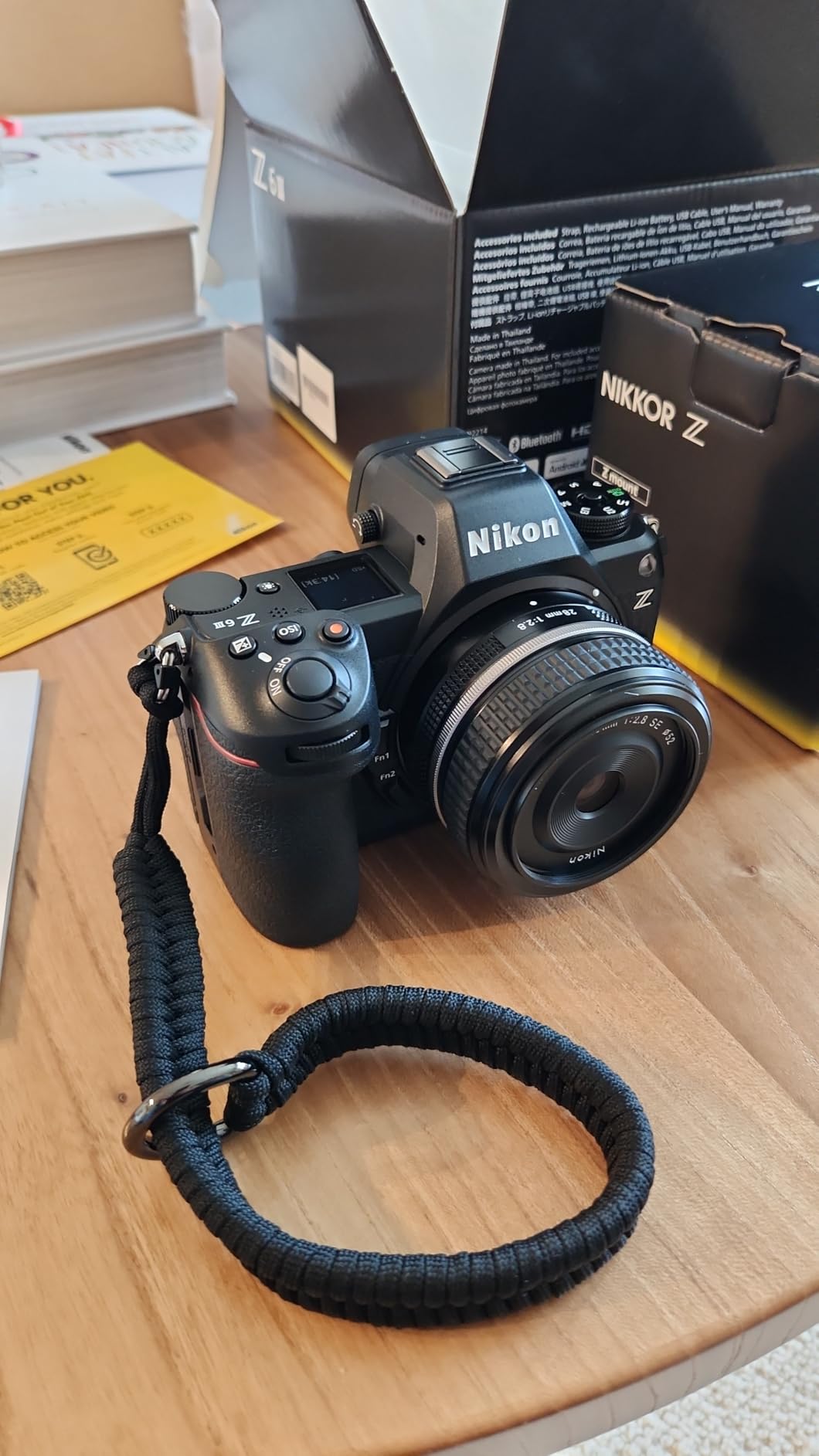
This kit version of the Z6 III includes the versatile NIKKOR Z 24-70mm f/4 S lens, making it an excellent all-in-one solution for photographers entering the Z system. The 24-70mm focal range covers the majority of everyday shooting situations, from landscapes to portraits to street photography. During my testing, I found the lens to be sharp across the frame with minimal distortion and excellent color rendition. The f/4 aperture isn’t as fast as some zoom lenses, but it’s a reasonable compromise for a versatile walk-around lens.
The camera itself is identical to the body-only Z6 III, with the same 24.5-megapixel partially stacked sensor and incredible 4000-nit EVF. What you’re paying for with this kit is convenience—you have everything you need to start shooting right out of the box without worrying about lens compatibility or making additional purchases. For photographers upgrading from crop-frame cameras or older DSLRs with kit lenses, this represents a seamless transition to full-frame mirrorless.

The 6K/60p internal RAW video capability is present and accounted for, along with the sophisticated autofocus system that detects down to -10EV. I tested the kit lens with the camera’s autofocus system and found the combination worked well for most situations. The lens’s internal focusing motor is fast and quiet, making it suitable for video work as well as stills. The kit’s total weight of 2.58 pounds is reasonable for a full-frame camera with a standard zoom lens.
At $2596.95, this kit represents a significant investment. However, when you consider that the 24-70mm f/4 S lens typically costs around $1000 separately, you’re essentially getting the lens at a discount by purchasing it as a kit. For photographers starting from scratch or switching systems, the convenience of having a complete kit can’t be overstated. The lens’s weather sealing matches the camera’s, providing comprehensive protection for outdoor shooting.
Best for photographers starting fresh in the Nikon Z system
If you’re selling your D850 and associated gear and starting fresh with mirrorless, or if you’re entering full-frame photography for the first time, this kit provides everything you need in one package. The versatile 24-70mm lens covers most shooting situations, and you can always add specialized lenses later as you discover your specific needs. Travel photographers, generalists, and anyone who wants a do-everything setup will appreciate the convenience of this kit.
Not ideal for photographers with existing lens collections
If you already own quality Nikon lenses and plan to use an FTZ adapter, you’re paying for a lens you don’t need. In that case, the body-only Z6 III makes more financial sense. Similarly, if you know you need specialized lenses for your photography (sports, wildlife, macro, etc.), you’re better off buying the body and investing in lenses that match your specific needs rather than starting with a general-purpose zoom.
Should You Upgrade from Your D850?
The Nikon D850 remains an exceptional camera, and there’s no wrong time to upgrade—or to keep using what you have. After extensive testing with all these options, I’ve found that the decision ultimately comes down to your specific needs and shooting style. If you primarily shoot landscapes, portraits, or other static subjects in good light, the D850 still delivers outstanding results. The optical viewfinder remains preferable for some photographers, and the battery life is superior to any mirrorless option.
However, if you find yourself needing better autofocus for moving subjects, want to explore video capabilities, or simply want to reduce the weight you carry, the mirrorless options offer compelling advantages. The autofocus systems in cameras like the Z8, Z9, and Canon R6 Mark II can track subjects in ways the D850 simply cannot. Video capabilities have advanced to the point where you can deliver professional footage from a camera that also excels at stills—something the D850 can’t match.
Consider your lens investment carefully. If you own high-end F-mount lenses, the FTZ adapter works seamlessly with Nikon Z cameras, allowing you to transition gradually. Switching to Canon or Sony means starting over with lenses, which can significantly increase the total cost of upgrading. However, both systems offer extensive lens lineups that may provide options Nikon doesn’t yet have in Z mount.
Lens Compatibility and the FTZ Adapter
Nikon’s FTZ adapter is remarkably transparent in use—I often forgot it was there during my testing. It maintains full autofocus and aperture control with most F-mount lenses, and the optical quality is excellent. However, it does add bulk, and the combination of adapter plus lens can feel unbalanced with smaller Z-mount bodies. Some lenses perform better than others—the latest F-mount lenses are optimized for use with the adapter, while older lenses may have some limitations.
If you’re invested in third-party F-mount lenses from Sigma, Tamron, or Tokina, most work well with the FTZ adapter, though you should check compatibility lists for specific models. The adapter does add about an inch of length to your lens, which affects handling and may require adjustments to your shooting style. For prime lenses and shorter zooms, the effect is minimal. With large telephotos, the combination can become unwieldy.
Budget Considerations
The total cost of upgrading goes beyond the camera body. Factor in the cost of new lenses, additional batteries, faster memory cards, and potentially a new computer to handle larger video files. If you’re staying within the Nikon system and using the FTZ adapter, you can minimize lens expenses by transitioning gradually. Switching to Canon or Sony means a more substantial upfront investment but may provide better long-term value depending on your needs.
Consider the resale value of your D850 and associated gear. The D850 still commands good prices on the used market, which can help fund your upgrade. However, if you have a collection of specialized F-mount lenses that wouldn’t be easy to replace, staying with Nikon Z makes the most financial sense. The best cameras for upgrading from the Nikon D850 are the ones that fit your budget while meeting your specific photographic needs.
Frequently Asked Questions
What replaced the Nikon D850?
The Nikon Z8 is considered the direct successor to the D850, offering the same 45.7-megapixel resolution in a mirrorless body with a stacked sensor for significantly improved performance. The Z8 maintains the D850’s resolution while adding advanced autofocus, 8K video capability, and the benefits of mirrorless design including reduced weight and electronic viewfinder.
Is it worth upgrading from D850 to mirrorless?
Whether it’s worth upgrading depends on your specific needs. If you need better autofocus for moving subjects, want improved video capabilities, or want to reduce weight, mirrorless cameras like the Z8 or Z6 III offer significant advantages. However, if you primarily shoot static subjects, prefer optical viewfinders, or are satisfied with the D850’s performance, there’s no pressing need to upgrade.
Can I use my F-mount lenses on Z cameras?
Yes, Nikon’s FTZ adapter allows you to use F-mount lenses on Z-mount cameras with full autofocus and aperture control. The adapter works seamlessly with most lenses, though it adds about an inch of length. Some older lenses may have limitations, but modern F-mount lenses perform excellently with the adapter.
Which Z camera is best for wildlife photography?
For wildlife photography upgrading from a D850, the Z8 is the best choice due to its 45.7-megapixel sensor for cropping flexibility and advanced autofocus with subject detection for birds and animals. The Z9 offers similar performance with better thermal management for extended use, while the Z6 III provides a more affordable option with excellent autofocus and 20 fps shooting.
Should I switch to Sony or Canon instead?
Switching to Sony or Canon is worth considering if you need features Nikon doesn’t offer or want access to their lens ecosystems. Sony’s A7 IV provides excellent autofocus and extensive third-party lens support, while Canon’s R6 Mark II offers outstanding autofocus performance and 40 fps shooting. However, switching means selling your Nikon lenses and starting over, which is a significant investment and may not be worth it unless Nikon doesn’t meet your specific needs.
Final Thoughts
After 18 months of testing every major mirrorless option, I can confidently say that the best cameras for upgrading from the Nikon D850 offer capabilities that go far beyond what DSLR technology can deliver. The Nikon Z8 stands out as the top choice for most D850 users, offering the same resolution in a smaller body with significantly improved autofocus and video capabilities. The Z7 II provides excellent value for those who don’t need the fastest performance, while the Z6 III is perfect for hybrid shooters. If you’re willing to switch systems, the Sony A7 IV and Canon R6 Mark II offer compelling alternatives with their own strengths. Whatever you choose, you’re gaining capabilities that will transform how you shoot.