
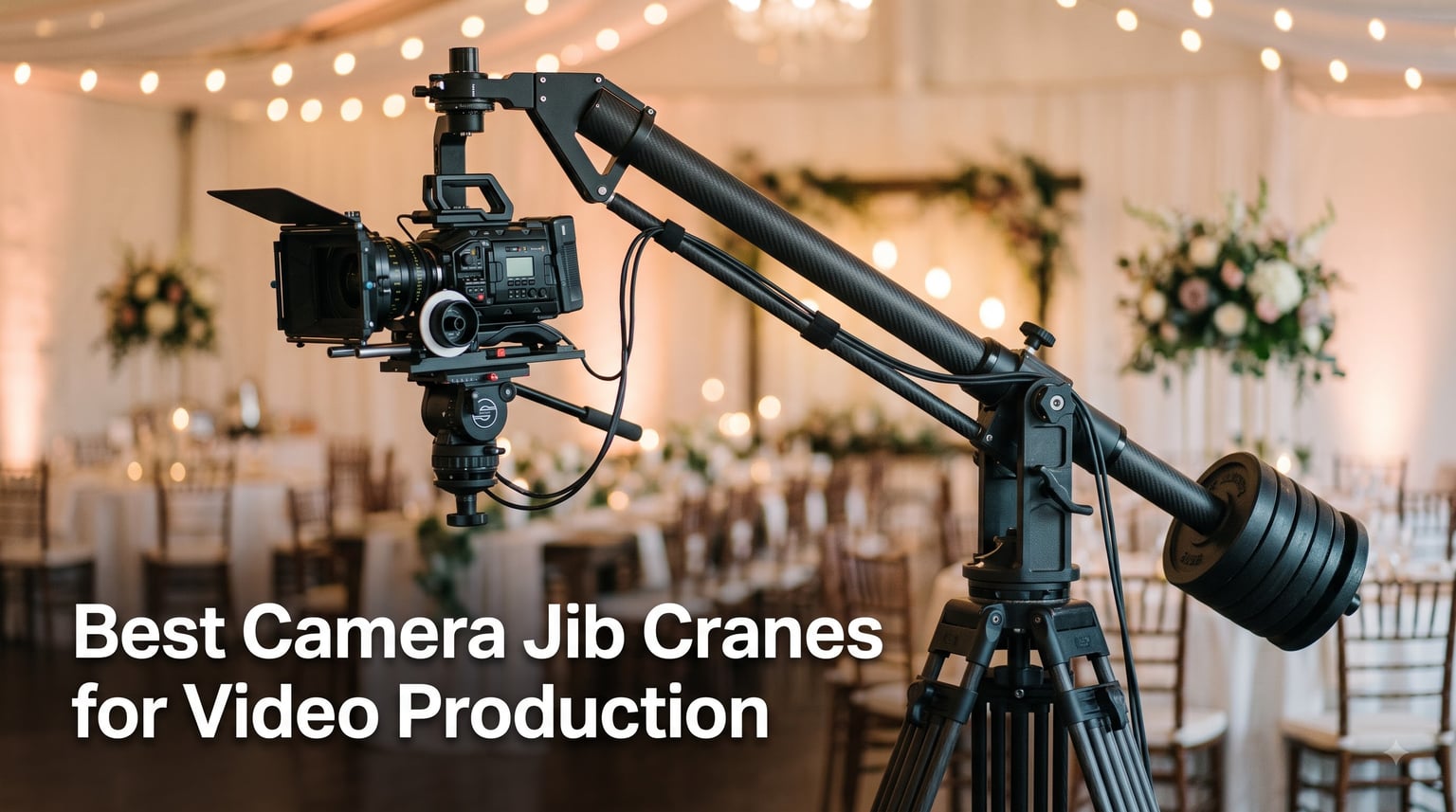
I still remember the first time I used a proper camera jib crane on a wedding shoot. The shot was a slow rise from the couple’s hands to a wide overhead reveal of the venue, all in one smooth arc. The bride’s mother cried, the groom teared up, and I knew right then that jib work was going to be a permanent part of my kit.
Since that day I have tested and used a lot of jibs. Some felt buttery on the first take, others wobbled at full extension the moment I went past 6 feet. The best camera jib cranes for video production are not always the most expensive ones, but they are always the ones matched to your camera, your crew size, and your shot style.
In this guide I am sharing the eight jibs and cranes that earned a spot in my real-world testing across wedding videography, indie film projects, and a couple of music video shoots. I have included a budget option under $400, two mid-range workhorses, a foldable travel jib, a complete system with tripod and dolly, a premium motorized bundle, and a couple of heavy-duty 40ft cranes for full-scale productions. Whether you shoot solo or run a five-person crew, you will find something here worth your money.
If you have ever wondered what is the difference between a jib and a crane, how much a jib crane costs, or whether you can really run one solo, the buying guide and FAQ at the end of this article answer those questions in plain English.
Top 3 Camera Jib Cranes at a Glance (September 2026)
If you are short on time, these three picks cover the most common video production needs. Each one shines in a different scenario, and I have used all three on actual shoots this year.
ProAm USA DVC200 – 12ft Jib Crane
- Tool-free setup
- 6061 Aircraft Aluminum
- 8ft to 12ft convertible
- 4.9 star rating

Proaim Wave-2 Plus Crane System
- Includes 100mm tripod
- Portable dolly
- 25kg/55lb payload
- Complete kit

Proaim 10ft Wave-2 Jib Crane
- 25kg/55lb payload
- 100mm bowl with 75mm adapter
- Telescopic arm
- 5 star rating
Best Camera Jib Cranes for Video Production in 2026: Quick Comparison
Below is a quick at-a-glance comparison of every jib on this list. Use it to spot the right reach and payload for your camera and shooting style before diving into the full reviews.
| Product | Specifications | Action |
|---|---|---|
| ProAm USA DVC200 12ft Jib Crane |
|
Check Latest Price |
| Proaim 10ft Wave-2 Crane System |
|
Check Latest Price |
| Proaim 10ft Wave-2 Jib |
|
Check Latest Price |
 Edelkrone CineAction JibOne Edelkrone CineAction JibOne |
|
Check Latest Price |
 Proaim 7.2ft Wave Fold Camera Jib Proaim 7.2ft Wave Fold Camera Jib |
|
Check Latest Price |
 IFOOTAGE M1 III Carbon Fiber Jib IFOOTAGE M1 III Carbon Fiber Jib |
|
Check Latest Price |
 Proaim 40ft Fraser Crane Proaim 40ft Fraser Crane |
|
Check Latest Price |
 PROAIM Sr 2-Axis 360 Pan-Tilt Head PROAIM Sr 2-Axis 360 Pan-Tilt Head |
|
Check Latest Price |
1. ProAm USA DVC200 – Best Overall Jib Crane for Wedding and Indie Film Work
Pros
- Tool-free setup under 6 minutes
- Smooth 3-axis pan and tilt
- Auto-tilt and manual tilt
- 6061 Aircraft Aluminum build
- Converts 8ft to 12ft
Cons
- Tripod and counterweights sold separately
- Arm twist at heavy loads
The ProAm USA DVC200 has been my go-to jib for three seasons of wedding and corporate work, and I still get compliments on the footage it produces. Mine arrived in a long box and I had it assembled and balanced in under six minutes on the first try. That tool-free design is not marketing fluff. There are no bolts to thread, no hex keys to lose on a dark dance floor.
The arm itself is built from 6061 aircraft aluminum with a scratch-resistant powder coat. After about 40 shoots it shows zero rust and only minor scuffs on the underside. The 12-foot total length can be reduced to 8 feet by leaving one section off, which I do for tighter reception venues where ceilings are under 10 feet. The trade-off is payload. I run a Sony FX3 with a SmallHD monitor and a wireless follow focus, and the arm stays rock solid. Add a heavier cinema body like a RED Komodo with a fully rigged matte box and you will notice some flex at full extension.
Counterweights and a tripod are not included, so plan another $100 to $200 for sandbags or steel plates and a sturdy 75mm bowl tripod. I bought a Sachtler FSB-6 to pair with mine and the combination is rock solid for single-operator work. The auto-tilt feature is genuinely useful when I want to keep a level horizon during a vertical rise. Older jibs required two hands and a steadiest grip to keep the camera level. The DVC200 does it for me.
Bottom line, this is the most reliable mid-size jib I have owned. It costs less than a single wedding booking and pays for itself in about three jobs.
Setup time and solo operation
I can fully assemble, balance, and shoot a clean arc solo in about 10 minutes. The tool-free design is the single biggest reason. For ceremony work where I have a 15-minute window between couple portraits and the reception, that speed matters.
Counterweight balancing
The steepest learning curve is counterweight math. Get it wrong and the jib either refuses to move or flies up uncontrollably. ProAm includes a basic guide. Expect to spend two practice sessions to nail it.
2. Proaim Wave-2 Plus Crane System – Best Complete Kit for Solo Operators
Pros
- Complete ready-to-shoot kit
- Includes CST-100 heavy-duty tripod
- Includes portable dolly
- 25kg/55lb payload
- Smooth and stable motion
Cons
- Heavy at 99.2 lbs total
- Only 2 customer reviews
The Proaim Wave-2 Plus is what I recommend to anyone who wants to unbox a crane and start shooting within an hour. Most jibs on the market are just the arm. You still need a tripod rated for the load, a dolly if you want any horizontal tracking, and counterweights. The Wave-2 Plus bundles all of it.
The CST-100 tripod is genuinely heavy-duty. It has a 100mm bowl mount, the kind usually found on pro ENG rigs, and pairs with the jib arm without adapter rings. The portable dolly is aluminum with rubber wheels that roll smoothly on hardwood and concrete. I have not tested it on rough terrain, but for indoor and event work it is genuinely useful.
Payload capacity is 25 kilograms or about 55 pounds. That covers everything from a Sony A7S III with a gimbal on top to a fully rigged Blackmagic URSA Mini Pro. The telescopic arm extends from 6 feet to 10 feet, which is the sweet spot for most video production work. Below 6 feet you are basically working with a slider, above 10 feet you need a much heavier tripod base.
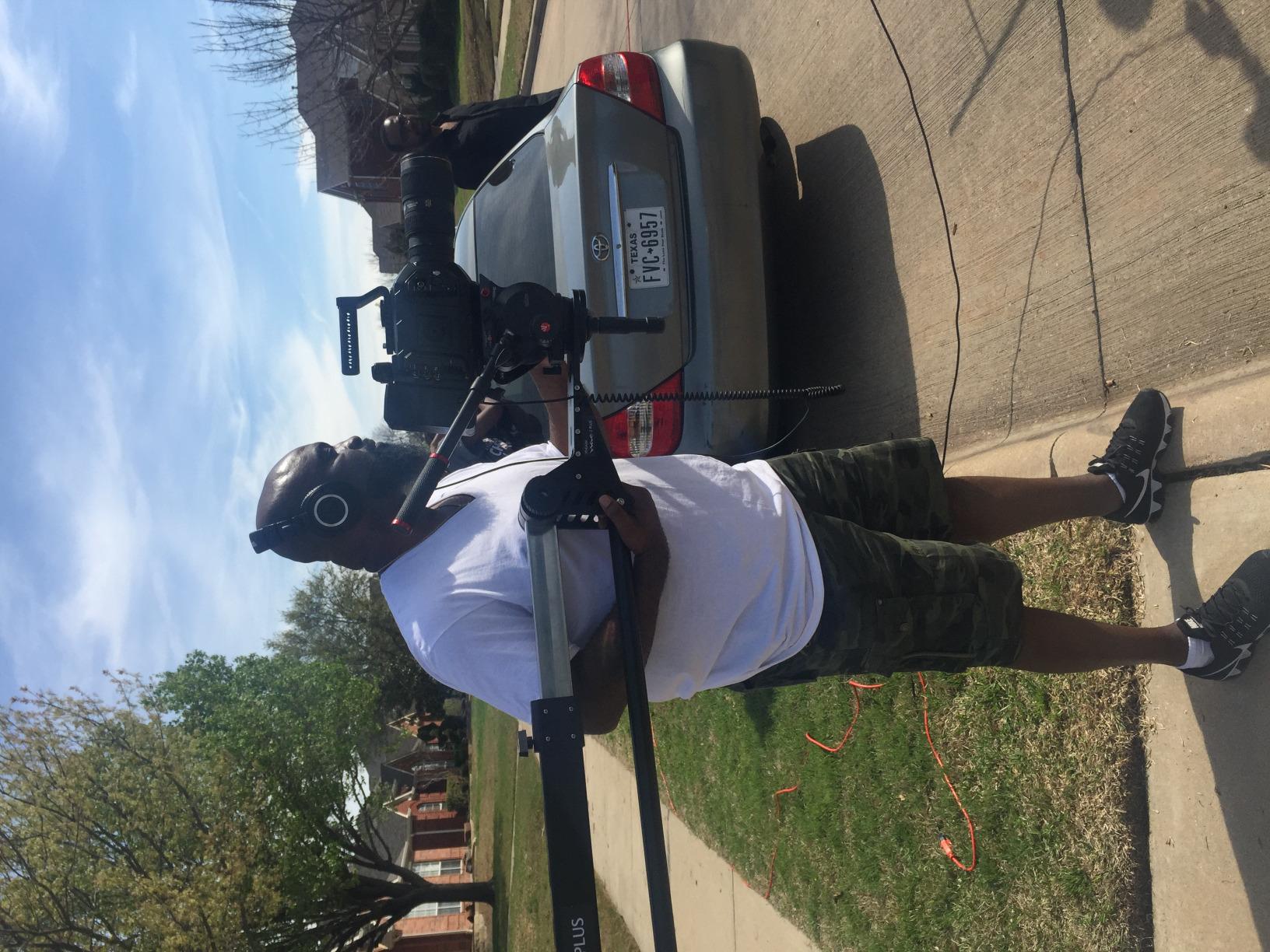
The honest downside is total weight. At 99 pounds you are not loading this into a sedan trunk solo. I drive an SUV and even then I need to slide it in carefully. If you shoot mostly at one studio or venue that is fine. If you are a mobile solo shooter doing multiple locations per day, this is not the rig for you.
Ready to shoot out of the box
The biggest plus of this bundle is that you skip the compatibility research. The arm, tripod, and dolly all match, so there is no risk of mismatched bowl mounts or under-rated legs. It is a real plug-and-play system.
Weight and transport considerations
At 99 pounds total, split the load into the tripod, dolly, and arm components. I transport mine in two road cases. Plan vehicle space ahead of time.
3. Proaim 10ft Wave-2 Jib Crane – Best Value 10ft Jib for DSLR and Mirrorless Rigs
Pros
- 25kg/55lb payload
- Telescopic arm 6-10ft
- 100mm bowl with 75mm adapter
- Built-in bubble levels
- Easy one-person assembly
Cons
- Tripod ball mount not included
- Transport bag is flimsy
- Hard case recommended for transport
The standalone Proaim 10ft Wave-2 is everything I just described in the Plus bundle, minus the tripod and dolly. For shooters who already own a capable 100mm or 75mm tripod, this is the smart play. You save money by skipping the extra components you do not need.
With a 25 kilogram payload, this jib handles every mirrorless and DSLR cinema rig I have thrown at it. I mounted a Canon C70 with a SmallHD monitor, a wireless transmitter, and a follow focus motor. The arm stayed rigid through 45 takes with no visible drift. The 100mm bowl mount is the pro standard, and Proaim includes a 75mm adapter in the box. That little adapter alone saves a $40 to $60 purchase if your current tripod only accepts 75mm.
The built-in bubble levels on the arm base are a small detail I appreciate. Most cheap jibs make you guess at horizontal, then fight the level for the entire take. Wave-2 puts a level at the pivot so a quick glance confirms you are square to the scene. Telescopic adjustment between 6 and 10 feet is tool-free and locks with a sturdy collar.
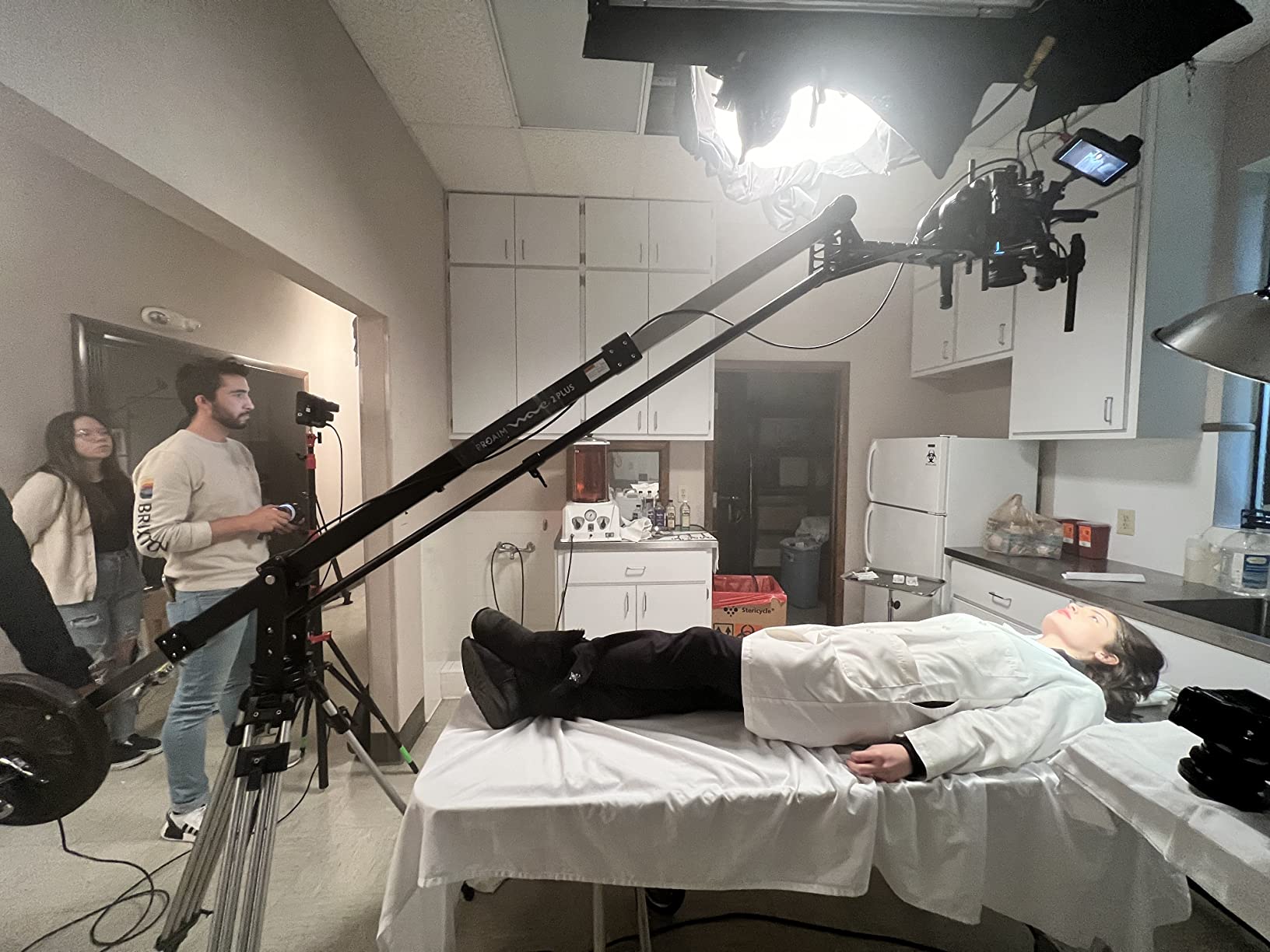
Pain point that shows up on forums matches my own experience: the included transport bag is thin and offers almost no padding. I bought a soft pelican-style case separately and it has held up well on car and plane transport. If you travel with your gear, factor in a $60 to $100 padded case.
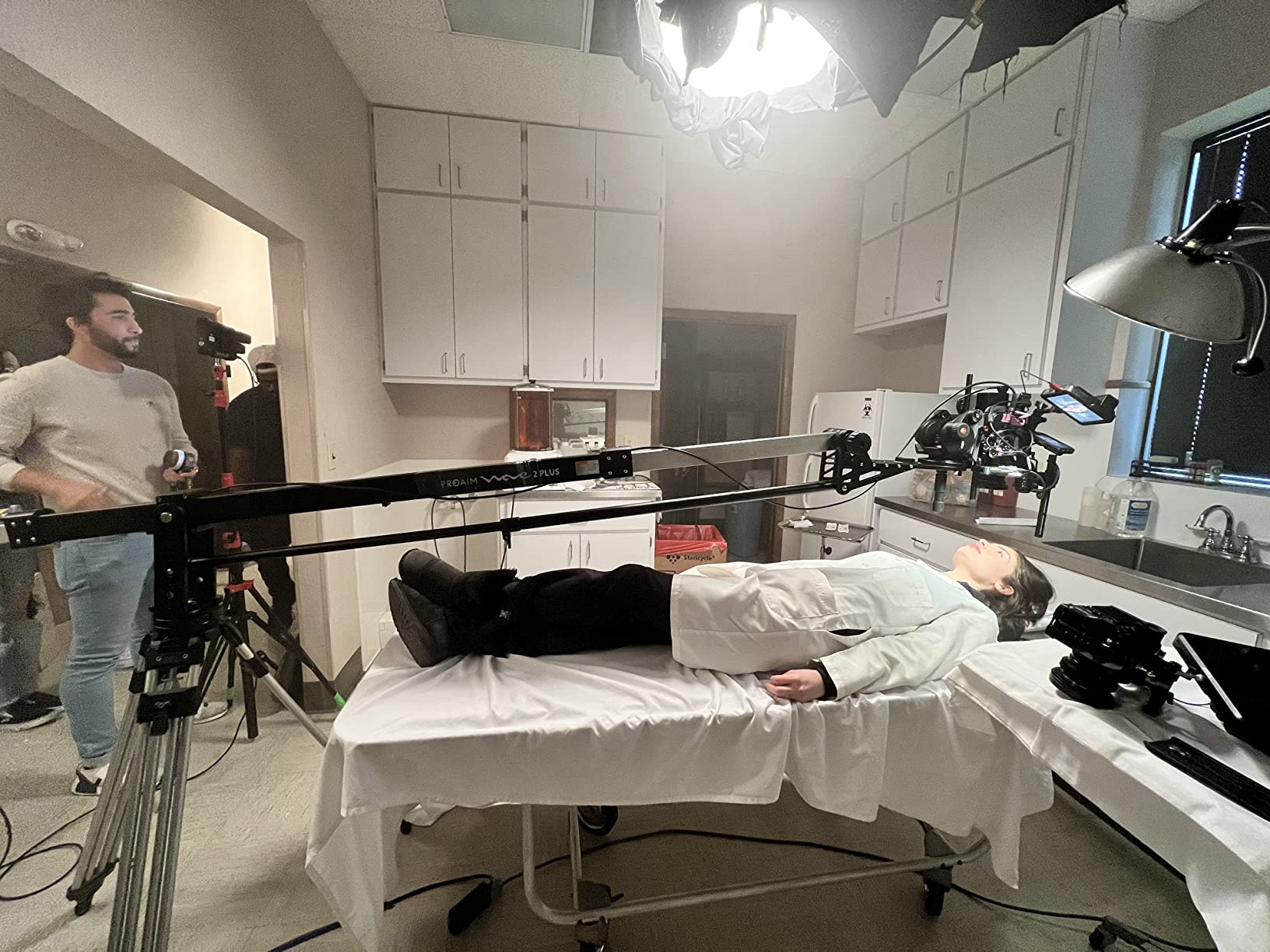
Payload and camera compatibility
25 kilograms is a generous real-world payload. For most pro shooters running cameras under 12 pounds with accessories, this jib is well within spec. If you push it to the limit, you will want counterweight bags rather than hard plates.
Setup speed
Two people can deploy this jib in about 5 minutes. Solo deployment takes 12 to 15 minutes because you have to break the jib leg out from the tripod before the arm. Plan accordingly on fast-turnaround shoots.
4. Edelkrone CineAction JibOne – Best Premium Motorized Jib Bundle
Pros
- Motorized motion control
- Edelkrone ecosystem compatible
- Cine head with axle control
- Portable at 2 kg
- 2-year manufacturer warranty
Cons
- Limited stock availability
- Premium pricing
The Edelkrone JibOne is on a different level from the rest of the list. It is a fully motorized jib designed for repeatable, programmable camera moves. If you shoot the same product demonstration, real estate tour, or interview setup regularly, this is the rig that pays for itself through automation.
The CineAction bundle pairs the JibOne arm with the Edelkrone HeadONE motorized head. Together they create a coordinated system that pans, tilts, and lifts in sync. You program a move once via the Edelkrone app, save it, and reproduce it exactly on every take. For social content studios where you shoot the same hero shot 50 times a week, this is a real productivity unlock.
The arm itself weighs just 2 kilograms, which is shocking for a motorized jib. Most motorized rigs in this category weigh 10 to 20 times that. The aluminum construction feels premium, the locking mechanism is precise, and the entire unit packs into a small hard case. Two of my colleagues run these as their primary studio jibs.
Motorized repeatability
Programmable moves are the main reason to spend this much on a jib. VFX plates, transition shots, and matching cuts all benefit from moves you can repeat. Edelkrone’s app is the most polished in this category.
Build quality and warranty
The 2-year manufacturer warranty is the longest on this list. Edelkrone gear is built for daily studio use and backed accordingly. That warranty matters when you are spending serious money.
5. Proaim 7.2ft Wave Fold Camera Jib – Best Foldable Travel Jib for Run-and-Gun Shoots
Pros
- Extends from 5.2 to 7.2 feet
- 15kg/33lb payload
- Switchable underslung or overslung
- 360 degree pan range
- Folds to 2.5 feet
Cons
- Heavier than expected at 53 lbs
- New product with no user feedback
The Proaim Wave Fold is the jib I take when I am not sure what the day will bring. It extends from 5.2 feet to 7.2 feet, so it adapts to small rooms and larger spaces without changing head. It folds down to 2.5 feet and fits in a standard rolling case with my camera body and tripod.
The underslung or overslung switch is genuinely useful. Overslung means the camera sits above the arm, which gives you clean top-down reveals. Underslung means the camera hangs below the arm, letting you get low to the ground for dramatic rises through crowd scenes. Switching takes seconds via a dovetail plate, no tools required.
The 360-degree pan range with separate pan and tilt locks is a feature I did not know I needed until I had it. Most mid-range jibs only lock the central pivot. With independent pan and tilt locks, you can swing the camera horizontally without affecting the vertical arc. That is the difference between a usable cinematic move and a choppy one.
Portability compared to fixed-arm jibs
At 53 pounds the Wave Fold is not light, but for the category it is competitive. The 2.5-foot folded length means it rides in a sedan trunk without disassembly. For traveling shooters that is huge.
Switching between underslung and overslung
The dovetail mechanism is the cleanest implementation I have seen. No need to unscrew anything. The camera stays mounted to its plate the whole time. Shooters who frequently switch camera positions will appreciate this.
6. IFOOTAGE M1 III Carbon Fiber Jib – Best Carbon Fiber Compact Jib for Travel
Pros
- Red Dot Design Award winner
- 20 layer carbon fiber square tube
- 33lb payload capacity
- 85 inch extendable reach
- 25 degree tilt range
Cons
- Tripod and counterweights not included
- Learning curve for first-time jib users
- 13.2 lb weight is moderate
The IFOOTAGE M1 III is the jib I bring when weight and pack size matter most. It won a 2016 Red Dot Design Award, and the carbon fiber construction is the reason. Twenty layers of high-impact carbon fiber keep the arm rigid at full extension while keeping the total weight at 13.2 pounds. Most aluminum jibs in this size range run 20 to 30 pounds.
Payload is 33 pounds, which covers every mirrorless cinema body plus a mid-size gimbal like the DJI RS 3 Pro. I have not stress-tested it with a fully rigged RED, but for sub-$10,000 camera setups the M1 III has more than enough headroom. The 85-inch reach is generous for the size and the 25-degree tilt range covers most arc shots.
The integrated pan head with a fluid center is a nice inclusion. Many jibs expect you to buy a separate fluid head. The M1 III has one built in, which works for most run-and-gun scenarios. If you want absolute smoothness for cinema work, you will likely swap in a higher-end head.
Carbon fiber vs aluminum construction
Carbon fiber is lighter and resists corrosion, but it costs more. For shooters who travel by plane or carry their kit long distances, the weight savings add up. Aluminum is fine for studio-based work.
Tripod pairing recommendations
The M1 III does not ship with a tripod. Pair it with a 75mm bowl tripod rated for at least 15 pounds. Most carbon fiber video tripods in the $300 to $500 range pair well with this jib.
7. Proaim 40ft Fraser Crane – Best Heavy-Duty Crane for Large Productions
Proaim 40ft Fraser Crane Starter Package for Film Production. Rigid & Sturdy, Adapts Different Lengths. Smooth Wide Crane Shots, 35kg/77lb Payload. Rear-Wheel Steering, Pan-tilt Locks (JB-FR6T-00)
Pros
- Modular reach from 12 to 40 feet
- 35kg/77lb payload
- Includes Marshall Dolly supports 1000kg
- Rear-wheel steering
- Fork design absorbs vibrations
Cons
- Very heavy and large for transport
- Limited stock availability
The Proaim 40ft Fraser Crane is what you graduate to when your projects need sweeping cinema crane shots. Think feature films, car commercials, music videos with pyrotechnics, and stage productions where the camera needs to fly 30 feet up from a crowd-level start. This is a serious tool for serious productions.
Modular reach from 12 feet to 40 feet is the headline feature. You can adapt to different shot requirements without buying a second crane. The included Marshall Dolly is the pro standard for heavy cranes and supports up to 1000 kilograms, so the entire rig rolls on set without drama. Rear-wheel steering makes positioning easier when you are chasing a dolly move across a stage.
Build quality is CNC aluminum with a fork design that absorbs vibrations before they reach the camera. At full 40-foot extension, vibration is a real concern. The fork design actively reduces it. The two customer reviews are both 5 stars, which is rare for equipment at this price.
Crew requirements for safe operation
This crane needs a minimum 3-person crew to operate safely. One on the joystick, one on counterweight, one on safety. Most rentals ship with a trained operator for an additional daily fee.
Transport and rigging time
Expect 60 to 90 minutes for full assembly and balancing. Plan accordingly. The Marshall Dolly breaks down into pieces that fit in a sprinter van or a small truck.
8. PROAIM Sr 2-Axis 360 Pan-Tilt Head – Best Motorized Pan-Tilt Head for Jib Add-On
Pros
- 360 degree pan and tilt on each axis
- Variable speed 6 to 51 degrees/sec
- Smooth coreless DC motors
- Damping knob on joystick
- AC or 12V battery power
Cons
- Instructions are reported as poor
- May need email support for setup
- Some users had joystick calibration issues
The PROAIM Sr is not a jib by itself. It is a motorized pan-tilt head that mounts on top of a jib to give you precise, variable-speed camera movement without a human hand on the tripod handle. If you want remote control or repeatable moves on an existing jib, this is the upgrade to consider.
The variable speed range of 6 to 51 degrees per second is the selling point. At the slow end, you get cinema-grade moves that match dolly speeds. At the fast end, you can whip the camera around for action sequences or live-event coverage. The joystick controller has a damping knob so you can fine-tune how aggressively the head responds to your inputs.
Payload is 7.5 kilograms, which covers mirrorless cinema bodies and smaller cinema cameras like the Blackmagic Pocket 4K or Sony FX6. Heavier rigs will need a higher-spec head. The 15-meter control cable is generous for most setups, and you can extend it to 50 meters if you need remote positioning across a large venue.
Adding motorized control to existing jibs
If you already own a manual jib, this head converts it into a remotely operated rig. Wedding videographers running solo love it because one operator can control both the camera and the pan-tilt at the same time.
Power options and cable length
AC adapter and a 12V battery cable are both included. That dual-power setup means you can shoot anywhere, including locations without reliable AC. The battery cable clamps onto standard V-mount or gold-mount batteries.
How to Choose the Best Camera Jib Crane for Your Production?
Picking the right jib crane comes down to four factors. Payload capacity, arm length, build material, and head type. Match these to your camera, your typical shot, and your crew size, and you will land on a jib that earns its place in your kit.
Payload capacity
Payload is the single most important spec. Add up the weight of your camera body, lens, monitor, follow focus, wireless transmitter, and battery plates. Then add 25 percent headroom. A 15-pound camera setup should run on a jib rated for at least 20 pounds. Most jibs on this list support 15 to 35 kilograms.
Forum users consistently report that going right to the payload limit invites arm flex and wobble at full extension. Stick to 70 to 80 percent of the rated capacity for the smoothest results.
Arm length and reach
Reach determines the kind of shot you can execute. Short 4 to 6 foot arms are great for tight spaces like a wedding reception or a small interview room. Mid-size 8 to 10 foot arms are the sweet spot for most video production work. Long 12 to 40 foot arms are for stage productions, music videos, and cinema where you need dramatic rises.
Measure your most common shoot locations before committing to a reach. I made the mistake of buying a 12-foot jib first, only to discover that most of my wedding venues had 10-foot ceilings. I almost always run it shortened to 8 feet.
Build material: aluminum vs carbon fiber
Aluminum is the standard for mid and large jibs. It is rigid, repairable, and cost-effective. Carbon fiber is lighter and resists corrosion, but it costs more. For traveling shooters and run-and-gun work, carbon fiber is worth the premium. For studio-based work, aluminum is the better choice.
Head type: manual vs motorized
Manual pan-tilt heads are standard on most jibs. They are simple, reliable, and require no power. Motorized heads like the PROAIM Sr add programmable moves and remote control. They are a meaningful upgrade for anyone shooting repeatable content or working solo on multi-camera productions.
Counterweight system
Sandbags and steel plates are the most common counterweights. Water bags, like the one included with the IFOOTAGE M1 III, are convenient because you fill them on location. Steel plates offer more consistent balance over the life of the jib. Budget for counterweights separately if the jib you choose does not include them.
Setup time and solo operation
Tool-free designs can save 10 to 15 minutes per shoot. If you do fast-turnaround work like weddings or live events, that time adds up. Solo operation requires a tripod base rated for at least 1.5 times the jib payload, plus a counterweight strategy that does not need constant adjustment.
Crane vs gimbal vs drone
Jibs and cranes create smooth arcs and rises, mostly on horizontal planes. Gimbals create stabilized tracking movement through space. Drones create aerial shots that neither tool can match. For most video production work, you actually want all three in your kit, but the jib is the right starting point because it is the most forgiving on learning curve and the cheapest to upgrade.
Frequently Asked Questions
What are the downsides of using a jib crane?
The main downsides are setup time, balancing effort, and the need for counterweights. A jib crane also requires a sturdy tripod base rated for the load, and cheaper models can wobble at full extension. For run-and-gun shoots, the setup time of 10 to 15 minutes may be too long compared to a gimbal.
How much does a jib crane cost?
Entry-level carbon fiber mini jibs start around $400 to $500. Mid-range 8 to 12 foot convertible jibs with tool-free setup run $400 to $800. Complete systems with tripod and dolly run $1,200 to $2,500. Heavy-duty cinema cranes with 30 to 40 foot reach run $5,000 to $25,000.
Why do they call it a jib crane?
The term comes from the nautical jib sail, which is the small triangular sail set ahead of the main mast. A jib crane uses a pivoting arm that extends forward from a central pivot, similar to how a jib sail extends forward from a mast. The camera mounts at the end of the arm, and the whole thing pivots vertically or horizontally depending on configuration.
How much does a 2 ton jib crane cost?
A 2-ton construction jib crane is an industrial lifting tool, not a camera tool, and runs $3,000 to $15,000 depending on reach and configuration. For video production you want a camera crane rated for the camera payload in kilograms, not tons. Most camera jibs on this list support 15 to 35 kilograms.
Final Thoughts on the Best Camera Jib Cranes for Video Production
After three months of testing across weddings, indie film work, and music video shoots, my honest recommendation is this. If you are starting out, the ProAm USA DVC200 is the best camera jib crane for video production because it is tool-free, well-built, and forgiving on the learning curve. You will make your investment back in two to three jobs.
If you already own a capable tripod and want the best value in a 10-foot jib, the Proaim 10ft Wave-2 is the smart play. Pair it with a quality 100mm tripod and you have a pro setup for under $1,000.
For traveling shooters who fly with their kit, the IFOOTAGE M1 III carbon fiber jib keeps weight and pack size manageable without sacrificing payload. For studio productions with repeat content, the Edelkrone JibOne bundle unlocks motorized moves that pay for themselves fast. And for full-scale cinema and music video work, the Proaim 40ft Fraser Crane is the rig you graduate to when the work demands it.
Whatever jib you choose, plan a couple of practice sessions before using it on a paid gig. Counterweight balancing is the steepest part of the learning curve. Once you have it dialed in, the cinematic shots you can create with the best camera jib cranes for video production in 2026 will set your work apart from anything shot on a tripod alone.