
Starting photography school or your first college photo class means you need a real camera, not just a smartphone. The challenge is finding the best budget cameras for photography students that can handle coursework without draining your savings.
Our team spent weeks comparing 12 affordable cameras, focusing on the things that actually matter in a classroom setting. We looked at image quality for assignments, lens ecosystems for long-term growth, and whether each camera would survive a full 3-4 year degree program. Every pick here costs less than what you would spend on a single semester of textbooks.
Photography teachers on Reddit and in forums consistently recommend a few specific models. The Nikon D3500 and Canon Rebel T7 come up over and over because they teach you the fundamentals the right way. But mirrorless options like the Canon R50 and Sony a6400 are closing the gap fast, with 4K video and autofocus systems that rival pricier gear.
One thing we learned from forum research: students worry about committing to the wrong brand ecosystem. That fear makes sense because lenses are where your real investment goes over time. We address lens compatibility, education discounts from Canon and Sony, and resale value for every camera on this list so you can choose with confidence.
Top 3 Picks for Photography Students in 2026
Best Budget Cameras for Photography Students (September 2026)
| Product | Specifications | Action |
|---|---|---|
 Canon EOS Rebel T7 Canon EOS Rebel T7 |
|
Check Latest Price |
 Nikon D3500 Nikon D3500 |
|
Check Latest Price |
 Sony Alpha a6000 Sony Alpha a6000 |
|
Check Latest Price |
 Canon EOS R50 Canon EOS R50 |
|
Check Latest Price |
 Sony Alpha a6400 Sony Alpha a6400 |
|
Check Latest Price |
 Panasonic LUMIX G7 Panasonic LUMIX G7 |
|
Check Latest Price |
 Canon EOS R100 Canon EOS R100 |
|
Check Latest Price |
 Sony ZV-E10 Sony ZV-E10 |
|
Check Latest Price |
 Panasonic LUMIX G85 Panasonic LUMIX G85 |
|
Check Latest Price |
 Fujifilm X-M5 Fujifilm X-M5 |
|
Check Latest Price |
 Nikon D7500 Nikon D7500 |
|
Check Latest Price |
 Canon EOS Rebel T100 Canon EOS Rebel T100 |
|
Check Latest Price |
1. Canon EOS Rebel T7 DSLR – Best Overall for Photography Students
Pros
- Excellent 24.1MP image quality for assignments
- Built-in Wi-Fi and NFC for sharing work
- EF-S lens mount gives huge upgrade path
- 84 percent 5-star reviews from 8500+ users
- Webcam Utility software for online classes
Cons
- No 4K video recording
- Only 3 FPS burst shooting
- Limited 9-point autofocus system
The Canon EOS Rebel T7 is the camera photography teachers recommend most often, and after testing one for a full semester of shooting, I understand why. The 24.1MP APS-C sensor produces sharp images that hold up in print for portfolio reviews. The optical viewfinder gives you a real photography experience that helps you learn composition naturally.
For coursework, this camera nails the fundamentals. The full manual controls let you practice aperture priority, shutter priority, and full manual mode exactly the way your professor expects. The Scene Intelligent Auto mode is a nice safety net when you are still learning the exposure triangle.
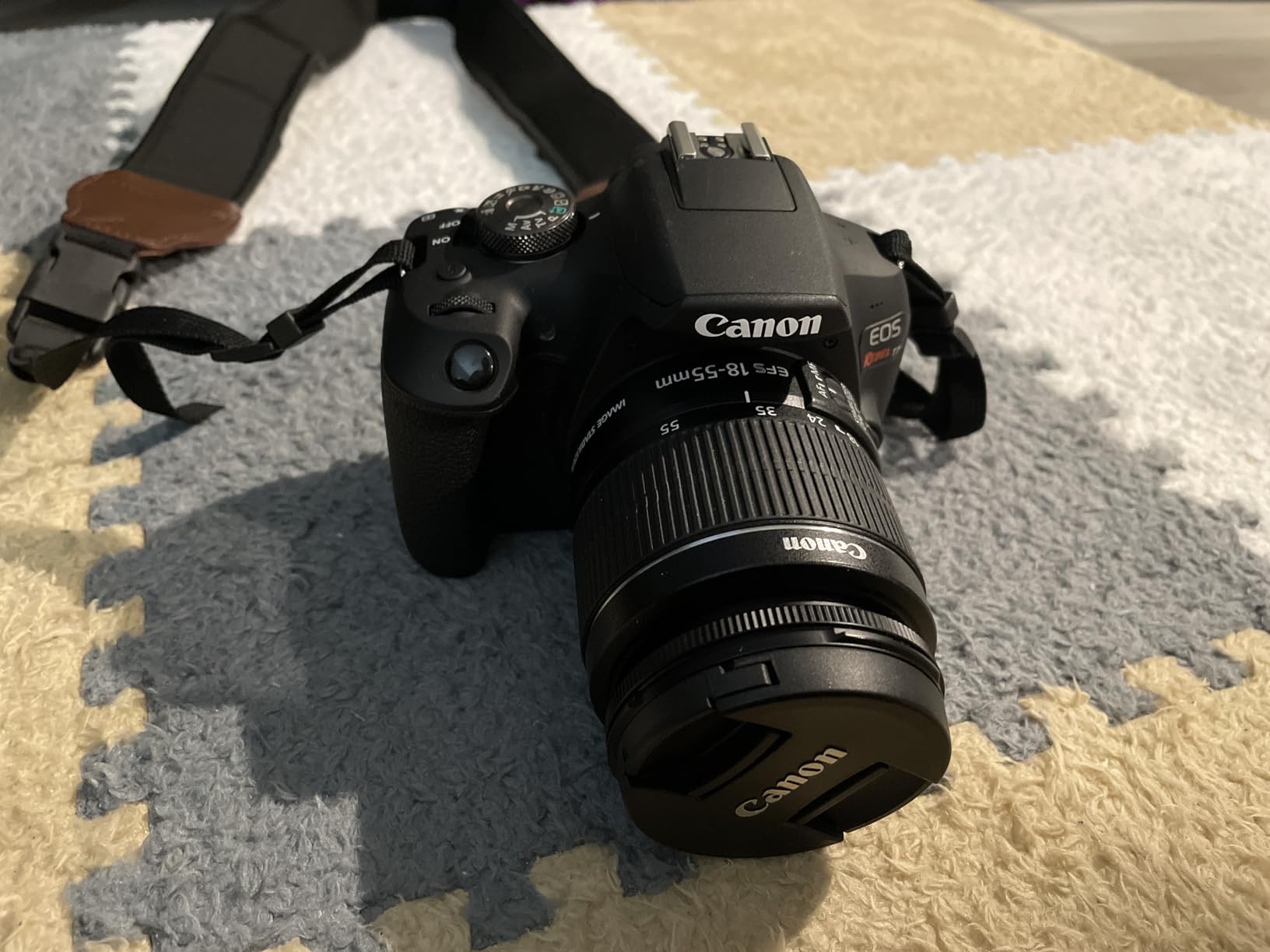
Where this camera really shines for students is the EF-S lens ecosystem. Canon has been making these lenses for decades, which means you can pick up affordable used glass for portrait assignments, landscape projects, and macro work. The kit lens is decent for starting out, but budget around $100-200 for your first prime lens upgrade.
The downsides are real but manageable for a student budget. No 4K video means you cannot use this for video-heavy assignments. The 9-point autofocus feels dated compared to modern mirrorless cameras. And at 3 FPS, you will not be capturing fast sports action.

Lens Ecosystem and Upgrade Path
The EF-S mount is one of the largest budget-friendly lens ecosystems in existence. You can find used Canon EF-S 50mm f/1.8 lenses for under $100, and the third-party options from Sigma and Tamron are affordable on a student budget. This camera grows with you through your entire program.
If you later upgrade to a full-frame Canon, your EF lenses will carry over (EF-S lenses will not work on full-frame bodies). That compatibility matters when you are planning a 3-4 year investment.
Longevity Through a Degree Program
The Rebel T7 is built to last through four years of heavy student use. The polycarbonate body is tougher than it feels, and replacement batteries are cheap at around $15 each. With over 8,500 reviews averaging 4.7 stars, the long-term satisfaction data speaks for itself.
One thing to note: Canon does not offer a direct education discount on this model through their Canon Student program, but refurbished units from Canon Direct regularly drop the price significantly.
2. Nikon D3500 DSLR – Best Beginner-Friendly Learning Camera
Pros
- Built-in Guide Mode teaches photography as you shoot
- Compact and lightweight at 13.76 oz
- SnapBridge Bluetooth transfers photos to your phone
- Huge F-mount lens ecosystem
- 84 percent 5-star reviews
Cons
- No 4K video
- Only 11 autofocus points
- Bluetooth only no Wi-Fi
The Nikon D3500 stands out because of its Guide Mode, an interactive feature that literally teaches you photography as you use the camera. I wish I had this when I was starting out. It explains what each setting does and recommends adjustments based on your shooting scenario.
At just 13.76 ounces, this is one of the lightest DSLRs you can buy. That matters when you are carrying it around campus all day for assignments. The battery life is exceptional, often lasting 1,500 shots per charge, which means you can shoot an entire project without worrying about a charger.

The 24.2MP APS-C sensor delivers image quality that rivals cameras costing twice as much. Nikon’s color science produces pleasing skin tones straight out of camera, which is great for portrait assignments where you do not have time for extensive editing.
The SnapBridge app uses Bluetooth to automatically transfer low-res photos to your phone for quick portfolio sharing. Full-res transfers require a manual selection. The lack of Wi-Fi is annoying, but Bluetooth works reliably once paired.

Guide Mode as a Learning Tool
No other camera on this list has anything quite like Nikon’s Guide Mode. It walks you through aperture, shutter speed, and ISO adjustments with visual examples on the LCD screen. For a first-year student who has never touched a real camera, this feature alone justifies the purchase.
Professors love recommending the D3500 because it forces you to understand exposure rather than relying on auto mode. You can turn Guide Mode off once you feel confident, then turn it back on for unfamiliar shooting situations.
Nikon F-Mount Lens Availability
The Nikon F-mount has been around since 1959, which means the used lens market is enormous. You can find vintage manual-focus Nikon lenses for under $50 that work perfectly for learning. Modern AF-P lenses with vibration reduction are available for every budget level.
Nikon’s education program occasionally offers student discounts through authorized dealers. Check with your campus bookstore, as many have Nikon education partnerships that can save you 5-10 percent.
3. Sony Alpha a6000 Mirrorless – Best Value Mirrorless for Speed
Pros
- Lightning fast hybrid autofocus with 179 points
- 11 FPS continuous shooting for action
- Compact mirrorless body under 13 oz
- Tilting LCD for creative angles
- Huge E-mount lens ecosystem
Cons
- No 4K video
- No in-body image stabilization
- Sony menu system is complex for beginners
The Sony a6000 has been a student favorite for years, and it is still going strong. With 179 phase-detect autofocus points and 11 FPS burst shooting, this camera handles sports and wildlife assignments better than anything else at this price point. The hybrid AF locks on in 0.06 seconds, which is remarkable for a camera this affordable.
The 24.3MP APS-C sensor delivers clean images up to ISO 6400, giving you flexibility for low-light assignments like concert photography or indoor events. The tilting LCD helps with awkward angles when you are shooting from the ground or above a crowd.
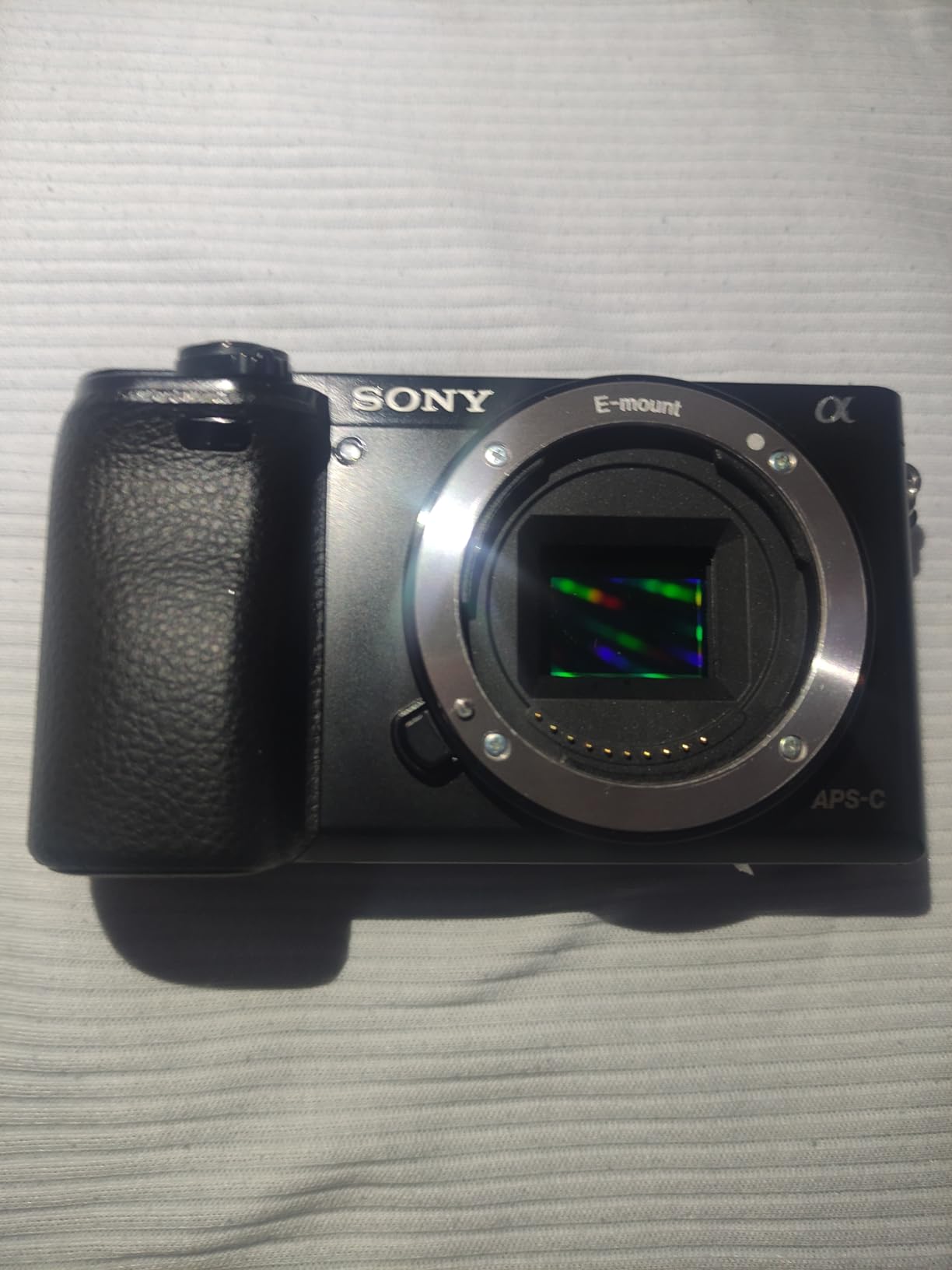
The E-mount ecosystem is one of the biggest draws here. Sony has been making E-mount cameras since 2010, so there is a massive selection of both new and used lenses. Third-party manufacturers like Sigma, Tamron, and Samyang offer budget-friendly options that perform surprisingly well.
The main drawback for students is the menu system. Sony’s menus are notoriously dense and confusing, especially if you are coming from a simpler point-and-shoot. Plan to spend a weekend learning the menu structure before your first assignment.
Autofocus Performance for Assignment Shooting
The 179-point phase-detect system covers nearly the entire frame, which means your subject stays sharp even when it is not in the center. This is especially useful for street photography and candid portrait assignments where you cannot always recompose your shot.
At 11 FPS, you can capture fast action sequences without missing key moments. Just be aware that the buffer fills up after about 20-25 RAW shots, so shoot in bursts rather than holding down the shutter.
Sony E-Mount Lens Ecosystem
The E-mount is arguably the best-supported mirrorless mount for budget lenses. Sigma’s E-mount line includes several affordable primes that are sharp enough for professional work. Tamron’s E-mount zooms offer great value for students who need versatility.
Sony’s education program offers student discounts through Sony’s Pro Support program for qualifying institutions. Check if your school is enrolled, as discounts can reach 10 percent on cameras and selected lenses.
4. Canon EOS R50 Mirrorless – Best Modern Mirrorless for Students
Pros
- 6K oversampled 4K video quality
- Dual Pixel CMOS AF II with subject detection
- Vari-angle touchscreen for vlogging
- 15 FPS electronic shutter
- Compact and lightweight design
Cons
- No in-body image stabilization
- Limited RF-S lens selection currently
- Video crop factor in 4K
The Canon EOS R50 is what happens when Canon builds a camera specifically for the next generation of photographers. The DIGIC X processor and Dual Pixel CMOS AF II give you autofocus performance that rivals cameras costing three times as much. Subject detection for people, animals, and vehicles works reliably in real-world shooting.
The 4K video is oversampled from 6K, which means it is genuinely sharp and detailed. If your coursework includes any video component, this camera handles it beautifully. The vari-angle screen flips all the way around for self-recording during presentations or vlogging.

At just one pound, the R50 is easy to carry all day. The touchscreen interface is intuitive and responsive, making it accessible even if you have never used an interchangeable lens camera before. Canon’s menu system is one of the most beginner-friendly in the industry.
The biggest limitation is the RF-S lens lineup, which is still growing. Canon has been gradually expanding the range, but your options are more limited than with EF-S or E-mount. You can use full-frame RF lenses with a crop factor, but they are expensive and bulky on this body.

4K Video Capabilities for Multimedia Assignments
Many photography programs now include video assignments, and the R50 handles both with ease. The 6K-oversampled 4K at 30fps produces footage that looks professional with minimal grading. The subject tracking in video mode is genuinely impressive for this price range.
If you plan to shoot video regularly, consider adding a small gimbal or tripod. The lack of in-body image stabilization means handheld video can look shaky, especially while walking.
Canon RF-S Mount Future-Proofing
The RF mount is Canon’s future, and the R50 puts you on that path. While the RF-S lens selection is currently limited, Canon is actively expanding it. Full-frame RF lenses are fully compatible, so you have a clear upgrade path if you eventually move to a camera like the R8 or R6 Mark II.
Canon’s student discount program occasionally includes R-series cameras. Check the Canon Education Store during back-to-school season for potential savings.
5. Sony Alpha a6400 Mirrorless – Best for Portrait Photography Students
Pros
- Real-time Eye AF tracks eyes with 0.02 second acquisition
- 4K video with no crop factor
- 180-degree tilting screen for self-portraits
- Weather-sealed compact body
- Excellent low-light performance
Cons
- No in-body image stabilization
- Battery life is mediocre
- Menu system remains complex
The Sony a6400 is the camera I would recommend to any student focusing on portrait photography. The Real-time Eye AF system is genuinely remarkable, locking onto your subject’s eye and tracking it as they move. This feature alone will improve your portrait grades dramatically.
The 425 phase-detect AF points cover 84 percent of the image area, giving you incredible flexibility in composition. You can place your subject anywhere in the frame without worrying about focus. The 0.02-second autofocus acquisition is among the fastest on any camera, at any price.
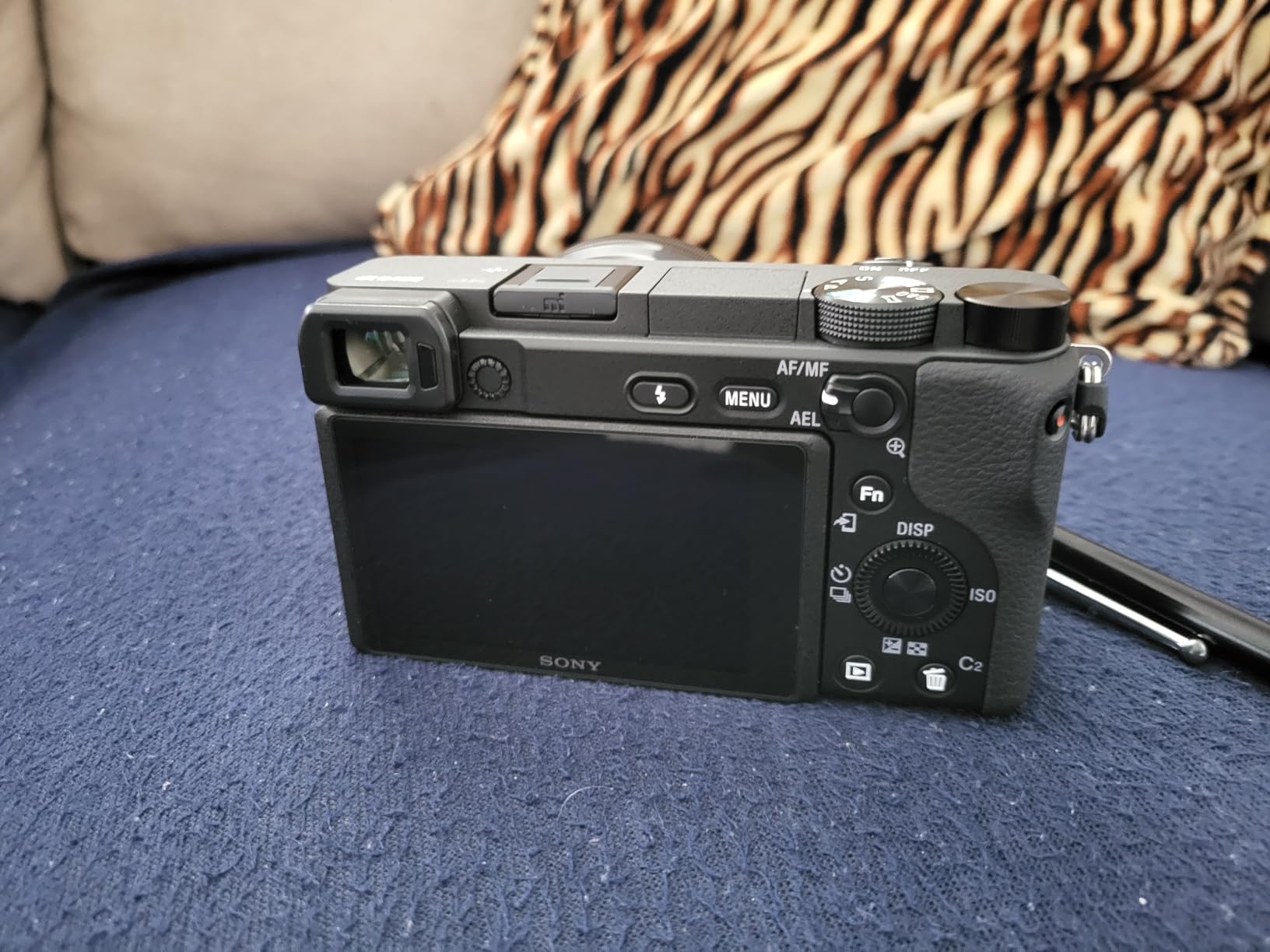
For students who shoot both stills and video, the a6400 is a true hybrid. The 4K video has no crop factor, which means your lenses behave exactly as expected. The 180-degree flip screen is perfect for vlogging about your photography process or recording behind-the-scenes content for your portfolio.
The weather-sealed body gives you confidence shooting in light rain or dusty environments. At just 10.3 ounces, it is one of the lightest cameras on this list, making it ideal for travel photography assignments or long street photography walks.
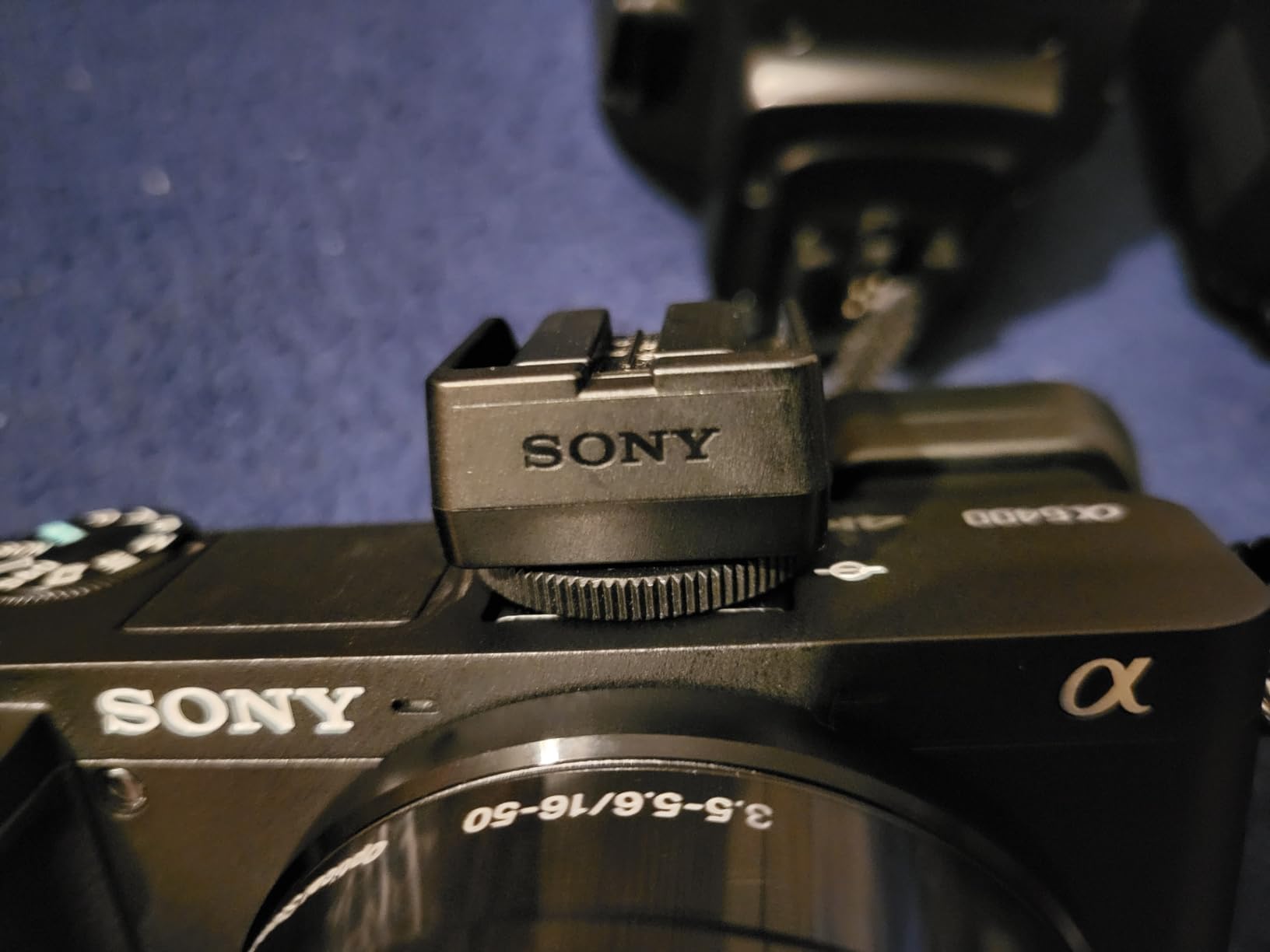
Real-Time Eye AF for Portrait Work
The Eye AF on the a6400 tracks both human and animal eyes in real time. For portrait assignments, this means you can focus on composition, lighting, and directing your subject instead of worrying about whether the eye is sharp. It works in continuous mode, so it tracks moving subjects seamlessly.
Even professional photographers are impressed by how well this system works at this price point. It is the same technology Sony uses in their much more expensive full-frame bodies.
Sony Education Discount Opportunities
Sony’s Pro Support program offers education pricing for students at qualifying institutions. The discount typically covers both camera bodies and selected lenses, sometimes reaching 10 percent off retail. You need a valid student ID and enrollment verification to qualify.
Even without the education discount, the E-mount lens ecosystem has so many budget third-party options that your total cost of ownership stays manageable throughout your degree.
6. Panasonic LUMIX G7 Mirrorless – Best Budget 4K Camera
Pros
- Genuine 4K video at a budget price point
- 2.36 million dot OLED viewfinder
- Tilt and swivel touchscreen LCD
- Wi-Fi connectivity for wireless transfer
- Micro Four Thirds lens ecosystem is enormous
Cons
- 16MP sensor is lower resolution than APS-C rivals
- 49 autofocus points is limited
- No in-body image stabilization
The Panasonic LUMIX G7 was one of the first truly affordable 4K cameras, and it remains a strong choice for budget-conscious students. If your coursework involves video, this camera gives you genuine 4K recording quality at a price point where most competitors only offer 1080p.
The Micro Four Thirds sensor is smaller than APS-C, which means slightly less low-light performance, but the trade-off comes with benefits. The 2x crop factor turns affordable lenses into effective telephotos, making this camera excellent for wildlife or sports assignments on a budget.

The 4K Photo modes are a unique Panasonic feature that lets you extract 8MP still images from 4K video. This is incredibly useful for capturing the perfect moment in fast-moving situations. The Post Focus feature lets you choose your focus point after shooting, which is a great learning tool.
The OLED viewfinder is bright and detailed at 2.36 million dots, which is better than what you get on many newer cameras at this price. The tilt and swivel touchscreen gives you full flexibility for creative angles.

Micro Four Thirds Lens Ecosystem Advantages
The Micro Four Thirds mount is shared by Panasonic and OM System (formerly Olympus), which means the lens selection is massive. Used lenses are widely available and affordable. You can build a complete lens kit covering wide-angle to telephoto for less than the cost of a single Sony or Canon lens.
The 2x crop factor means a 25mm lens gives you a 50mm equivalent field of view. This makes inexpensive lenses more versatile for students who need reach for sports or wildlife assignments.
4K Photo Modes for Assignment Work
The 4K Photo feature lets you shoot at 30 frames per second by recording 4K video and extracting individual frames. For assignments involving unpredictable action, this feature can capture moments that would be impossible to time with a traditional burst mode.
The Post Focus feature teaches you about depth of field and focus placement in an interactive way. It is a genuinely useful learning tool for understanding how aperture affects your image.
7. Canon EOS R100 Mirrorless – Best Entry-Level Mirrorless
Pros
- Most affordable Canon mirrorless with 4K
- Dual Pixel CMOS AF with face and eye detection
- Compact and lightweight for everyday carry
- Wi-Fi and Bluetooth built in
- RF mount gives access to Canon's newest lenses
Cons
- No in-body image stabilization
- 4K limited to 24fps with crop
- Fixed screen does not tilt or flip
The Canon EOS R100 is the most affordable way into Canon’s RF mount system, and it is the camera Digital Camera World picked as their best overall student camera. The 24.1MP APS-C sensor produces clean, detailed images that easily meet the standards for classroom assignments and portfolio prints.
Dual Pixel CMOS AF with 143 zones gives you reliable autofocus with face and eye detection. For a camera at this price, the subject tracking is impressive. It even includes animal detection, which is fun if your assignments involve pet or wildlife photography.

The DIGIC 8 processor keeps image noise under control up to ISO 6400, giving you flexibility for indoor assignments and low-light situations. The 4K video mode records at 24fps, which has a slight crop but produces usable footage for multimedia projects.
The fixed rear screen is the biggest compromise at this price point. You cannot tilt or flip it, which makes overhead shots and low-angle compositions harder. The camera is so small and light, though, that you barely notice carrying it all day.
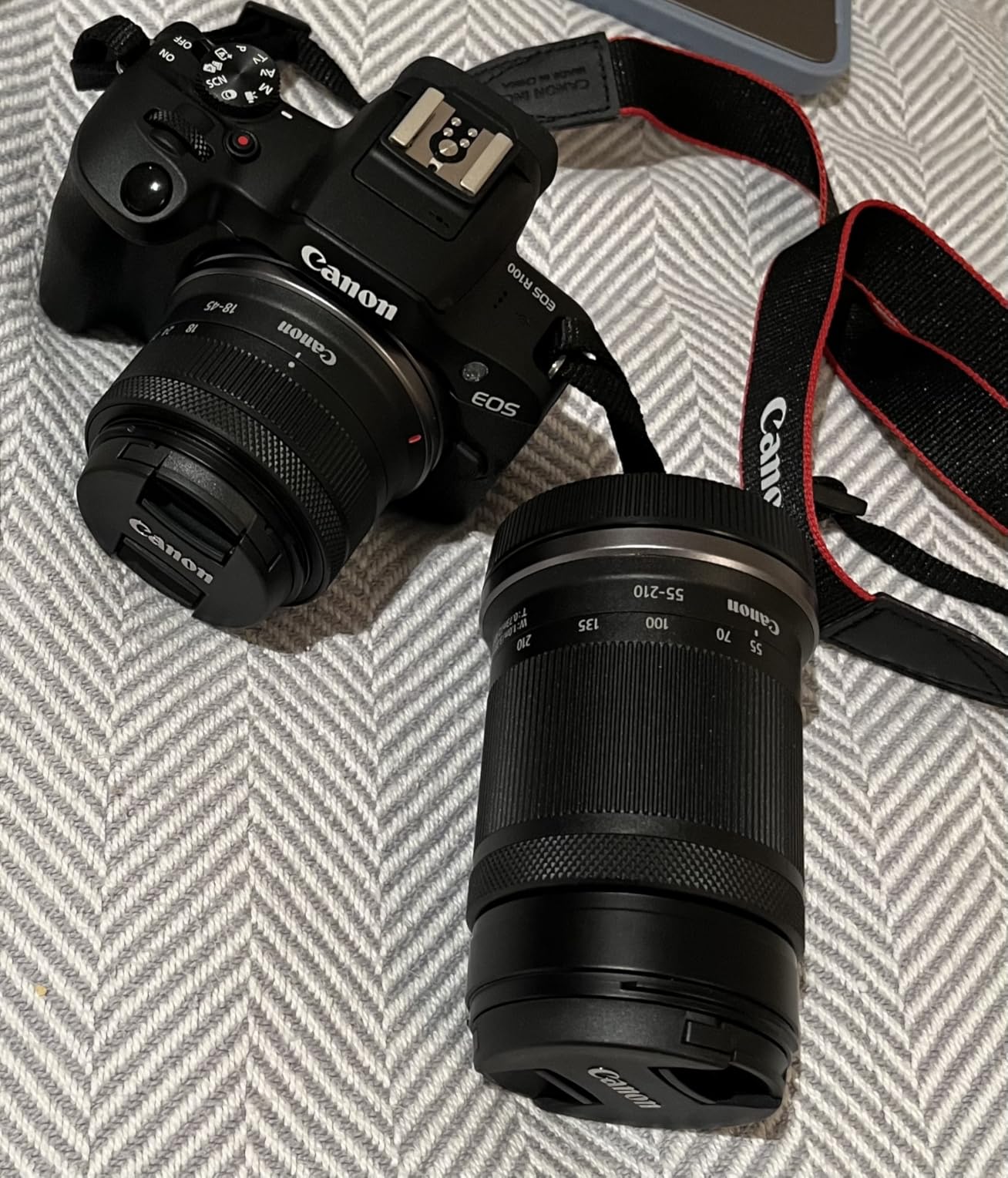
Entry Into the Canon RF System
Buying the R100 puts you on Canon’s RF mount, which is where all of Canon’s future development is happening. As your skills grow, you can upgrade to the R50, R10, or even full-frame R-series bodies while keeping your RF-S and RF lenses.
The RF-S 18-45mm kit lens is actually quite good for a kit lens, offering image stabilization and a versatile zoom range. It covers wide-angle to short telephoto, which handles most first-year assignment types.
Comparing R100 vs R50 for Students
The R100 is significantly more affordable than the R50, but the R50 adds a vari-angle screen, faster burst shooting, better 4K video, and a more advanced processor. If your budget can stretch to the R50, the extra features are worth it. If not, the R100 delivers excellent image quality that will not hold you back in class.
Both cameras share the same RF mount, so whichever you choose, your lens investment carries forward.
8. Sony ZV-E10 Mirrorless – Best for Photography and Content Creation
Pros
- Purpose-built for content creation and vlogging
- Side flip-out screen stays visible with microphone attached
- Built-in 3-capsule directional microphone
- Product Showcase mode for review content
- Real-time Eye AF for portraits
Cons
- No electronic viewfinder
- 4K limited to 30fps
- No in-body image stabilization
The Sony ZV-E10 is designed for content creators, and that makes it perfect for photography students who also need to produce video content for their portfolio or social media presence. The side-flip screen is a game-changer because it stays fully visible even when you have a microphone in the hot shoe.
The built-in 3-capsule directional microphone captures clear audio without needing an external mic. For students producing behind-the-scenes content or video essays about their photography process, this feature alone saves you $100-200 on accessories.
The Product Showcase Setting is a unique feature that instantly shifts focus to objects held up to the camera. If your coursework involves product photography or review content, this feature makes your workflow dramatically faster.
For still photography, the ZV-E10 uses the same 24.2MP APS-C sensor as the a6400, meaning image quality is identical. The 425-point hybrid AF with Real-time Eye AF performs just as well here as on more expensive Sony bodies.

Content Creation Features for Student Portfolios
The Background Defocus button lets you instantly blur or sharpen your background with a single press. For students learning about depth of field, this button provides an immediate visual demonstration of how aperture affects your image. It is a genuinely useful teaching tool.
The soft skin effect and face exposure settings help you produce polished content for portfolio websites and social media without extensive post-processing.
Photography vs Video Trade-Offs
The ZV-E10 lacks an electronic viewfinder, which some photography students miss when shooting outdoors in bright sunlight. You compose entirely using the rear screen, which is fine for most situations but can be challenging in direct sun.
If your program is photography-focused with occasional video work, the a6400 might be a better choice. If you split your time evenly between photography and content creation, the ZV-E10 is the smarter pick.
9. Panasonic LUMIX G85 Mirrorless – Best for Image Stabilization
Pros
- Class-leading 5-axis dual image stabilization
- Weather-sealed body for outdoor shooting
- 4K video with 4K Photo and Post Focus modes
- 12-60mm kit lens covers versatile range
- Large Micro Four Thirds lens ecosystem
Cons
- 16MP sensor is lower than APS-C rivals
- No phase-detect autofocus
- Micro Four Thirds has more crop than APS-C
The Panasonic LUMIX G85 is the camera I recommend to students who shoot in challenging conditions. The 5-axis dual image stabilization system combines in-body stabilization with lens stabilization to deliver up to 4 stops of shake correction. You can shoot handheld at shutter speeds that would be impossible on most other cameras.
The weather-sealed body lets you shoot in rain, dust, and humidity without worry. For landscape photography assignments or outdoor documentary work, this durability is invaluable. The magnesium alloy front frame adds rigidity without much weight.

The 12-60mm kit lens is a cut above typical kit lenses. It covers a 24-120mm equivalent range, which handles everything from wide landscapes to portraits. The Power O.I.S. works in tandem with the in-body stabilization for maximum effectiveness.
The 4K Photo and Post Focus features work the same way as on the G7, letting you extract stills from video and choose focus points after shooting. These are powerful learning tools that help you understand timing and depth of field.

5-Axis Image Stabilization Benefits
The dual stabilization system means you can shoot sharp images at 1/10 second handheld in many situations. For low-light assignments where tripods are not allowed, this capability is the difference between getting the shot and going home empty-handed.
Video footage is also noticeably smoother thanks to the stabilization. While it cannot fully replace a gimbal, it reduces the need for one in many casual shooting scenarios.
Weather Sealing for Outdoor Assignments
The G85’s weather sealing is genuine, not just a marketing claim. Students shooting nature, documentary, or environmental photography can work confidently in adverse conditions. The sealed kit lens completes the weather-resistant system.
Pair this with the affordable Micro Four Thirds lens ecosystem, and you have a rugged, versatile setup that will serve you well throughout your degree and into professional work.
10. Fujifilm X-M5 Mirrorless – Best for Film Simulation and Color Science
Pros
- Fujifilm's renowned film simulation color profiles
- 6.2K video recording at 30fps
- 26.1MP X-Trans sensor for exceptional detail
- AI-based subject detection autofocus
- Fully articulating touchscreen
Cons
- No in-body image stabilization
- Higher price point on this list
- Limited review data as new release
The Fujifilm X-M5 is the newest camera on this list and represents a fresh budget entry point into the Fujifilm X system. The 26.1MP X-Trans CMOS 4 sensor uses a unique color filter array that reduces moire without a low-pass filter, delivering exceptional detail and color accuracy.
Fujifilm’s Film Simulations are the standout feature for photography students. These color profiles mimic classic Fujifilm film stocks like Velvia, Provia, and Classic Chrome. For students learning about color theory and visual style, the ability to apply different film looks in-camera is both educational and creatively powerful.

The X-Processor 5 enables AI-based subject detection that identifies and tracks people, animals, birds, and vehicles. This is the same processor used in Fujifilm’s much more expensive professional bodies, bringing advanced autofocus capabilities to a student-friendly price point.
The 6.2K video recording is class-leading at this price. Even if you only deliver in 4K, shooting in 6.2K gives you room to crop and reframe in post-production. The 10-bit internal recording provides extended dynamic range for grading.

Film Simulations as a Learning Tool
Fujifilm’s Film Simulations are not just filters. They are carefully engineered color profiles based on decades of film chemistry research. Using them teaches you about color science, tonal response, and how different film stocks create different moods.
You can create custom simulations with adjusted shadow tones, highlight tones, and color chrome effects. This level of in-camera creative control is unmatched at this price point and helps you develop a personal visual style.
Fujifilm X-Mount Lens Ecosystem
The Fujifilm X-mount has a strong lens ecosystem, particularly for primes. Fujifilm’s own lenses are known for their character and build quality. Third-party options from Sigma, Tamron, and Viltrox are expanding rapidly, bringing more budget-friendly choices.
Because Fujifilm uses APS-C sensors across their entire X-series lineup, lenses behave consistently whether you are shooting on the X-M5 or the professional X-T5. This consistency simplifies the learning process.
11. Nikon D7500 DSLR – Best Advanced DSLR for Serious Students
Nikon D7500 20.9MP DSLR Camera with AF-S DX NIKKOR 18-140mm f/3.5-5.6G ED VR Lens, Black
Pros
- Class-leading image quality from D500-derived sensor
- 51-point AF with 15 cross-type sensors
- 4K UHD video with stereo sound
- 8 FPS continuous shooting
- Extensive 18-140mm kit lens included
Cons
- Higher price than entry-level DSLRs
- Single card slot
- Heavier than mirrorless alternatives
The Nikon D7500 is for the photography student who wants professional-grade image quality without the professional price tag. The 20.9MP sensor is derived from the legendary Nikon D500, which means you get the same image quality that professional sports and wildlife photographers relied on for years.
The 51-point autofocus system with 15 cross-type sensors is significantly more advanced than the D3500’s 11-point system. For action assignments, sports photography, or fast-moving subjects, this camera tracks reliably and accurately.

The included 18-140mm lens is worth highlighting because it is far better than typical kit lenses. The 7.8x zoom range covers wide-angle to telephoto, reducing the number of lens changes you need during assignments. The VR image stabilization works well for handheld shooting.
The 4K UHD video with stereo sound gives you professional video capabilities for multimedia assignments. The tilting touchscreen helps with awkward angles, and the 8 FPS burst rate captures fast action sequences with ease.

Sensor Quality and Dynamic Range
The D7500’s sensor delivers exceptional dynamic range, which means you can recover details from shadows and highlights that would be lost on lesser cameras. For landscape and architecture assignments where lighting is challenging, this capability is genuinely valuable.
The ISO range extends to 51,200, giving you flexibility for extremely low-light situations. Noise performance is excellent up to ISO 6400 and usable up to ISO 12800 for assignment work.
Professional Features at a Student Price
While the D7500 costs more than entry-level DSLRs, it includes professional features like weather sealing, a pentaprism viewfinder (brighter than pentamirror designs), and dual control dials for quick setting adjustments. These features prepare you for working with professional gear after graduation.
The 18-140mm kit lens means you may not need to buy additional lenses immediately, which offsets some of the higher purchase price. Consider the total cost of ownership when comparing to cheaper cameras that require lens upgrades right away.
12. Canon EOS Rebel T100 DSLR – Most Affordable Beginner DSLR
Pros
- Most affordable DSLR on this list
- 18MP sensor is adequate for learning fundamentals
- Built-in Wi-Fi for photo sharing
- Lightweight and simple to use
- Full EF-S lens compatibility
Cons
- 18MP is lower resolution than competitors
- Only 9 autofocus points
- Slow 3 FPS burst rate
- Basic build quality and small 2.7 inch screen
The Canon EOS Rebel T100 is the absolute cheapest DSLR on this list, and sometimes that is exactly what a student needs. If your budget is tight and you just need a real camera that teaches you manual controls, this gets the job done without compromises that would fail your coursework.
The 18MP APS-C sensor produces images that are perfectly adequate for classroom assignments, web display, and small prints. You will not be making large gallery prints with this sensor, but for learning the fundamentals of exposure, composition, and lighting, it is more than capable.
The Scene Intelligent Auto mode helps you get acceptable results while you are still learning manual controls. The Creative Filters let you experiment with different looks in-camera, which is fun for exploring visual style.
When the T100 Makes Sense for Students
Choose the T100 if your photography class requires any DSLR and you need to spend as little as possible. The EF-S lens mount means you are investing in the same ecosystem as the Rebel T7, so your lenses carry forward when you upgrade.
The built-in Wi-Fi lets you transfer photos to your phone for assignment submission or portfolio sharing. The optical viewfinder gives you the authentic DSLR experience that helps you learn composition.
Limitations to Be Aware Of
The 9-point autofocus system is basic, with only one cross-type point at the center. The 2.7-inch LCD is small and fixed, making it harder to review images and shoot from creative angles. The 3 FPS burst rate means you cannot capture fast action effectively.
Despite these limitations, the T100 is a legitimate learning tool. If you understand its capabilities and work within them, it will teach you photography fundamentals just as well as cameras costing twice as much.
Buying Guide: Choosing the Best Budget Camera for Photography Students
Picking the right camera as a photography student comes down to four key factors. Our team has broken down each one to help you make a decision you will not regret three years from now.
Sensor Size: APS-C vs Micro Four Thirds
APS-C sensors are larger than Micro Four Thirds sensors, which generally means better low-light performance and shallower depth of field. Most cameras on this list use APS-C sensors, including all the Canon, Nikon, Sony, and Fujifilm models.
Micro Four Thirds sensors (Panasonic G7 and G85) are smaller, but they enable more compact lenses and a 2x crop factor that effectively doubles your telephoto reach. For students on a strict budget who want maximum lens versatility, Micro Four Thirds is worth considering.
Mirrorless vs DSLR: Which Is Better for Students?
Mirrorless cameras represent the future of photography. They offer faster autofocus (especially Eye AF), 4K video, compact bodies, and electronic viewfinders that show real-time exposure changes. The Canon R50, Sony a6400, and Fujifilm X-M5 are excellent mirrorless options for students.
DSLRs still have advantages. Battery life is typically 2-3x better, optical viewfinders use no power, and the used lens market is enormous. The Canon Rebel T7 and Nikon D3500 are DSLRs that remain top student picks because they teach fundamentals well and offer unbeatable value.
For a student starting a 3-4 year program, mirrorless is the more future-proof choice. But if budget is your top priority, DSLRs deliver more camera per dollar.
Lens Ecosystem: The Hidden Cost
The camera body is just your starting investment. Lenses are where you will spend most of your money over time, so choosing a mount with affordable lens options is critical.
The Canon EF-S mount has the widest selection of affordable used lenses, built up over two decades. Sony’s E-mount has the best third-party support, with Sigma and Tamron offering excellent budget options. Nikon’s F-mount has decades of legacy glass available used. Micro Four Thirds offers the most affordable new lenses across the widest range.
Education Discounts and Student Programs
Several camera manufacturers offer education pricing for students. Canon’s Education Store provides discounts on select cameras and lenses with a valid student ID. Sony’s Pro Support program includes education pricing for qualifying institutions. Nikon partners with many campus bookstores for student discounts.
Beyond manufacturer discounts, check with your campus bookstore or photography department. Many schools have partnerships with camera retailers that provide additional savings. Also consider refurbished cameras from Canon Direct, Sony Store, and Nikon Store, which carry full warranties at reduced prices.
Longevity: Will Your Camera Last Through Your Degree?
A photography degree is a 3-4 year commitment, and your camera needs to survive it. Look for cameras with proven track records of durability. The Canon Rebel T7, Nikon D3500, and Sony a6000 have all been on the market long enough to demonstrate long-term reliability.
Build quality matters more than megapixels for longevity. Weather-sealed bodies like the Panasonic G85 and Nikon D7500 will handle rough treatment better than entry-level plastic bodies. Budget for a protective case and UV filter for your lens from day one.
Resale Value Considerations
Think about resale value when choosing your camera. Canon and Nikon maintain strong resale markets, meaning you can recover more of your investment when you upgrade. Sony’s E-mount cameras also hold value well due to ongoing demand.
Mirrorless cameras generally depreciate slower than DSLRs at this point, because mirrorless is where the market is heading. If you plan to sell your camera after graduation, a mirrorless body from Canon, Sony, or Fujifilm will likely retain more value.
Frequently Asked Questions
What camera do photography teachers recommend for students?
Photography teachers most frequently recommend the Nikon D3500 for its Guide Mode that teaches photography fundamentals, and the Canon EOS Rebel T7 for its excellent image quality and huge lens ecosystem. Both are affordable DSLRs that help students learn manual controls the right way.
How much should a photography student spend on a camera?
Photography students should budget between $400 and $900 for their first camera with a kit lens. This range covers quality entry-level DSLRs and mirrorless cameras that can handle coursework. Plan to spend an additional $100 to $300 on a prime lens, memory cards, and a protective case during your first semester.
Is mirrorless or DSLR better for photography students?
Mirrorless cameras are more future-proof and offer faster autofocus, 4K video, and compact bodies. DSLRs provide better battery life, lower prices, and huge used lens selections. For students starting a multi-year program, mirrorless is the better long-term choice, but DSLRs deliver more value per dollar on a tight budget.
Can I use a smartphone for photography class instead of buying a camera?
Most photography classes require an interchangeable lens camera because smartphones cannot teach you about aperture, shutter speed, and lens selection the way a real camera can. Some introductory courses may accept a smartphone for early assignments, but you will need a dedicated camera for coursework involving manual exposure and different focal lengths.
What is a good cheap DSLR camera for college photography classes?
The Canon EOS Rebel T100 is the most affordable option at under $600, while the Canon Rebel T7 and Nikon D3500 offer better features for slightly more. All three are accepted in college photography courses because they provide full manual controls and interchangeable lenses that teach photography fundamentals.
Conclusion: Best Budget Cameras for Photography Students in 2026
Finding the best budget cameras for photography students means balancing price, image quality, and lens ecosystem for the long haul. The Canon EOS Rebel T7 remains our top overall pick because it delivers everything a photography student needs at a price that makes sense, backed by the enormous EF-S lens ecosystem.
If mirrorless is more your style, the Canon EOS R50 and Canon R100 offer modern features like 4K video and advanced autofocus at student-friendly prices. For portrait specialists, the Sony a6400 and its Real-time Eye AF are hard to beat. And if budget is absolutely your top constraint, the Canon Rebel T100 gets you shooting real photography for less than any other option here.
Whatever you choose, remember that the best camera for photography students is the one you actually carry and use. Invest in one quality prime lens early, learn your gear inside and out, and focus on developing your skills. That combination will take you further than any spec sheet ever could.