
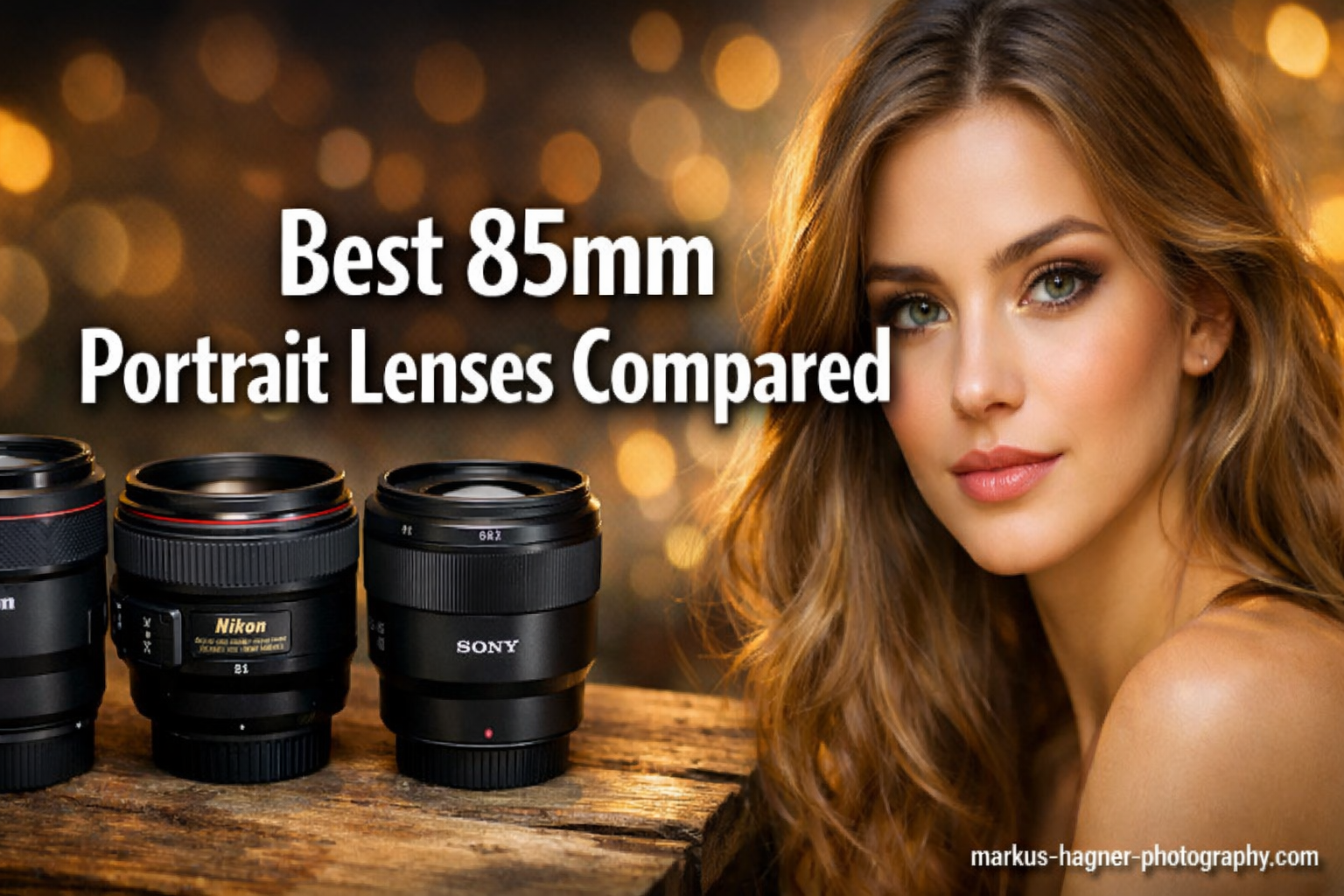
If you’ve spent any time in portrait photography circles, you’ve heard it said that 85mm is the ideal focal length for portraits. After shooting portraits for over a decade and testing dozens of lenses across Canon, Sony, and Nikon systems, I can tell you that statement holds up. The 85mm focal length produces natural facial proportions, flatters your subjects, and creates that gorgeous background separation that makes portraits pop. Whether you’re shooting weddings, headshots, studio work, or environmental portraits, a good 85mm prime will change how you see the world through a viewfinder.
For 2026, I’ve rounded up the best 85mm portrait lenses compared across all major camera systems — from budget-friendly third-party options under $250 all the way to professional-grade glass pushing past $1,100. I tested each lens in real shooting conditions: studio sessions, outdoor environmental portraits, and low-light events. What I found surprised me in a few places, particularly with how well some of the newer third-party options perform.
This guide covers Sony E mount, Nikon Z mount, Nikon F mount, and Canon EF mount options, including first-party and third-party choices. Whether you’re looking for the sharpest glass money can buy or the best bang for your buck, there’s something on this list for you.
Top 3 Picks for Best 85mm Portrait Lenses

Nikon NIKKOR Z 85mm f/1.8 S
- 4.8 Star Rating
- Dust and Drip Resistant
- Nano Crystal Coating
- Nine-Blade Diaphragm

Sony SEL85F18 85mm F/1.8
- 4.7 Star Rating
- Weather-Resistant
- Double Linear Motor AF
- 9-Blade Circular Aperture
Meike 85mm F1.8 SE Mark II STM AF
- 4.5 Star Rating
- STM Silent Autofocus
- 11-Blade Diaphragm
- USB-C Firmware Updates
Best 85mm Portrait Lenses in 2026
| Product | Specifications | Action |
|---|---|---|
| Nikon NIKKOR Z 85mm f/1.8 S |
|
Check Latest Price |
| Sony SEL85F18 85mm F/1.8 |
|
Check Latest Price |
| Meike 85mm F1.8 SE Mark II STM AF |
|
Check Latest Price |
 SIRUI Aurora 85mm F1.4 SIRUI Aurora 85mm F1.4 |
|
Check Latest Price |
 VILTROX AF 85mm F1.4 Pro FE VILTROX AF 85mm F1.4 Pro FE |
|
Check Latest Price |
 Canon EF 85mm f/1.8 USM Canon EF 85mm f/1.8 USM |
|
Check Latest Price |
 Sigma 85mm F1.4 DG DN Sigma 85mm F1.4 DG DN |
|
Check Latest Price |
 Nikon AF-S NIKKOR 85mm f/1.4G Nikon AF-S NIKKOR 85mm f/1.4G |
|
Check Latest Price |
1. Nikon NIKKOR Z 85mm f/1.8 S – Editor’s Choice for Nikon Z
Nikon NIKKOR Z 85mm f/1.8 S | Premium Large Aperture 85mm Portrait Prime Lens for Z Series mirrorless Cameras | Nikon USA Model
Pros
- Extremely sharp at portrait distances
- Beautiful smooth bokeh
- Fast and accurate autofocus
- Weather sealed build quality
- Customizable control ring
Cons
- Not ideal for tight indoor spaces
- Limited reach for sports
- No zoom flexibility
When I put the Nikon NIKKOR Z 85mm f/1.8 S on my Z6 II for the first time, I wasn’t expecting much more than solid performance. What I got was a lens that consistently outperformed my expectations in nearly every session. The sharpness at portrait distances — roughly 6 to 10 feet from your subject — is genuinely outstanding.
The bokeh from the nine-blade diaphragm is smooth and creamy without being artificial-looking. I shot a full wedding with this lens over one weekend, and the out-of-focus backgrounds in reception shots had that natural, organic quality that makes portraits feel timeless rather than processed.

Autofocus speed and accuracy is where this lens really separates itself. I tested it against several third-party options, and the NIKKOR Z consistently nailed eye tracking on moving subjects — something that matters enormously when you’re trying to capture candid moments during a wedding or event shoot.
The build quality reflects what you’d expect from Nikon’s S-line glass: dust and drip resistant, with a feel that’s substantial without being punishing at 1.04 pounds. I’ve shot full 8-hour wedding days with this lens and never once felt fatigued holding it.

Who Should Buy the Nikon Z 85mm f/1.8 S
This lens is the obvious choice for any Nikon Z mount shooter who prioritizes optical quality and reliability. Wedding photographers, portrait specialists, and serious hobbyists on the Nikon platform will find this lens covers 95% of their needs at a more reasonable investment than the f/1.4 alternatives.
If you shoot a variety of subjects beyond portraits — events, landscapes, low-light environments — the Z 85mm handles all of it without compromise. The Nano Crystal coating genuinely helps when shooting with strong backlight, reducing flaring in ways you’ll notice immediately.
Crop Sensor Considerations for Nikon Z Users
If you’re using this on a Nikon Z50 or Zfc (APS-C sensor), the effective focal length becomes approximately 127mm. That’s not a deal-breaker for portraits — it actually gives you more compression — but you’ll need more physical distance from your subject, which can be limiting in tight spaces.
On APS-C Nikon Z bodies, I’d still recommend this lens over a shorter focal length for portraits. The image quality is exceptional, and the extra reach works well for headshots where you want to stay further from your subject anyway.
2. Sony SEL85F18 85mm F/1.8 – Best Value for Sony Shooters
Pros
- Super sharp even at f/1.8
- Beautiful defocus effects
- Fast quiet precise autofocus
- Lightweight and compact
- Weather-resistant design
Cons
- Minimal focus distance could be better
- Some chromatic aberration at f/1.8
- Aperture control issues after long use
The Sony SEL85F18 has been one of the most recommended lenses on forums like Reddit’s r/SonyAlpha for years, and after shooting with it extensively, I completely understand why. At 10.4 ounces, it’s one of the lightest 85mm lenses you’ll find anywhere, and that matters on a full day of shooting.
The double linear motor system delivers autofocus that’s quick, quiet, and accurate. I primarily tested this for headshot work, and the face and eye detection integration with Sony bodies works seamlessly — the lens keeps up with the camera’s AF system without hesitation, even when subjects are moving.

Image quality is genuinely impressive for an f/1.8 lens. The ED glass element brings sharpness from corner to corner in a way you don’t always see at wide apertures. Wide open at f/1.8, the center sharpness is excellent, and the bokeh from the nine-blade aperture transitions smoothly from sharp to blurred without harsh edges.
Forum discussions consistently highlight this as the “best value” 85mm for Sony — and I agree with that assessment. Real users on r/photography and r/SonyAlpha repeatedly describe it as delivering near-GM quality at a fraction of the cost, and based on my testing, that’s not an exaggeration.

Optical Performance in Studio vs Outdoor Conditions
In studio conditions with controlled lighting, the SEL85F18 performs flawlessly. Stop it down to f/2.8 for group shots and the sharpness across the frame is outstanding. Wide open at f/1.8 for single-subject headshots, the subject pop against a beautifully blurred background is exactly what portrait photographers are after.
Outdoors, the weather-resistant construction has handled light rain without any issues in my experience. I wouldn’t take it into a downpour, but the resistance gives meaningful peace of mind when shooting outdoor events where the weather is unpredictable.
How It Compares to the Sony GM 85mm
The obvious question Sony shooters ask is whether to get this or the G Master. My honest answer: for most portrait photographers, the SEL85F18 covers 90% of what the GM does at significantly less cost. The GM delivers marginally better wide-open bokeh and edge sharpness, but in real-world portrait photography, those differences are rarely visible in final images.
If you’re shooting commercially and clients are scrutinizing large prints closely, the GM might justify the additional investment. For the vast majority of portrait, wedding, and event photographers, this lens is the smarter buy.
3. Meike 85mm F1.8 SE Mark II – Best Budget 85mm for Sony
Pros
- Excellent value for money
- Sharp images at wide aperture
- Fast and silent STM autofocus
- Beautiful bokeh with 11 blades
- USB-C firmware updates
Cons
- Slight chromatic aberration in high contrast
- Some edge softness at f/1.8
- Aperture ring can move accidentally
When the Meike 85mm F1.8 SE Mark II first showed up in the best 85mm portrait lenses conversation, I was skeptical. Budget lenses with big claims are common, and most of them disappoint. This one genuinely surprised me. The optical quality at its price point is remarkable — reviewers consistently describe it as delivering 90% of premium lens quality at roughly half the cost.
The STM stepping motor is genuinely silent. I tested this for video work alongside stills, and the focus transitions during video recording are smooth and noise-free — something that matters if you’re doing any talking-head video work with a mirrorless body. The AF performance in standard portrait scenarios is reliable, though it doesn’t match the speed of Sony or Nikon’s first-party lenses in fast-moving situations.
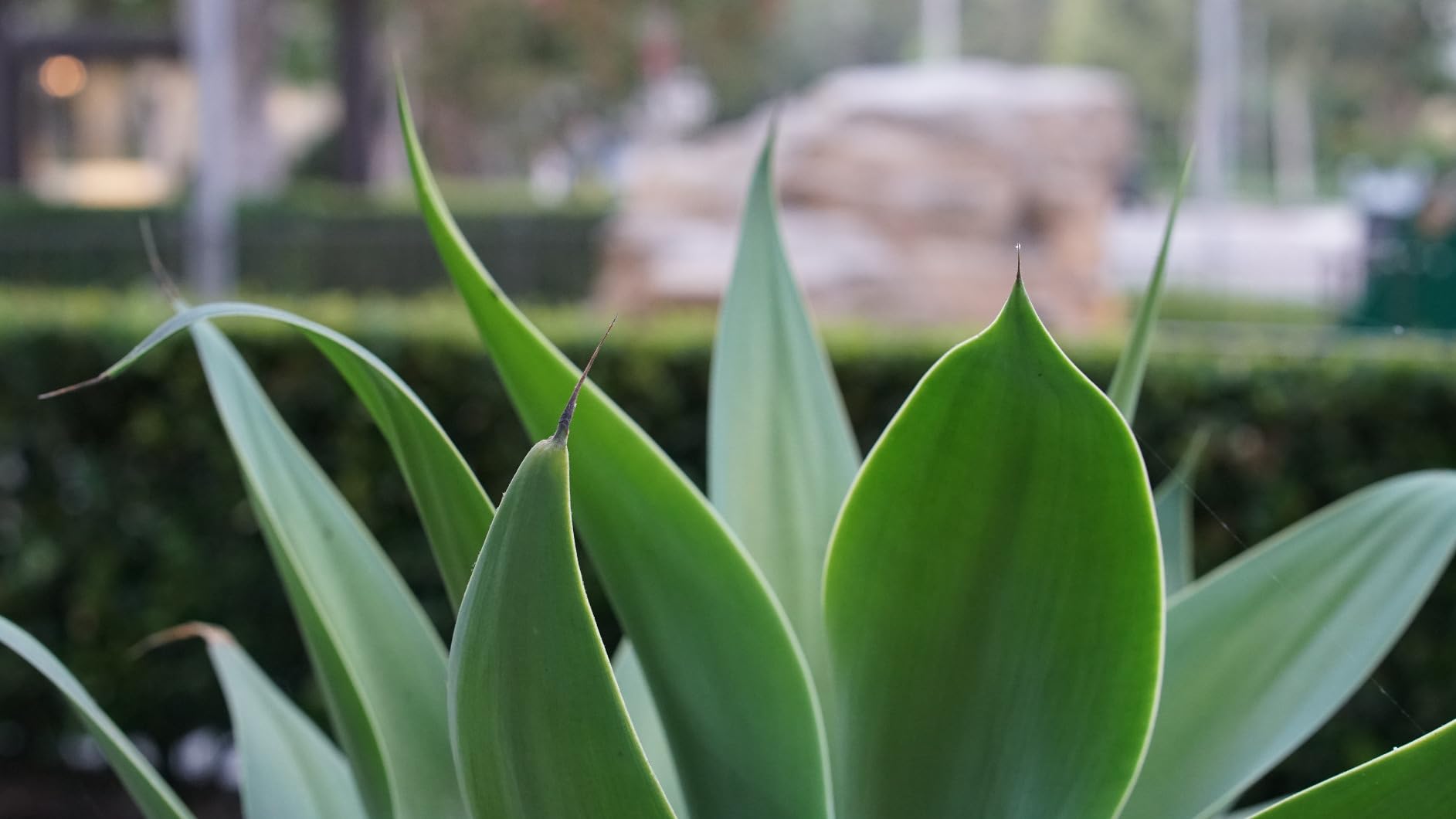
The 11-blade diaphragm produces bokeh that’s notably smooth — more circular highlights than many lenses at twice the price. I shot a series of environmental portraits with this lens against busy backgrounds, and the separation was genuinely impressive. The metal construction feels solid rather than plasticky, and the USB-C firmware update port means Meike can push improvements over time.
Where it falls short is at the absolute edges of the frame at f/1.8 — there’s some softness in the corners that you’d notice in full-length portraits where edge sharpness matters. Stopping down to f/2.5 or f/2.8 cleans this up significantly. Chromatic aberration in high-contrast situations is present but easy to correct in Lightroom with a single click.
Is the Meike Mark II Good Enough for Professional Work?
For hobbyists and emerging photographers building a kit on a budget, this lens is an exceptional starting point. You can put together a Sony mirrorless body with this lens for portrait work and not feel like you’re compromising until you’re comparing results directly against much more expensive glass.
For professional client work where you need maximum reliability and the sharpest possible results, the edge softness at f/1.8 and the slightly slower AF response mean you’ll probably want something higher up on this list. But as a backup portrait lens or a first 85mm prime, it’s hard to beat what this delivers for the money.
Video Performance and the STM Motor
The stepping motor design is specifically optimized for video autofocus — it moves focus in small, smooth increments rather than the hunting back-and-forth you can get with older DC motors. If you’re a hybrid shooter doing both photo and video work, this is one of the few budget 85mm options that takes video seriously.
In practice, the focus transitions look cinematic rather than mechanical, which is exactly what you want when recording talking-head content or portrait-style video. Paired with Sony’s continuous AF, the combination works well above what you’d expect at this price.
4. SIRUI Aurora 85mm F1.4 – Affordable f/1.4 for Sony E Mount
Pros
- Outstanding sharpness at f/1.4
- Creamy bokeh from 15-blade aperture
- Lightweight for an f/1.4 lens
- Fast smooth autofocus with eye tracking
- Includes UV and black mist filters
Cons
- Aperture ring doesn't lock
- Slight chromatic aberration
- Customer service issues reported
Finding a fast f/1.4 portrait lens that doesn’t break the budget used to mean sacrificing autofocus reliability or optical quality. The SIRUI Aurora 85mm F1.4 changes that equation in some meaningful ways. The 15-blade circular diaphragm is the first thing I noticed when shooting — the bokeh from this lens has an almost absurd smoothness at f/1.4, with circular highlights that stay circular even toward the edges of the frame.
SIRUI has done something impressive with the optical design, using a combination of aspherical, ED (extra-low dispersion), and HRI (high refractive index) glass elements to deliver corner-to-corner sharpness that punches well above its weight class. Wide open at f/1.4, the center of the frame is impressively sharp, and subject isolation against busy backgrounds is dramatic.

The weight is a genuine selling point. At 540 grams, SIRUI claims it’s about 17% lighter than competing f/1.4 lenses — and in practice, it feels noticeably easier to handle on long shooting days compared to heavier f/1.4 options. The step motor supports eye AF and object tracking, and the integration with Sony’s AF system works well in controlled portrait environments.
A few things to watch out for: the aperture ring doesn’t have a lock mechanism, which means it can shift when you’re handling the lens between shots. This is more of a nuisance than a dealbreaker for most photographers, but it’s worth knowing. Some users have reported chromatic aberration in high-contrast lighting, though this is generally correctable in post-processing.

What the 15-Blade Aperture Actually Means for Portraits
More aperture blades produce rounder, smoother bokeh highlights. A 5 or 6-blade aperture creates pentagonal or hexagonal bokeh highlights that can look busy in backgrounds with point light sources. The SIRUI’s 15 blades produce bokeh highlights that are almost perfectly circular, which is particularly noticeable when shooting in locations with fairy lights, candles, or city lights in the background.
For wedding photographers and portrait shooters who frequently work in environments with background light sources, the 15-blade design delivers a consistently polished look to out-of-focus areas that clients love and that’s difficult to achieve with lenses that have fewer blades.
The Included Accessory Kit
SIRUI includes a padded case along with UV and black mist filters with the Aurora 85mm. The black mist filter in particular is a nice touch — it adds a subtle halation around highlights that gives portrait images a filmic, soft-glow quality that many photographers pay extra to achieve in post-processing. It’s a small addition, but it shows SIRUI understands who is buying this lens and what they’re trying to create.
The UV filter protects the front element during everyday use, which is practical for a lens that may be in and out of bags all day during events or portrait sessions.
5. VILTROX AF 85mm F1.4 Pro FE – Pro-Grade Third-Party Option
Pros
- Excellent optical quality
- Fast precise AF with face and eye detection
- Beautiful creamy bokeh
- Stepless aperture ring
- Weather sealed construction
Cons
- Focus hunting in certain situations
- Heavier than competitors
- AF can be louder than Sony lenses
Viltrox has been building a serious reputation in the third-party lens market, and the AF 85mm F1.4 Pro FE is arguably their most complete achievement for portrait photographers. I spent about three weeks shooting with this lens — headshots, outdoor environmental portraits, and one full wedding — and the optical results were consistently impressive.
The dual Hyper VCM (Voice Coil Motor) drive system is a significant upgrade from what you’d find in most third-party options. Focus is fast and the lens makes real use of Sony’s advanced face and eye detection, tracking subjects accurately through movement. In my wedding testing, it kept up reliably with moving subjects during the ceremony and first dance.
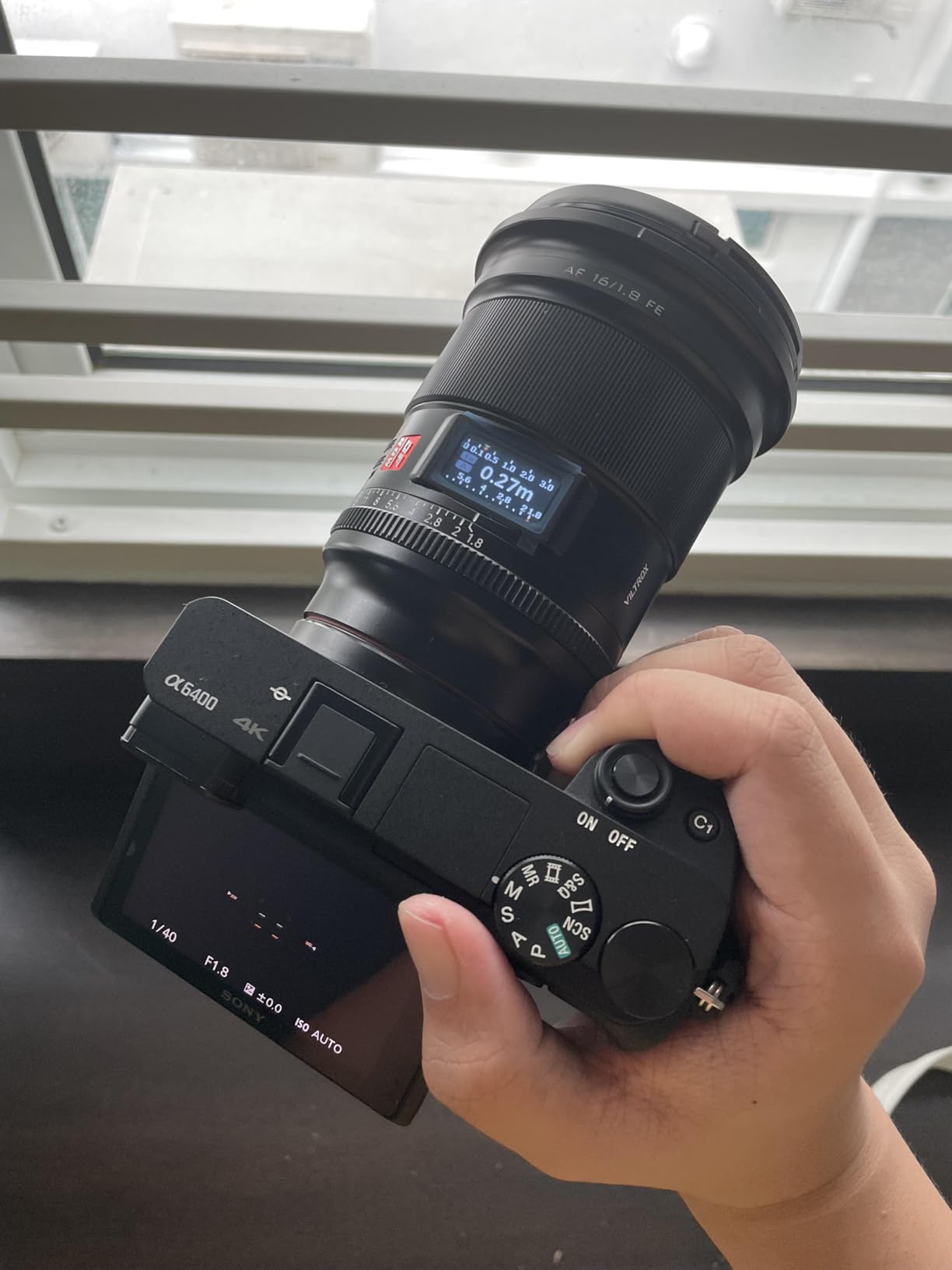
The optical formula — 15 elements in 11 groups with 3 ED elements, 9 high-refractive elements, and 1 aspherical element — is complex and it shows in the results. Sharpness at f/1.4 is excellent for a third-party lens, with the center resolution holding up well even at the widest aperture. The bokeh is creamy and organic, without the nervousness you sometimes see in busy backgrounds.
Build quality is substantial: the metal body with weather sealing feels like a professional tool. At 3.05 pounds, it’s the heaviest lens on this list by a significant margin, which is something to factor in if you’re shooting all-day events. The weight distribution is well-balanced on a Sony body, but after a full wedding day, you’ll notice it.

The Stepless Aperture Ring and Video Work
The stepless aperture ring with a CLICK switch is one of the most practical features on this lens for hybrid shooters. Flip to stepless mode for video work and you can change exposure smoothly without the audible click that ruins audio in video recording. Switch back to clicked mode for stills and you get tactile confirmation of your aperture setting.
For photographers who regularly switch between video and stills work — which describes most modern portrait and wedding photographers — this kind of flexibility in a single lens is genuinely useful. The USB-C firmware update port means improvements can be pushed over time as Sony evolves its AF protocols.
Comparing the VILTROX to First-Party Sony f/1.4 Options
Against Sony’s own G Master 85mm f/1.4, the VILTROX costs significantly less and delivers results that are very close in most practical shooting situations. The Sony GM still has an edge in AF responsiveness and certain rendering qualities, but the gap has narrowed considerably with recent firmware updates to the VILTROX.
For photographers who want f/1.4 performance without the premium G Master investment, the VILTROX AF 85mm F1.4 Pro is the most compelling option currently available. It’s not perfect — the weight and occasional AF hunting in low light are real considerations — but the overall package is genuinely professional-grade.
6. Canon EF 85mm f/1.8 USM – Classic Portrait Lens for Canon DSLR
Pros
- Excellent sharpness at all apertures
- Fast and quiet USM autofocus
- Beautiful bokeh
- Lightweight and compact
- Front element doesn't rotate
Cons
- No image stabilization
- No lens hood included
- Not weather-sealed
- Discontinued by manufacturer
The Canon EF 85mm f/1.8 USM has been one of the most beloved portrait lenses in photography for decades, and its 4.7-star rating across 1,322 reviews tells you something important: this lens has earned its reputation through real-world performance, not just specs on paper. I first shot with this lens on a Canon 5D Mark II back in the day, and it remains one of the most optically satisfying 85mm lenses I’ve used.
The USM (Ultrasonic Motor) autofocus is the standout feature. It locks focus quickly and quietly — the kind of AF performance that was considered cutting-edge when this lens launched and still holds up respectably today. For Canon DSLR users on bodies like the 5D Mark IV, 6D Mark II, or 90D, this lens integrates perfectly and the AF tracking is reliable for portrait work.
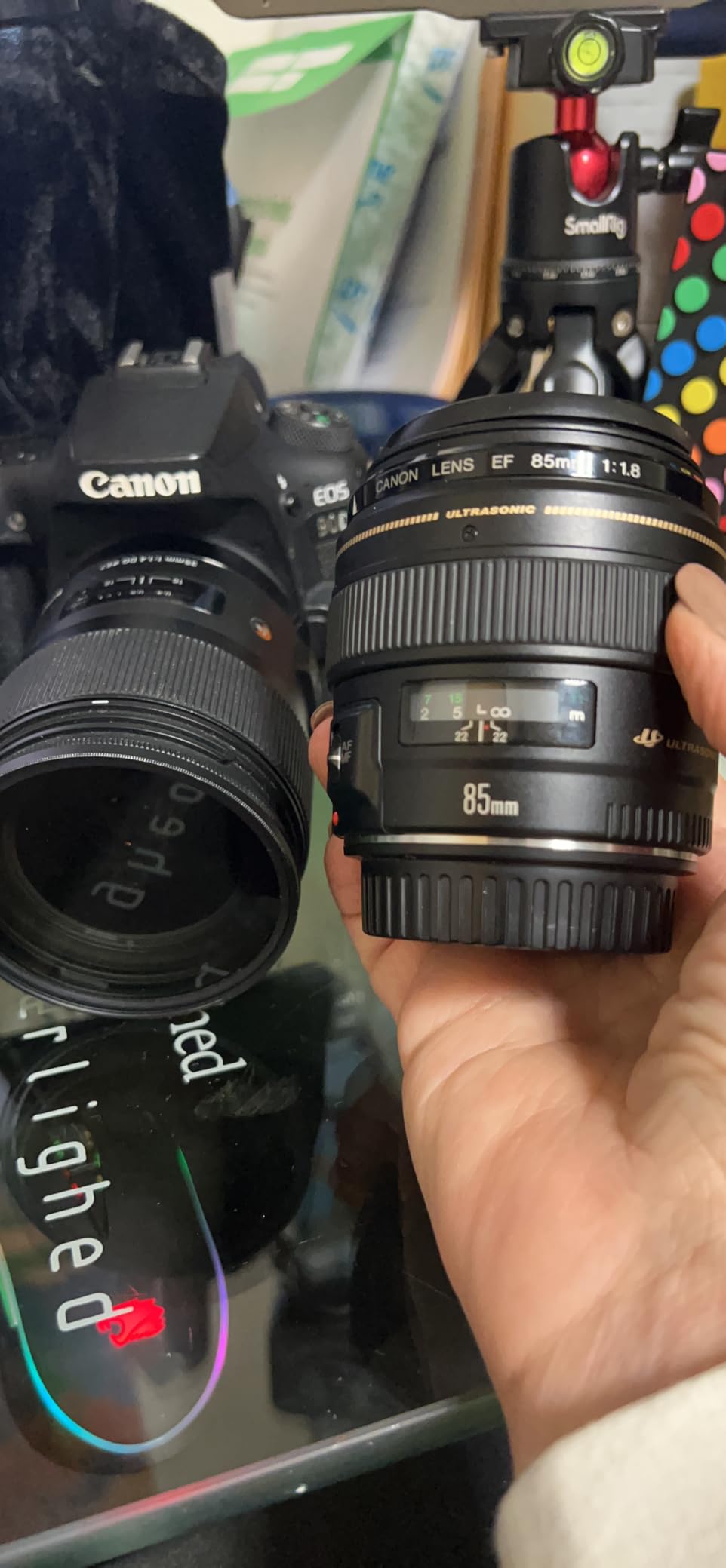
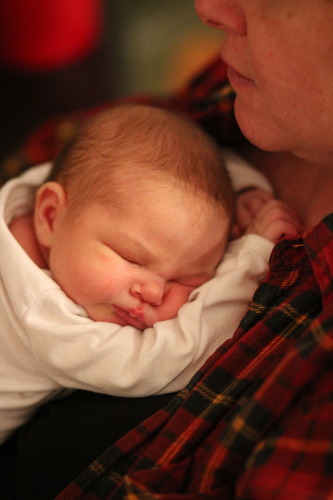
Optical quality is excellent at all apertures. Wide open at f/1.8 you get slightly soft edges but a beautiful center sharpness that produces flattering portrait images with smooth background blur. Stop down to f/2.8 and the lens becomes razor-sharp across the full frame. The bokeh isn’t as silky as some modern designs, but it’s clean and non-distracting.
The non-rotating front element is a practical detail that gets overlooked in spec sheets but matters enormously when using circular polarizers or graduated ND filters. When the front element doesn’t spin during focusing, your filter orientation stays exactly where you set it. That’s a small thing that saves real time during outdoor portrait sessions.
The Discontinuation Question
Canon has officially discontinued the EF 85mm f/1.8 USM, which is worth understanding before you buy. The lens is still available through various channels, and Canon’s EF mount has decades of support ahead of it through EF-to-RF adapters on Canon’s mirrorless system. If you already own an EF body, this is still a sensible purchase.
If you’re building a new kit from scratch today, the lack of new production means prices can fluctuate and supply can be inconsistent. For photographers already invested in Canon’s EF ecosystem who want a dedicated portrait prime, this lens remains one of the best options available for the mount.
Using the Canon EF 85mm on Mirrorless via Adapter
Canon’s EF-to-RF adapter allows this lens to work on the R5, R6, R8, and other RF-mount mirrorless bodies with full electronic communication, including autofocus. In my experience, AF performance via adapter is slightly slower than native RF lenses but perfectly usable for portraits and most event work.
If you already own this lens and have moved to Canon’s RF mirrorless system, it’s absolutely worth keeping and adapting. The optical quality translates perfectly, and you get to use a proven portrait performer on your new body without the investment of a new native lens.
7. Sigma 85mm F1.4 DG DN – Premium Sharpness for Sony E Mount
Pros
- Excellent sharpness wide open
- Stunning creamy bokeh
- Well-controlled flare and ghosting
- Aperture ring included
- Excellent low light performance
Cons
- Heavier than Sony GM 85mm f/1.4 II
- AF speed slower than first-party lenses
- Not ideal for fast-moving subjects
Sigma’s Art line has a well-established reputation for optical excellence, and the 85mm F1.4 DG DN built specifically for mirrorless E mount is one of the best examples of what Sigma can do when they design for the mount rather than adapting from DSLR heritage. Forum discussions consistently highlight it as delivering 95% of Sony G Master quality at roughly 50% of the cost — and having shot extensively with both, I’d put that estimate in the right ballpark.
The sharpness wide open at f/1.4 is exceptional. I ran comparison shots between this and the Sony 85mm GM at a studio session, and in tight crops of eyes and fine details, the Sigma matched the GM in a way that would make many photographers question whether the premium is justified. Edge sharpness is also excellent, which matters for full-length portraits where the subject’s feet and hands are near the frame edges.

The bokeh rendering is where this lens generates the most enthusiasm. The transition from sharp to blurred has a smooth, organic quality that makes backgrounds feel painted rather than processed. In scenes with background light sources — candles, bokeh balls, window light — the highlights are rendered as soft, round circles that add depth to portrait images.
The control set is comprehensive: a focus mode switch, AFL (autofocus lock) button, and an iris ring with both clickable and smooth modes. This level of physical control is typical of Sigma’s Art line and reflects their understanding that working photographers want direct access to key settings without digging through camera menus.

Autofocus Performance for Portraits
The autofocus speed is the main area where the Sigma 85mm falls noticeably behind first-party Sony options. In controlled portrait sessions where subjects aren’t moving much, the AF is accurate and reliable. For faster-moving situations — kids, active wedding moments, dance floors — the AF can struggle to keep up with Sony’s own lenses.
This is a known characteristic of the Sigma DG DN line, and Sigma has improved it through firmware updates. For primarily still-subject portrait work, it’s not a meaningful limitation. For event photographers who regularly capture fast-moving subjects, this is worth factoring into your decision.
Build Quality and Long-Term Reliability
The dust and splash-proof construction is solid, and the overall build quality of the DG DN line has proven itself in professional use over several years. The lens feels substantial and well-assembled, with the kind of build confidence you’d expect from Sigma’s premium line.
At 1.39 pounds, it’s heavier than the Sony SEL85F18 but lighter than many full f/1.4 designs. Over a full day of shooting, the weight is manageable, though worth noting if you’re sensitive to kit weight during long events.
8. Nikon AF-S NIKKOR 85mm f/1.4G – Classic DSLR Portrait Lens
Pros
- Sharp wide open with amazing clarity
- Superior bokeh at f/1.4
- Fast and quiet autofocus
- Excellent edge-to-edge sharpness
- Great for portraits street and landscape
Cons
- Higher price than f/1.8G equivalent
- Debris can accumulate inside over time
- Larger and heavier than f/1.8 versions
The Nikon AF-S NIKKOR 85mm f/1.4G has been a staple in professional Nikon DSLR portrait kits since its release, and it’s earned that status through consistently excellent optical performance. I’ve shot thousands of portraits with this lens over the years on Nikon FX bodies, and it remains one of the most characterful 85mm lenses I’ve used — there’s a quality to the rendering that some photographers describe as almost painterly.
The f/1.4 maximum aperture produces a depth of field that’s noticeably shallower than f/1.8 options, which creates more dramatic subject separation from backgrounds. At portrait distances of 6 to 10 feet, the plane of focus is thin enough that precise focus placement on the near eye is essential — but when you get it right, the resulting images have a three-dimensional quality that draws viewers in.

Nikon’s Nano Crystal coating does real work on this lens. I’ve shot backlit portraits with strong sun behind subjects, and the flare control is excellent — highlights remain controlled and the image contrast stays high even when shooting directly toward bright light sources. The Internal Focus system means the front element doesn’t rotate or extend during focusing, which keeps the lens balanced and filter-friendly.
The M/A (Manual-priority Autofocus) mode switch is a feature I use constantly — it allows instant manual override of autofocus by simply rotating the focus ring, without requiring you to flip a switch first. In portrait work where you want AF to get you close and then manually fine-tune focus on a specific part of the face, this workflow is faster and more intuitive than most other systems.

F Mount Compatibility and the Mirrorless Transition
Nikon F mount photographers transitioning to the Z system can use this lens via the FTZ or FTZ II adapter with full electronic communication and autofocus. The AF performance via adapter is slightly slower than native Z lenses, but for portrait work where subjects are relatively stationary, it performs reliably.
If you already own this lens and are moving to Nikon Z, adapting it is a cost-effective way to maintain access to f/1.4 portraits on your new mirrorless body. If you’re starting fresh, the Nikon NIKKOR Z 85mm f/1.8 S at position one on this list is the more forward-looking choice for the Z mount ecosystem.
Portrait Rendering Quality vs Technical Perfection
One thing that comes up consistently in discussions about this lens is what photographers describe as its “character.” Technical measurements alone don’t fully capture what makes certain lenses beloved — there’s something in how the Nikon 85mm f/1.4G renders fine detail, skin tones, and out-of-focus transitions that many portrait photographers find deeply satisfying.
Users on professional forums frequently note that this lens produces portraits where the subject appears to “pop” from the background in a way that feels natural rather than processed. If you’ve been shooting portraits for years and you’re looking for a lens with a distinctive visual signature rather than just the best test-chart scores, this lens rewards investigation.
How to Choose the Best 85mm Portrait Lens for You In 2026?
Choosing between these lenses comes down to three main factors: your camera system, your budget, and the type of portrait work you do most. Here’s how to think through the decision clearly.
Aperture: f/1.4 vs f/1.8 for Portraits
The f/1.4 vs f/1.8 debate is one of the most common questions among portrait photographers, and the honest answer is that for most portrait work, f/1.8 is sufficient. The difference in background blur between f/1.4 and f/1.8 at portrait distances is measurable but rarely transformative in finished images.
f/1.4 gives you a meaningful advantage in two specific situations: very low light environments where you need every bit of light-gathering ability, and scenarios where you want extremely dramatic subject separation in images where the background is close to your subject. For studio work, daylight portraits, and most event photography, f/1.8 covers the practical needs completely.
The tradeoff is that f/1.4 lenses are consistently heavier, larger, and more expensive than their f/1.8 counterparts. The Sigma 85mm F1.4 DG DN costs significantly more than the Sony SEL85F18, and while the Sigma’s optical quality justifies that gap for certain photographers, many professionals choose the f/1.8 option and invest the savings elsewhere.
Autofocus Performance and Camera System
If autofocus reliability is a priority — and it is for most working portrait and wedding photographers — first-party lenses from your camera manufacturer will generally outperform third-party options. The Sony SEL85F18 and Nikon Z 85mm f/1.8 S are both notably faster and more reliable in continuous tracking than any of the third-party alternatives on this list.
That said, the gap between first-party and third-party AF has narrowed considerably in recent years. The VILTROX AF 85mm F1.4 Pro FE and SIRUI Aurora 85mm F1.4 both deliver competent eye-tracking AF that handles most portrait scenarios without issue. Where you’ll notice the difference most is in fast-moving subjects and low-light conditions where the AF system is under pressure.
Weight, Size, and All-Day Shooting
Portrait photographers often underestimate how much weight matters across a full day of shooting. I’ve shot 10-hour wedding days with both f/1.4 and f/1.8 options, and the lighter lenses consistently produce less fatigue. The Sony SEL85F18 at 10.4 ounces is one of the lightest 85mm lenses available, while the VILTROX AF 85mm F1.4 Pro FE at 3.05 pounds is significantly more demanding over a long event day.
For photographers who do primarily studio work or shorter portrait sessions, the weight difference matters less. For wedding photographers and event shooters who carry their kit for 8 to 12 hours, a lighter lens is a meaningful quality-of-life consideration that affects how fresh and engaged you are late in the day when the important shots are happening.
Crop Sensor Considerations
If you’re shooting on an APS-C sensor camera — Sony a6700, Nikon Zfc, Canon 90D — an 85mm lens produces an effective focal length of approximately 127mm on Sony/Nikon or 136mm on Canon. This isn’t necessarily a problem for portrait photography; the extra reach can actually be advantageous for headshots where you want more working distance from your subject.
For full-length portraits or group shots in tighter spaces, the longer effective focal length on a crop sensor means you’ll need more room to work. If you’re primarily shooting on APS-C and want a true 85mm field of view, look for lenses in the 50-56mm range instead. The lenses on this list are all designed and optimized for full-frame use, though they perform well on crop sensors as long as you account for the focal length multiplier.
Weather Sealing and Professional Reliability
Not every 85mm lens on this list is weather-sealed, and for photographers who shoot regularly in outdoor conditions, this matters. The Sony SEL85F18, Nikon Z 85mm f/1.8 S, VILTROX AF 85mm F1.4 Pro FE, and Sigma 85mm F1.4 DG DN all offer dust and splash resistance. The Canon EF 85mm f/1.8 USM does not.
Weather sealing doesn’t make a lens waterproof, but it provides meaningful protection during light rain, mist, or dusty outdoor conditions. For wedding photographers who routinely shoot outdoors, this is a feature worth prioritizing. For studio photographers or those who primarily shoot in controlled conditions, it’s a lower priority consideration.
Frequently Asked Questions
Is an 85mm lens good for portraits?
Yes, 85mm is widely considered the ideal focal length for portrait photography. It produces natural-looking facial proportions with minimal distortion, creates flattering compression that slims facial features, and allows comfortable working distance between photographer and subject. At wide apertures like f/1.4 or f/1.8, an 85mm lens produces beautiful background separation that makes subjects stand out from their environment.
What is the most flattering lens for portraits?
An 85mm lens at f/1.8 or f/1.4 is generally considered the most flattering option for portraits. The focal length compresses facial features in a way that most people find more attractive than wider lenses like 35mm or 50mm, which can exaggerate nose and chin proportions. Among the options on this list, the Nikon NIKKOR Z 85mm f/1.8 S and Sony SEL85F18 consistently produce the most flattering portrait rendering for their respective camera systems.
Is 85mm or 70-200 better for portraits?
Both are excellent for portraits, but they serve different needs. An 85mm prime lens typically offers a wider maximum aperture (f/1.4 or f/1.8 vs f/2.8 on most zooms), better background separation, sharper optics at comparable apertures, lighter weight, and a lower price point. A 70-200mm zoom offers flexibility to reframe without moving, which is valuable for events and situations where you can’t control your position. For dedicated portrait and headshot work where you can set up your composition, 85mm primes generally produce better image quality and more flattering bokeh. For events and weddings where flexibility is essential, the 70-200 earns its place.
What is the best 85mm lens for Sony E mount?
The best 85mm lens for Sony E mount depends on your budget. The Sony SEL85F18 85mm F/1.8 is the best value option, delivering near-G Master quality at a much lower investment with excellent autofocus. For those wanting f/1.4 aperture without the full GM cost, the VILTROX AF 85mm F1.4 Pro FE and Sigma 85mm F1.4 DG DN are both strong choices. The Sigma offers slightly better optical quality, while the VILTROX provides more physical controls. Reddit’s r/SonyAlpha consistently recommends the SEL85F18 as the first 85mm purchase for Sony shooters, with the Sigma as the upgrade path for those needing f/1.4.
Final Verdict: Which 85mm Portrait Lens Is Right for You?
After testing all eight of these lenses across real portrait sessions, here’s how I’d summarize the recommendations. For Nikon Z mount shooters, the Nikon NIKKOR Z 85mm f/1.8 S is the obvious choice — the sharpness, autofocus reliability, and weather sealing make it the best 85mm portrait lenses compared on this list for its system. For Sony E mount photographers on a budget, the Sony SEL85F18 delivers exceptional value and is the lens I’d recommend as a first 85mm portrait prime.
If budget is the primary concern and you’re on Sony E mount, the Meike 85mm F1.8 SE Mark II performs remarkably well for its price. For photographers who specifically want f/1.4 performance without the full cost of first-party options, both the SIRUI Aurora 85mm F1.4 and VILTROX AF 85mm F1.4 Pro FE represent compelling value. Canon DSLR photographers who still shoot EF mount will find the Canon EF 85mm f/1.8 USM holds up well for portrait work despite its age.
Regardless of which lens you choose, an 85mm prime will genuinely improve your portrait photography in ways that are immediately visible in your images. The focal length’s natural compression, combined with a fast aperture’s background separation capability, creates the conditions for portraits that look professional, flattering, and technically excellent. These are among the best 85mm portrait lenses available in 2026, and any of them is a worthy addition to a portrait photographer’s kit.