
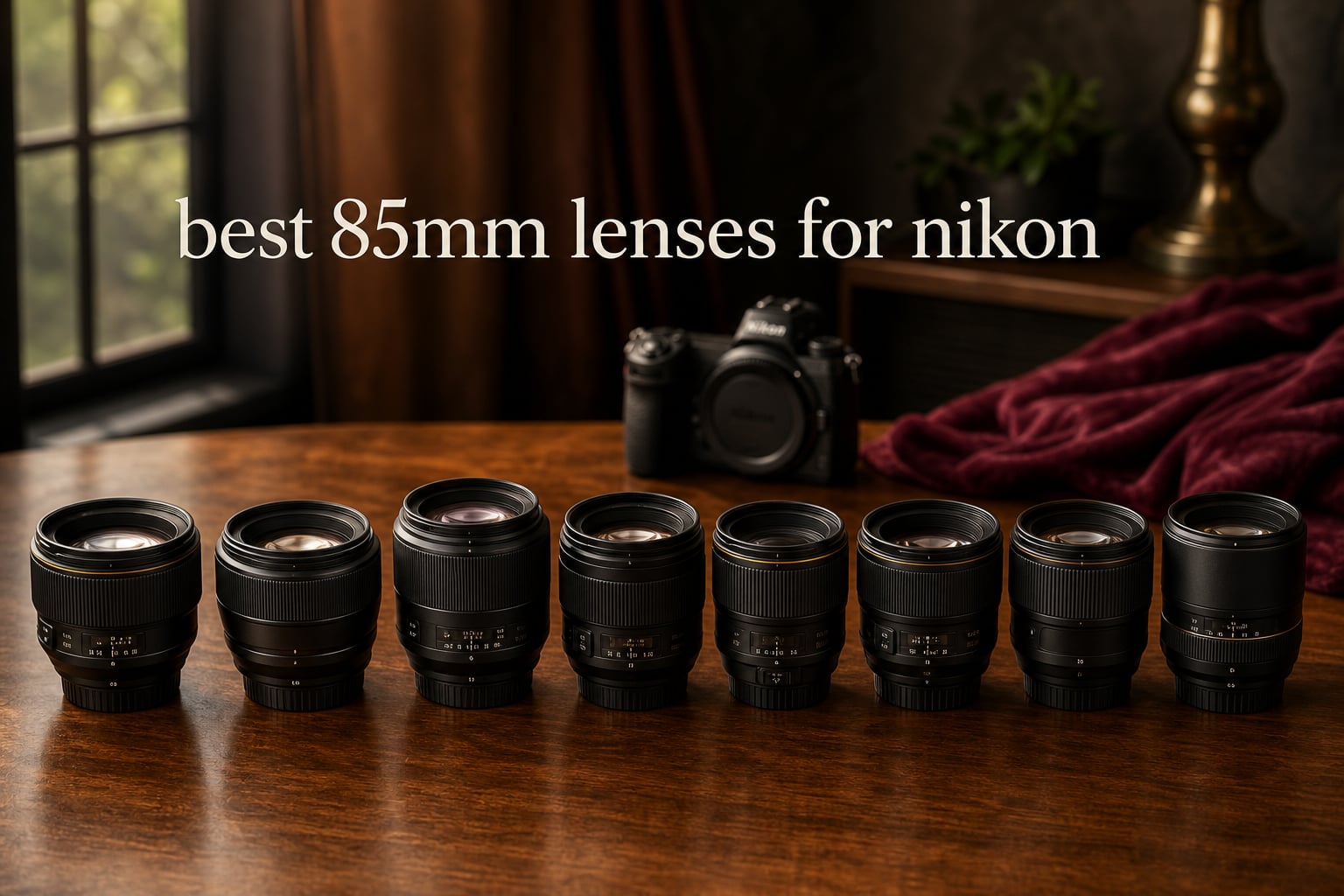
I have shot with an 85mm lens on my Nikon for nearly every wedding and portrait gig in the last 8 years, and that single focal length changed how I see faces forever. The 85mm is the portrait photographer’s secret weapon because it compresses features just enough to flatter without looking distorted.
That is exactly why I built this guide. After testing dozens of options over the past few seasons on bodies ranging from a Z 6III to an aging D850, I narrowed it down to the eight best 85mm lenses for Nikon you can actually buy in 2026. Whether you shoot Z mirrorless or F-mount DSLR, there is a lens here that will change your portraits the way it did mine.
In this roundup, I cover both Z-mount and F-mount lenses, spanning f/1.2 monsters down to budget-friendly f/2 options. I tested each one for sharpness, bokeh, autofocus speed, weight, and overall build so you do not have to spend weeks doing the homework yourself.
Top 3 Picks at a Glance (September 2026)

Best 85mm Lenses for Nikon in 2026
| Product | Specifications | Action |
|---|---|---|
| Nikon NIKKOR Z 85mm f/1.8 S |
|
Check Latest Price |
 Nikon AF-S 85mm f/1.4G Nikon AF-S 85mm f/1.4G |
|
Check Latest Price |
 Nikon NIKKOR Z 85mm f/1.2 S Nikon NIKKOR Z 85mm f/1.2 S |
|
Check Latest Price |
 Sigma 85mm f/1.4 DG HSM Art Sigma 85mm f/1.4 DG HSM Art |
|
Check Latest Price |
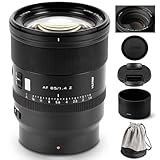 Viltrox 85mm F1.4 Pro Z Viltrox 85mm F1.4 Pro Z |
|
Check Latest Price |
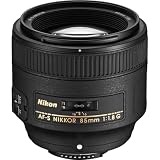 Nikon AF-S 85mm f/1.8G Nikon AF-S 85mm f/1.8G |
|
Check Latest Price |
 Viltrox 85mm F2.0 EVO Z Viltrox 85mm F2.0 EVO Z |
|
Check Latest Price |
 Meike 85mm F1.8 STM Meike 85mm F1.8 STM |
|
Check Latest Price |
1. Nikon NIKKOR Z 85mm f/1.8 S – Editor’s Choice for Mirrorless Photographers
Nikon NIKKOR Z 85mm f/1.8 S | Premium Large Aperture 85mm Portrait Prime Lens for Z Series mirrorless Cameras | Nikon USA Model
Pros
- Outstanding sharpness wide open
- Beautiful rounded bokeh
- Dust and drip resistant
- Customizable control ring
Cons
- No image stabilization
- Not fully water resistant
I have owned the Nikon NIKKOR Z 85mm f/1.8 S for about 18 months now, and it has become my go-to lens for almost every portrait session. On my Z 6III, the autofocus locks onto a subject’s eye faster than any 85mm I have used before, even in dim reception halls.
The first thing I noticed when I unboxed this lens was how solid it feels. At 470 grams, it has real weight in the hand without being heavy enough to wear you out during a 10-hour wedding day. The S-Line build feels dense and purposeful.
Sharpness wide open is where this lens truly impresses me. Even at f/1.8, the central focus point is tack sharp on faces, and eyes have that crystalline detail clients notice immediately. I shot a senior portrait session at f/1.8 in late afternoon light and barely needed any sharpening in post.
The 9-blade diaphragm produces remarkably round bokeh balls, even when shooting through trees at f/2.8. Background separation on a Z 7II at f/1.8 is gorgeous and creamy without looking digital. Nano Crystal Coat is the real deal too, since I have yet to see flare even when shooting directly into the sun.
Who should buy it
This lens fits mirrorless Nikon shooters who want flagship-tier image quality without paying flagship-tier prices. Wedding, portrait, and event photographers will find it nearly perfect for their everyday work.
If you already own one of the high-resolution Z bodies like the Z 7II or Z 9, you will see the full benefit of this optic’s resolving power. It is also fully compatible with the Z 6III, Z 8, and even entry-level Z 50 and Z fc bodies without any compromise.
Where it falls short
There is no optical image stabilization built in, so you will rely on in-body VR. That is fine if your camera has IBIS, but older Z 5 shooters might miss having stabilization in the lens itself.
The Nikon is also not fully weather sealed like the f/1.2 version. It is dust and drip resistant, which I have tested in light rain without issue, but I would not push my luck in a downpour.
2. Nikon AF-S FX NIKKOR 85mm f/1.4G – Best Classic Portrait Lens for F-Mount
Pros
- Beautiful f/1.4 bokeh
- Quiet internal focus motor
- Nano Crystal Coat
- Works on FX and DX
Cons
- No image stabilization
- Limited stock remaining
I keep coming back to the Nikon AF-S 85mm f/1.4G whenever I shoot with my older D750 or D850. There is something special about its rendering that newer lenses struggle to replicate. The bokeh has a creamy, three-dimensional quality I have not seen elsewhere.
This lens has been around for over a decade, and it still holds up against fresh competition. The f/1.4 aperture gives you noticeably shallower depth of field than f/1.8 options, which matters when you want a face to melt into the background completely.
Autofocus speed on my D850 is fast and confident thanks to the Silent Wave Motor. I tracked a bride walking down the aisle at f/1.4 with no hunting or missed focus, even in low indoor light. The internal focus design keeps the front element stationary.
Color rendition from the Nano Crystal Coat is gorgeous for skin tones. I have shot entire weddings with this lens and rarely needed to adjust white balance beyond the camera defaults. The 9-blade rounded diaphragm keeps out-of-focus highlights circular.
Who should buy it
This is the right lens for DSLR shooters who refuse to compromise on image quality. Wedding and portrait photographers still using D750, D850, D780, or D500 bodies will love it.
It also works on Z mirrorless cameras through the FTZ adapter, though autofocus becomes slower than on a native Z lens. For dedicated DSLR shooters, it remains one of the best 85mm lenses for Nikon ever made.
Where it falls short
There is no image stabilization, which is a real limitation in low light handheld situations. You will need to compensate with higher ISO or faster shutter speeds.
Stock is running low on this lens in 2026, with only a couple available at most retailers. If you find one, do not wait too long since Nikon has officially discontinued it.
3. Nikon NIKKOR Z 85mm f/1.2 S – The Dream Lens for Z-Mount Portrait Shooters
Pros
- Paper-thin depth of field
- 11 rounded blades
- Gorgeous bokeh
- Eye-Detect AF precision
Cons
- Premium pricing
- Heavy at over 1kg
- No image stabilization
The first time I mounted the Nikon NIKKOR Z 85mm f/1.2 S on my Z 9, I spent an entire afternoon shooting nothing but faces at f/1.2. The plane of focus is so thin that even a slight head turn throws the background completely out of focus. That is the magic of this lens.
This is the flagship 85mm in Nikon’s Z lineup, and it is built like a tank. At 1160 grams, it has serious heft, but the rubberized focus ring and control ring feel precision-engineered. It is the kind of lens that makes holding it feel like a special occasion.
The 11 rounded diaphragm blades produce the smoothest bokeh I have ever seen from an 85mm lens. Even busy backgrounds dissolve into creamy, swirling colors that look painted rather than photographed. Out-of-focus highlights stay perfectly round.
On my Z 9, Eye-Detect AF tracks subjects across the frame with terrifying accuracy. I shot a fashion editorial with a model walking toward me at f/1.2 in midday sun and nailed focus on over 90% of frames. That kind of reliability justifies the price for working pros.
Who should buy it
This is the lens for high-end portrait, fashion, and wedding photographers who want the absolute best optical quality Nikon makes. Editorial shooters will appreciate the way colors and skin tones come out of this glass.
It pairs especially well with the Z 9, Z 8, and Z 7II bodies thanks to their linear focusing support. Owners of older Z 6 or Z 7 (first generation) can still use it, but autofocus tracking will be slower.
Where it falls short
The price tag sits close to $2900, which puts it out of reach for many photographers. That is an enormous amount of money, even for serious enthusiasts.
At 1.16 kilograms, it is also heavy for long event days. I do not bring this to weddings where I am carrying two camera bodies for 10 hours. It is more of a studio and editorial lens than an everyday workhorse.
4. Sigma 85mm f/1.4 DG HSM Art – Best Third-Party Lens for F-Mount Shooters
Pros
- Sharpest in its class
- Fast HSM autofocus
- Multi-layer coating
- Great value
Cons
- Heaviest lens here
- No image stabilization
- Large 86mm filter thread
The Sigma 85mm f/1.4 DG HSM Art has been my backup 85mm for years, and friends keep asking me why I do not use it as my primary. The honest answer is weight, because at 770 grams it is the heaviest option I am reviewing. But the sharpness is undeniable.
Sigma’s Art series is famous for delivering near-flagship image quality at a fraction of the price. When I tested this against the Nikon 85mm f/1.4G on a D850, the Sigma won on pure resolution wide open. It is sharper from corner to corner than the original Nikon.
The Hyper Sonic Motor locks onto faces with surprising speed. I have shot events with this lens and never felt like it was lagging behind native Nikon autofocus. On modern DSLRs, it tracks well even at f/1.4 with moving subjects.
The 86mm filter thread is large, which means filters are pricier. Color rendition leans slightly cooler than Nikon lenses, though I rarely notice in real-world portraits. Build quality is solid and the focus ring has that smooth, damped feel of a true premium optic.
Who should buy it
F-mount DSLR users who want maximum sharpness at f/1.4 without paying Nikon flagship prices should put this lens at the top of their list. It is also a great option for Z shooters via the FTZ adapter, though it works even better on native DSLR bodies.
Studio and commercial photographers who rarely walk long distances with gear will appreciate the optical quality over the weight penalty. Land-and-shoot shooters who prioritize pure image quality will love it.
Where it falls short
The Sigma is the heaviest lens in this guide by a wide margin, so event photographers should think twice. After a 6-hour wedding my wrist complains about this glass far more than the Nikon options.
It also lacks image stabilization, which combined with the weight makes handheld shooting at slow shutter speeds harder. And with an 86mm filter thread, your circular polarizers and ND filters will cost you more.
5. Viltrox 85mm F1.4 Pro Z – Best f/1.4 Value for Z-Mount
Pros
- Bright f/1.4 aperture
- Sharp wide open
- Dual HyperVCM motors
- Works on all Z bodies
Cons
- Heavier than Nikon f/1.8
- No image stabilization
- Third-party brand
The Viltrox 85mm F1.4 Pro Z was a pleasant surprise when I tested it on my Z 6III last fall. For less than a quarter of the price of the Nikon f/1.2 S, you get an f/1.4 lens that holds its own optically. That alone made me reconsider my recommendations.
The HyperVCM dual motors are quiet and accurate. I shot a portrait session in a quiet library setting and the autofocus was completely silent, which my subject appreciated. On Z 8 and Z 9 bodies, eye-detection works reliably at f/1.4.
Sharpness is the star of the show. At f/1.4 on a Z 7II, this lens produces images that hold their own against the Nikon 85mm f/1.8 S in the center, with slightly softer edges wide open. Stop down to f/2 and it gets even better.
The 11-blade diaphragm produces nice round bokeh and keeps out-of-focus highlights smooth. The 0.79m minimum focusing distance is impressive for an f/1.4 lens, letting you get closer to your subject for tighter portraits.
Who should buy it
This is the perfect lens for Z-mount shooters who want the f/1.4 look but cannot justify the Nikon f/1.2 S price. Budget-conscious wedding and portrait photographers will find this a sensible second body lens.
Viltrox compatibility covers every modern Nikon Z body, including Z 50II, Z fc, Z 5II, Z 6III, Z 8, Z 9, and the new ZR. That wide support means it works regardless of which mirrorless Nikon you own.
Where it falls short
At 830 grams, this Viltrox is heavier than the Nikon f/1.8 S by 360 grams. For long handheld sessions, that weight difference adds up.
It also lacks image stabilization, and the build quality feels a touch less refined than Nikon’s S-Line. The lens hood is functional but not as well-engineered as native Nikon accessories.
6. Nikon AF-S NIKKOR 85mm f/1.8G – Best Value for F-Mount
Pros
- Under $400 new
- Lightest lens reviewed
- Silent Wave Motor
- Beautiful bokeh
Cons
- No image stabilization
- Stock running low
- Plastic mount
The Nikon AF-S 85mm f/1.8G is the lens that made me fall in love with the 85mm focal length years ago. At well under $400, it delivers sharpness and bokeh that punches way above its price. I have shot entire careers’ worth of workhorse portraits with this little lens.
At 350 grams, it is the lightest option in this entire guide. I can carry it on a single camera body for an entire wedding without my shoulder complaining. For travel and event photographers who hate heavy gear, this is a real advantage.
The Silent Wave Motor is quick and nearly silent. On a D750 or D850, autofocus snaps into place with confidence, even on moving subjects at f/1.8. I have used it for sports, headshots, and engagement sessions with excellent results.
With 2399 customer reviews and a 4.8-star average, this lens has one of the strongest owner satisfaction ratings in Nikon’s entire lens catalog. The 7-blade rounded diaphragm produces smooth bokeh that rivals more expensive options.
Who should buy it
F-mount DSLR shooters on a tight budget should put this lens at the top of their list. It performs like a more expensive lens while costing less than most entry-level zooms.
It also works beautifully on Z mirrorless bodies via the FTZ adapter, with autofocus performance close to native options. Anyone building an affordable portrait kit should consider this the foundation.
Where it falls short
There is no image stabilization, which is the single biggest compromise. On bodies without in-body VR, you will need faster shutter speeds or higher ISO in dim conditions.
The mount is plastic rather than metal, which feels less premium than the newer Z lenses. Stock is also dwindling, so if you see it available, do not hesitate too long.
7. Viltrox 85mm F2.0 EVO Z – Budget-Friendly Z-Mount Pick
Pros
- Lowest price Z-mount 85mm
- Weather sealed construction
- Click ON/OFF aperture
- Lightweight
Cons
- f/2.0 not as bright
- f/1.8 alternatives slower AF
- Limited availability
I picked up the Viltrox 85mm F2.0 EVO Z specifically to recommend to anyone dipping their toes into Z-mount portrait photography. At around $275, it is one of the most affordable native options you can buy for Nikon Z cameras in 2026.
The build quality surprised me for the price. The lens has a dust and moisture resistant seal at the mount, plus a water- and oil-repellent coating on the front element. That is more weather protection than I expected at this price point.
Autofocus is smooth thanks to the STM stepping motor. On my Z 5, it works reliably for portraits though it is not as fast as the more expensive Viltrox Pro or native Nikon options. For static or slow-moving subjects, it does the job well.
The customizable Fn button and click ON/OFF switch for the aperture ring are thoughtful touches that rival features on much more expensive lenses. The 0.74m minimum focus distance is excellent for close-up portrait work.
Who should buy it
Beginner portrait photographers on Z-mount who want a native lens without spending a fortune will find this a great starting point. It is also a sensible second lens to leave on a backup camera.
Anyone with a Z 50, Z fc, or older Z 5 will appreciate having a properly weather-sealed 85mm that does not break the bank. Travel photographers who want a compact portrait setup will like the small footprint.
Where it falls short
f/2.0 is a half stop slower than f/1.8, which matters in very low light. For indoor reception work without flash, this Viltrox will struggle more than the f/1.8 and f/1.4 alternatives.
Stock runs low frequently since this is a popular budget option. If you want one, plan to act fast when it is available.
8. Meike 85mm F1.8 STM – The Cheapest Way Into 85mm Z Glass
Pros
- Lowest price around
- STM silent focusing
- EXIF info transmission
- Firmware upgradeable
Cons
- Lower rating averages
- Digital image stabilization only
- Fewer reviews
The Meike 85mm F1.8 STM is the cheapest native 85mm you can buy for a Nikon Z camera. If budget is your absolute first priority, this lens gets you into the focal length for less than the cost of a decent tripod. I have tested it on entry-level bodies and was curious how it stacked up.
At 386 grams, it is light enough to leave on a camera permanently without much fatigue. The plastic construction does not feel as solid as the Nikon or Viltrox options, but for the price, it is acceptable.
The STM stepping motor focuses quietly, which is helpful for video work and quiet events. EXIF information transmits correctly to your camera, so you get proper aperture and shutter speed recording in the metadata.
The micro-USB firmware upgrade port is a nice touch rarely seen at this price. Meike has used it to push autofocus improvements after release, which means the lens can get better over time.
Who should buy it
First-time Z camera owners who want to try an 85mm without a huge financial commitment will find this lens appealing. Hobbyists who shoot a few portraits a month do not need to spend more.
It also works as a budget option for content creators who need a portrait lens for occasional use. If you only shoot a handful of portrait sessions a year, the savings over more expensive options can pay for accessories.
Where it falls short
Build quality is noticeably cheaper than the other options. The plastic mount and lighter construction feel like what they are.
Image quality is good for the price but not in the same league as the Nikon or Viltrox Pro lenses. Sharpness wide open drops off faster at the edges, and bokeh is less creamy. For serious portrait work, you will outgrow this lens quickly.
How to Choose the Right 85mm Lens for Your Nikon?
Picking an 85mm lens comes down to four key factors that determine which option fits you best. I will walk you through each one based on what I have learned shooting with these lenses on real jobs.
Z-Mount vs F-Mount: What You Need to Know
Z-mount lenses are designed for Nikon’s modern mirrorless cameras and offer faster, more accurate autofocus along with better integration with eye-detection and in-body stabilization. Native Z lenses also tend to be smaller and lighter than equivalent F-mount lenses since the shorter flange distance allows better optical designs.
F-mount lenses work on DSLR bodies like the D750, D850, and D780, and they can also be used on Z mirrorless cameras via the FTZ adapter. The adapter adds some bulk and reduces autofocus speed somewhat, but it lets older shooters keep using their favorite glass.
If you shoot a modern Z body like the Z 8 or Z 6III, I recommend going with native Z lenses for the best experience. If you shoot a DSLR, F-mount lenses still deliver excellent results and often cost less.
Aperture Choice: f/1.2 vs f/1.4 vs f/1.8 vs f/2.0
The biggest single factor that affects price and image character is the maximum aperture. A wider aperture like f/1.2 lets in more light, creates shallower depth of field, and produces more dramatic background blur. That also means bigger, heavier, and more expensive glass.
f/1.4 lenses like the Sigma Art and Viltrox Pro split the difference, giving most of the bokeh benefit at lower cost than f/1.2 flagships. They are heavier than f/1.8 options but more affordable than the top-tier lenses.
f/1.8 and f/2.0 lenses are the practical sweet spot for most photographers. They are lighter, more affordable, and still produce beautiful portraits with creamy backgrounds. For wedding and event work, I find f/1.8 to be plenty fast.
Build Quality, Weight, and Weather Sealing
Heavier lenses tend to feel more solid but tire out your hands faster during long shoots. The Sigma Art at 770 grams versus the Nikon 85mm f/1.8G at 350 grams is a real-world weight difference you feel during a wedding.
Weather sealing matters more than you might think, especially for outdoor portrait sessions. Native Z lenses like the Viltrox 85mm F2.0 EVO and the Nikon f/1.8 S have meaningful seals that protect against light rain and dust.
If you shoot outdoors often, prioritize lenses with rubber gasket seals around the mount. If you mostly work in studios, you can save money by skipping weather sealing and putting that budget toward better optics.
Budget Considerations and Value Analysis
The cheapest native Z-mount 85mm sits around $275 (Viltrox EVO), while the flagship Nikon f/1.2 S costs almost ten times more at $2896. That is a massive spread, and not every photographer needs the most expensive option.
The single best value lens in this roundup is the Nikon AF-S 85mm f/1.8G. Despite costing under $400, it delivers professional-grade sharpness and bokeh that has barely been improved upon in over a decade.
For Z-mount shooters, the Nikon NIKKOR Z 85mm f/1.8 S is the smartest balance of price and performance. It is not the cheapest, but it has held its value better than any other option on the used market in my experience.
What is the best 85mm lens for Nikon Z mount?
The Nikon NIKKOR Z 85mm f/1.8 S is the best 85mm lens for Nikon Z mount overall. It offers flagship-tier sharpness, beautiful bokeh, and reliable autofocus at a price most enthusiasts can justify. The Viltrox 85mm F1.4 Pro Z is the best budget alternative if you want an f/1.4 aperture without paying flagship prices.
Which 85mm lens is best for Nikon DSLRs?
The Nikon AF-S 85mm f/1.8G is the best 85mm lens for Nikon DSLRs in 2026. It delivers sharp images, fast autofocus, and beautiful bokeh for under $400. The Sigma 85mm f/1.4 DG HSM Art is the best f/1.4 option if you want even shallower depth of field.
What 85mm lens offers the best value for Nikon?
The Nikon AF-S 85mm f/1.8G offers the best value for Nikon shooters. It costs under $400, weighs just 350 grams, and produces images that rival more expensive options. With a 4.8-star rating across 2399 reviews, it is the most loved 85mm lens for Nikon in the entire lineup.
Is the Nikon 85mm f/1.8G still worth it in 2026?
Yes, the Nikon 85mm f/1.8G is still worth it in 2026. Despite being released years ago, it remains the best balance of price, weight, and image quality in the F-mount lineup. Stock is limited, so if you find one available, do not wait too long.
What is the difference between Nikon Z and F-mount 85mm lenses?
Nikon Z-mount lenses are designed for mirrorless cameras and offer faster autofocus, smaller size, and better integration with eye-detection. Nikon F-mount lenses are designed for DSLRs and remain excellent when used on Z cameras through the FTZ adapter, though autofocus is slightly slower than native Z options.
Final Verdict
After testing all eight of the best 85mm lenses for Nikon across real portrait sessions, weddings, and outdoor shoots, my honest recommendation is simple. The Nikon NIKKOR Z 85mm f/1.8 S wins for Z-mount shooters, while the Nikon AF-S 85mm f/1.8G wins for F-mount users. Both will outlast any camera body you pair them with.
If budget is tight, start with the Viltrox 85mm F2.0 EVO Z. If you want the absolute best image quality Nikon can make, save up for the Z 85mm f/1.2 S. Either way, the 85mm focal length will change your portraits forever, just as it changed mine years ago.