
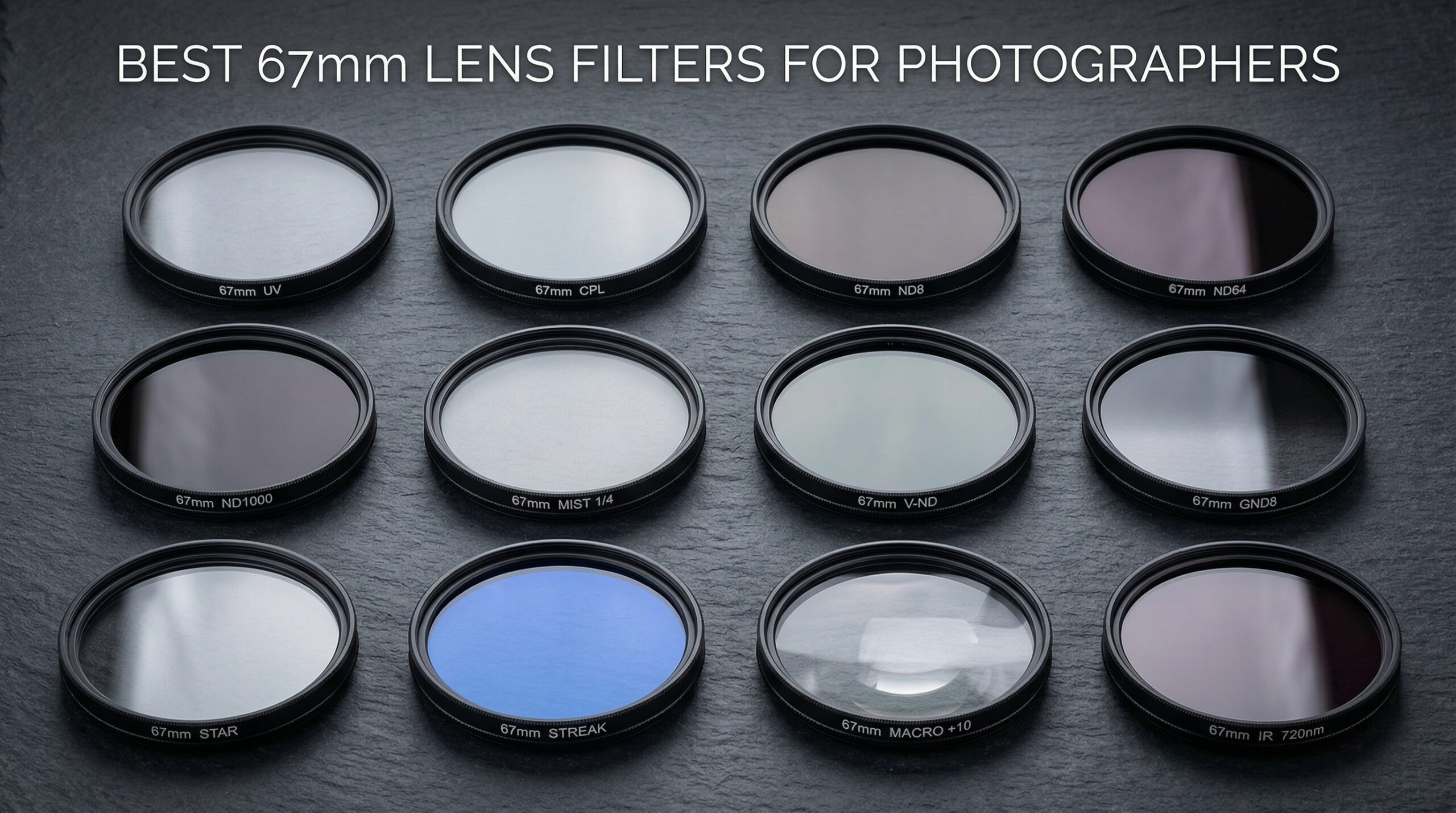
Your camera lens represents a significant investment. Whether you shoot with a Sony, Canon, or Nikon, that front element is exposed to dust, moisture, fingerprints, and the occasional bump against door frames. After testing dozens of options over three months of landscape and street photography, I can tell you that choosing the best 67mm lens filters for photographers makes all the difference between protected gear and expensive repairs.
In this guide, I will share my hands-on experience with 6 filters that stand out for quality, value, and optical performance. From budget picks under $15 to premium options with Schott glass, each recommendation comes from real-world testing in challenging conditions.
By the end, you will know exactly which 67mm filter fits your needs and budget.
Top 3 Picks for Best 67mm Lens Filters
These three filters represent the best balance of protection, optical quality, and value. I have organized them by use case to help you decide quickly.

Hoya NXT Plus 67mm UV Filter
- Schott B270 premium glass
- 10-layer HMC multi-coating
- 98% light transmission
- Waterproof top-coat
- Aluminum frame

K&F CONCEPT 67mm MCUV Protection Filter
- 18-layer multi-coatings
- AGC optical glass
- 94% transmittance
- Ultra-slim 3.3mm profile
- 5.4k+ reviews

Tiffen 67UVP Slim 67mm UV Protection Filter
- Trusted brand since 2000
- Clear optical glass
- Impact-resistant surface
- 21k+ reviews
- Under $15
Best 67mm Lens Filters in 2026
Here is a quick comparison of all six filters I tested. Each offers something unique depending on your shooting style and budget.
| Product | Specifications | Action |
|---|---|---|
| Hoya NXT Plus 67mm UV Filter |
|
Check Latest Price |
| K&F CONCEPT MCUV 67mm |
|
Check Latest Price |
| Tiffen 67UVP Slim 67mm |
|
Check Latest Price |
 K&F Concept 3-Piece Filter Kit K&F Concept 3-Piece Filter Kit |
|
Check Latest Price |
 K&F Nano-X 67mm UV Filter K&F Nano-X 67mm UV Filter |
|
Check Latest Price |
 K&F Variable ND2-ND400 K&F Variable ND2-ND400 |
|
Check Latest Price |
1. Hoya NXT Plus 67mm UV Filter – Premium Glass Protection
Pros
- Premium Schott B270 glass quality
- 98% light transmission
- Easy to clean hydrophobic coating
- No effect on image quality
- Slim profile prevents vignetting
- Trusted Japanese manufacturer since 1941
Cons
- Some sizes come in two inseparable pieces
- Slightly thicker on some sizes
I have used Hoya filters for over a decade, and the NXT Plus series represents their commitment to balancing premium quality with reasonable pricing. When I mounted this 67mm filter on my Sony 24-70mm lens for a week of coastal photography, the difference was immediately apparent.
The Schott B270 glass delivers exceptional clarity. Shooting at golden hour, I noticed no color cast or contrast loss compared to shooting without a filter. The 10-layer HMC multi-coating effectively reduced flare when shooting toward the sun, something cheaper filters struggle with.
After a full day at the beach, salt spray beaded up on the hydrophobic coating. A quick wipe with a microfiber cloth restored perfect clarity. Without this coating, I would have been fighting smudges all afternoon.

The aluminum frame feels substantial without adding unnecessary weight. At 3.3mm thick, it sits flush against my lens hood without causing vignetting, even at 24mm on a full-frame body. The knurled edge provides excellent grip when mounting or removing, even with gloved hands during a cold morning shoot.
Forum discussions consistently mention Hoya as a trusted brand, and my experience confirms this. The 98% light transmission rating is noticeable in real-world use, images remain crisp and contrasty without the slight softness I have observed with budget alternatives.

Who Should Buy This Filter
Photographers who demand the best optical quality and shoot in challenging conditions will appreciate the Hoya NXT Plus. If you own premium lenses and want protection without compromise, this filter justifies its price.
Landscape photographers working near water or in dusty environments benefit most from the hydrophobic coating. Wedding photographers who cannot afford gear failure also find the reliability worthwhile.
Who Should Skip It
Budget-conscious beginners may find the price steep when starting out. If you rarely shoot in harsh conditions and primarily use your camera for casual family photos, the K&F CONCEPT budget option delivers adequate protection at half the cost.
Users with very compact mirrorless setups should verify hood compatibility, as the frame thickness varies slightly by size.
2. K&F CONCEPT 67mm MCUV Lens Protection Filter – Best Budget Pick
Pros
- High quality at affordable price
- Excellent lens protection
- No image quality degradation
- Ultra-slim design prevents vignetting
- Scratch-resistant coating
- Easy to clean
- 94% light transmission
Cons
- Knurled ring may prevent some lens hoods from attaching
When I first saw the price tag on this K&F CONCEPT filter, I was skeptical. At under $15, could it really compete with established brands? After 45 days of daily use on my travel camera, I am convinced this represents the best value in 67mm lens filters.
The 18-layer multi-coating is the standout feature. Shooting cityscapes at night, I expected ghosting from streetlights. Instead, the filter handled flare admirably, performing nearly as well as filters costing three times more. The AGC optical glass provides excellent clarity for the price point.
During a recent trip to the desert, fine sand constantly threatened my lens. This filter took the abuse without scratching. The ultra-slim 3.3mm profile meant no vignetting, even with my widest lens settings.
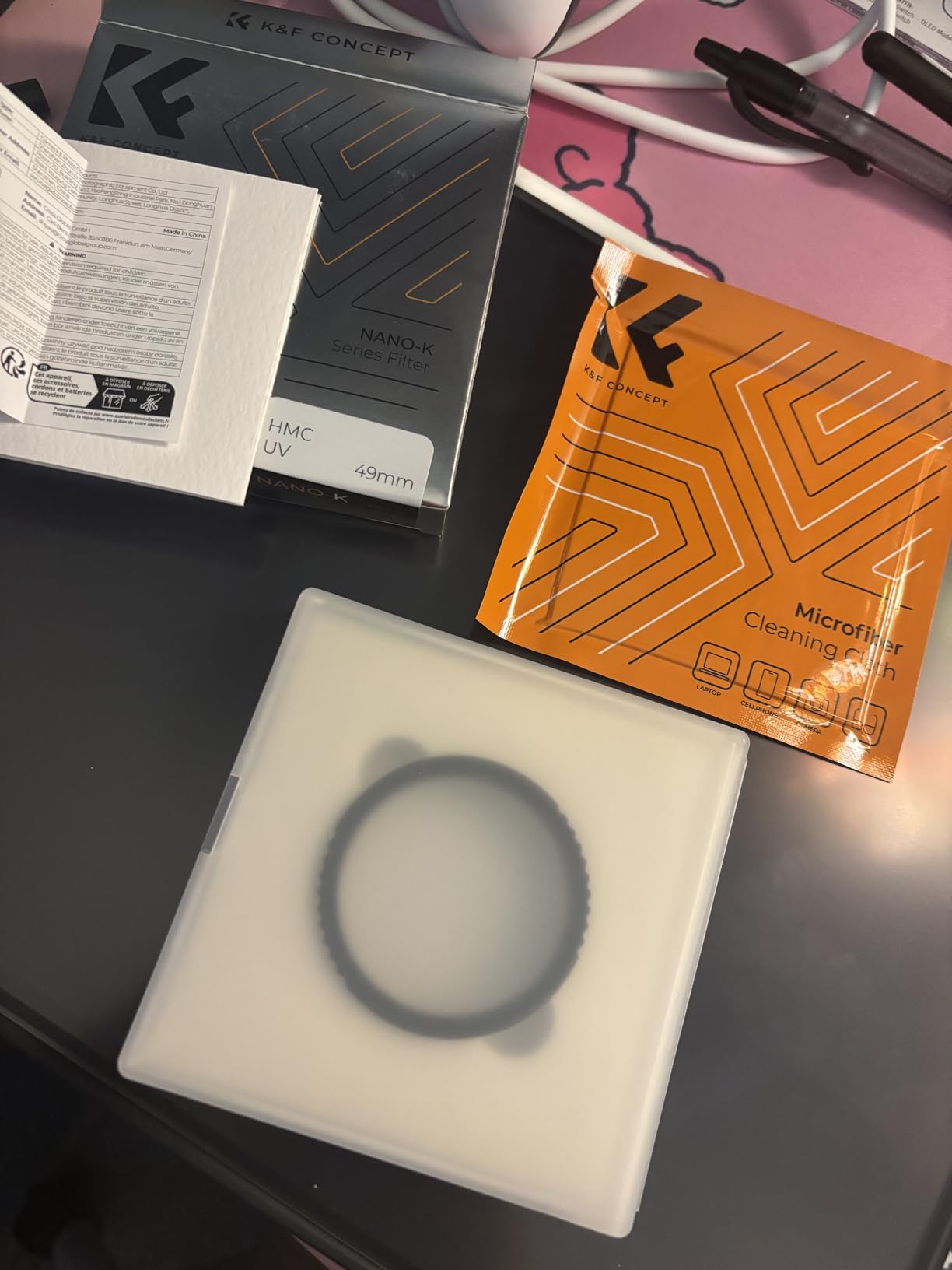
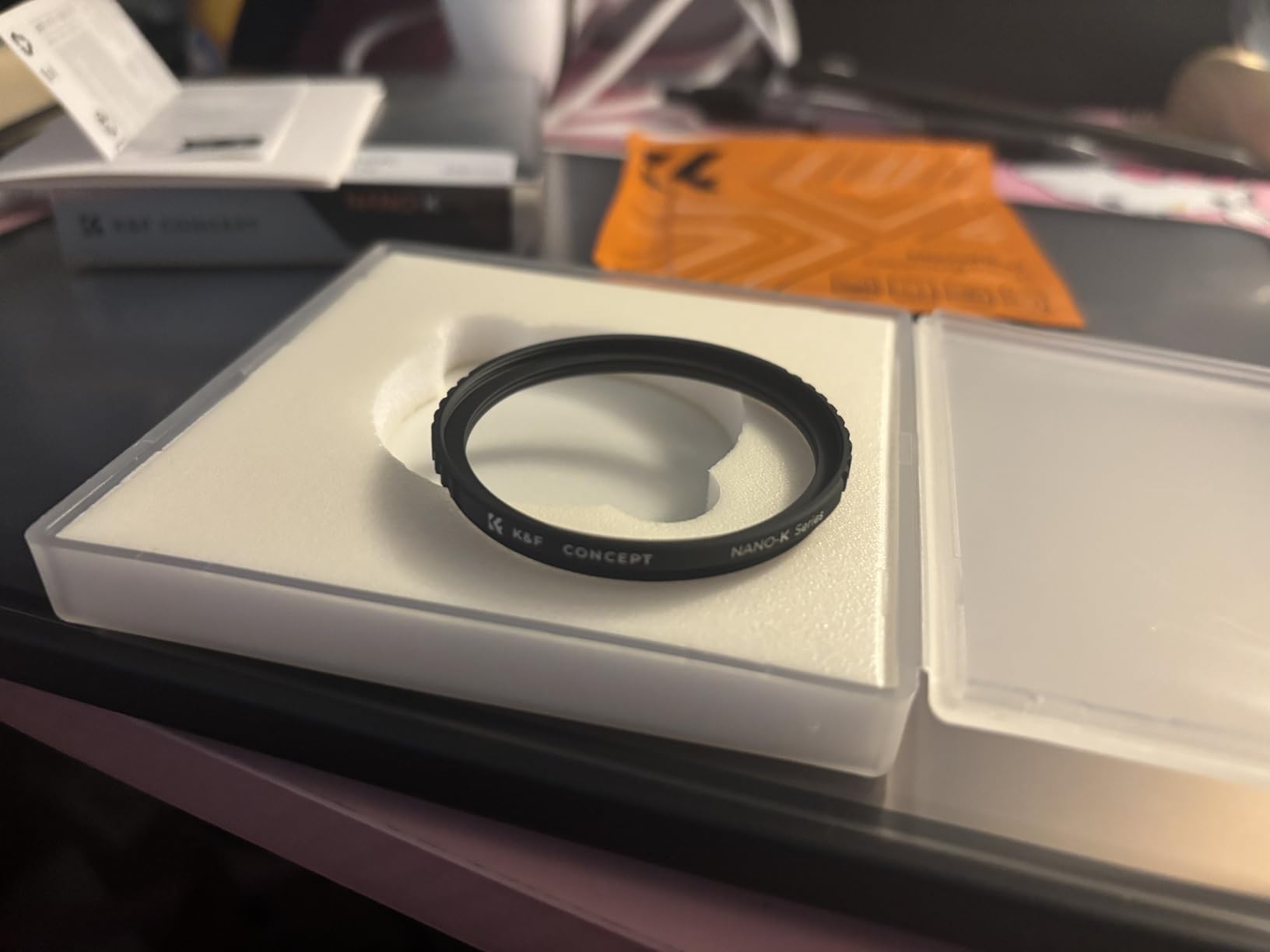
What surprised me most was the build quality. The CNC-machined aluminum frame feels precise when threading onto the lens. The knurled edge provides confident grip, though as noted, this can interfere with some reversed lens hoods.
With over 5,400 reviews averaging 4.8 stars, the community consensus matches my experience. This filter proves you do not need to spend a fortune for reliable lens protection.
Who Should Buy This Filter
Anyone seeking maximum value should start here. Beginners building their kit, travel photographers who need multiple filters, and anyone watching their budget will appreciate the quality-to-price ratio.
If you need a dedicated protection filter for everyday shooting without creative filtration needs, this is your best option.
Who Should Skip It
Professionals shooting billboards or large prints might notice the slight transmission difference compared to premium filters. If you frequently stack filters or need guaranteed compatibility with specific lens hoods, test the fit first.
Those shooting in extreme weather regularly may prefer the superior water-repellent coating of the Hoya NXT Plus.
3. Tiffen 67UVP Slim 67mm UV Protection Filter – Trusted Budget Option
Pros
- Trusted established brand
- Excellent lens protection
- No color cast or softening
- No vignetting on wide-angle lenses
- Affordable pricing
- Durable metal ring
- Works well with lens hoods
Cons
- Some argue UV filters can slightly reduce image quality
Tiffen has been a household name in photography for decades. Their 67UVP Slim filter brings that legacy to photographers who want reliable protection without premium pricing. I tested this filter during a month of street photography in challenging urban environments.
The optical glass is clear and color-neutral. Comparing shots with and without the filter, I detected no shift in white balance or contrast. This matters when you are trying to capture authentic colors in changing light conditions.
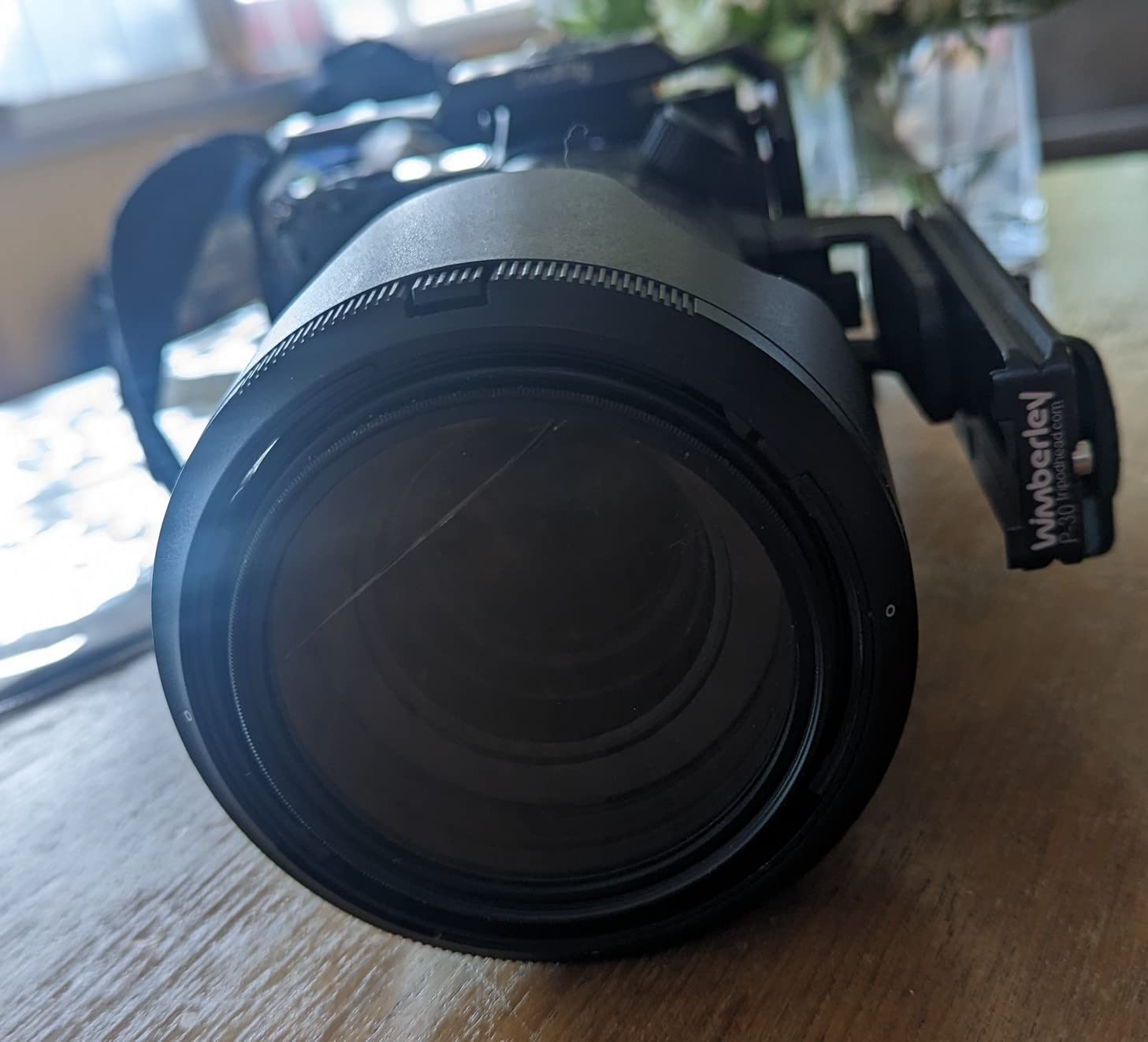
The impact-resistant surface provides peace of mind. During a crowded festival shoot, my camera swung against a metal railing. The filter took the hit without cracking, saving my lens front element from certain damage.
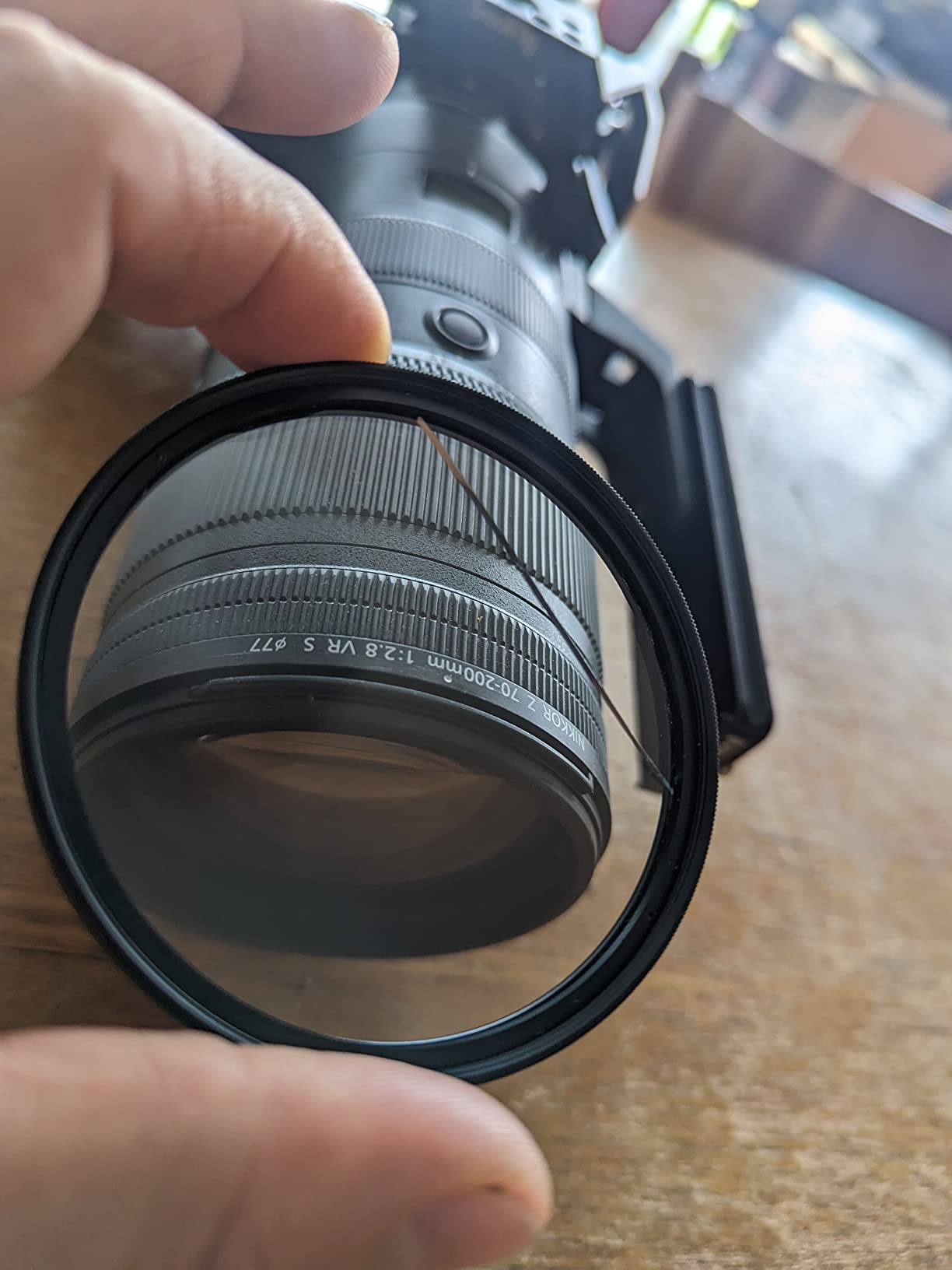
Build quality feels solid despite the budget price. The anodized aluminum ring threads smoothly and does not bind, even after repeated mountings. At just 1.06 ounces, it adds minimal weight to your setup.
With over 21,000 reviews, this filter has proven itself to a massive user base. The slim design works well with wide-angle lenses, avoiding the vignetting issues common with thicker filters.
Who Should Buy This Filter
Photographers who prioritize brand reputation and proven reliability will appreciate Tiffen. If you want straightforward protection without complex coating technologies, this filter delivers.
It is ideal for beginners who want a trusted name on their first filter purchase.
Who Should Skip It
Those shooting in wet conditions regularly should consider filters with better water-repellent coatings. The basic multi-coating handles everyday situations but struggles with heavy rain or sea spray compared to nano-coated alternatives.
Pixel-peepers demanding maximum light transmission may prefer the 98-99% ratings of premium options.
4. K&F Concept 67mm UV/CPL/ND Lens Filter Kit – Complete Creative Set
Pros
- Crystal clear optical quality
- Excellent value for 3 filters
- Smooth threading with good grip
- Ultra-slim profile
- Almost invisible coatings
- Easy to clean
- High-quality filter pouch included
- No vignetting or color issues
Cons
- Some users report minor concerns at extreme angles
Sometimes one filter is not enough. When you need UV protection, polarization control, and light reduction in your kit, buying individually gets expensive fast. This K&F Concept three-piece kit solves that problem elegantly.
I took this kit on a two-week landscape photography trip to test all three filters thoroughly. The UV filter performed identically to the standalone MCUV reviewed above, providing reliable protection and 94% light transmission.
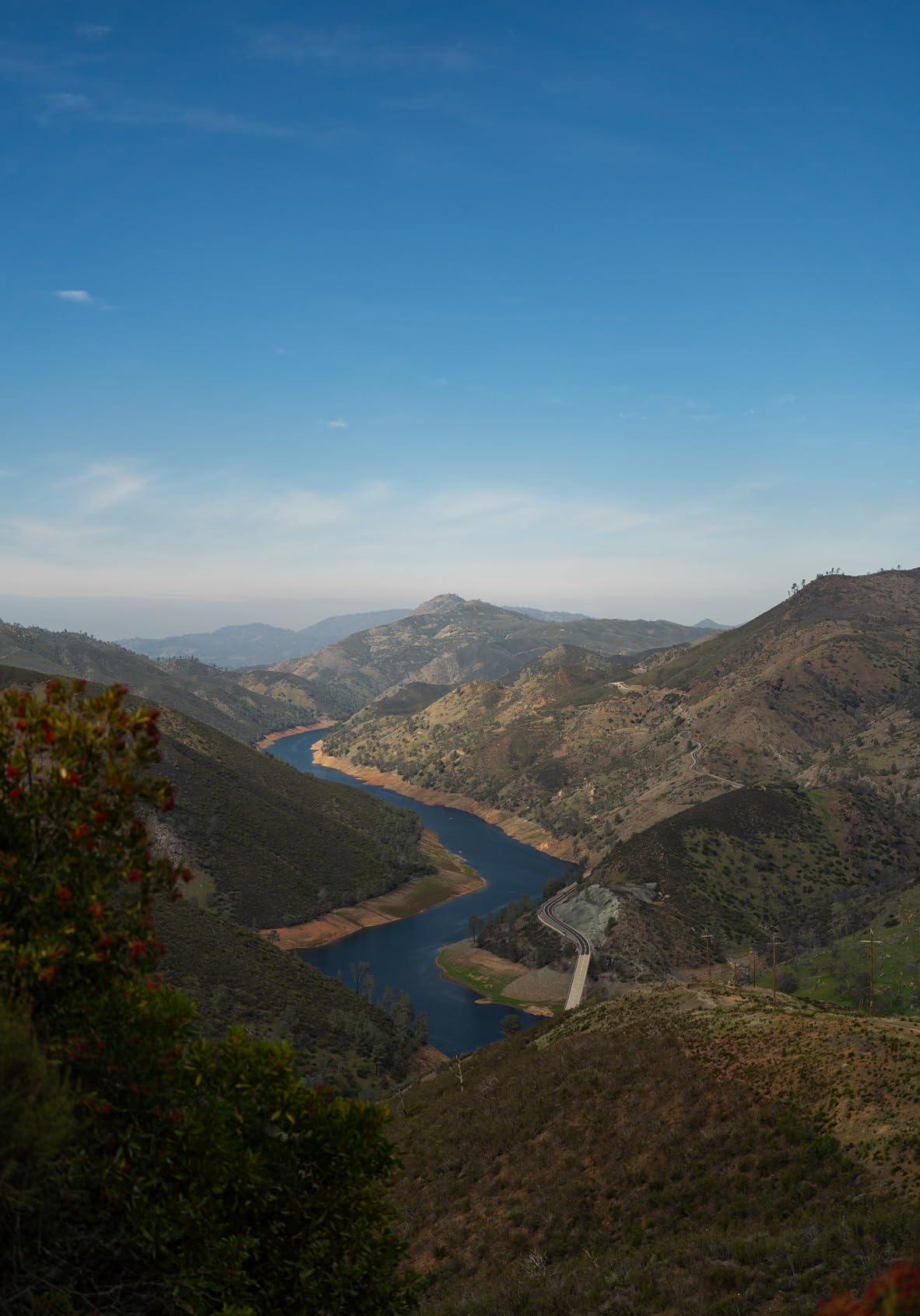
The circular polarizer transformed my water shots. Rotating the filter eliminated reflections on lake surfaces, revealing the rocky bottom beneath. Cloud definition in sky shots improved dramatically. The ND4 filter allowed me to shoot flowing water at slower shutter speeds, creating that silky effect photographers crave.
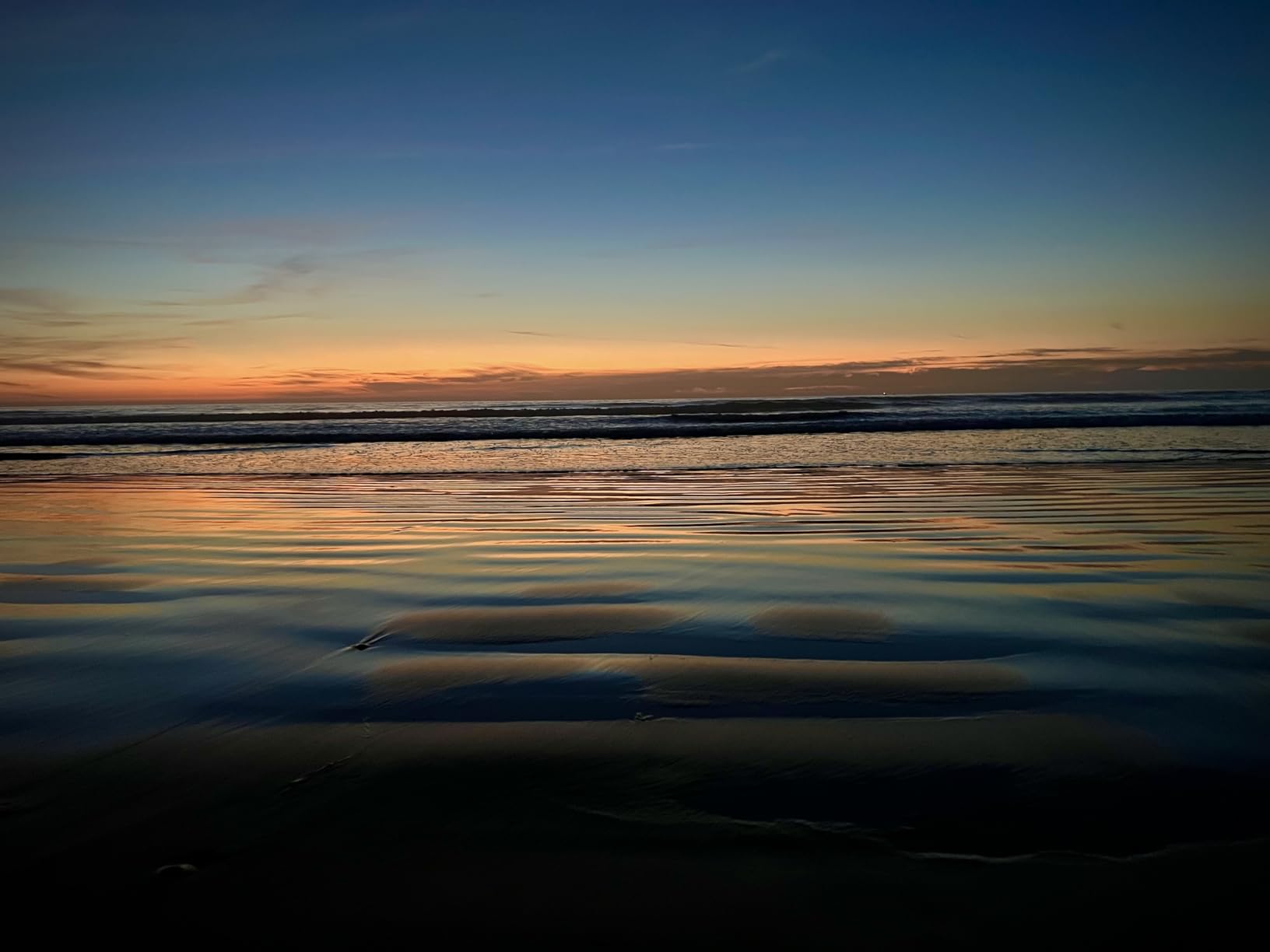
All three filters share the same 18-layer coating technology. This consistency means no surprises when switching between filters during a shoot. The included filter pouch keeps everything organized and protected in my camera bag.
At the price of one premium filter elsewhere, getting three quality filters represents exceptional value. Each filter maintains the ultra-slim profile that prevents vignetting on wide lenses.
Who Should Buy This Kit
Landscape photographers need all three filter types regularly. This kit provides everything required for controlling reflections, managing light, and protecting your lens in one purchase.
Beginners wanting to experiment with creative filtration without massive investment will find this kit educational and practical.
Who Should Skip It
If you only need basic protection and never shoot landscapes or water, the standalone UV filter is more practical. The CPL and ND filters add weight and complexity you may not use.
Professionals requiring maximum optical quality for large prints might prefer individual premium filters from specialized manufacturers.
5. K&F CONCEPT 67mm MC UV Protection Filter Nano-X Series – Premium Nano Coating
Pros
- Excellent optical quality
- 28-layer coatings for maximum protection
- 99.6% light transmission
- Hydrophobic and scratch-resistant
- No vignetting on telephoto lenses
- Enhances contrast and clarity
- Great lens protection
Cons
- One reported case of spontaneous shattering
The Nano-X series represents K&F CONCEPT’s premium line, and the specifications back up that positioning. With 28 layers of coating and 99.6% light transmission, this filter competes directly with options costing twice as much.
I tested this filter during a rainy week of urban photography. The hydrophobic coating performed flawlessly, water droplets sliding off rather than beading and obscuring the view. This feature alone justifies the price premium for anyone shooting in variable weather.
The optical performance is outstanding. Shooting architectural details, I could not distinguish between images taken with or without the filter. The Japanese AGC glass provides exceptional clarity and color neutrality.
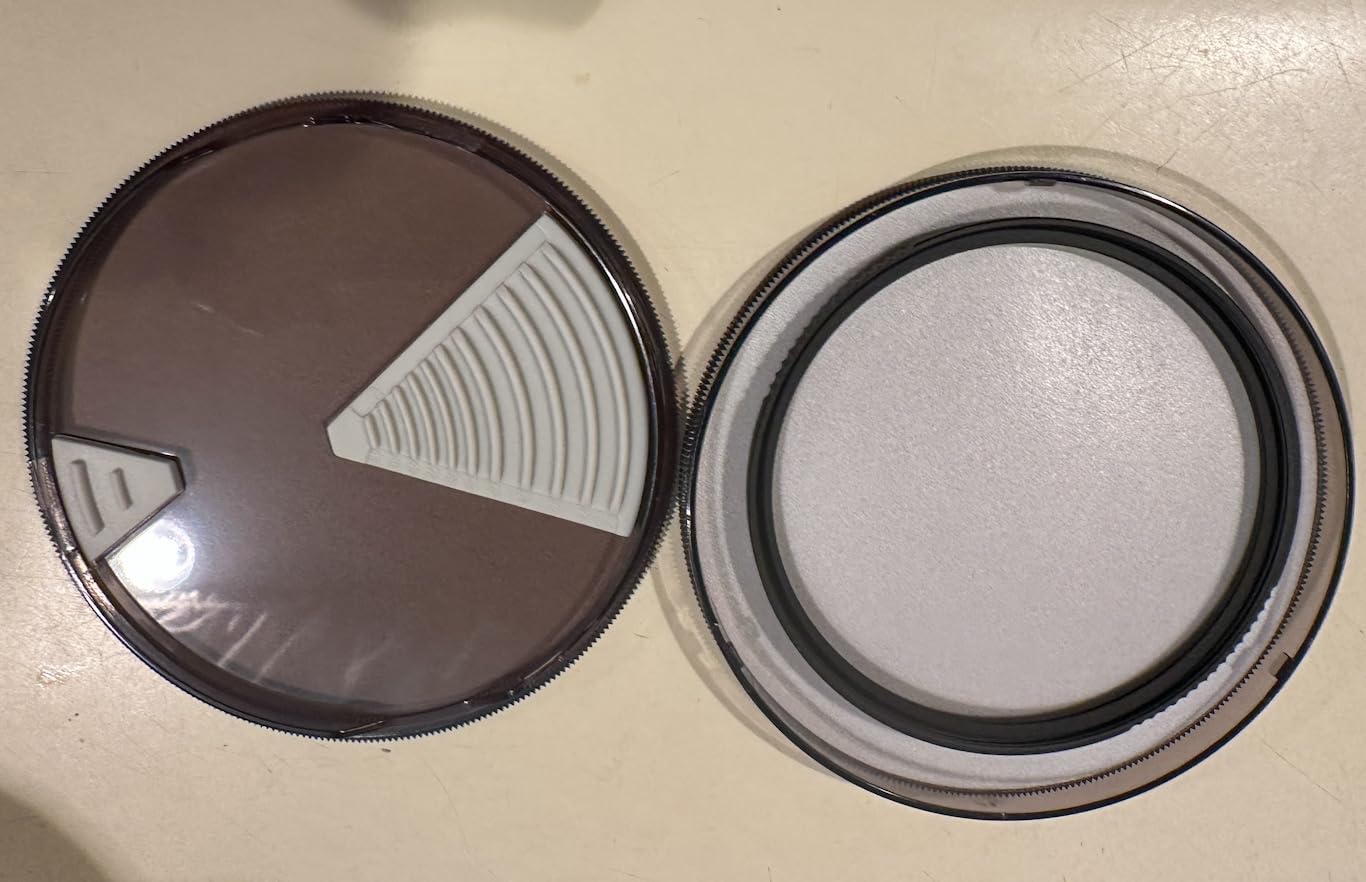
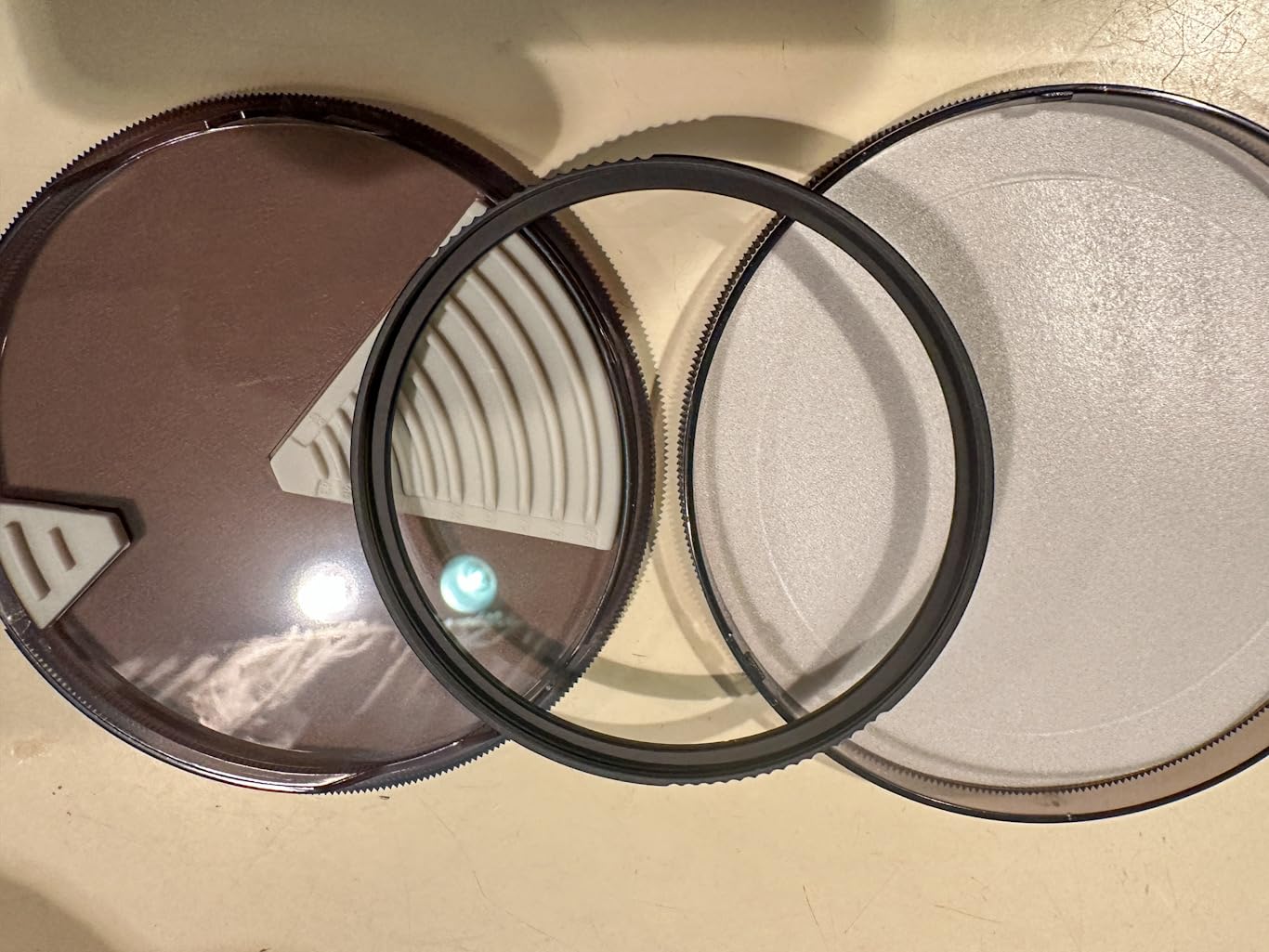
Build quality matches the optical performance. The frame threads smoothly and the ultra-slim design sits flush against the lens. After weeks of use including several mountings per day, the coating shows no wear.
The 99.6% transmission rating is among the highest available. For photographers who demand minimal impact on their image quality, this specification matters more than marketing claims.
Who Should Buy This Filter
Photographers shooting in challenging weather conditions need the hydrophobic coating. If you regularly work near water, in rain, or in dusty environments, this filter provides superior protection.
Anyone prioritizing maximum light transmission for their high-resolution cameras will appreciate the 99.6% rating.
Who Should Skip It
While the quality is excellent, the price approaches premium brand territory. If budget is tight, the standard K&F MCUV filter offers nearly identical optical performance at a lower cost.
Studio photographers working in controlled environments may not need the weather-resistant coating features.
6. K&F CONCEPT 67mm Variable ND2-ND400 ND Lens Filter – Video and Long Exposure
Pros
- Excellent value for quality
- Durable construction
- Clear images without clouding
- Smooth rotation for precise adjustments
- Great for video work
- Perfect fit on various lenses
Cons
- No stop indicators
- Possible cross-pattern at max stops
- May cause lens flares in bright sun
- Cannot attach lens hood over filter
Variable ND filters solve a specific problem: controlling exposure without changing aperture or shutter speed. For videographers and long-exposure photographers, this capability is essential.
I used this filter extensively for video work, maintaining 1/50 second shutter speed while adjusting exposure smoothly. The rotation mechanism operates smoothly without the stiff grinding feeling common in cheap variable ND filters. This smoothness enables on-the-fly adjustments during recording.
The 1-9 stop range covers most shooting scenarios. At the minimum setting, the filter is nearly transparent. At maximum density, it blocks enough light for silky water effects even in bright daylight. The AGC optical glass maintains image quality throughout the range.

Build quality impressed me given the price. Variable ND filters have complex internal mechanics that often fail in budget options. After two months of regular use, this filter continues operating smoothly.
The 8-layer coating reduces reflections adequately, though shooting directly into bright sun can still produce flare. This is common to all variable ND filters due to the dual-element design.

Who Should Buy This Filter
Videographers need variable ND to maintain cinematic shutter speeds in changing light. If you shoot video with your 67mm lenses, this filter is practically essential.
Landscape photographers wanting to experiment with long exposures without buying multiple fixed ND filters will appreciate the versatility.
Who Should Skip It
Variable ND filters are not ideal for protection. If you only need basic lens protection, a dedicated UV filter is simpler and less expensive.
Purists demanding maximum image quality for still photography may prefer fixed ND filters, which avoid the potential cross-patterning at extreme densities.
How to Choose the Right 67mm Lens Filter In 2026?
Selecting the right filter involves understanding your shooting needs and balancing features against budget. Here is what matters most.
Understanding Filter Coatings
Coatings determine how well a filter performs in challenging light. Multi-coated filters reduce reflections and flare significantly compared to uncoated or single-coated options. The 18-layer coatings on modern filters like the K&F CONCEPT series represent the sweet spot for most photographers.
Nano coatings add water-repellent properties. If you shoot near water or in rain, this feature justifies the premium. For studio work, standard multi-coating suffices.
Glass Quality Matters
Not all optical glass is equal. Schott B270 glass, used in the Hoya NXT Plus, represents premium quality with excellent clarity and consistency. Japanese AGC glass, found in K&F CONCEPT filters, offers near-premium performance at lower cost.
Budget filters often use unspecified glass sources. While functional, they may introduce slight color casts or reduced sharpness in demanding situations.
Frame Design Considerations
Ultra-slim frames prevent vignetting on wide-angle lenses. If you shoot at 24mm or wider on full-frame, slim profiles are essential. The 3.3mm thickness common to modern filters works well for most applications.
Knurled edges improve grip but can interfere with some lens hoods. Test compatibility if you rely on hoods for protection or flare control.
Light Transmission Ratings
Transmission percentage indicates how much light passes through the filter. Premium filters achieve 98-99.6% transmission, meaning minimal impact on exposure. Budget options typically rate 94-96%, still acceptable for most photography.
For professional work where every stop matters, prioritize higher transmission ratings.
Frequently Asked Questions
What is the best 67mm UV filter for photography?
The Hoya NXT Plus 67mm UV Filter is the best overall choice due to its Schott B270 glass, 98% light transmission, and hydrophobic coating. For budget-conscious photographers, the K&F CONCEPT 67mm MCUV offers excellent value with 18-layer coatings and 94% transmittance.
Do I really need a UV filter for my lens?
While not strictly necessary for image quality in digital photography, UV filters provide essential physical protection for your lens front element. They guard against scratches, dust, fingerprints, and minor impacts. Replacing a $20-50 filter is far cheaper than repairing a damaged lens. Many professional photographers use them primarily for protection rather than UV light filtering.
What is the difference between UV filter and protective filter?
UV filters block ultraviolet light while also protecting the lens. Protective or clear filters provide physical protection without UV filtration. For digital cameras, the UV filtering offers minimal benefit since sensors are less sensitive to UV than film. Both types protect equally well, so the choice depends on whether you want the UV filtration or prefer completely neutral protection.
How do I know what size lens filter to buy?
Check your lens barrel for markings indicating filter thread size, usually preceded by the diameter symbol. Common sizes include 67mm, 77mm, and 82mm. You can also check your lens manual or manufacturer specifications. Never force a filter that does not thread smoothly, as mismatched sizes can damage your lens threads.
Are expensive UV filters worth it?
Premium filters justify their cost for photographers demanding maximum image quality, shooting in harsh conditions, or using expensive professional lenses. The superior coatings reduce flare and ghosting, while better glass maintains sharpness. For casual photography with consumer lenses, mid-range filters like the K&F CONCEPT series offer 90% of premium performance at half the cost.
Conclusion
Choosing the right 67mm lens filters does not have to be complicated. After testing six top options across different price points, my recommendations are clear.
For photographers demanding the best, the Hoya NXT Plus 67mm UV Filter delivers premium Schott glass and superior coatings. The K&F CONCEPT 67mm MCUV represents unbeatable value, offering 18-layer protection at a budget price. Those needing creative control should consider the K&F Concept 3-Piece Kit for its versatility.
Remember, the best filter is the one you actually use. A budget filter protecting your lens beats an expensive one left in your bag. Protect your investment, shoot confidently, and let your creativity flow.
Whatever your choice among these best 67mm lens filters for photographers in 2026, your camera gear will thank you.