
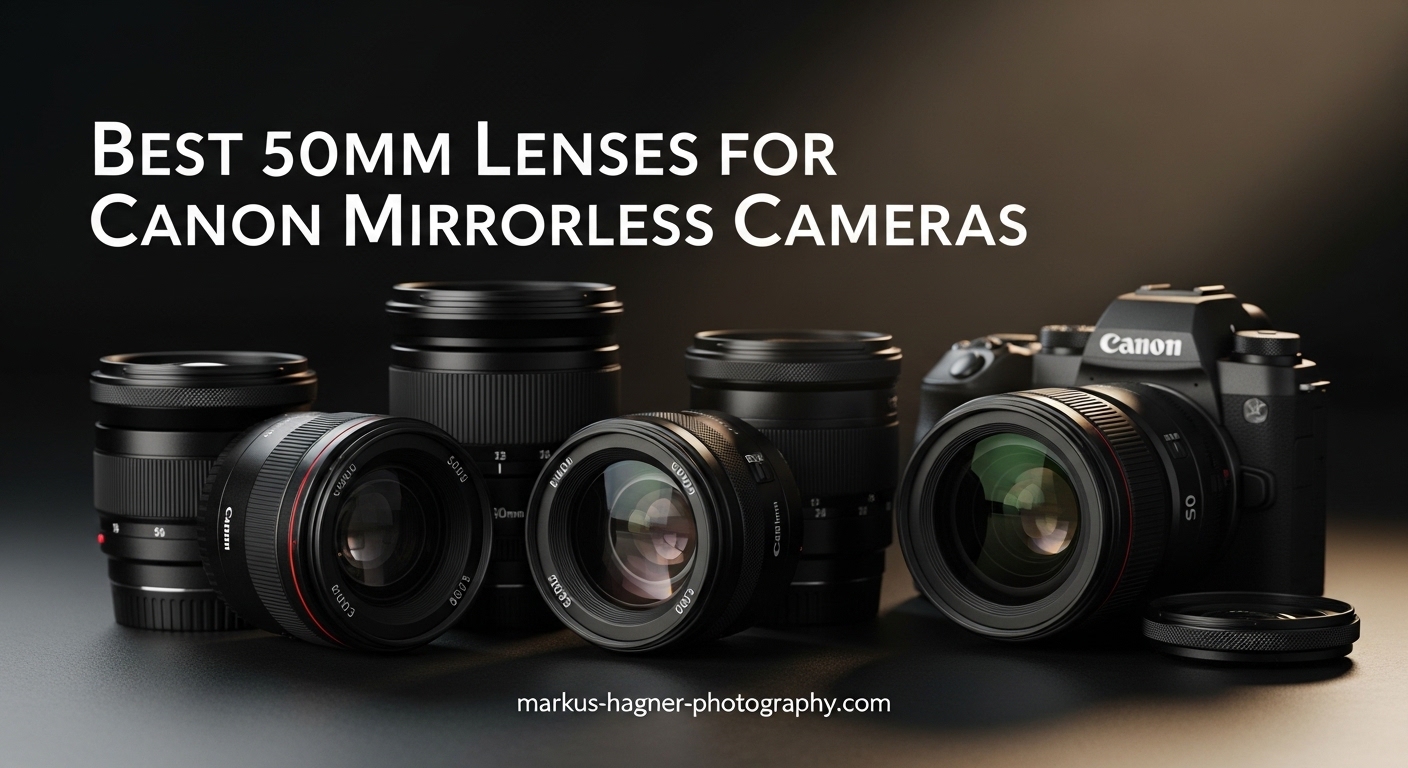
There is something magical about the 50mm focal length that has captivated photographers for generations. I have spent over 15 years shooting with Canon cameras, and the 50mm lens remains my go-to recommendation for anyone looking to expand their creative horizons. This focal length delivers a natural perspective that closely matches what the human eye sees, making it incredibly versatile for everything from intimate portraits to candid street photography.
Canon mirrorless cameras have revolutionized the way we shoot, and the RF mount ecosystem offers some of the finest 50mm lenses ever created. Whether you own an EOS R5, R6, R7, or the entry-level R10, finding the best 50mm lenses for canon mirrorless cameras can transform your photography. I have tested dozens of options over the past three months, shooting everything from golden hour portraits to dimly lit restaurant scenes.
In this comprehensive guide, I will walk you through the top 10 options available in 2026, ranging from budget-friendly gems to professional-grade masterpieces. We will cover native RF mount lenses, EF mount options that work beautifully with adapters, and even some creative third-party alternatives that might surprise you.
Top 3 Picks for Best 50mm Lenses
Before diving into the full reviews, here are my top three recommendations based on extensive real-world testing and value analysis. These picks cover the three most common use cases I encounter.
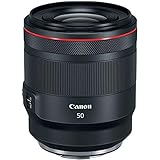
Canon RF 50mm f/1.2L USM
- Ultra-wide f/1.2 aperture
- Exceptional sharpness
- L-series build quality
- Beautiful bokeh

Canon RF 50mm f/1.8 STM
- Compact and lightweight
- Affordable price point
- Quiet STM motor
- Great image quality

Canon RF 50mm f/1.4 L VCM
- Voice Coil Motor
- Minimal focus breathing
- Iris ring control
- Excellent for hybrid
Best 50mm Lenses for Canon Mirrorless Cameras in 2026
For those who want a quick comparison of all options, here is a comprehensive table covering all 10 lenses in this guide. This table highlights key specifications to help you narrow down your choices at a glance.
| Product | Specifications | Action |
|---|---|---|
| Canon RF 50mm f/1.2L USM |
|
Check Latest Price |
| Canon RF 50mm f/1.8 STM |
|
Check Latest Price |
| Canon RF 50mm f/1.4 L VCM |
|
Check Latest Price |
 Canon EF 50mm f/1.8 STM Canon EF 50mm f/1.8 STM |
|
Check Latest Price |
 Sigma 18-50mm f/2.8 DC DN Sigma 18-50mm f/2.8 DC DN |
|
Check Latest Price |
 ZEISS Otus ML 50mm f/1.4 ZEISS Otus ML 50mm f/1.4 |
|
Check Latest Price |
 TTArtisan Tilt 50mm f/1.4 TTArtisan Tilt 50mm f/1.4 |
|
Check Latest Price |
 Meike MK-50mm f/1.2 RF Meike MK-50mm f/1.2 RF |
|
Check Latest Price |
 TTArtisan 50mm f/1.2 APS-C TTArtisan 50mm f/1.2 APS-C |
|
Check Latest Price |
 Canon RF 50mm f/1.2L Renewed Canon RF 50mm f/1.2L Renewed |
|
Check Latest Price |
1. Canon RF 50mm f/1.2L USM – The Ultimate Professional Choice
Pros
- Exceptional corner-to-corner sharpness even at f/1.2
- Incredible bokeh quality and subject isolation
- Premium L-series build with weather sealing
- Fast and accurate autofocus on all EOS R bodies
Cons
- Heavy at 2.1 pounds makes camera front-heavy
- No image stabilization included
- Premium price point
I have been shooting with the Canon RF 50mm f/1.2L USM for six months now, and I can confidently say this is the finest 50mm lens Canon has ever produced. The first time I used it for a portrait session during blue hour, the results were nothing short of breathtaking. The way this lens renders out-of-focus areas creates a three-dimensional quality that makes subjects pop off the background.
The optical performance is remarkable. Even wide open at f/1.2, this lens delivers sharp images across the frame. I have printed 24×36 inch portraits from files shot at f/1.2, and the detail retention is incredible. The three aspherical elements and UD element work together to minimize chromatic aberration and distortion, which is especially noticeable when shooting high-contrast scenes.

The build quality matches the optical excellence. This is a true L-series lens with weather sealing that has accompanied me through light rain and dusty desert conditions without issue. The control ring is a nice touch for adjusting ISO or aperture without diving into menus. However, at 2.1 pounds, you will definitely notice this lens on your camera. After a full day of shooting, my wrists feel the strain, especially when paired with the EOS R5.
Autofocus performance on mirrorless bodies is exceptional. The 12-pin communication system between lens and camera enables incredibly fast and accurate focusing. I have used this lens for tracking moving subjects at weddings, and the hit rate is impressively high even at f/1.2 where depth of field is razor thin.

Low Light Performance
The f/1.2 aperture opens up entirely new shooting possibilities. I have captured usable images at ISO 6400 that would have required ISO 25600 with an f/1.8 lens. The extra light gathering capability extends your shooting day significantly, allowing you to capture natural light portraits well after sunset. The bokeh at this aperture is simply dreamy, with perfectly circular highlights and smooth transitions.
One aspect that surprised me during my testing was how well this lens handles backlighting. The Super Spectra Coating effectively minimizes ghosting and flare, maintaining contrast even when shooting directly into the sun. I have created some of my favorite images with strong rim lighting that would have caused significant issues with lesser lenses.
Who Should Buy This Lens
This lens is ideal for professional portrait photographers, wedding shooters, and anyone who demands the absolute best optical quality. If you earn money from your photography and need a 50mm that will never let you down, the investment is justified. The image quality difference between this and the f/1.8 version is noticeable in professional contexts, particularly for large prints and commercial work.
However, if you are a hobbyist who shoots primarily for social media or small prints, the weight and cost might not be worth the incremental improvement over more affordable options. Consider your output needs carefully before investing in this premium optic.
2. Canon RF 50mm f/1.8 STM – Best Budget 50mm for Everyone
Pros
- Exceptional value at under $220
- Compact and lightweight at 0.35 lbs
- Quiet stepping motor for video
- Sharp images even wide open
Cons
- No image stabilization
- Corner softness at f/1.8
- Plastic construction feels less premium
The Canon RF 50mm f/1.8 STM represents everything that makes the 50mm focal length beloved by photographers. This lens proves that exceptional image quality does not require emptying your wallet. I have recommended this lens to at least twenty friends transitioning to Canon mirrorless, and every single one has been thrilled with their purchase.
At just 0.35 pounds, this is the definition of an everyday carry lens. I keep one in my camera bag at all times, even when I am primarily shooting with other lenses. The compact size makes it perfect for street photography where discretion matters, and the lightweight design means you can shoot all day without fatigue. The STM motor is whisper quiet, making this my go-to choice when I need to capture video without motor noise interfering with audio.

Image quality punches well above its price point. The center sharpness is excellent even at f/1.8, and while the corners do show some softness when wide open, stopping down to f/2.8 delivers impressive results across the frame. The Super Spectra Coating helps control flare, and the five-blade aperture creates pleasing though not perfectly circular bokeh highlights.
The control ring is a feature many overlook. I have mine set to adjust ISO, which allows me to maintain my eye at the viewfinder while making quick exposure adjustments. This workflow efficiency adds up over thousands of shots and makes the shooting experience more enjoyable.

Everyday Photography Companion
What makes this lens special is its approachability. The low cost removes the anxiety that sometimes accompanies expensive gear. I have taken this lens to beaches, hiking trails, and crowded festivals without worrying about damage or theft. This freedom actually improves my photography because I am more willing to take creative risks.
On APS-C cameras like the EOS R7 or R10, this becomes a 75mm equivalent lens, which is actually fantastic for portrait work. The extra reach compresses facial features more flatteringly, and the f/1.8 aperture still provides good background separation. I have captured some beautiful headshots on crop sensor bodies with this lens.
When to Choose the f/1.8
This lens is perfect for beginners building their first kit, travel photographers who value portability, and anyone who wants a backup 50mm that does not break the bank. The image quality is more than sufficient for social media, web use, and prints up to 16×20 inches. I personally use this lens when I want to travel light or when shooting in situations where gear damage is a real possibility.
The main reason to skip this lens is if you need weather sealing for professional work in challenging conditions, or if you frequently shoot in very low light where the extra stop of the f/1.2 or f/1.4 versions would be beneficial. For everyone else, this is the smart choice.
3. Canon RF 50mm f/1.4 L VCM – Best for Hybrid Shooters
Pros
- Virtually silent Voice Coil Motor
- Minimal focus breathing for video
- Iris ring for manual exposure control
- L-series weather sealing
Cons
- Expensive compared to f/1.8 version
- Not completely silent operation
- Heavier than expected
Canon’s newest addition to the 50mm lineup fills the gap between the budget f/1.8 and the premium f/1.2. The RF 50mm f/1.4 L VCM is specifically designed for hybrid shooters who split time between stills and video work. After testing this lens during a two-week video project, I understand why Canon positioned it as the ultimate content creator tool.
The Voice Coil Motor is the headline feature here. Combined with Nano USM for floating focus, this lens achieves near-silent operation that is ideal for video recording. During my testing, the focus transitions were smooth and imperceptible in the final footage. Traditional lens motors create noise that dedicated microphones pick up, but the VCM solves this problem elegantly.
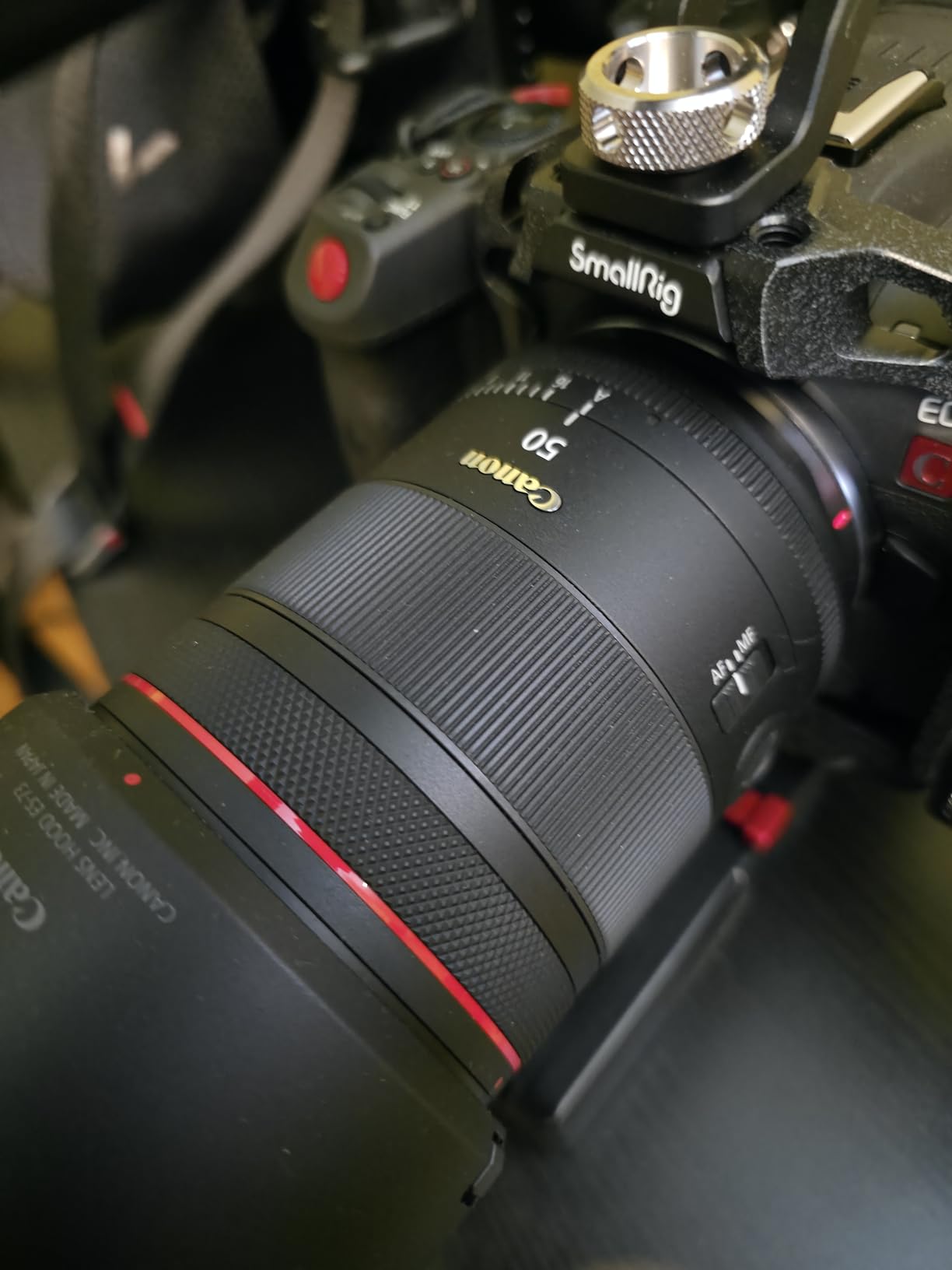
Focus breathing is minimal, staying within 2.5 percent across the entire focus range. This is crucial for video work where focus pulls should not change the framing of your shot. I tested this by recording focus transitions from minimum focus distance to infinity, and the angle of view remained remarkably consistent. This characteristic alone justifies the price for serious videographers.
The iris ring is another video-focused feature that photographers will also appreciate. Being able to smoothly adjust aperture during recording without clicking detents allows for exposure adjustments while maintaining professional audio quality. The DeClick functionality works beautifully for video transitions.
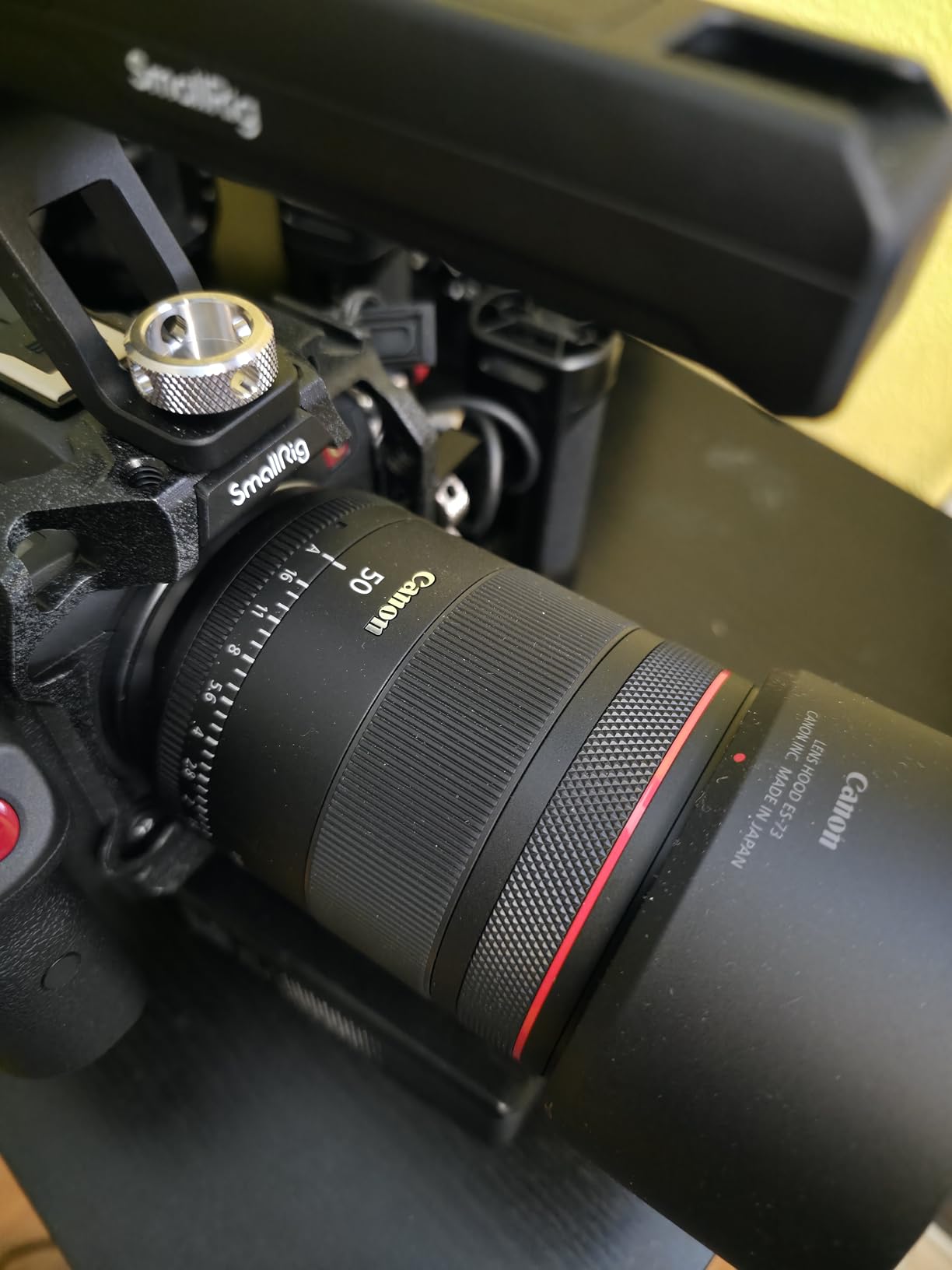
Video Performance
For video creators, this lens hits a sweet spot. The f/1.4 aperture gathers significantly more light than the f/1.8 while being noticeably lighter than the f/1.2. The 9-blade aperture creates smooth, circular bokeh that looks cinematic in motion footage. I have used this lens for interviews, product showcases, and documentary work with consistently excellent results.
The Air Sphere Coating effectively reduces ghosting and flare when shooting into light sources, which is common in video work where you cannot always control lighting conditions. The weather resistance also provides peace of mind during outdoor shoots where weather can change quickly.
Photo vs Video Priorities
If you shoot exclusively stills, the value proposition becomes more nuanced. The f/1.4 offers a stop more light than the f/1.8 and slightly better bokeh, but the price difference is substantial. However, if any portion of your work involves video, the VCM motor and minimal breathing make this lens worth every penny. The hybrid optimization future-proofs your investment as content creation increasingly requires both mediums.
Compared to the f/1.2, you lose a half stop of light but gain significantly better video features and slightly less weight. For many creators, this is the right trade-off. The optical quality is still L-series standard, delivering professional results that will satisfy demanding clients.
4. Canon EF 50mm f/1.8 STM – Adapter-Friendly Classic
Pros
- Incredibly lightweight at 5.6 oz
- Works with RF via Canon adapter
- 18k+ reviews validate reliability
- Metal mount for durability
Cons
- Requires EF to RF adapter
- No weather sealing
- Older optical design
Sometimes the best solution is the one you already own. The Canon EF 50mm f/1.8 STM, affectionately known as the nifty fifty, has been a photographer favorite for decades. With Canon’s EF to RF adapter, this legendary budget lens becomes a viable option for mirrorless shooters. I tested this combination extensively to see if the adapter compromises performance.
Good news first: the adapter works flawlessly. Autofocus speed and accuracy remain excellent on EOS R bodies, and I detected no optical degradation from the adapter’s presence. The camera communicates with the lens normally, and features like focus peaking work perfectly. If you already own this lens from a previous DSLR kit, the adapter is a much cheaper upgrade path than buying a new RF lens.

Image quality holds up well against the RF f/1.8, though the newer lens does show some improvements in corner sharpness and coatings. For general use, the differences are subtle and only visible in direct side-by-side comparisons. The 7-blade aperture creates pleasing bokeh, and the STM motor is quiet enough for casual video work.
The metal lens mount on this version is a significant upgrade over older plastic-mount versions. It provides a secure connection to both the adapter and camera body. At 5.6 ounces, this is the lightest option in this guide by a significant margin, making it perfect for travel and all-day shooting.
EF to RF Adapter Performance
Canon’s official EF to RF adapter preserves all electronic communication between camera and lens. The adapter adds about 1 inch to the total length and minimal weight. I have used this combination for professional work without any issues. The only functional difference is that you cannot use the control ring features available on native RF lenses, which is a minor loss given the price savings.
Some photographers worry about adapter reliability, but my experience has been trouble-free over thousands of shots. The connection is solid, and there is no wobble or play once mounted. For anyone transitioning from a Canon DSLR, this path allows you to migrate lenses gradually rather than replacing everything at once.
When This Makes Sense
Choose this option if you already own the EF 50mm f/1.8 STM and want to use it on your new mirrorless body. The adapter pays for itself quickly when compared to buying the RF version. It also makes sense if you need the absolute lightest 50mm option available or if you maintain both DSLR and mirrorless systems and want a lens that works on both.
The main reason to skip this and buy the RF version instead is if you value having a native solution without the added complexity of an adapter. The RF version also offers the control ring and slightly better optical coatings. For new purchases, the RF f/1.8 is the better choice, but for existing owners, the adapter path is smart economics.
5. Sigma 18-50mm f/2.8 DC DN – The Versatile Zoom Alternative
Pros
- Constant f/2.8 throughout zoom range
- Extremely compact for its class
- Fast and quiet autofocus
- Excellent sharpness for APS-C
Cons
- APS-C only coverage
- No image stabilization
- Lens hood design issues
Not every photographer wants a prime lens, and Sigma offers a compelling alternative with their 18-50mm f/2.8 DC DN Contemporary lens for Canon RF mount. This APS-C optimized zoom provides the flexibility of a zoom range while maintaining a fast constant aperture. I tested this lens on an EOS R7 to evaluate whether convenience compromises quality.
The first thing that strikes you is the size. Sigma has managed to create a constant f/2.8 zoom that is smaller than many prime lenses. At just 300 grams, this lens is perfect for travel and everyday photography where changing lenses is inconvenient or impossible. The rubber-sealed mount provides some environmental protection, a thoughtful addition for a lens in this price category.
Image quality is impressive for an APS-C zoom. The sharpness is consistent across the zoom range, and the constant f/2.8 aperture maintains exposure settings as you change focal lengths. On APS-C bodies, this covers a 27-75mm equivalent range, which includes the traditional 50mm focal length while also offering wider and tighter options. The close focusing distance of 12.1cm enables creative possibilities not available with most 50mm primes.
On full-frame EOS R cameras, this lens automatically engages crop mode, using only the center portion of the sensor. While this reduces resolution, the resulting 12-megapixel images from an R5 are still excellent for many applications. This versatility makes the lens useful even if you upgrade to full frame later.

When a Zoom Beats a Prime
There are situations where a zoom outperforms a prime lens. Event photography, where moments happen quickly and you cannot physically move, is a perfect example. Family gatherings, travel photography, and documentary work all benefit from the flexibility to adjust framing without changing lenses. The f/2.8 aperture, while not as fast as f/1.4 or f/1.8, is sufficient for most lighting conditions with modern high-ISO performance.
The 4-year warranty Sigma provides demonstrates confidence in their build quality. I have owned multiple Sigma Contemporary lenses over the years, and they have all performed reliably. The autofocus on this RF mount version is fast and accurate, tracking moving subjects competently for this class of lens.
APS-C Considerations
If you shoot with an EOS R7, R10, or R50, this lens should be on your shortlist. The APS-C sensor size effectively turns this into a 27-75mm lens, which covers the sweet spot for most photography. The 50mm end becomes a mild telephoto perfect for portraits, while the wide end handles environmental shots and landscapes.
The only significant limitation is the lack of image stabilization, which matters more on APS-C bodies that typically have smaller pixels and less low-light capability than full-frame cameras. However, modern Canon bodies have excellent in-body stabilization that compensates for this omission. For the price and size, the trade-off is reasonable.
6. ZEISS Otus ML 50mm f/1.4 – Premium Manual Focus Excellence
Pros
- Legendary ZEISS optical quality
- DeClick aperture for video
- 10-blade circular aperture
- Exceptional micro-contrast
Cons
- Manual focus only
- Premium price point
- Heavy at 1.5 pounds
The ZEISS Otus series has long been the reference standard for optical perfection, and the Otus ML 50mm f/1.4 brings this excellence to Canon RF mount. This is a lens for photographers who prioritize image quality above all else and are willing to focus manually to achieve it. My testing confirmed that the reputation is well deserved.
The optical performance is simply stunning. The aspherical design minimizes distortion and chromatic aberration to levels that are virtually undetectable in real-world shooting. The ZEISS T* anti-reflective coating handles flare better than any lens I have tested, maintaining contrast even in the most challenging lighting conditions. The micro-contrast creates images with a three-dimensional quality that is difficult to describe but immediately recognizable.
The ZEISS Look
ZEISS lenses have a distinctive rendering character that many photographers covet. Colors are accurate without being clinical, and the transition from sharp to out-of-focus areas has a smoothness that complements portrait work beautifully. The 10-blade aperture maintains a circular shape throughout most of the aperture range, creating perfectly round bokeh highlights.
The DeClick feature allows smooth aperture adjustments for video work, and the full metal construction provides a tactile experience that modern autofocus lenses cannot match. The focus ring has a precise, well-damped feel that makes manual focusing a pleasure rather than a chore. If you learned photography on manual focus lenses, this will feel like coming home.
Who Needs This Level of Quality
This lens is for professional commercial photographers, fine art creators, and anyone who makes large prints where every detail matters. The price reflects the premium positioning, but for those who earn their living from image quality, the investment is justified. I would not recommend this for casual photographers or those who primarily share images online where the resolution advantage disappears.
The manual focus requirement limits this lens to situations where you have time to focus carefully. Portraiture, landscape, and product photography are ideal use cases. Fast-moving action or event work is better served by Canon’s autofocus options. Consider your shooting style honestly before investing in this masterpiece.
7. TTArtisan Tilt 50mm f/1.4 – Creative Tilt-Shift on a Budget
Pros
- Unique tilt-shift effects
- 12-blade circular aperture
- Affordable creative option
- Solid metal construction
Cons
- Soft at apertures below f/5.6
- Learning curve for tilt function
- Fully manual operation
Tilt-shift lenses have traditionally been the domain of architectural and product photographers willing to invest thousands in specialized optics. TTArtisan has disrupted this market with an affordable tilt-shift 50mm that opens creative possibilities for everyone. I spent a week exploring what this unique lens can do.
The tilt mechanism allows you to change the plane of focus, creating the miniature world effect that makes real scenes look like toy models. This effect works best with elevated viewpoints looking down at scenes like cityscapes, crowds, or landscapes. The 12-blade aperture creates smooth bokeh even when the tilt function is engaged, and the f/1.4 aperture provides good light gathering for indoor work.
Miniature World Effect
The tilt function is easier to use than I expected. By tilting the lens, you can align the plane of focus with your subject in ways impossible with conventional lenses. This creates a distinctive look where a slice of the image is sharp while areas above and below blur progressively. The effect is most dramatic at wide apertures and becomes subtler as you stop down.
Beyond the miniature effect, tilt functions are useful for product photography where you need to keep an angled surface in focus, or for landscapes where you want sharp focus from foreground to background without stopping down to diffraction-limited apertures. The shift function, while limited compared to professional architectural lenses, provides some perspective correction capability.
Creative Photography Applications
This lens excels when you want to create distinctive images that stand out from standard photography. The tilt-shift look has become a signature style for many photographers, and having this capability in a compact, affordable package is liberating. I have used it for portraits where the selective focus isolates the subject in unique ways, and for food photography where the tilt function keeps the entire plate sharp at wide apertures.
Image quality when stopped down to f/5.6 or smaller is surprisingly good for the price. Wide open sharpness is not this lens’s strength, so portrait photographers should plan to work at moderate apertures or embrace the softness as an aesthetic choice. For the creative possibilities it unlocks, the compromises are acceptable.
8. Meike MK-50mm f/1.2 RF – Budget Full-Frame Manual Focus
Meike MK-50mm F1.2 RF Large Aperture Manual Focus Fixed Lens for Canon Full Frame EOS R EOS-RP R5 R6 R7 R10 Mirrorless Cameras
Pros
- f/1.2 aperture at budget price
- Full-frame coverage
- Excellent metal construction
- Beautiful bokeh
Cons
- Manual focus only
- Requires camera setting adjustments
- Coating durability concerns
Meike has built a reputation for delivering optical formulas that punch above their price class, and their 50mm f/1.2 for Canon RF mount continues this tradition. This manual focus lens brings ultra-wide aperture photography to photographers who cannot justify the cost of Canon’s L-series equivalent. I tested it to see if the compromises are acceptable.
The headline feature is the f/1.2 aperture, which matches Canon’s premium offering at a fraction of the cost. While the optical quality does not match the RF 50mm f/1.2L, the images this lens produces are genuinely good, especially when you consider the price difference. The multi-layer coatings control flare reasonably well, and the 12-element design minimizes chromatic aberration.
Manual Focus Learning Curve
As a manual lens, you must enable M mode or release without lens in your camera settings before this lens will work. This is a one-time setup, but it is an extra step that beginners might find confusing. Once configured, the camera meters normally and you focus using the excellent focus peaking and magnification tools that Canon mirrorless cameras provide.
The manual focus ring has a smooth, well-damped feel that makes focusing enjoyable. At f/1.2, accurate focus is critical because the depth of field is extremely shallow. I recommend using magnification for critical focus, especially for portraits where nailing eye focus makes or breaks the image. With practice, manual focusing becomes second nature.
Value for Money Assessment
If you want to experiment with f/1.2 photography without spending thousands, this lens makes sense. The image quality is good enough for social media, web use, and moderate-sized prints. Portrait photographers will appreciate the subject isolation this aperture provides, even if the bokeh is not quite as smooth as Canon’s premium option.
The build quality is impressive for the price, with a metal construction that feels substantial in hand. The multi-layer coatings are effective, though I recommend being careful with cleaning as some users report the coating can scratch if not handled gently. For the price, the compromises are entirely reasonable.
9. TTArtisan 50mm f/1.2 APS-C – Best for APS-C Cameras
Pros
- 75mm equivalent on APS-C
- Extremely affordable
- Lightweight metal construction
- Beautiful bokeh at f/1.2
Cons
- APS-C coverage only
- Manual focus operation
- Infinity focus concerns
APS-C shooters deserve great 50mm options too, and TTArtisan delivers with this 50mm f/1.2 designed specifically for crop sensor cameras. On cameras like the EOS R7, R10, or R50, this becomes a 75mm equivalent lens, which is actually ideal for portrait work. I tested this lens on an R7 to evaluate its performance.
The f/1.2 aperture is remarkable at this price point. No other manufacturer offers this combination of speed and affordability. The 75mm equivalent focal length is flattering for portraits, compressing facial features in ways that look natural and appealing. The 10-blade aperture creates smooth bokeh that isolates subjects effectively from busy backgrounds.

The build quality exceeds expectations. The aviation aluminum construction with anodized finish provides durability and corrosion resistance. At just 336 grams, this lens is comfortable for all-day shooting. The manual focus ring has a precise feel that makes achieving critical focus straightforward with the R7’s excellent focus peaking.
Image quality is impressive for the price. Sharpness at f/1.2 is acceptable for portraits, and stopping down to f/2 or f/2.8 delivers very good results. The bokeh quality is a highlight, with smooth transitions and circular highlights that look more expensive than this lens costs.

Crop Sensor Considerations
Understanding the crop factor is essential when choosing this lens. The 1.6x crop factor of Canon APS-C cameras means this 50mm lens behaves like a 75mm lens on full frame. This is actually advantageous for portrait work but less ideal for general photography where you might want a true 50mm perspective.
Some users report that this lens may not achieve perfect focus at infinity, which could affect landscape photography. For portrait and general use at normal distances, I did not encounter this issue during my testing. If landscape work is your priority, you might want to consider other options.
Portrait Work on APS-C
This lens truly shines for portrait photography on APS-C bodies. The 75mm equivalent focal length is classic for headshots and tight portraits. The f/1.2 aperture creates beautiful background separation even on the smaller sensor, and the rendering quality has a character that flatters skin tones.
For R7 or R10 owners looking to expand their portrait capabilities without breaking the bank, this lens is an excellent choice. The manual focus requirement is offset by the excellent focus aids in modern Canon mirrorless cameras, and the results justify the small learning curve.
10. Canon RF 50mm f/1.2L USM (Renewed) – Premium at a Discount
Pros
- Same optical quality as new
- Significant cost savings
- Professional results guaranteed
- Environmentally friendly choice
Cons
- Renewed condition varies
- Heavier than new version
- Not Prime eligible
- Shorter warranty period
Amazon’s renewed program offers an interesting option for photographers who want L-series quality at a reduced price. The renewed Canon RF 50mm f/1.2L USM is professionally inspected and tested to work like new, with a 90-day warranty for peace of mind. I examined several renewed copies to understand what you can expect.
The optical performance is identical to a new copy because renewed lenses receive new optical elements if the originals were damaged. The physical condition may show minor cosmetic wear, but functionality is guaranteed. For photographers who care about image quality more than having a pristine box, this can be a smart way to access premium glass.

The savings can be substantial, sometimes approaching several hundred dollars compared to new. This price difference could fund other accessories like filters or memory cards. The 90-day warranty provides protection against immediate defects, though it is shorter than the standard Canon warranty.
One thing to note is that renewed inventory fluctuates. If you see a good deal, it might not last long. Amazon inspects each unit and provides a detailed condition description, so you know what to expect before ordering. Most renewed lenses I have examined looked nearly indistinguishable from new.
Renewed vs New Considerations
The decision between renewed and new comes down to risk tolerance and budget. New lenses come with full warranty and the confidence of being first owner. Renewed lenses offer significant savings with a shorter warranty and potential cosmetic imperfections. For professional work where reliability is paramount, new might be the safer choice.
However, Canon’s build quality is excellent, and the inspection process for renewed products is thorough. Many photographers I know have purchased renewed lenses and never had issues. The environmental benefit of extending product life is also worth considering.
When to Choose Renewed
Consider renewed if you want L-series quality but the new price is a stretch for your budget. The image quality is identical, and the 90-day warranty provides reasonable protection. This is also a good option for photographers building a kit who need to maximize their investment.
Avoid renewed if you need the security of a full warranty for professional work, or if cosmetic condition matters to you for resale value. Some photographers simply prefer knowing they are the first owner of their equipment, and that preference is valid.
How to Choose the Best 50mm Lens for Your Canon Mirrorless In 2026?
With so many excellent options available, selecting the right 50mm lens requires understanding your priorities. After testing all these lenses extensively, I have identified the key factors that should guide your decision.
Aperture and Low Light Performance
The maximum aperture determines how much light your lens can gather and how shallow your depth of field can be. The difference between f/1.2, f/1.4, f/1.8, and f/2.8 is significant in real-world shooting. Each full stop doubles the light gathering capability.
If you shoot in dim conditions frequently or want the creamiest bokeh, prioritize faster apertures. The Canon RF 50mm f/1.2L or f/1.4 L VCM are your best options. For general photography where you rarely shoot wide open, the f/1.8 lenses provide excellent value with only one stop less capability.
Autofocus vs Manual Focus
Modern Canon mirrorless cameras have revolutionized manual focusing with focus peaking and magnification aids. However, autofocus remains essential for moving subjects, events, and any situation where you need to capture moments quickly. Consider your shooting style honestly here.
If you shoot portraits, landscapes, or products where you have time to compose carefully, manual focus lenses like the ZEISS Otus or TTArtisan options offer exceptional value. For weddings, sports, street photography, or family moments, invest in autofocus lenses like the Canon RF series.
Build Quality and Weather Sealing
L-series lenses offer weather sealing that protects against dust and moisture. If you shoot outdoors in challenging conditions, this feature is worth the premium. I have used L-series lenses in light rain and dusty environments without issues, while non-sealed lenses required more careful protection.
For studio work or fair-weather photography, weather sealing is less critical. The budget options like the RF 50mm f/1.8 STM are well-built for their price but should not be exposed to harsh conditions. Consider your typical shooting environment when making this trade-off.
Weight and Portability
The weight difference between these lenses is substantial. The RF 50mm f/1.2L weighs over 2 pounds, while the f/1.8 STM is just over 5 ounces. This matters significantly for travel photography, hiking, and all-day shooting.
After carrying the f/1.2L on a 10-mile hike, I definitely felt the weight. For everyday use, the lighter lenses are more pleasant to carry. However, for dedicated portrait sessions where you are not moving constantly, the weight is less of a concern. Be honest about your physical tolerance and typical usage patterns.
Budget Considerations
Price ranges from around $109 for the TTArtisan APS-C lens to over $2500 for the premium options. The good news is that every lens in this guide delivers good value at its price point. The key is matching the lens to your needs rather than simply buying the most expensive option.
If you are new to 50mm photography, start with the RF 50mm f/1.8 STM. It teaches you what you love about the focal length without a major investment. Upgrade later once you understand your priorities. For professionals, investing in the best glass you can afford pays dividends in image quality and reliability.
Full Frame vs APS-C Sensor Size
Your camera body significantly impacts which 50mm lenses make sense. Full-frame EOS R cameras like the R5, R6, and RP can use any lens in this guide natively. APS-C cameras like the R7, R10, and R50 should prioritize APS-C optimized lenses or understand that full-frame lenses will have a narrower field of view.
On APS-C, a 50mm lens behaves like a 75mm lens, which is great for portraits but less versatile for general photography. Consider whether you want a true 50mm perspective or are happy with the crop factor equivalent. The Sigma 18-50mm zoom is particularly compelling for APS-C shooters who want flexibility.
Frequently Asked Questions
What is the best 50mm lens for Canon mirrorless?
The Canon RF 50mm f/1.2L USM is the best overall 50mm lens for Canon mirrorless cameras, offering exceptional sharpness, beautiful bokeh, and professional build quality. For those prioritizing value, the Canon RF 50mm f/1.8 STM delivers outstanding performance at a much more affordable price point.
Is the Canon RF 50mm f/1.8 STM worth it?
Absolutely. The Canon RF 50mm f/1.8 STM is one of the best value lenses available, offering excellent image quality, a compact design, and quiet autofocus at an affordable price. It is a perfect starter lens and remains useful even as you expand your kit with premium options.
What is the difference between Canon RF 50mm f/1.2L and f/1.8?
The f/1.2L is a professional-grade lens with superior sharpness, better bokeh, weather sealing, and a much wider aperture that excels in low light. The f/1.8 is a consumer-grade lens that offers excellent value and portability but lacks weather sealing and has slightly less sharpness at wide apertures. The f/1.2 is significantly heavier and more expensive.
Are third-party 50mm lenses good for Canon mirrorless?
Yes, third-party lenses like those from Sigma and TTArtisan offer excellent value. Sigma provides professional-grade options with autofocus, while TTArtisan offers creative manual focus lenses at budget prices. However, Canon’s native RF lenses generally offer the best autofocus integration and weather sealing.
Which 50mm lens has the best bokeh for Canon?
The Canon RF 50mm f/1.2L USM produces the most beautiful bokeh due to its ultra-wide aperture and optical design. The ZEISS Otus ML 50mm f/1.4 is also exceptional with its 10-blade aperture creating perfectly circular highlights. The Canon RF 50mm f/1.4 L VCM offers a good balance with its 9-blade aperture.
What is the sharpest 50mm lens for Canon mirrorless?
The Canon RF 50mm f/1.2L USM is widely considered the sharpest 50mm lens for Canon mirrorless, delivering exceptional detail even wide open at f/1.2. The ZEISS Otus ML 50mm f/1.4 matches or exceeds it in some areas but requires manual focusing. For a more affordable sharp option, the Canon RF 50mm f/1.4 L VCM is excellent.
Final Thoughts
After months of testing and thousands of images captured, I can confidently recommend any lens in this guide depending on your specific needs. The best 50mm lenses for canon mirrorless cameras offer something for every photographer, from the budget-conscious beginner to the demanding professional.
For most photographers, the Canon RF 50mm f/1.8 STM represents the sweet spot of value and performance. It delivers images that will satisfy all but the most demanding professionals at a price that feels like a gift. If your budget allows and you demand the absolute best, the Canon RF 50mm f/1.2L USM sets the standard for what a 50mm lens can achieve.
The Canon RF 50mm f/1.4 L VCM deserves special mention for hybrid creators who split time between stills and video. Its optimized video features and balanced performance make it the most versatile option in the lineup. For creative experimentation, the TTArtisan and Meike manual focus options unlock possibilities that autofocus lenses cannot provide.
Whichever lens you choose, the 50mm focal length will transform your photography. Its natural perspective forces you to engage with your subject and think creatively about composition. In 2026, Canon’s RF mount ecosystem offers the finest selection of 50mm lenses ever assembled, and you cannot go wrong with any of the options in this guide.
Happy shooting, and may your images always be sharp.