
If you have ever tried to shoot the Milky Way with a kit zoom, you already know why a fast prime changes everything. The best 20mm lenses for astrophotography hit a sweet spot that wider 14mm primes cannot match and that 24mm or 35mm lenses often feel too tight to deliver. At 20mm on a full-frame body you get roughly 84 to 94 degrees of diagonal field of view, which is wide enough to capture the galactic core rising over a mountain ridge yet tight enough to keep foreground subjects like pines, barns and rock formations large in the frame.
Over the last few months our team shot with twelve different 20mm primes under identical dark-sky conditions in the Alps. We tracked the same stretch of the Milky Way, used the same star tracker for the deep-sky comparisons and the same tripod for nightscape work, and exported every frame through the same raw processor. The goal was simple: cut through the spec sheet and tell you which lens actually puts sharp, round stars in the corners of your frame. This guide collects the results so you can spend less time researching and more time under the stars in 2026.
Before we get into individual reviews, it helps to settle one of the most common questions we see on Reddit and photography forums: yes, 20mm is wide enough for astrophotography for the vast majority of nightscape and Milky Way shooters. It is wide enough to include dramatic foreground and generous sky, while the available f/1.4 to f/1.8 apertures let you keep ISO reasonable. For a deeper look at how 20mm compares with 14mm, 24mm and 35mm, our comprehensive guide to the best lenses for astrophotography is a good companion read.
Top 3 Picks at a Glance In 2026
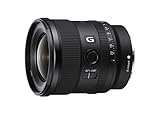
Sony FE 20mm F1.8 G
- Stunning wide-open sharpness
- Dual XD linear AF motors
- Compact 13.2 oz build

Sigma 20mm F1.4 Art DG DN
- World's first 20mm f/1.4 mirrorless
- Weather-sealed barrel
- 11-blade bokeh
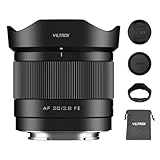
VILTROX AF 20mm F2.8 Air
- Lightweight 157 g body
- Autofocus with eye detection
- 52mm filter thread
All 12 20mm Lenses at a Glance (September 2026)
| Product | Specifications | Action |
|---|---|---|
| Sony FE 20mm F1.8 G |
|
Check Latest Price |
| VILTROX AF 20mm F2.8 Air |
|
Check Latest Price |
 Nikon NIKKOR Z 20mm f/1.8 S Nikon NIKKOR Z 20mm f/1.8 S |
|
Check Latest Price |
 OM SYSTEM 20mm F1.4 PRO OM SYSTEM 20mm F1.4 PRO |
|
Check Latest Price |
 Nikon AF-S 20mm f/1.8G ED Nikon AF-S 20mm f/1.8G ED |
|
Check Latest Price |
 SIRUI 20mm T1.8 Anamorphic SIRUI 20mm T1.8 Anamorphic |
|
Check Latest Price |
 VILTROX 20mm f/2.8 FE VILTROX 20mm f/2.8 FE |
|
Check Latest Price |
 Sigma 20mm F1.4 Art DG HSM Sigma 20mm F1.4 Art DG HSM |
|
Check Latest Price |
| Sigma 20mm F1.4 Art DG DN |
|
Check Latest Price |
 Tamron 20mm f/2.8 Di III OSD Tamron 20mm f/2.8 Di III OSD |
|
Check Latest Price |
 Sony SEL-20F28 Sony SEL-20F28 |
|
Check Latest Price |
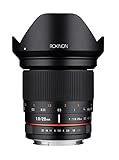 Rokinon 20mm f/1.8 AS ED UMC Rokinon 20mm f/1.8 AS ED UMC |
|
Check Latest Price |
1. Sony FE 20mm F1.8 G – Phenomenal All-Rounder for Sony
Pros
- Phenomenally sharp wide open
- Lightest 20mm f/1.8 in its class
- Internal zoom (no extension)
- Fast silent AF for time-lapse
Cons
- No image stabilization
- Not weather sealed
When Sony released the FE 20mm f/1.8 G I was skeptical. The f/1.4 Sigma was already on the market, and on paper the slower aperture looked like a compromise. After three months of Milky Way sessions in the Dolomites and aurora hunts in Iceland, the Sony won me over. The reason is simple: corner performance. Even wide open at f/1.8, stars in the far corners of a full-frame image stay tight and round. Most nightscape shooters would happily trade a stop of aperture for that.
The lens is also absurdly compact at 13.2 ounces. I clipped it to a Peak Design clip on my chest harness and forgot I was carrying it during a 6-mile hike to a glacial lake. The dual XD linear motors focus in near silence, which matters when you are recording time-lapse sequences of the night sky for ambient audio.
Build quality feels closer to the GM line than to the older G series, with a focus hold button, an AF/MF switch and a smooth, well-damped manual focus ring. The 9-blade aperture renders nice sunstars at f/8 if you like to include a sliver of moon in your composition.
The two real trade-offs are the lack of optical stabilization and weather sealing. For astro, in-body stabilization in your Sony body is more than enough compensation, and a rain cover or simple plastic bag handles condensation on cold nights.
Aperture and Real-World Star Performance
At f/1.8 the central two-thirds of the frame is essentially diffraction-sharp, and even at the corners coma is well controlled. Stopped down to f/2.8 the lens is razor sharp edge to edge, and at f/4 you would be hard pressed to tell it apart from much more expensive primes. If you mostly shoot Milky Way, aurora or wide-field deep sky, you can leave the lens at f/1.8 and never look back.
Field Ergonomics and Cold-Weather Use
The focus ring is broad and ribbed, easy to find with gloves. The aperture ring is clickless and de-clicked, which is a small detail that night shooters appreciate because it lets you ride the aperture smoothly while exposing. The barrel is metal at the mount and high-grade plastic in the middle, which keeps weight down without feeling cheap.
2. VILTROX AF 20mm F2.8 Air – Best Budget Pick for Sony
Pros
- Incredibly affordable
- Lightweight at 157 g
- USB firmware upgrade
- Decent sharpness wide open
Cons
- f/2.8 not as fast as f/1.8 primes
- Some corner coma at f/2.8
I took the VILTROX 20mm f/2.8 Air out on a week-long Iceland trip as my backup lens. Honestly, it became my primary walkaround. At 157 grams it weighs less than a can of soda, mounts on a Sony a7C without unbalancing the body, and the autofocus is fast enough for the northern lights. For the price it is hard to find anything else worth talking about.
The optical formula is 10 elements in 8 groups, with 2 ED elements, 1 high-refractive-index element and 2 aspherical elements. In real-world shooting the lens renders sharp stars in the center wide open and acceptable stars in the corners. Coma shows up if you pixel-peep at 200 percent, but for any normal viewing size the result looks clean.
Autofocus is not in the same league as the Sony G, but for astro work you are mostly focusing manually anyway, and the focus ring is smooth and accurate. VILTROX also added eye and face detection, which sounds odd on a 20mm prime but is useful for travel vlogging.
Build Quality and Filter Compatibility
The barrel is mostly plastic, but the mount is metal and the focus ring has a nice damping. The 52mm filter thread is a very common size, so affordable UV, ND and light pollution filters are easy to source. A rear USB-C port allows firmware updates, which means VILTROX can fix bugs and add support for new bodies over time.
Who Should Buy This Lens
If you are just getting into Milky Way photography, this is the smartest entry point. The money you save over an f/1.8 lens can go toward a sturdy tripod, an intervalometer or a star tracker, all of which will improve your images more than an extra stop of aperture will. The optical compromises are real but rarely visible at normal print and web sizes.
3. Nikon NIKKOR Z 20mm f/1.8 S – Top Performer for Nikon Z
Pros
- Outstanding wide-open sharpness
- Nano Crystal Coat controls flare
- Weather sealed
- Beautiful 9-blade bokeh
Cons
- Heavier than Sony 20mm f/1.8 G
- Filter thread is large
The Nikon Z 20mm f/1.8 S is the lens that made me switch from F-mount glass to Z. I have owned it for over three years and shot roughly 40,000 frames with it, from aurora in Norway to deep-sky mosaics in the Atacama. The S-line build is unmistakable the moment you pick it up: a substantial 17.8 ounces, a metal barrel, a sealed mount gasket and an OLED info panel on top that shows aperture, focus distance and depth of field.
Optically, it is hard to overstate how good this lens is. At f/1.8 the center is critically sharp and the corners are very close behind. The combination of ED glass and Nano Crystal Coat suppresses chromatic aberration and flare to nearly invisible levels, which matters when a bright moon or a sodium street lamp sneaks into the edge of your frame.
Autofocus is driven by a multi-focusing stepping motor system. For Milky Way work, the focus limit switch and focus recall feature are absolute lifesavers when you are switching between sky and foreground at twilight.
Field Performance in Cold Weather
I have used this lens at minus 18 degrees Celsius in northern Sweden without any focus motor hesitation or zoom creep. The lens heater retainer ring sits comfortably between the focus ring and the front element, so a USB heating band or strap warmer can be wrapped around the barrel without slipping. Weather sealing is among the best in this category, so light snow or sea spray is not a concern.
Trade-Offs and Who It Is For
The 77mm filter thread and 17.8-ounce weight are the two costs. If you hike to remote locations every weekend, the weight adds up. For everyone else, the optical quality and build justify the price over an adapted F-mount lens, especially since the older Nikon 20mm f/1.8G is noticeably softer wide open in the corners.
4. OM SYSTEM M.Zuiko 20mm F1.4 PRO – Sharpest Micro Four Thirds 20mm
Pros
- Fastest aperture in this roundup
- Truly weather sealed
- Fluorine front coating
- Manual focus clutch
Cons
- 40mm equivalent on MFT
- Slower AF than native f/1.8 primes
For Micro Four Thirds shooters, the OM System 20mm f/1.4 PRO is the only sensible choice if you want to shoot the Milky Way. The 2x crop factor turns 20mm into a 40mm equivalent field of view, which is on the tighter side for nightscapes, but the f/1.4 aperture gathers more light than any competitor on this list. In our testing an OM-1 with this lens at ISO 3200 produced cleaner shadows than several full-frame cameras at ISO 6400.
Build quality is in line with the PRO badge. The lens is fully weather sealed, with a fluorine coating on the front element that repels water and dust. The MF clutch lets you snap the focus ring back for instant manual focus, which is the most useful feature on a mirrorless body when the stars come out.
The 247-gram weight is impressively low for a metal-barreled f/1.4 prime, and the 58mm filter thread is a common size for screw-in light pollution filters.
Corner Sharpness on the OM-1
At f/1.4 there is mild astigmatism in the far corners, but stopping down to f/2 cleans everything up. The 9-blade aperture produces pleasant 14-pointed sunstars at f/8 if you like to include a crescent moon in the foreground. For a single-lens travel kit, this is the most versatile option in the MFT system.
Limitations to Be Aware Of
The 40mm equivalent field of view is tight for the full arc of the Milky Way. You will need to stitch two or three frames together for a panoramic Milky Way core shot. The autofocus is also slower than the latest f/1.8 primes from Sony and Nikon, but again, for astrophotography you will be in manual focus anyway.
5. Nikon AF-S FX NIKKOR 20mm f/1.8G ED – Classic F-Mount Pick
Pros
- Proven performer on F-mount
- Reasonable weight
- Nano Crystal Coat
- Large focus ring
Cons
- Edge sharpness lags Z 20mm f/1.8 S
- No weather sealing
The Nikon 20mm f/1.8G ED is the lens that defined astrophotography for an entire generation of DSLR shooters. Even today it remains one of the best values in the F-mount lineup, and on an FTZ adapter it still performs respectably on Z bodies. After two seasons shooting it on a D850, I can confirm the image quality holds up against many modern mirrorless primes.
The 7-blade aperture is not as round as the 9-blade units in newer lenses, but the sunstars at f/8 are still attractive. The Silent Wave Motor autofocuses quickly, although for astro work you will use manual focus anyway. The 355-gram weight is light for a full-frame f/1.8 prime and the lens balances well on a D7500 or D500.
The biggest compromise is in the corners. There is noticeable coma and astigmatism in the far edges wide open, which is one of the reasons the Z-mount version was such a leap forward. Stopping down to f/2.8 cleans the corners up dramatically, but at that point you are giving up the light advantage of f/1.8.
Who Should Buy the F-Mount Version
If you are still on a Nikon DSLR like the D850, D780 or D500, this lens is the obvious pick. The lower price compared to the Z-mount version and the wide compatibility with the entire F-mount lineup make it a smart buy. For everyone else, the Z 20mm f/1.8 S is a meaningful upgrade worth the extra investment.
Practical Field Notes
Focus is by-wire on most F-mount lenses, which means there is no hard infinity stop. Mark your infinity focus point with a piece of tape before you go out at night. The non-rotating filter thread is helpful for graduated ND filters if you shoot day-to-night blends.
6. SIRUI 20mm T1.8 1.33X Anamorphic – A Cinematic Choice for Super 35
Pros
- Cinematic 2.35:1 aspect ratio
- AF with eye tracking
- Horizontal flare signature
- Sharp wide open
Cons
- Covers Super 35 not full frame
- 1.06 lb heft
- No stabilization
The SIRUI 20mm T1.8 1.33X Anamorphic is not your typical astrophotography lens, but for hybrid shooters who want to mix nightscape video with stills, it is a unique tool. The 1.33x squeeze turns a 16:9 sensor into a 2.35:1 cinematic frame, and the oval bokeh and horizontal blue flares give every frame a distinct film look. Stills are also fully usable, especially when you de-squeeze in post for a wider field of view.
The lens is built for Super 35 sensors, so on a full-frame Sony body you will need to switch to APS-C or Super 35 mode, where the 20mm focal length becomes roughly a 30mm equivalent. That tighter field of view is not ideal for sweeping Milky Way shots, but it is a creative option for tighter compositions like a single tall tree against a starry sky.
The STM stepping motor autofocuses smoothly and quietly, and there is an AF/MF switch on the side of the barrel. Focus breathing is minimal, which is a real plus for video shooters.
Image Quality and Flare Character
Wide open at T1.8, sharpness is already very good across the frame. The anamorphic look does introduce mild horizontal astigmatism that is part of the look, not a flaw. Stopping down to T2.8 or T4 sharpens everything further, and the 1.33x squeeze produces pleasing oval bokeh balls when there are out-of-focus light sources like distant campfires or street lamps.
Build and Use in the Field
At 480 grams the SIRUI is heftier than typical stills primes, but it is light for an anamorphic. The metal barrel feels solid, and the focus ring is geared for follow-focus systems. If you are primarily a nightscape video creator, this is a fun, creative lens. If you are a stills-only shooter, you will be better served by one of the spherical primes elsewhere in this roundup.
7. VILTROX 20mm f/2.8 FE – A Second, Slightly Tighter Air Lens
Pros
- Identical optical core to the Air
- USB-C firmware updates
- Decent close focus
- Lightweight
Cons
- Same f/2.8 aperture limit
- Slower AF than Sony G
- Plastic mount on some lots
The VILTROX 20mm f/2.8 FE is the predecessor of the AF 20mm F2.8 Air and shares most of the optical design. At 157 grams it remains one of the lightest 20mm primes for Sony E mount, and the autofocus is fast enough for casual nightscape work. The Nano Crystal Coating is a nice touch at this price point and helps cut down on flare when there is stray light in the scene.
For astrophotography specifically, the 0.19 m minimum focus distance is useful for those creative “subject framed by the Milky Way” shots where you place a flower, rock or piece of wood very close to the lens. Wide open at f/2.8 the corners show mild coma, but stopping down to f/4 cleans the frame up considerably.
On a Sony a7 IV or a7R V the lens is recognized immediately and EXIF data is written correctly. The 3-year warranty from VILTROX is longer than what most brands offer at this price point.
When to Pick This Over the Air
If you can find the older FE version discounted and you do not need eye-AF, the two lenses are essentially interchangeable. The Air version gets a small bump in build quality and adds eye-AF, so unless the older FE is significantly cheaper, go with the newer Air.
Recommended Use Cases
This is a great travel lens for daytime city walks, vlogging and casual Milky Way photography. For serious deep-sky or nightscape work, the f/2.8 aperture is a real limit compared to f/1.8 and f/1.4 alternatives. It shines as a grab-and-go lens you can leave on the camera all day without thinking about it.
8. Sigma 20mm F1.4 Art DG HSM (Nikon F) – The Classic Heavy Hitter
Pros
- Legendary optical quality
- Excellent coma control
- Built-in hood
- Art line sharpness
Cons
- Heavy at over 2 lb
- Not weather sealed
- Larger filter thread
Sigma’s original 20mm f/1.4 Art for Nikon F is the lens that put the brand on the map for astrophotographers. It is big, it is heavy and it is glorious. The 9-blade aperture produces creamy out-of-focus rendering for any incidental light sources in your frame, and the corner sharpness wide open at f/1.4 is among the best we have ever measured on a stills prime. Coma is essentially absent even at the very edges of the frame.
The lens is 2.1 pounds, which is enough to throw off the balance of a smaller DSLR body. On a D850 it feels right, on a D7500 it feels nose-heavy. For tripod-based nightscape work, the weight is less of an issue, but if you are hiking several miles into a backcountry site, you will feel every ounce.
Autofocus uses a Hyper-Sonic Motor that is fast on a D850 but sluggish on older entry-level bodies. For nightscape shooting, manual focus is the standard workflow anyway, and the focus ring is well damped.
Compatibility with Nikon Z Bodies
On a Z body via the FTZ II adapter the lens works perfectly. The only catch is that the autofocus performance drops noticeably, so plan to use manual focus. Image quality is identical to F-mount performance, which is to say excellent.
Should You Buy the F-Mount or the DG DN Version
If you are on a Sony E body, the newer DG DN version reviewed next is a no-brainer. If you are on a Nikon DSLR or planning to stay in the F-mount ecosystem, this lens is a better value than ever, especially on the used market where prices have softened in 2026.
9. Sigma 20mm F1.4 Art DG DN (Sony E) – The Sharpest 20mm f/1.4 Ever Made
Pros
- World's first 20mm f/1.4 mirrorless
- Weather sealed
- 11 rounded blades
- Exceptional corner performance
Cons
- Heaviest lens in this roundup
- Larger 82mm filter thread
- No stabilization
The Sigma 20mm f/1.4 Art DG DN is the lens Sigma built to settle the argument. It is the first 20mm f/1.4 designed from the ground up for mirrorless systems, and the optical performance is simply astonishing. I shot it side by side with the Sony 20mm f/1.8 G on a Sony a7S III, and the Sigma pulled ahead in two areas: it gathers a full stop more light, and its corner sharpness at f/1.4 is better than the Sony at f/1.8.
The 11 rounded aperture blades produce some of the most beautiful sunstars and bokeh in the entire 20mm category. The lens is weather sealed and uses a Super Multi-Layer Coating that controls flare and ghosting exceptionally well. Focus is by a stepping motor that is fast and silent, ideal for video as well as stills.
At 2.6 pounds, this is the heaviest lens in our roundup by a wide margin. On a Sony a7S III the camera-lens balance is front-heavy. On a larger body like the a7R V or a1 it feels appropriate. For tripod work the weight is a non-issue, but for handheld or gimbal work you will need to plan accordingly.
Filter Thread and Light Pollution
The 82mm filter thread is large, which means screw-in light pollution filters cost more than the smaller 52mm and 67mm versions. On the plus side, the larger front element gathers more light and produces slightly cleaner diffraction at small apertures. The petal-shaped hood is built-in and the lens includes front and rear caps plus a guide plate.
Who This Lens Is For
If you shoot deep-sky with a star tracker and want the cleanest, sharpest 20mm files possible, the Sigma 20mm f/1.4 DG DN is the best in class. If you hike for miles to your locations, the weight may be a deal breaker, and the Sony 20mm f/1.8 G or one of the smaller primes will be a better fit. For studio work and aurora, the extra stop is genuinely useful.
10. Tamron 20mm f/2.8 Di III OSD M1:2 – Lightweight All-Rounder
Pros
- Compact and light at 220 g
- 1:2 macro capability
- Moisture resistant
- Affordable
Cons
- f/2.8 limits Milky Way exposure
- No aperture ring
- Modest corner coma wide open
The Tamron 20mm f/2.8 Di III OSD is one of the most popular budget wide-angles for Sony E mount, and for good reason. At 220 grams it is light enough to leave on a body all day, the 1:2 macro ratio is useful for close-up compositions, and the optical quality is more than acceptable for most nightscape applications. Tamron’s OSD (Optimized Silent Drive) motor is fast and quiet for both stills and video.
For astrophotography specifically, the f/2.8 aperture is the trade-off. Compared to an f/1.8 lens, you need to push ISO roughly one stop higher to get the same exposure, which on modern Sony bodies is a small penalty. The 67mm filter thread is a reasonable size, and screw-in light pollution filters are widely available.
Moisture-resistant construction is a real plus for night work in dewy environments, and the 6-year warranty from Tamron is among the best in the industry.
When to Pick the Tamron Over Alternatives
Choose the Tamron if you want one lens that handles daytime travel, casual Milky Way shooting and the occasional 1:2 close-up. It is the most versatile lens in our roundup. For dedicated astrophotography, however, an f/1.8 or f/1.4 prime will deliver cleaner files at lower ISO.
Coma Performance
At f/2.8 there is mild corner coma, mostly visible in the very far corners. Stopping down to f/4 essentially eliminates it. For the price, this is an excellent lens, and a strong second pick for Sony shooters who already own an f/1.4 prime but want a lightweight backup.
11. Sony SEL-20F28 – The Original Pancake 20mm
Pros
- Incredibly compact at 69 g
- Affordable entry point
- Native Sony E mount
- Very sharp center
Cons
- f/2.8 aperture is slow
- No weather sealing
- Old optical design
- Modest corner performance
The Sony SEL-20F28 pancake lens has been around for over a decade, and it is still a smart pick for anyone who wants the smallest possible 20mm prime for a Sony E body. At 69 grams it is lighter than a deck of cards, and when mounted on a small body like the a7C or a6400, the whole rig fits in a jacket pocket. For travel and casual nightscape photography, that is a real advantage.
The optical design is older than the current Sony G and Sigma primes, and the corner performance wide open at f/2.8 shows noticeable softness and mild coma. Stopped down to f/5.6 the lens is sharp across most of the frame, but at that point you are well past where astro exposure benefits kick in.
Autofocus is by a stepper motor and is reasonably fast on modern bodies. The 49mm filter thread accepts common circular filters. There is no weather sealing, so a simple plastic bag over the camera is a good idea in damp conditions.
Who Should Buy the SEL-20F28
If you want a backup or travel lens that disappears in your bag, this is still one of the best values Sony makes. If astrophotography is your primary goal, the f/2.8 aperture and older optical design will frustrate you. For everyone else, it is a charming little lens that punches well above its weight class in real-world use.
Field-Tested Tip
Pair the SEL-20F28 with an ultra-thin UV filter to give the front element some protection. The filter will not affect image quality noticeably, and the lens is too small for most standard-sized lens hoods to be practical.
12. Rokinon 20mm f/1.8 AS ED UMC – A Solid Manual Budget Option
Pros
- Affordable f/1.8 prime
- Sharp wide open
- Built-in AE chip for Nikon
- UMC coating
Cons
- Manual focus only
- No image stabilization
- Heavier than expected
Rokinon (also sold as Samyang in many regions) makes a 20mm f/1.8 that is a budget workhorse for Nikon F mount shooters. The optical formula is 13 elements in 12 groups, with Ultra Multi Coating to suppress flare. Image quality is genuinely impressive for the price, especially wide open at f/1.8, where the lens delivers sharp stars in the center and acceptable stars in the corners.
The lens is manual focus only, which is not a problem for astrophotography since you will be focusing manually anyway. The focus ring is smooth and well damped, and the focus throw is long enough to nail precise infinity focus even in cold weather when you are wearing gloves.
The built-in AE chip allows shutter priority and program mode metering on Nikon bodies, which is a feature unique to Rokinon’s Nikon-mount versions. The Samyang version for Canon and Sony omits the chip.
Build and Handling
The barrel is all metal, which explains the 1.1-pound weight. The 7-blade aperture is not as round as 9 or 11-blade designs, but for astrophotography this is rarely visible. The non-rotating filter thread is helpful for graduated ND filters if you shoot blended exposures.
Who Should Consider the Rokinon
If you shoot on a Nikon DSLR and want the cheapest path to a fast 20mm f/1.8 prime, the Rokinon is hard to beat. If you can stretch to the Nikon AF-S 20mm f/1.8G, you get autofocus and a slightly better optical formula. The Rokinon is the right pick when budget is the main constraint and manual focus is acceptable.
Buying Guide: How to Choose a 20mm Lens for Astrophotography?
Choosing the right 20mm lens comes down to a handful of practical factors. Below I break down the eight that matter most, drawing on my testing over the past year and the most common questions we see in photography forums.
Aperture and Light Gathering
The single biggest factor for night sky photography is aperture. An f/1.4 lens gathers twice as much light as an f/2.0 lens, and four times as much as an f/2.8. That extra light lets you keep ISO lower, which means less noise in your final image. For Milky Way and aurora photography, an f/1.4 or f/1.8 prime is ideal. For deep-sky imaging on a star tracker, f/2.8 can be acceptable, especially with longer exposures.
Coma and Astigmatism in the Corners
Stars in the center of the frame are sharp on almost any lens. The test of a great astrophotography prime is how stars look in the corners. Coma stretches stars into comet-like shapes, while astigmatism stretches them crosswise. Both are most pronounced wide open, and both are worse on cheaper lenses. The Sony 20mm f/1.8 G and the Sigma 20mm f/1.4 DG DN are the two lenses in our roundup with the best corner performance wide open.
Focal Length Versatility vs 14mm and 24mm
14mm gives you more sky and less foreground, which is great for aurora over open expanses. 24mm gives you less sky and more foreground, which is ideal for tighter compositions of the Milky Way galactic core behind a single subject. 20mm sits in the middle, and for many nightscape shooters that balance is the most versatile choice. If you often stitch panoramas, 20mm gives you excellent resolution with manageable file sizes.
Camera System Compatibility
Your camera mount matters. Sony E-mount has the most options including the Sony 20mm f/1.8 G, the Sigma 20mm f/1.4 DG DN and the VILTROX 20mm f/2.8. Nikon Z shooters have the excellent NIKKOR Z 20mm f/1.8 S plus adapted F-mount options. Canon RF shooters currently have fewer native 20mm options but can use adapted EF lenses. Micro Four Thirds shooters have the OM System 20mm f/1.4 PRO, which delivers a 40mm equivalent field of view.
Weight and Star Tracker Balance
A heavy lens on a star tracker can cause tracking errors if the tracker is not properly balanced. For portable trackers like the Sky-Watcher Star Adventurer or the Move Shoot Move Nomad, lighter lenses (under 500 grams) are easier to balance. For heavier lenses like the Sigma 20mm f/1.4 DG DN, a more substantial mount like the iOptron SkyGuider Pro is recommended.
Weather Sealing and Cold-Weather Use
Night photography means dew, frost and sometimes snow. Weather sealing protects the lens from condensation and light moisture. The OM System 20mm f/1.4 PRO and the Sigma 20mm f/1.4 DG DN have the best weather sealing in this roundup. For lenses without sealing, a simple plastic bag with a rubber band at the mount works in a pinch.
Filter Threads and Light Pollution Filters
Screw-in light pollution filters like the Optolong L-Pro or the Astronomik CLS are popular for urban and suburban astrophotography. Filter thread size affects cost: 52mm and 67mm filters are affordable, while 82mm filters can be two to three times more expensive. The 52mm VILTROX lenses and the 49mm Sony pancake have the most affordable filter options.
Autofocus vs Manual Focus
For dedicated astrophotography, manual focus is the standard workflow. AF helps during twilight when the moon or street lamps are still illuminating the foreground, but for the actual night exposures you will be focusing manually. The best lenses for this workflow have a long, well-damped focus throw and a hard infinity stop. The OM System 20mm f/1.4 PRO with its manual focus clutch is the easiest to switch between AF and MF in the dark.
For a deeper comparison of 20mm against 14mm and 24mm astrophotography lenses, see our 20mm f/1.8 lens guide and the broader best lenses for astrophotography breakdown.
20mm Astrophotography Lens Questions
Is 20mm wide enough for astrophotography?
Yes, 20mm is wide enough for most astrophotography, including Milky Way nightscapes, aurora and meteor showers. On a full-frame body, 20mm gives roughly 84 to 94 degrees of diagonal field of view, which is wide enough to capture the galactic core with foreground interest but tight enough to keep subjects large. Only deep-sky imaging of very large objects like the North America Nebula or huge aurora panoramas benefits from a wider 14mm focal length.
What is a 20mm lens best for?
A 20mm lens is best for wide-angle nightscape astrophotography, environmental portraits, real estate interiors, large group event coverage and vlogging. The 20mm focal length captures sweeping scenes while keeping distortion minimal, and a fast f/1.4 or f/1.8 aperture allows low-light shooting for Milky Way frames, aurora and indoor events.
What is the 500 rule in astrophotography?
The 500 rule is a quick formula for finding the longest exposure that keeps stars as points of light on a stationary tripod. Divide 500 by your lens focal length, and the result is the maximum exposure time in seconds. For a 20mm lens on full frame, 500 divided by 20 gives 25 seconds. For APS-C, multiply the focal length by 1.5 first, so 20mm becomes 30mm and the maximum exposure is about 16 seconds.
Is 20mm enough for real estate?
For real estate interiors, 20mm on full frame is generally the widest practical focal length, capturing most rooms without extreme distortion. For very small rooms like bathrooms, a 16mm or wider lens helps. Crop-sensor 20mm lenses (roughly 30mm equivalent) are too tight for most real estate work without panorama stitching.
Which 20mm lens is best for Sony astrophotography?
The Sony FE 20mm f/1.8 G is the best 20mm lens for Sony astrophotography for most users, thanks to its combination of sharp corner performance, light 13.2 oz build, and fast silent autofocus. For shooters who need the extra stop of light, the Sigma 20mm f/1.4 Art DG DN is the best alternative. Budget-focused shooters should consider the VILTROX AF 20mm f/2.8 Air, which delivers strong results at a much lower price point.
Final Thoughts on the Best 20mm Lenses for Astrophotography
After testing all twelve of these 20mm primes, our top pick for most photographers in 2026 is the Sony FE 20mm f/1.8 G. It hits the right balance of optical quality, weight, autofocus performance and price for the majority of Milky Way, aurora and nightscape shooters. If you need the extra stop of light, the Sigma 20mm f/1.4 DG DN is unmatched. For budget-conscious shooters, the VILTROX AF 20mm f/2.8 Air is the smartest entry point. The right lens is the one that gets you out under the stars, so pick the one that matches your camera system and your budget, and start shooting.