
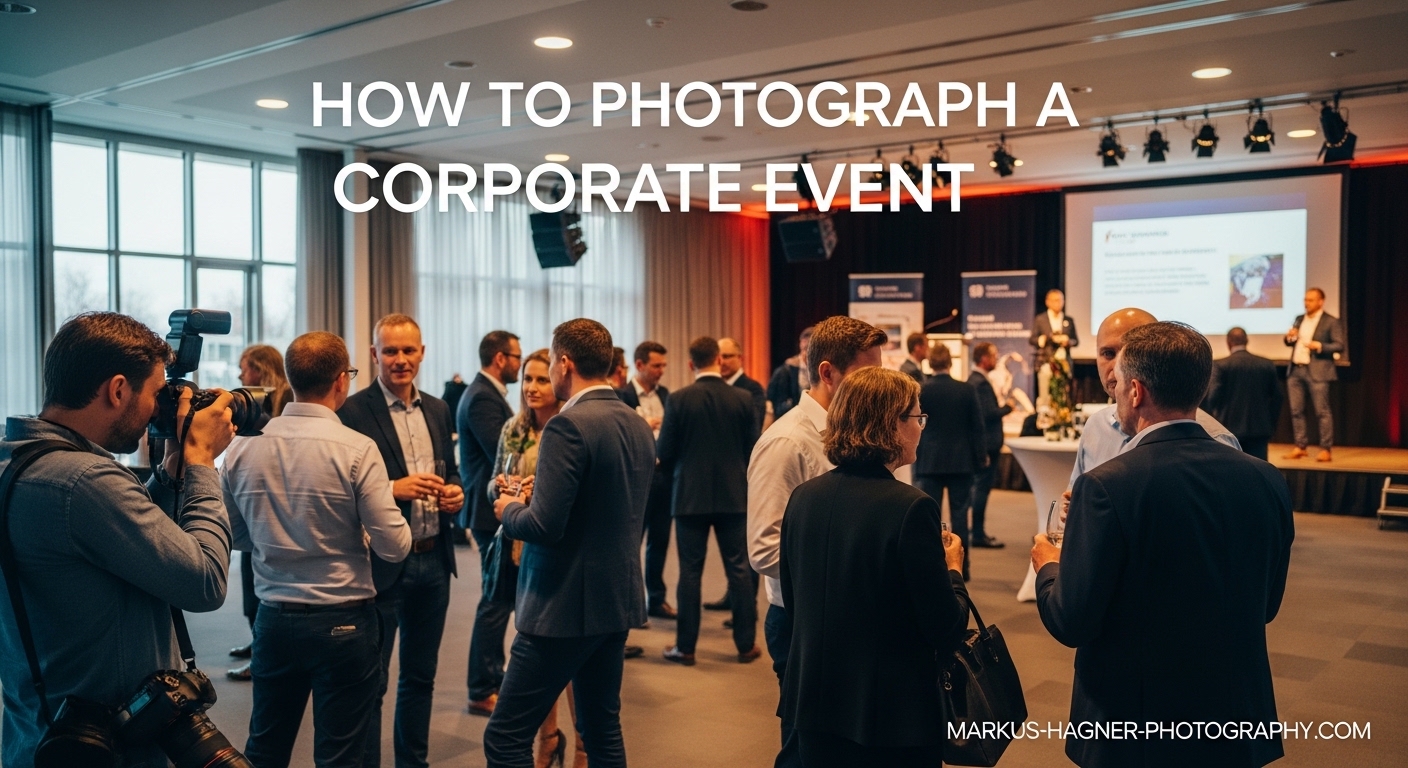
Learning how to photograph a corporate event from start to finish is a vital skill for modern photographers looking to build a stable business. Our team has shot hundreds of corporate gatherings, from intimate 20-person seminars to massive 5,000-attendee conferences. I remember my first major event where I brought way too much gear and almost missed the keynote speaker trying to change lenses. That experience taught me the importance of preparation and a streamlined workflow.
In this comprehensive guide, I will share the exact strategies I use to successfully document business events. You will learn the essential gear you need, the best camera settings for challenging lighting, and a step-by-step approach to ensure you never miss a critical moment. This knowledge will help you deliver high-quality images that keep corporate clients booking you year after year.
What is Corporate Event Photography?
Corporate event photography is capturing professional images of business occasions like conferences, seminars, product launches, and networking parties. These images document key moments and attendees for the company’s marketing materials, internal archives, and social media content. The goal is to visually tell the story of the event while making the brand and its people look their absolute best.
I find that corporate photography differs significantly from weddings or social events. The focus is less on emotional moments and more on brand representation, networking interactions, and key speakers. Companies rely on these photos to showcase their company culture, attract future attendees, and highlight sponsorships.
Types of Corporate Events
The corporate landscape includes a wide variety of gatherings, each requiring a slightly different approach. I frequently shoot multi-day congresses and trade shows where endurance is just as important as technical skill. Product launches and shop openings demand a fast-paced shooting style to capture excitement and specific detail shots.
Awards ceremonies and gala dinner parties often feature challenging low-light environments where mastering your external flash is crucial. Team building events, on the other hand, are usually more casual and allow for a documentary-style approach with candid shots of employees interacting naturally.
Pre-Event Preparation Phase
Preparation is the foundation of successful event photography. I always schedule a pre-event call with the organizer to discuss their specific needs and expectations. During this conversation, I ask about the event schedule, key VIPs who must be photographed, and how the final images will be used.
Venue scouting is another critical step, especially for complex locations. I try to visit the venue beforehand or arrive at least 90 minutes early to assess the lighting conditions and plan my shooting angles. This preparation time allows me to identify potential issues, like mixed lighting sources or challenging backdrops, before the event begins.
Creating a Detailed Shot List
A comprehensive shot list template ensures you deliver exactly what the client needs. I divide my list into several categories: venue details, candid interactions, keynote speakers, and posed group shots. Before anyone arrives, I capture wide shots of the empty venue, table setups, branding elements, and sponsor banners.
During the event, my shot list prioritizes candid photos of attendees networking, engaging with presentations, and enjoying the atmosphere. For keynote speakers, I focus on capturing dynamic expressions and wide shots that include the audience. Finally, I make sure to get posed group shots of the organizing team and key executives.
Essential Equipment & Gear
Having the right gear is essential, but you don’t need to carry every piece of equipment you own. I always bring two full-frame camera bodies to avoid swapping lenses in fast-paced situations. Dual card slots are an absolute must for corporate work; I configure my cameras to write RAW files to both SD cards simultaneously for instant backup.
Battery grips are incredibly helpful for long conference days, providing extra power and making vertical shooting much more comfortable. I also pack extra batteries, plenty of memory cards, and a comfortable dual camera harness to save my back during 10-hour shooting days.
The Best Lenses for Event Photography
My go-to lens for almost every corporate event is the 24-70mm f/2.8. It offers the perfect focal range for environmental portraits, small group shots, and wider venue photos. For keynote speakers and candid shots from a distance, I rely on a 70-200mm f/2.8 telephoto lens. This combination allows me to cover 90% of the event without ever needing to change lenses.
I also pack a fast prime lens, usually a 50mm f/1.8 or 85mm f/1.8, for specific low-light situations or detailed portraits. A fast lens with an f/1.8 aperture provides excellent subject separation and beautiful bokeh, which clients love for executive headshots or intricate detail photos.
Working with External Flashes
An external flash is mandatory for indoor corporate events. I use a TTL flash mounted on my camera, relying on bounce flash techniques whenever possible. Bouncing the light off a white ceiling or wall creates soft, flattering illumination that looks much more natural than direct flash.
I always set my flash compensation based on the environment, typically dialing it down a bit to blend the artificial light with the ambient room lighting. I carry multiple spare flash batteries and often bring a small light modifier, like a bounce card, for situations where the ceilings are too high or dark to bounce light effectively.
Camera Settings Guide
Choosing the right camera settings for events requires balancing ambient light with your flash while freezing motion. I shoot exclusively in RAW format to retain the maximum amount of data for post-processing adjustments. This flexibility is crucial when dealing with the mixed lighting conditions typical of conference centers and hotels.
My base approach is to expose for the ambient light in the background and use my flash to illuminate the subjects in the foreground. I constantly monitor my histogram and adjust my settings as I move between different rooms or as the natural light changes throughout the day.
Aperture Priority vs Manual Mode
I shoot in manual mode 90% of the time during corporate events. Manual mode provides consistent exposures, especially when using flash, preventing the camera from being fooled by bright screens or dark backgrounds. I lock in my settings for a specific room and only adjust when the lighting significantly changes.
However, when moving rapidly between indoor and outdoor environments, I sometimes switch to aperture priority. In aperture priority, I set my desired depth of field and let the camera determine the shutter speed, using exposure compensation to tweak the results. I find this useful for fast-paced networking sessions taking place across multiple areas.
Shutter Speed and ISO Settings
To freeze human motion during presentations or networking, I keep my shutter speed at a minimum of 1/125th of a second. For more dynamic moments, like an awards celebration or a speaker pacing the stage, I increase the shutter speed to 1/250th or higher. I remember shooting a lively panel discussion where dropping below 1/200th resulted in blurry hands, teaching me to always prioritize a fast enough shutter.
I am not afraid to push my ISO sensitivity to 3200 or even 6400 on modern full-frame cameras to maintain a sufficient shutter speed in low light. A slightly noisy image is always better than a blurry one. I use my ISO and aperture to find a nice balance, ensuring the background doesn’t render completely black when using flash.
Focusing and Metering
For moving subjects, I rely on continuous autofocus (AF-C or Servo AF) paired with back button focus. Back button focus allows me to track moving speakers effortlessly while quickly recomposing for static shots without changing focus modes. I find this technique dramatically increases my hit rate for sharp images during fast-paced events.
I typically use matrix metering (or evaluative metering) to get a general reading of the scene. However, when photographing a brightly lit speaker against a dark stage background, I switch to spot metering to ensure the speaker’s face is properly exposed, ignoring the darkness around them.
Shooting Techniques & Execution
Execution at a corporate event requires blending into the background while actively seeking out great moments. I dress professionally, usually in all black, to avoid drawing attention to myself. My goal is to capture the atmosphere without disrupting the flow of the conference or seminar.
I constantly scan the room for interesting interactions, emotional reactions, and strong compositions. I try to take photos that tell the story of the conference, capturing attendees arriving, deep in conversation, listening to speakers, and enjoying the catered food.
Capturing Candid and Posed Shots
Candid photography forms the bulk of my corporate event coverage. I use my 70-200mm telephoto lens to capture genuine expressions and networking moments from a distance. I wait for natural smiles, engaged eye contact, and dynamic hand gestures that convey active communication.
For posed group shots, I take control of the situation quickly and confidently. I arrange the group, ensure everyone is visible, and take several frames to guarantee at least one shot where everyone has their eyes open. A helpful tip I learned from a fellow photographer is to bring a small step stool to get a higher vantage point for larger group portraits.
Handling Difficult Lighting Situations
Mixed lighting is the bane of event photographers. When dealing with a mix of tungsten room lights, daylight from windows, and LED stage lights, I prioritize the skin tones of my subjects. I often use a CTO (Color Temperature Orange) gel on my flash to match the ambient tungsten lighting, making the final image look much more cohesive.
For low light events where flash is not allowed, such as during a theatrical presentation or a sensitive keynote, I rely heavily on fast prime lenses. I open my aperture to f/1.8, push my ISO, and brace myself against a wall or chair to stabilize the camera at slower shutter speeds.
How to Photograph a Corporate Event from Start to Finish?
Knowing how to photograph a corporate event from start to finish involves a specific workflow that begins long before the first guest arrives. I always show up early to capture the untouched venue, the registration desk setup, and the catering displays. These detail shots are highly valued by event planners and vendors.
As attendees arrive, I focus on the registration process, the initial networking, and the energy of the crowd building. I make sure to photograph the sponsor booths and attendees interacting with the displays, as this provides crucial ROI evidence for the organizers.
Covering Keynotes and Seminars
During the main presentations, I position myself to get clean shots of the speakers without blocking the audience’s view. I capture wide shots showing the scale of the room, medium shots of the speaker on stage, and tight headshots focusing on their expressions. I always wait for moments when the speaker looks up and engages with the audience.
I also turn my camera toward the crowd to photograph engaged listeners, people taking notes, and audience reactions. These shots are essential for demonstrating the impact of the presentation. I move quietly around the perimeter of the room, avoiding the center aisle whenever possible.
Managing VIPs and Executives
Photographing VIPs and top executives requires tact and efficiency. I coordinate with the event planner beforehand to identify these key individuals and understand when they will be available for photos. I approach them politely, often utilizing the event organizer to make the introduction.
When photographing VIPs, I work quickly. I ensure my camera settings and flash are dialed in before I even approach them. I take a few well-composed shots, thank them for their time, and step away, allowing them to return to their networking uninterrupted.
Post-Event Workflow & Processing
The job isn’t finished when the event ends; efficient post-processing is crucial for client satisfaction. I immediately back up all memory cards to two separate hard drives before I even begin editing. This redundancy protects against hardware failure and ensures the client’s images are safe.
I use photo editing software to cull the images rapidly, selecting only the best shots. A typical full-day conference might yield 3,000 photos, which I cull down to about 400-500 final deliverables. Quality always trumps quantity; clients prefer a curated gallery of excellent images over thousands of mediocre ones.
Editing and Same-Day Delivery
My editing process focuses on clean, professional results. I correct the white balance, adjust exposure, crop for better composition, and apply a subtle sharpening. I avoid heavy filters or trendy color grading, as corporate clients prefer timeless, true-to-life representation of their events.
Many clients now require same-day delivery workflows for social media updates or press releases. For these requests, I bring a laptop to the venue and edit a small selection of 10-20 key images during breaks. I deliver these high-priority files immediately via a cloud link, which consistently exceeds client expectations and justifies premium pricing.
Business Aspects & Pricing
Understanding the business side is just as important as mastering camera settings. I strongly advise using a formal event photography contract for every job. The contract should clearly outline the scope of work, the specific deliverables, the timeline, and the licensing terms for the images.
When marketing your services, focus on building relationships with event planners, PR agencies, and corporate communications directors. A strong portfolio demonstrating your ability to handle diverse lighting situations and capture engaging candids is your best marketing tool.
Pricing Guidelines for Corporate Events
Pricing corporate event photography can be challenging for beginners. I generally charge by the hour or offer half-day and full-day rates. A standard hourly rate often ranges from $150 to $300, depending on your market and experience level. I always factor in the time spent communicating, traveling, and editing when calculating my rates.
For large conferences requiring multiple photographers, I charge a management fee on top of the day rates. I also offer add-on services, such as on-site headshot stations or expedited delivery, which significantly increase the total project value. Transparency in pricing builds trust with corporate clients.
Frequently Asked Questions
How do I prepare for my first event shoot (large corporate gathering)?
Start by scheduling a call with the organizer to understand the schedule and identify key VIPs. Visit the venue early to scout lighting conditions and plan your angles. Create a detailed shot list including venue details, candid interactions, and necessary group shots. Finally, ensure all your gear is tested, batteries are charged, and memory cards are formatted before arrival.
What are the top tips from a professional event photographer?
Always carry two camera bodies to avoid changing lenses in fast-paced situations. Use bounce flash to create flattering light indoors without blinding attendees. Shoot in RAW to handle mixed lighting situations effectively during post-processing. Most importantly, dress professionally and blend into the background to capture genuine, candid moments without disrupting the event.
What is the best lens for corporate event photography?
The 24-70mm f/2.8 is the most versatile lens for corporate events, perfect for medium group shots, environmental portraits, and venue details. Pair it with a 70-200mm f/2.8 for capturing keynote speakers from the back of the room and getting tight candid shots without intruding on personal space.
How much do corporate event photographers charge?
Professional corporate event photographers typically charge between $150 and $300 per hour, depending on the market and their experience level. Many offer structured half-day and full-day rates. These fees should factor in not just the shooting time, but also the pre-event consultation, travel, gear maintenance, and post-processing hours.
How to get into corporate event photography?
Start by building a portfolio shooting smaller local networking events or offering to second-shoot for established professionals. Create a website specifically showcasing your event work, focusing on clean, well-lit candid and stage shots. Network directly with corporate event planners, PR agencies, and marketing directors in your area.
What camera settings for corporate headshots?
For corporate headshots, use a focal length between 85mm and 200mm to flatter facial features. Set your aperture between f/2.8 and f/5.6 to keep the entire face in focus while blurring the background. Use a shutter speed of at least 1/200th to ensure sharpness, and keep your ISO as low as possible for the cleanest image quality.
Conclusion
Mastering how to photograph a corporate event from start to finish takes practice, but following these structured steps will significantly accelerate your progress. By prioritizing pre-event preparation, utilizing the right gear, and understanding complex camera settings, you can confidently handle any business gathering. Remember that your goal is to seamlessly document the occasion while providing exceptional service to your clients.
The corporate photography market offers consistent, lucrative opportunities for reliable professionals. Start applying these techniques at your next event, focus on capturing engaging candid moments alongside essential venue details, and you will quickly build a reputation that keeps clients coming back 2026.