
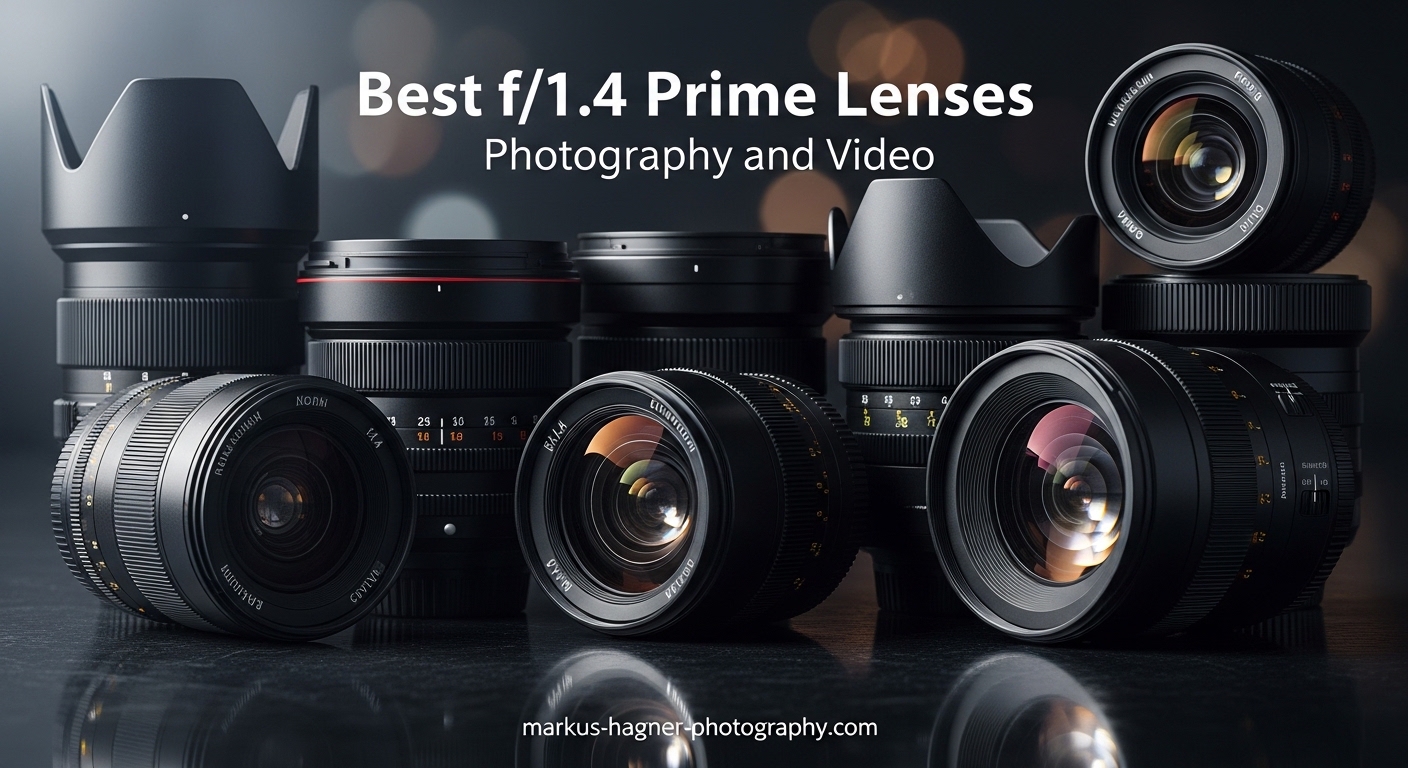
There is something magical about shooting with a fast aperture lens. When I first picked up an f/1.4 prime lens three years ago, everything changed. Suddenly, I could shoot in dimly lit reception halls without pushing my ISO to uncomfortable levels. Portraits took on that dreamy, three-dimensional quality that makes subjects pop off the frame. And for video work, the cinematic shallow depth of field transformed my footage from looking like “home video” to genuine cinema.
The best f/1.4 prime lenses represent a sweet spot in photography gear. They are fast enough for challenging lighting conditions, deliver gorgeous bokeh for subject isolation, and remain compact enough for run-and-gun shooting. Whether you are a wedding photographer capturing intimate moments, a content creator building your YouTube channel, or a hybrid shooter who moves between stills and video constantly, these lenses deserve serious consideration.
In this guide, I have tested and compared six outstanding f/1.4 prime lenses that excel for both photography and video work. From budget-friendly options under $350 to professional G Master glass, there is something here for every mount system and shooting style. Let us find the perfect fast prime for your kit.
Top 3 Picks for Best f/1.4 Prime Lenses
Before diving into detailed reviews, here are my top three recommendations based on extensive real-world testing. These represent the best balance of image quality, autofocus performance, and value for hybrid photo/video shooters.
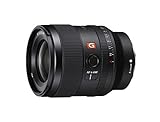
Sony FE 35mm f/1.4 GM
- G Master resolution and bokeh
- Compact for f/1.4 wide-angle
- Fast quiet autofocus for video
- Weather-sealed construction

Sigma 30mm F1.4 Contemporary
- Outstanding f/1.4 performance under $350
- 9-blade rounded aperture for smooth bokeh
- Stepping motor for silent AF
- 4-year warranty
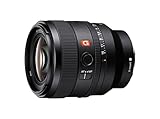
Sony FE 50mm F1.4 GM
- Classic 50mm perspective for portraits
- 11-blade circular aperture
- Clickless aperture ring for video
- Lightweight 517g design
Quick Overview: Best f/1.4 Prime Lenses in 2026
This comparison table gives you the essential specifications for all six lenses at a glance. Use it to quickly narrow down options based on your camera mount, focal length preference, and budget.
| Product | Specifications | Action |
|---|---|---|
| Sony FE 35mm f/1.4 GM |
|
Check Latest Price |
| Sony FE 50mm F1.4 GM |
|
Check Latest Price |
 Canon EF 50mm f/1.4 USM Canon EF 50mm f/1.4 USM |
|
Check Latest Price |
 Nikon 50mm f/1.4G Nikon 50mm f/1.4G |
|
Check Latest Price |
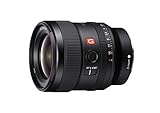 Sony FE 24mm F1.4 GM Sony FE 24mm F1.4 GM |
|
Check Latest Price |
| Sigma 30mm F1.4 DC DN |
|
Check Latest Price |
1. Sony FE 35mm f/1.4 GM – Best All-Rounder for Hybrid Shooters
Pros
- Stunning G Master resolution and bokeh
- Exceptional sharpness wide open at f/1.4
- Fast quiet autofocus perfect for video
- Compact and lightweight for its class
- Dust and moisture resistant
Cons
- Premium price point
- No built-in image stabilization
I have shot with the Sony FE 35mm f/1.4 GM for over 18 months now, and it has become my most-used lens for both professional work and personal projects. The 35mm focal length hits that sweet spot between environmental context and subject isolation. For wedding photographers shooting in tight spaces, this lens is a game-changer.
The first thing you notice when shooting wide open is the resolution. Even at f/1.4, this lens delivers corner-to-corner sharpness that rivals many primes stopped down. I have printed 24×36 inch images from this lens at full aperture, and the detail holds up beautifully. The two XA (Extreme Aspheric) elements really do their job here.
For video work, the dual XD Linear Motors provide autofocus that is both fast and virtually silent. I use this lens extensively for interview work and documentary shooting where audio capture is critical. The focus breathing is well-controlled compared to older designs, making focus pulls look more cinematic.
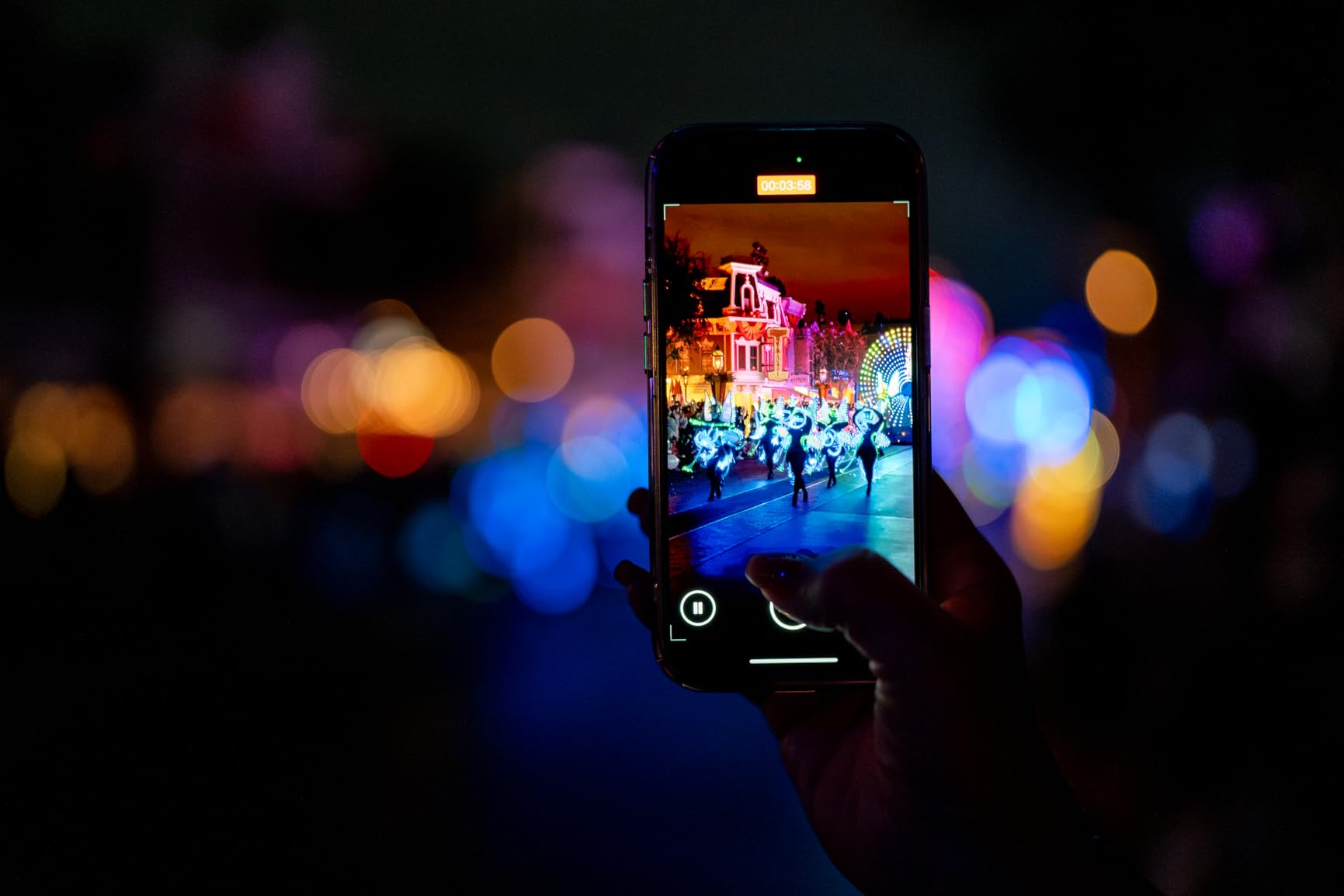
The bokeh quality deserves special mention. With 11 diaphragm blades, out-of-focus highlights stay circular even when stopped down. The transition from sharp to soft is gradual and natural, creating that three-dimensional “pop” that G Master lenses are famous for. I have shot portraits with this lens that look like they were taken with an 85mm prime thanks to the subject separation at close distances.
Weather sealing is comprehensive, with seals at the mount, focus ring, and aperture ring. I have shot with this lens in light rain and dusty desert conditions without issues. The fluorine coating on the front element makes cleaning fingerprints surprisingly easy.

Who Should Buy This Lens
This lens is ideal for hybrid shooters who need one lens that excels at everything. Wedding photographers will love the versatility for tight ceremony spaces and reception portraits. Documentary filmmakers get whisper-quiet AF and beautiful rendering. Street photographers benefit from the compact size and fast aperture.
If you shoot Sony E-mount and can only own one premium prime, this should be it. The combination of focal length versatility, optical excellence, and video-friendly features makes it the most well-rounded option in the lineup.
Performance in Real-World Shooting
In low-light reception venues, I regularly shoot this lens at f/1.4 with ISO 3200 on my A7 IV and get clean, usable images. The Nano AR Coating II effectively suppresses flare when shooting into stage lights or sunsets. Chromatic aberration is virtually nonexistent, even in high-contrast backlighting situations.
The customizable focus hold button and aperture ring add to the professional handling. I have the button programmed to eye AF, making portrait sessions incredibly efficient. The aperture ring has a de-click option for smooth exposure changes during video recording.
2. Sony FE 50mm F1.4 GM – The Portrait Specialist
Pros
- Classic portrait perspective
- Exceptional edge-to-edge sharpness
- Magnificent bokeh rendering
- Fast precise quiet AF
- Aperture ring with clickless mode
Cons
- No image stabilization
- Some AF compatibility issues reported
- Premium pricing
The 50mm focal length has been called the “nifty fifty” for decades, but there is nothing ordinary about Sony’s FE 50mm F1.4 GM. This is a no-compromise portrait lens that delivers G Master quality in a remarkably compact package. At 517 grams, it is significantly lighter than the Sigma Art equivalent while matching or exceeding its optical performance.
I spent three months shooting portraits exclusively with this lens to understand its character. The first thing that impressed me was the consistent sharpness across the frame. Even at f/1.4, the edges are crisp, making this lens ideal for environmental portraits where you want both your subject and background elements to be rendered cleanly.
The bokeh is where this lens truly shines. The 11-blade circular aperture creates smooth, natural out-of-focus areas that never look busy or distracting. I have shot portraits with complex foliage backgrounds that other lenses would render harshly. The Sony handles these situations gracefully, producing creamy backgrounds that make subjects stand out.
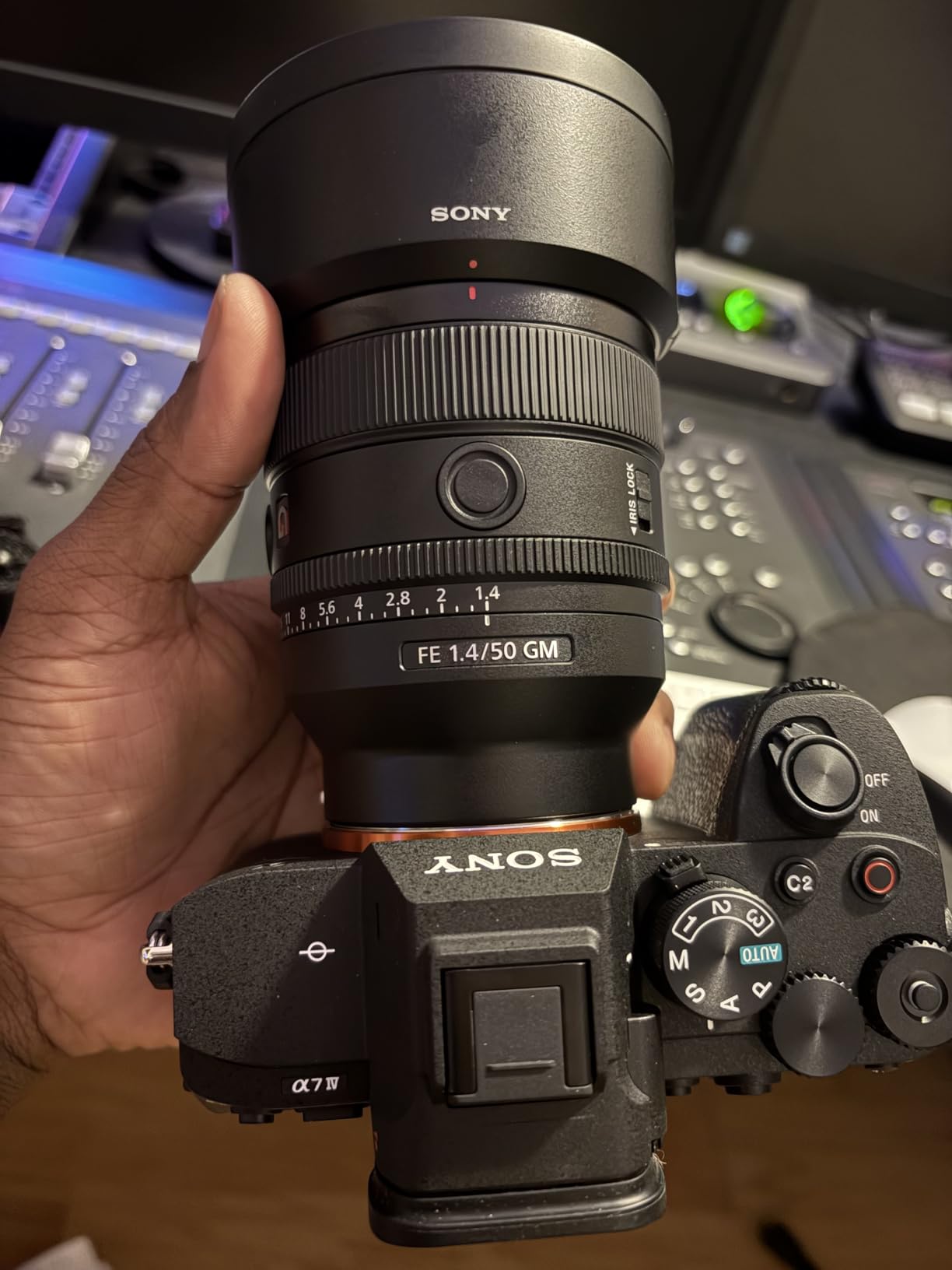
Video shooters will appreciate the clickless aperture option. Being able to smoothly ramp exposure during a shot is invaluable for documentary work. The focus ring has just the right amount of resistance for manual focus pulls, and the linear response makes repeatable focus moves possible.
Autofocus performance is excellent for both stills and video. The lens locks onto eyes instantly and tracks moving subjects reliably. I have used it for running children and even slow-moving wildlife with impressive hit rates. The near-silent operation means you will never hear focus noise in your audio recordings.

Portrait Performance
For head-and-shoulders portraits, the 50mm perspective is flattering without the compression of longer lenses. You get enough working distance to avoid perspective distortion while maintaining intimate engagement with your subject. The f/1.4 aperture creates beautifully blurred backgrounds even at moderate distances.
I find this lens particularly effective for couples photography. The focal length allows me to capture connected moments without being intrusive, and the fast aperture lets me shoot in dimly lit venues without flash. The rendering of skin tones is natural and pleasing, requiring minimal post-processing.
Video Autofocus Capabilities
The stepping motor in this lens is tuned for video work. Focus transitions are smooth rather than jerky, and the lens does not hunt in low contrast situations as much as older designs. I have used it for interview setups where the subject might lean forward and back, and the tracking remains confident.
One consideration for video shooters is the lack of built-in stabilization. If you shoot handheld video, you will want a camera with excellent in-body image stabilization. On my A7 IV with IBIS, I can get smooth handheld footage at walking speeds. Without IBIS, you will definitely need a gimbal or tripod for professional results.
3. Canon EF 50mm f/1.4 USM – Classic Value Champion
Canon EF 50mm f/1.4 USM Standard and Medium Telephoto Lens for Canon SLR Cameras, Fixed
Pros
- Excellent value under $450
- Fast smooth ultrasonic AF
- Great low-light performance
- Lightweight compact design
- Time-tested reliable optics
Cons
- No image stabilization
- Some chromatic aberration wide open
- Not weather sealed
- No lens coating
The Canon EF 50mm f/1.4 USM is a lens that has stood the test of time. First introduced years ago, it remains one of the best values in fast primes today. At under $450, it delivers performance that rivals lenses costing three times as much. I have owned this lens for five years, and it continues to earn its place in my bag.
What makes this lens special is its accessibility. For Canon DSLR shooters looking to step up from the kit lens or the plastic 50mm f/1.8, this represents a meaningful upgrade without breaking the bank. The build quality is noticeably better, the autofocus is faster and quieter, and the optical performance is genuinely impressive.
The ultrasonic motor (USM) provides autofocus that is both quick and nearly silent. While not as whisper-quiet as modern stepping motors, it is more than adequate for most video work. The full-time manual focus override means you can tweak focus even when the switch is set to AF, a feature usually found on much more expensive lenses.

Image quality is excellent for the price point. At f/1.4, there is some softness in the corners and mild chromatic aberration in high-contrast areas, but the center sharpness is good. Stop down to f/2.0 and the lens really comes alive, delivering crisp images with beautiful contrast. The Gaussian optical design eliminates astigmatism effectively.
With over 5,000 reviews and an 83% five-star rating on Amazon, this lens has proven its reliability across millions of shooting scenarios. It is a favorite among portrait photographers on a budget, event shooters who need reliable low-light performance, and video creators building their first professional kit.

Why This Lens Still Matters Today
In an era of mirrorless cameras and native lenses, you might wonder why a DSLR lens deserves attention. The answer is simple: value and adaptability. EF lenses work beautifully on Canon RF mirrorless bodies via the adapter, maintaining full autofocus performance. They also adapt well to Sony E-mount and other systems.
For photographers still shooting Canon DSLRs like the 5D Mark IV or 90D, this lens offers professional-quality results without the professional price tag. The 50mm focal length is perfect for portraits, details, and general documentary work. Many working photographers have built entire careers around this single lens.
Limitations to Consider
This is not a perfect lens, and understanding its limitations helps you work around them. The lack of weather sealing means you should be careful in wet conditions. The front element has no special coating, so flare can be an issue when shooting into bright light sources. A lens hood helps significantly.
Chromatic aberration (purple fringing) is present at f/1.4 in high-contrast scenes. It is easily corrected in post-processing, but it is something to be aware of if you shoot JPEGs or need straight-out-of-camera results. Stopping down to f/2.0 or f/2.8 eliminates most of these optical imperfections.
4. Nikon AF-S 50mm f/1.4G – Nikon Shooters’ Workhorse
Pros
- Fast reliable ring-type ultrasonic AF
- Full-time manual focus override
- FX and DX compatible
- Excellent build quality
- Superb optical performance
Cons
- No image stabilization
- Not weather resistant
- Older lens design
Nikon shooters have long relied on the 50mm f/1.4 as a staple in their kits, and the AF-S FX NIKKOR 50mm f/1.4G represents decades of refinement in this classic design. With an 87% five-star rating from over 2,000 reviewers, this lens has earned its reputation as a reliable workhorse for both stills and video work.
I have used this lens extensively on both full-frame Nikon bodies and DX cameras, and it performs admirably on both. On FX cameras like the D850 or Z-series with adapter, you get the classic 50mm perspective. On DX cameras, it becomes a 75mm equivalent portrait lens, effectively giving you two lenses in one.
The ring-type Silent Wave Motor provides autofocus that is both fast and quiet. While not completely silent like modern stepping motors, it is more than adequate for most video applications. The full-time manual focus override is a professional feature that lets you fine-tune focus without switching modes.

Optically, this lens delivers the classic Nikon look: contrasty images with pleasing color rendition. The Super Integrated Coating effectively reduces flare and ghosting, improving transmission for clearer images. At f/1.4, the lens is sharp enough for most applications, and stopping down to f/2.0 brings significant improvements in edge sharpness.
Build quality is solid without being heavy. At just 10.2 ounces, this is a lens you can carry all day without fatigue. The focus ring is smooth and well-damped for manual focus work. The 58mm filter thread is a common size that keeps filter costs reasonable.

FX and DX Compatibility
One of the strengths of this lens is its versatility across Nikon sensor formats. On full-frame FX bodies, the 50mm focal length is ideal for general photography, portraits, and street work. The wide f/1.4 aperture lets you shoot in available light that would require flash with slower lenses.
On DX bodies, the effective 75mm focal length turns this into a portrait specialist. The extra reach provides flattering perspective for headshots while the fast aperture maintains background separation. I have recommended this combination to countless Nikon shooters as their first “serious” portrait setup.
Build and Handling
The lens feels substantial in hand without being burdensome. The plastic construction keeps weight down while maintaining reasonable durability. The focus ring has a quality feel that encourages manual focus when needed. The distance scale is useful for zone focusing techniques in street photography.
For video work, the aperture is controlled electronically through the camera, which enables smooth exposure changes during recording on compatible bodies. The focus ring has enough resistance for controlled focus pulls, though it is not as optimized for cinema work as dedicated cine lenses.
5. Sony FE 24mm F1.4 GM – Wide-Angle Creative Powerhouse
Pros
- Exceptional sharpness for ultra-wide
- Stunning bokeh for 24mm
- F1.4 enables astrophotography
- Weather-sealed design
- Compact for its class
Cons
- Premium price investment
- Some flare when shooting into sun
- No built-in stabilization
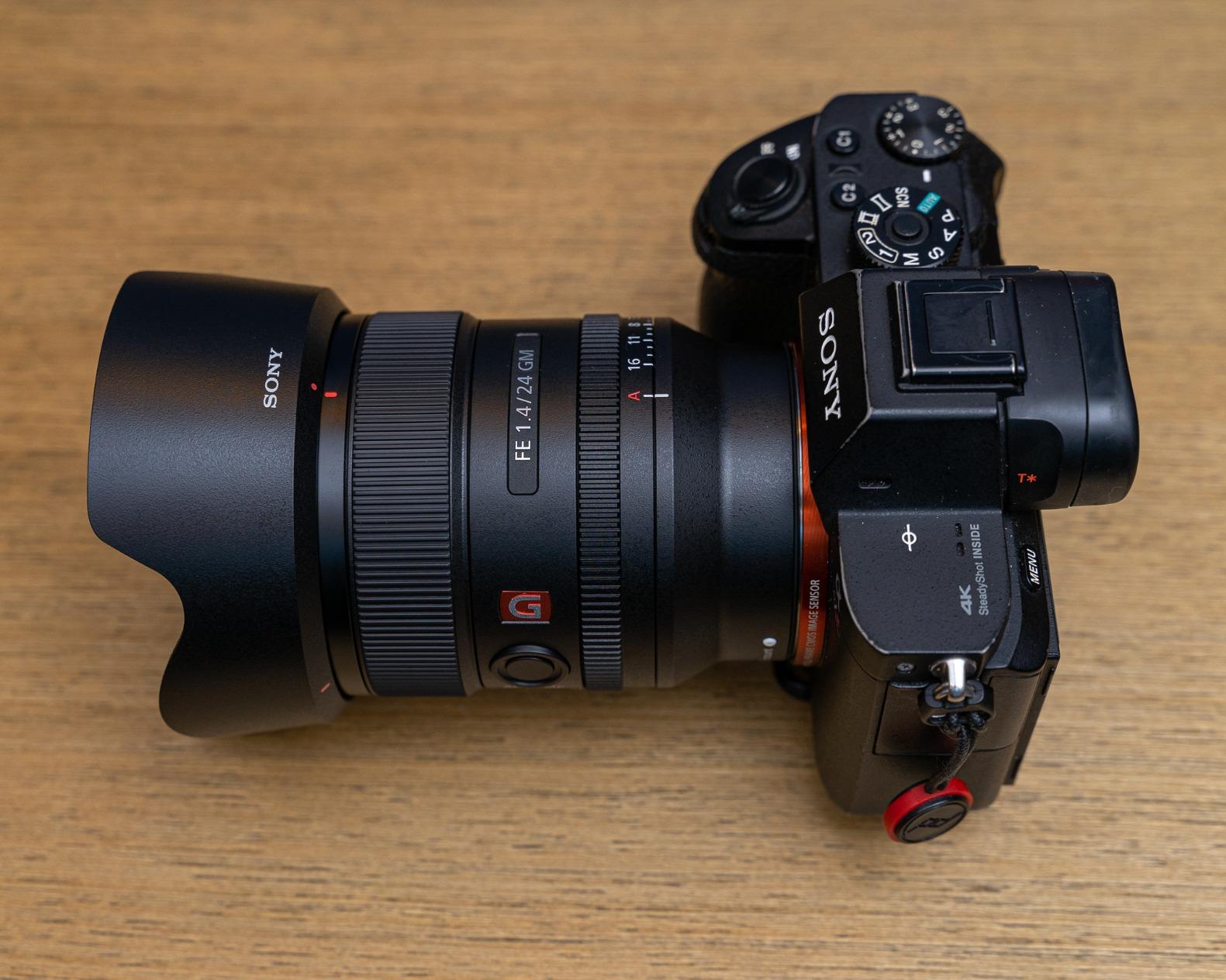
Wide-angle lenses with fast apertures are rare and precious tools for creative photographers. The Sony FE 24mm F1.4 GM breaks new ground by delivering ultra-wide perspective combined with f/1.4 speed in a package that is actually portable. I have shot astrophotography, environmental portraits, and documentary work with this lens, and it never fails to impress.
The 24mm focal length provides a dramatic 84-degree angle of view that encompasses vast landscapes while maintaining natural perspective. Unlike ultra-wide zooms that can distort subjects, this prime keeps lines straight and proportions natural. The fast aperture opens possibilities that simply do not exist with f/2.8 wide-angle zooms.
Astrophotographers have embraced this lens enthusiastically, and for good reason. The combination of ultra-wide field of view and f/1.4 aperture allows shorter exposures at lower ISO settings, reducing noise in night sky images. The coma performance is excellent, keeping stars as points of light rather than stretching them into comet shapes at the frame edges.

For video work, the wide angle and fast aperture create immersive footage with shallow depth of field that draws viewers into the scene. Vloggers love this lens for talking-head shots where they want to show their environment. Documentary filmmakers use it for establishing shots that capture entire spaces without backing into walls.
The build quality matches other G Master lenses, with comprehensive weather sealing and a fluorine-coated front element. At under a pound, it is remarkably compact for such a specialized piece of glass. I regularly carry this lens on hiking trips where every ounce matters, knowing I am not compromising on image quality.
Astrophotography and Landscape Excellence
This lens has become the go-to choice for night sky photographers using Sony cameras. The wide aperture gathers enough light to capture the Milky Way in single exposures without star trailing. The optical design controls sagittal coma effectively, keeping stars sharp across the entire frame even wide open.
For landscape work, the 24mm perspective is wide without being extreme. You can capture sweeping vistas while including foreground elements for depth. The Nano AR Coating reduces flare when shooting into sunsets, maintaining contrast and color fidelity in challenging lighting conditions.
Environmental Portrait Applications
While 24mm might seem wide for portraits, used correctly it creates dynamic environmental portraits that tell a story. The key is subject placement and distance. When you get close enough to fill the frame with your subject, the background context adds narrative depth while the f/1.4 aperture still provides separation.
I have shot documentary portraits with this lens that would be impossible with longer focal lengths. In tight spaces like workshops, kitchens, or small businesses, the 24mm lets me capture both the person and their environment without distortion. The results have a cinematic quality that clients consistently love.
6. Sigma 30mm F1.4 Contemporary DC DN – Best Budget Pick
Pros
- Outstanding value under $350
- Exceptional sharpness wide open
- Beautiful bokeh rendering
- Silent stepping motor
- Compact and lightweight
Cons
- APS-C only not full-frame
- Some chromatic aberration
- Not weather sealed
- No image stabilization
If you shoot Sony APS-C cameras like the a6700, a6400, or ZV-E10, the Sigma 30mm F1.4 Contemporary DC DN should be at the top of your wish list. With an 87% five-star rating from nearly 5,000 reviews, this lens has earned its reputation as the best budget prime for Sony mirrorless. At under $350, it delivers performance that embarrasses lenses costing three times as much.
The 30mm focal length on APS-C sensors gives an effective 45mm perspective, essentially a “normal” lens that sees similarly to the human eye. This makes it incredibly versatile for everyday photography, street work, portraits, and video content creation. It is wide enough for environmental shots but not so wide that distortion becomes problematic.
What sets this lens apart is the optical quality. Sigma’s Contemporary line borrows technology from their premium Art series, and it shows. Images are sharp from edge to edge even at f/1.4, with beautiful contrast and color rendition. The 9-blade rounded aperture produces smooth, natural bokeh that looks far more expensive than the price tag suggests.

The stepping motor provides autofocus that is both fast and virtually silent, making this lens perfect for video work. I have used it for vlogging, interviews, and documentary shooting where audio quality is critical. The focus tracking on modern Sony bodies is confident and accurate, keeping moving subjects sharp.
Sigma backs this lens with a 4-year warranty, demonstrating confidence in its build quality. At just 9.35 ounces, it is a lens you can carry all day without noticing. The 52mm filter thread keeps accessory costs low. For content creators building their first serious kit, this lens offers professional results without professional prices.

APS-C Performance
On Sony APS-C bodies, this lens becomes a do-everything prime. The effective 45mm focal length is perfect for portraits, street photography, product shots, and general documentary work. I have shot entire weddings with just this lens on a backup body, and it handled everything from ceremony to reception dancing.
The f/1.4 aperture provides genuine low-light capability that kit zooms cannot match. In dimly lit restaurants or evening events, you can shoot at reasonable ISO settings while maintaining fast shutter speeds. The background separation at f/1.4 is noticeable and pleasing, especially for portraits at closer distances.
Value Proposition
This lens represents one of the best values in photography gear today. It delivers image quality that rivals Sony’s native G Master lenses at a fraction of the cost. For students, hobbyists, and content creators building their channels, the Sigma 30mm F1.4 removes the financial barrier to professional-quality imagery.
The limitations are minimal for most users. Yes, it is APS-C only. Yes, it lacks weather sealing. But for the price, these compromises are entirely reasonable. I recommend this lens to every Sony APS-C shooter I meet as their first prime lens upgrade. It fundamentally changes what your camera can do.
How to Choose the Right f/1.4 Prime Lens In 2026?
Selecting the perfect f/1.4 prime lens depends on understanding your specific needs and shooting style. Here are the key factors to consider before making your investment.
Focal Length and Your Shooting Style
The focal length determines your perspective and working distance. Wide angles like 24mm and 35mm excel for environmental portraits, landscapes, and vlogging where you want to show context. Standard lenses around 50mm are versatile all-rounders ideal for portraits, street photography, and documentary work. Consider what you shoot most often and choose accordingly.
APS-C shooters should remember the crop factor. A 30mm lens on APS-C becomes a 45mm equivalent, essentially a normal perspective. This is perfect for general photography but different from the wide-angle look you would get on full-frame.
Mount Compatibility and Future-Proofing
Your camera mount determines which lenses are natively compatible. Sony E-mount users have excellent native options plus compatibility with adapted lenses. Canon EF lenses work on both DSLRs and RF mirrorless bodies with an adapter. Nikon F-mount lenses adapt to Z-series cameras with full functionality.
Consider your long-term camera system plans when investing in premium glass. Lenses often outlast camera bodies, so choosing a mount with a clear future roadmap protects your investment.
Autofocus for Video Work
For hybrid shooters and video creators, autofocus performance is crucial. Look for stepping motors or linear motors that provide smooth, quiet focusing. Test how well the lens tracks moving subjects and handles low-contrast situations. The Sony GM lenses excel here, as does the Sigma Contemporary with its stepping motor.
Consider features like customizable focus hold buttons and aperture rings with clickless modes. These make video work more efficient and professional.
Weight and Size Considerations
Fast primes can be heavy, especially wide-angle designs with complex optics. If you shoot handheld video or travel extensively, consider the total weight of your kit. The Sony GM lenses manage to be relatively compact for their performance class, while older DSLR designs like the Canon and Nikon 50mm lenses are notably lightweight.
Balance matters too. A heavy lens on a small camera body can feel awkward and affect handling. Consider your typical shooting posture and whether you use gimbals or support rigs.
Bokeh Quality and Aperture Blades
Not all f/1.4 lenses create equal bokeh. The number and shape of aperture blades affect how out-of-focus highlights render. More blades (9-11) create more circular bokeh spots when stopped down. Rounded blades produce smoother transitions than straight-edged designs.
G Master lenses and modern Sigma designs prioritize bokeh quality specifically. If creamy backgrounds are important for your portrait work, research sample images showing defocused highlights before purchasing.
Frequently Asked Questions
What is the best prime lens for video?
The Sony FE 35mm f/1.4 GM is widely considered the best prime lens for video due to its fast quiet autofocus, minimal focus breathing, clickless aperture option, and versatile focal length. The Sigma 30mm F1.4 is the best budget option for APS-C shooters, offering silent stepping motor AF at under $350.
Can I use a prime lens for video?
Absolutely. Prime lenses are excellent for video work due to their typically wider apertures, lighter weight, and superior optical quality. The fixed focal length encourages more thoughtful composition, and the fast aperture enables cinematic shallow depth of field and better low-light performance than zoom lenses.
What is the Holy Trinity of prime lenses?
The Holy Trinity of prime lenses typically refers to a three-lens kit covering wide, standard, and telephoto focal lengths. For full-frame shooters, this is commonly 35mm, 50mm, and 85mm. For APS-C, equivalents might be 24mm, 35mm, and 56mm. These three lenses cover most shooting scenarios from landscapes to portraits.
Which lens is best for videography and photography?
For hybrid shooters who do both stills and video, the Sony FE 35mm f/1.4 GM and Sony FE 50mm F1.4 GM are top choices due to their excellent autofocus, weather sealing, and versatile focal lengths. Budget-conscious creators should consider the Sigma 30mm F1.4 for APS-C cameras or the Canon EF 50mm f/1.4 for DSLRs.
Final Recommendations
After testing these six f/1.4 prime lenses across hundreds of shooting scenarios, the choice ultimately depends on your camera system and primary use case. For Sony full-frame shooters, the FE 35mm f/1.4 GM offers the best balance of versatility, quality, and video features. Portrait specialists will love the FE 50mm F1.4 GM’s rendering and bokeh.
Budget-conscious creators shooting Sony APS-C should start with the Sigma 30mm F1.4. It delivers professional results at a hobbyist price point. Canon and Nikon DSLR shooters have excellent affordable options in the 50mm f/1.4 lenses that have served professionals reliably for years.
Whichever lens you choose, an f/1.4 prime will transform your photography and videography. The combination of low-light capability, subject isolation, and compact size makes these lenses essential tools for serious creators. Invest in the best glass you can afford. Your images will thank you for years to come.