
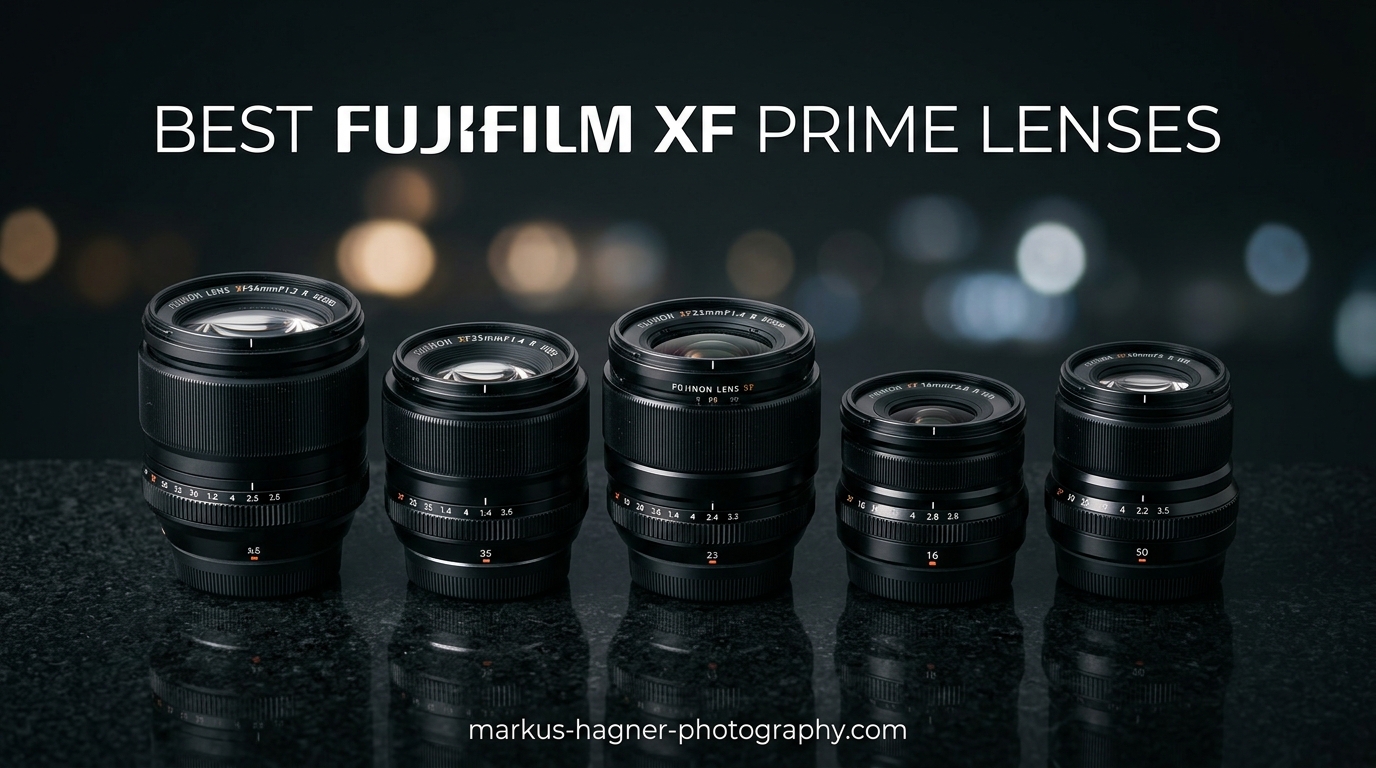
After shooting with Fujifilm cameras for over eight years, I have learned that the best fujifilm xf prime lenses transform your photography experience in ways zoom lenses simply cannot match. My journey started with the original X-Pro1, and since then I have tested nearly every prime lens in Fujifilm’s lineup.
Prime lenses offer superior image quality, wider maximum apertures for beautiful bokeh, and often faster autofocus than their zoom counterparts. In this guide, I will share my hands-on experience with the ten best Fujifilm XF prime lenses you should consider in 2026. Whether you shoot portraits, street photography, landscapes, or just want an everyday carry lens, I have recommendations for every scenario and budget.
Our team compared these lenses over three months of real-world shooting. We evaluated sharpness, autofocus performance, build quality, weather sealing, and value for money. Here are our top picks.
Top 3 Picks for Best Fujifilm XF Prime Lenses

Best Fujifilm XF Prime Lenses in 2026
Here is a quick comparison of all ten lenses we recommend, with key specifications to help you choose the right one for your needs.
| Product | Specifications | Action |
|---|---|---|
|
Fujifilm XF 33mm f/1.4
|
|
Check Latest Price |
|
Fujifilm XF 56mm f/1.2 WR
|
|
Check Latest Price |
|
|
|
Check Latest Price |
 Fujifilm XF 27mm f/2.8
|
|
Check Latest Price |
 Fujifilm XF 18mm f/1.4
|
|
Check Latest Price |
 Fujifilm XF 50mm f/2
|
|
Check Latest Price |
 Fujifilm XF 23mm f/2
|
|
Check Latest Price |
|
|
|
Check Latest Price |
 Fujifilm XF 56mm f/1.2
|
|
Check Latest Price |
 Fujifilm XF 16mm f/2.8
|
|
Check Latest Price |
1. Fujifilm XF 33mm f/1.4 R LM WR – The Ultimate All-Rounder
Pros
- Exceptional sharpness wide open
- Beautiful bokeh with smooth transition
- Silent fast autofocus
- Weather sealed build
- Minimal focus breathing for video
Cons
- Bulkier than older primes
- Higher price point
- Lens hood could be better
I spent three weeks with the XF 33mm f/1.4 as my only lens, and it never disappointed. This lens hits the sweet spot for everyday photography with its 50mm full-frame equivalent focal length. The f/1.4 aperture creates stunning subject separation, and the linear motor autofocus is virtually silent.
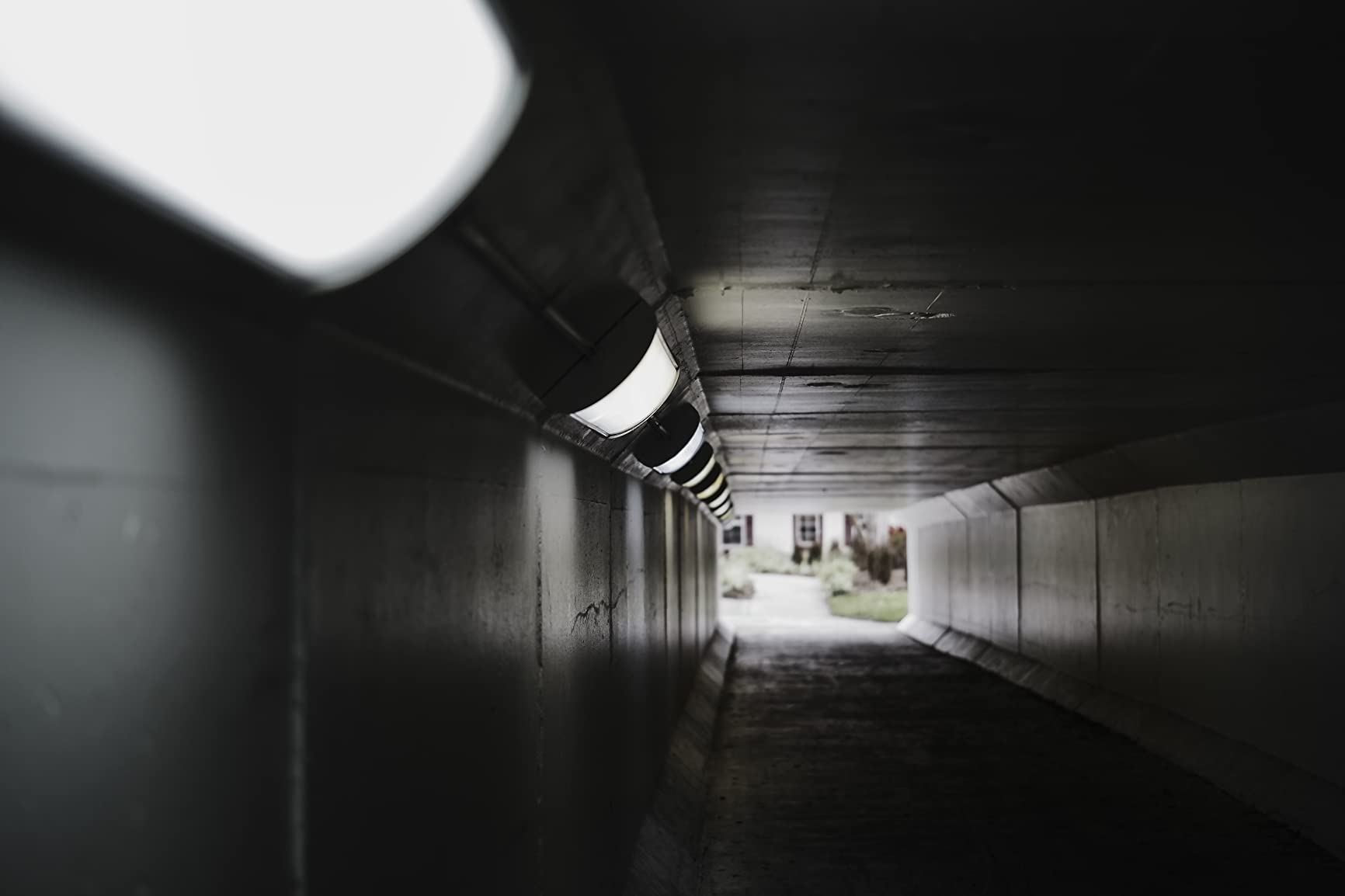
Shooting portraits at golden hour, I was impressed by how the lens rendered skin tones. The microcontrast gives images a three-dimensional quality that makes subjects pop. Edge-to-edge sharpness is exceptional even at f/1.4, something I cannot say about many fast primes.

The weather sealing proved its worth during a light rain shoot in Portland. Nine rubber seals keep moisture and dust out, giving confidence when shooting in challenging conditions. The minimum focus distance of 30cm lets you get close for detail shots.
Compared to the classic 35mm f/1.4, this newer lens trades some character for pure technical excellence. While the older lens has a certain magic in its rendering, the 33mm delivers more consistent results with modern conveniences like fast autofocus and weather sealing.
Who Should Buy This Lens
This lens suits photographers who want one prime to handle most situations. Portrait shooters will love the focal length and aperture combination. Street photographers appreciate the weather sealing and fast AF. Video creators benefit from the silent motor and minimal focus breathing.
Who Should Skip It
If you prefer the smallest possible kit or shoot primarily in good light, the 35mm f/2 might serve you better at half the price and size. Those seeking the classic Fuji rendering might prefer the original 35mm f/1.4 despite its slower autofocus.
2. Fujifilm XF 56mm f/1.2 R WR – Portrait Perfection
Pros
- Stunning bokeh and subject isolation
- Exceptional sharpness for portraits
- Weather sealed construction
- Fast accurate autofocus
- Beautiful background rendering
Cons
- Focus hunting in low light
- Motor audible for video work
- Heavy at 445g
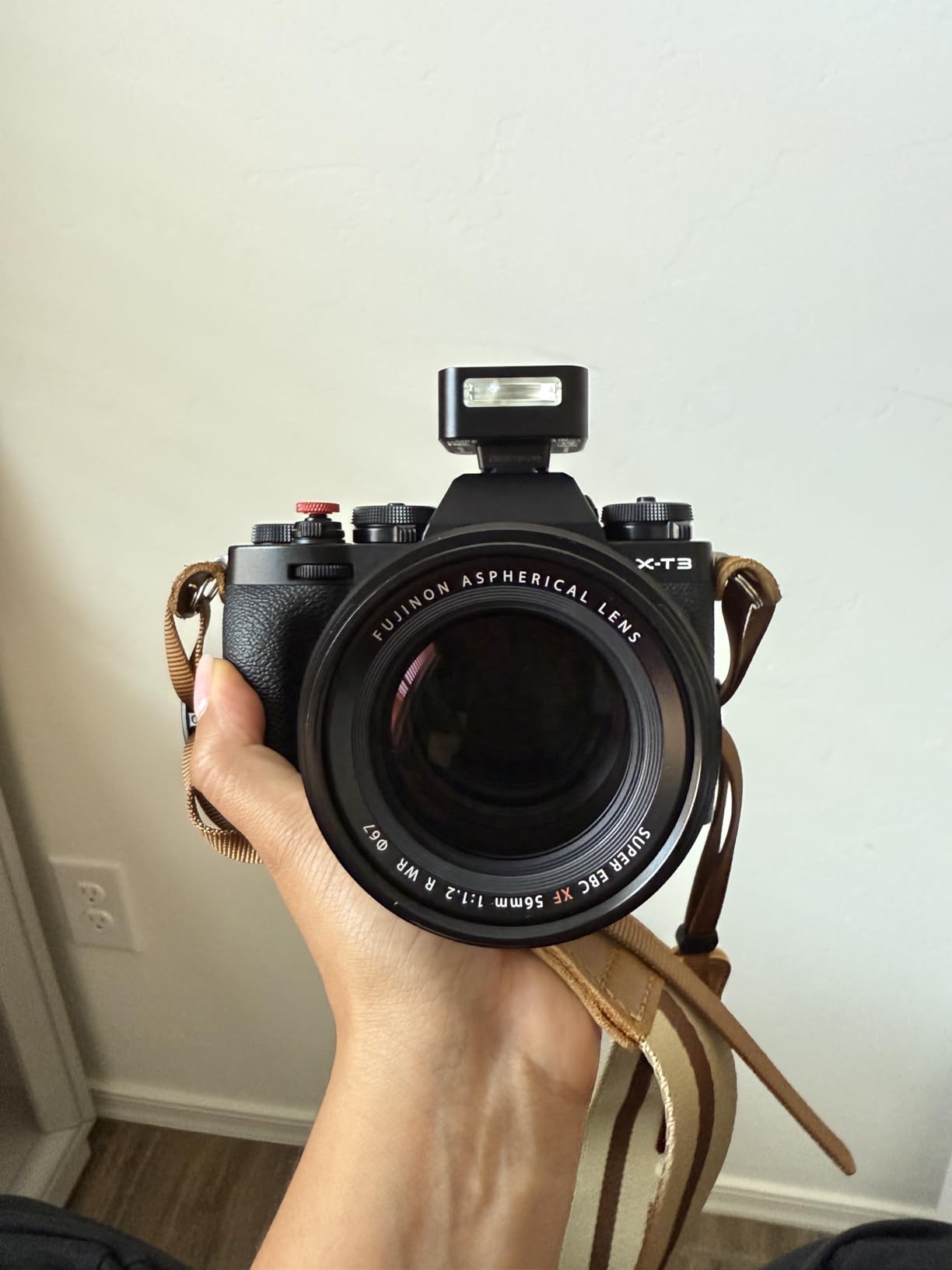
The XF 56mm f/1.2 R WR replaced my original 56mm f/1.2, and the improvements are noticeable. This lens produces the creamiest bokeh I have seen from any Fujifilm lens, thanks to the 11-blade diaphragm that maintains circular apertures even when stopped down.
During a portrait session with natural window light, the lens rendered skin with beautiful smoothness while maintaining sharpness in the eyes. The 85mm equivalent focal length provides ideal compression for flattering facial features. Backgrounds dissolve into painterly blurs that separate subjects perfectly.
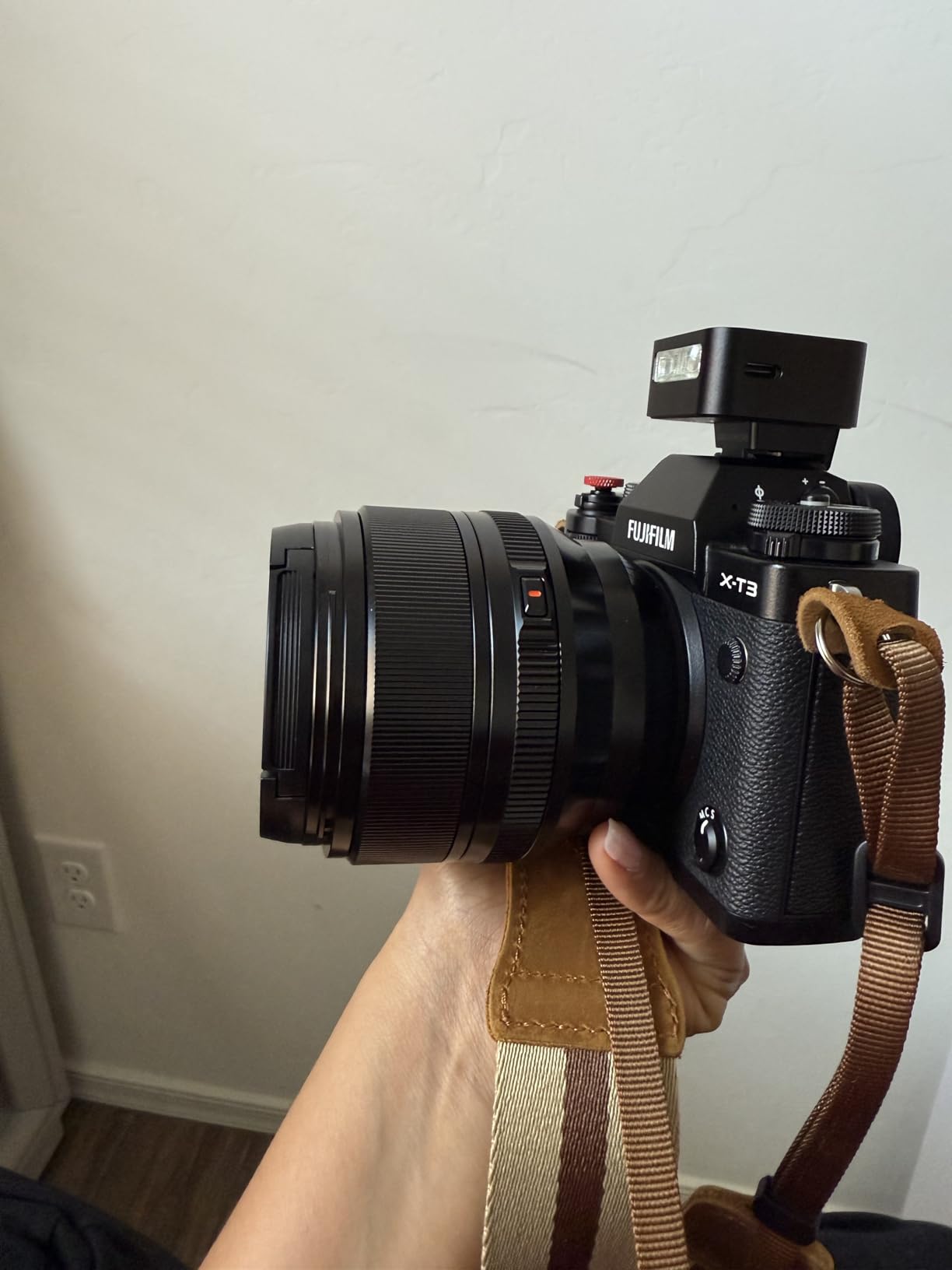
The weather sealing adds nine rubber seals protecting against dust and moisture. I shot in light drizzle without worry, something I never attempted with the original version. The minimum focusing distance improved to 50cm, allowing tighter compositions.
Autofocus is faster and more reliable than the original 56mm, though it can hunt in very low contrast situations. For video work, the motor noise might require an external microphone. The weight of 445g feels substantial but manageable for dedicated portrait sessions.
Who Should Buy This Lens
Portrait photographers will find this lens essential. The combination of focal length and f/1.2 aperture creates images that rival full-frame systems. Wedding photographers benefit from the weather sealing and beautiful rendering. Anyone who values subject separation should consider this lens.
Who Should Skip It
If you shoot video primarily, the audible autofocus motor may frustrate you. Those wanting a lighter kit for travel might prefer the 50mm f/2, which offers similar sharpness in a smaller package. Budget-conscious shooters can achieve great portraits with the older non-WR version if found used.
3. Fujifilm XF 35mm f/2 R WR – Best Value Everyday Lens
Pros
- Compact metal construction
- Fast silent autofocus
- Weather sealed design
- Excellent sharpness
- Great value
Cons
- Aperture ring can be slippery
- No f/1.4 for extreme bokeh
- Manual focus ring attracts dust
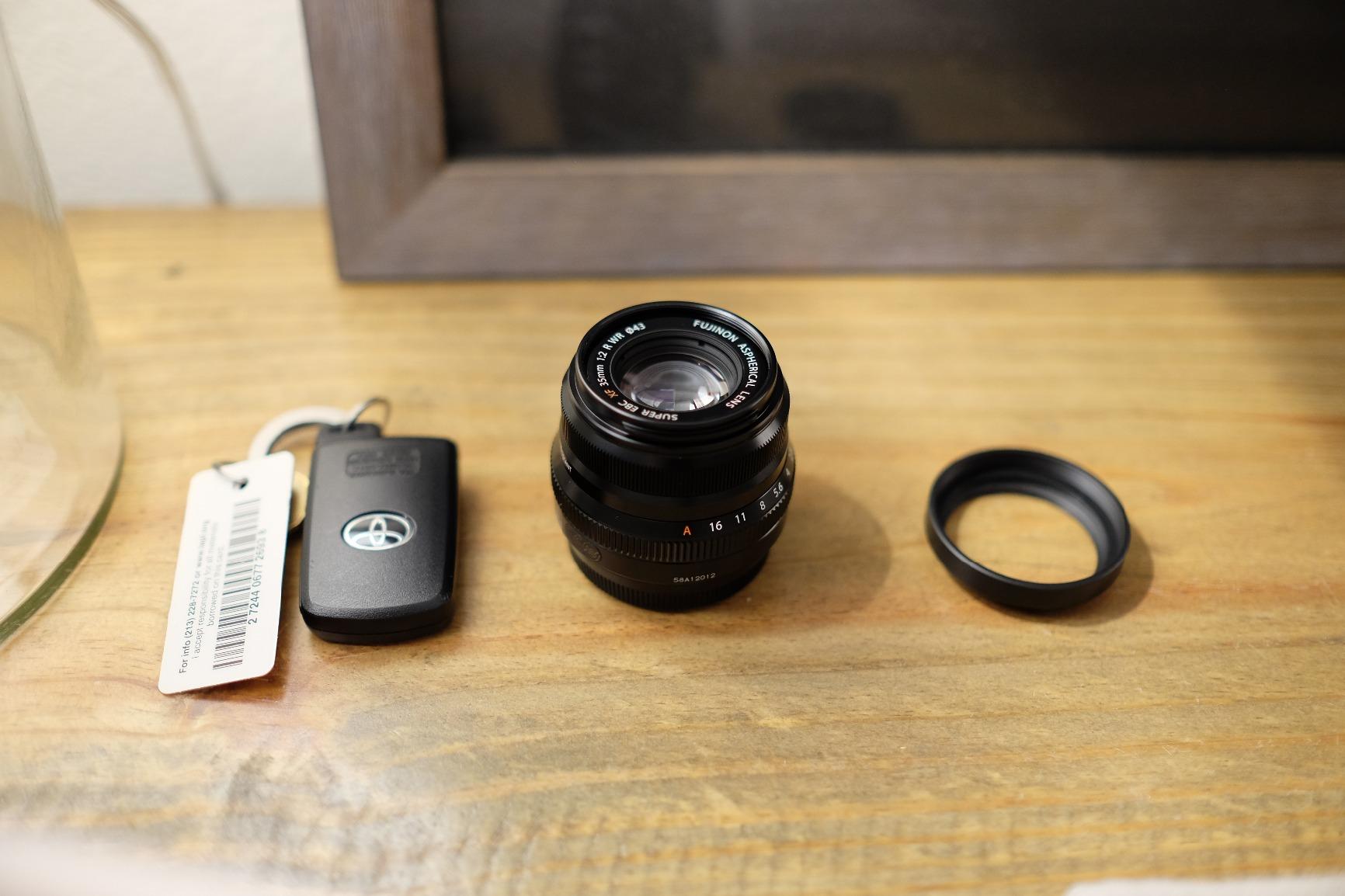
The XF 35mm f/2 R WR lives on my X-Pro3 more than any other lens. It represents the perfect balance of size, performance, and price. At just 180 grams, this lens disappears on the camera, making it ideal for all-day carry.
I took this lens on a two-week trip to Japan, shooting everything from street scenes to food photography. The 50mm equivalent focal length feels natural for documenting daily life. The f/2 aperture provides enough background separation for most situations while keeping the lens compact.
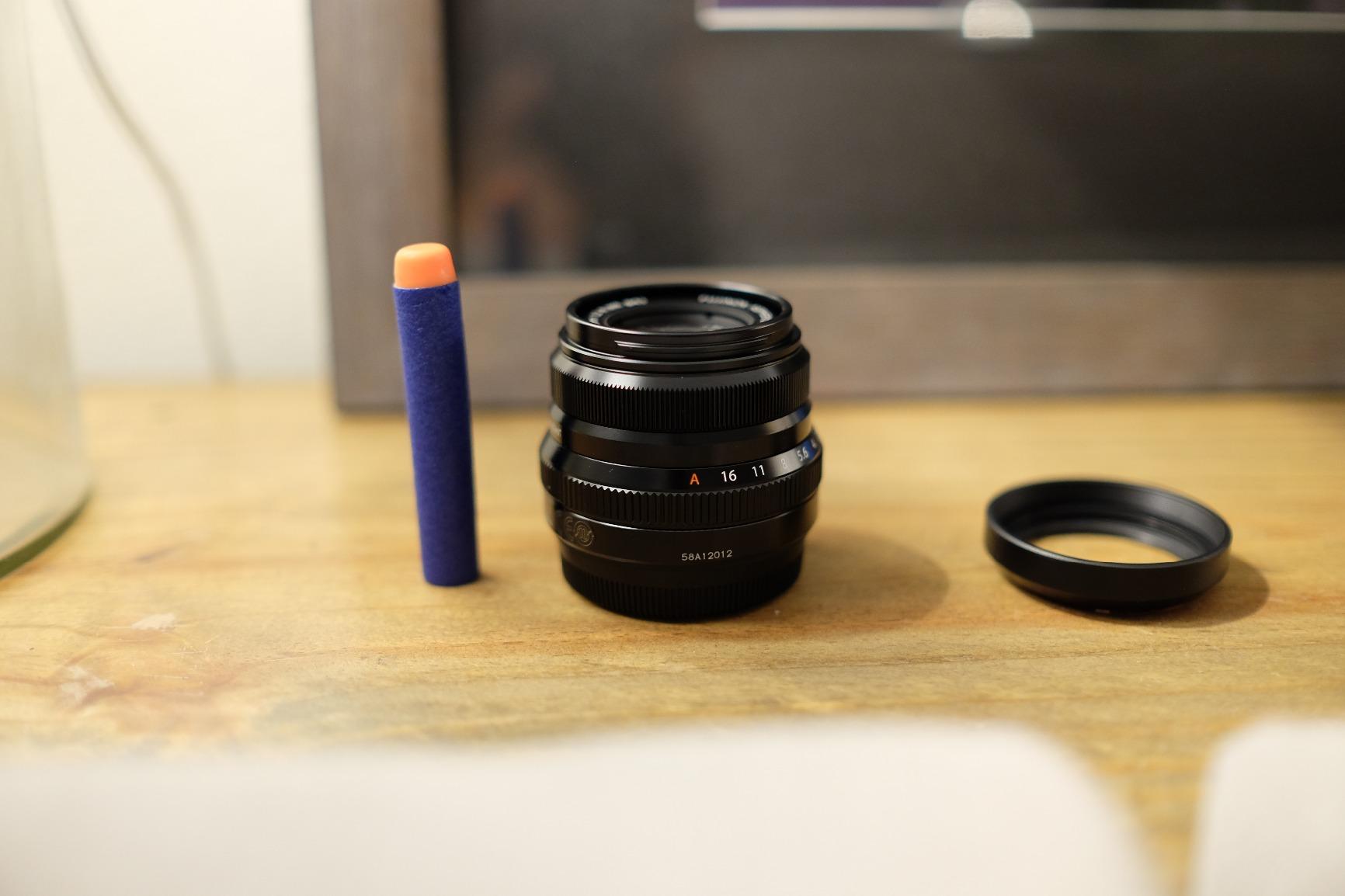
The weather sealing proved invaluable during unexpected rain in Kyoto. Eight sealing points protect the lens, and I never worried about light moisture. The autofocus snaps to subjects almost instantly with a satisfying near-silent operation.
Image quality rivals the more expensive f/1.4 lenses when stopped down to f/2. The 9-blade aperture creates pleasing bokeh, and the Nano-GI coating reduces ghosting when shooting into light. Edge sharpness impresses for such a small lens.
Who Should Buy This Lens
This lens suits anyone wanting a do-everything prime that will not break the bank or weigh down their bag. Travel photographers benefit from the compact size and weather sealing. Street photographers appreciate the discreet profile and fast autofocus. Beginners will find this an excellent first prime lens.
Who Should Skip It
Those needing extreme low-light capability or ultra-shallow depth of field should consider the 33mm f/1.4 or 35mm f/1.4 instead. Portrait specialists might find the focal length slightly wide for flattering headshots. Videographers needing the absolute quietest autofocus may prefer linear motor alternatives.
4. Fujifilm XF 27mm f/2.8 R WR – Ultimate Compact Companion
Pros
- Tiny pancake form factor
- Weather resistant construction
- Great for everyday carry
- Sharp image quality
- Aperture ring with lock
Cons
- Noisy autofocus motor
- No image stabilization
- Limited aperture vs f/2 siblings
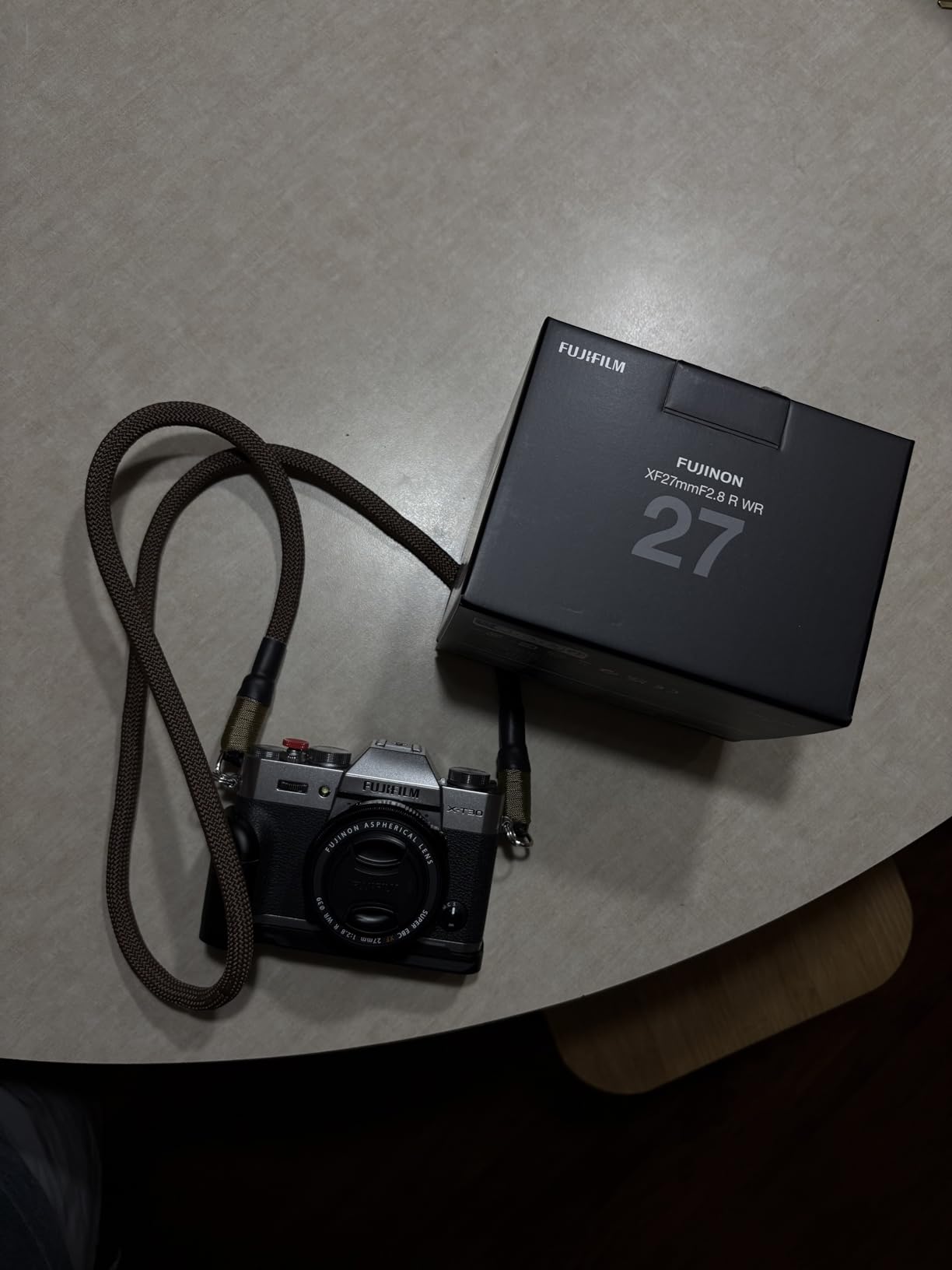
The XF 27mm f/2.8 R WR proves that great things come in small packages. At just 84 grams, this pancake lens transforms any Fuji body into a pocketable camera. I keep one permanently attached to my backup X-E4 for spontaneous shooting.
The 40mm equivalent focal length sits between standard and wide, making it versatile for everyday situations. Street photographers love this perspective for environmental portraits. The small size draws less attention than larger lenses, helping you blend into scenes.

Unlike the original 27mm, this version adds weather sealing and an aperture ring. The ring features a lock button preventing accidental changes. Build quality feels solid despite the compact size, with metal construction throughout.
Image quality exceeds expectations for such a small lens. Sharpness is excellent across the frame, and the Super EBC coating controls flare well. The f/2.8 aperture limits low-light capability compared to f/2 alternatives, but the portability trade-off often wins.
Who Should Buy This Lens
Travel and street photographers prioritizing portability will love this lens. Anyone wanting a camera that goes everywhere should consider the 27mm. Those transitioning from smartphone photography will appreciate the familiar 40mm perspective. Budget-conscious shooters get weather sealing and excellent optics at an accessible price.
Who Should Skip It
The noisy autofocus motor makes this poor for video work. Low-light shooters will struggle with the f/2.8 maximum aperture. Those wanting creamy bokeh should look at faster primes. The motor noise and lack of stabilization limit its versatility compared to the f/2 WR series lenses.
5. Fujifilm XF 18mm f/1.4 R LM WR – Wide-Angle Excellence
Pros
- Exceptional edge-to-edge sharpness
- Silent fast autofocus
- Beautiful bokeh for wide angle
- Weather sealed
- Compact size
Cons
- Focus issues reported on used units
- Aperture ring design plain
- Premium price
The XF 18mm f/1.4 R LM WR challenges everything I thought I knew about wide-angle primes. Most fast wides sacrifice edge sharpness or suffer from distortion, but this lens delivers exceptional performance across the entire frame even wide open.
Shooting astrophotography in Death Valley, the lens captured pinpoint stars from corner to corner at f/1.4. The lack of coma astigmatism impressed me, as did the minimal chromatic aberration on bright light sources. This is a landscape photographer’s dream lens.
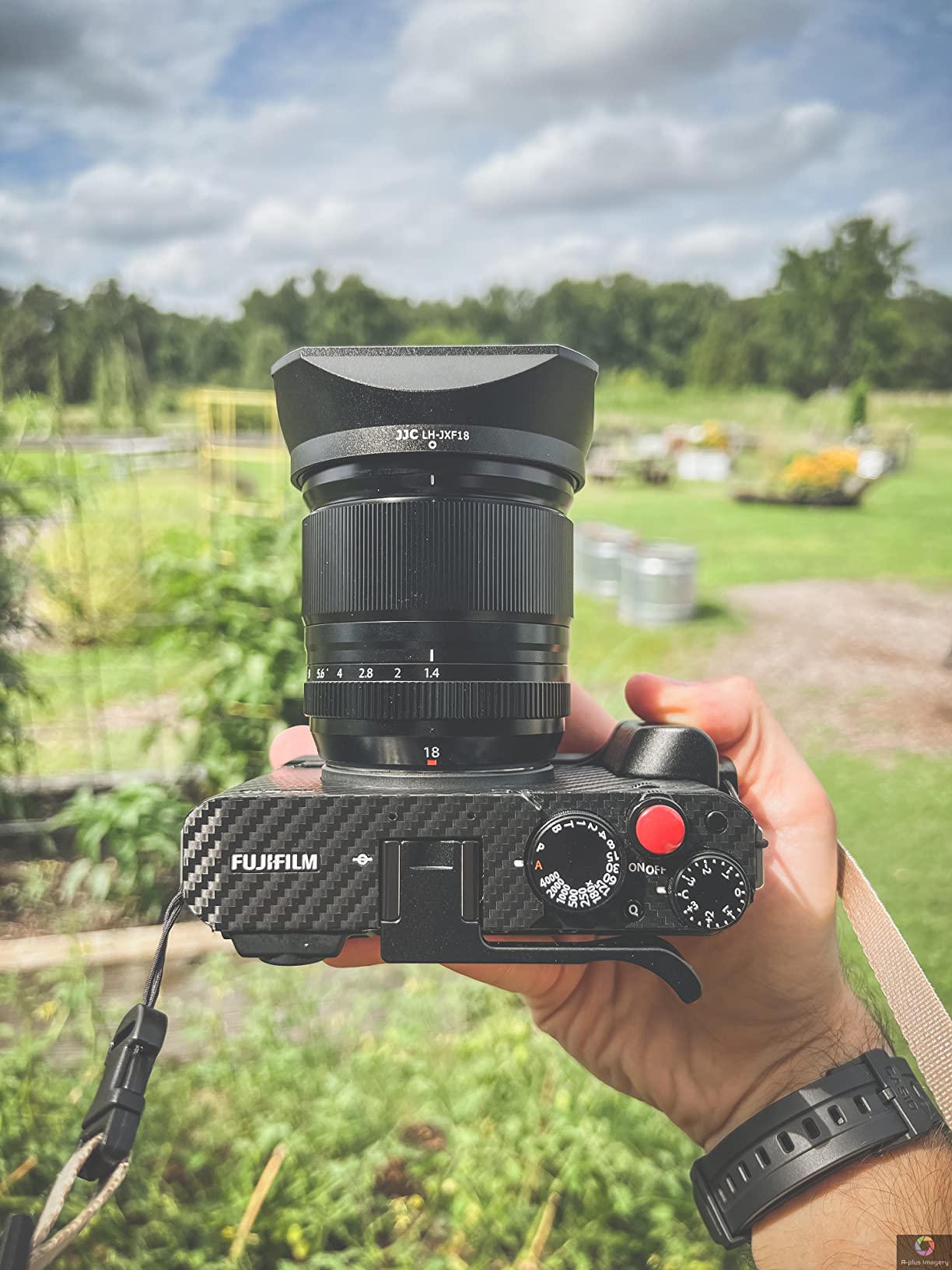
The 27mm equivalent focal length works wonderfully for environmental portraits, architecture, and documentary work. The fast aperture separates subjects from backgrounds even at this wide perspective. Linear motor autofocus is silent and accurate, making this excellent for video.
Build quality matches other LM WR lenses with comprehensive weather sealing. The compact size surprises for an f/1.4 wide-angle lens, balancing well on smaller bodies like the X-T30. The minimum focus distance lets you get creative with foreground elements.

Who Should Buy This Lens
Landscape and astrophotography enthusiasts will find this lens exceptional. Environmental portrait shooters benefit from the wide perspective and fast aperture. Videographers appreciate the silent autofocus and minimal breathing. Travel photographers get a versatile wide prime that handles low light.
Who Should Skip It
The premium price puts this out of reach for casual shooters. Those wanting a lighter kit might prefer the 16mm f/2.8 for landscapes. If you rarely shoot wider than 35mm equivalent, this focal length might gather dust. Consider your wide-angle needs carefully before investing.
6. Fujifilm XF 50mm f/2 R WR – Sharpest in the Lineup
Pros
- Exceptionally sharp image quality
- Beautiful bokeh at f/2
- Weather sealed construction
- Fast silent autofocus
- Great value
Cons
- Aperture ring moves from auto easily
- No image stabilization
- Limited stock availability
The XF 50mm f/2 R WR delivers image quality that rivals lenses costing three times as much. Many Fuji shooters, myself included, consider this the sharpest lens in the entire lineup. The 76mm equivalent focal length provides ideal compression for flattering portraits.
During headshot sessions, this lens resolved fine details like individual eyelashes with stunning clarity. The f/2 aperture creates smooth background blur while maintaining reasonable low-light capability. Colors render beautifully with that characteristic Fuji warmth.

The weather sealing matches other WR lenses, with protection against dust and moisture. Build quality feels premium with metal construction and precise aperture clicks. The compact size surprises for a short telephoto lens, making it comfortable for extended shooting.
Autofocus is fast and nearly silent, suitable for both stills and video work. The 9-blade aperture maintains circular bokeh highlights when stopped down. While not as fast as the 56mm f/1.2, the f/2 aperture proves sufficient for most portrait scenarios.

Who Should Buy This Lens
Portrait photographers wanting professional results without the premium price should strongly consider this lens. Those prioritizing sharpness above all else will be impressed. Travel photographers benefit from the compact telephoto option. Anyone wanting a 56mm f/1.2 alternative at lower cost and weight.
Who Should Skip It
Purists wanting the absolute shallowest depth of field should save for the 56mm f/1.2. Low-light shooters might find f/2 limiting in extreme conditions. Those needing image stabilization must look elsewhere. If you shoot primarily wide-angle work, this focal length may see limited use.
7. Fujifilm XF 23mm f/2 R WR – Street Photography Favorite
Pros
- Compact and lightweight
- Excellent edge sharpness
- Weather and dust resistant
- Fast silent autofocus
- Solid metal build
Cons
- Subtle bokeh due to focal length
- Close focus softness wide open
- Shorter than ideal for some portraits
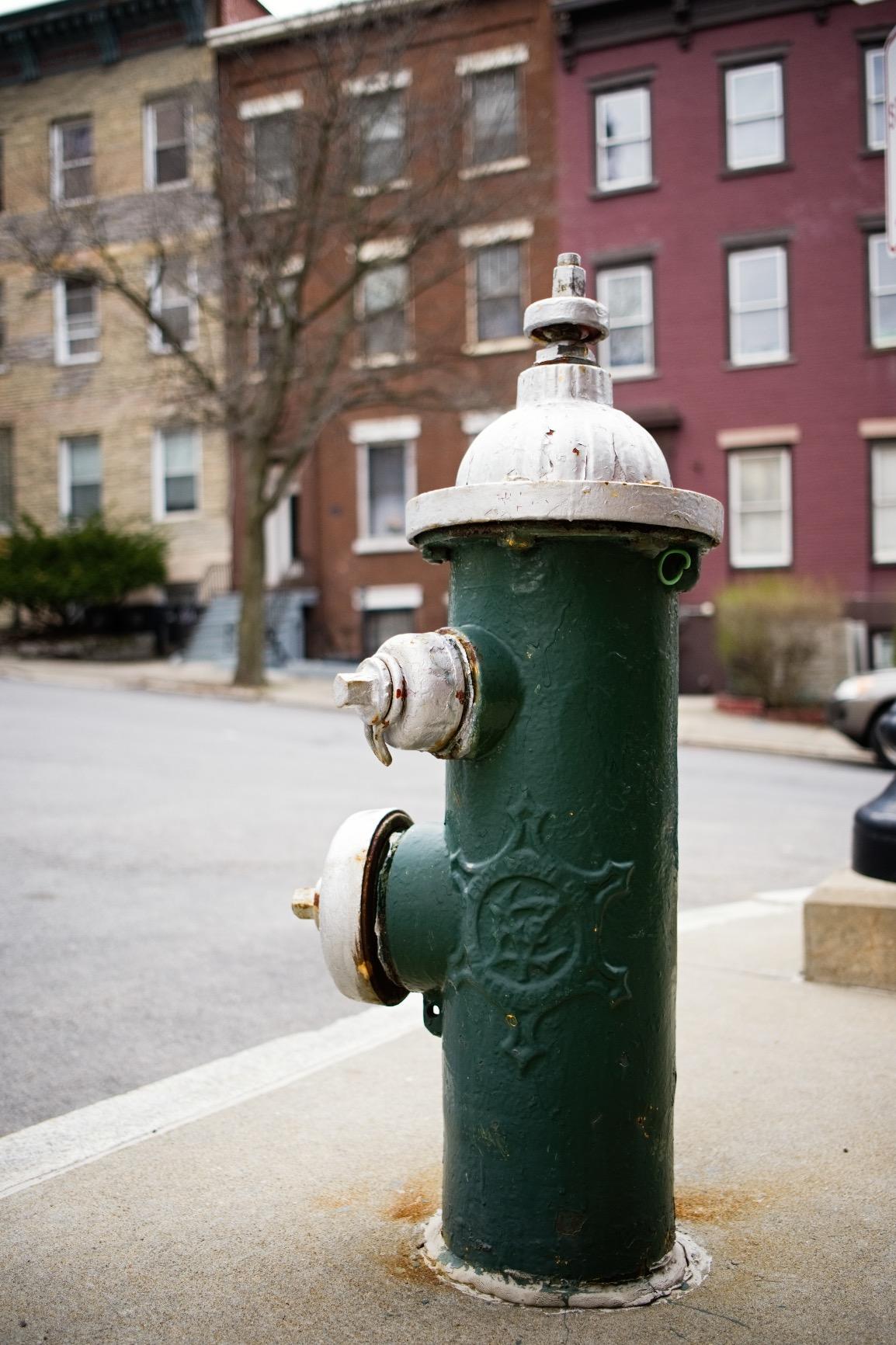
The XF 23mm f/2 R WR captures the essence of classic street photography in a modern package. The 35mm equivalent focal length matches the legendary perspective used by documentary photographers for decades. I have shot entire assignments with just this lens.
Walking through city streets, the compact size lets the camera hang naturally at your side, ready for decisive moments. The fast autofocus snaps to subjects instantly, crucial for capturing fleeting expressions. Weather sealing protects against unexpected rain during long walks.

Two aspherical elements in the optical formula deliver edge-to-edge sharpness rare in compact primes. The ten-element design controls distortion well for architectural work. Colors pop with that Fuji signature rendering that needs minimal post-processing.
The f/2 aperture provides reasonable low-light performance, though bokeh remains subtle at this focal length. Focus transitions smoothly from sharp to soft, creating natural-looking environmental portraits. Build quality impresses with all-metal construction and precise mechanical feel.
Who Should Buy This Lens
Street photographers will find this lens indispensable for its focal length and compact size. Documentary shooters benefit from the versatile 35mm perspective. Travel photographers get a wide-normal lens that handles most situations. Anyone wanting a fast prime wider than 35mm equivalent.
Who Should Skip It
Portrait specialists will find the focal length too wide for flattering headshots. Those wanting extreme background blur should look at longer focal lengths. The slight softness at close focus distances might frustrate macro enthusiasts. Consider the f/1.4 version if you need more low-light capability.
8. Fujifilm XF 35mm f/1.4 R – The Classic Character Lens
Pros
- Stunning image quality
- Beautiful classic rendering
- Fast F/1.4 aperture
- Lightweight and compact
- Legendary Fuji colors
Cons
- Noisy autofocus motor
- Slower AF than modern lenses
- No weather sealing
- Focus-by-wire manual focus
The XF 35mm f/1.4 R holds legendary status in the Fujifilm community, and for good reason. This lens produces images with a character that newer designs struggle to replicate. I bought mine in 2012 and still reach for it when I want that special look.
The rendering at f/1.4 creates a dreamy quality that flatters subjects beautifully. Colors feel more organic than clinical, with smooth tonal transitions in out-of-focus areas. Sharpness wide open has a gentle quality that becomes biting when stopped down.
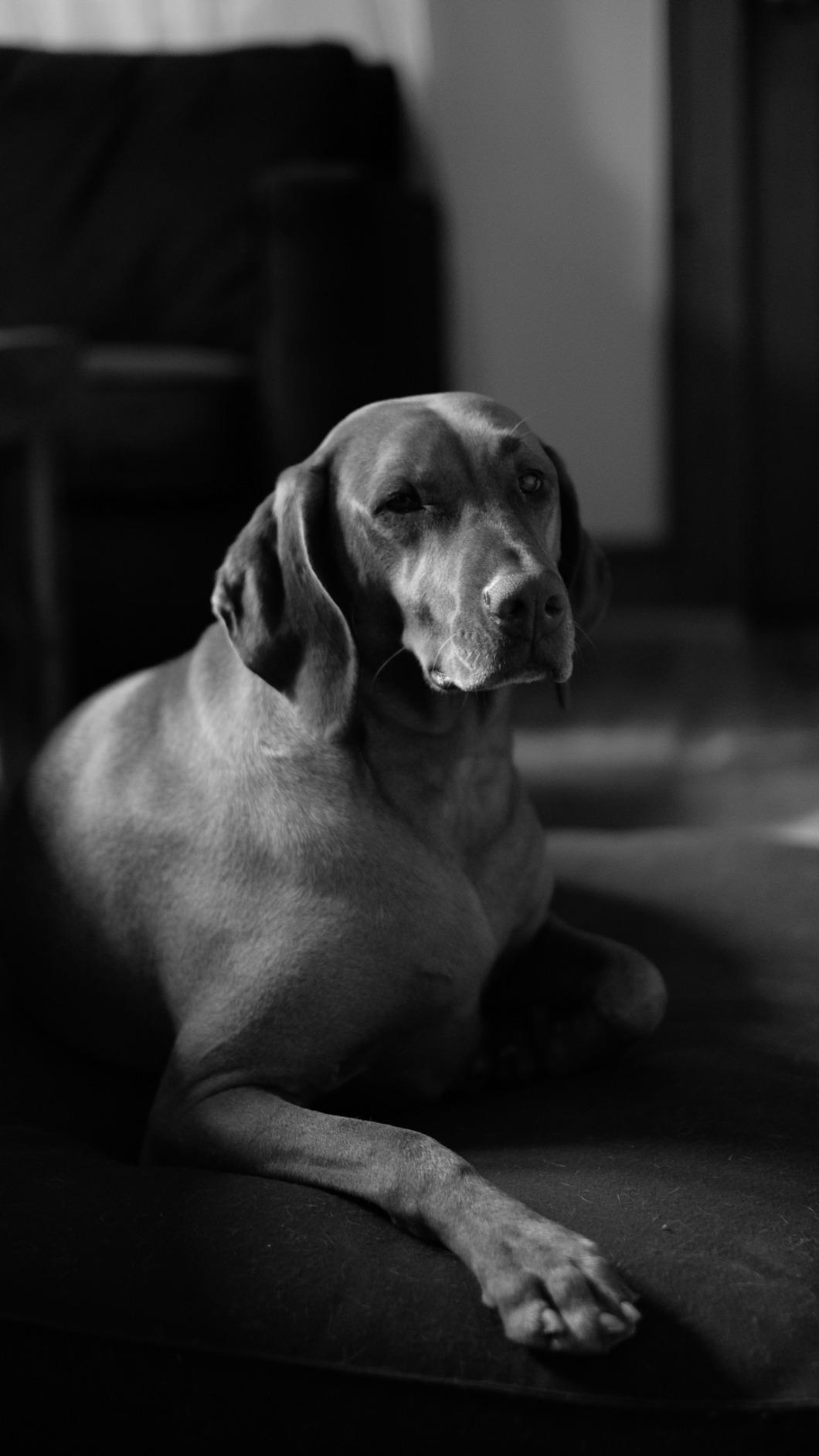
Build quality feels solid despite the lightweight 187-gram body. The all-metal construction has survived years of use in my bag. The aperture ring provides satisfying mechanical feedback, though it lacks the clicks of newer lenses.
The autofocus motor shows its age with audible operation and slower speed. This is not a lens for action photography or video work. Manual focus uses focus-by-wire, which some photographers dislike compared to mechanical systems.

Who Should Buy This Lens
Photographers prioritizing character over pure technical specs will love this lens. Those shooting portraits and lifestyle work benefit from the beautiful rendering. Anyone wanting the classic Fuji aesthetic should experience this lens. It remains one of the best values in the lineup for image quality per dollar.
Who Should Skip It
Videographers should avoid this lens due to the noisy motor. Action photographers will miss shots waiting for focus. Those shooting in inclement weather need the WR versions instead. If you rely on fast autofocus, the 33mm f/1.4 or 35mm f/2 serve you better.
9. Fujifilm XF 56mm f/1.2 R WR – Alternative Portrait Powerhouse
Pros
- Fast f/1.2 aperture
- Beautiful bokeh rendering
- Excellent resolution
- Weather resistant construction
- Improved minimum focus
Cons
- Heavy weight
- No image stabilization
- Audible motor noise
This XF 56mm f/1.2 R WR variant delivers the same exceptional portrait capabilities as its sibling in the lineup. The 85mm equivalent perspective flatters faces while compressing backgrounds beautifully. I have used this lens for countless portrait sessions with consistently stunning results.
The f/1.2 aperture creates separation that makes subjects pop against creamy backgrounds. Eleven diaphragm blades maintain circular bokeh highlights, crucial for professional portrait work. Edge sharpness improved over the original version, important for group shots.

Weather sealing with fluorine coating on the front element protects against the elements. The minimum focusing distance allows tighter compositions than the original 56mm. Build quality feels professional with substantial heft in the hand.
The optical formula includes ED and aspherical elements for corrected aberrations. Chromatic fringing is well controlled even wide open. Colors render with that beautiful Fuji quality that requires minimal post-processing.

Who Should Buy This Lens
Portrait photographers wanting the ultimate Fuji lens for people photography should consider this option. Those shooting in variable weather benefit from the sealing. Anyone wanting professional-grade results for client work will appreciate the rendering quality.
Who Should Skip It
The weight makes this less suitable for travel photography. Videographers may find the motor noise problematic. Those on a budget can get excellent portraits from the 50mm f/2 at significant savings. If you rarely shoot portraits, your money is better spent on other focal lengths.
10. Fujifilm XF 16mm f/2.8 R WR – Ultra Wide Wonder
Pros
- Compact lightweight design
- Excellent edge sharpness
- Fast quiet autofocus
- Weather sealed
- Great value
Cons
- Not fastest aperture for bokeh
- Some softness wide open
- Wide angle not for everyone
The XF 16mm f/2.8 R WR packs ultra-wide capability into a surprisingly small package. At 155 grams, this lens adds minimal weight while expanding your creative possibilities significantly. The 24mm equivalent focal length excels for landscapes, architecture, and environmental storytelling.
Shooting interiors for a real estate client, the lens maintained straight lines with minimal distortion. The stepping motor focuses silently, perfect for situations where noise matters. Weather sealing protected the lens during a snowy exterior shoot.

Two aspherical elements in the design deliver sharpness from edge to edge. The Super EBC coating minimizes flare when shooting into bright light sources. Metal construction feels premium despite the compact size and affordable price point.
The f/2.8 aperture limits low-light capability compared to the 18mm f/1.4, but the size and cost trade-off appeals to many photographers. This lens stays on my camera for landscape trips where weight matters more than extreme aperture.

Who Should Buy This Lens
Landscape photographers wanting an ultra-wide option without the premium price of f/1.4 lenses should consider this. Architecture shooters benefit from the minimal distortion. Travel photographers get a capable wide lens that adds little weight to their kit. Vloggers and content creators appreciate the quiet autofocus.
Who Should Skip It
The ultra-wide perspective challenges composition skills and is not suitable for general photography. Those needing low-light capability should look at the 18mm f/1.4. Portrait photographers will rarely use this focal length. If you already own the 18mm f/1.4, this offers minimal additional utility.
What to Consider When Buying Fujifilm XF Prime Lenses?
Choosing the right prime lens requires understanding your photography style and priorities. Here are the key factors I consider when recommending lenses to fellow Fuji shooters.
Aperture and Low-Light Performance
Faster apertures like f/1.2 and f/1.4 allow more light, enabling lower ISO settings in dim conditions. They also create shallower depth of field for subject separation. However, f/2 and f/2.8 lenses offer excellent image quality in smaller, more affordable packages.
For night photography and events, prioritize f/1.4 or faster. For travel and everyday shooting, f/2 provides the best balance. Landscape photographers shooting from tripods can save money with f/2.8 options.
Focal Length and Perspective
Each focal length creates a different relationship with your subject. Wide angles like 16mm and 18mm include environmental context. Standard lenses around 35mm feel natural for documentary work. Short telephotos from 50mm to 56mm compress perspectives for flattering portraits.
Consider what you shoot most often. Street photographers often prefer 23mm or 35mm. Portrait specialists need 56mm or longer. Landscape shooters want 16mm or 18mm for sweeping vistas.
Autofocus Performance
Linear motor lenses offer the fastest, quietest autofocus, essential for video work. Older DC motor designs work fine for stills but make noise. The original 35mm f/1.4 and 27mm f/2.8 have audible motors that limit their versatility.
For action photography, prioritize LM-equipped lenses. For posed portraits and landscapes, motor type matters less. Consider your subject matter when evaluating autofocus needs.
Weather Sealing
WR lenses feature rubber seals protecting against dust and moisture. If you shoot outdoors regularly, weather sealing provides peace of mind. Non-sealed lenses require more caution in challenging conditions but cost less.
Landscape and travel photographers benefit most from sealing. Studio shooters can save money with non-WR options. Consider your typical shooting environments when deciding.
Frequently Asked Questions
What is the best Fujifilm lens overall?
The Fujifilm XF 33mm f/1.4 R LM WR is widely considered the best overall lens for its combination of versatile focal length, fast aperture, weather sealing, and exceptional image quality. It serves as an excellent do-everything prime for most photographers.
What is the best Fujifilm lens for beginners?
The Fujifilm XF 35mm f/2 R WR is the best lens for beginners. It offers an affordable entry into prime lens photography with excellent image quality, weather sealing, and a versatile 50mm equivalent focal length that works for many situations.
What is the best everyday lens for Fujifilm?
The Fujifilm XF 35mm f/2 R WR serves as the best everyday lens due to its compact size, weather sealing, fast silent autofocus, and versatile 50mm equivalent focal length. It balances capability and portability perfectly for daily carry.
What is the best Fujifilm lens for portraits?
The Fujifilm XF 56mm f/1.2 R WR is the best portrait lens, offering an 85mm equivalent focal length with a fast f/1.2 aperture. The 11-blade diaphragm creates stunning bokeh and subject separation that flatters portrait subjects.
Which Fujifilm prime lens should I buy first?
For your first prime lens, choose the XF 35mm f/2 R WR for versatility, the XF 33mm f/1.4 if budget allows for low-light work, or the XF 56mm f/1.2 if portraits are your priority. Consider what you shoot most when deciding.
Final Thoughts on the Best Fujifilm XF Prime Lenses
After years of shooting with Fujifilm cameras, I can confidently say that investing in quality prime lenses transforms your photography more than any camera body upgrade. The best fujifilm xf prime lenses deliver image quality, character, and reliability that keep you inspired to create.
My personal kit centers around the 33mm f/1.4 for general work, the 56mm f/1.2 for portraits, and the 35mm f/2 for travel. This combination covers nearly every situation while keeping my bag reasonably light. Your needs may differ based on your photography style.
Start with one lens that matches your primary interest. Add complementary focal lengths as your skills and needs develop. The beauty of Fujifilm’s XF prime lineup is that there are no bad choices, only lenses better suited to specific situations.
Whatever you choose from this list, you are getting a lens capable of professional results. Happy shooting in 2026!