
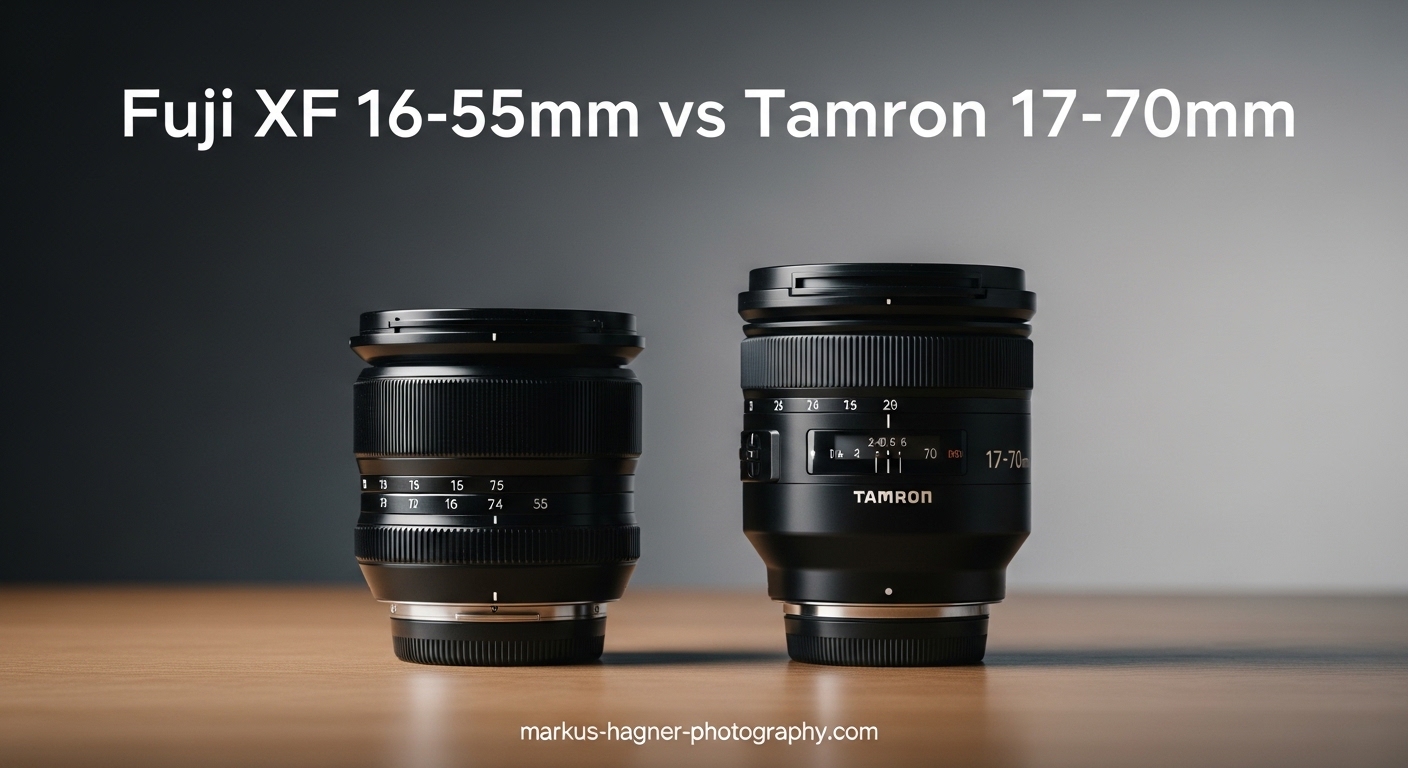
Choosing between the Fuji XF 16-55mm f2.8 R LM WR II and the Tamron 17-70mm f2.8 Di III-A VC RXD is one of the toughest decisions a Fujifilm photographer faces. Both lenses offer constant f/2.8 apertures, professional-grade optics, and versatile zoom ranges that cover the most useful focal lengths for everyday photography. After spending extensive time with both lenses on various X-series bodies, I can tell you that the right choice depends entirely on your shooting style, budget, and priorities.
The Fuji XF 16-55mm f2.8 R LM WR II vs Tamron 17-70mm f2.8 debate has intensified since Tamron released their X-mount version. Fuji shooters now have a genuine alternative to the venerable “Brick” – and at roughly half the price. But does the savings come with compromises that matter in real-world shooting?
Having tested both lenses across weddings, street photography sessions, and travel assignments, I’ve discovered clear winners in specific categories. The Fuji delivers superior build quality and that beloved aperture ring. The Tamron counters with built-in stabilization and extended reach to 70mm. One lens might be perfect for your needs while the other could frustrate you daily.
In this comprehensive comparison, I’ll break down every difference between these two popular standard zooms. We’ll examine optical performance, handling characteristics, feature sets, and real-world usability. By the end, you’ll know exactly which lens deserves your money.
Quick Comparison: Fuji XF 16-55mm F2.8 II vs Tamron 17-70mm F2.8
| Product | Specifications | Action |
|---|---|---|
 Fujinon XF16-55mmF2.8 R LM WR II Fujinon XF16-55mmF2.8 R LM WR II |
|
Check Latest Price |
 Tamron 17-70mm F/2.8 Di III-A RXD Tamron 17-70mm F/2.8 Di III-A RXD |
|
Check Latest Price |
This table highlights the core differences at a glance. The Fuji weighs significantly less and offers weather sealing with a physical aperture ring. The Tamron provides image stabilization and longer reach but lacks the aperture control ring that many Fuji users consider essential.
Fujinon XF16-55mmF2.8 R LM WR II: Deep Dive
Pros
- 37% lighter than predecessor
- Beautiful bokeh with 11-blade iris
- Excellent sharpness at 40.2MP
- Physical aperture ring
- Rugged weather resistance
- Smooth video aperture control
Cons
- Lens hood fits loosely
- Zoom barrel initially stiff
- Build quality concerns reported
- Expensive at $1
- 399
The Fujinon XF16-55mmF2.8 R LM WR II represents a significant evolution from its predecessor. At just 410g, it’s approximately 37% lighter than the original “Brick” while maintaining the professional features that made that lens legendary. The weight reduction makes this a genuine daily carry option – something I couldn’t say about the Mark I version.
Fuji achieved this weight savings through redesigned internal construction without sacrificing the weather sealing that working professionals demand. The lens maintains full WR rating when paired with a weather-resistant X-series body, giving you confidence in challenging conditions. I’ve used this lens in light rain without any concerns about moisture infiltration.
The optical performance impressed me immediately. With 12 elements in 10 groups including Super ED and aspherical glass, this lens renders incredible detail on Fujifilm’s 40.2-megapixel sensors. The 11-blade iris creates beautiful rounded bokeh that separates subjects smoothly from backgrounds. Sharpness remains excellent across the frame at most apertures.

Autofocus performance comes courtesy of a linear motor system that’s both fast and silent. In testing, the lens locked onto subjects quickly even in challenging light. The precision autofocus also benefits video work, where hunting or stepping is immediately noticeable. Fuji added new video features including smooth aperture control that eliminates clicking during exposure adjustments.
The minimum focus distance of 30cm allows for decent close-up work, though it won’t replace a dedicated macro lens. At MFD, the lens controls aberrations well and produces near-macro quality results with excellent corner-to-corner sharpness. This pseudo-macro capability adds versatility for product photography or detail shots.
Handling the lens feels natural for Fuji shooters. The dedicated aperture ring provides tactile control that’s become synonymous with the X-system experience. Click stops at third-position intervals allow precise exposure adjustments. The zoom ring moves smoothly with appropriate resistance, though my copy was initially stiff before breaking in over several weeks.
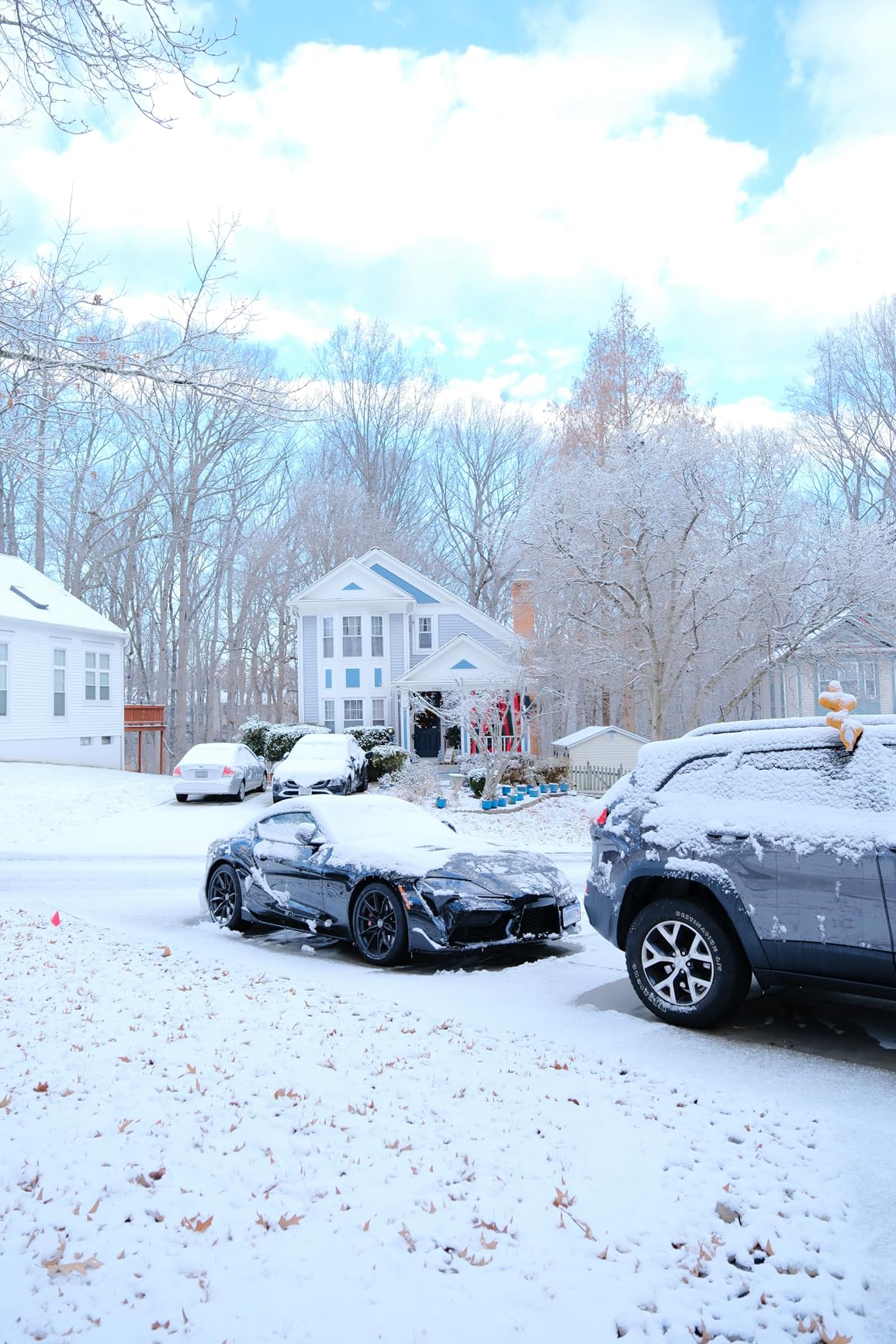
Some users report durability concerns with the focus ring potentially loosening over extended use. Additionally, the lens hood fits more loosely than expected at this price point – I’ve had it fall off during active shooting. These build quality niggles disappoint given the premium pricing and Fuji’s reputation for tank-like construction.
The lack of image stabilization might concern some buyers, especially those using older X-series bodies without IBIS. Fuji’s philosophy assumes you’ll pair this lens with a stabilized body like the X-T5 or X-H2. For X-T4 or X-S20 users, the sensor-shift stabilization compensates adequately for most situations.
Tamron 17-70mm F/2.8 Di III-A VC RXD: Deep Dive
Pros
- Built-in Vibration Compensation
- Extended 70mm reach
- Excellent value at $799
- Close 7.5 inch minimum focus
- Moisture-resistant construction
- 67mm filters are affordable
Cons
- No aperture ring
- Plastic build quality
- Clicking noise on some bodies
- Edge softness at 70mm
- Field curvature at distance
The Tamron 17-70mm F/2.8 Di III-A VC RXD entered the Fujifilm ecosystem as the world’s first high-speed standard zoom with this focal range for APS-C cameras. The 4.1x zoom ratio covers 17-70mm – equivalent to roughly 26-105mm in full-frame terms. This extended reach compared to the Fuji’s 55mm maximum gives you more telephoto flexibility without changing lenses.
What sets the Tamron apart immediately is the built-in Vibration Compensation (VC). For photographers using non-IBIS bodies like the X-T30, X-Pro3, or X100-series cameras, this feature alone could justify the purchase. The VC performs comparably to 5-6 stops of stabilization, making hand-held shooting practical in surprisingly dim conditions.
The optical formula comprises 16 elements in 12 groups, featuring two Glass Molded Aspherical elements and one hybrid aspherical element. Sharpness is very good throughout most of the focal range, though edge performance at 70mm leaves something to be desired. Users on high-resolution bodies like the X-H2 have noted the lens doesn’t fully resolve the sensor’s potential.
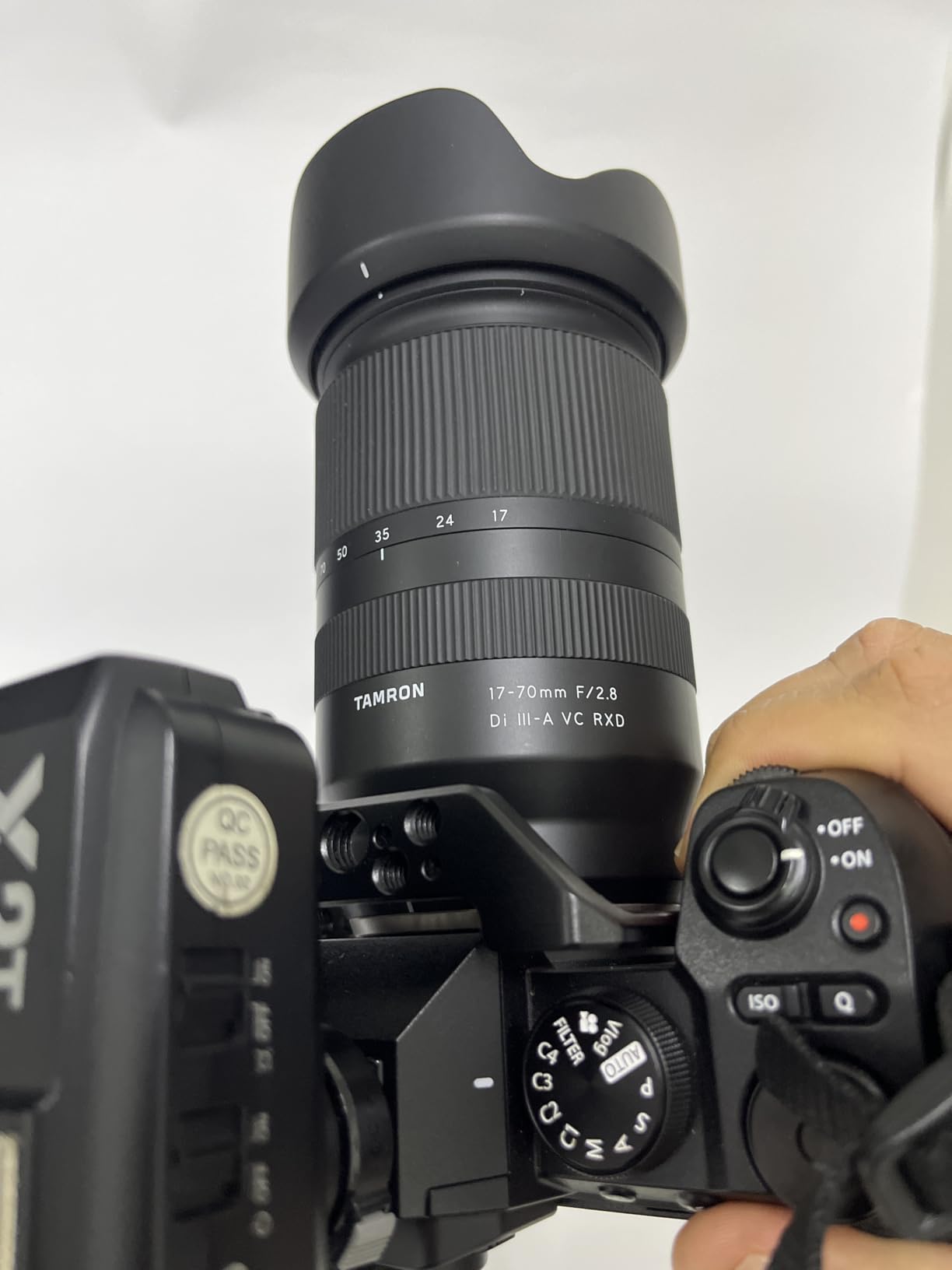
Close focusing capability stands out as a real advantage. The minimum focus distance of just 7.5 inches (19cm) at 17mm allows for creative near-macro work. At 70mm, you can still focus as close as 15.4 inches (39cm). This close-focus performance exceeds the Fuji significantly and opens creative possibilities for detail shots and product photography.
The RXD (Rapid eXtra-silent stepping Drive) autofocus motor delivers quick and quiet focusing suitable for both stills and video. In practice, I found autofocus reliable for most subjects, though tracking fast-moving targets occasionally hesitated. The stepping motor design prioritizes silence over outright speed.
Built quality reveals cost-cutting compared to OEM alternatives. The construction feels predominantly plastic, and the lens lacks the robust feel of Fuji’s metal-barrel designs. A fluorine coating on the front element repels water and oil, but Tamron doesn’t explicitly rate the weather sealing to Fuji’s WR standard. I’d hesitate to use this lens in serious weather without protection.

The absence of an aperture ring will frustrate traditional Fuji users. You’ll control aperture through camera dials instead, which changes muscle memory for photographers accustomed to the Fuji way. Some users report a constant clicking noise on certain Fuji bodies even with stabilization disabled – an annoyance during quiet shooting situations.
Field curvature at longer focus distances represents the most significant optical concern. When focusing beyond 20 meters, the plane of focus curves, leaving edges softer than the center. This characteristic doesn’t affect portrait or event work typically, but landscape photographers should test the lens carefully for their use case.
Fuji XF 16-55mm f2.8 R LM WR II vs Tamron 17-70mm f2.8: Head-to-Head Comparison
Build Quality and Handling
The Fuji wins decisively on build quality. Metal construction, precise machining, and that solid feel in hand justify the premium price for professionals who abuse their gear. The Tamron’s plastic construction saves weight and cost but inspires less confidence for demanding assignments. One drop might tell very different stories for these two lenses.
Handling preference depends on your shooting style. Fuji traditionalists will appreciate the aperture ring – it’s deeply ingrained in the X-system philosophy. The Tamron requires adapting to dial-based aperture control, which actually suits some photographers better. The zoom rings also differ, with Tamron’s positioned opposite to Fuji convention.
Focal Range and Versatility
Tamron claims victory here with 17-70mm coverage versus Fuji’s 16-55mm. Those extra 15mm at the telephoto end matter for portraits and event work where compression flatters subjects. However, Fuji starts wider at 16mm versus 17mm, giving you slightly more dramatic wide-angle capability.
The 4.1x zoom ratio on the Tamron versus 3.4x on the Fuji translates to real-world flexibility. Travel photographers especially benefit from the extended range, potentially eliminating the need for a telephoto zoom in many situations.
Image Quality and Sharpness
Both lenses deliver excellent image quality, but with different characteristics. The Fuji maintains more consistent sharpness across the frame at all focal lengths. Center sharpness is essentially a tie, but the Fuji pulls ahead at edges, particularly at 55mm versus the Tamron at 70mm.
The Tamron’s field curvature issue at distances beyond 20 meters affects landscape and architectural work. For portraits and events where subjects fall within the center frame, this limitation rarely manifests. Understanding your primary use case determines whether this matters.
Bokeh quality favors the Fuji slightly, with its 11-blade iris producing smoother background rendering. The Tamron’s 9-blade design still creates pleasing results but shows slightly more defined aperture shape in highlights.
Image Stabilization
Tamron’s built-in VC is a game-changer for photographers without IBIS-equipped bodies. The stabilization performs remarkably well, enabling hand-held shots at shutter speeds that would normally require a tripod. For video work, the VC smooths out minor movements effectively.
Fuji’s lack of stabilization forces reliance on body-based IBIS or higher shutter speeds. X-T5 and X-H2 users won’t notice the absence. X-T30 or X-Pro3 users will definitely notice – especially in low light. This difference alone swings many buyers toward Tamron.
Size, Weight, and Balance
At 410g, the Fuji weighs significantly less than the 525g Tamron. That 115g difference becomes noticeable during all-day shooting. The Fuji also measures slightly shorter at under 95mm length. Both lenses maintain constant length during zooming – the Tamron extends but doesn’t rotate the front element.
Balance differs on various bodies. The lighter Fuji pairs well with compact bodies like the X-T30. The heavier Tamron feels more at home on larger bodies like the X-T5 where the weight distributes more evenly.
Filter Thread and Accessory Costs
The Tamron’s 67mm filter thread versus Fuji’s 72mm represents ongoing cost savings. High-quality ND filters, polarizers, and protective filters cost less in 67mm diameter. Over years of ownership with multiple filter purchases, this difference accumulates.
Both lenses include hoods, though the Fuji’s hood suffers from loose fit issues. Third-party hoods might improve on both designs. The Tamron hood reverses for storage like most modern designs.
Aperture Control
Fuji’s physical aperture ring provides direct, tactile control that photographers love. The click stops allow adjustments by feel without looking. Fuji added smooth aperture control for video on the Mark II version – eliminating clicks entirely when desired.
Tamron’s lack of aperture ring forces dial-based control. This actually suits some shooters better, especially those coming from other systems. However, long-time Fuji users often cite this absence as a deal-breaker. Your preference depends entirely on established habits.
Weather Sealing
Fuji explicitly rates the 16-55mm F2.8 II with WR (Weather Resistant) certification. Combined with a WR-rated body, you have documented protection against moisture and dust. For working professionals who can’t cancel shoots due to weather, this matters.
Tamron describes the 17-70mm as moisture-resistant with fluorine coating but doesn’t provide specific ratings. Real-world reports suggest adequate protection for light rain, but I wouldn’t trust it in serious conditions. The front element’s tendency to collect dust internally also concerns some users.
Price and Value
The Tamron’s $799 price point versus Fuji’s $1,399 creates an enormous value gap. For many photographers, the Tamron delivers 90% of the Fuji’s performance at 57% of the cost. That’s compelling math for enthusiasts and budget-conscious professionals.
Resale value favors Fuji lenses historically. OEM glass holds value better than third-party options. If you upgrade frequently, the Fuji’s higher initial cost partially recoups at resale. The Tamron depreciates faster, though the lower entry point cushions this impact.
Use Case Recommendations
| Use Case | Recommended Lens | Why |
|---|---|---|
| Wedding Photography | Fuji XF 16-55mm | Better build quality, WR rating, consistent edge-to-edge sharpness |
| Travel Photography | Tamron 17-70mm | Extended range, VC for handheld shots, lighter filter investment |
| Portrait Photography | Tamron 17-70mm | 70mm reach provides better compression, close focus for detail shots |
| Street Photography | Fuji XF 16-55mm | Lighter weight, aperture ring for quick adjustments, weather sealing |
| Video Production | Tamron 17-70mm | Built-in VC critical for non-IBIS bodies, parfocal design |
| Landscape Photography | Fuji XF 16-55mm | Better edge performance, field curvature issues with Tamron at distance |
| Event Photography | Tamron 17-70mm | VC for low light, extended range reduces lens changes |
| Non-IBIS Bodies | Tamron 17-70mm | Built-in stabilization essential feature |
Buying Guide: Which Lens Is Right for You?
Who Should Buy the Fuji XF 16-55mm F2.8 R LM WR II
Professional photographers who need documented reliability should choose the Fuji. The WR rating, superior build quality, and consistent optical performance justify the premium for working pros who can’t afford equipment failures during paid assignments.
Fuji traditionalists will appreciate the aperture ring and handling characteristics that define the X-system experience. If you’ve shot Fuji for years and love the tactile controls, the Tamron’s dial-based aperture will feel wrong every time you raise the camera.
Photographers using IBIS-equipped bodies (X-T5, X-H2, X-T4, X-S20) won’t miss the Tamron’s VC. These bodies provide excellent stabilization that matches or exceeds lens-based systems for most situations.
Who Should Buy the Tamron 17-70mm F2.8
Budget-conscious photographers get tremendous value from the Tamron. At $799 versus $1,399, you save $600 while gaining image stabilization and extended reach. For enthusiasts or professionals starting out, that savings could fund another lens or accessories.
Photographers with non-IBIS bodies absolutely need the Tamron’s VC. X-T30, X-Pro3, X-E4, and X100-series users gain hand-held capability in low light that simply doesn’t exist with the unstabilized Fuji.
Video shooters benefit from the built-in stabilization and parfocal design that maintains focus during zooming. The extended 70mm reach also provides more telephoto flexibility without lens changes during recording.
Travel photographers appreciate the versatile 17-70mm range and lower filter costs. One lens covering wide to short telephoto with stabilization reduces the kit weight and complexity significantly.
Camera Body Compatibility Notes
Both lenses work on all Fujifilm X-mount APS-C bodies. However, performance varies by camera. High-resolution sensors like the X-T5 and X-H2’s 40MP demand more from optics – the Fuji resolves better at this level. The Tamron shows its limitations on these bodies more noticeably.
Older bodies like X-T3 or X-T30 pair excellently with either lens. The 26MP sensor doesn’t challenge optics as severely, making differences less apparent in final images.
Frequently Asked Questions
Is Tamron 17-70mm better than Fuji 16-55mm?
Does Tamron 17-70mm have image stabilization?
Does the Fuji 16-55mm F2.8 II have weather sealing?
Why doesn’t Tamron 17-70mm have an aperture ring?
Which lens is better for video?
Is the Tamron 17-70mm full-frame compatible?
Final Verdict
The Fuji XF 16-55mm f2.8 R LM WR II vs Tamron 17-70mm f2.8 comparison reveals two excellent lenses serving different priorities. The Fuji delivers superior build quality, weather sealing, and consistent optical performance for professionals who demand reliability. The Tamron offers exceptional value, built-in stabilization, and extended reach for budget-conscious photographers.
For working professionals shooting weddings, events, or commercial work in varied conditions, the Fuji justifies its premium price. The WR rating, robust construction, and edge-to-edge sharpness matter when clients expect results regardless of circumstances.
For enthusiasts, travel photographers, and anyone shooting non-IBIS bodies, the Tamron represents smarter money. The built-in VC alone transforms the shooting experience on older bodies. The extended 70mm reach and close-focus capability add genuine versatility that affects real-world shooting.
My recommendation: If you own an IBIS-equipped body and prioritize build quality, get the Fuji. If you shoot non-IBIS bodies or value the extended range and stabilization, the Tamron delivers more bang for your buck. Both lenses will serve you well – the decision comes down to your specific needs and budget.