
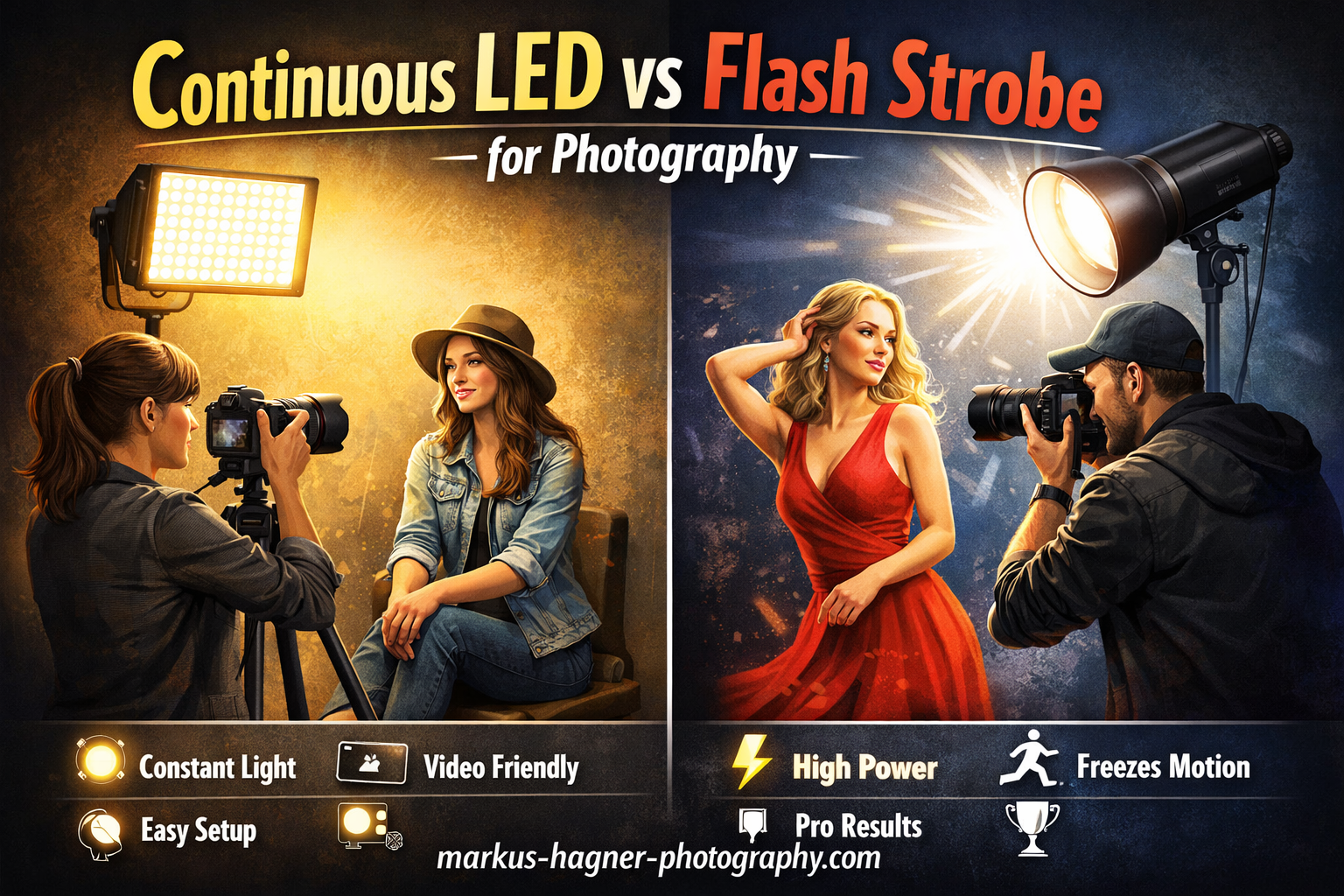
Choosing between continuous LED vs flash strobe lighting is one of the first big decisions photographers face when building their studio setup. Each system has distinct advantages, and the right choice depends entirely on what you shoot and how you work.
I have spent years testing both lighting types across portrait sessions, product photography, and video projects. The differences go far beyond simple brightness. Strobes deliver bursts of intense light that can freeze motion and overpower sunlight. Continuous LEDs let you see exactly what you are getting in real-time, which is invaluable for learning and video work.
In this guide, I will break down the real differences between continuous LED vs flash strobe lighting, share hands-on experience with top products in each category, and help you decide which system fits your photography style. Spoiler: many professionals end up using both.
Quick Comparison: Continuous LED vs Flash Strobe
Here is a side-by-side look at the top lighting options across both categories so you can quickly compare specs and features.
| Product | Specifications | Action |
|---|---|---|
 NEEWER FS150B LED Light
|
|
Check Latest Price |
 NEEWER Softbox Kit
|
|
Check Latest Price |
 Skytex Softbox Kit
|
|
Check Latest Price |
 Godox MS300V Strobe
|
|
Check Latest Price |
 Godox SK400II-V Strobe
|
|
Check Latest Price |
 Godox V860III-S Speedlight
|
|
Check Latest Price |
Continuous LED Lighting: The Complete Guide
Continuous LED lights provide constant illumination that stays on throughout your shoot. You see exactly how the light falls on your subject before you press the shutter. This WYSIWYG approach makes continuous lighting incredibly intuitive, especially for photographers just learning studio techniques.
Modern LED panels have come a long way from the dim, green-tinted lights of a decade ago. Today’s best continuous lights offer excellent color accuracy with CRI ratings above 95, adjustable color temperatures, and enough output for many photography applications.
Why Photographers Choose Continuous LED
The biggest advantage is visibility. When I set up a continuous light, I can immediately see shadows, highlights, and how modifiers affect the scene. This instant feedback speeds up my workflow and helps me communicate with subjects who can see the lighting direction too.
Continuous lights also serve double duty for video. If you shoot both photography and video content, a single LED setup handles both tasks without switching gear. Many YouTubers and content creators prefer this versatility.
For beginners, continuous lighting removes the guesswork. There is no wondering whether the flash fired correctly or if your settings were right. What you see is what you get.
Top 3 Continuous LED Lights for Photography
After testing numerous options, these three continuous lights stand out for different budgets and use cases.
NEEWER FS150B LED Video Light
Pros
- Excellent color accuracy (CRI 97+)
- Wide color temperature range
- Bowens mount compatible
- App and 2.4G wireless control
Cons
- Power brick can be awkward
- Loses brightness with heavy diffusion
The NEEWER FS150B packs serious punch for a compact COB LED light. With 130W output and 72,000 lux at one meter, it handles most portrait and product photography situations with ease. I found the CRI 97+ rating accurate in my tests, with skin tones rendering naturally without the color correction work cheaper lights require.
The Bowens mount opens up compatibility with a huge range of modifiers, from softboxes to beauty dishes. This flexibility lets you shape light exactly how you want it. The 2700K-6500K color temperature range covers warm tungsten looks through daylight balance, and the app control makes adjustments from across the room simple.
In practice, this light excels for solo shooters who need to make adjustments while staying behind the camera. The silent fan keeps noise down for video work, and the dual power options (AC or V-mount battery) add location flexibility. My main complaint is the bulky power brick, which gets awkward when mounting the light high on stands.
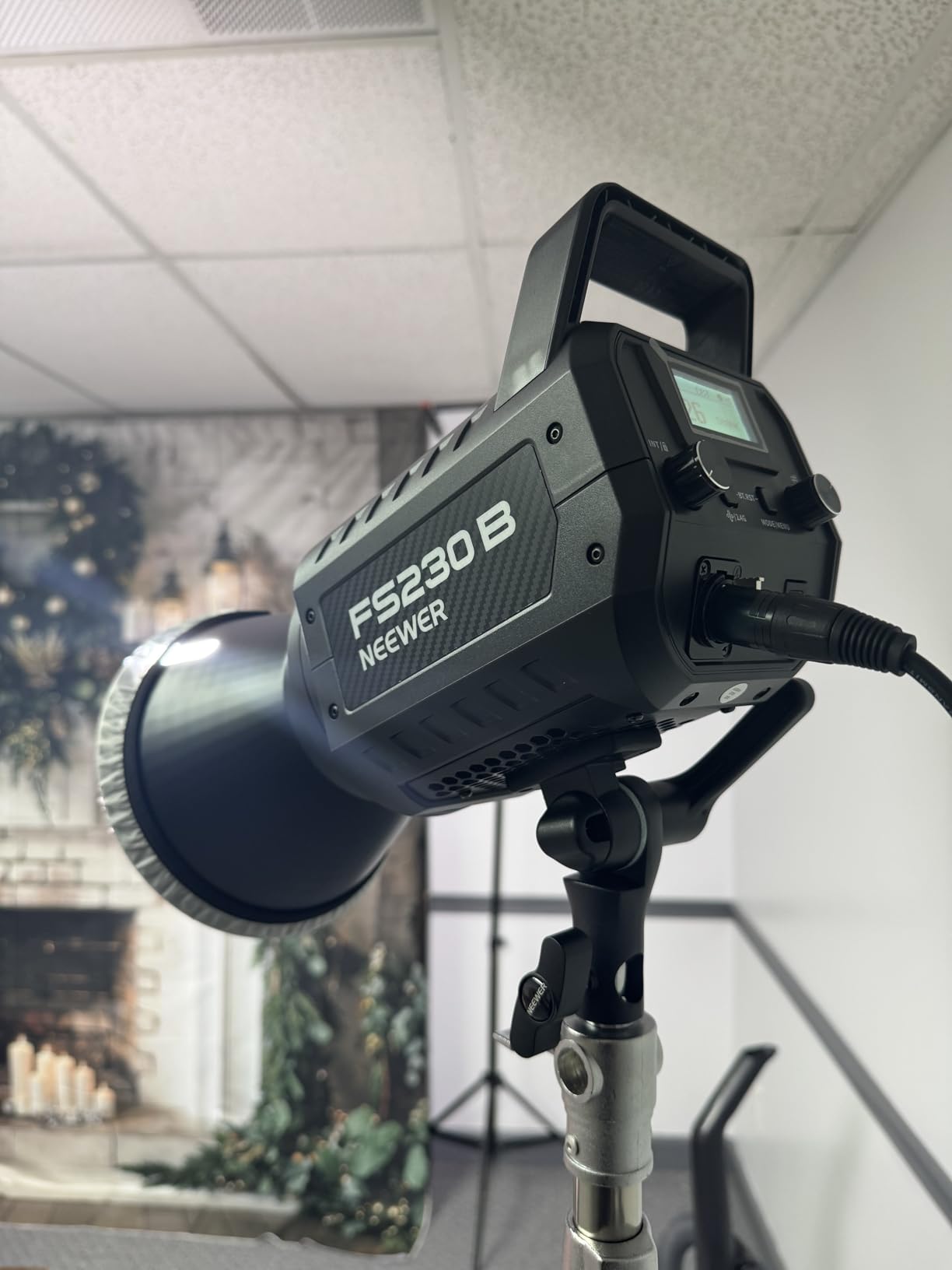
For photographers serious about continuous lighting, the FS150B offers professional features at a reasonable investment. It bridges the gap between basic LED panels and expensive cinema lights.
NEEWER 700W Equivalent Softbox Lighting Kit
Pros
- Excellent value for the cost
- Easy to assemble and disassemble
- Comes with carrying bag
- UL certified bulbs
Cons
- Stands can be unstable above 5 feet
- 5700K is slightly cool
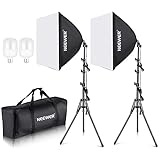
This two-light softbox kit delivers tremendous value for photographers building their first studio setup. The 24×24 inch softboxes create soft, flattering light perfect for portraits and product shots. Each 35W LED bulb produces about 3150 lumens, which is bright enough for small to medium shooting spaces.
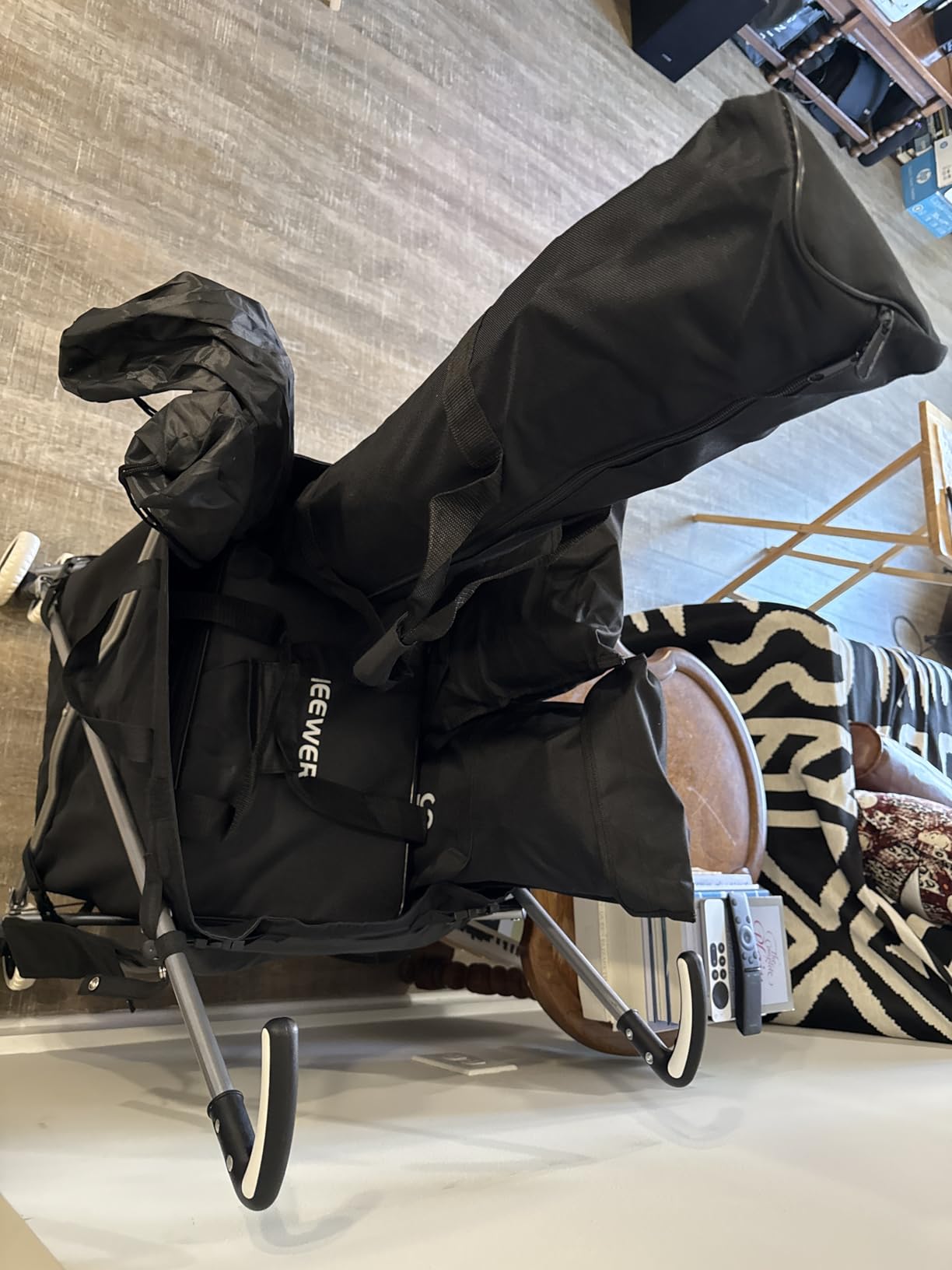
I recommend this kit to photographers starting out because everything works together right out of the box. The stands, softboxes, bulbs, and carrying bag create a complete portable studio. Setup takes about ten minutes, and breakdown is even faster.
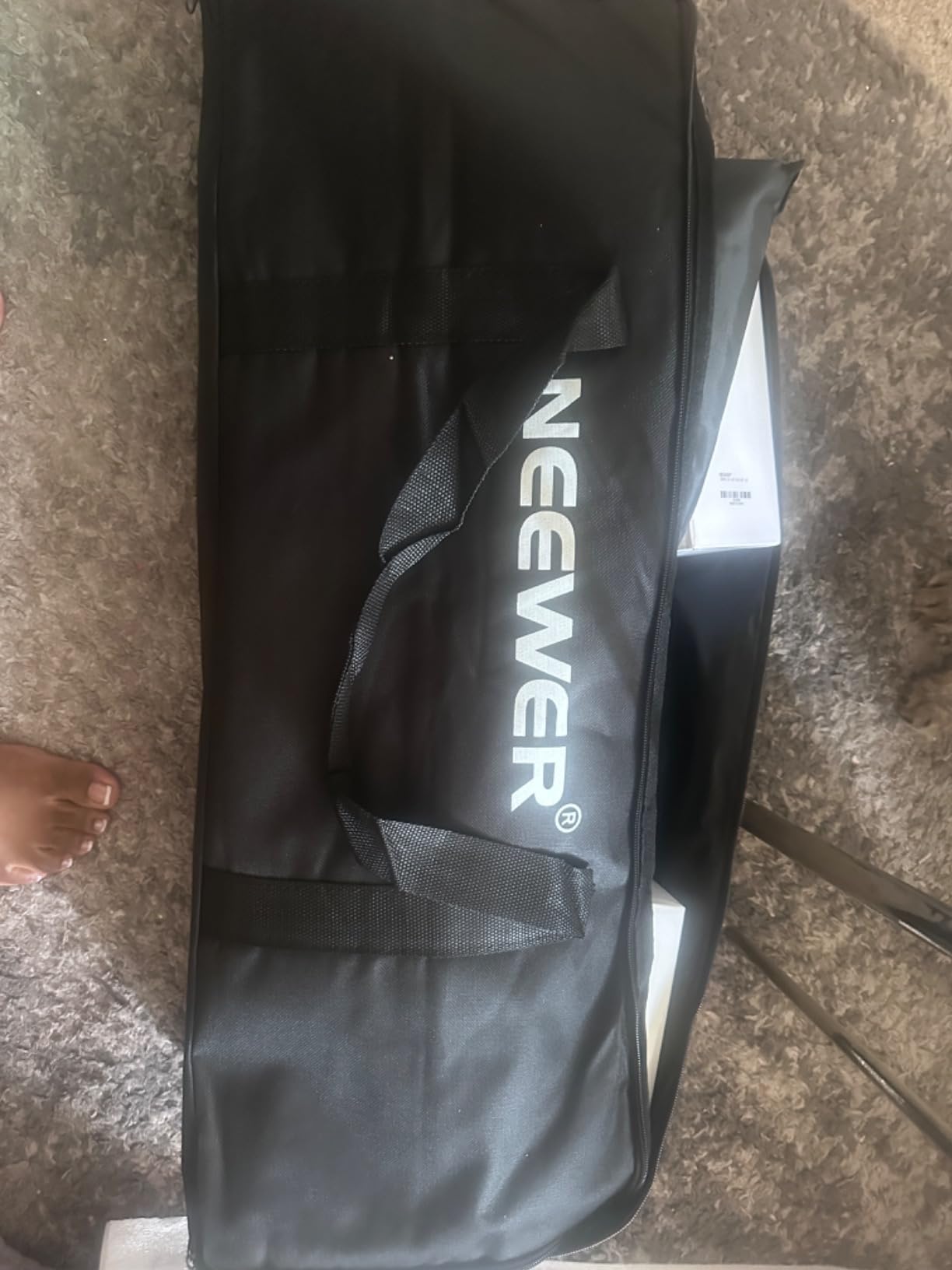
The daylight-balanced 5700K bulbs match natural window light well, though they run slightly cool compared to pure 5600K daylight. For most portrait work, this minor difference goes unnoticed. The flicker-free design means video recording works smoothly at any frame rate.
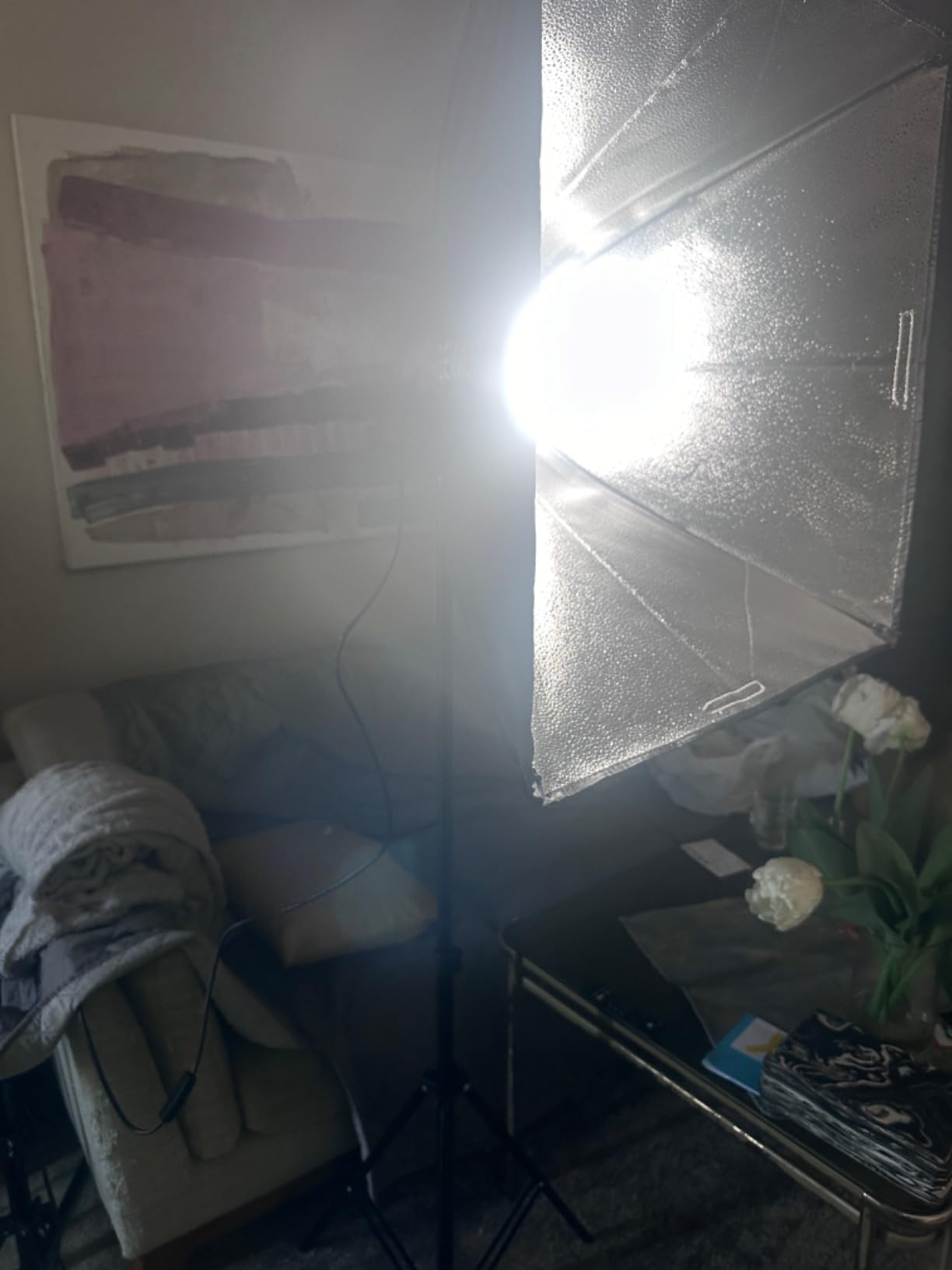
The main limitation is stand stability. Fully extended, the lightweight stands become top-heavy with softboxes attached. I keep them at around five feet maximum for safety. For the investment, this kit outperforms expectations and has earned its popularity with over 3,000 positive reviews.
Skytex Softbox Lighting Kit
Pros
- Excellent value for money
- Remote control included
- Adjustable color temperature
- Sturdy construction
Cons
- Controller built into bulbs
- Remote requires battery not included
The Skytex kit brings adjustable color temperature to an entry-level price point. The included remote lets you dial in brightness and color temperature from 2700K to 6400K without touching the lights. This convenience matters when lights are mounted high or in hard-to-reach positions.
The 20×28 inch softboxes create slightly larger light sources than the NEEWER kit, which produces even softer shadows. For headshot and portrait work, this larger modifier size is an advantage. The aluminum alloy stands feel more substantial than typical budget options.
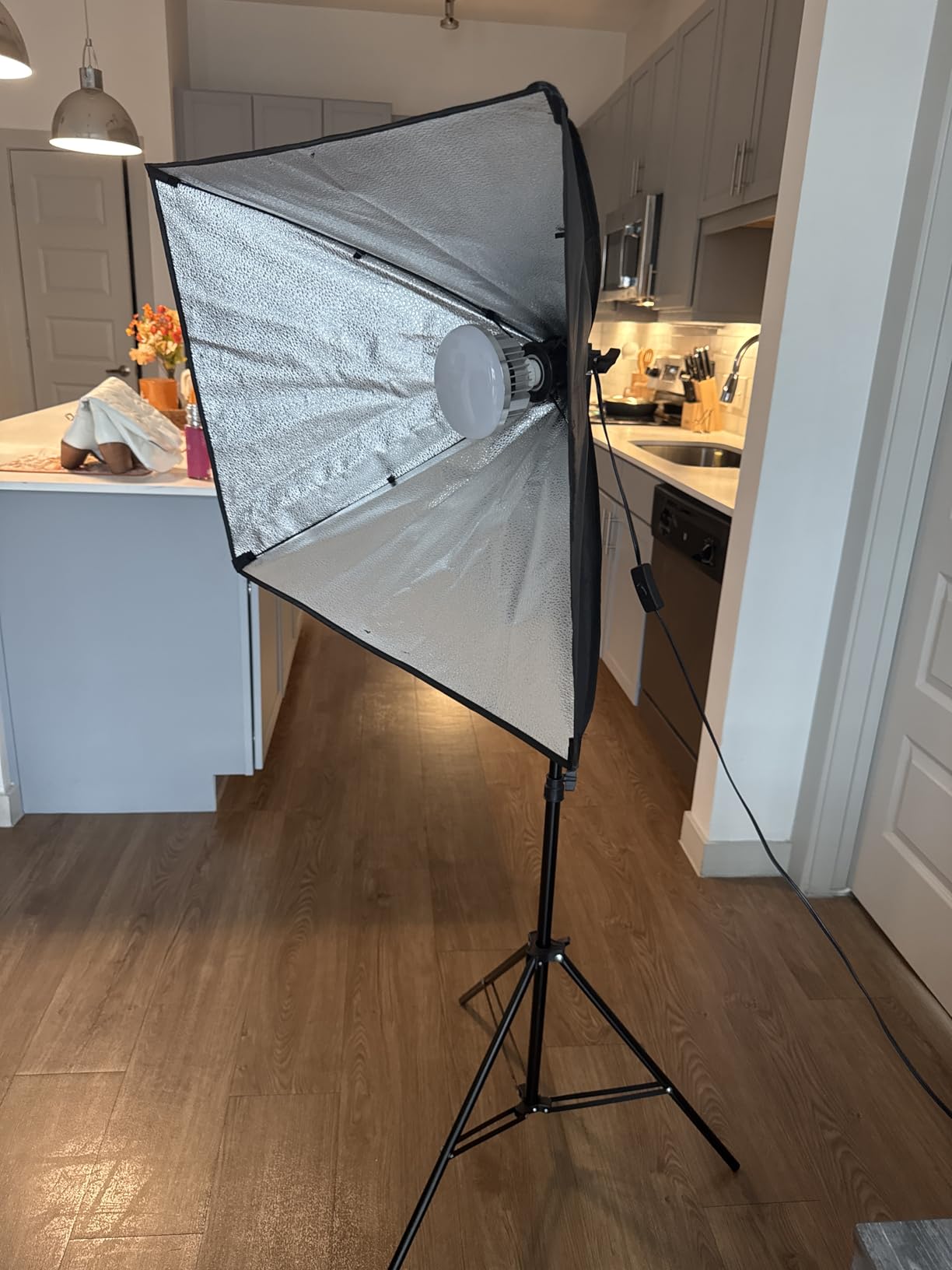
My testing showed consistent output across both lights, and the remote works reliably up to about 15 feet. The main tradeoff is that the dimming electronics live inside the bulbs themselves. If a bulb fails, you lose the smart features until replacement. Keep spare bulbs on hand for critical shoots.
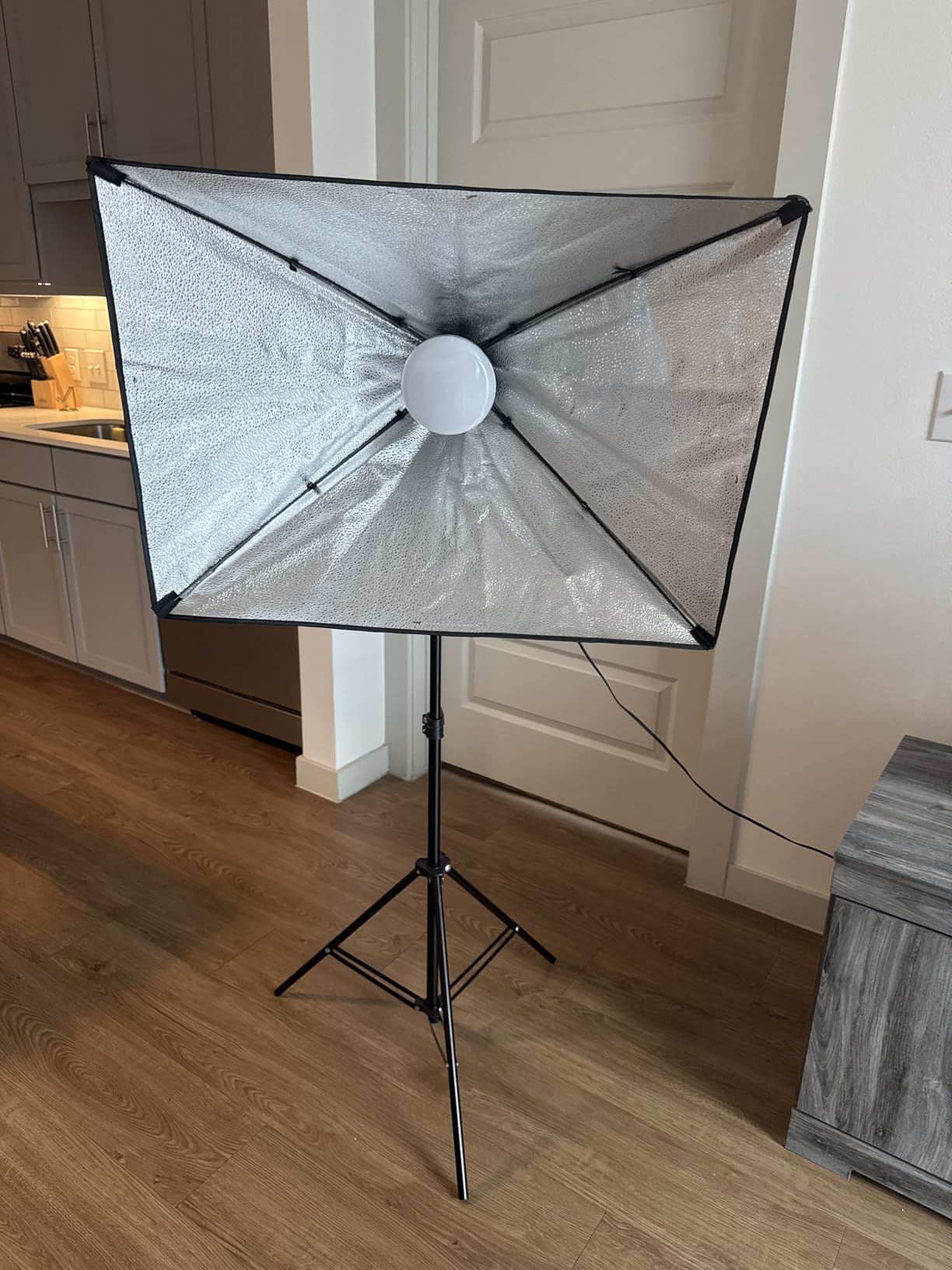
For Zoom meetings, product photography, and content creation, this kit delivers professional-looking results without breaking the budget. The adjustable color temperature helps match existing room lighting, which videographers and streamers appreciate.
Advantages of Continuous LED Lighting
Real-time preview: You see exactly how light and shadows fall before shooting. This visual feedback accelerates learning and speeds up professional workflows.
Video compatibility: Continuous lights work for both photography and video without any changes. This dual-purpose capability reduces gear needs.
Beginner friendly: No triggers, sync speeds, or flash calculations to worry about. Set your camera exposure to match the continuous light and shoot.
Model comfort: Subjects see where the light comes from and can position themselves accordingly. No unexpected flash bursts cause blinking.
Silent operation: No capacitors charging or flash pops. This matters for video recording and quiet environments.
Disadvantages of Continuous LED Lighting
Limited power: Even high-output LEDs cannot match the peak brightness of strobes. This restricts your aperture choices and makes overpowering sunlight impossible.
Motion blur: Continuous light cannot freeze fast motion like a strobe’s brief flash. Sports, dance, and action photography require flash.
Heat management: While LEDs run cooler than older continuous lights, high-output models still generate heat that requires fan cooling.
Ambient light control: Continuous lights require darker shooting environments to maintain full control. Daylight streaming through windows competes with your setup.
Flash Strobe Lighting: The Complete Guide
Flash strobes store electrical energy in capacitors and release it in a brief, intense burst through a flash tube. This momentary flash can be hundreds or thousands of times brighter than continuous light, opening creative possibilities that LEDs simply cannot match.
Professional portrait, fashion, and commercial photographers overwhelmingly choose strobes for their power and control. The ability to freeze motion, use smaller apertures, and overpower ambient light makes strobes indispensable for serious work.
Why Photographers Choose Flash Strobe
Power is the primary reason. A 300W strobe delivers far more light in its flash than a 300W continuous LED provides. This burst output lets you shoot at f/8 or f/11 with low ISO, achieving maximum image quality and depth of field control.
Flash duration matters too. The brief flash (often 1/1000 to 1/10000 second) freezes motion that would blur under continuous light. Dance photography, splashing water, and active children all benefit from flash’s motion-stopping ability.
For outdoor work, strobes can overpower sunlight. This control lets you darken skies, create dramatic lighting, and maintain creative control regardless of ambient conditions.
Top 3 Flash Strobes for Photography
These three options represent the best values across studio monolights and portable speedlights.
Godox MS300V Compact Studio Strobe
Pros
- Powerful 300W output
- Quick recycle time
- Built-in 2.4G wireless
- Bowens mount compatible
Cons
- No HSS function
- Requires separate trigger purchase
The Godox MS300V brings serious studio power at an entry-level investment. The 300W output with guide number 58 delivers enough light for most portrait and product work, with power stepping down to 1/16 for subtle fill. The upgraded LED modeling lamp (5-100% adjustable) gives useful previewing that older budget strobes lacked.
Recycle time ranges from 0.1 to 1.8 seconds, fast enough for portrait sessions where you want to capture natural expressions without long waits between shots. The Bowens mount accepts industry-standard modifiers, and the built-in 2.4G wireless receiver works with Godox X system triggers.
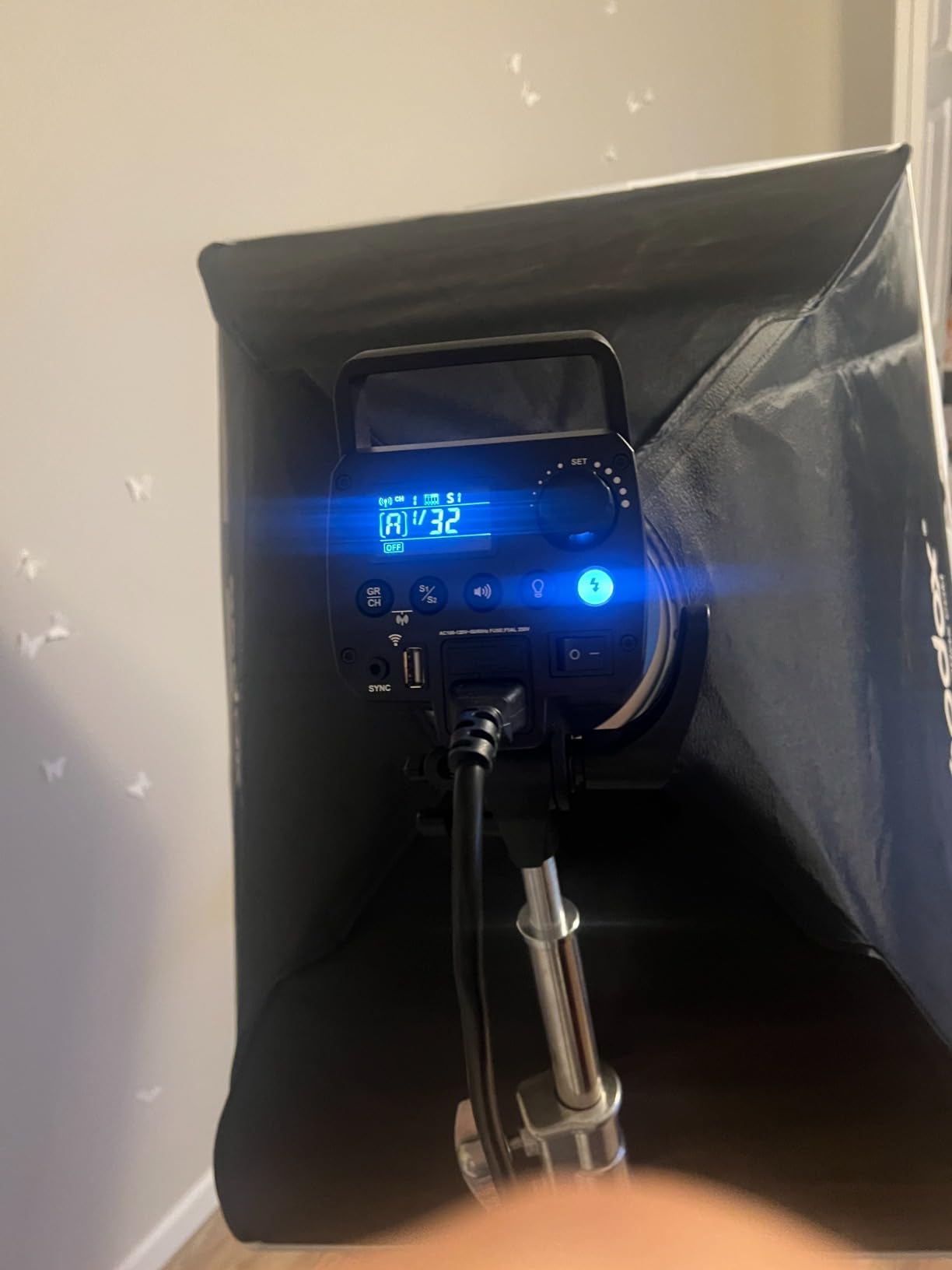
I have used this strobe for product photography and found the output consistent shot to shot. The 32 channels and 16 groups provide flexibility for multi-light setups. Build quality feels solid despite the lightweight design, though some photographers note the plastic construction lacks the premium feel of more expensive brands.
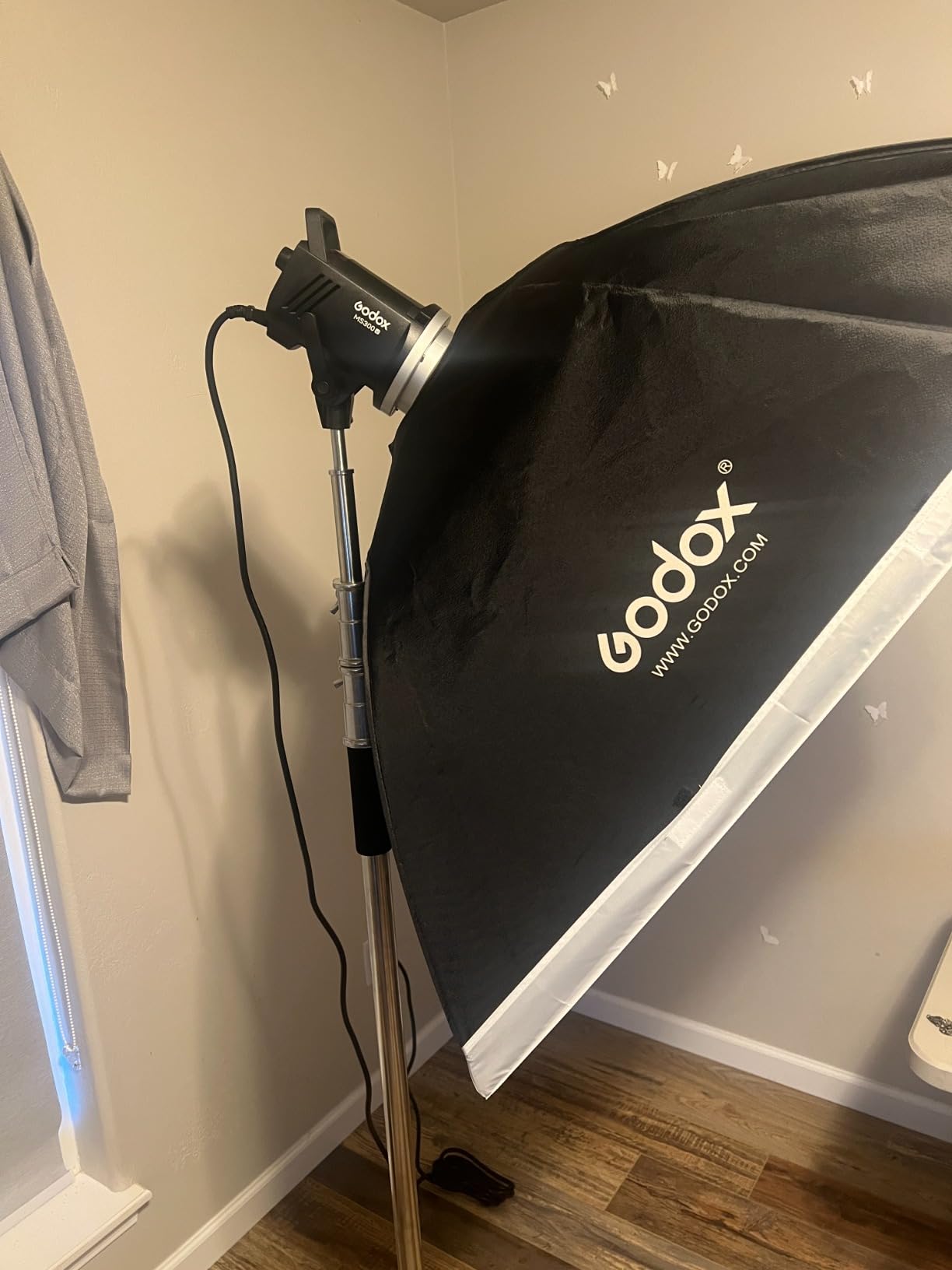
The main limitation is the lack of HSS (High Speed Sync). If you need to shoot at shutter speeds above your camera’s sync speed (usually 1/200 or 1/250), this strobe cannot help. For studio work within normal sync speeds, the MS300V delivers excellent value.
Godox SK400II-V Studio Strobe
Pros
- Powerful 400Ws output
- Fast recycle time
- Consistent color temperature
- Built-in wireless receiver
Cons
- Some quality control issues reported
- No colored filters included
Stepping up to 400Ws, the Godox SK400II-V provides the power headroom for larger modifiers and greater working distances. The guide number of 65 means you can light subjects from further back or punch through diffusion panels that would swallow smaller strobes.
The 0.1-1.5 second recycle time keeps pace with most portrait sessions. I appreciate the 40 power steps (1/16 to full) for fine-tuning exposure without touching camera settings. The consistent 5600K color temperature stays stable across power levels, which matters when mixing with daylight or other strobes.
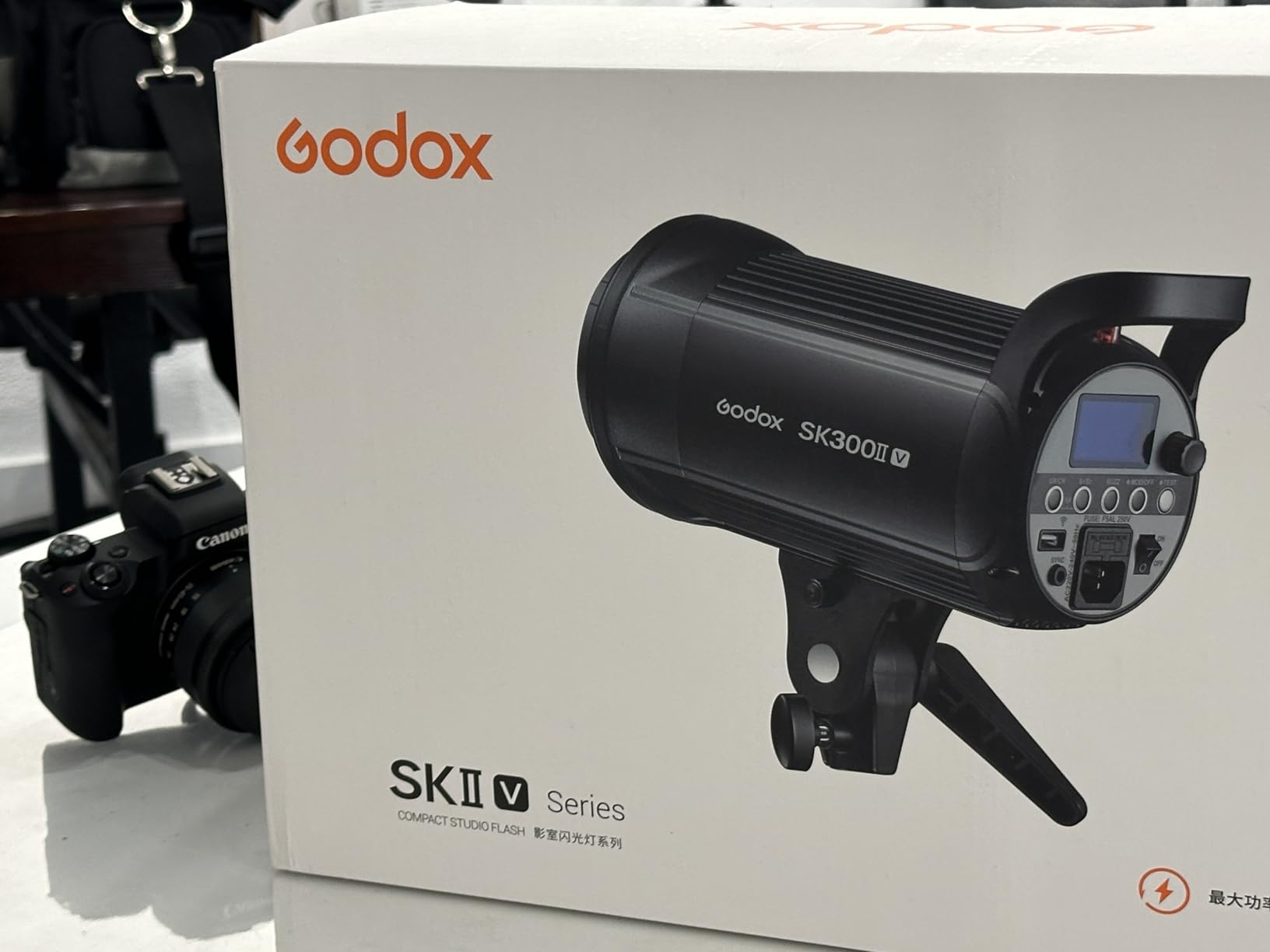
The LCD panel displays settings clearly, and the auto memory function recalls your last setup when powered on. The Bowens mount fits a huge variety of modifiers, and the built-in wireless receiver eliminates cables in multi-light configurations.
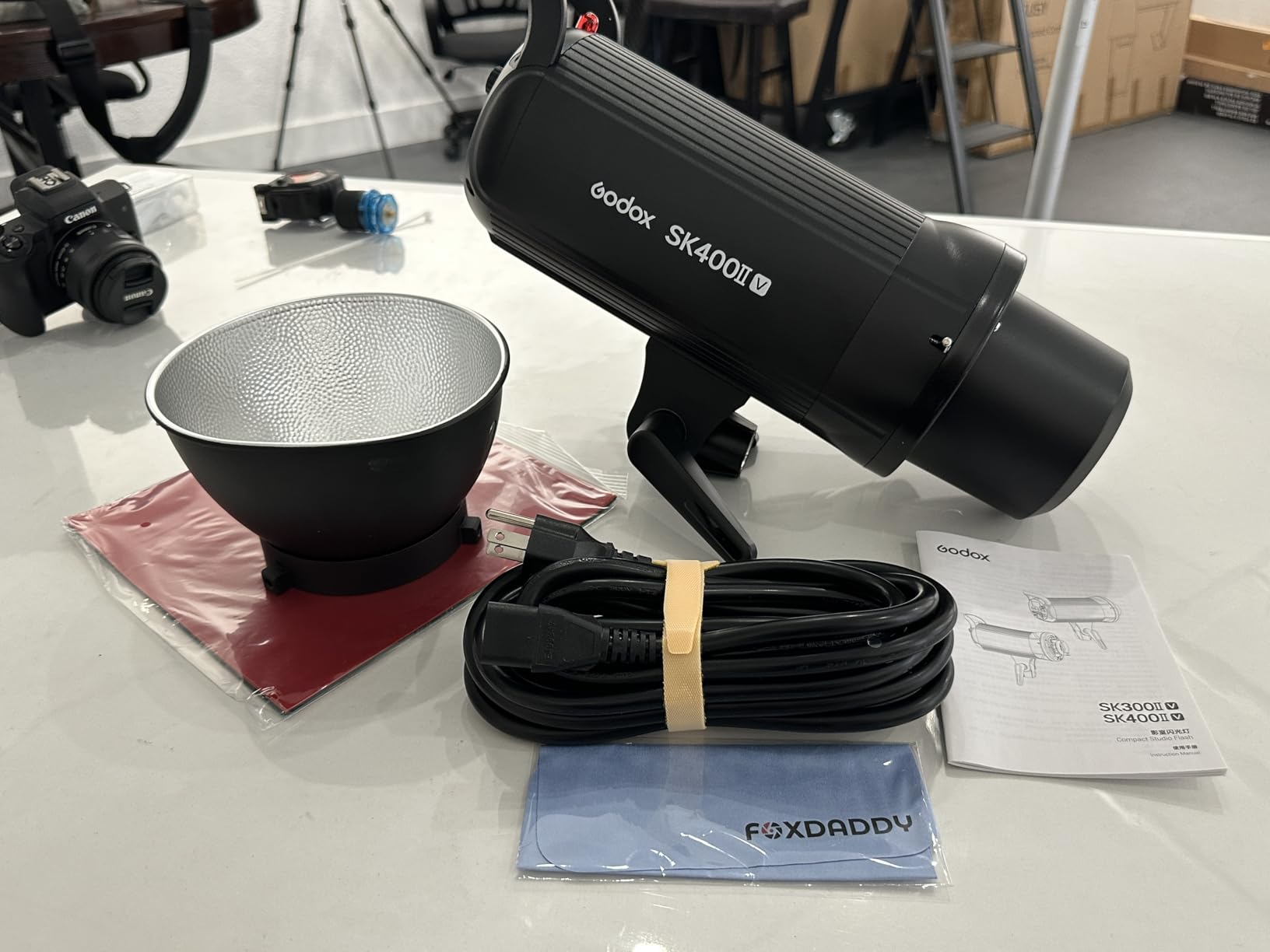
Some users report quality control variations, with occasional units arriving with cosmetic damage or handle issues. Buying from reputable sellers with good return policies helps mitigate this risk. For photographers needing more power than entry-level strobes provide, the SK400II-V hits a sweet spot of capability and value.
Godox V860III-S Speedlight for Sony
Pros
- Excellent build quality
- Fast recycle time
- HSS up to 1/8000s
- Rechargeable Li-ion battery
Cons
- Proprietary battery system
- UI could be more intuitive
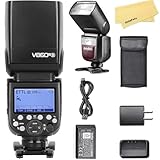
Speedlights occupy a different category than studio strobes, offering portability that monolights cannot match. The Godox V860III-S delivers 76Ws of power in a compact package that mounts directly on your Sony camera. More importantly, it supports TTL automatic flash metering and HSS up to 1/8000 second.
The rechargeable 2600mAh lithium-ion battery eliminates the need for AA batteries. I get about 480 full-power flashes per charge, which covers most event and portrait sessions. The 0.01-1.5 second recycle time means virtually no waiting between shots at lower power levels.
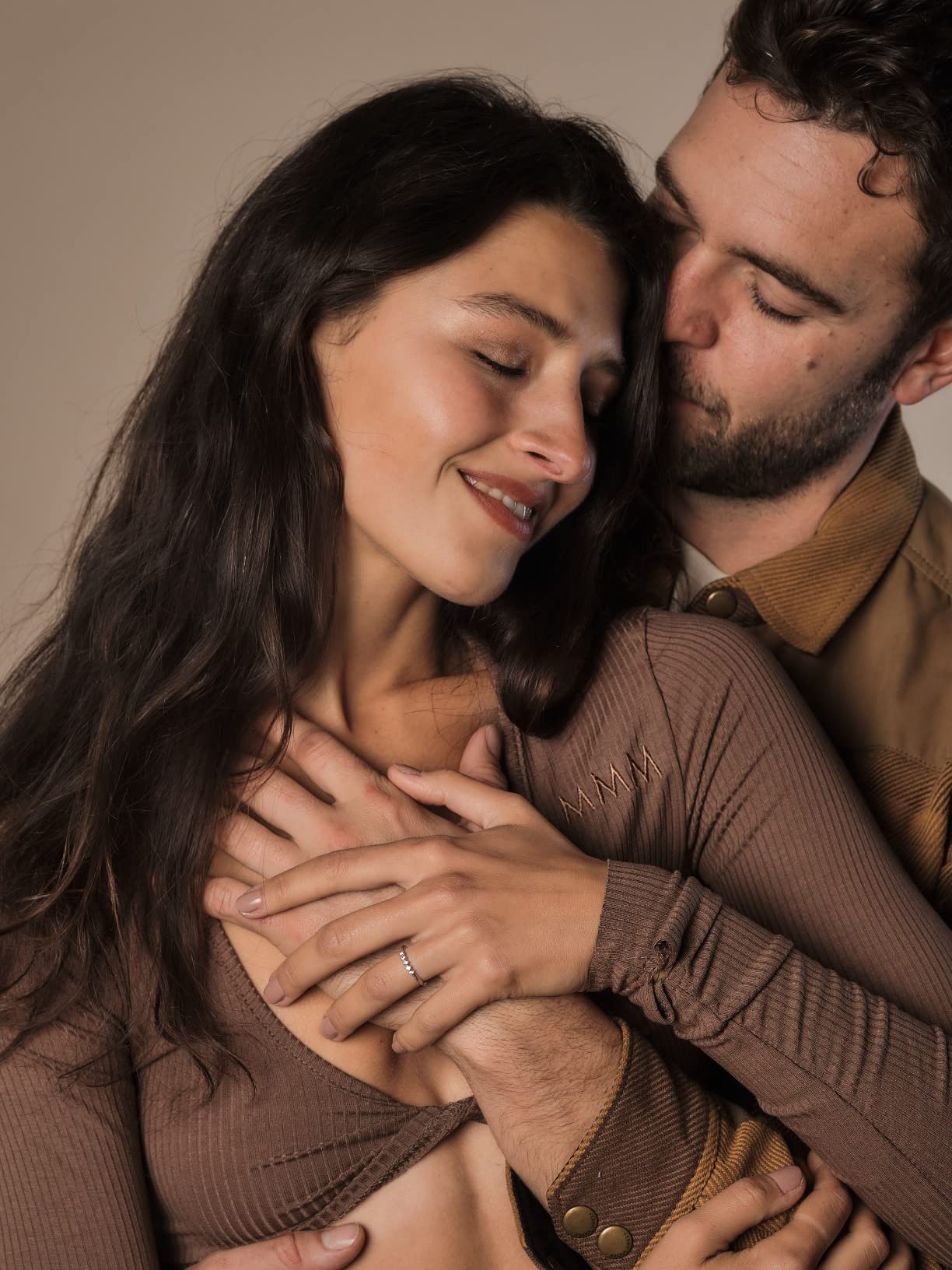
The 10-level LED modeling lamp helps preview lighting, and the quick switch between TTL and manual modes lets you adapt on the fly. As part of the Godox X system, this speedlight can serve as a transmitter for other Godox flashes or as a receiver triggered by an X-series controller.
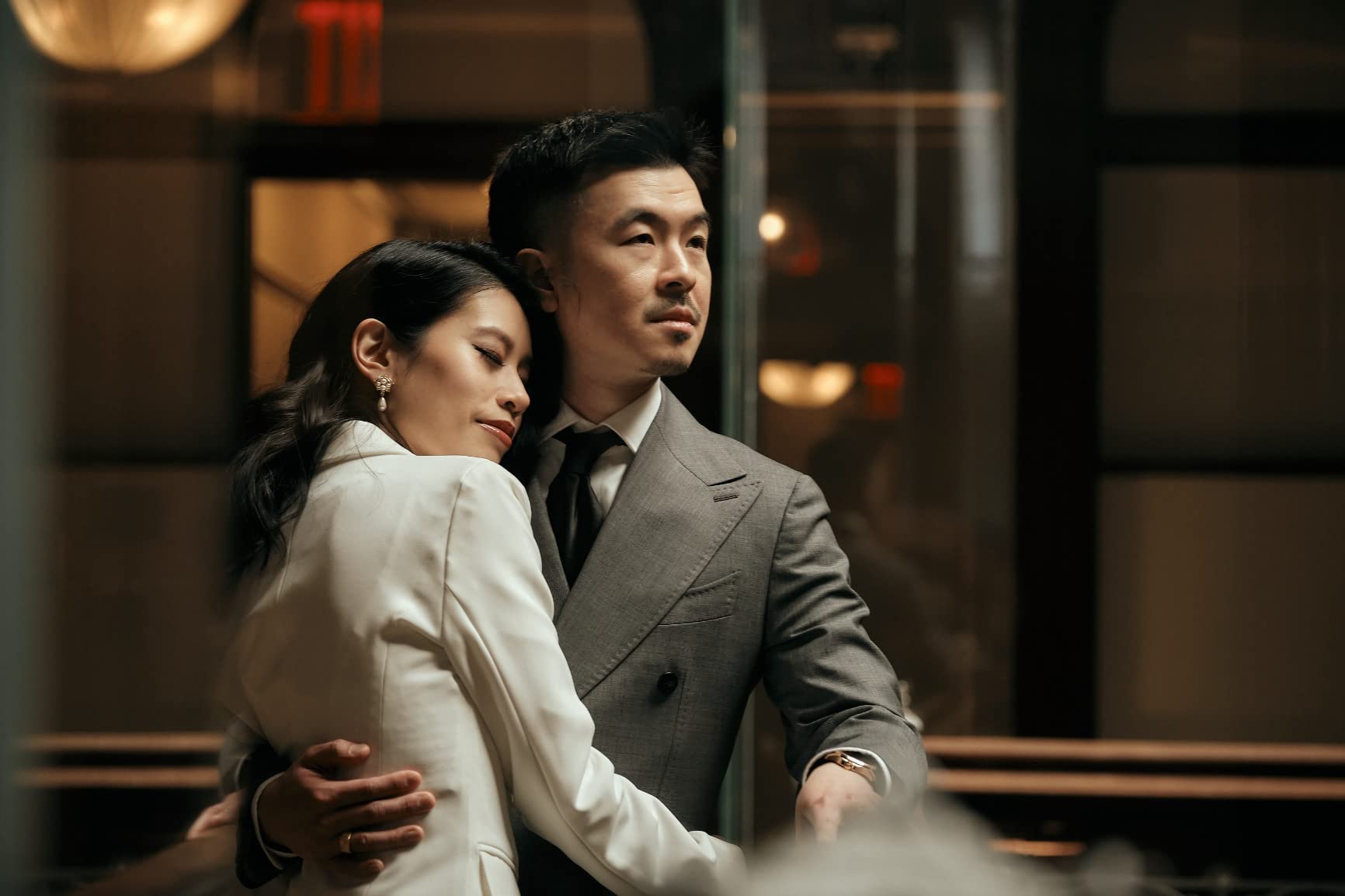
For wedding photographers, event shooters, and anyone needing portable flash power, the V860III-S offers professional features at a fraction of manufacturer speedlight prices. The proprietary battery system means keeping a spare charged, but the convenience of not buying AAs pays off quickly.
Advantages of Flash Strobe Lighting
Massive power: Strobes deliver peak brightness hundreds of times greater than continuous lights, enabling smaller apertures and lower ISO settings.
Motion freezing: Flash durations as brief as 1/10000 second freeze fast action that continuous light cannot stop.
Ambient control: Strobes can overpower sunlight, letting you darken backgrounds and control outdoor lighting.
Energy efficiency: The brief flash draws less total power than continuous output, important for location shooting with battery packs.
Modifier flexibility: The Bowens mount standard means thousands of modifier options at every price point.
Disadvantages of Flash Strobe Lighting
Learning curve: Understanding flash exposure, sync speeds, and power ratios takes practice. Beginners often find strobes intimidating.
No real-time preview: Modeling lamps approximate the flash but cannot show the full effect. You learn to predict results through experience.
Trigger requirements: Off-camera flash requires triggers or cables, adding complexity and potential failure points.
Video incompatibility: Strobes cannot illuminate video. Separate continuous lighting is needed for video work.
Recycle time: Waiting for capacitors to recharge between shots can slow down shooting, especially at high power.
Continuous LED vs Flash Strobe: Head-to-Head Comparison
Let me break down how these lighting types compare across the factors that matter most for real photography work.
Power Output
Flash strobes win decisively on raw power. A basic 300W strobe produces more light in its brief flash than a 300W continuous LED can sustain. In practical terms, this means strobes let you shoot at f/8 or f/11 with ISO 100, while continuous lights often require f/2.8 to f/4 with higher ISO.
For portrait photographers who want sharp images with deep depth of field, this power advantage matters. Product photographers shooting at small apertures for maximum sharpness also benefit from strobe power.
Continuous LED lights have improved dramatically, with high-output COB LEDs reaching 72,000 lux or more. But they still cannot match the peak output of strobes for demanding applications.
Motion Freezing Capability
Flash strobes excel at freezing motion. The brief flash duration (often 1/1000 to 1/10000 second) stops action that would blur under continuous light. Dance photography, sports, children at play, and any fast-moving subject requires flash for sharp results.
Continuous lights cannot freeze motion. Your shutter speed determines motion blur, which means choosing between blur and light levels. With continuous light, faster shutter speeds require wider apertures or higher ISO, both with tradeoffs.
For portrait work with cooperative subjects, continuous light works fine. For anything dynamic, flash is essential.
Color Accuracy
Both lighting types can achieve excellent color accuracy, but quality varies by product. High-end LED panels with CRI 97+ and TLCI 98+ ratings deliver accurate colors without correction. Quality strobes maintain consistent 5600K color temperature across power levels.
Budget LEDs sometimes show green or magenta tints requiring correction in post. Cheap strobes may shift color as capacitors age. Reading reviews and checking specifications for CRI (LEDs) or color consistency (strobes) helps avoid problems.
For color-critical commercial work, testing your specific lights with a color checker chart reveals any issues before important shoots.
Ease of Use
Continuous LEDs win for simplicity. You see the light, set your exposure, and shoot. No triggers, no sync speed limits, no flash calculations. Beginners grasp continuous lighting quickly because results are immediately visible.
Strobes require understanding flash exposure, guide numbers, sync speeds, and trigger systems. The learning curve is steeper, but the control and power rewards justify the effort for serious photographers.
Many photographers start with continuous lights to learn lighting concepts, then add strobes as their skills and needs grow.
Portability
Speedlights like the Godox V860III-S offer maximum portability. These compact units mount on-camera or fit easily in a bag. Battery-powered monolights like the Godox AD series provide studio power in portable packages.
Continuous LED panels range from tiny on-camera lights to large studio fixtures. Battery-powered options exist, but high-output LEDs drain batteries quickly and often require large V-mount or gold mount batteries.
For location work, speedlights and portable strobes usually offer better power-to-weight ratios than continuous LEDs of equivalent output.
Cost Comparison
Entry-level continuous lighting kits often cost less than entry-level strobe setups. A basic softbox kit with LED bulbs runs around $70-110, while even budget strobes start around $130 and require triggers for off-camera use.
However, matching strobe power with continuous light requires expensive, high-output fixtures. A professional 500W+ LED panel can cost thousands, while a 500W strobe costs hundreds.
The most cost-effective approach depends on your needs. For learning, small studios, and video work, continuous lights offer better value. For professional portrait, commercial, and action photography, strobes deliver more power per dollar.
Video Capability
Continuous LEDs win this category by default. Strobes cannot illuminate video recording. If you shoot both photo and video, continuous lights handle both tasks. Many content creators, YouTubers, and hybrid photographers choose continuous lighting specifically for this versatility.
Some modern strobes include bright modeling lamps that can serve as continuous light for focusing and composition, but they are not designed for video recording.
Frequently Asked Questions
Are strobe lights better than continuous lights for photography?
Strobe lights offer significantly higher power output and excel at freezing motion, making them the preferred choice for professional portrait, fashion, and action photography. However, continuous lights provide real-time preview of lighting effects and work for both photo and video. The better choice depends on your specific photography type, with strobes winning for power and motion control while continuous lights win for ease of use and video compatibility.
Why don’t photographers use continuous lighting?
Many photographers avoid continuous lighting because it cannot match strobe power output, struggles to freeze motion, and requires darker shooting environments to maintain ambient light control. Additionally, bright continuous lights can cause subjects to squint, and high-output continuous LEDs remain expensive compared to entry-level strobes. Professional photographers who need maximum creative control typically prefer strobes for these reasons.
What is the difference between strobe and continuous lighting?
Strobe lighting delivers brief, intense bursts of light triggered by the camera shutter, measured in watt-seconds with peak brightness hundreds of times greater than continuous output. Continuous lighting provides constant illumination you see in real-time, measured in lumens or lux. Strobes excel at freezing motion and using small apertures, while continuous lights offer immediate visual feedback and video compatibility.
Can you use strobe and continuous lighting together?
Yes, many photographers combine strobe and continuous lighting in the same setup. Common approaches include using continuous lights for setup and positioning then switching to strobe for capture, or using continuous lights as fill while strobes provide key light. When mixing both types, ensure color temperatures match (typically 5600K) and work in darker environments so continuous output does not interfere with flash exposure.
Final Verdict: Continuous LED vs Flash Strobe for Photography
After testing both systems extensively, here is my honest recommendation for choosing between continuous LED vs flash strobe lighting.
Choose Continuous LED If You:
- Shoot both photography and video with the same setup
- Are learning studio lighting and want immediate visual feedback
- Photograph products, food, or still subjects where motion is not a concern
- Work in controlled indoor environments with limited ambient light
- Create content for YouTube, streaming, or video conferencing
- Prefer simpler setups without triggers and sync speed considerations
Choose Flash Strobe If You:
- Need maximum power for smaller apertures and lower ISO
- Photograph portraits, fashion, or commercial work professionally
- Shoot action, sports, dance, or any fast-moving subjects
- Work outdoors and need to overpower sunlight
- Want the ability to freeze motion with brief flash durations
- Plan to build a multi-light studio setup with wireless control
My Recommendation
For most photographers serious about studio work, flash strobes offer more creative control and professional results. The power, motion-freezing ability, and ambient light control that strobes provide are difficult to replicate with continuous lighting.
That said, continuous LED lighting has a definite place. For beginners learning light shaping, hybrid photo/video shooters, and photographers working with static subjects, continuous lights offer simplicity and versatility that strobes cannot match.
Many professionals eventually own both. Continuous lights for video work, product photography setup, and learning. Strobes for portraits, action, and situations demanding maximum power. The continuous LED vs flash strobe debate is not about finding one winner. It is about matching the right tool to your specific photography needs.